


2310 Résultats
Classification:
audio
audio
Titre:
Pardon My French.
Pardon My French.
Actions:
Description:
1 online resource.
Auteur:
Sujet:
Publication:
[Place of publication not identified] : Junior Aspirin Records, 2013., [Place of publication not identified] : Stop Making Sense, 2013.
[Place of publication not identified] : Junior Aspirin Records, 2013., [Place of publication not identified] : Stop Making Sense, 2013.
Classification:
audio
audio
Publication:
[Place of publication not identified] : Junior Aspirin Records, 2013., [Place of publication not identified] : Stop Making Sense, 2013.
[Place of publication not identified] : Junior Aspirin Records, 2013., [Place of publication not identified] : Stop Making Sense, 2013.
Auteur:
Sujet:
Classification:
livres
livres
Actions:
Prix:
$77.00
(disponible sur commande)
Résumé:
Inspired by Chekhov's short stories--and by his own contagious joy in the book form--photographer Paul Graham has created A Shimmer of Possibility, comprised of 12 individual books, each a photographic short story of everyday life. Some are simple and linear--a man smokes a cigarette while he waits for a bus in Las Vegas, or the camera tracks an autumn walk in Boston.(...)
$77.00
(disponible sur commande)
Résumé:
Inspired by Chekhov's short stories--and by his own contagious joy in the book form--photographer Paul Graham has created A Shimmer of Possibility, comprised of 12 individual books, each a photographic short story of everyday life. Some are simple and linear--a man smokes a cigarette while he waits for a bus in Las Vegas, or the camera tracks an autumn walk in Boston.(...)
Titre:
Paul Graham: a shimmer of possibility
Actions:
Prix:
$77.00
(disponible sur commande)
Résumé:
Inspired by Chekhov's short stories--and by his own contagious joy in the book form--photographer Paul Graham has created A Shimmer of Possibility, comprised of 12 individual books, each a photographic short story of everyday life. Some are simple and linear--a man smokes a cigarette while he waits for a bus in Las Vegas, or the camera tracks an autumn walk in Boston. Some entwine two, three or four scenes--while a couple carry their shopping home in Texas, a small child dances with a plastic bag in a garden. Some watch a quiet narrative break unexpectedly into a sublime moment--as a man cuts the grass in Pittsburgh it begins to rain, until the low sun breaks through and illuminates each drop. Graham's filmic haikus shun any forceful summation or tidy packaging. Instead, they create the impression of life flowing around and past us while we stand and stare, and make it hard not to share the artist's quiet astonishment with its beauty and grace. The 12 books gathered here are identical in trim size, but vary in length from just a single photograph to 60 pages of images made at one street corner. Paul Graham's work has been widely exhibited and published for 25 years, most recently in the book American Night.
Paul Graham: a shimmer of possibility
Actions:
Prix:
$77.00
(disponible sur commande)
Résumé:
Inspired by Chekhov's short stories--and by his own contagious joy in the book form--photographer Paul Graham has created A Shimmer of Possibility, comprised of 12 individual books, each a photographic short story of everyday life. Some are simple and linear--a man smokes a cigarette while he waits for a bus in Las Vegas, or the camera tracks an autumn walk in Boston. Some entwine two, three or four scenes--while a couple carry their shopping home in Texas, a small child dances with a plastic bag in a garden. Some watch a quiet narrative break unexpectedly into a sublime moment--as a man cuts the grass in Pittsburgh it begins to rain, until the low sun breaks through and illuminates each drop. Graham's filmic haikus shun any forceful summation or tidy packaging. Instead, they create the impression of life flowing around and past us while we stand and stare, and make it hard not to share the artist's quiet astonishment with its beauty and grace. The 12 books gathered here are identical in trim size, but vary in length from just a single photograph to 60 pages of images made at one street corner. Paul Graham's work has been widely exhibited and published for 25 years, most recently in the book American Night.
Classification:
livres
livres
Publication:
janvier 2009
janvier 2009
Sujet:
Monographies photo
Monographies photo
Classification:
livres
livres
Actions:
Exemplaires:
Description:
xvi, 406 pages : illustrations (some color) ; 29 cm.
Description:
xvi, 406 pages : illustrations (some color) ; 29 cm.
Auteur:
Sujet:
Publication:
Austin : University of Texas Press, [2014]
Austin : University of Texas Press, [2014]
Titre:
Modern architecture in Latin America : art, technology, and utopia / Luis E. Carranza and Fernando Luiz Lara ; foreword by Jorge Francisco Liernur.
Actions:
Exemplaires:
Description:
xvi, 406 pages : illustrations (some color) ; 29 cm.
Modern architecture in Latin America : art, technology, and utopia / Luis E. Carranza and Fernando Luiz Lara ; foreword by Jorge Francisco Liernur.
Actions:
Exemplaires:
Description:
xvi, 406 pages : illustrations (some color) ; 29 cm.
Classification:
livres
livres
Publication:
Austin : University of Texas Press, [2014]
Austin : University of Texas Press, [2014]
Auteur:
Sujet:
Classification:
livres
livres
Actions:
Prix:
$39.95
(disponible sur commande)
Résumé:
An epic project in both size and purview, Peter Sloterdijk's three-volume, 2,500-page Spheres is the late-twentieth-century bookend to Heidegger's Being and Time. Rejecting the century's predominant philosophical focus on temporality, Sloterdijk, a self-described "student of the air," reinterprets the history of Western metaphysics as an inherently spatial and(...)
$39.95
(disponible sur commande)
Résumé:
An epic project in both size and purview, Peter Sloterdijk's three-volume, 2,500-page Spheres is the late-twentieth-century bookend to Heidegger's Being and Time. Rejecting the century's predominant philosophical focus on temporality, Sloterdijk, a self-described "student of the air," reinterprets the history of Western metaphysics as an inherently spatial and(...)
Titre:
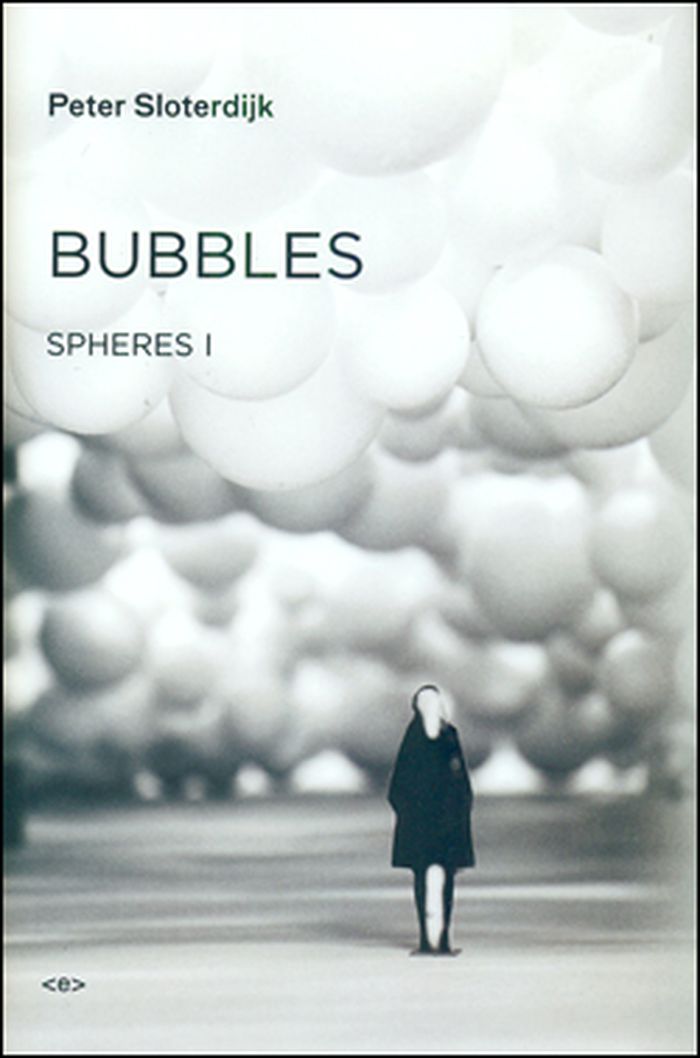
Spheres1 : Bubbles, microspherology
Actions:
Prix:
$39.95
(disponible sur commande)
Résumé:
An epic project in both size and purview, Peter Sloterdijk's three-volume, 2,500-page Spheres is the late-twentieth-century bookend to Heidegger's Being and Time. Rejecting the century's predominant philosophical focus on temporality, Sloterdijk, a self-described "student of the air," reinterprets the history of Western metaphysics as an inherently spatial and immunological project, from the discovery of self (bubble) to the exploration of world (globe) to the poetics of plurality (foam). Exploring macro- and micro-space from the Greek agora to the contemporary urban apartment, Sloterdijk is able to synthesize, with immense erudition, the spatial theories of Aristotle, René Descartes, Gaston Bachelard, Walter Benjamin, and Georges Bataille into a morphology of shared, or multipolar, dwelling - identifying the question of being as one bound up with the aerial technology of architectonics and anthropogenesis. Sloterdijk describes Bubbles, the first volume of Spheres, as a general theory of the structures that allow couplings - or as the book's original intended subtitle put it, an "archeology of the intimate." Bubbles includes a wide array of images, not to illustrate Sloterdijk's discourse, but to offer a spatial and visual "parallel narrative" to his exploration of bubbles. Written over the course of a decade, the Spheres trilogy has waited another decade for its much-anticipated English translation from Semiotext(e). Volumes II, Globes, and III, Foam, will be published in the coming seasons.
Spheres1 : Bubbles, microspherology
Actions:
Prix:
$39.95
(disponible sur commande)
Résumé:
An epic project in both size and purview, Peter Sloterdijk's three-volume, 2,500-page Spheres is the late-twentieth-century bookend to Heidegger's Being and Time. Rejecting the century's predominant philosophical focus on temporality, Sloterdijk, a self-described "student of the air," reinterprets the history of Western metaphysics as an inherently spatial and immunological project, from the discovery of self (bubble) to the exploration of world (globe) to the poetics of plurality (foam). Exploring macro- and micro-space from the Greek agora to the contemporary urban apartment, Sloterdijk is able to synthesize, with immense erudition, the spatial theories of Aristotle, René Descartes, Gaston Bachelard, Walter Benjamin, and Georges Bataille into a morphology of shared, or multipolar, dwelling - identifying the question of being as one bound up with the aerial technology of architectonics and anthropogenesis. Sloterdijk describes Bubbles, the first volume of Spheres, as a general theory of the structures that allow couplings - or as the book's original intended subtitle put it, an "archeology of the intimate." Bubbles includes a wide array of images, not to illustrate Sloterdijk's discourse, but to offer a spatial and visual "parallel narrative" to his exploration of bubbles. Written over the course of a decade, the Spheres trilogy has waited another decade for its much-anticipated English translation from Semiotext(e). Volumes II, Globes, and III, Foam, will be published in the coming seasons.
Classification:
livres
livres
Publication:
novembre 2011
novembre 2011
Sujet:
Théorie/ philosophie
Théorie/ philosophie
Classification:
livres
livres
Prix:
$59.95
(disponible sur commande)
Résumé:
Wallace’s work has played an important role in contemporary art over the past 50 years, from his early experiments with minimalism to his production of serial photographic tableaux and his subsequent juxtapositions of photography with monochrome painting. Consistently demonstrating conceptual rigour and aesthetic innovation, Wallace’s work can be considered a reflection(...)
$59.95
(disponible sur commande)
Résumé:
Wallace’s work has played an important role in contemporary art over the past 50 years, from his early experiments with minimalism to his production of serial photographic tableaux and his subsequent juxtapositions of photography with monochrome painting. Consistently demonstrating conceptual rigour and aesthetic innovation, Wallace’s work can be considered a reflection(...)
Titre:
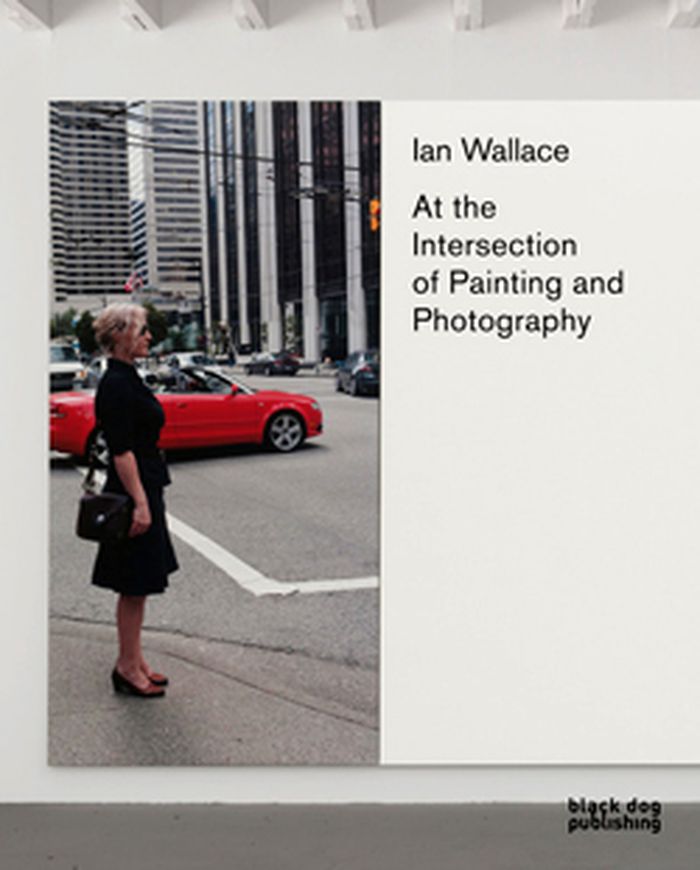
Ian Wallace : at the intersection of painting and photography
Actions:
Prix:
$59.95
(disponible sur commande)
Résumé:
Wallace’s work has played an important role in contemporary art over the past 50 years, from his early experiments with minimalism to his production of serial photographic tableaux and his subsequent juxtapositions of photography with monochrome painting. Consistently demonstrating conceptual rigour and aesthetic innovation, Wallace’s work can be considered a reflection of his position as social historian, critic and educator, with influences as far reaching as film and literature, the role of the institution, architecture, urban development, gender relations, environmentalism and civil disobedience. Organised in clear, concise sections that mirror the intersecting motifs that are present throughout Wallace’s practice : Minimalism, Narrative, Text Works, The Street, The Museum and The Studio, At the Intersection of Painting and Photography features essays that chart Wallace’s career over the past five decades by Daina Augaitis, Jeff Derksen, Diedrich Diederichsen, Stan Douglas, Jessica Morgan, Christine Poggi, Kathleen Ritter and William Wood. The book also includes a selection of five essays by the artist himself and an annotated chronology by Grant Arnold, providing the perfect introduction to Wallace’s lasting career and marking his influence on contemporary art today. A comprehensive publication exploring the oeuvre of Canadian artist Ian Wallace, At the Intersection of Painting and Photography accompanies a major survey of Wallace's work at the Vancouver Art Gallery, opening in October 2012.
Ian Wallace : at the intersection of painting and photography
Actions:
Prix:
$59.95
(disponible sur commande)
Résumé:
Wallace’s work has played an important role in contemporary art over the past 50 years, from his early experiments with minimalism to his production of serial photographic tableaux and his subsequent juxtapositions of photography with monochrome painting. Consistently demonstrating conceptual rigour and aesthetic innovation, Wallace’s work can be considered a reflection of his position as social historian, critic and educator, with influences as far reaching as film and literature, the role of the institution, architecture, urban development, gender relations, environmentalism and civil disobedience. Organised in clear, concise sections that mirror the intersecting motifs that are present throughout Wallace’s practice : Minimalism, Narrative, Text Works, The Street, The Museum and The Studio, At the Intersection of Painting and Photography features essays that chart Wallace’s career over the past five decades by Daina Augaitis, Jeff Derksen, Diedrich Diederichsen, Stan Douglas, Jessica Morgan, Christine Poggi, Kathleen Ritter and William Wood. The book also includes a selection of five essays by the artist himself and an annotated chronology by Grant Arnold, providing the perfect introduction to Wallace’s lasting career and marking his influence on contemporary art today. A comprehensive publication exploring the oeuvre of Canadian artist Ian Wallace, At the Intersection of Painting and Photography accompanies a major survey of Wallace's work at the Vancouver Art Gallery, opening in October 2012.
Classification:
livres
livres
Publication:
octobre 2012
octobre 2012
Sujet:
Monographies photo
Monographies photo
Classification:
livres
livres
Actions:
Prix:
$64.95
(disponible sur commande)
Résumé:
Cet ouvrage questionne une histoire récente du design où la notion d’ornement se donne au cœur de nouvelles logiques de conception et de production. Avec l’avènement du numérique et la redéfinition du rôle de l’ornement, la forme ornementale se donne à présent dans une dimension calculée de morphogenèse : sa dynamique s’ancre dans les processus de croissance de la nature.(...)
$64.95
(disponible sur commande)
Résumé:
Cet ouvrage questionne une histoire récente du design où la notion d’ornement se donne au cœur de nouvelles logiques de conception et de production. Avec l’avènement du numérique et la redéfinition du rôle de l’ornement, la forme ornementale se donne à présent dans une dimension calculée de morphogenèse : sa dynamique s’ancre dans les processus de croissance de la nature.(...)
Titre:
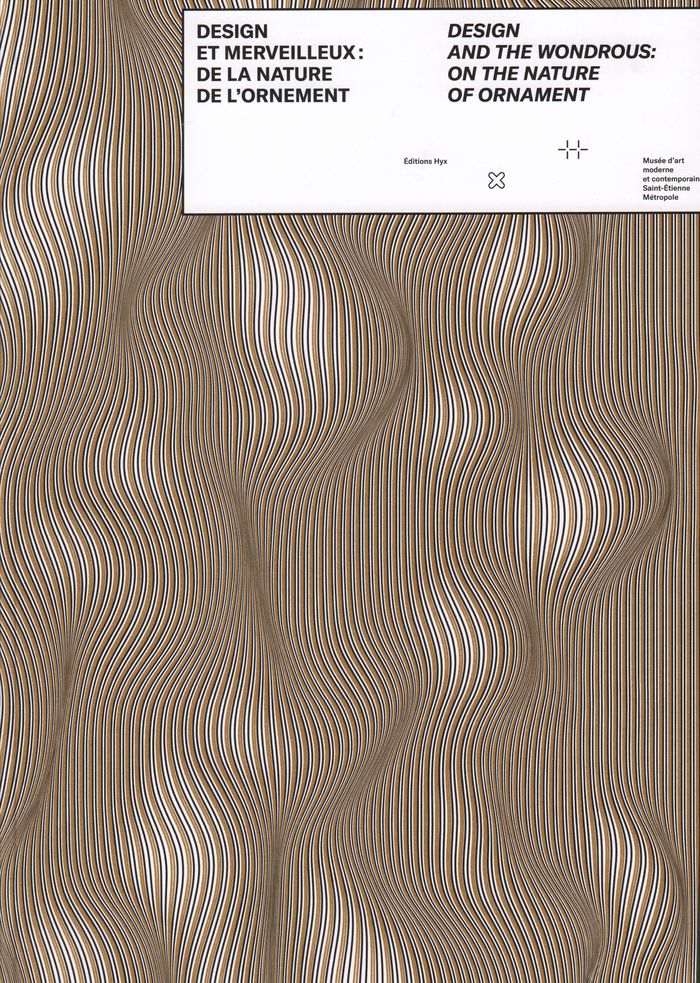
Design et merveilleux : de la nature de l'ornement / Design and the wondrous: on the nature of ornament
Actions:
Prix:
$64.95
(disponible sur commande)
Résumé:
Cet ouvrage questionne une histoire récente du design où la notion d’ornement se donne au cœur de nouvelles logiques de conception et de production. Avec l’avènement du numérique et la redéfinition du rôle de l’ornement, la forme ornementale se donne à présent dans une dimension calculée de morphogenèse : sa dynamique s’ancre dans les processus de croissance de la nature. Dans toutes ces réalisations, la dimension générative de la nature a conféré à l’ornement un rôle structurel nouveau. S'appuyant sur une sélection d'œuvres de plus de cinquante artistes, , quatre essais (Marie-Ange Brayer, Spyros Papapetros, Martine Dancer-Mourès et Sophie Fétro), nous donnent à lire et comprendre, l'évolution du design et de l'ornement, à l'ère du numérique. / This volume presents a new narrative of design, situated somewhere between plant life and ornament, nature and artifice. Through essays by several authors it explores the ornament’s role with respect to morphogenesis, by which the object is continually transformed through an evolving dynamic of forms. With the arrival of the digital age, the ornament’s role in design has been greatly modified. No longer a simple motif, it is used as an animated form. At the intersection of information sciences and biology, designers utilise 3D printing to create carefully calculated objects based on organic growth. With contributions by Spyros Papapetros, Marie-Ange Brayer, and others.
Design et merveilleux : de la nature de l'ornement / Design and the wondrous: on the nature of ornament
Actions:
Prix:
$64.95
(disponible sur commande)
Résumé:
Cet ouvrage questionne une histoire récente du design où la notion d’ornement se donne au cœur de nouvelles logiques de conception et de production. Avec l’avènement du numérique et la redéfinition du rôle de l’ornement, la forme ornementale se donne à présent dans une dimension calculée de morphogenèse : sa dynamique s’ancre dans les processus de croissance de la nature. Dans toutes ces réalisations, la dimension générative de la nature a conféré à l’ornement un rôle structurel nouveau. S'appuyant sur une sélection d'œuvres de plus de cinquante artistes, , quatre essais (Marie-Ange Brayer, Spyros Papapetros, Martine Dancer-Mourès et Sophie Fétro), nous donnent à lire et comprendre, l'évolution du design et de l'ornement, à l'ère du numérique. / This volume presents a new narrative of design, situated somewhere between plant life and ornament, nature and artifice. Through essays by several authors it explores the ornament’s role with respect to morphogenesis, by which the object is continually transformed through an evolving dynamic of forms. With the arrival of the digital age, the ornament’s role in design has been greatly modified. No longer a simple motif, it is used as an animated form. At the intersection of information sciences and biology, designers utilise 3D printing to create carefully calculated objects based on organic growth. With contributions by Spyros Papapetros, Marie-Ange Brayer, and others.
Classification:
livres
livres
Publication:
mai 2019
mai 2019
Sujet:
Théorie du design
Théorie du design
Classification:
livres
livres
Actions:
Prix:
$41.95
(disponible sur commande)
Résumé:
Is it possible for the economy to grow without the environment being destroyed? Will our lifestyles impoverish the planet for our children and grandchildren? Is the world sick? Can it be healed? Less than a lifetime ago, these questions would have made no sense. This was not because our ancestors had no impact on nature—nor because they were unaware of the serious damage(...)
$41.95
(disponible sur commande)
Résumé:
Is it possible for the economy to grow without the environment being destroyed? Will our lifestyles impoverish the planet for our children and grandchildren? Is the world sick? Can it be healed? Less than a lifetime ago, these questions would have made no sense. This was not because our ancestors had no impact on nature—nor because they were unaware of the serious damage(...)
Publication:
novembre 2018
novembre 2018
Titre:
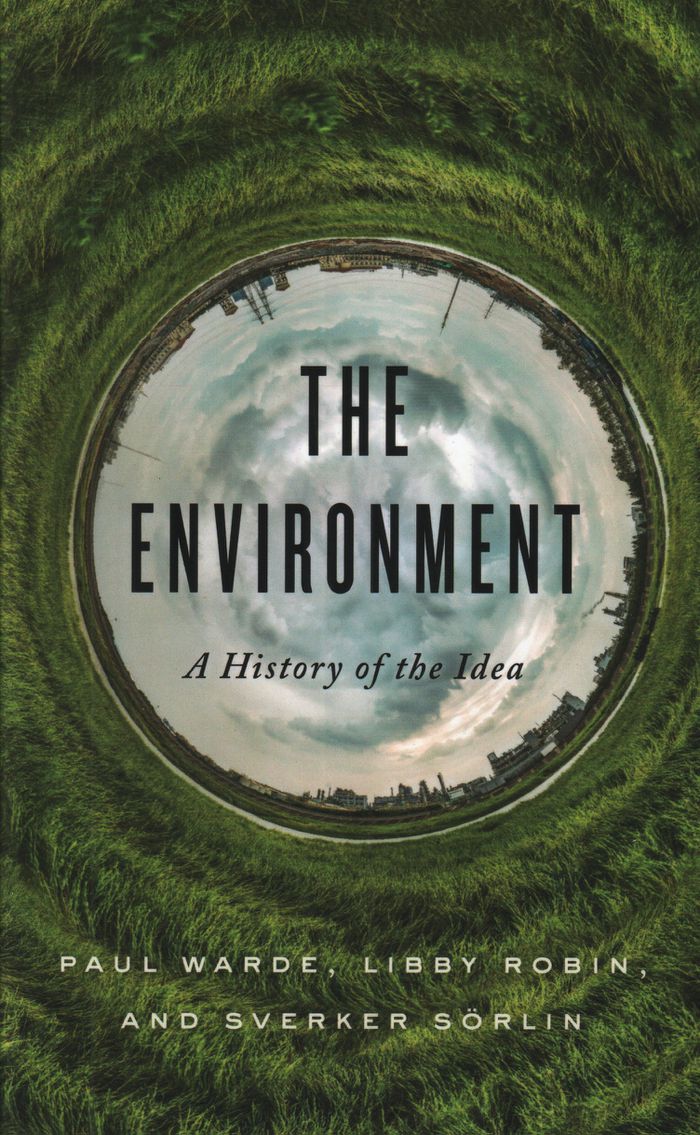
The environment: a history of an idea
Actions:
Prix:
$41.95
(disponible sur commande)
Résumé:
Is it possible for the economy to grow without the environment being destroyed? Will our lifestyles impoverish the planet for our children and grandchildren? Is the world sick? Can it be healed? Less than a lifetime ago, these questions would have made no sense. This was not because our ancestors had no impact on nature—nor because they were unaware of the serious damage they had done. What people lacked was an idea: a way of imagining the web of interconnection and consequence of which the natural world is made. Without this notion, we didn’t have a way to describe the scale and scope of human impact upon nature. This idea was "the environment." Paul Warde, Libby Robin, and Sverker Sörlin trace the emergence of the concept of the environment following World War II, a period characterized by both hope for a new global order and fear of humans’ capacity for almost limitless destruction. It was at this moment that a new idea and a new narrative about the planet-wide impact of people's behavior emerged, closely allied to anxieties for the future. Now we had a vocabulary for talking about how we were changing nature: resource exhaustion and energy, biodiversity, pollution, and—eventually—climate change. With the rise of "the environment," the authors argue, came new expertise, making certain kinds of knowledge crucial to understanding the future of our planet.
The environment: a history of an idea
Actions:
Prix:
$41.95
(disponible sur commande)
Résumé:
Is it possible for the economy to grow without the environment being destroyed? Will our lifestyles impoverish the planet for our children and grandchildren? Is the world sick? Can it be healed? Less than a lifetime ago, these questions would have made no sense. This was not because our ancestors had no impact on nature—nor because they were unaware of the serious damage they had done. What people lacked was an idea: a way of imagining the web of interconnection and consequence of which the natural world is made. Without this notion, we didn’t have a way to describe the scale and scope of human impact upon nature. This idea was "the environment." Paul Warde, Libby Robin, and Sverker Sörlin trace the emergence of the concept of the environment following World War II, a period characterized by both hope for a new global order and fear of humans’ capacity for almost limitless destruction. It was at this moment that a new idea and a new narrative about the planet-wide impact of people's behavior emerged, closely allied to anxieties for the future. Now we had a vocabulary for talking about how we were changing nature: resource exhaustion and energy, biodiversity, pollution, and—eventually—climate change. With the rise of "the environment," the authors argue, came new expertise, making certain kinds of knowledge crucial to understanding the future of our planet.
Classification:
livres
livres
Publication:
novembre 2018
novembre 2018
Classification:
livres
livres
Actions:
Prix:
$19.95
(disponible sur commande)
Résumé:
This collection boasts four superb animated films about the universe and the evolution of comets and stars: Comet: A description of the general phenomenon of comets, and the radical transformations they undergo as they approach the sun. Superb drawings re-create the intergalactic universe with impact and accuracy. Particular attention is given to Halley's comet, which(...)
$19.95
(disponible sur commande)
Résumé:
This collection boasts four superb animated films about the universe and the evolution of comets and stars: Comet: A description of the general phenomenon of comets, and the radical transformations they undergo as they approach the sun. Superb drawings re-create the intergalactic universe with impact and accuracy. Particular attention is given to Halley's comet, which(...)
Publication:
novembre 2009
novembre 2009
Titre:
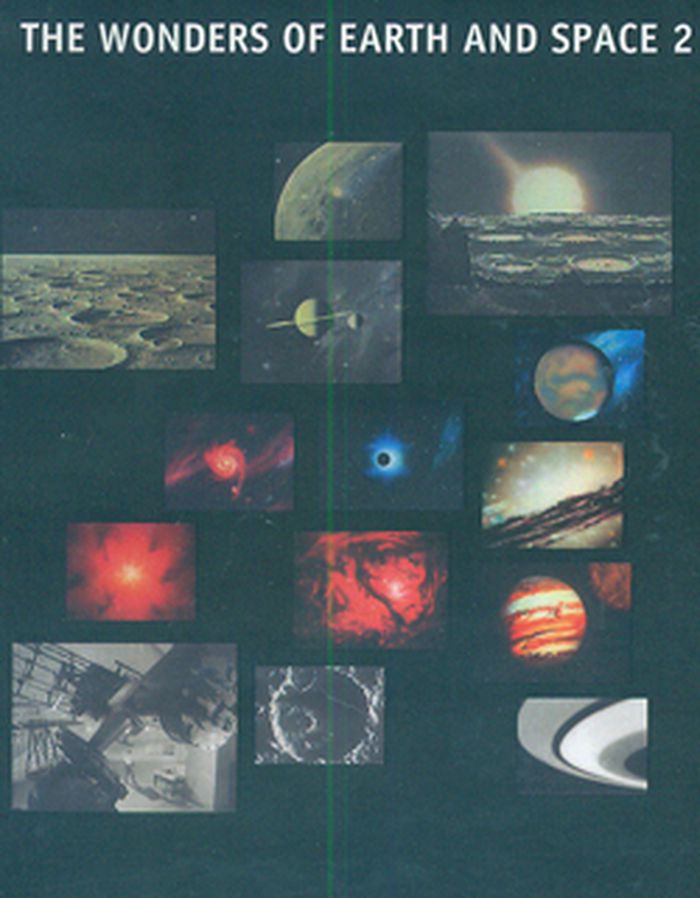
The wonders of earth and space 2
Actions:
Prix:
$19.95
(disponible sur commande)
Résumé:
This collection boasts four superb animated films about the universe and the evolution of comets and stars: Comet: A description of the general phenomenon of comets, and the radical transformations they undergo as they approach the sun. Superb drawings re-create the intergalactic universe with impact and accuracy. Particular attention is given to Halley's comet, which reappears every seventy-six years (12 min. 18 sec.); Fields of Space: An exploration of the fourth state of matter, the plasma that fills the infinite void between stars and galaxies. Single atoms in space, or planets as large as the sun, are each seen to have their own magnetic fields, attracting to themselves streams of invisible particles (18 min. 38 sec.); Starlife traces the evolution of a star from its birth in the depths of a black nebula to its final extinction. Animated drawings are amplified by a dense narrative describing the differing evolutionary processes followed by stars of different masses. The film touches on the creation of elements in the core of stars, red giants, bursters, space-time relationships, and black holes (19 min. 58 sec.); and Universe: A picture of the universe as it would appear to a voyager through space. Realistic animation takes you into far regions of space past Moon, Sun, and Milky Way into galaxies yet unfathomed (28 min. 53 sec.).
The wonders of earth and space 2
Actions:
Prix:
$19.95
(disponible sur commande)
Résumé:
This collection boasts four superb animated films about the universe and the evolution of comets and stars: Comet: A description of the general phenomenon of comets, and the radical transformations they undergo as they approach the sun. Superb drawings re-create the intergalactic universe with impact and accuracy. Particular attention is given to Halley's comet, which reappears every seventy-six years (12 min. 18 sec.); Fields of Space: An exploration of the fourth state of matter, the plasma that fills the infinite void between stars and galaxies. Single atoms in space, or planets as large as the sun, are each seen to have their own magnetic fields, attracting to themselves streams of invisible particles (18 min. 38 sec.); Starlife traces the evolution of a star from its birth in the depths of a black nebula to its final extinction. Animated drawings are amplified by a dense narrative describing the differing evolutionary processes followed by stars of different masses. The film touches on the creation of elements in the core of stars, red giants, bursters, space-time relationships, and black holes (19 min. 58 sec.); and Universe: A picture of the universe as it would appear to a voyager through space. Realistic animation takes you into far regions of space past Moon, Sun, and Milky Way into galaxies yet unfathomed (28 min. 53 sec.).
Classification:
livres
livres
Publication:
novembre 2009
novembre 2009
Classification:
livres
livres
Titre:
Graftworld
Graftworld
Actions:
Prix:
$21.95
(disponible sur commande)
Résumé:
In addition to Graft’s the widely published projects, like the prize-winning Hotel Q in Berlin, Restaurants Fix and Stack in Las Vegas and several international houses, the exhibition will focus on the new and unpublished work of Graft, including numerous high-rise buildings, special hotel designs and private residences, research installations as well as public(...)
$21.95
(disponible sur commande)
Résumé:
In addition to Graft’s the widely published projects, like the prize-winning Hotel Q in Berlin, Restaurants Fix and Stack in Las Vegas and several international houses, the exhibition will focus on the new and unpublished work of Graft, including numerous high-rise buildings, special hotel designs and private residences, research installations as well as public(...)
Titre:
Graftworld
Actions:
Prix:
$21.95
(disponible sur commande)
Résumé:
In addition to Graft’s the widely published projects, like the prize-winning Hotel Q in Berlin, Restaurants Fix and Stack in Las Vegas and several international houses, the exhibition will focus on the new and unpublished work of Graft, including numerous high-rise buildings, special hotel designs and private residences, research installations as well as public projects. Graftworld refers to Graft’s specific method of work process, which fuses syntactic, semantic and phenomenological aspects into architecture. Graft uses narrative elements of cinema, exploiting space - time interconnections through storyboarding with progressive technical research of long term collaborations with various companies. The exhibit will showcase this methodology in an accessible, usable exhibition sculpture, an interactive lounge displaying not only projects of all three office locations but providing chillout zones to relax as well. Classical distinctive architecture elements like floor, wall and ceiling will be fused into a lounge-display-hybrid. Graftworld is thought to be inclusive and rather crosses and blurs boundaries than accepting their exclusive nature. This approach also touches on the increasing transition of distinct modern mono-functional living and working environments, that are blending into new urban lifestyles of the metropolitan nomads. Graftworld proposes architecture that can evolve to be sculpture, be furniture, be a product, be an urban scenario, be landscape at the same time. Design, methodology and technology are not classically “displayed”, but are integrated in the Graftworld.
Graftworld
Actions:
Prix:
$21.95
(disponible sur commande)
Résumé:
In addition to Graft’s the widely published projects, like the prize-winning Hotel Q in Berlin, Restaurants Fix and Stack in Las Vegas and several international houses, the exhibition will focus on the new and unpublished work of Graft, including numerous high-rise buildings, special hotel designs and private residences, research installations as well as public projects. Graftworld refers to Graft’s specific method of work process, which fuses syntactic, semantic and phenomenological aspects into architecture. Graft uses narrative elements of cinema, exploiting space - time interconnections through storyboarding with progressive technical research of long term collaborations with various companies. The exhibit will showcase this methodology in an accessible, usable exhibition sculpture, an interactive lounge displaying not only projects of all three office locations but providing chillout zones to relax as well. Classical distinctive architecture elements like floor, wall and ceiling will be fused into a lounge-display-hybrid. Graftworld is thought to be inclusive and rather crosses and blurs boundaries than accepting their exclusive nature. This approach also touches on the increasing transition of distinct modern mono-functional living and working environments, that are blending into new urban lifestyles of the metropolitan nomads. Graftworld proposes architecture that can evolve to be sculpture, be furniture, be a product, be an urban scenario, be landscape at the same time. Design, methodology and technology are not classically “displayed”, but are integrated in the Graftworld.
Classification:
livres
livres
Publication:
janvier 2007, Berlin
janvier 2007, Berlin
Sujet:
petits formats
petits formats
Classification:
livres
livres
Titre:
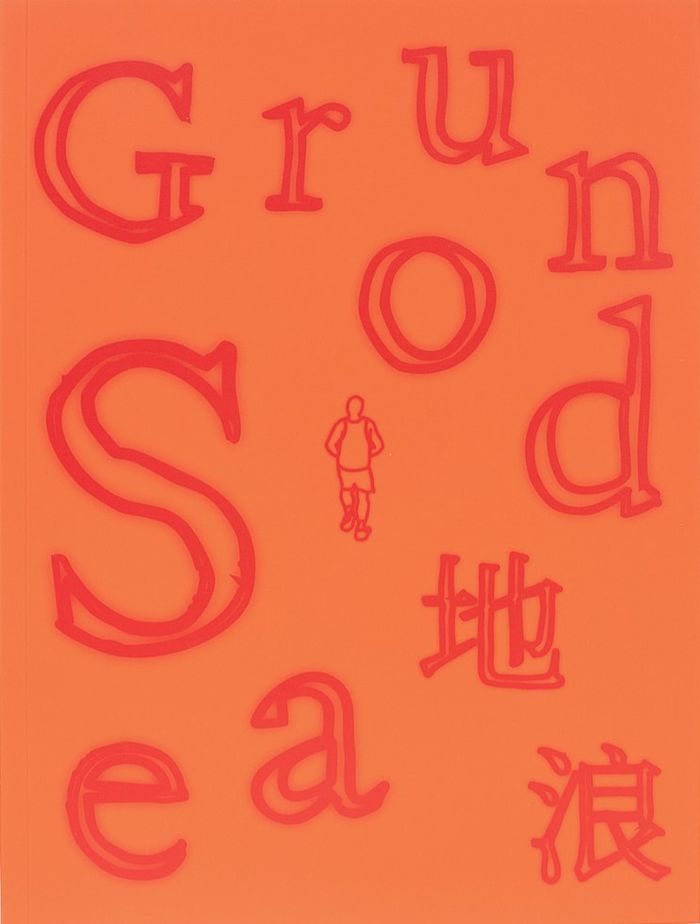
Kanthy Peng: Ground Sea
Kanthy Peng: Ground Sea
Actions:
Prix:
$62.00
(disponible en magasin)
Résumé:
Kanthy Peng’s debut artist book, ''Ground Sea'', weaves a visual narrative exploring depression, memory, and loss through 73 photographs. The title takes inspiration from an archaic West Indian term, which anthropologist and feminist Emily Martin used to capture her sensations when observing the Affective Disorder Clinical Rounds, “(Ground-sea is the name) for a swell of(...)
$62.00
(disponible en magasin)
Résumé:
Kanthy Peng’s debut artist book, ''Ground Sea'', weaves a visual narrative exploring depression, memory, and loss through 73 photographs. The title takes inspiration from an archaic West Indian term, which anthropologist and feminist Emily Martin used to capture her sensations when observing the Affective Disorder Clinical Rounds, “(Ground-sea is the name) for a swell of(...)
Titre:
Kanthy Peng: Ground Sea
Actions:
Prix:
$62.00
(disponible en magasin)
Résumé:
Kanthy Peng’s debut artist book, ''Ground Sea'', weaves a visual narrative exploring depression, memory, and loss through 73 photographs. The title takes inspiration from an archaic West Indian term, which anthropologist and feminist Emily Martin used to capture her sensations when observing the Affective Disorder Clinical Rounds, “(Ground-sea is the name) for a swell of the ocean, which occurs in calm weather and without obvious cause, breaking on the shore in heavy roaring billows. A distant storm, out of sight, is often the cause of a ground-sea.” In ''Ground Se'', Peng re-orchestrates photographs spanning over a decade and multiple projects into a new diptych-structured work. The first part, ''Sunset Watchers'', unfolds through black-and-white portraits of three women reenacting a phantom folktale following the 1896 tsunami in Japan—images that also allude to the anxious premonition of those living with depression. Interspersed colored photographs recall Peng’s bodily memory of being bedridden due to illness. The second part, ''Kuafù Chases The Sun'', carries stills from two video works about Peng’s father, who retired from the People’s Liberation Army ten years after his daughter left home. In these images, his body is constantly propelled forward by the cogs of a system, breaking the stagnation of the first part, only to fall into nothingness ultimately.
Kanthy Peng: Ground Sea
Actions:
Prix:
$62.00
(disponible en magasin)
Résumé:
Kanthy Peng’s debut artist book, ''Ground Sea'', weaves a visual narrative exploring depression, memory, and loss through 73 photographs. The title takes inspiration from an archaic West Indian term, which anthropologist and feminist Emily Martin used to capture her sensations when observing the Affective Disorder Clinical Rounds, “(Ground-sea is the name) for a swell of the ocean, which occurs in calm weather and without obvious cause, breaking on the shore in heavy roaring billows. A distant storm, out of sight, is often the cause of a ground-sea.” In ''Ground Se'', Peng re-orchestrates photographs spanning over a decade and multiple projects into a new diptych-structured work. The first part, ''Sunset Watchers'', unfolds through black-and-white portraits of three women reenacting a phantom folktale following the 1896 tsunami in Japan—images that also allude to the anxious premonition of those living with depression. Interspersed colored photographs recall Peng’s bodily memory of being bedridden due to illness. The second part, ''Kuafù Chases The Sun'', carries stills from two video works about Peng’s father, who retired from the People’s Liberation Army ten years after his daughter left home. In these images, his body is constantly propelled forward by the cogs of a system, breaking the stagnation of the first part, only to fall into nothingness ultimately.
Classification:
livres
livres
Publication:
octobre 2025
octobre 2025
Sujet:
Monographies photo
Monographies photo


