


2298 Résultats
Classification:
livres
livres
Prix:
$74.95
(disponible sur commande)
Résumé:
This lavishly illustrated book looks at the art and architecture of episcopal palaces as expressions of power and ideology. Tracing the history of the bishop's residence in the urban centers of northern Italy over the Middle Ages, Maureen C. Miller asks why this once(...)
$74.95
(disponible sur commande)
Résumé:
This lavishly illustrated book looks at the art and architecture of episcopal palaces as expressions of power and ideology. Tracing the history of the bishop's residence in the urban centers of northern Italy over the Middle Ages, Maureen C. Miller asks why this once(...)
Titre:
The bishop's palace : architecture and authority in medieval Italy
Actions:
Prix:
$74.95
(disponible sur commande)
Résumé:
This lavishly illustrated book looks at the art and architecture of episcopal palaces as expressions of power and ideology. Tracing the history of the bishop's residence in the urban centers of northern Italy over the Middle Ages, Maureen C. Miller asks why this once rudimentary and highly fortified structure called a domus became a complex and elegant "palace" (palatium) by the late twelfth century. Miller argues that the change reflects both the emergence of a distinct clerical culture and the attempts of bishops to maintain authority in public life. She relates both to the Gregorian reform movement, which set new standards for clerical deportment and at the same time undercut episcopal claims to secular power. As bishops lost temporal authority in their cities to emerging communal governments, they compensated architecturally and competed with the communes for visual and spatial dominance in the urban center. This rivalry left indelible marks on the layout and character of Italian cities. Moreover, Miller contends, this struggle for power had highly significant, but mixed, results for western Christianity. On the one hand, as bishops lost direct governing authority in their cities, they devised ways to retain status, influence, and power through cultural practices. This response to loss was highly creative. On the other hand, their loss of secular control led bishops to emphasize their spiritual powers and to use them to obtain temporal ends. The coercive use of spiritual authority contributed to the emergence of a "persecuting society" in the central Middle Ages.
The bishop's palace : architecture and authority in medieval Italy
Actions:
Prix:
$74.95
(disponible sur commande)
Résumé:
This lavishly illustrated book looks at the art and architecture of episcopal palaces as expressions of power and ideology. Tracing the history of the bishop's residence in the urban centers of northern Italy over the Middle Ages, Maureen C. Miller asks why this once rudimentary and highly fortified structure called a domus became a complex and elegant "palace" (palatium) by the late twelfth century. Miller argues that the change reflects both the emergence of a distinct clerical culture and the attempts of bishops to maintain authority in public life. She relates both to the Gregorian reform movement, which set new standards for clerical deportment and at the same time undercut episcopal claims to secular power. As bishops lost temporal authority in their cities to emerging communal governments, they compensated architecturally and competed with the communes for visual and spatial dominance in the urban center. This rivalry left indelible marks on the layout and character of Italian cities. Moreover, Miller contends, this struggle for power had highly significant, but mixed, results for western Christianity. On the one hand, as bishops lost direct governing authority in their cities, they devised ways to retain status, influence, and power through cultural practices. This response to loss was highly creative. On the other hand, their loss of secular control led bishops to emphasize their spiritual powers and to use them to obtain temporal ends. The coercive use of spiritual authority contributed to the emergence of a "persecuting society" in the central Middle Ages.
Classification:
livres
livres
Publication:
mai 2000, Ithaca
mai 2000, Ithaca
Sujet:
Histoire jusqu’à 1900
Histoire jusqu’à 1900
Classification:
livres
livres

Prix:
$25.95
(disponible sur commande)
Résumé:
We surround ourselves with material things that are invested with memories but can only stand for what we have lost. Physical objects—such as one’s own body—situate and define us; yet at the same time they are fundamentally indifferent to us. The melancholy of this rift is a rich source of inspiration for artists. Peter Schwenger deftly weaves together philosophical(...)
$25.95
(disponible sur commande)
Résumé:
We surround ourselves with material things that are invested with memories but can only stand for what we have lost. Physical objects—such as one’s own body—situate and define us; yet at the same time they are fundamentally indifferent to us. The melancholy of this rift is a rich source of inspiration for artists. Peter Schwenger deftly weaves together philosophical(...)
Titre:
The tears of things : Melancholy and physical objects
Actions:
Prix:
$25.95
(disponible sur commande)
Résumé:
We surround ourselves with material things that are invested with memories but can only stand for what we have lost. Physical objects—such as one’s own body—situate and define us; yet at the same time they are fundamentally indifferent to us. The melancholy of this rift is a rich source of inspiration for artists. Peter Schwenger deftly weaves together philosophical and psychoanalytical theory with artistic practice. Concerned in part with the act of collecting, The Tears of Things is itself a collection of exemplary art objects—literary and cultural attempts to control and possess things—including paintings by Georgia O’Keeffe and René Magritte; sculpture by Louise Bourgeois and Marcel Duchamp; Joseph Cornell’s boxes; Edward Gorey’s graphic art; fiction by Virginia Woolf, Georges Perec, and Louise Erdrich; the hallucinatory encyclopedias of Jorge Luis Borges and Luigi Serafini; and the corpse photographs of Joel Peter Witkin. However, these representations of objects perpetually fall short of our aspirations. Schwenger examines what is left over—debris and waste—and asks what art can make of these. What emerges is not an art that reassembles but one that questions what it means to assemble in the first place. Contained in this catalog of waste is that ultimate still life, the cadaver, where the subject-object dichotomy receives its final ironic reconciliation. Peter Schwenger is professor of English at Mount St. Vincent University in Halifax, Nova Scotia. He is the author of Fantasm and Fiction: On Textual Envisioning, Letter Bomb: Nuclear Holocaust and the Exploding Word, and Phallic Critiques: Masculinity and Twentieth-Century Literature.
The tears of things : Melancholy and physical objects
Actions:
Prix:
$25.95
(disponible sur commande)
Résumé:
We surround ourselves with material things that are invested with memories but can only stand for what we have lost. Physical objects—such as one’s own body—situate and define us; yet at the same time they are fundamentally indifferent to us. The melancholy of this rift is a rich source of inspiration for artists. Peter Schwenger deftly weaves together philosophical and psychoanalytical theory with artistic practice. Concerned in part with the act of collecting, The Tears of Things is itself a collection of exemplary art objects—literary and cultural attempts to control and possess things—including paintings by Georgia O’Keeffe and René Magritte; sculpture by Louise Bourgeois and Marcel Duchamp; Joseph Cornell’s boxes; Edward Gorey’s graphic art; fiction by Virginia Woolf, Georges Perec, and Louise Erdrich; the hallucinatory encyclopedias of Jorge Luis Borges and Luigi Serafini; and the corpse photographs of Joel Peter Witkin. However, these representations of objects perpetually fall short of our aspirations. Schwenger examines what is left over—debris and waste—and asks what art can make of these. What emerges is not an art that reassembles but one that questions what it means to assemble in the first place. Contained in this catalog of waste is that ultimate still life, the cadaver, where the subject-object dichotomy receives its final ironic reconciliation. Peter Schwenger is professor of English at Mount St. Vincent University in Halifax, Nova Scotia. He is the author of Fantasm and Fiction: On Textual Envisioning, Letter Bomb: Nuclear Holocaust and the Exploding Word, and Phallic Critiques: Masculinity and Twentieth-Century Literature.
Classification:
livres
livres
Publication:
mai 2006, Minnesota
mai 2006, Minnesota
Sujet:
Théorie de l’architecture
Théorie de l’architecture
Classification:
livres
livres
Titre:
In the swarm
In the swarm
Actions:
Prix:
$18.95
(disponible sur commande)
Résumé:
Digital communication and social media have taken over our lives. In this contrarian reflection on digitized life, Byung-Chul Han counters the cheerleaders for Twitter revolutions and Facebook activism by arguing that digital communication is in fact responsible for the disintegration of community and public space and is slowly eroding any possibility for real political(...)
$18.95
(disponible sur commande)
Résumé:
Digital communication and social media have taken over our lives. In this contrarian reflection on digitized life, Byung-Chul Han counters the cheerleaders for Twitter revolutions and Facebook activism by arguing that digital communication is in fact responsible for the disintegration of community and public space and is slowly eroding any possibility for real political(...)
Titre:
In the swarm
Actions:
Prix:
$18.95
(disponible sur commande)
Résumé:
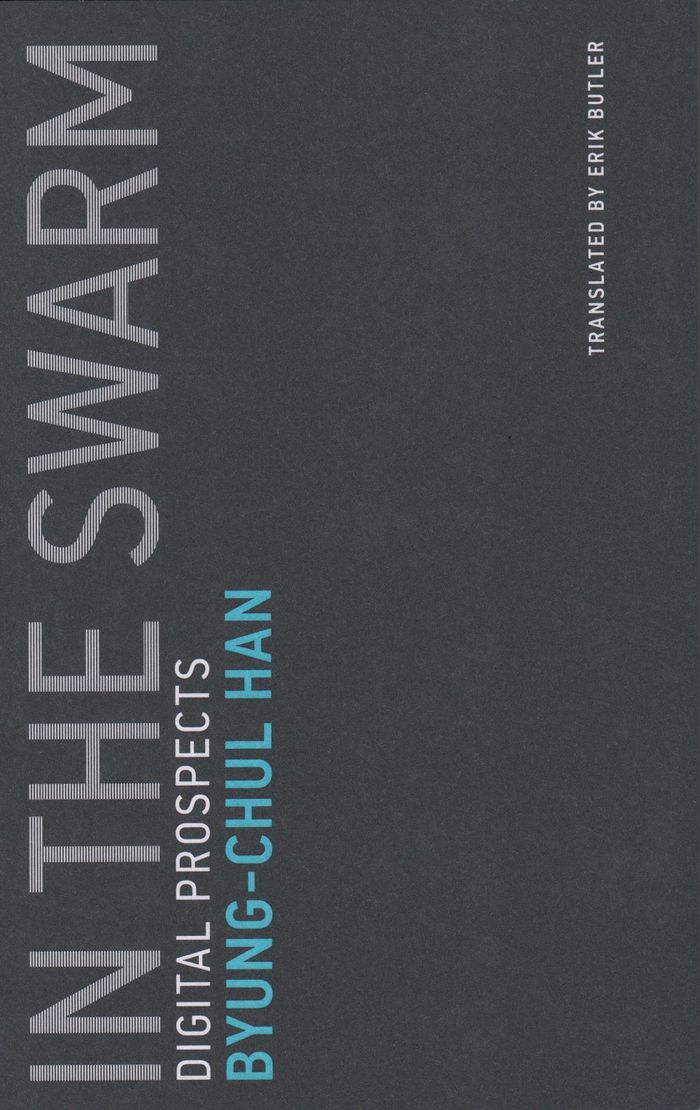
Digital communication and social media have taken over our lives. In this contrarian reflection on digitized life, Byung-Chul Han counters the cheerleaders for Twitter revolutions and Facebook activism by arguing that digital communication is in fact responsible for the disintegration of community and public space and is slowly eroding any possibility for real political action and meaningful political discourse. In the predigital, analog era, by the time an angry letter to the editor had been composed, mailed, and received, the immediate agitation had passed. Today, digital communication enables instantaneous, impulsive reaction, meant to express and stir up outrage on the spot. “The shitstorm,” writes Han, ”represents an authentic phenomenon of digital communication.” Meanwhile, the public, the senders and receivers of these communications have become a digital swarm—not a mass, or a crowd, or Negri and Hardt’s antiquated notion of a “multitude,” but a set of isolated individuals incapable of forming a “we,” incapable of calling dominant power relations into question, incapable of formulating a future because of an obsession with the present. The digital swarm is a fragmented entity that can focus on individual persons only in order to make them an object of scandal. Han, one of the most widely read philosophers in Europe today, describes a society in which information has overrun thought, in which the same algorithms are employed by Facebook, the stock market, and the intelligence services. Democracy is under threat because digital communication has made freedom and control indistinguishable. Big Brother has been succeeded by Big Data.
In the swarm
Actions:
Prix:
$18.95
(disponible sur commande)
Résumé:
Digital communication and social media have taken over our lives. In this contrarian reflection on digitized life, Byung-Chul Han counters the cheerleaders for Twitter revolutions and Facebook activism by arguing that digital communication is in fact responsible for the disintegration of community and public space and is slowly eroding any possibility for real political action and meaningful political discourse. In the predigital, analog era, by the time an angry letter to the editor had been composed, mailed, and received, the immediate agitation had passed. Today, digital communication enables instantaneous, impulsive reaction, meant to express and stir up outrage on the spot. “The shitstorm,” writes Han, ”represents an authentic phenomenon of digital communication.” Meanwhile, the public, the senders and receivers of these communications have become a digital swarm—not a mass, or a crowd, or Negri and Hardt’s antiquated notion of a “multitude,” but a set of isolated individuals incapable of forming a “we,” incapable of calling dominant power relations into question, incapable of formulating a future because of an obsession with the present. The digital swarm is a fragmented entity that can focus on individual persons only in order to make them an object of scandal. Han, one of the most widely read philosophers in Europe today, describes a society in which information has overrun thought, in which the same algorithms are employed by Facebook, the stock market, and the intelligence services. Democracy is under threat because digital communication has made freedom and control indistinguishable. Big Brother has been succeeded by Big Data.
Classification:
livres
livres
Publication:
avril 2017
avril 2017
Classification:
livres
livres
Titre:
The minimalist garden
The minimalist garden
Actions:
Prix:
$65.00
(disponible sur commande)
Résumé:
Over the course of the 20th century many of the best garden designers have looked to the past for inspiration; with the approach of the millennium, however, a fresh approach to garden design - minimalism - has moved to the forefront. The philosophy of minimalism, rooted simultaneously in classicism and modernism, has had a strong influence on architecture and interior(...)
$65.00
(disponible sur commande)
Résumé:
Over the course of the 20th century many of the best garden designers have looked to the past for inspiration; with the approach of the millennium, however, a fresh approach to garden design - minimalism - has moved to the forefront. The philosophy of minimalism, rooted simultaneously in classicism and modernism, has had a strong influence on architecture and interior(...)
Titre:
The minimalist garden
Actions:
Prix:
$65.00
(disponible sur commande)
Résumé:
Over the course of the 20th century many of the best garden designers have looked to the past for inspiration; with the approach of the millennium, however, a fresh approach to garden design - minimalism - has moved to the forefront. The philosophy of minimalism, rooted simultaneously in classicism and modernism, has had a strong influence on architecture and interior and graphic design, as well as landscape. Minimalist gardens, with their emphasis on clean lines, pure form, and a strong sense of place, are closely related to contemporary architecture and lifestyles. New trends in more relaxed and ecologically aware planting have contributed greatly to the development of such green spaces, and the creative use of trees and hedges to define and control space is often an important design element. In this volume, award-winning garden designer Christopher Bradley-Hole has drawn together a great variety of minimalist gardens from around the world - large and small, urban and rural. The projects are grouped into thematic chapters, including the landscape garden, pools and water gardens, courtyard gardens, and terrace and roof gardens. Among the designers are Vladimir Sitta, John Pawson, Luis Barragán, Seth Stein, Jacques Wirtz, Martha Schwartz, Shodo Suzuki, and Isamu Noguchi. Large color photographs and detailed images show the gardens in context; the text discusses the inspiration behind each garden, the relationship of space and proportions, and the frequent use of unusual materials and imaginative planning. Directories of materials and plants for the perfect minimalist garden are included as well.
The minimalist garden
Actions:
Prix:
$65.00
(disponible sur commande)
Résumé:
Over the course of the 20th century many of the best garden designers have looked to the past for inspiration; with the approach of the millennium, however, a fresh approach to garden design - minimalism - has moved to the forefront. The philosophy of minimalism, rooted simultaneously in classicism and modernism, has had a strong influence on architecture and interior and graphic design, as well as landscape. Minimalist gardens, with their emphasis on clean lines, pure form, and a strong sense of place, are closely related to contemporary architecture and lifestyles. New trends in more relaxed and ecologically aware planting have contributed greatly to the development of such green spaces, and the creative use of trees and hedges to define and control space is often an important design element. In this volume, award-winning garden designer Christopher Bradley-Hole has drawn together a great variety of minimalist gardens from around the world - large and small, urban and rural. The projects are grouped into thematic chapters, including the landscape garden, pools and water gardens, courtyard gardens, and terrace and roof gardens. Among the designers are Vladimir Sitta, John Pawson, Luis Barragán, Seth Stein, Jacques Wirtz, Martha Schwartz, Shodo Suzuki, and Isamu Noguchi. Large color photographs and detailed images show the gardens in context; the text discusses the inspiration behind each garden, the relationship of space and proportions, and the frequent use of unusual materials and imaginative planning. Directories of materials and plants for the perfect minimalist garden are included as well.
Classification:
livres
livres
Publication:
octobre 1999, New York
octobre 1999, New York
Sujet:
Jardins
Jardins
Classification:
livres
livres
Prix:
$26.99
(disponible sur commande)
Résumé:
In the late 2000s human society entered a new urban epoch in which the majority of human beings live in cities. Whilst the city has historically been viewed as the foundation of democracy and citizenship, the geo-political spaces of modern cities are widely misunderstood despite their key role in shaping contemporary global society. How and why have cities become the(...)
$26.99
(disponible sur commande)
Résumé:
In the late 2000s human society entered a new urban epoch in which the majority of human beings live in cities. Whilst the city has historically been viewed as the foundation of democracy and citizenship, the geo-political spaces of modern cities are widely misunderstood despite their key role in shaping contemporary global society. How and why have cities become the(...)
Titre:
Rise of cities: Montréal, Toronto, Vancouver and other cities
Actions:
Prix:
$26.99
(disponible sur commande)
Résumé:
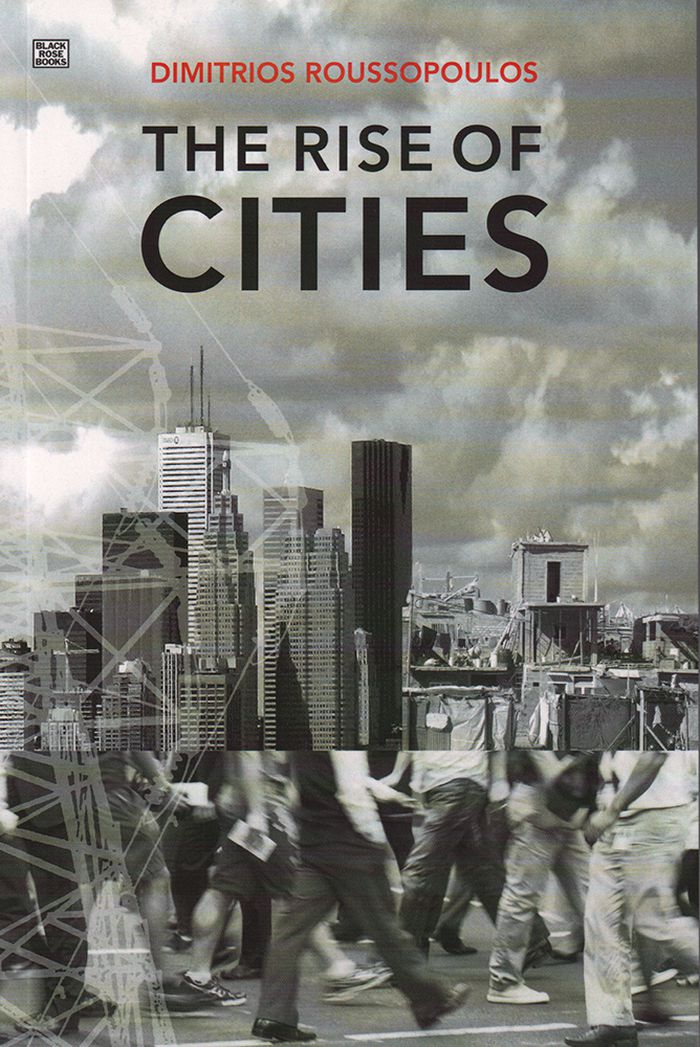
In the late 2000s human society entered a new urban epoch in which the majority of human beings live in cities. Whilst the city has historically been viewed as the foundation of democracy and citizenship, the geo-political spaces of modern cities are widely misunderstood despite their key role in shaping contemporary global society. How and why have cities become the command centres of the world economy? Does globalization menace cities as we know them? Are cities able to exercise democratic control and strategic choice when multinational corporate competition increasingly limits the importance of place? The Rise of Cities offers intriguing responses to these questions by analyzing how cities coalesce, develop and thrive, and how they can remake themselves for better for worse. Examining key issues such as the parasitic relationships cities have with Nature, the webs of trade and immigration they rely on to survive, and the spatial structure of the contemporary metropolis, the contributors develop a startling outline of cities in crisis and demonstrate why the State has failed, and must fail, to end the urban crisis. These themes are explored through a variety of concrete, real-world examples of the challenges of urban politics: metropolitan governance, urban redevelopment policy, housing problems, grass roots activism and urban planning. In the background looms the spectre of neo-liberal globalization, with the development of influential world cities related to the emergence of modern telecommunications, the growth of multinational corporations and the generation of a world economy with an increased movement of cultural symbols and artifacts across national borders.
Rise of cities: Montréal, Toronto, Vancouver and other cities
Actions:
Prix:
$26.99
(disponible sur commande)
Résumé:
In the late 2000s human society entered a new urban epoch in which the majority of human beings live in cities. Whilst the city has historically been viewed as the foundation of democracy and citizenship, the geo-political spaces of modern cities are widely misunderstood despite their key role in shaping contemporary global society. How and why have cities become the command centres of the world economy? Does globalization menace cities as we know them? Are cities able to exercise democratic control and strategic choice when multinational corporate competition increasingly limits the importance of place? The Rise of Cities offers intriguing responses to these questions by analyzing how cities coalesce, develop and thrive, and how they can remake themselves for better for worse. Examining key issues such as the parasitic relationships cities have with Nature, the webs of trade and immigration they rely on to survive, and the spatial structure of the contemporary metropolis, the contributors develop a startling outline of cities in crisis and demonstrate why the State has failed, and must fail, to end the urban crisis. These themes are explored through a variety of concrete, real-world examples of the challenges of urban politics: metropolitan governance, urban redevelopment policy, housing problems, grass roots activism and urban planning. In the background looms the spectre of neo-liberal globalization, with the development of influential world cities related to the emergence of modern telecommunications, the growth of multinational corporations and the generation of a world economy with an increased movement of cultural symbols and artifacts across national borders.
Classification:
livres
livres
Publication:
juin 2017
juin 2017
Sujet:
Architecture du Canada
Architecture du Canada
Classification:
livres
livres
Actions:
Prix:
$90.00
(disponible sur commande)
Résumé:
Henri Cartier-Bresson (1908–2004) is one of the most influential and beloved figures in the history of photography. His inventive work of the early 1930s helped define the creative potential of modern photography. Following World War II, he helped found the Magnum photo agency, which enabled photojournalists to reach a broad audience through magazines such as Life while(...)
$90.00
(disponible sur commande)
Résumé:
Henri Cartier-Bresson (1908–2004) is one of the most influential and beloved figures in the history of photography. His inventive work of the early 1930s helped define the creative potential of modern photography. Following World War II, he helped found the Magnum photo agency, which enabled photojournalists to reach a broad audience through magazines such as Life while(...)
Titre:
Henri Cartier-Bresson : the modern century
Actions:
Prix:
$90.00
(disponible sur commande)
Résumé:
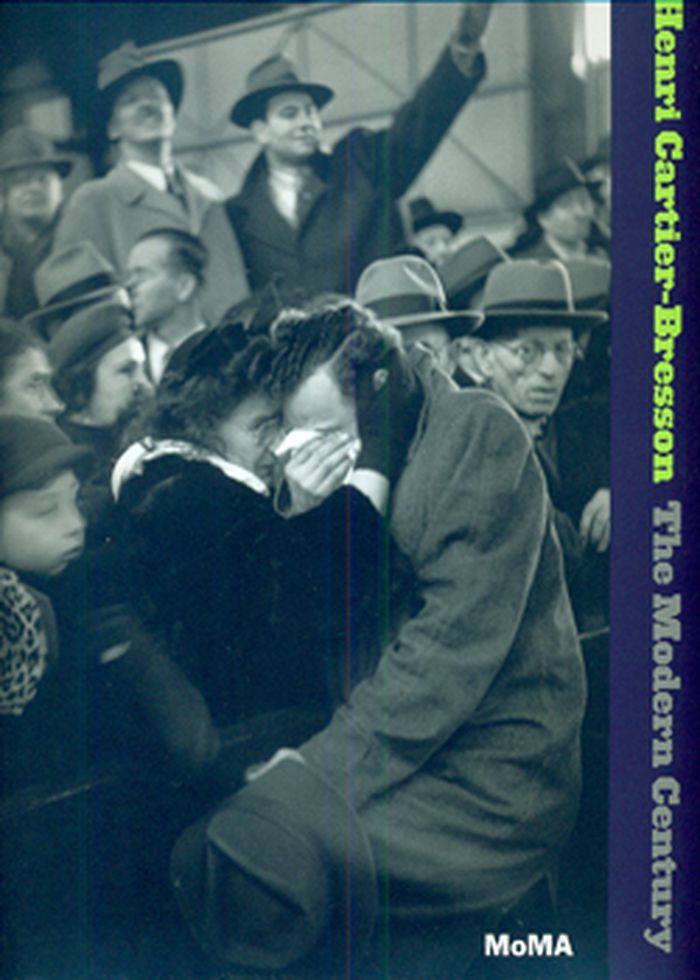
Henri Cartier-Bresson (1908–2004) is one of the most influential and beloved figures in the history of photography. His inventive work of the early 1930s helped define the creative potential of modern photography. Following World War II, he helped found the Magnum photo agency, which enabled photojournalists to reach a broad audience through magazines such as Life while retaining control over their work. Cartier-Bresson would go on to produce major bodies of photographic reportage, capturing such events as China during the revolution, the Soviet Union after Stalin's death, the United States in the postwar boom and Europe as its older cultures confronted modern realities. Published to accompany an exhibition at The Museum of Modern Art, this is the first major publication to make full use of the extensive holdings of the Fondation Cartier-Bresson — including thousands of prints and a vast resource of documents relating to the photographer's life and work. The heart of the book surveys Cartier-Bresson's career through 300 photographs divided into 12 chapters. While many of his most famous pictures are included, a great number of images will be unfamiliar even to specialists. A wide-ranging essay by Peter Galassi, Chief Curator of Photography at the Museum, offers an entirely new understanding of Cartier-Bresson's extraordinary career and its overlapping contexts of journalism and art. The extensive supporting material — featuring detailed chronologies of the photographer's professional travels and of spreads of his picture stories as they appeared in magazines — will revolutionize the study of Cartier-Bresson's work.
Henri Cartier-Bresson : the modern century
Actions:
Prix:
$90.00
(disponible sur commande)
Résumé:
Henri Cartier-Bresson (1908–2004) is one of the most influential and beloved figures in the history of photography. His inventive work of the early 1930s helped define the creative potential of modern photography. Following World War II, he helped found the Magnum photo agency, which enabled photojournalists to reach a broad audience through magazines such as Life while retaining control over their work. Cartier-Bresson would go on to produce major bodies of photographic reportage, capturing such events as China during the revolution, the Soviet Union after Stalin's death, the United States in the postwar boom and Europe as its older cultures confronted modern realities. Published to accompany an exhibition at The Museum of Modern Art, this is the first major publication to make full use of the extensive holdings of the Fondation Cartier-Bresson — including thousands of prints and a vast resource of documents relating to the photographer's life and work. The heart of the book surveys Cartier-Bresson's career through 300 photographs divided into 12 chapters. While many of his most famous pictures are included, a great number of images will be unfamiliar even to specialists. A wide-ranging essay by Peter Galassi, Chief Curator of Photography at the Museum, offers an entirely new understanding of Cartier-Bresson's extraordinary career and its overlapping contexts of journalism and art. The extensive supporting material — featuring detailed chronologies of the photographer's professional travels and of spreads of his picture stories as they appeared in magazines — will revolutionize the study of Cartier-Bresson's work.
Classification:
livres
livres
Publication:
avril 2010
avril 2010
Sujet:
Monographies photo
Monographies photo
Classification:
livres
livres
Actions:
Exemplaires:
Description:
36 pages : illustrations, portraits ; 23 cm
Description:
36 pages : illustrations, portraits ; 23 cm
Auteur:
Sujet:
Publication:
[Dieppe, N.-B.?] : [Conseil paroissial], 1980.
[Dieppe, N.-B.?] : [Conseil paroissial], 1980.
Titre:
La Paroisse Sainte-Thérèse de l'Enfant-Jésus : un bref historique, 1930 à 1980 / ouvrage préparé par le Conseil paroissial, à travers son Comité de l'historique à l'occasion du 50ième anniversaire de la paroisse ; contrôle des données et texte, Paul Surette.
Actions:
Exemplaires:
Description:
36 pages : illustrations, portraits ; 23 cm
La Paroisse Sainte-Thérèse de l'Enfant-Jésus : un bref historique, 1930 à 1980 / ouvrage préparé par le Conseil paroissial, à travers son Comité de l'historique à l'occasion du 50ième anniversaire de la paroisse ; contrôle des données et texte, Paul Surette.
Actions:
Exemplaires:
Description:
36 pages : illustrations, portraits ; 23 cm
Classification:
livres
livres
Publication:
[Dieppe, N.-B.?] : [Conseil paroissial], 1980.
[Dieppe, N.-B.?] : [Conseil paroissial], 1980.
Auteur:
Sujet:
Classification:
livres
livres
Actions:
Prix:
$32.50
(disponible sur commande)
Résumé:
Who are you? And how can you prove it? How were individuals described and identified by people who had never seen them before, in the centuries before photography and fingerprinting, in a world without centralized administrations, where names and addresses were constantly changing? In "Who are you?", Valentin Groebner traces the early modern European history of(...)
$32.50
(disponible sur commande)
Résumé:
Who are you? And how can you prove it? How were individuals described and identified by people who had never seen them before, in the centuries before photography and fingerprinting, in a world without centralized administrations, where names and addresses were constantly changing? In "Who are you?", Valentin Groebner traces the early modern European history of(...)
Titre:
Who are you? : identification, deception, and surveillance in early modern Europe
Actions:
Prix:
$32.50
(disponible sur commande)
Résumé:
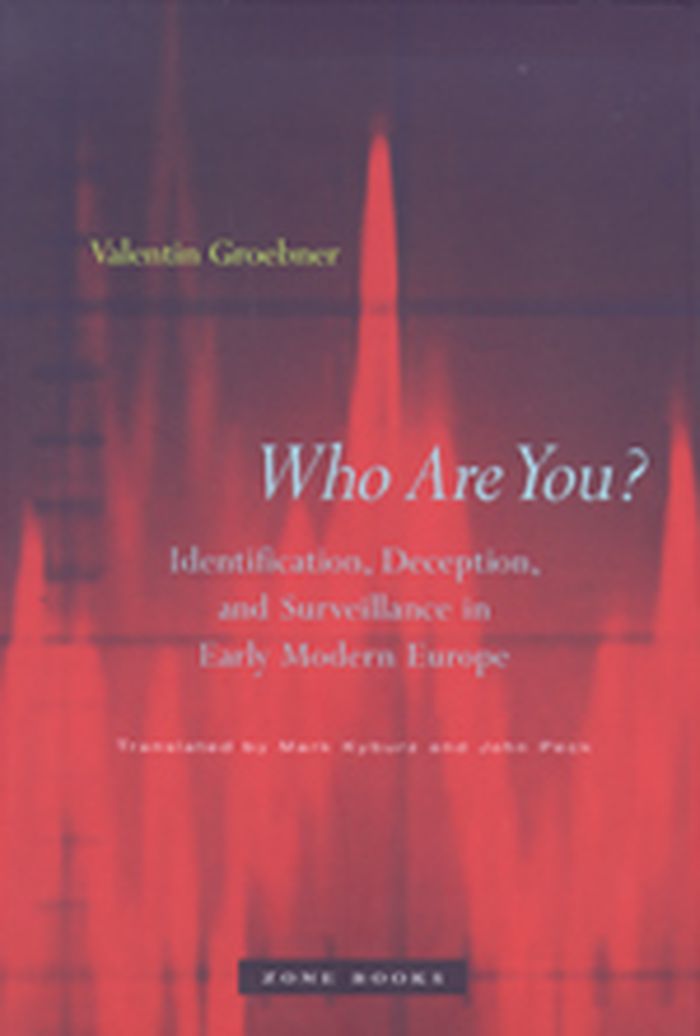
Who are you? And how can you prove it? How were individuals described and identified by people who had never seen them before, in the centuries before photography and fingerprinting, in a world without centralized administrations, where names and addresses were constantly changing? In "Who are you?", Valentin Groebner traces the early modern European history of identification practices and identity papers. The documents, seals, stamps, and signatures were — and are — powerful tools that created the double of a person in writ and bore the indelible signs of bureaucratic authenticity. Ultimately, as Groebner lucidly explains, they revealed as much about their makers’ illustory fantasies as they did about their bearers’ actual identity. The bureaucratic desire to register and control the population created, from the sixteenth century onward, an intricate administrative system for tracking individual identities. Most important, the proof of one’s identity was intimately linked and determined by the identification papers the authorities demanded and endlessly supplied. At the same time, these papers and practices gave birth to two uncanny doppelgängers of administrative identity procedures : the spy who craftily forged official documents and passports, and the impostor who dissimulated and mimed any individual he so disired. Through careful research and powerful narrative, Groebner recounts the complicated and bizarre stories of the many ways in which identities were stolen, created, and doubled. Groebner argues that identity papers cannot be interpreted literally as pure and simple documents. They are themselves pieces of history, histories of individuals and individuality, papers that both document and transform their owner’s identity — from Renaissance vagrants and gypsies to the illegal immigrants of today who remain "sans papiers", without papers.
Who are you? : identification, deception, and surveillance in early modern Europe
Actions:
Prix:
$32.50
(disponible sur commande)
Résumé:
Who are you? And how can you prove it? How were individuals described and identified by people who had never seen them before, in the centuries before photography and fingerprinting, in a world without centralized administrations, where names and addresses were constantly changing? In "Who are you?", Valentin Groebner traces the early modern European history of identification practices and identity papers. The documents, seals, stamps, and signatures were — and are — powerful tools that created the double of a person in writ and bore the indelible signs of bureaucratic authenticity. Ultimately, as Groebner lucidly explains, they revealed as much about their makers’ illustory fantasies as they did about their bearers’ actual identity. The bureaucratic desire to register and control the population created, from the sixteenth century onward, an intricate administrative system for tracking individual identities. Most important, the proof of one’s identity was intimately linked and determined by the identification papers the authorities demanded and endlessly supplied. At the same time, these papers and practices gave birth to two uncanny doppelgängers of administrative identity procedures : the spy who craftily forged official documents and passports, and the impostor who dissimulated and mimed any individual he so disired. Through careful research and powerful narrative, Groebner recounts the complicated and bizarre stories of the many ways in which identities were stolen, created, and doubled. Groebner argues that identity papers cannot be interpreted literally as pure and simple documents. They are themselves pieces of history, histories of individuals and individuality, papers that both document and transform their owner’s identity — from Renaissance vagrants and gypsies to the illegal immigrants of today who remain "sans papiers", without papers.
Classification:
livres
livres
Publication:
mars 2007, New York
mars 2007, New York
Sujet:
Théorie de l’architecture
Théorie de l’architecture
Classification:
livres
livres
Actions:
Prix:
$37.50
(disponible sur commande)
Résumé:
Toward the end of the sixteenth century, and throughout the seventeenth, thinking in spatial terms assumed extraordinary urgency among Russia's ruling elites. The two great developments of this era in Russian history - the enserfment of the peasantry and the conquest of a vast Eastern empire-fundamentally concerned spatial control and concepts of movements across the(...)
$37.50
(disponible sur commande)
Résumé:
Toward the end of the sixteenth century, and throughout the seventeenth, thinking in spatial terms assumed extraordinary urgency among Russia's ruling elites. The two great developments of this era in Russian history - the enserfment of the peasantry and the conquest of a vast Eastern empire-fundamentally concerned spatial control and concepts of movements across the(...)
Titre:
Cartographies of tsardom : the land and its meaning in seventeenth-century Russia
Actions:
Prix:
$37.50
(disponible sur commande)
Résumé:
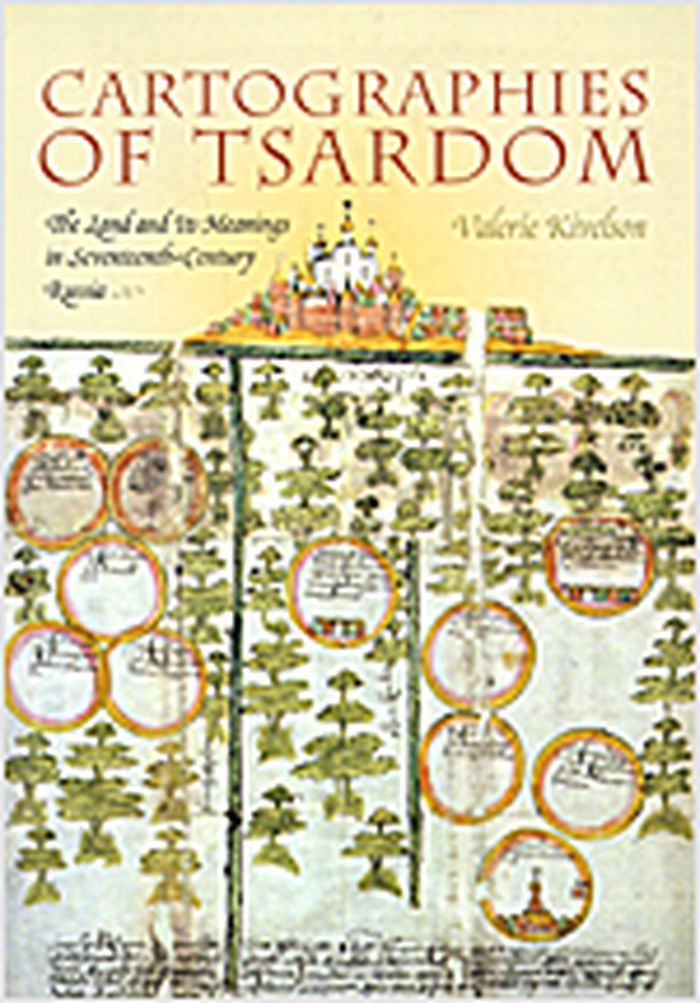
Toward the end of the sixteenth century, and throughout the seventeenth, thinking in spatial terms assumed extraordinary urgency among Russia's ruling elites. The two great developments of this era in Russian history - the enserfment of the peasantry and the conquest of a vast Eastern empire-fundamentally concerned spatial control and concepts of movements across the land. In "Cartographies of tsardom", Valerie Kivelson explores how these twin themes of fixity and mobility obliged Russians, from tsar to peasant, to think in spatial terms. She builds her case through close study of two very different kinds of maps: the hundreds of local maps hand-drawn by amateurs as evidence in property litigations, and the maps of the new territories that stretched from the Urals to the Pacific. In both the simple maps that local residents drafted and in the more formal maps of the newly conquered Siberian spaces, Kivelson shows that the Russians saw the land (be it a peasant's plot or the Siberian taiga) as marked by the grace of divine providence. She argues that the unceasing tension between fixity and mobility led to the emergence in Eurasia of an empire quite different from that in North America. In her words, the Russian empire that took shape in the decades before Peter the Great proclaimed its existence was a “spacious mantle,” a “patchwork quilt of difference under a single tsar” that granted religious and cultural space to non-Russian, non-Orthodox populations even as it strove to tie them down to serve its own growing fiscal needs. The unresolved, perhaps unresolvable, tension between these contrary impulses was both the strength and the weakness of empire in Russia.
Cartographies of tsardom : the land and its meaning in seventeenth-century Russia
Actions:
Prix:
$37.50
(disponible sur commande)
Résumé:
Toward the end of the sixteenth century, and throughout the seventeenth, thinking in spatial terms assumed extraordinary urgency among Russia's ruling elites. The two great developments of this era in Russian history - the enserfment of the peasantry and the conquest of a vast Eastern empire-fundamentally concerned spatial control and concepts of movements across the land. In "Cartographies of tsardom", Valerie Kivelson explores how these twin themes of fixity and mobility obliged Russians, from tsar to peasant, to think in spatial terms. She builds her case through close study of two very different kinds of maps: the hundreds of local maps hand-drawn by amateurs as evidence in property litigations, and the maps of the new territories that stretched from the Urals to the Pacific. In both the simple maps that local residents drafted and in the more formal maps of the newly conquered Siberian spaces, Kivelson shows that the Russians saw the land (be it a peasant's plot or the Siberian taiga) as marked by the grace of divine providence. She argues that the unceasing tension between fixity and mobility led to the emergence in Eurasia of an empire quite different from that in North America. In her words, the Russian empire that took shape in the decades before Peter the Great proclaimed its existence was a “spacious mantle,” a “patchwork quilt of difference under a single tsar” that granted religious and cultural space to non-Russian, non-Orthodox populations even as it strove to tie them down to serve its own growing fiscal needs. The unresolved, perhaps unresolvable, tension between these contrary impulses was both the strength and the weakness of empire in Russia.
Classification:
livres
livres
Publication:
septembre 2006, Ithaca, London
septembre 2006, Ithaca, London
Sujet:
Histoire jusqu’à 1900
Histoire jusqu’à 1900
Classification:
livres
livres
Prix:
$44.95
(disponible sur commande)
Résumé:
Why does technology change over time, how does it change, and what difference does it make? In this sweeping, ambitious look at a thousand years of Western experience, Robert Friedel argues that technological change comes largely through the pursuit of improvement--the deep-rooted belief that things could be done in a better way. What Friedel calls the "culture of(...)
$44.95
(disponible sur commande)
Résumé:
Why does technology change over time, how does it change, and what difference does it make? In this sweeping, ambitious look at a thousand years of Western experience, Robert Friedel argues that technological change comes largely through the pursuit of improvement--the deep-rooted belief that things could be done in a better way. What Friedel calls the "culture of(...)
Titre:
A culture of improvement : technology and the western millennium
Actions:
Prix:
$44.95
(disponible sur commande)
Résumé:
Why does technology change over time, how does it change, and what difference does it make? In this sweeping, ambitious look at a thousand years of Western experience, Robert Friedel argues that technological change comes largely through the pursuit of improvement--the deep-rooted belief that things could be done in a better way. What Friedel calls the "culture of improvement" is manifested every day in the ways people carry out their tasks in life--from tilling fields and raising children to waging war. Improvements can be ephemeral or lasting, and one person’s improvement may not always be viewed as such by others. Friedel stresses the social processes by which we define what improvements are and decide which improvements will last and which will not. These processes, he emphasizes, have created both winners and losers in history. Friedel presents a series of narratives of Western technology that begin in the eleventh century and stretch into the twenty-first. Familiar figures from the history of invention are joined by others--the Italian preacher who described the first eyeglasses, the dairywomen displaced from their control over cheesemaking, and the little-known engineer who first suggested a grand tower to Gustav Eiffel. Friedel traces technology from the plow and the printing press to the internal combustion engine, the transistor, and the space shuttle. Friedel also reminds us that faith in improvement can sometimes have horrific consequences: improved weaponry makes warfare ever more deadly and the drive for improving human beings can lead to eugenics and even genocide. The most comprehensive attempt to tell the story of Western technology in many years, engagingly written and lavishly illustrated, A Culture of Improvement documents the ways in which the drive for improvement has shaped our modern world.
A culture of improvement : technology and the western millennium
Actions:
Prix:
$44.95
(disponible sur commande)
Résumé:
Why does technology change over time, how does it change, and what difference does it make? In this sweeping, ambitious look at a thousand years of Western experience, Robert Friedel argues that technological change comes largely through the pursuit of improvement--the deep-rooted belief that things could be done in a better way. What Friedel calls the "culture of improvement" is manifested every day in the ways people carry out their tasks in life--from tilling fields and raising children to waging war. Improvements can be ephemeral or lasting, and one person’s improvement may not always be viewed as such by others. Friedel stresses the social processes by which we define what improvements are and decide which improvements will last and which will not. These processes, he emphasizes, have created both winners and losers in history. Friedel presents a series of narratives of Western technology that begin in the eleventh century and stretch into the twenty-first. Familiar figures from the history of invention are joined by others--the Italian preacher who described the first eyeglasses, the dairywomen displaced from their control over cheesemaking, and the little-known engineer who first suggested a grand tower to Gustav Eiffel. Friedel traces technology from the plow and the printing press to the internal combustion engine, the transistor, and the space shuttle. Friedel also reminds us that faith in improvement can sometimes have horrific consequences: improved weaponry makes warfare ever more deadly and the drive for improving human beings can lead to eugenics and even genocide. The most comprehensive attempt to tell the story of Western technology in many years, engagingly written and lavishly illustrated, A Culture of Improvement documents the ways in which the drive for improvement has shaped our modern world.
Classification:
livres
livres
Publication:
mai 2007, Cambridge / London
mai 2007, Cambridge / London
Sujet:
Structures d’ingénierie
Structures d’ingénierie


