


2314 Résultats
Classification:
livres
livres
Actions:
Prix:
$41.99
(disponible en magasin)
Résumé:
In "Plant life", Rosetta S. Elkin explores the procedures of afforestation, the large-scale planting of trees in otherwise treeless environments, including grasslands, prairies, and drylands. Elkin reveals that planting a tree can either be one of the ultimate offerings to thriving on this planet, or one of the most extreme perversions of human agency over it. Using(...)
$41.99
(disponible en magasin)
Résumé:
In "Plant life", Rosetta S. Elkin explores the procedures of afforestation, the large-scale planting of trees in otherwise treeless environments, including grasslands, prairies, and drylands. Elkin reveals that planting a tree can either be one of the ultimate offerings to thriving on this planet, or one of the most extreme perversions of human agency over it. Using(...)
Titre:
Plant life: the entangled politics of afforestation
Actions:
Prix:
$41.99
(disponible en magasin)
Résumé:
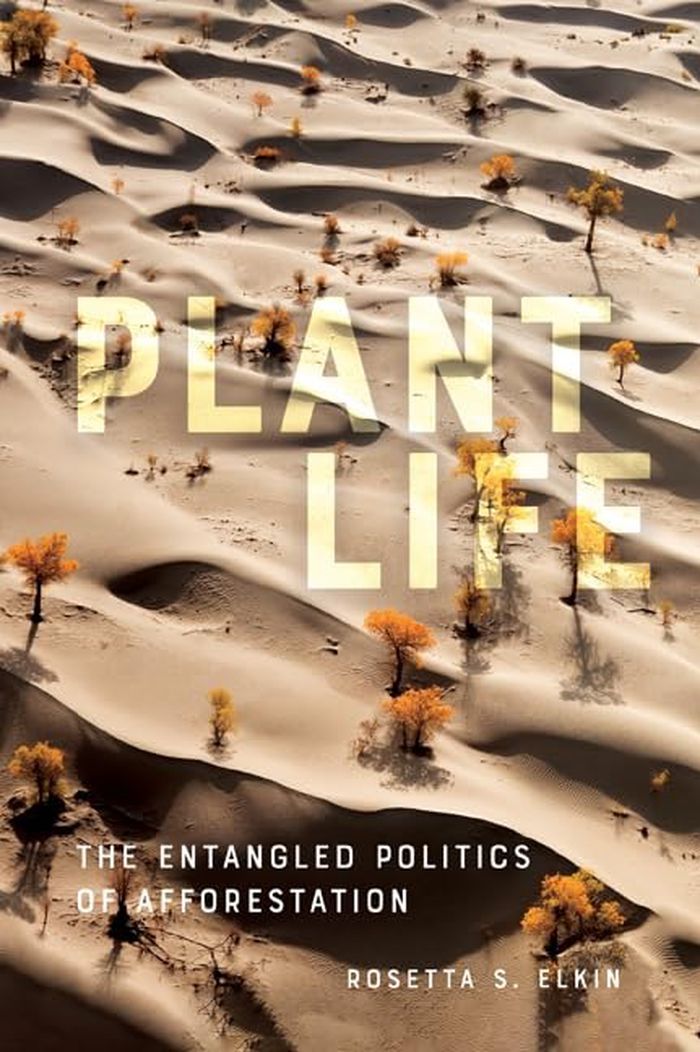
In "Plant life", Rosetta S. Elkin explores the procedures of afforestation, the large-scale planting of trees in otherwise treeless environments, including grasslands, prairies, and drylands. Elkin reveals that planting a tree can either be one of the ultimate offerings to thriving on this planet, or one of the most extreme perversions of human agency over it. Using three supracontinental case studies-scientific forestry in the American prairies, colonial control in Africa's Sahelian grasslands, and Chinese efforts to control and administer territory-Elkin explores the political implications of plant life as a tool of environmentalism. By exposing the human tendency to fix or solve environmental matters by exploiting other organisms, this work exposes the relationship between human and plant life, revealing that afforestation is not an ecological act: rather, it is deliberately political and distressingly social.
Plant life: the entangled politics of afforestation
Actions:
Prix:
$41.99
(disponible en magasin)
Résumé:
In "Plant life", Rosetta S. Elkin explores the procedures of afforestation, the large-scale planting of trees in otherwise treeless environments, including grasslands, prairies, and drylands. Elkin reveals that planting a tree can either be one of the ultimate offerings to thriving on this planet, or one of the most extreme perversions of human agency over it. Using three supracontinental case studies-scientific forestry in the American prairies, colonial control in Africa's Sahelian grasslands, and Chinese efforts to control and administer territory-Elkin explores the political implications of plant life as a tool of environmentalism. By exposing the human tendency to fix or solve environmental matters by exploiting other organisms, this work exposes the relationship between human and plant life, revealing that afforestation is not an ecological act: rather, it is deliberately political and distressingly social.
Classification:
livres
livres
Publication:
mai 2022
mai 2022
Sujet:
L'écologie de l'architecure
L'écologie de l'architecure
Classification:
livres
livres

Prix:
$42.00
(disponible sur commande)
Résumé:
This first volume in a series examining intersections between architectural theory and practice addresses environmental crisis and spatial justice through four essays. Marc Angélil and Cary Siress trace the evolution from Technocene, Thermocene, Plantationocene, to Entropocene, Capitalocene, and Urbicene. Elke Krasny reflects on scales of care within social justice and(...)
$42.00
(disponible sur commande)
Résumé:
This first volume in a series examining intersections between architectural theory and practice addresses environmental crisis and spatial justice through four essays. Marc Angélil and Cary Siress trace the evolution from Technocene, Thermocene, Plantationocene, to Entropocene, Capitalocene, and Urbicene. Elke Krasny reflects on scales of care within social justice and(...)
Sujet:
L'écologie de l'architecure
L'écologie de l'architecure
Publication:
juin 2025
juin 2025
Titre:
New tools, Vol. 1: Architectural discourses on the Anthropocene
Actions:
Prix:
$42.00
(disponible sur commande)
Résumé:
This first volume in a series examining intersections between architectural theory and practice addresses environmental crisis and spatial justice through four essays. Marc Angélil and Cary Siress trace the evolution from Technocene, Thermocene, Plantationocene, to Entropocene, Capitalocene, and Urbicene. Elke Krasny reflects on scales of care within social justice and decolonization. Contributors explore the "Curated Diner" as a planning intervention. Finally, Space Caviar advocates for a non-extractive approach to architecture as part of a broader economic transformation. These interdisciplinary contributions aim to reshape the discourse and discuss equitable, inclusive, and intergenerational practices.
New tools, Vol. 1: Architectural discourses on the Anthropocene
Actions:
Prix:
$42.00
(disponible sur commande)
Résumé:
This first volume in a series examining intersections between architectural theory and practice addresses environmental crisis and spatial justice through four essays. Marc Angélil and Cary Siress trace the evolution from Technocene, Thermocene, Plantationocene, to Entropocene, Capitalocene, and Urbicene. Elke Krasny reflects on scales of care within social justice and decolonization. Contributors explore the "Curated Diner" as a planning intervention. Finally, Space Caviar advocates for a non-extractive approach to architecture as part of a broader economic transformation. These interdisciplinary contributions aim to reshape the discourse and discuss equitable, inclusive, and intergenerational practices.
Classification:
livres
livres
Publication:
juin 2025
juin 2025
Sujet:
L'écologie de l'architecure
L'écologie de l'architecure
Classification:
livres
livres
Actions:
Prix:
$36.00
(disponible en magasin)
Résumé:
The sequel to the authors’ “Are We Human?”, this provocative book is an urgent manifesto for an alternative architectural philosophy. It treats bacteria as the real architects, construction workers, maintenance crews and inhabitants of buildings. Colomina and Wigley draw on the latest research into microbes to rethink the past and possible futures of the built(...)
$36.00
(disponible en magasin)
Résumé:
The sequel to the authors’ “Are We Human?”, this provocative book is an urgent manifesto for an alternative architectural philosophy. It treats bacteria as the real architects, construction workers, maintenance crews and inhabitants of buildings. Colomina and Wigley draw on the latest research into microbes to rethink the past and possible futures of the built(...)
Titre:
We the bacteria: Notes towards biotic architecture
Actions:
Prix:
$36.00
(disponible en magasin)
Résumé:
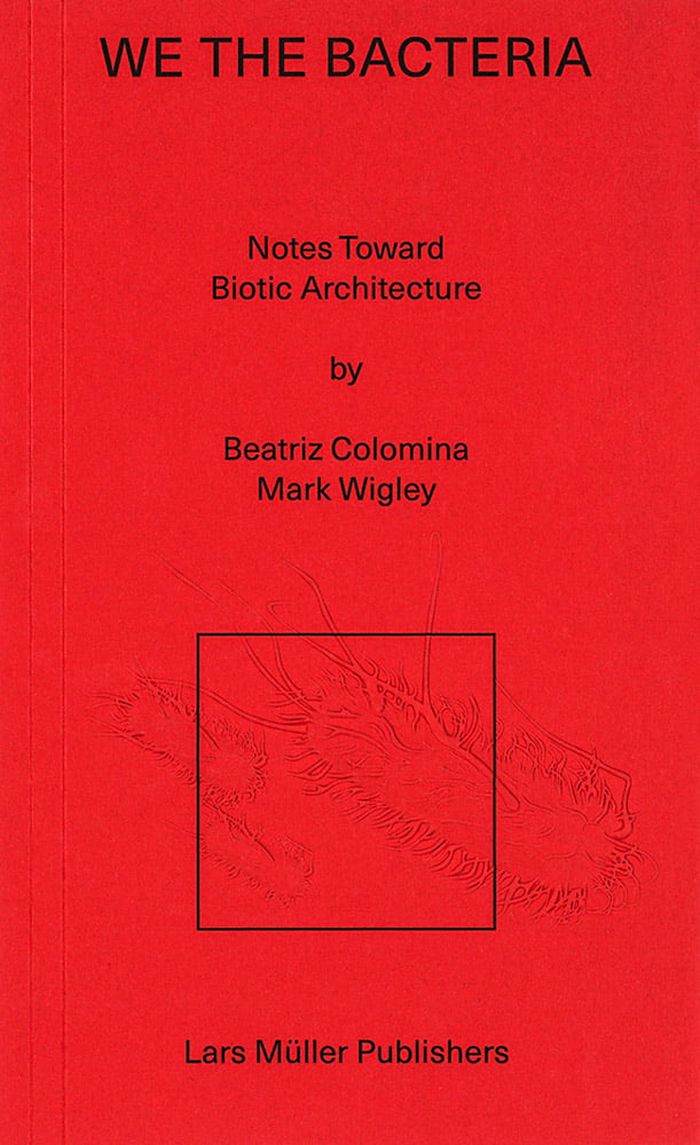
The sequel to the authors’ “Are We Human?”, this provocative book is an urgent manifesto for an alternative architectural philosophy. It treats bacteria as the real architects, construction workers, maintenance crews and inhabitants of buildings. Colomina and Wigley draw on the latest research into microbes to rethink the past and possible futures of the built environment. The book explores the intimate entanglements of the microbes within bodies and buildings over the last 10,000 years, culminating in the antibiotic philosophy of contemporary architecture. The diseases of our time are diseases of the built environment. The deadly combination of rapidly declining microbial diversity and rising antibiotic-resistant bacteria is as great a threat as climate change. Hostility to bacteria has to give way to new forms of hospitality from a more symbiotic architecture that learns from bacteria, embracing them and reconnecting with soil, plants and other species. Buildings based on fear of bacteria, which is to say fear of life itself, must give way to buildings learning from models of coexistence based on bacteria themselves. The main goal of the book is to rethink the very idea of shelter in terms of forms of inclusion rather than prophylactic forms of exclusion.
We the bacteria: Notes towards biotic architecture
Actions:
Prix:
$36.00
(disponible en magasin)
Résumé:
The sequel to the authors’ “Are We Human?”, this provocative book is an urgent manifesto for an alternative architectural philosophy. It treats bacteria as the real architects, construction workers, maintenance crews and inhabitants of buildings. Colomina and Wigley draw on the latest research into microbes to rethink the past and possible futures of the built environment. The book explores the intimate entanglements of the microbes within bodies and buildings over the last 10,000 years, culminating in the antibiotic philosophy of contemporary architecture. The diseases of our time are diseases of the built environment. The deadly combination of rapidly declining microbial diversity and rising antibiotic-resistant bacteria is as great a threat as climate change. Hostility to bacteria has to give way to new forms of hospitality from a more symbiotic architecture that learns from bacteria, embracing them and reconnecting with soil, plants and other species. Buildings based on fear of bacteria, which is to say fear of life itself, must give way to buildings learning from models of coexistence based on bacteria themselves. The main goal of the book is to rethink the very idea of shelter in terms of forms of inclusion rather than prophylactic forms of exclusion.
Classification:
livres
livres
Publication:
octobre 2025
octobre 2025
Sujet:
L'écologie de l'architecure
L'écologie de l'architecure
Classification:
livres
livres

Titre:
Architecture and the right to heal: Resettler nationalism in the aftermath of conflict and disaster
Architecture and the right to heal: Resettler nationalism in the aftermath of conflict and disaster
Actions:
Prix:
$52.95
(disponible en magasin)
Résumé:
In "Architecture and the right to heal," Esra Akcan calls for architecture to take an active role in healing communities affected by socioeconomic, political, and environmental disasters. Akcan frames these processes by discussing buildings and spaces in relation to climate change mitigation and transitional justice. Focusing on lands held by the former Ottoman Empire,(...)
$52.95
(disponible en magasin)
Résumé:
In "Architecture and the right to heal," Esra Akcan calls for architecture to take an active role in healing communities affected by socioeconomic, political, and environmental disasters. Akcan frames these processes by discussing buildings and spaces in relation to climate change mitigation and transitional justice. Focusing on lands held by the former Ottoman Empire,(...)
Titre:
Architecture and the right to heal: Resettler nationalism in the aftermath of conflict and disaster
Actions:
Prix:
$52.95
(disponible en magasin)
Résumé:
In "Architecture and the right to heal," Esra Akcan calls for architecture to take an active role in healing communities affected by socioeconomic, political, and environmental disasters. Akcan frames these processes by discussing buildings and spaces in relation to climate change mitigation and transitional justice. Focusing on lands held by the former Ottoman Empire, Akcan highlights the ongoing struggle to heal after internal social, state, and business-led violence ranging from forced disappearance to mass extinction. Putting forth the concept of resettler nationalism as a source of displacement and partition, she argues that while architecture and urban planning have been weaponized to segregate and subjugate minorities throughout history, they could instead confront systemic violence and make accountability and reparations possible. For Akcan, healing constitutes a matter of rights as well as a holistic notion of justice that addresses the intersections of social, global, and environmental issues and one can be achieved through architecture. By locating spaces of political and ecological harm, Akcan advocates for healing on individual, communal, and planetary levels.
Architecture and the right to heal: Resettler nationalism in the aftermath of conflict and disaster
Actions:
Prix:
$52.95
(disponible en magasin)
Résumé:
In "Architecture and the right to heal," Esra Akcan calls for architecture to take an active role in healing communities affected by socioeconomic, political, and environmental disasters. Akcan frames these processes by discussing buildings and spaces in relation to climate change mitigation and transitional justice. Focusing on lands held by the former Ottoman Empire, Akcan highlights the ongoing struggle to heal after internal social, state, and business-led violence ranging from forced disappearance to mass extinction. Putting forth the concept of resettler nationalism as a source of displacement and partition, she argues that while architecture and urban planning have been weaponized to segregate and subjugate minorities throughout history, they could instead confront systemic violence and make accountability and reparations possible. For Akcan, healing constitutes a matter of rights as well as a holistic notion of justice that addresses the intersections of social, global, and environmental issues and one can be achieved through architecture. By locating spaces of political and ecological harm, Akcan advocates for healing on individual, communal, and planetary levels.
Classification:
livres
livres
Publication:
novembre 2025
novembre 2025
Sujet:
L'écologie de l'architecure
L'écologie de l'architecure
Classification:
livres
livres
Actions:
Prix:
$49.95
(disponible sur commande)
Résumé:
What does it mean to examine post-communist politics through the prism of the material and semiotic transformations and modifications of surfaces? A rethinking of surfaces as dynamic and complex sites opens a path for a detailed study of their crucial role in the governing of post-communist urban space—but also of the forms of subversion that can be discerned through(...)
$49.95
(disponible sur commande)
Résumé:
What does it mean to examine post-communist politics through the prism of the material and semiotic transformations and modifications of surfaces? A rethinking of surfaces as dynamic and complex sites opens a path for a detailed study of their crucial role in the governing of post-communist urban space—but also of the forms of subversion that can be discerned through(...)
Titre:
Politics of surfaces: Transformations of public space in Post-Communist Sofia
Actions:
Prix:
$49.95
(disponible sur commande)
Résumé:
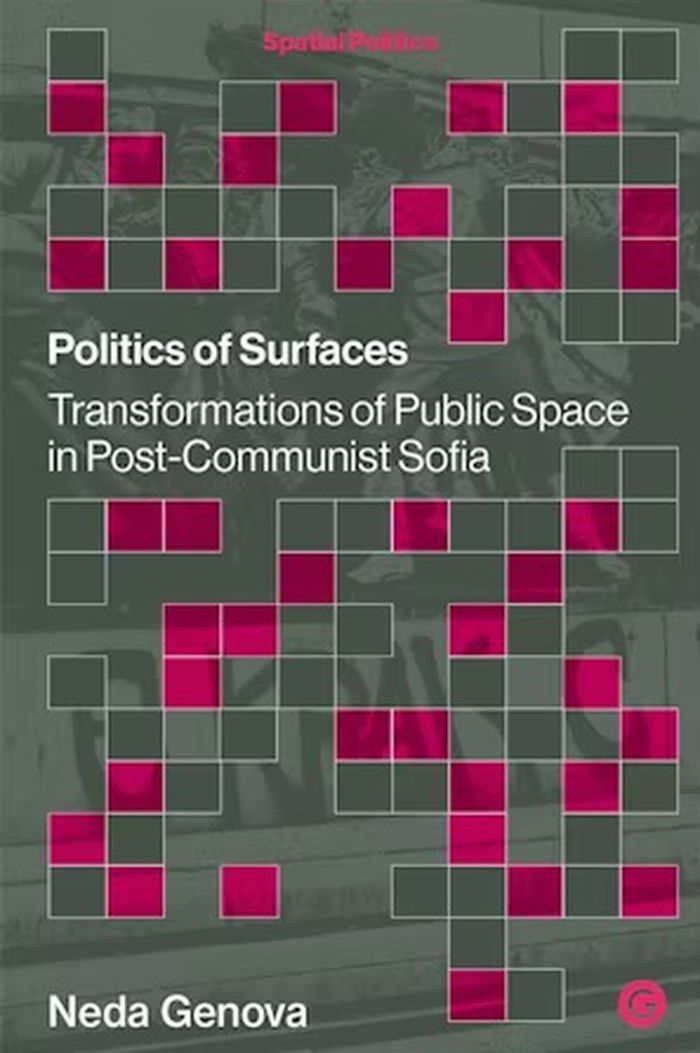
What does it mean to examine post-communist politics through the prism of the material and semiotic transformations and modifications of surfaces? A rethinking of surfaces as dynamic and complex sites opens a path for a detailed study of their crucial role in the governing of post-communist urban space—but also of the forms of subversion that can be discerned through interventions on and with surfaces. The book explores a set of surfaces—Wall, Monument, Electricity Boxes, Memes, and Paving Brick—to investigate the kind of political engagement they enable and foreclose in post-communist Sofia, Bulgaria. The examination of each of these sites draws on an array of interconnected theoretical propositions, pertaining to surfaces’ conceptualization as temporal, fictitious and relational objects engaged in the production of political meaning.
Politics of surfaces: Transformations of public space in Post-Communist Sofia
Actions:
Prix:
$49.95
(disponible sur commande)
Résumé:
What does it mean to examine post-communist politics through the prism of the material and semiotic transformations and modifications of surfaces? A rethinking of surfaces as dynamic and complex sites opens a path for a detailed study of their crucial role in the governing of post-communist urban space—but also of the forms of subversion that can be discerned through interventions on and with surfaces. The book explores a set of surfaces—Wall, Monument, Electricity Boxes, Memes, and Paving Brick—to investigate the kind of political engagement they enable and foreclose in post-communist Sofia, Bulgaria. The examination of each of these sites draws on an array of interconnected theoretical propositions, pertaining to surfaces’ conceptualization as temporal, fictitious and relational objects engaged in the production of political meaning.
Classification:
livres
livres
Publication:
février 2026
février 2026
Sujet:
L'écologie de l'architecure
L'écologie de l'architecure
Classification:
livres
livres
Prix:
$36.00
(disponible en magasin)
Résumé:
Why is architecture so remote from labor struggles, with poorly negotiated labor contracts and barely any self-management models? What possibilities emerge when we acknowledge the glaring class divide between the architectural firm and the construction site? What insights do the stories of workers provide about the construction industry? How do different design practices(...)
$36.00
(disponible en magasin)
Résumé:
Why is architecture so remote from labor struggles, with poorly negotiated labor contracts and barely any self-management models? What possibilities emerge when we acknowledge the glaring class divide between the architectural firm and the construction site? What insights do the stories of workers provide about the construction industry? How do different design practices(...)
Titre:
On architecture and work; The political economy of space Vol. 03
Actions:
Prix:
$36.00
(disponible en magasin)
Résumé:
Why is architecture so remote from labor struggles, with poorly negotiated labor contracts and barely any self-management models? What possibilities emerge when we acknowledge the glaring class divide between the architectural firm and the construction site? What insights do the stories of workers provide about the construction industry? How do different design practices emerge if designers and construction workers unite? On ''Architecture and Work'' is a collection of essays on the relationship between construction, architecture, work, and labor. From complaints over grueling working conditions on construction sites to demands for better benefits in design offices, asking candidly "who can afford to be radical?", this is the third publication in the series ''The Political Economy of Space'', after ''On Architecture and the Greenfield'' (2024) and ''On Architecture and Greenwashing'' (2024).
On architecture and work; The political economy of space Vol. 03
Actions:
Prix:
$36.00
(disponible en magasin)
Résumé:
Why is architecture so remote from labor struggles, with poorly negotiated labor contracts and barely any self-management models? What possibilities emerge when we acknowledge the glaring class divide between the architectural firm and the construction site? What insights do the stories of workers provide about the construction industry? How do different design practices emerge if designers and construction workers unite? On ''Architecture and Work'' is a collection of essays on the relationship between construction, architecture, work, and labor. From complaints over grueling working conditions on construction sites to demands for better benefits in design offices, asking candidly "who can afford to be radical?", this is the third publication in the series ''The Political Economy of Space'', after ''On Architecture and the Greenfield'' (2024) and ''On Architecture and Greenwashing'' (2024).
Classification:
livres
livres
Publication:
novembre 2025
novembre 2025
Sujet:
L'écologie de l'architecure
L'écologie de l'architecure
Classification:
livres
livres
Actions:
Prix:
$42.00
(disponible sur commande)
Résumé:
"Climate changed" examines models and their imperfect yet central role in understanding the relationship between global climate dynamics and the human-built environment. It compares and synthesizes the methods and function of models in disciplines ranging from architecture and planning to climate science and natural hazards research. This book considers how disparate(...)
$42.00
(disponible sur commande)
Résumé:
"Climate changed" examines models and their imperfect yet central role in understanding the relationship between global climate dynamics and the human-built environment. It compares and synthesizes the methods and function of models in disciplines ranging from architecture and planning to climate science and natural hazards research. This book considers how disparate(...)
Sujet:
L'écologie de l'architecure
L'écologie de l'architecure
Publication:
août 2025
août 2025
Titre:
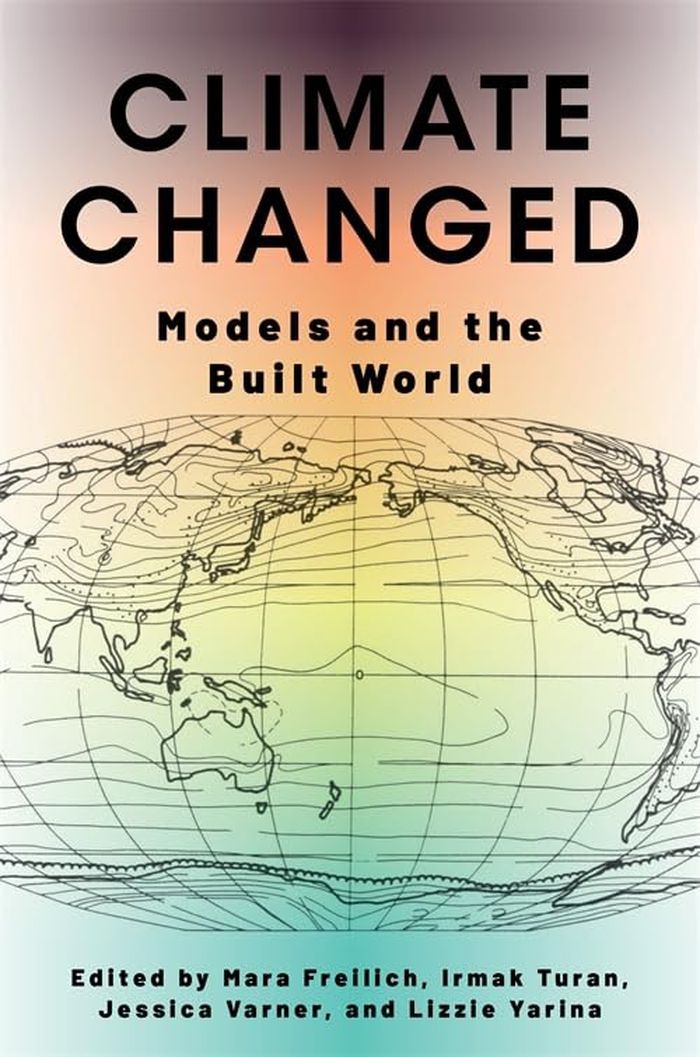
Climate changed : Models and the built world
Actions:
Prix:
$42.00
(disponible sur commande)
Résumé:
"Climate changed" examines models and their imperfect yet central role in understanding the relationship between global climate dynamics and the human-built environment. It compares and synthesizes the methods and function of models in disciplines ranging from architecture and planning to climate science and natural hazards research. This book considers how disparate models are woven together to understand the climate crisis, underscoring the necessity of combining locally situated and transdisciplinary knowledge with climate science to navigate current and future cataclysmic changes. It highlights the challenges and consequences of disciplinary boundaries, siloed scientific knowledge, and uneven data and develops ways to overcome these limitations.
Climate changed : Models and the built world
Actions:
Prix:
$42.00
(disponible sur commande)
Résumé:
"Climate changed" examines models and their imperfect yet central role in understanding the relationship between global climate dynamics and the human-built environment. It compares and synthesizes the methods and function of models in disciplines ranging from architecture and planning to climate science and natural hazards research. This book considers how disparate models are woven together to understand the climate crisis, underscoring the necessity of combining locally situated and transdisciplinary knowledge with climate science to navigate current and future cataclysmic changes. It highlights the challenges and consequences of disciplinary boundaries, siloed scientific knowledge, and uneven data and develops ways to overcome these limitations.
Classification:
livres
livres
Publication:
août 2025
août 2025
Sujet:
L'écologie de l'architecure
L'écologie de l'architecure
Classification:
livres
livres
Titre:
Architecture is climate
Architecture is climate
Actions:
Prix:
$38.00
(disponible sur commande)
Résumé:
Rejecting outdated paradigms of endless linear growth, technocratic fixes, and the separation of humans from nature, '‘Architecture Is Climate’' argues that architecture must be fundamentally rethought – not as the design of objects, but as a practice entangled with climate, politics, history, and social justice. Through eight key themes (knowledge, economy, land,(...)
$38.00
(disponible sur commande)
Résumé:
Rejecting outdated paradigms of endless linear growth, technocratic fixes, and the separation of humans from nature, '‘Architecture Is Climate’' argues that architecture must be fundamentally rethought – not as the design of objects, but as a practice entangled with climate, politics, history, and social justice. Through eight key themes (knowledge, economy, land,(...)
Titre:
Architecture is climate
Actions:
Prix:
$38.00
(disponible sur commande)
Résumé:
Rejecting outdated paradigms of endless linear growth, technocratic fixes, and the separation of humans from nature, '‘Architecture Is Climate’' argues that architecture must be fundamentally rethought – not as the design of objects, but as a practice entangled with climate, politics, history, and social justice. Through eight key themes (knowledge, economy, land, resources, infrastructure, work, policy, and culture) it explores how climate breakdown reshapes every aspect of architectural thinking and doing. Drawing on diverse voices and grounded examples from around the world, it offers a critique but also a vision of other possible architectures already in the making.
Architecture is climate
Actions:
Prix:
$38.00
(disponible sur commande)
Résumé:
Rejecting outdated paradigms of endless linear growth, technocratic fixes, and the separation of humans from nature, '‘Architecture Is Climate’' argues that architecture must be fundamentally rethought – not as the design of objects, but as a practice entangled with climate, politics, history, and social justice. Through eight key themes (knowledge, economy, land, resources, infrastructure, work, policy, and culture) it explores how climate breakdown reshapes every aspect of architectural thinking and doing. Drawing on diverse voices and grounded examples from around the world, it offers a critique but also a vision of other possible architectures already in the making.
Classification:
livres
livres
Publication:
décembre 2025
décembre 2025
Sujet:
L'écologie de l'architecure
L'écologie de l'architecure
Classification:
livres
livres
Prix:
$65.95
(disponible en magasin)
Résumé:
What would a postcarbon future look like? What would it take to build and maintain a more just, regenerative world? How would it feel to live--and to thrive--in that world? Around the globe, people are transforming their social, ecological, and economic systems in response to the climate crisis. This book guides readers through 29 of these exemplary works, which span 43(...)
$65.95
(disponible en magasin)
Résumé:
What would a postcarbon future look like? What would it take to build and maintain a more just, regenerative world? How would it feel to live--and to thrive--in that world? Around the globe, people are transforming their social, ecological, and economic systems in response to the climate crisis. This book guides readers through 29 of these exemplary works, which span 43(...)
Sujet:
L'écologie de l'architecure
L'écologie de l'architecure
Publication:
juillet 2026
juillet 2026
Titre:
Building postcarbon futures: Land, justice, and energy transitions
Actions:
Prix:
$65.95
(disponible en magasin)
Résumé:
What would a postcarbon future look like? What would it take to build and maintain a more just, regenerative world? How would it feel to live--and to thrive--in that world? Around the globe, people are transforming their social, ecological, and economic systems in response to the climate crisis. This book guides readers through 29 of these exemplary works, which span 43 nations and 6 continents. From Cuba to Kiribati, Iceland to the Andes, the prairies of North America to the expanding Gobi Desert, these case studies foreground the tactics and modes of practice being employed, often by marginalized peoples, to create more humane, hospitable places.
Building postcarbon futures: Land, justice, and energy transitions
Actions:
Prix:
$65.95
(disponible en magasin)
Résumé:
What would a postcarbon future look like? What would it take to build and maintain a more just, regenerative world? How would it feel to live--and to thrive--in that world? Around the globe, people are transforming their social, ecological, and economic systems in response to the climate crisis. This book guides readers through 29 of these exemplary works, which span 43 nations and 6 continents. From Cuba to Kiribati, Iceland to the Andes, the prairies of North America to the expanding Gobi Desert, these case studies foreground the tactics and modes of practice being employed, often by marginalized peoples, to create more humane, hospitable places.
Classification:
livres
livres
Publication:
juillet 2026
juillet 2026
Sujet:
L'écologie de l'architecure
L'écologie de l'architecure
Classification:
livres
livres
Prix:
$85.95
(disponible sur commande)
Résumé:
To confront the Anthropocene, designers must increasingly move between scales and across disciplines to develop new structures of knowledge and tools of representation: from the embodied to the technical, the investigative to the projective. Ultimately, this volume asks: What stakes are embedded in contemporary architectural environmental media, and how are designers(...)
$85.95
(disponible sur commande)
Résumé:
To confront the Anthropocene, designers must increasingly move between scales and across disciplines to develop new structures of knowledge and tools of representation: from the embodied to the technical, the investigative to the projective. Ultimately, this volume asks: What stakes are embedded in contemporary architectural environmental media, and how are designers(...)
Titre:
Architecture as environmental media: Rendering the planetary
Actions:
Prix:
$85.95
(disponible sur commande)
Résumé:
To confront the Anthropocene, designers must increasingly move between scales and across disciplines to develop new structures of knowledge and tools of representation: from the embodied to the technical, the investigative to the projective. Ultimately, this volume asks: What stakes are embedded in contemporary architectural environmental media, and how are designers re-imagining this media landscape today? Chapters in the book explore counter-cartographies of migration and materials, forest ecologies and theories of abundance, hyperreal visualization and environmental simulation, architecture’s extractive and colonial systems, and pedagogies and practices for environmental futures. This book organizes these efforts into three threads of media practice: rendering visible, rendering sensible, and rendering actionable. While these categories are inextricably intertwined, they represent distinct tactical approaches to media production, each exploring possible methods to develop new knowledge systems, shift aesthetic regimes, and transform collective politics.
Architecture as environmental media: Rendering the planetary
Actions:
Prix:
$85.95
(disponible sur commande)
Résumé:
To confront the Anthropocene, designers must increasingly move between scales and across disciplines to develop new structures of knowledge and tools of representation: from the embodied to the technical, the investigative to the projective. Ultimately, this volume asks: What stakes are embedded in contemporary architectural environmental media, and how are designers re-imagining this media landscape today? Chapters in the book explore counter-cartographies of migration and materials, forest ecologies and theories of abundance, hyperreal visualization and environmental simulation, architecture’s extractive and colonial systems, and pedagogies and practices for environmental futures. This book organizes these efforts into three threads of media practice: rendering visible, rendering sensible, and rendering actionable. While these categories are inextricably intertwined, they represent distinct tactical approaches to media production, each exploring possible methods to develop new knowledge systems, shift aesthetic regimes, and transform collective politics.
Classification:
livres
livres
Publication:
décembre 2025
décembre 2025
Sujet:
L'écologie de l'architecure
L'écologie de l'architecure


