


29168 Résultats
Classification:
expositions
expositions
Description:
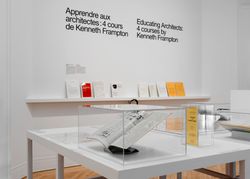
Lors de la réforme de l’enseignement dans les écoles d’architecture américaines durant les années 1970, Kenneth Frampton a joué un rôle de premier plan dans la transformation du programme de la Graduate School of Architecture Planning de Columbia University. Il a notamment créé et enseigné les trois cours de base du programme: le séminaire théorique «Comparative Critical(...)
Lors de la réforme de l’enseignement dans les écoles d’architecture américaines durant les années 1970, Kenneth Frampton a joué un rôle de premier plan dans la transformation du programme de la Graduate School of Architecture Planning de Columbia University. Il a notamment créé et enseigné les trois cours de base du programme: le séminaire théorique «Comparative Critical(...)
Localisation:
Salle octogonale Mot(s)-clé(s):
Kenneth Frampton, Columbia, Princeton, teaching, GSAPP
Salle octogonale Mot(s)-clé(s):
Kenneth Frampton, Columbia, Princeton, teaching, GSAPP
Date:
31 mai 2017 au 24 septembre 2017
31 mai 2017 au 24 septembre 2017
Titre:
Apprendre aux architectes : quatre cours de Kenneth Frampton
Actions:
Description:
Lors de la réforme de l’enseignement dans les écoles d’architecture américaines durant les années 1970, Kenneth Frampton a joué un rôle de premier plan dans la transformation du programme de la Graduate School of Architecture Planning de Columbia University. Il a notamment créé et enseigné les trois cours de base du programme: le séminaire théorique «Comparative Critical(...)
Apprendre aux architectes : quatre cours de Kenneth Frampton
Actions:
Description:
Lors de la réforme de l’enseignement dans les écoles d’architecture américaines durant les années 1970, Kenneth Frampton a joué un rôle de premier plan dans la transformation du programme de la Graduate School of Architecture Planning de Columbia University. Il a notamment créé et enseigné les trois cours de base du programme: le séminaire théorique «Comparative Critical(...)
Classification:
expositions
expositions
Date:
31 mai 2017 au
24 septembre 2017
31 mai 2017 au
24 septembre 2017
Localisation:
Salle octogonale Mot(s)-clé(s):
Kenneth Frampton, Columbia, Princeton, teaching, GSAPP
Salle octogonale Mot(s)-clé(s):
Kenneth Frampton, Columbia, Princeton, teaching, GSAPP
Classification:
expositions
expositions
Actions:
Description:
Les termes contemplation, désert, exil, loisir, repos, retraite, rêverie, solitude et leurs antonymes, action, cour, monde, mondanité, société, constituent un champ lexical fortement utilisé dans la littérature de fiction et la littérature biographique du XVIIe siècle. L’exposition conjugue histoire, littérature et architecture, s’attachant en particulier au thème de la(...)
Les termes contemplation, désert, exil, loisir, repos, retraite, rêverie, solitude et leurs antonymes, action, cour, monde, mondanité, société, constituent un champ lexical fortement utilisé dans la littérature de fiction et la littérature biographique du XVIIe siècle. L’exposition conjugue histoire, littérature et architecture, s’attachant en particulier au thème de la(...)
Localisation:
Vitrines
Vitrines
Date:
12 octobre 1994 au 15 janvier 1995
12 octobre 1994 au 15 janvier 1995
Titre:
De la ville au désert : espaces publics et privés dans la France du XVIIe siècle
Actions:
Description:
Les termes contemplation, désert, exil, loisir, repos, retraite, rêverie, solitude et leurs antonymes, action, cour, monde, mondanité, société, constituent un champ lexical fortement utilisé dans la littérature de fiction et la littérature biographique du XVIIe siècle. L’exposition conjugue histoire, littérature et architecture, s’attachant en particulier au thème de la(...)
De la ville au désert : espaces publics et privés dans la France du XVIIe siècle
Actions:
Description:
Les termes contemplation, désert, exil, loisir, repos, retraite, rêverie, solitude et leurs antonymes, action, cour, monde, mondanité, société, constituent un champ lexical fortement utilisé dans la littérature de fiction et la littérature biographique du XVIIe siècle. L’exposition conjugue histoire, littérature et architecture, s’attachant en particulier au thème de la(...)
Classification:
expositions
expositions
Date:
12 octobre 1994 au
15 janvier 1995
12 octobre 1994 au
15 janvier 1995
Localisation:
Vitrines
Vitrines
Classification:
événements
événements

Actions:
Description:
Mrinalini Rajagopalan retrace l’histoire du Fort rouge à Delhi, de sa destruction par les Britanniques en 1857, jusqu’à leurs efforts déployés pour préserver et protéger l’édifice. Cliquez ici pour consulter la liste complète des séminaires de l’été.
Mrinalini Rajagopalan retrace l’histoire du Fort rouge à Delhi, de sa destruction par les Britanniques en 1857, jusqu’à leurs efforts déployés pour préserver et protéger l’édifice. Cliquez ici pour consulter la liste complète des séminaires de l’été.
Localisation:
Maison Shaughnessy
Maison Shaughnessy
Date:
8 juillet 2010
8 juillet 2010
Titre:
Séminaire de chercheur en résidence : Mrinalini Rajagopalan
Actions:
Description:
Mrinalini Rajagopalan retrace l’histoire du Fort rouge à Delhi, de sa destruction par les Britanniques en 1857, jusqu’à leurs efforts déployés pour préserver et protéger l’édifice. Cliquez ici pour consulter la liste complète des séminaires de l’été.
Séminaire de chercheur en résidence : Mrinalini Rajagopalan
Actions:
Description:
Mrinalini Rajagopalan retrace l’histoire du Fort rouge à Delhi, de sa destruction par les Britanniques en 1857, jusqu’à leurs efforts déployés pour préserver et protéger l’édifice. Cliquez ici pour consulter la liste complète des séminaires de l’été.
Classification:
événements
événements
Date:
8 juillet 2010
8 juillet 2010
Localisation:
Maison Shaughnessy
Maison Shaughnessy
Classification:
archives
Niveau de description archivistique:
Fonds
archives
Niveau de description archivistique:
Fonds
Titre:
Fonds Ross & Macdonald
Fonds Ross & Macdonald
Numéro de référence:
AP013
Résumé:
The Ross & Macdonald fonds is comprised of documents concerning the work of six successive architectural firms: Ross & MacFarlane (1905-1912), Ross & Macdonald (1913-1944), Ross & Ross (1944-1946), Ross, Patterson, Townsend & Heughan (1946-1950), Ross, Patterson, Townsend & Fish (1950-1958), and Ross, Fish, Duschenes & Barrett (1958-1976). The greatest concentration of work was produced in Montreal where each of the firms maintained their head office, but there were also a large number of works executed in New Brunswick and Nova Scotia. The fonds contains 27 884 drawings (24 294 originals plus 3 590 reproductions), 236 photographs, and 18.6 metres of textual documents.
AP013
Résumé:
The Ross & Macdonald fonds is comprised of documents concerning the work of six successive architectural firms: Ross & MacFarlane (1905-1912), Ross & Macdonald (1913-1944), Ross & Ross (1944-1946), Ross, Patterson, Townsend & Heughan (1946-1950), Ross, Patterson, Townsend & Fish (1950-1958), and Ross, Fish, Duschenes & Barrett (1958-1976). The greatest concentration of work was produced in Montreal where each of the firms maintained their head office, but there were also a large number of works executed in New Brunswick and Nova Scotia. The fonds contains 27 884 drawings (24 294 originals plus 3 590 reproductions), 236 photographs, and 18.6 metres of textual documents.
Personnes et institutions:
Date:
1902-1982
1902-1982
Titre:
Fonds Ross & Macdonald
Actions:
AP013
Résumé:
The Ross & Macdonald fonds is comprised of documents concerning the work of six successive architectural firms: Ross & MacFarlane (1905-1912), Ross & Macdonald (1913-1944), Ross & Ross (1944-1946), Ross, Patterson, Townsend & Heughan (1946-1950), Ross, Patterson, Townsend & Fish (1950-1958), and Ross, Fish, Duschenes & Barrett (1958-1976). The greatest concentration of work was produced in Montreal where each of the firms maintained their head office, but there were also a large number of works executed in New Brunswick and Nova Scotia. The fonds contains 27 884 drawings (24 294 originals plus 3 590 reproductions), 236 photographs, and 18.6 metres of textual documents.
Fonds Ross & Macdonald
Actions:
AP013
Résumé:
The Ross & Macdonald fonds is comprised of documents concerning the work of six successive architectural firms: Ross & MacFarlane (1905-1912), Ross & Macdonald (1913-1944), Ross & Ross (1944-1946), Ross, Patterson, Townsend & Heughan (1946-1950), Ross, Patterson, Townsend & Fish (1950-1958), and Ross, Fish, Duschenes & Barrett (1958-1976). The greatest concentration of work was produced in Montreal where each of the firms maintained their head office, but there were also a large number of works executed in New Brunswick and Nova Scotia. The fonds contains 27 884 drawings (24 294 originals plus 3 590 reproductions), 236 photographs, and 18.6 metres of textual documents.
Classification:
archives
Niveau de description archivistique:
Fonds
archives
Niveau de description archivistique:
Fonds
Date:
1902-1982
1902-1982
Personnes et institutions:
Classification:
expositions
expositions
Titre:
Miroirs / Mirrors
Miroirs / Mirrors
Actions:
Description:
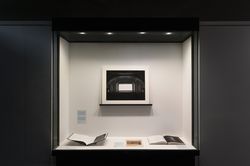
Miroirs/ Mirrors prend forme à travers un dialogue indirect avec l’exposition L’histoire, par ailleurs: Go Hasegawa, Kersten Geers, David Van Severen, qui prend racine dans les références et les résonnances partagées entre les travaux de deux pratiques contemporaines mises en présence de l’histoire. Alors que L’histoire, par ailleurs se fonde sur limpression que lon a du(...)
Miroirs/ Mirrors prend forme à travers un dialogue indirect avec l’exposition L’histoire, par ailleurs: Go Hasegawa, Kersten Geers, David Van Severen, qui prend racine dans les références et les résonnances partagées entre les travaux de deux pratiques contemporaines mises en présence de l’histoire. Alors que L’histoire, par ailleurs se fonde sur limpression que lon a du(...)
Localisation:
Vitrines
Vitrines
Date:
22 juin 2017 au 14 janvier 2018
22 juin 2017 au 14 janvier 2018
Titre:
Miroirs / Mirrors
Actions:
Description:
Miroirs/ Mirrors prend forme à travers un dialogue indirect avec l’exposition L’histoire, par ailleurs: Go Hasegawa, Kersten Geers, David Van Severen, qui prend racine dans les références et les résonnances partagées entre les travaux de deux pratiques contemporaines mises en présence de l’histoire. Alors que L’histoire, par ailleurs se fonde sur limpression que lon a du(...)
Miroirs / Mirrors
Actions:
Description:
Miroirs/ Mirrors prend forme à travers un dialogue indirect avec l’exposition L’histoire, par ailleurs: Go Hasegawa, Kersten Geers, David Van Severen, qui prend racine dans les références et les résonnances partagées entre les travaux de deux pratiques contemporaines mises en présence de l’histoire. Alors que L’histoire, par ailleurs se fonde sur limpression que lon a du(...)
Classification:
expositions
expositions
Date:
22 juin 2017 au
14 janvier 2018
22 juin 2017 au
14 janvier 2018
Localisation:
Vitrines
Vitrines
Classification:
articles
articles
Dossier:
Trajets et transferts
Trajets et transferts
Classification:
événements
événements
Actions:
Description:
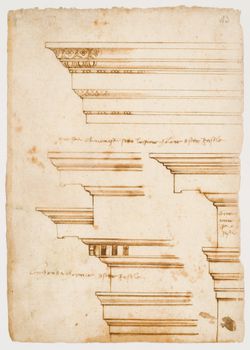
Cara Rachele, chercheure en résidence 2016, présente ses recherches: Cette conférence se penche sur l’explosion de dessins détaillés produits pendant la Renaissance. Elle établit le lien entre l’émergence, au XVIe siècle, du détail devenu un canon du dessin et l’évocation de l’antique matériel. L’évolution organique de la façon de dessiner les détails transparaît dans(...)
Cara Rachele, chercheure en résidence 2016, présente ses recherches: Cette conférence se penche sur l’explosion de dessins détaillés produits pendant la Renaissance. Elle établit le lien entre l’émergence, au XVIe siècle, du détail devenu un canon du dessin et l’évocation de l’antique matériel. L’évolution organique de la façon de dessiner les détails transparaît dans(...)
Date:
11 août 2016, 18h
11 août 2016, 18h
Titre:
Séminaire de chercheur en résidence : Cara Rachele
Actions:
Description:
Cara Rachele, chercheure en résidence 2016, présente ses recherches: Cette conférence se penche sur l’explosion de dessins détaillés produits pendant la Renaissance. Elle établit le lien entre l’émergence, au XVIe siècle, du détail devenu un canon du dessin et l’évocation de l’antique matériel. L’évolution organique de la façon de dessiner les détails transparaît dans(...)
Séminaire de chercheur en résidence : Cara Rachele
Actions:
Description:
Cara Rachele, chercheure en résidence 2016, présente ses recherches: Cette conférence se penche sur l’explosion de dessins détaillés produits pendant la Renaissance. Elle établit le lien entre l’émergence, au XVIe siècle, du détail devenu un canon du dessin et l’évocation de l’antique matériel. L’évolution organique de la façon de dessiner les détails transparaît dans(...)
Classification:
événements
événements
Date:
11 août 2016
18h
11 août 2016
18h
Classification:
recherche
recherche
Actions:
Description:
Thème : Le phénomène baroque au-delà de Rome : Mark Dorrian, Département d’architecture, Université d’Édimbourg, Édimbourg, Royaume-Uni Sujet : Baroque Deformation Martina Frank, Département d’histoire, Université d’Udine, Udine, Italie Sujet : Luca Danesi et le baroque vénitien Indra McEwen, École nationale de théâtre du Canada, Montréal, Canada Sujet : The State of(...)
Thème : Le phénomène baroque au-delà de Rome : Mark Dorrian, Département d’architecture, Université d’Édimbourg, Édimbourg, Royaume-Uni Sujet : Baroque Deformation Martina Frank, Département d’histoire, Université d’Udine, Udine, Italie Sujet : Luca Danesi et le baroque vénitien Indra McEwen, École nationale de théâtre du Canada, Montréal, Canada Sujet : The State of(...)
Date:
janvier 2000 au août 2000
janvier 2000 au août 2000
Titre:
Chercheurs en résidence 1999–2000
Actions:
Description:
Thème : Le phénomène baroque au-delà de Rome : Mark Dorrian, Département d’architecture, Université d’Édimbourg, Édimbourg, Royaume-Uni Sujet : Baroque Deformation Martina Frank, Département d’histoire, Université d’Udine, Udine, Italie Sujet : Luca Danesi et le baroque vénitien Indra McEwen, École nationale de théâtre du Canada, Montréal, Canada Sujet : The State of(...)
Chercheurs en résidence 1999–2000
Actions:
Description:
Thème : Le phénomène baroque au-delà de Rome : Mark Dorrian, Département d’architecture, Université d’Édimbourg, Édimbourg, Royaume-Uni Sujet : Baroque Deformation Martina Frank, Département d’histoire, Université d’Udine, Udine, Italie Sujet : Luca Danesi et le baroque vénitien Indra McEwen, École nationale de théâtre du Canada, Montréal, Canada Sujet : The State of(...)
Classification:
recherche
recherche
Date:
janvier 2000 au
août 2000
janvier 2000 au
août 2000
Niveau de description archivistique:
Sous-série
Sous-série
Numéro de référence:
CI001.S2.D5
Description:
Charles Rohault de Fleury was architect for the Muséum national d'histoire naturelle from 1833 to 1862. His work for the Muséum is represented in the CCA collection by a diverse group of prints and drawings. In addition to documenting his built and unbuilt projects, the inclusion of prints and drawings of museum and zoo buildings by other architects record, if only partially, the resources available to Charles in designing his buildings. This reference material provides insight into the influences on Charles' work as well as the nature of the design process itself. His built works, with the exception of the 1854 addition to the greenhouses, are illustrated in a book of prints with a brief accompanying text - "Muséum d'histoire naturelle: serres chaudes, galeries de minéralogie, etc. etc." (published 1837) (DR1974:0002:004:001; a second copy is held by the CCA library) (1). While prints are included for the Galerie de minéralogie et de géologie, the monkey house and the reservoirs, the majority of the prints are of the greenhouses (serres chaudes) begun 1833 (2). Known for their technological innovations in iron construction, these greenhouses utilized the first multi-storey load-bearing cast-iron façades for the central pavilions as well as space frame roof structures and prefabricated parts. This structural system is well documented in the prints in the CCA collection. The design was apparently inspired by the English greenhouses - a plate of which are included in the book - that Charles saw on a tour of England. The use of prestressed beams and curved roofs in the lateral wings attest to this influence. Charles' greenhouses, in turn, influenced the design of other greenhouses in Europe especially those at the Jardins Botanique in Liège and Ghent, Belgium (3). Although Joseph Paxton saw the greenhouses in 1833, it is unclear if they had an impact on the design of the Crystal Palace constructed 1850-1851 (4). The innovations of Charles' greenhouses continued to be acknowledged into the 20th century. Giedion in "Space, Time and Architecture", while erroneously attributing them to Rouhault (5)(6), refers to the greenhouses as "the prototype of all large iron-framed conservatories" (7). In addition to the greenhouses for the Muséum, the CCA collection includes three proposals (dated 1841) for a private greenhouse designed by Charles Rohault de Fleury (DR1974:0002:002:008 - DR1974:0002:002:013). The designs utilize the same curved roofs as the wings of the greenhouses at the Muséum combined with classically detailed stonework. An different aspect of Charles' work for the Muséum national d'histoire naturelle is represented in the album of unexecuted proposals -the only design drawings for the Muséum in the collection - for a Galerie de zoologie (DR1974:0002:024:001-079). Building on the typology of his earlier classical Galerie de minéralogie et de géologie (constructed 1833 -1841), the proposals, which date from between 1838 and 1862, illustrate a gradual enrichment of Charles' classical architectural vocabulary (8). They vary in their spatial configurations and façade treatments ranging from austere colonnaded designs with little ornament to more elaborate ones with richly encrusted facades, complex rooflines and more dramatic interior spaces characteristic of the Second Empire. The majority of the proposals consist of preliminary drawings illustrating the essential formal, spatial and ornamental aspects of the building. One proposal, dated January 1846, is substantially more developed than the others; in addition to general plans, sections and elevations, more detailed drawings are included for the layout of spaces, the elaboration of the facades, the configuration of the structure and even the designs for the specimen display cases. It is also worth noting that this album includes several plans outlining Rohault de Fleury's ideas for the overall development of the Muséum national d'histoire naturelle. In 1846, an album of prints of the Museo di fiscia e storia naturelle in Florence (DR1974:0002:005:001-018) was presented to Charles by the Grand Duke of Tuscany in response to his request for tracings of that building. These prints were probably used as reference material for the design of the new Galerie de zoologie described above. The portfolio of record drawings (ca. 1862) of the zoos in Antwerp, Brussels, Marseille and Amsterdam (DR1974:0002:018:001-027) is probably a dummy for a publication on zoological gardens as well as background documentation for the renovation and expansion of the zoo at the Muséum national d'histoire naturelle in Paris. Both drawings of the facilities for the animals and visitors and general plans of the zoological gardens are included. The Paris zoo project was apparently never undertaken. (1) These prints were reused in the "Oeuvre de C. Rohault de Fleury, architecte" (published 1884) (DR1974:0002:029:001-044). (2) Rohault de Fleury's greenhouses were destroyed in the Prussian bombardments of 1870. The greenhouses, which now stand in their place, are similar in layout and appearance to the original design, but their structural system is different. (3) John Hix, 'The Glass House' (Cambridge, Mass.: The MIT Press, 1981), p. 115. (4) Ibid., p. 115. (5) This error has been repeated by other authors including Henry-Russell Hitchcock, 'Architecture: Nineteenth and Twentieth Centuries' (Baltimore, Maryland: Penguin Books, 1968), p. 120. (6) Leonardo Benevolo, 'History of Modern Architecture' Volume 1: The tradition of modern architecture (Cambridge, Mass.: The M.I.T. Press, 1971), p. 22. (7) Sigfried Giedion, 'Space, Time and Architecture; the growth of a new tradition' (Cambridge: Harvard University Press, 1941), p. 181. (8) Barry Bergdoll, "Charles Rohault de Fleury: Part two: Muséum d'Histoire Naturelle and Studies on analogous Constructions in Europe", 'CCA Research Report", n.d., p. 1.
CI001.S2.D5
Description:
Charles Rohault de Fleury was architect for the Muséum national d'histoire naturelle from 1833 to 1862. His work for the Muséum is represented in the CCA collection by a diverse group of prints and drawings. In addition to documenting his built and unbuilt projects, the inclusion of prints and drawings of museum and zoo buildings by other architects record, if only partially, the resources available to Charles in designing his buildings. This reference material provides insight into the influences on Charles' work as well as the nature of the design process itself. His built works, with the exception of the 1854 addition to the greenhouses, are illustrated in a book of prints with a brief accompanying text - "Muséum d'histoire naturelle: serres chaudes, galeries de minéralogie, etc. etc." (published 1837) (DR1974:0002:004:001; a second copy is held by the CCA library) (1). While prints are included for the Galerie de minéralogie et de géologie, the monkey house and the reservoirs, the majority of the prints are of the greenhouses (serres chaudes) begun 1833 (2). Known for their technological innovations in iron construction, these greenhouses utilized the first multi-storey load-bearing cast-iron façades for the central pavilions as well as space frame roof structures and prefabricated parts. This structural system is well documented in the prints in the CCA collection. The design was apparently inspired by the English greenhouses - a plate of which are included in the book - that Charles saw on a tour of England. The use of prestressed beams and curved roofs in the lateral wings attest to this influence. Charles' greenhouses, in turn, influenced the design of other greenhouses in Europe especially those at the Jardins Botanique in Liège and Ghent, Belgium (3). Although Joseph Paxton saw the greenhouses in 1833, it is unclear if they had an impact on the design of the Crystal Palace constructed 1850-1851 (4). The innovations of Charles' greenhouses continued to be acknowledged into the 20th century. Giedion in "Space, Time and Architecture", while erroneously attributing them to Rouhault (5)(6), refers to the greenhouses as "the prototype of all large iron-framed conservatories" (7). In addition to the greenhouses for the Muséum, the CCA collection includes three proposals (dated 1841) for a private greenhouse designed by Charles Rohault de Fleury (DR1974:0002:002:008 - DR1974:0002:002:013). The designs utilize the same curved roofs as the wings of the greenhouses at the Muséum combined with classically detailed stonework. An different aspect of Charles' work for the Muséum national d'histoire naturelle is represented in the album of unexecuted proposals -the only design drawings for the Muséum in the collection - for a Galerie de zoologie (DR1974:0002:024:001-079). Building on the typology of his earlier classical Galerie de minéralogie et de géologie (constructed 1833 -1841), the proposals, which date from between 1838 and 1862, illustrate a gradual enrichment of Charles' classical architectural vocabulary (8). They vary in their spatial configurations and façade treatments ranging from austere colonnaded designs with little ornament to more elaborate ones with richly encrusted facades, complex rooflines and more dramatic interior spaces characteristic of the Second Empire. The majority of the proposals consist of preliminary drawings illustrating the essential formal, spatial and ornamental aspects of the building. One proposal, dated January 1846, is substantially more developed than the others; in addition to general plans, sections and elevations, more detailed drawings are included for the layout of spaces, the elaboration of the facades, the configuration of the structure and even the designs for the specimen display cases. It is also worth noting that this album includes several plans outlining Rohault de Fleury's ideas for the overall development of the Muséum national d'histoire naturelle. In 1846, an album of prints of the Museo di fiscia e storia naturelle in Florence (DR1974:0002:005:001-018) was presented to Charles by the Grand Duke of Tuscany in response to his request for tracings of that building. These prints were probably used as reference material for the design of the new Galerie de zoologie described above. The portfolio of record drawings (ca. 1862) of the zoos in Antwerp, Brussels, Marseille and Amsterdam (DR1974:0002:018:001-027) is probably a dummy for a publication on zoological gardens as well as background documentation for the renovation and expansion of the zoo at the Muséum national d'histoire naturelle in Paris. Both drawings of the facilities for the animals and visitors and general plans of the zoological gardens are included. The Paris zoo project was apparently never undertaken. (1) These prints were reused in the "Oeuvre de C. Rohault de Fleury, architecte" (published 1884) (DR1974:0002:029:001-044). (2) Rohault de Fleury's greenhouses were destroyed in the Prussian bombardments of 1870. The greenhouses, which now stand in their place, are similar in layout and appearance to the original design, but their structural system is different. (3) John Hix, 'The Glass House' (Cambridge, Mass.: The MIT Press, 1981), p. 115. (4) Ibid., p. 115. (5) This error has been repeated by other authors including Henry-Russell Hitchcock, 'Architecture: Nineteenth and Twentieth Centuries' (Baltimore, Maryland: Penguin Books, 1968), p. 120. (6) Leonardo Benevolo, 'History of Modern Architecture' Volume 1: The tradition of modern architecture (Cambridge, Mass.: The M.I.T. Press, 1971), p. 22. (7) Sigfried Giedion, 'Space, Time and Architecture; the growth of a new tradition' (Cambridge: Harvard University Press, 1941), p. 181. (8) Barry Bergdoll, "Charles Rohault de Fleury: Part two: Muséum d'Histoire Naturelle and Studies on analogous Constructions in Europe", 'CCA Research Report", n.d., p. 1.
Personnes et institutions:
Date:
[1837-ca. 1862]
[1837-ca. 1862]
Titre:
Muséum nationale d'histoire naturelle
CI001.S2.D5
Description:
Charles Rohault de Fleury was architect for the Muséum national d'histoire naturelle from 1833 to 1862. His work for the Muséum is represented in the CCA collection by a diverse group of prints and drawings. In addition to documenting his built and unbuilt projects, the inclusion of prints and drawings of museum and zoo buildings by other architects record, if only partially, the resources available to Charles in designing his buildings. This reference material provides insight into the influences on Charles' work as well as the nature of the design process itself. His built works, with the exception of the 1854 addition to the greenhouses, are illustrated in a book of prints with a brief accompanying text - "Muséum d'histoire naturelle: serres chaudes, galeries de minéralogie, etc. etc." (published 1837) (DR1974:0002:004:001; a second copy is held by the CCA library) (1). While prints are included for the Galerie de minéralogie et de géologie, the monkey house and the reservoirs, the majority of the prints are of the greenhouses (serres chaudes) begun 1833 (2). Known for their technological innovations in iron construction, these greenhouses utilized the first multi-storey load-bearing cast-iron façades for the central pavilions as well as space frame roof structures and prefabricated parts. This structural system is well documented in the prints in the CCA collection. The design was apparently inspired by the English greenhouses - a plate of which are included in the book - that Charles saw on a tour of England. The use of prestressed beams and curved roofs in the lateral wings attest to this influence. Charles' greenhouses, in turn, influenced the design of other greenhouses in Europe especially those at the Jardins Botanique in Liège and Ghent, Belgium (3). Although Joseph Paxton saw the greenhouses in 1833, it is unclear if they had an impact on the design of the Crystal Palace constructed 1850-1851 (4). The innovations of Charles' greenhouses continued to be acknowledged into the 20th century. Giedion in "Space, Time and Architecture", while erroneously attributing them to Rouhault (5)(6), refers to the greenhouses as "the prototype of all large iron-framed conservatories" (7). In addition to the greenhouses for the Muséum, the CCA collection includes three proposals (dated 1841) for a private greenhouse designed by Charles Rohault de Fleury (DR1974:0002:002:008 - DR1974:0002:002:013). The designs utilize the same curved roofs as the wings of the greenhouses at the Muséum combined with classically detailed stonework. An different aspect of Charles' work for the Muséum national d'histoire naturelle is represented in the album of unexecuted proposals -the only design drawings for the Muséum in the collection - for a Galerie de zoologie (DR1974:0002:024:001-079). Building on the typology of his earlier classical Galerie de minéralogie et de géologie (constructed 1833 -1841), the proposals, which date from between 1838 and 1862, illustrate a gradual enrichment of Charles' classical architectural vocabulary (8). They vary in their spatial configurations and façade treatments ranging from austere colonnaded designs with little ornament to more elaborate ones with richly encrusted facades, complex rooflines and more dramatic interior spaces characteristic of the Second Empire. The majority of the proposals consist of preliminary drawings illustrating the essential formal, spatial and ornamental aspects of the building. One proposal, dated January 1846, is substantially more developed than the others; in addition to general plans, sections and elevations, more detailed drawings are included for the layout of spaces, the elaboration of the facades, the configuration of the structure and even the designs for the specimen display cases. It is also worth noting that this album includes several plans outlining Rohault de Fleury's ideas for the overall development of the Muséum national d'histoire naturelle. In 1846, an album of prints of the Museo di fiscia e storia naturelle in Florence (DR1974:0002:005:001-018) was presented to Charles by the Grand Duke of Tuscany in response to his request for tracings of that building. These prints were probably used as reference material for the design of the new Galerie de zoologie described above. The portfolio of record drawings (ca. 1862) of the zoos in Antwerp, Brussels, Marseille and Amsterdam (DR1974:0002:018:001-027) is probably a dummy for a publication on zoological gardens as well as background documentation for the renovation and expansion of the zoo at the Muséum national d'histoire naturelle in Paris. Both drawings of the facilities for the animals and visitors and general plans of the zoological gardens are included. The Paris zoo project was apparently never undertaken. (1) These prints were reused in the "Oeuvre de C. Rohault de Fleury, architecte" (published 1884) (DR1974:0002:029:001-044). (2) Rohault de Fleury's greenhouses were destroyed in the Prussian bombardments of 1870. The greenhouses, which now stand in their place, are similar in layout and appearance to the original design, but their structural system is different. (3) John Hix, 'The Glass House' (Cambridge, Mass.: The MIT Press, 1981), p. 115. (4) Ibid., p. 115. (5) This error has been repeated by other authors including Henry-Russell Hitchcock, 'Architecture: Nineteenth and Twentieth Centuries' (Baltimore, Maryland: Penguin Books, 1968), p. 120. (6) Leonardo Benevolo, 'History of Modern Architecture' Volume 1: The tradition of modern architecture (Cambridge, Mass.: The M.I.T. Press, 1971), p. 22. (7) Sigfried Giedion, 'Space, Time and Architecture; the growth of a new tradition' (Cambridge: Harvard University Press, 1941), p. 181. (8) Barry Bergdoll, "Charles Rohault de Fleury: Part two: Muséum d'Histoire Naturelle and Studies on analogous Constructions in Europe", 'CCA Research Report", n.d., p. 1.
Muséum nationale d'histoire naturelle
CI001.S2.D5
Description:
Charles Rohault de Fleury was architect for the Muséum national d'histoire naturelle from 1833 to 1862. His work for the Muséum is represented in the CCA collection by a diverse group of prints and drawings. In addition to documenting his built and unbuilt projects, the inclusion of prints and drawings of museum and zoo buildings by other architects record, if only partially, the resources available to Charles in designing his buildings. This reference material provides insight into the influences on Charles' work as well as the nature of the design process itself. His built works, with the exception of the 1854 addition to the greenhouses, are illustrated in a book of prints with a brief accompanying text - "Muséum d'histoire naturelle: serres chaudes, galeries de minéralogie, etc. etc." (published 1837) (DR1974:0002:004:001; a second copy is held by the CCA library) (1). While prints are included for the Galerie de minéralogie et de géologie, the monkey house and the reservoirs, the majority of the prints are of the greenhouses (serres chaudes) begun 1833 (2). Known for their technological innovations in iron construction, these greenhouses utilized the first multi-storey load-bearing cast-iron façades for the central pavilions as well as space frame roof structures and prefabricated parts. This structural system is well documented in the prints in the CCA collection. The design was apparently inspired by the English greenhouses - a plate of which are included in the book - that Charles saw on a tour of England. The use of prestressed beams and curved roofs in the lateral wings attest to this influence. Charles' greenhouses, in turn, influenced the design of other greenhouses in Europe especially those at the Jardins Botanique in Liège and Ghent, Belgium (3). Although Joseph Paxton saw the greenhouses in 1833, it is unclear if they had an impact on the design of the Crystal Palace constructed 1850-1851 (4). The innovations of Charles' greenhouses continued to be acknowledged into the 20th century. Giedion in "Space, Time and Architecture", while erroneously attributing them to Rouhault (5)(6), refers to the greenhouses as "the prototype of all large iron-framed conservatories" (7). In addition to the greenhouses for the Muséum, the CCA collection includes three proposals (dated 1841) for a private greenhouse designed by Charles Rohault de Fleury (DR1974:0002:002:008 - DR1974:0002:002:013). The designs utilize the same curved roofs as the wings of the greenhouses at the Muséum combined with classically detailed stonework. An different aspect of Charles' work for the Muséum national d'histoire naturelle is represented in the album of unexecuted proposals -the only design drawings for the Muséum in the collection - for a Galerie de zoologie (DR1974:0002:024:001-079). Building on the typology of his earlier classical Galerie de minéralogie et de géologie (constructed 1833 -1841), the proposals, which date from between 1838 and 1862, illustrate a gradual enrichment of Charles' classical architectural vocabulary (8). They vary in their spatial configurations and façade treatments ranging from austere colonnaded designs with little ornament to more elaborate ones with richly encrusted facades, complex rooflines and more dramatic interior spaces characteristic of the Second Empire. The majority of the proposals consist of preliminary drawings illustrating the essential formal, spatial and ornamental aspects of the building. One proposal, dated January 1846, is substantially more developed than the others; in addition to general plans, sections and elevations, more detailed drawings are included for the layout of spaces, the elaboration of the facades, the configuration of the structure and even the designs for the specimen display cases. It is also worth noting that this album includes several plans outlining Rohault de Fleury's ideas for the overall development of the Muséum national d'histoire naturelle. In 1846, an album of prints of the Museo di fiscia e storia naturelle in Florence (DR1974:0002:005:001-018) was presented to Charles by the Grand Duke of Tuscany in response to his request for tracings of that building. These prints were probably used as reference material for the design of the new Galerie de zoologie described above. The portfolio of record drawings (ca. 1862) of the zoos in Antwerp, Brussels, Marseille and Amsterdam (DR1974:0002:018:001-027) is probably a dummy for a publication on zoological gardens as well as background documentation for the renovation and expansion of the zoo at the Muséum national d'histoire naturelle in Paris. Both drawings of the facilities for the animals and visitors and general plans of the zoological gardens are included. The Paris zoo project was apparently never undertaken. (1) These prints were reused in the "Oeuvre de C. Rohault de Fleury, architecte" (published 1884) (DR1974:0002:029:001-044). (2) Rohault de Fleury's greenhouses were destroyed in the Prussian bombardments of 1870. The greenhouses, which now stand in their place, are similar in layout and appearance to the original design, but their structural system is different. (3) John Hix, 'The Glass House' (Cambridge, Mass.: The MIT Press, 1981), p. 115. (4) Ibid., p. 115. (5) This error has been repeated by other authors including Henry-Russell Hitchcock, 'Architecture: Nineteenth and Twentieth Centuries' (Baltimore, Maryland: Penguin Books, 1968), p. 120. (6) Leonardo Benevolo, 'History of Modern Architecture' Volume 1: The tradition of modern architecture (Cambridge, Mass.: The M.I.T. Press, 1971), p. 22. (7) Sigfried Giedion, 'Space, Time and Architecture; the growth of a new tradition' (Cambridge: Harvard University Press, 1941), p. 181. (8) Barry Bergdoll, "Charles Rohault de Fleury: Part two: Muséum d'Histoire Naturelle and Studies on analogous Constructions in Europe", 'CCA Research Report", n.d., p. 1.
Niveau de description archivistique:
File 5
File 5
Date:
[1837-ca. 1862]
[1837-ca. 1862]
Personnes et institutions:
Classification:
événements
événements
Actions:
Description:
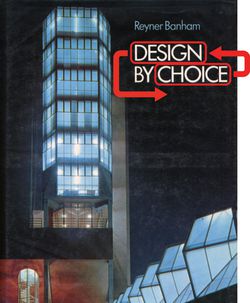
Penelope Dean, chercheure en résidence en 2011, examine les formes de l’histoire de l’architecture et la conception qui ont dominé pendant le XXe siècle et analyse un monde dans lequel il semble que le choix lui-même n’est imaginable que par la saturation préalable et omniprésente du design. Cliquez ici pour lévénement Facebook.
Penelope Dean, chercheure en résidence en 2011, examine les formes de l’histoire de l’architecture et la conception qui ont dominé pendant le XXe siècle et analyse un monde dans lequel il semble que le choix lui-même n’est imaginable que par la saturation préalable et omniprésente du design. Cliquez ici pour lévénement Facebook.
Localisation:
Maison Shaughnessy
Maison Shaughnessy
Date:
21 juillet 2011 , 18h
21 juillet 2011 , 18h
Titre:
Séminaire de chercheur en résidence : Penelope Dean
Actions:
Description:
Penelope Dean, chercheure en résidence en 2011, examine les formes de l’histoire de l’architecture et la conception qui ont dominé pendant le XXe siècle et analyse un monde dans lequel il semble que le choix lui-même n’est imaginable que par la saturation préalable et omniprésente du design. Cliquez ici pour lévénement Facebook.
Séminaire de chercheur en résidence : Penelope Dean
Actions:
Description:
Penelope Dean, chercheure en résidence en 2011, examine les formes de l’histoire de l’architecture et la conception qui ont dominé pendant le XXe siècle et analyse un monde dans lequel il semble que le choix lui-même n’est imaginable que par la saturation préalable et omniprésente du design. Cliquez ici pour lévénement Facebook.
Classification:
événements
événements
Date:
21 juillet 2011
18h
21 juillet 2011
18h
Localisation:
Maison Shaughnessy
Maison Shaughnessy


