


2314 Résultats
Classification:
livres
livres
Prix:
$25.95
(disponible sur commande)
Résumé:
In the late 1960s the world was faced with impending disaster: the height of the Cold War, the end of oil and the decline of great cities throughout the world. Out of this crisis came a new generation that hoped to build a better future, influenced by visions of geodesic domes, walking cities and a meaningful connection with nature. In this work of cultural history,(...)
$25.95
(disponible sur commande)
Résumé:
In the late 1960s the world was faced with impending disaster: the height of the Cold War, the end of oil and the decline of great cities throughout the world. Out of this crisis came a new generation that hoped to build a better future, influenced by visions of geodesic domes, walking cities and a meaningful connection with nature. In this work of cultural history,(...)
Titre:
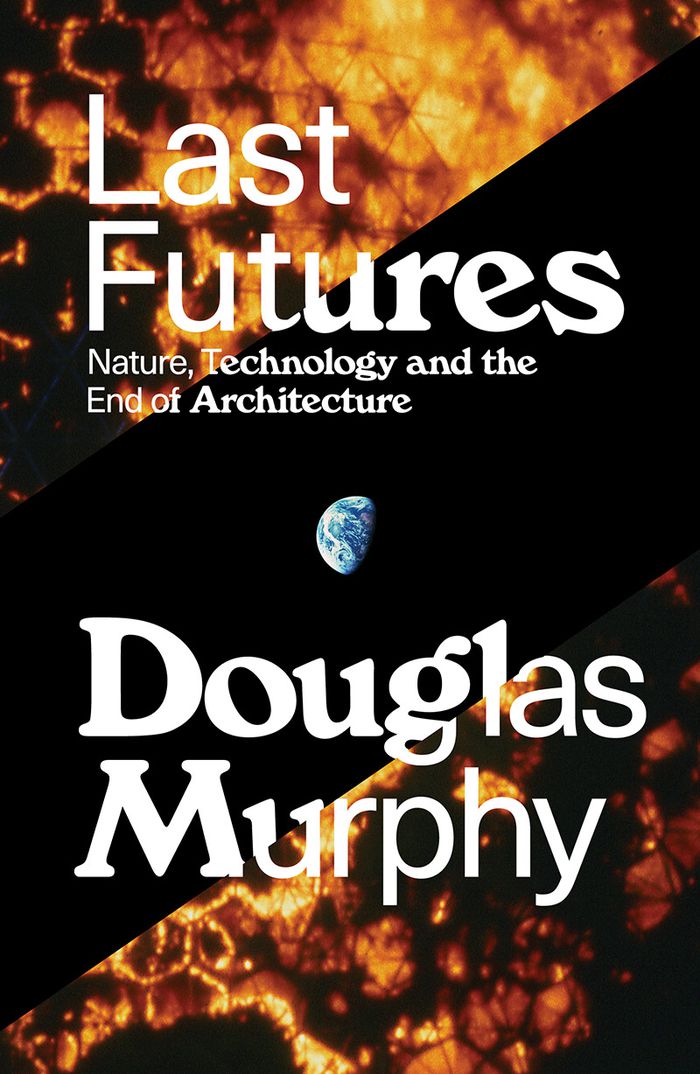
Last futures: natures, technology and the end of architecture
Actions:
Prix:
$25.95
(disponible sur commande)
Résumé:
In the late 1960s the world was faced with impending disaster: the height of the Cold War, the end of oil and the decline of great cities throughout the world. Out of this crisis came a new generation that hoped to build a better future, influenced by visions of geodesic domes, walking cities and a meaningful connection with nature. In this work of cultural history, architect Douglas Murphy traces the lost archeology of the present day through the works of thinkers and designers such as Buckminster Fuller, the ecological pioneer Stewart Brand, the Archigram architects who envisioned the Plug-In City in the ’60s, as well as co-operatives in Vienna, communes in the Californian desert and protesters on the streets of Paris. In this mind-bending account of the last avant-garde, we see not just the source of our current problems but also some powerful alternative futures.
Last futures: natures, technology and the end of architecture
Actions:
Prix:
$25.95
(disponible sur commande)
Résumé:
In the late 1960s the world was faced with impending disaster: the height of the Cold War, the end of oil and the decline of great cities throughout the world. Out of this crisis came a new generation that hoped to build a better future, influenced by visions of geodesic domes, walking cities and a meaningful connection with nature. In this work of cultural history, architect Douglas Murphy traces the lost archeology of the present day through the works of thinkers and designers such as Buckminster Fuller, the ecological pioneer Stewart Brand, the Archigram architects who envisioned the Plug-In City in the ’60s, as well as co-operatives in Vienna, communes in the Californian desert and protesters on the streets of Paris. In this mind-bending account of the last avant-garde, we see not just the source of our current problems but also some powerful alternative futures.
Classification:
livres
livres
Publication:
juillet 2022
juillet 2022
Sujet:
L'écologie de l'architecure
L'écologie de l'architecure
Classification:
livres
livres
Actions:
Prix:
$52.50
(disponible en magasin)
Résumé:
Le risque majeur de notre époque est celui d’un crash territorial total. La métropolisation à marche forcée provoque la marchandisation des territoires et la dégradation des milieux qui les rendent habitables. Ce volume tente d’y répondre en réunissant chercheurs, concepteurs et activistes reconnus pour leur engagement. Leurs contributions examinent l’implication directe(...)
$52.50
(disponible en magasin)
Résumé:
Le risque majeur de notre époque est celui d’un crash territorial total. La métropolisation à marche forcée provoque la marchandisation des territoires et la dégradation des milieux qui les rendent habitables. Ce volume tente d’y répondre en réunissant chercheurs, concepteurs et activistes reconnus pour leur engagement. Leurs contributions examinent l’implication directe(...)
Titre:
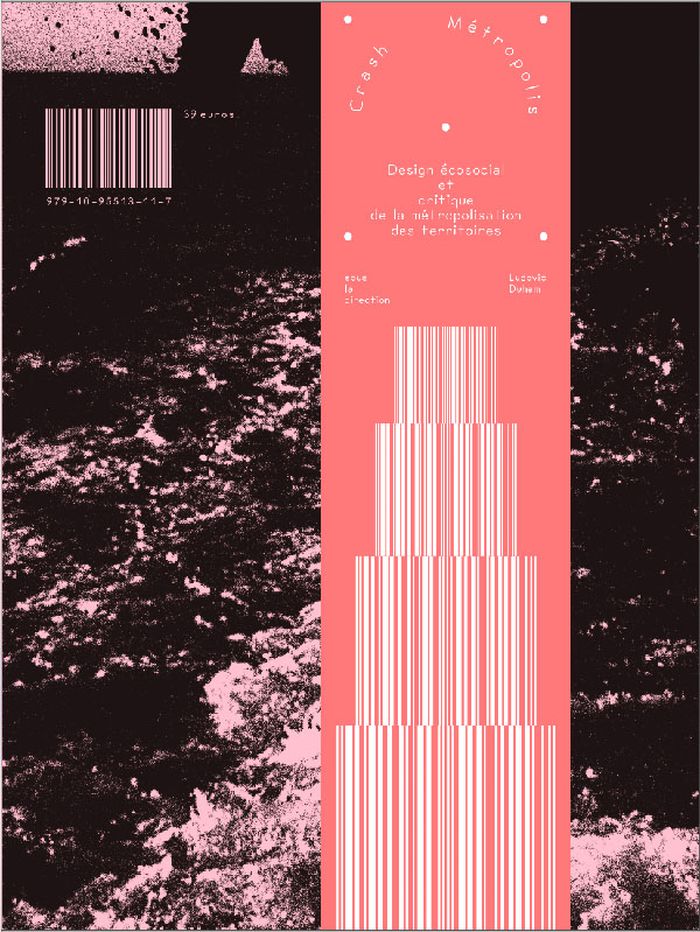
Crash metropolis : Design écosocial et critique de la métropolisation des territoires
Actions:
Prix:
$52.50
(disponible en magasin)
Résumé:
Le risque majeur de notre époque est celui d’un crash territorial total. La métropolisation à marche forcée provoque la marchandisation des territoires et la dégradation des milieux qui les rendent habitables. Ce volume tente d’y répondre en réunissant chercheurs, concepteurs et activistes reconnus pour leur engagement. Leurs contributions examinent l’implication directe des designers, architectes, urbanistes et artistes pour comprendre leur responsabilité et les potentiels de « réhabitation » que ces pratiques peuvent porter. Dans ce travail de « recherche-édition » richement illustré les différents régimes de discours (textes et images) et les propositions graphiques soutiennent l’esprit critique et expérimental du projet. Sous la direction de Ludovic Duhem, philosophe, coordinateur de la recherche à l’École Supérieure d’Art et de Design de Valenciennes.
Crash metropolis : Design écosocial et critique de la métropolisation des territoires
Actions:
Prix:
$52.50
(disponible en magasin)
Résumé:
Le risque majeur de notre époque est celui d’un crash territorial total. La métropolisation à marche forcée provoque la marchandisation des territoires et la dégradation des milieux qui les rendent habitables. Ce volume tente d’y répondre en réunissant chercheurs, concepteurs et activistes reconnus pour leur engagement. Leurs contributions examinent l’implication directe des designers, architectes, urbanistes et artistes pour comprendre leur responsabilité et les potentiels de « réhabitation » que ces pratiques peuvent porter. Dans ce travail de « recherche-édition » richement illustré les différents régimes de discours (textes et images) et les propositions graphiques soutiennent l’esprit critique et expérimental du projet. Sous la direction de Ludovic Duhem, philosophe, coordinateur de la recherche à l’École Supérieure d’Art et de Design de Valenciennes.
Classification:
livres
livres
Publication:
novembre 2022
novembre 2022
Sujet:
L'écologie de l'architecure
L'écologie de l'architecure
Classification:
livres
livres
Actions:
Prix:
$39.95
(disponible sur commande)
Résumé:
At the foot of the Argentine Andes, bulldozers are destroying forests and homes to create soy fields in an area already strewn with rubble from previous waves of destruction and violence. Based on ethnographic research in this region where the mountains give way to the Gran Chaco lowlands, Gastón R. Gordillo shows how geographic space is inseparable from the material,(...)
$39.95
(disponible sur commande)
Résumé:
At the foot of the Argentine Andes, bulldozers are destroying forests and homes to create soy fields in an area already strewn with rubble from previous waves of destruction and violence. Based on ethnographic research in this region where the mountains give way to the Gran Chaco lowlands, Gastón R. Gordillo shows how geographic space is inseparable from the material,(...)
Titre:
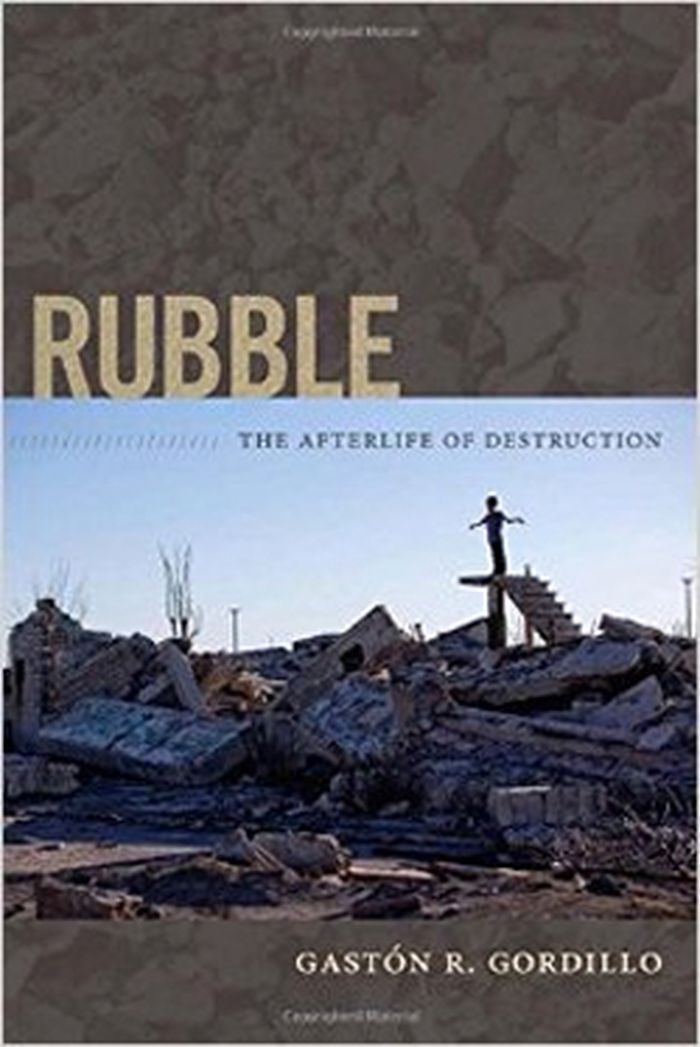
Rubble: the afterlife of destruction
Actions:
Prix:
$39.95
(disponible sur commande)
Résumé:
At the foot of the Argentine Andes, bulldozers are destroying forests and homes to create soy fields in an area already strewn with rubble from previous waves of destruction and violence. Based on ethnographic research in this region where the mountains give way to the Gran Chaco lowlands, Gastón R. Gordillo shows how geographic space is inseparable from the material, historical, and affective ruptures embodied in debris. His exploration of the significance of rubble encompasses lost cities, derelict train stations, overgrown Jesuit missions and Spanish forts, stranded steamships, mass graves, and razed forests. Examining the effects of these and other forms of debris on the people living on nearby ranches and farms, and in towns, Gordillo emphasizes that for the rural poor, the rubble left in the wake of capitalist and imperialist endeavors is not romanticized ruin but the material manifestation of the violence and dislocation that created it.
Rubble: the afterlife of destruction
Actions:
Prix:
$39.95
(disponible sur commande)
Résumé:
At the foot of the Argentine Andes, bulldozers are destroying forests and homes to create soy fields in an area already strewn with rubble from previous waves of destruction and violence. Based on ethnographic research in this region where the mountains give way to the Gran Chaco lowlands, Gastón R. Gordillo shows how geographic space is inseparable from the material, historical, and affective ruptures embodied in debris. His exploration of the significance of rubble encompasses lost cities, derelict train stations, overgrown Jesuit missions and Spanish forts, stranded steamships, mass graves, and razed forests. Examining the effects of these and other forms of debris on the people living on nearby ranches and farms, and in towns, Gordillo emphasizes that for the rural poor, the rubble left in the wake of capitalist and imperialist endeavors is not romanticized ruin but the material manifestation of the violence and dislocation that created it.
Classification:
livres
livres
Publication:
août 2014
août 2014
Sujet:
L'écologie de l'architecure
L'écologie de l'architecure
Classification:
livres
livres
Actions:
Prix:
$99.00
(disponible en magasin)
Résumé:
''Magic Architecture'' was the architect Frederick Kiesler’s most ambitious book project, an epoch-spanning history of human housing from prehistory to the atomic era, submitted to editors after World War II but left unpublished. In its holistic view of habitation through the lens of anthropology, ecology, and the life sciences, ''Magic Architecture'' is one of the most(...)
$99.00
(disponible en magasin)
Résumé:
''Magic Architecture'' was the architect Frederick Kiesler’s most ambitious book project, an epoch-spanning history of human housing from prehistory to the atomic era, submitted to editors after World War II but left unpublished. In its holistic view of habitation through the lens of anthropology, ecology, and the life sciences, ''Magic Architecture'' is one of the most(...)
Titre:
Magic architecture: The story of human housing
Actions:
Prix:
$99.00
(disponible en magasin)
Résumé:
''Magic Architecture'' was the architect Frederick Kiesler’s most ambitious book project, an epoch-spanning history of human housing from prehistory to the atomic era, submitted to editors after World War II but left unpublished. In its holistic view of habitation through the lens of anthropology, ecology, and the life sciences, ''Magic Architecture'' is one of the most extraordinary texts on architecture written in the twentieth century, now at last published in the twenty-first. Kiesler’s exploration of the effects of modern technology in combination with the alternative epistemology of “magical” practices associated with cave drawings and the first artifacts of human industry reflects his profoundly interdisciplinary perspective on the development of art, architecture, and design. This critical edition preserves Kiesler’s conception of the book as a neo-Vitruvian treatise divided into ten parts that narrate an alternative history and theory of architecture. Also included are more than seventy composite plate illustrations consisting of images cut and pasted from books and popular science journals, with elaborate captions, as well as Kiesler’s own line drawings made specifically for this project. The editors have reassembled the book’s text and illustrations from archival documents, supplementing them with notes that trace the copious development of the work. Introductory essays provide an interpretation of key themes and bibliographic sources, as well as a chronological context of the architect’s research. Appendixes offer additional textual and visual material gathered by Kiesler for the project.
Magic architecture: The story of human housing
Actions:
Prix:
$99.00
(disponible en magasin)
Résumé:
''Magic Architecture'' was the architect Frederick Kiesler’s most ambitious book project, an epoch-spanning history of human housing from prehistory to the atomic era, submitted to editors after World War II but left unpublished. In its holistic view of habitation through the lens of anthropology, ecology, and the life sciences, ''Magic Architecture'' is one of the most extraordinary texts on architecture written in the twentieth century, now at last published in the twenty-first. Kiesler’s exploration of the effects of modern technology in combination with the alternative epistemology of “magical” practices associated with cave drawings and the first artifacts of human industry reflects his profoundly interdisciplinary perspective on the development of art, architecture, and design. This critical edition preserves Kiesler’s conception of the book as a neo-Vitruvian treatise divided into ten parts that narrate an alternative history and theory of architecture. Also included are more than seventy composite plate illustrations consisting of images cut and pasted from books and popular science journals, with elaborate captions, as well as Kiesler’s own line drawings made specifically for this project. The editors have reassembled the book’s text and illustrations from archival documents, supplementing them with notes that trace the copious development of the work. Introductory essays provide an interpretation of key themes and bibliographic sources, as well as a chronological context of the architect’s research. Appendixes offer additional textual and visual material gathered by Kiesler for the project.
Classification:
livres
livres
Publication:
avril 2025
avril 2025
Sujet:
Architecture, monographies
Architecture, monographies
Classification:
livres
livres
Actions:
Prix:
$23.95
(disponible sur commande)
Résumé:
At the dawn of the twenty-first century, architecture is in a state of crisis. Numbed by an ugly and shoddily constructed built environment and outraged by the cost of high-profile design projects, the public has become disinterested in and contemptuous of architecture as both a profession and an art. At the same time, some of our most creative designers have isolated(...)
$23.95
(disponible sur commande)
Résumé:
At the dawn of the twenty-first century, architecture is in a state of crisis. Numbed by an ugly and shoddily constructed built environment and outraged by the cost of high-profile design projects, the public has become disinterested in and contemptuous of architecture as both a profession and an art. At the same time, some of our most creative designers have isolated(...)
Titre:
In the scheme of things : alternative thinking on the practice of architecture
Actions:
Prix:
$23.95
(disponible sur commande)
Résumé:
At the dawn of the twenty-first century, architecture is in a state of crisis. Numbed by an ugly and shoddily constructed built environment and outraged by the cost of high-profile design projects, the public has become disinterested in and contemptuous of architecture as both a profession and an art. At the same time, some of our most creative designers have isolated themselves from the tastes and needs of mainstream society, reflecting a similar malaise found in design and architecture schools around the country. In this troubling climate, Thomas R. Fisher contends that the purpose and prospects of architectural practice must be reconsidered and reenergized. "In the Scheme of Things" looks at architecture's need to respond creatively and meaningfully to the extraordinary changes affecting the profession now, changes that include the global economy, the advent of computer-aided design, and the growing disconnection between design schools, architectural practice, and the public. In each of the twelve essays that comprise this timely volume, Fisher addresses issues of vital concern to architects and students, offering hard-hitting criticism and proposing innovative and practical ideas for reform at the level of both the individual practitioner and the profession as a whole. Through his thoughtful and nuanced consideration of architecture's ideological foundations and its relationship to ecology, politics, and technology, as well as his subtle understanding of the architect's interior life, Fisher challenges the demoralized design community to recapture its historical role as steward and visionary of the public realm.
In the scheme of things : alternative thinking on the practice of architecture
Actions:
Prix:
$23.95
(disponible sur commande)
Résumé:
At the dawn of the twenty-first century, architecture is in a state of crisis. Numbed by an ugly and shoddily constructed built environment and outraged by the cost of high-profile design projects, the public has become disinterested in and contemptuous of architecture as both a profession and an art. At the same time, some of our most creative designers have isolated themselves from the tastes and needs of mainstream society, reflecting a similar malaise found in design and architecture schools around the country. In this troubling climate, Thomas R. Fisher contends that the purpose and prospects of architectural practice must be reconsidered and reenergized. "In the Scheme of Things" looks at architecture's need to respond creatively and meaningfully to the extraordinary changes affecting the profession now, changes that include the global economy, the advent of computer-aided design, and the growing disconnection between design schools, architectural practice, and the public. In each of the twelve essays that comprise this timely volume, Fisher addresses issues of vital concern to architects and students, offering hard-hitting criticism and proposing innovative and practical ideas for reform at the level of both the individual practitioner and the profession as a whole. Through his thoughtful and nuanced consideration of architecture's ideological foundations and its relationship to ecology, politics, and technology, as well as his subtle understanding of the architect's interior life, Fisher challenges the demoralized design community to recapture its historical role as steward and visionary of the public realm.
Classification:
livres
livres
Publication:
février 2006, Minneapolis
février 2006, Minneapolis
Sujet:
Théorie de l’architecture
Théorie de l’architecture
Classification:
livres
livres
Actions:
Prix:
$63.95
(disponible sur commande)
Résumé:
The Scottish urbanist and biologist Patrick Geddes (1854-1932) is perhaps best known for introducing the concept of "region" to architecture and planning. At the turn of the twentieth century, he was one of the strongest advocates of town planning and an active participant in debates about the future of the city. He was arguably the first planner to recognize the(...)
$63.95
(disponible sur commande)
Résumé:
The Scottish urbanist and biologist Patrick Geddes (1854-1932) is perhaps best known for introducing the concept of "region" to architecture and planning. At the turn of the twentieth century, he was one of the strongest advocates of town planning and an active participant in debates about the future of the city. He was arguably the first planner to recognize the(...)
Titre:
Biopolis : Patrick Geddes and the city of life
Actions:
Prix:
$63.95
(disponible sur commande)
Résumé:
The Scottish urbanist and biologist Patrick Geddes (1854-1932) is perhaps best known for introducing the concept of "region" to architecture and planning. At the turn of the twentieth century, he was one of the strongest advocates of town planning and an active participant in debates about the future of the city. He was arguably the first planner to recognize the importance of historic city centers, and his renewal work in Edinburgh’s Old Town is visible and impressive to this day. Geddes’s famous analytical triad--place, work, and folk, corresponding to the geographical, historical, and spiritual aspects of the city--provides the basic structure of this examination of his urban theory. Volker Welter examines Geddes’s ideas in the light of nineteenth-century biology--in which Geddes received his academic training--showing Geddes’s use of biological concepts to be far more sophisticated than popular images of the city as an organic entity. His urbanism was informed by his lifelong interest in the theory of evolution and in ecology, cutting-edge areas in the late nineteenth century. Balancing Geddes’s biological thought is his interest in the historical Greek concept of polis, usually translated as city-state but implying a view of the city as a cultural and spiritual phenomenon. Although Geddes’s work was far-ranging, the city provided the unifying focus of nearly all of his theoretical and practical work. Throughout the book, Welter relates Geddes’s theory of the city to contemporary European debates about architecture and urbanism. Foreword by Iain Boyd Whyte.
Biopolis : Patrick Geddes and the city of life
Actions:
Prix:
$63.95
(disponible sur commande)
Résumé:
The Scottish urbanist and biologist Patrick Geddes (1854-1932) is perhaps best known for introducing the concept of "region" to architecture and planning. At the turn of the twentieth century, he was one of the strongest advocates of town planning and an active participant in debates about the future of the city. He was arguably the first planner to recognize the importance of historic city centers, and his renewal work in Edinburgh’s Old Town is visible and impressive to this day. Geddes’s famous analytical triad--place, work, and folk, corresponding to the geographical, historical, and spiritual aspects of the city--provides the basic structure of this examination of his urban theory. Volker Welter examines Geddes’s ideas in the light of nineteenth-century biology--in which Geddes received his academic training--showing Geddes’s use of biological concepts to be far more sophisticated than popular images of the city as an organic entity. His urbanism was informed by his lifelong interest in the theory of evolution and in ecology, cutting-edge areas in the late nineteenth century. Balancing Geddes’s biological thought is his interest in the historical Greek concept of polis, usually translated as city-state but implying a view of the city as a cultural and spiritual phenomenon. Although Geddes’s work was far-ranging, the city provided the unifying focus of nearly all of his theoretical and practical work. Throughout the book, Welter relates Geddes’s theory of the city to contemporary European debates about architecture and urbanism. Foreword by Iain Boyd Whyte.
Classification:
livres
livres
Publication:
novembre 2001, Cambridge, Mass.
novembre 2001, Cambridge, Mass.
Sujet:
Théorie de l’urbanisme
Théorie de l’urbanisme
Classification:
livres
livres
Titre:
Our world to change!
Our world to change!
Actions:
Prix:
$20.00
(disponible sur commande)
Résumé:
What are the central global issues humanity is facing today? How dire is the future really going to be? And what are possible ways to turn this world into a better one? These are the questions that the book "Our world to change!" adresses. This publication does not only explain figures related to economics, finance, ecology, nutrition and immigration, but also presents(...)
$20.00
(disponible sur commande)
Résumé:
What are the central global issues humanity is facing today? How dire is the future really going to be? And what are possible ways to turn this world into a better one? These are the questions that the book "Our world to change!" adresses. This publication does not only explain figures related to economics, finance, ecology, nutrition and immigration, but also presents(...)
Titre:
Our world to change!
Actions:
Prix:
$20.00
(disponible sur commande)
Résumé:
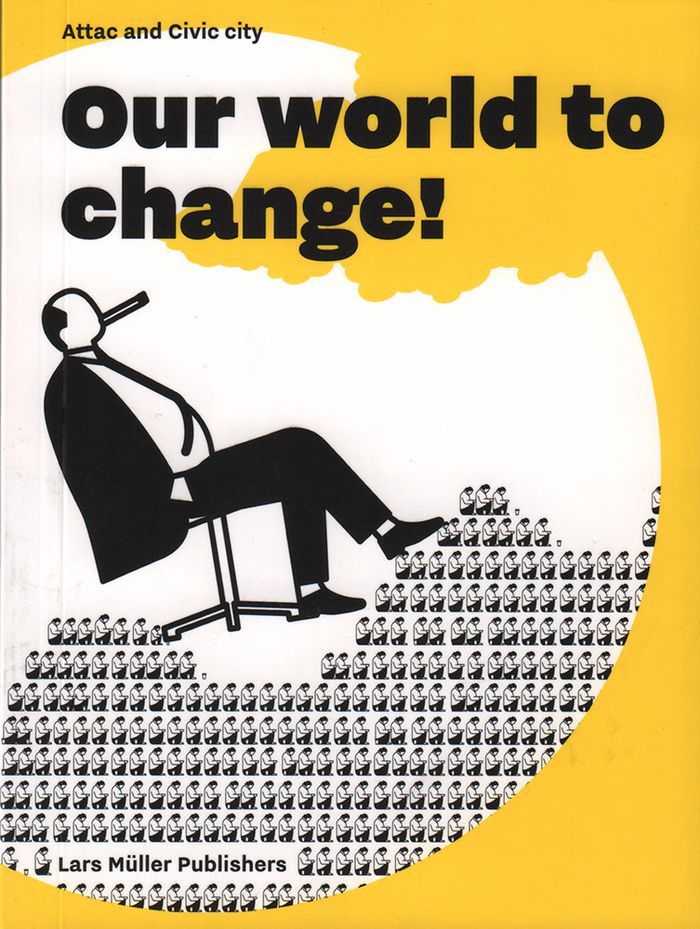
What are the central global issues humanity is facing today? How dire is the future really going to be? And what are possible ways to turn this world into a better one? These are the questions that the book "Our world to change!" adresses. This publication does not only explain figures related to economics, finance, ecology, nutrition and immigration, but also presents suggestions and alternatives from specialists in these fields – a book that every informed citizen should keep under their pillow. The overall goal of "Our world to change!" ! is to visualize the state of our world and possible ways to change it. For this mission the Intégral Ruedi Baur graphic design studio teamed up with the globalization-critical organization Attac, which provided the necessary data. By visualizing facts that concern each and everyone of us, "Our world to change!" ! makes pressing topics visible. This is necessary since issues like inequality and climate change are often viewed as complex, abstract topics.Our World to Change! is a formal homage to the sociologist Otto Neurath and the graphic designer Gerd Arntz, who created the Isotype – an international education system by typographical images – in the 1920s. Graphic designer Ruedi Baur, who also co-founded the institute for critical design research Civic city together with Vera Baur, revived Otto Neuraths iconic Isotype figures to visualize the state of the world today. While these figurines were already part of last years' art biennial Manifesta 11, controversially themed "What people do for money", in "Our world to change!" they take a more radical stance in critizising global inequality.
Our world to change!
Actions:
Prix:
$20.00
(disponible sur commande)
Résumé:
What are the central global issues humanity is facing today? How dire is the future really going to be? And what are possible ways to turn this world into a better one? These are the questions that the book "Our world to change!" adresses. This publication does not only explain figures related to economics, finance, ecology, nutrition and immigration, but also presents suggestions and alternatives from specialists in these fields – a book that every informed citizen should keep under their pillow. The overall goal of "Our world to change!" ! is to visualize the state of our world and possible ways to change it. For this mission the Intégral Ruedi Baur graphic design studio teamed up with the globalization-critical organization Attac, which provided the necessary data. By visualizing facts that concern each and everyone of us, "Our world to change!" ! makes pressing topics visible. This is necessary since issues like inequality and climate change are often viewed as complex, abstract topics.Our World to Change! is a formal homage to the sociologist Otto Neurath and the graphic designer Gerd Arntz, who created the Isotype – an international education system by typographical images – in the 1920s. Graphic designer Ruedi Baur, who also co-founded the institute for critical design research Civic city together with Vera Baur, revived Otto Neuraths iconic Isotype figures to visualize the state of the world today. While these figurines were already part of last years' art biennial Manifesta 11, controversially themed "What people do for money", in "Our world to change!" they take a more radical stance in critizising global inequality.
Classification:
livres
livres
Publication:
janvier 2017
janvier 2017
Classification:
livres
livres
Actions:
Prix:
$69.95
(disponible sur commande)
Résumé:
''On intricacy'' is perhaps unusual in that it’s not a monograph, nor is it a hagiography. John Meunier is still alive. ''On intricacy'' celebrates and proselytises the ideas that John has articulated throughout his career. ''On intricacy'' is not a book about him as such, nor simply a book by him, but a book with him, and it reflects his life’s work as an architect and(...)
$69.95
(disponible sur commande)
Résumé:
''On intricacy'' is perhaps unusual in that it’s not a monograph, nor is it a hagiography. John Meunier is still alive. ''On intricacy'' celebrates and proselytises the ideas that John has articulated throughout his career. ''On intricacy'' is not a book about him as such, nor simply a book by him, but a book with him, and it reflects his life’s work as an architect and(...)
Titre:
On intricacy: The work of John Meunier Architect
Actions:
Prix:
$69.95
(disponible sur commande)
Résumé:
''On intricacy'' is perhaps unusual in that it’s not a monograph, nor is it a hagiography. John Meunier is still alive. ''On intricacy'' celebrates and proselytises the ideas that John has articulated throughout his career. ''On intricacy'' is not a book about him as such, nor simply a book by him, but a book with him, and it reflects his life’s work as an architect and teacher, in the UK and USA. ''On intricacy'' continues conversations between John Meunier and Patrick Lynch that first appeared in Issue 2 of the Journal of Civic Architecture. It also includes essays by Meunier, Lynch and the architect Simon Henley, as well as new photography of The Meunier House at Cambridge by David Grandorge. Intricacy is not so much an aesthetic term, although it is a sign of quality in artistic work, as something intrinsic to human situations. Intricacy is something that architecture does or doesn’t reflect, and when it does, it tends to be life-like, vital, and therefore good. ''On intricacy'' is a visual and written polemic reflecting the hard-won wisdom of a practical life. ''On intricacy'' is also a biography of sorts of a man born into a relatively recent, but also a very different age. It tells an inspiring story from a period of hope and opportunity in the 20th century. ''On intricacy'' will be welcomed by students, historians and practising architects, and by anyone concerned with the deep reciprocity of ethics and aesthetics in human ecology and culture.
On intricacy: The work of John Meunier Architect
Actions:
Prix:
$69.95
(disponible sur commande)
Résumé:
''On intricacy'' is perhaps unusual in that it’s not a monograph, nor is it a hagiography. John Meunier is still alive. ''On intricacy'' celebrates and proselytises the ideas that John has articulated throughout his career. ''On intricacy'' is not a book about him as such, nor simply a book by him, but a book with him, and it reflects his life’s work as an architect and teacher, in the UK and USA. ''On intricacy'' continues conversations between John Meunier and Patrick Lynch that first appeared in Issue 2 of the Journal of Civic Architecture. It also includes essays by Meunier, Lynch and the architect Simon Henley, as well as new photography of The Meunier House at Cambridge by David Grandorge. Intricacy is not so much an aesthetic term, although it is a sign of quality in artistic work, as something intrinsic to human situations. Intricacy is something that architecture does or doesn’t reflect, and when it does, it tends to be life-like, vital, and therefore good. ''On intricacy'' is a visual and written polemic reflecting the hard-won wisdom of a practical life. ''On intricacy'' is also a biography of sorts of a man born into a relatively recent, but also a very different age. It tells an inspiring story from a period of hope and opportunity in the 20th century. ''On intricacy'' will be welcomed by students, historians and practising architects, and by anyone concerned with the deep reciprocity of ethics and aesthetics in human ecology and culture.
Classification:
livres
livres
Publication:
janvier 2020
janvier 2020
Sujet:
Architecture, monographies
Architecture, monographies
Classification:
livres
livres
Actions:
Exemplaires:
Description:
256 pages illustrations 23 cm.
Description:
256 pages illustrations 23 cm.
Auteur:
Sujet:
Publication:
New York, NY : Columbia Books on Architecture and the City, [2024]
New York, NY : Columbia Books on Architecture and the City, [2024]
Titre:
Everlasting plastics / edited by Tizziana Baldenebro, Joanna Joseph, Isabelle Kirkham-Lewitt, and Lauren Leving.
Actions:
Exemplaires:
Description:
256 pages illustrations 23 cm.
Everlasting plastics / edited by Tizziana Baldenebro, Joanna Joseph, Isabelle Kirkham-Lewitt, and Lauren Leving.
Actions:
Exemplaires:
Description:
256 pages illustrations 23 cm.
Classification:
livres
livres
Publication:
New York, NY : Columbia Books on Architecture and the City, [2024]
New York, NY : Columbia Books on Architecture and the City, [2024]
Auteur:
Sujet:
Classification:
livres
livres
Actions:
Prix:
$46.95
(disponible sur commande)
Résumé:
"XXL-XS" represents the emerging discipline of ecological design by assembling a wide range of innovators with diverse interests. Geo-engineering, synthetic biology, construction site co-robotics, low-energy fabrication, up-cycling waste, minimally invasive design, living materials, and molecular self-assembly are just a few of the important advances explored in the book.(...)
$46.95
(disponible sur commande)
Résumé:
"XXL-XS" represents the emerging discipline of ecological design by assembling a wide range of innovators with diverse interests. Geo-engineering, synthetic biology, construction site co-robotics, low-energy fabrication, up-cycling waste, minimally invasive design, living materials, and molecular self-assembly are just a few of the important advances explored in the book.(...)
Titre:
XXL-XS: new directions on ecological design
Actions:
Prix:
$46.95
(disponible sur commande)
Résumé:
"XXL-XS" represents the emerging discipline of ecological design by assembling a wide range of innovators with diverse interests. Geo-engineering, synthetic biology, construction site co-robotics, low-energy fabrication, up-cycling waste, minimally invasive design, living materials, and molecular self-assembly are just a few of the important advances explored in the book. At one extreme are massive public works, at the other, micro to nano-sized interventions that can have equally profound impacts on our world. From terraforming to bio-manufacturing, a whole new generation of designers is proposing unique ways of confronting the difficult challenges ahead. In this way design becomes a totality of relationships that affects all disciplines, which can no-longer be thought of as self-contained fields, each handled separately by narrowly focused specialists. Globalization demands a restructuring of the profession, as we know it. This requires a new breed of generalists who can work across fields and engage research on multiple sites around the globe. Today we need planetary designers versed in the craft of integral design. Our thesis is therefore both global and performative in scope. We need an architecture that is more than just a constellation of bio-picturesque images, digitally generated surface effects, and conventional materials. We seek a holistic architecture that uses the best techniques to connect directly with existing natural systems while creating a renewed ecology that can sustain itself well into the future. Along these lines, many of the projects featured in this book simply abandon the old tropes and construction processes of the past by creating numerous green alternatives that proliferate along unexpected pathways.
XXL-XS: new directions on ecological design
Actions:
Prix:
$46.95
(disponible sur commande)
Résumé:
"XXL-XS" represents the emerging discipline of ecological design by assembling a wide range of innovators with diverse interests. Geo-engineering, synthetic biology, construction site co-robotics, low-energy fabrication, up-cycling waste, minimally invasive design, living materials, and molecular self-assembly are just a few of the important advances explored in the book. At one extreme are massive public works, at the other, micro to nano-sized interventions that can have equally profound impacts on our world. From terraforming to bio-manufacturing, a whole new generation of designers is proposing unique ways of confronting the difficult challenges ahead. In this way design becomes a totality of relationships that affects all disciplines, which can no-longer be thought of as self-contained fields, each handled separately by narrowly focused specialists. Globalization demands a restructuring of the profession, as we know it. This requires a new breed of generalists who can work across fields and engage research on multiple sites around the globe. Today we need planetary designers versed in the craft of integral design. Our thesis is therefore both global and performative in scope. We need an architecture that is more than just a constellation of bio-picturesque images, digitally generated surface effects, and conventional materials. We seek a holistic architecture that uses the best techniques to connect directly with existing natural systems while creating a renewed ecology that can sustain itself well into the future. Along these lines, many of the projects featured in this book simply abandon the old tropes and construction processes of the past by creating numerous green alternatives that proliferate along unexpected pathways.
Classification:
livres
livres
Publication:
juin 2017
juin 2017
Sujet:
Architecture écologique
Architecture écologique


