


2466 Résultats
Classification:
livres
livres
Actions:
Exemplaires:
Description:
xv, 483 pages ; 24 cm
Description:
xv, 483 pages ; 24 cm
Auteur:
Sujet:
Publication:
Cambridge, Massachusetts : The MIT Press, [2017]
Cambridge, Massachusetts : The MIT Press, [2017]
Titre:
Not quite architecture : writing around Alison and Peter Smithson / M. Christine Boyer.
Actions:
Exemplaires:
Description:
xv, 483 pages ; 24 cm
Not quite architecture : writing around Alison and Peter Smithson / M. Christine Boyer.
Actions:
Exemplaires:
Description:
xv, 483 pages ; 24 cm
Classification:
livres
livres
Publication:
Cambridge, Massachusetts : The MIT Press, [2017]
Cambridge, Massachusetts : The MIT Press, [2017]
Auteur:
Sujet:
Classification:
livres
livres
Titre:
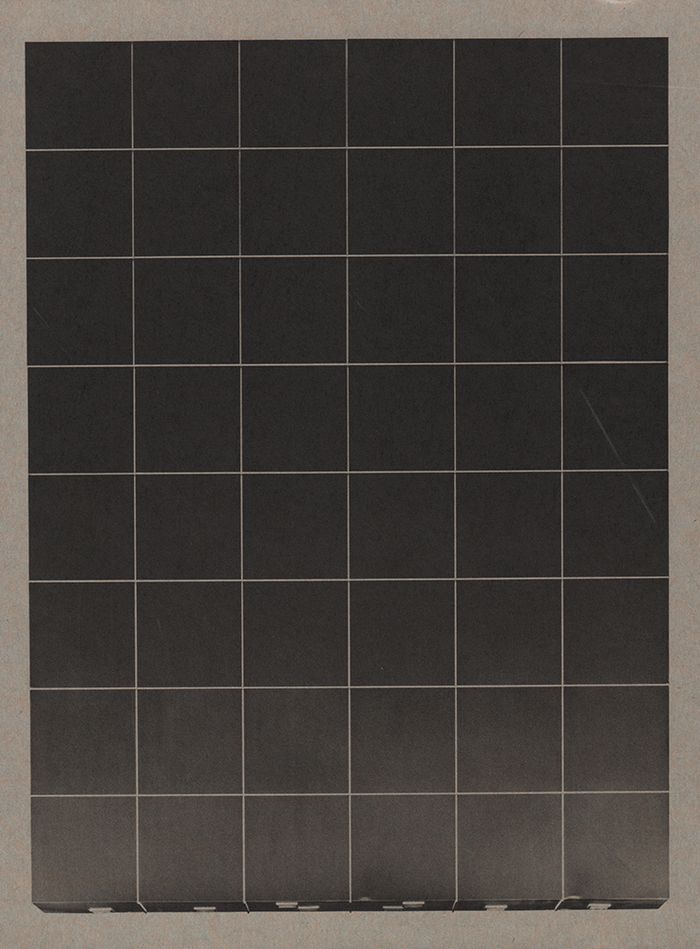
Mårten Lange: the mechanism
Mårten Lange: the mechanism
Actions:
Prix:
$48.95
(disponible sur commande)
Résumé:
'The Mechanism' is a melancholic series of black-and-white photographs that form a sci-fi story about contemporary life. Bringing together images made in multiple cities, the work deals with themes of technology, surveillance and urban society. The author attempts to trace the effects of technological developments on human experiences, using architectural tropes to build(...)
$48.95
(disponible sur commande)
Résumé:
'The Mechanism' is a melancholic series of black-and-white photographs that form a sci-fi story about contemporary life. Bringing together images made in multiple cities, the work deals with themes of technology, surveillance and urban society. The author attempts to trace the effects of technological developments on human experiences, using architectural tropes to build(...)
Titre:
Mårten Lange: the mechanism
Actions:
Prix:
$48.95
(disponible sur commande)
Résumé:
'The Mechanism' is a melancholic series of black-and-white photographs that form a sci-fi story about contemporary life. Bringing together images made in multiple cities, the work deals with themes of technology, surveillance and urban society. The author attempts to trace the effects of technological developments on human experiences, using architectural tropes to build a narrative loaded with the threats and promises of the future.
Mårten Lange: the mechanism
Actions:
Prix:
$48.95
(disponible sur commande)
Résumé:
'The Mechanism' is a melancholic series of black-and-white photographs that form a sci-fi story about contemporary life. Bringing together images made in multiple cities, the work deals with themes of technology, surveillance and urban society. The author attempts to trace the effects of technological developments on human experiences, using architectural tropes to build a narrative loaded with the threats and promises of the future.
Classification:
livres
livres
Publication:
mai 2017
mai 2017
Sujet:
Monographies photo
Monographies photo
Classification:
livres
livres
Actions:
Prix:
$20.00
(disponible sur commande)
Résumé:
The projects exhibited in this edition of StudioEast showcase a variety of student work, dealing with multifaced issues such as the environment, social and material culture, transportation, immigration, urban design, place-making, form, programming, etc. Some projects address singular issues, others multiple. Some design studio themes may be dependent on natural(...)
$20.00
(disponible sur commande)
Résumé:
The projects exhibited in this edition of StudioEast showcase a variety of student work, dealing with multifaced issues such as the environment, social and material culture, transportation, immigration, urban design, place-making, form, programming, etc. Some projects address singular issues, others multiple. Some design studio themes may be dependent on natural(...)
Titre:
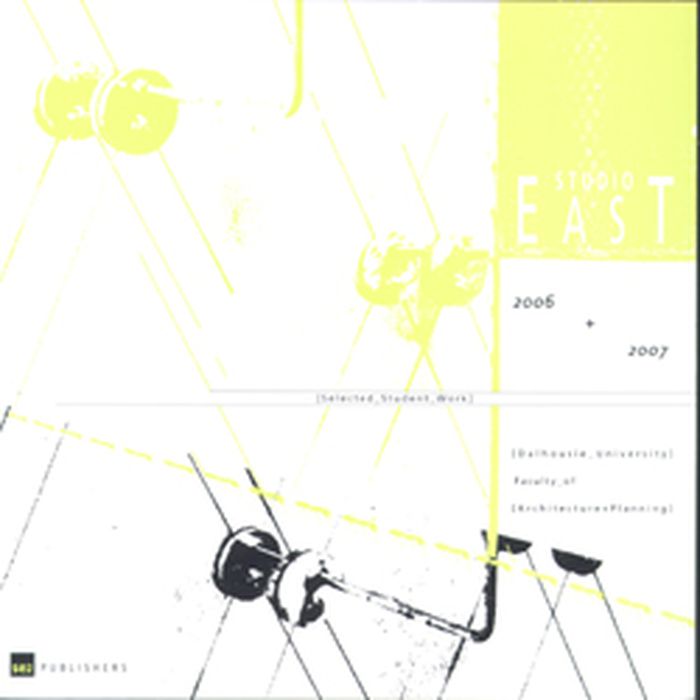
Studio East 2006 + 2007 selected student work, Dalhousie University
Actions:
Prix:
$20.00
(disponible sur commande)
Résumé:
The projects exhibited in this edition of StudioEast showcase a variety of student work, dealing with multifaced issues such as the environment, social and material culture, transportation, immigration, urban design, place-making, form, programming, etc. Some projects address singular issues, others multiple. Some design studio themes may be dependent on natural conditions and student design explorations exhibit reactionary gestures along with long-term sustainable goals.
Studio East 2006 + 2007 selected student work, Dalhousie University
Actions:
Prix:
$20.00
(disponible sur commande)
Résumé:
The projects exhibited in this edition of StudioEast showcase a variety of student work, dealing with multifaced issues such as the environment, social and material culture, transportation, immigration, urban design, place-making, form, programming, etc. Some projects address singular issues, others multiple. Some design studio themes may be dependent on natural conditions and student design explorations exhibit reactionary gestures along with long-term sustainable goals.
Classification:
livres
livres
Publication:
août 2008, Halifax
août 2008, Halifax
Sujet:
Architectes canadiens
Architectes canadiens
Classification:
livres
livres

Titre:
BXL Beat Streuil
BXL Beat Streuil
Actions:
Prix:
$59.99
(disponible sur commande)
Résumé:
Swiss-born artist Beat Streuli's central motif is the urban environment and its inhabitants. But his quietly mesmerizing photographs are neither documentary nor conceptual: rather, they lead us to a form of aesthetics that could be described as the "glamor of the usual." In this beautifully produced volume, Streuli brings together a new series of images taken in his(...)
$59.99
(disponible sur commande)
Résumé:
Swiss-born artist Beat Streuli's central motif is the urban environment and its inhabitants. But his quietly mesmerizing photographs are neither documentary nor conceptual: rather, they lead us to a form of aesthetics that could be described as the "glamor of the usual." In this beautifully produced volume, Streuli brings together a new series of images taken in his(...)
Titre:
BXL Beat Streuil
Actions:
Prix:
$59.99
(disponible sur commande)
Résumé:
Swiss-born artist Beat Streuli's central motif is the urban environment and its inhabitants. But his quietly mesmerizing photographs are neither documentary nor conceptual: rather, they lead us to a form of aesthetics that could be described as the "glamor of the usual." In this beautifully produced volume, Streuli brings together a new series of images taken in his current home town of Brussels.
BXL Beat Streuil
Actions:
Prix:
$59.99
(disponible sur commande)
Résumé:
Swiss-born artist Beat Streuli's central motif is the urban environment and its inhabitants. But his quietly mesmerizing photographs are neither documentary nor conceptual: rather, they lead us to a form of aesthetics that could be described as the "glamor of the usual." In this beautifully produced volume, Streuli brings together a new series of images taken in his current home town of Brussels.
Classification:
livres
livres
Publication:
septembre 2009
septembre 2009
Classification:
livres
livres
Prix:
$52.00
(disponible sur commande)
Résumé:
A photographic survey of Soviet-era playgrounds found in former members of the USSR, such as Ukraine, Lithuania, Latvia, Estonia, Russia, Belarus, Kazakhstan, Tajikistan, and Uzbekistan. Through five chapters containing more than 150 photographs, the book documents the mass-produced, yet diverse play equipment installed in the communal spaces of socialist-era housing(...)
$52.00
(disponible sur commande)
Résumé:
A photographic survey of Soviet-era playgrounds found in former members of the USSR, such as Ukraine, Lithuania, Latvia, Estonia, Russia, Belarus, Kazakhstan, Tajikistan, and Uzbekistan. Through five chapters containing more than 150 photographs, the book documents the mass-produced, yet diverse play equipment installed in the communal spaces of socialist-era housing(...)
Titre:
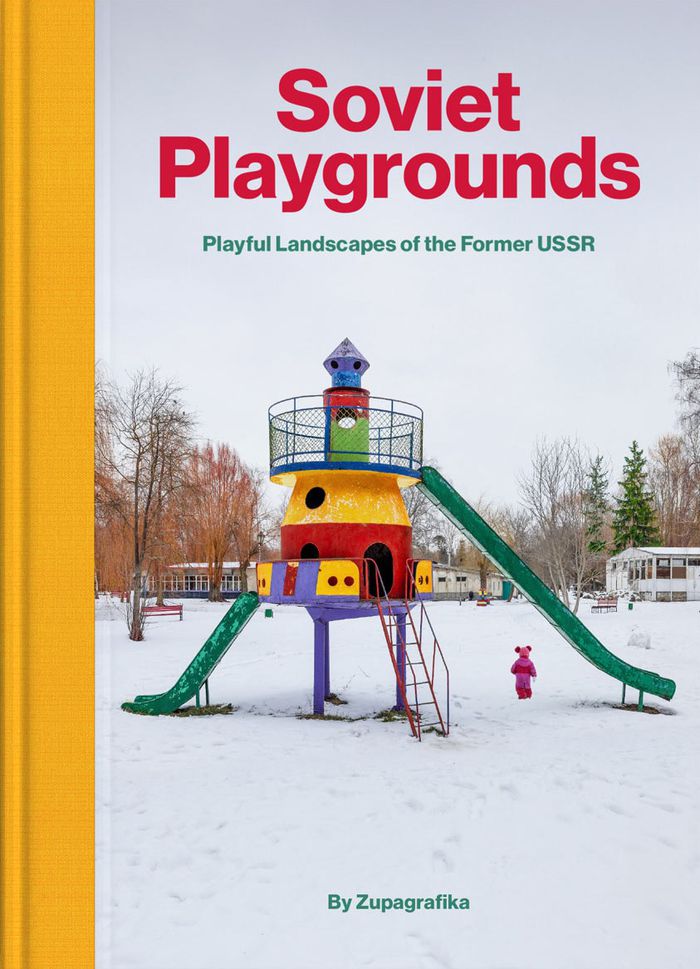
Soviet playgrounds: Playful landscapes of the former USSR
Actions:
Prix:
$52.00
(disponible sur commande)
Résumé:
A photographic survey of Soviet-era playgrounds found in former members of the USSR, such as Ukraine, Lithuania, Latvia, Estonia, Russia, Belarus, Kazakhstan, Tajikistan, and Uzbekistan. Through five chapters containing more than 150 photographs, the book documents the mass-produced, yet diverse play equipment installed in the communal spaces of socialist-era housing estates, such as rocket slides and earth-shaped climbers, spaceships and animal-themed ladders, cosmic roundabouts and bizarre objects that would probably raise safety concerns nowadays. From Riga to Dushanbe and all the way from Kyiv to Vladivostok, children dreamt of becoming cosmonauts, and enjoyed the many space-themed playscapes which had proliferated since the onset of the Cold War era. While some are still in use, others are slowly disappearing to make way for modern equipment, or, more recently, being destroyed during the Russian invasion of Ukraine, becoming only a faint memory of a Soviet childhood. Includes a foreword by the Ukrainian urban planner Mykola Gorokhov and informative maps of the playgrounds featured in every chapter. Pictures were taken by Zupagrafika, with contributions by local photographers.
Soviet playgrounds: Playful landscapes of the former USSR
Actions:
Prix:
$52.00
(disponible sur commande)
Résumé:
A photographic survey of Soviet-era playgrounds found in former members of the USSR, such as Ukraine, Lithuania, Latvia, Estonia, Russia, Belarus, Kazakhstan, Tajikistan, and Uzbekistan. Through five chapters containing more than 150 photographs, the book documents the mass-produced, yet diverse play equipment installed in the communal spaces of socialist-era housing estates, such as rocket slides and earth-shaped climbers, spaceships and animal-themed ladders, cosmic roundabouts and bizarre objects that would probably raise safety concerns nowadays. From Riga to Dushanbe and all the way from Kyiv to Vladivostok, children dreamt of becoming cosmonauts, and enjoyed the many space-themed playscapes which had proliferated since the onset of the Cold War era. While some are still in use, others are slowly disappearing to make way for modern equipment, or, more recently, being destroyed during the Russian invasion of Ukraine, becoming only a faint memory of a Soviet childhood. Includes a foreword by the Ukrainian urban planner Mykola Gorokhov and informative maps of the playgrounds featured in every chapter. Pictures were taken by Zupagrafika, with contributions by local photographers.
Classification:
livres
livres
Publication:
septembre 2022
septembre 2022
Sujet:
Modernisme
Modernisme
Classification:
livres
livres
Prix:
$75.00
(disponible sur commande)
Résumé:
Metals, as surface or structure as the generators of space play a role in nearly every strain of modernization in architecture. They define complete geographies of work, production, and political life. Non-architectural metals delivered in automobiles, and hard goods in the United States and worldwide have all been sourced as the engines of the sprawling late(...)
$75.00
(disponible sur commande)
Résumé:
Metals, as surface or structure as the generators of space play a role in nearly every strain of modernization in architecture. They define complete geographies of work, production, and political life. Non-architectural metals delivered in automobiles, and hard goods in the United States and worldwide have all been sourced as the engines of the sprawling late(...)
Titre:
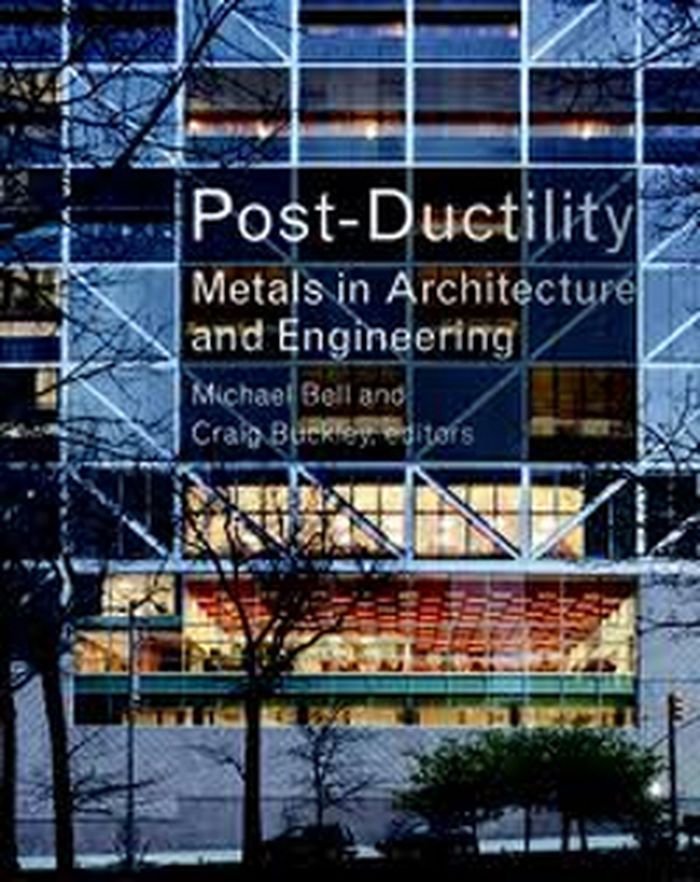
Post-Ductility: Metals in architecture and engineering
Actions:
Prix:
$75.00
(disponible sur commande)
Résumé:
Metals, as surface or structure as the generators of space play a role in nearly every strain of modernization in architecture. They define complete geographies of work, production, and political life. Non-architectural metals delivered in automobiles, and hard goods in the United States and worldwide have all been sourced as the engines of the sprawling late twentieth-century city in all of its forms. Post-Ductility refers to the literal aspects of material behavior in this case of metals but also of aspects of architectural and urban space that are measured by less verifiable but nonetheless real quotients of stress and strain. It is the tension and compression of space that gives form or coherence to form.
Post-Ductility: Metals in architecture and engineering
Actions:
Prix:
$75.00
(disponible sur commande)
Résumé:
Metals, as surface or structure as the generators of space play a role in nearly every strain of modernization in architecture. They define complete geographies of work, production, and political life. Non-architectural metals delivered in automobiles, and hard goods in the United States and worldwide have all been sourced as the engines of the sprawling late twentieth-century city in all of its forms. Post-Ductility refers to the literal aspects of material behavior in this case of metals but also of aspects of architectural and urban space that are measured by less verifiable but nonetheless real quotients of stress and strain. It is the tension and compression of space that gives form or coherence to form.
Classification:
livres
livres
Publication:
mars 2012
mars 2012
Sujet:
Matériaux et éclairage
Matériaux et éclairage
Classification:
périodiques
périodiques
Actions:
Prix:
$56.00
(disponible en magasin)
Résumé:
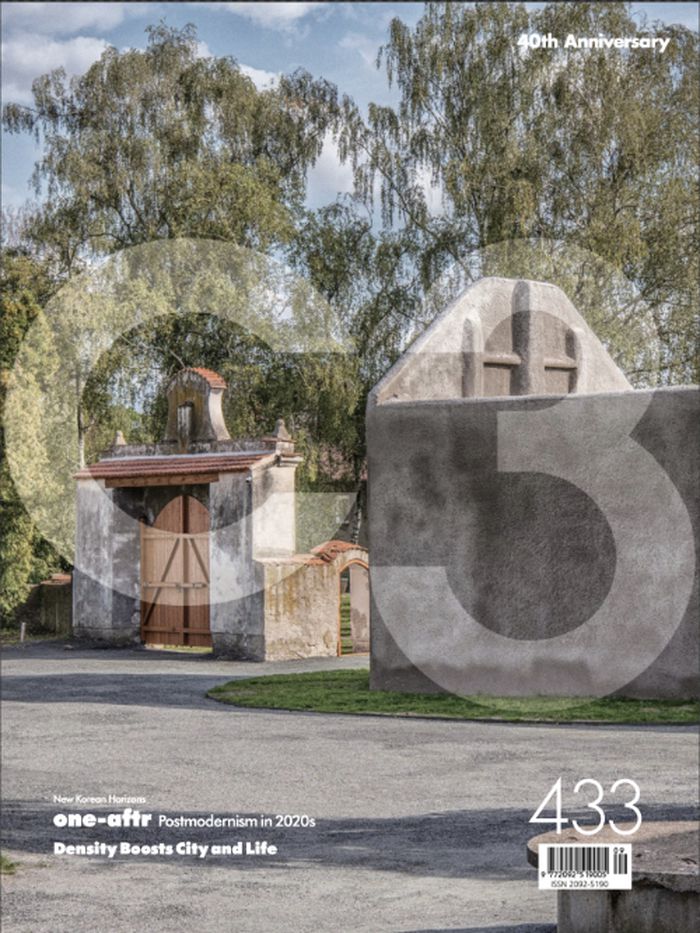
This issue investigates the ancient and continuing urban phenomenon of density through two new projects that are far from formulaic but have a strong signature form and vibrant facades. The first is ''One Ashley Road'' by Alison Brooks Architects, a flagship project of the Tottenham Hale regeneration in London. The second is ''Highnote'', a residential tower in Almere(...)
$56.00
(disponible en magasin)
Résumé:
This issue investigates the ancient and continuing urban phenomenon of density through two new projects that are far from formulaic but have a strong signature form and vibrant facades. The first is ''One Ashley Road'' by Alison Brooks Architects, a flagship project of the Tottenham Hale regeneration in London. The second is ''Highnote'', a residential tower in Almere(...)
Titre:
C3 433: One-aftr + Density boosts city and life
Actions:
Prix:
$56.00
(disponible en magasin)
Résumé:
This issue investigates the ancient and continuing urban phenomenon of density through two new projects that are far from formulaic but have a strong signature form and vibrant facades. The first is ''One Ashley Road'' by Alison Brooks Architects, a flagship project of the Tottenham Hale regeneration in London. The second is ''Highnote'', a residential tower in Almere designed by Studioninedots and geared towards young urban homebuyers. Also in this issue, a look at what to expect from the new generation of Korean architects through a feature on the firm One-aftr, co-founded by Joon Ma and Ryu Ahn, plus new projects by Atelier Marc Barani, 5468796 Architecture, and others.
C3 433: One-aftr + Density boosts city and life
Actions:
Prix:
$56.00
(disponible en magasin)
Résumé:
This issue investigates the ancient and continuing urban phenomenon of density through two new projects that are far from formulaic but have a strong signature form and vibrant facades. The first is ''One Ashley Road'' by Alison Brooks Architects, a flagship project of the Tottenham Hale regeneration in London. The second is ''Highnote'', a residential tower in Almere designed by Studioninedots and geared towards young urban homebuyers. Also in this issue, a look at what to expect from the new generation of Korean architects through a feature on the firm One-aftr, co-founded by Joon Ma and Ryu Ahn, plus new projects by Atelier Marc Barani, 5468796 Architecture, and others.
Classification:
périodiques
périodiques
Publication:
mars 2025
mars 2025
Sujet:
Revues
Revues
Classification:
livres
livres
Actions:
Prix:
$39.95
(disponible sur commande)
Résumé:
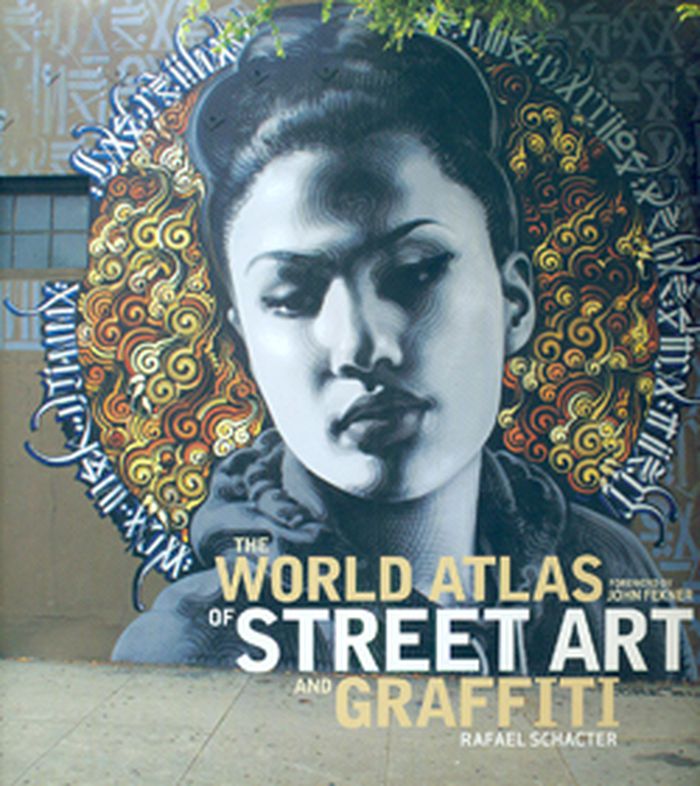
Painted murals first appeared in Latin America in the early 20th century; in the 1950s, spray-can graffiti associated with Latino gangs followed, notably the “cholo” graffiti of Los Angeles. Today, street art has traveled to nearly every corner of the globe, evolving into a highly complex and ornate art form. The World Atlas of Street Art and Graffiti is one survey of(...)
$39.95
(disponible sur commande)
Résumé:
Painted murals first appeared in Latin America in the early 20th century; in the 1950s, spray-can graffiti associated with Latino gangs followed, notably the “cholo” graffiti of Los Angeles. Today, street art has traveled to nearly every corner of the globe, evolving into a highly complex and ornate art form. The World Atlas of Street Art and Graffiti is one survey of(...)
Publication:
septembre 2013
septembre 2013
Titre:
The world atlas of street art and graffiti
Actions:
Prix:
$39.95
(disponible sur commande)
Résumé:
Painted murals first appeared in Latin America in the early 20th century; in the 1950s, spray-can graffiti associated with Latino gangs followed, notably the “cholo” graffiti of Los Angeles. Today, street art has traveled to nearly every corner of the globe, evolving into a highly complex and ornate art form. The World Atlas of Street Art and Graffiti is one survey of international street art, focusing on the world’s most influential urban artists and artworks. Since the lives and works of urban artists are inextricably linked to specific streets and places, this illustrated volume features specially commissioned “city artworks” that provide an intimate understanding of these metropolitan landscapes.
The world atlas of street art and graffiti
Actions:
Prix:
$39.95
(disponible sur commande)
Résumé:
Painted murals first appeared in Latin America in the early 20th century; in the 1950s, spray-can graffiti associated with Latino gangs followed, notably the “cholo” graffiti of Los Angeles. Today, street art has traveled to nearly every corner of the globe, evolving into a highly complex and ornate art form. The World Atlas of Street Art and Graffiti is one survey of international street art, focusing on the world’s most influential urban artists and artworks. Since the lives and works of urban artists are inextricably linked to specific streets and places, this illustrated volume features specially commissioned “city artworks” that provide an intimate understanding of these metropolitan landscapes.
Classification:
livres
livres
Publication:
septembre 2013
septembre 2013
Classification:
livres
livres
Actions:
Prix:
$32.95
(disponible sur commande)
Résumé:
In this volume, we offer a perspective on the domestic shelters fabricated by and for a wide range of urban and rural peoples over more than three centuries of transforming the land that is today Canada. In so doing, we seek to shed light not only on the commonalities and differences in house form and appearance, but also on the social and economic forces(...)
$32.95
(disponible sur commande)
Résumé:
In this volume, we offer a perspective on the domestic shelters fabricated by and for a wide range of urban and rural peoples over more than three centuries of transforming the land that is today Canada. In so doing, we seek to shed light not only on the commonalities and differences in house form and appearance, but also on the social and economic forces(...)
Sujet:
Architecture du Canada
Architecture du Canada
Publication:
septembre 1998, Toronto
septembre 1998, Toronto
Titre:
Homeplace : the making of the Canadian dwelling over three centuries
Actions:
Prix:
$32.95
(disponible sur commande)
Résumé:
In this volume, we offer a perspective on the domestic shelters fabricated by and for a wide range of urban and rural peoples over more than three centuries of transforming the land that is today Canada. In so doing, we seek to shed light not only on the commonalities and differences in house form and appearance, but also on the social and economic forces that lay behind their creation.
Homeplace : the making of the Canadian dwelling over three centuries
Actions:
Prix:
$32.95
(disponible sur commande)
Résumé:
In this volume, we offer a perspective on the domestic shelters fabricated by and for a wide range of urban and rural peoples over more than three centuries of transforming the land that is today Canada. In so doing, we seek to shed light not only on the commonalities and differences in house form and appearance, but also on the social and economic forces that lay behind their creation.
Classification:
livres
livres
Publication:
septembre 1998, Toronto
septembre 1998, Toronto
Sujet:
Architecture du Canada
Architecture du Canada
Classification:
livres
livres
Actions:
Exemplaires:
Description:
xx, 290 pages : illustrations, maps ; 24 cm.
Description:
xx, 290 pages : illustrations, maps ; 24 cm.
Auteur:
Sujet:
Publication:
Pittsburgh, Pa. : University of Pittsburgh Press, ©2011.
Pittsburgh, Pa. : University of Pittsburgh Press, ©2011.
Titre:
City at the center of the world : space, history, and modernity in Quito / Ernesto Capello.
Actions:
Exemplaires:
Description:
xx, 290 pages : illustrations, maps ; 24 cm.
City at the center of the world : space, history, and modernity in Quito / Ernesto Capello.
Actions:
Exemplaires:
Description:
xx, 290 pages : illustrations, maps ; 24 cm.
Classification:
livres
livres
Publication:
Pittsburgh, Pa. : University of Pittsburgh Press, ©2011.
Pittsburgh, Pa. : University of Pittsburgh Press, ©2011.
Auteur:
Sujet:


