


2466 Résultats
Classification:
livres
livres
Actions:
Prix:
$29.95
(disponible sur commande)
Résumé:
One common feature of the wave of recent revolutions and revolts around the world is not political but rather architectural: many erupted on inner-city roundabouts. In thinking about the relation between protest and urban form, Eyal Weizman starts with the May 1980 uprising in Gwangju, South Korea, the first of the “roundabout revolutions,” and traces its lineage to the(...)
$29.95
(disponible sur commande)
Résumé:
One common feature of the wave of recent revolutions and revolts around the world is not political but rather architectural: many erupted on inner-city roundabouts. In thinking about the relation between protest and urban form, Eyal Weizman starts with the May 1980 uprising in Gwangju, South Korea, the first of the “roundabout revolutions,” and traces its lineage to the(...)
Titre:
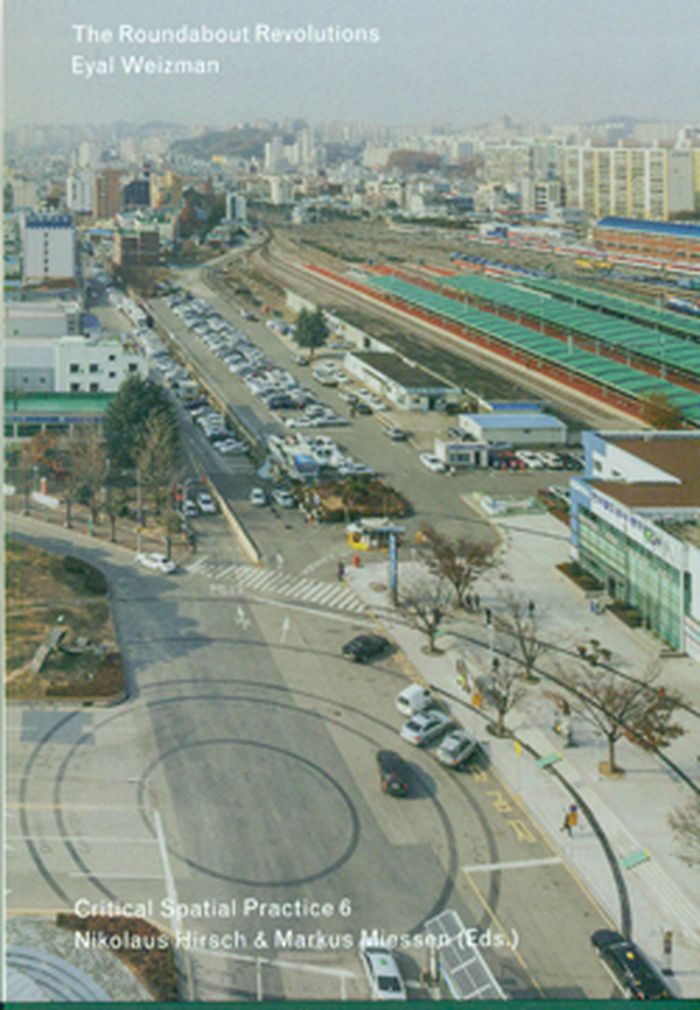
Critical spatial practice 6 : Eyal Weizman, the roundabout revolutions
Actions:
Prix:
$29.95
(disponible sur commande)
Résumé:
One common feature of the wave of recent revolutions and revolts around the world is not political but rather architectural: many erupted on inner-city roundabouts. In thinking about the relation between protest and urban form, Eyal Weizman starts with the May 1980 uprising in Gwangju, South Korea, the first of the “roundabout revolutions,” and traces its lineage to the Arab Spring and its hellish aftermath. Rereading the history of the roundabout through the vortices of history that traverse it, the book follows the development of the roundabout in Europe and North America in the early twentieth century, to its subsequent export to the colonial world in the context of attempts to discipline and police the “chaotic” non-Western city. How did an urban apparatus put in the service of authoritarian power became the locus of its undoing?
Critical spatial practice 6 : Eyal Weizman, the roundabout revolutions
Actions:
Prix:
$29.95
(disponible sur commande)
Résumé:
One common feature of the wave of recent revolutions and revolts around the world is not political but rather architectural: many erupted on inner-city roundabouts. In thinking about the relation between protest and urban form, Eyal Weizman starts with the May 1980 uprising in Gwangju, South Korea, the first of the “roundabout revolutions,” and traces its lineage to the Arab Spring and its hellish aftermath. Rereading the history of the roundabout through the vortices of history that traverse it, the book follows the development of the roundabout in Europe and North America in the early twentieth century, to its subsequent export to the colonial world in the context of attempts to discipline and police the “chaotic” non-Western city. How did an urban apparatus put in the service of authoritarian power became the locus of its undoing?
Classification:
livres
livres
Publication:
octobre 2015
octobre 2015
Sujet:
Théorie/ philosophie
Théorie/ philosophie
Classification:
livres
livres
Titre:
6,000 years of housing
6,000 years of housing
Actions:
Prix:
$54.00
(disponible sur commande)
Résumé:
Part architecture, part history, and part anthropology, this encyclopedic book limns the story of housing around the world from the pre-urban dwellings of nomadic, semi-nomadic, and sedentary agricultural societies to the present. Ancient urban dwellings were inward-looking, ranged around a courtyard. Until fairly recently, these dwelling types survived in indigenous(...)
$54.00
(disponible sur commande)
Résumé:
Part architecture, part history, and part anthropology, this encyclopedic book limns the story of housing around the world from the pre-urban dwellings of nomadic, semi-nomadic, and sedentary agricultural societies to the present. Ancient urban dwellings were inward-looking, ranged around a courtyard. Until fairly recently, these dwelling types survived in indigenous(...)
Titre:
6,000 years of housing
Actions:
Prix:
$54.00
(disponible sur commande)
Résumé:
Part architecture, part history, and part anthropology, this encyclopedic book limns the story of housing around the world from the pre-urban dwellings of nomadic, semi-nomadic, and sedentary agricultural societies to the present. Ancient urban dwellings were inward-looking, ranged around a courtyard. Until fairly recently, these dwelling types survived in indigenous urban house forms in the Islamic world, India, China, and the Iberian peninsula and Latin America. After the collapse of the Roman Empire, however, outward-looking house forms replaced the ancient form in most of Europe and the New World. In the Middle Ages houses served both as homes and as places of work, but gradually the domestic and business lives of the inhabitants became separate. In the wake of the Industrial Revolution, profound changes in the residential development of the western world occurred: housing became segregated along socioeconomic lines and dwelling types polarized, with low-density, single-family houses at one extreme, and tall, high-density, multifamily tenements and apartments at the other. Side effects of America’s automobile-intensive suburban dream housing include inefficient land use, pollution, and urban decay. "6,000 Years of Housing" chronicles how this came about, and suggests solutions based on a rich variety of historical precedents.
6,000 years of housing
Actions:
Prix:
$54.00
(disponible sur commande)
Résumé:
Part architecture, part history, and part anthropology, this encyclopedic book limns the story of housing around the world from the pre-urban dwellings of nomadic, semi-nomadic, and sedentary agricultural societies to the present. Ancient urban dwellings were inward-looking, ranged around a courtyard. Until fairly recently, these dwelling types survived in indigenous urban house forms in the Islamic world, India, China, and the Iberian peninsula and Latin America. After the collapse of the Roman Empire, however, outward-looking house forms replaced the ancient form in most of Europe and the New World. In the Middle Ages houses served both as homes and as places of work, but gradually the domestic and business lives of the inhabitants became separate. In the wake of the Industrial Revolution, profound changes in the residential development of the western world occurred: housing became segregated along socioeconomic lines and dwelling types polarized, with low-density, single-family houses at one extreme, and tall, high-density, multifamily tenements and apartments at the other. Side effects of America’s automobile-intensive suburban dream housing include inefficient land use, pollution, and urban decay. "6,000 Years of Housing" chronicles how this came about, and suggests solutions based on a rich variety of historical precedents.
Classification:
livres
livres
Publication:
juillet 2003, New York
juillet 2003, New York
Sujet:
Logements collectifs
Logements collectifs
Classification:
livres
livres
Exemplaires:
Description:
187 pages : illustrations (some color) ; 25 cm.
Description:
187 pages : illustrations (some color) ; 25 cm.
Auteur:
Sujet:
Publication:
Orléans : HYX, ©2006.
Orléans : HYX, ©2006.
Titre:
No-stop city : Archizoom associati / Andrea Branzi.
Actions:
Exemplaires:
Description:
187 pages : illustrations (some color) ; 25 cm.
No-stop city : Archizoom associati / Andrea Branzi.
Actions:
Exemplaires:
Description:
187 pages : illustrations (some color) ; 25 cm.
Classification:
livres
livres
Publication:
Orléans : HYX, ©2006.
Orléans : HYX, ©2006.
Auteur:
Sujet:
Classification:
livres
livres
Actions:
Prix:
$57.50
(disponible en magasin)
Résumé:
A city’s infrastructure—its tangle of streets, tunnels, routes and lines—can be much more than a mere functional necessity or an ad hoc constellation. Designed and constructed carefully and purposefully, "infratecture" can add significant sociological, cultural, ecological and economic value to a city. In this volume, Rotterdam-based traffic engineer, academic and(...)
$57.50
(disponible en magasin)
Résumé:
A city’s infrastructure—its tangle of streets, tunnels, routes and lines—can be much more than a mere functional necessity or an ad hoc constellation. Designed and constructed carefully and purposefully, "infratecture" can add significant sociological, cultural, ecological and economic value to a city. In this volume, Rotterdam-based traffic engineer, academic and(...)
Publication:
février 2016
février 2016
Titre:
Infratecture: Infrastructure by Design
Actions:
Prix:
$57.50
(disponible en magasin)
Résumé:
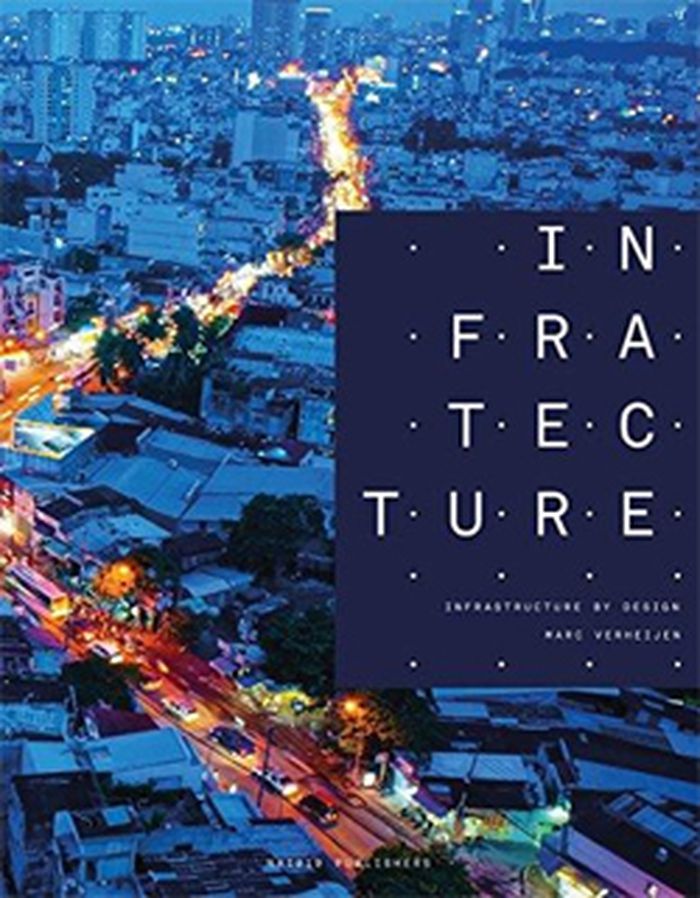
A city’s infrastructure—its tangle of streets, tunnels, routes and lines—can be much more than a mere functional necessity or an ad hoc constellation. Designed and constructed carefully and purposefully, "infratecture" can add significant sociological, cultural, ecological and economic value to a city. In this volume, Rotterdam-based traffic engineer, academic and architect Marc Verheijen discusses the infrastructure of cities from 15 different perspectives and features 30 examples of international best practices in infrastructure design. A practically oriented book about designing and building everything from roads and viaducts to environmental habitats and noise barriers, Infratecture is also an argument for these integrated design solutions, all the more urgent at a moment of accelerated global urbanization. Infratecture argues that, with the right mind set, genuine cooperation and sophisticated design, infrastructure can form a significant, and positive, part of the everyday environment.
Infratecture: Infrastructure by Design
Actions:
Prix:
$57.50
(disponible en magasin)
Résumé:
A city’s infrastructure—its tangle of streets, tunnels, routes and lines—can be much more than a mere functional necessity or an ad hoc constellation. Designed and constructed carefully and purposefully, "infratecture" can add significant sociological, cultural, ecological and economic value to a city. In this volume, Rotterdam-based traffic engineer, academic and architect Marc Verheijen discusses the infrastructure of cities from 15 different perspectives and features 30 examples of international best practices in infrastructure design. A practically oriented book about designing and building everything from roads and viaducts to environmental habitats and noise barriers, Infratecture is also an argument for these integrated design solutions, all the more urgent at a moment of accelerated global urbanization. Infratecture argues that, with the right mind set, genuine cooperation and sophisticated design, infrastructure can form a significant, and positive, part of the everyday environment.
Classification:
livres
livres
Publication:
février 2016
février 2016
Classification:
livres
livres
Titre:
Berlin street art
Berlin street art
Actions:
Prix:
$19.95
(disponible sur commande)
Résumé:
Street art is a phenomenon which exists across the world's urban centers. What was once regarded as a nuisance at best or vandalism at worst, is now increasingly being recognized as an important art form. This book brings together the finest examples of street art in Berlin, a city bursting with artistic energy and expression. Working primarily at night, street artists(...)
$19.95
(disponible sur commande)
Résumé:
Street art is a phenomenon which exists across the world's urban centers. What was once regarded as a nuisance at best or vandalism at worst, is now increasingly being recognized as an important art form. This book brings together the finest examples of street art in Berlin, a city bursting with artistic energy and expression. Working primarily at night, street artists(...)
Publication:
septembre 2005, München, Berlin, London, New York
septembre 2005, München, Berlin, London, New York
Titre:
Berlin street art
Actions:
Prix:
$19.95
(disponible sur commande)
Résumé:
Street art is a phenomenon which exists across the world's urban centers. What was once regarded as a nuisance at best or vandalism at worst, is now increasingly being recognized as an important art form. This book brings together the finest examples of street art in Berlin, a city bursting with artistic energy and expression. Working primarily at night, street artists leave their messages on building facades, mailboxes, advertisements, traffic signs and trash bins. The author has spent many years photographing street art before it is erased by the authorities and he collects here the best work of the city's preeminent street artists.
Berlin street art
Actions:
Prix:
$19.95
(disponible sur commande)
Résumé:
Street art is a phenomenon which exists across the world's urban centers. What was once regarded as a nuisance at best or vandalism at worst, is now increasingly being recognized as an important art form. This book brings together the finest examples of street art in Berlin, a city bursting with artistic energy and expression. Working primarily at night, street artists leave their messages on building facades, mailboxes, advertisements, traffic signs and trash bins. The author has spent many years photographing street art before it is erased by the authorities and he collects here the best work of the city's preeminent street artists.
Classification:
livres
livres
Publication:
septembre 2005, München, Berlin, London, New York
septembre 2005, München, Berlin, London, New York
Classification:
livres
livres
Actions:
Prix:
$60.00
(disponible en magasin)
Résumé:
With this work in the form of a book, Maria Lalou & Skafte Aymo-Boot present the phenomenon of a particular pending architecture mutely present all over Athens. The concrete skeletons of polykatoikia – multi-story apartment buildings – are emblematic of the development of modern Greece throughout the second half of the twentieth century. The book deals with the(...)
$60.00
(disponible en magasin)
Résumé:
With this work in the form of a book, Maria Lalou & Skafte Aymo-Boot present the phenomenon of a particular pending architecture mutely present all over Athens. The concrete skeletons of polykatoikia – multi-story apartment buildings – are emblematic of the development of modern Greece throughout the second half of the twentieth century. The book deals with the(...)
Publication:
novembre 2023
novembre 2023
Titre:
(Un)Finished: Atlas of Athens' incomplete buildings. A story of hidden antimonuments
Actions:
Prix:
$60.00
(disponible en magasin)
Résumé:
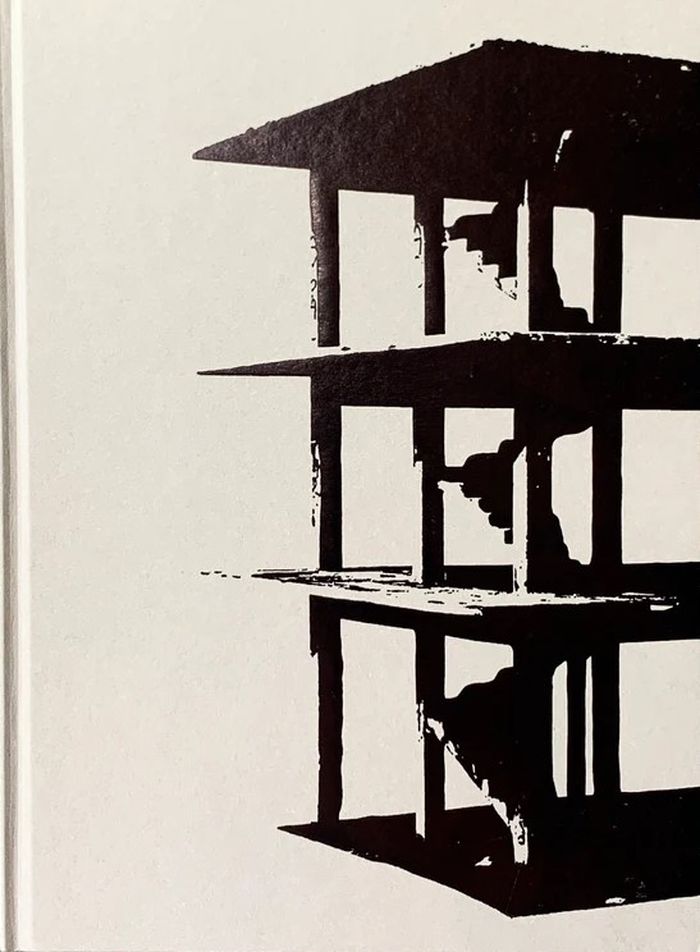
With this work in the form of a book, Maria Lalou & Skafte Aymo-Boot present the phenomenon of a particular pending architecture mutely present all over Athens. The concrete skeletons of polykatoikia – multi-story apartment buildings – are emblematic of the development of modern Greece throughout the second half of the twentieth century. The book deals with the politics of urban space by treating the unfinished buildings as study objects and tracing their individual histories. Through the words of current owners and by means of photographs, archival documents and found artefacts, a different chronicle of the development of modern Arthens is taking shape.
(Un)Finished: Atlas of Athens' incomplete buildings. A story of hidden antimonuments
Actions:
Prix:
$60.00
(disponible en magasin)
Résumé:
With this work in the form of a book, Maria Lalou & Skafte Aymo-Boot present the phenomenon of a particular pending architecture mutely present all over Athens. The concrete skeletons of polykatoikia – multi-story apartment buildings – are emblematic of the development of modern Greece throughout the second half of the twentieth century. The book deals with the politics of urban space by treating the unfinished buildings as study objects and tracing their individual histories. Through the words of current owners and by means of photographs, archival documents and found artefacts, a different chronicle of the development of modern Arthens is taking shape.
Classification:
livres
livres
Publication:
novembre 2023
novembre 2023
Classification:
livres
livres
Actions:
Prix:
$42.95
(disponible en magasin)
Résumé:
Led by Edward P. Bass Distinguished Visiting Architecture Fellow Marc de La Bruyère and Claire Weisz founding principal of WXY Architecture Students of the Yale School of Architecture sought to investigate and propose history-conscious proposals for housing in Edmonton, Canada, a city poised for future economic growth. The students assessed how climate, economic forces,(...)
$42.95
(disponible en magasin)
Résumé:
Led by Edward P. Bass Distinguished Visiting Architecture Fellow Marc de La Bruyère and Claire Weisz founding principal of WXY Architecture Students of the Yale School of Architecture sought to investigate and propose history-conscious proposals for housing in Edmonton, Canada, a city poised for future economic growth. The students assessed how climate, economic forces,(...)
Sujet:
Architecture contemporaine
Architecture contemporaine
Publication:
mai 2025
mai 2025
Titre:
Oil, land, people: The challenges for architecture
Actions:
Prix:
$42.95
(disponible en magasin)
Résumé:
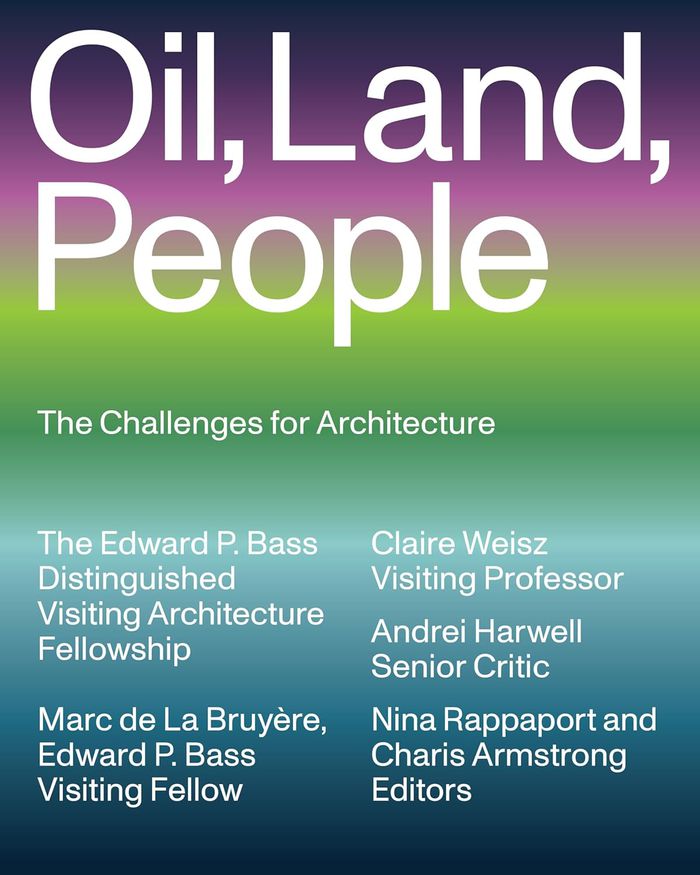
Led by Edward P. Bass Distinguished Visiting Architecture Fellow Marc de La Bruyère and Claire Weisz founding principal of WXY Architecture Students of the Yale School of Architecture sought to investigate and propose history-conscious proposals for housing in Edmonton, Canada, a city poised for future economic growth. The students assessed how climate, economic forces, and urban contexts impacted the composition of housing typologies over time in various contexts and then focused on “Gateway Sites” in Edmonton. The students created proposals that utilized innovative housing schemes and applied socially responsible real estate development to form solutions for local ecological, social, and marketing challenges.
Oil, land, people: The challenges for architecture
Actions:
Prix:
$42.95
(disponible en magasin)
Résumé:
Led by Edward P. Bass Distinguished Visiting Architecture Fellow Marc de La Bruyère and Claire Weisz founding principal of WXY Architecture Students of the Yale School of Architecture sought to investigate and propose history-conscious proposals for housing in Edmonton, Canada, a city poised for future economic growth. The students assessed how climate, economic forces, and urban contexts impacted the composition of housing typologies over time in various contexts and then focused on “Gateway Sites” in Edmonton. The students created proposals that utilized innovative housing schemes and applied socially responsible real estate development to form solutions for local ecological, social, and marketing challenges.
Classification:
livres
livres
Publication:
mai 2025
mai 2025
Sujet:
Architecture contemporaine
Architecture contemporaine
Classification:
livres
livres
Prix:
$81.50
(disponible sur commande)
Résumé:
"Decolonising the built environment: process, product, and pedagogy" provides an important and much-needed comprehensive overview of how decolonisation is shaping the built environment in theory, in practice, and as a process/project today. The contributors provide an inclusive and trans-national conversation between a diverse set of academics, design practitioners and(...)
$81.50
(disponible sur commande)
Résumé:
"Decolonising the built environment: process, product, and pedagogy" provides an important and much-needed comprehensive overview of how decolonisation is shaping the built environment in theory, in practice, and as a process/project today. The contributors provide an inclusive and trans-national conversation between a diverse set of academics, design practitioners and(...)
Sujet:
L'écologie de l'architecure
L'écologie de l'architecure
Publication:
février 2025
février 2025
Titre:
Decolonising the built environment: Process, product, and pedagogy
Actions:
Prix:
$81.50
(disponible sur commande)
Résumé:
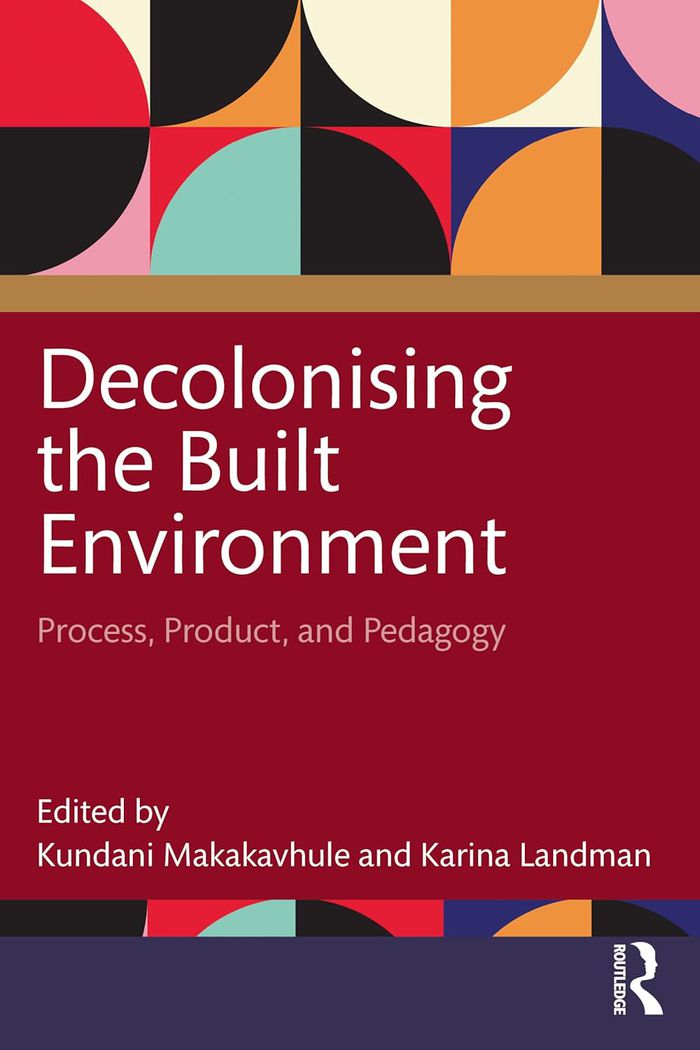
"Decolonising the built environment: process, product, and pedagogy" provides an important and much-needed comprehensive overview of how decolonisation is shaping the built environment in theory, in practice, and as a process/project today. The contributors provide an inclusive and trans-national conversation between a diverse set of academics, design practitioners and thinkers, and activists. This book is structured around three thematic and practical categories: Part 1 studies decolonisation conceptually; Part 2 studies decolonisation as a process; and Part 3 studies the products of decolonisation as materialised in the form of buildings, urban design, planning, policy, and social practices.
Decolonising the built environment: Process, product, and pedagogy
Actions:
Prix:
$81.50
(disponible sur commande)
Résumé:
"Decolonising the built environment: process, product, and pedagogy" provides an important and much-needed comprehensive overview of how decolonisation is shaping the built environment in theory, in practice, and as a process/project today. The contributors provide an inclusive and trans-national conversation between a diverse set of academics, design practitioners and thinkers, and activists. This book is structured around three thematic and practical categories: Part 1 studies decolonisation conceptually; Part 2 studies decolonisation as a process; and Part 3 studies the products of decolonisation as materialised in the form of buildings, urban design, planning, policy, and social practices.
Classification:
livres
livres
Publication:
février 2025
février 2025
Sujet:
L'écologie de l'architecure
L'écologie de l'architecure
Classification:
livres
livres
Actions:
Prix:
$19.95
(disponible sur commande)
Résumé:
Architects Nannette Jackowski and Ricardo de Ostos have developed a unique form of experimental architecture that reinvigorates its strength as an agent of political and societal change. Ambiguous Spaces, the newest installment in the Pamphlet Architecture series and a return to Pamphlet’s own progressive roots, features the architectural fictions "The Pregnant Island"(...)
$19.95
(disponible sur commande)
Résumé:
Architects Nannette Jackowski and Ricardo de Ostos have developed a unique form of experimental architecture that reinvigorates its strength as an agent of political and societal change. Ambiguous Spaces, the newest installment in the Pamphlet Architecture series and a return to Pamphlet’s own progressive roots, features the architectural fictions "The Pregnant Island"(...)
Sujet:
petits formats
petits formats
Publication:
novembre 2008, New York
novembre 2008, New York
Titre:
Pamphlet Architecture 29: ambiguous spaces
Actions:
Prix:
$19.95
(disponible sur commande)
Résumé:
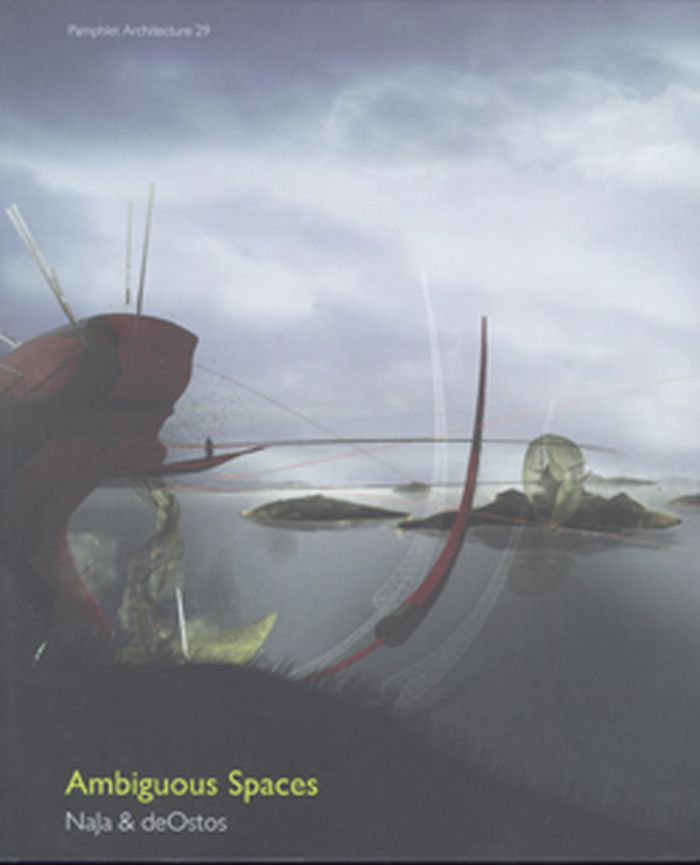
Architects Nannette Jackowski and Ricardo de Ostos have developed a unique form of experimental architecture that reinvigorates its strength as an agent of political and societal change. Ambiguous Spaces, the newest installment in the Pamphlet Architecture series and a return to Pamphlet’s own progressive roots, features the architectural fictions "The Pregnant Island" and "Nuclear Breeding." These two projects develop alternative urban concepts that address the challenges presented by the specific situations and social dynamics described in controversial locations such as the Brazilian Tucurui dam, the Three Gorges dam in China, and former English nuclear test sites.
Pamphlet Architecture 29: ambiguous spaces
Actions:
Prix:
$19.95
(disponible sur commande)
Résumé:
Architects Nannette Jackowski and Ricardo de Ostos have developed a unique form of experimental architecture that reinvigorates its strength as an agent of political and societal change. Ambiguous Spaces, the newest installment in the Pamphlet Architecture series and a return to Pamphlet’s own progressive roots, features the architectural fictions "The Pregnant Island" and "Nuclear Breeding." These two projects develop alternative urban concepts that address the challenges presented by the specific situations and social dynamics described in controversial locations such as the Brazilian Tucurui dam, the Three Gorges dam in China, and former English nuclear test sites.
Classification:
livres
livres
Publication:
novembre 2008, New York
novembre 2008, New York
Sujet:
petits formats
petits formats
Classification:
livres
livres
Titre:
Off-modern
Off-modern
Actions:
Prix:
$32.50
(disponible en magasin)
Résumé:
Svetlana Boym is a writer, theorist, and media artist, and teaches Slavic and Comparative Literature at Harvard University. 'If in the 1980s artists dreamed of becoming their own curators and borrowed from the theorists, now the theorists dream of becoming artists. Disappointed with their own disciplinary specialization, thet immigrate into each other's territory. The(...)
$32.50
(disponible en magasin)
Résumé:
Svetlana Boym is a writer, theorist, and media artist, and teaches Slavic and Comparative Literature at Harvard University. 'If in the 1980s artists dreamed of becoming their own curators and borrowed from the theorists, now the theorists dream of becoming artists. Disappointed with their own disciplinary specialization, thet immigrate into each other's territory. The(...)
Titre:
Off-modern
Actions:
Prix:
$32.50
(disponible en magasin)
Résumé:
Svetlana Boym is a writer, theorist, and media artist, and teaches Slavic and Comparative Literature at Harvard University. 'If in the 1980s artists dreamed of becoming their own curators and borrowed from the theorists, now the theorists dream of becoming artists. Disappointed with their own disciplinary specialization, thet immigrate into each other's territory. The lateral move again. Neither backward nor forward, but sideways.' This is the second volume in a series of books related to the FORuM Project, Buell Center, Columbia University, New York, dedicated to exploring the relationship of architectural form to politics and urban life.
Off-modern
Actions:
Prix:
$32.50
(disponible en magasin)
Résumé:
Svetlana Boym is a writer, theorist, and media artist, and teaches Slavic and Comparative Literature at Harvard University. 'If in the 1980s artists dreamed of becoming their own curators and borrowed from the theorists, now the theorists dream of becoming artists. Disappointed with their own disciplinary specialization, thet immigrate into each other's territory. The lateral move again. Neither backward nor forward, but sideways.' This is the second volume in a series of books related to the FORuM Project, Buell Center, Columbia University, New York, dedicated to exploring the relationship of architectural form to politics and urban life.
Classification:
livres
livres
Publication:
août 2008, New York
août 2008, New York
Sujet:
Théorie de l’architecture
Théorie de l’architecture


