


4163 Résultats
Classification:
périodiques
périodiques
Actions:
Prix:
$21.00
(disponible sur commande)
Résumé:
Celebrating our 15 years of creative publishing, we proudly present our biggest publication to date, our 15th anniversary book. It features the work of hundreds of world-renowned creatives, looking back over the last 15 years, and forward to the next 15 years. Illustration is the backbone of graphic design, be it for publications, advertisments, commercials, billboards(...)
$21.00
(disponible sur commande)
Résumé:
Celebrating our 15 years of creative publishing, we proudly present our biggest publication to date, our 15th anniversary book. It features the work of hundreds of world-renowned creatives, looking back over the last 15 years, and forward to the next 15 years. Illustration is the backbone of graphic design, be it for publications, advertisments, commercials, billboards(...)
Sujet:
Revues
Revues
Publication:
janvier 1900, Hong Kong
janvier 1900, Hong Kong
Titre:
Idn 15 no 1 The Semiotics of Illustration
Actions:
Prix:
$21.00
(disponible sur commande)
Résumé:
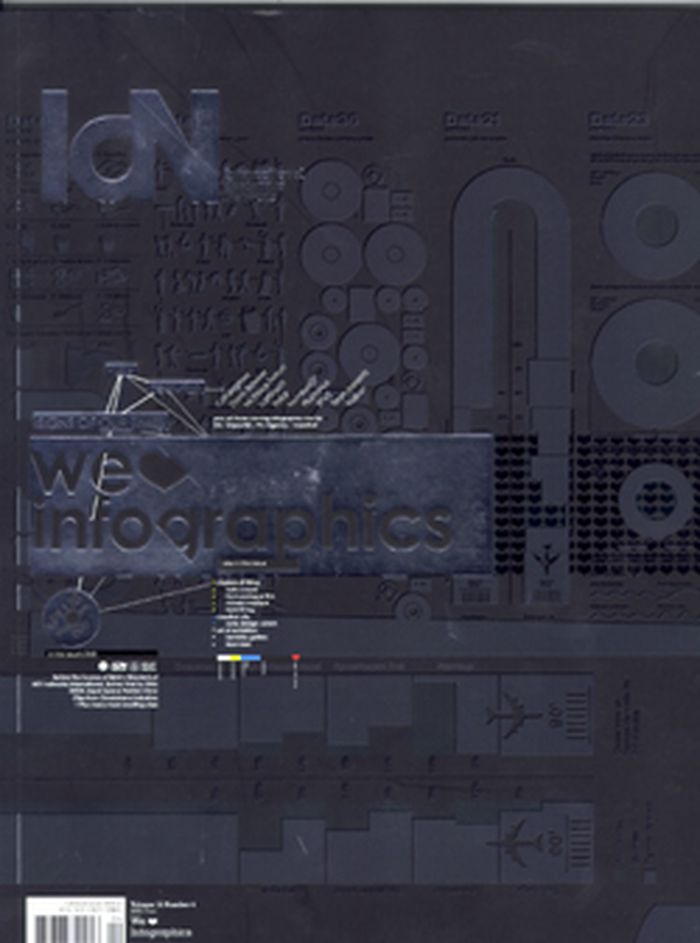
Celebrating our 15 years of creative publishing, we proudly present our biggest publication to date, our 15th anniversary book. It features the work of hundreds of world-renowned creatives, looking back over the last 15 years, and forward to the next 15 years. Illustration is the backbone of graphic design, be it for publications, advertisments, commercials, billboards or even graffiti. Regardless of its medium, most illustrators develop a very recognisable style. In this issue's feature, we look at the work and read the words of 8 leading designers who share what may be broadly termed a child-like approach to illustration. Contents: Pick of the Month Studio: Swiss graphics calling Feature: A Clash of Symbols Music + Image II: On the Case Top Talent: Introducing the first of our super-students Sketch: Three Hands Sketching Videogame: Heavenly Sword — putting Ninja theory to practice Exhibition: Dutch Designers buck cleek trend
Idn 15 no 1 The Semiotics of Illustration
Actions:
Prix:
$21.00
(disponible sur commande)
Résumé:
Celebrating our 15 years of creative publishing, we proudly present our biggest publication to date, our 15th anniversary book. It features the work of hundreds of world-renowned creatives, looking back over the last 15 years, and forward to the next 15 years. Illustration is the backbone of graphic design, be it for publications, advertisments, commercials, billboards or even graffiti. Regardless of its medium, most illustrators develop a very recognisable style. In this issue's feature, we look at the work and read the words of 8 leading designers who share what may be broadly termed a child-like approach to illustration. Contents: Pick of the Month Studio: Swiss graphics calling Feature: A Clash of Symbols Music + Image II: On the Case Top Talent: Introducing the first of our super-students Sketch: Three Hands Sketching Videogame: Heavenly Sword — putting Ninja theory to practice Exhibition: Dutch Designers buck cleek trend
Classification:
périodiques
périodiques
Publication:
janvier 1900, Hong Kong
janvier 1900, Hong Kong
Sujet:
Revues
Revues
Classification:
périodiques
périodiques
Titre:
Grafik 160 March 2008
Grafik 160 March 2008
Actions:
Prix:
$17.00
(disponible sur commande)
Résumé:
Grafik has just got back from the Design Museum, where we were privileged to attend the press view of the Design of the Year show. Note the subtle difference from the Rawsthorn-era Designer of the Year (singular), which gave the public a chance to vote from a shorlist of four handpicked designers. Like much of what went on in Shad Thames during that time, the awards were(...)
$17.00
(disponible sur commande)
Résumé:
Grafik has just got back from the Design Museum, where we were privileged to attend the press view of the Design of the Year show. Note the subtle difference from the Rawsthorn-era Designer of the Year (singular), which gave the public a chance to vote from a shorlist of four handpicked designers. Like much of what went on in Shad Thames during that time, the awards were(...)
Titre:
Grafik 160 March 2008
Actions:
Prix:
$17.00
(disponible sur commande)
Résumé:
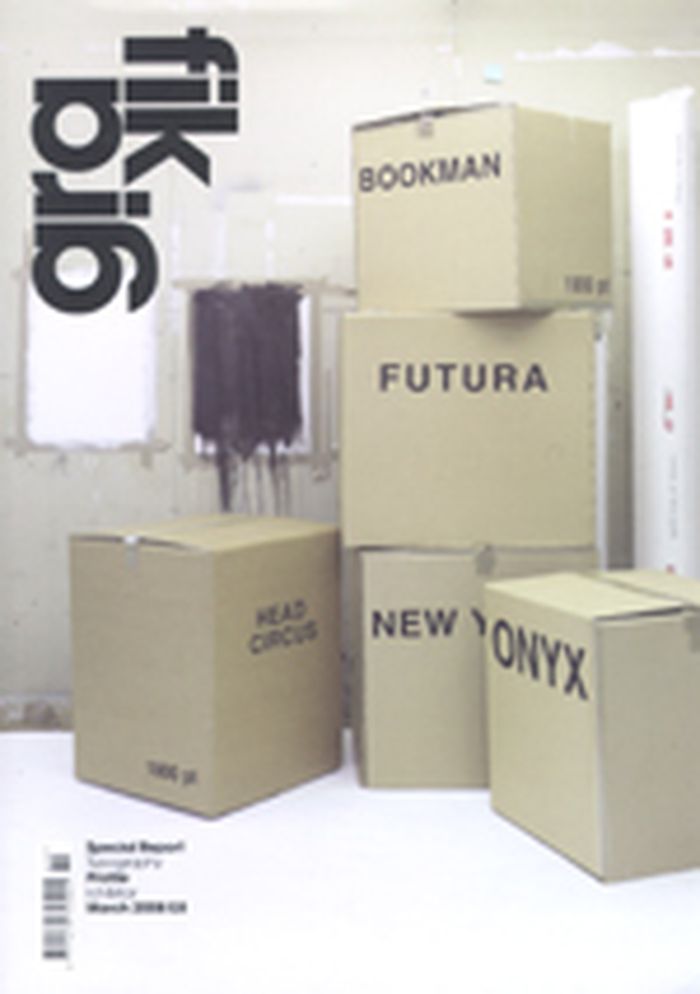
Grafik has just got back from the Design Museum, where we were privileged to attend the press view of the Design of the Year show. Note the subtle difference from the Rawsthorn-era Designer of the Year (singular), which gave the public a chance to vote from a shorlist of four handpicked designers. Like much of what went on in Shad Thames during that time, the awards were not without controversy, it reached a peak when Jamie Hewlett, cartoonist behind non-band Gorillaz, won the top slot in 2006.
Grafik 160 March 2008
Actions:
Prix:
$17.00
(disponible sur commande)
Résumé:
Grafik has just got back from the Design Museum, where we were privileged to attend the press view of the Design of the Year show. Note the subtle difference from the Rawsthorn-era Designer of the Year (singular), which gave the public a chance to vote from a shorlist of four handpicked designers. Like much of what went on in Shad Thames during that time, the awards were not without controversy, it reached a peak when Jamie Hewlett, cartoonist behind non-band Gorillaz, won the top slot in 2006.
Classification:
périodiques
périodiques
Publication:
janvier 1900, Sittinbourne
janvier 1900, Sittinbourne
Sujet:
Revues
Revues
Classification:
périodiques
périodiques
Titre:
The Plan 024
The Plan 024
Actions:
Prix:
$28.00
(disponible sur commande)
Résumé:
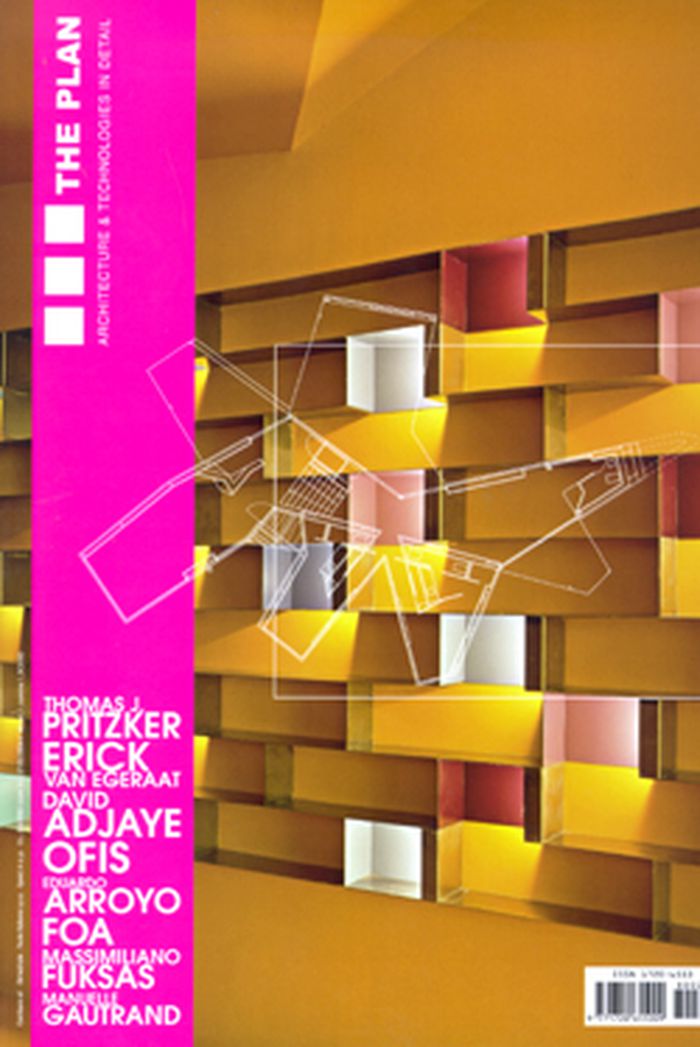
Thomas J. Pritzker/David Adjaye/Erick van Egeraat/Eduardo Arroyo/FOA/OFIS/Manuelle Gautrand
$28.00
(disponible sur commande)
Résumé:
Thomas J. Pritzker/David Adjaye/Erick van Egeraat/Eduardo Arroyo/FOA/OFIS/Manuelle Gautrand
Sujet:
Revues
Revues
Publication:
mars 2008, Bologna
mars 2008, Bologna
Titre:
The Plan 024
Actions:
Prix:
$28.00
(disponible sur commande)
Résumé:
Thomas J. Pritzker/David Adjaye/Erick van Egeraat/Eduardo Arroyo/FOA/OFIS/Manuelle Gautrand
The Plan 024
Actions:
Prix:
$28.00
(disponible sur commande)
Résumé:
Thomas J. Pritzker/David Adjaye/Erick van Egeraat/Eduardo Arroyo/FOA/OFIS/Manuelle Gautrand
Classification:
périodiques
périodiques
Publication:
mars 2008, Bologna
mars 2008, Bologna
Sujet:
Revues
Revues
Classification:
périodiques
périodiques
Actions:
Prix:
$19.95
(disponible sur commande)
Résumé:
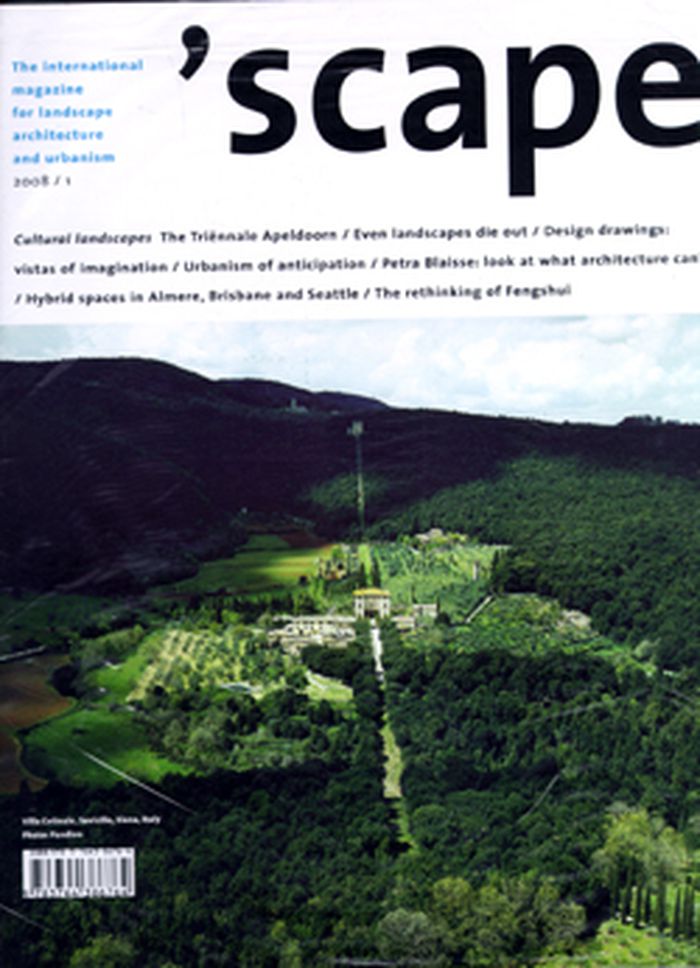
scape is the new international magazine for landscape architecture, city planning, and urban design. Lively, with international voices and a critical eye, it presents selected news items, in-depth feature articles, concise essays, solidly based and informative project critiques, portraits of outstanding personalities, and reviews of new literature.
$19.95
(disponible sur commande)
Résumé:
scape is the new international magazine for landscape architecture, city planning, and urban design. Lively, with international voices and a critical eye, it presents selected news items, in-depth feature articles, concise essays, solidly based and informative project critiques, portraits of outstanding personalities, and reviews of new literature.
Sujet:
Revues
Revues
Publication:
juillet 2008
juillet 2008
Titre:
scape: The International Magazine of Landscape Architecture and Urbanism
Actions:
Prix:
$19.95
(disponible sur commande)
Résumé:
scape is the new international magazine for landscape architecture, city planning, and urban design. Lively, with international voices and a critical eye, it presents selected news items, in-depth feature articles, concise essays, solidly based and informative project critiques, portraits of outstanding personalities, and reviews of new literature.
scape: The International Magazine of Landscape Architecture and Urbanism
Actions:
Prix:
$19.95
(disponible sur commande)
Résumé:
scape is the new international magazine for landscape architecture, city planning, and urban design. Lively, with international voices and a critical eye, it presents selected news items, in-depth feature articles, concise essays, solidly based and informative project critiques, portraits of outstanding personalities, and reviews of new literature.
Classification:
périodiques
périodiques
Publication:
juillet 2008
juillet 2008
Sujet:
Revues
Revues
Classification:
périodiques
périodiques
Prix:
$34.95
(disponible sur commande)
Résumé:
Architects are workaholics. Many of them work ten hours a day, seven days a week, fifty weeks a year. The little time they have left over is sacred and must be respected as such. In this spirit, 91° is a crossover leisure magazine that specifically caters to architects’ special interests. It is published semiannually. Art: Why people pose nude for Spencer Tunick.(...)
$34.95
(disponible sur commande)
Résumé:
Architects are workaholics. Many of them work ten hours a day, seven days a week, fifty weeks a year. The little time they have left over is sacred and must be respected as such. In this spirit, 91° is a crossover leisure magazine that specifically caters to architects’ special interests. It is published semiannually. Art: Why people pose nude for Spencer Tunick.(...)
Sujet:
Revues
Revues
Publication:
mars 2008
mars 2008
Titre:
91 degrees, Issue one, autumn 2007, More than Architecture
Actions:
Prix:
$34.95
(disponible sur commande)
Résumé:
Architects are workaholics. Many of them work ten hours a day, seven days a week, fifty weeks a year. The little time they have left over is sacred and must be respected as such. In this spirit, 91° is a crossover leisure magazine that specifically caters to architects’ special interests. It is published semiannually. Art: Why people pose nude for Spencer Tunick. Fashion: What building skins and clothing have in common. Research: On site at the fiber cement lab in Denmark. Interview: A look inside the studio of the French architect Edouard François. Photography: The world through the viewfinder. Literature: What comes out when writers think about architecture. Sports: Why many architects don bow and arrow in their free time. Travel: Tenerife, far from Ballermann, beach, and sangria. Europe: What causes architects to pack up and travel the world. Cars: What architects like to drive when they go racing through the countryside. At Home With: Hans Kollhoff. Construction Site: On working conditions in Shangri-la – working in Dubai. And more.
91 degrees, Issue one, autumn 2007, More than Architecture
Actions:
Prix:
$34.95
(disponible sur commande)
Résumé:
Architects are workaholics. Many of them work ten hours a day, seven days a week, fifty weeks a year. The little time they have left over is sacred and must be respected as such. In this spirit, 91° is a crossover leisure magazine that specifically caters to architects’ special interests. It is published semiannually. Art: Why people pose nude for Spencer Tunick. Fashion: What building skins and clothing have in common. Research: On site at the fiber cement lab in Denmark. Interview: A look inside the studio of the French architect Edouard François. Photography: The world through the viewfinder. Literature: What comes out when writers think about architecture. Sports: Why many architects don bow and arrow in their free time. Travel: Tenerife, far from Ballermann, beach, and sangria. Europe: What causes architects to pack up and travel the world. Cars: What architects like to drive when they go racing through the countryside. At Home With: Hans Kollhoff. Construction Site: On working conditions in Shangri-la – working in Dubai. And more.
Classification:
périodiques
périodiques
Publication:
mars 2008
mars 2008
Sujet:
Revues
Revues
Classification:
périodiques
périodiques
Titre:
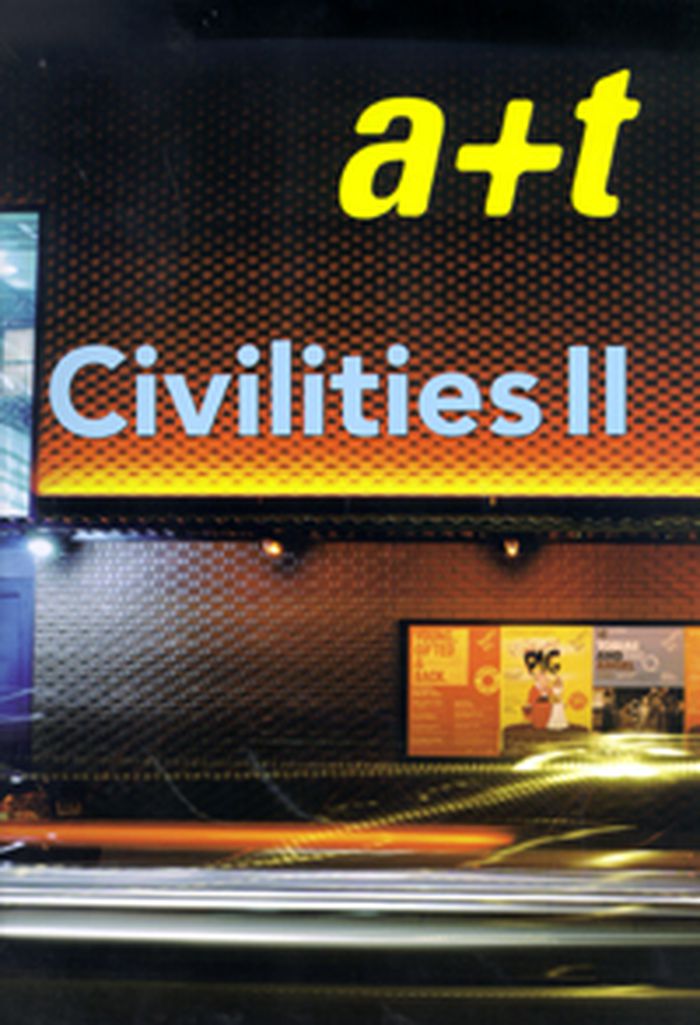
a + t Civilities II no 30
a + t Civilities II no 30
Actions:
Prix:
$55.00
(disponible sur commande)
Résumé:
Independant magazine of architecture and technology
$55.00
(disponible sur commande)
Résumé:
Independant magazine of architecture and technology
Titre:
a + t Civilities II no 30
Actions:
Prix:
$55.00
(disponible sur commande)
Résumé:
Independant magazine of architecture and technology
a + t Civilities II no 30
Actions:
Prix:
$55.00
(disponible sur commande)
Résumé:
Independant magazine of architecture and technology
Classification:
périodiques
périodiques
Publication:
février 2008, Vitoria-Gasteiz
février 2008, Vitoria-Gasteiz
Sujet:
Revues
Revues
Classification:
périodiques
périodiques
Actions:
Prix:
$8.50
(disponible sur commande)
Résumé:
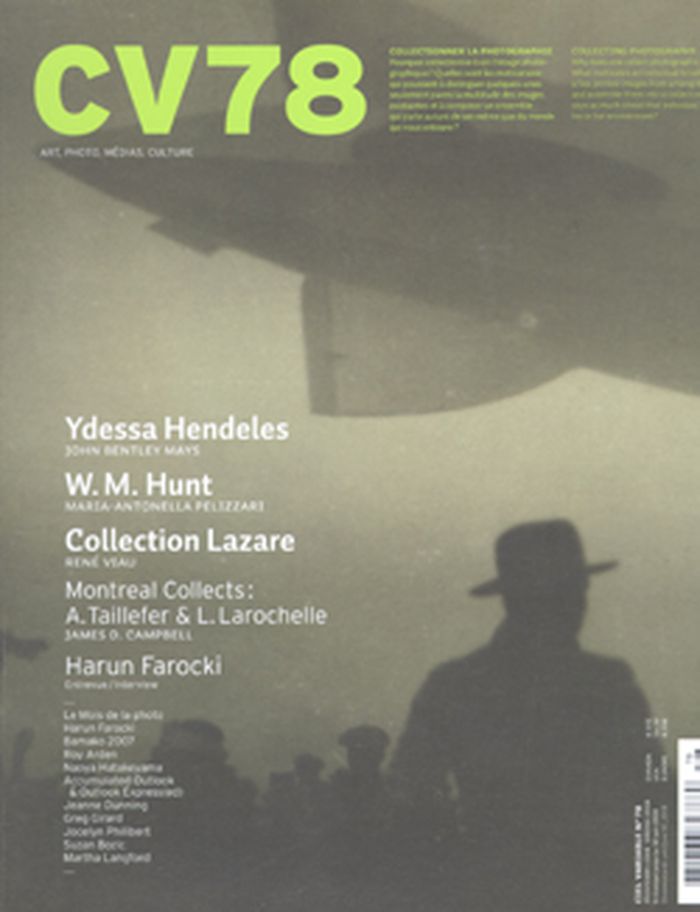
Ydessa Hendeles, John Bentley Mays W.M. Hunt, Maria-Antonella Pelizzari Collection Lazarre, René Viau Montreal Collects: A. Taillefer & L.Larochelle James D.Campbell Harun Farocki Le mois de la photo Bamako 2007 Roy Arden Naoya Hatakeyama Accumulated Outlook & Outlook Express(ed) Jeanne Dunning Greg Girard Jocelyn Philibert Suzan Bozic Martha Langford
$8.50
(disponible sur commande)
Résumé:
Ydessa Hendeles, John Bentley Mays W.M. Hunt, Maria-Antonella Pelizzari Collection Lazarre, René Viau Montreal Collects: A. Taillefer & L.Larochelle James D.Campbell Harun Farocki Le mois de la photo Bamako 2007 Roy Arden Naoya Hatakeyama Accumulated Outlook & Outlook Express(ed) Jeanne Dunning Greg Girard Jocelyn Philibert Suzan Bozic Martha Langford
Titre:
CV 78: Ciel Variable printemps 2008
Actions:
Prix:
$8.50
(disponible sur commande)
Résumé:
Ydessa Hendeles, John Bentley Mays W.M. Hunt, Maria-Antonella Pelizzari Collection Lazarre, René Viau Montreal Collects: A. Taillefer & L.Larochelle James D.Campbell Harun Farocki Le mois de la photo Bamako 2007 Roy Arden Naoya Hatakeyama Accumulated Outlook & Outlook Express(ed) Jeanne Dunning Greg Girard Jocelyn Philibert Suzan Bozic Martha Langford
CV 78: Ciel Variable printemps 2008
Actions:
Prix:
$8.50
(disponible sur commande)
Résumé:
Ydessa Hendeles, John Bentley Mays W.M. Hunt, Maria-Antonella Pelizzari Collection Lazarre, René Viau Montreal Collects: A. Taillefer & L.Larochelle James D.Campbell Harun Farocki Le mois de la photo Bamako 2007 Roy Arden Naoya Hatakeyama Accumulated Outlook & Outlook Express(ed) Jeanne Dunning Greg Girard Jocelyn Philibert Suzan Bozic Martha Langford
Classification:
périodiques
périodiques
Publication:
janvier 2008, Montréal
janvier 2008, Montréal
Sujet:
Revues
Revues
Classification:
périodiques
périodiques
Titre:
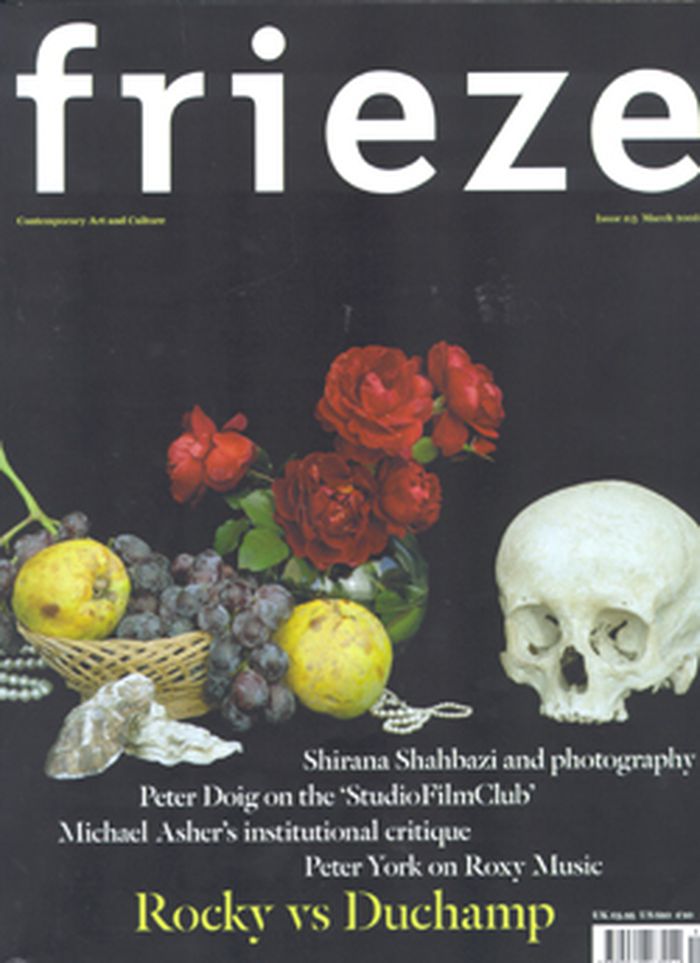
Frieze 113 Rocky vs Duchamp
Frieze 113 Rocky vs Duchamp
Actions:
Prix:
$7.25
(disponible sur commande)
Résumé:
Shirana Shahbazi and photography Peter Doig on the «StudioFilmClub» Michael Asher's institutional critique Peter York on Roxy Music
$7.25
(disponible sur commande)
Résumé:
Shirana Shahbazi and photography Peter Doig on the «StudioFilmClub» Michael Asher's institutional critique Peter York on Roxy Music
Sujet:
Revues
Revues
Publication:
janvier 1900, London, New York, Berlin
janvier 1900, London, New York, Berlin
Titre:
Frieze 113 Rocky vs Duchamp
Actions:
Prix:
$7.25
(disponible sur commande)
Résumé:
Shirana Shahbazi and photography Peter Doig on the «StudioFilmClub» Michael Asher's institutional critique Peter York on Roxy Music
Frieze 113 Rocky vs Duchamp
Actions:
Prix:
$7.25
(disponible sur commande)
Résumé:
Shirana Shahbazi and photography Peter Doig on the «StudioFilmClub» Michael Asher's institutional critique Peter York on Roxy Music
Classification:
périodiques
périodiques
Publication:
janvier 1900, London, New York, Berlin
janvier 1900, London, New York, Berlin
Sujet:
Revues
Revues
Classification:
périodiques
périodiques
Prix:
$19.95
(disponible sur commande)
Résumé:
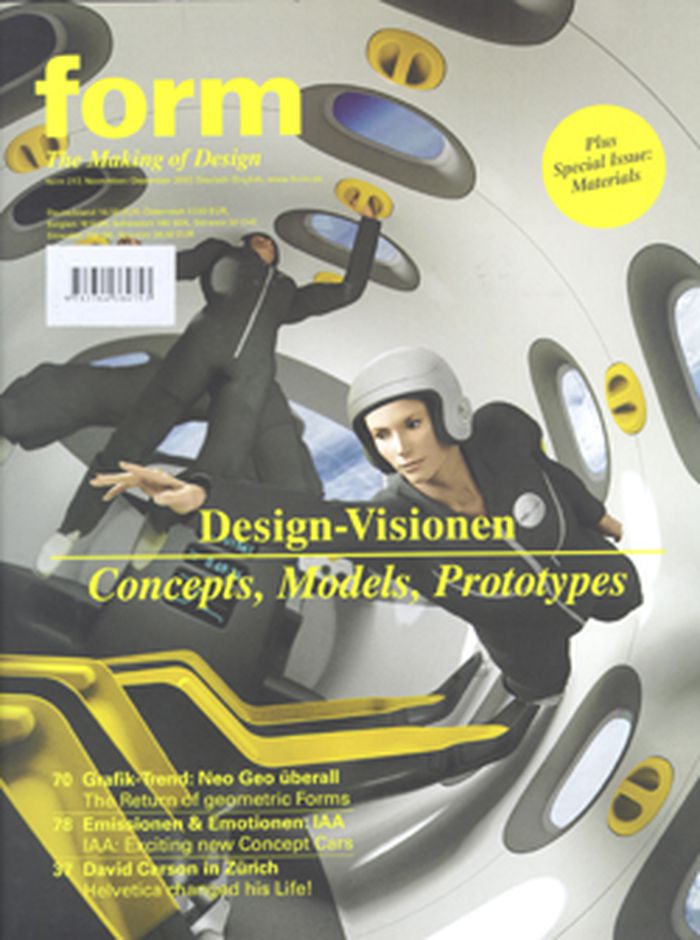
Grafik-Trend: Neo Geo überall The Return of geometric Forms Emissionen & Emotionen: IAA IAA: Exciting new Concept Cars David Carson in Zürich Helvetica changed his life!
$19.95
(disponible sur commande)
Résumé:
Grafik-Trend: Neo Geo überall The Return of geometric Forms Emissionen & Emotionen: IAA IAA: Exciting new Concept Cars David Carson in Zürich Helvetica changed his life!
Titre:
Form 217 Design-Visionen Concepts, Models, Prototypes
Actions:
Prix:
$19.95
(disponible sur commande)
Résumé:
Grafik-Trend: Neo Geo überall The Return of geometric Forms Emissionen & Emotionen: IAA IAA: Exciting new Concept Cars David Carson in Zürich Helvetica changed his life!
Form 217 Design-Visionen Concepts, Models, Prototypes
Actions:
Prix:
$19.95
(disponible sur commande)
Résumé:
Grafik-Trend: Neo Geo überall The Return of geometric Forms Emissionen & Emotionen: IAA IAA: Exciting new Concept Cars David Carson in Zürich Helvetica changed his life!
Classification:
périodiques
périodiques
Publication:
février 2008, Basel
février 2008, Basel
Sujet:
Revues
Revues
Classification:
périodiques
périodiques
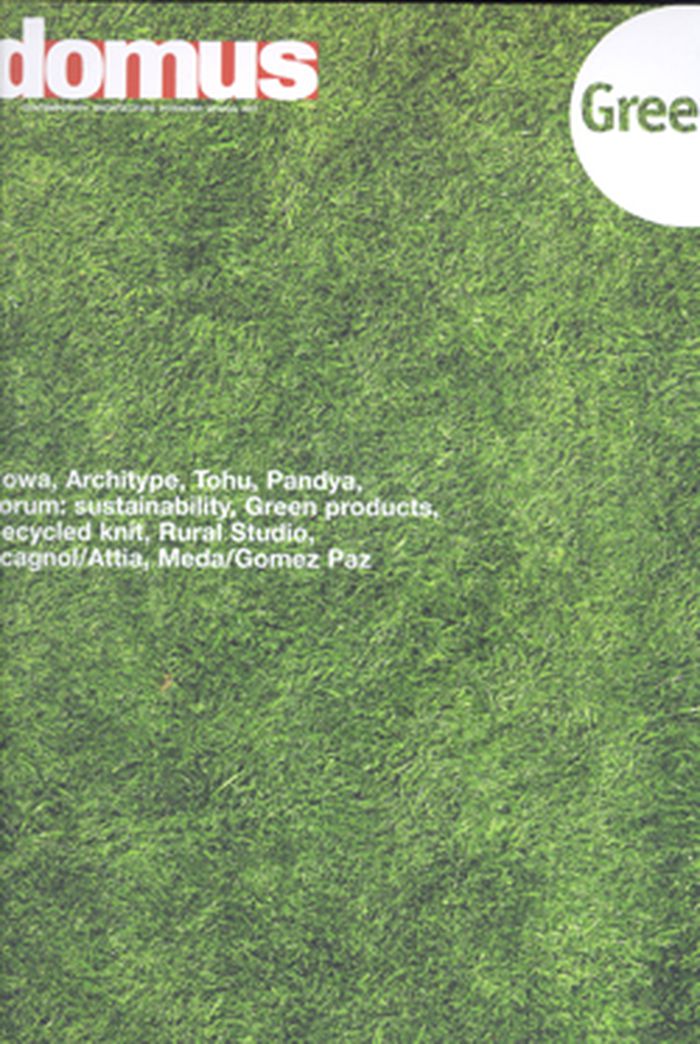
Titre:
Domus Green Issue
Domus Green Issue
Actions:
Prix:
$20.00
(disponible sur commande)
Résumé:
Almost 40 years ago, Dario Paccino published a book with an intriguing title, L'imbroglio ecologico (Einaudi 1972)- The ecology charade. In it, he explored different deviations leading to the cynical exploitation of environmental ideology. What are the real advantages of sustainable development, and who exactly benefits from them? The New Economy or the People?(...)
$20.00
(disponible sur commande)
Résumé:
Almost 40 years ago, Dario Paccino published a book with an intriguing title, L'imbroglio ecologico (Einaudi 1972)- The ecology charade. In it, he explored different deviations leading to the cynical exploitation of environmental ideology. What are the real advantages of sustainable development, and who exactly benefits from them? The New Economy or the People?(...)
Titre:
Domus Green Issue
Actions:
Prix:
$20.00
(disponible sur commande)
Résumé:
Almost 40 years ago, Dario Paccino published a book with an intriguing title, L'imbroglio ecologico (Einaudi 1972)- The ecology charade. In it, he explored different deviations leading to the cynical exploitation of environmental ideology. What are the real advantages of sustainable development, and who exactly benefits from them? The New Economy or the People? Transnational corporations or local culture? These questions remain unanswered. As the double meaning in its title suggest, this special Green Issue of Domus not only covers green design, but also the unsettled matter of ecology. The architecture and design experiences presented here draw on at lest 30 years of sustainability culture, to steel our courage and determination before the complex task of designing for a Planet that is beset by a serious environmental emergency.
Domus Green Issue
Actions:
Prix:
$20.00
(disponible sur commande)
Résumé:
Almost 40 years ago, Dario Paccino published a book with an intriguing title, L'imbroglio ecologico (Einaudi 1972)- The ecology charade. In it, he explored different deviations leading to the cynical exploitation of environmental ideology. What are the real advantages of sustainable development, and who exactly benefits from them? The New Economy or the People? Transnational corporations or local culture? These questions remain unanswered. As the double meaning in its title suggest, this special Green Issue of Domus not only covers green design, but also the unsettled matter of ecology. The architecture and design experiences presented here draw on at lest 30 years of sustainability culture, to steel our courage and determination before the complex task of designing for a Planet that is beset by a serious environmental emergency.
Classification:
périodiques
périodiques
Publication:
mars 2008, Milan
mars 2008, Milan
Sujet:
Revues
Revues


