


2989 Résultats
Classification:
livres
livres
Actions:
Prix:
$60.95
(disponible sur commande)
Résumé:
Mussolini’s bold claims upon the monuments and rhetoric of ancient Rome have been the subject of a number of recent books. D. Medina Lasansky shows us a much less familiar side of the cultural politics of Italian Fascism, tracing its wide-ranging efforts to adapt the nation’s medieval and Renaissance heritage to satisfy the regime’s programs of national regeneration.(...)
$60.95
(disponible sur commande)
Résumé:
Mussolini’s bold claims upon the monuments and rhetoric of ancient Rome have been the subject of a number of recent books. D. Medina Lasansky shows us a much less familiar side of the cultural politics of Italian Fascism, tracing its wide-ranging efforts to adapt the nation’s medieval and Renaissance heritage to satisfy the regime’s programs of national regeneration.(...)
Titre:
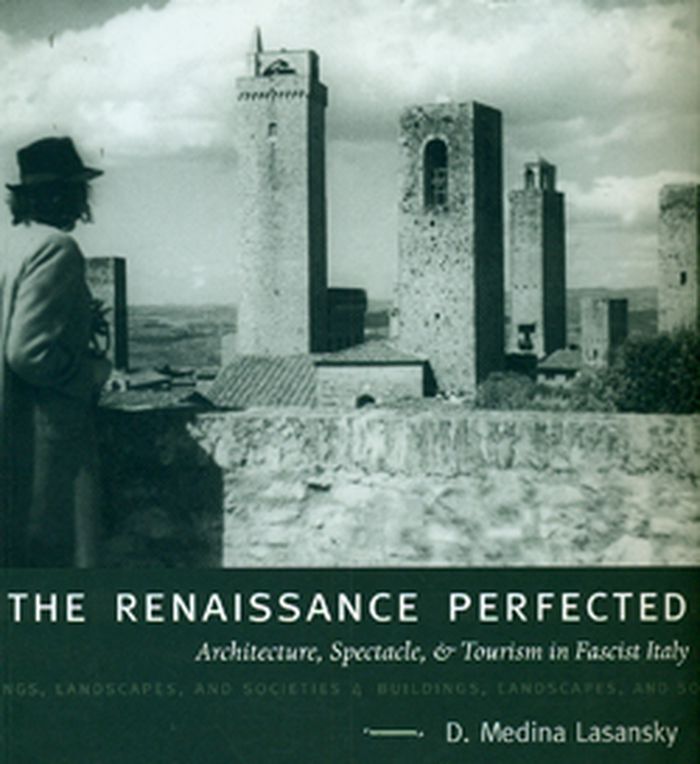
The Renaissance perfected: architecture, spectacle, and tourism in Fascist Italy
Actions:
Prix:
$60.95
(disponible sur commande)
Résumé:
Mussolini’s bold claims upon the monuments and rhetoric of ancient Rome have been the subject of a number of recent books. D. Medina Lasansky shows us a much less familiar side of the cultural politics of Italian Fascism, tracing its wide-ranging efforts to adapt the nation’s medieval and Renaissance heritage to satisfy the regime’s programs of national regeneration. Anyone acquainted with the beauties of Tuscany will be surprised to learn that architects, planners, and administrators working within Fascist programs fabricated much of what today’s tourists admire as authentic. Public squares, town halls, palaces, gardens, and civic rituals (including the famed palio of Siena) were all "restored" to suit a vision of the past shaped by Fascist notions of virile power, social order, and national achievement in the arts. Ultimately, Lasansky forces readers to question long-standing assumptions about the Renaissance even as she expands the parameters of what constitutes Fascist culture.The arguments in The Renaissance Perfected are based in fresh archival evidence and a rich collection of illustrations, many reproduced for the first time, ranging from photographs and architectural drawings to tourist posters and film stills. Lasansky’s groundbreaking book will be essential reading for students of medieval, Renaissance, and twentieth-century Italy as well as all those concerned with visual culture, architectural preservation, heritage studies, and tourism studies.
The Renaissance perfected: architecture, spectacle, and tourism in Fascist Italy
Actions:
Prix:
$60.95
(disponible sur commande)
Résumé:
Mussolini’s bold claims upon the monuments and rhetoric of ancient Rome have been the subject of a number of recent books. D. Medina Lasansky shows us a much less familiar side of the cultural politics of Italian Fascism, tracing its wide-ranging efforts to adapt the nation’s medieval and Renaissance heritage to satisfy the regime’s programs of national regeneration. Anyone acquainted with the beauties of Tuscany will be surprised to learn that architects, planners, and administrators working within Fascist programs fabricated much of what today’s tourists admire as authentic. Public squares, town halls, palaces, gardens, and civic rituals (including the famed palio of Siena) were all "restored" to suit a vision of the past shaped by Fascist notions of virile power, social order, and national achievement in the arts. Ultimately, Lasansky forces readers to question long-standing assumptions about the Renaissance even as she expands the parameters of what constitutes Fascist culture.The arguments in The Renaissance Perfected are based in fresh archival evidence and a rich collection of illustrations, many reproduced for the first time, ranging from photographs and architectural drawings to tourist posters and film stills. Lasansky’s groundbreaking book will be essential reading for students of medieval, Renaissance, and twentieth-century Italy as well as all those concerned with visual culture, architectural preservation, heritage studies, and tourism studies.
Classification:
livres
livres
Publication:
mai 2009
mai 2009
Sujet:
Théorie de l’architecture
Théorie de l’architecture
Classification:
livres
livres
Prix:
$63.95
(disponible sur commande)
Résumé:
Polaroid instant photography revolutionized the taking and making of pictures, and the story of its beginnings is a simple one. In 1943, after being asked by his daughter why she couldn’t immediately see the photograph he had just taken, American inventor and scientist Edwin H. Land conceived of the technology required to make this seemingly impossible demand a(...)
$63.95
(disponible sur commande)
Résumé:
Polaroid instant photography revolutionized the taking and making of pictures, and the story of its beginnings is a simple one. In 1943, after being asked by his daughter why she couldn’t immediately see the photograph he had just taken, American inventor and scientist Edwin H. Land conceived of the technology required to make this seemingly impossible demand a(...)
Sujet:
Théorie de la photographie
Théorie de la photographie
Publication:
juin 2017
juin 2017
Titre:
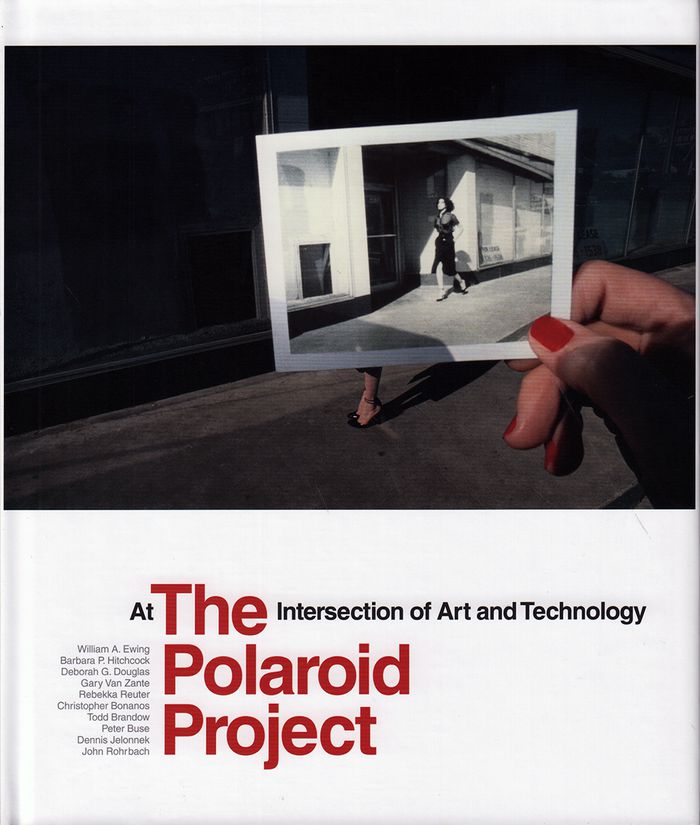
The Polaroid project: at the intersection of art and technology
Actions:
Prix:
$63.95
(disponible sur commande)
Résumé:
Polaroid instant photography revolutionized the taking and making of pictures, and the story of its beginnings is a simple one. In 1943, after being asked by his daughter why she couldn’t immediately see the photograph he had just taken, American inventor and scientist Edwin H. Land conceived of the technology required to make this seemingly impossible demand a reality—within an hour. Land’s creation was a groundbreaking scientific accomplishment that also heralded an exciting new chapter of artistic expression. Through the efforts of thousands of photographers the world over, as well as the corporation’s own artist support program, which provided many with materials, Polaroid would help shape the artistic landscape of the late twentieth century. Published to accompany a major traveling exhibition, "The Polaroid project" is a creative exploration of the relationship between Polaroid’s many technological innovations and the art that was created with their help. Richly designed with over 300 illustrations, this impressive volume showcases not only the myriad and often idiosyncratic approaches taken by such photographers as Ansel Adams, Robert Mapplethorpe, Ellen Carey, and Chuck Close, but also a fascinating selection of the technical objects and artifacts that speak to the sheer ingenuity that lay behind the art. With essays by the exhibition’s curators and leading photographic writers and historians, "The Polaroid project" provides a unique perspective on the Polaroid phenomenon—a technology, an art form, a convergence of both—and its enduring cultural legacy.
The Polaroid project: at the intersection of art and technology
Actions:
Prix:
$63.95
(disponible sur commande)
Résumé:
Polaroid instant photography revolutionized the taking and making of pictures, and the story of its beginnings is a simple one. In 1943, after being asked by his daughter why she couldn’t immediately see the photograph he had just taken, American inventor and scientist Edwin H. Land conceived of the technology required to make this seemingly impossible demand a reality—within an hour. Land’s creation was a groundbreaking scientific accomplishment that also heralded an exciting new chapter of artistic expression. Through the efforts of thousands of photographers the world over, as well as the corporation’s own artist support program, which provided many with materials, Polaroid would help shape the artistic landscape of the late twentieth century. Published to accompany a major traveling exhibition, "The Polaroid project" is a creative exploration of the relationship between Polaroid’s many technological innovations and the art that was created with their help. Richly designed with over 300 illustrations, this impressive volume showcases not only the myriad and often idiosyncratic approaches taken by such photographers as Ansel Adams, Robert Mapplethorpe, Ellen Carey, and Chuck Close, but also a fascinating selection of the technical objects and artifacts that speak to the sheer ingenuity that lay behind the art. With essays by the exhibition’s curators and leading photographic writers and historians, "The Polaroid project" provides a unique perspective on the Polaroid phenomenon—a technology, an art form, a convergence of both—and its enduring cultural legacy.
Classification:
livres
livres
Publication:
juin 2017
juin 2017
Sujet:
Théorie de la photographie
Théorie de la photographie
Classification:
livres
livres
Actions:
Prix:
$51.95
(disponible sur commande)
Résumé:
The average lifespan of a house is somewhere around 100 years. During that time it will see many mutations in household make-up and the associated spatial rituals. So designers are faced with the task of giving form to something that is constantly subject to change. Many studies into flexibility focus on the changeable, on movable partitions and variation in the internal(...)
$51.95
(disponible sur commande)
Résumé:
The average lifespan of a house is somewhere around 100 years. During that time it will see many mutations in household make-up and the associated spatial rituals. So designers are faced with the task of giving form to something that is constantly subject to change. Many studies into flexibility focus on the changeable, on movable partitions and variation in the internal(...)
Titre:
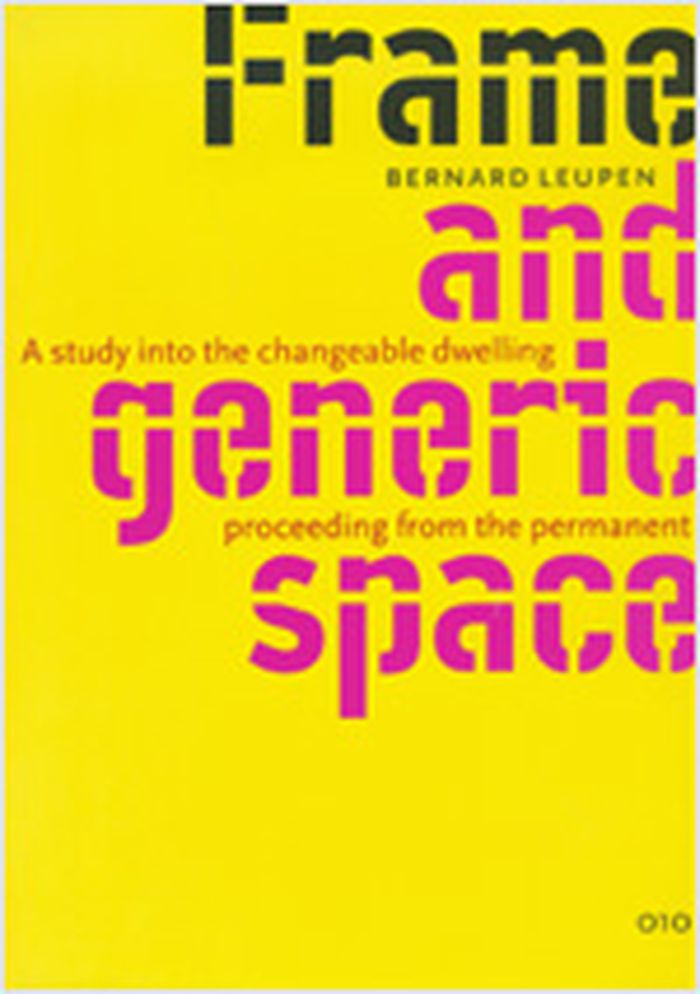
Frame and generic space : a study into the changeable dwelling proceeding from the permanent
Actions:
Prix:
$51.95
(disponible sur commande)
Résumé:
The average lifespan of a house is somewhere around 100 years. During that time it will see many mutations in household make-up and the associated spatial rituals. So designers are faced with the task of giving form to something that is constantly subject to change. Many studies into flexibility focus on the changeable, on movable partitions and variation in the internal layout. The present study takes not the changeable but the permanent as its departure-point. The permanent, meaning the more durable component of the house or building, constitutes the frame within which change can take place. The frame defines the generic space, the space in which change can occur. Design by Piet Gerards.
Frame and generic space : a study into the changeable dwelling proceeding from the permanent
Actions:
Prix:
$51.95
(disponible sur commande)
Résumé:
The average lifespan of a house is somewhere around 100 years. During that time it will see many mutations in household make-up and the associated spatial rituals. So designers are faced with the task of giving form to something that is constantly subject to change. Many studies into flexibility focus on the changeable, on movable partitions and variation in the internal layout. The present study takes not the changeable but the permanent as its departure-point. The permanent, meaning the more durable component of the house or building, constitutes the frame within which change can take place. The frame defines the generic space, the space in which change can occur. Design by Piet Gerards.
Classification:
livres
livres
Publication:
avril 2006, Rotterdam
avril 2006, Rotterdam
Sujet:
Théorie de l’architecture
Théorie de l’architecture
Classification:
livres
livres

Prix:
$39.95
(disponible sur commande)
Résumé:
Whether representing pioneering spirit, implying large horizons and wide open spaces, or epitomising economic travel with a comfortable change of scenery, camper vans and RVs share a common aspiration: the need to create a ‘home away from home’. This book illustrates the culture, style and philosophy of camper van and RV travel by looking at the owners and their clubs.(...)
$39.95
(disponible sur commande)
Résumé:
Whether representing pioneering spirit, implying large horizons and wide open spaces, or epitomising economic travel with a comfortable change of scenery, camper vans and RVs share a common aspiration: the need to create a ‘home away from home’. This book illustrates the culture, style and philosophy of camper van and RV travel by looking at the owners and their clubs.(...)
Titre:
Home away from home : the world of camper vans and motorhomes
Actions:
Prix:
$39.95
(disponible sur commande)
Résumé:
Whether representing pioneering spirit, implying large horizons and wide open spaces, or epitomising economic travel with a comfortable change of scenery, camper vans and RVs share a common aspiration: the need to create a ‘home away from home’. This book illustrates the culture, style and philosophy of camper van and RV travel by looking at the owners and their clubs. Stories of road trips, adventures and epic voyages provide an exciting backdrop to the extraordinary history and present status of freewheeling transportation. "Home away from home" explains the cultural and social history of the camper van and RV by looking at a range of phenomena from surf and hippy culture to family holidays and travel in retirement years. A range of iconic vehicles from the VW Bus and the Airstream to the Winnebago will be looked at in detail, within the context of their technical developments as well as the design strategies that dictated their appearances. Finally, "Home away from home" explores future possibilities for independent camper van and RV travel, alongside contemporary approaches to 'compact living'.
Home away from home : the world of camper vans and motorhomes
Actions:
Prix:
$39.95
(disponible sur commande)
Résumé:
Whether representing pioneering spirit, implying large horizons and wide open spaces, or epitomising economic travel with a comfortable change of scenery, camper vans and RVs share a common aspiration: the need to create a ‘home away from home’. This book illustrates the culture, style and philosophy of camper van and RV travel by looking at the owners and their clubs. Stories of road trips, adventures and epic voyages provide an exciting backdrop to the extraordinary history and present status of freewheeling transportation. "Home away from home" explains the cultural and social history of the camper van and RV by looking at a range of phenomena from surf and hippy culture to family holidays and travel in retirement years. A range of iconic vehicles from the VW Bus and the Airstream to the Winnebago will be looked at in detail, within the context of their technical developments as well as the design strategies that dictated their appearances. Finally, "Home away from home" explores future possibilities for independent camper van and RV travel, alongside contemporary approaches to 'compact living'.
Classification:
livres
livres
Publication:
octobre 2005, London
octobre 2005, London
Sujet:
Architecture miniature
Architecture miniature
Classification:
livres
livres

Prix:
$45.00
(disponible sur commande)
Résumé:
"The Canadians" playfully and affectionately reimagines one of the most revered photography books of the 20th century, Robert Frank’s The Americans. The source for the imagery is the print archive of The Globe and Mail, which contains more than 500,000 prints—24,000 of which have been donated to the newly formed Canadian Institute of Photography, housed within the(...)
$45.00
(disponible sur commande)
Résumé:
"The Canadians" playfully and affectionately reimagines one of the most revered photography books of the 20th century, Robert Frank’s The Americans. The source for the imagery is the print archive of The Globe and Mail, which contains more than 500,000 prints—24,000 of which have been donated to the newly formed Canadian Institute of Photography, housed within the(...)
Sujet:
Photographie- collections
Photographie- collections
Publication:
septembre 2017
septembre 2017
Titre:
The Canadians: photographs from the Globe and Mail archives
Actions:
Prix:
$45.00
(disponible sur commande)
Résumé:
"The Canadians" playfully and affectionately reimagines one of the most revered photography books of the 20th century, Robert Frank’s The Americans. The source for the imagery is the print archive of The Globe and Mail, which contains more than 500,000 prints—24,000 of which have been donated to the newly formed Canadian Institute of Photography, housed within the National Gallery of Canada. Nearly 80 of these photographs have been selected for this book, and also form the basis for a national touring exhibition. These functionary press photographs, made to illustrate news stories—the state of the roads after a severe winter; a politician on the campaign trail; the opening of a new laundromat—hold no pretentions to be works of photographic art. However, taken together, they describe Canadian culture during an era of great transformation. Published in association with the Archive of Modern Conflict, the book begins with an insightful and irreverent introduction by Douglas Coupland, bringing together themes illuminated in these photographs, and taking us on a guided tour of a Canada gone, but not forgotten. "How strange it is to look at these photos of a Canada that was almost dead when I was a child," he writes, "the Canada of my parents and my grandparents, the Canada of the late 1950s and early ‘60s, a country in which, it would seem, people were born, became teenagers, and then, magically, at the age of 21, turned into chain-smoking 50-year olds with undiagnosed cancers."
The Canadians: photographs from the Globe and Mail archives
Actions:
Prix:
$45.00
(disponible sur commande)
Résumé:
"The Canadians" playfully and affectionately reimagines one of the most revered photography books of the 20th century, Robert Frank’s The Americans. The source for the imagery is the print archive of The Globe and Mail, which contains more than 500,000 prints—24,000 of which have been donated to the newly formed Canadian Institute of Photography, housed within the National Gallery of Canada. Nearly 80 of these photographs have been selected for this book, and also form the basis for a national touring exhibition. These functionary press photographs, made to illustrate news stories—the state of the roads after a severe winter; a politician on the campaign trail; the opening of a new laundromat—hold no pretentions to be works of photographic art. However, taken together, they describe Canadian culture during an era of great transformation. Published in association with the Archive of Modern Conflict, the book begins with an insightful and irreverent introduction by Douglas Coupland, bringing together themes illuminated in these photographs, and taking us on a guided tour of a Canada gone, but not forgotten. "How strange it is to look at these photos of a Canada that was almost dead when I was a child," he writes, "the Canada of my parents and my grandparents, the Canada of the late 1950s and early ‘60s, a country in which, it would seem, people were born, became teenagers, and then, magically, at the age of 21, turned into chain-smoking 50-year olds with undiagnosed cancers."
Classification:
livres
livres
Publication:
septembre 2017
septembre 2017
Sujet:
Photographie- collections
Photographie- collections
Classification:
livres
livres
Prix:
$50.00
(disponible sur commande)
Résumé:
Beneath the veneer of a very successful China that the world readily acknowledges, a quiet revolution is taking place within the realms of architecture and the city. The social, architectural and urban theories documented in this book are organized around the established canons of social actions – from mobilizing, laboring, resisting and mediating, to networking,(...)
$50.00
(disponible sur commande)
Résumé:
Beneath the veneer of a very successful China that the world readily acknowledges, a quiet revolution is taking place within the realms of architecture and the city. The social, architectural and urban theories documented in this book are organized around the established canons of social actions – from mobilizing, laboring, resisting and mediating, to networking,(...)
Titre:
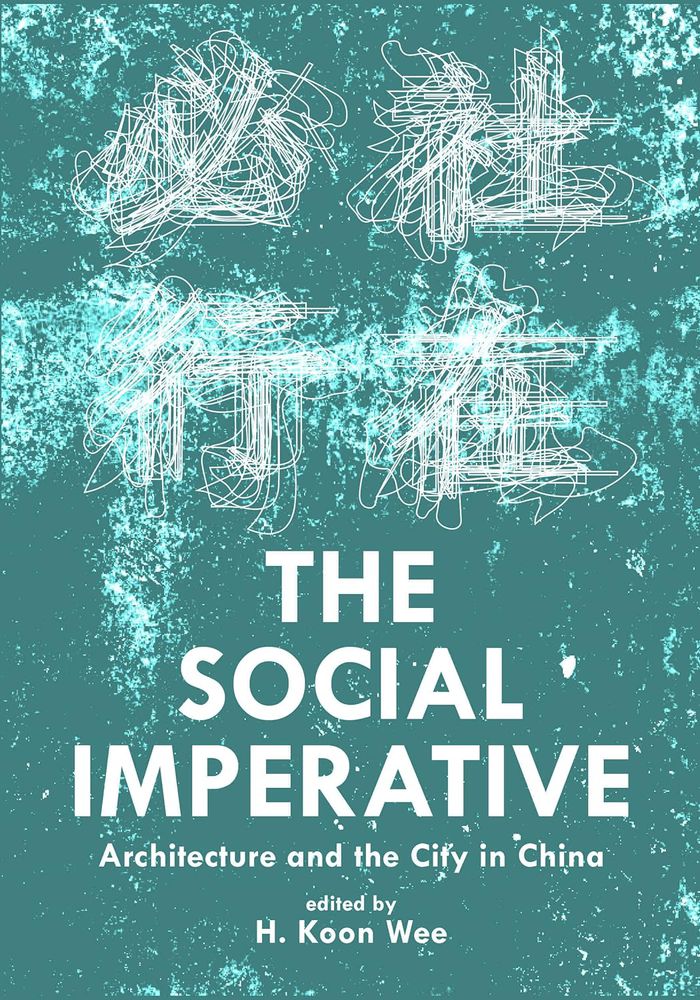
The social imperative: Architecture and the city in China
Actions:
Prix:
$50.00
(disponible sur commande)
Résumé:
Beneath the veneer of a very successful China that the world readily acknowledges, a quiet revolution is taking place within the realms of architecture and the city. The social, architectural and urban theories documented in this book are organized around the established canons of social actions – from mobilizing, laboring, resisting and mediating, to networking, controlling, rationalizing and aestheticizing. This book aims to put the social agenda squarely back in the rapid development of the built environment in China. This publication is the culmination of a three-year study of social issues in the architecture and cities of China. It involved visits to sites undergoing massive change, discussions and debates among architects and critics, reflections by practitioners about their own work, and activists lobbying for social change. Supported by the non-profit AA Asia, the edition of the contents relied heavily on original input and exchanges between architects and theorists committed to China, from Asia and beyond. Since the 1990s, AA Asia remains one of a few unique think tanks committed to the study of architecture and cities in Asia. As an advocacy with strong academic roots, it seeks to establish the differences across various postcolonial and Asian contexts, and recalibrate the role of architecture in a technocratic era dominated by the global economy.
The social imperative: Architecture and the city in China
Actions:
Prix:
$50.00
(disponible sur commande)
Résumé:
Beneath the veneer of a very successful China that the world readily acknowledges, a quiet revolution is taking place within the realms of architecture and the city. The social, architectural and urban theories documented in this book are organized around the established canons of social actions – from mobilizing, laboring, resisting and mediating, to networking, controlling, rationalizing and aestheticizing. This book aims to put the social agenda squarely back in the rapid development of the built environment in China. This publication is the culmination of a three-year study of social issues in the architecture and cities of China. It involved visits to sites undergoing massive change, discussions and debates among architects and critics, reflections by practitioners about their own work, and activists lobbying for social change. Supported by the non-profit AA Asia, the edition of the contents relied heavily on original input and exchanges between architects and theorists committed to China, from Asia and beyond. Since the 1990s, AA Asia remains one of a few unique think tanks committed to the study of architecture and cities in Asia. As an advocacy with strong academic roots, it seeks to establish the differences across various postcolonial and Asian contexts, and recalibrate the role of architecture in a technocratic era dominated by the global economy.
Classification:
livres
livres
Publication:
septembre 2017
septembre 2017
Sujet:
Expositions en cours
Expositions en cours
Classification:
livres
livres
Actions:
Prix:
$30.00
(disponible en magasin)
Résumé:
Architecture is often thought to be a diary of a society, filled with symbolic representations of specific cultural moments. However, as Craig L. Wilkins observes, that diary includes far too few narratives of the diverse cultures in U.S. society. Wilkins states that the discipline of architecture has a resistance to African Americans at every level, from the startlingly(...)
$30.00
(disponible en magasin)
Résumé:
Architecture is often thought to be a diary of a society, filled with symbolic representations of specific cultural moments. However, as Craig L. Wilkins observes, that diary includes far too few narratives of the diverse cultures in U.S. society. Wilkins states that the discipline of architecture has a resistance to African Americans at every level, from the startlingly(...)
Titre:
The Aesthetics of equity: notes on race, space, architecture, and music
Actions:
Prix:
$30.00
(disponible en magasin)
Résumé:
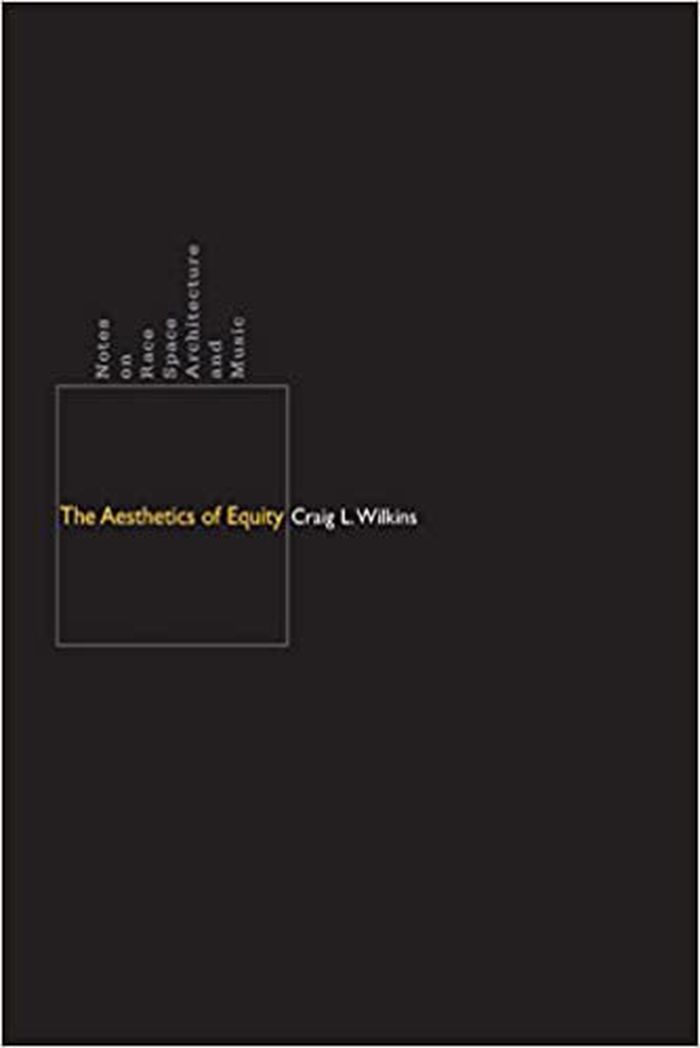
Architecture is often thought to be a diary of a society, filled with symbolic representations of specific cultural moments. However, as Craig L. Wilkins observes, that diary includes far too few narratives of the diverse cultures in U.S. society. Wilkins states that the discipline of architecture has a resistance to African Americans at every level, from the startlingly small number of architecture students to the paltry number of registered architects in the United States today. Working to understand how ideologies are formed, transmitted, and embedded in the built environment, Wilkins deconstructs how the marginalization of African Americans is authorized within the field of architecture. He then outlines how activist forms of expression shape and sustain communities, fashioning an architectural theory around the site of environmental conflict constructed by hip-hop culture. Wilkins places his concerns in a historical context, and also offers practical solutions to address them. In doing so, he reveals new possibilities for an architecture that acknowledges its current shortcomings and replies to the needs of multicultural constituencies.
The Aesthetics of equity: notes on race, space, architecture, and music
Actions:
Prix:
$30.00
(disponible en magasin)
Résumé:
Architecture is often thought to be a diary of a society, filled with symbolic representations of specific cultural moments. However, as Craig L. Wilkins observes, that diary includes far too few narratives of the diverse cultures in U.S. society. Wilkins states that the discipline of architecture has a resistance to African Americans at every level, from the startlingly small number of architecture students to the paltry number of registered architects in the United States today. Working to understand how ideologies are formed, transmitted, and embedded in the built environment, Wilkins deconstructs how the marginalization of African Americans is authorized within the field of architecture. He then outlines how activist forms of expression shape and sustain communities, fashioning an architectural theory around the site of environmental conflict constructed by hip-hop culture. Wilkins places his concerns in a historical context, and also offers practical solutions to address them. In doing so, he reveals new possibilities for an architecture that acknowledges its current shortcomings and replies to the needs of multicultural constituencies.
Classification:
livres
livres
Publication:
octobre 2007
octobre 2007
Sujet:
Théorie de l’architecture
Théorie de l’architecture
Classification:
livres
livres
Prix:
$43.95
(disponible sur commande)
Résumé:
For the past two decades Louise Lawler has been taking photographs of art in situ, from small black-and-white images of art in people's homes to large format glossy color pictures of art in museums and in auction houses. In addition she has produced a variety of objects-paperweights, etched drinking glasses, matchbooks, gallery announcements-all of which describe how art(...)
$43.95
(disponible sur commande)
Résumé:
For the past two decades Louise Lawler has been taking photographs of art in situ, from small black-and-white images of art in people's homes to large format glossy color pictures of art in museums and in auction houses. In addition she has produced a variety of objects-paperweights, etched drinking glasses, matchbooks, gallery announcements-all of which describe how art(...)
Sujet:
Monographies photo
Monographies photo
Publication:
octobre 2006, Cambridge, (MA), Columbus
octobre 2006, Cambridge, (MA), Columbus
Titre:
Louise Lawler : twice untitled and other pictures (looking back)
Actions:
Prix:
$43.95
(disponible sur commande)
Résumé:
For the past two decades Louise Lawler has been taking photographs of art in situ, from small black-and-white images of art in people's homes to large format glossy color pictures of art in museums and in auction houses. In addition she has produced a variety of objects-paperweights, etched drinking glasses, matchbooks, gallery announcements-all of which describe how art comes to accrue value as it moves through various systems of exchange. Lawler's oeuvre was essential in creating an expanded field for photography, it was crucial in postmodern debates over theories of representation, it remains indelible within the field of institutional critique, and it has always been trenchant in its sustained commitment to a feminist vision of art, art history, and contemporary art practice. But Lawler is also an old-fashioned "artist's artist," long overdue for the kind of serious reconsideration and recognition that this volume affords. The very self-effacing nature of Lawler's practice, however, her continual suspicion about notions of authorship-and her sly disregard for museological conventions-have meant that she has resisted precisely the usual mid-career retrospective. "Twice untitled and other pictures", published in conjunction with Lawler's first major museum exhibition in the United States, organized by the Wexner Center for the Arts, eats away at the standard museum practices of chronology, linear development, and the presentation of masterpieces, opting instead to explore such themes and undercurrents in Lawler's practice as her relationship to sculpture, her long history of collaborative projects, her production of such ephemera as napkins, matchbooks, and announcement cards, and the steady political dimension of her work-which culminated most recently in works that are deeply critical of the American invasion of Iraq. With essays by art historian and political theorist Rosalyn Deutsche and curators Ann Goldstein and Helen Molesworth.
Louise Lawler : twice untitled and other pictures (looking back)
Actions:
Prix:
$43.95
(disponible sur commande)
Résumé:
For the past two decades Louise Lawler has been taking photographs of art in situ, from small black-and-white images of art in people's homes to large format glossy color pictures of art in museums and in auction houses. In addition she has produced a variety of objects-paperweights, etched drinking glasses, matchbooks, gallery announcements-all of which describe how art comes to accrue value as it moves through various systems of exchange. Lawler's oeuvre was essential in creating an expanded field for photography, it was crucial in postmodern debates over theories of representation, it remains indelible within the field of institutional critique, and it has always been trenchant in its sustained commitment to a feminist vision of art, art history, and contemporary art practice. But Lawler is also an old-fashioned "artist's artist," long overdue for the kind of serious reconsideration and recognition that this volume affords. The very self-effacing nature of Lawler's practice, however, her continual suspicion about notions of authorship-and her sly disregard for museological conventions-have meant that she has resisted precisely the usual mid-career retrospective. "Twice untitled and other pictures", published in conjunction with Lawler's first major museum exhibition in the United States, organized by the Wexner Center for the Arts, eats away at the standard museum practices of chronology, linear development, and the presentation of masterpieces, opting instead to explore such themes and undercurrents in Lawler's practice as her relationship to sculpture, her long history of collaborative projects, her production of such ephemera as napkins, matchbooks, and announcement cards, and the steady political dimension of her work-which culminated most recently in works that are deeply critical of the American invasion of Iraq. With essays by art historian and political theorist Rosalyn Deutsche and curators Ann Goldstein and Helen Molesworth.
Classification:
livres
livres
Publication:
octobre 2006, Cambridge, (MA), Columbus
octobre 2006, Cambridge, (MA), Columbus
Sujet:
Monographies photo
Monographies photo
Classification:
livres
livres
Actions:
Prix:
$37.95
(disponible sur commande)
Résumé:
In this first full-length study of a largely forgotten optical device from the eighteenth century, Arnaud Maillet reconfigures our historical understanding of visual experience and meaning in relation to notions of opacity, transparency, and imagination. Many are familiar with the Claude glass as a small black convex mirror used by artists and spectators of landscape to(...)
$37.95
(disponible sur commande)
Résumé:
In this first full-length study of a largely forgotten optical device from the eighteenth century, Arnaud Maillet reconfigures our historical understanding of visual experience and meaning in relation to notions of opacity, transparency, and imagination. Many are familiar with the Claude glass as a small black convex mirror used by artists and spectators of landscape to(...)
Titre:
The Claude glass : use and meaning of the black mirror in Western art
Actions:
Prix:
$37.95
(disponible sur commande)
Résumé:
In this first full-length study of a largely forgotten optical device from the eighteenth century, Arnaud Maillet reconfigures our historical understanding of visual experience and meaning in relation to notions of opacity, transparency, and imagination. Many are familiar with the Claude glass as a small black convex mirror used by artists and spectators of landscape to reflect a view and make tonal values and areas of light and shade visible. In a groundbreaking account, Maillet goes well beyond this particular function of the glass and situates it within a richer archaeology of Western thought, exploring the uncertainties and anxieties about mirrors, reflections, and their potential distortions. He takes us from the magical and occult background of the "black mirror," through a full evaluation of its importance in the age of the picturesque, to its persistence in a range of technological and representational practices, including photography, film, and contemporary art. The Claude Glass is a lasting contribution to the history of Western visual culture.
The Claude glass : use and meaning of the black mirror in Western art
Actions:
Prix:
$37.95
(disponible sur commande)
Résumé:
In this first full-length study of a largely forgotten optical device from the eighteenth century, Arnaud Maillet reconfigures our historical understanding of visual experience and meaning in relation to notions of opacity, transparency, and imagination. Many are familiar with the Claude glass as a small black convex mirror used by artists and spectators of landscape to reflect a view and make tonal values and areas of light and shade visible. In a groundbreaking account, Maillet goes well beyond this particular function of the glass and situates it within a richer archaeology of Western thought, exploring the uncertainties and anxieties about mirrors, reflections, and their potential distortions. He takes us from the magical and occult background of the "black mirror," through a full evaluation of its importance in the age of the picturesque, to its persistence in a range of technological and representational practices, including photography, film, and contemporary art. The Claude Glass is a lasting contribution to the history of Western visual culture.
Classification:
livres
livres
Publication:
octobre 2004, New York
octobre 2004, New York
Sujet:
Théorie de l’architecture
Théorie de l’architecture
Classification:
livres
livres
Actions:
Prix:
$26.95
(disponible sur commande)
Résumé:
In this first full-length study of a largely forgotten optical device from the eighteenth century, Arnaud Maillet reconfigures our historical understanding of visual experience and meaning in relation to notions of opacity, transparency, and imagination. Many are familiar with the Claude glass as a small black convex mirror used by artists and spectators of landscape to(...)
$26.95
(disponible sur commande)
Résumé:
In this first full-length study of a largely forgotten optical device from the eighteenth century, Arnaud Maillet reconfigures our historical understanding of visual experience and meaning in relation to notions of opacity, transparency, and imagination. Many are familiar with the Claude glass as a small black convex mirror used by artists and spectators of landscape to(...)
Titre:
The Claude glass: use and meaning of the black mirror in western art
Actions:
Prix:
$26.95
(disponible sur commande)
Résumé:
In this first full-length study of a largely forgotten optical device from the eighteenth century, Arnaud Maillet reconfigures our historical understanding of visual experience and meaning in relation to notions of opacity, transparency, and imagination. Many are familiar with the Claude glass as a small black convex mirror used by artists and spectators of landscape to reflect a view and make tonal values and areas of light and shade visible. In a groundbreaking account, Maillet goes well beyond this particular function of the glass and situates it within a richer archaeology of Western thought, exploring the uncertainties and anxieties about mirrors, reflections, and their potential distortions. He takes us from the magical and occult background of the 'black mirror', through a full evaluation of its importance in the age of the picturesque, to its persistence in a range of technological and representational practices, including photography, film, and contemporary art. "The Claude Glass" is a lasting contribution to the history of Western visual culture.
The Claude glass: use and meaning of the black mirror in western art
Actions:
Prix:
$26.95
(disponible sur commande)
Résumé:
In this first full-length study of a largely forgotten optical device from the eighteenth century, Arnaud Maillet reconfigures our historical understanding of visual experience and meaning in relation to notions of opacity, transparency, and imagination. Many are familiar with the Claude glass as a small black convex mirror used by artists and spectators of landscape to reflect a view and make tonal values and areas of light and shade visible. In a groundbreaking account, Maillet goes well beyond this particular function of the glass and situates it within a richer archaeology of Western thought, exploring the uncertainties and anxieties about mirrors, reflections, and their potential distortions. He takes us from the magical and occult background of the 'black mirror', through a full evaluation of its importance in the age of the picturesque, to its persistence in a range of technological and representational practices, including photography, film, and contemporary art. "The Claude Glass" is a lasting contribution to the history of Western visual culture.
Classification:
livres
livres
Publication:
janvier 1900, New York
janvier 1900, New York
Sujet:
Théorie de l’art
Théorie de l’art


