


2989 Résultats
Classification:
livres
livres
Actions:
Prix:
$77.00
(disponible sur commande)
Résumé:
This wide-ranging book examines the world’s most significant large-scale housing complexes, which point the way for the future of housing design. The seventy residential complexes featured here are recognized as architectural milestones, embodying forward-thinking attitudes towards urban planning. This book chronicles the evolution of these structures, revealing how(...)
$77.00
(disponible sur commande)
Résumé:
This wide-ranging book examines the world’s most significant large-scale housing complexes, which point the way for the future of housing design. The seventy residential complexes featured here are recognized as architectural milestones, embodying forward-thinking attitudes towards urban planning. This book chronicles the evolution of these structures, revealing how(...)
Sujet:
Logements collectifs
Logements collectifs
Publication:
mars 2006, Munich Berlin London New York
mars 2006, Munich Berlin London New York
Titre:
Housing in the 20th and 21st centuries / Wohen im 20. umd 21. jahrundert
Actions:
Prix:
$77.00
(disponible sur commande)
Résumé:
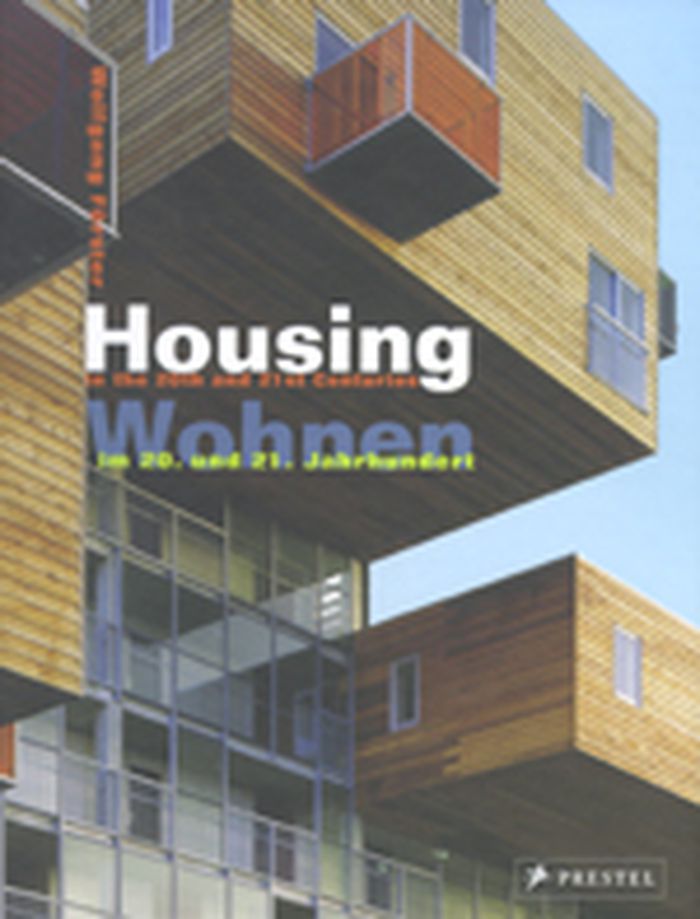
This wide-ranging book examines the world’s most significant large-scale housing complexes, which point the way for the future of housing design. The seventy residential complexes featured here are recognized as architectural milestones, embodying forward-thinking attitudes towards urban planning. This book chronicles the evolution of these structures, revealing how each best represented its era’s goals: housing a new society in the 1920s and 30s; the 40s and 50s’ leap toward functionality and the future; the high-density urban projects of the 60s and 70s; and diversity and environmental awareness in the 80s and 90s. It also looks at this century’s most progressive developments: Beijing’s Looped Hybrid, a city within a city; India’s Aranya township, which provides housing for impoverished residents; and the environmentally friendly Solaire Apartments in Manhattan, among others. As today’s cities face myriad global challenges, this book provides ample food for thought for anyone concerned with socially responsible architecture.
Housing in the 20th and 21st centuries / Wohen im 20. umd 21. jahrundert
Actions:
Prix:
$77.00
(disponible sur commande)
Résumé:
This wide-ranging book examines the world’s most significant large-scale housing complexes, which point the way for the future of housing design. The seventy residential complexes featured here are recognized as architectural milestones, embodying forward-thinking attitudes towards urban planning. This book chronicles the evolution of these structures, revealing how each best represented its era’s goals: housing a new society in the 1920s and 30s; the 40s and 50s’ leap toward functionality and the future; the high-density urban projects of the 60s and 70s; and diversity and environmental awareness in the 80s and 90s. It also looks at this century’s most progressive developments: Beijing’s Looped Hybrid, a city within a city; India’s Aranya township, which provides housing for impoverished residents; and the environmentally friendly Solaire Apartments in Manhattan, among others. As today’s cities face myriad global challenges, this book provides ample food for thought for anyone concerned with socially responsible architecture.
Classification:
livres
livres
Publication:
mars 2006, Munich Berlin London New York
mars 2006, Munich Berlin London New York
Sujet:
Logements collectifs
Logements collectifs
Classification:
livres
livres
Actions:
Prix:
$44.50
(disponible sur commande)
Résumé:
"Chandigarh rethink" captures the rich, ongoing discourse on radically transforming urbanities within the Global South with specific reference to India's social, historical, economic and cultural repositioning. It examines urban edge 'figures' and their rural 'grounds', relevant not just to Chandigarh, but also to cities in general, while suggesting narrative strategies(...)
$44.50
(disponible sur commande)
Résumé:
"Chandigarh rethink" captures the rich, ongoing discourse on radically transforming urbanities within the Global South with specific reference to India's social, historical, economic and cultural repositioning. It examines urban edge 'figures' and their rural 'grounds', relevant not just to Chandigarh, but also to cities in general, while suggesting narrative strategies(...)
Titre:
Chandigarh rethink: transforming ruralities & edeg(ness) in global urbanities
Actions:
Prix:
$44.50
(disponible sur commande)
Résumé:
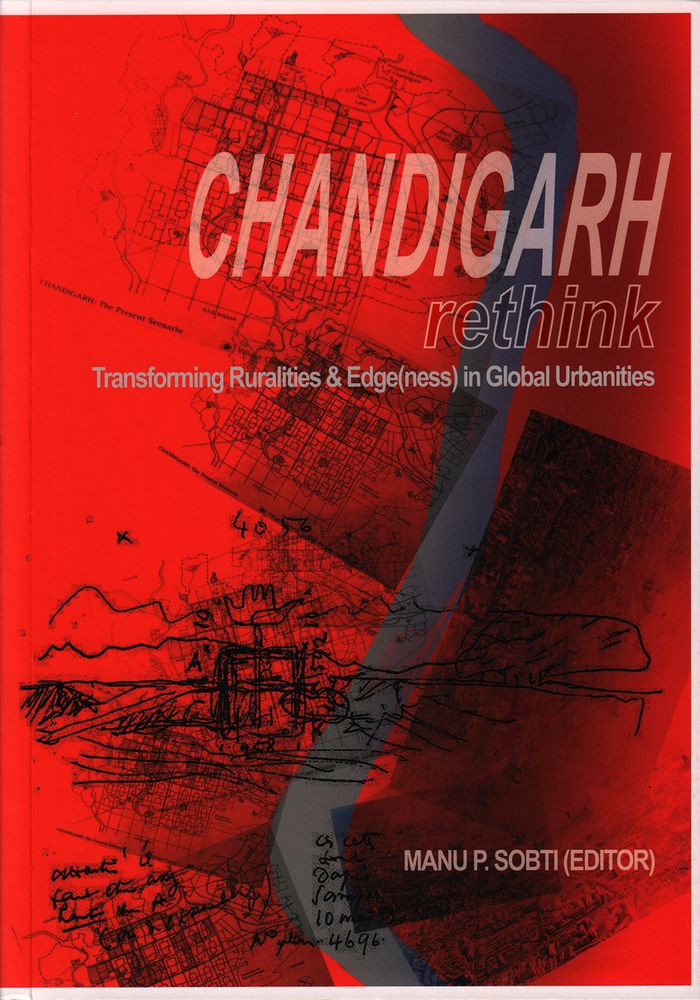
"Chandigarh rethink" captures the rich, ongoing discourse on radically transforming urbanities within the Global South with specific reference to India's social, historical, economic and cultural repositioning. It examines urban edge 'figures' and their rural 'grounds', relevant not just to Chandigarh, but also to cities in general, while suggesting narrative strategies via provocative design studio design work. These introspections are framed within themed contributions from a globally recognized group of scholars who represent the diverse disciplines of architecture, planning, urban design, landscape ecologies and the humanities. As a topical publication on global urbanities transforming a 'signature' urban project, "Chandigarh rethink" anticipates the Buildings-Landscapes-Cultures (blc) program and SARUP's efforts to uniquely aligning urban research, pedagogy and critical design practice towards examining global urbanities that continue to defy normative urban analysis. Beyond serving as an exemplar for globally aware architectural schools nationwide and beyond, it is also directed to serve as an instructive primer for design students and instructors examining global urban sites.
Chandigarh rethink: transforming ruralities & edeg(ness) in global urbanities
Actions:
Prix:
$44.50
(disponible sur commande)
Résumé:
"Chandigarh rethink" captures the rich, ongoing discourse on radically transforming urbanities within the Global South with specific reference to India's social, historical, economic and cultural repositioning. It examines urban edge 'figures' and their rural 'grounds', relevant not just to Chandigarh, but also to cities in general, while suggesting narrative strategies via provocative design studio design work. These introspections are framed within themed contributions from a globally recognized group of scholars who represent the diverse disciplines of architecture, planning, urban design, landscape ecologies and the humanities. As a topical publication on global urbanities transforming a 'signature' urban project, "Chandigarh rethink" anticipates the Buildings-Landscapes-Cultures (blc) program and SARUP's efforts to uniquely aligning urban research, pedagogy and critical design practice towards examining global urbanities that continue to defy normative urban analysis. Beyond serving as an exemplar for globally aware architectural schools nationwide and beyond, it is also directed to serve as an instructive primer for design students and instructors examining global urban sites.
Classification:
livres
livres
Publication:
juin 2017
juin 2017
Sujet:
Arch Moyen-Orient
Arch Moyen-Orient
Classification:
livres
livres
Prix:
$31.50
(disponible sur commande)
Résumé:
In "Chaos and cosmos", Karen Lang addresses the power of art to resist the pressures of the transcendental vantage point-history. Uncovering the intellectual and cultural richness of the early years of academic art history in Germany -the period from the 1880s to 1940 - she explores various attempts within art history to transform aesthetic phenomena -chaos- into the(...)
$31.50
(disponible sur commande)
Résumé:
In "Chaos and cosmos", Karen Lang addresses the power of art to resist the pressures of the transcendental vantage point-history. Uncovering the intellectual and cultural richness of the early years of academic art history in Germany -the period from the 1880s to 1940 - she explores various attempts within art history to transform aesthetic phenomena -chaos- into the(...)
Titre:
Chaos in cosmos : on the image in aesthetics and art history
Actions:
Prix:
$31.50
(disponible sur commande)
Résumé:
In "Chaos and cosmos", Karen Lang addresses the power of art to resist the pressures of the transcendental vantage point-history. Uncovering the intellectual and cultural richness of the early years of academic art history in Germany -the period from the 1880s to 1940 - she explores various attempts within art history to transform aesthetic phenomena -chaos- into the cosmos of a systematic, unified field of inquiry. Lang starts by examining Panofsky's approach to aesthetic phenomena in his early theoretical essays alongside Ernst Cassirer's contemporaneous publications on the substance and function of scientific concepts (and on Einstein's theory of relativity). She then turns to the subject of aesthetic judgment through a rereading of Kantian subjectivity and Kant's uneasy legacy in art history. From here, Lang considers the different organizing theories of symbolic form proposed by Aby Warburg and Cassirer, as well as Goethe's inspiration for both; Alois Riegl's notion of age value and Walter Benjamin's conceptions of the aura; concluding with an extended examination of objectivity and the figure of the art connoisseur. Illustrated with works of art from the Enlightenment to the present day, this book illuminates an intellectual legacy that has profoundly shaped the study of the history of art in ways that have, until now, been largely unacknowledged. Addressing the interplay of chaos and cosmos in terms of history, art history, philosophy, and epistemology, Lang traces shifts in point of view in art history and the way these shifts change aesthetic objects into historical objects, and even objects of knowledge.
Chaos in cosmos : on the image in aesthetics and art history
Actions:
Prix:
$31.50
(disponible sur commande)
Résumé:
In "Chaos and cosmos", Karen Lang addresses the power of art to resist the pressures of the transcendental vantage point-history. Uncovering the intellectual and cultural richness of the early years of academic art history in Germany -the period from the 1880s to 1940 - she explores various attempts within art history to transform aesthetic phenomena -chaos- into the cosmos of a systematic, unified field of inquiry. Lang starts by examining Panofsky's approach to aesthetic phenomena in his early theoretical essays alongside Ernst Cassirer's contemporaneous publications on the substance and function of scientific concepts (and on Einstein's theory of relativity). She then turns to the subject of aesthetic judgment through a rereading of Kantian subjectivity and Kant's uneasy legacy in art history. From here, Lang considers the different organizing theories of symbolic form proposed by Aby Warburg and Cassirer, as well as Goethe's inspiration for both; Alois Riegl's notion of age value and Walter Benjamin's conceptions of the aura; concluding with an extended examination of objectivity and the figure of the art connoisseur. Illustrated with works of art from the Enlightenment to the present day, this book illuminates an intellectual legacy that has profoundly shaped the study of the history of art in ways that have, until now, been largely unacknowledged. Addressing the interplay of chaos and cosmos in terms of history, art history, philosophy, and epistemology, Lang traces shifts in point of view in art history and the way these shifts change aesthetic objects into historical objects, and even objects of knowledge.
Classification:
livres
livres
Publication:
septembre 2006, Ithaca, London
septembre 2006, Ithaca, London
Sujet:
Théorie de l’architecture
Théorie de l’architecture
Classification:
livres
livres
Actions:
Prix:
$79.95
(disponible sur commande)
Résumé:
The gardens and estate of La Foce constitute one of the most important and best kept early twentieth-century gardens in Italy. Amid 3,500 acres of farmland in the countryside near Pienza, with sweeping views of the Tuscan landscape, La Foce was the childhood dream garden of the late writer Marchesa Iris Origo. Passionate about the order and symmetry of Florentine gardens,(...)
$79.95
(disponible sur commande)
Résumé:
The gardens and estate of La Foce constitute one of the most important and best kept early twentieth-century gardens in Italy. Amid 3,500 acres of farmland in the countryside near Pienza, with sweeping views of the Tuscan landscape, La Foce was the childhood dream garden of the late writer Marchesa Iris Origo. Passionate about the order and symmetry of Florentine gardens,(...)
Sujet:
Jardins
Jardins
Publication:
décembre 2001, Philadelphia
décembre 2001, Philadelphia
Titre:
La Foce : a garden and landscape in Tuscany
Actions:
Prix:
$79.95
(disponible sur commande)
Résumé:
The gardens and estate of La Foce constitute one of the most important and best kept early twentieth-century gardens in Italy. Amid 3,500 acres of farmland in the countryside near Pienza, with sweeping views of the Tuscan landscape, La Foce was the childhood dream garden of the late writer Marchesa Iris Origo. Passionate about the order and symmetry of Florentine gardens, Origo and her husband, Antonio, purchased the dilapidated villa in 1924, soliciting the help of English architect and family friend Cecil Pinsent to reawaken the natural magic of the property. Pinsent designed the structure of simple, elegant, box-edged beds and green enclosures that give shape to the Origos' shrubs, perennials, and vines, and created a garden of soaring cypress walks, native cyclamen, lawns, and wildflower meadows. Today the garden is a place of unusual and striking beauty, a green oasis in the barren Siena countryside. Situated in the Val d'Orcia, a wide valley in southeastern Tuscany that seems to exist on a larger, wilder scale than the rest of the Tuscan landscape, it is run by Benedetta and Donata Origo, and is open to the public one day a week. "La Foce : a garden and landscape in Tuscany" includes a historical essay and memoir by the daughter of La Foce's creators, Antonio and Iris Origo, along with photographs, sketches, and a critical analysis of the gardens. The volume not only focuses on the beauty of the gardens themselves and their indisputable merit as fascinating works of landscape architecture but also sees them within the context of both the larger Tuscan topography and the wider landscape of geography and history.
La Foce : a garden and landscape in Tuscany
Actions:
Prix:
$79.95
(disponible sur commande)
Résumé:
The gardens and estate of La Foce constitute one of the most important and best kept early twentieth-century gardens in Italy. Amid 3,500 acres of farmland in the countryside near Pienza, with sweeping views of the Tuscan landscape, La Foce was the childhood dream garden of the late writer Marchesa Iris Origo. Passionate about the order and symmetry of Florentine gardens, Origo and her husband, Antonio, purchased the dilapidated villa in 1924, soliciting the help of English architect and family friend Cecil Pinsent to reawaken the natural magic of the property. Pinsent designed the structure of simple, elegant, box-edged beds and green enclosures that give shape to the Origos' shrubs, perennials, and vines, and created a garden of soaring cypress walks, native cyclamen, lawns, and wildflower meadows. Today the garden is a place of unusual and striking beauty, a green oasis in the barren Siena countryside. Situated in the Val d'Orcia, a wide valley in southeastern Tuscany that seems to exist on a larger, wilder scale than the rest of the Tuscan landscape, it is run by Benedetta and Donata Origo, and is open to the public one day a week. "La Foce : a garden and landscape in Tuscany" includes a historical essay and memoir by the daughter of La Foce's creators, Antonio and Iris Origo, along with photographs, sketches, and a critical analysis of the gardens. The volume not only focuses on the beauty of the gardens themselves and their indisputable merit as fascinating works of landscape architecture but also sees them within the context of both the larger Tuscan topography and the wider landscape of geography and history.
Classification:
livres
livres
Publication:
décembre 2001, Philadelphia
décembre 2001, Philadelphia
Sujet:
Jardins
Jardins
Classification:
livres
livres
Actions:
Prix:
$57.50
(disponible sur commande)
Résumé:
This book presents 35 photos of the Getty Center taken shortly before the 1997 opening of its new multipurpose complex designed by Richard Meier. Published to coincide with the 20th anniversary of the center, the book reveals behind-the-scenes views of the building as objects from J. Paul Getty’s painting, sculpture and decorative arts collections were being installed(...)
$57.50
(disponible sur commande)
Résumé:
This book presents 35 photos of the Getty Center taken shortly before the 1997 opening of its new multipurpose complex designed by Richard Meier. Published to coincide with the 20th anniversary of the center, the book reveals behind-the-scenes views of the building as objects from J. Paul Getty’s painting, sculpture and decorative arts collections were being installed(...)
Sujet:
Monographies photo
Monographies photo
Publication:
février 2018
février 2018
Titre:
Robert Polidori: synchrony and diachrony. Photographs of the J. Paul Getty Museum 1997
Actions:
Prix:
$57.50
(disponible sur commande)
Résumé:
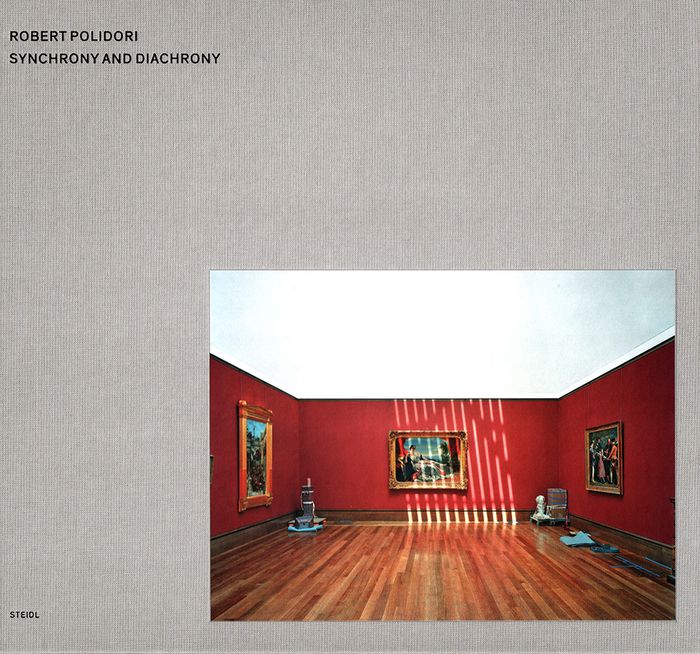
This book presents 35 photos of the Getty Center taken shortly before the 1997 opening of its new multipurpose complex designed by Richard Meier. Published to coincide with the 20th anniversary of the center, the book reveals behind-the-scenes views of the building as objects from J. Paul Getty’s painting, sculpture and decorative arts collections were being installed inside it. In September 1997 the New Yorker commissioned Robert Polidori (born 1951) to photograph Meier’s building. Within 48 hours he had made images of its exterior but was dissatisfied. Polidori wanted to document the museum’s interior, and proceeded to photograph the rooms in which artworks were either freshly installed or still being so. The resulting photos show the museum in the process of taking shape, expose the mechanics of curatorship.
Robert Polidori: synchrony and diachrony. Photographs of the J. Paul Getty Museum 1997
Actions:
Prix:
$57.50
(disponible sur commande)
Résumé:
This book presents 35 photos of the Getty Center taken shortly before the 1997 opening of its new multipurpose complex designed by Richard Meier. Published to coincide with the 20th anniversary of the center, the book reveals behind-the-scenes views of the building as objects from J. Paul Getty’s painting, sculpture and decorative arts collections were being installed inside it. In September 1997 the New Yorker commissioned Robert Polidori (born 1951) to photograph Meier’s building. Within 48 hours he had made images of its exterior but was dissatisfied. Polidori wanted to document the museum’s interior, and proceeded to photograph the rooms in which artworks were either freshly installed or still being so. The resulting photos show the museum in the process of taking shape, expose the mechanics of curatorship.
Classification:
livres
livres
Publication:
février 2018
février 2018
Sujet:
Monographies photo
Monographies photo
Classification:
livres
livres
Actions:
Prix:
$27.00
(disponible en magasin)
Résumé:
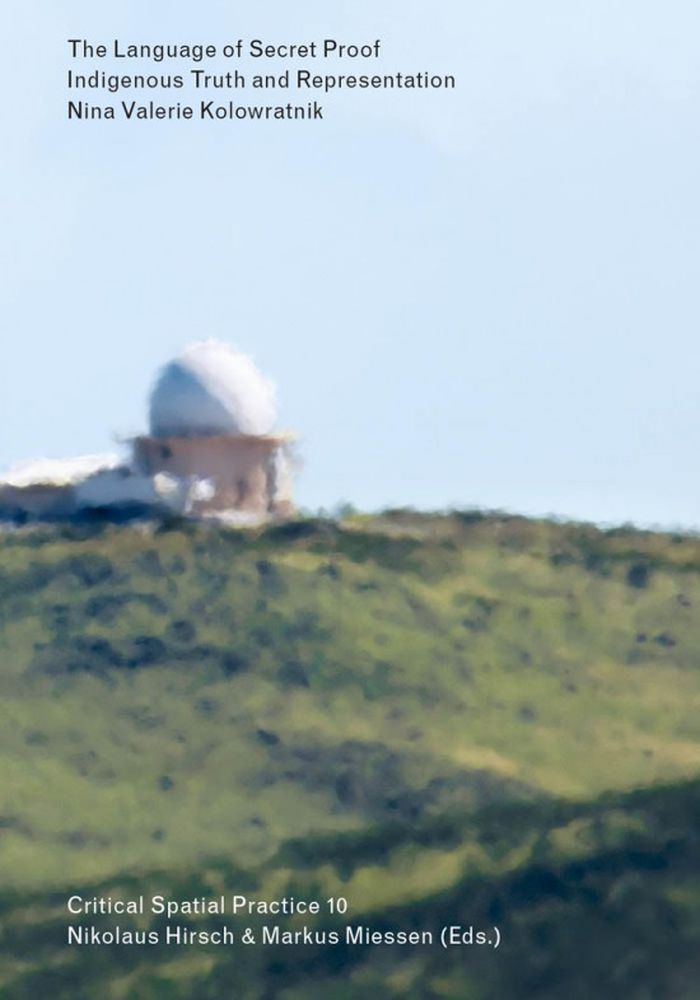
New spatial notational systems for protecting and regaining Indigenous lands in the United States. Nina Valerie Kolowratnik challenges the conditions under which Indigenous rights to protect and regain traditional lands are currently negotiated in United States legal frameworks. This tenth volume in the Critical Spatial Practice series responds to the urgent need for(...)
$27.00
(disponible en magasin)
Résumé:
New spatial notational systems for protecting and regaining Indigenous lands in the United States. Nina Valerie Kolowratnik challenges the conditions under which Indigenous rights to protect and regain traditional lands are currently negotiated in United States legal frameworks. This tenth volume in the Critical Spatial Practice series responds to the urgent need for(...)
Titre:
The language of secret proof: indigenous truth and representation. Critical spatial practice
Actions:
Prix:
$27.00
(disponible en magasin)
Résumé:
New spatial notational systems for protecting and regaining Indigenous lands in the United States. Nina Valerie Kolowratnik challenges the conditions under which Indigenous rights to protect and regain traditional lands are currently negotiated in United States legal frameworks. This tenth volume in the Critical Spatial Practice series responds to the urgent need for alternative modes of evidentiary production by introducing an innovative system of architectural drawing and notation. Kolowratnik focuses on the double bind in which Native Pueblo communities in the United States find themselves when they become involved in a legal effort to reclaim and protect ancestral lands; the process of producing evidence runs counter to their structural organization around oral history and cultural secrecy. The spatial notational systems developed by Kolowratnik with Hemish tribal members from northern New Mexico and presented in this volume are an attempt to produce evidentiary documentation that speaks Native truths while respecting demands on secrecy. These systems also attempt to instigate a dialogue where there currently is none, working to deconstruct the fixed opposition between secrecy and disclosure within Western legal systems.
The language of secret proof: indigenous truth and representation. Critical spatial practice
Actions:
Prix:
$27.00
(disponible en magasin)
Résumé:
New spatial notational systems for protecting and regaining Indigenous lands in the United States. Nina Valerie Kolowratnik challenges the conditions under which Indigenous rights to protect and regain traditional lands are currently negotiated in United States legal frameworks. This tenth volume in the Critical Spatial Practice series responds to the urgent need for alternative modes of evidentiary production by introducing an innovative system of architectural drawing and notation. Kolowratnik focuses on the double bind in which Native Pueblo communities in the United States find themselves when they become involved in a legal effort to reclaim and protect ancestral lands; the process of producing evidence runs counter to their structural organization around oral history and cultural secrecy. The spatial notational systems developed by Kolowratnik with Hemish tribal members from northern New Mexico and presented in this volume are an attempt to produce evidentiary documentation that speaks Native truths while respecting demands on secrecy. These systems also attempt to instigate a dialogue where there currently is none, working to deconstruct the fixed opposition between secrecy and disclosure within Western legal systems.
Classification:
livres
livres
Publication:
mars 2020
mars 2020
Sujet:
Théorie de l’architecture
Théorie de l’architecture
Classification:
livres
livres
Actions:
Prix:
$28.95
(disponible sur commande)
Résumé:
In this volume of the Critical Spatial Practice series, Dennis Pohl locates the origin of Europe's dependency on carbon and nuclear power in the postwar architectural designs and energy policies of the European Community. Since the 1950s, architects have proposed territorial, regional, and urban development plans that served the European political project. They(...)
$28.95
(disponible sur commande)
Résumé:
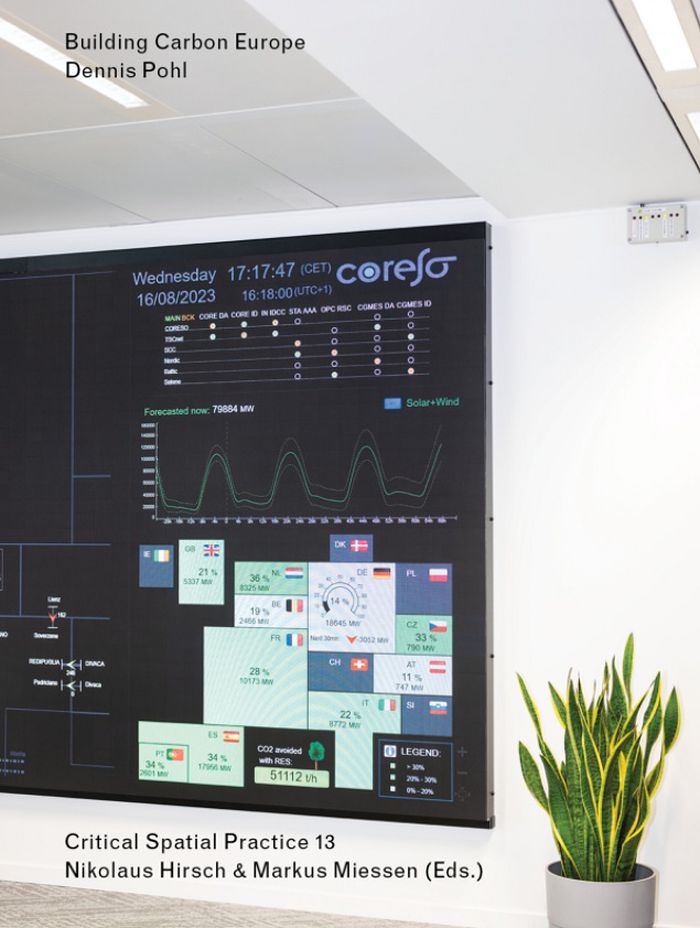
In this volume of the Critical Spatial Practice series, Dennis Pohl locates the origin of Europe's dependency on carbon and nuclear power in the postwar architectural designs and energy policies of the European Community. Since the 1950s, architects have proposed territorial, regional, and urban development plans that served the European political project. They(...)
Titre:
Building carbon europe: Coal, steel and nuclear power. Critical spatial practice
Actions:
Prix:
$28.95
(disponible sur commande)
Résumé:
In this volume of the Critical Spatial Practice series, Dennis Pohl locates the origin of Europe's dependency on carbon and nuclear power in the postwar architectural designs and energy policies of the European Community. Since the 1950s, architects have proposed territorial, regional, and urban development plans that served the European political project. They collaborated with the European Coal and Steel Community in an effort to render the steel building industry as efficient as the car industry; they incorporated the ideas of infinite nuclear energy, as promoted by the European Atomic Energy Community, into their designs. This book demonstrates how architecture served the political economy of postwar Europe as a means of turning coal, steel, and radioactivity into tools of European governance. Architectural design enabled EU institutions to support social policies and worker housing within the coal and steel industry as well as to promote a new pan-European lifestyle based on nuclear energy. In other words, architecture powered Europe's larger infrastructural, economic, and cultural network. Pohl's work not only sheds light on how architecture has contributed to the carbonization of Europe, it also highlights the environmental issue, which challenges both architectural criticism and historiography in the era of the Anthropocene.
Building carbon europe: Coal, steel and nuclear power. Critical spatial practice
Actions:
Prix:
$28.95
(disponible sur commande)
Résumé:
In this volume of the Critical Spatial Practice series, Dennis Pohl locates the origin of Europe's dependency on carbon and nuclear power in the postwar architectural designs and energy policies of the European Community. Since the 1950s, architects have proposed territorial, regional, and urban development plans that served the European political project. They collaborated with the European Coal and Steel Community in an effort to render the steel building industry as efficient as the car industry; they incorporated the ideas of infinite nuclear energy, as promoted by the European Atomic Energy Community, into their designs. This book demonstrates how architecture served the political economy of postwar Europe as a means of turning coal, steel, and radioactivity into tools of European governance. Architectural design enabled EU institutions to support social policies and worker housing within the coal and steel industry as well as to promote a new pan-European lifestyle based on nuclear energy. In other words, architecture powered Europe's larger infrastructural, economic, and cultural network. Pohl's work not only sheds light on how architecture has contributed to the carbonization of Europe, it also highlights the environmental issue, which challenges both architectural criticism and historiography in the era of the Anthropocene.
Classification:
livres
livres
Publication:
avril 2024
avril 2024
Sujet:
Théorie de l’architecture
Théorie de l’architecture
Classification:
livres
livres
Actions:
Prix:
$94.95
(disponible sur commande)
Résumé:
Paradigms in Computing: Making, Machines, and Models for Design Agency in Architecture brings together critical, theoretical, and practical research and design that illustrates the plurality of computing approaches within the broad spectrum of design and mediated practices. It is an interrogation of our primary field of architecture through the lens of computing, and yet(...)
$94.95
(disponible sur commande)
Résumé:
Paradigms in Computing: Making, Machines, and Models for Design Agency in Architecture brings together critical, theoretical, and practical research and design that illustrates the plurality of computing approaches within the broad spectrum of design and mediated practices. It is an interrogation of our primary field of architecture through the lens of computing, and yet(...)
Sujet:
Architecture contemporaine
Architecture contemporaine
Publication:
décembre 2015
décembre 2015
Titre:
Paradigms in computing: making, machines and models for design agency in architecture
Actions:
Prix:
$94.95
(disponible sur commande)
Résumé:
Paradigms in Computing: Making, Machines, and Models for Design Agency in Architecture brings together critical, theoretical, and practical research and design that illustrates the plurality of computing approaches within the broad spectrum of design and mediated practices. It is an interrogation of our primary field of architecture through the lens of computing, and yet one that realizes a productive expanding of our métier’s definition and boundaries. It is a compilation that purposefully promotes architecture’s disciplinary reach and incorporations beyond the design and construction of buildings and cities. The book offers a glimpse into the wide range of positions and experiences that are shaping practice and discourse today. The work included in Paradigms in Computing is evidence that models for enquiry are many and proliferating. As digitalization and computation continue to infuse our processes with new tools and new design environments, some of the trends collected in this book will continue to be central to the production and speculation of architecture, and others will, in retrospect, be recognized as the seeds of new, or perhaps multiple, paradigms.
Paradigms in computing: making, machines and models for design agency in architecture
Actions:
Prix:
$94.95
(disponible sur commande)
Résumé:
Paradigms in Computing: Making, Machines, and Models for Design Agency in Architecture brings together critical, theoretical, and practical research and design that illustrates the plurality of computing approaches within the broad spectrum of design and mediated practices. It is an interrogation of our primary field of architecture through the lens of computing, and yet one that realizes a productive expanding of our métier’s definition and boundaries. It is a compilation that purposefully promotes architecture’s disciplinary reach and incorporations beyond the design and construction of buildings and cities. The book offers a glimpse into the wide range of positions and experiences that are shaping practice and discourse today. The work included in Paradigms in Computing is evidence that models for enquiry are many and proliferating. As digitalization and computation continue to infuse our processes with new tools and new design environments, some of the trends collected in this book will continue to be central to the production and speculation of architecture, and others will, in retrospect, be recognized as the seeds of new, or perhaps multiple, paradigms.
Classification:
livres
livres
Publication:
décembre 2015
décembre 2015
Sujet:
Architecture contemporaine
Architecture contemporaine
Classification:
livres
livres
Prix:
$25.95
(disponible sur commande)
Résumé:
The question of ownership is the critical fault line of our times, and during the pandemic this issue has only become more divisive. In the face of crisis, the authors warn that mere redistribution within current forms of ownership is not enough; our goal must be to go beyond the limits of the current system, dominated by private enclosure and unequal ownership. Only by(...)
$25.95
(disponible sur commande)
Résumé:
The question of ownership is the critical fault line of our times, and during the pandemic this issue has only become more divisive. In the face of crisis, the authors warn that mere redistribution within current forms of ownership is not enough; our goal must be to go beyond the limits of the current system, dominated by private enclosure and unequal ownership. Only by(...)
Titre:
Owning the future: Power and property in an age of crisis
Actions:
Prix:
$25.95
(disponible sur commande)
Résumé:
The question of ownership is the critical fault line of our times, and during the pandemic this issue has only become more divisive. In the face of crisis, the authors warn that mere redistribution within current forms of ownership is not enough; our goal must be to go beyond the limits of the current system, dominated by private enclosure and unequal ownership. Only by reimagining how our economy is owned and by whom can we address the crises of our time—from the fallout of the pandemic to ecological collapse—at their roots. The authors argue that the systemic change we need hinges on a new era of democratic ownership: a reinvention of the firm as a vehicle for collective endeavour and meeting social needs; against the oligarchy of the platform giants, a digital commons that uses our data for collective good, not private profit; in place of environmental devastation, a new agenda of decommodification—of both nature and needs—with a Green New Deal and collective stewardship of the planet’s natural wealth. Together, these proposals offer a road map to owning the future and building a better world.
Owning the future: Power and property in an age of crisis
Actions:
Prix:
$25.95
(disponible sur commande)
Résumé:
The question of ownership is the critical fault line of our times, and during the pandemic this issue has only become more divisive. In the face of crisis, the authors warn that mere redistribution within current forms of ownership is not enough; our goal must be to go beyond the limits of the current system, dominated by private enclosure and unequal ownership. Only by reimagining how our economy is owned and by whom can we address the crises of our time—from the fallout of the pandemic to ecological collapse—at their roots. The authors argue that the systemic change we need hinges on a new era of democratic ownership: a reinvention of the firm as a vehicle for collective endeavour and meeting social needs; against the oligarchy of the platform giants, a digital commons that uses our data for collective good, not private profit; in place of environmental devastation, a new agenda of decommodification—of both nature and needs—with a Green New Deal and collective stewardship of the planet’s natural wealth. Together, these proposals offer a road map to owning the future and building a better world.
Classification:
livres
livres
Publication:
juin 2022
juin 2022
Sujet:
Social
Social
Classification:
livres
livres
Actions:
Prix:
$41.95
(disponible sur commande)
Résumé:
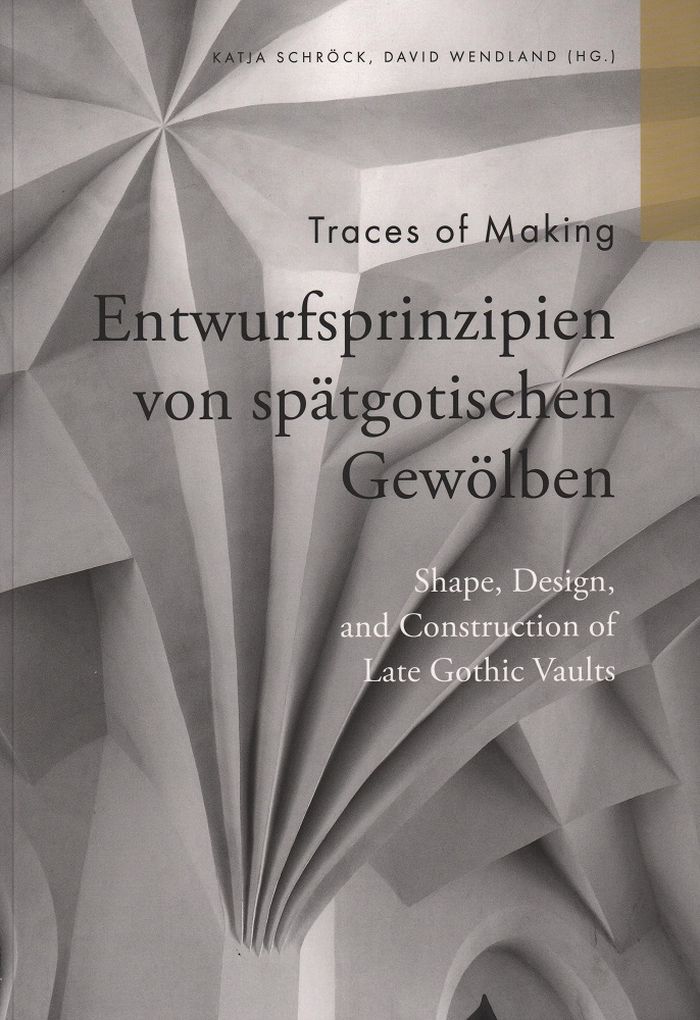
In order to analyze the phenomenon of late Gothic “Cell Vaults“, it is essential to understand the building process, the characteristics of the specifications formulated in planning, and the design criteria for these structures. On one hand, the reasons for the invention of this particular type of vaulted ceiling in the late 15th century and its spread over a large area(...)
$41.95
(disponible sur commande)
Résumé:
In order to analyze the phenomenon of late Gothic “Cell Vaults“, it is essential to understand the building process, the characteristics of the specifications formulated in planning, and the design criteria for these structures. On one hand, the reasons for the invention of this particular type of vaulted ceiling in the late 15th century and its spread over a large area(...)
Publication:
novembre 2016
novembre 2016
Titre:
Traces of making: shape, design and construction of late Gothic vaults
Actions:
Prix:
$41.95
(disponible sur commande)
Résumé:
In order to analyze the phenomenon of late Gothic “Cell Vaults“, it is essential to understand the building process, the characteristics of the specifications formulated in planning, and the design criteria for these structures. On one hand, the reasons for the invention of this particular type of vaulted ceiling in the late 15th century and its spread over a large area are usually viewed from a technological standpoint. On the other hand, the appearance of these vaults, in particular the character of their curves and surfaces, can only be described against this background. As it happens, we have no recourse to contemporary information regarding the construction techniques or the design specifications of cell vaults. This constitutes a methodological problem: how is it possible, starting from the existing artifact, to formulate a clear idea of not only the production of the vaults but also the decision-making and communication processes associated with their making? Within the research project “Form, Construction and Design Principles of late Gothic Cell Vaults – ‘Reverse Engineering’ and Experimental Archaeology”, ways of thinking about the genesis of these particular vaults are formulated.
Traces of making: shape, design and construction of late Gothic vaults
Actions:
Prix:
$41.95
(disponible sur commande)
Résumé:
In order to analyze the phenomenon of late Gothic “Cell Vaults“, it is essential to understand the building process, the characteristics of the specifications formulated in planning, and the design criteria for these structures. On one hand, the reasons for the invention of this particular type of vaulted ceiling in the late 15th century and its spread over a large area are usually viewed from a technological standpoint. On the other hand, the appearance of these vaults, in particular the character of their curves and surfaces, can only be described against this background. As it happens, we have no recourse to contemporary information regarding the construction techniques or the design specifications of cell vaults. This constitutes a methodological problem: how is it possible, starting from the existing artifact, to formulate a clear idea of not only the production of the vaults but also the decision-making and communication processes associated with their making? Within the research project “Form, Construction and Design Principles of late Gothic Cell Vaults – ‘Reverse Engineering’ and Experimental Archaeology”, ways of thinking about the genesis of these particular vaults are formulated.
Classification:
livres
livres
Publication:
novembre 2016
novembre 2016


