


2467 Résultats
Classification:
livres
livres
Actions:
Prix:
$85.95
(disponible sur commande)
Résumé:
The work of Alison Brooks Architects fuses an endlessly inventive architectural imagination with profound sensitivity to the diverse cultural and natural histories that form each project’s provenance. This ethos underpins the extraordinary array of nuanced and joyful portfolio of works illustrated in this book, collectively described by Brooks as ‘experimental(...)
$85.95
(disponible sur commande)
Résumé:
The work of Alison Brooks Architects fuses an endlessly inventive architectural imagination with profound sensitivity to the diverse cultural and natural histories that form each project’s provenance. This ethos underpins the extraordinary array of nuanced and joyful portfolio of works illustrated in this book, collectively described by Brooks as ‘experimental(...)
Titre:
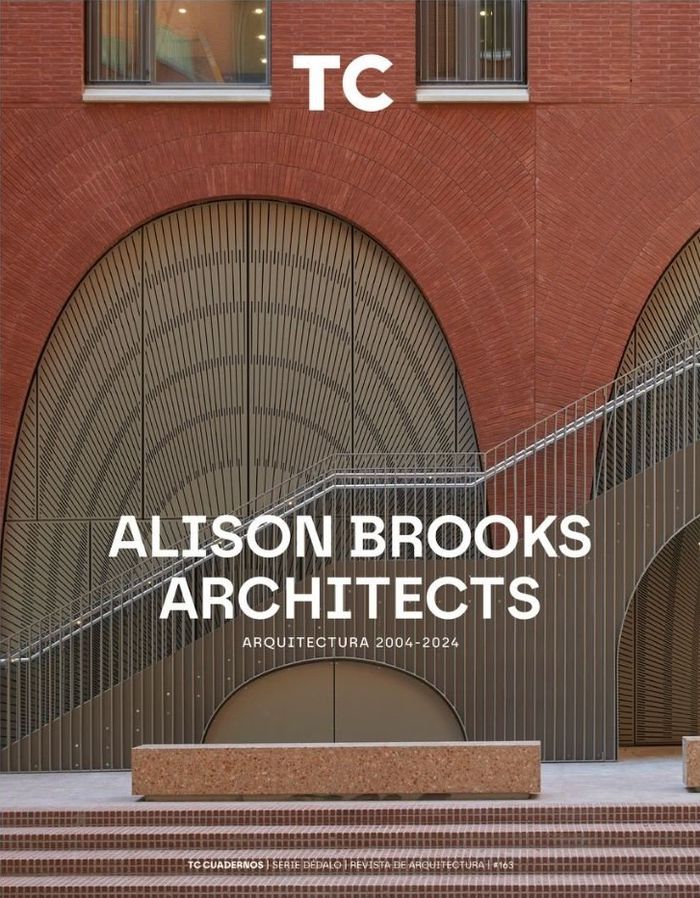
TC 163: Alison Brooks Architects
Actions:
Prix:
$85.95
(disponible sur commande)
Résumé:
The work of Alison Brooks Architects fuses an endlessly inventive architectural imagination with profound sensitivity to the diverse cultural and natural histories that form each project’s provenance. This ethos underpins the extraordinary array of nuanced and joyful portfolio of works illustrated in this book, collectively described by Brooks as ‘experimental archetypes’. This 386-page monograph charts eighteen built works completed in the past 20 years, extensively documented with descriptive texts, photographs, drawings and emblematic construction details that illuminate each project’s tectonic and conceptual intent. The private houses in this book define Brooks’ early career and continue to be a test bed for experimentation. They illuminate her ability to conjure deeply human architectures of plasticity and informality. Organic geometries and expressive roof forms loosen cartesian boundaries to offer indeterminate spaces: these simultaneously act as a canvas for daily life, workplaces, or private art collections. As the practice’s work has grown in scale, their urban housing schemes have been motivated by Brooks’ foundational belief that the architect’s duty to the city, and society, is to provide beautiful, sustainable and accessible housing for all as a framework for individual and community well-being. This book reveals residential projects characterised by spatial generosity and a uniquely sculptural approach to form and material.
TC 163: Alison Brooks Architects
Actions:
Prix:
$85.95
(disponible sur commande)
Résumé:
The work of Alison Brooks Architects fuses an endlessly inventive architectural imagination with profound sensitivity to the diverse cultural and natural histories that form each project’s provenance. This ethos underpins the extraordinary array of nuanced and joyful portfolio of works illustrated in this book, collectively described by Brooks as ‘experimental archetypes’. This 386-page monograph charts eighteen built works completed in the past 20 years, extensively documented with descriptive texts, photographs, drawings and emblematic construction details that illuminate each project’s tectonic and conceptual intent. The private houses in this book define Brooks’ early career and continue to be a test bed for experimentation. They illuminate her ability to conjure deeply human architectures of plasticity and informality. Organic geometries and expressive roof forms loosen cartesian boundaries to offer indeterminate spaces: these simultaneously act as a canvas for daily life, workplaces, or private art collections. As the practice’s work has grown in scale, their urban housing schemes have been motivated by Brooks’ foundational belief that the architect’s duty to the city, and society, is to provide beautiful, sustainable and accessible housing for all as a framework for individual and community well-being. This book reveals residential projects characterised by spatial generosity and a uniquely sculptural approach to form and material.
Classification:
livres
livres
Publication:
mai 2024
mai 2024
Sujet:
Architecture, monographies
Architecture, monographies
Classification:
livres
livres
Titre:
Lebbeus Woods : System Wien
Lebbeus Woods : System Wien
Actions:
Prix:
$48.00
(disponible sur commande)
Résumé:
The New York based architect Lebbeus Woods – founder of the Research Institute for Experimental Architecture (RIEA) – concerns himself intensively with architectural theory and experimental architecture. His approach is free from the pressures of specific purpose built projects and rather tends to develop visionary projects which integrate research, philosophy, and art.(...)
$48.00
(disponible sur commande)
Résumé:
The New York based architect Lebbeus Woods – founder of the Research Institute for Experimental Architecture (RIEA) – concerns himself intensively with architectural theory and experimental architecture. His approach is free from the pressures of specific purpose built projects and rather tends to develop visionary projects which integrate research, philosophy, and art.(...)
Sujet:
Architecture, monographies
Architecture, monographies
Publication:
février 2006, Vienna
février 2006, Vienna
Titre:
Lebbeus Woods : System Wien
Actions:
Prix:
$48.00
(disponible sur commande)
Résumé:
The New York based architect Lebbeus Woods – founder of the Research Institute for Experimental Architecture (RIEA) – concerns himself intensively with architectural theory and experimental architecture. His approach is free from the pressures of specific purpose built projects and rather tends to develop visionary projects which integrate research, philosophy, and art. The subject of his exhibition entitled “System Wien” which he developed in collaboration with Christoph a. Kumpusch is the urban structure of the city of Vienna which he plans to interfere in with specific architectural interventions. This publication - published for the exhibition of the same name in the MAK Vienna - documents the various works comprising the "System Wien" project. It develops an idea that the making of architectuere can be understood as the organization of energy. The project explores how energy relations in public and private city spaces might be represented tectonically in the form of drawings and installations; how existing energy elations in the city can be changed by the input tectonically in the form of drawings and installations; and hoe the future of the city need not depend for creative energy input on the development of building projects requiring large capital investments and institutional approval, but rather on the redistribution of energy at the human scale of the street and the room.
Lebbeus Woods : System Wien
Actions:
Prix:
$48.00
(disponible sur commande)
Résumé:
The New York based architect Lebbeus Woods – founder of the Research Institute for Experimental Architecture (RIEA) – concerns himself intensively with architectural theory and experimental architecture. His approach is free from the pressures of specific purpose built projects and rather tends to develop visionary projects which integrate research, philosophy, and art. The subject of his exhibition entitled “System Wien” which he developed in collaboration with Christoph a. Kumpusch is the urban structure of the city of Vienna which he plans to interfere in with specific architectural interventions. This publication - published for the exhibition of the same name in the MAK Vienna - documents the various works comprising the "System Wien" project. It develops an idea that the making of architectuere can be understood as the organization of energy. The project explores how energy relations in public and private city spaces might be represented tectonically in the form of drawings and installations; how existing energy elations in the city can be changed by the input tectonically in the form of drawings and installations; and hoe the future of the city need not depend for creative energy input on the development of building projects requiring large capital investments and institutional approval, but rather on the redistribution of energy at the human scale of the street and the room.
Classification:
livres
livres
Publication:
février 2006, Vienna
février 2006, Vienna
Sujet:
Architecture, monographies
Architecture, monographies
Classification:
livres
livres
Actions:
Exemplaires:
Description:
334 p., 57 plates included in pagination : ill. (some col.), facsims, maps (some col.), ports. ; 22 cm.
Description:
334 p., 57 plates included in pagination : ill. (some col.), facsims, maps (some col.), ports. ; 22 cm.
Auteur:
Sujet:
Publication:
2010.
2010.
Titre:
Retour au monolithique : Jacques-Antoine Dulaure (1755-1835) et la territorialisation de l'architecture primitive / Christina Contandriopoulos.
Actions:
Exemplaires:
Description:
334 p., 57 plates included in pagination : ill. (some col.), facsims, maps (some col.), ports. ; 22 cm.
Retour au monolithique : Jacques-Antoine Dulaure (1755-1835) et la territorialisation de l'architecture primitive / Christina Contandriopoulos.
Actions:
Exemplaires:
Description:
334 p., 57 plates included in pagination : ill. (some col.), facsims, maps (some col.), ports. ; 22 cm.
Classification:
livres
livres
Publication:
2010.
2010.
Auteur:
Sujet:
Classification:
livres
livres

Actions:
Prix:
$41.95
(disponible sur commande)
Résumé:
Can a typeface communicate the unique character of a city? This is the question the University of Minnesota Design Institute proposed when it began the project “Typeface: Twin Cities” and commissioned six teams of talented typographers to create a custom font for Minneapolis and St. Paul. “Typeface: Twin Cities” was an experiment to further understand the relationship(...)
$41.95
(disponible sur commande)
Résumé:
Can a typeface communicate the unique character of a city? This is the question the University of Minnesota Design Institute proposed when it began the project “Typeface: Twin Cities” and commissioned six teams of talented typographers to create a custom font for Minneapolis and St. Paul. “Typeface: Twin Cities” was an experiment to further understand the relationship(...)
Publication:
septembre 2003, Minneapolis
septembre 2003, Minneapolis
Titre:
Metro letters : a typeface for the Twin Cities
Actions:
Prix:
$41.95
(disponible sur commande)
Résumé:
Can a typeface communicate the unique character of a city? This is the question the University of Minnesota Design Institute proposed when it began the project “Typeface: Twin Cities” and commissioned six teams of talented typographers to create a custom font for Minneapolis and St. Paul. “Typeface: Twin Cities” was an experiment to further understand the relationship between typography and urban identity that sought not to brand the cities themselves but to engage the public’s awareness and appreciation of design and typography throughout the metro area. What began as an attempt to discover a subtle form of civic identity evolved into the invention of a truly unique concept. The Twin font is accompanied by a software program that can link the typeface via the Internet with live databases detailing the Twin Cities’ urban conditions—wind, temperature, traffic congestion—and these variations visibly affect the type’s appearance. "Metro Letters" recounts the complete process behind the development of a font that aims to visually represent the diversity of the Twin Cities and inspires other designers to devise their own new ideas, innovative prototypes, and creative experiments.
Metro letters : a typeface for the Twin Cities
Actions:
Prix:
$41.95
(disponible sur commande)
Résumé:
Can a typeface communicate the unique character of a city? This is the question the University of Minnesota Design Institute proposed when it began the project “Typeface: Twin Cities” and commissioned six teams of talented typographers to create a custom font for Minneapolis and St. Paul. “Typeface: Twin Cities” was an experiment to further understand the relationship between typography and urban identity that sought not to brand the cities themselves but to engage the public’s awareness and appreciation of design and typography throughout the metro area. What began as an attempt to discover a subtle form of civic identity evolved into the invention of a truly unique concept. The Twin font is accompanied by a software program that can link the typeface via the Internet with live databases detailing the Twin Cities’ urban conditions—wind, temperature, traffic congestion—and these variations visibly affect the type’s appearance. "Metro Letters" recounts the complete process behind the development of a font that aims to visually represent the diversity of the Twin Cities and inspires other designers to devise their own new ideas, innovative prototypes, and creative experiments.
Classification:
livres
livres
Publication:
septembre 2003, Minneapolis
septembre 2003, Minneapolis
Classification:
livres
livres
Titre:
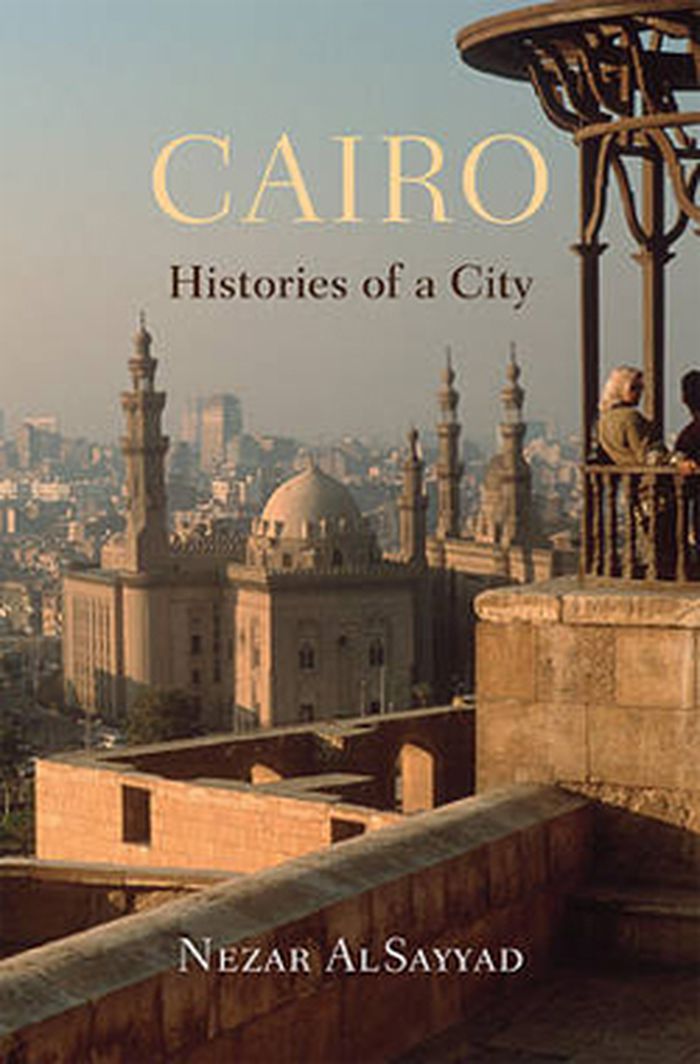
Cairo : histories of a city
Cairo : histories of a city
Actions:
Prix:
$31.00
(disponible sur commande)
Résumé:
From its earliest days as a royal settlement fronting the pyramids of Giza to its current manifestation as the largest metropolis in Africa, Cairo has forever captured the urban pulse of the Middle East. In this publication, Nezar AlSayyad narrates the many Cairos that have existed throughout time, offering a panoramic view of the city’s history unmatched in temporal and(...)
$31.00
(disponible sur commande)
Résumé:
From its earliest days as a royal settlement fronting the pyramids of Giza to its current manifestation as the largest metropolis in Africa, Cairo has forever captured the urban pulse of the Middle East. In this publication, Nezar AlSayyad narrates the many Cairos that have existed throughout time, offering a panoramic view of the city’s history unmatched in temporal and(...)
Publication:
mai 2011
mai 2011
Titre:
Cairo : histories of a city
Actions:
Prix:
$31.00
(disponible sur commande)
Résumé:
From its earliest days as a royal settlement fronting the pyramids of Giza to its current manifestation as the largest metropolis in Africa, Cairo has forever captured the urban pulse of the Middle East. In this publication, Nezar AlSayyad narrates the many Cairos that have existed throughout time, offering a panoramic view of the city’s history unmatched in temporal and geographic scope, through an in-depth examination of its architecture and urban form. In twelve vignettes, accompanied by drawings, photographs, and maps, AlSayyad details the shifts in Cairo’s built environment through stories of important figures who marked the cityscape with their personal ambitions and their political ideologies. The city is visually reconstructed and brought to life not only as a physical fabric but also as a social and political order—a city built within, upon, and over, resulting in a present-day richly layered urban environment. Each chapter attempts to capture a defining moment in the life trajectory of a city loved for all of its evocations and contradictions. Throughout, AlSayyad illuminates not only the spaces that make up Cairo but also the figures that shaped them, including its chroniclers, from Herodotus to Mahfouz, who recorded the deeds of great and ordinary Cairenes alike. He pays particular attention to how the imperatives of Egypt's various rulers and regimes—from the pharaohs to Sadat and beyond—have inscribed themselves in the city that residents navigate today.
Cairo : histories of a city
Actions:
Prix:
$31.00
(disponible sur commande)
Résumé:
From its earliest days as a royal settlement fronting the pyramids of Giza to its current manifestation as the largest metropolis in Africa, Cairo has forever captured the urban pulse of the Middle East. In this publication, Nezar AlSayyad narrates the many Cairos that have existed throughout time, offering a panoramic view of the city’s history unmatched in temporal and geographic scope, through an in-depth examination of its architecture and urban form. In twelve vignettes, accompanied by drawings, photographs, and maps, AlSayyad details the shifts in Cairo’s built environment through stories of important figures who marked the cityscape with their personal ambitions and their political ideologies. The city is visually reconstructed and brought to life not only as a physical fabric but also as a social and political order—a city built within, upon, and over, resulting in a present-day richly layered urban environment. Each chapter attempts to capture a defining moment in the life trajectory of a city loved for all of its evocations and contradictions. Throughout, AlSayyad illuminates not only the spaces that make up Cairo but also the figures that shaped them, including its chroniclers, from Herodotus to Mahfouz, who recorded the deeds of great and ordinary Cairenes alike. He pays particular attention to how the imperatives of Egypt's various rulers and regimes—from the pharaohs to Sadat and beyond—have inscribed themselves in the city that residents navigate today.
Classification:
livres
livres
Publication:
mai 2011
mai 2011
Classification:
livres
livres
Actions:
Exemplaires:
Description:
362 pages, [16] pages de planches : illustrations, portraits
Description:
362 pages, [16] pages de planches : illustrations, portraits
Auteur:
Sujet:
Publication:
Paris : Flammarion, 2000.
Paris : Flammarion, 2000.
Titre:
Haussmann le grand / Georges Valance.
Actions:
Exemplaires:
Description:
362 pages, [16] pages de planches : illustrations, portraits
Haussmann le grand / Georges Valance.
Actions:
Exemplaires:
Description:
362 pages, [16] pages de planches : illustrations, portraits
Classification:
livres
livres
Publication:
Paris : Flammarion, 2000.
Paris : Flammarion, 2000.
Auteur:
Sujet:
Classification:
livres
livres
Actions:
Prix:
$71.95
(disponible en magasin)
Résumé:
In a period of over thirty years, Arne van Herk and Sabien de Kleijn have achieved a varied and unconventional body of work. It consists of architecture, urban design, interior design, furniture, household objects, films and experiments in form and material. This book notes the ingenious skylights in their houseboat as well as the houses on Borneokade Amsterdam. It(...)
$71.95
(disponible en magasin)
Résumé:
In a period of over thirty years, Arne van Herk and Sabien de Kleijn have achieved a varied and unconventional body of work. It consists of architecture, urban design, interior design, furniture, household objects, films and experiments in form and material. This book notes the ingenious skylights in their houseboat as well as the houses on Borneokade Amsterdam. It(...)
Sujet:
Architecture, monographies
Architecture, monographies
Publication:
janvier 2003, Rotterdam
janvier 2003, Rotterdam
Titre:
Van Herk & De Kleijn : tools and architecture
Actions:
Prix:
$71.95
(disponible en magasin)
Résumé:
In a period of over thirty years, Arne van Herk and Sabien de Kleijn have achieved a varied and unconventional body of work. It consists of architecture, urban design, interior design, furniture, household objects, films and experiments in form and material. This book notes the ingenious skylights in their houseboat as well as the houses on Borneokade Amsterdam. It gives due attention to the foam-rubber objects, the fifty-centimetre high platform shoes, the Woutertje Pieterse School in Leiden and the accommodation building for the Dutch Royal Navy in Den Helder. The architects' working method and their projects are explored in an essay by Hans Ibelings. Adriaan Geuze and Cilia Erens present individual outlooks on the work of Van Herk & De Kleijn. Designed by Karel Martens and Aagje Martens.
Van Herk & De Kleijn : tools and architecture
Actions:
Prix:
$71.95
(disponible en magasin)
Résumé:
In a period of over thirty years, Arne van Herk and Sabien de Kleijn have achieved a varied and unconventional body of work. It consists of architecture, urban design, interior design, furniture, household objects, films and experiments in form and material. This book notes the ingenious skylights in their houseboat as well as the houses on Borneokade Amsterdam. It gives due attention to the foam-rubber objects, the fifty-centimetre high platform shoes, the Woutertje Pieterse School in Leiden and the accommodation building for the Dutch Royal Navy in Den Helder. The architects' working method and their projects are explored in an essay by Hans Ibelings. Adriaan Geuze and Cilia Erens present individual outlooks on the work of Van Herk & De Kleijn. Designed by Karel Martens and Aagje Martens.
Classification:
livres
livres
Publication:
janvier 2003, Rotterdam
janvier 2003, Rotterdam
Sujet:
Architecture, monographies
Architecture, monographies
Classification:
livres
livres
Titre:
Michael Hakimi
Michael Hakimi
Actions:
Prix:
$46.00
(disponible sur commande)
Résumé:
The murals, computer images, paper works, drawings and objects of Berlin-based Michael Hakimi are combined in site-specific installations to form intricate networks of meaning. Hakimi expands the function of his formally reduced, two-dimensional images by means of his interventions, emphasizing the semantic divide between object and sign. The artist examines the narrative(...)
$46.00
(disponible sur commande)
Résumé:
The murals, computer images, paper works, drawings and objects of Berlin-based Michael Hakimi are combined in site-specific installations to form intricate networks of meaning. Hakimi expands the function of his formally reduced, two-dimensional images by means of his interventions, emphasizing the semantic divide between object and sign. The artist examines the narrative(...)
Titre:
Michael Hakimi
Actions:
Prix:
$46.00
(disponible sur commande)
Résumé:
The murals, computer images, paper works, drawings and objects of Berlin-based Michael Hakimi are combined in site-specific installations to form intricate networks of meaning. Hakimi expands the function of his formally reduced, two-dimensional images by means of his interventions, emphasizing the semantic divide between object and sign. The artist examines the narrative potential of symbols and basic geometric shapes through the collagelike interaction of his works with readymades of the simplest materials. His installation "Large Oven" (2004), for example, realized for the Kunstverein Hamburg, and the spatial project "Roof" (2007), produced for the Kunsthalle Basel, both of which are comprehensively documented for the first time in the present publication, create walk-in scenarios reflecting social, political and urban realities. Beyond these works, this retrospective monograph presents all of Hakimi's work since 2002.
Michael Hakimi
Actions:
Prix:
$46.00
(disponible sur commande)
Résumé:
The murals, computer images, paper works, drawings and objects of Berlin-based Michael Hakimi are combined in site-specific installations to form intricate networks of meaning. Hakimi expands the function of his formally reduced, two-dimensional images by means of his interventions, emphasizing the semantic divide between object and sign. The artist examines the narrative potential of symbols and basic geometric shapes through the collagelike interaction of his works with readymades of the simplest materials. His installation "Large Oven" (2004), for example, realized for the Kunstverein Hamburg, and the spatial project "Roof" (2007), produced for the Kunsthalle Basel, both of which are comprehensively documented for the first time in the present publication, create walk-in scenarios reflecting social, political and urban realities. Beyond these works, this retrospective monograph presents all of Hakimi's work since 2002.
Classification:
livres
livres
Publication:
mars 2009, Ostfildern
mars 2009, Ostfildern
Classification:
livres
livres
Titre:
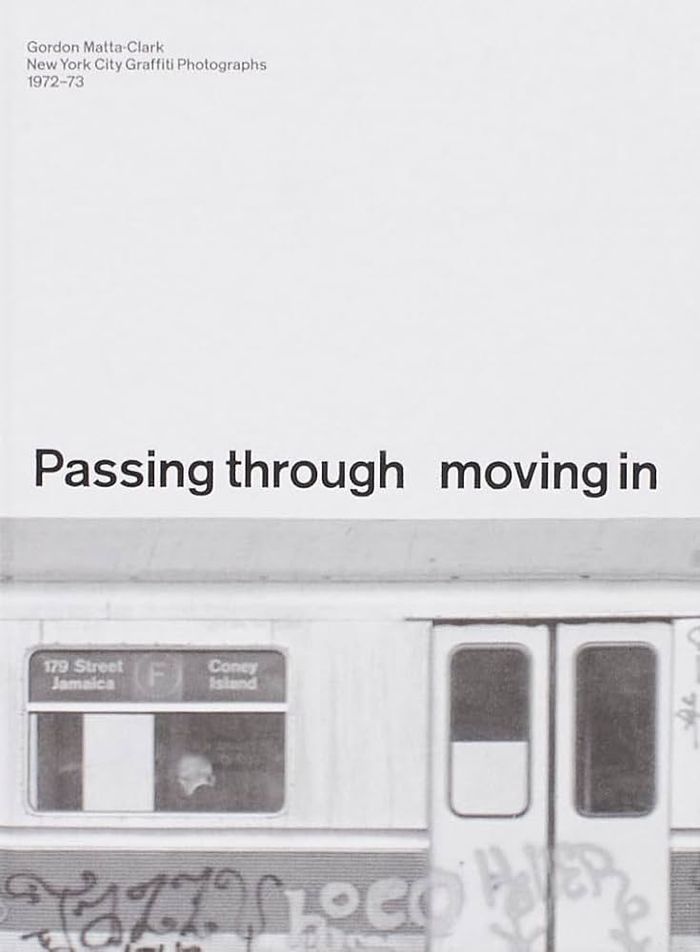
Passing through moving in and getting away with it: Gordon Matta-Clark New York city graffiti
Passing through moving in and getting away with it: Gordon Matta-Clark New York city graffiti
Actions:
Prix:
$128.99
(disponible en magasin)
Résumé:
From 1972 to 1973, Gordon Matta-Clark took over fifteen hundred photographs of gra?ti in New York City. These pictures are some of the earliest documentation of an emerging art form, and are an under-recognized body of work from Matta-Clark—an artist who used the city’s crumbling infrastructure to reveal the social and political implications of architecture and urban(...)
$128.99
(disponible en magasin)
Résumé:
From 1972 to 1973, Gordon Matta-Clark took over fifteen hundred photographs of gra?ti in New York City. These pictures are some of the earliest documentation of an emerging art form, and are an under-recognized body of work from Matta-Clark—an artist who used the city’s crumbling infrastructure to reveal the social and political implications of architecture and urban(...)
Titre:
Passing through moving in and getting away with it: Gordon Matta-Clark New York city graffiti
Actions:
Prix:
$128.99
(disponible en magasin)
Résumé:
From 1972 to 1973, Gordon Matta-Clark took over fifteen hundred photographs of gra?ti in New York City. These pictures are some of the earliest documentation of an emerging art form, and are an under-recognized body of work from Matta-Clark—an artist who used the city’s crumbling infrastructure to reveal the social and political implications of architecture and urban design. This publication features every frame from every roll of film Matta-Clark shot, organized according to the sequence of contact sheets in the artist’s archive. Taken together, these pictures demonstrate Matta-Clark’s obsession with the gra?ti that had exploded across the city’s walls, subways, and buses, and show him growing bolder as he moved from photographing on the streets and subway platforms, to trespassing in outer borough train yards.
Passing through moving in and getting away with it: Gordon Matta-Clark New York city graffiti
Actions:
Prix:
$128.99
(disponible en magasin)
Résumé:
From 1972 to 1973, Gordon Matta-Clark took over fifteen hundred photographs of gra?ti in New York City. These pictures are some of the earliest documentation of an emerging art form, and are an under-recognized body of work from Matta-Clark—an artist who used the city’s crumbling infrastructure to reveal the social and political implications of architecture and urban design. This publication features every frame from every roll of film Matta-Clark shot, organized according to the sequence of contact sheets in the artist’s archive. Taken together, these pictures demonstrate Matta-Clark’s obsession with the gra?ti that had exploded across the city’s walls, subways, and buses, and show him growing bolder as he moved from photographing on the streets and subway platforms, to trespassing in outer borough train yards.
Classification:
livres
livres
Publication:
septembre 2025
septembre 2025
Sujet:
Monographies photo
Monographies photo
Classification:
livres
livres
Actions:
Prix:
$75.00
(disponible en magasin)
Résumé:
Museums are flourishing across the globe: in recent decades, no other architectural form has witnessed such remarkable growth and diversification. In an era when the digital revolution enables us to preserve our shared memory and artistic heritage without the constraints of physical space, this phenomenon might seem like an unnecessary indulgence. Yet, by examining new(...)
$75.00
(disponible en magasin)
Résumé:
Museums are flourishing across the globe: in recent decades, no other architectural form has witnessed such remarkable growth and diversification. In an era when the digital revolution enables us to preserve our shared memory and artistic heritage without the constraints of physical space, this phenomenon might seem like an unnecessary indulgence. Yet, by examining new(...)
Titre:
Architecture for Culture: Rethinking Museums
Actions:
Prix:
$75.00
(disponible en magasin)
Résumé:
Museums are flourishing across the globe: in recent decades, no other architectural form has witnessed such remarkable growth and diversification. In an era when the digital revolution enables us to preserve our shared memory and artistic heritage without the constraints of physical space, this phenomenon might seem like an unnecessary indulgence. Yet, by examining new icons and rereading historical examples"Architecture for Culture" shows why museums remain essential. They serve as the repositories for the encyclopedia of 21st-century knowledge, help make our cities legible and ensure that art remains a vibrant presence in the spaces where we live. The museum is revealed as a venue where architecture refines its discourse on method, identity, and urban context; it is also a dynamic laboratory for the continuous development of a new cultural policy—one that must address itself to a planetary audience.
Architecture for Culture: Rethinking Museums
Actions:
Prix:
$75.00
(disponible en magasin)
Résumé:
Museums are flourishing across the globe: in recent decades, no other architectural form has witnessed such remarkable growth and diversification. In an era when the digital revolution enables us to preserve our shared memory and artistic heritage without the constraints of physical space, this phenomenon might seem like an unnecessary indulgence. Yet, by examining new icons and rereading historical examples"Architecture for Culture" shows why museums remain essential. They serve as the repositories for the encyclopedia of 21st-century knowledge, help make our cities legible and ensure that art remains a vibrant presence in the spaces where we live. The museum is revealed as a venue where architecture refines its discourse on method, identity, and urban context; it is also a dynamic laboratory for the continuous development of a new cultural policy—one that must address itself to a planetary audience.
Classification:
livres
livres
Publication:
septembre 2025
septembre 2025
Sujet:
Muséologie
Muséologie


