


2467 Résultats
Classification:
livres
livres
Actions:
Prix:
$58.00
(disponible en magasin)
Résumé:
There is scarcely any construction principle that can boast an equally extensive array of positive e ffects than the greening of the exterior and interior building envelope. "Green, greener, greenest : façades, roofs, indoors o ffers a comprehensive survey of a range of façade, roof and interior greenings. Here, it is plants that are the main building material: neatly(...)
$58.00
(disponible en magasin)
Résumé:
There is scarcely any construction principle that can boast an equally extensive array of positive e ffects than the greening of the exterior and interior building envelope. "Green, greener, greenest : façades, roofs, indoors o ffers a comprehensive survey of a range of façade, roof and interior greenings. Here, it is plants that are the main building material: neatly(...)
Titre:
Green, greener, greenest. Facades, roof, indoors
Actions:
Prix:
$58.00
(disponible en magasin)
Résumé:
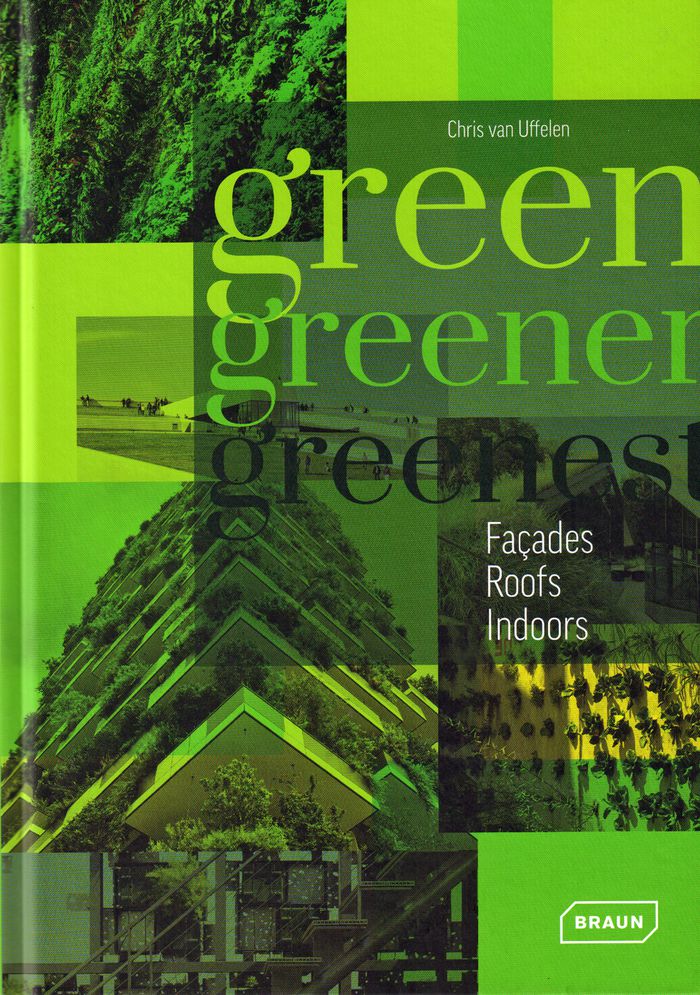
There is scarcely any construction principle that can boast an equally extensive array of positive e ffects than the greening of the exterior and interior building envelope. "Green, greener, greenest : façades, roofs, indoors o ffers a comprehensive survey of a range of façade, roof and interior greenings. Here, it is plants that are the main building material: neatly arranged, they complement minimalist high-rise architecture; wildly rampant, they serve as an extravagant element of interior design; and through creative composition, they come to form a sophisticated work of art. The cross-disciplinary juxtaposition of technological progress and creative design is never far from view. Whether in an urban setting or part of a natural landscape, the projects showcased in this volume prove that there is still limitless creative potential in architectural greening, posing new and exciting challenges for designers and landscape architects alike.
Green, greener, greenest. Facades, roof, indoors
Actions:
Prix:
$58.00
(disponible en magasin)
Résumé:
There is scarcely any construction principle that can boast an equally extensive array of positive e ffects than the greening of the exterior and interior building envelope. "Green, greener, greenest : façades, roofs, indoors o ffers a comprehensive survey of a range of façade, roof and interior greenings. Here, it is plants that are the main building material: neatly arranged, they complement minimalist high-rise architecture; wildly rampant, they serve as an extravagant element of interior design; and through creative composition, they come to form a sophisticated work of art. The cross-disciplinary juxtaposition of technological progress and creative design is never far from view. Whether in an urban setting or part of a natural landscape, the projects showcased in this volume prove that there is still limitless creative potential in architectural greening, posing new and exciting challenges for designers and landscape architects alike.
Classification:
livres
livres
Publication:
septembre 2016
septembre 2016
Sujet:
Jardins
Jardins
Classification:
livres
livres
Actions:
Prix:
$71.95
(disponible sur commande)
Résumé:
This publication looks at Fez, Morocco's famous former capital and today its second-largest city. Based on a recent research program conducted by EPFL's Laboratory Basel (laba), it investigates how these clashes have marked the city's socioeconomic structure and urban fabric, and whether or not it offers alternative and relevant means of human association and(...)
$71.95
(disponible sur commande)
Résumé:
This publication looks at Fez, Morocco's famous former capital and today its second-largest city. Based on a recent research program conducted by EPFL's Laboratory Basel (laba), it investigates how these clashes have marked the city's socioeconomic structure and urban fabric, and whether or not it offers alternative and relevant means of human association and(...)
Publication:
juin 2020
juin 2020
Titre:
Fez Lessons: industrious habitat
Actions:
Prix:
$71.95
(disponible sur commande)
Résumé:
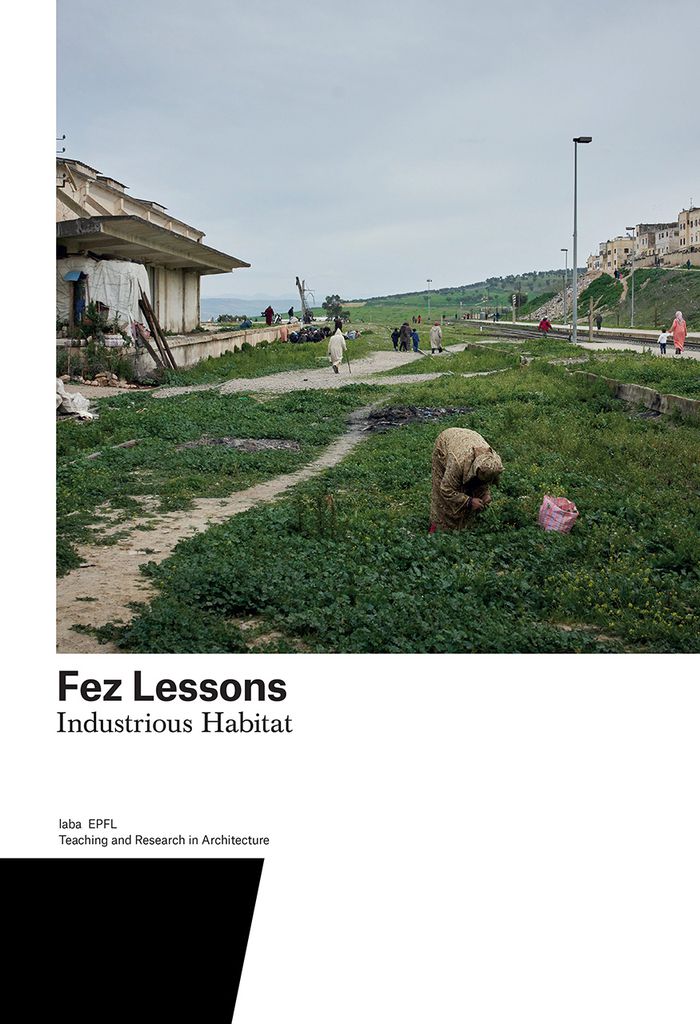
This publication looks at Fez, Morocco's famous former capital and today its second-largest city. Based on a recent research program conducted by EPFL's Laboratory Basel (laba), it investigates how these clashes have marked the city's socioeconomic structure and urban fabric, and whether or not it offers alternative and relevant means of human association and community. Given the growing stream of large-scale international investment, the constant enticement of tourism, and a worldwide revival of nationalism, Laba's student's and researchers were looking for tiny cues, nagging doubts, and signs of the fusion between form and life, raising questions about identity, authenticity, tradition, the globalisation of culture, and the use of local resources. Their findings are visualised in the book in striking images, graphics and maps. Students' proposals for architectural interventions addressing these issues are presented through images and plans.
Fez Lessons: industrious habitat
Actions:
Prix:
$71.95
(disponible sur commande)
Résumé:
This publication looks at Fez, Morocco's famous former capital and today its second-largest city. Based on a recent research program conducted by EPFL's Laboratory Basel (laba), it investigates how these clashes have marked the city's socioeconomic structure and urban fabric, and whether or not it offers alternative and relevant means of human association and community. Given the growing stream of large-scale international investment, the constant enticement of tourism, and a worldwide revival of nationalism, Laba's student's and researchers were looking for tiny cues, nagging doubts, and signs of the fusion between form and life, raising questions about identity, authenticity, tradition, the globalisation of culture, and the use of local resources. Their findings are visualised in the book in striking images, graphics and maps. Students' proposals for architectural interventions addressing these issues are presented through images and plans.
Classification:
livres
livres
Publication:
juin 2020
juin 2020
Classification:
périodiques
périodiques
Titre:
Architecture bulletin 04
Architecture bulletin 04
Actions:
Prix:
$30.00
(disponible sur commande)
Résumé:
Published twice a year, the Netherlands Architecture Institute's house journal "Architecture Bulletin" presents essays (in word and image) on the built environment of today, yesterday and tomorrow-subjective arguments complemented by personal reflection, but always emphasizing the essay as an appropriate form for the consideration of architecture. These essays originate(...)
$30.00
(disponible sur commande)
Résumé:
Published twice a year, the Netherlands Architecture Institute's house journal "Architecture Bulletin" presents essays (in word and image) on the built environment of today, yesterday and tomorrow-subjective arguments complemented by personal reflection, but always emphasizing the essay as an appropriate form for the consideration of architecture. These essays originate(...)
Titre:
Architecture bulletin 04
Actions:
Prix:
$30.00
(disponible sur commande)
Résumé:
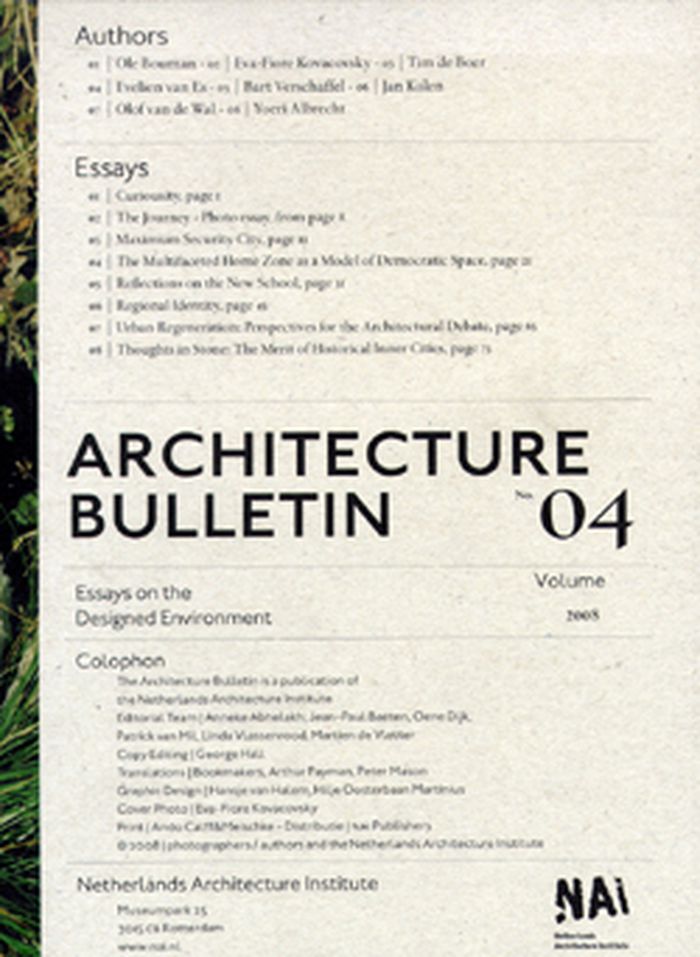
Published twice a year, the Netherlands Architecture Institute's house journal "Architecture Bulletin" presents essays (in word and image) on the built environment of today, yesterday and tomorrow-subjective arguments complemented by personal reflection, but always emphasizing the essay as an appropriate form for the consideration of architecture. These essays originate from design disciplines such as architecture, urban planning and landscape architecture, or from architecture historians, philosophers, artists and sociologists. "Architecture Bulletin" is about the ways that we arrive at judgments about architecture, whether we encounter them through the media or streamlined in a scale model. It is also about the ways in which architecture can imbue our identities and behaviors with meaning, in metropolises like Hong Kong, postcolonial nations like Indonesia or at home, wherever that may be. These essays are about every aspect of architecture's impact in our world today.
Architecture bulletin 04
Actions:
Prix:
$30.00
(disponible sur commande)
Résumé:
Published twice a year, the Netherlands Architecture Institute's house journal "Architecture Bulletin" presents essays (in word and image) on the built environment of today, yesterday and tomorrow-subjective arguments complemented by personal reflection, but always emphasizing the essay as an appropriate form for the consideration of architecture. These essays originate from design disciplines such as architecture, urban planning and landscape architecture, or from architecture historians, philosophers, artists and sociologists. "Architecture Bulletin" is about the ways that we arrive at judgments about architecture, whether we encounter them through the media or streamlined in a scale model. It is also about the ways in which architecture can imbue our identities and behaviors with meaning, in metropolises like Hong Kong, postcolonial nations like Indonesia or at home, wherever that may be. These essays are about every aspect of architecture's impact in our world today.
Classification:
périodiques
périodiques
Publication:
juillet 2008, Rotterdam
juillet 2008, Rotterdam
Sujet:
Revues
Revues
Classification:
livres
livres
Titre:
Dynamics and de-realisation
Dynamics and de-realisation
Actions:
Prix:
$34.00
(disponible sur commande)
Résumé:
The collection of architectural design projects included provides an overview of philosophical theories that focus on what appears to be real, presenting a range of methodologies and a set of tools for addressing this discourse. The contents have been divided into 5 sections, each chapter developing a design criteria process involving one of the following areas in(...)
$34.00
(disponible sur commande)
Résumé:
The collection of architectural design projects included provides an overview of philosophical theories that focus on what appears to be real, presenting a range of methodologies and a set of tools for addressing this discourse. The contents have been divided into 5 sections, each chapter developing a design criteria process involving one of the following areas in(...)
Titre:
Dynamics and de-realisation
Actions:
Prix:
$34.00
(disponible sur commande)
Résumé:
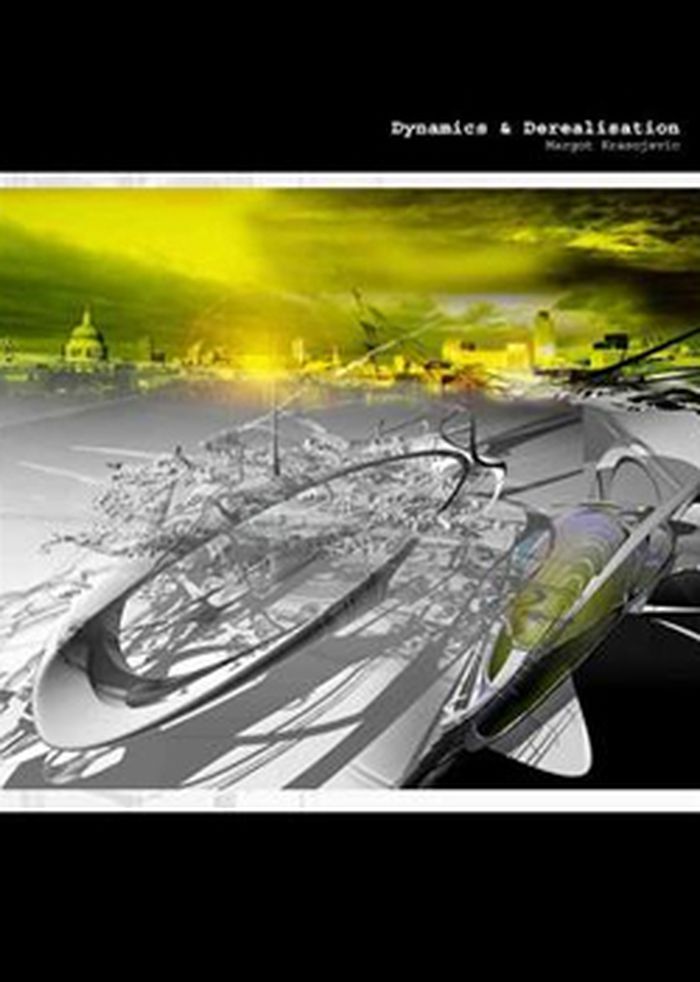
The collection of architectural design projects included provides an overview of philosophical theories that focus on what appears to be real, presenting a range of methodologies and a set of tools for addressing this discourse. The contents have been divided into 5 sections, each chapter developing a design criteria process involving one of the following areas in philosophy: hyperreality and simulacra within postmodern philosophy, drawing on Jean Baudrillard; semiology and the authority of form; complexity and noumenon/non-Euclidean geometry; the exhausted confines of structuralist theory according to Roland Barthes; and lastly authenticity, with the aim to describe how we perceive reality and the urban fabric. Incorporating the ontological potential of space into a design process and part of a set of design criteria will help develop an understanding of the conditions under which forms and design criteria are generated.
Dynamics and de-realisation
Actions:
Prix:
$34.00
(disponible sur commande)
Résumé:
The collection of architectural design projects included provides an overview of philosophical theories that focus on what appears to be real, presenting a range of methodologies and a set of tools for addressing this discourse. The contents have been divided into 5 sections, each chapter developing a design criteria process involving one of the following areas in philosophy: hyperreality and simulacra within postmodern philosophy, drawing on Jean Baudrillard; semiology and the authority of form; complexity and noumenon/non-Euclidean geometry; the exhausted confines of structuralist theory according to Roland Barthes; and lastly authenticity, with the aim to describe how we perceive reality and the urban fabric. Incorporating the ontological potential of space into a design process and part of a set of design criteria will help develop an understanding of the conditions under which forms and design criteria are generated.
Classification:
livres
livres
Publication:
octobre 2011
octobre 2011
Sujet:
Architecture numérique
Architecture numérique
Classification:
livres
livres
Actions:
Prix:
$112.00
(disponible sur commande)
Résumé:
Landscape architecture is a unique discipline where art, nature and the city converge and enter into an exciting dialogue. In the USA, the country of vast open plains and spacious towns, the great tradition of life in confrontation with nature plays an equally (...)
$112.00
(disponible sur commande)
Résumé:
Landscape architecture is a unique discipline where art, nature and the city converge and enter into an exciting dialogue. In the USA, the country of vast open plains and spacious towns, the great tradition of life in confrontation with nature plays an equally (...)
Titre:
On the nature of things : contemporary american landscape architecture
Actions:
Prix:
$112.00
(disponible sur commande)
Résumé:
Landscape architecture is a unique discipline where art, nature and the city converge and enter into an exciting dialogue. In the USA, the country of vast open plains and spacious towns, the great tradition of life in confrontation with nature plays an equally important role in landscape architecture as the acute problems of the built environment or social problems within the community. Design methods and practise in landscape architecture form the focus of this book, complemented by an analysis of the theoretical aspects of the subject. Perceptive portraits of 13 offices span the whole breadth of landscape design, from the post-ecological utopia of Michael Sorkin (New York/Vienna) to the urban pragmatism of the Roma Design group (San Francisco), from the ecological approach of the Philadelphia group Andropogon, also active in Japan, to the minimalist landscape art of Kathryn Gustafson (Seattle/London/Paris).
On the nature of things : contemporary american landscape architecture
Actions:
Prix:
$112.00
(disponible sur commande)
Résumé:
Landscape architecture is a unique discipline where art, nature and the city converge and enter into an exciting dialogue. In the USA, the country of vast open plains and spacious towns, the great tradition of life in confrontation with nature plays an equally important role in landscape architecture as the acute problems of the built environment or social problems within the community. Design methods and practise in landscape architecture form the focus of this book, complemented by an analysis of the theoretical aspects of the subject. Perceptive portraits of 13 offices span the whole breadth of landscape design, from the post-ecological utopia of Michael Sorkin (New York/Vienna) to the urban pragmatism of the Roma Design group (San Francisco), from the ecological approach of the Philadelphia group Andropogon, also active in Japan, to the minimalist landscape art of Kathryn Gustafson (Seattle/London/Paris).
Classification:
livres
livres
Publication:
janvier 2001, Basel
janvier 2001, Basel
Sujet:
Jardins
Jardins
Classification:
périodiques
périodiques
Actions:
Prix:
$45.00
(disponible sur commande)
Résumé:
Known until recently for such public facilities as the Zamora Municipal Museum, the Castellón Fine Arts Museum and the León Auditorium, over the last few years Mansilla + Tuñón have developed a number of projects in which urban scale and the problems of inhabiting in the contemporary city assume more and more importance. In this issue of 2G we present the (almost)(...)
$45.00
(disponible sur commande)
Résumé:
Known until recently for such public facilities as the Zamora Municipal Museum, the Castellón Fine Arts Museum and the León Auditorium, over the last few years Mansilla + Tuñón have developed a number of projects in which urban scale and the problems of inhabiting in the contemporary city assume more and more importance. In this issue of 2G we present the (almost)(...)
Titre:
2G 27 : Mansilla+Tunon, recent work
Actions:
Prix:
$45.00
(disponible sur commande)
Résumé:
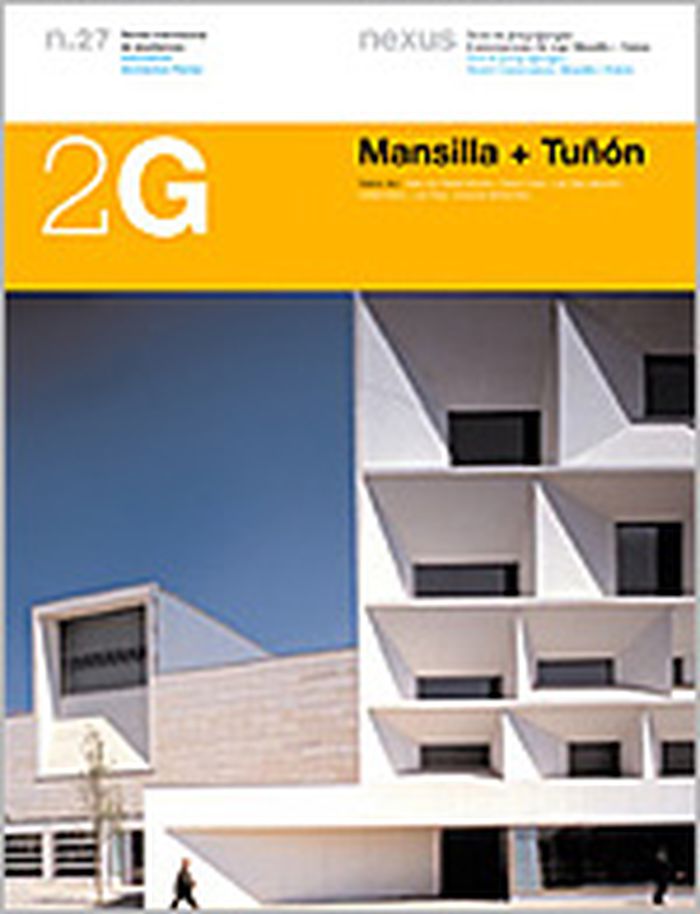
Known until recently for such public facilities as the Zamora Municipal Museum, the Castellón Fine Arts Museum and the León Auditorium, over the last few years Mansilla + Tuñón have developed a number of projects in which urban scale and the problems of inhabiting in the contemporary city assume more and more importance. In this issue of 2G we present the (almost) complete works of these Madrid architects, works grouped around the basic ideas which define their projects, namely memory and the city, system and restrictions, sameness and difference, and lastly trace and landscape. These concepts are not watertight entities, however, but are present in each and every one of their designs as intersecting references, and they enable us to dissect the architects' way of thinking and influencing reality. Similarly, the articles accompanying the presentation of their buildings scrutinise in kaleidoscopic form the modus operandi of their work.
2G 27 : Mansilla+Tunon, recent work
Actions:
Prix:
$45.00
(disponible sur commande)
Résumé:
Known until recently for such public facilities as the Zamora Municipal Museum, the Castellón Fine Arts Museum and the León Auditorium, over the last few years Mansilla + Tuñón have developed a number of projects in which urban scale and the problems of inhabiting in the contemporary city assume more and more importance. In this issue of 2G we present the (almost) complete works of these Madrid architects, works grouped around the basic ideas which define their projects, namely memory and the city, system and restrictions, sameness and difference, and lastly trace and landscape. These concepts are not watertight entities, however, but are present in each and every one of their designs as intersecting references, and they enable us to dissect the architects' way of thinking and influencing reality. Similarly, the articles accompanying the presentation of their buildings scrutinise in kaleidoscopic form the modus operandi of their work.
Classification:
périodiques
périodiques
Publication:
octobre 2003, Barcelona
octobre 2003, Barcelona
Sujet:
Revues
Revues
Classification:
livres
livres
Prix:
$40.00
(disponible sur commande)
Résumé:
The book focuses on ways to reinvent public housing in New York City through a series of design projects from Yale School of Architecture that integrate form and provide social programs for the residents. The students investigated the relationship between housing, equity, health, and community. The students developed comprehensive frameworks for the Washington Houses,(...)
$40.00
(disponible sur commande)
Résumé:
The book focuses on ways to reinvent public housing in New York City through a series of design projects from Yale School of Architecture that integrate form and provide social programs for the residents. The students investigated the relationship between housing, equity, health, and community. The students developed comprehensive frameworks for the Washington Houses,(...)
Sujet:
L'humain et la ville
L'humain et la ville
Publication:
décembre 2023
décembre 2023
Titre:
Housing redux: Alternatives for NYC's housing projects
Actions:
Prix:
$40.00
(disponible sur commande)
Résumé:
The book focuses on ways to reinvent public housing in New York City through a series of design projects from Yale School of Architecture that integrate form and provide social programs for the residents. The students investigated the relationship between housing, equity, health, and community. The students developed comprehensive frameworks for the Washington Houses, three connected superblocks equivalent to seven New York City blocks. The concepts focused on restitching the project into the city street grid and sought ways to add new built fabric that would allow the Modernist towers- in-the park project to connect with public streets. Some found ways to keep the superblock with interventions to support the community at different scales and family structures. Urban farms and community facilities as well as recreation spaces were included in order to have a range of interventions for care, health, and equity that could reorient public housing.
Housing redux: Alternatives for NYC's housing projects
Actions:
Prix:
$40.00
(disponible sur commande)
Résumé:
The book focuses on ways to reinvent public housing in New York City through a series of design projects from Yale School of Architecture that integrate form and provide social programs for the residents. The students investigated the relationship between housing, equity, health, and community. The students developed comprehensive frameworks for the Washington Houses, three connected superblocks equivalent to seven New York City blocks. The concepts focused on restitching the project into the city street grid and sought ways to add new built fabric that would allow the Modernist towers- in-the park project to connect with public streets. Some found ways to keep the superblock with interventions to support the community at different scales and family structures. Urban farms and community facilities as well as recreation spaces were included in order to have a range of interventions for care, health, and equity that could reorient public housing.
Classification:
livres
livres
Publication:
décembre 2023
décembre 2023
Sujet:
L'humain et la ville
L'humain et la ville
Classification:
livres
livres
Actions:
Prix:
$45.00
(disponible sur commande)
Résumé:
"Emerging Nature" documents the work of the Argentinian architect, graphic designer and industrial designer Emilio Ambasz. The publication discusses his projects ranging from buildings and urban gardens including green facade vertical gardens to exhibition designs and everyday objects. The comprehensive volume features essays by various experts, interviews, a wealth of(...)
$45.00
(disponible sur commande)
Résumé:
"Emerging Nature" documents the work of the Argentinian architect, graphic designer and industrial designer Emilio Ambasz. The publication discusses his projects ranging from buildings and urban gardens including green facade vertical gardens to exhibition designs and everyday objects. The comprehensive volume features essays by various experts, interviews, a wealth of(...)
Titre:
Emilio Ambasz : emerging nature, precursor of architecture and design
Actions:
Prix:
$45.00
(disponible sur commande)
Résumé:
"Emerging Nature" documents the work of the Argentinian architect, graphic designer and industrial designer Emilio Ambasz. The publication discusses his projects ranging from buildings and urban gardens including green facade vertical gardens to exhibition designs and everyday objects. The comprehensive volume features essays by various experts, interviews, a wealth of color photographs and drawings. Ambasz’s main concern is to integrate nature and construction into architectural design, which is why he is regarded as one of the most important pioneers of Green Architecture. In his work a combination of landscape and architecture emerges, in which his respect for the environment and ecological sustainability becomes clear. A prime example of this is the Fukuoka Prefectural International Hall in Japan: a building that houses more than 100,000 m2 of exhibition spaces, theaters and offices is also an open green area in the form of a hanging garden.
Emilio Ambasz : emerging nature, precursor of architecture and design
Actions:
Prix:
$45.00
(disponible sur commande)
Résumé:
"Emerging Nature" documents the work of the Argentinian architect, graphic designer and industrial designer Emilio Ambasz. The publication discusses his projects ranging from buildings and urban gardens including green facade vertical gardens to exhibition designs and everyday objects. The comprehensive volume features essays by various experts, interviews, a wealth of color photographs and drawings. Ambasz’s main concern is to integrate nature and construction into architectural design, which is why he is regarded as one of the most important pioneers of Green Architecture. In his work a combination of landscape and architecture emerges, in which his respect for the environment and ecological sustainability becomes clear. A prime example of this is the Fukuoka Prefectural International Hall in Japan: a building that houses more than 100,000 m2 of exhibition spaces, theaters and offices is also an open green area in the form of a hanging garden.
Classification:
livres
livres
Publication:
mars 2017
mars 2017
Sujet:
Architecture, monographies
Architecture, monographies
Classification:
livres
livres
Actions:
Prix:
$32.95
(disponible sur commande)
Résumé:
Earth Moves, Bernard Cache's first major work, conceptualizes a series of architectural images as vehicles for two important developments. First, he offers a new understanding of the architectural image itself. Following Gilles Deleuze and Henri Bergson, he develops an account of the image that is nonrepresentational and constructive—images as constituents of a primary,(...)
$32.95
(disponible sur commande)
Résumé:
Earth Moves, Bernard Cache's first major work, conceptualizes a series of architectural images as vehicles for two important developments. First, he offers a new understanding of the architectural image itself. Following Gilles Deleuze and Henri Bergson, he develops an account of the image that is nonrepresentational and constructive—images as constituents of a primary,(...)
Titre:
Earth moves: the furnishing of territories
Actions:
Prix:
$32.95
(disponible sur commande)
Résumé:
Earth Moves, Bernard Cache's first major work, conceptualizes a series of architectural images as vehicles for two important developments. First, he offers a new understanding of the architectural image itself. Following Gilles Deleuze and Henri Bergson, he develops an account of the image that is nonrepresentational and constructive—images as constituents of a primary, image world, of which subjectivity itself is a special kind of image. Second, Cache redefines architecture beyond building proper to include cinematic, pictoral, and other framings. Complementary to this classification, Cache offers what is to date the only Deleuzean architectural development of the "fold," a form and concept that has become important over the last few years. For Cache, as for Deleuze, what is significant about the fold is that it provides a way to rethink the relationship between interior and exterior, between past and present, and between architecture and the urban.
Earth moves: the furnishing of territories
Actions:
Prix:
$32.95
(disponible sur commande)
Résumé:
Earth Moves, Bernard Cache's first major work, conceptualizes a series of architectural images as vehicles for two important developments. First, he offers a new understanding of the architectural image itself. Following Gilles Deleuze and Henri Bergson, he develops an account of the image that is nonrepresentational and constructive—images as constituents of a primary, image world, of which subjectivity itself is a special kind of image. Second, Cache redefines architecture beyond building proper to include cinematic, pictoral, and other framings. Complementary to this classification, Cache offers what is to date the only Deleuzean architectural development of the "fold," a form and concept that has become important over the last few years. For Cache, as for Deleuze, what is significant about the fold is that it provides a way to rethink the relationship between interior and exterior, between past and present, and between architecture and the urban.
Classification:
livres
livres
Publication:
janvier 1995
janvier 1995
Classification:
livres
livres
Titre:
Responsive environments. An Interdisciplinary Manifesto on Design, Technology and the Human Experien
Responsive environments. An Interdisciplinary Manifesto on Design, Technology and the Human Experien
Actions:
Prix:
$54.95
(disponible sur commande)
Résumé:
The entanglement of physical contexts with digital environments is constantly changing our relationship with the surrounding space and creating new hybrid experiences. These transformations pose complex design challenges and yet offer novel opportunities for the understanding and development of human-centered built environments. Drawing from a 5-year design research(...)
$54.95
(disponible sur commande)
Résumé:
The entanglement of physical contexts with digital environments is constantly changing our relationship with the surrounding space and creating new hybrid experiences. These transformations pose complex design challenges and yet offer novel opportunities for the understanding and development of human-centered built environments. Drawing from a 5-year design research(...)
Titre:
Responsive environments. An Interdisciplinary Manifesto on Design, Technology and the Human Experien
Actions:
Prix:
$54.95
(disponible sur commande)
Résumé:
The entanglement of physical contexts with digital environments is constantly changing our relationship with the surrounding space and creating new hybrid experiences. These transformations pose complex design challenges and yet offer novel opportunities for the understanding and development of human-centered built environments. Drawing from a 5-year design research collaboration between the REAL Lab at Harvard GSD and the University of Bergamo, this book unfolds the experiential facets of our technologically-mediated relationship with space in the fields of architecture, urbanism and art. The book attempts to describe what makes an environment "responsive" in the form of a design manifesto, introducing ten attributes or principles at both methodological and experiential levels. Critically articulated from the perspective of leading experts, scholars and professionals, the ideas explored are unpacked through speculative urban visions and design concepts at different timeframes, contexts and scales ranging from smart artifacts to smart cities.
Responsive environments. An Interdisciplinary Manifesto on Design, Technology and the Human Experien
Actions:
Prix:
$54.95
(disponible sur commande)
Résumé:
The entanglement of physical contexts with digital environments is constantly changing our relationship with the surrounding space and creating new hybrid experiences. These transformations pose complex design challenges and yet offer novel opportunities for the understanding and development of human-centered built environments. Drawing from a 5-year design research collaboration between the REAL Lab at Harvard GSD and the University of Bergamo, this book unfolds the experiential facets of our technologically-mediated relationship with space in the fields of architecture, urbanism and art. The book attempts to describe what makes an environment "responsive" in the form of a design manifesto, introducing ten attributes or principles at both methodological and experiential levels. Critically articulated from the perspective of leading experts, scholars and professionals, the ideas explored are unpacked through speculative urban visions and design concepts at different timeframes, contexts and scales ranging from smart artifacts to smart cities.
Classification:
livres
livres
Publication:
août 2021
août 2021
Sujet:
Théorie de l’architecture
Théorie de l’architecture


