


36938 Résultats
Niveau de description archivistique:
Projet
Projet
Numéro de référence:
AP164.S1.2000.D4
Description:
The project series documents a landscaping competition in 2002 where the firm proposed their evaluation for the transformation of the old recycling facilities for solid residues in Madrid into an urban public space. The firm identified this project as number 128. Abalos & Herreros worked in collaboration with Urbaser and F.C.C. Documenting the project are conceptual, presentation, studies, project descriptions, reference, digital and graphic materials.
AP164.S1.2000.D4
Description:
The project series documents a landscaping competition in 2002 where the firm proposed their evaluation for the transformation of the old recycling facilities for solid residues in Madrid into an urban public space. The firm identified this project as number 128. Abalos & Herreros worked in collaboration with Urbaser and F.C.C. Documenting the project are conceptual, presentation, studies, project descriptions, reference, digital and graphic materials.
Personnes et institutions:
Date:
2000
2000
Titre:
Jardines Valdemingómez, Madrid, Spain (2000)
Actions:
AP164.S1.2000.D4
Description:
The project series documents a landscaping competition in 2002 where the firm proposed their evaluation for the transformation of the old recycling facilities for solid residues in Madrid into an urban public space. The firm identified this project as number 128. Abalos & Herreros worked in collaboration with Urbaser and F.C.C. Documenting the project are conceptual, presentation, studies, project descriptions, reference, digital and graphic materials.
Jardines Valdemingómez, Madrid, Spain (2000)
Actions:
AP164.S1.2000.D4
Description:
The project series documents a landscaping competition in 2002 where the firm proposed their evaluation for the transformation of the old recycling facilities for solid residues in Madrid into an urban public space. The firm identified this project as number 128. Abalos & Herreros worked in collaboration with Urbaser and F.C.C. Documenting the project are conceptual, presentation, studies, project descriptions, reference, digital and graphic materials.
Niveau de description archivistique:
Project
Project
Date:
2000
2000
Personnes et institutions:
Classification:
archives
Niveau de description archivistique:
Fonds
archives
Niveau de description archivistique:
Fonds
Titre:
Pierlucio Pellissier fonds
Pierlucio Pellissier fonds
Numéro de référence:
AP215
Résumé:
Le fonds Pierlucio Pellissier, 1946-2020, documente les projets de conservation et de commissariat entrepris par Pierlucio Pellissier, architecte, conservateur et professeur, entre 1996 et 2003. Le fonds comprend des documents textuels et photographiques touchant à trois projets distincts : les restaurations de deux églises décorées par l’architecte et artiste Guido Nincheri (1885-1973), qui en assura également le design architectural, soit Sainte-Amélie à Baie-Comeau, Québec (1938-1939) et Notre-Dame-de-la-Défense, Montréal (1919), et le commissariat d’une exposition sur l’œuvre de Guido Nincheri tenue à Montréal en 2001. Le travail de conservation et de restauration des fresques de Nincheri, qui ornent les deux églises, forme la plus grande partie de la documentation, mettant en lumière la spécificité du médium et les problématiques de la conservation d’œuvres d’art à portée publique.
AP215
Résumé:
Le fonds Pierlucio Pellissier, 1946-2020, documente les projets de conservation et de commissariat entrepris par Pierlucio Pellissier, architecte, conservateur et professeur, entre 1996 et 2003. Le fonds comprend des documents textuels et photographiques touchant à trois projets distincts : les restaurations de deux églises décorées par l’architecte et artiste Guido Nincheri (1885-1973), qui en assura également le design architectural, soit Sainte-Amélie à Baie-Comeau, Québec (1938-1939) et Notre-Dame-de-la-Défense, Montréal (1919), et le commissariat d’une exposition sur l’œuvre de Guido Nincheri tenue à Montréal en 2001. Le travail de conservation et de restauration des fresques de Nincheri, qui ornent les deux églises, forme la plus grande partie de la documentation, mettant en lumière la spécificité du médium et les problématiques de la conservation d’œuvres d’art à portée publique.
Personnes et institutions:
Date:
1946-2020
1946-2020
Titre:
Pierlucio Pellissier fonds
Actions:
AP215
Résumé:
Le fonds Pierlucio Pellissier, 1946-2020, documente les projets de conservation et de commissariat entrepris par Pierlucio Pellissier, architecte, conservateur et professeur, entre 1996 et 2003. Le fonds comprend des documents textuels et photographiques touchant à trois projets distincts : les restaurations de deux églises décorées par l’architecte et artiste Guido Nincheri (1885-1973), qui en assura également le design architectural, soit Sainte-Amélie à Baie-Comeau, Québec (1938-1939) et Notre-Dame-de-la-Défense, Montréal (1919), et le commissariat d’une exposition sur l’œuvre de Guido Nincheri tenue à Montréal en 2001. Le travail de conservation et de restauration des fresques de Nincheri, qui ornent les deux églises, forme la plus grande partie de la documentation, mettant en lumière la spécificité du médium et les problématiques de la conservation d’œuvres d’art à portée publique.
Pierlucio Pellissier fonds
Actions:
AP215
Résumé:
Le fonds Pierlucio Pellissier, 1946-2020, documente les projets de conservation et de commissariat entrepris par Pierlucio Pellissier, architecte, conservateur et professeur, entre 1996 et 2003. Le fonds comprend des documents textuels et photographiques touchant à trois projets distincts : les restaurations de deux églises décorées par l’architecte et artiste Guido Nincheri (1885-1973), qui en assura également le design architectural, soit Sainte-Amélie à Baie-Comeau, Québec (1938-1939) et Notre-Dame-de-la-Défense, Montréal (1919), et le commissariat d’une exposition sur l’œuvre de Guido Nincheri tenue à Montréal en 2001. Le travail de conservation et de restauration des fresques de Nincheri, qui ornent les deux églises, forme la plus grande partie de la documentation, mettant en lumière la spécificité du médium et les problématiques de la conservation d’œuvres d’art à portée publique.
Classification:
archives
Niveau de description archivistique:
Fonds
archives
Niveau de description archivistique:
Fonds
Date:
1946-2020
1946-2020
Personnes et institutions:
Classification:
expositions
expositions
Actions:
Description:
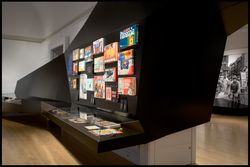
1973 : Désolé, plus d’essence analyse l’innovation architecturale à laquelle a donné naissance la crise énergétique de 1973, alors que la valeur du baril de pétrole augmentait de façon exponentielle, donnant lieu à des bouleversements économiques, politiques et sociaux dans de nombreux pays. Présentant plus de 350 objets – dessins d’architecture, photographies,(...)
1973 : Désolé, plus d’essence analyse l’innovation architecturale à laquelle a donné naissance la crise énergétique de 1973, alors que la valeur du baril de pétrole augmentait de façon exponentielle, donnant lieu à des bouleversements économiques, politiques et sociaux dans de nombreux pays. Présentant plus de 350 objets – dessins d’architecture, photographies,(...)
Localisation:
Salles principales Mot(s)-clé(s):
1973, désolé plus d'essence, crise du pétrole, énergie, environnement
Salles principales Mot(s)-clé(s):
1973, désolé plus d'essence, crise du pétrole, énergie, environnement
Date:
7 novembre 2007 au 20 avril 2008
7 novembre 2007 au 20 avril 2008
Titre:
1973 : désolé, plus d’essence
Actions:
Description:
1973 : Désolé, plus d’essence analyse l’innovation architecturale à laquelle a donné naissance la crise énergétique de 1973, alors que la valeur du baril de pétrole augmentait de façon exponentielle, donnant lieu à des bouleversements économiques, politiques et sociaux dans de nombreux pays. Présentant plus de 350 objets – dessins d’architecture, photographies,(...)
1973 : désolé, plus d’essence
Actions:
Description:
1973 : Désolé, plus d’essence analyse l’innovation architecturale à laquelle a donné naissance la crise énergétique de 1973, alors que la valeur du baril de pétrole augmentait de façon exponentielle, donnant lieu à des bouleversements économiques, politiques et sociaux dans de nombreux pays. Présentant plus de 350 objets – dessins d’architecture, photographies,(...)
Classification:
expositions
expositions
Date:
7 novembre 2007 au
20 avril 2008
7 novembre 2007 au
20 avril 2008
Localisation:
Salles principales Mot(s)-clé(s):
1973, désolé plus d'essence, crise du pétrole, énergie, environnement
Salles principales Mot(s)-clé(s):
1973, désolé plus d'essence, crise du pétrole, énergie, environnement
Classification:
documents textuels
documents textuels
Numéro de référence:
DR2012:0015:025:017
Description:
File containing documents in English, including newspaper clippings related to municipal construction projects in Montreal, and correspondence related to the Royal Architectural Institute of Canada. Also included is a call for public art design submissions for the McGill University Health Centre, Glen Site. Original folder inscribed on front label in graphite: POTENTIAL PROJECTS
DR2012:0015:025:017
Description:
File containing documents in English, including newspaper clippings related to municipal construction projects in Montreal, and correspondence related to the Royal Architectural Institute of Canada. Also included is a call for public art design submissions for the McGill University Health Centre, Glen Site. Original folder inscribed on front label in graphite: POTENTIAL PROJECTS
Personnes et institutions:
Date:
2011-2012
2011-2012
Titre:
Newspaper clippings, correspondence, call for public art design submissions, McGill University Health Centre, Glen Site, Montréal, Québec
Actions:
DR2012:0015:025:017
Description:
File containing documents in English, including newspaper clippings related to municipal construction projects in Montreal, and correspondence related to the Royal Architectural Institute of Canada. Also included is a call for public art design submissions for the McGill University Health Centre, Glen Site. Original folder inscribed on front label in graphite: POTENTIAL PROJECTS
Newspaper clippings, correspondence, call for public art design submissions, McGill University Health Centre, Glen Site, Montréal, Québec
Actions:
DR2012:0015:025:017
Description:
File containing documents in English, including newspaper clippings related to municipal construction projects in Montreal, and correspondence related to the Royal Architectural Institute of Canada. Also included is a call for public art design submissions for the McGill University Health Centre, Glen Site. Original folder inscribed on front label in graphite: POTENTIAL PROJECTS
Classification:
documents textuels
documents textuels
Date:
2011-2012
2011-2012
Personnes et institutions:
Niveau de description archivistique:
Projet
Projet
Numéro de référence:
AP173.S2.2005.D2
Description:
Series documents Lars Spuybroek's project for the invited competition for It, in Flims, Switzerlands, an interactive public artword for the City of Flims. Material in this series was produced around 2005. The series contains reprographic copies of presentation drawings and a presentation booklet of the project. This project may also include digital design material, which has yet to be processed and which will available for consultation in 2017.
AP173.S2.2005.D2
Description:
Series documents Lars Spuybroek's project for the invited competition for It, in Flims, Switzerlands, an interactive public artword for the City of Flims. Material in this series was produced around 2005. The series contains reprographic copies of presentation drawings and a presentation booklet of the project. This project may also include digital design material, which has yet to be processed and which will available for consultation in 2017.
Personnes et institutions:
Date:
ca. 2005
ca. 2005
Titre:
It, Flims, Switzerlands (2005)
Actions:
AP173.S2.2005.D2
Description:
Series documents Lars Spuybroek's project for the invited competition for It, in Flims, Switzerlands, an interactive public artword for the City of Flims. Material in this series was produced around 2005. The series contains reprographic copies of presentation drawings and a presentation booklet of the project. This project may also include digital design material, which has yet to be processed and which will available for consultation in 2017.
It, Flims, Switzerlands (2005)
Actions:
AP173.S2.2005.D2
Description:
Series documents Lars Spuybroek's project for the invited competition for It, in Flims, Switzerlands, an interactive public artword for the City of Flims. Material in this series was produced around 2005. The series contains reprographic copies of presentation drawings and a presentation booklet of the project. This project may also include digital design material, which has yet to be processed and which will available for consultation in 2017.
Niveau de description archivistique:
Project
Project
Date:
ca. 2005
ca. 2005
Personnes et institutions:
Niveau de description archivistique:
Projet
Projet
Numéro de référence:
AP173.S2.2007.D1
Description:
Series documents Lars Spuybroek's project for the invited competition for the Phantom Tower near Werkendam, Netherlands, a public artwork at the Fort Altena. Lars Spuybroek won the First prize for his project. Material in this series was produced around 2007. The series contains a presentation booklet of the project. This project may also include digital design material, which has yet to be processed and which will available for consultation in 2017.
AP173.S2.2007.D1
Description:
Series documents Lars Spuybroek's project for the invited competition for the Phantom Tower near Werkendam, Netherlands, a public artwork at the Fort Altena. Lars Spuybroek won the First prize for his project. Material in this series was produced around 2007. The series contains a presentation booklet of the project. This project may also include digital design material, which has yet to be processed and which will available for consultation in 2017.
Personnes et institutions:
Date:
ca. 2007
ca. 2007
Titre:
Phantom Tower, Werkendam, Netherlands (2007)
Actions:
AP173.S2.2007.D1
Description:
Series documents Lars Spuybroek's project for the invited competition for the Phantom Tower near Werkendam, Netherlands, a public artwork at the Fort Altena. Lars Spuybroek won the First prize for his project. Material in this series was produced around 2007. The series contains a presentation booklet of the project. This project may also include digital design material, which has yet to be processed and which will available for consultation in 2017.
Phantom Tower, Werkendam, Netherlands (2007)
Actions:
AP173.S2.2007.D1
Description:
Series documents Lars Spuybroek's project for the invited competition for the Phantom Tower near Werkendam, Netherlands, a public artwork at the Fort Altena. Lars Spuybroek won the First prize for his project. Material in this series was produced around 2007. The series contains a presentation booklet of the project. This project may also include digital design material, which has yet to be processed and which will available for consultation in 2017.
Niveau de description archivistique:
Project
Project
Date:
ca. 2007
ca. 2007
Personnes et institutions:
Niveau de description archivistique:
Série(s)
Série(s)
Numéro de référence:
CP138.S2
Description:
Series documents the life of Anne Alpert (1914-1997), Gordon Matta-Clark's (1943-1978) mother, dating from her early childhood to her death. It includes correspondence, memorabilia, photographs, and published reviews and catalogues. The material also relates to the public and private life of her twin sons, John Sebastian Matta (1943-1976) and Matta-Clark, their father Roberto Matta (1911 or 1912-2002), and others. Series contains three sub-series.
CP138.S2
Description:
Series documents the life of Anne Alpert (1914-1997), Gordon Matta-Clark's (1943-1978) mother, dating from her early childhood to her death. It includes correspondence, memorabilia, photographs, and published reviews and catalogues. The material also relates to the public and private life of her twin sons, John Sebastian Matta (1943-1976) and Matta-Clark, their father Roberto Matta (1911 or 1912-2002), and others. Series contains three sub-series.
Personnes et institutions:
Date:
1914-1997
1914-1997
Titre:
Anne Alpert's Textual Records and Photographs
Actions:
CP138.S2
Description:
Series documents the life of Anne Alpert (1914-1997), Gordon Matta-Clark's (1943-1978) mother, dating from her early childhood to her death. It includes correspondence, memorabilia, photographs, and published reviews and catalogues. The material also relates to the public and private life of her twin sons, John Sebastian Matta (1943-1976) and Matta-Clark, their father Roberto Matta (1911 or 1912-2002), and others. Series contains three sub-series.
Anne Alpert's Textual Records and Photographs
Actions:
CP138.S2
Description:
Series documents the life of Anne Alpert (1914-1997), Gordon Matta-Clark's (1943-1978) mother, dating from her early childhood to her death. It includes correspondence, memorabilia, photographs, and published reviews and catalogues. The material also relates to the public and private life of her twin sons, John Sebastian Matta (1943-1976) and Matta-Clark, their father Roberto Matta (1911 or 1912-2002), and others. Series contains three sub-series.
Niveau de description archivistique:
Series 2
Series 2
Date:
1914-1997
1914-1997
Personnes et institutions:
Classification:
documents textuels
documents textuels
Numéro de référence:
DR2007:0005:202
Description:
This box contains office files documenting the Aronoff Center for Design and Art, University of Cincinnati project. Files mainly contain files on project description and public relations, but also include budget and agreement files, files on coordination meetings as well as a couple of with correspondence files. Original office numbering has also been transcribed on the physical files.
DR2007:0005:202
Description:
This box contains office files documenting the Aronoff Center for Design and Art, University of Cincinnati project. Files mainly contain files on project description and public relations, but also include budget and agreement files, files on coordination meetings as well as a couple of with correspondence files. Original office numbering has also been transcribed on the physical files.
Personnes et institutions:
Date:
1989-1993
1989-1993
Titre:
Project description, public relations, budget, and agreement files, Aronoff Center for Design and Art, University of Cincinnati, Ohio
Actions:
DR2007:0005:202
Description:
This box contains office files documenting the Aronoff Center for Design and Art, University of Cincinnati project. Files mainly contain files on project description and public relations, but also include budget and agreement files, files on coordination meetings as well as a couple of with correspondence files. Original office numbering has also been transcribed on the physical files.
Project description, public relations, budget, and agreement files, Aronoff Center for Design and Art, University of Cincinnati, Ohio
Actions:
DR2007:0005:202
Description:
This box contains office files documenting the Aronoff Center for Design and Art, University of Cincinnati project. Files mainly contain files on project description and public relations, but also include budget and agreement files, files on coordination meetings as well as a couple of with correspondence files. Original office numbering has also been transcribed on the physical files.
Classification:
documents textuels
documents textuels
Date:
1989-1993
1989-1993
Personnes et institutions:
Classification:
photographies
photographies
Actions:
Numéro de référence:
PH2019:0002:001-245
Description:
A collection of 245 photographs covering the entire built work of Robert Mallet-Stevens. The collection comprises views of models, buildings, from residences to public facilities, views of furniture and exhibition displays as well as some portraits. The photographers represented include Albin Salaün, Germaine Krull, Studio Chevojon, Marc Vaux and Laure Albin-Guillot among others.
PH2019:0002:001-245
Description:
A collection of 245 photographs covering the entire built work of Robert Mallet-Stevens. The collection comprises views of models, buildings, from residences to public facilities, views of furniture and exhibition displays as well as some portraits. The photographers represented include Albin Salaün, Germaine Krull, Studio Chevojon, Marc Vaux and Laure Albin-Guillot among others.
Personnes et institutions:
Date:
1920-1939
1920-1939
Titre:
A collection of photographs on the architecture of Robert Mallet-Stevens
Actions:
PH2019:0002:001-245
Description:
A collection of 245 photographs covering the entire built work of Robert Mallet-Stevens. The collection comprises views of models, buildings, from residences to public facilities, views of furniture and exhibition displays as well as some portraits. The photographers represented include Albin Salaün, Germaine Krull, Studio Chevojon, Marc Vaux and Laure Albin-Guillot among others.
A collection of photographs on the architecture of Robert Mallet-Stevens
Actions:
PH2019:0002:001-245
Description:
A collection of 245 photographs covering the entire built work of Robert Mallet-Stevens. The collection comprises views of models, buildings, from residences to public facilities, views of furniture and exhibition displays as well as some portraits. The photographers represented include Albin Salaün, Germaine Krull, Studio Chevojon, Marc Vaux and Laure Albin-Guillot among others.
Classification:
photographies
photographies
Date:
1920-1939
1920-1939
Personnes et institutions:
Classification:
documents textuels
Quantité:
3 textual record(s)
documents textuels
Quantité:
3 textual record(s)
Numéro de référence:
ARCH267589
Description:
This group consists of an official statement from the Ministère des Travaux Publics du Québec about the beginning of construction, a transcript of the speech of the Minister and a project schedule for the Palais des Congrès de Montréal. There is also a set of presentation drawings of the Palais des Congrès (perspectives, site plans, floor plans, sections and elevations).
ARCH267589
Description:
This group consists of an official statement from the Ministère des Travaux Publics du Québec about the beginning of construction, a transcript of the speech of the Minister and a project schedule for the Palais des Congrès de Montréal. There is also a set of presentation drawings of the Palais des Congrès (perspectives, site plans, floor plans, sections and elevations).
Personnes et institutions:
Date:
1979
1979
Titre:
Official statement from the Ministère des Travaux Publics du Québec about the beginning of construction
Actions:
ARCH267589
Description:
This group consists of an official statement from the Ministère des Travaux Publics du Québec about the beginning of construction, a transcript of the speech of the Minister and a project schedule for the Palais des Congrès de Montréal. There is also a set of presentation drawings of the Palais des Congrès (perspectives, site plans, floor plans, sections and elevations).
Official statement from the Ministère des Travaux Publics du Québec about the beginning of construction
Actions:
ARCH267589
Description:
This group consists of an official statement from the Ministère des Travaux Publics du Québec about the beginning of construction, a transcript of the speech of the Minister and a project schedule for the Palais des Congrès de Montréal. There is also a set of presentation drawings of the Palais des Congrès (perspectives, site plans, floor plans, sections and elevations).
Classification:
documents textuels
Quantité:
3 textual record(s)
documents textuels
Quantité:
3 textual record(s)
Date:
1979
1979
Personnes et institutions:


