


2585 Résultats
Classification:
livres
livres
Actions:
Exemplaires:
Description:
159 pages : illustrations (some color), plans ; 21 cm
Description:
159 pages : illustrations (some color), plans ; 21 cm
Auteur:
Sujet:
- Architecture.,
- Architecture and society.,
- Architectural design Social aspects.,
- Architecture Developing countries.,
- Architecture et société.,
- Design architectural Aspect social.,
- Developing countries.,
- Interviews.
Publication:
Pittsburgh : Periscope Publishing, ©2012 (New York : distributed by Prestel Publishing)
Pittsburgh : Periscope Publishing, ©2012 (New York : distributed by Prestel Publishing)
Titre:
Where are the utopian visionaries? : Architecture of social exchange / edited by Hansy Better Barraza.
Actions:
Exemplaires:
Description:
159 pages : illustrations (some color), plans ; 21 cm
Where are the utopian visionaries? : Architecture of social exchange / edited by Hansy Better Barraza.
Actions:
Exemplaires:
Description:
159 pages : illustrations (some color), plans ; 21 cm
Classification:
livres
livres
Publication:
Pittsburgh : Periscope Publishing, ©2012 (New York : distributed by Prestel Publishing)
Pittsburgh : Periscope Publishing, ©2012 (New York : distributed by Prestel Publishing)
Auteur:
Sujet:
- Architecture.,
- Architecture and society.,
- Architectural design Social aspects.,
- Architecture Developing countries.,
- Architecture et société.,
- Design architectural Aspect social.,
- Developing countries.,
- Interviews.
Classification:
livres
livres
Actions:
Exemplaires:
Description:
170 pages : illustrations (some color) ; 22 cm
Description:
170 pages : illustrations (some color) ; 22 cm
Auteur:
- Artificial intelligence (CLOG),
- May, Kyle,,
- Hout, Julia van den,,
- Reidel, Jacob,
Sujet:
- Artificial intelligence Moral and ethical aspects.,
- Artificial intelligence Social aspects.,
- Technology in art.,
- Artificial Intelligence,
- Intelligence artificielle Aspect moral.,
- Intelligence artificielle Aspect social.,
- Technologie dans l'art.,
- artificial intelligence.,
- Essay,
- essays.,
- Essays,
- Essais.
Publication:
[Brooklyn, New York] : CLOG, 2018., ©2018
[Brooklyn, New York] : CLOG, 2018., ©2018
Titre:
Artificial intelligence / Kyle May (editor-in-chief), Julia van den Hout (editor), Jacob Reidel (editor), Jeffrey Franklin (editor & designer), Archie Lee Coates IV (editor & designer), Nate Patrick (editor & distribution manager), Luiza Dale (editor & designer), Sam Sidarsky (research editor), Melis Ugurlu (assistant editor), Emma Le Lesle (research assistant).
Actions:
Exemplaires:
Description:
170 pages : illustrations (some color) ; 22 cm
Artificial intelligence / Kyle May (editor-in-chief), Julia van den Hout (editor), Jacob Reidel (editor), Jeffrey Franklin (editor & designer), Archie Lee Coates IV (editor & designer), Nate Patrick (editor & distribution manager), Luiza Dale (editor & designer), Sam Sidarsky (research editor), Melis Ugurlu (assistant editor), Emma Le Lesle (research assistant).
Actions:
Exemplaires:
Description:
170 pages : illustrations (some color) ; 22 cm
Classification:
livres
livres
Publication:
[Brooklyn, New York] : CLOG, 2018., ©2018
[Brooklyn, New York] : CLOG, 2018., ©2018
Auteur:
- Artificial intelligence (CLOG),
- May, Kyle,,
- Hout, Julia van den,,
- Reidel, Jacob,
Sujet:
- Artificial intelligence Moral and ethical aspects.,
- Artificial intelligence Social aspects.,
- Technology in art.,
- Artificial Intelligence,
- Intelligence artificielle Aspect moral.,
- Intelligence artificielle Aspect social.,
- Technologie dans l'art.,
- artificial intelligence.,
- Essay,
- essays.,
- Essays,
- Essais.
Classification:
livres
livres
Actions:
Exemplaires:
Description:
2 v. (xxxii, 877 p.) : ill., plans ; 22 cm.
Description:
2 v. (xxxii, 877 p.) : ill., plans ; 22 cm.
Auteur:
Sujet:
- Vittone, Bernardo Antonio, 1702-1770 Criticism and interpretation.,
- Vittone, Bernardo Antonio, 1702-1770.,
- Domes Italy Piedmont 18th century.,
- Domes Italy Piedmont Design and plans.,
- Domes Italy Piedmont Design and construction.,
- Church architecture Italy Piedmont 18th century.,
- Dômes Italie Piémont 18e siècle.,
- Architecture chrétienne Italie Piémont 18e siècle.,
- Church architecture.,
- Domes.,
- Italy Piedmont.,
- Churches Italy Piedmont 1730-1770.,
- Baroque architecture (object genre) Italy Piedmont 1730-1770.,
- Vaults (structural elements) Italy Piedmont 1730-1770.,
- Domes (dome components) Italy Piedmont 1730-1770.,
- Italian architects.,
- Theses.,
- Criticism, interpretation, etc.
Publication:
c2009.
c2009.
Titre:
The openwork dome as sacred theater : illumination and illusion in the centrally planned churches of Bernardo Antonio Vittone / by John Melvin O'Brien III.
Actions:
Exemplaires:
Description:
2 v. (xxxii, 877 p.) : ill., plans ; 22 cm.
The openwork dome as sacred theater : illumination and illusion in the centrally planned churches of Bernardo Antonio Vittone / by John Melvin O'Brien III.
Actions:
Exemplaires:
Description:
2 v. (xxxii, 877 p.) : ill., plans ; 22 cm.
Classification:
livres
livres
Publication:
c2009.
c2009.
Auteur:
Sujet:
- Vittone, Bernardo Antonio, 1702-1770 Criticism and interpretation.,
- Vittone, Bernardo Antonio, 1702-1770.,
- Domes Italy Piedmont 18th century.,
- Domes Italy Piedmont Design and plans.,
- Domes Italy Piedmont Design and construction.,
- Church architecture Italy Piedmont 18th century.,
- Dômes Italie Piémont 18e siècle.,
- Architecture chrétienne Italie Piémont 18e siècle.,
- Church architecture.,
- Domes.,
- Italy Piedmont.,
- Churches Italy Piedmont 1730-1770.,
- Baroque architecture (object genre) Italy Piedmont 1730-1770.,
- Vaults (structural elements) Italy Piedmont 1730-1770.,
- Domes (dome components) Italy Piedmont 1730-1770.,
- Italian architects.,
- Theses.,
- Criticism, interpretation, etc.
Classification:
livres
livres
Actions:
Exemplaires:
Description:
xv, 329 pages, 10 unnumbered pages of plates : illustrations (some color) ; 27 cm
Description:
xv, 329 pages, 10 unnumbered pages of plates : illustrations (some color) ; 27 cm
Auteur:
Sujet:
- Hooke, Robert, 1635-1703 Criticism and interpretation.,
- Lely, Peter, 1618-1680 Criticism and interpretation.,
- Hooke, Robert, 1635-1703,
- Lely, Peter, 1618-1680,
- Hooke, Robert 1635-1703,
- Lely, Peter 1618-1680,
- Wren, Christopher, 1632-1723.,
- Royal Society (Great Britain) History 17th century.,
- Royal Society (Great Britain),
- Royal Society London,
- Scientific illustration England London History 17th century.,
- Art and science England London History 17th century.,
- Art, British England London 17th century.,
- Architectural drawing England London 17th century.,
- Illustration scientifique Angleterre Londres Histoire 17e siècle.,
- Art et sciences Angleterre Londres Histoire 17e siècle.,
- Art britannique Angleterre Londres 17e siècle.,
- Dessin d'architecture Angleterre Londres 17e siècle.,
- 02.13 practice of science.,
- 15.70 history of Europe.,
- Architectural drawing,
- Art and science,
- Art, British,
- Scientific illustration,
- Naturwissenschaften,
- Experiment,
- Rezeption,
- Kunst,
- Bildliche Darstellung,
- Wetenschap.,
- Natuurwetenschappen.,
- Filosofie.,
- Vetenskapliga illustrationer historia.,
- Konst och vetenskap historia.,
- England London Dalston,
- England London,
- Engeland.,
- 1670-1700,
- Criticism, interpretation, etc.,
- History,
- Geschiedenis (vorm)
Publication:
©2013, Chicago ; London : The University of Chicago Press, [2013]
©2013, Chicago ; London : The University of Chicago Press, [2013]
Titre:
Wicked intelligence : visual art and the science of experiment in Restoration London / Matthew C. Hunter.
Actions:
Exemplaires:
Description:
xv, 329 pages, 10 unnumbered pages of plates : illustrations (some color) ; 27 cm
Wicked intelligence : visual art and the science of experiment in Restoration London / Matthew C. Hunter.
Actions:
Exemplaires:
Description:
xv, 329 pages, 10 unnumbered pages of plates : illustrations (some color) ; 27 cm
Classification:
livres
livres
Publication:
©2013, Chicago ; London : The University of Chicago Press, [2013]
©2013, Chicago ; London : The University of Chicago Press, [2013]
Auteur:
Sujet:
- Hooke, Robert, 1635-1703 Criticism and interpretation.,
- Lely, Peter, 1618-1680 Criticism and interpretation.,
- Hooke, Robert, 1635-1703,
- Lely, Peter, 1618-1680,
- Hooke, Robert 1635-1703,
- Lely, Peter 1618-1680,
- Wren, Christopher, 1632-1723.,
- Royal Society (Great Britain) History 17th century.,
- Royal Society (Great Britain),
- Royal Society London,
- Scientific illustration England London History 17th century.,
- Art and science England London History 17th century.,
- Art, British England London 17th century.,
- Architectural drawing England London 17th century.,
- Illustration scientifique Angleterre Londres Histoire 17e siècle.,
- Art et sciences Angleterre Londres Histoire 17e siècle.,
- Art britannique Angleterre Londres 17e siècle.,
- Dessin d'architecture Angleterre Londres 17e siècle.,
- 02.13 practice of science.,
- 15.70 history of Europe.,
- Architectural drawing,
- Art and science,
- Art, British,
- Scientific illustration,
- Naturwissenschaften,
- Experiment,
- Rezeption,
- Kunst,
- Bildliche Darstellung,
- Wetenschap.,
- Natuurwetenschappen.,
- Filosofie.,
- Vetenskapliga illustrationer historia.,
- Konst och vetenskap historia.,
- England London Dalston,
- England London,
- Engeland.,
- 1670-1700,
- Criticism, interpretation, etc.,
- History,
- Geschiedenis (vorm)
Classification:
livres
livres
Prix:
$26.00
(disponible sur commande)
Résumé:
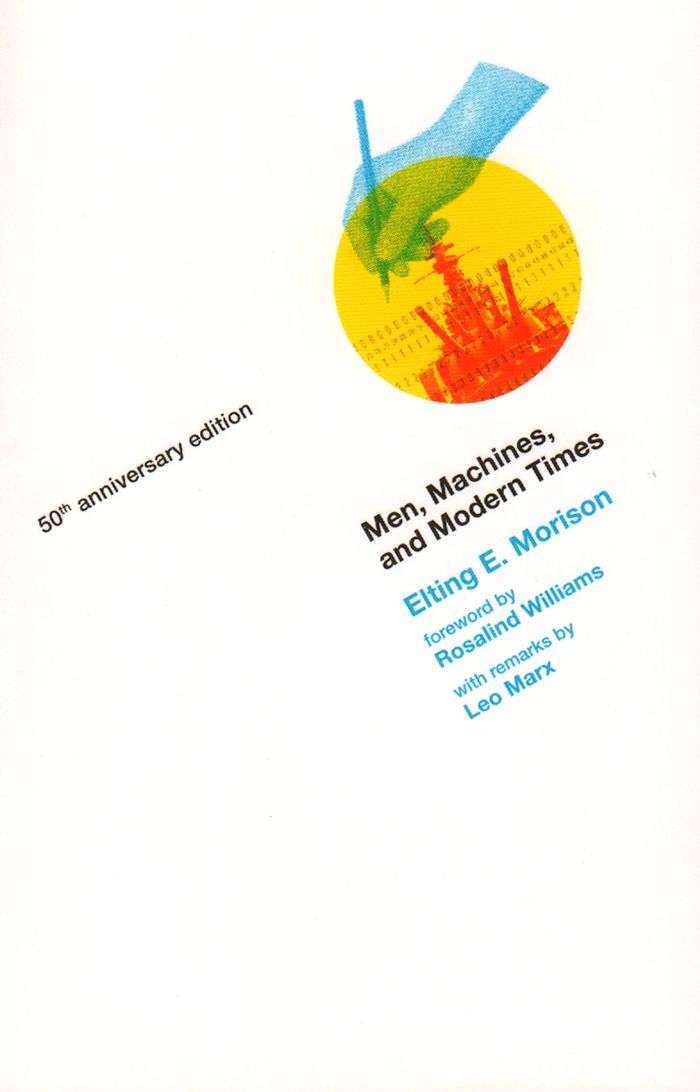
An engaging look at how we have learned to live with innovation and new technologies through history.
$26.00
(disponible sur commande)
Résumé:
An engaging look at how we have learned to live with innovation and new technologies through history.
Titre:
Men, machines, and modern times, 50th anniversary edition
Actions:
Prix:
$26.00
(disponible sur commande)
Résumé:
An engaging look at how we have learned to live with innovation and new technologies through history.
Men, machines, and modern times, 50th anniversary edition
Actions:
Prix:
$26.00
(disponible sur commande)
Résumé:
An engaging look at how we have learned to live with innovation and new technologies through history.
Classification:
livres
livres
Publication:
août 2016
août 2016
Sujet:
Théorie de l’architecture
Théorie de l’architecture
Classification:
livres
livres
Prix:
$62.00
(disponible sur commande)
Résumé:
Artificial intelligence is becoming an increasingly important topic in the cultural sector. While museums have long focused on building digital object databases, the existing data can now become a field of application for machine learning, deep learning and foundation model approaches. This goes hand in hand with new artistic practices, curation tools, visitor analytics,(...)
$62.00
(disponible sur commande)
Résumé:
Artificial intelligence is becoming an increasingly important topic in the cultural sector. While museums have long focused on building digital object databases, the existing data can now become a field of application for machine learning, deep learning and foundation model approaches. This goes hand in hand with new artistic practices, curation tools, visitor analytics,(...)
Titre:
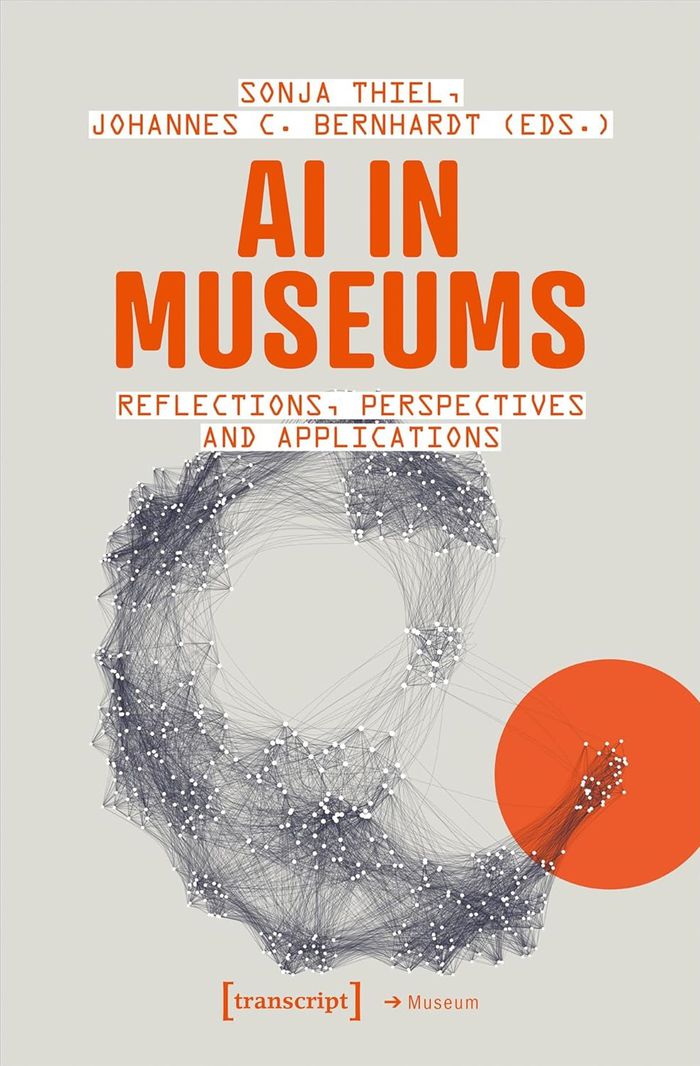
AI in museums: Reflections, perspectives and applications
Actions:
Prix:
$62.00
(disponible sur commande)
Résumé:
Artificial intelligence is becoming an increasingly important topic in the cultural sector. While museums have long focused on building digital object databases, the existing data can now become a field of application for machine learning, deep learning and foundation model approaches. This goes hand in hand with new artistic practices, curation tools, visitor analytics, chatbots, automatic translations and tailor-made text generation. With a decidedly interdisciplinary approach, the volume brings together a wide range of critical reflections, practical perspectives and concrete applications of artificial intelligence in museums, and provides an overview of the current state of the debate.
AI in museums: Reflections, perspectives and applications
Actions:
Prix:
$62.00
(disponible sur commande)
Résumé:
Artificial intelligence is becoming an increasingly important topic in the cultural sector. While museums have long focused on building digital object databases, the existing data can now become a field of application for machine learning, deep learning and foundation model approaches. This goes hand in hand with new artistic practices, curation tools, visitor analytics, chatbots, automatic translations and tailor-made text generation. With a decidedly interdisciplinary approach, the volume brings together a wide range of critical reflections, practical perspectives and concrete applications of artificial intelligence in museums, and provides an overview of the current state of the debate.
Classification:
livres
livres
Publication:
avril 2024
avril 2024
Sujet:
Muséologie
Muséologie
Classification:
livres
livres
Titre:
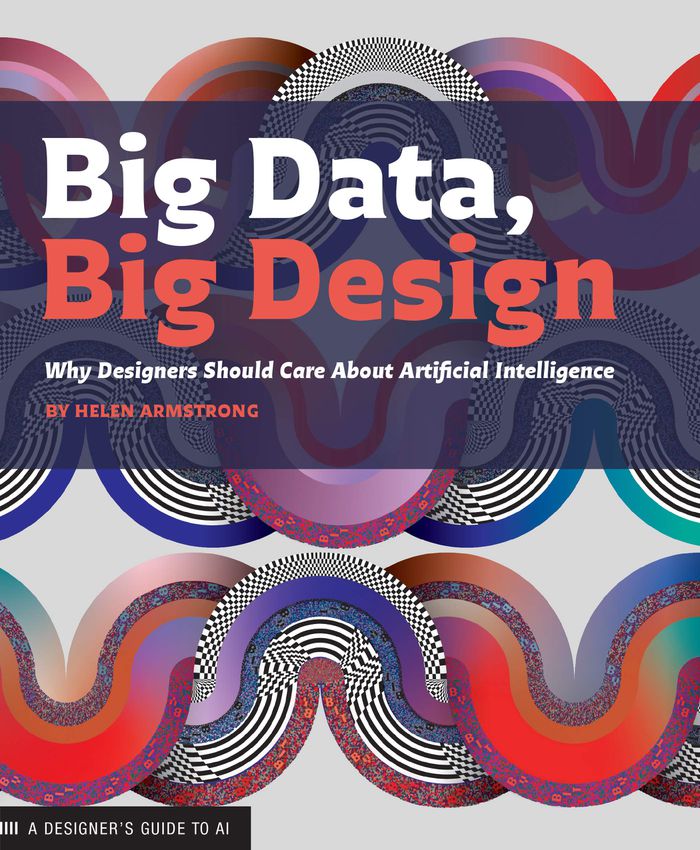
Big data, big design
Big data, big design
Actions:
Prix:
$42.95
(disponible sur commande)
Résumé:
Enter the world of Machine Learning (ML) and Artificial Intelligence (AI) through a design lens in this thoughtful handbook of practical skills, technical knowledge, interviews, essays, and theory, written specifically for designers. Gain an understanding of the design opportunities and design biases that arise when using predictive algorithms. Learn how to place design(...)
$42.95
(disponible sur commande)
Résumé:
Enter the world of Machine Learning (ML) and Artificial Intelligence (AI) through a design lens in this thoughtful handbook of practical skills, technical knowledge, interviews, essays, and theory, written specifically for designers. Gain an understanding of the design opportunities and design biases that arise when using predictive algorithms. Learn how to place design(...)
Titre:
Big data, big design
Actions:
Prix:
$42.95
(disponible sur commande)
Résumé:
Enter the world of Machine Learning (ML) and Artificial Intelligence (AI) through a design lens in this thoughtful handbook of practical skills, technical knowledge, interviews, essays, and theory, written specifically for designers. Gain an understanding of the design opportunities and design biases that arise when using predictive algorithms. Learn how to place design principles and cultural context at the heart of AI and ML through real-life case studies and examples. This portable, accessible guide will give beginners and more advanced AI and ML users the confidence to make reasoned, thoughtful decisions when implementing ML design solutions.
Big data, big design
Actions:
Prix:
$42.95
(disponible sur commande)
Résumé:
Enter the world of Machine Learning (ML) and Artificial Intelligence (AI) through a design lens in this thoughtful handbook of practical skills, technical knowledge, interviews, essays, and theory, written specifically for designers. Gain an understanding of the design opportunities and design biases that arise when using predictive algorithms. Learn how to place design principles and cultural context at the heart of AI and ML through real-life case studies and examples. This portable, accessible guide will give beginners and more advanced AI and ML users the confidence to make reasoned, thoughtful decisions when implementing ML design solutions.
Classification:
livres
livres
Publication:
octobre 2021
octobre 2021
Sujet:
Théorie du design
Théorie du design
Classification:
livres
livres

Actions:
Prix:
$49.95
(disponible en magasin)
Résumé:
Drawing on the early Soviet atheist magazines "Godless" and "Godless at the Machine", and postwar posters by Communist Party publishers, author Roland Elliott Brown presents an unsettling tour of atheist ideology in the USSR. Here are uncanny, imaginative and downright blasphemous visions from the very guts of the Soviet atheist apparatus: sinister priests rub shoulders(...)
$49.95
(disponible en magasin)
Résumé:
Drawing on the early Soviet atheist magazines "Godless" and "Godless at the Machine", and postwar posters by Communist Party publishers, author Roland Elliott Brown presents an unsettling tour of atheist ideology in the USSR. Here are uncanny, imaginative and downright blasphemous visions from the very guts of the Soviet atheist apparatus: sinister priests rub shoulders(...)
Titre:
Godless utopia: Soviet anti-religious propaganda
Actions:
Prix:
$49.95
(disponible en magasin)
Résumé:
Drawing on the early Soviet atheist magazines "Godless" and "Godless at the Machine", and postwar posters by Communist Party publishers, author Roland Elliott Brown presents an unsettling tour of atheist ideology in the USSR. Here are uncanny, imaginative and downright blasphemous visions from the very guts of the Soviet atheist apparatus: sinister priests rub shoulders with cross-bearing colonial torturers, greedy mullahs, a cyclopean Jehovah and a crypto-fascist Jesus; Russian cosmonauts mock God from space while vigilant border guards nab American Bible smugglers. "Godless Utopia" is the occult grimoire of a lost socialist anti-theology.
Godless utopia: Soviet anti-religious propaganda
Actions:
Prix:
$49.95
(disponible en magasin)
Résumé:
Drawing on the early Soviet atheist magazines "Godless" and "Godless at the Machine", and postwar posters by Communist Party publishers, author Roland Elliott Brown presents an unsettling tour of atheist ideology in the USSR. Here are uncanny, imaginative and downright blasphemous visions from the very guts of the Soviet atheist apparatus: sinister priests rub shoulders with cross-bearing colonial torturers, greedy mullahs, a cyclopean Jehovah and a crypto-fascist Jesus; Russian cosmonauts mock God from space while vigilant border guards nab American Bible smugglers. "Godless Utopia" is the occult grimoire of a lost socialist anti-theology.
Classification:
livres
livres
Publication:
octobre 2019
octobre 2019
Sujet:
Théorie de l’art
Théorie de l’art
Classification:
livres
livres
Titre:
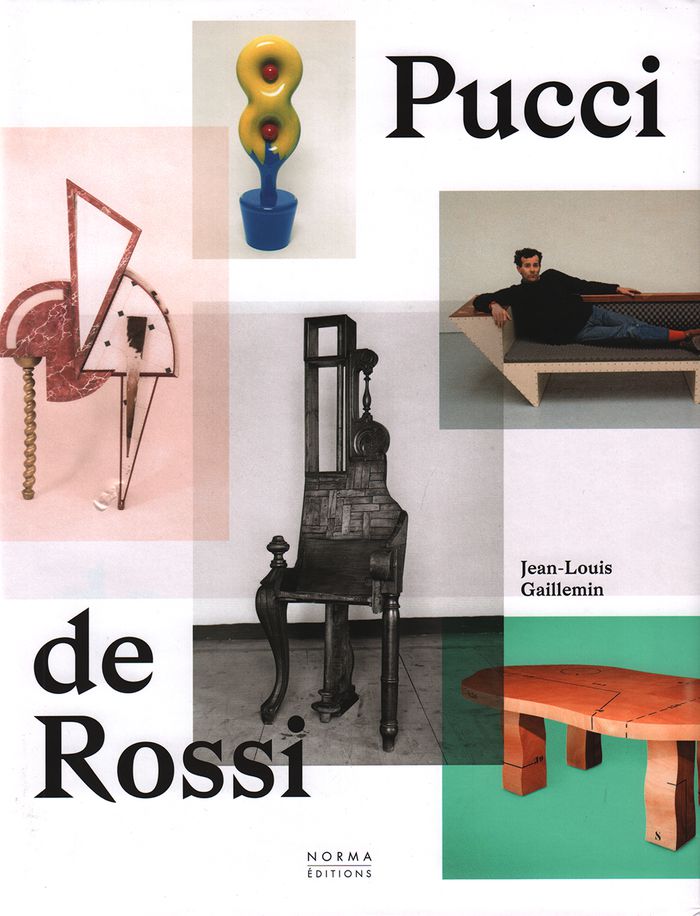
Pucci De Rossi
Pucci De Rossi
Actions:
Prix:
$88.00
(disponible sur commande)
Résumé:
Designer et artiste inclassable, Pucci de Rossi (1947-2013) a été un pilier de la scène artistique européenne des années 1980. Originaire de Vérone et formé auprès du sculpteur américain H.B. Walker, Pucci de Rossi réalise ses premières pièces en assemblant du mobilier en bois récupéré pour fabriquer des formes étranges et instables, entre trône et machine à remonter le(...)
$88.00
(disponible sur commande)
Résumé:
Designer et artiste inclassable, Pucci de Rossi (1947-2013) a été un pilier de la scène artistique européenne des années 1980. Originaire de Vérone et formé auprès du sculpteur américain H.B. Walker, Pucci de Rossi réalise ses premières pièces en assemblant du mobilier en bois récupéré pour fabriquer des formes étranges et instables, entre trône et machine à remonter le(...)
Sujet:
Design, monographies
Design, monographies
Publication:
novembre 2017
novembre 2017
Titre:
Pucci De Rossi
Actions:
Prix:
$88.00
(disponible sur commande)
Résumé:
Designer et artiste inclassable, Pucci de Rossi (1947-2013) a été un pilier de la scène artistique européenne des années 1980. Originaire de Vérone et formé auprès du sculpteur américain H.B. Walker, Pucci de Rossi réalise ses premières pièces en assemblant du mobilier en bois récupéré pour fabriquer des formes étranges et instables, entre trône et machine à remonter le temps. « Mon métier était un jeu pour moi, raconte-t-il, je découpais, je faisais, j’inventais. » Ses premières créations, empreintes de poésie et d’humour, renvoient tout autant au minimalisme de l’Arte Povera qu’au néobaroque du studio Memphis.
Pucci De Rossi
Actions:
Prix:
$88.00
(disponible sur commande)
Résumé:
Designer et artiste inclassable, Pucci de Rossi (1947-2013) a été un pilier de la scène artistique européenne des années 1980. Originaire de Vérone et formé auprès du sculpteur américain H.B. Walker, Pucci de Rossi réalise ses premières pièces en assemblant du mobilier en bois récupéré pour fabriquer des formes étranges et instables, entre trône et machine à remonter le temps. « Mon métier était un jeu pour moi, raconte-t-il, je découpais, je faisais, j’inventais. » Ses premières créations, empreintes de poésie et d’humour, renvoient tout autant au minimalisme de l’Arte Povera qu’au néobaroque du studio Memphis.
Classification:
livres
livres
Publication:
novembre 2017
novembre 2017
Sujet:
Design, monographies
Design, monographies
Classification:
livres
livres
Actions:
Prix:
$25.00
(disponible sur commande)
Résumé:
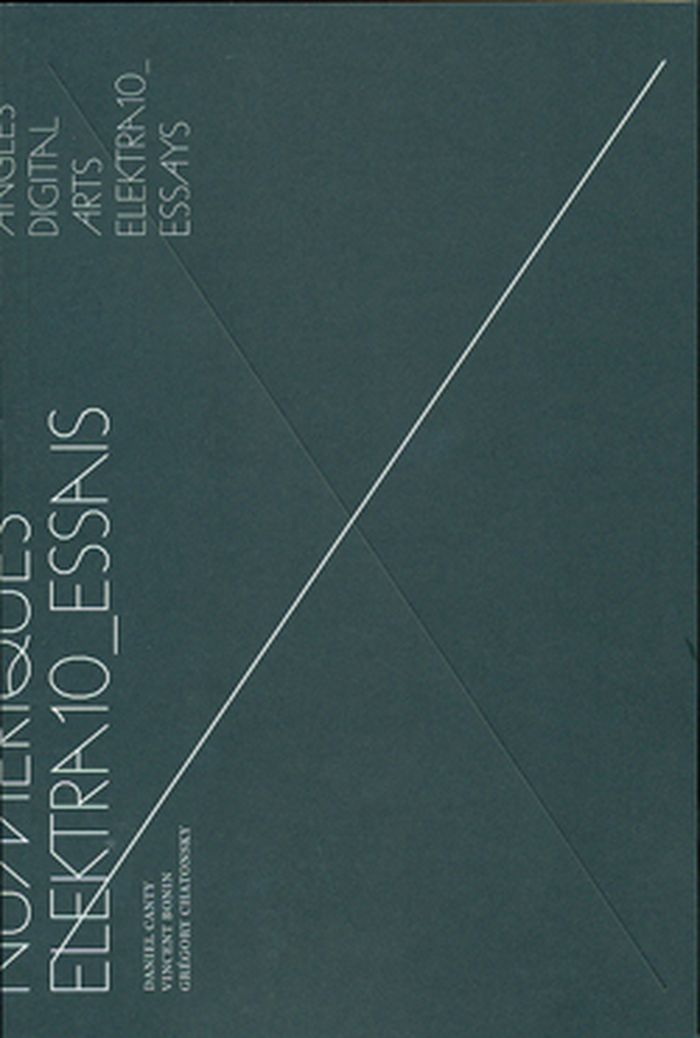
Pour souligner les dix ans d'Elektra, événement international d'arts numériques, Angles arts numériques propose trois textes, trois auteurs qui ont chacun développé une réflexion à partir d'aspects et de concepts qui sont liés, différemment mais étroitement, aux enjeux d'Elektra. En ce sens, il paraissait stimulant de provoquer cette rencontre entre un point de vue(...)
$25.00
(disponible sur commande)
Résumé:
Pour souligner les dix ans d'Elektra, événement international d'arts numériques, Angles arts numériques propose trois textes, trois auteurs qui ont chacun développé une réflexion à partir d'aspects et de concepts qui sont liés, différemment mais étroitement, aux enjeux d'Elektra. En ce sens, il paraissait stimulant de provoquer cette rencontre entre un point de vue(...)
Sujet:
Consignation
Consignation
Publication:
mai 2009
mai 2009
Titre:
Angles digital arts Elektra 10 essais/essays
Actions:
Prix:
$25.00
(disponible sur commande)
Résumé:
Pour souligner les dix ans d'Elektra, événement international d'arts numériques, Angles arts numériques propose trois textes, trois auteurs qui ont chacun développé une réflexion à partir d'aspects et de concepts qui sont liés, différemment mais étroitement, aux enjeux d'Elektra. En ce sens, il paraissait stimulant de provoquer cette rencontre entre un point de vue théorique portant sur le concept de tra(ns)-duction, lequel au surplus, est «informé» par la pratique (Chatonsky), une perspective historique qui aborde différents événements d'arts médiatiques (Bonin) et l'essai littéraire, où le principe métaphorique de la machine est l'élément moteur de la réflexion (Canty).
Angles digital arts Elektra 10 essais/essays
Actions:
Prix:
$25.00
(disponible sur commande)
Résumé:
Pour souligner les dix ans d'Elektra, événement international d'arts numériques, Angles arts numériques propose trois textes, trois auteurs qui ont chacun développé une réflexion à partir d'aspects et de concepts qui sont liés, différemment mais étroitement, aux enjeux d'Elektra. En ce sens, il paraissait stimulant de provoquer cette rencontre entre un point de vue théorique portant sur le concept de tra(ns)-duction, lequel au surplus, est «informé» par la pratique (Chatonsky), une perspective historique qui aborde différents événements d'arts médiatiques (Bonin) et l'essai littéraire, où le principe métaphorique de la machine est l'élément moteur de la réflexion (Canty).
Classification:
livres
livres
Publication:
mai 2009
mai 2009
Sujet:
Consignation
Consignation


