


2467 Résultats
Classification:
livres
livres
Actions:
Prix:
$39.95
(disponible sur commande)
Résumé:
In postwar France, the aesthetics of appropriation and collage gave cultural form to a struggle over meaning. A new wave of avant-garde experimentation used - or stole, plagiarized, and expropriated - elements from advertising, journalism, literature, art, and other sources of common discourse (the ironically named "beautiful language" of this book's title, itself an(...)
$39.95
(disponible sur commande)
Résumé:
In postwar France, the aesthetics of appropriation and collage gave cultural form to a struggle over meaning. A new wave of avant-garde experimentation used - or stole, plagiarized, and expropriated - elements from advertising, journalism, literature, art, and other sources of common discourse (the ironically named "beautiful language" of this book's title, itself an(...)
Publication:
février 2007, Cambridge (MA)
février 2007, Cambridge (MA)
Titre:
The beautiful language of my century : reinventing the language of contestation in postwar France, 1945-1968
Actions:
Prix:
$39.95
(disponible sur commande)
Résumé:
In postwar France, the aesthetics of appropriation and collage gave cultural form to a struggle over meaning. A new wave of avant-garde experimentation used - or stole, plagiarized, and expropriated - elements from advertising, journalism, literature, art, and other sources of common discourse (the ironically named "beautiful language" of this book's title, itself an appropriation from Guy Debord's collaged Mémoires). Redeployed, often in startling or pointed juxtapositions, these elements took on newly oppositional meanings. A famous photograph taken inside the occupied Sorbonne in May 1968, for example, shows a massive academic painting altered by a clever cartoonish speech bubble that transforms the painting into a parody of itself and memorializes an event very different from the one captured by the original artist."The beautiful language of my century" describes the various forms of critical culture that culminated in the events of May 1968, and investigates the ways those forms have come down to us today. McDonough explores the montage practice developed by Guy Debord and his situationist colleagues under the name of détournement and its expression in the later fifties as a form of cultural theft. He addresses the influence of colonialism on these practices, examining a 1961 exhibit of torn posters of the Algerian War ("La France déchirée"), Godard's early film Le Petit Soldat, and Christo's Project for a Temporary Wall of Steel Drums. He discusses the French left's adoption in the mid-sixties of the "end of art" as a theoretical position and describes the leftist idea of the fête as a Rabelaisian and revolutionary upwelling of everything that is low. This influential conception, inspired equally by the American urban revolts of the sixties and the writings of theorists Marcel Mauss and Georges Bataille, coalesced into a new image of revolution, a new model of contestation, in the events of May 1968 - when the struggle over language and culture merged with a broader resistance to capitalist modernization.
The beautiful language of my century : reinventing the language of contestation in postwar France, 1945-1968
Actions:
Prix:
$39.95
(disponible sur commande)
Résumé:
In postwar France, the aesthetics of appropriation and collage gave cultural form to a struggle over meaning. A new wave of avant-garde experimentation used - or stole, plagiarized, and expropriated - elements from advertising, journalism, literature, art, and other sources of common discourse (the ironically named "beautiful language" of this book's title, itself an appropriation from Guy Debord's collaged Mémoires). Redeployed, often in startling or pointed juxtapositions, these elements took on newly oppositional meanings. A famous photograph taken inside the occupied Sorbonne in May 1968, for example, shows a massive academic painting altered by a clever cartoonish speech bubble that transforms the painting into a parody of itself and memorializes an event very different from the one captured by the original artist."The beautiful language of my century" describes the various forms of critical culture that culminated in the events of May 1968, and investigates the ways those forms have come down to us today. McDonough explores the montage practice developed by Guy Debord and his situationist colleagues under the name of détournement and its expression in the later fifties as a form of cultural theft. He addresses the influence of colonialism on these practices, examining a 1961 exhibit of torn posters of the Algerian War ("La France déchirée"), Godard's early film Le Petit Soldat, and Christo's Project for a Temporary Wall of Steel Drums. He discusses the French left's adoption in the mid-sixties of the "end of art" as a theoretical position and describes the leftist idea of the fête as a Rabelaisian and revolutionary upwelling of everything that is low. This influential conception, inspired equally by the American urban revolts of the sixties and the writings of theorists Marcel Mauss and Georges Bataille, coalesced into a new image of revolution, a new model of contestation, in the events of May 1968 - when the struggle over language and culture merged with a broader resistance to capitalist modernization.
Classification:
livres
livres
Publication:
février 2007, Cambridge (MA)
février 2007, Cambridge (MA)
Classification:
livres
livres
Titre:
Elvis road
Elvis road
Actions:
Prix:
$26.95
(disponible sur commande)
Résumé:
This long, speechless comic is read as one 20-ft fold-out page; it's half Saul Steinberg on drugs, half insane doodle. Porn shops, playgrounds and sports arenas mix in the crowded urban scene, where everyone seems to be going somewhere, really desperate, or about to do something wicked and fun. Strange vehicles crowd the road, which serves up race cars, tanks, and a huge(...)
$26.95
(disponible sur commande)
Résumé:
This long, speechless comic is read as one 20-ft fold-out page; it's half Saul Steinberg on drugs, half insane doodle. Porn shops, playgrounds and sports arenas mix in the crowded urban scene, where everyone seems to be going somewhere, really desperate, or about to do something wicked and fun. Strange vehicles crowd the road, which serves up race cars, tanks, and a huge(...)
Titre:
Elvis road
Actions:
Prix:
$26.95
(disponible sur commande)
Résumé:
This long, speechless comic is read as one 20-ft fold-out page; it's half Saul Steinberg on drugs, half insane doodle. Porn shops, playgrounds and sports arenas mix in the crowded urban scene, where everyone seems to be going somewhere, really desperate, or about to do something wicked and fun. Strange vehicles crowd the road, which serves up race cars, tanks, and a huge "parfum" tanker truck in one long traffic jam. The simple line drawings use images from World War II, as well as from underground comics of the late '60s through to the present (any references to superheroes and Disney-like characters are purely ironic). The depictions of Klansmen and Nazis seem part of the social critique, perhaps reinforcing the underlying idea that life stuffed to the gills with items that fulfill our every need is itself a form of fascism. There's always something new to see, and much occurs in the cramped spaces, such as when a happy cop ushers small creatures into a theme park called "Cuteland," or when fascist worshipers are hit by a flaming asteroid that leaves a trail of yogurt in which people drown. A strong art-book that's actually a lot of fun.
Elvis road
Actions:
Prix:
$26.95
(disponible sur commande)
Résumé:
This long, speechless comic is read as one 20-ft fold-out page; it's half Saul Steinberg on drugs, half insane doodle. Porn shops, playgrounds and sports arenas mix in the crowded urban scene, where everyone seems to be going somewhere, really desperate, or about to do something wicked and fun. Strange vehicles crowd the road, which serves up race cars, tanks, and a huge "parfum" tanker truck in one long traffic jam. The simple line drawings use images from World War II, as well as from underground comics of the late '60s through to the present (any references to superheroes and Disney-like characters are purely ironic). The depictions of Klansmen and Nazis seem part of the social critique, perhaps reinforcing the underlying idea that life stuffed to the gills with items that fulfill our every need is itself a form of fascism. There's always something new to see, and much occurs in the cramped spaces, such as when a happy cop ushers small creatures into a theme park called "Cuteland," or when fascist worshipers are hit by a flaming asteroid that leaves a trail of yogurt in which people drown. A strong art-book that's actually a lot of fun.
Classification:
livres
livres
Publication:
janvier 1900, Oakland
janvier 1900, Oakland
Classification:
livres
livres
Titre:
School
School
Actions:
Prix:
$31.00
(disponible sur commande)
Résumé:
As a specific form of architecture, the school is an amalgam of its function and its history. Though recognizable across cultures, the schoolhouse nevertheless retains the distinctive markings of different nations and eras. School is the first book to examine this institutional building’s modern growth on a global scale. Ian Grosvenor and Catherine Burke demonstrate(...)
$31.00
(disponible sur commande)
Résumé:
As a specific form of architecture, the school is an amalgam of its function and its history. Though recognizable across cultures, the schoolhouse nevertheless retains the distinctive markings of different nations and eras. School is the first book to examine this institutional building’s modern growth on a global scale. Ian Grosvenor and Catherine Burke demonstrate(...)
Publication:
novembre 2006, London
novembre 2006, London
Titre:
School
Actions:
Prix:
$31.00
(disponible sur commande)
Résumé:
As a specific form of architecture, the school is an amalgam of its function and its history. Though recognizable across cultures, the schoolhouse nevertheless retains the distinctive markings of different nations and eras. School is the first book to examine this institutional building’s modern growth on a global scale. Ian Grosvenor and Catherine Burke demonstrate how school buildings help organize and manipulate time and space for teachers and students, using methods ranging from bells to lines to lesson plans. They reveal the ways in which schools, by their actual physical situation—surrounded by swathes of green or butting up against other urban structures, in neighborhoods stratified by class or segregated by race—make clear their place in society as fragmented sites of cultural memory and creation. The authors further consider how new technologies and continuing globalization will inevitably force us to rethink our notions of school—and school buildings. In the twenty-first century, these shifts represent a radically new context for education. School will provide stimulating reading for anyone interested in this extraordinary evolution of architecture and education. Ian Grosvenor is director of learning and teaching at the School of Education, University of Birmingham. Catherine Burke is lecturer in education in the School of Education, University of Leeds.
School
Actions:
Prix:
$31.00
(disponible sur commande)
Résumé:
As a specific form of architecture, the school is an amalgam of its function and its history. Though recognizable across cultures, the schoolhouse nevertheless retains the distinctive markings of different nations and eras. School is the first book to examine this institutional building’s modern growth on a global scale. Ian Grosvenor and Catherine Burke demonstrate how school buildings help organize and manipulate time and space for teachers and students, using methods ranging from bells to lines to lesson plans. They reveal the ways in which schools, by their actual physical situation—surrounded by swathes of green or butting up against other urban structures, in neighborhoods stratified by class or segregated by race—make clear their place in society as fragmented sites of cultural memory and creation. The authors further consider how new technologies and continuing globalization will inevitably force us to rethink our notions of school—and school buildings. In the twenty-first century, these shifts represent a radically new context for education. School will provide stimulating reading for anyone interested in this extraordinary evolution of architecture and education. Ian Grosvenor is director of learning and teaching at the School of Education, University of Birmingham. Catherine Burke is lecturer in education in the School of Education, University of Leeds.
Classification:
livres
livres
Publication:
novembre 2006, London
novembre 2006, London
Classification:
livres
livres
Actions:
Prix:
$73.95
(disponible sur commande)
Résumé:
Standing on Mont Ventoux near Avignon, the fourteenth-century poet Petrarch experienced an entirely new sensation that he described as 'stepping out of time and space'. On the mountain's summit he was as far as he could be from the 'world's stage all around'. The huge distance reduced reference points to insignificant specks down below, and everything in the panorama(...)
$73.95
(disponible sur commande)
Résumé:
Standing on Mont Ventoux near Avignon, the fourteenth-century poet Petrarch experienced an entirely new sensation that he described as 'stepping out of time and space'. On the mountain's summit he was as far as he could be from the 'world's stage all around'. The huge distance reduced reference points to insignificant specks down below, and everything in the panorama(...)
Titre:
The invented land : a bird's-eye view of Dutch landscape architecture
Actions:
Prix:
$73.95
(disponible sur commande)
Résumé:
Standing on Mont Ventoux near Avignon, the fourteenth-century poet Petrarch experienced an entirely new sensation that he described as 'stepping out of time and space'. On the mountain's summit he was as far as he could be from the 'world's stage all around'. The huge distance reduced reference points to insignificant specks down below, and everything in the panorama seemed motionless, dispelling any notion of time. Petrarch had placed himself outside reality. That is what makes aerial photography so fascinating, writes Clemens M. Steenbergen, professor of landscape architecture at Delft University of Technology, in his introduction. The higher the viewpoint the greater the visual control and the more abstract the image. We can see whether a landscape has been shaped by man or is pure nature, how space and mass form one composition. Aerial photographer and landscape architect Peter van Bolhuis captures on camera the Dutch landscape: areas devoted to agriculture, forestry, nature, infrastructure and urban development. The pictures show us the achievements of a half century of landscape architecture. We see a landscape in which everything is precisely measured and demarcated, everything is planned and calculated, with no space left unattended. We see, writes Tracy Metz in one of the essays, 'a landscape that is the sum of negotiations about ever smaller parts'.
The invented land : a bird's-eye view of Dutch landscape architecture
Actions:
Prix:
$73.95
(disponible sur commande)
Résumé:
Standing on Mont Ventoux near Avignon, the fourteenth-century poet Petrarch experienced an entirely new sensation that he described as 'stepping out of time and space'. On the mountain's summit he was as far as he could be from the 'world's stage all around'. The huge distance reduced reference points to insignificant specks down below, and everything in the panorama seemed motionless, dispelling any notion of time. Petrarch had placed himself outside reality. That is what makes aerial photography so fascinating, writes Clemens M. Steenbergen, professor of landscape architecture at Delft University of Technology, in his introduction. The higher the viewpoint the greater the visual control and the more abstract the image. We can see whether a landscape has been shaped by man or is pure nature, how space and mass form one composition. Aerial photographer and landscape architect Peter van Bolhuis captures on camera the Dutch landscape: areas devoted to agriculture, forestry, nature, infrastructure and urban development. The pictures show us the achievements of a half century of landscape architecture. We see a landscape in which everything is precisely measured and demarcated, everything is planned and calculated, with no space left unattended. We see, writes Tracy Metz in one of the essays, 'a landscape that is the sum of negotiations about ever smaller parts'.
Classification:
livres
livres
Publication:
décembre 2004, Wageningen, Netherlands
décembre 2004, Wageningen, Netherlands
Sujet:
Jardins
Jardins
Classification:
archives
archives
Actions:
Exemplaires:
Description:
217 items, 0.06 l.m. of textual documents., The fonds is organized in 2 series.
Description:
217 items, 0.06 l.m. of textual documents., The fonds is organized in 2 series.
Auteur:
Sujet:
Titre:
Fonds Marcel Parizeau, 1917-1955 ca. 1923-1944.
Actions:
Exemplaires:
Description:
217 items, 0.06 l.m. of textual documents., The fonds is organized in 2 series.
Fonds Marcel Parizeau, 1917-1955 ca. 1923-1944.
Actions:
Exemplaires:
Description:
217 items, 0.06 l.m. of textual documents., The fonds is organized in 2 series.
Classification:
archives
archives
Auteur:
Sujet:
Classification:
livres
livres
Prix:
$63.95
(disponible sur commande)
Résumé:
From total look to total living: Alchimia, Tadao Ando, Armani, Vanessa Beecroft, Benetton, Pierre Cardin, CP Company, Courrèges, Diesel, Diller & Scofidio, Droog Design, Final Home, Dan Flavin, Tom Ford, Future Systems, Eileen Gray, Gucci, Andreas Gursky, Halston, Herzog & De Meuron, Tommy Hilfiger, Damien Hirst, Ikea, Philip Johnson, Rei Kawakubo, Calvin Klein, Rem(...)
$63.95
(disponible sur commande)
Résumé:
From total look to total living: Alchimia, Tadao Ando, Armani, Vanessa Beecroft, Benetton, Pierre Cardin, CP Company, Courrèges, Diesel, Diller & Scofidio, Droog Design, Final Home, Dan Flavin, Tom Ford, Future Systems, Eileen Gray, Gucci, Andreas Gursky, Halston, Herzog & De Meuron, Tommy Hilfiger, Damien Hirst, Ikea, Philip Johnson, Rei Kawakubo, Calvin Klein, Rem(...)
Sujet:
Design d’intérieur
Design d’intérieur
Publication:
janvier 1900, Milan
janvier 1900, Milan
Titre:
Total living : fashion, architecture, design, art, communication
Actions:
Prix:
$63.95
(disponible sur commande)
Résumé:
From total look to total living: Alchimia, Tadao Ando, Armani, Vanessa Beecroft, Benetton, Pierre Cardin, CP Company, Courrèges, Diesel, Diller & Scofidio, Droog Design, Final Home, Dan Flavin, Tom Ford, Future Systems, Eileen Gray, Gucci, Andreas Gursky, Halston, Herzog & De Meuron, Tommy Hilfiger, Damien Hirst, Ikea, Philip Johnson, Rei Kawakubo, Calvin Klein, Rem Koolhaas, Helmut Lang, Le Corbusier, Levi's, Mandarina Duck, Marni, Steven Meisel, Alessandro Mendini, Ludwig Mies van der Rohe, Issey Miyake, Moschino, Helmut Newton, Nike, NL Architects, Ora-Ito Studio, John Powson, Prada, Emilio Pucci, Ralph Lauren, Claudio Silvestrin, Hedi Slimane, Paul Smith, Ettore Sottsass, Philippe Starck, Versace, Louis Vuitton, Bruce Weber, Yves Saint Laurent. Styles and lifestyles are fast becoming uniform under labels and definitions of fashion, and as an industry and a cultural form. Total Living is the point of no return in a project which, step-by-step, develops strategies whose goal it is to offer an even more sophisticated and targeted lifestyle. It is a place where there are definitions for clothes, behavior modes, and even the atmoshpheres and spaces in which one moves. Assuming the contours of a landscape of the future, this scenario raises topical themes and problems connected with the overwhelming power of consumerism. Accompanying scholarly essays consider the thematic universes of fashion designers and brands; models of total living in 20th century history; references to total living in mass culture; living and eating; arty fashion and fashionable art; the world of fashion design; the languages of shopping; urban fashion districts; and advertising as a narrative. A rich and interconnected iconographic passage visually narrates the various forms and ramifications of total living today and in the recent past through a succession of utopias, life-projects, urban visions, architecture, special homes, stores, art galleries, museums, and editorial pages and ads from fashion and lifestyle magazines. With texts by Papla Antonelli, Francesco Bonami, Michele Ciavarella, Emanuela de Cecco, Riccardo Dirindin, Roberto Monelli, Herbert Muschamp, Chee Pearlman, Michele Sernini, Dietmar Steiner, and Deyan Sudjic.
Total living : fashion, architecture, design, art, communication
Actions:
Prix:
$63.95
(disponible sur commande)
Résumé:
From total look to total living: Alchimia, Tadao Ando, Armani, Vanessa Beecroft, Benetton, Pierre Cardin, CP Company, Courrèges, Diesel, Diller & Scofidio, Droog Design, Final Home, Dan Flavin, Tom Ford, Future Systems, Eileen Gray, Gucci, Andreas Gursky, Halston, Herzog & De Meuron, Tommy Hilfiger, Damien Hirst, Ikea, Philip Johnson, Rei Kawakubo, Calvin Klein, Rem Koolhaas, Helmut Lang, Le Corbusier, Levi's, Mandarina Duck, Marni, Steven Meisel, Alessandro Mendini, Ludwig Mies van der Rohe, Issey Miyake, Moschino, Helmut Newton, Nike, NL Architects, Ora-Ito Studio, John Powson, Prada, Emilio Pucci, Ralph Lauren, Claudio Silvestrin, Hedi Slimane, Paul Smith, Ettore Sottsass, Philippe Starck, Versace, Louis Vuitton, Bruce Weber, Yves Saint Laurent. Styles and lifestyles are fast becoming uniform under labels and definitions of fashion, and as an industry and a cultural form. Total Living is the point of no return in a project which, step-by-step, develops strategies whose goal it is to offer an even more sophisticated and targeted lifestyle. It is a place where there are definitions for clothes, behavior modes, and even the atmoshpheres and spaces in which one moves. Assuming the contours of a landscape of the future, this scenario raises topical themes and problems connected with the overwhelming power of consumerism. Accompanying scholarly essays consider the thematic universes of fashion designers and brands; models of total living in 20th century history; references to total living in mass culture; living and eating; arty fashion and fashionable art; the world of fashion design; the languages of shopping; urban fashion districts; and advertising as a narrative. A rich and interconnected iconographic passage visually narrates the various forms and ramifications of total living today and in the recent past through a succession of utopias, life-projects, urban visions, architecture, special homes, stores, art galleries, museums, and editorial pages and ads from fashion and lifestyle magazines. With texts by Papla Antonelli, Francesco Bonami, Michele Ciavarella, Emanuela de Cecco, Riccardo Dirindin, Roberto Monelli, Herbert Muschamp, Chee Pearlman, Michele Sernini, Dietmar Steiner, and Deyan Sudjic.
Classification:
livres
livres
Publication:
janvier 1900, Milan
janvier 1900, Milan
Sujet:
Design d’intérieur
Design d’intérieur
Classification:
livres
livres
Actions:
Prix:
$49.95
(disponible sur commande)
Résumé:
Over the past decade, a seismic shift in economic and political forces has transformed life in the second-largest city on the West Coast, situated at the most heavily trafficked international border crossing in the world. Tijuana’s newfound wealth and haphazard expansion have changed patterns of migration for the city’s many artists, who once routinely moved north to Los(...)
$49.95
(disponible sur commande)
Résumé:
Over the past decade, a seismic shift in economic and political forces has transformed life in the second-largest city on the West Coast, situated at the most heavily trafficked international border crossing in the world. Tijuana’s newfound wealth and haphazard expansion have changed patterns of migration for the city’s many artists, who once routinely moved north to Los(...)
Titre:
Strange new world : art and design from Tijuana
Actions:
Prix:
$49.95
(disponible sur commande)
Résumé:
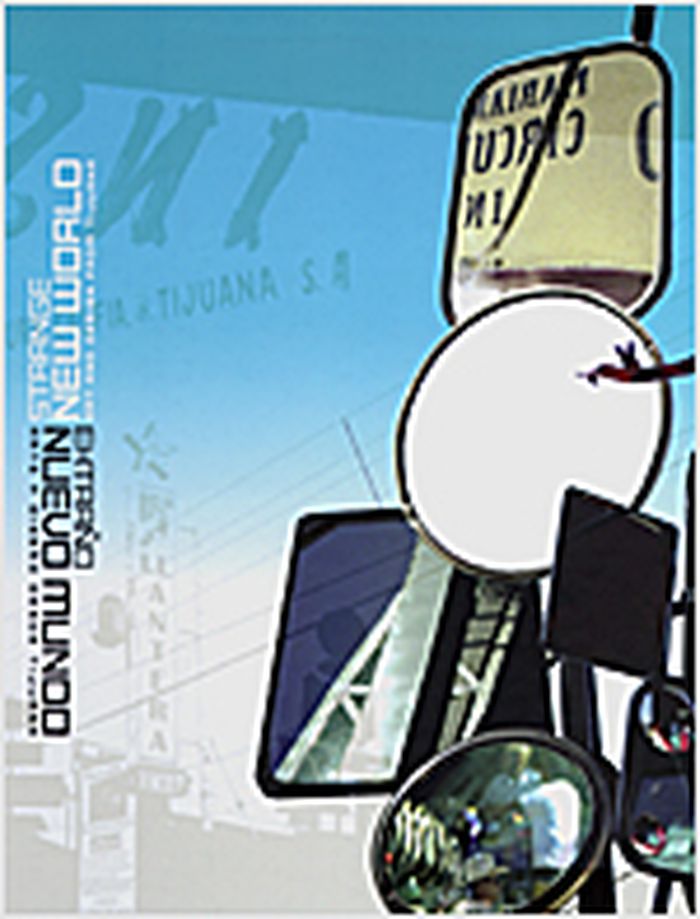
Over the past decade, a seismic shift in economic and political forces has transformed life in the second-largest city on the West Coast, situated at the most heavily trafficked international border crossing in the world. Tijuana’s newfound wealth and haphazard expansion have changed patterns of migration for the city’s many artists, who once routinely moved north to Los Angeles but are now staying or returning, and being joined by friends from Mexico City and beyond. This flourishing, strengthening artistic community has responded to the city’s accelerated evolution with a broad range of work, from painting to conceptually driven installations; from street-level digital video to ambitious photo-documentation, filmmaking and political work; from architectural proposals to product design associated with the "Nortec" musical movement. The work gathered in "Strange new world" embraces Tijuana as a paradigm of a new postmodern form of urbanization shaped by the pressures of economic globalization and cultural transnationalism since 1994. It struggles to make sense of new realities changing the ways in which people live in cities around the globe. Like Aldous Huxley's Brave New World, it is part science fiction, part political commentary and part artistic revolution and cultural critique. Arranged around the concepts of the urban theorist Michael Smith, it features work by ERRE, Einar and Jamex de la Torre and Yvonne Venegas, among others.
Strange new world : art and design from Tijuana
Actions:
Prix:
$49.95
(disponible sur commande)
Résumé:
Over the past decade, a seismic shift in economic and political forces has transformed life in the second-largest city on the West Coast, situated at the most heavily trafficked international border crossing in the world. Tijuana’s newfound wealth and haphazard expansion have changed patterns of migration for the city’s many artists, who once routinely moved north to Los Angeles but are now staying or returning, and being joined by friends from Mexico City and beyond. This flourishing, strengthening artistic community has responded to the city’s accelerated evolution with a broad range of work, from painting to conceptually driven installations; from street-level digital video to ambitious photo-documentation, filmmaking and political work; from architectural proposals to product design associated with the "Nortec" musical movement. The work gathered in "Strange new world" embraces Tijuana as a paradigm of a new postmodern form of urbanization shaped by the pressures of economic globalization and cultural transnationalism since 1994. It struggles to make sense of new realities changing the ways in which people live in cities around the globe. Like Aldous Huxley's Brave New World, it is part science fiction, part political commentary and part artistic revolution and cultural critique. Arranged around the concepts of the urban theorist Michael Smith, it features work by ERRE, Einar and Jamex de la Torre and Yvonne Venegas, among others.
Classification:
livres
livres
Publication:
août 2006, La Jolla
août 2006, La Jolla
Classification:
livres
livres
Actions:
Exemplaires:
Description:
175 pages ; 19 cm.
Description:
175 pages ; 19 cm.
Auteur:
Sujet:
Publication:
Paris : Éditions Gallimard, [2018]
Paris : Éditions Gallimard, [2018]
Titre:
Construire avec l'immatériel : temps, usages, communautés, droit, climat... de nouvelles ressources pour l'architecture / sous la direction de Jana Revedin ; avant-propos de Pascal Nicolas-Le Strat ; [Marie-Hélène Contal [and fourteen others].
Actions:
Exemplaires:
Description:
175 pages ; 19 cm.
Construire avec l'immatériel : temps, usages, communautés, droit, climat... de nouvelles ressources pour l'architecture / sous la direction de Jana Revedin ; avant-propos de Pascal Nicolas-Le Strat ; [Marie-Hélène Contal [and fourteen others].
Actions:
Exemplaires:
Description:
175 pages ; 19 cm.
Classification:
livres
livres
Publication:
Paris : Éditions Gallimard, [2018]
Paris : Éditions Gallimard, [2018]
Auteur:
Sujet:
Classification:
livres
livres
Titre:
Zero yen houses
Zero yen houses
Actions:
Prix:
$75.00
(disponible sur commande)
Résumé:
A lean-to in an urban park, featuring a blue tarpaulin roof, a hinged door, and a bamboo blind. A car-shaped cardboard hut, lashed together with rope and sitting on a dolly. Temporary lodging under a bridge, incorporating a piece of playground equipment into its design. Each of these structures is an example of what Japanese artist and architect Kyohei Sakaguchi calls a(...)
$75.00
(disponible sur commande)
Résumé:
A lean-to in an urban park, featuring a blue tarpaulin roof, a hinged door, and a bamboo blind. A car-shaped cardboard hut, lashed together with rope and sitting on a dolly. Temporary lodging under a bridge, incorporating a piece of playground equipment into its design. Each of these structures is an example of what Japanese artist and architect Kyohei Sakaguchi calls a(...)
Titre:
Zero yen houses
Actions:
Prix:
$75.00
(disponible sur commande)
Résumé:
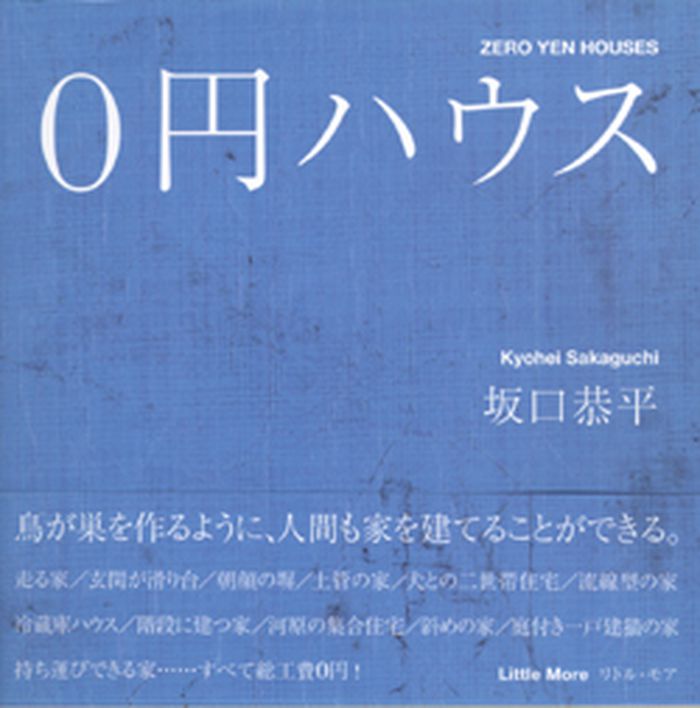
A lean-to in an urban park, featuring a blue tarpaulin roof, a hinged door, and a bamboo blind. A car-shaped cardboard hut, lashed together with rope and sitting on a dolly. Temporary lodging under a bridge, incorporating a piece of playground equipment into its design. Each of these structures is an example of what Japanese artist and architect Kyohei Sakaguchi calls a "zero-yen house".Built by the homeless of Tokyo, Osaka, and Nagoya, zero-yen houses employ discarded and found materials, including pieces of wood and corrugated roofing, temple ornaments, blankets, shipping pallets, an umbrella, and those ubiquitous blue tarps. They also incorporate into their assembly the imminence of their disassembly: at any moment, they may have to be taken apart and moved.Since his days as a university student at the turn of the millennium, Sakaguchi has been studying the kinds of shelters that street people have created for themselves in Japan's three largest cities. Based in Tokyo, he appears to be obsessed with this peculiar and transient form of "vernacular architecture". Sakaguchi uses images, descriptions, and even facsimiles of the improvised homes of the homeless as a way of celebrating human resourcefulness and ingenuity. These dwellings, he tells us, are worthy of our interest and admiration rather than our indifference, our scorn, or even our pity. They can instruct us on an approach to architecture that is the reverse of overconsumption and resource depletion.
Zero yen houses
Actions:
Prix:
$75.00
(disponible sur commande)
Résumé:
A lean-to in an urban park, featuring a blue tarpaulin roof, a hinged door, and a bamboo blind. A car-shaped cardboard hut, lashed together with rope and sitting on a dolly. Temporary lodging under a bridge, incorporating a piece of playground equipment into its design. Each of these structures is an example of what Japanese artist and architect Kyohei Sakaguchi calls a "zero-yen house".Built by the homeless of Tokyo, Osaka, and Nagoya, zero-yen houses employ discarded and found materials, including pieces of wood and corrugated roofing, temple ornaments, blankets, shipping pallets, an umbrella, and those ubiquitous blue tarps. They also incorporate into their assembly the imminence of their disassembly: at any moment, they may have to be taken apart and moved.Since his days as a university student at the turn of the millennium, Sakaguchi has been studying the kinds of shelters that street people have created for themselves in Japan's three largest cities. Based in Tokyo, he appears to be obsessed with this peculiar and transient form of "vernacular architecture". Sakaguchi uses images, descriptions, and even facsimiles of the improvised homes of the homeless as a way of celebrating human resourcefulness and ingenuity. These dwellings, he tells us, are worthy of our interest and admiration rather than our indifference, our scorn, or even our pity. They can instruct us on an approach to architecture that is the reverse of overconsumption and resource depletion.
Classification:
livres
livres
Publication:
janvier 2004, Tokyo
janvier 2004, Tokyo
Sujet:
Architecture résidentielle
Architecture résidentielle
Classification:
livres
livres
Actions:
Prix:
$39.95
(disponible sur commande)
Résumé:
The 1931 international colonial exposition in Paris was a demonstration of French colonial policy, colonial architecture and urban planning, and the scientific and philosophical theories that justified colonialism. The exposition displayed the people, material culture, raw materials,(...)
$39.95
(disponible sur commande)
Résumé:
The 1931 international colonial exposition in Paris was a demonstration of French colonial policy, colonial architecture and urban planning, and the scientific and philosophical theories that justified colonialism. The exposition displayed the people, material culture, raw materials,(...)
Publication:
avril 2003, Cambridge / London
avril 2003, Cambridge / London
Titre:
Hybrid modernities : architecture and representation at the 1931 colonial exposition, Paris
Actions:
Prix:
$39.95
(disponible sur commande)
Résumé:
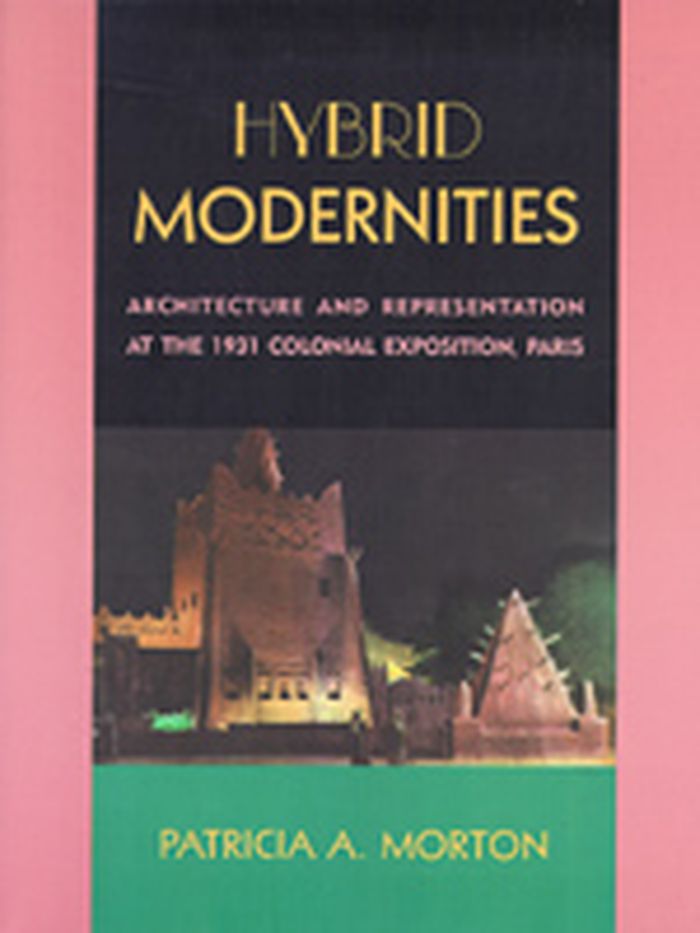
The 1931 international colonial exposition in Paris was a demonstration of French colonial policy, colonial architecture and urban planning, and the scientific and philosophical theories that justified colonialism. The exposition displayed the people, material culture, raw materials, manufactured goods, and arts of the global colonial empires. Yet the event gave a contradictory message of the colonies as the "Orient"--the site of rampant sensuality, decadence, and irrationality--and as the laboratory of Western rationality. In "Hybrid modernities", Patricia Morton shows how the exposition failed to keep colonialism's two spheres separate, instead creating hybrids of French and native culture. At the exposition, French pavilions demonstrated Europe's sophistication in art deco style, while the colonial pavilions were "authentic" native environments for displaying indigenous peoples and artifacts from the colonies. The authenticity of these pavilions' exteriors was contradicted by vaguely exotic interiors filled with didactic exhibition stands and dioramas. Intended to maintain a segregation of colonized and colonizer, the colonial pavilions instead were mixtures of European and native architecture. Anticolonial resistance erupted around the Exposition in the form of protests, anticolonial tracts, and a countercolonial exposition produced by the Surrealists. Thus the Exposition occupied a "middle region" of experience where the norms, rules, and systems of French colonialism both emerged and broke down, unsustainable because of their internal contradictions. As Morton shows, the effort to segregate France and her colonies failed, both at the colonial exposition and in greater France, because it was constantly undermined by the hybrids that modern colonialism itself produced.
Hybrid modernities : architecture and representation at the 1931 colonial exposition, Paris
Actions:
Prix:
$39.95
(disponible sur commande)
Résumé:
The 1931 international colonial exposition in Paris was a demonstration of French colonial policy, colonial architecture and urban planning, and the scientific and philosophical theories that justified colonialism. The exposition displayed the people, material culture, raw materials, manufactured goods, and arts of the global colonial empires. Yet the event gave a contradictory message of the colonies as the "Orient"--the site of rampant sensuality, decadence, and irrationality--and as the laboratory of Western rationality. In "Hybrid modernities", Patricia Morton shows how the exposition failed to keep colonialism's two spheres separate, instead creating hybrids of French and native culture. At the exposition, French pavilions demonstrated Europe's sophistication in art deco style, while the colonial pavilions were "authentic" native environments for displaying indigenous peoples and artifacts from the colonies. The authenticity of these pavilions' exteriors was contradicted by vaguely exotic interiors filled with didactic exhibition stands and dioramas. Intended to maintain a segregation of colonized and colonizer, the colonial pavilions instead were mixtures of European and native architecture. Anticolonial resistance erupted around the Exposition in the form of protests, anticolonial tracts, and a countercolonial exposition produced by the Surrealists. Thus the Exposition occupied a "middle region" of experience where the norms, rules, and systems of French colonialism both emerged and broke down, unsustainable because of their internal contradictions. As Morton shows, the effort to segregate France and her colonies failed, both at the colonial exposition and in greater France, because it was constantly undermined by the hybrids that modern colonialism itself produced.
Classification:
livres
livres
Publication:
avril 2003, Cambridge / London
avril 2003, Cambridge / London


