


2585 Résultats
Classification:
livres
livres
Titre:
Fantasies of the library
Fantasies of the library
Actions:
Prix:
$32.95
(disponible sur commande)
Résumé:
''Fantasies of the Library'' lets readers experience the library anew. The book imagines, and enacts, the library as both keeper of books and curator of ideas--as a platform of the future. One essay occupies the right-hand page of a two-page spread while interviews scrolls independently on the left. Bibliophilic artworks intersect both throughout the book-as-exhibition. A(...)
$32.95
(disponible sur commande)
Résumé:
''Fantasies of the Library'' lets readers experience the library anew. The book imagines, and enacts, the library as both keeper of books and curator of ideas--as a platform of the future. One essay occupies the right-hand page of a two-page spread while interviews scrolls independently on the left. Bibliophilic artworks intersect both throughout the book-as-exhibition. A(...)
Publication:
septembre 2016
septembre 2016
Titre:
Fantasies of the library
Actions:
Prix:
$32.95
(disponible sur commande)
Résumé:
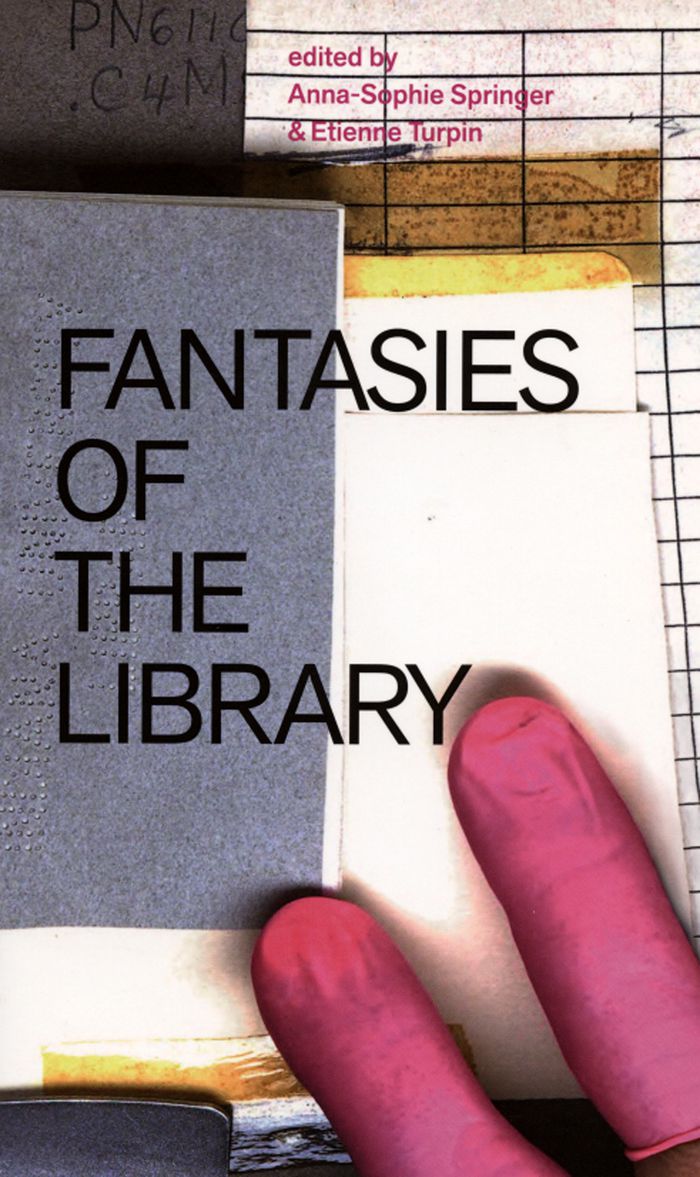
''Fantasies of the Library'' lets readers experience the library anew. The book imagines, and enacts, the library as both keeper of books and curator of ideas--as a platform of the future. One essay occupies the right-hand page of a two-page spread while interviews scrolls independently on the left. Bibliophilic artworks intersect both throughout the book-as-exhibition. A photo essay, "Reading Rooms Reading Machines" further interrupts the book in order to display images of libraries (old and new, real and imagined), and readers (human and machine) and features work by artists including Kader Atta, Wafaa Bilal, Mark Dion, Rodney Graham, Katie Paterson, Veronika Spierenburg, and others.
Fantasies of the library
Actions:
Prix:
$32.95
(disponible sur commande)
Résumé:
''Fantasies of the Library'' lets readers experience the library anew. The book imagines, and enacts, the library as both keeper of books and curator of ideas--as a platform of the future. One essay occupies the right-hand page of a two-page spread while interviews scrolls independently on the left. Bibliophilic artworks intersect both throughout the book-as-exhibition. A photo essay, "Reading Rooms Reading Machines" further interrupts the book in order to display images of libraries (old and new, real and imagined), and readers (human and machine) and features work by artists including Kader Atta, Wafaa Bilal, Mark Dion, Rodney Graham, Katie Paterson, Veronika Spierenburg, and others.
Classification:
livres
livres
Publication:
septembre 2016
septembre 2016
Classification:
livres
livres
Actions:
Prix:
$56.95
(disponible sur commande)
Résumé:
Le moment est venu d’archiver l’« architecture radicale ». Mais cela signifie de considérer ce moment comme le chapitre clé d’une trajectoire culturelle qui porte un autre titre : celui d’une architecture rationaliste comprise comme l’une des composantes du Mouvement moderne les plus expérimentales : machine à habiter, existenzminimum, less is more, etc. En se cantonnant(...)
$56.95
(disponible sur commande)
Résumé:
Le moment est venu d’archiver l’« architecture radicale ». Mais cela signifie de considérer ce moment comme le chapitre clé d’une trajectoire culturelle qui porte un autre titre : celui d’une architecture rationaliste comprise comme l’une des composantes du Mouvement moderne les plus expérimentales : machine à habiter, existenzminimum, less is more, etc. En se cantonnant(...)
Sujet:
Architecture, monographies
Architecture, monographies
Publication:
novembre 2019
novembre 2019
Titre:
Le monument continu de Superstudio : excès du rationalisme et stratégie du refus
Actions:
Prix:
$56.95
(disponible sur commande)
Résumé:
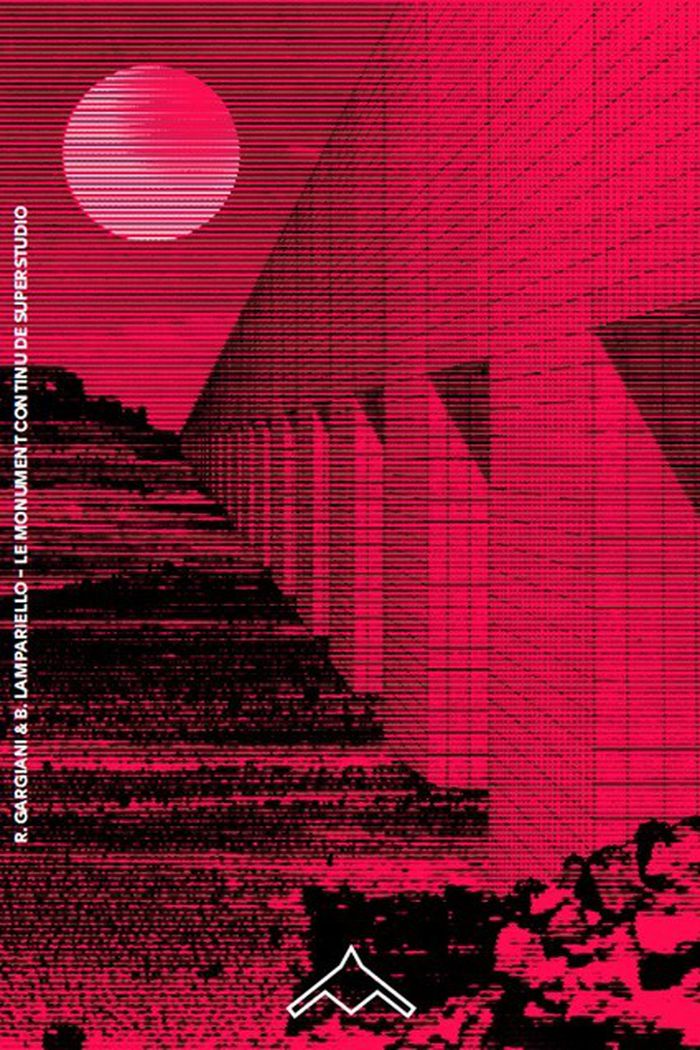
Le moment est venu d’archiver l’« architecture radicale ». Mais cela signifie de considérer ce moment comme le chapitre clé d’une trajectoire culturelle qui porte un autre titre : celui d’une architecture rationaliste comprise comme l’une des composantes du Mouvement moderne les plus expérimentales : machine à habiter, existenzminimum, less is more, etc. En se cantonnant à la période comprise entre mars et décembre 1969, Gargiani et Lampariello offrent ici une généalogie serrée du groupe Superstudio à travers leur iconique projet de Monument Continu. Les deux historiens reviennent sur leurs territoires philosophiques et mystiques, mais aussi sur ce qui rendit énigmatique et si fascinant leur hyper-rationalisme dans une époque de profonde rénovation sociale.
Le monument continu de Superstudio : excès du rationalisme et stratégie du refus
Actions:
Prix:
$56.95
(disponible sur commande)
Résumé:
Le moment est venu d’archiver l’« architecture radicale ». Mais cela signifie de considérer ce moment comme le chapitre clé d’une trajectoire culturelle qui porte un autre titre : celui d’une architecture rationaliste comprise comme l’une des composantes du Mouvement moderne les plus expérimentales : machine à habiter, existenzminimum, less is more, etc. En se cantonnant à la période comprise entre mars et décembre 1969, Gargiani et Lampariello offrent ici une généalogie serrée du groupe Superstudio à travers leur iconique projet de Monument Continu. Les deux historiens reviennent sur leurs territoires philosophiques et mystiques, mais aussi sur ce qui rendit énigmatique et si fascinant leur hyper-rationalisme dans une époque de profonde rénovation sociale.
Classification:
livres
livres
Publication:
novembre 2019
novembre 2019
Sujet:
Architecture, monographies
Architecture, monographies
Classification:
livres
livres

Actions:
Prix:
$80.00
(disponible sur commande)
Résumé:
Le Corbusier, Homme de Lettres is the first in-depth study of Le Corbusier as a writer as well as an architect. Featuring more than two hundred archival images from Le Corbusier's life and work, this groundbreaking book examines his many writing projects from 1907 to 1947, as well as his letters written to two mentors: Charles L'Eplattenier and William Ritter. This book(...)
$80.00
(disponible sur commande)
Résumé:
Le Corbusier, Homme de Lettres is the first in-depth study of Le Corbusier as a writer as well as an architect. Featuring more than two hundred archival images from Le Corbusier's life and work, this groundbreaking book examines his many writing projects from 1907 to 1947, as well as his letters written to two mentors: Charles L'Eplattenier and William Ritter. This book(...)
Titre:
Le Corbusier, Homme de lettres
Actions:
Prix:
$80.00
(disponible sur commande)
Résumé:
Le Corbusier, Homme de Lettres is the first in-depth study of Le Corbusier as a writer as well as an architect. Featuring more than two hundred archival images from Le Corbusier's life and work, this groundbreaking book examines his many writing projects from 1907 to 1947, as well as his letters written to two mentors: Charles L'Eplattenier and William Ritter. This book shows how his voluminous books, diaries, letters, sketchbooks, travel notebooks, lecture transcriptions, exposition catalogs, journal articles reflects not just a compulsion to write, but a passion for advancing his ideas about the relationship between architecture, urbanism, and society in a new machine age.
Le Corbusier, Homme de lettres
Actions:
Prix:
$80.00
(disponible sur commande)
Résumé:
Le Corbusier, Homme de Lettres is the first in-depth study of Le Corbusier as a writer as well as an architect. Featuring more than two hundred archival images from Le Corbusier's life and work, this groundbreaking book examines his many writing projects from 1907 to 1947, as well as his letters written to two mentors: Charles L'Eplattenier and William Ritter. This book shows how his voluminous books, diaries, letters, sketchbooks, travel notebooks, lecture transcriptions, exposition catalogs, journal articles reflects not just a compulsion to write, but a passion for advancing his ideas about the relationship between architecture, urbanism, and society in a new machine age.
Classification:
livres
livres
Publication:
octobre 2010
octobre 2010
Sujet:
Architecture, monographies
Architecture, monographies
Classification:
livres
livres

Actions:
Prix:
$51.00
(disponible sur commande)
Résumé:
Le Corbusier, Homme de Lettres is the first in-depth study of Le Corbusier as a writer as well as an architect. Featuring more than two hundred archival images from Le Corbusier's life and work, this groundbreaking book examines his many writing projects from 1907 to 1947, as well as his letters written to two mentors: Charles L'Eplattenier and William Ritter. This book(...)
$51.00
(disponible sur commande)
Résumé:
Le Corbusier, Homme de Lettres is the first in-depth study of Le Corbusier as a writer as well as an architect. Featuring more than two hundred archival images from Le Corbusier's life and work, this groundbreaking book examines his many writing projects from 1907 to 1947, as well as his letters written to two mentors: Charles L'Eplattenier and William Ritter. This book(...)
Titre:
Le Corbusier, Homme de lettres
Actions:
Prix:
$51.00
(disponible sur commande)
Résumé:
Le Corbusier, Homme de Lettres is the first in-depth study of Le Corbusier as a writer as well as an architect. Featuring more than two hundred archival images from Le Corbusier's life and work, this groundbreaking book examines his many writing projects from 1907 to 1947, as well as his letters written to two mentors: Charles L'Eplattenier and William Ritter. This book shows how his voluminous books, diaries, letters, sketchbooks, travel notebooks, lecture transcriptions, exposition catalogs, journal articles reflects not just a compulsion to write, but a passion for advancing his ideas about the relationship between architecture, urbanism, and society in a new machine age.
Le Corbusier, Homme de lettres
Actions:
Prix:
$51.00
(disponible sur commande)
Résumé:
Le Corbusier, Homme de Lettres is the first in-depth study of Le Corbusier as a writer as well as an architect. Featuring more than two hundred archival images from Le Corbusier's life and work, this groundbreaking book examines his many writing projects from 1907 to 1947, as well as his letters written to two mentors: Charles L'Eplattenier and William Ritter. This book shows how his voluminous books, diaries, letters, sketchbooks, travel notebooks, lecture transcriptions, exposition catalogs, journal articles reflects not just a compulsion to write, but a passion for advancing his ideas about the relationship between architecture, urbanism, and society in a new machine age.
Classification:
livres
livres
Publication:
octobre 2010
octobre 2010
Sujet:
Architecture, monographies
Architecture, monographies
Classification:
livres
livres
Titre:
Kraftwerk
Kraftwerk
Actions:
Prix:
$36.95
(disponible sur commande)
Résumé:
Kraftwerk est reconnu comme le pionnier des musiques électroniques, signant les premiers tubes électro-pop, dont le célèbre « Radioactivity ». Dans un monde saturé d’informations, une symbolique forte facilite l’installation d’un groupe dans nos mémoires. Avant les casques de Daft Punk, il y a Kraftwerk, Autobahn et The Man Machine, un panneau de signalisation d’autoroute(...)
$36.95
(disponible sur commande)
Résumé:
Kraftwerk est reconnu comme le pionnier des musiques électroniques, signant les premiers tubes électro-pop, dont le célèbre « Radioactivity ». Dans un monde saturé d’informations, une symbolique forte facilite l’installation d’un groupe dans nos mémoires. Avant les casques de Daft Punk, il y a Kraftwerk, Autobahn et The Man Machine, un panneau de signalisation d’autoroute(...)
Titre:
Kraftwerk
Actions:
Prix:
$36.95
(disponible sur commande)
Résumé:
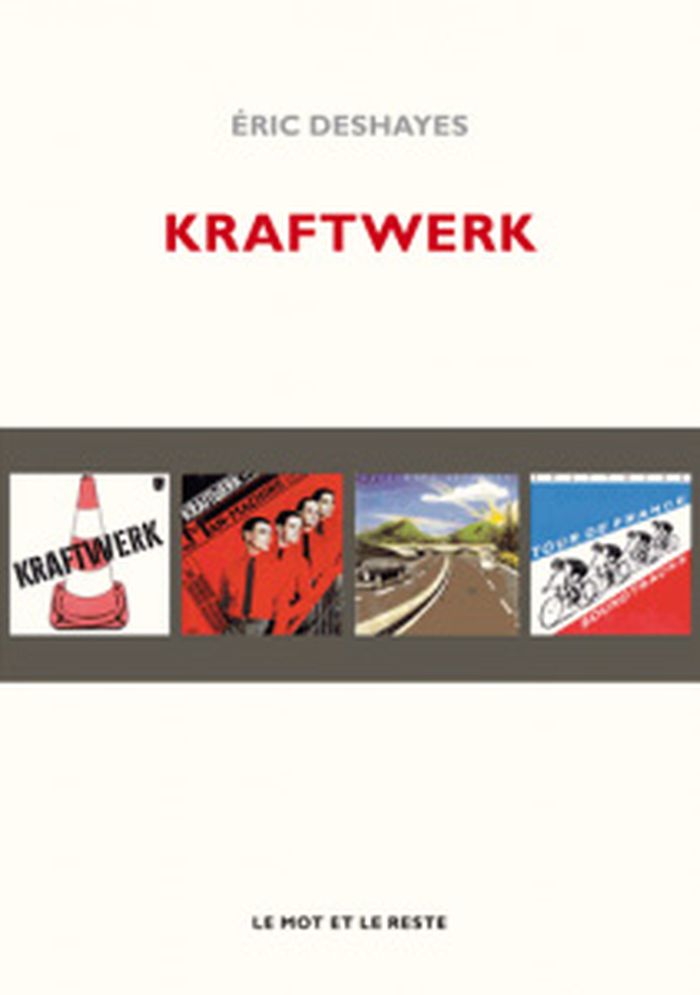
Kraftwerk est reconnu comme le pionnier des musiques électroniques, signant les premiers tubes électro-pop, dont le célèbre « Radioactivity ». Dans un monde saturé d’informations, une symbolique forte facilite l’installation d’un groupe dans nos mémoires. Avant les casques de Daft Punk, il y a Kraftwerk, Autobahn et The Man Machine, un panneau de signalisation d’autoroute et quatre hommes à l’allure robotique. Le groupe joue avec des codes d’identification à la fois puissamment expressifs et désarmants de simplicité. L’histoire de Kraftwerk permet de revenir sur l’émergence des musiques électroniques et de décrypter le vocabulaire de la pop en tant qu’art majeur, c’est aussi évoquer le constructivisme russe, le Bauhaus et le futurisme.
Kraftwerk
Actions:
Prix:
$36.95
(disponible sur commande)
Résumé:
Kraftwerk est reconnu comme le pionnier des musiques électroniques, signant les premiers tubes électro-pop, dont le célèbre « Radioactivity ». Dans un monde saturé d’informations, une symbolique forte facilite l’installation d’un groupe dans nos mémoires. Avant les casques de Daft Punk, il y a Kraftwerk, Autobahn et The Man Machine, un panneau de signalisation d’autoroute et quatre hommes à l’allure robotique. Le groupe joue avec des codes d’identification à la fois puissamment expressifs et désarmants de simplicité. L’histoire de Kraftwerk permet de revenir sur l’émergence des musiques électroniques et de décrypter le vocabulaire de la pop en tant qu’art majeur, c’est aussi évoquer le constructivisme russe, le Bauhaus et le futurisme.
Classification:
livres
livres
Publication:
octobre 2014
octobre 2014
Sujet:
Acoustique
Acoustique
Classification:
livres
livres
Actions:
Prix:
$96.00
(disponible sur commande)
Résumé:
The first series ever realised by Italian photographer Olivo Barbieri, Flippers derives from his discovery of an abandoned, derelict pinball machine factory, and marks the starting point of his observations on visualising the superficial, which would lead to his artistic engagement with the uncertainty of the world’s surface. The fragmented pinball machines act as a(...)
$96.00
(disponible sur commande)
Résumé:
The first series ever realised by Italian photographer Olivo Barbieri, Flippers derives from his discovery of an abandoned, derelict pinball machine factory, and marks the starting point of his observations on visualising the superficial, which would lead to his artistic engagement with the uncertainty of the world’s surface. The fragmented pinball machines act as a(...)
Titre:
Olivo Barbieri: flippers 1977-1978
Actions:
Prix:
$96.00
(disponible sur commande)
Résumé:
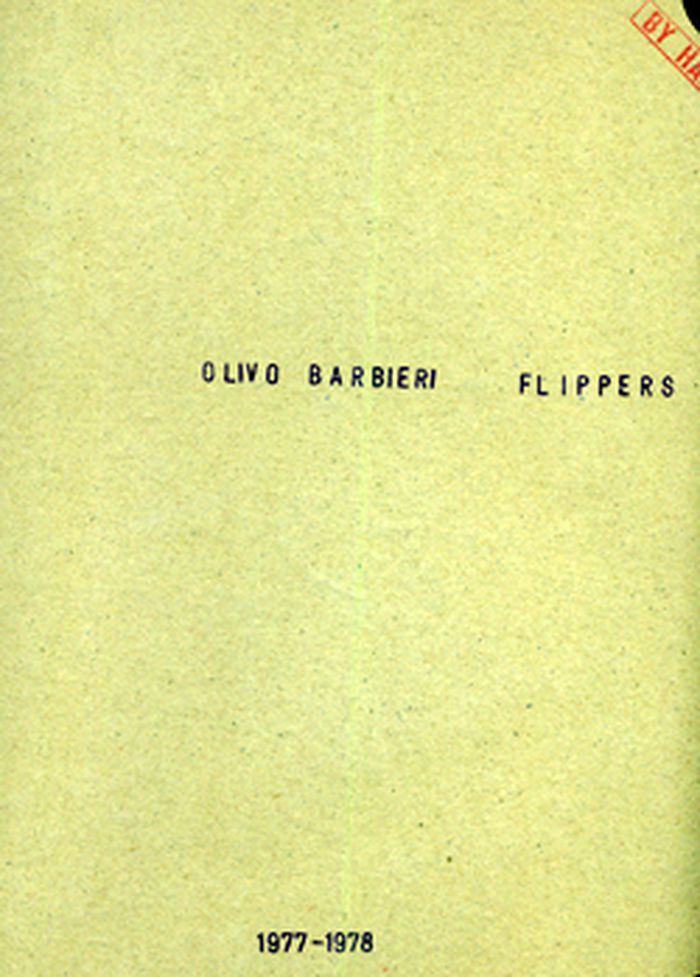
The first series ever realised by Italian photographer Olivo Barbieri, Flippers derives from his discovery of an abandoned, derelict pinball machine factory, and marks the starting point of his observations on visualising the superficial, which would lead to his artistic engagement with the uncertainty of the world’s surface. The fragmented pinball machines act as a cultural reminder, a throwback to the flashing momentum of the 1960s and ’70s, with rock music, science fiction, movie stars, and flower power. Published in its entirety for the first time, the pinball project was a formative experience for the photographer in his early years. Includes an interview with Barbieri and Francesco Zanot.
Olivo Barbieri: flippers 1977-1978
Actions:
Prix:
$96.00
(disponible sur commande)
Résumé:
The first series ever realised by Italian photographer Olivo Barbieri, Flippers derives from his discovery of an abandoned, derelict pinball machine factory, and marks the starting point of his observations on visualising the superficial, which would lead to his artistic engagement with the uncertainty of the world’s surface. The fragmented pinball machines act as a cultural reminder, a throwback to the flashing momentum of the 1960s and ’70s, with rock music, science fiction, movie stars, and flower power. Published in its entirety for the first time, the pinball project was a formative experience for the photographer in his early years. Includes an interview with Barbieri and Francesco Zanot.
Classification:
livres
livres
Publication:
octobre 2015
octobre 2015
Sujet:
Monographies photo
Monographies photo
Classification:
livres
livres
Titre:
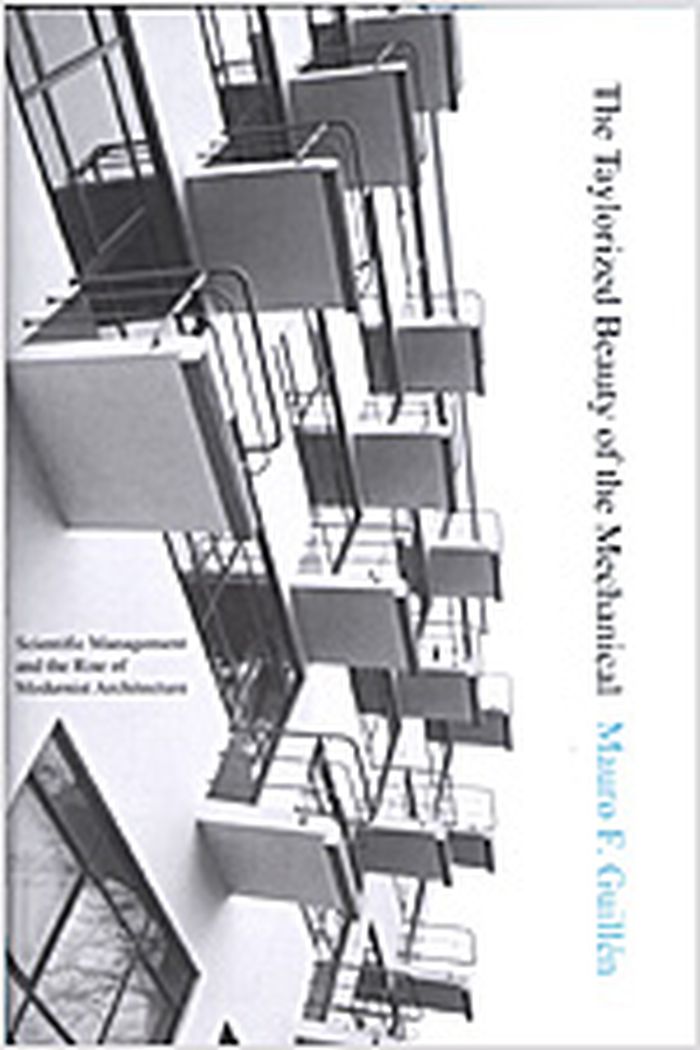
The taylorized beauty of the mechanical : scientific managment and rise of modernist architecture
The taylorized beauty of the mechanical : scientific managment and rise of modernist architecture
Actions:
Prix:
$37.50
(disponible sur commande)
Résumé:
The dream of scientific management was a rationalized machine world where life would approach the perfection of an assembly line. But since its early twentieth-century peak this dream has come to seem a dehumanizing nightmare. Henry Ford's assembly lines turned out a quarter of a million cars in 1914, but all of them were black. Forgotten has been the unparalleled new(...)
$37.50
(disponible sur commande)
Résumé:
The dream of scientific management was a rationalized machine world where life would approach the perfection of an assembly line. But since its early twentieth-century peak this dream has come to seem a dehumanizing nightmare. Henry Ford's assembly lines turned out a quarter of a million cars in 1914, but all of them were black. Forgotten has been the unparalleled new(...)
Publication:
juillet 2006, Princeton / Oxford
juillet 2006, Princeton / Oxford
Titre:
The taylorized beauty of the mechanical : scientific managment and rise of modernist architecture
Actions:
Prix:
$37.50
(disponible sur commande)
Résumé:
The dream of scientific management was a rationalized machine world where life would approach the perfection of an assembly line. But since its early twentieth-century peak this dream has come to seem a dehumanizing nightmare. Henry Ford's assembly lines turned out a quarter of a million cars in 1914, but all of them were black. Forgotten has been the unparalleled new aesthetic beauty once seen in the ideas of Ford and scientific management pioneer Frederick Winslow Taylor. In "The taylorized beauty of the mechanical", Mauro Guillén recovers this history and retells the story of the emergence of modernist architecture as a romance with the ideas of scientific management - one that permanently reshaped the profession of architecture. Modernist architecture's pioneers, Guillén shows, found in scientific management the promise of a new, functional, machine-like--and beautiful--architecture, and the prospect of a new role for the architect as technical professional and social reformer. Taylor and Ford had a signal influence on Bauhaus founder Walter Gropius and on Le Corbusier and his Towards a New Architecture, the most important manifesto of modernist architecture. Architects were so enamored with the ideas of scientific management that they adopted them even when there was no functional advantage to do so. Not a traditional architectural history but rather a sociological study of the profession of architecture during its early modernist period, "The taylorized beauty of the mechanical" provides a new understanding of the degree to which modernist architecture emerged from a tradition of engineering and industrial management.
The taylorized beauty of the mechanical : scientific managment and rise of modernist architecture
Actions:
Prix:
$37.50
(disponible sur commande)
Résumé:
The dream of scientific management was a rationalized machine world where life would approach the perfection of an assembly line. But since its early twentieth-century peak this dream has come to seem a dehumanizing nightmare. Henry Ford's assembly lines turned out a quarter of a million cars in 1914, but all of them were black. Forgotten has been the unparalleled new aesthetic beauty once seen in the ideas of Ford and scientific management pioneer Frederick Winslow Taylor. In "The taylorized beauty of the mechanical", Mauro Guillén recovers this history and retells the story of the emergence of modernist architecture as a romance with the ideas of scientific management - one that permanently reshaped the profession of architecture. Modernist architecture's pioneers, Guillén shows, found in scientific management the promise of a new, functional, machine-like--and beautiful--architecture, and the prospect of a new role for the architect as technical professional and social reformer. Taylor and Ford had a signal influence on Bauhaus founder Walter Gropius and on Le Corbusier and his Towards a New Architecture, the most important manifesto of modernist architecture. Architects were so enamored with the ideas of scientific management that they adopted them even when there was no functional advantage to do so. Not a traditional architectural history but rather a sociological study of the profession of architecture during its early modernist period, "The taylorized beauty of the mechanical" provides a new understanding of the degree to which modernist architecture emerged from a tradition of engineering and industrial management.
Classification:
livres
livres
Publication:
juillet 2006, Princeton / Oxford
juillet 2006, Princeton / Oxford
Classification:
livres
livres

Titre:
The second digital turn
The second digital turn
Actions:
Prix:
$33.95
(disponible sur commande)
Résumé:
Almost a generation ago, the early software for computer aided design and manufacturing (CAD/CAM) spawned a style of smooth and curving lines and surfaces that gave visible form to the first digital age, and left an indelible mark on contemporary architecture. But today's digitally intelligent architecture no longer looks that way. In The Second Digital Turn, Mario Carpo(...)
$33.95
(disponible sur commande)
Résumé:
Almost a generation ago, the early software for computer aided design and manufacturing (CAD/CAM) spawned a style of smooth and curving lines and surfaces that gave visible form to the first digital age, and left an indelible mark on contemporary architecture. But today's digitally intelligent architecture no longer looks that way. In The Second Digital Turn, Mario Carpo(...)
Titre:
The second digital turn
Actions:
Prix:
$33.95
(disponible sur commande)
Résumé:
Almost a generation ago, the early software for computer aided design and manufacturing (CAD/CAM) spawned a style of smooth and curving lines and surfaces that gave visible form to the first digital age, and left an indelible mark on contemporary architecture. But today's digitally intelligent architecture no longer looks that way. In The Second Digital Turn, Mario Carpo explains that this is because the design professions are now coming to terms with a new kind of digital tools they have adopted—no longer tools for making but tools for thinking. In the early 1990s the design professions were the first to intuit and interpret the new technical logic of the digital age: digital mass-customization (the use of digital tools to mass-produce variations at no extra cost) has already changed the way we produce and consume almost everything, and the same technology applied to commerce at large is now heralding a new society without scale—a flat marginal cost society where bigger markets will not make anything cheaper. But today, the unprecedented power of computation also favors a new kind of science where prediction can be based on sheer information retrieval, and form finding by simulation and optimization can replace deduction from mathematical formulas. Designers have been toying with machine thinking and machine learning for some time, and the apparently unfathomable complexity of the physical shapes they are now creating already expresses a new form of artificial intelligence, outside the tradition of modern science and alien to the organic logic of our mind.
The second digital turn
Actions:
Prix:
$33.95
(disponible sur commande)
Résumé:
Almost a generation ago, the early software for computer aided design and manufacturing (CAD/CAM) spawned a style of smooth and curving lines and surfaces that gave visible form to the first digital age, and left an indelible mark on contemporary architecture. But today's digitally intelligent architecture no longer looks that way. In The Second Digital Turn, Mario Carpo explains that this is because the design professions are now coming to terms with a new kind of digital tools they have adopted—no longer tools for making but tools for thinking. In the early 1990s the design professions were the first to intuit and interpret the new technical logic of the digital age: digital mass-customization (the use of digital tools to mass-produce variations at no extra cost) has already changed the way we produce and consume almost everything, and the same technology applied to commerce at large is now heralding a new society without scale—a flat marginal cost society where bigger markets will not make anything cheaper. But today, the unprecedented power of computation also favors a new kind of science where prediction can be based on sheer information retrieval, and form finding by simulation and optimization can replace deduction from mathematical formulas. Designers have been toying with machine thinking and machine learning for some time, and the apparently unfathomable complexity of the physical shapes they are now creating already expresses a new form of artificial intelligence, outside the tradition of modern science and alien to the organic logic of our mind.
Classification:
livres
livres
Publication:
octobre 2017
octobre 2017
Sujet:
Architecture numérique
Architecture numérique
Classification:
livres
livres
Actions:
Prix:
$26.95
(disponible sur commande)
Résumé:
The dream of scientific management was a rationalized machine world where life would approach the perfection of an assembly line. But since its early twentieth-century peak this dream has come to seem a dehumanizing nightmare. Henry Ford's assembly lines turned out a quarter of a million cars in 1914, but all of them were black. Forgotten has been the unparalleled new(...)
$26.95
(disponible sur commande)
Résumé:
The dream of scientific management was a rationalized machine world where life would approach the perfection of an assembly line. But since its early twentieth-century peak this dream has come to seem a dehumanizing nightmare. Henry Ford's assembly lines turned out a quarter of a million cars in 1914, but all of them were black. Forgotten has been the unparalleled new(...)
Titre:
The taylorized beauty of the mechanical
Actions:
Prix:
$26.95
(disponible sur commande)
Résumé:
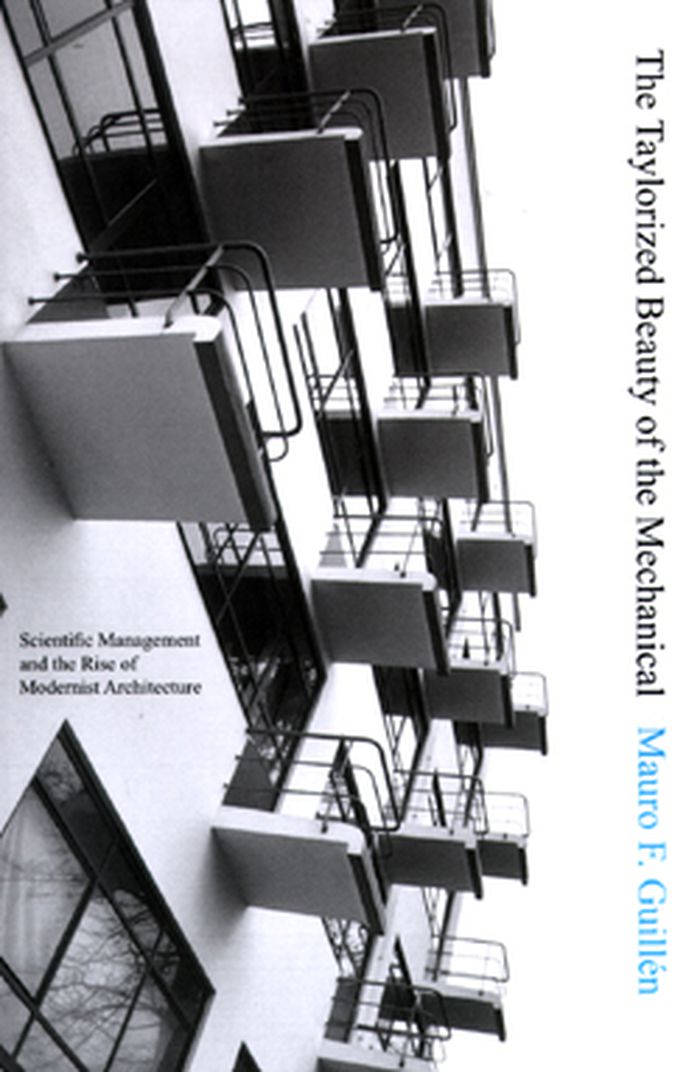
The dream of scientific management was a rationalized machine world where life would approach the perfection of an assembly line. But since its early twentieth-century peak this dream has come to seem a dehumanizing nightmare. Henry Ford's assembly lines turned out a quarter of a million cars in 1914, but all of them were black. Forgotten has been the unparalleled new aesthetic beauty once seen in the ideas of Ford and scientific management pioneer Frederick Winslow Taylor. In The Taylorized Beauty of the Mechanical, Mauro Guillén recovers this history and retells the story of the emergence of modernist architecture as a romance with the ideas of scientific management--one that permanently reshaped the profession of architecture. Modernist architecture's pioneers, Guillén shows, found in scientific management the promise of a new, functional, machine-like--and beautiful--architecture, and the prospect of a new role for the architect as technical professional and social reformer. Taylor and Ford had a signal influence on Bauhaus founder Walter Gropius and on Le Corbusier and his Towards a New Architecture, the most important manifesto of modernist architecture. Architects were so enamored with the ideas of scientific management that they adopted them even when there was no functional advantage to do so. Not a traditional architectural history but rather a sociological study of the profession of architecture during its early modernist period, The Taylorized Beauty of the Mechanical provides a new understanding of the degree to which modernist architecture emerged from a tradition of engineering and industrial management.
The taylorized beauty of the mechanical
Actions:
Prix:
$26.95
(disponible sur commande)
Résumé:
The dream of scientific management was a rationalized machine world where life would approach the perfection of an assembly line. But since its early twentieth-century peak this dream has come to seem a dehumanizing nightmare. Henry Ford's assembly lines turned out a quarter of a million cars in 1914, but all of them were black. Forgotten has been the unparalleled new aesthetic beauty once seen in the ideas of Ford and scientific management pioneer Frederick Winslow Taylor. In The Taylorized Beauty of the Mechanical, Mauro Guillén recovers this history and retells the story of the emergence of modernist architecture as a romance with the ideas of scientific management--one that permanently reshaped the profession of architecture. Modernist architecture's pioneers, Guillén shows, found in scientific management the promise of a new, functional, machine-like--and beautiful--architecture, and the prospect of a new role for the architect as technical professional and social reformer. Taylor and Ford had a signal influence on Bauhaus founder Walter Gropius and on Le Corbusier and his Towards a New Architecture, the most important manifesto of modernist architecture. Architects were so enamored with the ideas of scientific management that they adopted them even when there was no functional advantage to do so. Not a traditional architectural history but rather a sociological study of the profession of architecture during its early modernist period, The Taylorized Beauty of the Mechanical provides a new understanding of the degree to which modernist architecture emerged from a tradition of engineering and industrial management.
Classification:
livres
livres
Publication:
décembre 2008, Princeton
décembre 2008, Princeton
Sujet:
Théorie de l’architecture
Théorie de l’architecture
Classification:
livres
livres
Actions:
Exemplaires:
Description:
xxii, 729 pages : illustrations, maps ; 29 cm
Description:
xxii, 729 pages : illustrations, maps ; 29 cm
Auteur:
Sujet:
Publication:
Hoboken, N.J. : John Wiley & Sons, ©2011.
Hoboken, N.J. : John Wiley & Sons, ©2011.
Titre:
Architectural conservation in Europe and the Americas : national experiences and practice / John H. Stubbs and Emily G. Maka's ; foreword by Mounir Bouchenaki.
Actions:
Exemplaires:
Description:
xxii, 729 pages : illustrations, maps ; 29 cm
Architectural conservation in Europe and the Americas : national experiences and practice / John H. Stubbs and Emily G. Maka's ; foreword by Mounir Bouchenaki.
Actions:
Exemplaires:
Description:
xxii, 729 pages : illustrations, maps ; 29 cm
Classification:
livres
livres
Publication:
Hoboken, N.J. : John Wiley & Sons, ©2011.
Hoboken, N.J. : John Wiley & Sons, ©2011.
Auteur:
Sujet:


