


36938 Résultats
Niveau de description archivistique:
Projet
Projet
Numéro de référence:
AP140.S2.SS1.D67
Description:
File documents an unexecuted project for a new public library and garden in Latina, Italy. The proposal integrates a former hospital and a garage built in the 1930s. Material in this file was produced between 1973 and 1989. File contains a few reference drawings, several conceptual and design development drawings as well as presentation drawings. Photographic materials include views of models by John Donat Photography and by Kandor Modelmakers. File also contains textual records, study models and a presentation model.
AP140.S2.SS1.D67
Description:
File documents an unexecuted project for a new public library and garden in Latina, Italy. The proposal integrates a former hospital and a garage built in the 1930s. Material in this file was produced between 1973 and 1989. File contains a few reference drawings, several conceptual and design development drawings as well as presentation drawings. Photographic materials include views of models by John Donat Photography and by Kandor Modelmakers. File also contains textual records, study models and a presentation model.
Personnes et institutions:
Date:
1973-1989
1973-1989
Titre:
Biblioteca pubblica, Latina, Italy
Actions:
AP140.S2.SS1.D67
Description:
File documents an unexecuted project for a new public library and garden in Latina, Italy. The proposal integrates a former hospital and a garage built in the 1930s. Material in this file was produced between 1973 and 1989. File contains a few reference drawings, several conceptual and design development drawings as well as presentation drawings. Photographic materials include views of models by John Donat Photography and by Kandor Modelmakers. File also contains textual records, study models and a presentation model.
Biblioteca pubblica, Latina, Italy
Actions:
AP140.S2.SS1.D67
Description:
File documents an unexecuted project for a new public library and garden in Latina, Italy. The proposal integrates a former hospital and a garage built in the 1930s. Material in this file was produced between 1973 and 1989. File contains a few reference drawings, several conceptual and design development drawings as well as presentation drawings. Photographic materials include views of models by John Donat Photography and by Kandor Modelmakers. File also contains textual records, study models and a presentation model.
Niveau de description archivistique:
File 67
File 67
Date:
1973-1989
1973-1989
Personnes et institutions:
Classification:
événements
événements
Actions:
Description:
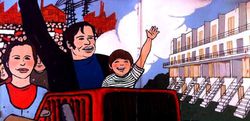
Évoquant un défi célèbre lancé par Le Corbusier, « Architecture ou révolution », cette conversation établira la place du processus du SAAL au Portugal parmi les débats internationaux des années 1960 et 1970 sur le logement social et la responsabilité de l’architecte dans ce domaine. Nuno Portas, secrétaire d’État au Logement et à l’Urbanisme nommé après la révolution(...)
Évoquant un défi célèbre lancé par Le Corbusier, « Architecture ou révolution », cette conversation établira la place du processus du SAAL au Portugal parmi les débats internationaux des années 1960 et 1970 sur le logement social et la responsabilité de l’architecte dans ce domaine. Nuno Portas, secrétaire d’État au Logement et à l’Urbanisme nommé après la révolution(...)
Localisation:
Théâtre Paul-Desmarais
Théâtre Paul-Desmarais
Date:
14 mai 2015 , 18h
14 mai 2015 , 18h
Titre:
Architecture ou révolution ? Une conversation avec Nuno Portas et Nuno Grande
Actions:
Description:
Évoquant un défi célèbre lancé par Le Corbusier, « Architecture ou révolution », cette conversation établira la place du processus du SAAL au Portugal parmi les débats internationaux des années 1960 et 1970 sur le logement social et la responsabilité de l’architecte dans ce domaine. Nuno Portas, secrétaire d’État au Logement et à l’Urbanisme nommé après la révolution(...)
Architecture ou révolution ? Une conversation avec Nuno Portas et Nuno Grande
Actions:
Description:
Évoquant un défi célèbre lancé par Le Corbusier, « Architecture ou révolution », cette conversation établira la place du processus du SAAL au Portugal parmi les débats internationaux des années 1960 et 1970 sur le logement social et la responsabilité de l’architecte dans ce domaine. Nuno Portas, secrétaire d’État au Logement et à l’Urbanisme nommé après la révolution(...)
Classification:
événements
événements
Date:
14 mai 2015
18h
14 mai 2015
18h
Localisation:
Théâtre Paul-Desmarais
Théâtre Paul-Desmarais
Classification:
documents textuels
documents textuels
Numéro de référence:
ARCH186553
Description:
certificates and diplomas awarded to Desbarats from the National Design Council (c.1981), Canada Museum's Construction Corporation (1985), Ordre des architectes du Québec (1974), Ordre des architectes du Québec Prix d'excellence en architecture (1984), Concordia University (1977), American Public Works Association (1980), Médaille du Centenaire (1967), final proof of Who's Who entry, Guy Desbarats' C.V., correspondence from Jeanne Sauvé concerning Governor General's residence, correspondence with Roméo LeBlanc
ARCH186553
Description:
certificates and diplomas awarded to Desbarats from the National Design Council (c.1981), Canada Museum's Construction Corporation (1985), Ordre des architectes du Québec (1974), Ordre des architectes du Québec Prix d'excellence en architecture (1984), Concordia University (1977), American Public Works Association (1980), Médaille du Centenaire (1967), final proof of Who's Who entry, Guy Desbarats' C.V., correspondence from Jeanne Sauvé concerning Governor General's residence, correspondence with Roméo LeBlanc
Personnes et institutions:
Titre:
Certificates and diplomas awarded to Desbarats
Actions:
ARCH186553
Description:
certificates and diplomas awarded to Desbarats from the National Design Council (c.1981), Canada Museum's Construction Corporation (1985), Ordre des architectes du Québec (1974), Ordre des architectes du Québec Prix d'excellence en architecture (1984), Concordia University (1977), American Public Works Association (1980), Médaille du Centenaire (1967), final proof of Who's Who entry, Guy Desbarats' C.V., correspondence from Jeanne Sauvé concerning Governor General's residence, correspondence with Roméo LeBlanc
Certificates and diplomas awarded to Desbarats
Actions:
ARCH186553
Description:
certificates and diplomas awarded to Desbarats from the National Design Council (c.1981), Canada Museum's Construction Corporation (1985), Ordre des architectes du Québec (1974), Ordre des architectes du Québec Prix d'excellence en architecture (1984), Concordia University (1977), American Public Works Association (1980), Médaille du Centenaire (1967), final proof of Who's Who entry, Guy Desbarats' C.V., correspondence from Jeanne Sauvé concerning Governor General's residence, correspondence with Roméo LeBlanc
Classification:
documents textuels
documents textuels
Personnes et institutions:
Classification:
dessins
dessins
Numéro de référence:
AP154.S1.1973.PR01.SS2.041.1
Description:
Projects include Lobby Fire Control Panel, Redesign of Park Avenue Mall, Garage Ramp Resurfacing Project, Roof Restoration (5th Floor, High Roof), Plaza Restoration Project, Lobby Desk, Granite Sidewalk Project, Loading Dock Ramp Resurfacing, Lobby After Hours Signage, Standpipe Escutcheon Plates for the Plaza, 11th Floor Roof Restoration Project, Stair Pressurization Project, Restoration of Public Areas (16th, 28th, 30th and 31st floors).
AP154.S1.1973.PR01.SS2.041.1
Description:
Projects include Lobby Fire Control Panel, Redesign of Park Avenue Mall, Garage Ramp Resurfacing Project, Roof Restoration (5th Floor, High Roof), Plaza Restoration Project, Lobby Desk, Granite Sidewalk Project, Loading Dock Ramp Resurfacing, Lobby After Hours Signage, Standpipe Escutcheon Plates for the Plaza, 11th Floor Roof Restoration Project, Stair Pressurization Project, Restoration of Public Areas (16th, 28th, 30th and 31st floors).
Personnes et institutions:
Date:
1978-1989
1978-1989
Titre:
Various "Article 26" projects (container 1 of 5)
Actions:
AP154.S1.1973.PR01.SS2.041.1
Description:
Projects include Lobby Fire Control Panel, Redesign of Park Avenue Mall, Garage Ramp Resurfacing Project, Roof Restoration (5th Floor, High Roof), Plaza Restoration Project, Lobby Desk, Granite Sidewalk Project, Loading Dock Ramp Resurfacing, Lobby After Hours Signage, Standpipe Escutcheon Plates for the Plaza, 11th Floor Roof Restoration Project, Stair Pressurization Project, Restoration of Public Areas (16th, 28th, 30th and 31st floors).
Various "Article 26" projects (container 1 of 5)
Actions:
AP154.S1.1973.PR01.SS2.041.1
Description:
Projects include Lobby Fire Control Panel, Redesign of Park Avenue Mall, Garage Ramp Resurfacing Project, Roof Restoration (5th Floor, High Roof), Plaza Restoration Project, Lobby Desk, Granite Sidewalk Project, Loading Dock Ramp Resurfacing, Lobby After Hours Signage, Standpipe Escutcheon Plates for the Plaza, 11th Floor Roof Restoration Project, Stair Pressurization Project, Restoration of Public Areas (16th, 28th, 30th and 31st floors).
Classification:
dessins
dessins
Date:
1978-1989
1978-1989
Personnes et institutions:
Niveau de description archivistique:
Sous-série
Sous-série
Numéro de référence:
AP116.S3.SS20
Description:
Sub-series documents the planning and production of Public Fear: What's So Scary About Architecture?, issue 18 of ANY magazine (May) and its accompanying In ANY Event Symposium, held January 25, 1997 at the Guggenheim Museum, New York City, New York. Sub-series is arranged into seven files, by object type. Material in sub-series was produced between 1996 and 1997. Sub-series contains drafts, research materials, documents relating to publicity, articles, illustrations and photographs, mock-ups, videocassettes and audiocassettes of symposium and copies of the issue.
AP116.S3.SS20
Description:
Sub-series documents the planning and production of Public Fear: What's So Scary About Architecture?, issue 18 of ANY magazine (May) and its accompanying In ANY Event Symposium, held January 25, 1997 at the Guggenheim Museum, New York City, New York. Sub-series is arranged into seven files, by object type. Material in sub-series was produced between 1996 and 1997. Sub-series contains drafts, research materials, documents relating to publicity, articles, illustrations and photographs, mock-ups, videocassettes and audiocassettes of symposium and copies of the issue.
Personnes et institutions:
Date:
1996-1997
1996-1997
Titre:
Public Fear: What's So Scary About Architecture?
Actions:
AP116.S3.SS20
Description:
Sub-series documents the planning and production of Public Fear: What's So Scary About Architecture?, issue 18 of ANY magazine (May) and its accompanying In ANY Event Symposium, held January 25, 1997 at the Guggenheim Museum, New York City, New York. Sub-series is arranged into seven files, by object type. Material in sub-series was produced between 1996 and 1997. Sub-series contains drafts, research materials, documents relating to publicity, articles, illustrations and photographs, mock-ups, videocassettes and audiocassettes of symposium and copies of the issue.
Public Fear: What's So Scary About Architecture?
Actions:
AP116.S3.SS20
Description:
Sub-series documents the planning and production of Public Fear: What's So Scary About Architecture?, issue 18 of ANY magazine (May) and its accompanying In ANY Event Symposium, held January 25, 1997 at the Guggenheim Museum, New York City, New York. Sub-series is arranged into seven files, by object type. Material in sub-series was produced between 1996 and 1997. Sub-series contains drafts, research materials, documents relating to publicity, articles, illustrations and photographs, mock-ups, videocassettes and audiocassettes of symposium and copies of the issue.
Niveau de description archivistique:
Sub-series 20
Sub-series 20
Date:
1996-1997
1996-1997
Personnes et institutions:
Niveau de description archivistique:
Projet
Projet
Numéro de référence:
AP056.S1.1991.PR01
Description:
This project series documents a competition entry for the Vancouver Public Library in Vancouver from 1991-1992. The office identified the project number as 69112. The competition entry, submitted in 1991, consisted of the design of Vancouver's new public library, to be situated on the block between Homer, Georgia, Hamilton and Robson Streets. The project design included a seven-floor library connected by a walkway to an adjacent twenty-floor office tower that would house Public Works Canada. Both buildings had V shaped canopies on their roofs that looked like open books when viewed at an elevation. To the front of the library at ground level was the two-storey Library Concourse; a large hall made of glass windows and stone. The Concourse connected to the Robson Street entrance, and the Library Hall entrance at the corner of Homer and Georgia Streets. The architects described this as a porch-like space to be used for gatherings, public events, exhibits and displays. Moving into the heart of the library, patrons would pass through a cylindrical rotunda which extended upwards through every floor and above the roof terrace. The library would also have 2 levels of underground parking and a basement level with a circular theatre, concession areas and staff work areas. The ground floor would primarily consist of library stacks and tables but also included would be a gift shop, children's area, daycare, staff spaces, and an outdoor play area. The remaining floors were designated for library stacks, staff work areas and services. The top floor would hold administrative offices, built in a U shape around a large terrace. The terrace, complete with gardens, could be used for library events. This building would largely be made of glass windows at its exterior, with a round glass rotunda piercing through its rectangular shape. This project was never built. Although Kuwabara, Payne, McKenna, Blumberg Architects were finalists in this competition, the contract was eventually won and built by architect Moshe Safdie. The project is recorded through drawings, presentation panels, paintings, photographs and a model dating from 1991-1992. The drawings, which are mostly originals, include sketches, plans, sections, elevations, perspectives and isometrics. There are a number of watercolours (some mounted) and drawing panels used as presentation materials which have small texts about the project's design intention. The aquisition records for the 1993 donation of these project materials identify Michael McCann as the artist of 7 paintings in this project series; however it is not clear which 7 paintings were completed by this artist. The photographs show the completed project model, which is also contained in this project series.
AP056.S1.1991.PR01
Description:
This project series documents a competition entry for the Vancouver Public Library in Vancouver from 1991-1992. The office identified the project number as 69112. The competition entry, submitted in 1991, consisted of the design of Vancouver's new public library, to be situated on the block between Homer, Georgia, Hamilton and Robson Streets. The project design included a seven-floor library connected by a walkway to an adjacent twenty-floor office tower that would house Public Works Canada. Both buildings had V shaped canopies on their roofs that looked like open books when viewed at an elevation. To the front of the library at ground level was the two-storey Library Concourse; a large hall made of glass windows and stone. The Concourse connected to the Robson Street entrance, and the Library Hall entrance at the corner of Homer and Georgia Streets. The architects described this as a porch-like space to be used for gatherings, public events, exhibits and displays. Moving into the heart of the library, patrons would pass through a cylindrical rotunda which extended upwards through every floor and above the roof terrace. The library would also have 2 levels of underground parking and a basement level with a circular theatre, concession areas and staff work areas. The ground floor would primarily consist of library stacks and tables but also included would be a gift shop, children's area, daycare, staff spaces, and an outdoor play area. The remaining floors were designated for library stacks, staff work areas and services. The top floor would hold administrative offices, built in a U shape around a large terrace. The terrace, complete with gardens, could be used for library events. This building would largely be made of glass windows at its exterior, with a round glass rotunda piercing through its rectangular shape. This project was never built. Although Kuwabara, Payne, McKenna, Blumberg Architects were finalists in this competition, the contract was eventually won and built by architect Moshe Safdie. The project is recorded through drawings, presentation panels, paintings, photographs and a model dating from 1991-1992. The drawings, which are mostly originals, include sketches, plans, sections, elevations, perspectives and isometrics. There are a number of watercolours (some mounted) and drawing panels used as presentation materials which have small texts about the project's design intention. The aquisition records for the 1993 donation of these project materials identify Michael McCann as the artist of 7 paintings in this project series; however it is not clear which 7 paintings were completed by this artist. The photographs show the completed project model, which is also contained in this project series.
Personnes et institutions:
Date:
1991-1992
1991-1992
Titre:
Vancouver Public Library Competition, British Columbia (1991)
Actions:
AP056.S1.1991.PR01
Description:
This project series documents a competition entry for the Vancouver Public Library in Vancouver from 1991-1992. The office identified the project number as 69112. The competition entry, submitted in 1991, consisted of the design of Vancouver's new public library, to be situated on the block between Homer, Georgia, Hamilton and Robson Streets. The project design included a seven-floor library connected by a walkway to an adjacent twenty-floor office tower that would house Public Works Canada. Both buildings had V shaped canopies on their roofs that looked like open books when viewed at an elevation. To the front of the library at ground level was the two-storey Library Concourse; a large hall made of glass windows and stone. The Concourse connected to the Robson Street entrance, and the Library Hall entrance at the corner of Homer and Georgia Streets. The architects described this as a porch-like space to be used for gatherings, public events, exhibits and displays. Moving into the heart of the library, patrons would pass through a cylindrical rotunda which extended upwards through every floor and above the roof terrace. The library would also have 2 levels of underground parking and a basement level with a circular theatre, concession areas and staff work areas. The ground floor would primarily consist of library stacks and tables but also included would be a gift shop, children's area, daycare, staff spaces, and an outdoor play area. The remaining floors were designated for library stacks, staff work areas and services. The top floor would hold administrative offices, built in a U shape around a large terrace. The terrace, complete with gardens, could be used for library events. This building would largely be made of glass windows at its exterior, with a round glass rotunda piercing through its rectangular shape. This project was never built. Although Kuwabara, Payne, McKenna, Blumberg Architects were finalists in this competition, the contract was eventually won and built by architect Moshe Safdie. The project is recorded through drawings, presentation panels, paintings, photographs and a model dating from 1991-1992. The drawings, which are mostly originals, include sketches, plans, sections, elevations, perspectives and isometrics. There are a number of watercolours (some mounted) and drawing panels used as presentation materials which have small texts about the project's design intention. The aquisition records for the 1993 donation of these project materials identify Michael McCann as the artist of 7 paintings in this project series; however it is not clear which 7 paintings were completed by this artist. The photographs show the completed project model, which is also contained in this project series.
Vancouver Public Library Competition, British Columbia (1991)
Actions:
AP056.S1.1991.PR01
Description:
This project series documents a competition entry for the Vancouver Public Library in Vancouver from 1991-1992. The office identified the project number as 69112. The competition entry, submitted in 1991, consisted of the design of Vancouver's new public library, to be situated on the block between Homer, Georgia, Hamilton and Robson Streets. The project design included a seven-floor library connected by a walkway to an adjacent twenty-floor office tower that would house Public Works Canada. Both buildings had V shaped canopies on their roofs that looked like open books when viewed at an elevation. To the front of the library at ground level was the two-storey Library Concourse; a large hall made of glass windows and stone. The Concourse connected to the Robson Street entrance, and the Library Hall entrance at the corner of Homer and Georgia Streets. The architects described this as a porch-like space to be used for gatherings, public events, exhibits and displays. Moving into the heart of the library, patrons would pass through a cylindrical rotunda which extended upwards through every floor and above the roof terrace. The library would also have 2 levels of underground parking and a basement level with a circular theatre, concession areas and staff work areas. The ground floor would primarily consist of library stacks and tables but also included would be a gift shop, children's area, daycare, staff spaces, and an outdoor play area. The remaining floors were designated for library stacks, staff work areas and services. The top floor would hold administrative offices, built in a U shape around a large terrace. The terrace, complete with gardens, could be used for library events. This building would largely be made of glass windows at its exterior, with a round glass rotunda piercing through its rectangular shape. This project was never built. Although Kuwabara, Payne, McKenna, Blumberg Architects were finalists in this competition, the contract was eventually won and built by architect Moshe Safdie. The project is recorded through drawings, presentation panels, paintings, photographs and a model dating from 1991-1992. The drawings, which are mostly originals, include sketches, plans, sections, elevations, perspectives and isometrics. There are a number of watercolours (some mounted) and drawing panels used as presentation materials which have small texts about the project's design intention. The aquisition records for the 1993 donation of these project materials identify Michael McCann as the artist of 7 paintings in this project series; however it is not clear which 7 paintings were completed by this artist. The photographs show the completed project model, which is also contained in this project series.
Niveau de description archivistique:
Project
Project
Date:
1991-1992
1991-1992
Personnes et institutions:
Niveau de description archivistique:
Projet
Projet
Numéro de référence:
AP164.S1.2003.D3
Description:
The project series documents the competition entry for the plan of the Trejo-Guadalporcún riverside, in Setenil de las Bodegas, Spain. The firm identified this project as number 163. The architects described their project as: “[…] a great public entertainment space, a beach which in one bank would accommodate the main tourist and citizen activity, and on the other bank, covering the terraced parking buildings, with bushes, flowers and trees would create an oceanic garden […]” (ARCH270975). Documenting the project are design development and presentation drawings, correspondence, and reference, photographic, digital and cartographic materials.
AP164.S1.2003.D3
Description:
The project series documents the competition entry for the plan of the Trejo-Guadalporcún riverside, in Setenil de las Bodegas, Spain. The firm identified this project as number 163. The architects described their project as: “[…] a great public entertainment space, a beach which in one bank would accommodate the main tourist and citizen activity, and on the other bank, covering the terraced parking buildings, with bushes, flowers and trees would create an oceanic garden […]” (ARCH270975). Documenting the project are design development and presentation drawings, correspondence, and reference, photographic, digital and cartographic materials.
Personnes et institutions:
Date:
2002-2003
2002-2003
Titre:
Ordenación de la ribera del arroyo Trejo-Guadalporcún, Setenil de las Bodegas, Cádiz, Spain (2003)
Actions:
AP164.S1.2003.D3
Description:
The project series documents the competition entry for the plan of the Trejo-Guadalporcún riverside, in Setenil de las Bodegas, Spain. The firm identified this project as number 163. The architects described their project as: “[…] a great public entertainment space, a beach which in one bank would accommodate the main tourist and citizen activity, and on the other bank, covering the terraced parking buildings, with bushes, flowers and trees would create an oceanic garden […]” (ARCH270975). Documenting the project are design development and presentation drawings, correspondence, and reference, photographic, digital and cartographic materials.
Ordenación de la ribera del arroyo Trejo-Guadalporcún, Setenil de las Bodegas, Cádiz, Spain (2003)
Actions:
AP164.S1.2003.D3
Description:
The project series documents the competition entry for the plan of the Trejo-Guadalporcún riverside, in Setenil de las Bodegas, Spain. The firm identified this project as number 163. The architects described their project as: “[…] a great public entertainment space, a beach which in one bank would accommodate the main tourist and citizen activity, and on the other bank, covering the terraced parking buildings, with bushes, flowers and trees would create an oceanic garden […]” (ARCH270975). Documenting the project are design development and presentation drawings, correspondence, and reference, photographic, digital and cartographic materials.
Niveau de description archivistique:
Project
Project
Date:
2002-2003
2002-2003
Personnes et institutions:
Niveau de description archivistique:
Projet
Projet
Numéro de référence:
AP140.S2.SS1.D78
Description:
File documents an unexecuted project for a public space on the site of a former Roman bath, in the old town of Aachen, Germany. The proposal was conceived by the office of Marlies Hentrup Norbert Heyers in association with James Stirling. It includes an exhibition building, a fountain and a café and restaurant. Material in this file was produced between 1987 and 1990. File contains photographic materials, including a photograph of the site by Marlies Hentrup and photographs of a presentation model by photographers Fotodesign. File also contains textual records.
AP140.S2.SS1.D78
Description:
File documents an unexecuted project for a public space on the site of a former Roman bath, in the old town of Aachen, Germany. The proposal was conceived by the office of Marlies Hentrup Norbert Heyers in association with James Stirling. It includes an exhibition building, a fountain and a café and restaurant. Material in this file was produced between 1987 and 1990. File contains photographic materials, including a photograph of the site by Marlies Hentrup and photographs of a presentation model by photographers Fotodesign. File also contains textual records.
Personnes et institutions:
Date:
1987-1990
1987-1990
Titre:
Kaiserquelle, Aachen, Germany
Actions:
AP140.S2.SS1.D78
Description:
File documents an unexecuted project for a public space on the site of a former Roman bath, in the old town of Aachen, Germany. The proposal was conceived by the office of Marlies Hentrup Norbert Heyers in association with James Stirling. It includes an exhibition building, a fountain and a café and restaurant. Material in this file was produced between 1987 and 1990. File contains photographic materials, including a photograph of the site by Marlies Hentrup and photographs of a presentation model by photographers Fotodesign. File also contains textual records.
Kaiserquelle, Aachen, Germany
Actions:
AP140.S2.SS1.D78
Description:
File documents an unexecuted project for a public space on the site of a former Roman bath, in the old town of Aachen, Germany. The proposal was conceived by the office of Marlies Hentrup Norbert Heyers in association with James Stirling. It includes an exhibition building, a fountain and a café and restaurant. Material in this file was produced between 1987 and 1990. File contains photographic materials, including a photograph of the site by Marlies Hentrup and photographs of a presentation model by photographers Fotodesign. File also contains textual records.
Niveau de description archivistique:
File 78
File 78
Date:
1987-1990
1987-1990
Personnes et institutions:
Classification:
archives
Niveau de description archivistique:
Fonds
archives
Niveau de description archivistique:
Fonds
Numéro de référence:
AP226
Résumé:
The Toyo Ito & Associates, Architects fonds, 1970 – 2011, documents the studio’s architectural work and involvement in selected exhibitions in the 1970s and 1980s. The records in this fonds represent 34 architectural projects, including built, unbuilt, and conceptual projects. The majority of the projects are located in Japan and are mostly documented through drawings as well as a limited number of videos, models, panels, textual records, and photographs. The fonds also contains records related to Toyo Ito & Associates, Architects’ participation in three exhibitions in the USA and the UK in 1978 and 1986.
AP226
Résumé:
The Toyo Ito & Associates, Architects fonds, 1970 – 2011, documents the studio’s architectural work and involvement in selected exhibitions in the 1970s and 1980s. The records in this fonds represent 34 architectural projects, including built, unbuilt, and conceptual projects. The majority of the projects are located in Japan and are mostly documented through drawings as well as a limited number of videos, models, panels, textual records, and photographs. The fonds also contains records related to Toyo Ito & Associates, Architects’ participation in three exhibitions in the USA and the UK in 1978 and 1986.
Personnes et institutions:
Date:
1970 - 2011
1970 - 2011
Titre:
Toyo Ito & Associates, Architects fonds
Actions:
AP226
Résumé:
The Toyo Ito & Associates, Architects fonds, 1970 – 2011, documents the studio’s architectural work and involvement in selected exhibitions in the 1970s and 1980s. The records in this fonds represent 34 architectural projects, including built, unbuilt, and conceptual projects. The majority of the projects are located in Japan and are mostly documented through drawings as well as a limited number of videos, models, panels, textual records, and photographs. The fonds also contains records related to Toyo Ito & Associates, Architects’ participation in three exhibitions in the USA and the UK in 1978 and 1986.
Toyo Ito & Associates, Architects fonds
Actions:
AP226
Résumé:
The Toyo Ito & Associates, Architects fonds, 1970 – 2011, documents the studio’s architectural work and involvement in selected exhibitions in the 1970s and 1980s. The records in this fonds represent 34 architectural projects, including built, unbuilt, and conceptual projects. The majority of the projects are located in Japan and are mostly documented through drawings as well as a limited number of videos, models, panels, textual records, and photographs. The fonds also contains records related to Toyo Ito & Associates, Architects’ participation in three exhibitions in the USA and the UK in 1978 and 1986.
Classification:
archives
Niveau de description archivistique:
Fonds
archives
Niveau de description archivistique:
Fonds
Date:
1970 - 2011
1970 - 2011
Personnes et institutions:
Niveau de description archivistique:
Projet
Projet
Numéro de référence:
AP178.S1.1988.PR03
Description:
This project series documents the Centro Galego de Arte Contemporânea in Santiago de Compostela, Spain. While the records were held in the office’s archives this project was assigned the number 54/80. The office assigned the date 1988 for this project. This project was commissioned by the Xunta de Galicia for the autonomous community of Galicia in Spain. The building was located near the Galego Pobo Museum and the Convento de Santo Domingo de Bonaval. The museum was approximately 75,000 square feet and divided into two L-shaped structures. The building had four floors and included exhibition halls, a terrace, a cafeteria, administrative spaces, an auditorium, and a library. The exterior was principally made of granite panels. The exhibition spaces were very bright, principally due to the natural light that came from multiple openings in the building as well as the white walls. The floors of the public spaces and exhibition rooms were made of Greek marble. Siza also transformed the Convento de Santo Domingo de Bonaval garden into a public park. The park was understood as an extension of the museum. Documenting this project are sketches, studies, preliminary drawings, plans and working drawings. Textual materials include project documentation and correspondence. Photographic materials document the models, project site and built project.
AP178.S1.1988.PR03
Description:
This project series documents the Centro Galego de Arte Contemporânea in Santiago de Compostela, Spain. While the records were held in the office’s archives this project was assigned the number 54/80. The office assigned the date 1988 for this project. This project was commissioned by the Xunta de Galicia for the autonomous community of Galicia in Spain. The building was located near the Galego Pobo Museum and the Convento de Santo Domingo de Bonaval. The museum was approximately 75,000 square feet and divided into two L-shaped structures. The building had four floors and included exhibition halls, a terrace, a cafeteria, administrative spaces, an auditorium, and a library. The exterior was principally made of granite panels. The exhibition spaces were very bright, principally due to the natural light that came from multiple openings in the building as well as the white walls. The floors of the public spaces and exhibition rooms were made of Greek marble. Siza also transformed the Convento de Santo Domingo de Bonaval garden into a public park. The park was understood as an extension of the museum. Documenting this project are sketches, studies, preliminary drawings, plans and working drawings. Textual materials include project documentation and correspondence. Photographic materials document the models, project site and built project.
Personnes et institutions:
Date:
1988-1995
1988-1995
Titre:
Centro Galego de Arte Contemporânea [Galician Centre of Contemporary Art], Santiago de Compostela, Spain, 1988-1993
Actions:
AP178.S1.1988.PR03
Description:
This project series documents the Centro Galego de Arte Contemporânea in Santiago de Compostela, Spain. While the records were held in the office’s archives this project was assigned the number 54/80. The office assigned the date 1988 for this project. This project was commissioned by the Xunta de Galicia for the autonomous community of Galicia in Spain. The building was located near the Galego Pobo Museum and the Convento de Santo Domingo de Bonaval. The museum was approximately 75,000 square feet and divided into two L-shaped structures. The building had four floors and included exhibition halls, a terrace, a cafeteria, administrative spaces, an auditorium, and a library. The exterior was principally made of granite panels. The exhibition spaces were very bright, principally due to the natural light that came from multiple openings in the building as well as the white walls. The floors of the public spaces and exhibition rooms were made of Greek marble. Siza also transformed the Convento de Santo Domingo de Bonaval garden into a public park. The park was understood as an extension of the museum. Documenting this project are sketches, studies, preliminary drawings, plans and working drawings. Textual materials include project documentation and correspondence. Photographic materials document the models, project site and built project.
Centro Galego de Arte Contemporânea [Galician Centre of Contemporary Art], Santiago de Compostela, Spain, 1988-1993
Actions:
AP178.S1.1988.PR03
Description:
This project series documents the Centro Galego de Arte Contemporânea in Santiago de Compostela, Spain. While the records were held in the office’s archives this project was assigned the number 54/80. The office assigned the date 1988 for this project. This project was commissioned by the Xunta de Galicia for the autonomous community of Galicia in Spain. The building was located near the Galego Pobo Museum and the Convento de Santo Domingo de Bonaval. The museum was approximately 75,000 square feet and divided into two L-shaped structures. The building had four floors and included exhibition halls, a terrace, a cafeteria, administrative spaces, an auditorium, and a library. The exterior was principally made of granite panels. The exhibition spaces were very bright, principally due to the natural light that came from multiple openings in the building as well as the white walls. The floors of the public spaces and exhibition rooms were made of Greek marble. Siza also transformed the Convento de Santo Domingo de Bonaval garden into a public park. The park was understood as an extension of the museum. Documenting this project are sketches, studies, preliminary drawings, plans and working drawings. Textual materials include project documentation and correspondence. Photographic materials document the models, project site and built project.
Niveau de description archivistique:
Project
Project
Date:
1988-1995
1988-1995
Personnes et institutions:


