


2879 Résultats
Classification:
livres
livres
Prix:
$41.95
(disponible en magasin)
Résumé:
Architects, artists and designers are on a quest for legitimacy for their work and for socially relevant activities. Professional journals are calling for reflection and reconsideration of how one carries out one's craft. In other words, a debate is clearly underway about a new form of engagement by the design and visual disciplines toward the current problems of(...)
$41.95
(disponible en magasin)
Résumé:
Architects, artists and designers are on a quest for legitimacy for their work and for socially relevant activities. Professional journals are calling for reflection and reconsideration of how one carries out one's craft. In other words, a debate is clearly underway about a new form of engagement by the design and visual disciplines toward the current problems of(...)
Titre:
Reflect #01 : new commitment in architecture, art and design
Actions:
Prix:
$41.95
(disponible en magasin)
Résumé:
Architects, artists and designers are on a quest for legitimacy for their work and for socially relevant activities. Professional journals are calling for reflection and reconsideration of how one carries out one's craft. In other words, a debate is clearly underway about a new form of engagement by the design and visual disciplines toward the current problems of society. As a contribution to this debate, this book offers a collection of articles by leading authors who hold this 'new commitment' up to the light.
Reflect #01 : new commitment in architecture, art and design
Actions:
Prix:
$41.95
(disponible en magasin)
Résumé:
Architects, artists and designers are on a quest for legitimacy for their work and for socially relevant activities. Professional journals are calling for reflection and reconsideration of how one carries out one's craft. In other words, a debate is clearly underway about a new form of engagement by the design and visual disciplines toward the current problems of society. As a contribution to this debate, this book offers a collection of articles by leading authors who hold this 'new commitment' up to the light.
Classification:
livres
livres
Publication:
octobre 2003, Rotterdam
octobre 2003, Rotterdam
Sujet:
Théorie de l’architecture
Théorie de l’architecture
Classification:
livres
livres

Actions:
Prix:
$79.00
(disponible sur commande)
Résumé:
How can our urban jungles be transformed into skyscraper forests that help our cities provide new forms of sustenance, from urban farms to breathing buildings? The topic is increasingly in the public eye, and the answer is already cropping up on our streets. Garden City captures the growing global movement among contemporary architects for biodesigning buildings that are(...)
$79.00
(disponible sur commande)
Résumé:
How can our urban jungles be transformed into skyscraper forests that help our cities provide new forms of sustenance, from urban farms to breathing buildings? The topic is increasingly in the public eye, and the answer is already cropping up on our streets. Garden City captures the growing global movement among contemporary architects for biodesigning buildings that are(...)
Titre:
Garden city: supergreen buildings, vertical skyscrapers and the new planted space
Actions:
Prix:
$79.00
(disponible sur commande)
Résumé:
How can our urban jungles be transformed into skyscraper forests that help our cities provide new forms of sustenance, from urban farms to breathing buildings? The topic is increasingly in the public eye, and the answer is already cropping up on our streets. Garden City captures the growing global movement among contemporary architects for biodesigning buildings that are less structure and façade, more living entities, capable of being ecologically autonomous, horticulturally productive, and both pleasing to the eye and relevant to our day-to-day lifestyles.
Garden city: supergreen buildings, vertical skyscrapers and the new planted space
Actions:
Prix:
$79.00
(disponible sur commande)
Résumé:
How can our urban jungles be transformed into skyscraper forests that help our cities provide new forms of sustenance, from urban farms to breathing buildings? The topic is increasingly in the public eye, and the answer is already cropping up on our streets. Garden City captures the growing global movement among contemporary architects for biodesigning buildings that are less structure and façade, more living entities, capable of being ecologically autonomous, horticulturally productive, and both pleasing to the eye and relevant to our day-to-day lifestyles.
Classification:
livres
livres
Publication:
novembre 2017
novembre 2017
Sujet:
Paysages urbains
Paysages urbains
Classification:
livres
livres
Actions:
Prix:
$69.50
(disponible sur commande)
Résumé:
Real estate developers are integral to understanding the split narratives of twentieth-century American urban history. Rather than divide the decline of downtowns and the rise of suburbs into separate tales, Sara Stevens uses the figure of the real estate developer to explore how cities found new urban and architectural forms through both suburbanization and urban(...)
$69.50
(disponible sur commande)
Résumé:
Real estate developers are integral to understanding the split narratives of twentieth-century American urban history. Rather than divide the decline of downtowns and the rise of suburbs into separate tales, Sara Stevens uses the figure of the real estate developer to explore how cities found new urban and architectural forms through both suburbanization and urban(...)
Titre:
Developing expertise: architecture and real estate in metropolitan america
Actions:
Prix:
$69.50
(disponible sur commande)
Résumé:
Real estate developers are integral to understanding the split narratives of twentieth-century American urban history. Rather than divide the decline of downtowns and the rise of suburbs into separate tales, Sara Stevens uses the figure of the real estate developer to explore how cities found new urban and architectural forms through both suburbanization and urban renewal. Through nuanced discussions of Chicago, Kansas City, Detroit, Pittsburgh, Denver, Washington, D.C., and New York, Stevens explains how real estate developers, though often maligned, have shaped public policy through professional organizations, promoted investment security through design, and brought suburban models to downtowns. In this timely book, she considers how developers partnered with prominent architects, including Ludwig Mies van der Rohe and I. M. Pei, to sell their modern urban visions to the public. By viewing real estate developers as a critical link between capital and construction in prewar suburban development and postwar urban renewal, Stevens offers an original and enlightening look at the complex connections among suburbs and downtowns, policy, finance, and architectural history.
Developing expertise: architecture and real estate in metropolitan america
Actions:
Prix:
$69.50
(disponible sur commande)
Résumé:
Real estate developers are integral to understanding the split narratives of twentieth-century American urban history. Rather than divide the decline of downtowns and the rise of suburbs into separate tales, Sara Stevens uses the figure of the real estate developer to explore how cities found new urban and architectural forms through both suburbanization and urban renewal. Through nuanced discussions of Chicago, Kansas City, Detroit, Pittsburgh, Denver, Washington, D.C., and New York, Stevens explains how real estate developers, though often maligned, have shaped public policy through professional organizations, promoted investment security through design, and brought suburban models to downtowns. In this timely book, she considers how developers partnered with prominent architects, including Ludwig Mies van der Rohe and I. M. Pei, to sell their modern urban visions to the public. By viewing real estate developers as a critical link between capital and construction in prewar suburban development and postwar urban renewal, Stevens offers an original and enlightening look at the complex connections among suburbs and downtowns, policy, finance, and architectural history.
Classification:
livres
livres
Publication:
novembre 2016
novembre 2016
Sujet:
Théorie de l’architecture
Théorie de l’architecture
Classification:
livres
livres
Actions:
Prix:
$30.00
(disponible en magasin)
Résumé:
Architecture is often thought to be a diary of a society, filled with symbolic representations of specific cultural moments. However, as Craig L. Wilkins observes, that diary includes far too few narratives of the diverse cultures in U.S. society. Wilkins states that the discipline of architecture has a resistance to African Americans at every level, from the startlingly(...)
$30.00
(disponible en magasin)
Résumé:
Architecture is often thought to be a diary of a society, filled with symbolic representations of specific cultural moments. However, as Craig L. Wilkins observes, that diary includes far too few narratives of the diverse cultures in U.S. society. Wilkins states that the discipline of architecture has a resistance to African Americans at every level, from the startlingly(...)
Titre:
The Aesthetics of equity: notes on race, space, architecture, and music
Actions:
Prix:
$30.00
(disponible en magasin)
Résumé:
Architecture is often thought to be a diary of a society, filled with symbolic representations of specific cultural moments. However, as Craig L. Wilkins observes, that diary includes far too few narratives of the diverse cultures in U.S. society. Wilkins states that the discipline of architecture has a resistance to African Americans at every level, from the startlingly small number of architecture students to the paltry number of registered architects in the United States today. Working to understand how ideologies are formed, transmitted, and embedded in the built environment, Wilkins deconstructs how the marginalization of African Americans is authorized within the field of architecture. He then outlines how activist forms of expression shape and sustain communities, fashioning an architectural theory around the site of environmental conflict constructed by hip-hop culture. Wilkins places his concerns in a historical context, and also offers practical solutions to address them. In doing so, he reveals new possibilities for an architecture that acknowledges its current shortcomings and replies to the needs of multicultural constituencies.
The Aesthetics of equity: notes on race, space, architecture, and music
Actions:
Prix:
$30.00
(disponible en magasin)
Résumé:
Architecture is often thought to be a diary of a society, filled with symbolic representations of specific cultural moments. However, as Craig L. Wilkins observes, that diary includes far too few narratives of the diverse cultures in U.S. society. Wilkins states that the discipline of architecture has a resistance to African Americans at every level, from the startlingly small number of architecture students to the paltry number of registered architects in the United States today. Working to understand how ideologies are formed, transmitted, and embedded in the built environment, Wilkins deconstructs how the marginalization of African Americans is authorized within the field of architecture. He then outlines how activist forms of expression shape and sustain communities, fashioning an architectural theory around the site of environmental conflict constructed by hip-hop culture. Wilkins places his concerns in a historical context, and also offers practical solutions to address them. In doing so, he reveals new possibilities for an architecture that acknowledges its current shortcomings and replies to the needs of multicultural constituencies.
Classification:
livres
livres
Publication:
octobre 2007
octobre 2007
Sujet:
Théorie de l’architecture
Théorie de l’architecture
Classification:
livres
livres
Actions:
Prix:
$36.95
(disponible sur commande)
Résumé:
In this volume, Ayala Levin charts the settler colonial imagination and practices that undergirded Israeli architectural development aid in Africa. Focusing on the ''golden age'' of Israel’s diplomatic relations in and throughout the continent from 1958 to 1973, Levin finds that Israel positioned itself as a developing-nation alternative in the competition over aid and(...)
$36.95
(disponible sur commande)
Résumé:
In this volume, Ayala Levin charts the settler colonial imagination and practices that undergirded Israeli architectural development aid in Africa. Focusing on the ''golden age'' of Israel’s diplomatic relations in and throughout the continent from 1958 to 1973, Levin finds that Israel positioned itself as a developing-nation alternative in the competition over aid and(...)
Titre:
Architecture and development: Israeli construction in sub-saharan Africa 1958-1973
Actions:
Prix:
$36.95
(disponible sur commande)
Résumé:
In this volume, Ayala Levin charts the settler colonial imagination and practices that undergirded Israeli architectural development aid in Africa. Focusing on the ''golden age'' of Israel’s diplomatic relations in and throughout the continent from 1958 to 1973, Levin finds that Israel positioned itself as a developing-nation alternative in the competition over aid and influence between global North and global South. In analyses of the design and construction of prestigious governmental projects in Nigeria, Sierra Leone, and Ethiopia, Levin details how architects, planners, and a trade union--owned construction company staged Israel as a new center of nonaligned expertise. These actors and professionals paradoxically capitalized on their settler colonial experience in Palestine, refashioning it as an alternative to Western colonial expertise. Levin traces how Israel became involved in the modernization of governance, education, and agriculture in Africa, as well as how African leaders chose to work with Israel to forge new South-South connections. In so doing, she offers new ways of understanding the role of architecture as a vehicle of postcolonial development and in the mobilization of development resources.
Architecture and development: Israeli construction in sub-saharan Africa 1958-1973
Actions:
Prix:
$36.95
(disponible sur commande)
Résumé:
In this volume, Ayala Levin charts the settler colonial imagination and practices that undergirded Israeli architectural development aid in Africa. Focusing on the ''golden age'' of Israel’s diplomatic relations in and throughout the continent from 1958 to 1973, Levin finds that Israel positioned itself as a developing-nation alternative in the competition over aid and influence between global North and global South. In analyses of the design and construction of prestigious governmental projects in Nigeria, Sierra Leone, and Ethiopia, Levin details how architects, planners, and a trade union--owned construction company staged Israel as a new center of nonaligned expertise. These actors and professionals paradoxically capitalized on their settler colonial experience in Palestine, refashioning it as an alternative to Western colonial expertise. Levin traces how Israel became involved in the modernization of governance, education, and agriculture in Africa, as well as how African leaders chose to work with Israel to forge new South-South connections. In so doing, she offers new ways of understanding the role of architecture as a vehicle of postcolonial development and in the mobilization of development resources.
Classification:
livres
livres
Publication:
mars 2022
mars 2022
Classification:
livres
livres
Actions:
Prix:
$30.95
(disponible sur commande)
Résumé:
Urban Identity is the second issue in the Learning from Place series that draws upon the wealth of experience in the Academy of Urbanism. This edition deals with the subject of urban identity and character. Why is it that all modern towns and cities look the same, as they become dominated by identikit buildings, multi-national corporations, even arbitrarily imposed urban(...)
$30.95
(disponible sur commande)
Résumé:
Urban Identity is the second issue in the Learning from Place series that draws upon the wealth of experience in the Academy of Urbanism. This edition deals with the subject of urban identity and character. Why is it that all modern towns and cities look the same, as they become dominated by identikit buildings, multi-national corporations, even arbitrarily imposed urban(...)
Sujet:
Théorie de l’urbanisme
Théorie de l’urbanisme
Publication:
juin 2011
juin 2011
Titre:
Urban identity ; learning from place 2
Actions:
Prix:
$30.95
(disponible sur commande)
Résumé:
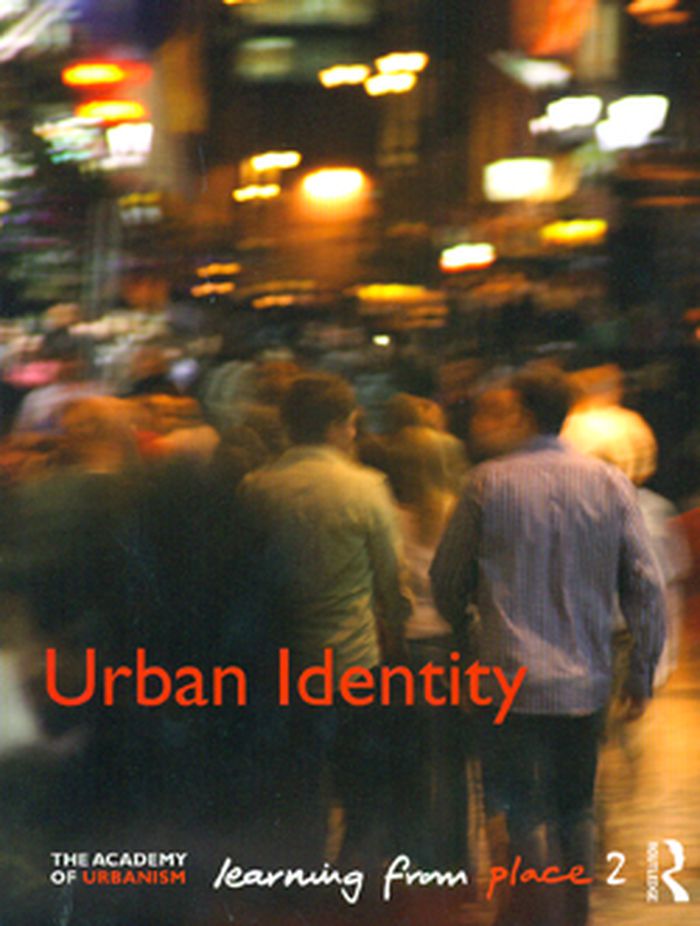
Urban Identity is the second issue in the Learning from Place series that draws upon the wealth of experience in the Academy of Urbanism. This edition deals with the subject of urban identity and character. Why is it that all modern towns and cities look the same, as they become dominated by identikit buildings, multi-national corporations, even arbitrarily imposed urban design rules? How can we preserve and foster the sense of local identity and character that so value without falling into the trap of historical pastiche? Four urban thinkers take this theme as the staring point for chapters on urban identity. The classical architect Robert Adam delivers a broadside to modern architecture that he sees as the multi-national face of globalism. The Architect and academic John Worthington ponders the difference between how a place is seen, its identity and how it wants to be seen, its brand. While the architects Anthony Reddy from Ireland and Frank Walker from Scotland explore the notion of local and national identity in architecture and design.
Urban identity ; learning from place 2
Actions:
Prix:
$30.95
(disponible sur commande)
Résumé:
Urban Identity is the second issue in the Learning from Place series that draws upon the wealth of experience in the Academy of Urbanism. This edition deals with the subject of urban identity and character. Why is it that all modern towns and cities look the same, as they become dominated by identikit buildings, multi-national corporations, even arbitrarily imposed urban design rules? How can we preserve and foster the sense of local identity and character that so value without falling into the trap of historical pastiche? Four urban thinkers take this theme as the staring point for chapters on urban identity. The classical architect Robert Adam delivers a broadside to modern architecture that he sees as the multi-national face of globalism. The Architect and academic John Worthington ponders the difference between how a place is seen, its identity and how it wants to be seen, its brand. While the architects Anthony Reddy from Ireland and Frank Walker from Scotland explore the notion of local and national identity in architecture and design.
Classification:
livres
livres
Publication:
juin 2011
juin 2011
Sujet:
Théorie de l’urbanisme
Théorie de l’urbanisme
Classification:
livres
livres
Actions:
Prix:
$71.95
(disponible sur commande)
Résumé:
Situated at the intersection of architecture, art, public culture, and political theory, ''Socializing architecture'' urges architects and urbanists to intervene in the contested space between public and private interests, to design political and civic processes that mediate top-down and bottom-up urban resources, and to mobilize a new public imagination toward a more(...)
$71.95
(disponible sur commande)
Résumé:
Situated at the intersection of architecture, art, public culture, and political theory, ''Socializing architecture'' urges architects and urbanists to intervene in the contested space between public and private interests, to design political and civic processes that mediate top-down and bottom-up urban resources, and to mobilize a new public imagination toward a more(...)
Publication:
mars 2023
mars 2023
Titre:
Socializing architecture: Top-down/bottom-up
Actions:
Prix:
$71.95
(disponible sur commande)
Résumé:
Situated at the intersection of architecture, art, public culture, and political theory, ''Socializing architecture'' urges architects and urbanists to intervene in the contested space between public and private interests, to design political and civic processes that mediate top-down and bottom-up urban resources, and to mobilize a new public imagination toward a more just and equitable urbanization. Drawn from decades of lived experience, Teddy Cruz and Fonna Forman engage the San Diego–Tijuana border region as a global laboratory to address the central challenges of urbanization today: deepening social and economic inequality, dramatic migratory shifts, explosive urban informality, climate disruption, the thickening of border walls, and the decline of public thinking. ''Socializing architecture'' follows ''Spatializing justice'' (Cruz and Forman, 2022). It is organized into two main sections—essays and projects—and continues to build a compelling case for architects and urban designers to do more than design buildings and physical systems. Through analysis and diverse case studies, the authors show architects and urbanists how to alter the exclusionary policies that produce public crisis and instead realize new political and economic strategies that advance a more equitable and convivial architecture.
Socializing architecture: Top-down/bottom-up
Actions:
Prix:
$71.95
(disponible sur commande)
Résumé:
Situated at the intersection of architecture, art, public culture, and political theory, ''Socializing architecture'' urges architects and urbanists to intervene in the contested space between public and private interests, to design political and civic processes that mediate top-down and bottom-up urban resources, and to mobilize a new public imagination toward a more just and equitable urbanization. Drawn from decades of lived experience, Teddy Cruz and Fonna Forman engage the San Diego–Tijuana border region as a global laboratory to address the central challenges of urbanization today: deepening social and economic inequality, dramatic migratory shifts, explosive urban informality, climate disruption, the thickening of border walls, and the decline of public thinking. ''Socializing architecture'' follows ''Spatializing justice'' (Cruz and Forman, 2022). It is organized into two main sections—essays and projects—and continues to build a compelling case for architects and urban designers to do more than design buildings and physical systems. Through analysis and diverse case studies, the authors show architects and urbanists how to alter the exclusionary policies that produce public crisis and instead realize new political and economic strategies that advance a more equitable and convivial architecture.
Classification:
livres
livres
Publication:
mars 2023
mars 2023
Classification:
livres
livres
Actions:
Prix:
$57.75
(disponible sur commande)
Résumé:
Providing hard data for trends that many perceive only vaguely and some deny altogether, "Designing for diversity" reveals a profession rife with gender and racial discrimination and examines the aspects of architectural practice that hinder or support the full participation of women and persons of color. Drawing on interviews and surveys of hundreds of architects,(...)
$57.75
(disponible sur commande)
Résumé:
Providing hard data for trends that many perceive only vaguely and some deny altogether, "Designing for diversity" reveals a profession rife with gender and racial discrimination and examines the aspects of architectural practice that hinder or support the full participation of women and persons of color. Drawing on interviews and surveys of hundreds of architects,(...)
Sujet:
Théorie de l’architecture
Théorie de l’architecture
Publication:
avril 2002, Urbana and Chicago
avril 2002, Urbana and Chicago
Titre:
Designing for diversity : gender, race. and ethnicity in the architectural profession
Actions:
Prix:
$57.75
(disponible sur commande)
Résumé:
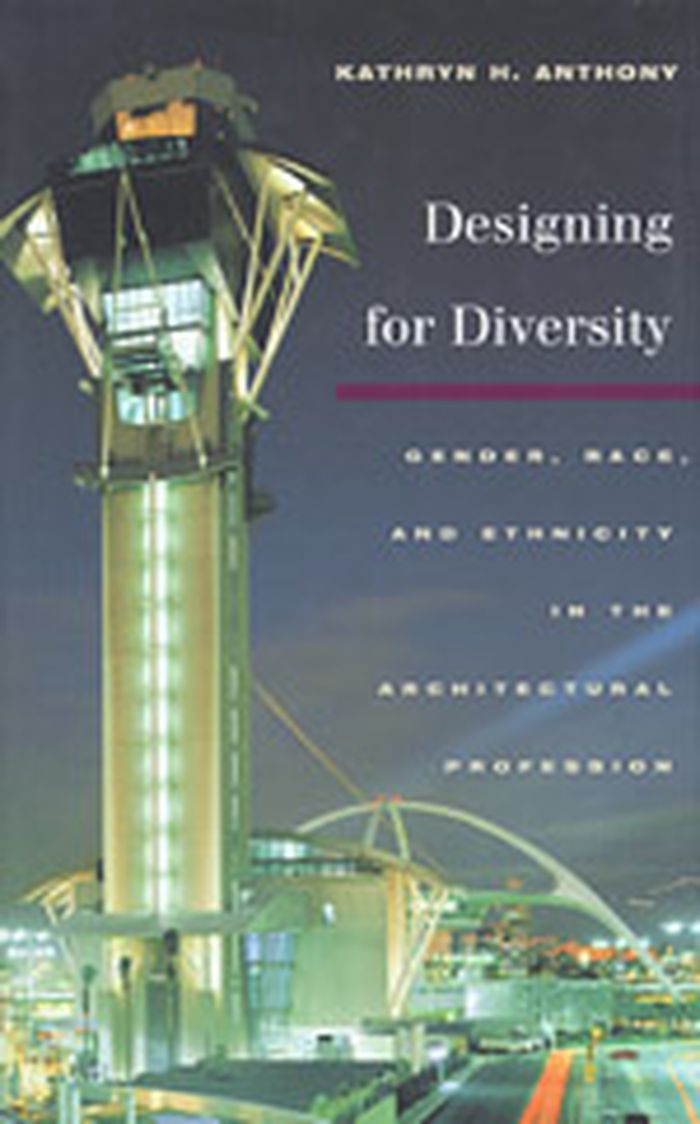
Providing hard data for trends that many perceive only vaguely and some deny altogether, "Designing for diversity" reveals a profession rife with gender and racial discrimination and examines the aspects of architectural practice that hinder or support the full participation of women and persons of color. Drawing on interviews and surveys of hundreds of architects, Kathryn H. Anthony outlines some of the forms of discrimination that recur in architecture, such as being confined to certain kinds of positions, typically interior design for women, government work for African Americans, and computer-aided design for Asian-American architects. Anthony discusses the profession's attitude toward flexible schedules and part-time contracts and identifies strategies that have helped underrepresented individuals advance in the profession. Given the traditional mismatch between diverse consumers and predominantly white male producers of the built environment, plus the shifting population balance toward communities of color, Anthony contends that the architectural profession staves off true diversity at its own peril. Through her book, practicing architects, managers of firms, and educators will learn how to create conditions more welcoming to a diversity of users as well as designers of the built environment.
Designing for diversity : gender, race. and ethnicity in the architectural profession
Actions:
Prix:
$57.75
(disponible sur commande)
Résumé:
Providing hard data for trends that many perceive only vaguely and some deny altogether, "Designing for diversity" reveals a profession rife with gender and racial discrimination and examines the aspects of architectural practice that hinder or support the full participation of women and persons of color. Drawing on interviews and surveys of hundreds of architects, Kathryn H. Anthony outlines some of the forms of discrimination that recur in architecture, such as being confined to certain kinds of positions, typically interior design for women, government work for African Americans, and computer-aided design for Asian-American architects. Anthony discusses the profession's attitude toward flexible schedules and part-time contracts and identifies strategies that have helped underrepresented individuals advance in the profession. Given the traditional mismatch between diverse consumers and predominantly white male producers of the built environment, plus the shifting population balance toward communities of color, Anthony contends that the architectural profession staves off true diversity at its own peril. Through her book, practicing architects, managers of firms, and educators will learn how to create conditions more welcoming to a diversity of users as well as designers of the built environment.
Classification:
livres
livres
Publication:
avril 2002, Urbana and Chicago
avril 2002, Urbana and Chicago
Sujet:
Théorie de l’architecture
Théorie de l’architecture
Classification:
livres
livres
Titre:
Reality machines : mirroring the real in contemporary Dutch architecture, photography and design
Reality machines : mirroring the real in contemporary Dutch architecture, photography and design
Actions:
Prix:
$52.95
(disponible sur commande)
Résumé:
"Reality machines" features work by young contemporary Dutch architects, industrial designers, fashion designers, graphic designers and photographers. This book examines the stance adopted by Dutch designers in the 1990s and today. Militating against the 'makability' of a fully designed landscape, they deliberately seek to distort and alineate reality. Five themed groups(...)
$52.95
(disponible sur commande)
Résumé:
"Reality machines" features work by young contemporary Dutch architects, industrial designers, fashion designers, graphic designers and photographers. This book examines the stance adopted by Dutch designers in the 1990s and today. Militating against the 'makability' of a fully designed landscape, they deliberately seek to distort and alineate reality. Five themed groups(...)
Publication:
janvier 2003, Rotterdam
janvier 2003, Rotterdam
Titre:
Reality machines : mirroring the real in contemporary Dutch architecture, photography and design
Actions:
Prix:
$52.95
(disponible sur commande)
Résumé:
"Reality machines" features work by young contemporary Dutch architects, industrial designers, fashion designers, graphic designers and photographers. This book examines the stance adopted by Dutch designers in the 1990s and today. Militating against the 'makability' of a fully designed landscape, they deliberately seek to distort and alineate reality. Five themed groups - PhotoShop reality; come back effect; back to basics; no original; and are you serious? - pull the various disciplines into confrontation. An introductory article by Pauline Terreehorst charts the state of play within those disciplines; this in response to the question of how the Dutch design world will shape up in a future marked by changed economic and political circumstances. Largely given over to illustrations, the book includes work by architects (West 8, MVRDV, NL Architects, One Architecture), industrial designers (Hella Jongerius, Arnout Visser, Jurgen Bey, Marcel Wanders, Richard Hutten), fashion designers (Alexander van Slobbe, Saskia van Drimmelen, Pascale Gatzen, Aziz Bekkaoui, Niels Klavers), graphic designers (Jop van Bennekom, Daniël van der Velden & Maureen Mooren, Thonik) and photographers (Anuschka Blommers & Niels Schumm, Vivianne Sassen). Exhibition in the Netherlands Architecture Institute until April 21, 2003. Graphic design by Jop van Nennekom.
Reality machines : mirroring the real in contemporary Dutch architecture, photography and design
Actions:
Prix:
$52.95
(disponible sur commande)
Résumé:
"Reality machines" features work by young contemporary Dutch architects, industrial designers, fashion designers, graphic designers and photographers. This book examines the stance adopted by Dutch designers in the 1990s and today. Militating against the 'makability' of a fully designed landscape, they deliberately seek to distort and alineate reality. Five themed groups - PhotoShop reality; come back effect; back to basics; no original; and are you serious? - pull the various disciplines into confrontation. An introductory article by Pauline Terreehorst charts the state of play within those disciplines; this in response to the question of how the Dutch design world will shape up in a future marked by changed economic and political circumstances. Largely given over to illustrations, the book includes work by architects (West 8, MVRDV, NL Architects, One Architecture), industrial designers (Hella Jongerius, Arnout Visser, Jurgen Bey, Marcel Wanders, Richard Hutten), fashion designers (Alexander van Slobbe, Saskia van Drimmelen, Pascale Gatzen, Aziz Bekkaoui, Niels Klavers), graphic designers (Jop van Bennekom, Daniël van der Velden & Maureen Mooren, Thonik) and photographers (Anuschka Blommers & Niels Schumm, Vivianne Sassen). Exhibition in the Netherlands Architecture Institute until April 21, 2003. Graphic design by Jop van Nennekom.
Classification:
livres
livres
Publication:
janvier 2003, Rotterdam
janvier 2003, Rotterdam
Classification:
livres
livres
Actions:
Prix:
$29.95
(disponible sur commande)
Résumé:
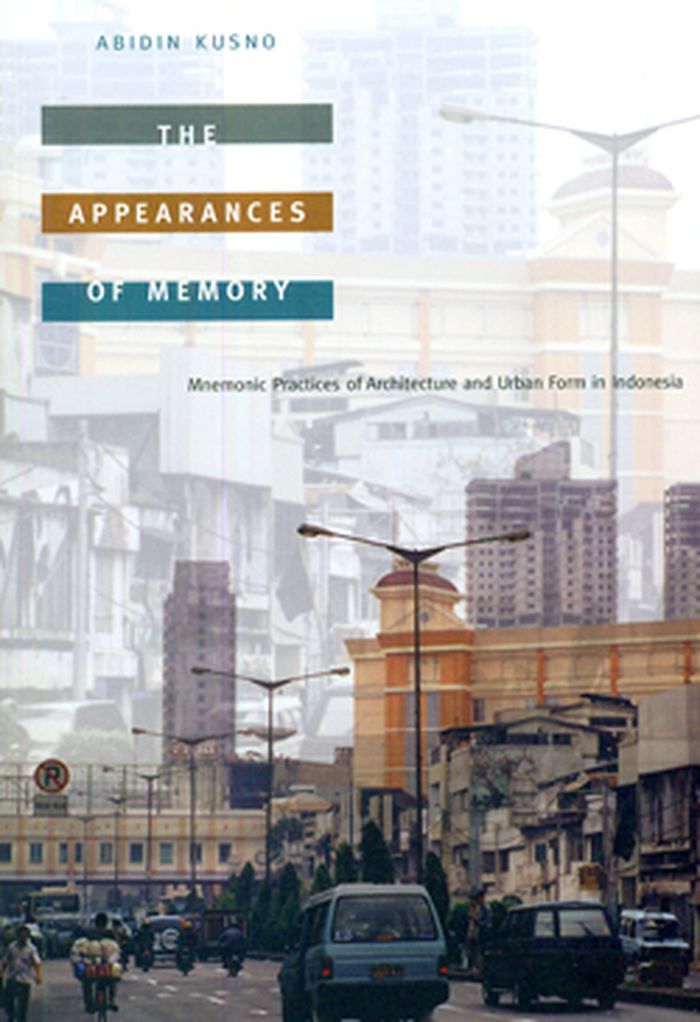
In this publication, the Indonesian architectural and urban historian Abidin Kusno explores the connections between the built environment and political consciousness in Indonesia during the colonial and postcolonial eras. Focusing primarily on Jakarta, he describes how perceptions of the past, anxieties about the rapid pace of change in the present, and hopes for the(...)
$29.95
(disponible sur commande)
Résumé:
In this publication, the Indonesian architectural and urban historian Abidin Kusno explores the connections between the built environment and political consciousness in Indonesia during the colonial and postcolonial eras. Focusing primarily on Jakarta, he describes how perceptions of the past, anxieties about the rapid pace of change in the present, and hopes for the(...)
Titre:
The appearances of memory : mnemonic practices of architecture and urban form in Indonesia
Actions:
Prix:
$29.95
(disponible sur commande)
Résumé:
In this publication, the Indonesian architectural and urban historian Abidin Kusno explores the connections between the built environment and political consciousness in Indonesia during the colonial and postcolonial eras. Focusing primarily on Jakarta, he describes how perceptions of the past, anxieties about the rapid pace of change in the present, and hopes for the future have been embodied in architecture and urban space at different historical moments. He argues that the built environment serves as a reminder of the practices of the past and an instantiation of the desire to remake oneself within, as well as beyond, one’s particular time and place. Addressing developments in Indonesia since the fall of President Suharto’s regime in 1998, Kusno delves into such topics as the domestication of traumatic violence and the restoration of order in the urban space, the intense interest in urban history in contemporary Indonesia, and the implications of "superblocks", large urban complexes consisting of residences, offices, shops, and entertainment venues. Moving farther back in time, he examines how Indonesian architects reinvented colonial architectural styles to challenge the political culture of the state, how colonial structures such as railway and commercial buildings created a new, politically charged cognitive map of cities in Java in the early twentieth century, and how the Dutch, in attempting to quell dissent, imposed a distinctive urban visual order in the 1930s. Finally, the present and the past meet in his long-term considerations of how Java has responded to the global flow of Islamic architecture, and how the meanings of Indonesian gatehouses have changed and persisted over time.
The appearances of memory : mnemonic practices of architecture and urban form in Indonesia
Actions:
Prix:
$29.95
(disponible sur commande)
Résumé:
In this publication, the Indonesian architectural and urban historian Abidin Kusno explores the connections between the built environment and political consciousness in Indonesia during the colonial and postcolonial eras. Focusing primarily on Jakarta, he describes how perceptions of the past, anxieties about the rapid pace of change in the present, and hopes for the future have been embodied in architecture and urban space at different historical moments. He argues that the built environment serves as a reminder of the practices of the past and an instantiation of the desire to remake oneself within, as well as beyond, one’s particular time and place. Addressing developments in Indonesia since the fall of President Suharto’s regime in 1998, Kusno delves into such topics as the domestication of traumatic violence and the restoration of order in the urban space, the intense interest in urban history in contemporary Indonesia, and the implications of "superblocks", large urban complexes consisting of residences, offices, shops, and entertainment venues. Moving farther back in time, he examines how Indonesian architects reinvented colonial architectural styles to challenge the political culture of the state, how colonial structures such as railway and commercial buildings created a new, politically charged cognitive map of cities in Java in the early twentieth century, and how the Dutch, in attempting to quell dissent, imposed a distinctive urban visual order in the 1930s. Finally, the present and the past meet in his long-term considerations of how Java has responded to the global flow of Islamic architecture, and how the meanings of Indonesian gatehouses have changed and persisted over time.
Classification:
livres
livres
Publication:
avril 2010
avril 2010
Sujet:
Histoire jusqu'à 1900, Asie
Histoire jusqu'à 1900, Asie


