


18396 Résultats
Classification:
cartes, dessins, documents textuels
cartes, dessins, documents textuels
Titre:
RIBA, ARCUK, UKAAA
RIBA, ARCUK, UKAAA
Numéro de référence:
DR2006:0104
Description:
notes, correspondence, promotional materials, a trade catalogue, a brochure, clippings, maps, drawings, an invitation, a publication of the UKAAA (United Kingdom Architects Against Apartheid), minutes, statements and other UKAAA materials, drafts for lightbox texts for the RIBA President's Medals for Architectural Education (2001), a folder, minutes and other documents relating to the RIBA collection and the British Architecture Library, a report titled 'London in the 1990s: Planning and Design', and a handbill titled 'Campaign for Architects'
DR2006:0104
Description:
notes, correspondence, promotional materials, a trade catalogue, a brochure, clippings, maps, drawings, an invitation, a publication of the UKAAA (United Kingdom Architects Against Apartheid), minutes, statements and other UKAAA materials, drafts for lightbox texts for the RIBA President's Medals for Architectural Education (2001), a folder, minutes and other documents relating to the RIBA collection and the British Architecture Library, a report titled 'London in the 1990s: Planning and Design', and a handbill titled 'Campaign for Architects'
Personnes et institutions:
Date:
1986-1992, 1998, 2001
1986-1992, 1998, 2001
Titre:
RIBA, ARCUK, UKAAA
Actions:
DR2006:0104
Description:
notes, correspondence, promotional materials, a trade catalogue, a brochure, clippings, maps, drawings, an invitation, a publication of the UKAAA (United Kingdom Architects Against Apartheid), minutes, statements and other UKAAA materials, drafts for lightbox texts for the RIBA President's Medals for Architectural Education (2001), a folder, minutes and other documents relating to the RIBA collection and the British Architecture Library, a report titled 'London in the 1990s: Planning and Design', and a handbill titled 'Campaign for Architects'
RIBA, ARCUK, UKAAA
Actions:
DR2006:0104
Description:
notes, correspondence, promotional materials, a trade catalogue, a brochure, clippings, maps, drawings, an invitation, a publication of the UKAAA (United Kingdom Architects Against Apartheid), minutes, statements and other UKAAA materials, drafts for lightbox texts for the RIBA President's Medals for Architectural Education (2001), a folder, minutes and other documents relating to the RIBA collection and the British Architecture Library, a report titled 'London in the 1990s: Planning and Design', and a handbill titled 'Campaign for Architects'
Classification:
cartes, dessins, documents textuels
cartes, dessins, documents textuels
Date:
1986-1992, 1998, 2001
1986-1992, 1998, 2001
Personnes et institutions:
Classification:
expositions
expositions
Actions:
Description:
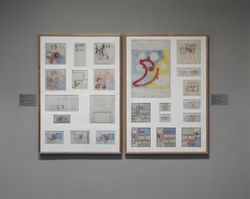
Paul Nelson (1895-1979), architecte, décorateur de cinéma, peintre, critique et professeur, a enseigné et pratiqué l’architecture aux États-Unis et en France pendant plus de cinquante ans. Dans les années 30 et 40, Nelson a été l’une des figures de proue du fonctionnalisme, ce mouvement qui a rejeté le langage Beaux-Arts au profit de l’expression fonctionnelle et(...)
Paul Nelson (1895-1979), architecte, décorateur de cinéma, peintre, critique et professeur, a enseigné et pratiqué l’architecture aux États-Unis et en France pendant plus de cinquante ans. Dans les années 30 et 40, Nelson a été l’une des figures de proue du fonctionnalisme, ce mouvement qui a rejeté le langage Beaux-Arts au profit de l’expression fonctionnelle et(...)
Localisation:
Salles principales
Salles principales
Date:
27 mars 1991 au 26 mai 1991
27 mars 1991 au 26 mai 1991
Titre:
Le crible de la raison : l’oeuvre de Paul Nelson
Actions:
Description:
Paul Nelson (1895-1979), architecte, décorateur de cinéma, peintre, critique et professeur, a enseigné et pratiqué l’architecture aux États-Unis et en France pendant plus de cinquante ans. Dans les années 30 et 40, Nelson a été l’une des figures de proue du fonctionnalisme, ce mouvement qui a rejeté le langage Beaux-Arts au profit de l’expression fonctionnelle et(...)
Le crible de la raison : l’oeuvre de Paul Nelson
Actions:
Description:
Paul Nelson (1895-1979), architecte, décorateur de cinéma, peintre, critique et professeur, a enseigné et pratiqué l’architecture aux États-Unis et en France pendant plus de cinquante ans. Dans les années 30 et 40, Nelson a été l’une des figures de proue du fonctionnalisme, ce mouvement qui a rejeté le langage Beaux-Arts au profit de l’expression fonctionnelle et(...)
Classification:
expositions
expositions
Date:
27 mars 1991 au
26 mai 1991
27 mars 1991 au
26 mai 1991
Localisation:
Salles principales
Salles principales
Classification:
événements
événements

Titre:
L’enseignement de… Bombay
L’enseignement de… Bombay
Actions:
Description:
Rahul Mehrotra livre son interprétation de la situation propre à la ville de Bombay et de son statut de symbole de la culture urbaine émergente en Inde. La conférence fait le point sur Bombay, mégalopole de plus de13 millions d’habitants et s’attarde sur les deux entités distinctes occupant le même espace physique qui la caractérisent : d’une part, la ville dans ce(...)
Rahul Mehrotra livre son interprétation de la situation propre à la ville de Bombay et de son statut de symbole de la culture urbaine émergente en Inde. La conférence fait le point sur Bombay, mégalopole de plus de13 millions d’habitants et s’attarde sur les deux entités distinctes occupant le même espace physique qui la caractérisent : d’une part, la ville dans ce(...)
Localisation:
Théâtre Paul-Desmarais
Théâtre Paul-Desmarais
Date:
9 avril 2009
9 avril 2009
Titre:
L’enseignement de… Bombay
Actions:
Description:
Rahul Mehrotra livre son interprétation de la situation propre à la ville de Bombay et de son statut de symbole de la culture urbaine émergente en Inde. La conférence fait le point sur Bombay, mégalopole de plus de13 millions d’habitants et s’attarde sur les deux entités distinctes occupant le même espace physique qui la caractérisent : d’une part, la ville dans ce(...)
L’enseignement de… Bombay
Actions:
Description:
Rahul Mehrotra livre son interprétation de la situation propre à la ville de Bombay et de son statut de symbole de la culture urbaine émergente en Inde. La conférence fait le point sur Bombay, mégalopole de plus de13 millions d’habitants et s’attarde sur les deux entités distinctes occupant le même espace physique qui la caractérisent : d’une part, la ville dans ce(...)
Classification:
événements
événements
Date:
9 avril 2009
9 avril 2009
Localisation:
Théâtre Paul-Desmarais
Théâtre Paul-Desmarais
Classification:
expositions
expositions
Titre:
Empire
Empire
Actions:
Description:
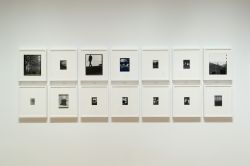
L’exposition présente Empire, un essai visuel de l’artiste américain John Gossage sur la relation entre l’architecture et le pouvoir. Les photographies des édifices gouvernementaux et des monuments à Washington prises par Gossage côtoient les images d’Égypte captées par le chimiste allemand Hermann Vogel en 1868, établissant un parallèle entre des décisions(...)
L’exposition présente Empire, un essai visuel de l’artiste américain John Gossage sur la relation entre l’architecture et le pouvoir. Les photographies des édifices gouvernementaux et des monuments à Washington prises par Gossage côtoient les images d’Égypte captées par le chimiste allemand Hermann Vogel en 1868, établissant un parallèle entre des décisions(...)
Localisation:
Salle octogonale
Salle octogonale
Date:
8 décembre 2005 au 12 mars 2006
8 décembre 2005 au 12 mars 2006
Titre:
Empire
Actions:
Description:
L’exposition présente Empire, un essai visuel de l’artiste américain John Gossage sur la relation entre l’architecture et le pouvoir. Les photographies des édifices gouvernementaux et des monuments à Washington prises par Gossage côtoient les images d’Égypte captées par le chimiste allemand Hermann Vogel en 1868, établissant un parallèle entre des décisions(...)
Empire
Actions:
Description:
L’exposition présente Empire, un essai visuel de l’artiste américain John Gossage sur la relation entre l’architecture et le pouvoir. Les photographies des édifices gouvernementaux et des monuments à Washington prises par Gossage côtoient les images d’Égypte captées par le chimiste allemand Hermann Vogel en 1868, établissant un parallèle entre des décisions(...)
Classification:
expositions
expositions
Date:
8 décembre 2005 au
12 mars 2006
8 décembre 2005 au
12 mars 2006
Localisation:
Salle octogonale
Salle octogonale
Niveau de description archivistique:
Projet
Projet
Titre:
Generator
Generator
Numéro de référence:
AP144.S2.D100
Description:
File documents Generator, an unexecuted project for the Gilman Paper Company, at the White Oak Plantation, in Yulee, Florida. After an initial investigation Cedric Price proposed a complex that could accommodate company activities, cultural events, and artist residencies and would provide "a menu of items for individual and group demands of space, control, containment and delight. A place to work, create, think, and stare." ('Architectural Review', Jan. 1980, 16). The design called for timber-framed structures with variable infill panels and cladding, along with screens, to be placed on a grid of concrete pads by cranes with the help of computers in response to users' needs. Conceptual, schematic and design development drawings show grid placement, site layout, landscaping, designs for cubes and components, proposed activities, axonometric views, and design notes with sketches. Development sketches, site plans, and charts include site analysis examining future growth, activity charts, shadow study plans, and axonometric details. Drawings of the structures include: plans, elevations, details, and perspective views for cubes, screens, and cladding; shadow studies for cube variations; and axonometric views of cube arrangements. Other drawings include: site plans and sections; landscaping and parking layouts; plans for circulation patterns; drawings for boardwalks; and electrical and drainage plans. Charts study design validity, activities, networks, project feasibility, component life-cycle, and cube and component placement/construction sequencing. Computer generated printouts by John Frazer, et al show perspective views of cubes from various viewpoints. Two sets of annotated reprographic copies show details for a typical cube and the foundation. Presentation and publication materials include: photographs and reprographic copies of design models; coloured reprographic copies of computer parts and facilities; a coloured air-brushed rendering of cubes and screens by "Jeremie '77"; two perspective renderings; and reprographic copies made from published material. Some material in this file was published in 'Building Design', 23 February 1979; 'Building Design', 9 November 1979; 'Architectural Review' (January 1980), 16-17; 'L'Architecture d'Aujourd'hui', December 1980; 'Techniques et Architecture', December 1980; 'Design', January 1981; 'New Scientist', 19 March 1981; 'Schemes: Cedric Price' (ex. cat.; London: Waddington Galleries, 1981); 'Cedric Price-Works II' (London: Architectural Press, 1984), 90, 92-97. Material in this file was produced between 1959 and 1995, but predominantly between 1976 and 1980. Main consultants for Generator in the United Kingdom include Felix J. Samuely & Partners, consulting engineers; Baker, Wilkins and Smith, quantity surveyors; John Frazer, computer modelling and systems; Sandy Brown Associates, acoustic consultants. Main consultants in the United States include Marvin Boutwell; Law Engineering Testing Company as consulting engineers; and WTCA; Robertson Ward Jr., as architects. Computer printouts in group DR1995:0280:538-552 in Generator (AP144.S2.D100) are attributed to John and Julia Frazer, Art and Design Research, Ulster Polytechnic and the Department of Architecture, Liverpool Polytechnic. Some material in group DR1995:0280:567-576 is attributed to Felix J. Samuely & Partners. File contains conceptual drawings, design, development drawings, presentation drawings, photographic materials, boxes, an artefact, models, and textual records.
AP144.S2.D100
Description:
File documents Generator, an unexecuted project for the Gilman Paper Company, at the White Oak Plantation, in Yulee, Florida. After an initial investigation Cedric Price proposed a complex that could accommodate company activities, cultural events, and artist residencies and would provide "a menu of items for individual and group demands of space, control, containment and delight. A place to work, create, think, and stare." ('Architectural Review', Jan. 1980, 16). The design called for timber-framed structures with variable infill panels and cladding, along with screens, to be placed on a grid of concrete pads by cranes with the help of computers in response to users' needs. Conceptual, schematic and design development drawings show grid placement, site layout, landscaping, designs for cubes and components, proposed activities, axonometric views, and design notes with sketches. Development sketches, site plans, and charts include site analysis examining future growth, activity charts, shadow study plans, and axonometric details. Drawings of the structures include: plans, elevations, details, and perspective views for cubes, screens, and cladding; shadow studies for cube variations; and axonometric views of cube arrangements. Other drawings include: site plans and sections; landscaping and parking layouts; plans for circulation patterns; drawings for boardwalks; and electrical and drainage plans. Charts study design validity, activities, networks, project feasibility, component life-cycle, and cube and component placement/construction sequencing. Computer generated printouts by John Frazer, et al show perspective views of cubes from various viewpoints. Two sets of annotated reprographic copies show details for a typical cube and the foundation. Presentation and publication materials include: photographs and reprographic copies of design models; coloured reprographic copies of computer parts and facilities; a coloured air-brushed rendering of cubes and screens by "Jeremie '77"; two perspective renderings; and reprographic copies made from published material. Some material in this file was published in 'Building Design', 23 February 1979; 'Building Design', 9 November 1979; 'Architectural Review' (January 1980), 16-17; 'L'Architecture d'Aujourd'hui', December 1980; 'Techniques et Architecture', December 1980; 'Design', January 1981; 'New Scientist', 19 March 1981; 'Schemes: Cedric Price' (ex. cat.; London: Waddington Galleries, 1981); 'Cedric Price-Works II' (London: Architectural Press, 1984), 90, 92-97. Material in this file was produced between 1959 and 1995, but predominantly between 1976 and 1980. Main consultants for Generator in the United Kingdom include Felix J. Samuely & Partners, consulting engineers; Baker, Wilkins and Smith, quantity surveyors; John Frazer, computer modelling and systems; Sandy Brown Associates, acoustic consultants. Main consultants in the United States include Marvin Boutwell; Law Engineering Testing Company as consulting engineers; and WTCA; Robertson Ward Jr., as architects. Computer printouts in group DR1995:0280:538-552 in Generator (AP144.S2.D100) are attributed to John and Julia Frazer, Art and Design Research, Ulster Polytechnic and the Department of Architecture, Liverpool Polytechnic. Some material in group DR1995:0280:567-576 is attributed to Felix J. Samuely & Partners. File contains conceptual drawings, design, development drawings, presentation drawings, photographic materials, boxes, an artefact, models, and textual records.
Personnes et institutions:
Date:
1959-1995, predominant 1976-1980
1959-1995, predominant 1976-1980
Titre:
Generator
Actions:
AP144.S2.D100
Description:
File documents Generator, an unexecuted project for the Gilman Paper Company, at the White Oak Plantation, in Yulee, Florida. After an initial investigation Cedric Price proposed a complex that could accommodate company activities, cultural events, and artist residencies and would provide "a menu of items for individual and group demands of space, control, containment and delight. A place to work, create, think, and stare." ('Architectural Review', Jan. 1980, 16). The design called for timber-framed structures with variable infill panels and cladding, along with screens, to be placed on a grid of concrete pads by cranes with the help of computers in response to users' needs. Conceptual, schematic and design development drawings show grid placement, site layout, landscaping, designs for cubes and components, proposed activities, axonometric views, and design notes with sketches. Development sketches, site plans, and charts include site analysis examining future growth, activity charts, shadow study plans, and axonometric details. Drawings of the structures include: plans, elevations, details, and perspective views for cubes, screens, and cladding; shadow studies for cube variations; and axonometric views of cube arrangements. Other drawings include: site plans and sections; landscaping and parking layouts; plans for circulation patterns; drawings for boardwalks; and electrical and drainage plans. Charts study design validity, activities, networks, project feasibility, component life-cycle, and cube and component placement/construction sequencing. Computer generated printouts by John Frazer, et al show perspective views of cubes from various viewpoints. Two sets of annotated reprographic copies show details for a typical cube and the foundation. Presentation and publication materials include: photographs and reprographic copies of design models; coloured reprographic copies of computer parts and facilities; a coloured air-brushed rendering of cubes and screens by "Jeremie '77"; two perspective renderings; and reprographic copies made from published material. Some material in this file was published in 'Building Design', 23 February 1979; 'Building Design', 9 November 1979; 'Architectural Review' (January 1980), 16-17; 'L'Architecture d'Aujourd'hui', December 1980; 'Techniques et Architecture', December 1980; 'Design', January 1981; 'New Scientist', 19 March 1981; 'Schemes: Cedric Price' (ex. cat.; London: Waddington Galleries, 1981); 'Cedric Price-Works II' (London: Architectural Press, 1984), 90, 92-97. Material in this file was produced between 1959 and 1995, but predominantly between 1976 and 1980. Main consultants for Generator in the United Kingdom include Felix J. Samuely & Partners, consulting engineers; Baker, Wilkins and Smith, quantity surveyors; John Frazer, computer modelling and systems; Sandy Brown Associates, acoustic consultants. Main consultants in the United States include Marvin Boutwell; Law Engineering Testing Company as consulting engineers; and WTCA; Robertson Ward Jr., as architects. Computer printouts in group DR1995:0280:538-552 in Generator (AP144.S2.D100) are attributed to John and Julia Frazer, Art and Design Research, Ulster Polytechnic and the Department of Architecture, Liverpool Polytechnic. Some material in group DR1995:0280:567-576 is attributed to Felix J. Samuely & Partners. File contains conceptual drawings, design, development drawings, presentation drawings, photographic materials, boxes, an artefact, models, and textual records.
Generator
Actions:
AP144.S2.D100
Description:
File documents Generator, an unexecuted project for the Gilman Paper Company, at the White Oak Plantation, in Yulee, Florida. After an initial investigation Cedric Price proposed a complex that could accommodate company activities, cultural events, and artist residencies and would provide "a menu of items for individual and group demands of space, control, containment and delight. A place to work, create, think, and stare." ('Architectural Review', Jan. 1980, 16). The design called for timber-framed structures with variable infill panels and cladding, along with screens, to be placed on a grid of concrete pads by cranes with the help of computers in response to users' needs. Conceptual, schematic and design development drawings show grid placement, site layout, landscaping, designs for cubes and components, proposed activities, axonometric views, and design notes with sketches. Development sketches, site plans, and charts include site analysis examining future growth, activity charts, shadow study plans, and axonometric details. Drawings of the structures include: plans, elevations, details, and perspective views for cubes, screens, and cladding; shadow studies for cube variations; and axonometric views of cube arrangements. Other drawings include: site plans and sections; landscaping and parking layouts; plans for circulation patterns; drawings for boardwalks; and electrical and drainage plans. Charts study design validity, activities, networks, project feasibility, component life-cycle, and cube and component placement/construction sequencing. Computer generated printouts by John Frazer, et al show perspective views of cubes from various viewpoints. Two sets of annotated reprographic copies show details for a typical cube and the foundation. Presentation and publication materials include: photographs and reprographic copies of design models; coloured reprographic copies of computer parts and facilities; a coloured air-brushed rendering of cubes and screens by "Jeremie '77"; two perspective renderings; and reprographic copies made from published material. Some material in this file was published in 'Building Design', 23 February 1979; 'Building Design', 9 November 1979; 'Architectural Review' (January 1980), 16-17; 'L'Architecture d'Aujourd'hui', December 1980; 'Techniques et Architecture', December 1980; 'Design', January 1981; 'New Scientist', 19 March 1981; 'Schemes: Cedric Price' (ex. cat.; London: Waddington Galleries, 1981); 'Cedric Price-Works II' (London: Architectural Press, 1984), 90, 92-97. Material in this file was produced between 1959 and 1995, but predominantly between 1976 and 1980. Main consultants for Generator in the United Kingdom include Felix J. Samuely & Partners, consulting engineers; Baker, Wilkins and Smith, quantity surveyors; John Frazer, computer modelling and systems; Sandy Brown Associates, acoustic consultants. Main consultants in the United States include Marvin Boutwell; Law Engineering Testing Company as consulting engineers; and WTCA; Robertson Ward Jr., as architects. Computer printouts in group DR1995:0280:538-552 in Generator (AP144.S2.D100) are attributed to John and Julia Frazer, Art and Design Research, Ulster Polytechnic and the Department of Architecture, Liverpool Polytechnic. Some material in group DR1995:0280:567-576 is attributed to Felix J. Samuely & Partners. File contains conceptual drawings, design, development drawings, presentation drawings, photographic materials, boxes, an artefact, models, and textual records.
Niveau de description archivistique:
File 100
File 100
Date:
1959-1995, predominant 1976-1980
1959-1995, predominant 1976-1980
Personnes et institutions:
Classification:
photographies
photographies
Actions:
Numéro de référence:
PH1997:0058
Description:
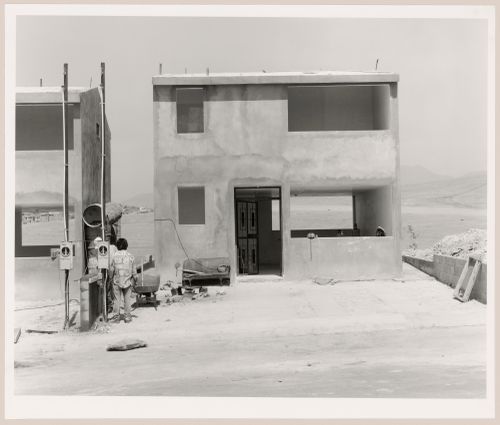
- The series "Running Fence 1997" focuses "on the first 14 miles of the border fence that separates the United States and Mexico, beginning at the Pacific Ocean and ending in the Otay Mountains.... [It] analyzes the "idea" of the border and explores its iconography, the border being a subject that is of extreme importance to the public as the world proceeds towards greater globalization. [Geoffrey] James has written of the project: "[The border fence] was built by the US Army Corps of Engineers in 1994, out of recycled metal landing strip - the most visible symbol of what is known as Operation Gatekeeper. Because the steel sheets are placed in the ground so that their ridges run horizontally, a man can hop over the fence with ease; and no Mexican child ever seems to be impeded from retrieving a soccer ball from US territory. The real barrier to illegal immigration from Mexico into the USA is less visible: hundreds of buried sensors linked to a central computer, nightscopes, helicopters and Border Patrol Agents in white Broncos."" (Evans).
PH1997:0058
Description:
- The series "Running Fence 1997" focuses "on the first 14 miles of the border fence that separates the United States and Mexico, beginning at the Pacific Ocean and ending in the Otay Mountains.... [It] analyzes the "idea" of the border and explores its iconography, the border being a subject that is of extreme importance to the public as the world proceeds towards greater globalization. [Geoffrey] James has written of the project: "[The border fence] was built by the US Army Corps of Engineers in 1994, out of recycled metal landing strip - the most visible symbol of what is known as Operation Gatekeeper. Because the steel sheets are placed in the ground so that their ridges run horizontally, a man can hop over the fence with ease; and no Mexican child ever seems to be impeded from retrieving a soccer ball from US territory. The real barrier to illegal immigration from Mexico into the USA is less visible: hundreds of buried sensors linked to a central computer, nightscopes, helicopters and Border Patrol Agents in white Broncos."" (Evans).
Personnes et institutions:
Sujet:
architecture, ingénierie
architecture, ingénierie
Date:
1997
1997
Titre:
View of houses under construction, Mesa de Otay, Tijuana, Baja California, Mexico
Actions:
PH1997:0058
Description:
- The series "Running Fence 1997" focuses "on the first 14 miles of the border fence that separates the United States and Mexico, beginning at the Pacific Ocean and ending in the Otay Mountains.... [It] analyzes the "idea" of the border and explores its iconography, the border being a subject that is of extreme importance to the public as the world proceeds towards greater globalization. [Geoffrey] James has written of the project: "[The border fence] was built by the US Army Corps of Engineers in 1994, out of recycled metal landing strip - the most visible symbol of what is known as Operation Gatekeeper. Because the steel sheets are placed in the ground so that their ridges run horizontally, a man can hop over the fence with ease; and no Mexican child ever seems to be impeded from retrieving a soccer ball from US territory. The real barrier to illegal immigration from Mexico into the USA is less visible: hundreds of buried sensors linked to a central computer, nightscopes, helicopters and Border Patrol Agents in white Broncos."" (Evans).
View of houses under construction, Mesa de Otay, Tijuana, Baja California, Mexico
Actions:
PH1997:0058
Description:
- The series "Running Fence 1997" focuses "on the first 14 miles of the border fence that separates the United States and Mexico, beginning at the Pacific Ocean and ending in the Otay Mountains.... [It] analyzes the "idea" of the border and explores its iconography, the border being a subject that is of extreme importance to the public as the world proceeds towards greater globalization. [Geoffrey] James has written of the project: "[The border fence] was built by the US Army Corps of Engineers in 1994, out of recycled metal landing strip - the most visible symbol of what is known as Operation Gatekeeper. Because the steel sheets are placed in the ground so that their ridges run horizontally, a man can hop over the fence with ease; and no Mexican child ever seems to be impeded from retrieving a soccer ball from US territory. The real barrier to illegal immigration from Mexico into the USA is less visible: hundreds of buried sensors linked to a central computer, nightscopes, helicopters and Border Patrol Agents in white Broncos."" (Evans).
Classification:
photographies
photographies
Date:
1997
1997
Personnes et institutions:
Sujet:
architecture, ingénierie
architecture, ingénierie
Classification:
photographies
photographies
Actions:
Numéro de référence:
PH1997:0059
Description:
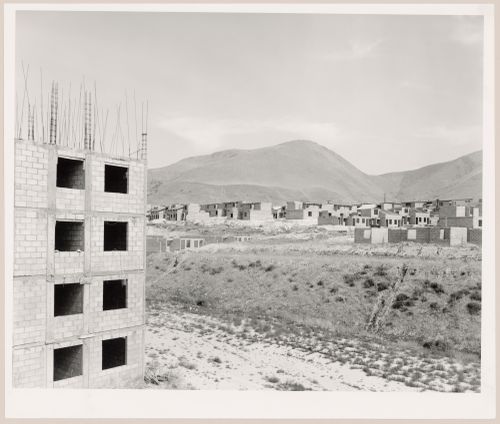
- The series "Running Fence 1997" focuses "on the first 14 miles of the border fence that separates the United States and Mexico, beginning at the Pacific Ocean and ending in the Otay Mountains.... [It] analyzes the "idea" of the border and explores its iconography, the border being a subject that is of extreme importance to the public as the world proceeds towards greater globalization. [Geoffrey] James has written of the project: "[The border fence] was built by the US Army Corps of Engineers in 1994, out of recycled metal landing strip - the most visible symbol of what is known as Operation Gatekeeper. Because the steel sheets are placed in the ground so that their ridges run horizontally, a man can hop over the fence with ease; and no Mexican child ever seems to be impeded from retrieving a soccer ball from US territory. The real barrier to illegal immigration from Mexico into the USA is less visible: hundreds of buried sensors linked to a central computer, nightscopes, helicopters and Border Patrol Agents in white Broncos."" (Evans).
PH1997:0059
Description:
- The series "Running Fence 1997" focuses "on the first 14 miles of the border fence that separates the United States and Mexico, beginning at the Pacific Ocean and ending in the Otay Mountains.... [It] analyzes the "idea" of the border and explores its iconography, the border being a subject that is of extreme importance to the public as the world proceeds towards greater globalization. [Geoffrey] James has written of the project: "[The border fence] was built by the US Army Corps of Engineers in 1994, out of recycled metal landing strip - the most visible symbol of what is known as Operation Gatekeeper. Because the steel sheets are placed in the ground so that their ridges run horizontally, a man can hop over the fence with ease; and no Mexican child ever seems to be impeded from retrieving a soccer ball from US territory. The real barrier to illegal immigration from Mexico into the USA is less visible: hundreds of buried sensors linked to a central computer, nightscopes, helicopters and Border Patrol Agents in white Broncos."" (Evans).
Personnes et institutions:
Sujet:
architecture, ingénierie, topographique
architecture, ingénierie, topographique
Date:
1997
1997
Titre:
View of an industrial park under construction with a partially completed building in the foreground and partially completed houses and mountains in the background, Mesa de Otay, Tijuana, Baja California, Mexico
Actions:
PH1997:0059
Description:
- The series "Running Fence 1997" focuses "on the first 14 miles of the border fence that separates the United States and Mexico, beginning at the Pacific Ocean and ending in the Otay Mountains.... [It] analyzes the "idea" of the border and explores its iconography, the border being a subject that is of extreme importance to the public as the world proceeds towards greater globalization. [Geoffrey] James has written of the project: "[The border fence] was built by the US Army Corps of Engineers in 1994, out of recycled metal landing strip - the most visible symbol of what is known as Operation Gatekeeper. Because the steel sheets are placed in the ground so that their ridges run horizontally, a man can hop over the fence with ease; and no Mexican child ever seems to be impeded from retrieving a soccer ball from US territory. The real barrier to illegal immigration from Mexico into the USA is less visible: hundreds of buried sensors linked to a central computer, nightscopes, helicopters and Border Patrol Agents in white Broncos."" (Evans).
View of an industrial park under construction with a partially completed building in the foreground and partially completed houses and mountains in the background, Mesa de Otay, Tijuana, Baja California, Mexico
Actions:
PH1997:0059
Description:
- The series "Running Fence 1997" focuses "on the first 14 miles of the border fence that separates the United States and Mexico, beginning at the Pacific Ocean and ending in the Otay Mountains.... [It] analyzes the "idea" of the border and explores its iconography, the border being a subject that is of extreme importance to the public as the world proceeds towards greater globalization. [Geoffrey] James has written of the project: "[The border fence] was built by the US Army Corps of Engineers in 1994, out of recycled metal landing strip - the most visible symbol of what is known as Operation Gatekeeper. Because the steel sheets are placed in the ground so that their ridges run horizontally, a man can hop over the fence with ease; and no Mexican child ever seems to be impeded from retrieving a soccer ball from US territory. The real barrier to illegal immigration from Mexico into the USA is less visible: hundreds of buried sensors linked to a central computer, nightscopes, helicopters and Border Patrol Agents in white Broncos."" (Evans).
Classification:
photographies
photographies
Date:
1997
1997
Personnes et institutions:
Sujet:
architecture, ingénierie, topographique
architecture, ingénierie, topographique
Classification:
expositions
expositions
Actions:
Description:
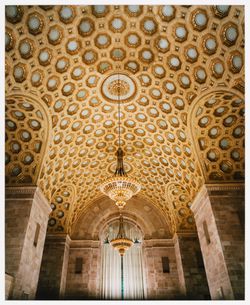
L’or et la pierre: un regard critique sur l’architecture des banques traite de l’histoire et de l’incidence culturelle de l’architecture des banques, considérées comme typologies en soi et non dans le cadre de l’œuvre d’un architecte ou d’une agence d’architectes. Contraires aux idées reçues voulant qu’elles aient un vocabulaire architectural répétitif et incarnent un(...)
L’or et la pierre: un regard critique sur l’architecture des banques traite de l’histoire et de l’incidence culturelle de l’architecture des banques, considérées comme typologies en soi et non dans le cadre de l’œuvre d’un architecte ou d’une agence d’architectes. Contraires aux idées reçues voulant qu’elles aient un vocabulaire architectural répétitif et incarnent un(...)
Localisation:
Salles principales
Salles principales
Date:
14 novembre 1990 au 24 février 1991
14 novembre 1990 au 24 février 1991
Titre:
L'or et la pierre : un regard critique sur l'architecture des banques
Actions:
Description:
L’or et la pierre: un regard critique sur l’architecture des banques traite de l’histoire et de l’incidence culturelle de l’architecture des banques, considérées comme typologies en soi et non dans le cadre de l’œuvre d’un architecte ou d’une agence d’architectes. Contraires aux idées reçues voulant qu’elles aient un vocabulaire architectural répétitif et incarnent un(...)
L'or et la pierre : un regard critique sur l'architecture des banques
Actions:
Description:
L’or et la pierre: un regard critique sur l’architecture des banques traite de l’histoire et de l’incidence culturelle de l’architecture des banques, considérées comme typologies en soi et non dans le cadre de l’œuvre d’un architecte ou d’une agence d’architectes. Contraires aux idées reçues voulant qu’elles aient un vocabulaire architectural répétitif et incarnent un(...)
Classification:
expositions
expositions
Date:
14 novembre 1990 au
24 février 1991
14 novembre 1990 au
24 février 1991
Localisation:
Salles principales
Salles principales
Classification:
archives
Niveau de description archivistique:
Fonds
archives
Niveau de description archivistique:
Fonds
Titre:
Bernard Cache fonds
Bernard Cache fonds
Numéro de référence:
AP169
Résumé:
Bernard Cache, fonds, 1991-2011, document the development and design process for the Objectile firm and its decorative panels and furniture. The records focus mostly on daily activities of the firm, the collaboration of principal Bernard Cache with TopSolid software, and his parallel academic work. The records consist solely of original born-digital material.
AP169
Résumé:
Bernard Cache, fonds, 1991-2011, document the development and design process for the Objectile firm and its decorative panels and furniture. The records focus mostly on daily activities of the firm, the collaboration of principal Bernard Cache with TopSolid software, and his parallel academic work. The records consist solely of original born-digital material.
Personnes et institutions:
Date:
1992-2011
1992-2011
Titre:
Bernard Cache fonds
Actions:
AP169
Résumé:
Bernard Cache, fonds, 1991-2011, document the development and design process for the Objectile firm and its decorative panels and furniture. The records focus mostly on daily activities of the firm, the collaboration of principal Bernard Cache with TopSolid software, and his parallel academic work. The records consist solely of original born-digital material.
Bernard Cache fonds
Actions:
AP169
Résumé:
Bernard Cache, fonds, 1991-2011, document the development and design process for the Objectile firm and its decorative panels and furniture. The records focus mostly on daily activities of the firm, the collaboration of principal Bernard Cache with TopSolid software, and his parallel academic work. The records consist solely of original born-digital material.
Classification:
archives
Niveau de description archivistique:
Fonds
archives
Niveau de description archivistique:
Fonds
Date:
1992-2011
1992-2011
Personnes et institutions:
Classification:
événements
événements

Titre:
L'enseignement de… São Paulo
L'enseignement de… São Paulo
Actions:
Description:
Angelo Bucci, architecte et professeur à l’Université de São Paulo au Brésil, aborde les questions de la violence et de l’environnement en évolution à São Paulo, en quête de nouvelles formes urbaines. À São Paulo, la violence peut être vue comme gâchant l’expérience de la ville et, par conséquent, sapant la raison d’être du travail de l’architecte. La conférence porte sur(...)
Angelo Bucci, architecte et professeur à l’Université de São Paulo au Brésil, aborde les questions de la violence et de l’environnement en évolution à São Paulo, en quête de nouvelles formes urbaines. À São Paulo, la violence peut être vue comme gâchant l’expérience de la ville et, par conséquent, sapant la raison d’être du travail de l’architecte. La conférence porte sur(...)
Date:
22 avril 2010
22 avril 2010
Titre:
L'enseignement de… São Paulo
Actions:
Description:
Angelo Bucci, architecte et professeur à l’Université de São Paulo au Brésil, aborde les questions de la violence et de l’environnement en évolution à São Paulo, en quête de nouvelles formes urbaines. À São Paulo, la violence peut être vue comme gâchant l’expérience de la ville et, par conséquent, sapant la raison d’être du travail de l’architecte. La conférence porte sur(...)
L'enseignement de… São Paulo
Actions:
Description:
Angelo Bucci, architecte et professeur à l’Université de São Paulo au Brésil, aborde les questions de la violence et de l’environnement en évolution à São Paulo, en quête de nouvelles formes urbaines. À São Paulo, la violence peut être vue comme gâchant l’expérience de la ville et, par conséquent, sapant la raison d’être du travail de l’architecte. La conférence porte sur(...)
Classification:
événements
événements
Date:
22 avril 2010
22 avril 2010


