


2585 Résultats
Classification:
audio
audio
Titre:
Pardon My French.
Pardon My French.
Actions:
Description:
1 online resource.
Auteur:
Sujet:
Publication:
[Place of publication not identified] : Junior Aspirin Records, 2013., [Place of publication not identified] : Stop Making Sense, 2013.
[Place of publication not identified] : Junior Aspirin Records, 2013., [Place of publication not identified] : Stop Making Sense, 2013.
Classification:
audio
audio
Publication:
[Place of publication not identified] : Junior Aspirin Records, 2013., [Place of publication not identified] : Stop Making Sense, 2013.
[Place of publication not identified] : Junior Aspirin Records, 2013., [Place of publication not identified] : Stop Making Sense, 2013.
Auteur:
Sujet:
Classification:
livres
livres
Actions:
Prix:
$80.00
(disponible sur commande)
Résumé:
Born in 1944, Christian Hauvette, studied under the philosopher Roland Barthes before going on to train as an architect. Since 1980 he has headed his own office in Paris. Today, Hauvette is(...)
$80.00
(disponible sur commande)
Résumé:
Born in 1944, Christian Hauvette, studied under the philosopher Roland Barthes before going on to train as an architect. Since 1980 he has headed his own office in Paris. Today, Hauvette is(...)
Sujet:
Architecture, monographies
Architecture, monographies
Publication:
avril 2000, Basel
avril 2000, Basel
Titre:
Christian Hauvette : dwellings - monuments - machines / truth - metaphor - narrative
Actions:
Prix:
$80.00
(disponible sur commande)
Résumé:
Born in 1944, Christian Hauvette, studied under the philosopher Roland Barthes before going on to train as an architect. Since 1980 he has headed his own office in Paris. Today, Hauvette is one of France’s leading architects. His architecture is characterised by a clear, constructive purpose which is at the same time highly expressive. Jean Prouvé’s theories are much in evidence in his work. This monograph provides an in-depth overview on the buildings and projects of the 90s, including the School of Waters and Forests in Clermont-Ferrand and his sensational headquarters of the Caisse Française de Développement in Paris, analysing the essential characteristics of Hauvette’s creativity.
Christian Hauvette : dwellings - monuments - machines / truth - metaphor - narrative
Actions:
Prix:
$80.00
(disponible sur commande)
Résumé:
Born in 1944, Christian Hauvette, studied under the philosopher Roland Barthes before going on to train as an architect. Since 1980 he has headed his own office in Paris. Today, Hauvette is one of France’s leading architects. His architecture is characterised by a clear, constructive purpose which is at the same time highly expressive. Jean Prouvé’s theories are much in evidence in his work. This monograph provides an in-depth overview on the buildings and projects of the 90s, including the School of Waters and Forests in Clermont-Ferrand and his sensational headquarters of the Caisse Française de Développement in Paris, analysing the essential characteristics of Hauvette’s creativity.
Classification:
livres
livres
Publication:
avril 2000, Basel
avril 2000, Basel
Sujet:
Architecture, monographies
Architecture, monographies
Classification:
livres
livres
Prix:
$46.95
(disponible en magasin)
Résumé:
Drawing on a range of previously unexplored archival resources, Michael Osman examines the increasing role of environmental technologies in building design from the late nineteenth century. He shows how architects appropriated and subsumed the work of engineers as thermostats, air handlers, and refrigeration proliferated. He argues that this change was closely connected(...)
$46.95
(disponible en magasin)
Résumé:
Drawing on a range of previously unexplored archival resources, Michael Osman examines the increasing role of environmental technologies in building design from the late nineteenth century. He shows how architects appropriated and subsumed the work of engineers as thermostats, air handlers, and refrigeration proliferated. He argues that this change was closely connected(...)
Titre:
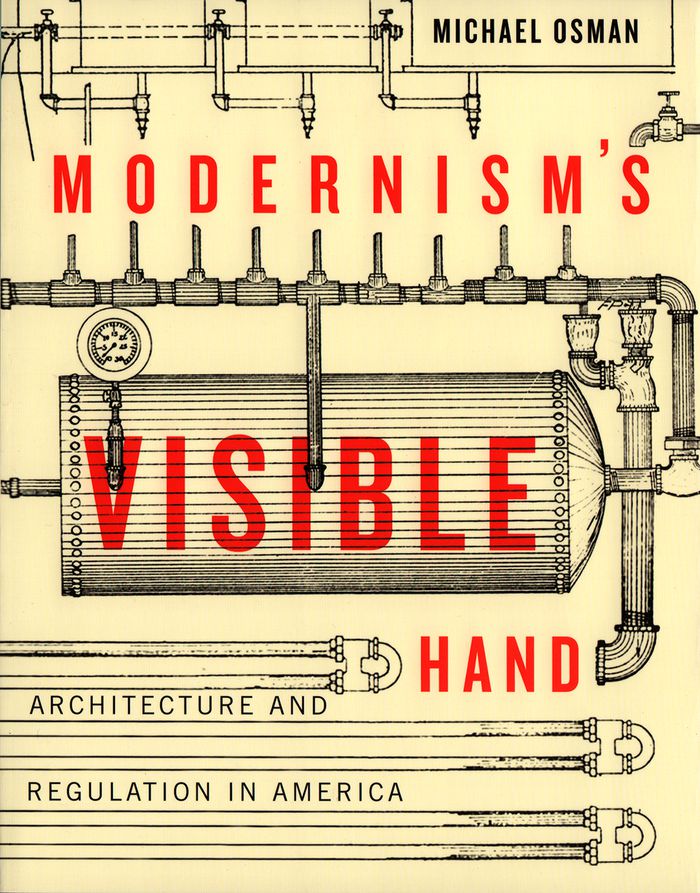
Modernism's visible hand: architecture and regulation in America
Actions:
Prix:
$46.95
(disponible en magasin)
Résumé:
Drawing on a range of previously unexplored archival resources, Michael Osman examines the increasing role of environmental technologies in building design from the late nineteenth century. He shows how architects appropriated and subsumed the work of engineers as thermostats, air handlers, and refrigeration proliferated. He argues that this change was closely connected to broader cultural and economic trends in management and the regulation of risk. The transformation shaped the evolution of architectural modernism and the development of the building as a machine. Rather than assume the preexisting natural order of things, participants in regulation—including architects, scientists, entrepreneurs, engineers, managers, economists, government employees, and domestic reformers—became entangled in managing the errors, crises, and risks stemming from the nation’s unprecedented growth.
Modernism's visible hand: architecture and regulation in America
Actions:
Prix:
$46.95
(disponible en magasin)
Résumé:
Drawing on a range of previously unexplored archival resources, Michael Osman examines the increasing role of environmental technologies in building design from the late nineteenth century. He shows how architects appropriated and subsumed the work of engineers as thermostats, air handlers, and refrigeration proliferated. He argues that this change was closely connected to broader cultural and economic trends in management and the regulation of risk. The transformation shaped the evolution of architectural modernism and the development of the building as a machine. Rather than assume the preexisting natural order of things, participants in regulation—including architects, scientists, entrepreneurs, engineers, managers, economists, government employees, and domestic reformers—became entangled in managing the errors, crises, and risks stemming from the nation’s unprecedented growth.
Classification:
livres
livres
Publication:
avril 2018
avril 2018
Sujet:
Théorie de l’architecture
Théorie de l’architecture
Classification:
livres
livres
Actions:
Prix:
$6.95
(disponible sur commande)
Résumé:
Le Corbusier is famous for his dictum that "a house is a machine for living in." What he meant by this was that architecture must be at the service of all of us: it must facilitate our daily lives and the relationships between us and it must, above all, provide a comfortable home. To achieve this, each element of the house must be part of a well-oiled machine.This(...)
$6.95
(disponible sur commande)
Résumé:
Le Corbusier is famous for his dictum that "a house is a machine for living in." What he meant by this was that architecture must be at the service of all of us: it must facilitate our daily lives and the relationships between us and it must, above all, provide a comfortable home. To achieve this, each element of the house must be part of a well-oiled machine.This(...)
Titre:
Le Corbusier, in his own words
Actions:
Prix:
$6.95
(disponible sur commande)
Résumé:
Le Corbusier is famous for his dictum that "a house is a machine for living in." What he meant by this was that architecture must be at the service of all of us: it must facilitate our daily lives and the relationships between us and it must, above all, provide a comfortable home. To achieve this, each element of the house must be part of a well-oiled machine.This introduction to the architecture and ideas of Le Corbusier for children of ten and over – it will fascinate architecture-minded adults too – brings to life the man, the architect, his work and the world in which he lived. The words are his own and with the accompanying photographs and drawings serve to reveal the philosophy behind the architecture.
Le Corbusier, in his own words
Actions:
Prix:
$6.95
(disponible sur commande)
Résumé:
Le Corbusier is famous for his dictum that "a house is a machine for living in." What he meant by this was that architecture must be at the service of all of us: it must facilitate our daily lives and the relationships between us and it must, above all, provide a comfortable home. To achieve this, each element of the house must be part of a well-oiled machine.This introduction to the architecture and ideas of Le Corbusier for children of ten and over – it will fascinate architecture-minded adults too – brings to life the man, the architect, his work and the world in which he lived. The words are his own and with the accompanying photographs and drawings serve to reveal the philosophy behind the architecture.
Classification:
livres
livres
Publication:
juillet 2009
juillet 2009
Classification:
livres
livres
Prix:
$29.95
(disponible sur commande)
Résumé:
A new edition of one of the most widely read books on modern design Nikolaus Pevsner's landmark work was first published in 1936. Pevsner saw Modernism as a synthesis of three main sources: William Morris and his followers; the work of the 19th-century engineers; and Art Nouveau. All these form the essential background to the work of the early Modernists, with their(...)
$29.95
(disponible sur commande)
Résumé:
A new edition of one of the most widely read books on modern design Nikolaus Pevsner's landmark work was first published in 1936. Pevsner saw Modernism as a synthesis of three main sources: William Morris and his followers; the work of the 19th-century engineers; and Art Nouveau. All these form the essential background to the work of the early Modernists, with their(...)
Titre:
Pioneers of modern design: from William Morris to Walter Gropius
Actions:
Prix:
$29.95
(disponible sur commande)
Résumé:
A new edition of one of the most widely read books on modern design Nikolaus Pevsner's landmark work was first published in 1936. Pevsner saw Modernism as a synthesis of three main sources: William Morris and his followers; the work of the 19th-century engineers; and Art Nouveau. All these form the essential background to the work of the early Modernists, with their rejection of ornament, their use of new materials and their commitment to "utility" and the machine age. Pevsner looks at the early masters of the movement, such as Voysey and Rennie Mackintosh in Britain; Sullivan and Lloyd Wright in America; and Loos and Wagner in Vienna, ending in 1914, with Walter Gropius and the Bauhaus movement representing design's most radical break with the past.
Pioneers of modern design: from William Morris to Walter Gropius
Actions:
Prix:
$29.95
(disponible sur commande)
Résumé:
A new edition of one of the most widely read books on modern design Nikolaus Pevsner's landmark work was first published in 1936. Pevsner saw Modernism as a synthesis of three main sources: William Morris and his followers; the work of the 19th-century engineers; and Art Nouveau. All these form the essential background to the work of the early Modernists, with their rejection of ornament, their use of new materials and their commitment to "utility" and the machine age. Pevsner looks at the early masters of the movement, such as Voysey and Rennie Mackintosh in Britain; Sullivan and Lloyd Wright in America; and Loos and Wagner in Vienna, ending in 1914, with Walter Gropius and the Bauhaus movement representing design's most radical break with the past.
Classification:
livres
livres
Publication:
mai 2012
mai 2012
Sujet:
Théorie du design
Théorie du design
Classification:
livres
livres
Actions:
Prix:
$60.00
(disponible sur commande)
Résumé:
Doug Rickard’s A New American Picture offers a startling and fresh perspective on American street photography. While at first glance the work looks reassuringly familiar and well within the traditional bounds of the genre, Rickard’s methodology is anything but conventional. All of the images are appropriated from Google Street View; over a period of two years, Rickard(...)
$60.00
(disponible sur commande)
Résumé:
Doug Rickard’s A New American Picture offers a startling and fresh perspective on American street photography. While at first glance the work looks reassuringly familiar and well within the traditional bounds of the genre, Rickard’s methodology is anything but conventional. All of the images are appropriated from Google Street View; over a period of two years, Rickard(...)
Titre:
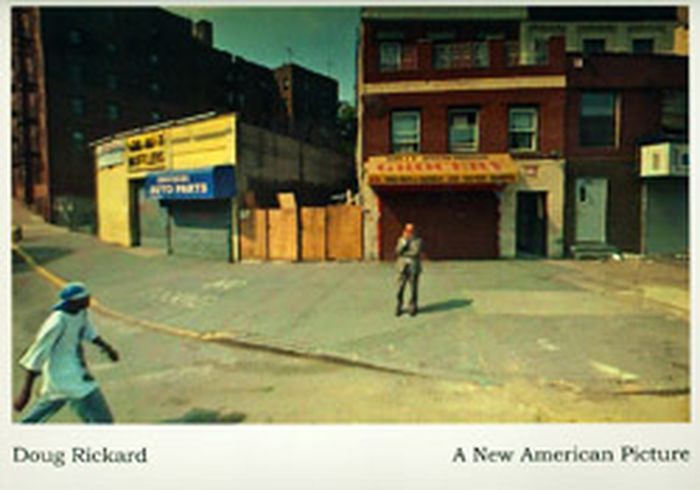
Doug Rickard : a new American picture
Actions:
Prix:
$60.00
(disponible sur commande)
Résumé:
Doug Rickard’s A New American Picture offers a startling and fresh perspective on American street photography. While at first glance the work looks reassuringly familiar and well within the traditional bounds of the genre, Rickard’s methodology is anything but conventional. All of the images are appropriated from Google Street View; over a period of two years, Rickard took advantage of the technology platform’s comprehensive image archive to virtually drive the unseen and overlooked roads of America - bleak places that are forgotten, economically devastated and abandoned. With an informed and careful eye, Rickard finds and decodes these previously photographed scenes of urban and rural decay. He rephotographs the machine-made images as they appear on his computer screen, framing and freeing them from their technological origins.
Doug Rickard : a new American picture
Actions:
Prix:
$60.00
(disponible sur commande)
Résumé:
Doug Rickard’s A New American Picture offers a startling and fresh perspective on American street photography. While at first glance the work looks reassuringly familiar and well within the traditional bounds of the genre, Rickard’s methodology is anything but conventional. All of the images are appropriated from Google Street View; over a period of two years, Rickard took advantage of the technology platform’s comprehensive image archive to virtually drive the unseen and overlooked roads of America - bleak places that are forgotten, economically devastated and abandoned. With an informed and careful eye, Rickard finds and decodes these previously photographed scenes of urban and rural decay. He rephotographs the machine-made images as they appear on his computer screen, framing and freeing them from their technological origins.
Classification:
livres
livres
Publication:
juin 2012
juin 2012
Sujet:
Monographies photo
Monographies photo
Classification:
livres
livres

Actions:
Prix:
$40.00
(disponible sur commande)
Résumé:
The Magic of Things explores a former advertising strategy of Swiss product posters in which banal, everyday objects—butter, a sewing machine, or shoes—are presented as desirable objects enticing us to buy. Free from any further contextualization, the objects acquire a sensual presence and magical aura. The product poster had its heyday in Switzerland in the 1940s with(...)
$40.00
(disponible sur commande)
Résumé:
The Magic of Things explores a former advertising strategy of Swiss product posters in which banal, everyday objects—butter, a sewing machine, or shoes—are presented as desirable objects enticing us to buy. Free from any further contextualization, the objects acquire a sensual presence and magical aura. The product poster had its heyday in Switzerland in the 1940s with(...)
Titre:
Poster collection 24: the magic of things
Actions:
Prix:
$40.00
(disponible sur commande)
Résumé:
The Magic of Things explores a former advertising strategy of Swiss product posters in which banal, everyday objects—butter, a sewing machine, or shoes—are presented as desirable objects enticing us to buy. Free from any further contextualization, the objects acquire a sensual presence and magical aura. The product poster had its heyday in Switzerland in the 1940s with designers such as Niklaus Stoecklin, Peter Birkhauser, or Otto Baumberger. As consumer society developed, however, the exclusive focus on the product and the brand name was no longer enough—in advertising, the feelings associated with the object as it related to life grew increasingly important. Today it is in the cultural poster that the magical depiction of things is experiencing a kind of renaissance.
Poster collection 24: the magic of things
Actions:
Prix:
$40.00
(disponible sur commande)
Résumé:
The Magic of Things explores a former advertising strategy of Swiss product posters in which banal, everyday objects—butter, a sewing machine, or shoes—are presented as desirable objects enticing us to buy. Free from any further contextualization, the objects acquire a sensual presence and magical aura. The product poster had its heyday in Switzerland in the 1940s with designers such as Niklaus Stoecklin, Peter Birkhauser, or Otto Baumberger. As consumer society developed, however, the exclusive focus on the product and the brand name was no longer enough—in advertising, the feelings associated with the object as it related to life grew increasingly important. Today it is in the cultural poster that the magical depiction of things is experiencing a kind of renaissance.
Classification:
livres
livres
Publication:
novembre 2012
novembre 2012
Sujet:
Arts graphiques imprimés
Arts graphiques imprimés
Classification:
livres
livres

Actions:
Prix:
$23.95
(disponible sur commande)
Résumé:
A fog of information and images has flooded the world: from advertising, television, radio, and film to the information glut produced by the new economy. With the rise of social networking, even our contemporaries, peers, and friends are all suddenly selling us the ultimate product: themselves. Here curator and critic Nato Thompson interrogates the implications of these(...)
$23.95
(disponible sur commande)
Résumé:
A fog of information and images has flooded the world: from advertising, television, radio, and film to the information glut produced by the new economy. With the rise of social networking, even our contemporaries, peers, and friends are all suddenly selling us the ultimate product: themselves. Here curator and critic Nato Thompson interrogates the implications of these(...)
Titre:
Seeing power: art and activism in the 21st century
Actions:
Prix:
$23.95
(disponible sur commande)
Résumé:
A fog of information and images has flooded the world: from advertising, television, radio, and film to the information glut produced by the new economy. With the rise of social networking, even our contemporaries, peers, and friends are all suddenly selling us the ultimate product: themselves. Here curator and critic Nato Thompson interrogates the implications of these developments for those dedicated to socially engaged art and activism. How can anyone find a voice and make change when the world is flooded with images and information? And what is one to make of the endless machine of consumer capitalism, which has appropriated much from the history of art and, in recent years, the methods of grassroots political organizing and social networking?
Seeing power: art and activism in the 21st century
Actions:
Prix:
$23.95
(disponible sur commande)
Résumé:
A fog of information and images has flooded the world: from advertising, television, radio, and film to the information glut produced by the new economy. With the rise of social networking, even our contemporaries, peers, and friends are all suddenly selling us the ultimate product: themselves. Here curator and critic Nato Thompson interrogates the implications of these developments for those dedicated to socially engaged art and activism. How can anyone find a voice and make change when the world is flooded with images and information? And what is one to make of the endless machine of consumer capitalism, which has appropriated much from the history of art and, in recent years, the methods of grassroots political organizing and social networking?
Classification:
livres
livres
Publication:
décembre 2012
décembre 2012
Sujet:
Théorie de l’art
Théorie de l’art
Classification:
livres
livres
Actions:
Prix:
$66.95
(disponible sur commande)
Résumé:
Besides his work as a painter, designer, and prolific writer of picture books, the Italian artist Bruno Munari (1907–1998) devoted himself to children’s art education. Although it is difficult to grasp the scope of his wide-ranging activities, regardless of the genre, Munari’s works are based on a simple idea and are immediately appealing to anyone of any age. The(...)
$66.95
(disponible sur commande)
Résumé:
Besides his work as a painter, designer, and prolific writer of picture books, the Italian artist Bruno Munari (1907–1998) devoted himself to children’s art education. Although it is difficult to grasp the scope of his wide-ranging activities, regardless of the genre, Munari’s works are based on a simple idea and are immediately appealing to anyone of any age. The(...)
Titre:
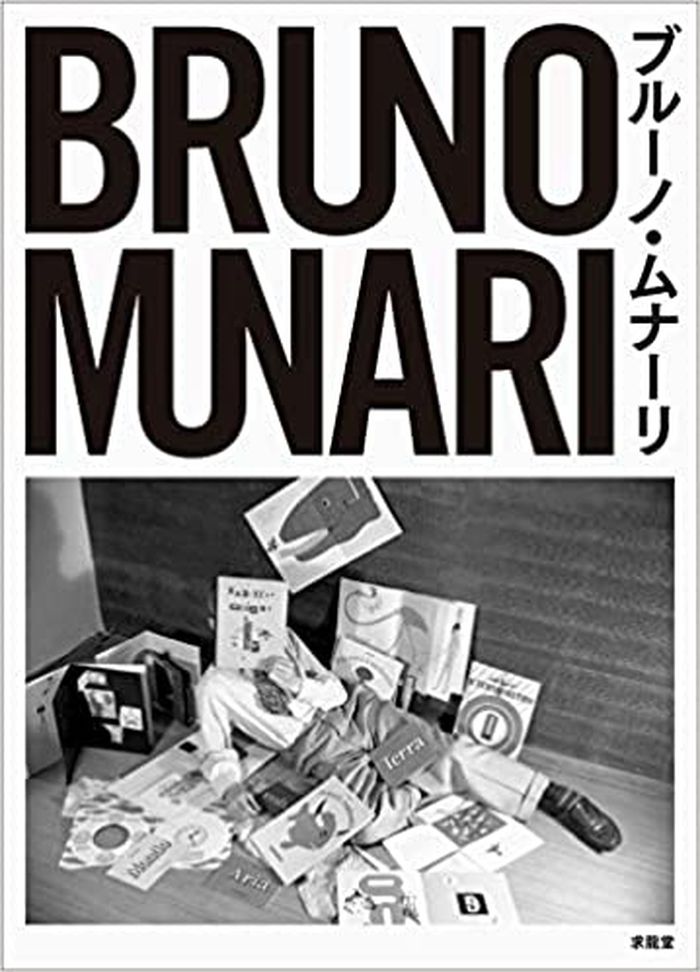
Bruno Munari: The man who made the useless machines (Japanese text)
Actions:
Prix:
$66.95
(disponible sur commande)
Résumé:
Besides his work as a painter, designer, and prolific writer of picture books, the Italian artist Bruno Munari (1907–1998) devoted himself to children’s art education. Although it is difficult to grasp the scope of his wide-ranging activities, regardless of the genre, Munari’s works are based on a simple idea and are immediately appealing to anyone of any age. The itinerant Japanese exhibition ''Bruno Munari: The Man Who Made the Useless Machines'' looks back at his career, which began with the Italian Futurists, by examining approximately 300 works. This comprehensive monograph complements and broadens the exhibition’s overview of his visionary life and work.
Bruno Munari: The man who made the useless machines (Japanese text)
Actions:
Prix:
$66.95
(disponible sur commande)
Résumé:
Besides his work as a painter, designer, and prolific writer of picture books, the Italian artist Bruno Munari (1907–1998) devoted himself to children’s art education. Although it is difficult to grasp the scope of his wide-ranging activities, regardless of the genre, Munari’s works are based on a simple idea and are immediately appealing to anyone of any age. The itinerant Japanese exhibition ''Bruno Munari: The Man Who Made the Useless Machines'' looks back at his career, which began with the Italian Futurists, by examining approximately 300 works. This comprehensive monograph complements and broadens the exhibition’s overview of his visionary life and work.
Classification:
livres
livres
Publication:
janvier 2020
janvier 2020
Sujet:
Design, monographies
Design, monographies
Classification:
livres
livres
Titre:
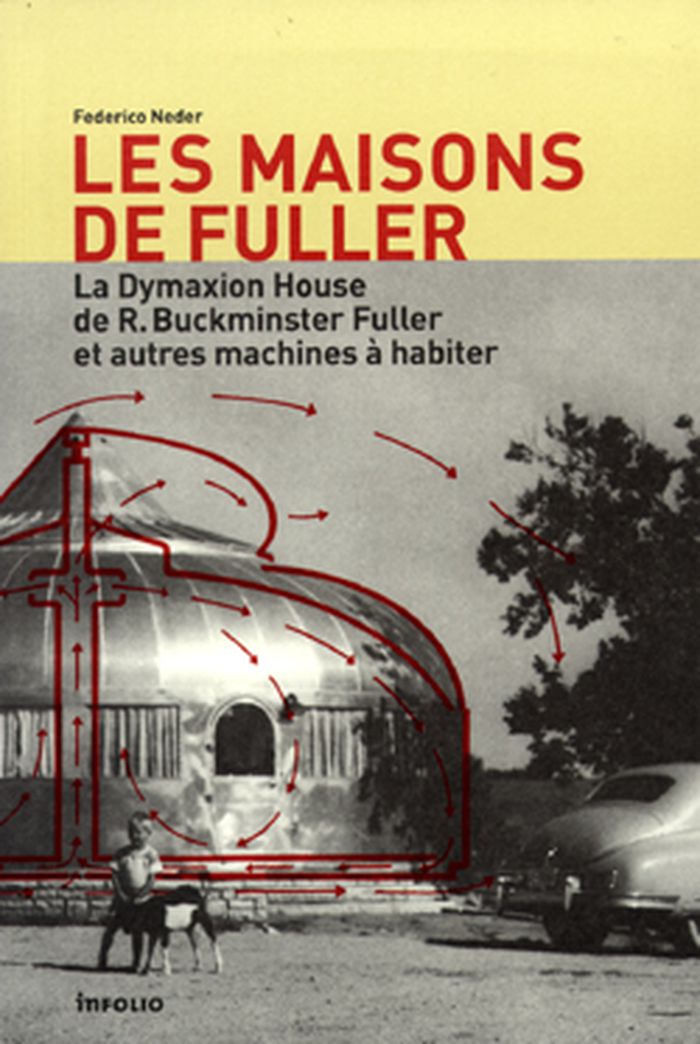
Les maisons de Fuller : la «Dymaxion House» de R. Buckminster Fuller et autres machines à habiter
Les maisons de Fuller : la «Dymaxion House» de R. Buckminster Fuller et autres machines à habiter
Actions:
Prix:
$61.95
(disponible en magasin)
Résumé:
À travers une série d’histoires entrecroisées, Federico Neder explore le surprenant usage de l’espace que propose cette maison circulaire et métallique. Il traque ses transformations successives, dont émerge un univers surprenant, avec ses véhicules, son mobilier, ses vêtements, ses appareils ménagers. Les projets et prototypes de Fuller, au-delà de leur carapace(...)
$61.95
(disponible en magasin)
Résumé:
À travers une série d’histoires entrecroisées, Federico Neder explore le surprenant usage de l’espace que propose cette maison circulaire et métallique. Il traque ses transformations successives, dont émerge un univers surprenant, avec ses véhicules, son mobilier, ses vêtements, ses appareils ménagers. Les projets et prototypes de Fuller, au-delà de leur carapace(...)
Sujet:
Architecture, monographies
Architecture, monographies
Publication:
février 2009, Gollion
février 2009, Gollion
Titre:
Les maisons de Fuller : la «Dymaxion House» de R. Buckminster Fuller et autres machines à habiter
Actions:
Prix:
$61.95
(disponible en magasin)
Résumé:
À travers une série d’histoires entrecroisées, Federico Neder explore le surprenant usage de l’espace que propose cette maison circulaire et métallique. Il traque ses transformations successives, dont émerge un univers surprenant, avec ses véhicules, son mobilier, ses vêtements, ses appareils ménagers. Les projets et prototypes de Fuller, au-delà de leur carapace scintillante, anticipent les changements technologiques, sociaux et culturels de l’art d’habiter actuel. Federico Neder est architecte diplômé de l’Université de Rosario en Argentine et docteur en architecture de l’Université de Genève. Il est actuellement rédacteur de la revue d'architecture FACES, enseigne à l’Université de Genève et est associé du bureau Amaldi-Neder architectes. Avec une préface de Mark Wrigley.
Les maisons de Fuller : la «Dymaxion House» de R. Buckminster Fuller et autres machines à habiter
Actions:
Prix:
$61.95
(disponible en magasin)
Résumé:
À travers une série d’histoires entrecroisées, Federico Neder explore le surprenant usage de l’espace que propose cette maison circulaire et métallique. Il traque ses transformations successives, dont émerge un univers surprenant, avec ses véhicules, son mobilier, ses vêtements, ses appareils ménagers. Les projets et prototypes de Fuller, au-delà de leur carapace scintillante, anticipent les changements technologiques, sociaux et culturels de l’art d’habiter actuel. Federico Neder est architecte diplômé de l’Université de Rosario en Argentine et docteur en architecture de l’Université de Genève. Il est actuellement rédacteur de la revue d'architecture FACES, enseigne à l’Université de Genève et est associé du bureau Amaldi-Neder architectes. Avec une préface de Mark Wrigley.
Classification:
livres
livres
Publication:
février 2009, Gollion
février 2009, Gollion
Sujet:
Architecture, monographies
Architecture, monographies


