


2508 Résultats
Classification:
livres
livres
Actions:
Prix:
$24.95
(disponible sur commande)
Résumé:
What begins as a meditation on "the museum" becomes, in this book, a far-reaching critical examination of how art history and museums have guided and controlled not only the way we look at art but the ways in which we understand modernity itself. Originally delivered as the 2001 Slade Lectures in the Fine Arts at Oxford University, the book makes its deeply complex(...)
$24.95
(disponible sur commande)
Résumé:
What begins as a meditation on "the museum" becomes, in this book, a far-reaching critical examination of how art history and museums have guided and controlled not only the way we look at art but the ways in which we understand modernity itself. Originally delivered as the 2001 Slade Lectures in the Fine Arts at Oxford University, the book makes its deeply complex(...)
Titre:
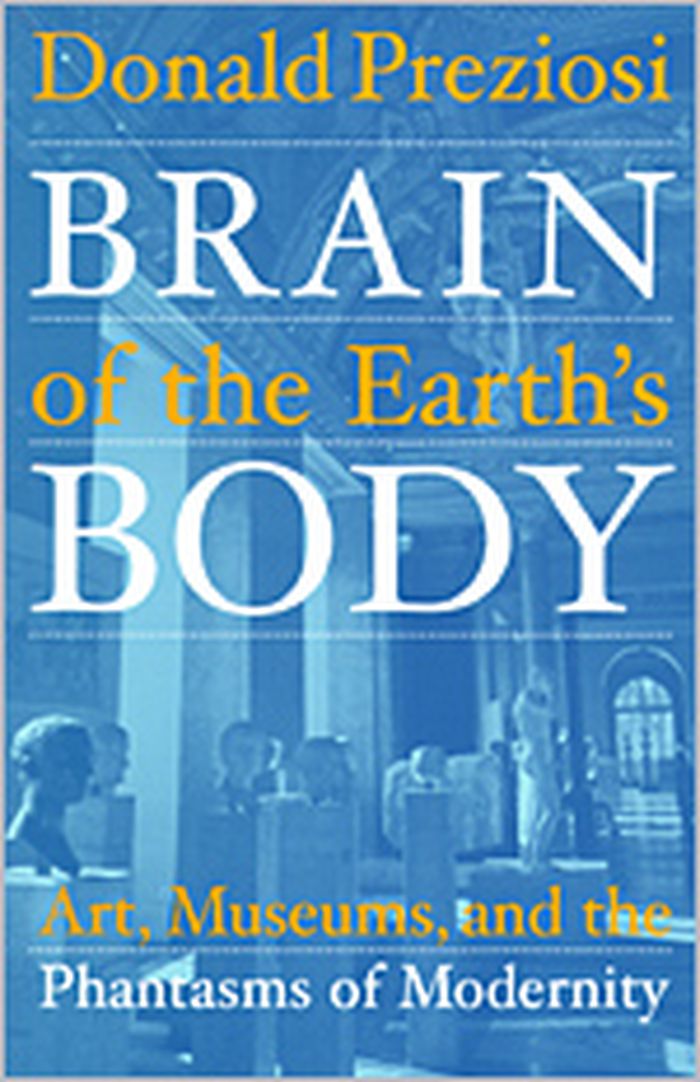
Brain of the earth's body : art, museums and the phantasms of modernity
Actions:
Prix:
$24.95
(disponible sur commande)
Résumé:
What begins as a meditation on "the museum" becomes, in this book, a far-reaching critical examination of how art history and museums have guided and controlled not only the way we look at art but the ways in which we understand modernity itself. Originally delivered as the 2001 Slade Lectures in the Fine Arts at Oxford University, the book makes its deeply complex argument remarkably accessible and powerfully clear. Concentrating on a period from the beginning of the nineteenth century to the beginning of the twentieth, Donald Preziosi presents case studies of major institutions that, he argues, have defined--and are still defining--the possible limits of museological and art historical theory and practice. These include Sir John Soane's Museum in London, preserved in its 1837 state; the Crystal Palace Exhibition of 1851; and four museums founded by Europeans in Egypt in the late nineteenth century, which divided up that country's history into "ethnically marked" aesthetic hierarchies and genealogies that accorded with Europe's construction of itself as the present of the world's past, and the "brain of the earth's body." Through this epistemological and institutional archaeology, Preziosi unearths the outlines of the more radical Enlightenment project that academic art history, professional museology, and art criticism have rendered marginal or invisible. Finally, he sketches a new theory about art, artifice, and visual signification in the cracks and around the margins of the "secular theologisms" of the globalized imperial capital called modernity.
Brain of the earth's body : art, museums and the phantasms of modernity
Actions:
Prix:
$24.95
(disponible sur commande)
Résumé:
What begins as a meditation on "the museum" becomes, in this book, a far-reaching critical examination of how art history and museums have guided and controlled not only the way we look at art but the ways in which we understand modernity itself. Originally delivered as the 2001 Slade Lectures in the Fine Arts at Oxford University, the book makes its deeply complex argument remarkably accessible and powerfully clear. Concentrating on a period from the beginning of the nineteenth century to the beginning of the twentieth, Donald Preziosi presents case studies of major institutions that, he argues, have defined--and are still defining--the possible limits of museological and art historical theory and practice. These include Sir John Soane's Museum in London, preserved in its 1837 state; the Crystal Palace Exhibition of 1851; and four museums founded by Europeans in Egypt in the late nineteenth century, which divided up that country's history into "ethnically marked" aesthetic hierarchies and genealogies that accorded with Europe's construction of itself as the present of the world's past, and the "brain of the earth's body." Through this epistemological and institutional archaeology, Preziosi unearths the outlines of the more radical Enlightenment project that academic art history, professional museology, and art criticism have rendered marginal or invisible. Finally, he sketches a new theory about art, artifice, and visual signification in the cracks and around the margins of the "secular theologisms" of the globalized imperial capital called modernity.
Classification:
livres
livres
Publication:
juillet 2003, Minneapolis
juillet 2003, Minneapolis
Sujet:
Muséologie
Muséologie
Classification:
livres
livres
Actions:
Prix:
$22.99
(disponible sur commande)
Résumé:
Have you ever wondered where rocking chairs came from, or why cheap plastic chairs are suddenly everywhere? In "Now I sit me down", the distinguished architect and writer Witold Rybczynski chronicles the history of the chair from the folding stools of pharaonic Egypt to the ubiquitous stackable monobloc chairs of today. He tells the stories of the inventor of the bentwood(...)
$22.99
(disponible sur commande)
Résumé:
Have you ever wondered where rocking chairs came from, or why cheap plastic chairs are suddenly everywhere? In "Now I sit me down", the distinguished architect and writer Witold Rybczynski chronicles the history of the chair from the folding stools of pharaonic Egypt to the ubiquitous stackable monobloc chairs of today. He tells the stories of the inventor of the bentwood(...)
Titre:
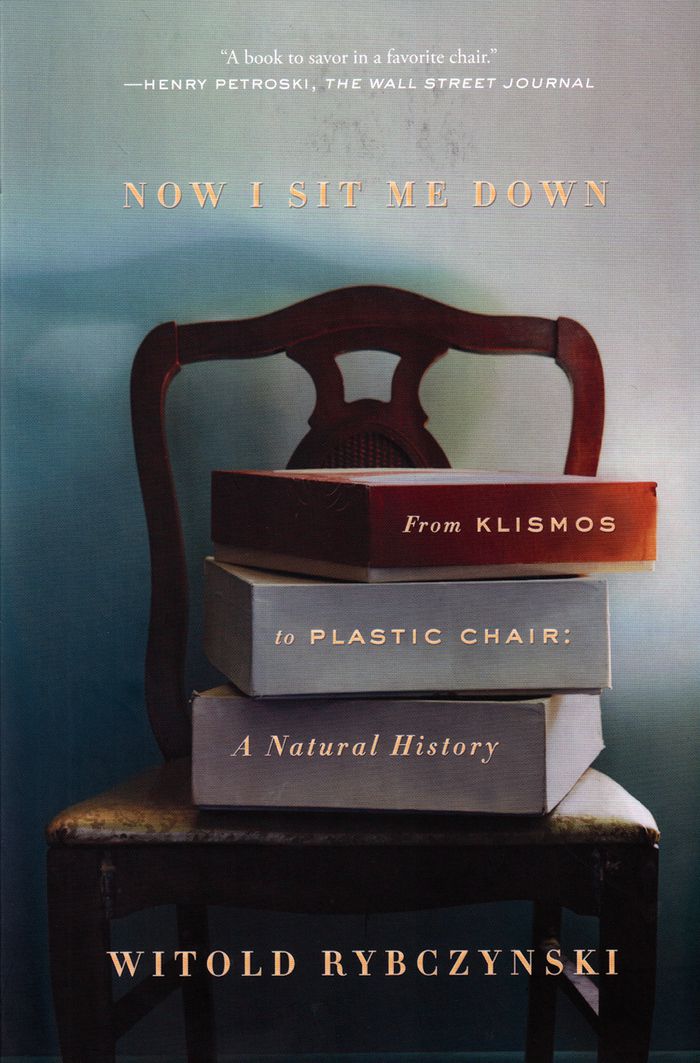
Now I sit me down: from klismos to plastic chair, a natural history
Actions:
Prix:
$22.99
(disponible sur commande)
Résumé:
Have you ever wondered where rocking chairs came from, or why cheap plastic chairs are suddenly everywhere? In "Now I sit me down", the distinguished architect and writer Witold Rybczynski chronicles the history of the chair from the folding stools of pharaonic Egypt to the ubiquitous stackable monobloc chairs of today. He tells the stories of the inventor of the bentwood chair, Michael Thonet, and of the creators of the first molded-plywood chair, Charles and Ray Eames. He reveals the history of chairs to be a social history—of different ways of sitting, of changing manners and attitudes, and of varying tastes. The history of chairs is the history of who we are. We learn how the ancient Chinese switched from sitting on the floor to sitting in a chair, and how the iconic chair of Middle America—the BarcaLounger—traces its roots back to the Bauhaus. Rybczynski weaves a rich tapestry that draws on art and design history, personal experience, and historical accounts. And he pairs these stories with his own delightful hand-drawn illustrations: colonial rockers and English cabrioles, languorous chaise longues and no-nonsense ergonomic task chairs—they’re all here. The famous Danish furniture designer Hans Wegner once remarked, “A chair is only finished when someone sits in it.” As Rybczynski tells it, the way we choose to sit and what we choose to sit on speak volumes about our values, our tastes, and the things we hold dear.
Now I sit me down: from klismos to plastic chair, a natural history
Actions:
Prix:
$22.99
(disponible sur commande)
Résumé:
Have you ever wondered where rocking chairs came from, or why cheap plastic chairs are suddenly everywhere? In "Now I sit me down", the distinguished architect and writer Witold Rybczynski chronicles the history of the chair from the folding stools of pharaonic Egypt to the ubiquitous stackable monobloc chairs of today. He tells the stories of the inventor of the bentwood chair, Michael Thonet, and of the creators of the first molded-plywood chair, Charles and Ray Eames. He reveals the history of chairs to be a social history—of different ways of sitting, of changing manners and attitudes, and of varying tastes. The history of chairs is the history of who we are. We learn how the ancient Chinese switched from sitting on the floor to sitting in a chair, and how the iconic chair of Middle America—the BarcaLounger—traces its roots back to the Bauhaus. Rybczynski weaves a rich tapestry that draws on art and design history, personal experience, and historical accounts. And he pairs these stories with his own delightful hand-drawn illustrations: colonial rockers and English cabrioles, languorous chaise longues and no-nonsense ergonomic task chairs—they’re all here. The famous Danish furniture designer Hans Wegner once remarked, “A chair is only finished when someone sits in it.” As Rybczynski tells it, the way we choose to sit and what we choose to sit on speak volumes about our values, our tastes, and the things we hold dear.
Classification:
livres
livres
Publication:
août 2017
août 2017
Sujet:
Théorie du design
Théorie du design
Classification:
livres
livres
Titre:
Hidden cities : the discovery and loss of ancient North American civilization / Roger G. Kennedy.
Hidden cities : the discovery and loss of ancient North American civilization / Roger G. Kennedy.
Actions:
Exemplaires:
Description:
vii, 372 pages, 8 unnumbered pages of plates : illustrations ; 25 cm
Description:
vii, 372 pages, 8 unnumbered pages of plates : illustrations ; 25 cm
Auteur:
Sujet:
Publication:
New York : Free Press ; Toronto : Maxwell Macmillan Canada ; New York : Maxwell Macmillan International, [1994], ©1994.
New York : Free Press ; Toronto : Maxwell Macmillan Canada ; New York : Maxwell Macmillan International, [1994], ©1994.
Titre:
Hidden cities : the discovery and loss of ancient North American civilization / Roger G. Kennedy.
Actions:
Exemplaires:
Description:
vii, 372 pages, 8 unnumbered pages of plates : illustrations ; 25 cm
Hidden cities : the discovery and loss of ancient North American civilization / Roger G. Kennedy.
Actions:
Exemplaires:
Description:
vii, 372 pages, 8 unnumbered pages of plates : illustrations ; 25 cm
Classification:
livres
livres
Publication:
New York : Free Press ; Toronto : Maxwell Macmillan Canada ; New York : Maxwell Macmillan International, [1994], ©1994.
New York : Free Press ; Toronto : Maxwell Macmillan Canada ; New York : Maxwell Macmillan International, [1994], ©1994.
Auteur:
Sujet:
Classification:
livres
livres
Actions:
Prix:
$9.75
(disponible sur commande)
Résumé:
Following on from his internationally bestselling books on Rome and Egypt, illustrator Stephen Biesty brings his magic touch to the cradle of civilization - classical Greece. The year is 436 BCE - Olympic year - and 11-year-old Neleus is about to embark on the journey of a lifetime. Setting off from his home in Miletus with his father and brother, our young hero's(...)
$9.75
(disponible sur commande)
Résumé:
Following on from his internationally bestselling books on Rome and Egypt, illustrator Stephen Biesty brings his magic touch to the cradle of civilization - classical Greece. The year is 436 BCE - Olympic year - and 11-year-old Neleus is about to embark on the journey of a lifetime. Setting off from his home in Miletus with his father and brother, our young hero's(...)
Titre:
Greece in spectacular cross-section
Actions:
Prix:
$9.75
(disponible sur commande)
Résumé:
Following on from his internationally bestselling books on Rome and Egypt, illustrator Stephen Biesty brings his magic touch to the cradle of civilization - classical Greece. The year is 436 BCE - Olympic year - and 11-year-old Neleus is about to embark on the journey of a lifetime. Setting off from his home in Miletus with his father and brother, our young hero's final destination is the great games at Olympia, but he has many adventures and sees many sights along the way : fearsome Athenian warships at the sacred island of Delos; the rich silver mines of Laurion; the hurly-burly of the port and streets of Athens; the splendour of the Agora and the Acropolis; and a visit to the sacred oracle at Delphi. Biesty's Greece is an illustrated tour-de-force, featuring a stunning array of cross-sections, cutaways and explosions. Each drawing highlights Biesty's trademark attention to detail and is backed up by authoritative text and annotations. Biesty's eye for the quirky details of daily life combines with a witty and engaging text to provide an unforgettable window into the world of ancient Greece. Pitched at the 9-12-year-old, this book is destined to bring the ancient world to life for a wide range of readers. No aspect of Greek life is left out... domestic life, religion and the gods, the role of women, children and education, philosophy and learning, myths and legends, government, politics and law, economy and trade, warfare and slavery, the Olympic Games, music and drama, painting, pottery and sculpture, building and architecture, ships and seafaring.
Greece in spectacular cross-section
Actions:
Prix:
$9.75
(disponible sur commande)
Résumé:
Following on from his internationally bestselling books on Rome and Egypt, illustrator Stephen Biesty brings his magic touch to the cradle of civilization - classical Greece. The year is 436 BCE - Olympic year - and 11-year-old Neleus is about to embark on the journey of a lifetime. Setting off from his home in Miletus with his father and brother, our young hero's final destination is the great games at Olympia, but he has many adventures and sees many sights along the way : fearsome Athenian warships at the sacred island of Delos; the rich silver mines of Laurion; the hurly-burly of the port and streets of Athens; the splendour of the Agora and the Acropolis; and a visit to the sacred oracle at Delphi. Biesty's Greece is an illustrated tour-de-force, featuring a stunning array of cross-sections, cutaways and explosions. Each drawing highlights Biesty's trademark attention to detail and is backed up by authoritative text and annotations. Biesty's eye for the quirky details of daily life combines with a witty and engaging text to provide an unforgettable window into the world of ancient Greece. Pitched at the 9-12-year-old, this book is destined to bring the ancient world to life for a wide range of readers. No aspect of Greek life is left out... domestic life, religion and the gods, the role of women, children and education, philosophy and learning, myths and legends, government, politics and law, economy and trade, warfare and slavery, the Olympic Games, music and drama, painting, pottery and sculpture, building and architecture, ships and seafaring.
Classification:
livres
livres
Publication:
septembre 2006, Oxford, New York
septembre 2006, Oxford, New York
Sujet:
Littérature jeunesse
Littérature jeunesse
Classification:
audio
audio
Actions:
Description:
1 online resource.
Auteur:
Sujet:
Publication:
[Place of publication not identified] : Whitney Museum of American Art, 2021.
[Place of publication not identified] : Whitney Museum of American Art, 2021.
Classification:
audio
audio
Publication:
[Place of publication not identified] : Whitney Museum of American Art, 2021.
[Place of publication not identified] : Whitney Museum of American Art, 2021.
Auteur:
Sujet:
Classification:
livres
livres
Actions:
Exemplaires:
Description:
410 pages : color illustrations, maps ; 18 cm.
Description:
410 pages : color illustrations, maps ; 18 cm.
Auteur:
Sujet:
Publication:
Paris : Hachette, 2009.
Paris : Hachette, 2009.
Titre:
La Chinafrique : Pékin à la conquête du continent noir / Serge Michel, Michel Beuret ; photographies de Paolo Woods.
Actions:
Exemplaires:
Description:
410 pages : color illustrations, maps ; 18 cm.
La Chinafrique : Pékin à la conquête du continent noir / Serge Michel, Michel Beuret ; photographies de Paolo Woods.
Actions:
Exemplaires:
Description:
410 pages : color illustrations, maps ; 18 cm.
Classification:
livres
livres
Publication:
Paris : Hachette, 2009.
Paris : Hachette, 2009.
Auteur:
Sujet:
Classification:
livres
livres
Titre:
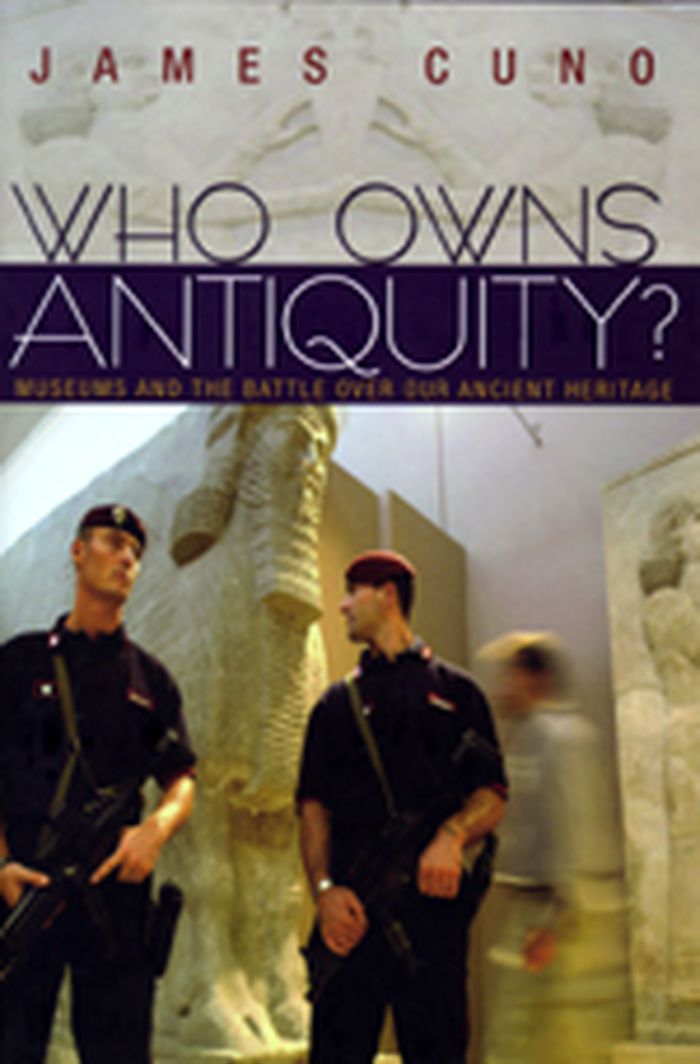
Who owns antiquity?
Who owns antiquity?
Actions:
Prix:
$24.95
(disponible sur commande)
Résumé:
Whether antiquities should be returned to the countries where they were found is one of the most urgent and controversial issues in the art world today, and it has pitted museums, private collectors, and dealers against source countries, archaeologists, and academics. Maintaining that the acquisition of undocumented antiquities by museums encourages the looting of(...)
$24.95
(disponible sur commande)
Résumé:
Whether antiquities should be returned to the countries where they were found is one of the most urgent and controversial issues in the art world today, and it has pitted museums, private collectors, and dealers against source countries, archaeologists, and academics. Maintaining that the acquisition of undocumented antiquities by museums encourages the looting of(...)
Titre:
Who owns antiquity?
Actions:
Prix:
$24.95
(disponible sur commande)
Résumé:
Whether antiquities should be returned to the countries where they were found is one of the most urgent and controversial issues in the art world today, and it has pitted museums, private collectors, and dealers against source countries, archaeologists, and academics. Maintaining that the acquisition of undocumented antiquities by museums encourages the looting of archaeological sites, countries such as Italy, Greece, Egypt, Turkey, and China have claimed ancient artifacts as state property, called for their return from museums around the world, and passed laws against their future export. But in Who Owns Antiquity?, one of the world's leading museum directors vigorously challenges this nationalistic position, arguing that it is damaging and often disingenuous. "Antiquities," James Cuno argues, "are the cultural property of all humankind," "evidence of the world's ancient past and not that of a particular modern nation. They comprise antiquity, and antiquity knows no borders." Cuno argues that nationalistic retention and reclamation policies impede common access to this common heritage and encourage a dubious and dangerous politicization of antiquities--and of culture itself. Antiquities need to be protected from looting but also from nationalistic identity politics. To do this, Cuno calls for measures to broaden rather than restrict international access to antiquities. He advocates restoration of the system under which source countries would share newly discovered artifacts in exchange for archaeological help, and he argues that museums should again be allowed reasonable ways to acquire undocumented antiquities. The first extended defense of the side of museums in the struggle over antiquities, Who Owns Antiquity? is sure to be as important as it is controversial.
Who owns antiquity?
Actions:
Prix:
$24.95
(disponible sur commande)
Résumé:
Whether antiquities should be returned to the countries where they were found is one of the most urgent and controversial issues in the art world today, and it has pitted museums, private collectors, and dealers against source countries, archaeologists, and academics. Maintaining that the acquisition of undocumented antiquities by museums encourages the looting of archaeological sites, countries such as Italy, Greece, Egypt, Turkey, and China have claimed ancient artifacts as state property, called for their return from museums around the world, and passed laws against their future export. But in Who Owns Antiquity?, one of the world's leading museum directors vigorously challenges this nationalistic position, arguing that it is damaging and often disingenuous. "Antiquities," James Cuno argues, "are the cultural property of all humankind," "evidence of the world's ancient past and not that of a particular modern nation. They comprise antiquity, and antiquity knows no borders." Cuno argues that nationalistic retention and reclamation policies impede common access to this common heritage and encourage a dubious and dangerous politicization of antiquities--and of culture itself. Antiquities need to be protected from looting but also from nationalistic identity politics. To do this, Cuno calls for measures to broaden rather than restrict international access to antiquities. He advocates restoration of the system under which source countries would share newly discovered artifacts in exchange for archaeological help, and he argues that museums should again be allowed reasonable ways to acquire undocumented antiquities. The first extended defense of the side of museums in the struggle over antiquities, Who Owns Antiquity? is sure to be as important as it is controversial.
Classification:
livres
livres
Publication:
mai 2008, Princeton, Oxford
mai 2008, Princeton, Oxford
Sujet:
Muséologie
Muséologie
Classification:
livres
livres
Actions:
Prix:
$67.50
(disponible sur commande)
Résumé:
Today we are so accustomed to seeing photographs wedded to text--whether in the family album or daily newspaper--that the verbal framing of the photograph has become invisible. The text is internalized within the image, and the meaning of the photograph becomes(...)
$67.50
(disponible sur commande)
Résumé:
Today we are so accustomed to seeing photographs wedded to text--whether in the family album or daily newspaper--that the verbal framing of the photograph has become invisible. The text is internalized within the image, and the meaning of the photograph becomes(...)
Sujet:
Photographie- collections
Photographie- collections
Publication:
novembre 1998, Cambridge, Mass.
novembre 1998, Cambridge, Mass.
Titre:
Scenes in a library : reading the photograph in the book, 1843-1875
Actions:
Prix:
$67.50
(disponible sur commande)
Résumé:
Today we are so accustomed to seeing photographs wedded to text--whether in the family album or daily newspaper--that the verbal framing of the photograph has become invisible. The text is internalized within the image, and the meaning of the photograph becomes clear and self-evident, as if by the evidence of the photograph itself. In Scenes in a Library, Carol Armstrong explores the experimental moment, at the inception of the new medium, when the word came to haunt the photographic image, and the forty or so years--roughly from the 1840s to the 1880s--during which the photographic image alternately resisted and became assimilated to the printed page. Armstrong's emphasis is on British books. Not only was it in an English book that the paper photograph was first described and published, but the range of subject matter of nineteenth-century British photographically illustrated books prior to the 1880s was as rich as it was peculiar and sometimes recalcitrant. Armstrong focuses on one book about photography (Talbot's The Pencil of Nature); one "scientific" book (Anna Atkins's Photographs of British Algae); two travel narratives, one factual and one fictional (Francis Frith's Egypt and Palestine Photographed and Observed and his illustrated edition of Longfellow's novel Hyperion: A Romance); and one book of poetry (Julia Margaret Cameron's Illustrations to Alfred Lord Tennyson's Idylls of the King); as well as some miscellaneous books from the 1870s. According to Armstrong, art history has tended to remove the historic photograph from its printed and published context. Moving back and forth between close looking and equally close reading, she reinserts the photograph into the book from which it was taken.
Scenes in a library : reading the photograph in the book, 1843-1875
Actions:
Prix:
$67.50
(disponible sur commande)
Résumé:
Today we are so accustomed to seeing photographs wedded to text--whether in the family album or daily newspaper--that the verbal framing of the photograph has become invisible. The text is internalized within the image, and the meaning of the photograph becomes clear and self-evident, as if by the evidence of the photograph itself. In Scenes in a Library, Carol Armstrong explores the experimental moment, at the inception of the new medium, when the word came to haunt the photographic image, and the forty or so years--roughly from the 1840s to the 1880s--during which the photographic image alternately resisted and became assimilated to the printed page. Armstrong's emphasis is on British books. Not only was it in an English book that the paper photograph was first described and published, but the range of subject matter of nineteenth-century British photographically illustrated books prior to the 1880s was as rich as it was peculiar and sometimes recalcitrant. Armstrong focuses on one book about photography (Talbot's The Pencil of Nature); one "scientific" book (Anna Atkins's Photographs of British Algae); two travel narratives, one factual and one fictional (Francis Frith's Egypt and Palestine Photographed and Observed and his illustrated edition of Longfellow's novel Hyperion: A Romance); and one book of poetry (Julia Margaret Cameron's Illustrations to Alfred Lord Tennyson's Idylls of the King); as well as some miscellaneous books from the 1870s. According to Armstrong, art history has tended to remove the historic photograph from its printed and published context. Moving back and forth between close looking and equally close reading, she reinserts the photograph into the book from which it was taken.
Classification:
livres
livres
Publication:
novembre 1998, Cambridge, Mass.
novembre 1998, Cambridge, Mass.
Sujet:
Photographie- collections
Photographie- collections
Classification:
livres
livres
Actions:
Prix:
$49.50
(disponible sur commande)
Résumé:
Once symbols of the past, ruins have become ubiquitous signs of our future. Americans today encounter ruins in the media on a daily basis - images of abandoned factories and malls, toxic landscapes, devastating fires, hurricanes, and floods. In this sweeping study, Miles Orvell offers a new understanding of the spectacle of ruins in US culture, exploring how(...)
$49.50
(disponible sur commande)
Résumé:
Once symbols of the past, ruins have become ubiquitous signs of our future. Americans today encounter ruins in the media on a daily basis - images of abandoned factories and malls, toxic landscapes, devastating fires, hurricanes, and floods. In this sweeping study, Miles Orvell offers a new understanding of the spectacle of ruins in US culture, exploring how(...)
Titre:
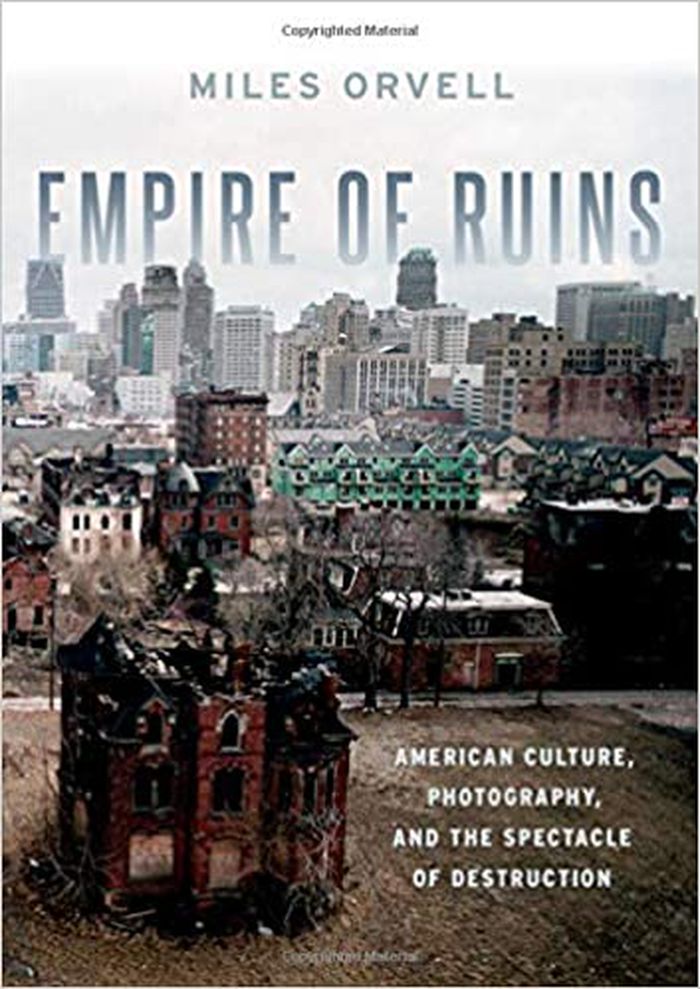
Empire of ruins: American culture, photography, and the spectacle of destruction
Actions:
Prix:
$49.50
(disponible sur commande)
Résumé:
Once symbols of the past, ruins have become ubiquitous signs of our future. Americans today encounter ruins in the media on a daily basis - images of abandoned factories and malls, toxic landscapes, devastating fires, hurricanes, and floods. In this sweeping study, Miles Orvell offers a new understanding of the spectacle of ruins in US culture, exploring how photographers, writers, painters, and filmmakers have responded to ruin and destruction, both real and imaginary, in an effort to make sense of the past and envision the future. ''Empire of ruins'' explains why Americans in the nineteenth century yearned for the ruins of Rome and Egypt and how they portrayed a past as ancient and mysterious in the remains of Native American cultures. As the romance of ruins gave way to twentieth-century capitalism, older structures were demolished to make way for grander ones, a process interpreted by artists as a symptom of America's "creative destruction." In the late twentieth century, Americans began to inhabit a perpetual state of ruins, made visible by photographs of decaying inner cities, derelict factories and malls, and the waste lands of the mining industry. This interdisciplinary work focuses on how visual media have transformed disaster and decay into spectacles that compel our moral attention even as they balance horror and beauty. Looking to the future, Orvell considers the visual portrayal of climate ruins as we face the political and ethical responsibilities of our changing world. A wide-ranging work by an acclaimed urban, cultural, and photography scholar, ''Empire of ruins'' offers a provocative and lavishly illustrated look at the American past, present, and future.
Empire of ruins: American culture, photography, and the spectacle of destruction
Actions:
Prix:
$49.50
(disponible sur commande)
Résumé:
Once symbols of the past, ruins have become ubiquitous signs of our future. Americans today encounter ruins in the media on a daily basis - images of abandoned factories and malls, toxic landscapes, devastating fires, hurricanes, and floods. In this sweeping study, Miles Orvell offers a new understanding of the spectacle of ruins in US culture, exploring how photographers, writers, painters, and filmmakers have responded to ruin and destruction, both real and imaginary, in an effort to make sense of the past and envision the future. ''Empire of ruins'' explains why Americans in the nineteenth century yearned for the ruins of Rome and Egypt and how they portrayed a past as ancient and mysterious in the remains of Native American cultures. As the romance of ruins gave way to twentieth-century capitalism, older structures were demolished to make way for grander ones, a process interpreted by artists as a symptom of America's "creative destruction." In the late twentieth century, Americans began to inhabit a perpetual state of ruins, made visible by photographs of decaying inner cities, derelict factories and malls, and the waste lands of the mining industry. This interdisciplinary work focuses on how visual media have transformed disaster and decay into spectacles that compel our moral attention even as they balance horror and beauty. Looking to the future, Orvell considers the visual portrayal of climate ruins as we face the political and ethical responsibilities of our changing world. A wide-ranging work by an acclaimed urban, cultural, and photography scholar, ''Empire of ruins'' offers a provocative and lavishly illustrated look at the American past, present, and future.
Classification:
livres
livres
Publication:
janvier 2021
janvier 2021
Sujet:
Théorie de la photographie
Théorie de la photographie
Classification:
vidéo
vidéo
Description:
1 online resource (1 video file (29 minutes)) : sound, color
Auteur:
Sujet:
Publication:
London, England : Pidgeon Digital, 1980.
London, England : Pidgeon Digital, 1980.
Titre:
Thirteen Architectures / [presented by] Amâncio Guedes.
Actions:
Description:
1 online resource (1 video file (29 minutes)) : sound, color
Thirteen Architectures / [presented by] Amâncio Guedes.
Actions:
Description:
1 online resource (1 video file (29 minutes)) : sound, color
Classification:
vidéo
vidéo
Publication:
London, England : Pidgeon Digital, 1980.
London, England : Pidgeon Digital, 1980.
Auteur:
Sujet:


