


2505 Résultats
Classification:
livres
livres
Actions:
Prix:
$43.95
(disponible sur commande)
Résumé:
Over the past hundred years, the global motto has been "more, more, more" in terms of growth - of population, of the built environment, of human and financial capital, and of all manner of worldly goods. This was the reality as the world population boomed during the 1960s and 1970s. But reality is changing in front of our eyes. Growth is already slowing down, and(...)
$43.95
(disponible sur commande)
Résumé:
Over the past hundred years, the global motto has been "more, more, more" in terms of growth - of population, of the built environment, of human and financial capital, and of all manner of worldly goods. This was the reality as the world population boomed during the 1960s and 1970s. But reality is changing in front of our eyes. Growth is already slowing down, and(...)
Titre:
Smaller cities in a shrinking world: learning to thrive without growth
Actions:
Prix:
$43.95
(disponible sur commande)
Résumé:
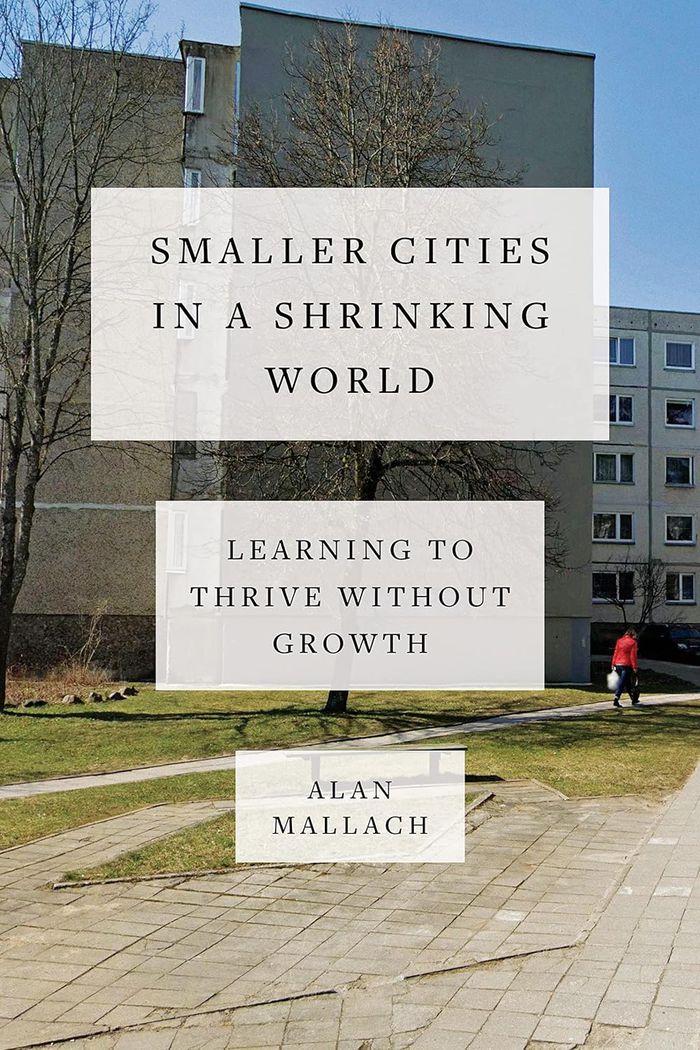
Over the past hundred years, the global motto has been "more, more, more" in terms of growth - of population, of the built environment, of human and financial capital, and of all manner of worldly goods. This was the reality as the world population boomed during the 1960s and 1970s. But reality is changing in front of our eyes. Growth is already slowing down, and according to the most sophisticated demographers, the earth's population will begin to decline not hundreds of years from now, but within the lifetimes of many of the people now living on the planet. In ''Smaller cities in a shrinking world'', urban policy expert Alan Mallach seeks to understand how declining population and economic growth, coupled with the other forces that will influence their fates, particularly climate change, will affect the world's cities over the coming decades. What will it mean to have a world full of shrinking cities? Does it mean that they are doomed to decline in more ways than simply population numbers, or can we uncouple population decline from economic decay, abandoned buildings and impoverishment? Mallach has spent much of the last thirty or more years working in, looking at, thinking, and writing about shrinking cities-from Trenton, New Jersey, where he was director of housing and economic development, to other American cities like Detroit, Flint, and St. Louis, and from there to cities in Japan and Central and Eastern Europe. He has woven together his experience, research, and analysis in this fascinating, realistic yet hopeful look at how smaller, shrinking cities can thrive, despite the daunting challenges they face.
Smaller cities in a shrinking world: learning to thrive without growth
Actions:
Prix:
$43.95
(disponible sur commande)
Résumé:
Over the past hundred years, the global motto has been "more, more, more" in terms of growth - of population, of the built environment, of human and financial capital, and of all manner of worldly goods. This was the reality as the world population boomed during the 1960s and 1970s. But reality is changing in front of our eyes. Growth is already slowing down, and according to the most sophisticated demographers, the earth's population will begin to decline not hundreds of years from now, but within the lifetimes of many of the people now living on the planet. In ''Smaller cities in a shrinking world'', urban policy expert Alan Mallach seeks to understand how declining population and economic growth, coupled with the other forces that will influence their fates, particularly climate change, will affect the world's cities over the coming decades. What will it mean to have a world full of shrinking cities? Does it mean that they are doomed to decline in more ways than simply population numbers, or can we uncouple population decline from economic decay, abandoned buildings and impoverishment? Mallach has spent much of the last thirty or more years working in, looking at, thinking, and writing about shrinking cities-from Trenton, New Jersey, where he was director of housing and economic development, to other American cities like Detroit, Flint, and St. Louis, and from there to cities in Japan and Central and Eastern Europe. He has woven together his experience, research, and analysis in this fascinating, realistic yet hopeful look at how smaller, shrinking cities can thrive, despite the daunting challenges they face.
Classification:
livres
livres
Publication:
juin 2023
juin 2023
Sujet:
Théorie de l’urbanisme
Théorie de l’urbanisme
Classification:
livres
livres
Titre:
Valerio Olgiati: Villa Além
Valerio Olgiati: Villa Além
Actions:
Prix:
$95.00
(disponible en magasin)
Résumé:
"For many years, my wife Tamara and I had been searching for a place for which we could leave our current home in the Swiss mountains on social, cultural and climatic grounds. In the Alentejo region in Portugal, we found the perfect situation. A wonderful climate, a wide empty landscape and an existing culture that we like. Here, we spend a couple of months a year. From(...)
$95.00
(disponible en magasin)
Résumé:
"For many years, my wife Tamara and I had been searching for a place for which we could leave our current home in the Swiss mountains on social, cultural and climatic grounds. In the Alentejo region in Portugal, we found the perfect situation. A wonderful climate, a wide empty landscape and an existing culture that we like. Here, we spend a couple of months a year. From(...)
Titre:
Valerio Olgiati: Villa Além
Actions:
Prix:
$95.00
(disponible en magasin)
Résumé:
"For many years, my wife Tamara and I had been searching for a place for which we could leave our current home in the Swiss mountains on social, cultural and climatic grounds. In the Alentejo region in Portugal, we found the perfect situation. A wonderful climate, a wide empty landscape and an existing culture that we like. Here, we spend a couple of months a year. From here, we work – my wife is also an architect – close to our office in Flims. The basic idea and the all-influencing aim of our project was to create a garden, even more than a shelter, which, of course, we also have. The form of our house indeed should not primarily express ‘shelter’. It is the ‘garden’ that has to essentially find its form and that we want to experience. To date, three main forms are known to me in terms of housing. The first, ‘urban living’, I understand as living in the dense fabric of an urban setting. Then, ‘suburban living’, which takes place in a typical one-family home with a small garden in suburbia, and finally, ‘country living’, where people live socially and infrastructurally connected at large rural intervals. We excluded all three of these forms for our house. This was not what we were looking for. Our home is far away from the next town. It is disconnected in every respect. There is only the vast empty landscape around us. In Villa Além, a sense of loneliness and independence arises. It is a real retreat. I was looking for a term for this type of housing and have arrived at ‘landscape living’." – Valerio Olgiati
Valerio Olgiati: Villa Além
Actions:
Prix:
$95.00
(disponible en magasin)
Résumé:
"For many years, my wife Tamara and I had been searching for a place for which we could leave our current home in the Swiss mountains on social, cultural and climatic grounds. In the Alentejo region in Portugal, we found the perfect situation. A wonderful climate, a wide empty landscape and an existing culture that we like. Here, we spend a couple of months a year. From here, we work – my wife is also an architect – close to our office in Flims. The basic idea and the all-influencing aim of our project was to create a garden, even more than a shelter, which, of course, we also have. The form of our house indeed should not primarily express ‘shelter’. It is the ‘garden’ that has to essentially find its form and that we want to experience. To date, three main forms are known to me in terms of housing. The first, ‘urban living’, I understand as living in the dense fabric of an urban setting. Then, ‘suburban living’, which takes place in a typical one-family home with a small garden in suburbia, and finally, ‘country living’, where people live socially and infrastructurally connected at large rural intervals. We excluded all three of these forms for our house. This was not what we were looking for. Our home is far away from the next town. It is disconnected in every respect. There is only the vast empty landscape around us. In Villa Além, a sense of loneliness and independence arises. It is a real retreat. I was looking for a term for this type of housing and have arrived at ‘landscape living’." – Valerio Olgiati
Classification:
livres
livres
Publication:
janvier 2016
janvier 2016
Sujet:
Architecture, monographies
Architecture, monographies
Classification:
livres
livres
Actions:
Prix:
$49.50
(disponible sur commande)
Résumé:
Once symbols of the past, ruins have become ubiquitous signs of our future. Americans today encounter ruins in the media on a daily basis - images of abandoned factories and malls, toxic landscapes, devastating fires, hurricanes, and floods. In this sweeping study, Miles Orvell offers a new understanding of the spectacle of ruins in US culture, exploring how(...)
$49.50
(disponible sur commande)
Résumé:
Once symbols of the past, ruins have become ubiquitous signs of our future. Americans today encounter ruins in the media on a daily basis - images of abandoned factories and malls, toxic landscapes, devastating fires, hurricanes, and floods. In this sweeping study, Miles Orvell offers a new understanding of the spectacle of ruins in US culture, exploring how(...)
Titre:
Empire of ruins: American culture, phptography, and the spectacle of destruction
Actions:
Prix:
$49.50
(disponible sur commande)
Résumé:
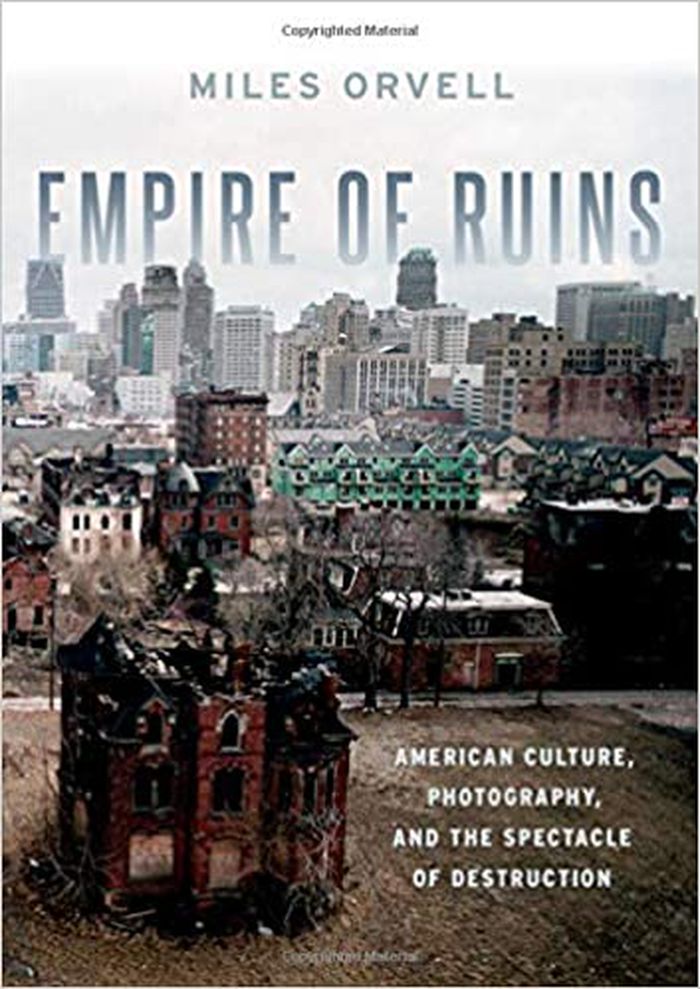
Once symbols of the past, ruins have become ubiquitous signs of our future. Americans today encounter ruins in the media on a daily basis - images of abandoned factories and malls, toxic landscapes, devastating fires, hurricanes, and floods. In this sweeping study, Miles Orvell offers a new understanding of the spectacle of ruins in US culture, exploring how photographers, writers, painters, and filmmakers have responded to ruin and destruction, both real and imaginary, in an effort to make sense of the past and envision the future. ''Empire of ruins'' explains why Americans in the nineteenth century yearned for the ruins of Rome and Egypt and how they portrayed a past as ancient and mysterious in the remains of Native American cultures. As the romance of ruins gave way to twentieth-century capitalism, older structures were demolished to make way for grander ones, a process interpreted by artists as a symptom of America's "creative destruction." In the late twentieth century, Americans began to inhabit a perpetual state of ruins, made visible by photographs of decaying inner cities, derelict factories and malls, and the waste lands of the mining industry. This interdisciplinary work focuses on how visual media have transformed disaster and decay into spectacles that compel our moral attention even as they balance horror and beauty. Looking to the future, Orvell considers the visual portrayal of climate ruins as we face the political and ethical responsibilities of our changing world. A wide-ranging work by an acclaimed urban, cultural, and photography scholar, ''Empire of ruins'' offers a provocative and lavishly illustrated look at the American past, present, and future.
Empire of ruins: American culture, phptography, and the spectacle of destruction
Actions:
Prix:
$49.50
(disponible sur commande)
Résumé:
Once symbols of the past, ruins have become ubiquitous signs of our future. Americans today encounter ruins in the media on a daily basis - images of abandoned factories and malls, toxic landscapes, devastating fires, hurricanes, and floods. In this sweeping study, Miles Orvell offers a new understanding of the spectacle of ruins in US culture, exploring how photographers, writers, painters, and filmmakers have responded to ruin and destruction, both real and imaginary, in an effort to make sense of the past and envision the future. ''Empire of ruins'' explains why Americans in the nineteenth century yearned for the ruins of Rome and Egypt and how they portrayed a past as ancient and mysterious in the remains of Native American cultures. As the romance of ruins gave way to twentieth-century capitalism, older structures were demolished to make way for grander ones, a process interpreted by artists as a symptom of America's "creative destruction." In the late twentieth century, Americans began to inhabit a perpetual state of ruins, made visible by photographs of decaying inner cities, derelict factories and malls, and the waste lands of the mining industry. This interdisciplinary work focuses on how visual media have transformed disaster and decay into spectacles that compel our moral attention even as they balance horror and beauty. Looking to the future, Orvell considers the visual portrayal of climate ruins as we face the political and ethical responsibilities of our changing world. A wide-ranging work by an acclaimed urban, cultural, and photography scholar, ''Empire of ruins'' offers a provocative and lavishly illustrated look at the American past, present, and future.
Classification:
livres
livres
Publication:
janvier 2021
janvier 2021
Sujet:
Théorie de la photographie
Théorie de la photographie
Classification:
livres
livres
Actions:
Exemplaires:
Description:
316 pages : illustrations (some color), maps (some color) ; 22 cm
Description:
316 pages : illustrations (some color), maps (some color) ; 22 cm
Auteur:
Sujet:
Publication:
Ostfildern, Germany : Hatje Cantz ; New York, N.Y. : Museum of Modern Art, ©2010.
Ostfildern, Germany : Hatje Cantz ; New York, N.Y. : Museum of Modern Art, ©2010.
Titre:
On the water : Palisade Bay / Guy Nordenson, Catherine Seavitt, Adam Yarinksy ; with Stephen Cassell [and others] ; foreword by Michael Oppenheimer ; afterword by Barry Bergdoll.
Actions:
Exemplaires:
Description:
316 pages : illustrations (some color), maps (some color) ; 22 cm
On the water : Palisade Bay / Guy Nordenson, Catherine Seavitt, Adam Yarinksy ; with Stephen Cassell [and others] ; foreword by Michael Oppenheimer ; afterword by Barry Bergdoll.
Actions:
Exemplaires:
Description:
316 pages : illustrations (some color), maps (some color) ; 22 cm
Classification:
livres
livres
Publication:
Ostfildern, Germany : Hatje Cantz ; New York, N.Y. : Museum of Modern Art, ©2010.
Ostfildern, Germany : Hatje Cantz ; New York, N.Y. : Museum of Modern Art, ©2010.
Auteur:
Sujet:
Classification:
livres
livres
Actions:
Prix:
$26.95
(disponible sur commande)
Résumé:
Rapid urban growth and suburban sprawl have heightened concern in many quarters about sustainable development. Are economic growth and environmental health always mutually exclusive goals? Nearly everyone would choose to pursue both given the chance, but many believe that it would be overly optimistic — perhaps naïve — to expect both. "Green city" proponents, however, do(...)
$26.95
(disponible sur commande)
Résumé:
Rapid urban growth and suburban sprawl have heightened concern in many quarters about sustainable development. Are economic growth and environmental health always mutually exclusive goals? Nearly everyone would choose to pursue both given the chance, but many believe that it would be overly optimistic — perhaps naïve — to expect both. "Green city" proponents, however, do(...)
Titre:
Green cities : urban growth and the environment
Actions:
Prix:
$26.95
(disponible sur commande)
Résumé:
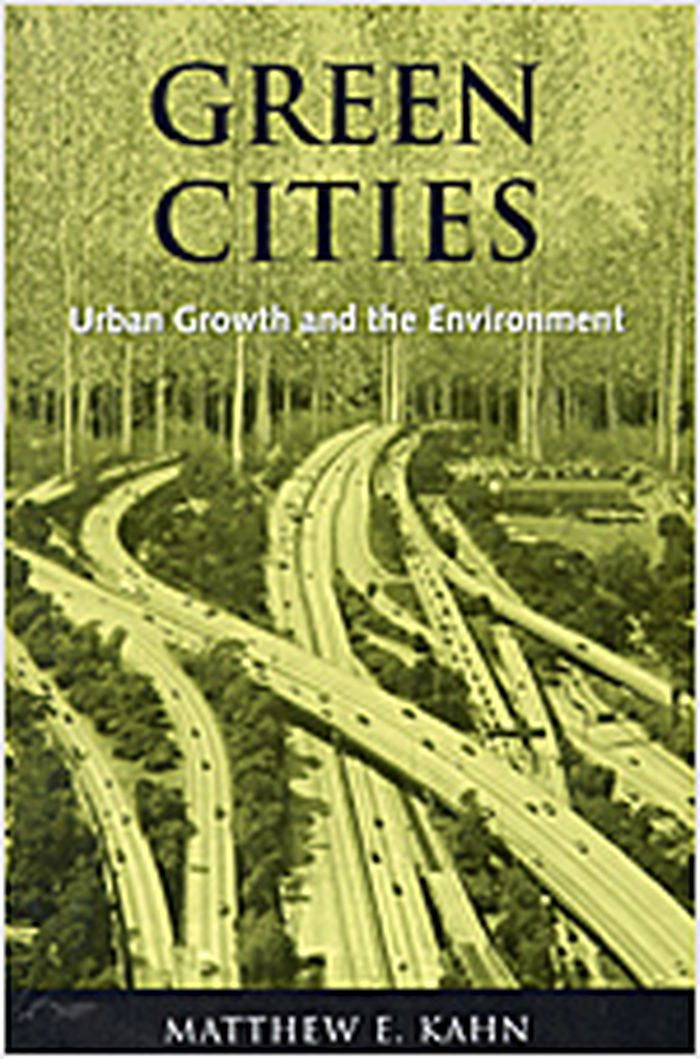
Rapid urban growth and suburban sprawl have heightened concern in many quarters about sustainable development. Are economic growth and environmental health always mutually exclusive goals? Nearly everyone would choose to pursue both given the chance, but many believe that it would be overly optimistic — perhaps naïve — to expect both. "Green city" proponents, however, do hope to realize both ambitions. What exactly is a green city? What does it mean to say that San Francisco is greener than Houston, or that Vancouver is a green city while Beijing is not? When does urban growth lower environmental quality, and when does it produce environmental gains? These are the questions that drive this smart and engaging book. In "Green cities", Matthew Kahn surveys the burgeoning economic literature on the environmental consequences of urban growth. He discusses the environmental Kuznets curve, which theorizes that the relationship between environmental quality and per capita income follows a bell-shaped curve. The heart of the book unpacks and expands this notion by tracing the environmental effects of economic growth, population growth, and suburban sprawl. Kahn considers how cities can deal with the environmental challenges produced by growth. His concluding chapter addresses the role of cities in promoting climate change and asks how cities in turn are likely to be affected by this trend. Kahn considers the evidence for and against rival perspectives throughout the book. Despite being labeled as purveyors of a "dismal science," economists are often quite optimistic about the relationship between urban development and the environment. In contrast, many ecologists remain wary of the environmental consequences of free-market growth. "Green cities" does not try to settle this dispute. Instead, it marshals data and arguments to convey the excitement of an ongoing debate, enabling readers to formulate well-informed opinions and priorities on this critically important issue.
Green cities : urban growth and the environment
Actions:
Prix:
$26.95
(disponible sur commande)
Résumé:
Rapid urban growth and suburban sprawl have heightened concern in many quarters about sustainable development. Are economic growth and environmental health always mutually exclusive goals? Nearly everyone would choose to pursue both given the chance, but many believe that it would be overly optimistic — perhaps naïve — to expect both. "Green city" proponents, however, do hope to realize both ambitions. What exactly is a green city? What does it mean to say that San Francisco is greener than Houston, or that Vancouver is a green city while Beijing is not? When does urban growth lower environmental quality, and when does it produce environmental gains? These are the questions that drive this smart and engaging book. In "Green cities", Matthew Kahn surveys the burgeoning economic literature on the environmental consequences of urban growth. He discusses the environmental Kuznets curve, which theorizes that the relationship between environmental quality and per capita income follows a bell-shaped curve. The heart of the book unpacks and expands this notion by tracing the environmental effects of economic growth, population growth, and suburban sprawl. Kahn considers how cities can deal with the environmental challenges produced by growth. His concluding chapter addresses the role of cities in promoting climate change and asks how cities in turn are likely to be affected by this trend. Kahn considers the evidence for and against rival perspectives throughout the book. Despite being labeled as purveyors of a "dismal science," economists are often quite optimistic about the relationship between urban development and the environment. In contrast, many ecologists remain wary of the environmental consequences of free-market growth. "Green cities" does not try to settle this dispute. Instead, it marshals data and arguments to convey the excitement of an ongoing debate, enabling readers to formulate well-informed opinions and priorities on this critically important issue.
Classification:
livres
livres
Publication:
août 2006, Washington, D.C.
août 2006, Washington, D.C.
Sujet:
Théorie de l’urbanisme
Théorie de l’urbanisme
Classification:
livres
livres
Actions:
Prix:
$33.95
(disponible sur commande)
Résumé:
"Fuel" is an idiosyncratic, speculative dictionary of fuels, real and imagined, historical and futuristic, hopeless and utopian. Drawing on literature, film, and scientific treatises--most produced long before "climate change" was in circulation--"Fuel" argues for a distinction between energy (a system of power) and fuel (a substance, which can be thought of as(...)
$33.95
(disponible sur commande)
Résumé:
"Fuel" is an idiosyncratic, speculative dictionary of fuels, real and imagined, historical and futuristic, hopeless and utopian. Drawing on literature, film, and scientific treatises--most produced long before "climate change" was in circulation--"Fuel" argues for a distinction between energy (a system of power) and fuel (a substance, which can be thought of as(...)
Titre:
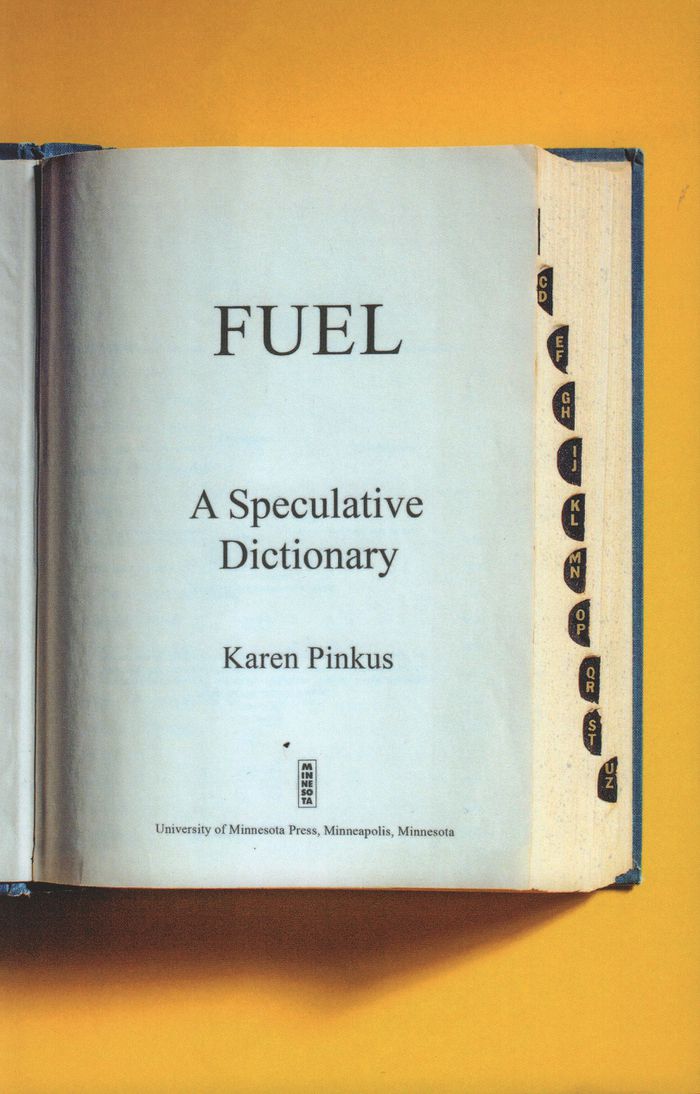
Fuel : a speculative dictionary
Actions:
Prix:
$33.95
(disponible sur commande)
Résumé:
"Fuel" is an idiosyncratic, speculative dictionary of fuels, real and imagined, historical and futuristic, hopeless and utopian. Drawing on literature, film, and scientific treatises--most produced long before "climate change" was in circulation--"Fuel" argues for a distinction between energy (a system of power) and fuel (a substance, which can be thought of as "potentiality") as it endeavors to undo the dream that we can simply switch to renewables and all will be golden. From "Air" to "Zyklon B," entries in this unusual "dictionary" include Algae, Clathrates, Dilithium, Fleece, Goats, Theology, Whale Oil, and many, many more. The tone of the entries ranges as widely as the topics: from historical anecdotes (the Ford Fiesta "boozemobile") to eccentric readings of the classics of "energy lit" ( Germinal and Oil! ); from literary observations (a high octane Odyssey ?) to excursions into literary theory. The dictionary draws from an eccentric canon, including works by Jules Verne, George Eliot's Silas Marner , Paolo Bacigalupi's Windup Girl , and the Tom Cruise vehicle Oblivion , among others. A message from this ambitious project is that energy can be understood as a heterogeneous set of self-mystifying systems or machines that block access to thought as they fascinate us. Fuels emerge as more primal elements that the audience can grasp at various points along the way to consumption/combustion. This dictionary can help scramble our thinking about fuel--not in order to demonize energy and not in order to create a new hierarchy in which certain renewables take over from fossil fuels but instead to open up potential ways of interacting with real and imaginary substances, by wrenching them out of narrative and placing them into an idiosyncratic dictionary to be applied by readers into new narratives.
Fuel : a speculative dictionary
Actions:
Prix:
$33.95
(disponible sur commande)
Résumé:
"Fuel" is an idiosyncratic, speculative dictionary of fuels, real and imagined, historical and futuristic, hopeless and utopian. Drawing on literature, film, and scientific treatises--most produced long before "climate change" was in circulation--"Fuel" argues for a distinction between energy (a system of power) and fuel (a substance, which can be thought of as "potentiality") as it endeavors to undo the dream that we can simply switch to renewables and all will be golden. From "Air" to "Zyklon B," entries in this unusual "dictionary" include Algae, Clathrates, Dilithium, Fleece, Goats, Theology, Whale Oil, and many, many more. The tone of the entries ranges as widely as the topics: from historical anecdotes (the Ford Fiesta "boozemobile") to eccentric readings of the classics of "energy lit" ( Germinal and Oil! ); from literary observations (a high octane Odyssey ?) to excursions into literary theory. The dictionary draws from an eccentric canon, including works by Jules Verne, George Eliot's Silas Marner , Paolo Bacigalupi's Windup Girl , and the Tom Cruise vehicle Oblivion , among others. A message from this ambitious project is that energy can be understood as a heterogeneous set of self-mystifying systems or machines that block access to thought as they fascinate us. Fuels emerge as more primal elements that the audience can grasp at various points along the way to consumption/combustion. This dictionary can help scramble our thinking about fuel--not in order to demonize energy and not in order to create a new hierarchy in which certain renewables take over from fossil fuels but instead to open up potential ways of interacting with real and imaginary substances, by wrenching them out of narrative and placing them into an idiosyncratic dictionary to be applied by readers into new narratives.
Classification:
livres
livres
Publication:
novembre 2016
novembre 2016
Classification:
livres
livres
Actions:
Exemplaires:
Description:
xi, 219 pages : illustrations ; 24 cm
Description:
xi, 219 pages : illustrations ; 24 cm
Auteur:
Sujet:
Publication:
Chicago, Ill. : University of Chicago Press, 1998.
Chicago, Ill. : University of Chicago Press, 1998.
Titre:
Leisure settings : bourgeois culture, medicine, and the spa in modern France / Douglas Peter Mackaman.
Actions:
Exemplaires:
Description:
xi, 219 pages : illustrations ; 24 cm
Leisure settings : bourgeois culture, medicine, and the spa in modern France / Douglas Peter Mackaman.
Actions:
Exemplaires:
Description:
xi, 219 pages : illustrations ; 24 cm
Classification:
livres
livres
Publication:
Chicago, Ill. : University of Chicago Press, 1998.
Chicago, Ill. : University of Chicago Press, 1998.
Auteur:
Sujet:
Classification:
livres
livres
Actions:
Exemplaires:
Description:
191 pages : illustrations en couleur ; 24 cm.
Description:
191 pages : illustrations en couleur ; 24 cm.
Auteur:
Sujet:
Publication:
Antony : Éditions "Le Moniteur, [2024]
Antony : Éditions "Le Moniteur, [2024]
Titre:
Réparer et construire la ville : pour un renouvellement de l'offre en logement / Nicolas Binet et Gwenaëlle d'Aboville ; préface de François Leclercq.
Actions:
Exemplaires:
Description:
191 pages : illustrations en couleur ; 24 cm.
Réparer et construire la ville : pour un renouvellement de l'offre en logement / Nicolas Binet et Gwenaëlle d'Aboville ; préface de François Leclercq.
Actions:
Exemplaires:
Description:
191 pages : illustrations en couleur ; 24 cm.
Classification:
livres
livres
Publication:
Antony : Éditions "Le Moniteur, [2024]
Antony : Éditions "Le Moniteur, [2024]
Auteur:
Sujet:
Classification:
livres
livres
Actions:
Prix:
$28.00
(disponible en magasin)
Résumé:
Over the past several decades, globalization has homogenized what we eat, and done so ruthlessly. The numbers are stark: Of the roughly six thousand different plants once consumed by human beings, only nine remain major staples today. Just three of these—rice, wheat, and corn—now provide fifty percent of all our calories.The source of much of the world’s food—seeds—is(...)
$28.00
(disponible en magasin)
Résumé:
Over the past several decades, globalization has homogenized what we eat, and done so ruthlessly. The numbers are stark: Of the roughly six thousand different plants once consumed by human beings, only nine remain major staples today. Just three of these—rice, wheat, and corn—now provide fifty percent of all our calories.The source of much of the world’s food—seeds—is(...)
Titre:
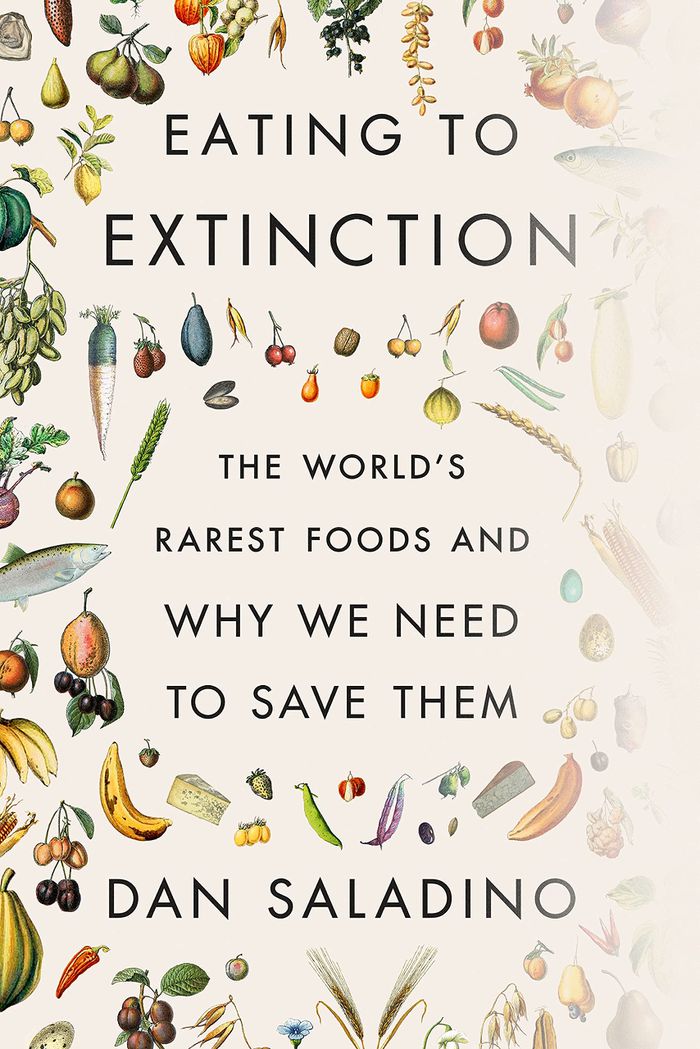
Eating to extinction: the world's rarest foods and why we need to save them
Actions:
Prix:
$28.00
(disponible en magasin)
Résumé:
Over the past several decades, globalization has homogenized what we eat, and done so ruthlessly. The numbers are stark: Of the roughly six thousand different plants once consumed by human beings, only nine remain major staples today. Just three of these—rice, wheat, and corn—now provide fifty percent of all our calories.The source of much of the world’s food—seeds—is mostly in the control of just four corporations. Ninety-five percent of milk consumed in the United States comes from a single breed of cow. Half of all the world’s cheese is made with bacteria or enzymes made by one company. And one in four beers drunk around the world is the product of one brewer. When we lose diversity and foods become endangered, we not only risk the loss of traditional foodways, but also of flavors, smells, and textures that may never be experienced again. And the consolidation of our food has other steep costs, including a lack of resilience in the face of climate change, pests, and parasites. Our food monoculture is a threat to our health—and to the planet. In ''Eating to Extinction'', the BBC food journalist Dan Saladino travels the world to experience and document our most at-risk foods before it’s too late. He tells the fascinating stories of the people who continue to cultivate, forage, hunt, cook, and consume what the rest of us have forgotten or didn’t even know existed. Take honey—not the familiar product sold in plastic bottles, but the wild honey gathered by the Hadza people of East Africa, whose diet consists of eight hundred different plants and animals and who communicate with birds in order to locate bees’ nests. Or consider murnong—once the staple food of Aboriginal Australians, this small root vegetable with the sweet taste of coconut is undergoing a revival after nearly being driven to extinction. And in Sierra Leone, there are just a few surviving stenophylla trees, a plant species now considered crucial to the future of coffee.
Eating to extinction: the world's rarest foods and why we need to save them
Actions:
Prix:
$28.00
(disponible en magasin)
Résumé:
Over the past several decades, globalization has homogenized what we eat, and done so ruthlessly. The numbers are stark: Of the roughly six thousand different plants once consumed by human beings, only nine remain major staples today. Just three of these—rice, wheat, and corn—now provide fifty percent of all our calories.The source of much of the world’s food—seeds—is mostly in the control of just four corporations. Ninety-five percent of milk consumed in the United States comes from a single breed of cow. Half of all the world’s cheese is made with bacteria or enzymes made by one company. And one in four beers drunk around the world is the product of one brewer. When we lose diversity and foods become endangered, we not only risk the loss of traditional foodways, but also of flavors, smells, and textures that may never be experienced again. And the consolidation of our food has other steep costs, including a lack of resilience in the face of climate change, pests, and parasites. Our food monoculture is a threat to our health—and to the planet. In ''Eating to Extinction'', the BBC food journalist Dan Saladino travels the world to experience and document our most at-risk foods before it’s too late. He tells the fascinating stories of the people who continue to cultivate, forage, hunt, cook, and consume what the rest of us have forgotten or didn’t even know existed. Take honey—not the familiar product sold in plastic bottles, but the wild honey gathered by the Hadza people of East Africa, whose diet consists of eight hundred different plants and animals and who communicate with birds in order to locate bees’ nests. Or consider murnong—once the staple food of Aboriginal Australians, this small root vegetable with the sweet taste of coconut is undergoing a revival after nearly being driven to extinction. And in Sierra Leone, there are just a few surviving stenophylla trees, a plant species now considered crucial to the future of coffee.
Classification:
livres
livres
Publication:
janvier 2023
janvier 2023
Sujet:
Bouffe
Bouffe
Classification:
livres
livres
Actions:
Prix:
$24.95
(disponible sur commande)
Résumé:
The artist's relationship to landscape was once invoked by a canvas on an easel in a picturesque vista. No more. In the 1960s, the Earth Artists started focusing on natural systems and entropy; in the 1970s, photographers in the New Topographics movement turned their attention unsentimentally to the industrialized "man-altered" environment; in the 1980s, artists animated(...)
$24.95
(disponible sur commande)
Résumé:
The artist's relationship to landscape was once invoked by a canvas on an easel in a picturesque vista. No more. In the 1960s, the Earth Artists started focusing on natural systems and entropy; in the 1970s, photographers in the New Topographics movement turned their attention unsentimentally to the industrialized "man-altered" environment; in the 1980s, artists animated(...)
Titre:
Badlands : new horizons in landscape
Actions:
Prix:
$24.95
(disponible sur commande)
Résumé:
The artist's relationship to landscape was once invoked by a canvas on an easel in a picturesque vista. No more. In the 1960s, the Earth Artists started focusing on natural systems and entropy; in the 1970s, photographers in the New Topographics movement turned their attention unsentimentally to the industrialized "man-altered" environment; in the 1980s, artists animated the natural landscape with art, movement, and performance; and in the 1990s, Eco-Artists collaborated with scientists to address sustainability, pollution, and politics. "Badlands" explores the latest manifestations of artists’ fascination with the earth, gathering work by contemporary artists who approach landscape through history, culture, and science. "Badlands", which accompanies an exhibition at MASS MoCA, approaches landscape as a theme with variations, grouping artists and their art (which is shown in 150 color illustrations) by category : Historians, who recontextualize the history of landscape depiction; Explorers, who explore the environment and our place within it; Activists and Pragmatists, who alert us to problems in the natural world and suggest solutions; and the Aestheticists, who look at the beauty found in nature. Each section begins with an essay : Gregory Volk maps the evolution of the genre from the Hudson River School to Earth Art; Ginger Strand examines the relationship between man and landscape through our cultural history; Tensie Whelan discusses environmental science, sustainability, and climate change; and Denise Markonish considers the new genre of landscape that emerges from the work displayed in Badlands. As a physical object, Badlands supports the values represented by its intellectual and artistic content: it was produced using FSC (Forest Stewardship Council) certified techniques including paper, printing, and inks. Artists: Robert Adams, Vaughn Bell, Boyle Family, Melissa Brown, Center for Land Use Interpretation, Leila Daw, Gregory Euclide, J. Henry Fair, Mike Glier, Anthony Goicolea, Marine Hugonnier, Paul Jacobsen, Mitchell Joachim/ Terreform, Nina Katchadourian, Jane Marsching, Alexis Rockman, Ed Ruscha, Joseph Smolinski, Yutaka Sone, Jennifer Steinkamp, Mary Temple. Copublished with MASS MoCA
Badlands : new horizons in landscape
Actions:
Prix:
$24.95
(disponible sur commande)
Résumé:
The artist's relationship to landscape was once invoked by a canvas on an easel in a picturesque vista. No more. In the 1960s, the Earth Artists started focusing on natural systems and entropy; in the 1970s, photographers in the New Topographics movement turned their attention unsentimentally to the industrialized "man-altered" environment; in the 1980s, artists animated the natural landscape with art, movement, and performance; and in the 1990s, Eco-Artists collaborated with scientists to address sustainability, pollution, and politics. "Badlands" explores the latest manifestations of artists’ fascination with the earth, gathering work by contemporary artists who approach landscape through history, culture, and science. "Badlands", which accompanies an exhibition at MASS MoCA, approaches landscape as a theme with variations, grouping artists and their art (which is shown in 150 color illustrations) by category : Historians, who recontextualize the history of landscape depiction; Explorers, who explore the environment and our place within it; Activists and Pragmatists, who alert us to problems in the natural world and suggest solutions; and the Aestheticists, who look at the beauty found in nature. Each section begins with an essay : Gregory Volk maps the evolution of the genre from the Hudson River School to Earth Art; Ginger Strand examines the relationship between man and landscape through our cultural history; Tensie Whelan discusses environmental science, sustainability, and climate change; and Denise Markonish considers the new genre of landscape that emerges from the work displayed in Badlands. As a physical object, Badlands supports the values represented by its intellectual and artistic content: it was produced using FSC (Forest Stewardship Council) certified techniques including paper, printing, and inks. Artists: Robert Adams, Vaughn Bell, Boyle Family, Melissa Brown, Center for Land Use Interpretation, Leila Daw, Gregory Euclide, J. Henry Fair, Mike Glier, Anthony Goicolea, Marine Hugonnier, Paul Jacobsen, Mitchell Joachim/ Terreform, Nina Katchadourian, Jane Marsching, Alexis Rockman, Ed Ruscha, Joseph Smolinski, Yutaka Sone, Jennifer Steinkamp, Mary Temple. Copublished with MASS MoCA
Classification:
livres
livres
Publication:
septembre 2008, North Adams
septembre 2008, North Adams
Sujet:
Jardins
Jardins


