


2576 Résultats
Classification:
livres
livres
Prix:
$32.00
(disponible sur commande)
Résumé:
The Earth has entered a new epoch: the Anthropocene. What we are facing is not only an environmental crisis, but a geological revolution of human origin. In two centuries, our planet has tipped into a state unknown for millions of years. How did we get to this point? Refuting the convenient view of a “human species” that upset the Earth system, unaware of what it was(...)
$32.00
(disponible sur commande)
Résumé:
The Earth has entered a new epoch: the Anthropocene. What we are facing is not only an environmental crisis, but a geological revolution of human origin. In two centuries, our planet has tipped into a state unknown for millions of years. How did we get to this point? Refuting the convenient view of a “human species” that upset the Earth system, unaware of what it was(...)
Sujet:
Architecture écologique
Architecture écologique
Publication:
mars 2016
mars 2016
Titre:
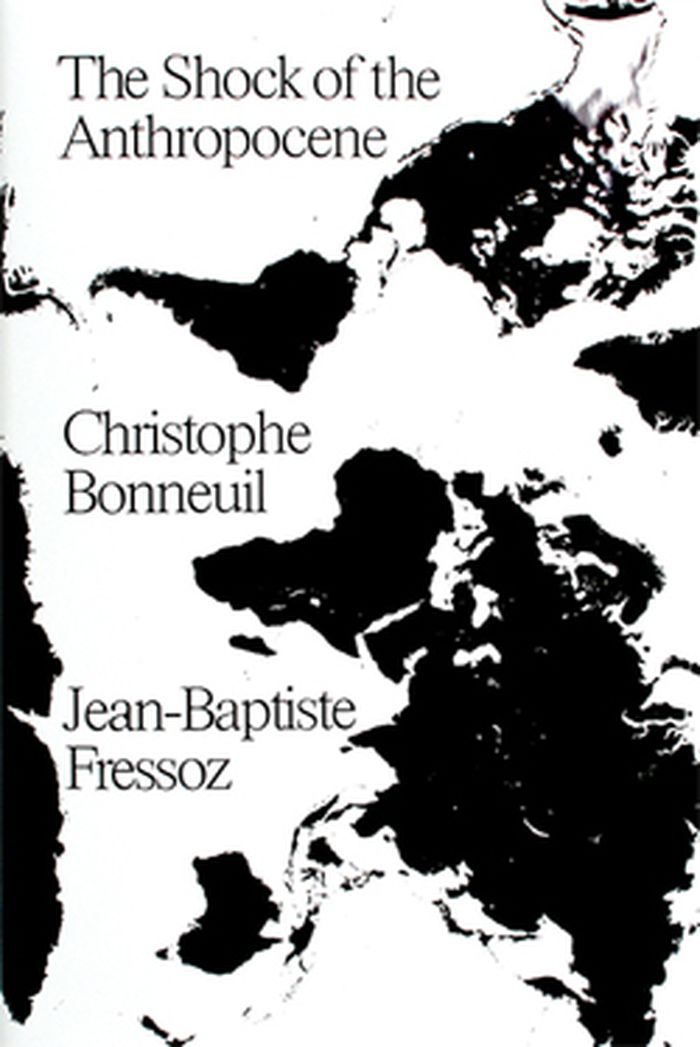
The Shock of the Anthropocene: The Earth, History and Us
Actions:
Prix:
$32.00
(disponible sur commande)
Résumé:
The Earth has entered a new epoch: the Anthropocene. What we are facing is not only an environmental crisis, but a geological revolution of human origin. In two centuries, our planet has tipped into a state unknown for millions of years. How did we get to this point? Refuting the convenient view of a “human species” that upset the Earth system, unaware of what it was doing, this book proposes the first critical history of the Anthropocene, shaking up many accepted ideas: about our supposedly recent “environmental awareness,” about previous challenges to industrialism, about the manufacture of ignorance and consumerism, about so-called energy transitions, as well as about the role of the military in environmental destruction. In a dialogue between science and history, The Shock of the Anthropocene dissects a new theoretical buzzword and explores paths for living and acting politically in this rapidly developing geological epoch.
The Shock of the Anthropocene: The Earth, History and Us
Actions:
Prix:
$32.00
(disponible sur commande)
Résumé:
The Earth has entered a new epoch: the Anthropocene. What we are facing is not only an environmental crisis, but a geological revolution of human origin. In two centuries, our planet has tipped into a state unknown for millions of years. How did we get to this point? Refuting the convenient view of a “human species” that upset the Earth system, unaware of what it was doing, this book proposes the first critical history of the Anthropocene, shaking up many accepted ideas: about our supposedly recent “environmental awareness,” about previous challenges to industrialism, about the manufacture of ignorance and consumerism, about so-called energy transitions, as well as about the role of the military in environmental destruction. In a dialogue between science and history, The Shock of the Anthropocene dissects a new theoretical buzzword and explores paths for living and acting politically in this rapidly developing geological epoch.
Classification:
livres
livres
Publication:
mars 2016
mars 2016
Sujet:
Architecture écologique
Architecture écologique
Classification:
livres
livres
Actions:
Prix:
$29.95
(disponible en magasin)
Résumé:
First published in 1976, issued in a new edition in 2008, and now back in print, “And It Came to Pass—Not to Stay” brings together a selection of Buckminster Fuller's (1895–1983) lyrical and philosophical best, including seven "essays" that address global crises and his predictions for the future—"to make the world work for 100% of humanity in the shortest possible time(...)
$29.95
(disponible en magasin)
Résumé:
First published in 1976, issued in a new edition in 2008, and now back in print, “And It Came to Pass—Not to Stay” brings together a selection of Buckminster Fuller's (1895–1983) lyrical and philosophical best, including seven "essays" that address global crises and his predictions for the future—"to make the world work for 100% of humanity in the shortest possible time(...)
Titre:
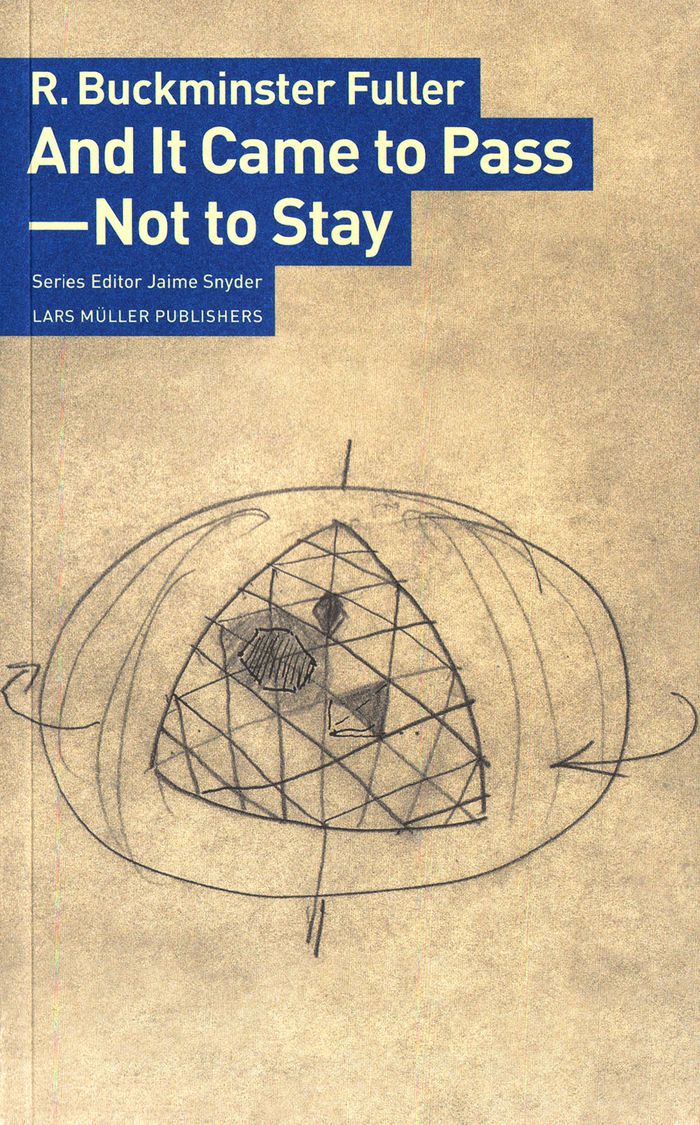
And it came to pass not to stay
Actions:
Prix:
$29.95
(disponible en magasin)
Résumé:
First published in 1976, issued in a new edition in 2008, and now back in print, “And It Came to Pass—Not to Stay” brings together a selection of Buckminster Fuller's (1895–1983) lyrical and philosophical best, including seven "essays" that address global crises and his predictions for the future—"to make the world work for 100% of humanity in the shortest possible time through spontaneous cooperation without ecological offence or the disadvantage of anyone." These essays, comprising "How Little I Know," "Complexion 1976," "What I Am Trying to Do," "A Definition of Evolution," "'And It Came to Pass' (Not to Stay)," "Soft Revolution" and "Ethics," pursue the task of ushering in a new era for humanity by "always starting with the universe." Each of the texts is written in Fuller's "ventilated prose," an essayistic poem form that breaks up his thinking into lines and stanzas.
And it came to pass not to stay
Actions:
Prix:
$29.95
(disponible en magasin)
Résumé:
First published in 1976, issued in a new edition in 2008, and now back in print, “And It Came to Pass—Not to Stay” brings together a selection of Buckminster Fuller's (1895–1983) lyrical and philosophical best, including seven "essays" that address global crises and his predictions for the future—"to make the world work for 100% of humanity in the shortest possible time through spontaneous cooperation without ecological offence or the disadvantage of anyone." These essays, comprising "How Little I Know," "Complexion 1976," "What I Am Trying to Do," "A Definition of Evolution," "'And It Came to Pass' (Not to Stay)," "Soft Revolution" and "Ethics," pursue the task of ushering in a new era for humanity by "always starting with the universe." Each of the texts is written in Fuller's "ventilated prose," an essayistic poem form that breaks up his thinking into lines and stanzas.
Classification:
livres
livres
Publication:
août 2019
août 2019
Sujet:
Architecture, monographies
Architecture, monographies
Classification:
livres
livres
Actions:
Prix:
$66.00
(disponible sur commande)
Résumé:
This book offers a critical look at the territory that today forms the state of Israel and the lasting historical role of agriculture, which sprang from the Neolithic revolution in the Middle East, had for a wide range of aspects of human social and ecological development. Topics considered include agriculture’s role in territorial appropriation and domestication, in(...)
$66.00
(disponible sur commande)
Résumé:
This book offers a critical look at the territory that today forms the state of Israel and the lasting historical role of agriculture, which sprang from the Neolithic revolution in the Middle East, had for a wide range of aspects of human social and ecological development. Topics considered include agriculture’s role in territorial appropriation and domestication, in(...)
Publication:
avril 2018
avril 2018
Titre:
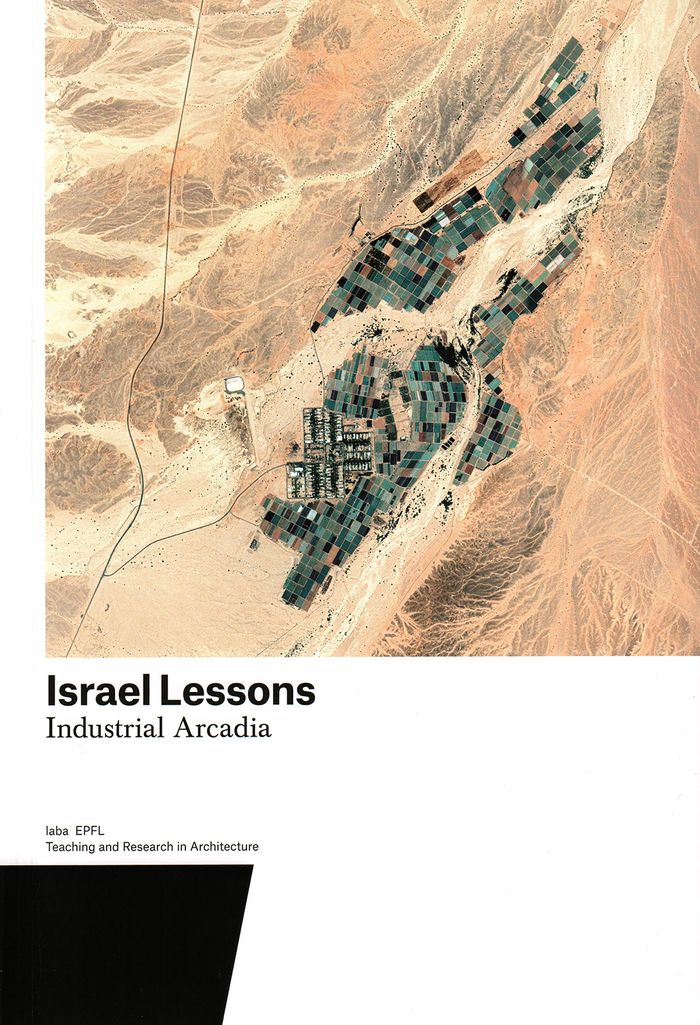
Israel lessons: industrial Arcadia. Teaching and research in architecture
Actions:
Prix:
$66.00
(disponible sur commande)
Résumé:
This book offers a critical look at the territory that today forms the state of Israel and the lasting historical role of agriculture, which sprang from the Neolithic revolution in the Middle East, had for a wide range of aspects of human social and ecological development. Topics considered include agriculture’s role in territorial appropriation and domestication, in structuring the development of urbanization, in creating a national homeland narrative for the Jewish state, and in changing the climate. "Israel Lessons" explores in particular the three major types of Israeli agricultural development: vernacular Palestinian/Bedouin, socialist utopian Kibbutz/Moshav, and contemporary high-tech desert farming. Presenting findings through text matched to striking images, graphics, and maps, and featuring proposals for architectural intervetions, it demonstrates how facts and narratives related to agriculture and the climate crisis are intertwined with geopolitics and sectarian ideals of an earthly paradise.
Israel lessons: industrial Arcadia. Teaching and research in architecture
Actions:
Prix:
$66.00
(disponible sur commande)
Résumé:
This book offers a critical look at the territory that today forms the state of Israel and the lasting historical role of agriculture, which sprang from the Neolithic revolution in the Middle East, had for a wide range of aspects of human social and ecological development. Topics considered include agriculture’s role in territorial appropriation and domestication, in structuring the development of urbanization, in creating a national homeland narrative for the Jewish state, and in changing the climate. "Israel Lessons" explores in particular the three major types of Israeli agricultural development: vernacular Palestinian/Bedouin, socialist utopian Kibbutz/Moshav, and contemporary high-tech desert farming. Presenting findings through text matched to striking images, graphics, and maps, and featuring proposals for architectural intervetions, it demonstrates how facts and narratives related to agriculture and the climate crisis are intertwined with geopolitics and sectarian ideals of an earthly paradise.
Classification:
livres
livres
Publication:
avril 2018
avril 2018
Classification:
livres
livres
Titre:
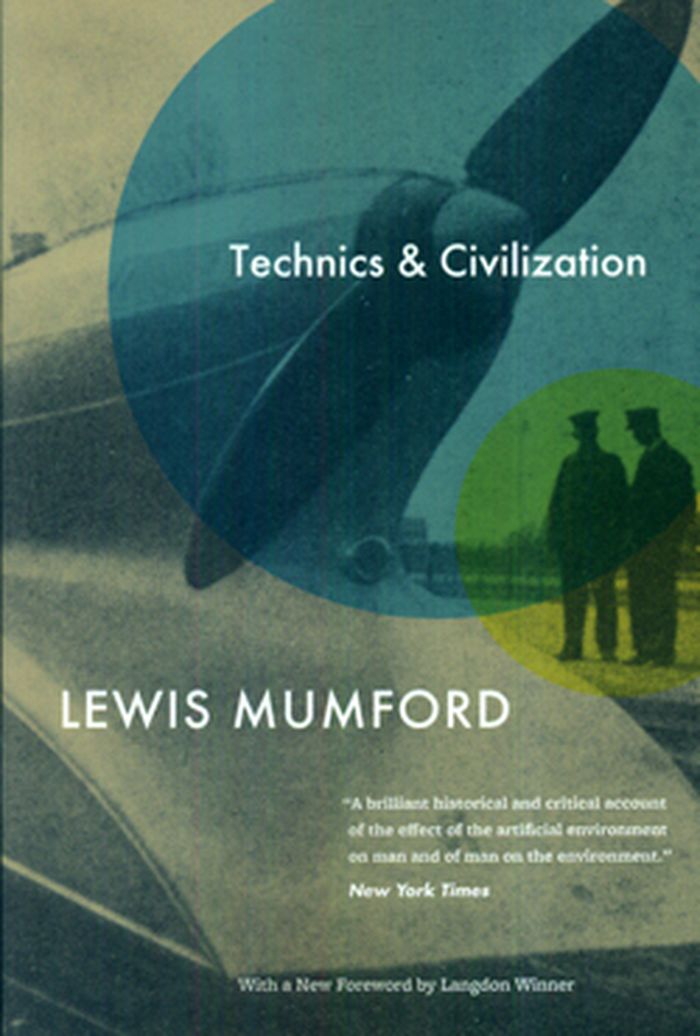
Technics & civilization
Technics & civilization
Actions:
Prix:
$45.95
(disponible sur commande)
Résumé:
Technics and Civilization first presented its compelling history of the machine and critical study of its effects on civilization in 1934 —before television, the personal computer, and the Internet even appeared on our periphery. Drawing upon art, science, philosophy, and the history of culture, Lewis Mumford explained the origin of the machine age and traced its(...)
$45.95
(disponible sur commande)
Résumé:
Technics and Civilization first presented its compelling history of the machine and critical study of its effects on civilization in 1934 —before television, the personal computer, and the Internet even appeared on our periphery. Drawing upon art, science, philosophy, and the history of culture, Lewis Mumford explained the origin of the machine age and traced its(...)
Titre:
Technics & civilization
Actions:
Prix:
$45.95
(disponible sur commande)
Résumé:
Technics and Civilization first presented its compelling history of the machine and critical study of its effects on civilization in 1934 —before television, the personal computer, and the Internet even appeared on our periphery. Drawing upon art, science, philosophy, and the history of culture, Lewis Mumford explained the origin of the machine age and traced its social results, asserting that the development of modern technology had its roots in the Middle Ages rather than the Industrial Revolution. Mumford sagely argued that it was the moral, economic, and political choices we made, not the machines that we used, that determined our then industrially driven economy. Equal parts powerful history and polemic criticism, this book was the first comprehensive attempt in English to portray the development of the machine age over the last thousand years — and to predict the pull the technological still holds over us today.
Technics & civilization
Actions:
Prix:
$45.95
(disponible sur commande)
Résumé:
Technics and Civilization first presented its compelling history of the machine and critical study of its effects on civilization in 1934 —before television, the personal computer, and the Internet even appeared on our periphery. Drawing upon art, science, philosophy, and the history of culture, Lewis Mumford explained the origin of the machine age and traced its social results, asserting that the development of modern technology had its roots in the Middle Ages rather than the Industrial Revolution. Mumford sagely argued that it was the moral, economic, and political choices we made, not the machines that we used, that determined our then industrially driven economy. Equal parts powerful history and polemic criticism, this book was the first comprehensive attempt in English to portray the development of the machine age over the last thousand years — and to predict the pull the technological still holds over us today.
Classification:
livres
livres
Publication:
octobre 2010
octobre 2010
Sujet:
Théorie de l’architecture
Théorie de l’architecture
Classification:
livres
livres

Actions:
Prix:
$56.00
(disponible sur commande)
Résumé:
The French rust belt, the area that runs from Firminy through Saint-Etienne all the way to Lyon, was regarded for a long time as a thriving region. The industrial revolution in France began in the valleys between the Loire and Rhône rivers. This led to a process of exploitation and deformation of the landscape, signs of which are still visible today. For more than forty(...)
$56.00
(disponible sur commande)
Résumé:
The French rust belt, the area that runs from Firminy through Saint-Etienne all the way to Lyon, was regarded for a long time as a thriving region. The industrial revolution in France began in the valleys between the Loire and Rhône rivers. This led to a process of exploitation and deformation of the landscape, signs of which are still visible today. For more than forty(...)
Sujet:
Monographies photo
Monographies photo
Publication:
avril 2024
avril 2024
Titre:
Nicolas Giraud & Bertrand Stofleth: The Valley, an archaeology in photographs
Actions:
Prix:
$56.00
(disponible sur commande)
Résumé:
The French rust belt, the area that runs from Firminy through Saint-Etienne all the way to Lyon, was regarded for a long time as a thriving region. The industrial revolution in France began in the valleys between the Loire and Rhône rivers. This led to a process of exploitation and deformation of the landscape, signs of which are still visible today. For more than forty years, the region, like other former industrial sites, has suffered from unemployment and a population exodus. Looking at the long-term photographic study by Nicolas Giraud and Bertrand Stofleth, it is evident that this is now the reality wherever neoliberalism has cut its swathe through industrial communities. Once industry has retreated, the landscapes that are left behind all look fairly similar. In visual terms, there is no great difference between Saint-Etienne and Suhl in Thuringia, for example. In ''La Vallée'', Giraud and Stofleth’s photographs enter into a dialogue with texts by authors from a variety of disciplines.
Nicolas Giraud & Bertrand Stofleth: The Valley, an archaeology in photographs
Actions:
Prix:
$56.00
(disponible sur commande)
Résumé:
The French rust belt, the area that runs from Firminy through Saint-Etienne all the way to Lyon, was regarded for a long time as a thriving region. The industrial revolution in France began in the valleys between the Loire and Rhône rivers. This led to a process of exploitation and deformation of the landscape, signs of which are still visible today. For more than forty years, the region, like other former industrial sites, has suffered from unemployment and a population exodus. Looking at the long-term photographic study by Nicolas Giraud and Bertrand Stofleth, it is evident that this is now the reality wherever neoliberalism has cut its swathe through industrial communities. Once industry has retreated, the landscapes that are left behind all look fairly similar. In visual terms, there is no great difference between Saint-Etienne and Suhl in Thuringia, for example. In ''La Vallée'', Giraud and Stofleth’s photographs enter into a dialogue with texts by authors from a variety of disciplines.
Classification:
livres
livres
Publication:
avril 2024
avril 2024
Sujet:
Monographies photo
Monographies photo
Classification:
livres
livres
Actions:
Prix:
$81.50
(disponible sur commande)
Résumé:
During the years after the September Revolution of 1868, Barcelona experienced tremendous industrial growth and emerged as the most politically and culturally progressive city in Spain. "Barcelona and Modernity" examines this remarkable seventy-one-year period, when Barcelona also reigned as one of the most dynamic centres of modernist art and architecture in Europe.(...)
$81.50
(disponible sur commande)
Résumé:
During the years after the September Revolution of 1868, Barcelona experienced tremendous industrial growth and emerged as the most politically and culturally progressive city in Spain. "Barcelona and Modernity" examines this remarkable seventy-one-year period, when Barcelona also reigned as one of the most dynamic centres of modernist art and architecture in Europe.(...)
Publication:
novembre 2006, New Haven / London
novembre 2006, New Haven / London
Titre:
Barcelona and Modernity : Picasso, Gaudi, Miro, Dali
Actions:
Prix:
$81.50
(disponible sur commande)
Résumé:
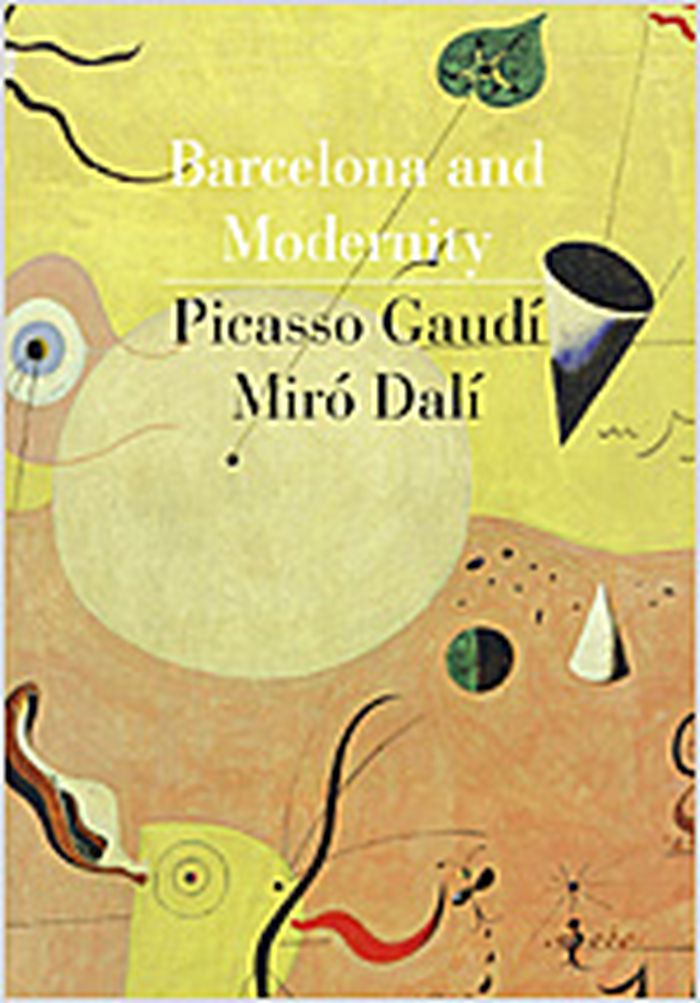
During the years after the September Revolution of 1868, Barcelona experienced tremendous industrial growth and emerged as the most politically and culturally progressive city in Spain. "Barcelona and Modernity" examines this remarkable seventy-one-year period, when Barcelona also reigned as one of the most dynamic centres of modernist art and architecture in Europe. Focusing on the Catalan Renaixença, Modernisme, Noucentisme, avant-garde movements of the early 20th century, and artistic reactions to the Spanish Civil War, essays by an extraordinary team of scholars offer new insights into the work of such Catalan artists as Antoni Gaudí, Pablo Picasso, Joan Miró, and Salvador Dalí, among others, by setting them in context with the art of their teachers, colleagues, and rivals. With approximately 350 works in a variety of media—painting, sculpture, photography, furniture, decorative arts, and architectural design — this book also explores how Catalan artists derived inspiration from local traditions while contributing their own innovations to international modernism.
Barcelona and Modernity : Picasso, Gaudi, Miro, Dali
Actions:
Prix:
$81.50
(disponible sur commande)
Résumé:
During the years after the September Revolution of 1868, Barcelona experienced tremendous industrial growth and emerged as the most politically and culturally progressive city in Spain. "Barcelona and Modernity" examines this remarkable seventy-one-year period, when Barcelona also reigned as one of the most dynamic centres of modernist art and architecture in Europe. Focusing on the Catalan Renaixença, Modernisme, Noucentisme, avant-garde movements of the early 20th century, and artistic reactions to the Spanish Civil War, essays by an extraordinary team of scholars offer new insights into the work of such Catalan artists as Antoni Gaudí, Pablo Picasso, Joan Miró, and Salvador Dalí, among others, by setting them in context with the art of their teachers, colleagues, and rivals. With approximately 350 works in a variety of media—painting, sculpture, photography, furniture, decorative arts, and architectural design — this book also explores how Catalan artists derived inspiration from local traditions while contributing their own innovations to international modernism.
Classification:
livres
livres
Publication:
novembre 2006, New Haven / London
novembre 2006, New Haven / London
Classification:
livres
livres

Prix:
$49.00
(disponible en magasin)
Résumé:
ove & Lightning: A Collection of Queer and Feminist Manifestos is a thematically ordered, inconclusive collection of queer, feminist and queer-feminist manifestos. Girls Like Us Magazine and author Sarah van Binsbergen have composed a publication showcasing the different forms a manifesto might have, from classical, activist formats to more poetic, associative texts. The(...)
$49.00
(disponible en magasin)
Résumé:
ove & Lightning: A Collection of Queer and Feminist Manifestos is a thematically ordered, inconclusive collection of queer, feminist and queer-feminist manifestos. Girls Like Us Magazine and author Sarah van Binsbergen have composed a publication showcasing the different forms a manifesto might have, from classical, activist formats to more poetic, associative texts. The(...)
Sujet:
Social
Social
Publication:
novembre 2025
novembre 2025
Titre:
Love and Lightning : A Collection of Queer-Feminist Manifestos
Actions:
Prix:
$49.00
(disponible en magasin)
Résumé:
ove & Lightning: A Collection of Queer and Feminist Manifestos is a thematically ordered, inconclusive collection of queer, feminist and queer-feminist manifestos. Girls Like Us Magazine and author Sarah van Binsbergen have composed a publication showcasing the different forms a manifesto might have, from classical, activist formats to more poetic, associative texts. The manifestos highlighted in this book cross borders, forms and disciplines, refuse binary logics, transcend our concepts of time and space and surpass the neoliberal logic. Love & Lightning does not claim to be a complete anthology, but it rather aims to show the myriad of ways manifestos can be composed, and what their legacy until this day is. It presents manifestos from 1851 until now, divided into eleven chapters, introduced in their socio-historical and geographical contexts, with many from Asia, Africa, Latin-America. Not only does this publication give new insight in the style of the manifesto, it aims to emancipate the reader to propose their own revolution, whether big or small.
Love and Lightning : A Collection of Queer-Feminist Manifestos
Actions:
Prix:
$49.00
(disponible en magasin)
Résumé:
ove & Lightning: A Collection of Queer and Feminist Manifestos is a thematically ordered, inconclusive collection of queer, feminist and queer-feminist manifestos. Girls Like Us Magazine and author Sarah van Binsbergen have composed a publication showcasing the different forms a manifesto might have, from classical, activist formats to more poetic, associative texts. The manifestos highlighted in this book cross borders, forms and disciplines, refuse binary logics, transcend our concepts of time and space and surpass the neoliberal logic. Love & Lightning does not claim to be a complete anthology, but it rather aims to show the myriad of ways manifestos can be composed, and what their legacy until this day is. It presents manifestos from 1851 until now, divided into eleven chapters, introduced in their socio-historical and geographical contexts, with many from Asia, Africa, Latin-America. Not only does this publication give new insight in the style of the manifesto, it aims to emancipate the reader to propose their own revolution, whether big or small.
Classification:
livres
livres
Publication:
novembre 2025
novembre 2025
Sujet:
Social
Social
Classification:
périodiques
périodiques
Actions:
Prix:
$16.95
(disponible en magasin)
Résumé:
For this 63rd issue, The Funambulist teamed-up with Tunisian anthropologist and visual artist Myriam Amri and invites you to "Follow the money." In it, the issue enters the crevices of a capitalist system and trace it back to its central nodes: property, land, capital, and class. It reads how money is central to colonial and imperial projects, but also how sovereignty and(...)
$16.95
(disponible en magasin)
Résumé:
For this 63rd issue, The Funambulist teamed-up with Tunisian anthropologist and visual artist Myriam Amri and invites you to "Follow the money." In it, the issue enters the crevices of a capitalist system and trace it back to its central nodes: property, land, capital, and class. It reads how money is central to colonial and imperial projects, but also how sovereignty and(...)
Titre:
The Funambulist n.63 : follow the money
Actions:
Prix:
$16.95
(disponible en magasin)
Résumé:
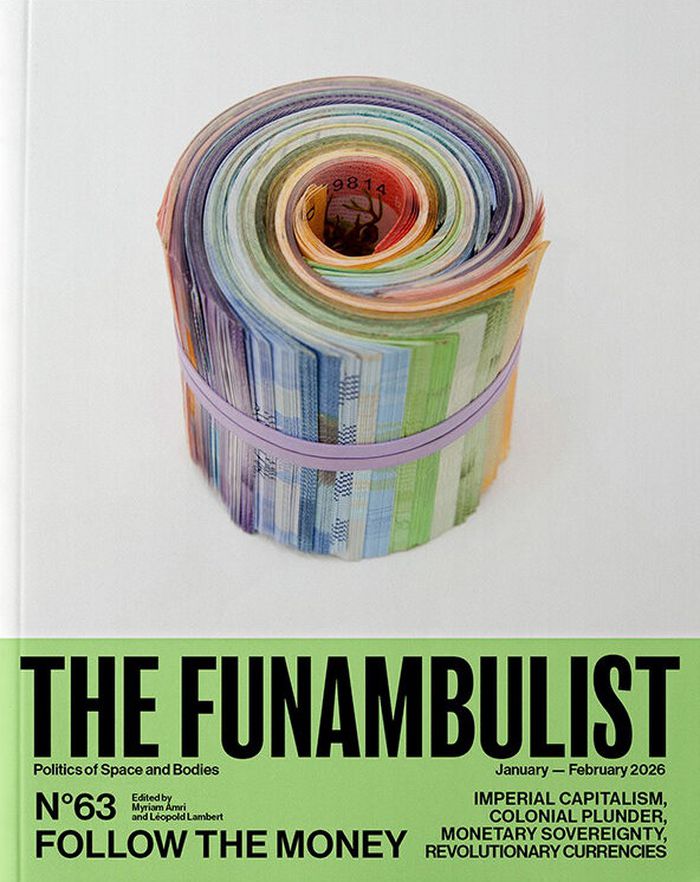
For this 63rd issue, The Funambulist teamed-up with Tunisian anthropologist and visual artist Myriam Amri and invites you to "Follow the money." In it, the issue enters the crevices of a capitalist system and trace it back to its central nodes: property, land, capital, and class. It reads how money is central to colonial and imperial projects, but also how sovereignty and the liberation of our monetary imaginary can be tools of emancipation. From the CFA franc (Ndongo Samba Sylla, Moses März) to the US dollar (Lily H. Chumley) or the Palestinian Pound (Hicham Safieddine), The Funambulist navigates monetary politics around the world, and more specifically in Sudan (Nisrin Elamin & Laleh Khalili), Puerto Rico (Roque Salas Rivera) or Brazil (Cho). The issue also contains a board game entitled "You’ve Got Yourselves a Revolution, Now What?" imagined by the issue editors Myriam Amri and Léopold Lambert and designed by Aude Abou Nasr. As for the cover, it features an artwork by Adriana Martínez Barón.
The Funambulist n.63 : follow the money
Actions:
Prix:
$16.95
(disponible en magasin)
Résumé:
For this 63rd issue, The Funambulist teamed-up with Tunisian anthropologist and visual artist Myriam Amri and invites you to "Follow the money." In it, the issue enters the crevices of a capitalist system and trace it back to its central nodes: property, land, capital, and class. It reads how money is central to colonial and imperial projects, but also how sovereignty and the liberation of our monetary imaginary can be tools of emancipation. From the CFA franc (Ndongo Samba Sylla, Moses März) to the US dollar (Lily H. Chumley) or the Palestinian Pound (Hicham Safieddine), The Funambulist navigates monetary politics around the world, and more specifically in Sudan (Nisrin Elamin & Laleh Khalili), Puerto Rico (Roque Salas Rivera) or Brazil (Cho). The issue also contains a board game entitled "You’ve Got Yourselves a Revolution, Now What?" imagined by the issue editors Myriam Amri and Léopold Lambert and designed by Aude Abou Nasr. As for the cover, it features an artwork by Adriana Martínez Barón.
Classification:
périodiques
périodiques
Publication:
janvier 2026
janvier 2026
Sujet:
Revues
Revues
Classification:
livres
livres
Actions:
Prix:
$38.95
(disponible sur commande)
Résumé:
During US colonial rule in the Philippines, reinforced concrete was used to the near exclusion of all other building materials. In Concrete Colonialism , Diana Jean S. Martinez examines the motivations for and lasting effects of this forgotten colonial policy. Arguing that the pervasive use of reinforced concrete technologies revolutionized techniques of imperial(...)
$38.95
(disponible sur commande)
Résumé:
During US colonial rule in the Philippines, reinforced concrete was used to the near exclusion of all other building materials. In Concrete Colonialism , Diana Jean S. Martinez examines the motivations for and lasting effects of this forgotten colonial policy. Arguing that the pervasive use of reinforced concrete technologies revolutionized techniques of imperial(...)
Titre:
Concrete colonialism: Architecture, urbanism, and the US imperial project in the Philippines
Actions:
Prix:
$38.95
(disponible sur commande)
Résumé:
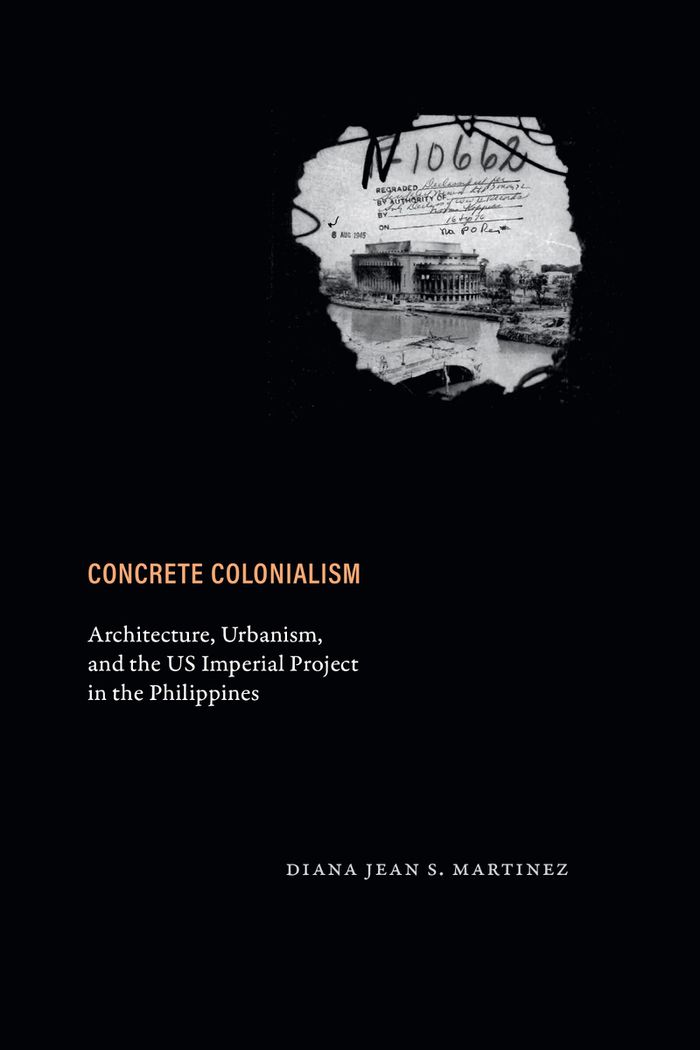
During US colonial rule in the Philippines, reinforced concrete was used to the near exclusion of all other building materials. In Concrete Colonialism , Diana Jean S. Martinez examines the motivations for and lasting effects of this forgotten colonial policy. Arguing that the pervasive use of reinforced concrete technologies revolutionized techniques of imperial conquest, Martinez shows how concrete reshaped colonialism as a project that sought durable change through the reformation of environments, colonial society, and racialized biologies. Martinez locates the origins of this material revolution in the development of Chicago, highlighting how building this urban center atop exceptionally challenging geology made it possible to transform diverse global ecologies. She details how the material's stability, plasticity, strength, and other qualities served the shifting imperatives of the US colonial regime, playing a central role in defending territory, controlling disease, and constructing monuments to nation and empire. By describing a world irreversibly remade, Martinez urges readers to consider how colonialism persists--in concrete forms--despite claims of its conclusion.
Concrete colonialism: Architecture, urbanism, and the US imperial project in the Philippines
Actions:
Prix:
$38.95
(disponible sur commande)
Résumé:
During US colonial rule in the Philippines, reinforced concrete was used to the near exclusion of all other building materials. In Concrete Colonialism , Diana Jean S. Martinez examines the motivations for and lasting effects of this forgotten colonial policy. Arguing that the pervasive use of reinforced concrete technologies revolutionized techniques of imperial conquest, Martinez shows how concrete reshaped colonialism as a project that sought durable change through the reformation of environments, colonial society, and racialized biologies. Martinez locates the origins of this material revolution in the development of Chicago, highlighting how building this urban center atop exceptionally challenging geology made it possible to transform diverse global ecologies. She details how the material's stability, plasticity, strength, and other qualities served the shifting imperatives of the US colonial regime, playing a central role in defending territory, controlling disease, and constructing monuments to nation and empire. By describing a world irreversibly remade, Martinez urges readers to consider how colonialism persists--in concrete forms--despite claims of its conclusion.
Classification:
livres
livres
Publication:
octobre 2025
octobre 2025
Sujet:
Théorie de l’architecture
Théorie de l’architecture
Classification:
livres
livres
Titre:
The fragility of plaster
The fragility of plaster
Actions:
Prix:
$17.95
(disponible sur commande)
Résumé:
The distant past is commonly characterized in terms of dominant materials of the time – the Stone Age, the Bronze Age, the Iron Age, etc. Since the dawn of writing, however, characterizing eras in terms of materials has fallen by the wayside, and yet materials have continued to exert a powerful influence on our collective imagination. Viewed from this perspective, France(...)
$17.95
(disponible sur commande)
Résumé:
The distant past is commonly characterized in terms of dominant materials of the time – the Stone Age, the Bronze Age, the Iron Age, etc. Since the dawn of writing, however, characterizing eras in terms of materials has fallen by the wayside, and yet materials have continued to exert a powerful influence on our collective imagination. Viewed from this perspective, France(...)
Titre:
The fragility of plaster
Actions:
Prix:
$17.95
(disponible sur commande)
Résumé:
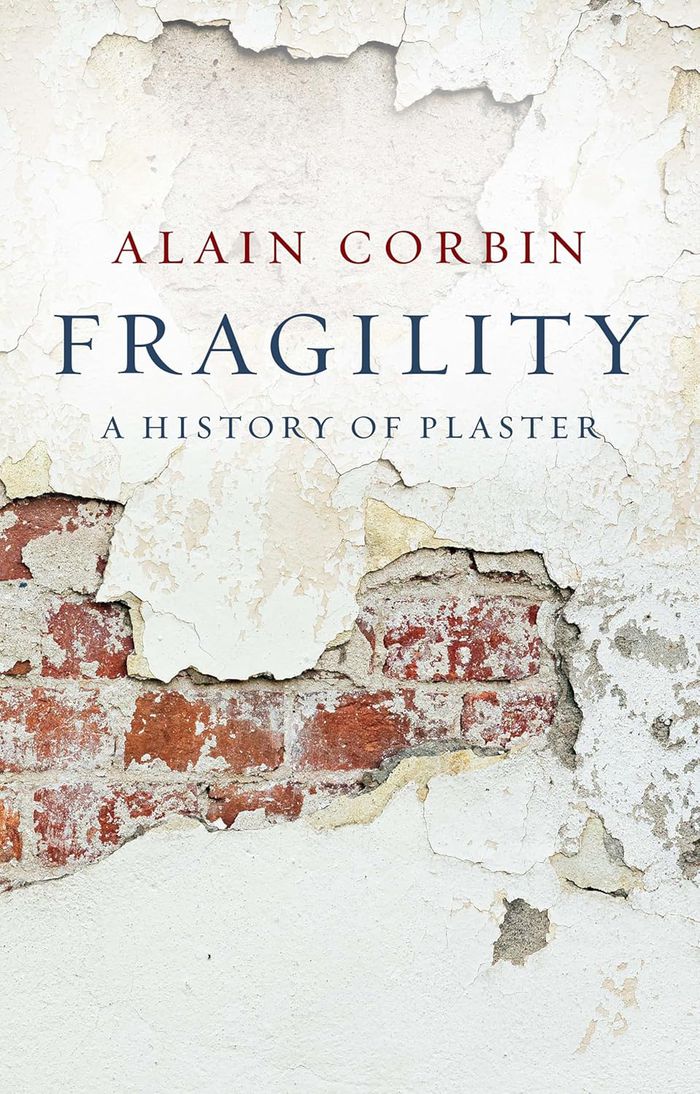
The distant past is commonly characterized in terms of dominant materials of the time – the Stone Age, the Bronze Age, the Iron Age, etc. Since the dawn of writing, however, characterizing eras in terms of materials has fallen by the wayside, and yet materials have continued to exert a powerful influence on our collective imagination. Viewed from this perspective, France in the period from 1815 to 1855 could be seen as the half-century of plaster. After the French Revolution, plaster was used for a great variety of things: building, moulding, sculpting, decorating. Cheap and easy to use, plaster was everywhere, from Napoleon’s death mask to household ornaments, from walls to elaborate mouldings. Plaster was king – but a fragile king that easily crumbled and fell apart. The age of plaster was also the reign of the ephemeral and the transient, the vulgar and the eclectic, and the men and women of the time struggled to maintain stability and continuity with the past.
The fragility of plaster
Actions:
Prix:
$17.95
(disponible sur commande)
Résumé:
The distant past is commonly characterized in terms of dominant materials of the time – the Stone Age, the Bronze Age, the Iron Age, etc. Since the dawn of writing, however, characterizing eras in terms of materials has fallen by the wayside, and yet materials have continued to exert a powerful influence on our collective imagination. Viewed from this perspective, France in the period from 1815 to 1855 could be seen as the half-century of plaster. After the French Revolution, plaster was used for a great variety of things: building, moulding, sculpting, decorating. Cheap and easy to use, plaster was everywhere, from Napoleon’s death mask to household ornaments, from walls to elaborate mouldings. Plaster was king – but a fragile king that easily crumbled and fell apart. The age of plaster was also the reign of the ephemeral and the transient, the vulgar and the eclectic, and the men and women of the time struggled to maintain stability and continuity with the past.
Classification:
livres
livres
Publication:
juillet 2025
juillet 2025
Sujet:
Théorie de l’art
Théorie de l’art


