


26127 Résultats
Niveau de description archivistique:
Sous-série
Sous-série
Numéro de référence:
AP149.S2.SS3
Description:
File related to various documents used as documentation and reference material for the Minimum Cost Housing Group's publications and research projects. The material in this file was produced between the late 1940s and 1999. The file contains an important collection of photocopies of book chapters, periodical, published reports, commercial leaflets, photographs and slides on various subjects related to the research field of the Minimum Cost Housing Group, and also a collection of maps of cities planning in India. The published reports in this series include the following: - Assessment of construction materials for use in emergency housing carried out on behalf of OXFAM (An) / A.K. Green - Brazil : sites and services project: staff appraisal report / World Bank - Cocoon / Hollingshead - Evaluation report on the village sanitation scheme of the Gandhi Smarak Nidhi in Maharashtra / Programme Evaluation Organisation, Planning Commission Govt. of India - International Drinking Water Supply and Sanitation Decade : end of decade review (as at December 1990) (The) (World Health Organization) - Lucknow urban development project : an approach document / Lucknow Development Authority - Preliminary investigations into the use of atomised sprays for handwashing and showering / T.C. Porter and M.E. Rump (Building Research Establishment Note) - Project completion report: India: Madhya Pradesh Urban Development Project (loan 2329-IN) (World Bank) - Racing alone: a visionary architect's quest for houses made with earth and fire / Nader Khalili (advertisement brochure for a book, including text of introduction; actual book in CCA collection) - Reflexiones sobre el tema de la vivienda (CENAC) - Report on toilet units / J.W. Grainge and J.W. Slupsky - Technology development for a zero-gravity whole body shower / A.A. Rosener [and 5 others] - Urban sector survey: Republic of Zambia (World Bank), v. 1-2 - Workshop on implications of the recommendations of National commission on urbanisation on planning practice and education / Department of Urban and Regional Planning, School of Planning and Architecture, New Delhi
AP149.S2.SS3
Description:
File related to various documents used as documentation and reference material for the Minimum Cost Housing Group's publications and research projects. The material in this file was produced between the late 1940s and 1999. The file contains an important collection of photocopies of book chapters, periodical, published reports, commercial leaflets, photographs and slides on various subjects related to the research field of the Minimum Cost Housing Group, and also a collection of maps of cities planning in India. The published reports in this series include the following: - Assessment of construction materials for use in emergency housing carried out on behalf of OXFAM (An) / A.K. Green - Brazil : sites and services project: staff appraisal report / World Bank - Cocoon / Hollingshead - Evaluation report on the village sanitation scheme of the Gandhi Smarak Nidhi in Maharashtra / Programme Evaluation Organisation, Planning Commission Govt. of India - International Drinking Water Supply and Sanitation Decade : end of decade review (as at December 1990) (The) (World Health Organization) - Lucknow urban development project : an approach document / Lucknow Development Authority - Preliminary investigations into the use of atomised sprays for handwashing and showering / T.C. Porter and M.E. Rump (Building Research Establishment Note) - Project completion report: India: Madhya Pradesh Urban Development Project (loan 2329-IN) (World Bank) - Racing alone: a visionary architect's quest for houses made with earth and fire / Nader Khalili (advertisement brochure for a book, including text of introduction; actual book in CCA collection) - Reflexiones sobre el tema de la vivienda (CENAC) - Report on toilet units / J.W. Grainge and J.W. Slupsky - Technology development for a zero-gravity whole body shower / A.A. Rosener [and 5 others] - Urban sector survey: Republic of Zambia (World Bank), v. 1-2 - Workshop on implications of the recommendations of National commission on urbanisation on planning practice and education / Department of Urban and Regional Planning, School of Planning and Architecture, New Delhi
Personnes et institutions:
Date:
late 1940s-1999
late 1940s-1999
Titre:
Reference and research for publications
Actions:
AP149.S2.SS3
Description:
File related to various documents used as documentation and reference material for the Minimum Cost Housing Group's publications and research projects. The material in this file was produced between the late 1940s and 1999. The file contains an important collection of photocopies of book chapters, periodical, published reports, commercial leaflets, photographs and slides on various subjects related to the research field of the Minimum Cost Housing Group, and also a collection of maps of cities planning in India. The published reports in this series include the following: - Assessment of construction materials for use in emergency housing carried out on behalf of OXFAM (An) / A.K. Green - Brazil : sites and services project: staff appraisal report / World Bank - Cocoon / Hollingshead - Evaluation report on the village sanitation scheme of the Gandhi Smarak Nidhi in Maharashtra / Programme Evaluation Organisation, Planning Commission Govt. of India - International Drinking Water Supply and Sanitation Decade : end of decade review (as at December 1990) (The) (World Health Organization) - Lucknow urban development project : an approach document / Lucknow Development Authority - Preliminary investigations into the use of atomised sprays for handwashing and showering / T.C. Porter and M.E. Rump (Building Research Establishment Note) - Project completion report: India: Madhya Pradesh Urban Development Project (loan 2329-IN) (World Bank) - Racing alone: a visionary architect's quest for houses made with earth and fire / Nader Khalili (advertisement brochure for a book, including text of introduction; actual book in CCA collection) - Reflexiones sobre el tema de la vivienda (CENAC) - Report on toilet units / J.W. Grainge and J.W. Slupsky - Technology development for a zero-gravity whole body shower / A.A. Rosener [and 5 others] - Urban sector survey: Republic of Zambia (World Bank), v. 1-2 - Workshop on implications of the recommendations of National commission on urbanisation on planning practice and education / Department of Urban and Regional Planning, School of Planning and Architecture, New Delhi
Reference and research for publications
Actions:
AP149.S2.SS3
Description:
File related to various documents used as documentation and reference material for the Minimum Cost Housing Group's publications and research projects. The material in this file was produced between the late 1940s and 1999. The file contains an important collection of photocopies of book chapters, periodical, published reports, commercial leaflets, photographs and slides on various subjects related to the research field of the Minimum Cost Housing Group, and also a collection of maps of cities planning in India. The published reports in this series include the following: - Assessment of construction materials for use in emergency housing carried out on behalf of OXFAM (An) / A.K. Green - Brazil : sites and services project: staff appraisal report / World Bank - Cocoon / Hollingshead - Evaluation report on the village sanitation scheme of the Gandhi Smarak Nidhi in Maharashtra / Programme Evaluation Organisation, Planning Commission Govt. of India - International Drinking Water Supply and Sanitation Decade : end of decade review (as at December 1990) (The) (World Health Organization) - Lucknow urban development project : an approach document / Lucknow Development Authority - Preliminary investigations into the use of atomised sprays for handwashing and showering / T.C. Porter and M.E. Rump (Building Research Establishment Note) - Project completion report: India: Madhya Pradesh Urban Development Project (loan 2329-IN) (World Bank) - Racing alone: a visionary architect's quest for houses made with earth and fire / Nader Khalili (advertisement brochure for a book, including text of introduction; actual book in CCA collection) - Reflexiones sobre el tema de la vivienda (CENAC) - Report on toilet units / J.W. Grainge and J.W. Slupsky - Technology development for a zero-gravity whole body shower / A.A. Rosener [and 5 others] - Urban sector survey: Republic of Zambia (World Bank), v. 1-2 - Workshop on implications of the recommendations of National commission on urbanisation on planning practice and education / Department of Urban and Regional Planning, School of Planning and Architecture, New Delhi
Niveau de description archivistique:
Sub-series
Sub-series
Date:
late 1940s-1999
late 1940s-1999
Personnes et institutions:
Niveau de description archivistique:
Sous-série
Sous-série
Titre:
Education
Education
Numéro de référence:
CI001.S1.D1
Description:
Hubert Rohault de Fleury studied under Jean-Nicolas-Louis Durand at the École polytechnique and with Julien-David Leroy at the École des beaux-arts. The confluence of their respective pedagogies is evident in albums DR1974:0002:012:001-049 and DR1974:0002:013:001-008 where Durand's` "rationalized" methodology of design is applied to Leroy's vocabulary of antiquity(1). Hubert's two albums of student drawings for the École des Beaux-Arts (DR1974:0002:012:001-049 and DR1974:0002:013:001-008) are complimentary. The former contains competition drawings and programmes for the monthly competitions (Concours d'emulation) as well as drawing, prints, and programmes for the 1800 (2e), 1801, and 1802 (1er) Grand Prix competitions, each of which trace the entire process from "Concours d'essai" and "esquisse", up to and including, studies for final renderings. The latter album contains large-scale final renderings for the 1800, 1801, and possibly the 1798 Grand prix competitions. As in Durand's "mecanisme de la composition", Hubert proceeds from the simple to the complex, often utilizing the graph paper or hand drawn grid particular to Durand's design methodology (codified in his book 'Precis des Lecons' 1802). This process is readily apparent in both Hubert's "Concours d'emulation" drawings, and, more completely, in the drawings for the Grand Prix competitions. The studies for Hubert's winning 1802 Grand Prix entry for a'Foire' indicate that he isolated and studied different building types before combining them into the unified complex evident in his final renderings. The original final renderings of the Grand Prix winners were kept by the École des beaux-arts. Album DR1974:0002:012:001-049 contains only the prints of the final renderings. The success of Hubert in the Grand Prix competitions is not surprising. His large wash final renderings for the 1800 and 1801 competitions (DR1974:0002:013:001-008) indicate that the neo-classical simplicity then favoured by the judges at the École des beaux-arts dovetailed with the notions of economy implicit in Durand's functionalist approach to design. (1) Barry Bergdoll, "Hubert Rohault de Fleury: Architectural Education", 'CCA Research Report', n.d.
CI001.S1.D1
Description:
Hubert Rohault de Fleury studied under Jean-Nicolas-Louis Durand at the École polytechnique and with Julien-David Leroy at the École des beaux-arts. The confluence of their respective pedagogies is evident in albums DR1974:0002:012:001-049 and DR1974:0002:013:001-008 where Durand's` "rationalized" methodology of design is applied to Leroy's vocabulary of antiquity(1). Hubert's two albums of student drawings for the École des Beaux-Arts (DR1974:0002:012:001-049 and DR1974:0002:013:001-008) are complimentary. The former contains competition drawings and programmes for the monthly competitions (Concours d'emulation) as well as drawing, prints, and programmes for the 1800 (2e), 1801, and 1802 (1er) Grand Prix competitions, each of which trace the entire process from "Concours d'essai" and "esquisse", up to and including, studies for final renderings. The latter album contains large-scale final renderings for the 1800, 1801, and possibly the 1798 Grand prix competitions. As in Durand's "mecanisme de la composition", Hubert proceeds from the simple to the complex, often utilizing the graph paper or hand drawn grid particular to Durand's design methodology (codified in his book 'Precis des Lecons' 1802). This process is readily apparent in both Hubert's "Concours d'emulation" drawings, and, more completely, in the drawings for the Grand Prix competitions. The studies for Hubert's winning 1802 Grand Prix entry for a'Foire' indicate that he isolated and studied different building types before combining them into the unified complex evident in his final renderings. The original final renderings of the Grand Prix winners were kept by the École des beaux-arts. Album DR1974:0002:012:001-049 contains only the prints of the final renderings. The success of Hubert in the Grand Prix competitions is not surprising. His large wash final renderings for the 1800 and 1801 competitions (DR1974:0002:013:001-008) indicate that the neo-classical simplicity then favoured by the judges at the École des beaux-arts dovetailed with the notions of economy implicit in Durand's functionalist approach to design. (1) Barry Bergdoll, "Hubert Rohault de Fleury: Architectural Education", 'CCA Research Report', n.d.
Personnes et institutions:
Date:
1800-1807
1800-1807
Titre:
Education
CI001.S1.D1
Description:
Hubert Rohault de Fleury studied under Jean-Nicolas-Louis Durand at the École polytechnique and with Julien-David Leroy at the École des beaux-arts. The confluence of their respective pedagogies is evident in albums DR1974:0002:012:001-049 and DR1974:0002:013:001-008 where Durand's` "rationalized" methodology of design is applied to Leroy's vocabulary of antiquity(1). Hubert's two albums of student drawings for the École des Beaux-Arts (DR1974:0002:012:001-049 and DR1974:0002:013:001-008) are complimentary. The former contains competition drawings and programmes for the monthly competitions (Concours d'emulation) as well as drawing, prints, and programmes for the 1800 (2e), 1801, and 1802 (1er) Grand Prix competitions, each of which trace the entire process from "Concours d'essai" and "esquisse", up to and including, studies for final renderings. The latter album contains large-scale final renderings for the 1800, 1801, and possibly the 1798 Grand prix competitions. As in Durand's "mecanisme de la composition", Hubert proceeds from the simple to the complex, often utilizing the graph paper or hand drawn grid particular to Durand's design methodology (codified in his book 'Precis des Lecons' 1802). This process is readily apparent in both Hubert's "Concours d'emulation" drawings, and, more completely, in the drawings for the Grand Prix competitions. The studies for Hubert's winning 1802 Grand Prix entry for a'Foire' indicate that he isolated and studied different building types before combining them into the unified complex evident in his final renderings. The original final renderings of the Grand Prix winners were kept by the École des beaux-arts. Album DR1974:0002:012:001-049 contains only the prints of the final renderings. The success of Hubert in the Grand Prix competitions is not surprising. His large wash final renderings for the 1800 and 1801 competitions (DR1974:0002:013:001-008) indicate that the neo-classical simplicity then favoured by the judges at the École des beaux-arts dovetailed with the notions of economy implicit in Durand's functionalist approach to design. (1) Barry Bergdoll, "Hubert Rohault de Fleury: Architectural Education", 'CCA Research Report', n.d.
Education
CI001.S1.D1
Description:
Hubert Rohault de Fleury studied under Jean-Nicolas-Louis Durand at the École polytechnique and with Julien-David Leroy at the École des beaux-arts. The confluence of their respective pedagogies is evident in albums DR1974:0002:012:001-049 and DR1974:0002:013:001-008 where Durand's` "rationalized" methodology of design is applied to Leroy's vocabulary of antiquity(1). Hubert's two albums of student drawings for the École des Beaux-Arts (DR1974:0002:012:001-049 and DR1974:0002:013:001-008) are complimentary. The former contains competition drawings and programmes for the monthly competitions (Concours d'emulation) as well as drawing, prints, and programmes for the 1800 (2e), 1801, and 1802 (1er) Grand Prix competitions, each of which trace the entire process from "Concours d'essai" and "esquisse", up to and including, studies for final renderings. The latter album contains large-scale final renderings for the 1800, 1801, and possibly the 1798 Grand prix competitions. As in Durand's "mecanisme de la composition", Hubert proceeds from the simple to the complex, often utilizing the graph paper or hand drawn grid particular to Durand's design methodology (codified in his book 'Precis des Lecons' 1802). This process is readily apparent in both Hubert's "Concours d'emulation" drawings, and, more completely, in the drawings for the Grand Prix competitions. The studies for Hubert's winning 1802 Grand Prix entry for a'Foire' indicate that he isolated and studied different building types before combining them into the unified complex evident in his final renderings. The original final renderings of the Grand Prix winners were kept by the École des beaux-arts. Album DR1974:0002:012:001-049 contains only the prints of the final renderings. The success of Hubert in the Grand Prix competitions is not surprising. His large wash final renderings for the 1800 and 1801 competitions (DR1974:0002:013:001-008) indicate that the neo-classical simplicity then favoured by the judges at the École des beaux-arts dovetailed with the notions of economy implicit in Durand's functionalist approach to design. (1) Barry Bergdoll, "Hubert Rohault de Fleury: Architectural Education", 'CCA Research Report', n.d.
Niveau de description archivistique:
File 1
File 1
Date:
1800-1807
1800-1807
Personnes et institutions:
Classification:
documents textuels
documents textuels
Numéro de référence:
ARCH276176
Description:
43 files - Group contains subject working files, project files, press materials, professional organizations and honours and files related to book and film projects. Files are generally organized alphabetically, A-P, and include: Association of International Architects; Arthur Erickson Commercial Buildings (large scale developments); AIA Gold Medal Certificate, Honours, Awards and C.V.; Avon; Architect License - Washington; AIBC Learning Units and Correspondence; AIBC Notice of Inquiry; Book - "Works in Concrete"; Canada Council - Architecture Office; Changsha/Weihai 2004; China Trip 2003; Concord Pacific; Contacts; Edmonton Art Gallery; Evelyn Drive; Evergreen/Coal Harbour; Gastown Canopy; Governor General - Correspondence; International Academy of Architecture; Kunming Trip June 2003; Life & Times Doc.; Lethbridge - Larry Paterson; Museum of Anthropology Expansion files; Oberlander, Cornelia; Onley, Yukiko - book; Order of British Columbia; "Passions"- Documentary.
ARCH276176
Description:
43 files - Group contains subject working files, project files, press materials, professional organizations and honours and files related to book and film projects. Files are generally organized alphabetically, A-P, and include: Association of International Architects; Arthur Erickson Commercial Buildings (large scale developments); AIA Gold Medal Certificate, Honours, Awards and C.V.; Avon; Architect License - Washington; AIBC Learning Units and Correspondence; AIBC Notice of Inquiry; Book - "Works in Concrete"; Canada Council - Architecture Office; Changsha/Weihai 2004; China Trip 2003; Concord Pacific; Contacts; Edmonton Art Gallery; Evelyn Drive; Evergreen/Coal Harbour; Gastown Canopy; Governor General - Correspondence; International Academy of Architecture; Kunming Trip June 2003; Life & Times Doc.; Lethbridge - Larry Paterson; Museum of Anthropology Expansion files; Oberlander, Cornelia; Onley, Yukiko - book; Order of British Columbia; "Passions"- Documentary.
Personnes et institutions:
Date:
ca. 2000-2005
ca. 2000-2005
Titre:
Project files, press materials, and various office files
Actions:
ARCH276176
Description:
43 files - Group contains subject working files, project files, press materials, professional organizations and honours and files related to book and film projects. Files are generally organized alphabetically, A-P, and include: Association of International Architects; Arthur Erickson Commercial Buildings (large scale developments); AIA Gold Medal Certificate, Honours, Awards and C.V.; Avon; Architect License - Washington; AIBC Learning Units and Correspondence; AIBC Notice of Inquiry; Book - "Works in Concrete"; Canada Council - Architecture Office; Changsha/Weihai 2004; China Trip 2003; Concord Pacific; Contacts; Edmonton Art Gallery; Evelyn Drive; Evergreen/Coal Harbour; Gastown Canopy; Governor General - Correspondence; International Academy of Architecture; Kunming Trip June 2003; Life & Times Doc.; Lethbridge - Larry Paterson; Museum of Anthropology Expansion files; Oberlander, Cornelia; Onley, Yukiko - book; Order of British Columbia; "Passions"- Documentary.
Project files, press materials, and various office files
Actions:
ARCH276176
Description:
43 files - Group contains subject working files, project files, press materials, professional organizations and honours and files related to book and film projects. Files are generally organized alphabetically, A-P, and include: Association of International Architects; Arthur Erickson Commercial Buildings (large scale developments); AIA Gold Medal Certificate, Honours, Awards and C.V.; Avon; Architect License - Washington; AIBC Learning Units and Correspondence; AIBC Notice of Inquiry; Book - "Works in Concrete"; Canada Council - Architecture Office; Changsha/Weihai 2004; China Trip 2003; Concord Pacific; Contacts; Edmonton Art Gallery; Evelyn Drive; Evergreen/Coal Harbour; Gastown Canopy; Governor General - Correspondence; International Academy of Architecture; Kunming Trip June 2003; Life & Times Doc.; Lethbridge - Larry Paterson; Museum of Anthropology Expansion files; Oberlander, Cornelia; Onley, Yukiko - book; Order of British Columbia; "Passions"- Documentary.
Classification:
documents textuels
documents textuels
Date:
ca. 2000-2005
ca. 2000-2005
Personnes et institutions:
Classification:
photographies
photographies
Numéro de référence:
DR2012:0015:024:005
Description:
File containing a colour printout of a map of Montreal in 1761 on coated paper, and the following photographic materials: - the CCA garden (1 chromogenic colour print, 1 gelatin silver print); - Monument 30: monument to the dormitory barracks (1 gelatin silver print); - Complexe Desjardins (1 black-and-white printout on coated paper). Materials possibly gathered for inclusion in Louis Martin's 2013 book, On architecture: Melvin Charney: a critical anthology. Original folder inscribed in graphite: CURRENT MC ANTHO – BOOK PHOTOS TO CHECK
DR2012:0015:024:005
Description:
File containing a colour printout of a map of Montreal in 1761 on coated paper, and the following photographic materials: - the CCA garden (1 chromogenic colour print, 1 gelatin silver print); - Monument 30: monument to the dormitory barracks (1 gelatin silver print); - Complexe Desjardins (1 black-and-white printout on coated paper). Materials possibly gathered for inclusion in Louis Martin's 2013 book, On architecture: Melvin Charney: a critical anthology. Original folder inscribed in graphite: CURRENT MC ANTHO – BOOK PHOTOS TO CHECK
Personnes et institutions:
Date:
1987
1987
Titre:
Reference photographic materials possibly used for book by Louis Martin on Melvin Charney
Actions:
DR2012:0015:024:005
Description:
File containing a colour printout of a map of Montreal in 1761 on coated paper, and the following photographic materials: - the CCA garden (1 chromogenic colour print, 1 gelatin silver print); - Monument 30: monument to the dormitory barracks (1 gelatin silver print); - Complexe Desjardins (1 black-and-white printout on coated paper). Materials possibly gathered for inclusion in Louis Martin's 2013 book, On architecture: Melvin Charney: a critical anthology. Original folder inscribed in graphite: CURRENT MC ANTHO – BOOK PHOTOS TO CHECK
Reference photographic materials possibly used for book by Louis Martin on Melvin Charney
Actions:
DR2012:0015:024:005
Description:
File containing a colour printout of a map of Montreal in 1761 on coated paper, and the following photographic materials: - the CCA garden (1 chromogenic colour print, 1 gelatin silver print); - Monument 30: monument to the dormitory barracks (1 gelatin silver print); - Complexe Desjardins (1 black-and-white printout on coated paper). Materials possibly gathered for inclusion in Louis Martin's 2013 book, On architecture: Melvin Charney: a critical anthology. Original folder inscribed in graphite: CURRENT MC ANTHO – BOOK PHOTOS TO CHECK
Classification:
photographies
photographies
Date:
1987
1987
Personnes et institutions:
Niveau de description archivistique:
Série(s)
Série(s)
Titre:
Objectile records
Objectile records
Numéro de référence:
AP169.S1
Description:
Series 1, Objectile, 1993 - 2011, relates to the firm’s activities, from the production of decorative panels to the management of daily business. This series includes born-digital material and chiefly dates from 2004-2008. “Objectile” is a term first proposed by philosopher Gilles Deleuze in his book The Fold, published in 1988. It was used to name the research conducted by Bernard Cache and his associate Patrick Beaucé around the development of industrial means to produce “non-standard” objects. In his book Earth Moves (Terre Meuble), Bernard Cache describes non-standard objects as repeatable variations on a theme, such as a family of curves declining the same mathematical model. The randomness of their patterns recalls earth’s forms and curves, the way geography generates nature’s topography. Cache also wanted these folds and curves to express a relationship between the exterior (geography) and the interior (furniture) of architecture. From these ideas, the firm Objectile was founded created to industrially produce and market those non-standard objects mostly taking the form of decorative panels. Those panels and other furniture were among the first objects to be computationally designed with computer-aided design software (CAD) and then industrially built through computer numerical control (CNC). The patterns were designed through unique algorithms that could endlessly be modified and personalized. Materials in this series reflect the work of Objectile. This includes design and execution records for the different wooden panels and other furniture, which are primarily in still image and CAD formats (TopSolid, AutoCAD). There is also a significant body of material for the Objectile website (in HTML and XML formats). The series additionally includes textual documentation reflecting the administration of the firm, including accounting and legal documentation, as well as correspondence. These materials are in typical office formats and include email.
AP169.S1
Description:
Series 1, Objectile, 1993 - 2011, relates to the firm’s activities, from the production of decorative panels to the management of daily business. This series includes born-digital material and chiefly dates from 2004-2008. “Objectile” is a term first proposed by philosopher Gilles Deleuze in his book The Fold, published in 1988. It was used to name the research conducted by Bernard Cache and his associate Patrick Beaucé around the development of industrial means to produce “non-standard” objects. In his book Earth Moves (Terre Meuble), Bernard Cache describes non-standard objects as repeatable variations on a theme, such as a family of curves declining the same mathematical model. The randomness of their patterns recalls earth’s forms and curves, the way geography generates nature’s topography. Cache also wanted these folds and curves to express a relationship between the exterior (geography) and the interior (furniture) of architecture. From these ideas, the firm Objectile was founded created to industrially produce and market those non-standard objects mostly taking the form of decorative panels. Those panels and other furniture were among the first objects to be computationally designed with computer-aided design software (CAD) and then industrially built through computer numerical control (CNC). The patterns were designed through unique algorithms that could endlessly be modified and personalized. Materials in this series reflect the work of Objectile. This includes design and execution records for the different wooden panels and other furniture, which are primarily in still image and CAD formats (TopSolid, AutoCAD). There is also a significant body of material for the Objectile website (in HTML and XML formats). The series additionally includes textual documentation reflecting the administration of the firm, including accounting and legal documentation, as well as correspondence. These materials are in typical office formats and include email.
Personnes et institutions:
Date:
1993-2011
1993-2011
Titre:
Objectile records
Actions:
AP169.S1
Description:
Series 1, Objectile, 1993 - 2011, relates to the firm’s activities, from the production of decorative panels to the management of daily business. This series includes born-digital material and chiefly dates from 2004-2008. “Objectile” is a term first proposed by philosopher Gilles Deleuze in his book The Fold, published in 1988. It was used to name the research conducted by Bernard Cache and his associate Patrick Beaucé around the development of industrial means to produce “non-standard” objects. In his book Earth Moves (Terre Meuble), Bernard Cache describes non-standard objects as repeatable variations on a theme, such as a family of curves declining the same mathematical model. The randomness of their patterns recalls earth’s forms and curves, the way geography generates nature’s topography. Cache also wanted these folds and curves to express a relationship between the exterior (geography) and the interior (furniture) of architecture. From these ideas, the firm Objectile was founded created to industrially produce and market those non-standard objects mostly taking the form of decorative panels. Those panels and other furniture were among the first objects to be computationally designed with computer-aided design software (CAD) and then industrially built through computer numerical control (CNC). The patterns were designed through unique algorithms that could endlessly be modified and personalized. Materials in this series reflect the work of Objectile. This includes design and execution records for the different wooden panels and other furniture, which are primarily in still image and CAD formats (TopSolid, AutoCAD). There is also a significant body of material for the Objectile website (in HTML and XML formats). The series additionally includes textual documentation reflecting the administration of the firm, including accounting and legal documentation, as well as correspondence. These materials are in typical office formats and include email.
Objectile records
Actions:
AP169.S1
Description:
Series 1, Objectile, 1993 - 2011, relates to the firm’s activities, from the production of decorative panels to the management of daily business. This series includes born-digital material and chiefly dates from 2004-2008. “Objectile” is a term first proposed by philosopher Gilles Deleuze in his book The Fold, published in 1988. It was used to name the research conducted by Bernard Cache and his associate Patrick Beaucé around the development of industrial means to produce “non-standard” objects. In his book Earth Moves (Terre Meuble), Bernard Cache describes non-standard objects as repeatable variations on a theme, such as a family of curves declining the same mathematical model. The randomness of their patterns recalls earth’s forms and curves, the way geography generates nature’s topography. Cache also wanted these folds and curves to express a relationship between the exterior (geography) and the interior (furniture) of architecture. From these ideas, the firm Objectile was founded created to industrially produce and market those non-standard objects mostly taking the form of decorative panels. Those panels and other furniture were among the first objects to be computationally designed with computer-aided design software (CAD) and then industrially built through computer numerical control (CNC). The patterns were designed through unique algorithms that could endlessly be modified and personalized. Materials in this series reflect the work of Objectile. This includes design and execution records for the different wooden panels and other furniture, which are primarily in still image and CAD formats (TopSolid, AutoCAD). There is also a significant body of material for the Objectile website (in HTML and XML formats). The series additionally includes textual documentation reflecting the administration of the firm, including accounting and legal documentation, as well as correspondence. These materials are in typical office formats and include email.
Niveau de description archivistique:
Series
Series
Date:
1993-2011
1993-2011
Personnes et institutions:
Classification:
expositions
expositions
Titre:
Mies en Amérique
Mies en Amérique
Actions:
Description:
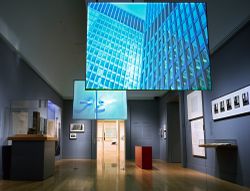
Grand penseur et artiste minutieux, et l’un des plus illustres architectes de l’histoire, Ludwig Mies van der Rohe est déjà une figure dominante de sa profession en Allemagne, lorsque, en 1938, dans la cinquantaine, il émigre aux États-Unis. Transplanté de l’école du Bauhaus (dont il a été le dernier directeur) à un institut technique de Chicago, délaissant le milieu de(...)
Grand penseur et artiste minutieux, et l’un des plus illustres architectes de l’histoire, Ludwig Mies van der Rohe est déjà une figure dominante de sa profession en Allemagne, lorsque, en 1938, dans la cinquantaine, il émigre aux États-Unis. Transplanté de l’école du Bauhaus (dont il a été le dernier directeur) à un institut technique de Chicago, délaissant le milieu de(...)
Localisation:
Salles principales
Salles principales
Date:
17 octobre 2001 au 20 janvier 2002
17 octobre 2001 au 20 janvier 2002
Titre:
Mies en Amérique
Actions:
Description:
Grand penseur et artiste minutieux, et l’un des plus illustres architectes de l’histoire, Ludwig Mies van der Rohe est déjà une figure dominante de sa profession en Allemagne, lorsque, en 1938, dans la cinquantaine, il émigre aux États-Unis. Transplanté de l’école du Bauhaus (dont il a été le dernier directeur) à un institut technique de Chicago, délaissant le milieu de(...)
Mies en Amérique
Actions:
Description:
Grand penseur et artiste minutieux, et l’un des plus illustres architectes de l’histoire, Ludwig Mies van der Rohe est déjà une figure dominante de sa profession en Allemagne, lorsque, en 1938, dans la cinquantaine, il émigre aux États-Unis. Transplanté de l’école du Bauhaus (dont il a été le dernier directeur) à un institut technique de Chicago, délaissant le milieu de(...)
Classification:
expositions
expositions
Date:
17 octobre 2001 au
20 janvier 2002
17 octobre 2001 au
20 janvier 2002
Localisation:
Salles principales
Salles principales
Classification:
documents textuels
documents textuels
Numéro de référence:
AP206.S2.074
Description:
File was originally housed in a binder along with content arranged in AP206.S2.072 and AP206.S2.073. This file includes the following papers: "Le Corbusier's Chandigarh: Architecture in the Cultural Context," symposium talk, 1990 "Why not Ruralisation," paper outline "Growing Problems of Cities," book review of "The Politics of Urban Redevelopment: A Study of Old Delhi by Ajay K. Mehra," 1991 "Housing as Consumer Commodity," book review of "Housing and Urbanisation: A Study of India by Cedric Pugh," 1991 "Air Pollution and Conservation of the Environment," speech
AP206.S2.074
Description:
File was originally housed in a binder along with content arranged in AP206.S2.072 and AP206.S2.073. This file includes the following papers: "Le Corbusier's Chandigarh: Architecture in the Cultural Context," symposium talk, 1990 "Why not Ruralisation," paper outline "Growing Problems of Cities," book review of "The Politics of Urban Redevelopment: A Study of Old Delhi by Ajay K. Mehra," 1991 "Housing as Consumer Commodity," book review of "Housing and Urbanisation: A Study of India by Cedric Pugh," 1991 "Air Pollution and Conservation of the Environment," speech
Personnes et institutions:
Date:
1986-1998
1986-1998
Titre:
Published and unpublished papers (folder 3 of 3)
Actions:
AP206.S2.074
Description:
File was originally housed in a binder along with content arranged in AP206.S2.072 and AP206.S2.073. This file includes the following papers: "Le Corbusier's Chandigarh: Architecture in the Cultural Context," symposium talk, 1990 "Why not Ruralisation," paper outline "Growing Problems of Cities," book review of "The Politics of Urban Redevelopment: A Study of Old Delhi by Ajay K. Mehra," 1991 "Housing as Consumer Commodity," book review of "Housing and Urbanisation: A Study of India by Cedric Pugh," 1991 "Air Pollution and Conservation of the Environment," speech
Published and unpublished papers (folder 3 of 3)
Actions:
AP206.S2.074
Description:
File was originally housed in a binder along with content arranged in AP206.S2.072 and AP206.S2.073. This file includes the following papers: "Le Corbusier's Chandigarh: Architecture in the Cultural Context," symposium talk, 1990 "Why not Ruralisation," paper outline "Growing Problems of Cities," book review of "The Politics of Urban Redevelopment: A Study of Old Delhi by Ajay K. Mehra," 1991 "Housing as Consumer Commodity," book review of "Housing and Urbanisation: A Study of India by Cedric Pugh," 1991 "Air Pollution and Conservation of the Environment," speech
Classification:
documents textuels
documents textuels
Date:
1986-1998
1986-1998
Personnes et institutions:
Classification:
archives
Niveau de description archivistique:
Fonds
archives
Niveau de description archivistique:
Fonds
Titre:
Fonds Hazen Sise
Fonds Hazen Sise
Numéro de référence:
AP112
Résumé:
The Hazen Sise fonds contains negatives, drawings, and other documents dating from 1933 to 1959. The negatives, taken in the early 1930s, mostly depict participants of the conferences CIAM IV and CIRPAC, including Le Corbusier, László Moholy-Nagy, Alvar Aalto and Fernand Léger. The drawings document the design of Beaver Lake Pavilion, built for the City of Montréal between 1955 and 1959 as part of the redevelopment of Mount Royal Park. Le fonds Hazen Sise est composé de négatifs, dessins, et autres documents datés entre 1933 et 1959. Les négatifs, pris au début des années 30s, présentent des participants des congres IVe CIAM et CIRPAC, incluant Le Corbusier, László Moholy-Nagy, Alvar Aalto et Fernand Léger. Les dessins documentent la conception du pavillon du Lac aux Castors, construit pour la Ville de Montréal entre 1955 et 1959 dans le cadre du réaménagement du Parc du Mont-Royal.
AP112
Résumé:
The Hazen Sise fonds contains negatives, drawings, and other documents dating from 1933 to 1959. The negatives, taken in the early 1930s, mostly depict participants of the conferences CIAM IV and CIRPAC, including Le Corbusier, László Moholy-Nagy, Alvar Aalto and Fernand Léger. The drawings document the design of Beaver Lake Pavilion, built for the City of Montréal between 1955 and 1959 as part of the redevelopment of Mount Royal Park. Le fonds Hazen Sise est composé de négatifs, dessins, et autres documents datés entre 1933 et 1959. Les négatifs, pris au début des années 30s, présentent des participants des congres IVe CIAM et CIRPAC, incluant Le Corbusier, László Moholy-Nagy, Alvar Aalto et Fernand Léger. Les dessins documentent la conception du pavillon du Lac aux Castors, construit pour la Ville de Montréal entre 1955 et 1959 dans le cadre du réaménagement du Parc du Mont-Royal.
Personnes et institutions:
Date:
1933-1959
1933-1959
Titre:
Fonds Hazen Sise
Actions:
AP112
Résumé:
The Hazen Sise fonds contains negatives, drawings, and other documents dating from 1933 to 1959. The negatives, taken in the early 1930s, mostly depict participants of the conferences CIAM IV and CIRPAC, including Le Corbusier, László Moholy-Nagy, Alvar Aalto and Fernand Léger. The drawings document the design of Beaver Lake Pavilion, built for the City of Montréal between 1955 and 1959 as part of the redevelopment of Mount Royal Park. Le fonds Hazen Sise est composé de négatifs, dessins, et autres documents datés entre 1933 et 1959. Les négatifs, pris au début des années 30s, présentent des participants des congres IVe CIAM et CIRPAC, incluant Le Corbusier, László Moholy-Nagy, Alvar Aalto et Fernand Léger. Les dessins documentent la conception du pavillon du Lac aux Castors, construit pour la Ville de Montréal entre 1955 et 1959 dans le cadre du réaménagement du Parc du Mont-Royal.
Fonds Hazen Sise
Actions:
AP112
Résumé:
The Hazen Sise fonds contains negatives, drawings, and other documents dating from 1933 to 1959. The negatives, taken in the early 1930s, mostly depict participants of the conferences CIAM IV and CIRPAC, including Le Corbusier, László Moholy-Nagy, Alvar Aalto and Fernand Léger. The drawings document the design of Beaver Lake Pavilion, built for the City of Montréal between 1955 and 1959 as part of the redevelopment of Mount Royal Park. Le fonds Hazen Sise est composé de négatifs, dessins, et autres documents datés entre 1933 et 1959. Les négatifs, pris au début des années 30s, présentent des participants des congres IVe CIAM et CIRPAC, incluant Le Corbusier, László Moholy-Nagy, Alvar Aalto et Fernand Léger. Les dessins documentent la conception du pavillon du Lac aux Castors, construit pour la Ville de Montréal entre 1955 et 1959 dans le cadre du réaménagement du Parc du Mont-Royal.
Classification:
archives
Niveau de description archivistique:
Fonds
archives
Niveau de description archivistique:
Fonds
Date:
1933-1959
1933-1959
Personnes et institutions:
Classification:
dessins
dessins
Numéro de référence:
DR1998:0092:002:006
Description:
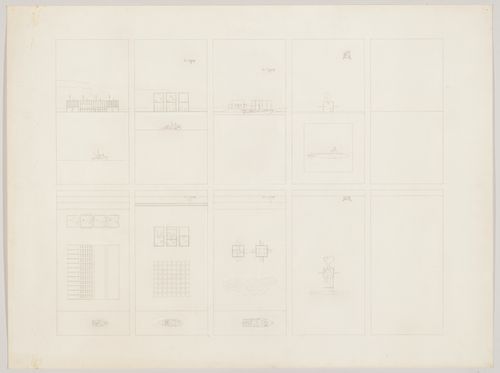
Robert Butscher was the draughtsman of this presentation drawing. The drawing, along with the drawing DR1998:0092:002:006 in this file, were done as part of a Third Year Architecture analysis project at Cooper Union School of Architecture. As part of the project, he read a great many of the novels written by the authors represented by the five sets of structures. The drawings were based on measurements taken from the presentation model. They were completed in 1980 and gifted to John Hejduk by Butscher to use in his Masque of Medusa book.
DR1998:0092:002:006
Description:
Robert Butscher was the draughtsman of this presentation drawing. The drawing, along with the drawing DR1998:0092:002:006 in this file, were done as part of a Third Year Architecture analysis project at Cooper Union School of Architecture. As part of the project, he read a great many of the novels written by the authors represented by the five sets of structures. The drawings were based on measurements taken from the presentation model. They were completed in 1980 and gifted to John Hejduk by Butscher to use in his Masque of Medusa book.
Personnes et institutions:
Date:
1974-1979
1974-1979
Titre:
Plans and elevations for The Silent Witnesses
Actions:
DR1998:0092:002:006
Description:
Robert Butscher was the draughtsman of this presentation drawing. The drawing, along with the drawing DR1998:0092:002:006 in this file, were done as part of a Third Year Architecture analysis project at Cooper Union School of Architecture. As part of the project, he read a great many of the novels written by the authors represented by the five sets of structures. The drawings were based on measurements taken from the presentation model. They were completed in 1980 and gifted to John Hejduk by Butscher to use in his Masque of Medusa book.
Plans and elevations for The Silent Witnesses
Actions:
DR1998:0092:002:006
Description:
Robert Butscher was the draughtsman of this presentation drawing. The drawing, along with the drawing DR1998:0092:002:006 in this file, were done as part of a Third Year Architecture analysis project at Cooper Union School of Architecture. As part of the project, he read a great many of the novels written by the authors represented by the five sets of structures. The drawings were based on measurements taken from the presentation model. They were completed in 1980 and gifted to John Hejduk by Butscher to use in his Masque of Medusa book.
Classification:
dessins
dessins
Date:
1974-1979
1974-1979
Personnes et institutions:
Classification:
dessins
dessins
Numéro de référence:
DR1998:0092:002:007
Description:
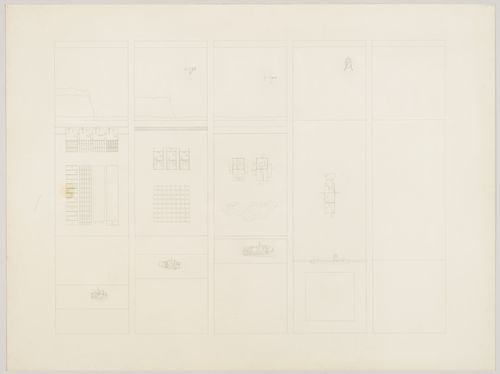
Robert Butscher was the draughtsman of this presentation drawing. The drawing, along with the drawing DR1998:0092:002:006 in this file, were done as part of a Third Year Architecture analysis project at Cooper Union School of Architecture. As part of the project, he read a great many of the novels written by the authors represented by the five sets of structures. The drawings were based on measurements taken from the presentation model. They were completed in 1980 and gifted to John Hejduk by Butscher to use in his Masque of Medusa book.
DR1998:0092:002:007
Description:
Robert Butscher was the draughtsman of this presentation drawing. The drawing, along with the drawing DR1998:0092:002:006 in this file, were done as part of a Third Year Architecture analysis project at Cooper Union School of Architecture. As part of the project, he read a great many of the novels written by the authors represented by the five sets of structures. The drawings were based on measurements taken from the presentation model. They were completed in 1980 and gifted to John Hejduk by Butscher to use in his Masque of Medusa book.
Personnes et institutions:
Date:
1974-1979
1974-1979
Titre:
Presentation drawing for The Silent Witnesses
Actions:
DR1998:0092:002:007
Description:
Robert Butscher was the draughtsman of this presentation drawing. The drawing, along with the drawing DR1998:0092:002:006 in this file, were done as part of a Third Year Architecture analysis project at Cooper Union School of Architecture. As part of the project, he read a great many of the novels written by the authors represented by the five sets of structures. The drawings were based on measurements taken from the presentation model. They were completed in 1980 and gifted to John Hejduk by Butscher to use in his Masque of Medusa book.
Presentation drawing for The Silent Witnesses
Actions:
DR1998:0092:002:007
Description:
Robert Butscher was the draughtsman of this presentation drawing. The drawing, along with the drawing DR1998:0092:002:006 in this file, were done as part of a Third Year Architecture analysis project at Cooper Union School of Architecture. As part of the project, he read a great many of the novels written by the authors represented by the five sets of structures. The drawings were based on measurements taken from the presentation model. They were completed in 1980 and gifted to John Hejduk by Butscher to use in his Masque of Medusa book.
Classification:
dessins
dessins
Date:
1974-1979
1974-1979
Personnes et institutions:


