


2644 Résultats
Classification:
livres
livres
Actions:
Prix:
$38.95
(disponible sur commande)
Résumé:
In many countries of Southeast Asia, the middle years of the 20th century marked the dawn of a new era. Independence had been won from colonial powers, and young states such as Burma (Myanmar), Indonesia, Cambodia and Singapore were faced with the task of reconstituting themselves as nations and developing an independent postcolonial identity. Architecture and urban(...)
$38.95
(disponible sur commande)
Résumé:
In many countries of Southeast Asia, the middle years of the 20th century marked the dawn of a new era. Independence had been won from colonial powers, and young states such as Burma (Myanmar), Indonesia, Cambodia and Singapore were faced with the task of reconstituting themselves as nations and developing an independent postcolonial identity. Architecture and urban(...)
Titre:
Arch+ 243: Contested modernities: postcolonial architecture and the construction of identities in Southeast sia
Actions:
Prix:
$38.95
(disponible sur commande)
Résumé:
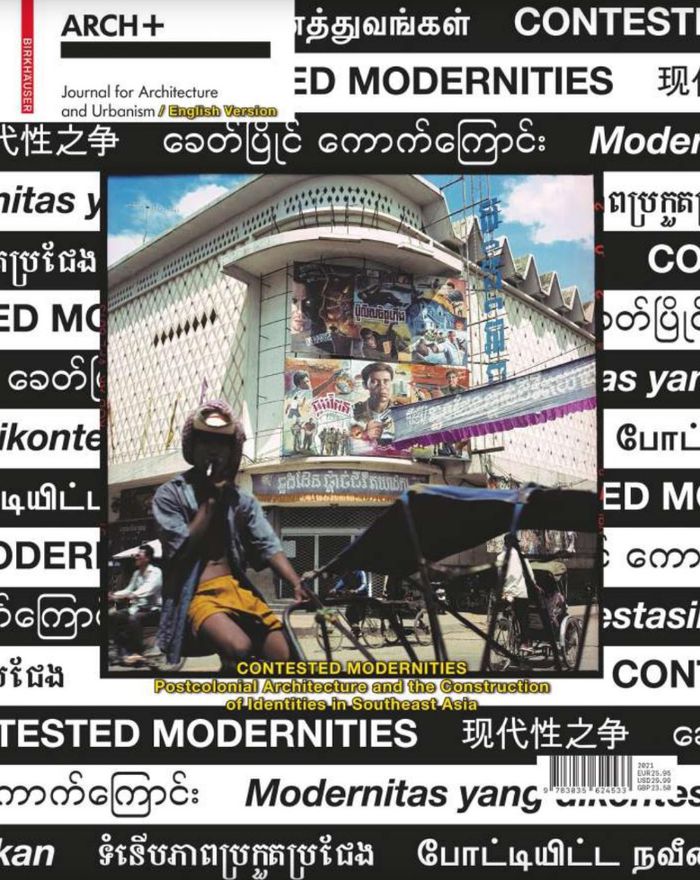
In many countries of Southeast Asia, the middle years of the 20th century marked the dawn of a new era. Independence had been won from colonial powers, and young states such as Burma (Myanmar), Indonesia, Cambodia and Singapore were faced with the task of reconstituting themselves as nations and developing an independent postcolonial identity. Architecture and urban planning played an important role in this process. Local manifestations of modernism emerged that sought to reconcile universal aspirations with specific social conditions. This volume critically examines this architectural and ideological heritage and argues for the preservation and redevelopment of these particular architectures, which are at risk of disappearing amid the rapid urbanization of today.
Arch+ 243: Contested modernities: postcolonial architecture and the construction of identities in Southeast sia
Actions:
Prix:
$38.95
(disponible sur commande)
Résumé:
In many countries of Southeast Asia, the middle years of the 20th century marked the dawn of a new era. Independence had been won from colonial powers, and young states such as Burma (Myanmar), Indonesia, Cambodia and Singapore were faced with the task of reconstituting themselves as nations and developing an independent postcolonial identity. Architecture and urban planning played an important role in this process. Local manifestations of modernism emerged that sought to reconcile universal aspirations with specific social conditions. This volume critically examines this architectural and ideological heritage and argues for the preservation and redevelopment of these particular architectures, which are at risk of disappearing amid the rapid urbanization of today.
Classification:
livres
livres
Publication:
octobre 2021
octobre 2021
Sujet:
Revues
Revues
Classification:
livres
livres

Actions:
Prix:
$77.50
(disponible en magasin)
Résumé:
Over the last decade, Adam Lampton has photographed the former Portuguese colony of Macau (now a Special Administrative Region of the People’s Republic of China) and witnessed its transformation from a small enclave into an international gambling Mecca and leisure destination. As of 2007, Macau had surpassed Las Vegas in revenue to become the world’s most valuable(...)
$77.50
(disponible en magasin)
Résumé:
Over the last decade, Adam Lampton has photographed the former Portuguese colony of Macau (now a Special Administrative Region of the People’s Republic of China) and witnessed its transformation from a small enclave into an international gambling Mecca and leisure destination. As of 2007, Macau had surpassed Las Vegas in revenue to become the world’s most valuable(...)
Titre:
Adam Lampton: Nothing serious can happen here: Photographs from Macau
Actions:
Prix:
$77.50
(disponible en magasin)
Résumé:
Over the last decade, Adam Lampton has photographed the former Portuguese colony of Macau (now a Special Administrative Region of the People’s Republic of China) and witnessed its transformation from a small enclave into an international gambling Mecca and leisure destination. As of 2007, Macau had surpassed Las Vegas in revenue to become the world’s most valuable gambling market. The colonial legacy, the communist experiment in capitalism, and the Chinese traditions continually collide and remake Macau through the filter of each other’s histories.This complexity is reflected in the large-format photos, which oscillate between past and present, expression and observation. In addition to exhibiting internationally, Lampton’s work has been featured in Art in America, The Boston Globe, and Camera Austria.
Adam Lampton: Nothing serious can happen here: Photographs from Macau
Actions:
Prix:
$77.50
(disponible en magasin)
Résumé:
Over the last decade, Adam Lampton has photographed the former Portuguese colony of Macau (now a Special Administrative Region of the People’s Republic of China) and witnessed its transformation from a small enclave into an international gambling Mecca and leisure destination. As of 2007, Macau had surpassed Las Vegas in revenue to become the world’s most valuable gambling market. The colonial legacy, the communist experiment in capitalism, and the Chinese traditions continually collide and remake Macau through the filter of each other’s histories.This complexity is reflected in the large-format photos, which oscillate between past and present, expression and observation. In addition to exhibiting internationally, Lampton’s work has been featured in Art in America, The Boston Globe, and Camera Austria.
Classification:
livres
livres
Publication:
avril 2025
avril 2025
Sujet:
Monographies photo
Monographies photo
Classification:
périodiques
périodiques
Actions:
Prix:
$17.95
(disponible sur commande)
Résumé:
"Racialized incarceration" constitutes a form of sequel to issues 4 (Mar-Apr. 2016, "Carceral environments") and 5 (May-June 2016, "Design & racism"). This issue builds on these two precedents in demonstrating that incarceration is one of the horizons of processes of racialization and that architecture is an unsurpassable instrument of its enforcement. Through historical(...)
$17.95
(disponible sur commande)
Résumé:
"Racialized incarceration" constitutes a form of sequel to issues 4 (Mar-Apr. 2016, "Carceral environments") and 5 (May-June 2016, "Design & racism"). This issue builds on these two precedents in demonstrating that incarceration is one of the horizons of processes of racialization and that architecture is an unsurpassable instrument of its enforcement. Through historical(...)
Titre:
The Funambulist 12: Radicalized incarceration
Actions:
Prix:
$17.95
(disponible sur commande)
Résumé:
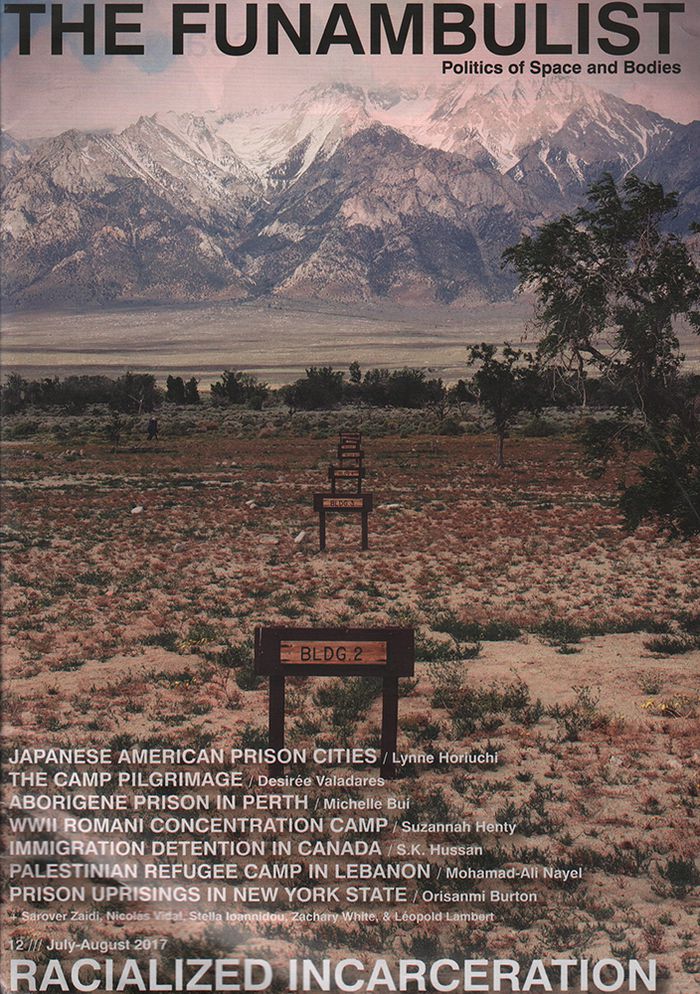
"Racialized incarceration" constitutes a form of sequel to issues 4 (Mar-Apr. 2016, "Carceral environments") and 5 (May-June 2016, "Design & racism"). This issue builds on these two precedents in demonstrating that incarceration is one of the horizons of processes of racialization and that architecture is an unsurpassable instrument of its enforcement. Through historical examples (concentration camps of Romani people in France, prison cities of Japanese and Japanese American people in the United States, an Aborigene prison in Australia) and contemporary ones (US prison industrial complex, immigrant detention centers in Canada, Palestinian refugee camps in Lebanon), The Funambulist’s 12th issue intends to illustrate how the violence of colonial and structural forms of racism endure time and materialize in space.
The Funambulist 12: Radicalized incarceration
Actions:
Prix:
$17.95
(disponible sur commande)
Résumé:
"Racialized incarceration" constitutes a form of sequel to issues 4 (Mar-Apr. 2016, "Carceral environments") and 5 (May-June 2016, "Design & racism"). This issue builds on these two precedents in demonstrating that incarceration is one of the horizons of processes of racialization and that architecture is an unsurpassable instrument of its enforcement. Through historical examples (concentration camps of Romani people in France, prison cities of Japanese and Japanese American people in the United States, an Aborigene prison in Australia) and contemporary ones (US prison industrial complex, immigrant detention centers in Canada, Palestinian refugee camps in Lebanon), The Funambulist’s 12th issue intends to illustrate how the violence of colonial and structural forms of racism endure time and materialize in space.
Classification:
périodiques
périodiques
Publication:
juillet 2017
juillet 2017
Sujet:
Revues
Revues
Classification:
livres
livres
Titre:
The material kinship reader: material beyond extraction and kinship beyond the nuclear family
The material kinship reader: material beyond extraction and kinship beyond the nuclear family
Actions:
Prix:
$35.00
(disponible sur commande)
Résumé:
What does it mean to acknowledge one’s closeness to, enmeshment in or even kinship with the material world? And what does it mean to question family structures – the way they organise, coerce and make deviant certain lifeforms – and dwell in other possibilities of kin-making? Not just a jolly rethinking of objects or a polyamorous romp through relationships, this book(...)
$35.00
(disponible sur commande)
Résumé:
What does it mean to acknowledge one’s closeness to, enmeshment in or even kinship with the material world? And what does it mean to question family structures – the way they organise, coerce and make deviant certain lifeforms – and dwell in other possibilities of kin-making? Not just a jolly rethinking of objects or a polyamorous romp through relationships, this book(...)
Titre:
The material kinship reader: material beyond extraction and kinship beyond the nuclear family
Actions:
Prix:
$35.00
(disponible sur commande)
Résumé:
What does it mean to acknowledge one’s closeness to, enmeshment in or even kinship with the material world? And what does it mean to question family structures – the way they organise, coerce and make deviant certain lifeforms – and dwell in other possibilities of kin-making? Not just a jolly rethinking of objects or a polyamorous romp through relationships, this book reckons with the extractavist histories of materials and the social relations that frame much of contemporary life. Spanning fiction and theory, the collection of texts expands the idea of an artist’s book by bringing words into conversation with an aesthetic proposition. From colonial conquest to climate collapse, it tells toxic and tender stories of interdependence among all things sentient and insentient.
The material kinship reader: material beyond extraction and kinship beyond the nuclear family
Actions:
Prix:
$35.00
(disponible sur commande)
Résumé:
What does it mean to acknowledge one’s closeness to, enmeshment in or even kinship with the material world? And what does it mean to question family structures – the way they organise, coerce and make deviant certain lifeforms – and dwell in other possibilities of kin-making? Not just a jolly rethinking of objects or a polyamorous romp through relationships, this book reckons with the extractavist histories of materials and the social relations that frame much of contemporary life. Spanning fiction and theory, the collection of texts expands the idea of an artist’s book by bringing words into conversation with an aesthetic proposition. From colonial conquest to climate collapse, it tells toxic and tender stories of interdependence among all things sentient and insentient.
Classification:
livres
livres
Publication:
décembre 2022
décembre 2022
Sujet:
Social
Social
Classification:
livres
livres
Actions:
Prix:
$80.00
(disponible en magasin)
Résumé:
Traces of India: Photography, Architecture, and the Politics of Representation, 1850–1900 investigates the different cultural roles played by photographs of Indian architecture from the second half of the nineteenth century. Although picturesque views, scientific records of an architectural past, political memorials, travel mementos, and textbook vignettes are the obvious(...)
$80.00
(disponible en magasin)
Résumé:
Traces of India: Photography, Architecture, and the Politics of Representation, 1850–1900 investigates the different cultural roles played by photographs of Indian architecture from the second half of the nineteenth century. Although picturesque views, scientific records of an architectural past, political memorials, travel mementos, and textbook vignettes are the obvious(...)
Titre:
Traces of India: Photography, Architecture, and the Politics of Representation, 1850–1900
Actions:
Prix:
$80.00
(disponible en magasin)
Résumé:
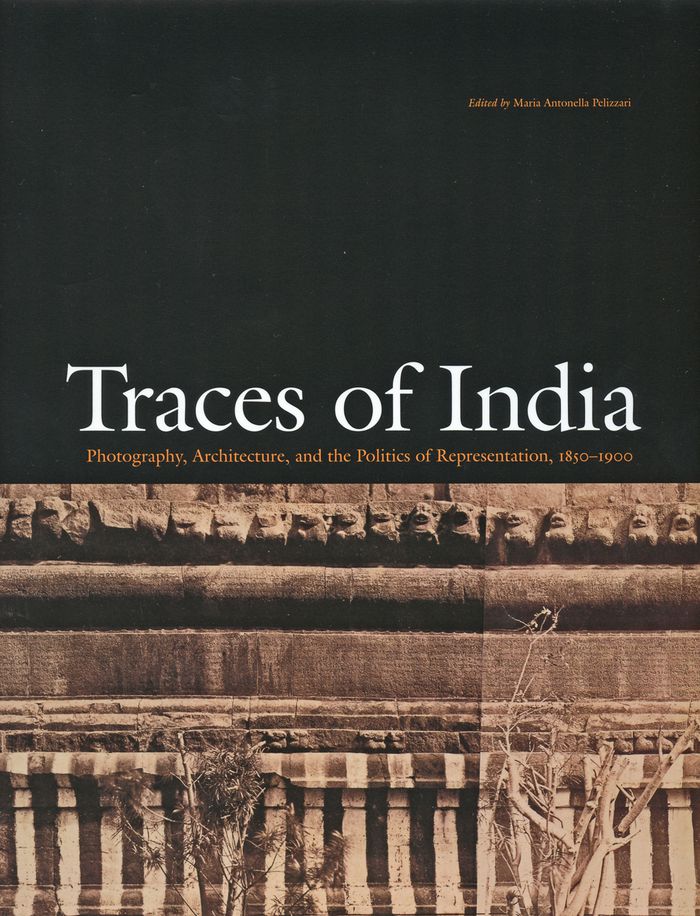
Traces of India: Photography, Architecture, and the Politics of Representation, 1850–1900 investigates the different cultural roles played by photographs of Indian architecture from the second half of the nineteenth century. Although picturesque views, scientific records of an architectural past, political memorials, travel mementos, and textbook vignettes are the obvious purposes of these images, Traces of India offers a deeper interpretation. Twelve essays show how photographs of architecture reveal the ways in which the practice of image making is aligned with the purposes of power, the presumptions accompanying the encounter with the unfamiliar, and the forces shaping colonial India. The book is published in conjunction with the 2003 CCA exhibition Traces of India: Photography, Architecture, and the Politics of Representation.
Traces of India: Photography, Architecture, and the Politics of Representation, 1850–1900
Actions:
Prix:
$80.00
(disponible en magasin)
Résumé:
Traces of India: Photography, Architecture, and the Politics of Representation, 1850–1900 investigates the different cultural roles played by photographs of Indian architecture from the second half of the nineteenth century. Although picturesque views, scientific records of an architectural past, political memorials, travel mementos, and textbook vignettes are the obvious purposes of these images, Traces of India offers a deeper interpretation. Twelve essays show how photographs of architecture reveal the ways in which the practice of image making is aligned with the purposes of power, the presumptions accompanying the encounter with the unfamiliar, and the forces shaping colonial India. The book is published in conjunction with the 2003 CCA exhibition Traces of India: Photography, Architecture, and the Politics of Representation.
Classification:
livres
livres
Publication:
mai 2003
mai 2003
Sujet:
Publications du CCA
Publications du CCA
Classification:
livres
livres
Actions:
Prix:
$65.00
(disponible sur commande)
Résumé:
Reyes Ríos + Larraín is an architecture studio founded by Salvador Reyes Ríos and Josefina Larraín in Mérida, Yucatán. Reyes Ríos + Larraín is best known for their sensitive restoration of old mansions and haciendas in the state of Yucatán and other parts of Mexico, which have been converted into hotels or private homes. Their work has set the standard for colonial(...)
$65.00
(disponible sur commande)
Résumé:
Reyes Ríos + Larraín is an architecture studio founded by Salvador Reyes Ríos and Josefina Larraín in Mérida, Yucatán. Reyes Ríos + Larraín is best known for their sensitive restoration of old mansions and haciendas in the state of Yucatán and other parts of Mexico, which have been converted into hotels or private homes. Their work has set the standard for colonial(...)
Sujet:
Architecture, monographies
Architecture, monographies
Publication:
août 2018
août 2018
Titre:
Reyes Rios + Larrain: place, matter and belonging
Actions:
Prix:
$65.00
(disponible sur commande)
Résumé:
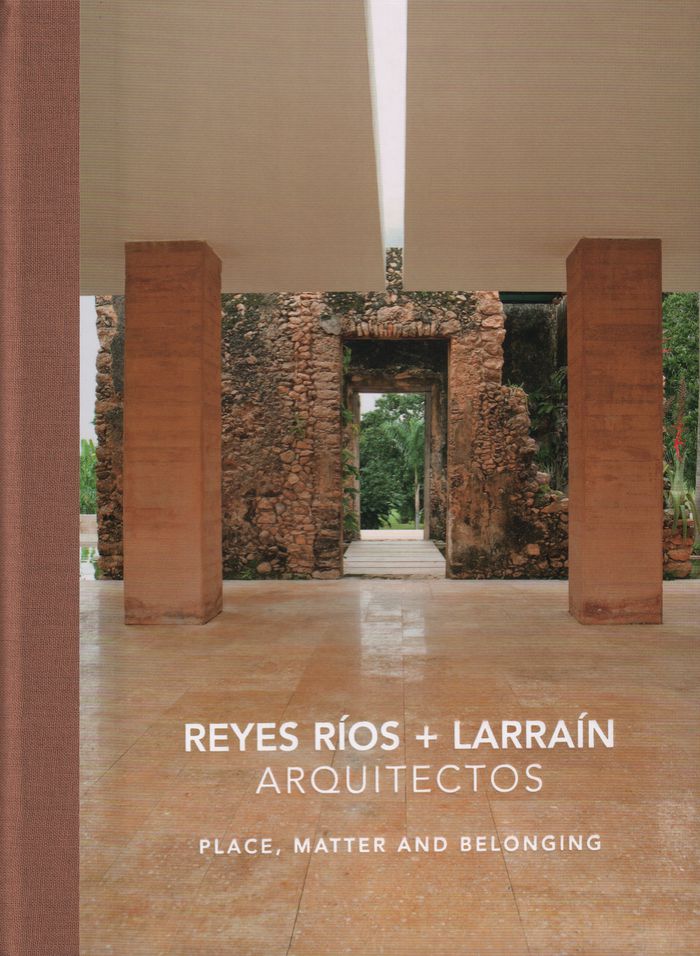
Reyes Ríos + Larraín is an architecture studio founded by Salvador Reyes Ríos and Josefina Larraín in Mérida, Yucatán. Reyes Ríos + Larraín is best known for their sensitive restoration of old mansions and haciendas in the state of Yucatán and other parts of Mexico, which have been converted into hotels or private homes. Their work has set the standard for colonial remodeling in Mexico. This book presents the practice’s exploration of construction systems, materials and finishes in their conversion projects. It also includes buildings built from scratch using traditional construction techniques, and examples of the studio’s furniture design. Exploring the studio’s working methods through essays, sketches, photographs and models, this volume presents a thorough overview of the work of one of Mexico’s leading architecture studios.
Reyes Rios + Larrain: place, matter and belonging
Actions:
Prix:
$65.00
(disponible sur commande)
Résumé:
Reyes Ríos + Larraín is an architecture studio founded by Salvador Reyes Ríos and Josefina Larraín in Mérida, Yucatán. Reyes Ríos + Larraín is best known for their sensitive restoration of old mansions and haciendas in the state of Yucatán and other parts of Mexico, which have been converted into hotels or private homes. Their work has set the standard for colonial remodeling in Mexico. This book presents the practice’s exploration of construction systems, materials and finishes in their conversion projects. It also includes buildings built from scratch using traditional construction techniques, and examples of the studio’s furniture design. Exploring the studio’s working methods through essays, sketches, photographs and models, this volume presents a thorough overview of the work of one of Mexico’s leading architecture studios.
Classification:
livres
livres
Publication:
août 2018
août 2018
Sujet:
Architecture, monographies
Architecture, monographies
Classification:
livres
livres
Actions:
Prix:
$45.00
(disponible en magasin)
Résumé:
Lorsqu'en 1962 l'Algérie accède à son indépendance, la population hérite d'un espace façonné pendant 132 ans par l'architecture de l'Etat colonial français. De façon inédite dans l'histoire, un peuple va concrètement habiter l'indépendance, en investissant massivement un environnement bâti pour l'exclure, voire lui nuire. Ancré plus particulièrement à Alger, cet ouvrage(...)
$45.00
(disponible en magasin)
Résumé:
Lorsqu'en 1962 l'Algérie accède à son indépendance, la population hérite d'un espace façonné pendant 132 ans par l'architecture de l'Etat colonial français. De façon inédite dans l'histoire, un peuple va concrètement habiter l'indépendance, en investissant massivement un environnement bâti pour l'exclure, voire lui nuire. Ancré plus particulièrement à Alger, cet ouvrage(...)
Titre:
Habiter l'indépendance : Alger, conditions d'une architecture de l'occupation
Actions:
Prix:
$45.00
(disponible en magasin)
Résumé:
Lorsqu'en 1962 l'Algérie accède à son indépendance, la population hérite d'un espace façonné pendant 132 ans par l'architecture de l'Etat colonial français. De façon inédite dans l'histoire, un peuple va concrètement habiter l'indépendance, en investissant massivement un environnement bâti pour l'exclure, voire lui nuire. Ancré plus particulièrement à Alger, cet ouvrage revient sur les conditions d'une expérimentation urbaine et questionne la composante coloniale de l'architecture et de son enseignement, au fil du temps, dans les corpus français comme algériens. Fruit d'une réflexion collective transdisciplinaire qui ose aborder des sujets peu traités, de l'architecture carcérale à la trajectoire de la statuaire coloniale, cette exploration critique de l'aménagement d'Alger entend mettre en lumière les pratiques de la ville par les personnes qui l'habitent.
Habiter l'indépendance : Alger, conditions d'une architecture de l'occupation
Actions:
Prix:
$45.00
(disponible en magasin)
Résumé:
Lorsqu'en 1962 l'Algérie accède à son indépendance, la population hérite d'un espace façonné pendant 132 ans par l'architecture de l'Etat colonial français. De façon inédite dans l'histoire, un peuple va concrètement habiter l'indépendance, en investissant massivement un environnement bâti pour l'exclure, voire lui nuire. Ancré plus particulièrement à Alger, cet ouvrage revient sur les conditions d'une expérimentation urbaine et questionne la composante coloniale de l'architecture et de son enseignement, au fil du temps, dans les corpus français comme algériens. Fruit d'une réflexion collective transdisciplinaire qui ose aborder des sujets peu traités, de l'architecture carcérale à la trajectoire de la statuaire coloniale, cette exploration critique de l'aménagement d'Alger entend mettre en lumière les pratiques de la ville par les personnes qui l'habitent.
Classification:
livres
livres
Publication:
octobre 2022
octobre 2022
Classification:
livres
livres
Actions:
Prix:
$40.00
(disponible en magasin)
Résumé:
Shifting away from the celebration of greenhouses as technical mastery and exceptional architectural feats, "Greenhouse stories" is an invitation to critically look at greenhouses as controversial (agri)cultural production tools. Re-examining them from a social, historical, environmental and creative perspective, the essays and interviews featured in this book highlight(...)
$40.00
(disponible en magasin)
Résumé:
Shifting away from the celebration of greenhouses as technical mastery and exceptional architectural feats, "Greenhouse stories" is an invitation to critically look at greenhouses as controversial (agri)cultural production tools. Re-examining them from a social, historical, environmental and creative perspective, the essays and interviews featured in this book highlight(...)
Publication:
décembre 2023
décembre 2023
Titre:
Greenhouse stories: A Critical re-examination of transparent microcosm
Actions:
Prix:
$40.00
(disponible en magasin)
Résumé:
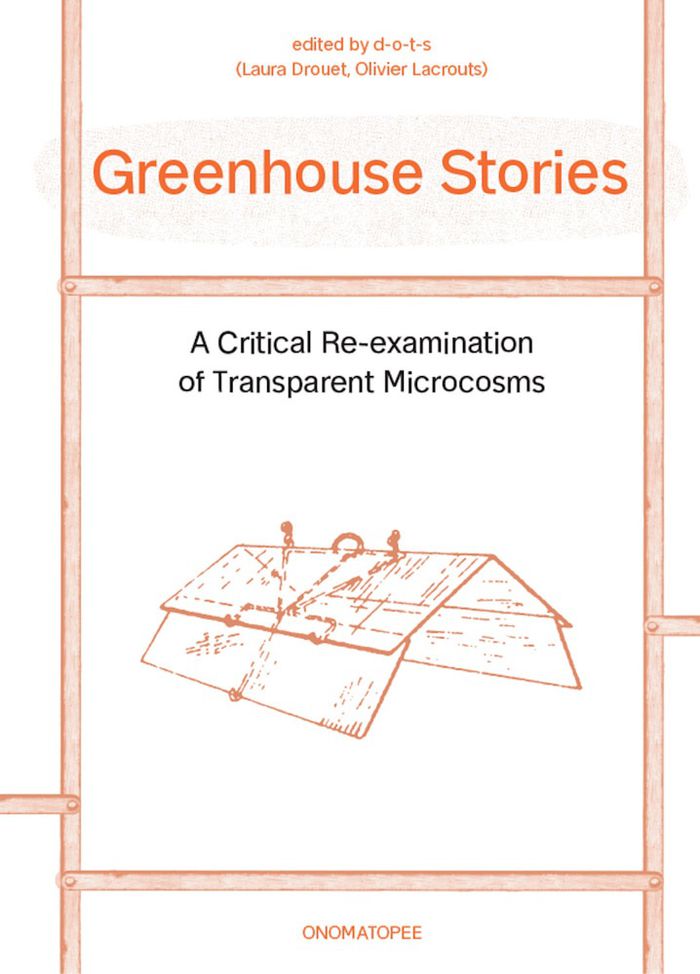
Shifting away from the celebration of greenhouses as technical mastery and exceptional architectural feats, "Greenhouse stories" is an invitation to critically look at greenhouses as controversial (agri)cultural production tools. Re-examining them from a social, historical, environmental and creative perspective, the essays and interviews featured in this book highlight stories of vegetal displacement, colonial appropriation and pollution. Yet they also help us to understand that greenhouses can be fertile spaces for women's empowerment and the nurturing of socially-engaged and eco-conscious projects. At a time of great anthropocentric pressure on the planet, we believe that questioning the greenhouse as a symbol and a tool can help us re-establish more humble and meaningful connections with the Earth and its living communities.
Greenhouse stories: A Critical re-examination of transparent microcosm
Actions:
Prix:
$40.00
(disponible en magasin)
Résumé:
Shifting away from the celebration of greenhouses as technical mastery and exceptional architectural feats, "Greenhouse stories" is an invitation to critically look at greenhouses as controversial (agri)cultural production tools. Re-examining them from a social, historical, environmental and creative perspective, the essays and interviews featured in this book highlight stories of vegetal displacement, colonial appropriation and pollution. Yet they also help us to understand that greenhouses can be fertile spaces for women's empowerment and the nurturing of socially-engaged and eco-conscious projects. At a time of great anthropocentric pressure on the planet, we believe that questioning the greenhouse as a symbol and a tool can help us re-establish more humble and meaningful connections with the Earth and its living communities.
Classification:
livres
livres
Publication:
décembre 2023
décembre 2023
Classification:
livres
livres
Prix:
$105.00
(disponible en magasin)
Résumé:
Beginning in the late 1950s and continuing to the 1980s, the independence period in Africa was a time of prolific—and thrilling—architectural production, during which leaders of newly independent nations sought to redefine themselves and their countries in contrast to colonial rule. "Architects of liberation: Modernism in Western Africa" focuses on seven western African(...)
$105.00
(disponible en magasin)
Résumé:
Beginning in the late 1950s and continuing to the 1980s, the independence period in Africa was a time of prolific—and thrilling—architectural production, during which leaders of newly independent nations sought to redefine themselves and their countries in contrast to colonial rule. "Architects of liberation: Modernism in Western Africa" focuses on seven western African(...)
Titre:
Architects of liberation: Modernism in Western Africa
Actions:
Prix:
$105.00
(disponible en magasin)
Résumé:
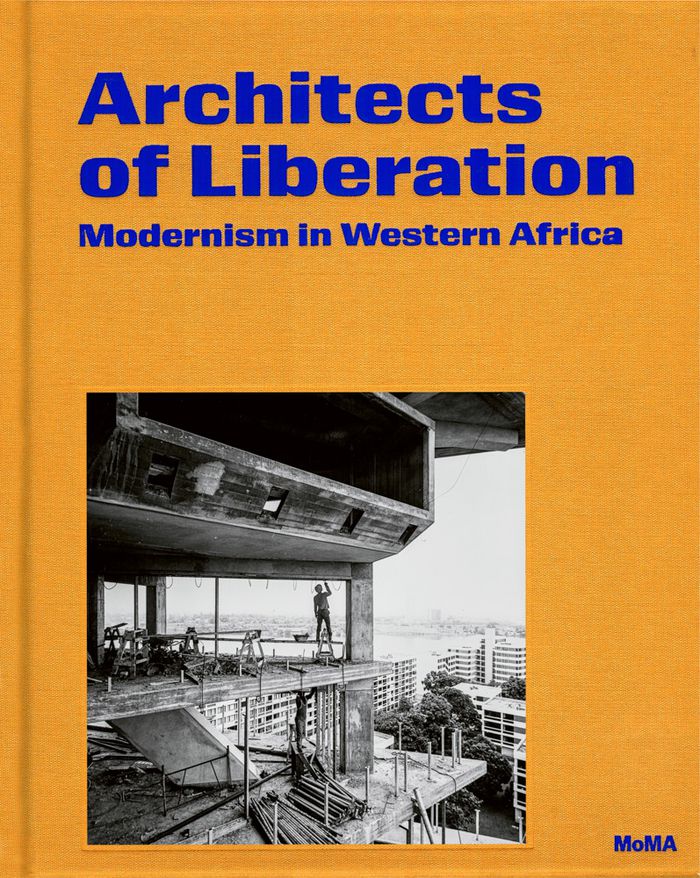
Beginning in the late 1950s and continuing to the 1980s, the independence period in Africa was a time of prolific—and thrilling—architectural production, during which leaders of newly independent nations sought to redefine themselves and their countries in contrast to colonial rule. "Architects of liberation: Modernism in Western Africa" focuses on seven western African nations—Benin (Dahomey), Cameroon, Côte d’Ivoire, Ghana, Nigeria, Senegal and Togo—and illuminates the ways in which architects sought to adapt, adopt or reinvent the idiom of modernism for their specific cultural, political and economic purposes. This landmark publication features more than 200 illustrations, including architectural drawings and archival photographs, as well as a newly commissioned photographic portfolio by François-Xavier Gbré highlighting these stunning works of architecture.
Architects of liberation: Modernism in Western Africa
Actions:
Prix:
$105.00
(disponible en magasin)
Résumé:
Beginning in the late 1950s and continuing to the 1980s, the independence period in Africa was a time of prolific—and thrilling—architectural production, during which leaders of newly independent nations sought to redefine themselves and their countries in contrast to colonial rule. "Architects of liberation: Modernism in Western Africa" focuses on seven western African nations—Benin (Dahomey), Cameroon, Côte d’Ivoire, Ghana, Nigeria, Senegal and Togo—and illuminates the ways in which architects sought to adapt, adopt or reinvent the idiom of modernism for their specific cultural, political and economic purposes. This landmark publication features more than 200 illustrations, including architectural drawings and archival photographs, as well as a newly commissioned photographic portfolio by François-Xavier Gbré highlighting these stunning works of architecture.
Classification:
livres
livres
Publication:
juillet 2026
juillet 2026
Classification:
livres
livres
Actions:
Prix:
$48.95
(disponible en magasin)
Résumé:
This book brings together stories, essays, and narrative cartography in a counter environmental assessment to document and describe the effects of surveillance infrastructure on the Tohono O’odham Nation—a Native American reservation on the United States-Mexico border. A collaboration between O’odham Elder Ophelia Rivas, human rights scholar Nina Valerie Kolowratnik, and(...)
$48.95
(disponible en magasin)
Résumé:
This book brings together stories, essays, and narrative cartography in a counter environmental assessment to document and describe the effects of surveillance infrastructure on the Tohono O’odham Nation—a Native American reservation on the United States-Mexico border. A collaboration between O’odham Elder Ophelia Rivas, human rights scholar Nina Valerie Kolowratnik, and(...)
Titre:
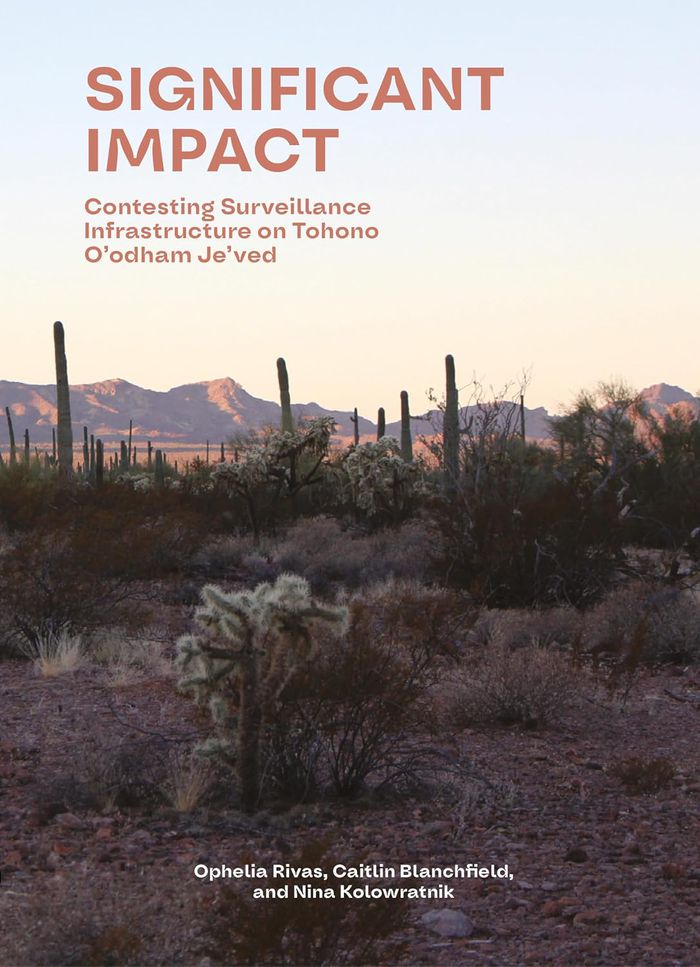
Significant Impact: Assessing Surveillance Infrastructures on Tohono O'odham Je'ved
Actions:
Prix:
$48.95
(disponible en magasin)
Résumé:
This book brings together stories, essays, and narrative cartography in a counter environmental assessment to document and describe the effects of surveillance infrastructure on the Tohono O’odham Nation—a Native American reservation on the United States-Mexico border. A collaboration between O’odham Elder Ophelia Rivas, human rights scholar Nina Valerie Kolowratnik, and architectural historian Caitlin Blanchfield, the book advocates against militarized infrastructures on Indigenous lands and challenges common protocols of environmental review, along with the Western frameworks of scientific classification and property embedded in them. The project makes visible the impact of surveillance when considered through Indigenous sovereignty and an O’odham epistemology of land. It offers a visual language that is sensitive to secrecy protocols within Traditional Knowledge and that challenges the colonial biases of Western cartography.
Significant Impact: Assessing Surveillance Infrastructures on Tohono O'odham Je'ved
Actions:
Prix:
$48.95
(disponible en magasin)
Résumé:
This book brings together stories, essays, and narrative cartography in a counter environmental assessment to document and describe the effects of surveillance infrastructure on the Tohono O’odham Nation—a Native American reservation on the United States-Mexico border. A collaboration between O’odham Elder Ophelia Rivas, human rights scholar Nina Valerie Kolowratnik, and architectural historian Caitlin Blanchfield, the book advocates against militarized infrastructures on Indigenous lands and challenges common protocols of environmental review, along with the Western frameworks of scientific classification and property embedded in them. The project makes visible the impact of surveillance when considered through Indigenous sovereignty and an O’odham epistemology of land. It offers a visual language that is sensitive to secrecy protocols within Traditional Knowledge and that challenges the colonial biases of Western cartography.
Classification:
livres
livres
Publication:
août 2026
août 2026
Sujet:
Autochtone
Autochtone


