


2576 Résultats
Classification:
livres
livres
Titre:
Pigments
Pigments
Actions:
Prix:
$39.95
(disponible sur commande)
Résumé:
Over the millennia, humans have used pigments to decorate, narrate, and instruct. Charred bone, ground earth, stones, bugs, and blood were the first pigments. New pigments were manufactured by simple processes such as corrosion and calcination until the Industrial Revolution introduced colors outside the spectrum of the natural world. "Pigments" brings together leading(...)
$39.95
(disponible sur commande)
Résumé:
Over the millennia, humans have used pigments to decorate, narrate, and instruct. Charred bone, ground earth, stones, bugs, and blood were the first pigments. New pigments were manufactured by simple processes such as corrosion and calcination until the Industrial Revolution introduced colors outside the spectrum of the natural world. "Pigments" brings together leading(...)
Publication:
juin 2024
juin 2024
Titre:
Pigments
Actions:
Prix:
$39.95
(disponible sur commande)
Résumé:
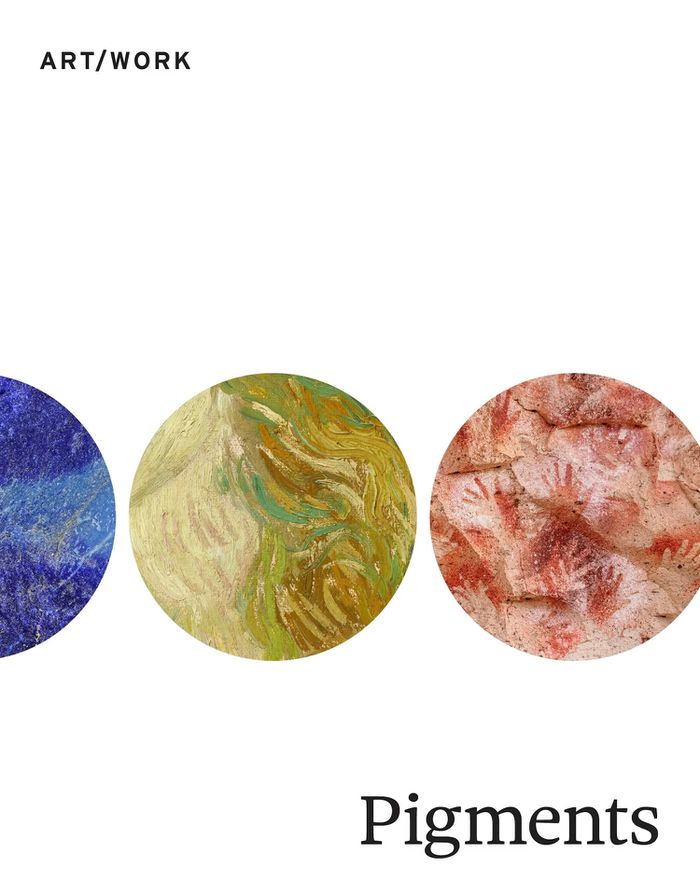
Over the millennia, humans have used pigments to decorate, narrate, and instruct. Charred bone, ground earth, stones, bugs, and blood were the first pigments. New pigments were manufactured by simple processes such as corrosion and calcination until the Industrial Revolution introduced colors outside the spectrum of the natural world. "Pigments" brings together leading art historians and conservators to trace the history of the materials used to create color and their invention across diverse cultures and time periods. This richly illustrated book features incisive historical essays and case studies that shed light on the many forms of pigments—the organic and inorganic; the edible and the toxic; and those that are more precious than gold. It shows how pigments were as central to the earliest art forms and global trade networks as they are to commerce, ornamentation, and artistic expression today. The book reveals the innate instability and mutability of most pigments and discusses how few artworks or objects look as they did when they were first created.
Pigments
Actions:
Prix:
$39.95
(disponible sur commande)
Résumé:
Over the millennia, humans have used pigments to decorate, narrate, and instruct. Charred bone, ground earth, stones, bugs, and blood were the first pigments. New pigments were manufactured by simple processes such as corrosion and calcination until the Industrial Revolution introduced colors outside the spectrum of the natural world. "Pigments" brings together leading art historians and conservators to trace the history of the materials used to create color and their invention across diverse cultures and time periods. This richly illustrated book features incisive historical essays and case studies that shed light on the many forms of pigments—the organic and inorganic; the edible and the toxic; and those that are more precious than gold. It shows how pigments were as central to the earliest art forms and global trade networks as they are to commerce, ornamentation, and artistic expression today. The book reveals the innate instability and mutability of most pigments and discusses how few artworks or objects look as they did when they were first created.
Classification:
livres
livres
Publication:
juin 2024
juin 2024
Classification:
livres
livres
Actions:
Prix:
$33.95
(disponible sur commande)
Résumé:
Is the capital of Latin America a small island at the mouth of the Hudson River? Will California soon hold the balance of power in Mexican national politics? Will Latinos reinvigorate the US labor movement? These are some of the provocative questions that Mike Davis explores in this fascinating account of the Latinization of the US urban landscape. As he forefully shows,(...)
$33.95
(disponible sur commande)
Résumé:
Is the capital of Latin America a small island at the mouth of the Hudson River? Will California soon hold the balance of power in Mexican national politics? Will Latinos reinvigorate the US labor movement? These are some of the provocative questions that Mike Davis explores in this fascinating account of the Latinization of the US urban landscape. As he forefully shows,(...)
Titre:
Magical urbanism: Latinos reinvent the US city
Actions:
Prix:
$33.95
(disponible sur commande)
Résumé:
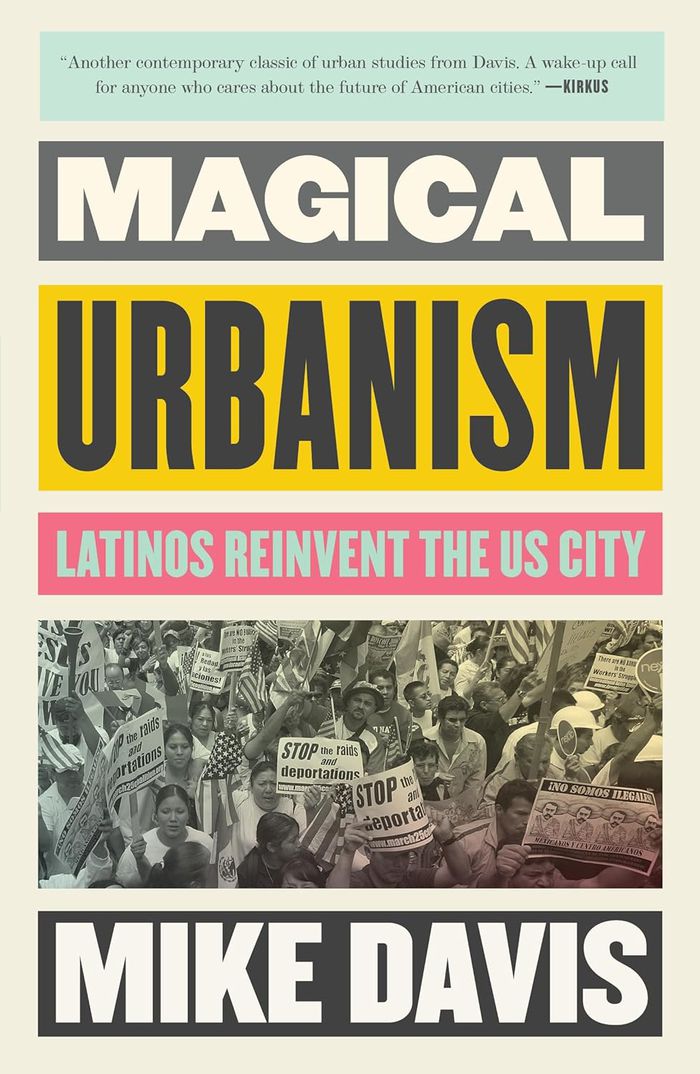
Is the capital of Latin America a small island at the mouth of the Hudson River? Will California soon hold the balance of power in Mexican national politics? Will Latinos reinvigorate the US labor movement? These are some of the provocative questions that Mike Davis explores in this fascinating account of the Latinization of the US urban landscape. As he forefully shows, this is a demographic and cultural revolution with extraordinary implications. With Spanish surnames increasing five times faster than the general population, salsa is becoming the predominant ethnic rhythm (and flavor) of contemporary city life. In Los Angeles, Houston, San Antonio, and (shortly) Dallas, Latinos outnumber non-Hispanic whites; in New York, San Diego and Phoenix they outnumber Blacks. According to the Bureau of the Census, Latinos will supply fully two-thirds of the nation’s population growth between now and the middle of the 21st century when nearly 100 millions Americans will boast Latin American ancestry.
Magical urbanism: Latinos reinvent the US city
Actions:
Prix:
$33.95
(disponible sur commande)
Résumé:
Is the capital of Latin America a small island at the mouth of the Hudson River? Will California soon hold the balance of power in Mexican national politics? Will Latinos reinvigorate the US labor movement? These are some of the provocative questions that Mike Davis explores in this fascinating account of the Latinization of the US urban landscape. As he forefully shows, this is a demographic and cultural revolution with extraordinary implications. With Spanish surnames increasing five times faster than the general population, salsa is becoming the predominant ethnic rhythm (and flavor) of contemporary city life. In Los Angeles, Houston, San Antonio, and (shortly) Dallas, Latinos outnumber non-Hispanic whites; in New York, San Diego and Phoenix they outnumber Blacks. According to the Bureau of the Census, Latinos will supply fully two-thirds of the nation’s population growth between now and the middle of the 21st century when nearly 100 millions Americans will boast Latin American ancestry.
Classification:
livres
livres
Publication:
juin 2024
juin 2024
Sujet:
Théorie de l’urbanisme
Théorie de l’urbanisme
Classification:
livres
livres

Actions:
Prix:
$99.95
(disponible sur commande)
Résumé:
Think plastic. Think inflatable PVC chairs and TV tables. It must be the 1960s, when radical furniture designs "popped" next to new art, traditional designs were recast with new materials, and the results were often mixed in one room. One of the boldest decades of design in the twentieth century, this a decade of contradictions in styles that Anne Bony has captured in(...)
$99.95
(disponible sur commande)
Résumé:
Think plastic. Think inflatable PVC chairs and TV tables. It must be the 1960s, when radical furniture designs "popped" next to new art, traditional designs were recast with new materials, and the results were often mixed in one room. One of the boldest decades of design in the twentieth century, this a decade of contradictions in styles that Anne Bony has captured in(...)
Titre:
Furniture & interiors of the 1960s
Actions:
Prix:
$99.95
(disponible sur commande)
Résumé:
Think plastic. Think inflatable PVC chairs and TV tables. It must be the 1960s, when radical furniture designs "popped" next to new art, traditional designs were recast with new materials, and the results were often mixed in one room. One of the boldest decades of design in the twentieth century, this a decade of contradictions in styles that Anne Bony has captured in this book. "Furniture and interiors of the 1960s" pays homage to the vibrancy and buoyant energy of the decade's design trends and influences in 300 key designs that attract enormous interest and command unprecedented prices today. For the first time, America was leading a design revolution with Wendell Castle's Molar and Castle chairs, Estelle Lavergne's lucite furniture and the experiments of Ray and Charles Eames. Warren Planter, Hans Knoll, Harry Bertoia, Alexander Girard, and Robert Propst were world-ranked designers who pioneered new directions in furnishings and accessories that appeared in trendy homes and offices in Europe and Asia.
Furniture & interiors of the 1960s
Actions:
Prix:
$99.95
(disponible sur commande)
Résumé:
Think plastic. Think inflatable PVC chairs and TV tables. It must be the 1960s, when radical furniture designs "popped" next to new art, traditional designs were recast with new materials, and the results were often mixed in one room. One of the boldest decades of design in the twentieth century, this a decade of contradictions in styles that Anne Bony has captured in this book. "Furniture and interiors of the 1960s" pays homage to the vibrancy and buoyant energy of the decade's design trends and influences in 300 key designs that attract enormous interest and command unprecedented prices today. For the first time, America was leading a design revolution with Wendell Castle's Molar and Castle chairs, Estelle Lavergne's lucite furniture and the experiments of Ray and Charles Eames. Warren Planter, Hans Knoll, Harry Bertoia, Alexander Girard, and Robert Propst were world-ranked designers who pioneered new directions in furnishings and accessories that appeared in trendy homes and offices in Europe and Asia.
Classification:
livres
livres
Publication:
mai 2004, Paris
mai 2004, Paris
Sujet:
Design d’intérieur
Design d’intérieur
Classification:
livres
livres
Actions:
Prix:
$45.95
(disponible sur commande)
Résumé:
This lively and authoritative book explores the influence of the Bauhaus and modernism on typography and book design. Alan Bartram examines work by such key figures as Max Bill, F. T. Marinetti, El Lissitzky, László Moholy-Nagy, Jan Tschichold, and Paul Rand. All of the carefully chosen examples, some of which have not been previously reproduced, clearly demonstrate the(...)
$45.95
(disponible sur commande)
Résumé:
This lively and authoritative book explores the influence of the Bauhaus and modernism on typography and book design. Alan Bartram examines work by such key figures as Max Bill, F. T. Marinetti, El Lissitzky, László Moholy-Nagy, Jan Tschichold, and Paul Rand. All of the carefully chosen examples, some of which have not been previously reproduced, clearly demonstrate the(...)
Titre:
Bauhaus, modernism & the illustrated book
Actions:
Prix:
$45.95
(disponible sur commande)
Résumé:
This lively and authoritative book explores the influence of the Bauhaus and modernism on typography and book design. Alan Bartram examines work by such key figures as Max Bill, F. T. Marinetti, El Lissitzky, László Moholy-Nagy, Jan Tschichold, and Paul Rand. All of the carefully chosen examples, some of which have not been previously reproduced, clearly demonstrate the modernist revolution that took place in graphic design. In an informative introductory essay, Bartram surveys the German art and design school known as the Bauhaus. Under Walter Gropius, the Bauhaus intended to create an academic, theoretical, and practical synthesis of all forms of visual expression, a marrying of art, architecture, industry, and design that had never been attempted before. Although the Bauhaus existed for only fourteen years, from 1920 to 1934, Bartram asserts that its philosophy influenced the appearance of almost every kind of modernist artifact throughout the twentieth century and continues to do so today.
Bauhaus, modernism & the illustrated book
Actions:
Prix:
$45.95
(disponible sur commande)
Résumé:
This lively and authoritative book explores the influence of the Bauhaus and modernism on typography and book design. Alan Bartram examines work by such key figures as Max Bill, F. T. Marinetti, El Lissitzky, László Moholy-Nagy, Jan Tschichold, and Paul Rand. All of the carefully chosen examples, some of which have not been previously reproduced, clearly demonstrate the modernist revolution that took place in graphic design. In an informative introductory essay, Bartram surveys the German art and design school known as the Bauhaus. Under Walter Gropius, the Bauhaus intended to create an academic, theoretical, and practical synthesis of all forms of visual expression, a marrying of art, architecture, industry, and design that had never been attempted before. Although the Bauhaus existed for only fourteen years, from 1920 to 1934, Bartram asserts that its philosophy influenced the appearance of almost every kind of modernist artifact throughout the twentieth century and continues to do so today.
Classification:
livres
livres
Publication:
avril 2004, London
avril 2004, London
Classification:
livres
livres
Actions:
Prix:
$39.50
(disponible sur commande)
Résumé:
The early twentieth century was a time of extraordinary change in Europe. War and revolution shattered the traditional cohesion of European civilisation, while the machine age brought mass production and distribution and a new sense of internationalism. This ‘heroic’ period of modernity found particularly forceful expression in graphic design and photomontage throughout(...)
$39.50
(disponible sur commande)
Résumé:
The early twentieth century was a time of extraordinary change in Europe. War and revolution shattered the traditional cohesion of European civilisation, while the machine age brought mass production and distribution and a new sense of internationalism. This ‘heroic’ period of modernity found particularly forceful expression in graphic design and photomontage throughout(...)
Publication:
octobre 2004, London
octobre 2004, London
Titre:
Avant-garde graphics 1918- 1934
Actions:
Prix:
$39.50
(disponible sur commande)
Résumé:
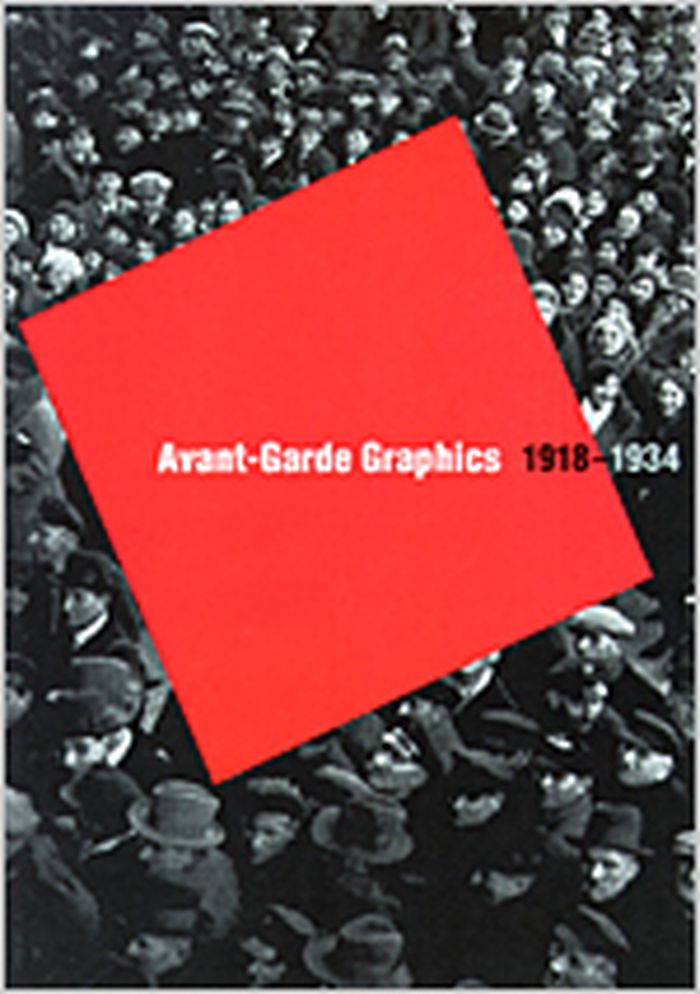
The early twentieth century was a time of extraordinary change in Europe. War and revolution shattered the traditional cohesion of European civilisation, while the machine age brought mass production and distribution and a new sense of internationalism. This ‘heroic’ period of modernity found particularly forceful expression in graphic design and photomontage throughout Europe, where new techniques allowed a fusion of typography, painting and photography, evoking the dynamism and fragmentation of cinema. "Avant-garde Graphics: 1918 – 34" showcases the work of many of the leading practitioners of the Modern movement, from Italian Futurists, the Dutch members of De Stijl and the German Bauhaus, to the Constructivists of Russia and central Europe. Drawn from the collection of Merrill C. Berman, one of the greatest collections of twentieth-century graphic art in the world, this book features colour reproductions of original posters, prints, book designs and political and commercial ephemera, together with original designers’ layouts and photomontages.
Avant-garde graphics 1918- 1934
Actions:
Prix:
$39.50
(disponible sur commande)
Résumé:
The early twentieth century was a time of extraordinary change in Europe. War and revolution shattered the traditional cohesion of European civilisation, while the machine age brought mass production and distribution and a new sense of internationalism. This ‘heroic’ period of modernity found particularly forceful expression in graphic design and photomontage throughout Europe, where new techniques allowed a fusion of typography, painting and photography, evoking the dynamism and fragmentation of cinema. "Avant-garde Graphics: 1918 – 34" showcases the work of many of the leading practitioners of the Modern movement, from Italian Futurists, the Dutch members of De Stijl and the German Bauhaus, to the Constructivists of Russia and central Europe. Drawn from the collection of Merrill C. Berman, one of the greatest collections of twentieth-century graphic art in the world, this book features colour reproductions of original posters, prints, book designs and political and commercial ephemera, together with original designers’ layouts and photomontages.
Classification:
livres
livres
Publication:
octobre 2004, London
octobre 2004, London
Classification:
livres
livres

Actions:
Prix:
$50.00
(disponible sur commande)
Résumé:
During the 18th century a remarkable group of women formed the Bluestocking Salon, where women and men met to debate contemporary ideas and promote the life of the mind. Together, these cultural innovators helped forge new roles for women as influential thinkers, writers, and artists, and their creative achievements were publicly celebrated. Richly illustrated(...)
$50.00
(disponible sur commande)
Résumé:
During the 18th century a remarkable group of women formed the Bluestocking Salon, where women and men met to debate contemporary ideas and promote the life of the mind. Together, these cultural innovators helped forge new roles for women as influential thinkers, writers, and artists, and their creative achievements were publicly celebrated. Richly illustrated(...)
Sujet:
Histoire jusqu’à 1900
Histoire jusqu’à 1900
Publication:
juin 2008, New Haven, London
juin 2008, New Haven, London
Titre:
Brilliant women : 18th-century bluestockings
Actions:
Prix:
$50.00
(disponible sur commande)
Résumé:
During the 18th century a remarkable group of women formed the Bluestocking Salon, where women and men met to debate contemporary ideas and promote the life of the mind. Together, these cultural innovators helped forge new roles for women as influential thinkers, writers, and artists, and their creative achievements were publicly celebrated. Richly illustrated with portraits, prints, and personal artifacts, "Brilliant women" tells the story of this fascinating group of women. The authors chart the changing fortunes of the female intellectual and explore how a number of bluestocking women, such as artist Angelica Kauffmann, historian Catharine Macaulay, and early feminist Mary Wollstonecraft, used portraiture to advance their work and their reputations in a period framed by the Enlightenment and the French Revolution. "Brilliant women" pays tribute to the friendships and achievements of these bluestocking women, presenting new information on the range of cultural activities in which they were engaged, as well as celebrating their legacy.
Brilliant women : 18th-century bluestockings
Actions:
Prix:
$50.00
(disponible sur commande)
Résumé:
During the 18th century a remarkable group of women formed the Bluestocking Salon, where women and men met to debate contemporary ideas and promote the life of the mind. Together, these cultural innovators helped forge new roles for women as influential thinkers, writers, and artists, and their creative achievements were publicly celebrated. Richly illustrated with portraits, prints, and personal artifacts, "Brilliant women" tells the story of this fascinating group of women. The authors chart the changing fortunes of the female intellectual and explore how a number of bluestocking women, such as artist Angelica Kauffmann, historian Catharine Macaulay, and early feminist Mary Wollstonecraft, used portraiture to advance their work and their reputations in a period framed by the Enlightenment and the French Revolution. "Brilliant women" pays tribute to the friendships and achievements of these bluestocking women, presenting new information on the range of cultural activities in which they were engaged, as well as celebrating their legacy.
Classification:
livres
livres
Publication:
juin 2008, New Haven, London
juin 2008, New Haven, London
Sujet:
Histoire jusqu’à 1900
Histoire jusqu’à 1900
Classification:
livres
livres

Actions:
Prix:
$54.95
(disponible en magasin)
Résumé:
The moment human fingertips lifted from the ground, upright walking became a privilege rather than a mere posture. The liberated hands could now be used to create tools for defense and hunting. The pupils’ gazes shifted from a level view to a downward perspective, a physical change that also translated into an awareness that overlooked other species. The spine, situated(...)
$54.95
(disponible en magasin)
Résumé:
The moment human fingertips lifted from the ground, upright walking became a privilege rather than a mere posture. The liberated hands could now be used to create tools for defense and hunting. The pupils’ gazes shifted from a level view to a downward perspective, a physical change that also translated into an awareness that overlooked other species. The spine, situated(...)
Titre:
te magazine no.4: Spinal Memory
Actions:
Prix:
$54.95
(disponible en magasin)
Résumé:
The moment human fingertips lifted from the ground, upright walking became a privilege rather than a mere posture. The liberated hands could now be used to create tools for defense and hunting. The pupils’ gazes shifted from a level view to a downward perspective, a physical change that also translated into an awareness that overlooked other species. The spine, situated at the center of the human body, acts like a covert ruler, measuring the scale of evolution and supporting the illusion of being "human-centric." Thus, humans stand, placing themselves far above all other creatures. Following this profound gestural revolution came the imagination and manipulation of non-human animals (the Others), turning them into livestock and companions, as their wildness was rewritten as docility. Their bodies became resources to be medicated and refined, transforming into instruments for milk and nutritious meat production. They became basic knowledge and research data, linking humanity’s ever-expanding and illusory colonial territories.
te magazine no.4: Spinal Memory
Actions:
Prix:
$54.95
(disponible en magasin)
Résumé:
The moment human fingertips lifted from the ground, upright walking became a privilege rather than a mere posture. The liberated hands could now be used to create tools for defense and hunting. The pupils’ gazes shifted from a level view to a downward perspective, a physical change that also translated into an awareness that overlooked other species. The spine, situated at the center of the human body, acts like a covert ruler, measuring the scale of evolution and supporting the illusion of being "human-centric." Thus, humans stand, placing themselves far above all other creatures. Following this profound gestural revolution came the imagination and manipulation of non-human animals (the Others), turning them into livestock and companions, as their wildness was rewritten as docility. Their bodies became resources to be medicated and refined, transforming into instruments for milk and nutritious meat production. They became basic knowledge and research data, linking humanity’s ever-expanding and illusory colonial territories.
Classification:
livres
livres
Publication:
mai 2026
mai 2026
Sujet:
Revues
Revues
Classification:
livres
livres
Actions:
Prix:
$34.50
(disponible en magasin)
Résumé:
This book offers a comprehensive account of modern Spanish culture, tracing its dramatic and often unexpected development from its beginnings after the Revolution of 1868 to the present day. Specially-commissioned essays by leading experts provide analyses of the historical and political background of modern Spain, the culture of the major autonomous regions (notably(...)
$34.50
(disponible en magasin)
Résumé:
This book offers a comprehensive account of modern Spanish culture, tracing its dramatic and often unexpected development from its beginnings after the Revolution of 1868 to the present day. Specially-commissioned essays by leading experts provide analyses of the historical and political background of modern Spain, the culture of the major autonomous regions (notably(...)
Titre:
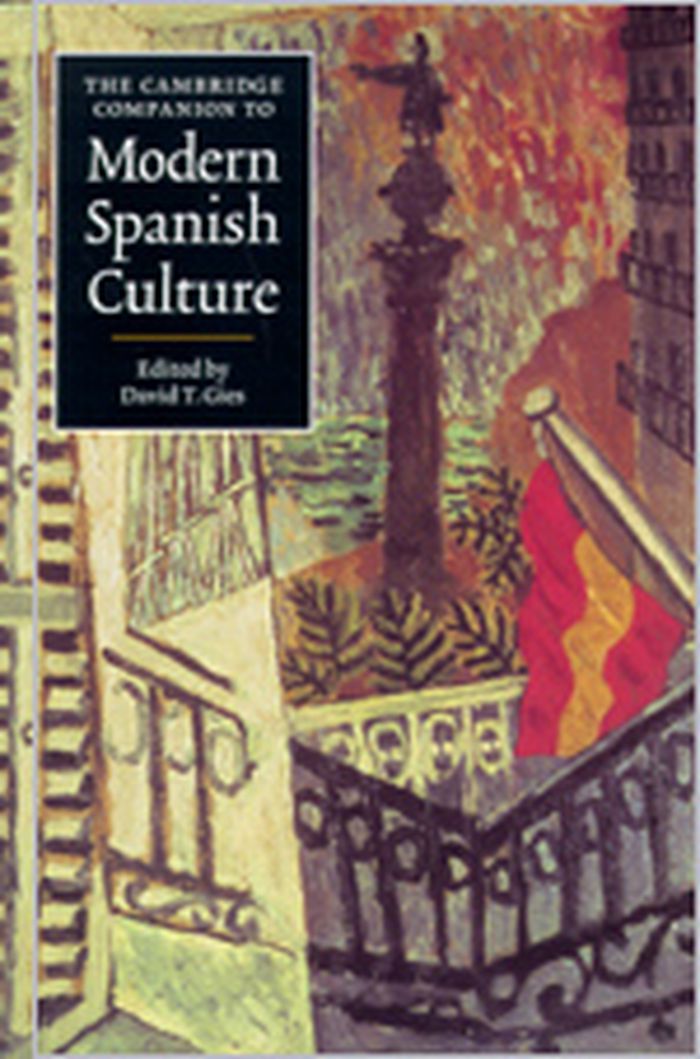
The Cambridge companion to modern Spanish culture
Actions:
Prix:
$34.50
(disponible en magasin)
Résumé:
This book offers a comprehensive account of modern Spanish culture, tracing its dramatic and often unexpected development from its beginnings after the Revolution of 1868 to the present day. Specially-commissioned essays by leading experts provide analyses of the historical and political background of modern Spain, the culture of the major autonomous regions (notably Castile, Catalonia, and the Basque Country), and the country’s literature: narrative, poetry, theatre and the essay. Spain’s recent development is divided into three main phases: from 1868 to the outbreak of the Spanish Civil War; the period of the dictatorship of Francisco Franco; and the post-Franco arrival of democracy. The concept of ‘Spanish culture’ is investigated, and there are studies of Spanish painting and sculpture, architecture, cinema, dance, music, and the modern media. A chronology and guides to further reading are provided, making the volume an invaluable introduction to the politics, literature and culture of modern Spain.
The Cambridge companion to modern Spanish culture
Actions:
Prix:
$34.50
(disponible en magasin)
Résumé:
This book offers a comprehensive account of modern Spanish culture, tracing its dramatic and often unexpected development from its beginnings after the Revolution of 1868 to the present day. Specially-commissioned essays by leading experts provide analyses of the historical and political background of modern Spain, the culture of the major autonomous regions (notably Castile, Catalonia, and the Basque Country), and the country’s literature: narrative, poetry, theatre and the essay. Spain’s recent development is divided into three main phases: from 1868 to the outbreak of the Spanish Civil War; the period of the dictatorship of Francisco Franco; and the post-Franco arrival of democracy. The concept of ‘Spanish culture’ is investigated, and there are studies of Spanish painting and sculpture, architecture, cinema, dance, music, and the modern media. A chronology and guides to further reading are provided, making the volume an invaluable introduction to the politics, literature and culture of modern Spain.
Classification:
livres
livres
Publication:
janvier 1999, Cambridge
janvier 1999, Cambridge
Classification:
livres
livres
Titre:
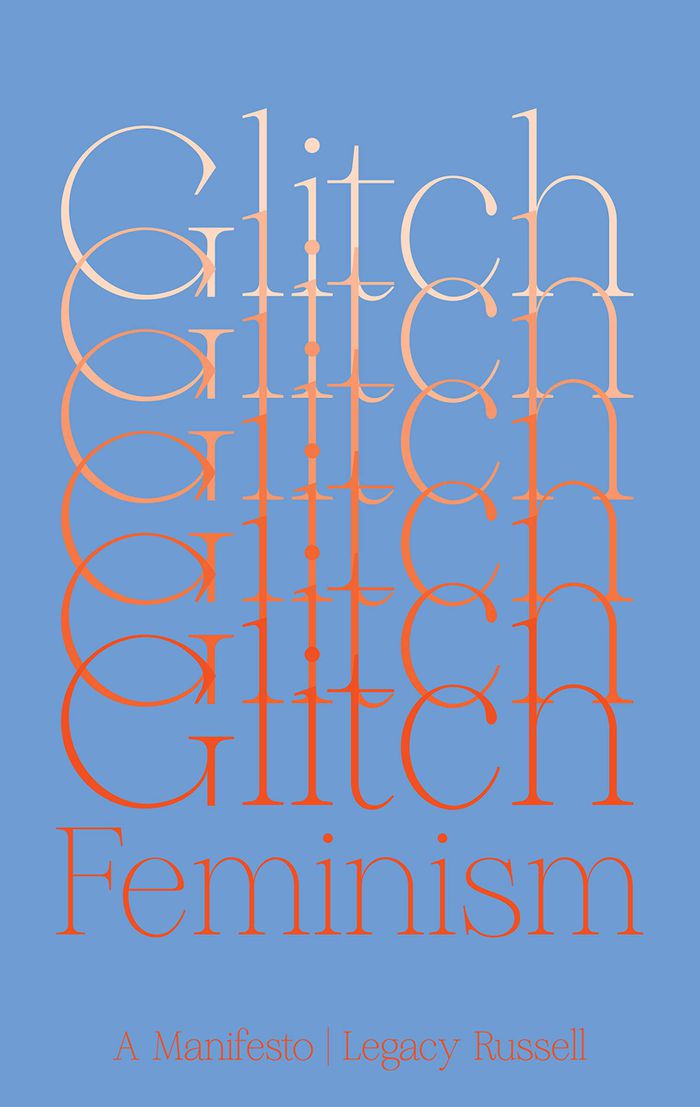
Glitch feminism: A manifesto
Glitch feminism: A manifesto
Actions:
Prix:
$25.95
(disponible en magasin)
Résumé:
A new manifesto for cyberfeminism: finding liberation in the glitch between body, gender, and technology The divide between the digital and the real world no longer exists. We are connected all the time. How do we find out who we are in this digital era? Where do we create the space to explore our identity? How can we come together in solidarity? A glitch is(...)
$25.95
(disponible en magasin)
Résumé:
A new manifesto for cyberfeminism: finding liberation in the glitch between body, gender, and technology The divide between the digital and the real world no longer exists. We are connected all the time. How do we find out who we are in this digital era? Where do we create the space to explore our identity? How can we come together in solidarity? A glitch is(...)
Titre:
Glitch feminism: A manifesto
Actions:
Prix:
$25.95
(disponible en magasin)
Résumé:
A new manifesto for cyberfeminism: finding liberation in the glitch between body, gender, and technology The divide between the digital and the real world no longer exists. We are connected all the time. How do we find out who we are in this digital era? Where do we create the space to explore our identity? How can we come together in solidarity? A glitch is normally thought of as an error, a faulty overlaying, but, as Legacy Russell shows, liberation can be found within the fissures between gender, technology, and the body. The glitch offers an opportunity for us to perform and transform ourselves in an infinite variety of identities. In Glitch Feminism, Russell makes a series of radical demands through memoir, art, and critical theory, as well as the work of contemporary artists—including Juliana Huxtable, Sondra Perry, boychild, Victoria Sin, and Kia LaBeija—who have travelled through the glitch in their work. Timely and provocative, ''Glitch feminism'' shows how error can lead to revolution.
Glitch feminism: A manifesto
Actions:
Prix:
$25.95
(disponible en magasin)
Résumé:
A new manifesto for cyberfeminism: finding liberation in the glitch between body, gender, and technology The divide between the digital and the real world no longer exists. We are connected all the time. How do we find out who we are in this digital era? Where do we create the space to explore our identity? How can we come together in solidarity? A glitch is normally thought of as an error, a faulty overlaying, but, as Legacy Russell shows, liberation can be found within the fissures between gender, technology, and the body. The glitch offers an opportunity for us to perform and transform ourselves in an infinite variety of identities. In Glitch Feminism, Russell makes a series of radical demands through memoir, art, and critical theory, as well as the work of contemporary artists—including Juliana Huxtable, Sondra Perry, boychild, Victoria Sin, and Kia LaBeija—who have travelled through the glitch in their work. Timely and provocative, ''Glitch feminism'' shows how error can lead to revolution.
Classification:
livres
livres
Publication:
octobre 2020
octobre 2020
Sujet:
Social
Social
Classification:
livres
livres

Prix:
$31.95
(disponible sur commande)
Résumé:
The number one cause of global warming is architecture - the buildings. Buildings are responsible for 40% of the Co2 that is emitted into the atmosphere. The architects must take this responsibility and move from geopolitics towards biosphere politics. This publication is a real test of how this can be achieved. The context for the intervention is an existing historic(...)
$31.95
(disponible sur commande)
Résumé:
The number one cause of global warming is architecture - the buildings. Buildings are responsible for 40% of the Co2 that is emitted into the atmosphere. The architects must take this responsibility and move from geopolitics towards biosphere politics. This publication is a real test of how this can be achieved. The context for the intervention is an existing historic(...)
Titre:
Cloud 9: a green new deal, from geopolitics to biosphere politics
Actions:
Prix:
$31.95
(disponible sur commande)
Résumé:
The number one cause of global warming is architecture - the buildings. Buildings are responsible for 40% of the Co2 that is emitted into the atmosphere. The architects must take this responsibility and move from geopolitics towards biosphere politics. This publication is a real test of how this can be achieved. The context for the intervention is an existing historic building in Barcelona, the Centre of Arts Santa Monica; a building to explore the Third Industrial Revolution as the potential of a transformation towards an empathic architecture. Nature should let us show the path. Cloud 9 equipped the trees in front of Arts Santa Monica with sensors that capture data on temperature, humidity and light energy to inform the building. The intervention is an installation on the facade that produces energy from the environment, like the sun and wind. It is an additional skin which allows control of natural light and regulates solar radiation.
Cloud 9: a green new deal, from geopolitics to biosphere politics
Actions:
Prix:
$31.95
(disponible sur commande)
Résumé:
The number one cause of global warming is architecture - the buildings. Buildings are responsible for 40% of the Co2 that is emitted into the atmosphere. The architects must take this responsibility and move from geopolitics towards biosphere politics. This publication is a real test of how this can be achieved. The context for the intervention is an existing historic building in Barcelona, the Centre of Arts Santa Monica; a building to explore the Third Industrial Revolution as the potential of a transformation towards an empathic architecture. Nature should let us show the path. Cloud 9 equipped the trees in front of Arts Santa Monica with sensors that capture data on temperature, humidity and light energy to inform the building. The intervention is an installation on the facade that produces energy from the environment, like the sun and wind. It is an additional skin which allows control of natural light and regulates solar radiation.
Classification:
livres
livres
Publication:
novembre 2010
novembre 2010
Sujet:
Architecture écologique
Architecture écologique


