


2585 Résultats
Classification:
livres
livres
Actions:
Prix:
$60.00
(disponible sur commande)
Résumé:
What comes after the Anthropocene? Can we depart from our human-centered perspective to build a future for the benefit of all species? What tools and techniques might help us get there? These are the questions investigated by the long-term interdisciplinary project "Interspecies future", which brings together perspectives from art, science, and technology to explore what(...)
$60.00
(disponible sur commande)
Résumé:
What comes after the Anthropocene? Can we depart from our human-centered perspective to build a future for the benefit of all species? What tools and techniques might help us get there? These are the questions investigated by the long-term interdisciplinary project "Interspecies future", which brings together perspectives from art, science, and technology to explore what(...)
Titre:
Interspecies future: a primer
Actions:
Prix:
$60.00
(disponible sur commande)
Résumé:
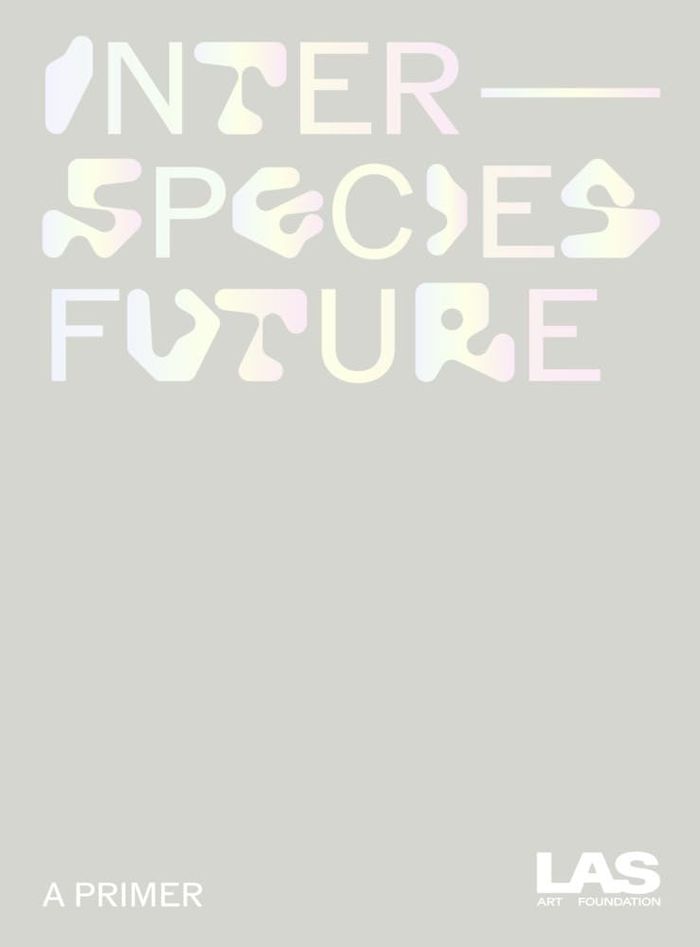
What comes after the Anthropocene? Can we depart from our human-centered perspective to build a future for the benefit of all species? What tools and techniques might help us get there? These are the questions investigated by the long-term interdisciplinary project "Interspecies future", which brings together perspectives from art, science, and technology to explore what this future might look like. First initiated in 2022 by LAS Art Foundation, this project explores new pathways for planetary thinking and collective intelligence. With more than 60 contributions, this interactive reader is the first book to provide an extensive foundation of key concepts, debates, and case studies that propose ways to re-frame, repair, and re-imagine interspecies relations. "Interspecies future: A primer" draws on recent advancements in planetary computation and machine learning, new discoveries in non-human intelligence, as well as post-human theory and Indigenous knowledge.
Interspecies future: a primer
Actions:
Prix:
$60.00
(disponible sur commande)
Résumé:
What comes after the Anthropocene? Can we depart from our human-centered perspective to build a future for the benefit of all species? What tools and techniques might help us get there? These are the questions investigated by the long-term interdisciplinary project "Interspecies future", which brings together perspectives from art, science, and technology to explore what this future might look like. First initiated in 2022 by LAS Art Foundation, this project explores new pathways for planetary thinking and collective intelligence. With more than 60 contributions, this interactive reader is the first book to provide an extensive foundation of key concepts, debates, and case studies that propose ways to re-frame, repair, and re-imagine interspecies relations. "Interspecies future: A primer" draws on recent advancements in planetary computation and machine learning, new discoveries in non-human intelligence, as well as post-human theory and Indigenous knowledge.
Classification:
livres
livres
Publication:
septembre 2024
septembre 2024
Sujet:
Faune et flore
Faune et flore
Classification:
livres
livres

Actions:
Prix:
$54.00
(disponible sur commande)
Résumé:
Throughout his creative career, Turner Prize-winning sculptor Anish Kapoor has worked extensively with architects and engineers, and built a large body of public works that merge sculpture and architecture. Now, in a world designed using CAD programs, Kapoor argues that the next logical step in integrating design with production is to move from virtual models to(...)
$54.00
(disponible sur commande)
Résumé:
Throughout his creative career, Turner Prize-winning sculptor Anish Kapoor has worked extensively with architects and engineers, and built a large body of public works that merge sculpture and architecture. Now, in a world designed using CAD programs, Kapoor argues that the next logical step in integrating design with production is to move from virtual models to(...)
Titre:
Anish Kapoor: Unconformity and entropy
Actions:
Prix:
$54.00
(disponible sur commande)
Résumé:
Throughout his creative career, Turner Prize-winning sculptor Anish Kapoor has worked extensively with architects and engineers, and built a large body of public works that merge sculpture and architecture. Now, in a world designed using CAD programs, Kapoor argues that the next logical step in integrating design with production is to move from virtual models to 3D-printed buildings. In Unconformity and Entropy, a number of finished architectural works are fleshed out with preparatory studies and extracts from the artist's extensive technical research, illustrating his investigation of the fluid and plastic qualities of cement. Central to the project is the conceit of the use of a purpose-built machine to generate forms through which Kapoor would explore the intersection of idea and event. Extensively illustrated with original drawings, sketches and color photographs, and superbly designed, Unconformity and Entropy also includes several illuminating introductory essays.
Anish Kapoor: Unconformity and entropy
Actions:
Prix:
$54.00
(disponible sur commande)
Résumé:
Throughout his creative career, Turner Prize-winning sculptor Anish Kapoor has worked extensively with architects and engineers, and built a large body of public works that merge sculpture and architecture. Now, in a world designed using CAD programs, Kapoor argues that the next logical step in integrating design with production is to move from virtual models to 3D-printed buildings. In Unconformity and Entropy, a number of finished architectural works are fleshed out with preparatory studies and extracts from the artist's extensive technical research, illustrating his investigation of the fluid and plastic qualities of cement. Central to the project is the conceit of the use of a purpose-built machine to generate forms through which Kapoor would explore the intersection of idea and event. Extensively illustrated with original drawings, sketches and color photographs, and superbly designed, Unconformity and Entropy also includes several illuminating introductory essays.
Classification:
livres
livres
Publication:
mars 2010
mars 2010
Sujet:
Architecture, monographies
Architecture, monographies
Classification:
livres
livres

Actions:
Prix:
$29.00
(disponible sur commande)
Résumé:
Le livre recueille les actes du colloque tenu à Cerisy-la-Salle, du 1 er au 8 septembre 2006. Le point de départ est la phrase de F. Hölderlin que M. Heidegger a rendu fameuse : « L’humain habite en poète ». Cette idée, peu à peu diffusée, a fini par subvertir les dogmes fonctionnalistes du mouvement moderne en architecture. Une maison est davantage qu’une « machine à(...)
$29.00
(disponible sur commande)
Résumé:
Le livre recueille les actes du colloque tenu à Cerisy-la-Salle, du 1 er au 8 septembre 2006. Le point de départ est la phrase de F. Hölderlin que M. Heidegger a rendu fameuse : « L’humain habite en poète ». Cette idée, peu à peu diffusée, a fini par subvertir les dogmes fonctionnalistes du mouvement moderne en architecture. Une maison est davantage qu’une « machine à(...)
Sujet:
Théorie de l’architecture
Théorie de l’architecture
Publication:
juin 2012
juin 2012
Titre:
L’habiter dans sa poétique première
Actions:
Prix:
$29.00
(disponible sur commande)
Résumé:
Le livre recueille les actes du colloque tenu à Cerisy-la-Salle, du 1 er au 8 septembre 2006. Le point de départ est la phrase de F. Hölderlin que M. Heidegger a rendu fameuse : « L’humain habite en poète ». Cette idée, peu à peu diffusée, a fini par subvertir les dogmes fonctionnalistes du mouvement moderne en architecture. Une maison est davantage qu’une « machine à habiter » ! Ce « davantage » de l’habiter humain – sa poétique – il s’est agi d’en saisir la dynamique première dans certains de ses motifs privilégiés, la spatialité, la temporalité, la corporéité, la musique, la poésie…, à partir de ce qui la fonde : la Terre, comme à la fois planète et sol phénoménologique. Cette poétique, c’est effectivement ce qui a peu à peu entraîné les participants et leurs spécialités diverses – architecture, anthropologie, chorégraphie, géographie, musique, informatique, peinture, littérature, cinema – dans la synergie que favorisait le lieu.
L’habiter dans sa poétique première
Actions:
Prix:
$29.00
(disponible sur commande)
Résumé:
Le livre recueille les actes du colloque tenu à Cerisy-la-Salle, du 1 er au 8 septembre 2006. Le point de départ est la phrase de F. Hölderlin que M. Heidegger a rendu fameuse : « L’humain habite en poète ». Cette idée, peu à peu diffusée, a fini par subvertir les dogmes fonctionnalistes du mouvement moderne en architecture. Une maison est davantage qu’une « machine à habiter » ! Ce « davantage » de l’habiter humain – sa poétique – il s’est agi d’en saisir la dynamique première dans certains de ses motifs privilégiés, la spatialité, la temporalité, la corporéité, la musique, la poésie…, à partir de ce qui la fonde : la Terre, comme à la fois planète et sol phénoménologique. Cette poétique, c’est effectivement ce qui a peu à peu entraîné les participants et leurs spécialités diverses – architecture, anthropologie, chorégraphie, géographie, musique, informatique, peinture, littérature, cinema – dans la synergie que favorisait le lieu.
Classification:
livres
livres
Publication:
juin 2012
juin 2012
Sujet:
Théorie de l’architecture
Théorie de l’architecture
Classification:
livres
livres
Actions:
Description:
1 online resource
Auteur:
Sujet:
Publication:
[Place of publication not identified] : A.R.T. Press, 2008.
[Place of publication not identified] : A.R.T. Press, 2008.
Classification:
livres
livres
Publication:
[Place of publication not identified] : A.R.T. Press, 2008.
[Place of publication not identified] : A.R.T. Press, 2008.
Auteur:
Sujet:
Classification:
livres
livres

Prix:
$48.00
(disponible sur commande)
Résumé:
Online privacy is under constant attack by social media and big data technologies. But we cannot rely on individual actions to remedy this—it is a matter of social justice. Alice E. Marwick offers a new way of understanding how privacy is jeopardized, particularly for marginalized and disadvantaged communities—including immigrants, the poor, people of color, LGBTQ+(...)
$48.00
(disponible sur commande)
Résumé:
Online privacy is under constant attack by social media and big data technologies. But we cannot rely on individual actions to remedy this—it is a matter of social justice. Alice E. Marwick offers a new way of understanding how privacy is jeopardized, particularly for marginalized and disadvantaged communities—including immigrants, the poor, people of color, LGBTQ+(...)
Titre:
The private is political: networked privacy and social media
Actions:
Prix:
$48.00
(disponible sur commande)
Résumé:
Online privacy is under constant attack by social media and big data technologies. But we cannot rely on individual actions to remedy this—it is a matter of social justice. Alice E. Marwick offers a new way of understanding how privacy is jeopardized, particularly for marginalized and disadvantaged communities—including immigrants, the poor, people of color, LGBTQ+ populations, and victims of online harassment. Marwick shows that few resources or regulations for preventing personal information from spreading on the internet. Through a new theory of ''networked privacy,'' she reveals how current legal and technological frameworks are woefully inadequate in addressing issues of privacy—often by design. Drawing from interviews and focus groups encompassing a diverse group of Americans, Marwick shows that even heavy social media users care deeply about privacy and engage in extensive ''privacy work'' to protect it. But people are up against the violation machine of the modern internet. Safeguarding privacy must happen at the collective level.
The private is political: networked privacy and social media
Actions:
Prix:
$48.00
(disponible sur commande)
Résumé:
Online privacy is under constant attack by social media and big data technologies. But we cannot rely on individual actions to remedy this—it is a matter of social justice. Alice E. Marwick offers a new way of understanding how privacy is jeopardized, particularly for marginalized and disadvantaged communities—including immigrants, the poor, people of color, LGBTQ+ populations, and victims of online harassment. Marwick shows that few resources or regulations for preventing personal information from spreading on the internet. Through a new theory of ''networked privacy,'' she reveals how current legal and technological frameworks are woefully inadequate in addressing issues of privacy—often by design. Drawing from interviews and focus groups encompassing a diverse group of Americans, Marwick shows that even heavy social media users care deeply about privacy and engage in extensive ''privacy work'' to protect it. But people are up against the violation machine of the modern internet. Safeguarding privacy must happen at the collective level.
Classification:
livres
livres
Publication:
mai 2023
mai 2023
Sujet:
Social
Social
Classification:
livres
livres
Actions:
Prix:
$28.95
(disponible sur commande)
Résumé:
L'aventure architecturale et humaine que retrace Nicolas Michelin dans cet ouvrage, est l'histoire véridique du projet de transformation de la Halle aux Farines pour l'université de Paris VII, depuis le premier croquis jusqu'à la livraison du bâtiment aux utilisateurs. Il relate l'enchaînement des étapes, le jeu de rôles qui s'est mis en place dès le concours, la(...)
$28.95
(disponible sur commande)
Résumé:
L'aventure architecturale et humaine que retrace Nicolas Michelin dans cet ouvrage, est l'histoire véridique du projet de transformation de la Halle aux Farines pour l'université de Paris VII, depuis le premier croquis jusqu'à la livraison du bâtiment aux utilisateurs. Il relate l'enchaînement des étapes, le jeu de rôles qui s'est mis en place dès le concours, la(...)
Titre:
L'aventure de la transformation d'une halle des farines à l'université
Actions:
Prix:
$28.95
(disponible sur commande)
Résumé:
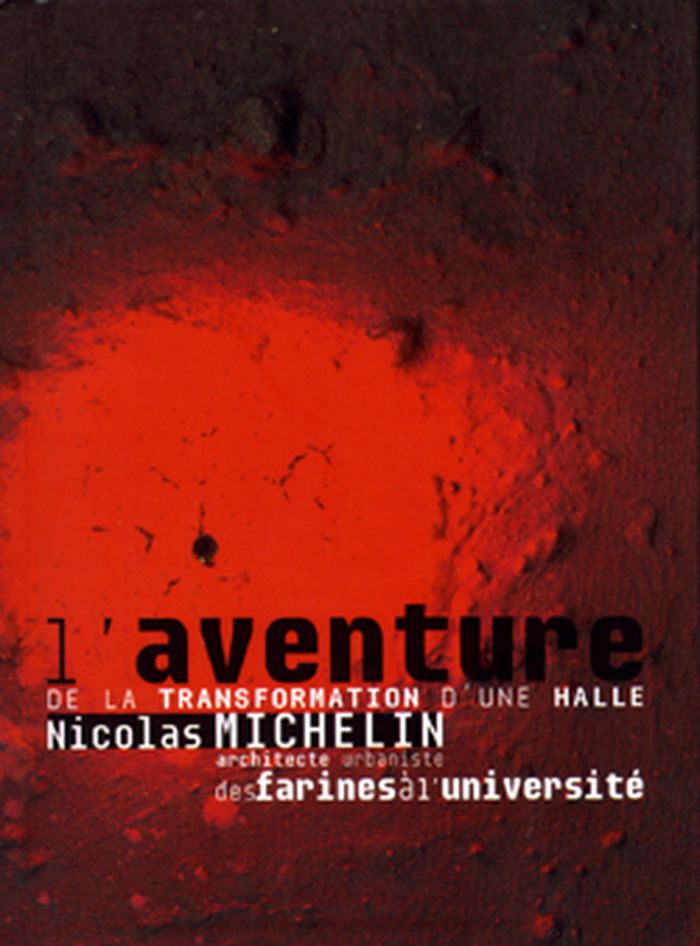
L'aventure architecturale et humaine que retrace Nicolas Michelin dans cet ouvrage, est l'histoire véridique du projet de transformation de la Halle aux Farines pour l'université de Paris VII, depuis le premier croquis jusqu'à la livraison du bâtiment aux utilisateurs. Il relate l'enchaînement des étapes, le jeu de rôles qui s'est mis en place dès le concours, la succession des obstacles franchis grâce à sa ténacité et au travail acharné de son équipe. Il explique comment, avec un budget restreint, il a glissé tel "un bateau dans une bouteille", un programme très dense - 13 amphithéâtres, 60 salles de cours, un resto U - dans cette halle industrielle pour en faire une véritable "machine à enseigner". Inhabituel par son ton sans concession et son caractère précis, ce récit révèle tous les aspects de la pratique d'un architecte, de la première intuition à la stratégie parfois guerrière qu'il lui faut développer pour mener à bien un projet architectural.
L'aventure de la transformation d'une halle des farines à l'université
Actions:
Prix:
$28.95
(disponible sur commande)
Résumé:
L'aventure architecturale et humaine que retrace Nicolas Michelin dans cet ouvrage, est l'histoire véridique du projet de transformation de la Halle aux Farines pour l'université de Paris VII, depuis le premier croquis jusqu'à la livraison du bâtiment aux utilisateurs. Il relate l'enchaînement des étapes, le jeu de rôles qui s'est mis en place dès le concours, la succession des obstacles franchis grâce à sa ténacité et au travail acharné de son équipe. Il explique comment, avec un budget restreint, il a glissé tel "un bateau dans une bouteille", un programme très dense - 13 amphithéâtres, 60 salles de cours, un resto U - dans cette halle industrielle pour en faire une véritable "machine à enseigner". Inhabituel par son ton sans concession et son caractère précis, ce récit révèle tous les aspects de la pratique d'un architecte, de la première intuition à la stratégie parfois guerrière qu'il lui faut développer pour mener à bien un projet architectural.
Classification:
livres
livres
Publication:
mars 2007, Bruxelles
mars 2007, Bruxelles
Sujet:
Histoire jusqu’à 1900
Histoire jusqu’à 1900
Classification:
livres
livres
Actions:
Prix:
$27.95
(disponible sur commande)
Résumé:
Amid the cultural and political ferment of 1960s France, a group of avant-garde architects, artists, writers, theorists, and critics known as "spatial urbanists" envisioned a series of urban utopias, phantom cities of a possible future. The utopian "spatial" city most often took the form of a massive grid or mesh suspended above the ground, all of its parts (and(...)
$27.95
(disponible sur commande)
Résumé:
Amid the cultural and political ferment of 1960s France, a group of avant-garde architects, artists, writers, theorists, and critics known as "spatial urbanists" envisioned a series of urban utopias, phantom cities of a possible future. The utopian "spatial" city most often took the form of a massive grid or mesh suspended above the ground, all of its parts (and(...)
Titre:
Topologies : The urban utopia in France, 1960-1970
Actions:
Prix:
$27.95
(disponible sur commande)
Résumé:
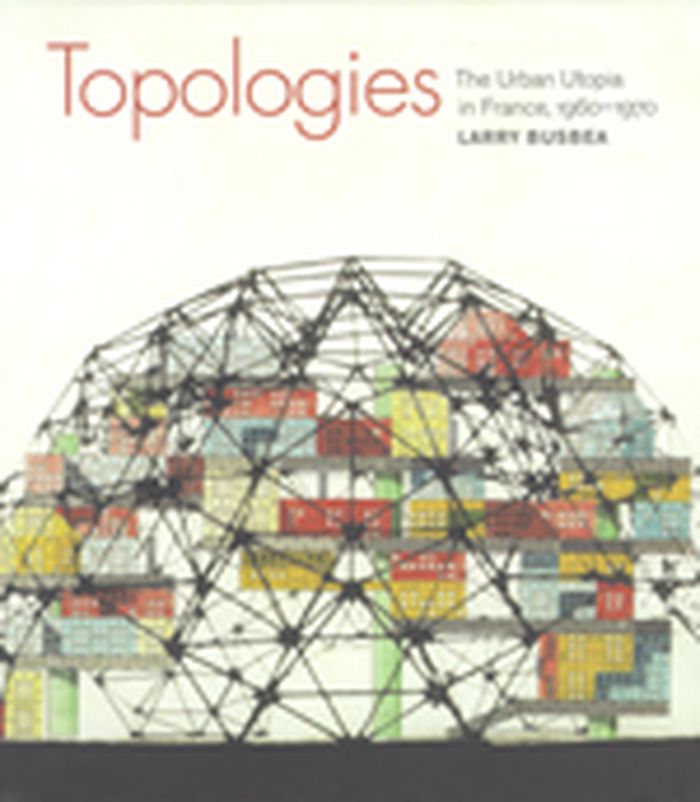
Amid the cultural and political ferment of 1960s France, a group of avant-garde architects, artists, writers, theorists, and critics known as "spatial urbanists" envisioned a series of urban utopias, phantom cities of a possible future. The utopian "spatial" city most often took the form of a massive grid or mesh suspended above the ground, all of its parts (and inhabitants) circulating in a smooth, synchronous rhythm, its streets and buildings constituting a gigantic work of plastic art or interactive machine. In this new urban world, technology and automation were positive forces, providing for material needs as well as time and space for leisure. In this first study of the French avant-garde tendency known as spatial urbanism, Larry Busbea analyzes projects by artists and architects (including the most famous spatial practitioner, Yona Friedman) and explores texts (many of which have never before been translated from the French) by Michel Ragon, the influential founder of the Groupe International d'Architecture Prospective (GIAP), Victor Vasarely, and others.
Topologies : The urban utopia in France, 1960-1970
Actions:
Prix:
$27.95
(disponible sur commande)
Résumé:
Amid the cultural and political ferment of 1960s France, a group of avant-garde architects, artists, writers, theorists, and critics known as "spatial urbanists" envisioned a series of urban utopias, phantom cities of a possible future. The utopian "spatial" city most often took the form of a massive grid or mesh suspended above the ground, all of its parts (and inhabitants) circulating in a smooth, synchronous rhythm, its streets and buildings constituting a gigantic work of plastic art or interactive machine. In this new urban world, technology and automation were positive forces, providing for material needs as well as time and space for leisure. In this first study of the French avant-garde tendency known as spatial urbanism, Larry Busbea analyzes projects by artists and architects (including the most famous spatial practitioner, Yona Friedman) and explores texts (many of which have never before been translated from the French) by Michel Ragon, the influential founder of the Groupe International d'Architecture Prospective (GIAP), Victor Vasarely, and others.
Classification:
livres
livres
Publication:
mai 2007, Massachusetts
mai 2007, Massachusetts
Sujet:
Théorie de l’urbanisme
Théorie de l’urbanisme
Classification:
livres
livres

Titre:
Transbordeur, no 9
Transbordeur, no 9
Actions:
Prix:
$54.95
(disponible sur commande)
Résumé:
Qu’entend-on aujourd’hui par « intelligence artificielle » ? Le numéro 9 de ''Transbordeur'' traite des images algorithmiques sous l’angle de l’archéologie des médias. Les principes mis en œuvre dans ces nouvelles technologies apparues vers l’année 2020 sont en effet multiples et ont leur propre histoire : la machine vision décrit des technologies de vision ou de(...)
$54.95
(disponible sur commande)
Résumé:
Qu’entend-on aujourd’hui par « intelligence artificielle » ? Le numéro 9 de ''Transbordeur'' traite des images algorithmiques sous l’angle de l’archéologie des médias. Les principes mis en œuvre dans ces nouvelles technologies apparues vers l’année 2020 sont en effet multiples et ont leur propre histoire : la machine vision décrit des technologies de vision ou de(...)
Titre:
Transbordeur, no 9
Actions:
Prix:
$54.95
(disponible sur commande)
Résumé:
Qu’entend-on aujourd’hui par « intelligence artificielle » ? Le numéro 9 de ''Transbordeur'' traite des images algorithmiques sous l’angle de l’archéologie des médias. Les principes mis en œuvre dans ces nouvelles technologies apparues vers l’année 2020 sont en effet multiples et ont leur propre histoire : la machine vision décrit des technologies de vision ou de reconnaissance visuelle par des machines, dont les premiers modèles remontent aux années soixante ; les modèles text to image qui semblent s’imposer aujourd’hui posent quant à eux la question des modes d’indexation des images par le langage ; enfin on expérimente aujourd’hui également des outils de production de textes à partir d’images. Ces principes qui sous-tendent la production et l’usage des algorithmes générateurs d’images ont été développés particulièrement depuis les années 1980. Il s’agit d’offrir une perspective historique et critique sur ces phénomènes, et de proposer le cas échéant une critique du modèle économique et des cadres idéologiques qui les sous-tendent.
Transbordeur, no 9
Actions:
Prix:
$54.95
(disponible sur commande)
Résumé:
Qu’entend-on aujourd’hui par « intelligence artificielle » ? Le numéro 9 de ''Transbordeur'' traite des images algorithmiques sous l’angle de l’archéologie des médias. Les principes mis en œuvre dans ces nouvelles technologies apparues vers l’année 2020 sont en effet multiples et ont leur propre histoire : la machine vision décrit des technologies de vision ou de reconnaissance visuelle par des machines, dont les premiers modèles remontent aux années soixante ; les modèles text to image qui semblent s’imposer aujourd’hui posent quant à eux la question des modes d’indexation des images par le langage ; enfin on expérimente aujourd’hui également des outils de production de textes à partir d’images. Ces principes qui sous-tendent la production et l’usage des algorithmes générateurs d’images ont été développés particulièrement depuis les années 1980. Il s’agit d’offrir une perspective historique et critique sur ces phénomènes, et de proposer le cas échéant une critique du modèle économique et des cadres idéologiques qui les sous-tendent.
Classification:
livres
livres
Publication:
mars 2025
mars 2025
Sujet:
commandes spéciales
commandes spéciales
Classification:
livres
livres
Actions:
Prix:
$39.50
(disponible sur commande)
Résumé:
The early twentieth century was a time of extraordinary change in Europe. War and revolution shattered the traditional cohesion of European civilisation, while the machine age brought mass production and distribution and a new sense of internationalism. This ‘heroic’ period of modernity found particularly forceful expression in graphic design and photomontage throughout(...)
$39.50
(disponible sur commande)
Résumé:
The early twentieth century was a time of extraordinary change in Europe. War and revolution shattered the traditional cohesion of European civilisation, while the machine age brought mass production and distribution and a new sense of internationalism. This ‘heroic’ period of modernity found particularly forceful expression in graphic design and photomontage throughout(...)
Publication:
octobre 2004, London
octobre 2004, London
Titre:
Avant-garde graphics 1918- 1934
Actions:
Prix:
$39.50
(disponible sur commande)
Résumé:
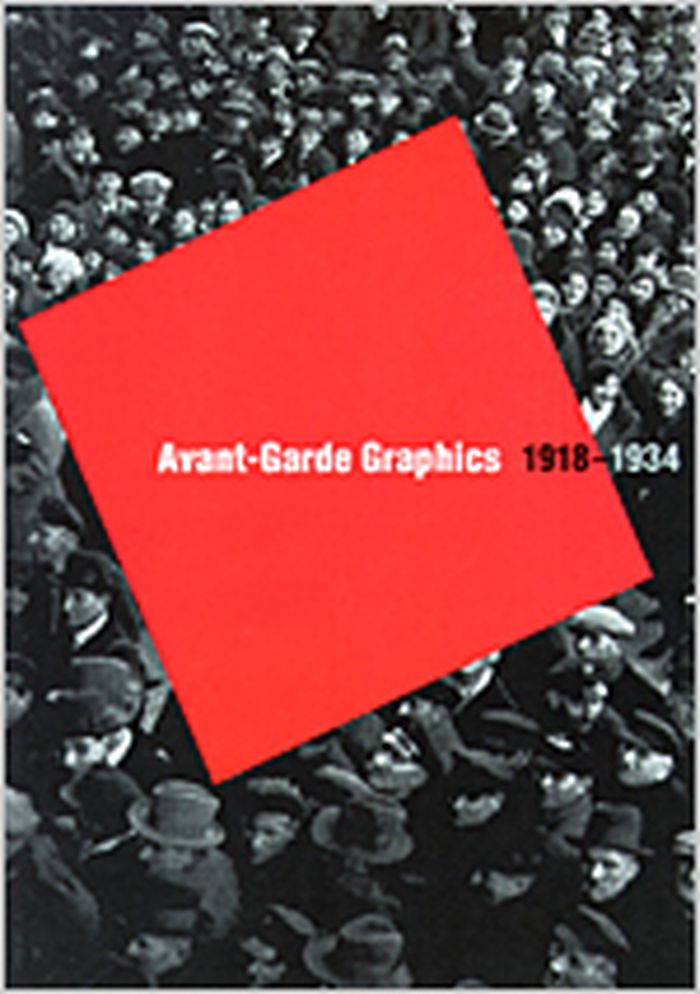
The early twentieth century was a time of extraordinary change in Europe. War and revolution shattered the traditional cohesion of European civilisation, while the machine age brought mass production and distribution and a new sense of internationalism. This ‘heroic’ period of modernity found particularly forceful expression in graphic design and photomontage throughout Europe, where new techniques allowed a fusion of typography, painting and photography, evoking the dynamism and fragmentation of cinema. "Avant-garde Graphics: 1918 – 34" showcases the work of many of the leading practitioners of the Modern movement, from Italian Futurists, the Dutch members of De Stijl and the German Bauhaus, to the Constructivists of Russia and central Europe. Drawn from the collection of Merrill C. Berman, one of the greatest collections of twentieth-century graphic art in the world, this book features colour reproductions of original posters, prints, book designs and political and commercial ephemera, together with original designers’ layouts and photomontages.
Avant-garde graphics 1918- 1934
Actions:
Prix:
$39.50
(disponible sur commande)
Résumé:
The early twentieth century was a time of extraordinary change in Europe. War and revolution shattered the traditional cohesion of European civilisation, while the machine age brought mass production and distribution and a new sense of internationalism. This ‘heroic’ period of modernity found particularly forceful expression in graphic design and photomontage throughout Europe, where new techniques allowed a fusion of typography, painting and photography, evoking the dynamism and fragmentation of cinema. "Avant-garde Graphics: 1918 – 34" showcases the work of many of the leading practitioners of the Modern movement, from Italian Futurists, the Dutch members of De Stijl and the German Bauhaus, to the Constructivists of Russia and central Europe. Drawn from the collection of Merrill C. Berman, one of the greatest collections of twentieth-century graphic art in the world, this book features colour reproductions of original posters, prints, book designs and political and commercial ephemera, together with original designers’ layouts and photomontages.
Classification:
livres
livres
Publication:
octobre 2004, London
octobre 2004, London
Classification:
livres
livres
Prix:
$36.00
(disponible en magasin)
Résumé:
Upon completing the eponymous Le Corbusier Building in Berlin in 1958, the pioneering Modernist architect Le Corbusier described the building as rising up to, a monumental size without taking from any of its parts their respect for the individual, physical and subjective dimension. Le Corbusier had confronted Berliners, in their divided city, with his concept of communal(...)
$36.00
(disponible en magasin)
Résumé:
Upon completing the eponymous Le Corbusier Building in Berlin in 1958, the pioneering Modernist architect Le Corbusier described the building as rising up to, a monumental size without taking from any of its parts their respect for the individual, physical and subjective dimension. Le Corbusier had confronted Berliners, in their divided city, with his concept of communal(...)
Titre:
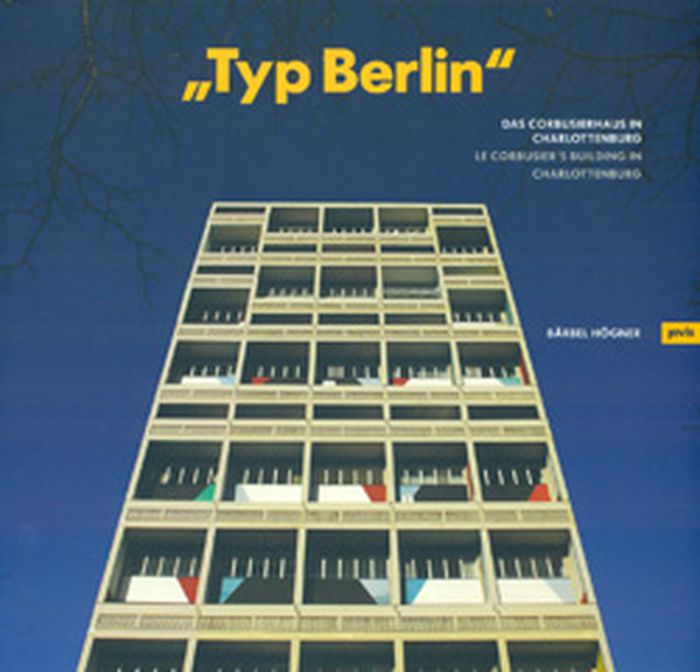
Typ Berlin: Le Corbusier's building in Charlottenburg
Actions:
Prix:
$36.00
(disponible en magasin)
Résumé:
Upon completing the eponymous Le Corbusier Building in Berlin in 1958, the pioneering Modernist architect Le Corbusier described the building as rising up to, a monumental size without taking from any of its parts their respect for the individual, physical and subjective dimension. Le Corbusier had confronted Berliners, in their divided city, with his concept of communal living--a 17-story reinforced-concrete building containing 557 apartments, with only nine corridors to provide access to all of them. Le Corbusier's "machine for living" still influences the inhabitants of the building, yet no matter the architect's intention, it is ultimately the building's residents that give a house its life. Ethnologist and photographer Bärbel Högner was well aware of this when she moved into the Le Corbusier building as artist-in-residence in 2007. Her findings are published in this stunning volume, which features images of the interplay between residents and Le Corbusier's architectural masterwork.
Typ Berlin: Le Corbusier's building in Charlottenburg
Actions:
Prix:
$36.00
(disponible en magasin)
Résumé:
Upon completing the eponymous Le Corbusier Building in Berlin in 1958, the pioneering Modernist architect Le Corbusier described the building as rising up to, a monumental size without taking from any of its parts their respect for the individual, physical and subjective dimension. Le Corbusier had confronted Berliners, in their divided city, with his concept of communal living--a 17-story reinforced-concrete building containing 557 apartments, with only nine corridors to provide access to all of them. Le Corbusier's "machine for living" still influences the inhabitants of the building, yet no matter the architect's intention, it is ultimately the building's residents that give a house its life. Ethnologist and photographer Bärbel Högner was well aware of this when she moved into the Le Corbusier building as artist-in-residence in 2007. Her findings are published in this stunning volume, which features images of the interplay between residents and Le Corbusier's architectural masterwork.
Classification:
livres
livres
Publication:
janvier 2009, Berlin
janvier 2009, Berlin
Sujet:
Architecture, monographies
Architecture, monographies


