


10573 Résultats
Classification:
livres
livres
Actions:
Prix:
$15.75
(disponible sur commande)
Résumé:
Linear history is a myth. In the past, it was useful. But today, it has become more and more unsustainable as its mythical dimension had to face the hard truths of science. With the evolution of physics, in particular quantum physics, we don’t have any choice left: we have to reconsider the nature of history just as we had to reconsider the very nature of reality. Rather(...)
$15.75
(disponible sur commande)
Résumé:
Linear history is a myth. In the past, it was useful. But today, it has become more and more unsustainable as its mythical dimension had to face the hard truths of science. With the evolution of physics, in particular quantum physics, we don’t have any choice left: we have to reconsider the nature of history just as we had to reconsider the very nature of reality. Rather(...)
Titre:
For a quantum theory of history
Actions:
Prix:
$15.75
(disponible sur commande)
Résumé:
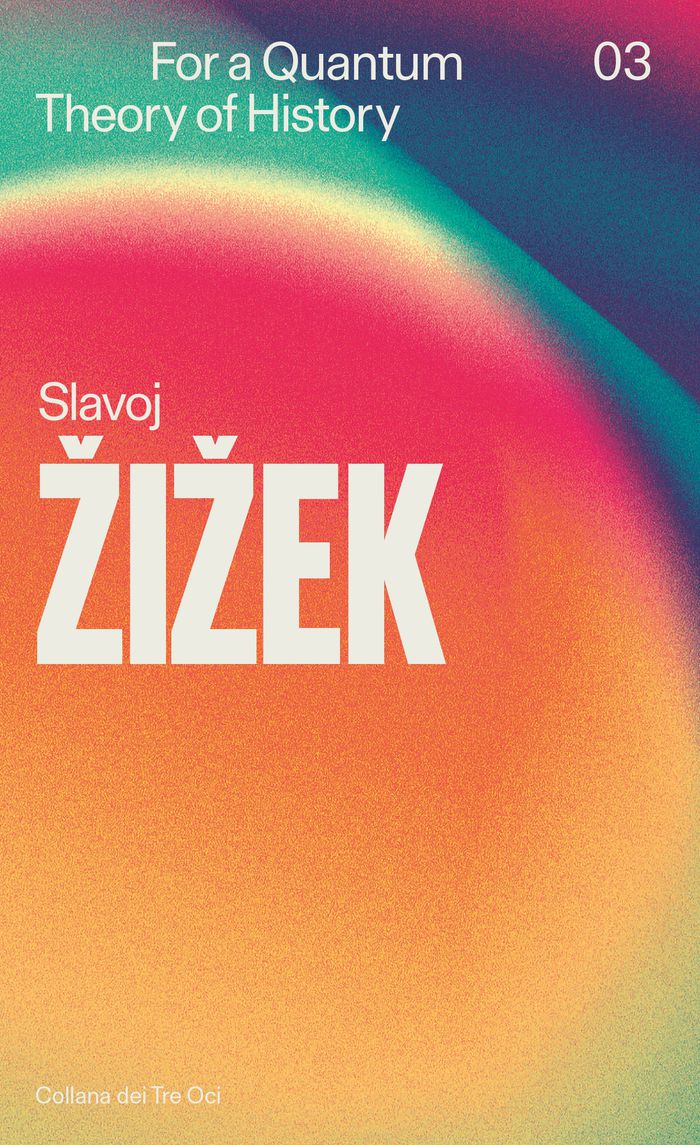
Linear history is a myth. In the past, it was useful. But today, it has become more and more unsustainable as its mythical dimension had to face the hard truths of science. With the evolution of physics, in particular quantum physics, we don’t have any choice left: we have to reconsider the nature of history just as we had to reconsider the very nature of reality. Rather than a univocal logic, looking at time as if it was some sort of a river flowing from the past to the future, quantum theory introduces us to a world made of multiple states and configurations all at once. The present, the future and the past are suddenly changing status, reversing their course or reinventing the precession of one upon the others. But if history has lost its linearity, what does it change for the creatures of history – for us? What does it change for our historical societies? What does it change for politics? The answer is simple: everything. It is high time that we take notice.
For a quantum theory of history
Actions:
Prix:
$15.75
(disponible sur commande)
Résumé:
Linear history is a myth. In the past, it was useful. But today, it has become more and more unsustainable as its mythical dimension had to face the hard truths of science. With the evolution of physics, in particular quantum physics, we don’t have any choice left: we have to reconsider the nature of history just as we had to reconsider the very nature of reality. Rather than a univocal logic, looking at time as if it was some sort of a river flowing from the past to the future, quantum theory introduces us to a world made of multiple states and configurations all at once. The present, the future and the past are suddenly changing status, reversing their course or reinventing the precession of one upon the others. But if history has lost its linearity, what does it change for the creatures of history – for us? What does it change for our historical societies? What does it change for politics? The answer is simple: everything. It is high time that we take notice.
Classification:
livres
livres
Publication:
octobre 2025
octobre 2025
Sujet:
Théorie/ philosophie
Théorie/ philosophie
Classification:
livres
livres
Titre:
Katso Koota/ Look at K
Katso Koota/ Look at K
Actions:
Prix:
$26.00
(disponible sur commande)
Résumé:
Olavi Laiho (1907-1944) was a writer, political organiser, and communist agitator, who was first imprisoned in 1932—a time when "communist laws" were in effect in Finland—for producing political material and running an illegal printing press in his home. He opposed Finland's WW2 era fighting alongside Nazi Germany against the Soviet Union, edited illegal journals, but(...)
$26.00
(disponible sur commande)
Résumé:
Olavi Laiho (1907-1944) was a writer, political organiser, and communist agitator, who was first imprisoned in 1932—a time when "communist laws" were in effect in Finland—for producing political material and running an illegal printing press in his home. He opposed Finland's WW2 era fighting alongside Nazi Germany against the Soviet Union, edited illegal journals, but(...)
Titre:
Katso Koota/ Look at K
Actions:
Prix:
$26.00
(disponible sur commande)
Résumé:
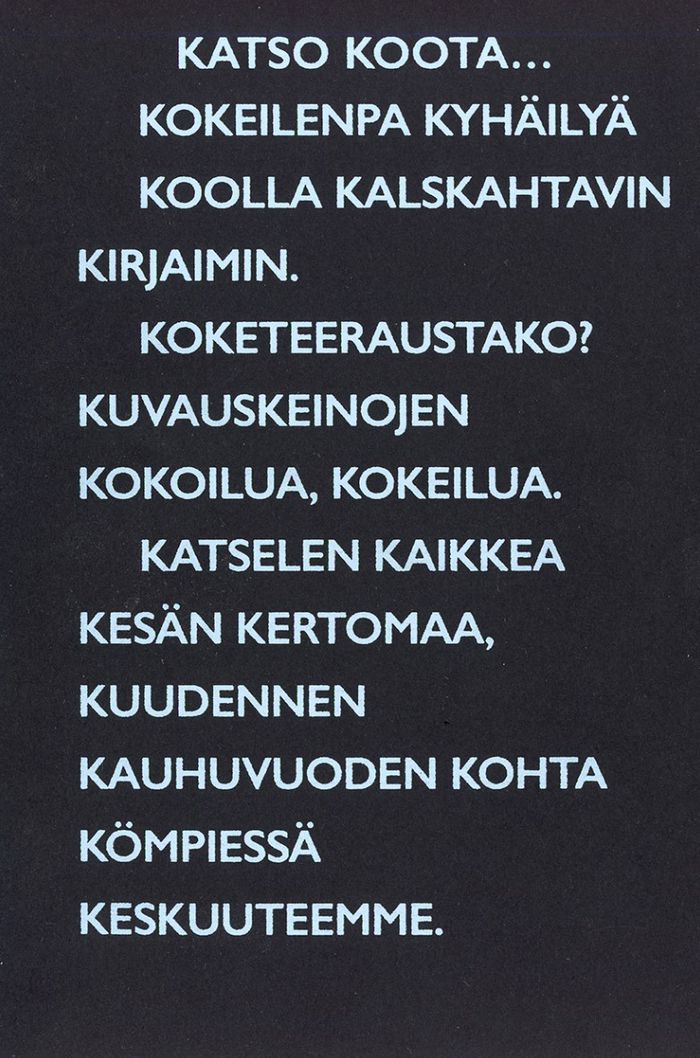
Olavi Laiho (1907-1944) was a writer, political organiser, and communist agitator, who was first imprisoned in 1932—a time when "communist laws" were in effect in Finland—for producing political material and running an illegal printing press in his home. He opposed Finland's WW2 era fighting alongside Nazi Germany against the Soviet Union, edited illegal journals, but also planned armed resistance and facilitated correspondence between the party's leadership in Helsinki and the Soviet embassy in Stockholm. Just a couple of weeks before his execution, Laiho wrote a remarkable essay "Katso Koota" [Look at K], using only words starting with the letter K. "Katso Koota" is an early example of Finnish modern alliterative writing, a lipogram, a literary technique in which every word must start with the same letter. Laiho's "Katso Koota" predates the French Oulipo ("workshop of potential literature") of the 1960s. Considering that he produced his "constrained writing" under conditions of extreme political and cultural confinement, it can be considered a true form of avant-garde subversion.
Katso Koota/ Look at K
Actions:
Prix:
$26.00
(disponible sur commande)
Résumé:
Olavi Laiho (1907-1944) was a writer, political organiser, and communist agitator, who was first imprisoned in 1932—a time when "communist laws" were in effect in Finland—for producing political material and running an illegal printing press in his home. He opposed Finland's WW2 era fighting alongside Nazi Germany against the Soviet Union, edited illegal journals, but also planned armed resistance and facilitated correspondence between the party's leadership in Helsinki and the Soviet embassy in Stockholm. Just a couple of weeks before his execution, Laiho wrote a remarkable essay "Katso Koota" [Look at K], using only words starting with the letter K. "Katso Koota" is an early example of Finnish modern alliterative writing, a lipogram, a literary technique in which every word must start with the same letter. Laiho's "Katso Koota" predates the French Oulipo ("workshop of potential literature") of the 1960s. Considering that he produced his "constrained writing" under conditions of extreme political and cultural confinement, it can be considered a true form of avant-garde subversion.
Classification:
livres
livres
Publication:
décembre 2025
décembre 2025
Sujet:
Théorie/ philosophie
Théorie/ philosophie
Classification:
livres
livres
Titre:
Nietzsche for architects
Nietzsche for architects
Actions:
Prix:
$48.95
(disponible sur commande)
Résumé:
Nietzsche’s philosophy is provocative and complex and has been hugely influential on modern intellectual history and European culture. But his critical approach and writing style invites misunderstandings, sometimes with disastrous consequences. His ideas—or those loosely associated with him—are often briefly cited in scholarly studies in architectural theory and history.(...)
$48.95
(disponible sur commande)
Résumé:
Nietzsche’s philosophy is provocative and complex and has been hugely influential on modern intellectual history and European culture. But his critical approach and writing style invites misunderstandings, sometimes with disastrous consequences. His ideas—or those loosely associated with him—are often briefly cited in scholarly studies in architectural theory and history.(...)
Titre:
Nietzsche for architects
Actions:
Prix:
$48.95
(disponible sur commande)
Résumé:
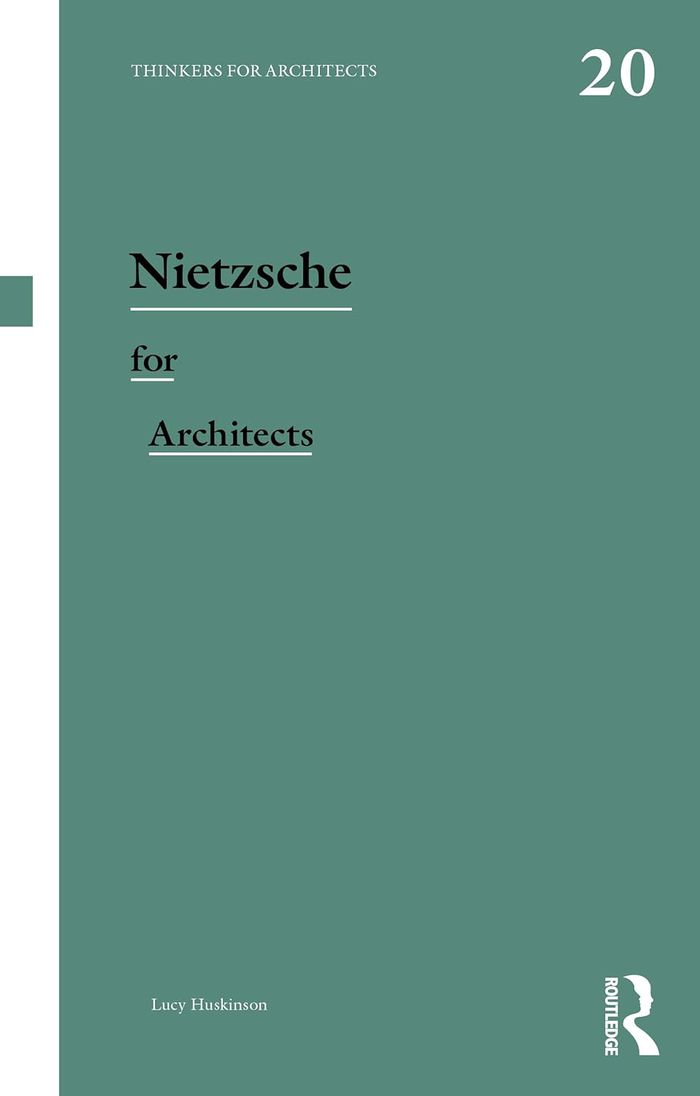
Nietzsche’s philosophy is provocative and complex and has been hugely influential on modern intellectual history and European culture. But his critical approach and writing style invites misunderstandings, sometimes with disastrous consequences. His ideas—or those loosely associated with him—are often briefly cited in scholarly studies in architectural theory and history. His ideas are thought to have influenced the theories and designs of such iconic architects as Le Corbusier, Henry van de Velde, Bruno Taut, Louis H. Sullivan, Lebbeus Woods, and Peter Eisenman, as well as competing approaches to architecture and design, such as those adopted by the Bauhaus School and the Nazis. In the bewildering array of architectural positions that lay claim to Nietzsche as an influence, how can we begin to make sense of Nietzsche’s own approach to architecture? And how can we identify within his complex philosophy the key ideas and themes we require to make sense of his contribution to architecture? This first introduction to Nietzsche’s philosophy written specifically for architects locates his evaluation of appropriate and inappropriate architecture in the body of his writings and presents a clear overview of Nietzsche’s insights into architectural design alongside his advice for architects and designers.
Nietzsche for architects
Actions:
Prix:
$48.95
(disponible sur commande)
Résumé:
Nietzsche’s philosophy is provocative and complex and has been hugely influential on modern intellectual history and European culture. But his critical approach and writing style invites misunderstandings, sometimes with disastrous consequences. His ideas—or those loosely associated with him—are often briefly cited in scholarly studies in architectural theory and history. His ideas are thought to have influenced the theories and designs of such iconic architects as Le Corbusier, Henry van de Velde, Bruno Taut, Louis H. Sullivan, Lebbeus Woods, and Peter Eisenman, as well as competing approaches to architecture and design, such as those adopted by the Bauhaus School and the Nazis. In the bewildering array of architectural positions that lay claim to Nietzsche as an influence, how can we begin to make sense of Nietzsche’s own approach to architecture? And how can we identify within his complex philosophy the key ideas and themes we require to make sense of his contribution to architecture? This first introduction to Nietzsche’s philosophy written specifically for architects locates his evaluation of appropriate and inappropriate architecture in the body of his writings and presents a clear overview of Nietzsche’s insights into architectural design alongside his advice for architects and designers.
Classification:
livres
livres
Publication:
novembre 2025
novembre 2025
Sujet:
Théorie/ philosophie
Théorie/ philosophie
Classification:
livres
livres
Actions:
Prix:
$41.95
(disponible en magasin)
Résumé:
Le jeu est politique. Le jeu est élévation. Il participe à l'invention d'un nouveau monde et à une réinterprétation de la vie. Prenant comme objet l'Internationale situationniste, mouvement contre-culturel culte des années 1957-1972 dont Guy Debord est l'un des fondateurs, Letizia Goretti propose dans cet ouvrage une réflexion sur la force politique et culturelle du jeu.(...)
$41.95
(disponible en magasin)
Résumé:
Le jeu est politique. Le jeu est élévation. Il participe à l'invention d'un nouveau monde et à une réinterprétation de la vie. Prenant comme objet l'Internationale situationniste, mouvement contre-culturel culte des années 1957-1972 dont Guy Debord est l'un des fondateurs, Letizia Goretti propose dans cet ouvrage une réflexion sur la force politique et culturelle du jeu.(...)
Titre:
Le vertige du jeau : Révolution, jeu et fête dans l'Internationale Situationiste
Actions:
Prix:
$41.95
(disponible en magasin)
Résumé:
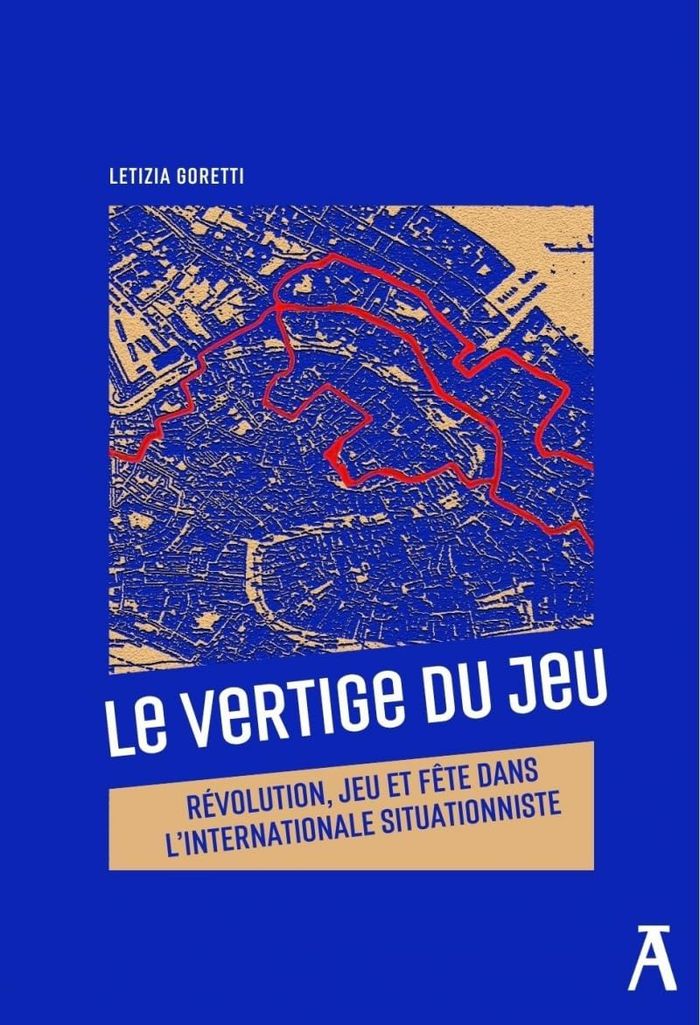
Le jeu est politique. Le jeu est élévation. Il participe à l'invention d'un nouveau monde et à une réinterprétation de la vie. Prenant comme objet l'Internationale situationniste, mouvement contre-culturel culte des années 1957-1972 dont Guy Debord est l'un des fondateurs, Letizia Goretti propose dans cet ouvrage une réflexion sur la force politique et culturelle du jeu. Dessinant une cartographie du jeu situationniste, l'autrice nous montre comment il a été l'un des éléments moteurs du mouvement.Jeu collectif, théâtre, poésie, jeu langagier, fête, renversement des rôles, rupture dans le quotidien dans la ville. Ce sont tous ces aspects que le livre explore. Interrogeant la politisation et la réappropriation de nos sociabilités et de nos espaces de vie et de loisirs, cet ouvrage nous offre une ode au jeu comme outil de libération de l'être humain.
Le vertige du jeau : Révolution, jeu et fête dans l'Internationale Situationiste
Actions:
Prix:
$41.95
(disponible en magasin)
Résumé:
Le jeu est politique. Le jeu est élévation. Il participe à l'invention d'un nouveau monde et à une réinterprétation de la vie. Prenant comme objet l'Internationale situationniste, mouvement contre-culturel culte des années 1957-1972 dont Guy Debord est l'un des fondateurs, Letizia Goretti propose dans cet ouvrage une réflexion sur la force politique et culturelle du jeu. Dessinant une cartographie du jeu situationniste, l'autrice nous montre comment il a été l'un des éléments moteurs du mouvement.Jeu collectif, théâtre, poésie, jeu langagier, fête, renversement des rôles, rupture dans le quotidien dans la ville. Ce sont tous ces aspects que le livre explore. Interrogeant la politisation et la réappropriation de nos sociabilités et de nos espaces de vie et de loisirs, cet ouvrage nous offre une ode au jeu comme outil de libération de l'être humain.
Classification:
livres
livres
Publication:
février 2026
février 2026
Sujet:
Théorie/ philosophie
Théorie/ philosophie
Classification:
livres
livres
Actions:
Prix:
$21.50
(disponible en magasin)
Résumé:
When the human gaze falls on a body, it constructs and deconstructs it. The setting for this is our daily life in all its different shapes and forms. The human body functions here as a semiotic system, an archive, a fiction, a projection screen, or an alphabet. The gaze that encounters it may manifest as an antagonist—be it incisive or flawed—yet it can itself disappear(...)
$21.50
(disponible en magasin)
Résumé:
When the human gaze falls on a body, it constructs and deconstructs it. The setting for this is our daily life in all its different shapes and forms. The human body functions here as a semiotic system, an archive, a fiction, a projection screen, or an alphabet. The gaze that encounters it may manifest as an antagonist—be it incisive or flawed—yet it can itself disappear(...)
Titre:
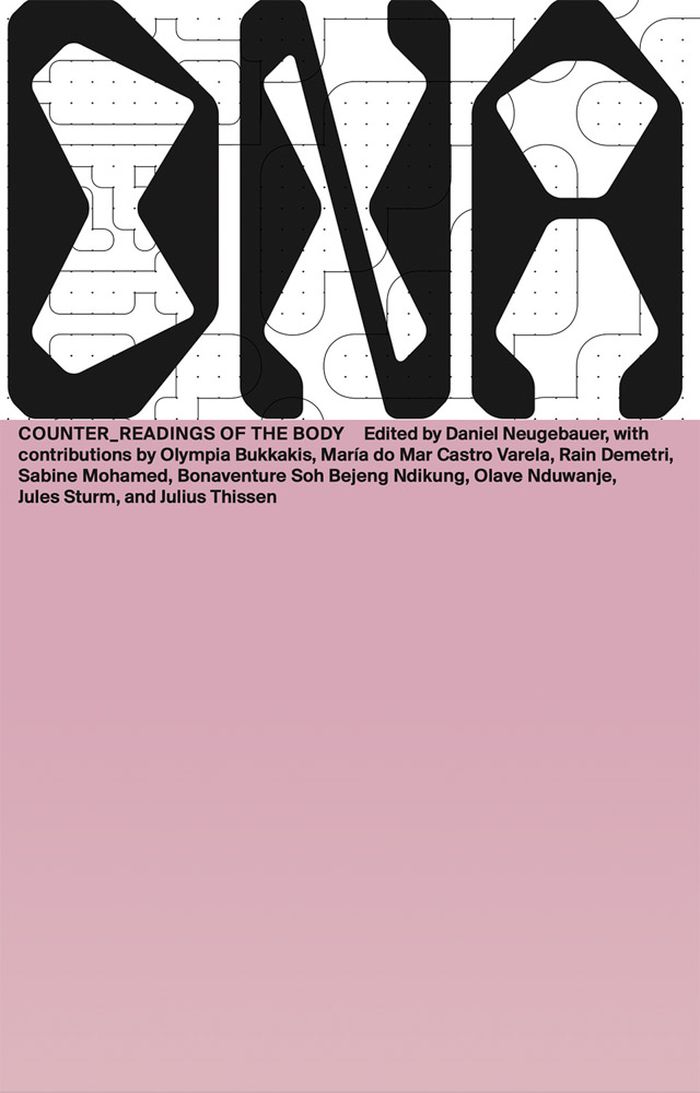
DNA #3: Counter readings of the body
Actions:
Prix:
$21.50
(disponible en magasin)
Résumé:
When the human gaze falls on a body, it constructs and deconstructs it. The setting for this is our daily life in all its different shapes and forms. The human body functions here as a semiotic system, an archive, a fiction, a projection screen, or an alphabet. The gaze that encounters it may manifest as an antagonist—be it incisive or flawed—yet it can itself disappear from view. The texts and images brought together in this volume seek to remove the body from the firing line and away from these judging and derogatory glances. They act as mirrors redirecting looks, points of view, and ideas to enable us to understand implicit and explicit processes of reading.
DNA #3: Counter readings of the body
Actions:
Prix:
$21.50
(disponible en magasin)
Résumé:
When the human gaze falls on a body, it constructs and deconstructs it. The setting for this is our daily life in all its different shapes and forms. The human body functions here as a semiotic system, an archive, a fiction, a projection screen, or an alphabet. The gaze that encounters it may manifest as an antagonist—be it incisive or flawed—yet it can itself disappear from view. The texts and images brought together in this volume seek to remove the body from the firing line and away from these judging and derogatory glances. They act as mirrors redirecting looks, points of view, and ideas to enable us to understand implicit and explicit processes of reading.
Classification:
livres
livres
Publication:
septembre 2022
septembre 2022
Sujet:
Théorie/ philosophie
Théorie/ philosophie
Classification:
livres
livres
Titre:
The tonality of thought
The tonality of thought
Actions:
Prix:
$22.95
(disponible sur commande)
Résumé:
In the three lectures that make up this book, Han invites readers into his world, discusses some of the artists and thinkers who have shaped his thinking, and explores some of the central preoccupations of his work. ''If asked to summarize my philosophical thoughts in one sentence, I would say: The Other disappears.'' The more we immerse ourselves in digital(...)
$22.95
(disponible sur commande)
Résumé:
In the three lectures that make up this book, Han invites readers into his world, discusses some of the artists and thinkers who have shaped his thinking, and explores some of the central preoccupations of his work. ''If asked to summarize my philosophical thoughts in one sentence, I would say: The Other disappears.'' The more we immerse ourselves in digital(...)
Titre:
The tonality of thought
Actions:
Prix:
$22.95
(disponible sur commande)
Résumé:
In the three lectures that make up this book, Han invites readers into his world, discusses some of the artists and thinkers who have shaped his thinking, and explores some of the central preoccupations of his work. ''If asked to summarize my philosophical thoughts in one sentence, I would say: The Other disappears.'' The more we immerse ourselves in digital communication, the more we lose the sense of touch and the physical presence of the Other. We become entangled in our own egos and become more and more depressed. We live in a society that is becoming increasingly narcissistic, in which individuals are turned in on themselves, incapable of relating to the Other in the way that Eros, as distinct from sex, requires.
The tonality of thought
Actions:
Prix:
$22.95
(disponible sur commande)
Résumé:
In the three lectures that make up this book, Han invites readers into his world, discusses some of the artists and thinkers who have shaped his thinking, and explores some of the central preoccupations of his work. ''If asked to summarize my philosophical thoughts in one sentence, I would say: The Other disappears.'' The more we immerse ourselves in digital communication, the more we lose the sense of touch and the physical presence of the Other. We become entangled in our own egos and become more and more depressed. We live in a society that is becoming increasingly narcissistic, in which individuals are turned in on themselves, incapable of relating to the Other in the way that Eros, as distinct from sex, requires.
Classification:
livres
livres
Publication:
avril 2026
avril 2026
Sujet:
Théorie/ philosophie
Théorie/ philosophie
Classification:
livres
livres

Actions:
Prix:
$27.95
(disponible en magasin)
Résumé:
Après avoir prospéré grâce à la prolifération des écrans, le divertissement règne aujourd'hui en maître. Infotainment, edutainment, confrotainment sont autant de termes qui témoignent de l'emprise du divertissement sur le Réel tout entier et l'élèvent au rang de nouveau paradigme. Mais qu'est-ce que le divertissement ? Peut-il être « sain » ? Doit-il être utile ? Pourquoi(...)
$27.95
(disponible en magasin)
Résumé:
Après avoir prospéré grâce à la prolifération des écrans, le divertissement règne aujourd'hui en maître. Infotainment, edutainment, confrotainment sont autant de termes qui témoignent de l'emprise du divertissement sur le Réel tout entier et l'élèvent au rang de nouveau paradigme. Mais qu'est-ce que le divertissement ? Peut-il être « sain » ? Doit-il être utile ? Pourquoi(...)
Titre:
Amusez-vous bien! Du bon divertissement
Actions:
Prix:
$27.95
(disponible en magasin)
Résumé:
Après avoir prospéré grâce à la prolifération des écrans, le divertissement règne aujourd'hui en maître. Infotainment, edutainment, confrotainment sont autant de termes qui témoignent de l'emprise du divertissement sur le Réel tout entier et l'élèvent au rang de nouveau paradigme. Mais qu'est-ce que le divertissement ? Peut-il être « sain » ? Doit-il être utile ? Pourquoi la philosophie occidentale a-t-elle développé une telle aversion à son encontre, l'associant souvent à l'immaturité ou à l'aliénation ?. En compagnie de Kant, Hegel, Nietzsche, Bach, Kafka et quelques autres, Byung-Chul Han invite le lecteur à une promenade intellectuelle à travers les multiples formes du divertissement et éclaire sa capacité à transformer notre expérience du monde et du temps.
Amusez-vous bien! Du bon divertissement
Actions:
Prix:
$27.95
(disponible en magasin)
Résumé:
Après avoir prospéré grâce à la prolifération des écrans, le divertissement règne aujourd'hui en maître. Infotainment, edutainment, confrotainment sont autant de termes qui témoignent de l'emprise du divertissement sur le Réel tout entier et l'élèvent au rang de nouveau paradigme. Mais qu'est-ce que le divertissement ? Peut-il être « sain » ? Doit-il être utile ? Pourquoi la philosophie occidentale a-t-elle développé une telle aversion à son encontre, l'associant souvent à l'immaturité ou à l'aliénation ?. En compagnie de Kant, Hegel, Nietzsche, Bach, Kafka et quelques autres, Byung-Chul Han invite le lecteur à une promenade intellectuelle à travers les multiples formes du divertissement et éclaire sa capacité à transformer notre expérience du monde et du temps.
Classification:
livres
livres
Publication:
août 2019
août 2019
Sujet:
Théorie/ philosophie
Théorie/ philosophie
Classification:
livres
livres
Actions:
Prix:
$22.99
(disponible sur commande)
Résumé:
"Thinking after Gaza" means recognizing the collapse of universal reason and democracy, the humanistic values that were the famed—and fragile—promise of modernity. But it also means searching for ways to escape the grim future awaiting those born in this disenchanted century: this century that promises to be the last, in which thought has lost all political power and the(...)
$22.99
(disponible sur commande)
Résumé:
"Thinking after Gaza" means recognizing the collapse of universal reason and democracy, the humanistic values that were the famed—and fragile—promise of modernity. But it also means searching for ways to escape the grim future awaiting those born in this disenchanted century: this century that promises to be the last, in which thought has lost all political power and the(...)
Titre:
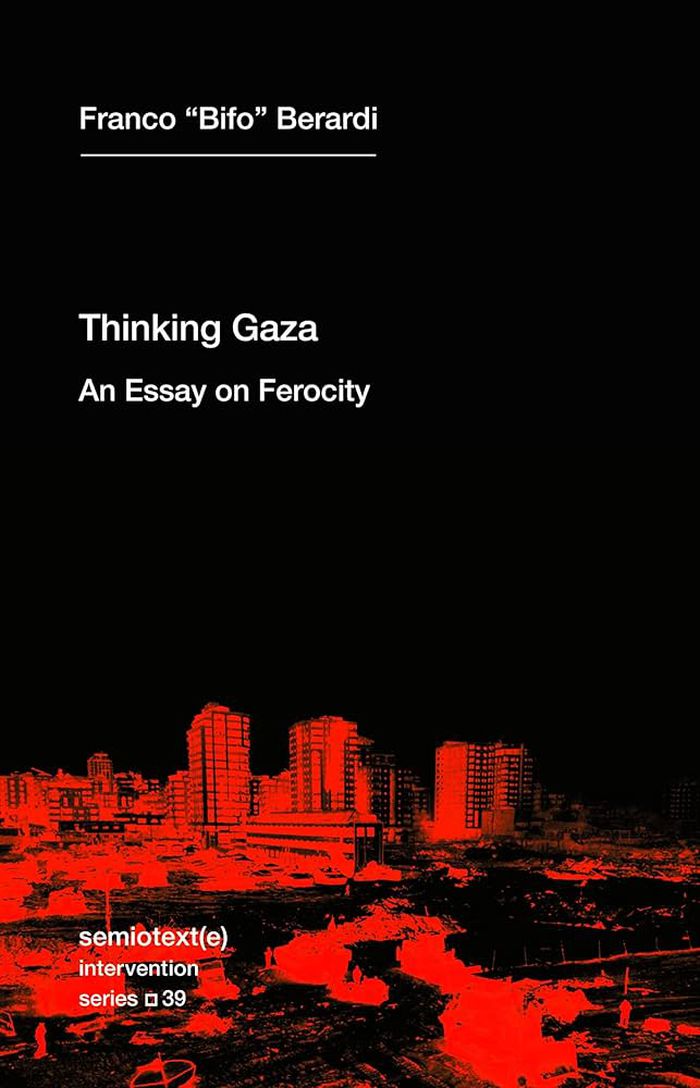
Thinking Gaza: An essay on ferocity
Actions:
Prix:
$22.99
(disponible sur commande)
Résumé:
"Thinking after Gaza" means recognizing the collapse of universal reason and democracy, the humanistic values that were the famed—and fragile—promise of modernity. But it also means searching for ways to escape the grim future awaiting those born in this disenchanted century: this century that promises to be the last, in which thought has lost all political power and the survival instinct struggles to withstand the ferocity of techno-military extermination machines. To the generation born in the twilight of Western civilization, we owe this last act of thinking, so as to imagine the desertion of our barbaric present, along pathways that have yet to be illuminated. The latest essay by renowned Italian autonomist theorist Franco “Bifo” Berardi, ''Thinking Gaza'' is a reflection on the multivalent consequences—political, philosophical, civilizational—of the current genocide in Gaza and the West Bank. Bearing sober witness to the conditions on the ground in the Occupied Territories, while tracking the “ferocious optimism” that has replaced Enlightenment ideals, this book is addressed not only to activists but also to pacifist philosophers, historians, and theologians.
Thinking Gaza: An essay on ferocity
Actions:
Prix:
$22.99
(disponible sur commande)
Résumé:
"Thinking after Gaza" means recognizing the collapse of universal reason and democracy, the humanistic values that were the famed—and fragile—promise of modernity. But it also means searching for ways to escape the grim future awaiting those born in this disenchanted century: this century that promises to be the last, in which thought has lost all political power and the survival instinct struggles to withstand the ferocity of techno-military extermination machines. To the generation born in the twilight of Western civilization, we owe this last act of thinking, so as to imagine the desertion of our barbaric present, along pathways that have yet to be illuminated. The latest essay by renowned Italian autonomist theorist Franco “Bifo” Berardi, ''Thinking Gaza'' is a reflection on the multivalent consequences—political, philosophical, civilizational—of the current genocide in Gaza and the West Bank. Bearing sober witness to the conditions on the ground in the Occupied Territories, while tracking the “ferocious optimism” that has replaced Enlightenment ideals, this book is addressed not only to activists but also to pacifist philosophers, historians, and theologians.
Classification:
livres
livres
Publication:
mars 2026
mars 2026
Sujet:
Théorie/ philosophie
Théorie/ philosophie
Classification:
livres
livres
Titre:
La Liberté contre le capitalisme : Le républicanisme du XVIIIe siècle et les révolutions à venir
La Liberté contre le capitalisme : Le républicanisme du XVIIIe siècle et les révolutions à venir
Actions:
Prix:
$37.95
(disponible en magasin)
Résumé:
S’appuyant sur trois figures du siècle des lumières, Smith, Robespierre et Paine, les auteurs remontent aux origines de concepts comme la république, la liberté ou la propriété, qui ont été travestis par la modernité capitaliste afin de les rendre conformes à un objectif d’accaparement des richesses. Cet essai politique entend nourrir les possibles révolutions à venir.
$37.95
(disponible en magasin)
Résumé:
S’appuyant sur trois figures du siècle des lumières, Smith, Robespierre et Paine, les auteurs remontent aux origines de concepts comme la république, la liberté ou la propriété, qui ont été travestis par la modernité capitaliste afin de les rendre conformes à un objectif d’accaparement des richesses. Cet essai politique entend nourrir les possibles révolutions à venir.
Titre:
La Liberté contre le capitalisme : Le républicanisme du XVIIIe siècle et les révolutions à venir
Actions:
Prix:
$37.95
(disponible en magasin)
Résumé:
S’appuyant sur trois figures du siècle des lumières, Smith, Robespierre et Paine, les auteurs remontent aux origines de concepts comme la république, la liberté ou la propriété, qui ont été travestis par la modernité capitaliste afin de les rendre conformes à un objectif d’accaparement des richesses. Cet essai politique entend nourrir les possibles révolutions à venir.
La Liberté contre le capitalisme : Le républicanisme du XVIIIe siècle et les révolutions à venir
Actions:
Prix:
$37.95
(disponible en magasin)
Résumé:
S’appuyant sur trois figures du siècle des lumières, Smith, Robespierre et Paine, les auteurs remontent aux origines de concepts comme la république, la liberté ou la propriété, qui ont été travestis par la modernité capitaliste afin de les rendre conformes à un objectif d’accaparement des richesses. Cet essai politique entend nourrir les possibles révolutions à venir.
Classification:
livres
livres
Publication:
mars 2026
mars 2026
Sujet:
Théorie/ philosophie
Théorie/ philosophie
Classification:
livres
livres
Prix:
$24.95
(disponible en magasin)
Résumé:
“Of course, we all want to be happy.” So wrote the Roman statesman, orator, and philosopher Marcus Tullius Cicero. He and his fellow Greek and Roman philosophers agreed that the secret to happiness—or what they called the “good life”—is pursuing the “greatest good.” The only problem is that they couldn’t agree on what the greatest good is. Cicero addressed this dilemma by(...)
$24.95
(disponible en magasin)
Résumé:
“Of course, we all want to be happy.” So wrote the Roman statesman, orator, and philosopher Marcus Tullius Cicero. He and his fellow Greek and Roman philosophers agreed that the secret to happiness—or what they called the “good life”—is pursuing the “greatest good.” The only problem is that they couldn’t agree on what the greatest good is. Cicero addressed this dilemma by(...)
Titre:
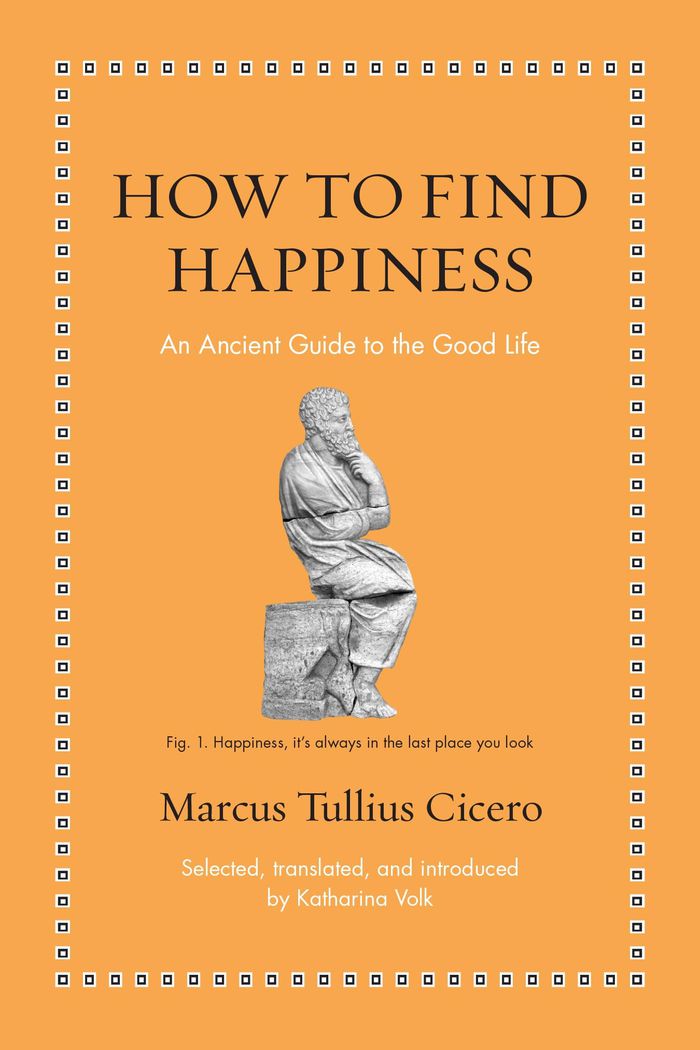
How to find happiness: An ancient guide to the good life
Actions:
Prix:
$24.95
(disponible en magasin)
Résumé:
“Of course, we all want to be happy.” So wrote the Roman statesman, orator, and philosopher Marcus Tullius Cicero. He and his fellow Greek and Roman philosophers agreed that the secret to happiness—or what they called the “good life”—is pursuing the “greatest good.” The only problem is that they couldn’t agree on what the greatest good is. Cicero addressed this dilemma by composing a set of dialogues, ''On the Greatest Good and Evil'' (''De finibus bonorum et malorum''), in which he pitted advocates of different philosophical approaches to happiness against one another. Notably, these include the Epicureans (who believe that the greatest good is pleasure) and the Stoics (according to whom it is moral virtue). Rather than choosing sides, Cicero considers the pros and cons of the different philosophies, ultimately leaving it to his readers to make up their own minds. In ''How to Find Happiness'', Katharina Volk offers a vivid new translation of selections from Cicero’s work, complete with an introduction and the original Latin text on facing pages. The result is a lively and engaging debate that invites each of us to discover our own path to happiness.
How to find happiness: An ancient guide to the good life
Actions:
Prix:
$24.95
(disponible en magasin)
Résumé:
“Of course, we all want to be happy.” So wrote the Roman statesman, orator, and philosopher Marcus Tullius Cicero. He and his fellow Greek and Roman philosophers agreed that the secret to happiness—or what they called the “good life”—is pursuing the “greatest good.” The only problem is that they couldn’t agree on what the greatest good is. Cicero addressed this dilemma by composing a set of dialogues, ''On the Greatest Good and Evil'' (''De finibus bonorum et malorum''), in which he pitted advocates of different philosophical approaches to happiness against one another. Notably, these include the Epicureans (who believe that the greatest good is pleasure) and the Stoics (according to whom it is moral virtue). Rather than choosing sides, Cicero considers the pros and cons of the different philosophies, ultimately leaving it to his readers to make up their own minds. In ''How to Find Happiness'', Katharina Volk offers a vivid new translation of selections from Cicero’s work, complete with an introduction and the original Latin text on facing pages. The result is a lively and engaging debate that invites each of us to discover our own path to happiness.
Classification:
livres
livres
Publication:
mars 2026
mars 2026
Sujet:
Théorie/ philosophie
Théorie/ philosophie


