


10573 Résultats
Classification:
livres
livres
Titre:
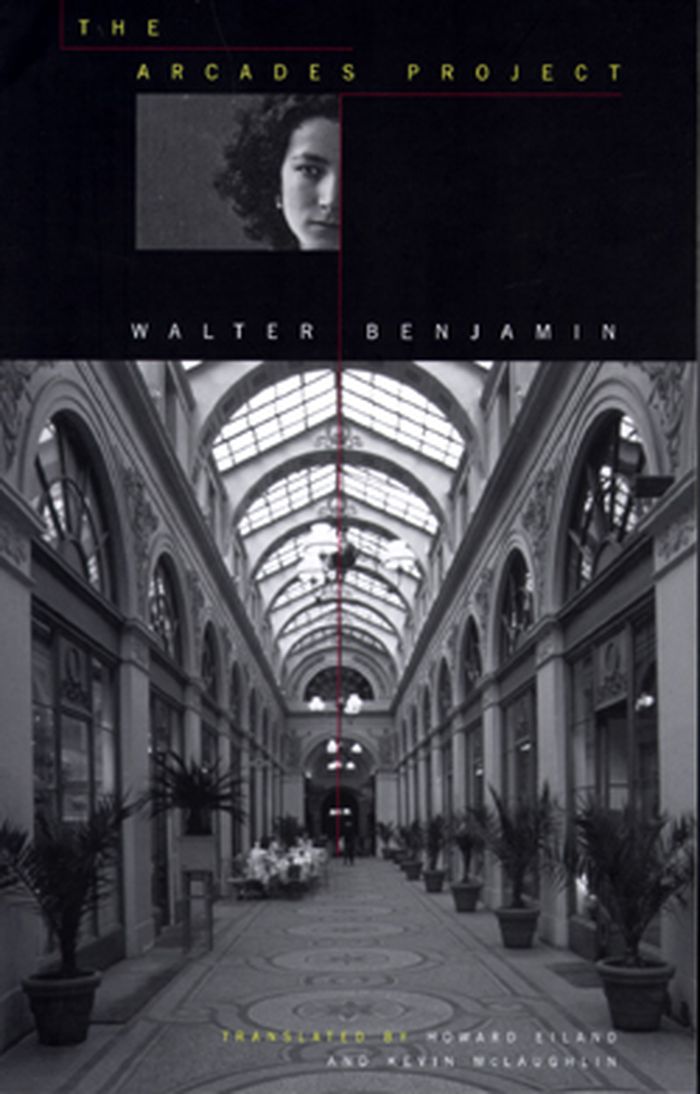
The arcades project
The arcades project
Actions:
Prix:
$54.95
(disponible sur commande)
Résumé:
The Arcades Project is Walter Benjamin's effort to represent and to critique the bourgeois experience of nineteenth-century history and, in so doing, to liberate the supressed 'true history' that underlay the ideological mask. Conceived in Paris in 1927 and still in progress when Benjamin fled the Occupation in 1940, 'The Arcades Project' (in German: 'Das Passagen-Werk`)(...)
$54.95
(disponible sur commande)
Résumé:
The Arcades Project is Walter Benjamin's effort to represent and to critique the bourgeois experience of nineteenth-century history and, in so doing, to liberate the supressed 'true history' that underlay the ideological mask. Conceived in Paris in 1927 and still in progress when Benjamin fled the Occupation in 1940, 'The Arcades Project' (in German: 'Das Passagen-Werk`)(...)
Titre:
The arcades project
Actions:
Prix:
$54.95
(disponible sur commande)
Résumé:
The Arcades Project is Walter Benjamin's effort to represent and to critique the bourgeois experience of nineteenth-century history and, in so doing, to liberate the supressed 'true history' that underlay the ideological mask. Conceived in Paris in 1927 and still in progress when Benjamin fled the Occupation in 1940, 'The Arcades Project' (in German: 'Das Passagen-Werk`) was constructed over the course of thirteen years - 'the theater', as Benjamin called it, 'of all my struggles and all my ideas.'
The arcades project
Actions:
Prix:
$54.95
(disponible sur commande)
Résumé:
The Arcades Project is Walter Benjamin's effort to represent and to critique the bourgeois experience of nineteenth-century history and, in so doing, to liberate the supressed 'true history' that underlay the ideological mask. Conceived in Paris in 1927 and still in progress when Benjamin fled the Occupation in 1940, 'The Arcades Project' (in German: 'Das Passagen-Werk`) was constructed over the course of thirteen years - 'the theater', as Benjamin called it, 'of all my struggles and all my ideas.'
Classification:
livres
livres
Publication:
mars 2002, London
mars 2002, London
Sujet:
Théorie/ philosophie
Théorie/ philosophie
Classification:
livres
livres
Titre:
Empirisme et subjectivité
Empirisme et subjectivité
Actions:
Prix:
$28.95
(disponible sur commande)
Résumé:
Avec Hume, l'empirisme ne se définit plus essentiellement par l'origine sensible des idées. Il développe trois problèmes, les relations, les cas, les illusions. D'une part, les relations sont toujours extérieures à leurs termes, et dépendent de principes d'association qui en déterminent l'établissement de l'exercice (croyance). D'autre part, ces principes d'association(...)
$28.95
(disponible sur commande)
Résumé:
Avec Hume, l'empirisme ne se définit plus essentiellement par l'origine sensible des idées. Il développe trois problèmes, les relations, les cas, les illusions. D'une part, les relations sont toujours extérieures à leurs termes, et dépendent de principes d'association qui en déterminent l'établissement de l'exercice (croyance). D'autre part, ces principes d'association(...)
Titre:
Empirisme et subjectivité
Actions:
Prix:
$28.95
(disponible sur commande)
Résumé:
Avec Hume, l'empirisme ne se définit plus essentiellement par l'origine sensible des idées. Il développe trois problèmes, les relations, les cas, les illusions. D'une part, les relations sont toujours extérieures à leurs termes, et dépendent de principes d'association qui en déterminent l'établissement de l'exercice (croyance). D'autre part, ces principes d'association n'agissent qu'en fonction des passions, pour indiquer des " cas " dans un monde de la culture et du droit : c'est tout l'associationnisme qui est au service d'une pratique du droit, de la politique et de l'économie (suffit-il, pour devenir propriétaire d'une cité abandonnée, de lancer un javelot sur la porte, ou faut-il toucher la porte du doigt ? " Enfin, de telles règles de légitimité des relations peuvent-elles être séparées des fictions, des croyances illégitimes qui les accompagnent ou les doublent ? Si bien que la philosophie est moins critique des erreurs que dénonciation des illusions inévitables. Dans tous ces domaines, l'empirisme opère la substitution de la croyance pratique au savoir, dans une entreprise athée qui consiste à naturaliser la croyance.
Empirisme et subjectivité
Actions:
Prix:
$28.95
(disponible sur commande)
Résumé:
Avec Hume, l'empirisme ne se définit plus essentiellement par l'origine sensible des idées. Il développe trois problèmes, les relations, les cas, les illusions. D'une part, les relations sont toujours extérieures à leurs termes, et dépendent de principes d'association qui en déterminent l'établissement de l'exercice (croyance). D'autre part, ces principes d'association n'agissent qu'en fonction des passions, pour indiquer des " cas " dans un monde de la culture et du droit : c'est tout l'associationnisme qui est au service d'une pratique du droit, de la politique et de l'économie (suffit-il, pour devenir propriétaire d'une cité abandonnée, de lancer un javelot sur la porte, ou faut-il toucher la porte du doigt ? " Enfin, de telles règles de légitimité des relations peuvent-elles être séparées des fictions, des croyances illégitimes qui les accompagnent ou les doublent ? Si bien que la philosophie est moins critique des erreurs que dénonciation des illusions inévitables. Dans tous ces domaines, l'empirisme opère la substitution de la croyance pratique au savoir, dans une entreprise athée qui consiste à naturaliser la croyance.
Classification:
livres
livres
Publication:
janvier 1900, Paris
janvier 1900, Paris
Sujet:
Théorie/ philosophie
Théorie/ philosophie
Classification:
livres
livres
Titre:
Différence et répétition
Différence et répétition
Actions:
Prix:
$59.95
(disponible sur commande)
Résumé:
Un concept de différence implique une différence qui n'est pas seulement entre deux choses, et qui n'est pas non plus une simple différence conceptuelle. Faut-il aller jusqu'à une différence infinie (théologie) ou se tourner vers une raison du sensible (physique) ? A quelles conditions constituer un pur concept de la différence ? Un concept de la répétition implique une(...)
$59.95
(disponible sur commande)
Résumé:
Un concept de différence implique une différence qui n'est pas seulement entre deux choses, et qui n'est pas non plus une simple différence conceptuelle. Faut-il aller jusqu'à une différence infinie (théologie) ou se tourner vers une raison du sensible (physique) ? A quelles conditions constituer un pur concept de la différence ? Un concept de la répétition implique une(...)
Titre:
Différence et répétition
Actions:
Prix:
$59.95
(disponible sur commande)
Résumé:
Un concept de différence implique une différence qui n'est pas seulement entre deux choses, et qui n'est pas non plus une simple différence conceptuelle. Faut-il aller jusqu'à une différence infinie (théologie) ou se tourner vers une raison du sensible (physique) ? A quelles conditions constituer un pur concept de la différence ? Un concept de la répétition implique une répétition qui n'est pas seulement celle d'une même chose ou d'un même élément. Les choses ou les éléments supposent une répétition plus profonde, rythmique. L'art n'est-il pas à la recherche de cette répétition paradoxale, mais aussi la pensée (Kierkegaard, Nietzsche, Péguy) ? Quelle chance y a-t-il pour que les deux concepts, de différence pure et de répétition profonde, se rejoignent et s'identifient ?
Différence et répétition
Actions:
Prix:
$59.95
(disponible sur commande)
Résumé:
Un concept de différence implique une différence qui n'est pas seulement entre deux choses, et qui n'est pas non plus une simple différence conceptuelle. Faut-il aller jusqu'à une différence infinie (théologie) ou se tourner vers une raison du sensible (physique) ? A quelles conditions constituer un pur concept de la différence ? Un concept de la répétition implique une répétition qui n'est pas seulement celle d'une même chose ou d'un même élément. Les choses ou les éléments supposent une répétition plus profonde, rythmique. L'art n'est-il pas à la recherche de cette répétition paradoxale, mais aussi la pensée (Kierkegaard, Nietzsche, Péguy) ? Quelle chance y a-t-il pour que les deux concepts, de différence pure et de répétition profonde, se rejoignent et s'identifient ?
Classification:
livres
livres
Publication:
janvier 1900, Paris
janvier 1900, Paris
Sujet:
Théorie/ philosophie
Théorie/ philosophie
Classification:
livres
livres
Actions:
Prix:
$31.95
(disponible sur commande)
Résumé:
La philosophie n'est ni contemplation, ni réflexion, ni communication. Elle est l'activité qui crée les concepts. Comment se distingue-t-elle de ses rivales, qui prétendent nous fournir en concepts (comme le marketing aujourd'hui) ? La philosophie doit nous dire quelle est la nature créative du concept, et quels en sont les concomitants : la pure immanence, le plan(...)
$31.95
(disponible sur commande)
Résumé:
La philosophie n'est ni contemplation, ni réflexion, ni communication. Elle est l'activité qui crée les concepts. Comment se distingue-t-elle de ses rivales, qui prétendent nous fournir en concepts (comme le marketing aujourd'hui) ? La philosophie doit nous dire quelle est la nature créative du concept, et quels en sont les concomitants : la pure immanence, le plan(...)
Titre:
Qu'est-ce que la philosophie?
Actions:
Prix:
$31.95
(disponible sur commande)
Résumé:
La philosophie n'est ni contemplation, ni réflexion, ni communication. Elle est l'activité qui crée les concepts. Comment se distingue-t-elle de ses rivales, qui prétendent nous fournir en concepts (comme le marketing aujourd'hui) ? La philosophie doit nous dire quelle est la nature créative du concept, et quels en sont les concomitants : la pure immanence, le plan d'immanence, et les personnages conceptuels. Par là, la philosophie se distingue de la science et de la logique. Celles-ci n'opèrent pas par concepts, mais par fonctions, sur un plan de référence et avec des observateurs partiels. L'art opère par percepts et affects, sur un plan de composition avec des figures esthétiques. La philosophie n'est pas interdisciplinaire, elle est elle-même une discipline entière qui entre en résonance avec la science et avec l'art, comme ceux-ci avec elle trouver le concept d'une fonction, etc. C'est que les trois plans sont les trois manières dont le cerveau recoupe le chaos, et l'affronte. Ce sont les Chaoïdes. La pensée ne se constitue que dans ce rapport où elle risque toujours de sombrer.
Qu'est-ce que la philosophie?
Actions:
Prix:
$31.95
(disponible sur commande)
Résumé:
La philosophie n'est ni contemplation, ni réflexion, ni communication. Elle est l'activité qui crée les concepts. Comment se distingue-t-elle de ses rivales, qui prétendent nous fournir en concepts (comme le marketing aujourd'hui) ? La philosophie doit nous dire quelle est la nature créative du concept, et quels en sont les concomitants : la pure immanence, le plan d'immanence, et les personnages conceptuels. Par là, la philosophie se distingue de la science et de la logique. Celles-ci n'opèrent pas par concepts, mais par fonctions, sur un plan de référence et avec des observateurs partiels. L'art opère par percepts et affects, sur un plan de composition avec des figures esthétiques. La philosophie n'est pas interdisciplinaire, elle est elle-même une discipline entière qui entre en résonance avec la science et avec l'art, comme ceux-ci avec elle trouver le concept d'une fonction, etc. C'est que les trois plans sont les trois manières dont le cerveau recoupe le chaos, et l'affronte. Ce sont les Chaoïdes. La pensée ne se constitue que dans ce rapport où elle risque toujours de sombrer.
Classification:
livres
livres
Publication:
janvier 1900, Paris
janvier 1900, Paris
Sujet:
Théorie/ philosophie
Théorie/ philosophie
Classification:
livres
livres

Actions:
Prix:
$32.50
(disponible sur commande)
Résumé:
A Thousand Years of Nonlinear History sketches the outlines of a renewed materialist philosophy of history in the tradition of Fernand Braudel, Gilles Deleuze, and Félix Guattari. Working against prevailing attitudes that see history merely as the arena of texts, discourses, ideologies, and metaphors, De Landa traces the concrete movements and interplays of matter and(...)
$32.50
(disponible sur commande)
Résumé:
A Thousand Years of Nonlinear History sketches the outlines of a renewed materialist philosophy of history in the tradition of Fernand Braudel, Gilles Deleuze, and Félix Guattari. Working against prevailing attitudes that see history merely as the arena of texts, discourses, ideologies, and metaphors, De Landa traces the concrete movements and interplays of matter and(...)
Titre:
A thousand years of nonlinear history
Actions:
Prix:
$32.50
(disponible sur commande)
Résumé:
A Thousand Years of Nonlinear History sketches the outlines of a renewed materialist philosophy of history in the tradition of Fernand Braudel, Gilles Deleuze, and Félix Guattari. Working against prevailing attitudes that see history merely as the arena of texts, discourses, ideologies, and metaphors, De Landa traces the concrete movements and interplays of matter and energy through human populations in the last millennium.
A thousand years of nonlinear history
Actions:
Prix:
$32.50
(disponible sur commande)
Résumé:
A Thousand Years of Nonlinear History sketches the outlines of a renewed materialist philosophy of history in the tradition of Fernand Braudel, Gilles Deleuze, and Félix Guattari. Working against prevailing attitudes that see history merely as the arena of texts, discourses, ideologies, and metaphors, De Landa traces the concrete movements and interplays of matter and energy through human populations in the last millennium.
Classification:
livres
livres
Publication:
septembre 2000
septembre 2000
Sujet:
Théorie/ philosophie
Théorie/ philosophie
Classification:
livres
livres

Titre:
Queer forms
Queer forms
Actions:
Prix:
$39.95
(disponible en magasin)
Résumé:
In "Queer forms," Ramzi Fawaz explores how the central values of 1970s movements for women’s and gay liberation-- including consciousness-raising, separatism, and coming out of the closet?were translated into a range of American popular culture forms. Throughout this period, feminist and gay activists fought social and political battles to expand, transform, or wholly(...)
$39.95
(disponible en magasin)
Résumé:
In "Queer forms," Ramzi Fawaz explores how the central values of 1970s movements for women’s and gay liberation-- including consciousness-raising, separatism, and coming out of the closet?were translated into a range of American popular culture forms. Throughout this period, feminist and gay activists fought social and political battles to expand, transform, or wholly(...)
Titre:
Queer forms
Actions:
Prix:
$39.95
(disponible en magasin)
Résumé:
In "Queer forms," Ramzi Fawaz explores how the central values of 1970s movements for women’s and gay liberation-- including consciousness-raising, separatism, and coming out of the closet?were translated into a range of American popular culture forms. Throughout this period, feminist and gay activists fought social and political battles to expand, transform, or wholly explode definitions of so-called "normal" gender and sexuality. In doing so, they inspired artists, writers, and filmmakers to invent new ways of formally representing, or giving shape to, non-normative genders and sexualities. This included placing women, queers, and gender outlaws of all stripes into exhilarating new environments?from the streets of an increasingly gay San Francisco to a post-apocalyptic commune, from an Upper East Side New York City apartment to an all-female version of Earth-- and finding new ways to formally render queer genders and sexualities by articulating them to figures, outlines, or icons that could be imagined in the mind’s eye and interpreted by diverse publics.
Queer forms
Actions:
Prix:
$39.95
(disponible en magasin)
Résumé:
In "Queer forms," Ramzi Fawaz explores how the central values of 1970s movements for women’s and gay liberation-- including consciousness-raising, separatism, and coming out of the closet?were translated into a range of American popular culture forms. Throughout this period, feminist and gay activists fought social and political battles to expand, transform, or wholly explode definitions of so-called "normal" gender and sexuality. In doing so, they inspired artists, writers, and filmmakers to invent new ways of formally representing, or giving shape to, non-normative genders and sexualities. This included placing women, queers, and gender outlaws of all stripes into exhilarating new environments?from the streets of an increasingly gay San Francisco to a post-apocalyptic commune, from an Upper East Side New York City apartment to an all-female version of Earth-- and finding new ways to formally render queer genders and sexualities by articulating them to figures, outlines, or icons that could be imagined in the mind’s eye and interpreted by diverse publics.
Classification:
livres
livres
Publication:
septembre 2022
septembre 2022
Sujet:
Théorie/ philosophie
Théorie/ philosophie
Classification:
livres
livres

Titre:
Altered states
Altered states
Actions:
Prix:
$30.00
(disponible sur commande)
Résumé:
What are altered states of consciousness? Can altered states produce altered worlds? "Altered states" brings together poetic journeys that explore the varieties of revelatory experience. These poems expand our sense of selfhood and place in the cosmos, complicating the boundaries between alterity and the ordinary, to propose a new psychedelic style for the 21st century.
$30.00
(disponible sur commande)
Résumé:
What are altered states of consciousness? Can altered states produce altered worlds? "Altered states" brings together poetic journeys that explore the varieties of revelatory experience. These poems expand our sense of selfhood and place in the cosmos, complicating the boundaries between alterity and the ordinary, to propose a new psychedelic style for the 21st century.
Titre:
Altered states
Actions:
Prix:
$30.00
(disponible sur commande)
Résumé:
What are altered states of consciousness? Can altered states produce altered worlds? "Altered states" brings together poetic journeys that explore the varieties of revelatory experience. These poems expand our sense of selfhood and place in the cosmos, complicating the boundaries between alterity and the ordinary, to propose a new psychedelic style for the 21st century.
Altered states
Actions:
Prix:
$30.00
(disponible sur commande)
Résumé:
What are altered states of consciousness? Can altered states produce altered worlds? "Altered states" brings together poetic journeys that explore the varieties of revelatory experience. These poems expand our sense of selfhood and place in the cosmos, complicating the boundaries between alterity and the ordinary, to propose a new psychedelic style for the 21st century.
Classification:
livres
livres
Publication:
février 2022
février 2022
Sujet:
Théorie/ philosophie
Théorie/ philosophie
Classification:
livres
livres
Titre:
Immaterialism
Immaterialism
Actions:
Prix:
$13.95
(disponible en magasin)
Résumé:
What objects exist in the social world and how should we understand them? Is a specific Pizza Hut restaurant as real as the employees, tables, napkins and pizzas of which it is composed, and as real as the Pizza Hut corporation with its headquarters in Wichita, the United States, the planet Earth and the social and economic impact of the restaurant on the lives of its(...)
$13.95
(disponible en magasin)
Résumé:
What objects exist in the social world and how should we understand them? Is a specific Pizza Hut restaurant as real as the employees, tables, napkins and pizzas of which it is composed, and as real as the Pizza Hut corporation with its headquarters in Wichita, the United States, the planet Earth and the social and economic impact of the restaurant on the lives of its(...)
Titre:
Immaterialism
Actions:
Prix:
$13.95
(disponible en magasin)
Résumé:
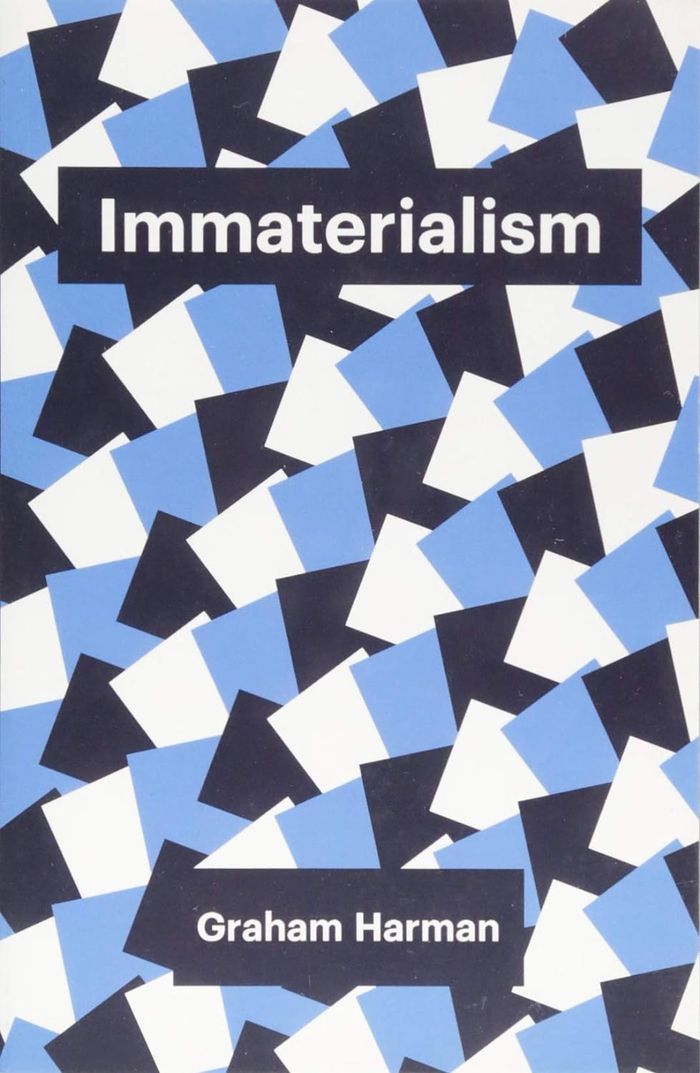
What objects exist in the social world and how should we understand them? Is a specific Pizza Hut restaurant as real as the employees, tables, napkins and pizzas of which it is composed, and as real as the Pizza Hut corporation with its headquarters in Wichita, the United States, the planet Earth and the social and economic impact of the restaurant on the lives of its employees and customers? In this book the founder of object-oriented philosophy develops his approach in order to shed light on the nature and status of objects in social life. While it is often assumed that an interest in objects amounts to a form of materialism, Harman rejects this view and develops instead an "immaterialist" method. By examining the work of leading contemporary thinkers such as Bruno Latour and Levi Bryant, he develops a forceful critique of "actor-network theory." In an extended discussion of Leibniz’s famous example of the Dutch East India Company, Harman argues that this company qualifies for objecthood neither through "what it is" or "what it does," but through its irreducibility to either of these forms. The phases of its life, argues Harman, are not demarcated primarily by dramatic incidents but by moments of symbiosis, a term he draws from the biologist Lynn Margulis. This book provides a key counterpoint to the now ubiquitous social theories of constant change, holistic networks, performative identities, and the construction of things by human practice. It will appeal to anyone interested in cutting-edge debates in philosophy and social and cultural theory.
Immaterialism
Actions:
Prix:
$13.95
(disponible en magasin)
Résumé:
What objects exist in the social world and how should we understand them? Is a specific Pizza Hut restaurant as real as the employees, tables, napkins and pizzas of which it is composed, and as real as the Pizza Hut corporation with its headquarters in Wichita, the United States, the planet Earth and the social and economic impact of the restaurant on the lives of its employees and customers? In this book the founder of object-oriented philosophy develops his approach in order to shed light on the nature and status of objects in social life. While it is often assumed that an interest in objects amounts to a form of materialism, Harman rejects this view and develops instead an "immaterialist" method. By examining the work of leading contemporary thinkers such as Bruno Latour and Levi Bryant, he develops a forceful critique of "actor-network theory." In an extended discussion of Leibniz’s famous example of the Dutch East India Company, Harman argues that this company qualifies for objecthood neither through "what it is" or "what it does," but through its irreducibility to either of these forms. The phases of its life, argues Harman, are not demarcated primarily by dramatic incidents but by moments of symbiosis, a term he draws from the biologist Lynn Margulis. This book provides a key counterpoint to the now ubiquitous social theories of constant change, holistic networks, performative identities, and the construction of things by human practice. It will appeal to anyone interested in cutting-edge debates in philosophy and social and cultural theory.
Classification:
livres
livres
Publication:
février 2016
février 2016
Sujet:
Théorie/ philosophie
Théorie/ philosophie
Classification:
livres
livres

Actions:
Prix:
$19.95
(disponible en magasin)
Résumé:
In our busy and hurried lives, we are losing the ability to be inactive. Human existence becomes fully absorbed by activity – even leisure, treated as a respite from work, becomes part of the same logic. Intense life today means first of all more performance or more consumption. We have forgotten that it is precisely inactivity, which does not produce anything, that(...)
$19.95
(disponible en magasin)
Résumé:
In our busy and hurried lives, we are losing the ability to be inactive. Human existence becomes fully absorbed by activity – even leisure, treated as a respite from work, becomes part of the same logic. Intense life today means first of all more performance or more consumption. We have forgotten that it is precisely inactivity, which does not produce anything, that(...)
Titre:
Vita Contemplativa: In praise of inactivity
Actions:
Prix:
$19.95
(disponible en magasin)
Résumé:
In our busy and hurried lives, we are losing the ability to be inactive. Human existence becomes fully absorbed by activity – even leisure, treated as a respite from work, becomes part of the same logic. Intense life today means first of all more performance or more consumption. We have forgotten that it is precisely inactivity, which does not produce anything, that represents an intense and radiant form of life. For Byung-Chul Han, inactivity constitutes the human. Without moments of pause or hesitation, acting deteriorates into blind action and reaction. When life follows the rule of stimulus–response and need–satisfaction, it atrophies into pure survival: naked biological life. If we lose the ability to be inactive, we begin to resemble machines that simply function. True life begins when concern for survival, for the exigencies of mere life, ends. The ultimate purpose of all human endeavour is inactivity. In a beautifully crafted ode to the art of being still, Han shows that the current crisis in our society calls for a very different way of life: one based on the "vita contemplative." He pleads for bringing our ceaseless activities to a stop and making room for the magic that happens in between. Life receives its radiance only from inactivity.
Vita Contemplativa: In praise of inactivity
Actions:
Prix:
$19.95
(disponible en magasin)
Résumé:
In our busy and hurried lives, we are losing the ability to be inactive. Human existence becomes fully absorbed by activity – even leisure, treated as a respite from work, becomes part of the same logic. Intense life today means first of all more performance or more consumption. We have forgotten that it is precisely inactivity, which does not produce anything, that represents an intense and radiant form of life. For Byung-Chul Han, inactivity constitutes the human. Without moments of pause or hesitation, acting deteriorates into blind action and reaction. When life follows the rule of stimulus–response and need–satisfaction, it atrophies into pure survival: naked biological life. If we lose the ability to be inactive, we begin to resemble machines that simply function. True life begins when concern for survival, for the exigencies of mere life, ends. The ultimate purpose of all human endeavour is inactivity. In a beautifully crafted ode to the art of being still, Han shows that the current crisis in our society calls for a very different way of life: one based on the "vita contemplative." He pleads for bringing our ceaseless activities to a stop and making room for the magic that happens in between. Life receives its radiance only from inactivity.
Classification:
livres
livres
Publication:
janvier 2024
janvier 2024
Sujet:
Théorie/ philosophie
Théorie/ philosophie
Classification:
livres
livres
Prix:
$39.95
(disponible sur commande)
Résumé:
"Contemporanea" is a nascent lexicon for the twenty-first century edited by seasoned philosophers and authors Michael Marder and Giovanbattista Tusa. The collection showcases perspectives from a range of noteworthy thinkers in philosophy, ecology, and cultural studies, as well as artists, from across the globe, including Slavoj Zizek, Timothy Morton, Denise Ferreira Da(...)
$39.95
(disponible sur commande)
Résumé:
"Contemporanea" is a nascent lexicon for the twenty-first century edited by seasoned philosophers and authors Michael Marder and Giovanbattista Tusa. The collection showcases perspectives from a range of noteworthy thinkers in philosophy, ecology, and cultural studies, as well as artists, from across the globe, including Slavoj Zizek, Timothy Morton, Denise Ferreira Da(...)
Titre:
Contemporanea: a glossary for the twenty-first century
Actions:
Prix:
$39.95
(disponible sur commande)
Résumé:
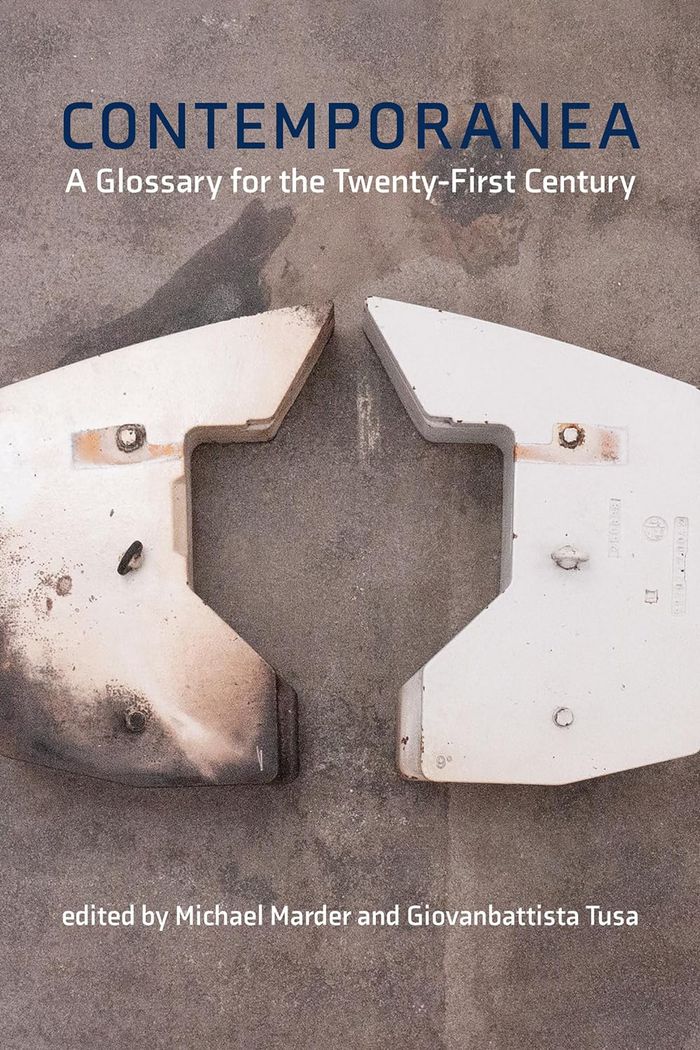
"Contemporanea" is a nascent lexicon for the twenty-first century edited by seasoned philosophers and authors Michael Marder and Giovanbattista Tusa. The collection showcases perspectives from a range of noteworthy thinkers in philosophy, ecology, and cultural studies, as well as artists, from across the globe, including Slavoj Zizek, Timothy Morton, Denise Ferreira Da Silva, and Vandana Shiva, who each describe what they anticipate will be the concepts shaping the trajectory of this century—everything from the world state to the nuclear taboo, automation to Teslaism, plant sexuality to arachnomancy, and ecotrauma to resonances, to name a few. This century, as the editors explain, has to date grounded itself in the debris of the preceding century, whose revolutions and struggles failed to transform our time: post-colonialism, post-fascism, and post-liberalism have morphed into neocolonialism, neoliberalism, and neofascism, often combined in a previously unimaginable mix. And, just as the political developments at the beginning of the twenty-first century revived and reshuffled those of the preceding epoch, so too have philosophical trends sought to breathe fresh life into the stillborn -isms of the past—realism, vitalism, logicism, materialism, empiricism, criticism—adding the adjective "new" and sometimes "radical" before them. To articulate a different future, another language is needed. And, to develop another language, one needs to develop fresh concepts, including the concepts proposed in this collection.
Contemporanea: a glossary for the twenty-first century
Actions:
Prix:
$39.95
(disponible sur commande)
Résumé:
"Contemporanea" is a nascent lexicon for the twenty-first century edited by seasoned philosophers and authors Michael Marder and Giovanbattista Tusa. The collection showcases perspectives from a range of noteworthy thinkers in philosophy, ecology, and cultural studies, as well as artists, from across the globe, including Slavoj Zizek, Timothy Morton, Denise Ferreira Da Silva, and Vandana Shiva, who each describe what they anticipate will be the concepts shaping the trajectory of this century—everything from the world state to the nuclear taboo, automation to Teslaism, plant sexuality to arachnomancy, and ecotrauma to resonances, to name a few. This century, as the editors explain, has to date grounded itself in the debris of the preceding century, whose revolutions and struggles failed to transform our time: post-colonialism, post-fascism, and post-liberalism have morphed into neocolonialism, neoliberalism, and neofascism, often combined in a previously unimaginable mix. And, just as the political developments at the beginning of the twenty-first century revived and reshuffled those of the preceding epoch, so too have philosophical trends sought to breathe fresh life into the stillborn -isms of the past—realism, vitalism, logicism, materialism, empiricism, criticism—adding the adjective "new" and sometimes "radical" before them. To articulate a different future, another language is needed. And, to develop another language, one needs to develop fresh concepts, including the concepts proposed in this collection.
Classification:
livres
livres
Publication:
mars 2024
mars 2024
Sujet:
Théorie/ philosophie
Théorie/ philosophie


