


8579 Résultats
Niveau de description archivistique:
Projet
Projet
Numéro de référence:
AP056.S1.1996.PR06
Description:
This project series documents a proposal for Phat Studios in New York City from 1996-1997. The office identified the project number as 9618. This project, designed for record label Def Jam Records, was to be built on the corner of Jamaica Avenue and 160th Street in Queens. The design would then potentially be replicated for Def Jam in Los Angelos and Atlanta. The project would consist of a recording studio, restaurant, comedy club, listening lounge and retail space for label co-founder Russel Simmon's Phat Farm clothing brand. This project was never realized. The project is recorded through drawings and a photograph of the existing site dating from 1996-1997. The drawings are mostly original sketches but some digital renderings of the project are also included.
AP056.S1.1996.PR06
Description:
This project series documents a proposal for Phat Studios in New York City from 1996-1997. The office identified the project number as 9618. This project, designed for record label Def Jam Records, was to be built on the corner of Jamaica Avenue and 160th Street in Queens. The design would then potentially be replicated for Def Jam in Los Angelos and Atlanta. The project would consist of a recording studio, restaurant, comedy club, listening lounge and retail space for label co-founder Russel Simmon's Phat Farm clothing brand. This project was never realized. The project is recorded through drawings and a photograph of the existing site dating from 1996-1997. The drawings are mostly original sketches but some digital renderings of the project are also included.
Personnes et institutions:
Date:
1996-1997
1996-1997
Titre:
Phat Studios, Def Jam Records, New York City (1996-1997)
Actions:
AP056.S1.1996.PR06
Description:
This project series documents a proposal for Phat Studios in New York City from 1996-1997. The office identified the project number as 9618. This project, designed for record label Def Jam Records, was to be built on the corner of Jamaica Avenue and 160th Street in Queens. The design would then potentially be replicated for Def Jam in Los Angelos and Atlanta. The project would consist of a recording studio, restaurant, comedy club, listening lounge and retail space for label co-founder Russel Simmon's Phat Farm clothing brand. This project was never realized. The project is recorded through drawings and a photograph of the existing site dating from 1996-1997. The drawings are mostly original sketches but some digital renderings of the project are also included.
Phat Studios, Def Jam Records, New York City (1996-1997)
Actions:
AP056.S1.1996.PR06
Description:
This project series documents a proposal for Phat Studios in New York City from 1996-1997. The office identified the project number as 9618. This project, designed for record label Def Jam Records, was to be built on the corner of Jamaica Avenue and 160th Street in Queens. The design would then potentially be replicated for Def Jam in Los Angelos and Atlanta. The project would consist of a recording studio, restaurant, comedy club, listening lounge and retail space for label co-founder Russel Simmon's Phat Farm clothing brand. This project was never realized. The project is recorded through drawings and a photograph of the existing site dating from 1996-1997. The drawings are mostly original sketches but some digital renderings of the project are also included.
Niveau de description archivistique:
Project
Project
Date:
1996-1997
1996-1997
Personnes et institutions:
Niveau de description archivistique:
Sous-série
Sous-série
Numéro de référence:
AP178.S1.1985.PR02.SS2
Description:
This project subseries documents the Projecto para um Edifício de Habitação em Campo di Marte in Giudecca, Italy. While the records were held in the office’s archives this project was assigned the number 34/80 A. The office assigned the date 1985 to this project. The building was part of Siza's intervention in Giudecca. The L-shaped housing building included three floors and 32 apartments. The building respected the Venetian architectural style. Due to financial problems, construction of the building stopped in 2010. Construction eventually continued later on and the project was finished in 2016. Documenting this project are sketches, studies and plans. Photographic materials include photographs and negatives of the project site and model. Textual materials include competition documentation, project documentation, notes and technical specifications.
AP178.S1.1985.PR02.SS2
Description:
This project subseries documents the Projecto para um Edifício de Habitação em Campo di Marte in Giudecca, Italy. While the records were held in the office’s archives this project was assigned the number 34/80 A. The office assigned the date 1985 to this project. The building was part of Siza's intervention in Giudecca. The L-shaped housing building included three floors and 32 apartments. The building respected the Venetian architectural style. Due to financial problems, construction of the building stopped in 2010. Construction eventually continued later on and the project was finished in 2016. Documenting this project are sketches, studies and plans. Photographic materials include photographs and negatives of the project site and model. Textual materials include competition documentation, project documentation, notes and technical specifications.
Personnes et institutions:
Date:
1984-2005
1984-2005
Titre:
Projecto para um Edifício de Habitação em Campo di Marte [Housing complex, Campo di Marte], Giudecca, Venice, Italy, (1985)
Actions:
AP178.S1.1985.PR02.SS2
Description:
This project subseries documents the Projecto para um Edifício de Habitação em Campo di Marte in Giudecca, Italy. While the records were held in the office’s archives this project was assigned the number 34/80 A. The office assigned the date 1985 to this project. The building was part of Siza's intervention in Giudecca. The L-shaped housing building included three floors and 32 apartments. The building respected the Venetian architectural style. Due to financial problems, construction of the building stopped in 2010. Construction eventually continued later on and the project was finished in 2016. Documenting this project are sketches, studies and plans. Photographic materials include photographs and negatives of the project site and model. Textual materials include competition documentation, project documentation, notes and technical specifications.
Projecto para um Edifício de Habitação em Campo di Marte [Housing complex, Campo di Marte], Giudecca, Venice, Italy, (1985)
Actions:
AP178.S1.1985.PR02.SS2
Description:
This project subseries documents the Projecto para um Edifício de Habitação em Campo di Marte in Giudecca, Italy. While the records were held in the office’s archives this project was assigned the number 34/80 A. The office assigned the date 1985 to this project. The building was part of Siza's intervention in Giudecca. The L-shaped housing building included three floors and 32 apartments. The building respected the Venetian architectural style. Due to financial problems, construction of the building stopped in 2010. Construction eventually continued later on and the project was finished in 2016. Documenting this project are sketches, studies and plans. Photographic materials include photographs and negatives of the project site and model. Textual materials include competition documentation, project documentation, notes and technical specifications.
Niveau de description archivistique:
Project
Project
Date:
1984-2005
1984-2005
Personnes et institutions:
Niveau de description archivistique:
Projet
Projet
Numéro de référence:
AP178.S1.1984.PR05
Description:
This project series documents the Casa Erhard Josef Pascher in Sintra, Portugal. While the records were held in the office’s archives this project was assigned the number 24/80. The office assigned the dates 1984-1985 to this project The project files document a house comissioned by Erhard Josef Pascher. The house included a library, garage, workshop, small garden, swimming pool, sauna and terrace. The client asked for a solar power system and for the interior to have whitewashed walls, tiled floors and built-in cupboards. Miguel Guedes de Carvalho collaborated with Siza on this project. The house was not built. Documenting this project are sketches, studies and working drawings. Textual materials include project documentation and correspondence. Photographic materials document the project site.
AP178.S1.1984.PR05
Description:
This project series documents the Casa Erhard Josef Pascher in Sintra, Portugal. While the records were held in the office’s archives this project was assigned the number 24/80. The office assigned the dates 1984-1985 to this project The project files document a house comissioned by Erhard Josef Pascher. The house included a library, garage, workshop, small garden, swimming pool, sauna and terrace. The client asked for a solar power system and for the interior to have whitewashed walls, tiled floors and built-in cupboards. Miguel Guedes de Carvalho collaborated with Siza on this project. The house was not built. Documenting this project are sketches, studies and working drawings. Textual materials include project documentation and correspondence. Photographic materials document the project site.
Personnes et institutions:
Date:
1983-1987
1983-1987
Titre:
Casa Erhard Josef Pascher [Erhard Josef Pascher house], Sintra, Portugal (1984)
Actions:
AP178.S1.1984.PR05
Description:
This project series documents the Casa Erhard Josef Pascher in Sintra, Portugal. While the records were held in the office’s archives this project was assigned the number 24/80. The office assigned the dates 1984-1985 to this project The project files document a house comissioned by Erhard Josef Pascher. The house included a library, garage, workshop, small garden, swimming pool, sauna and terrace. The client asked for a solar power system and for the interior to have whitewashed walls, tiled floors and built-in cupboards. Miguel Guedes de Carvalho collaborated with Siza on this project. The house was not built. Documenting this project are sketches, studies and working drawings. Textual materials include project documentation and correspondence. Photographic materials document the project site.
Casa Erhard Josef Pascher [Erhard Josef Pascher house], Sintra, Portugal (1984)
Actions:
AP178.S1.1984.PR05
Description:
This project series documents the Casa Erhard Josef Pascher in Sintra, Portugal. While the records were held in the office’s archives this project was assigned the number 24/80. The office assigned the dates 1984-1985 to this project The project files document a house comissioned by Erhard Josef Pascher. The house included a library, garage, workshop, small garden, swimming pool, sauna and terrace. The client asked for a solar power system and for the interior to have whitewashed walls, tiled floors and built-in cupboards. Miguel Guedes de Carvalho collaborated with Siza on this project. The house was not built. Documenting this project are sketches, studies and working drawings. Textual materials include project documentation and correspondence. Photographic materials document the project site.
Niveau de description archivistique:
Project
Project
Date:
1983-1987
1983-1987
Personnes et institutions:
Niveau de description archivistique:
Projet
Projet
Numéro de référence:
AP018.S1.1983.PR14
Description:
This project series documents the National Aviation Museum which is part of Rockliffe Airport in Ottawa Ontario from 1983-1987. The office identified the project number as 8320. This project consisted of a building, commissioned by Public Works Canada, to house Canada's aviation museum collections. The basementless building was approximately five storeys in height, triangular shaped, and located between a runway and base building at the Rockcliffe Airport. This project is recorded through drawings, photographic materials and textual records dating from 1983-1987. The majority of the drawings are reprographic copies of details, arranged within the textual materials. Photographs and negative strips show the construction progress of the project. The textual records include correspondence, specifications, instructions to tenderers, schedules and financial documentation.
AP018.S1.1983.PR14
Description:
This project series documents the National Aviation Museum which is part of Rockliffe Airport in Ottawa Ontario from 1983-1987. The office identified the project number as 8320. This project consisted of a building, commissioned by Public Works Canada, to house Canada's aviation museum collections. The basementless building was approximately five storeys in height, triangular shaped, and located between a runway and base building at the Rockcliffe Airport. This project is recorded through drawings, photographic materials and textual records dating from 1983-1987. The majority of the drawings are reprographic copies of details, arranged within the textual materials. Photographs and negative strips show the construction progress of the project. The textual records include correspondence, specifications, instructions to tenderers, schedules and financial documentation.
Personnes et institutions:
Date:
1983-1987
1983-1987
Titre:
National Aviation Museum, Rockcliffe Airport, Ottawa, Ontario (1983-1987)
Actions:
AP018.S1.1983.PR14
Description:
This project series documents the National Aviation Museum which is part of Rockliffe Airport in Ottawa Ontario from 1983-1987. The office identified the project number as 8320. This project consisted of a building, commissioned by Public Works Canada, to house Canada's aviation museum collections. The basementless building was approximately five storeys in height, triangular shaped, and located between a runway and base building at the Rockcliffe Airport. This project is recorded through drawings, photographic materials and textual records dating from 1983-1987. The majority of the drawings are reprographic copies of details, arranged within the textual materials. Photographs and negative strips show the construction progress of the project. The textual records include correspondence, specifications, instructions to tenderers, schedules and financial documentation.
National Aviation Museum, Rockcliffe Airport, Ottawa, Ontario (1983-1987)
Actions:
AP018.S1.1983.PR14
Description:
This project series documents the National Aviation Museum which is part of Rockliffe Airport in Ottawa Ontario from 1983-1987. The office identified the project number as 8320. This project consisted of a building, commissioned by Public Works Canada, to house Canada's aviation museum collections. The basementless building was approximately five storeys in height, triangular shaped, and located between a runway and base building at the Rockcliffe Airport. This project is recorded through drawings, photographic materials and textual records dating from 1983-1987. The majority of the drawings are reprographic copies of details, arranged within the textual materials. Photographs and negative strips show the construction progress of the project. The textual records include correspondence, specifications, instructions to tenderers, schedules and financial documentation.
Niveau de description archivistique:
Project
Project
Date:
1983-1987
1983-1987
Personnes et institutions:
Niveau de description archivistique:
Projet
Projet
Numéro de référence:
AP018.S1.1981.PR21
Description:
This project series documents work for the Canadian Coast Guard College in Sydney, Nova Scotia from 1981-1986. The office identified the project number as 8123. This project consisted of the design and construction of a new boathouse, machine shop, entry areas and gate house for the College. The main component of the project was the boat house. Built on the shore, the boat house was designed for off-season storage of large work boats with a heated maintenance area. The project is recorded through drawings, photographic materials and textual records dating from 1976-1981. The photographs show the project site and model. The textual records include correspondence, meeting minutes, regulations, project programs, specifications, tender documents, electrical and mechanical documentation, schedules, and cost analysis records.
AP018.S1.1981.PR21
Description:
This project series documents work for the Canadian Coast Guard College in Sydney, Nova Scotia from 1981-1986. The office identified the project number as 8123. This project consisted of the design and construction of a new boathouse, machine shop, entry areas and gate house for the College. The main component of the project was the boat house. Built on the shore, the boat house was designed for off-season storage of large work boats with a heated maintenance area. The project is recorded through drawings, photographic materials and textual records dating from 1976-1981. The photographs show the project site and model. The textual records include correspondence, meeting minutes, regulations, project programs, specifications, tender documents, electrical and mechanical documentation, schedules, and cost analysis records.
Personnes et institutions:
Date:
1976-1986
1976-1986
Titre:
Canadian Coast Guard College, Boat House, Machine Shop, Campus Entry and Gatehouse, Sydney, Nova Scotia (1981-1986)
Actions:
AP018.S1.1981.PR21
Description:
This project series documents work for the Canadian Coast Guard College in Sydney, Nova Scotia from 1981-1986. The office identified the project number as 8123. This project consisted of the design and construction of a new boathouse, machine shop, entry areas and gate house for the College. The main component of the project was the boat house. Built on the shore, the boat house was designed for off-season storage of large work boats with a heated maintenance area. The project is recorded through drawings, photographic materials and textual records dating from 1976-1981. The photographs show the project site and model. The textual records include correspondence, meeting minutes, regulations, project programs, specifications, tender documents, electrical and mechanical documentation, schedules, and cost analysis records.
Canadian Coast Guard College, Boat House, Machine Shop, Campus Entry and Gatehouse, Sydney, Nova Scotia (1981-1986)
Actions:
AP018.S1.1981.PR21
Description:
This project series documents work for the Canadian Coast Guard College in Sydney, Nova Scotia from 1981-1986. The office identified the project number as 8123. This project consisted of the design and construction of a new boathouse, machine shop, entry areas and gate house for the College. The main component of the project was the boat house. Built on the shore, the boat house was designed for off-season storage of large work boats with a heated maintenance area. The project is recorded through drawings, photographic materials and textual records dating from 1976-1981. The photographs show the project site and model. The textual records include correspondence, meeting minutes, regulations, project programs, specifications, tender documents, electrical and mechanical documentation, schedules, and cost analysis records.
Niveau de description archivistique:
Project
Project
Date:
1976-1986
1976-1986
Personnes et institutions:
Niveau de description archivistique:
Projet
Projet
Numéro de référence:
AP164.S1.2000.D9
Description:
The project series documents the competition entry and infrastructure development of the northeast coast park (Parque litoral nord-est, Barcelona Forum 2004, Sant Adrià de Besòs) and adjoining recycling plant (Edificio de oficinas y planta integral de RSU) in Santa Adriá de Besòs, Barcelona, Spain. The firm identified this project as number 133. The competition was organized by the Barcelona City Council and was part of a larger plan to develop new infrastructure for Barcelona, as the Host City for the International Forum of Cultures held in 2004. A number of architects and firms were involved in other projects related to the infrastructure plan, like the South East Coastal Park & Auditoriums by the Foreign Office Architects (See AP171.S1.2000.D6). The park included several other features, like the design of urban furniture (Pep and Xurret benches, and a fence), an artificial mountain, a youth hostel, a small security building and a pier. Only the park, the artificial mountain and the benches were built. The firm arranged work for this project with the following numbers: 133-1, 133-2, 133-6 to 133-8, and 133-10. The CCA did not receive materials classified under numbers 133-9 and 133-11. The recycling plant includes, among other things, office space, an ecomuseum, and a garden. Abalos and Herreros won the competition for design, construction and exploitation of the plant. The firm worked in collaboration with the firm Tersa, S.A. The firm assigned numbers 133-3 to 133-5 to identify this work. Documenting the project are design development and working drawings, correspondence, invoices, minutes, project descriptions, studies, budgets, contracts, reference, photographic and digital materials, and a videocassette.
AP164.S1.2000.D9
Description:
The project series documents the competition entry and infrastructure development of the northeast coast park (Parque litoral nord-est, Barcelona Forum 2004, Sant Adrià de Besòs) and adjoining recycling plant (Edificio de oficinas y planta integral de RSU) in Santa Adriá de Besòs, Barcelona, Spain. The firm identified this project as number 133. The competition was organized by the Barcelona City Council and was part of a larger plan to develop new infrastructure for Barcelona, as the Host City for the International Forum of Cultures held in 2004. A number of architects and firms were involved in other projects related to the infrastructure plan, like the South East Coastal Park & Auditoriums by the Foreign Office Architects (See AP171.S1.2000.D6). The park included several other features, like the design of urban furniture (Pep and Xurret benches, and a fence), an artificial mountain, a youth hostel, a small security building and a pier. Only the park, the artificial mountain and the benches were built. The firm arranged work for this project with the following numbers: 133-1, 133-2, 133-6 to 133-8, and 133-10. The CCA did not receive materials classified under numbers 133-9 and 133-11. The recycling plant includes, among other things, office space, an ecomuseum, and a garden. Abalos and Herreros won the competition for design, construction and exploitation of the plant. The firm worked in collaboration with the firm Tersa, S.A. The firm assigned numbers 133-3 to 133-5 to identify this work. Documenting the project are design development and working drawings, correspondence, invoices, minutes, project descriptions, studies, budgets, contracts, reference, photographic and digital materials, and a videocassette.
Personnes et institutions:
Date:
1994-2007
1994-2007
Titre:
Barcelona Forum 2004, Santa Adrià de Besòs, Barcelona, Spain (2000)
Actions:
AP164.S1.2000.D9
Description:
The project series documents the competition entry and infrastructure development of the northeast coast park (Parque litoral nord-est, Barcelona Forum 2004, Sant Adrià de Besòs) and adjoining recycling plant (Edificio de oficinas y planta integral de RSU) in Santa Adriá de Besòs, Barcelona, Spain. The firm identified this project as number 133. The competition was organized by the Barcelona City Council and was part of a larger plan to develop new infrastructure for Barcelona, as the Host City for the International Forum of Cultures held in 2004. A number of architects and firms were involved in other projects related to the infrastructure plan, like the South East Coastal Park & Auditoriums by the Foreign Office Architects (See AP171.S1.2000.D6). The park included several other features, like the design of urban furniture (Pep and Xurret benches, and a fence), an artificial mountain, a youth hostel, a small security building and a pier. Only the park, the artificial mountain and the benches were built. The firm arranged work for this project with the following numbers: 133-1, 133-2, 133-6 to 133-8, and 133-10. The CCA did not receive materials classified under numbers 133-9 and 133-11. The recycling plant includes, among other things, office space, an ecomuseum, and a garden. Abalos and Herreros won the competition for design, construction and exploitation of the plant. The firm worked in collaboration with the firm Tersa, S.A. The firm assigned numbers 133-3 to 133-5 to identify this work. Documenting the project are design development and working drawings, correspondence, invoices, minutes, project descriptions, studies, budgets, contracts, reference, photographic and digital materials, and a videocassette.
Barcelona Forum 2004, Santa Adrià de Besòs, Barcelona, Spain (2000)
Actions:
AP164.S1.2000.D9
Description:
The project series documents the competition entry and infrastructure development of the northeast coast park (Parque litoral nord-est, Barcelona Forum 2004, Sant Adrià de Besòs) and adjoining recycling plant (Edificio de oficinas y planta integral de RSU) in Santa Adriá de Besòs, Barcelona, Spain. The firm identified this project as number 133. The competition was organized by the Barcelona City Council and was part of a larger plan to develop new infrastructure for Barcelona, as the Host City for the International Forum of Cultures held in 2004. A number of architects and firms were involved in other projects related to the infrastructure plan, like the South East Coastal Park & Auditoriums by the Foreign Office Architects (See AP171.S1.2000.D6). The park included several other features, like the design of urban furniture (Pep and Xurret benches, and a fence), an artificial mountain, a youth hostel, a small security building and a pier. Only the park, the artificial mountain and the benches were built. The firm arranged work for this project with the following numbers: 133-1, 133-2, 133-6 to 133-8, and 133-10. The CCA did not receive materials classified under numbers 133-9 and 133-11. The recycling plant includes, among other things, office space, an ecomuseum, and a garden. Abalos and Herreros won the competition for design, construction and exploitation of the plant. The firm worked in collaboration with the firm Tersa, S.A. The firm assigned numbers 133-3 to 133-5 to identify this work. Documenting the project are design development and working drawings, correspondence, invoices, minutes, project descriptions, studies, budgets, contracts, reference, photographic and digital materials, and a videocassette.
Niveau de description archivistique:
Project
Project
Date:
1994-2007
1994-2007
Personnes et institutions:
Niveau de description archivistique:
Projet
Projet
Numéro de référence:
AP056.S1.1994.PR14
Description:
This project series documents renovations to the Stratford Festival Theatre in Stratford, Ontario from 1994-1997. The office identified the project number as 9428. This project consisted of the major reimagining and renewal of the famous tent-shaped theatre, which had not previously been updated in the 40 years since its original construction. Conceived with Thomas Payne as the partner-in-charge, the project reconceptualised the existing front-of-house spaces, the performance auditorium and the formal arrival space. The auditorium, which contained a Greek-style thrust stage inspired by Shakespeare's Globe Theatre, saw an increase in comfort by eliminating some seats to make the remaining more spacious. With this, site lines to the stage and the theatre acoustics were also improved. A large expansion of the theatre's lobby, box office, festival shops and member spaces accommodated the theatre's growing number of patrons. On the outside, a large curved entrance drive was added with extensive landscaping and gardens to add to the grandeur of the formal arrival area. A marquee space was also added to the building, which housed a year-round terrace. Thomas Payne created this project's original master plan under a different project number in 1988, but it should be noted that some materials in both projects are overlapping (see project series AP056.S1.1988.PR03 in this fonds). The project is recorded through drawings, presentation paintings and some textual materials dating from 1988-1996. The drawings are mostly originals and include sketches, presentation drawings, drawings for the model, plans, elevations, sections, perspectives, details and drawings of new furnishings. The textual records, which describe the project's design concept, are part of a presentation book.
AP056.S1.1994.PR14
Description:
This project series documents renovations to the Stratford Festival Theatre in Stratford, Ontario from 1994-1997. The office identified the project number as 9428. This project consisted of the major reimagining and renewal of the famous tent-shaped theatre, which had not previously been updated in the 40 years since its original construction. Conceived with Thomas Payne as the partner-in-charge, the project reconceptualised the existing front-of-house spaces, the performance auditorium and the formal arrival space. The auditorium, which contained a Greek-style thrust stage inspired by Shakespeare's Globe Theatre, saw an increase in comfort by eliminating some seats to make the remaining more spacious. With this, site lines to the stage and the theatre acoustics were also improved. A large expansion of the theatre's lobby, box office, festival shops and member spaces accommodated the theatre's growing number of patrons. On the outside, a large curved entrance drive was added with extensive landscaping and gardens to add to the grandeur of the formal arrival area. A marquee space was also added to the building, which housed a year-round terrace. Thomas Payne created this project's original master plan under a different project number in 1988, but it should be noted that some materials in both projects are overlapping (see project series AP056.S1.1988.PR03 in this fonds). The project is recorded through drawings, presentation paintings and some textual materials dating from 1988-1996. The drawings are mostly originals and include sketches, presentation drawings, drawings for the model, plans, elevations, sections, perspectives, details and drawings of new furnishings. The textual records, which describe the project's design concept, are part of a presentation book.
Personnes et institutions:
Date:
1988-1996
1988-1996
Titre:
Stratford Festival Theatre, Renovations, Stratford, Ontario (1994-1997)
Actions:
AP056.S1.1994.PR14
Description:
This project series documents renovations to the Stratford Festival Theatre in Stratford, Ontario from 1994-1997. The office identified the project number as 9428. This project consisted of the major reimagining and renewal of the famous tent-shaped theatre, which had not previously been updated in the 40 years since its original construction. Conceived with Thomas Payne as the partner-in-charge, the project reconceptualised the existing front-of-house spaces, the performance auditorium and the formal arrival space. The auditorium, which contained a Greek-style thrust stage inspired by Shakespeare's Globe Theatre, saw an increase in comfort by eliminating some seats to make the remaining more spacious. With this, site lines to the stage and the theatre acoustics were also improved. A large expansion of the theatre's lobby, box office, festival shops and member spaces accommodated the theatre's growing number of patrons. On the outside, a large curved entrance drive was added with extensive landscaping and gardens to add to the grandeur of the formal arrival area. A marquee space was also added to the building, which housed a year-round terrace. Thomas Payne created this project's original master plan under a different project number in 1988, but it should be noted that some materials in both projects are overlapping (see project series AP056.S1.1988.PR03 in this fonds). The project is recorded through drawings, presentation paintings and some textual materials dating from 1988-1996. The drawings are mostly originals and include sketches, presentation drawings, drawings for the model, plans, elevations, sections, perspectives, details and drawings of new furnishings. The textual records, which describe the project's design concept, are part of a presentation book.
Stratford Festival Theatre, Renovations, Stratford, Ontario (1994-1997)
Actions:
AP056.S1.1994.PR14
Description:
This project series documents renovations to the Stratford Festival Theatre in Stratford, Ontario from 1994-1997. The office identified the project number as 9428. This project consisted of the major reimagining and renewal of the famous tent-shaped theatre, which had not previously been updated in the 40 years since its original construction. Conceived with Thomas Payne as the partner-in-charge, the project reconceptualised the existing front-of-house spaces, the performance auditorium and the formal arrival space. The auditorium, which contained a Greek-style thrust stage inspired by Shakespeare's Globe Theatre, saw an increase in comfort by eliminating some seats to make the remaining more spacious. With this, site lines to the stage and the theatre acoustics were also improved. A large expansion of the theatre's lobby, box office, festival shops and member spaces accommodated the theatre's growing number of patrons. On the outside, a large curved entrance drive was added with extensive landscaping and gardens to add to the grandeur of the formal arrival area. A marquee space was also added to the building, which housed a year-round terrace. Thomas Payne created this project's original master plan under a different project number in 1988, but it should be noted that some materials in both projects are overlapping (see project series AP056.S1.1988.PR03 in this fonds). The project is recorded through drawings, presentation paintings and some textual materials dating from 1988-1996. The drawings are mostly originals and include sketches, presentation drawings, drawings for the model, plans, elevations, sections, perspectives, details and drawings of new furnishings. The textual records, which describe the project's design concept, are part of a presentation book.
Niveau de description archivistique:
Project
Project
Date:
1988-1996
1988-1996
Personnes et institutions:
Niveau de description archivistique:
Projet
Projet
Numéro de référence:
AP018.S1.1969.PR04
Description:
This project series documents the master plan for the future Art Gallery of Ontario (AGO) expansion projects in Toronto in 1969. The office identified the project number as 69035. This project outlines the complete master plan for future expansions of the gallery. For decades, the AGO, under its previous name, The Art Gallery of Toronto, consisted of the nineteenth century Grange mansion and a gallery to its north. The project shows the growth of the AGO from two small buildings surrounded by parks to a much larger two storey building that would touch Dundas Street to the north, Beverly Street to the West, and McCaul Street and the Ontario College of Art to the East. In total, three stages were proposed in this plan to increase the AGO sevenfold from 32,000 square feet of gallery space to 253,000 square feet. In addition, a parking lot was proposed in the Dundas Street Mall to the east of the gallery. Originally, the stages were known in the documentation as Phases I, II, III, and IA but their names evolved with the project. Each stage was eventually given its own project number by the office and the original master plan documented in this project series changed in size and design over the years. This project contract was originally given to John B. Parkin Associates. However, John C. Parkin continued the project under his new firm, Parkin Architects Planners, after parting ways with partner John B. Parkin in 1971. The project is recorded through drawings, including presentation boards, dating from 1965-1978. The majority of these are original drawings showing the design planning of the art gallery.
AP018.S1.1969.PR04
Description:
This project series documents the master plan for the future Art Gallery of Ontario (AGO) expansion projects in Toronto in 1969. The office identified the project number as 69035. This project outlines the complete master plan for future expansions of the gallery. For decades, the AGO, under its previous name, The Art Gallery of Toronto, consisted of the nineteenth century Grange mansion and a gallery to its north. The project shows the growth of the AGO from two small buildings surrounded by parks to a much larger two storey building that would touch Dundas Street to the north, Beverly Street to the West, and McCaul Street and the Ontario College of Art to the East. In total, three stages were proposed in this plan to increase the AGO sevenfold from 32,000 square feet of gallery space to 253,000 square feet. In addition, a parking lot was proposed in the Dundas Street Mall to the east of the gallery. Originally, the stages were known in the documentation as Phases I, II, III, and IA but their names evolved with the project. Each stage was eventually given its own project number by the office and the original master plan documented in this project series changed in size and design over the years. This project contract was originally given to John B. Parkin Associates. However, John C. Parkin continued the project under his new firm, Parkin Architects Planners, after parting ways with partner John B. Parkin in 1971. The project is recorded through drawings, including presentation boards, dating from 1965-1978. The majority of these are original drawings showing the design planning of the art gallery.
Personnes et institutions:
Date:
1965-1981
1965-1981
Titre:
Art Gallery of Ontario, The Master Plan, Toronto (1969)
Actions:
AP018.S1.1969.PR04
Description:
This project series documents the master plan for the future Art Gallery of Ontario (AGO) expansion projects in Toronto in 1969. The office identified the project number as 69035. This project outlines the complete master plan for future expansions of the gallery. For decades, the AGO, under its previous name, The Art Gallery of Toronto, consisted of the nineteenth century Grange mansion and a gallery to its north. The project shows the growth of the AGO from two small buildings surrounded by parks to a much larger two storey building that would touch Dundas Street to the north, Beverly Street to the West, and McCaul Street and the Ontario College of Art to the East. In total, three stages were proposed in this plan to increase the AGO sevenfold from 32,000 square feet of gallery space to 253,000 square feet. In addition, a parking lot was proposed in the Dundas Street Mall to the east of the gallery. Originally, the stages were known in the documentation as Phases I, II, III, and IA but their names evolved with the project. Each stage was eventually given its own project number by the office and the original master plan documented in this project series changed in size and design over the years. This project contract was originally given to John B. Parkin Associates. However, John C. Parkin continued the project under his new firm, Parkin Architects Planners, after parting ways with partner John B. Parkin in 1971. The project is recorded through drawings, including presentation boards, dating from 1965-1978. The majority of these are original drawings showing the design planning of the art gallery.
Art Gallery of Ontario, The Master Plan, Toronto (1969)
Actions:
AP018.S1.1969.PR04
Description:
This project series documents the master plan for the future Art Gallery of Ontario (AGO) expansion projects in Toronto in 1969. The office identified the project number as 69035. This project outlines the complete master plan for future expansions of the gallery. For decades, the AGO, under its previous name, The Art Gallery of Toronto, consisted of the nineteenth century Grange mansion and a gallery to its north. The project shows the growth of the AGO from two small buildings surrounded by parks to a much larger two storey building that would touch Dundas Street to the north, Beverly Street to the West, and McCaul Street and the Ontario College of Art to the East. In total, three stages were proposed in this plan to increase the AGO sevenfold from 32,000 square feet of gallery space to 253,000 square feet. In addition, a parking lot was proposed in the Dundas Street Mall to the east of the gallery. Originally, the stages were known in the documentation as Phases I, II, III, and IA but their names evolved with the project. Each stage was eventually given its own project number by the office and the original master plan documented in this project series changed in size and design over the years. This project contract was originally given to John B. Parkin Associates. However, John C. Parkin continued the project under his new firm, Parkin Architects Planners, after parting ways with partner John B. Parkin in 1971. The project is recorded through drawings, including presentation boards, dating from 1965-1978. The majority of these are original drawings showing the design planning of the art gallery.
Niveau de description archivistique:
Project
Project
Date:
1965-1981
1965-1981
Personnes et institutions:
Classification:
archives
Niveau de description archivistique:
Collection
archives
Niveau de description archivistique:
Collection
Titre:
Collection Georg Lippsmeier
Collection Georg Lippsmeier
Numéro de référence:
CD037
Résumé:
The Georg Lippsmeier collection comprises the research collection of the Institut für Tropenbau. Founded by Georg Lippsmeier the Institute was active from the 1960s to the early 1990s. The collection includes research material on architecture in tropical climates and building technologies.
CD037
Résumé:
The Georg Lippsmeier collection comprises the research collection of the Institut für Tropenbau. Founded by Georg Lippsmeier the Institute was active from the 1960s to the early 1990s. The collection includes research material on architecture in tropical climates and building technologies.
Personnes et institutions:
Date:
1960s-2010
1960s-2010
Titre:
Collection Georg Lippsmeier
Actions:
CD037
Résumé:
The Georg Lippsmeier collection comprises the research collection of the Institut für Tropenbau. Founded by Georg Lippsmeier the Institute was active from the 1960s to the early 1990s. The collection includes research material on architecture in tropical climates and building technologies.
Collection Georg Lippsmeier
Actions:
CD037
Résumé:
The Georg Lippsmeier collection comprises the research collection of the Institut für Tropenbau. Founded by Georg Lippsmeier the Institute was active from the 1960s to the early 1990s. The collection includes research material on architecture in tropical climates and building technologies.
Classification:
archives
Niveau de description archivistique:
Collection
archives
Niveau de description archivistique:
Collection
Date:
1960s-2010
1960s-2010
Personnes et institutions:
Classification:
photographies
photographies
Actions:
Numéro de référence:
PH2018:0005:031
Description:
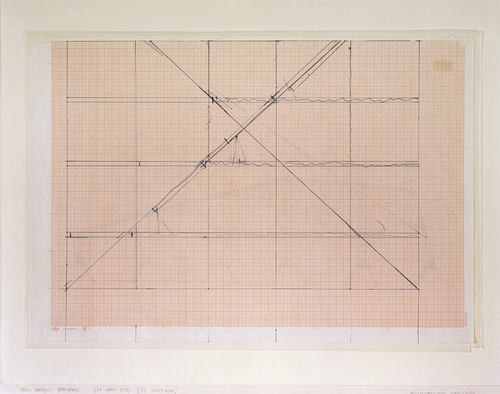
Photograph by Stefano Graziani of the following work: Gordon Matta-Clark, floor plan for Office Baroque, 1977, blue ballpoint pen on graph paper, 42 x 59.5 cm, PHCON2002:0016:059, Gordon Matta-Clark collection, Canadian Centre of Architecture, Gift of Estate of Gordon Matta-Clark, © Estate of Gordon Matta-Clark Questioning Pictures is a 36 photograph project commissioned by Fondazione Prada, Milan. Artist Stefano Graziani investigates archival and conservation systems in a number of museums. Through photographing museum objects, Graziani, focusing on the relationship between photographs, the museum objects and the power structures at play within institutions. The museums include the Canadian Centre for Architecture (CCA) in Montréal, Canada; Sir John Soane’s Museum in London, UK; the Kunstmuseum Basel, Switzerland; Museum Insel Hombroich in Neuss, Germany; the Museo di Castelvecchio in Verona, Italy; and the Plaster Cast Gallery at Museo Canova in Possagno, Italy.
PH2018:0005:031
Description:
Photograph by Stefano Graziani of the following work: Gordon Matta-Clark, floor plan for Office Baroque, 1977, blue ballpoint pen on graph paper, 42 x 59.5 cm, PHCON2002:0016:059, Gordon Matta-Clark collection, Canadian Centre of Architecture, Gift of Estate of Gordon Matta-Clark, © Estate of Gordon Matta-Clark Questioning Pictures is a 36 photograph project commissioned by Fondazione Prada, Milan. Artist Stefano Graziani investigates archival and conservation systems in a number of museums. Through photographing museum objects, Graziani, focusing on the relationship between photographs, the museum objects and the power structures at play within institutions. The museums include the Canadian Centre for Architecture (CCA) in Montréal, Canada; Sir John Soane’s Museum in London, UK; the Kunstmuseum Basel, Switzerland; Museum Insel Hombroich in Neuss, Germany; the Museo di Castelvecchio in Verona, Italy; and the Plaster Cast Gallery at Museo Canova in Possagno, Italy.
Personnes et institutions:
Date:
2017
2017
Titre:
Questioning Pictures: Photograph of floor plan for Office Baroque, blue pen on graph paper by Gordon Matta-Clark, 1977
Actions:
PH2018:0005:031
Description:
Photograph by Stefano Graziani of the following work: Gordon Matta-Clark, floor plan for Office Baroque, 1977, blue ballpoint pen on graph paper, 42 x 59.5 cm, PHCON2002:0016:059, Gordon Matta-Clark collection, Canadian Centre of Architecture, Gift of Estate of Gordon Matta-Clark, © Estate of Gordon Matta-Clark Questioning Pictures is a 36 photograph project commissioned by Fondazione Prada, Milan. Artist Stefano Graziani investigates archival and conservation systems in a number of museums. Through photographing museum objects, Graziani, focusing on the relationship between photographs, the museum objects and the power structures at play within institutions. The museums include the Canadian Centre for Architecture (CCA) in Montréal, Canada; Sir John Soane’s Museum in London, UK; the Kunstmuseum Basel, Switzerland; Museum Insel Hombroich in Neuss, Germany; the Museo di Castelvecchio in Verona, Italy; and the Plaster Cast Gallery at Museo Canova in Possagno, Italy.
Questioning Pictures: Photograph of floor plan for Office Baroque, blue pen on graph paper by Gordon Matta-Clark, 1977
Actions:
PH2018:0005:031
Description:
Photograph by Stefano Graziani of the following work: Gordon Matta-Clark, floor plan for Office Baroque, 1977, blue ballpoint pen on graph paper, 42 x 59.5 cm, PHCON2002:0016:059, Gordon Matta-Clark collection, Canadian Centre of Architecture, Gift of Estate of Gordon Matta-Clark, © Estate of Gordon Matta-Clark Questioning Pictures is a 36 photograph project commissioned by Fondazione Prada, Milan. Artist Stefano Graziani investigates archival and conservation systems in a number of museums. Through photographing museum objects, Graziani, focusing on the relationship between photographs, the museum objects and the power structures at play within institutions. The museums include the Canadian Centre for Architecture (CCA) in Montréal, Canada; Sir John Soane’s Museum in London, UK; the Kunstmuseum Basel, Switzerland; Museum Insel Hombroich in Neuss, Germany; the Museo di Castelvecchio in Verona, Italy; and the Plaster Cast Gallery at Museo Canova in Possagno, Italy.
Classification:
photographies
photographies
Date:
2017
2017
Personnes et institutions:


