


6048 Résultats
Classification:
artéfacts
artéfacts
Actions:
Exemplaires:
Description:
1 model : mixed metal with copper finish ; 11 x 4 x 10 cm.
Description:
1 model : mixed metal with copper finish ; 11 x 4 x 10 cm.
Sujet:
Publication:
[ca. 1975]
[ca. 1975]
Titre:
Dom zu Köln, erbaut 1248-1880 [model].
Actions:
Exemplaires:
Description:
1 model : mixed metal with copper finish ; 11 x 4 x 10 cm.
Dom zu Köln, erbaut 1248-1880 [model].
Actions:
Exemplaires:
Description:
1 model : mixed metal with copper finish ; 11 x 4 x 10 cm.
Classification:
artéfacts
artéfacts
Publication:
[ca. 1975]
[ca. 1975]
Sujet:
Classification:
artéfacts
artéfacts
Actions:
Exemplaires:
Description:
1 model : ceramic ; 8 x 16 x 10 cm + 1 key
Description:
1 model : ceramic ; 8 x 16 x 10 cm + 1 key
Auteur:
Sujet:
Publication:
[between 1941 and 1965] (Chatham : Contemporary Ceramics)
[between 1941 and 1965] (Chatham : Contemporary Ceramics)
Titre:
The Brooklyn Savings Bank : in the Civic Center.
Actions:
Exemplaires:
Description:
1 model : ceramic ; 8 x 16 x 10 cm + 1 key
The Brooklyn Savings Bank : in the Civic Center.
Actions:
Exemplaires:
Description:
1 model : ceramic ; 8 x 16 x 10 cm + 1 key
Classification:
artéfacts
artéfacts
Publication:
[between 1941 and 1965] (Chatham : Contemporary Ceramics)
[between 1941 and 1965] (Chatham : Contemporary Ceramics)
Auteur:
Sujet:
Classification:
livres
livres
Prix:
$62.00
(disponible sur commande)
Résumé:
Through a series of close readings of two major figures of the modern movement, Adolf Loos and Le Corbusier, Beatriz Colomina argues that architecture only becomes modern in its engagement with the mass media, and that in so doing it radically displaces the(...)
$62.00
(disponible sur commande)
Résumé:
Through a series of close readings of two major figures of the modern movement, Adolf Loos and Le Corbusier, Beatriz Colomina argues that architecture only becomes modern in its engagement with the mass media, and that in so doing it radically displaces the(...)
Titre:
Privacy and publicity : modern architecture as mass media
Actions:
Prix:
$62.00
(disponible sur commande)
Résumé:
Through a series of close readings of two major figures of the modern movement, Adolf Loos and Le Corbusier, Beatriz Colomina argues that architecture only becomes modern in its engagement with the mass media, and that in so doing it radically displaces the traditional sense of space and subjectivity. "Privacy and Publicity" questions certain ideological assumptions underlying the received view of modern architecture and reconsiders the methodology of architectural criticism itself. Where conventional criticism portrays modern architecture as a high artistic practice in opposition to mass culture, Colomina sees the emerging systems of communication that have come to define twentieth-century culture -- the mass media -- as the true site within which modern architecture was produced. She considers architectural discourse as the intersection of a number of systems of representation such as drawings, models, photographs, books, films, and advertisements. This does not mean abandoning the architectural object, the building, but rather looking at it in a different way. The building is understood here in the same way as all the media that frame it, as a mechanism of representation in its own right.
Privacy and publicity : modern architecture as mass media
Actions:
Prix:
$62.00
(disponible sur commande)
Résumé:
Through a series of close readings of two major figures of the modern movement, Adolf Loos and Le Corbusier, Beatriz Colomina argues that architecture only becomes modern in its engagement with the mass media, and that in so doing it radically displaces the traditional sense of space and subjectivity. "Privacy and Publicity" questions certain ideological assumptions underlying the received view of modern architecture and reconsiders the methodology of architectural criticism itself. Where conventional criticism portrays modern architecture as a high artistic practice in opposition to mass culture, Colomina sees the emerging systems of communication that have come to define twentieth-century culture -- the mass media -- as the true site within which modern architecture was produced. She considers architectural discourse as the intersection of a number of systems of representation such as drawings, models, photographs, books, films, and advertisements. This does not mean abandoning the architectural object, the building, but rather looking at it in a different way. The building is understood here in the same way as all the media that frame it, as a mechanism of representation in its own right.
Classification:
livres
livres
Publication:
avril 1996, Cambridge
avril 1996, Cambridge
Sujet:
Théorie de l’architecture
Théorie de l’architecture
Classification:
livres
livres
Actions:
Prix:
$44.95
(disponible sur commande)
Résumé:
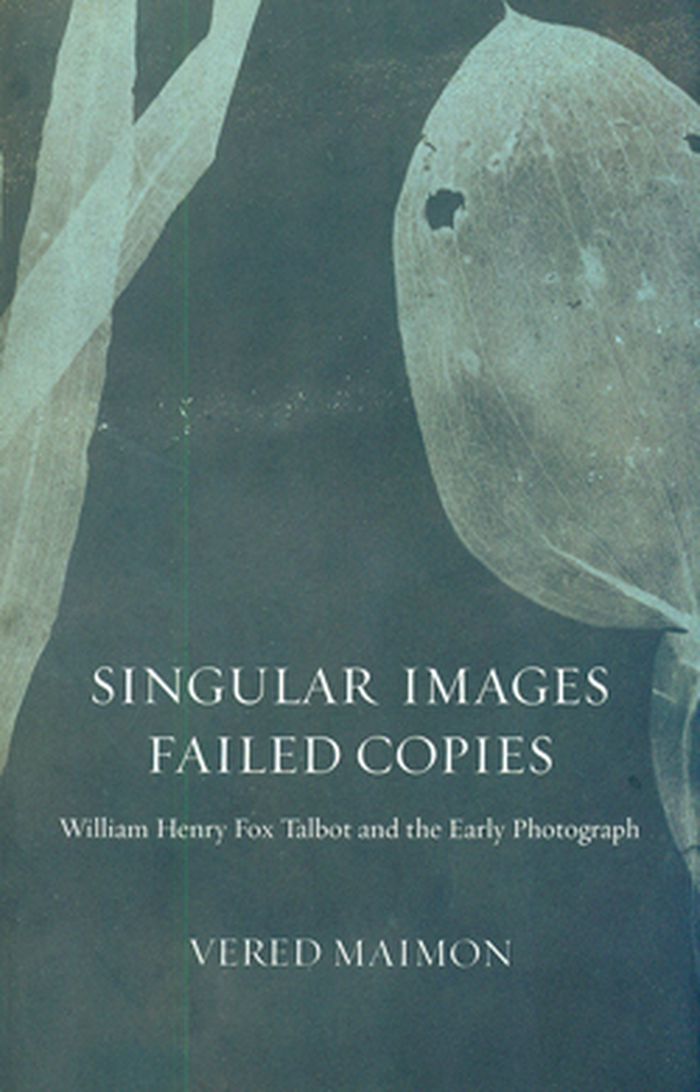
Focusing on early nineteenth-century England, and on the works and texts of the inventor of paper photography, William Henry Fox Talbot, Singular Images, Failed Copies historicizes the conceptualization of photography in that era as part of a major historical change. Treating photography not merely as a medium or a system of representation but also as an epistemology,(...)
$44.95
(disponible sur commande)
Résumé:
Focusing on early nineteenth-century England, and on the works and texts of the inventor of paper photography, William Henry Fox Talbot, Singular Images, Failed Copies historicizes the conceptualization of photography in that era as part of a major historical change. Treating photography not merely as a medium or a system of representation but also as an epistemology,(...)
Titre:
Singular images, failed copies: William Henry Fox Talbot and the early photograph
Actions:
Prix:
$44.95
(disponible sur commande)
Résumé:
Focusing on early nineteenth-century England, and on the works and texts of the inventor of paper photography, William Henry Fox Talbot, Singular Images, Failed Copies historicizes the conceptualization of photography in that era as part of a major historical change. Treating photography not merely as a medium or a system of representation but also as an epistemology, Vered Maimon challenges today's prevalent association of the early photograph with the camera obscura. Instead, she points to material, formal, and conceptual differences between those two types of images by considering the philosophical and aesthetic premises linked with early photography. Through this analysis she argues that the emphasis in Talbot's accounts on the removal of the artist's hand in favor of the pencil of nature did not mark a shift from manual to mechanical and more accurate or objective systems of representation. In Singular Images, Failed Copies, Maimon shows that the perception of the photographic image in the 1830s and 1840s was in fact symptomatic of a crisis in the epistemological framework that had informed philosophical, scientific, and aesthetic thought for two centuries.
Singular images, failed copies: William Henry Fox Talbot and the early photograph
Actions:
Prix:
$44.95
(disponible sur commande)
Résumé:
Focusing on early nineteenth-century England, and on the works and texts of the inventor of paper photography, William Henry Fox Talbot, Singular Images, Failed Copies historicizes the conceptualization of photography in that era as part of a major historical change. Treating photography not merely as a medium or a system of representation but also as an epistemology, Vered Maimon challenges today's prevalent association of the early photograph with the camera obscura. Instead, she points to material, formal, and conceptual differences between those two types of images by considering the philosophical and aesthetic premises linked with early photography. Through this analysis she argues that the emphasis in Talbot's accounts on the removal of the artist's hand in favor of the pencil of nature did not mark a shift from manual to mechanical and more accurate or objective systems of representation. In Singular Images, Failed Copies, Maimon shows that the perception of the photographic image in the 1830s and 1840s was in fact symptomatic of a crisis in the epistemological framework that had informed philosophical, scientific, and aesthetic thought for two centuries.
Classification:
livres
livres
Publication:
décembre 2015
décembre 2015
Sujet:
Théorie de la photographie
Théorie de la photographie
Classification:
archives
archives
Actions:
Description:
still image
Sujet:
Publication:
1967
1967
Titre:
A man may die, nations may rise and fall, but an idea lives on. Ideas have endurance without death [electronic resource].
Actions:
Description:
still image
A man may die, nations may rise and fall, but an idea lives on. Ideas have endurance without death [electronic resource].
Actions:
Description:
still image
Classification:
archives
archives
Publication:
1967
1967
Sujet:
Classification:
archives
archives
Actions:
Description:
still image
Sujet:
Publication:
[19--]
[19--]
Classification:
archives
archives
Publication:
[19--]
[19--]
Sujet:
Classification:
archives
archives
Actions:
Description:
still image
Sujet:
Publication:
[1924]
[1924]
Classification:
archives
archives
Publication:
[1924]
[1924]
Sujet:
Classification:
archives
archives
Actions:
Description:
still image
Sujet:
Publication:
[198-]
[198-]
Classification:
archives
archives
Publication:
[198-]
[198-]
Sujet:
Classification:
archives
archives
Actions:
Description:
still image
Sujet:
Publication:
1993
1993
Classification:
archives
archives
Publication:
1993
1993
Sujet:
Classification:
archives
archives
Actions:
Description:
still image
Sujet:
Publication:
[19--]
[19--]
Classification:
archives
archives
Publication:
[19--]
[19--]
Sujet:


