


3857 Résultats
Classification:
documents textuels
documents textuels
Numéro de référence:
ARCH271654
Description:
Group consists of documentation and clippings of articles about Kelbaugh House in Princeton, New Jersey. There are also texts and abstracts by Douglas Kelbaugh about the Kelbaugh House and its solar heating system for promotion, including a copy of the article of "A Thermal History of the Kelbaugh House" by Douglas Kelbaugh published in "Progress in Passive Solar Energy Systems" and other articles by Douglas Kelbaugh about the termal performances of Kelbaugh House. There are also notes, correspondence, a leaflet "Solar Tour in Princeton" by the New Jersey Environmental Voters Alliance and a descriptive data form for the 1977 Home for Better Living Awards Program sponsored by The American Institute of Architects.
ARCH271654
Description:
Group consists of documentation and clippings of articles about Kelbaugh House in Princeton, New Jersey. There are also texts and abstracts by Douglas Kelbaugh about the Kelbaugh House and its solar heating system for promotion, including a copy of the article of "A Thermal History of the Kelbaugh House" by Douglas Kelbaugh published in "Progress in Passive Solar Energy Systems" and other articles by Douglas Kelbaugh about the termal performances of Kelbaugh House. There are also notes, correspondence, a leaflet "Solar Tour in Princeton" by the New Jersey Environmental Voters Alliance and a descriptive data form for the 1977 Home for Better Living Awards Program sponsored by The American Institute of Architects.
Personnes et institutions:
Date:
1976-1984
1976-1984
Titre:
70 PINE ST. - PROMOTION
Actions:
ARCH271654
Description:
Group consists of documentation and clippings of articles about Kelbaugh House in Princeton, New Jersey. There are also texts and abstracts by Douglas Kelbaugh about the Kelbaugh House and its solar heating system for promotion, including a copy of the article of "A Thermal History of the Kelbaugh House" by Douglas Kelbaugh published in "Progress in Passive Solar Energy Systems" and other articles by Douglas Kelbaugh about the termal performances of Kelbaugh House. There are also notes, correspondence, a leaflet "Solar Tour in Princeton" by the New Jersey Environmental Voters Alliance and a descriptive data form for the 1977 Home for Better Living Awards Program sponsored by The American Institute of Architects.
70 PINE ST. - PROMOTION
Actions:
ARCH271654
Description:
Group consists of documentation and clippings of articles about Kelbaugh House in Princeton, New Jersey. There are also texts and abstracts by Douglas Kelbaugh about the Kelbaugh House and its solar heating system for promotion, including a copy of the article of "A Thermal History of the Kelbaugh House" by Douglas Kelbaugh published in "Progress in Passive Solar Energy Systems" and other articles by Douglas Kelbaugh about the termal performances of Kelbaugh House. There are also notes, correspondence, a leaflet "Solar Tour in Princeton" by the New Jersey Environmental Voters Alliance and a descriptive data form for the 1977 Home for Better Living Awards Program sponsored by The American Institute of Architects.
Classification:
documents textuels
documents textuels
Date:
1976-1984
1976-1984
Personnes et institutions:
Classification:
archives
Niveau de description archivistique:
Fonds
archives
Niveau de description archivistique:
Fonds
Titre:
Fonds A.D. Thacker
Fonds A.D. Thacker
Numéro de référence:
AP004
Résumé:
The A.D. Thacker fonds is comprised of project proposals and documentation dating from around 1913-1938, depicting structures designed by Thacker. Much of Thacker's work was completed in Quebec, but he also completed projects in Halifax, Nova Scotia. Thacker designed many churches for religious institutions that were directly involved in the oppressive, colonial assimilation policies and systems of the Canadian government towards indigenous people. The fonds contains 33 drawings, 16 reprographic copies, 12 photographs and 8 textual documents.
AP004
Résumé:
The A.D. Thacker fonds is comprised of project proposals and documentation dating from around 1913-1938, depicting structures designed by Thacker. Much of Thacker's work was completed in Quebec, but he also completed projects in Halifax, Nova Scotia. Thacker designed many churches for religious institutions that were directly involved in the oppressive, colonial assimilation policies and systems of the Canadian government towards indigenous people. The fonds contains 33 drawings, 16 reprographic copies, 12 photographs and 8 textual documents.
Personnes et institutions:
Date:
1913-1944
1913-1944
Titre:
Fonds A.D. Thacker
Actions:
AP004
Résumé:
The A.D. Thacker fonds is comprised of project proposals and documentation dating from around 1913-1938, depicting structures designed by Thacker. Much of Thacker's work was completed in Quebec, but he also completed projects in Halifax, Nova Scotia. Thacker designed many churches for religious institutions that were directly involved in the oppressive, colonial assimilation policies and systems of the Canadian government towards indigenous people. The fonds contains 33 drawings, 16 reprographic copies, 12 photographs and 8 textual documents.
Fonds A.D. Thacker
Actions:
AP004
Résumé:
The A.D. Thacker fonds is comprised of project proposals and documentation dating from around 1913-1938, depicting structures designed by Thacker. Much of Thacker's work was completed in Quebec, but he also completed projects in Halifax, Nova Scotia. Thacker designed many churches for religious institutions that were directly involved in the oppressive, colonial assimilation policies and systems of the Canadian government towards indigenous people. The fonds contains 33 drawings, 16 reprographic copies, 12 photographs and 8 textual documents.
Classification:
archives
Niveau de description archivistique:
Fonds
archives
Niveau de description archivistique:
Fonds
Date:
1913-1944
1913-1944
Personnes et institutions:
Niveau de description archivistique:
Projet
Projet
Numéro de référence:
AP018.S1.1959.PR01
Description:
This project series documents alterations and additions to the residence of John C. Parkin and his family in North York, Ontario from 1959-1962. The office identified the project number as 5933. The architect's family home, designed by him a few years earlier, was a one-storey, white brick faced bungalow located at 75 The Bridle Path. The home eventually became an acclaimed symbol of a modern dwelling in North America. This project consisted of alterations to the existing house, as well as additions to enlarge the home. The house included a pool and gardens, bedrooms for his children, a study, and maid's quarters, among other rooms. The house has since been demolished. The project is recorded through drawings and textual records dating from 1955-1977. The majority of drawings are originals, which include plans, elevations, and some construction drawings. The textual materials consist of correspondence, construction documentation, variation orders, contract data, tender proposals, and specifications.
AP018.S1.1959.PR01
Description:
This project series documents alterations and additions to the residence of John C. Parkin and his family in North York, Ontario from 1959-1962. The office identified the project number as 5933. The architect's family home, designed by him a few years earlier, was a one-storey, white brick faced bungalow located at 75 The Bridle Path. The home eventually became an acclaimed symbol of a modern dwelling in North America. This project consisted of alterations to the existing house, as well as additions to enlarge the home. The house included a pool and gardens, bedrooms for his children, a study, and maid's quarters, among other rooms. The house has since been demolished. The project is recorded through drawings and textual records dating from 1955-1977. The majority of drawings are originals, which include plans, elevations, and some construction drawings. The textual materials consist of correspondence, construction documentation, variation orders, contract data, tender proposals, and specifications.
Personnes et institutions:
Date:
1955-1977
1955-1977
Titre:
Residence of Mr. & Mrs. J.C. Parkin, Alterations and Additions, North York, Ontario (1959-1962)
Actions:
AP018.S1.1959.PR01
Description:
This project series documents alterations and additions to the residence of John C. Parkin and his family in North York, Ontario from 1959-1962. The office identified the project number as 5933. The architect's family home, designed by him a few years earlier, was a one-storey, white brick faced bungalow located at 75 The Bridle Path. The home eventually became an acclaimed symbol of a modern dwelling in North America. This project consisted of alterations to the existing house, as well as additions to enlarge the home. The house included a pool and gardens, bedrooms for his children, a study, and maid's quarters, among other rooms. The house has since been demolished. The project is recorded through drawings and textual records dating from 1955-1977. The majority of drawings are originals, which include plans, elevations, and some construction drawings. The textual materials consist of correspondence, construction documentation, variation orders, contract data, tender proposals, and specifications.
Residence of Mr. & Mrs. J.C. Parkin, Alterations and Additions, North York, Ontario (1959-1962)
Actions:
AP018.S1.1959.PR01
Description:
This project series documents alterations and additions to the residence of John C. Parkin and his family in North York, Ontario from 1959-1962. The office identified the project number as 5933. The architect's family home, designed by him a few years earlier, was a one-storey, white brick faced bungalow located at 75 The Bridle Path. The home eventually became an acclaimed symbol of a modern dwelling in North America. This project consisted of alterations to the existing house, as well as additions to enlarge the home. The house included a pool and gardens, bedrooms for his children, a study, and maid's quarters, among other rooms. The house has since been demolished. The project is recorded through drawings and textual records dating from 1955-1977. The majority of drawings are originals, which include plans, elevations, and some construction drawings. The textual materials consist of correspondence, construction documentation, variation orders, contract data, tender proposals, and specifications.
Niveau de description archivistique:
Project
Project
Date:
1955-1977
1955-1977
Personnes et institutions:
Classification:
oeuvres d'art
oeuvres d'art
Actions:
Numéro de référence:
DR1987:0342
Description:
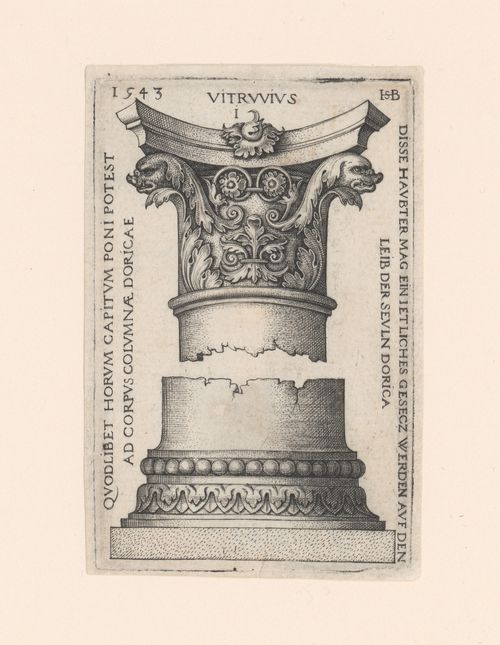
- This engraving depicts a design for an order of architecture showing the capital and the base. Although the inscriptions refer to "DORICA[E]", this is not one of the traditional orders of architecture: the acanthus leaves on the capital suggest a Corinthian model while other details, such as the dolphin heads, suggest a more personal interpretation. - This print is one of a set of four prints of capitals and bases which were engraved by Hans Sebald Beham. Patricia Condon suggests that these prints were made for a general audience rather than for architects ('Ornament and Architecture', 29). Three of the prints in the CCA collection are from the collection of the Ducs d'Arenburg, while the provenance of this print is unknown.
DR1987:0342
Description:
- This engraving depicts a design for an order of architecture showing the capital and the base. Although the inscriptions refer to "DORICA[E]", this is not one of the traditional orders of architecture: the acanthus leaves on the capital suggest a Corinthian model while other details, such as the dolphin heads, suggest a more personal interpretation. - This print is one of a set of four prints of capitals and bases which were engraved by Hans Sebald Beham. Patricia Condon suggests that these prints were made for a general audience rather than for architects ('Ornament and Architecture', 29). Three of the prints in the CCA collection are from the collection of the Ducs d'Arenburg, while the provenance of this print is unknown.
Personnes et institutions:
Sujet:
architecture
architecture
Date:
1543
1543
Titre:
Design for the capital and base of a column
Actions:
DR1987:0342
Description:
- This engraving depicts a design for an order of architecture showing the capital and the base. Although the inscriptions refer to "DORICA[E]", this is not one of the traditional orders of architecture: the acanthus leaves on the capital suggest a Corinthian model while other details, such as the dolphin heads, suggest a more personal interpretation. - This print is one of a set of four prints of capitals and bases which were engraved by Hans Sebald Beham. Patricia Condon suggests that these prints were made for a general audience rather than for architects ('Ornament and Architecture', 29). Three of the prints in the CCA collection are from the collection of the Ducs d'Arenburg, while the provenance of this print is unknown.
Design for the capital and base of a column
Actions:
DR1987:0342
Description:
- This engraving depicts a design for an order of architecture showing the capital and the base. Although the inscriptions refer to "DORICA[E]", this is not one of the traditional orders of architecture: the acanthus leaves on the capital suggest a Corinthian model while other details, such as the dolphin heads, suggest a more personal interpretation. - This print is one of a set of four prints of capitals and bases which were engraved by Hans Sebald Beham. Patricia Condon suggests that these prints were made for a general audience rather than for architects ('Ornament and Architecture', 29). Three of the prints in the CCA collection are from the collection of the Ducs d'Arenburg, while the provenance of this print is unknown.
Classification:
oeuvres d'art
oeuvres d'art
Date:
1543
1543
Personnes et institutions:
Sujet:
architecture
architecture
Classification:
archives
Niveau de description archivistique:
Fonds
archives
Niveau de description archivistique:
Fonds
Titre:
Fonds Wells Coates
Fonds Wells Coates
Numéro de référence:
AP030
Résumé:
The Wells Coates Fonds, 1909-1986, documents the professional career and personal life of architect Wells Wintemute Coates. The fonds consists of the following materials: approximately 1,937 photographic materials, 530 drawings (including reprographic copies), 3 l.m. textual records, 200 slides, 37 books, 2 reels of 16mm film (400 feet Cine- Kodak Film), 2 medals, 1 box of buttons and 1 box of keys.
AP030
Résumé:
The Wells Coates Fonds, 1909-1986, documents the professional career and personal life of architect Wells Wintemute Coates. The fonds consists of the following materials: approximately 1,937 photographic materials, 530 drawings (including reprographic copies), 3 l.m. textual records, 200 slides, 37 books, 2 reels of 16mm film (400 feet Cine- Kodak Film), 2 medals, 1 box of buttons and 1 box of keys.
Personnes et institutions:
Date:
1909-1986
1909-1986
Titre:
Fonds Wells Coates
Actions:
AP030
Résumé:
The Wells Coates Fonds, 1909-1986, documents the professional career and personal life of architect Wells Wintemute Coates. The fonds consists of the following materials: approximately 1,937 photographic materials, 530 drawings (including reprographic copies), 3 l.m. textual records, 200 slides, 37 books, 2 reels of 16mm film (400 feet Cine- Kodak Film), 2 medals, 1 box of buttons and 1 box of keys.
Fonds Wells Coates
Actions:
AP030
Résumé:
The Wells Coates Fonds, 1909-1986, documents the professional career and personal life of architect Wells Wintemute Coates. The fonds consists of the following materials: approximately 1,937 photographic materials, 530 drawings (including reprographic copies), 3 l.m. textual records, 200 slides, 37 books, 2 reels of 16mm film (400 feet Cine- Kodak Film), 2 medals, 1 box of buttons and 1 box of keys.
Classification:
archives
Niveau de description archivistique:
Fonds
archives
Niveau de description archivistique:
Fonds
Date:
1909-1986
1909-1986
Personnes et institutions:
Classification:
expositions
expositions
Actions:
Description:
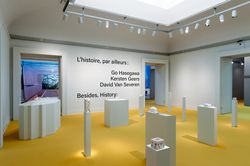
Quel rôle l’histoire a-t-elle à jouer dans la pratique architecturale contemporaine? Plutôt que d’adopter une position postmoderne ou d’évoquer des débats anciens et des formes architecturales historiques, Go Hasegawa, Kersten Geers et David Van Severen abordent dans leur travail les problématiques actuelles dans un esprit de dialogue avec l’histoire. Même si les(...)
Quel rôle l’histoire a-t-elle à jouer dans la pratique architecturale contemporaine? Plutôt que d’adopter une position postmoderne ou d’évoquer des débats anciens et des formes architecturales historiques, Go Hasegawa, Kersten Geers et David Van Severen abordent dans leur travail les problématiques actuelles dans un esprit de dialogue avec l’histoire. Même si les(...)
Localisation:
Salles principales Mot(s)-clé(s):
L’histoire, par ailleurs, Go Hasegawa, Kersten Geers, David Van Severen, Office, KGDVS, Bas Princen
Salles principales Mot(s)-clé(s):
L’histoire, par ailleurs, Go Hasegawa, Kersten Geers, David Van Severen, Office, KGDVS, Bas Princen
Date:
10 mai 2017 au 15 octobre 2017
10 mai 2017 au 15 octobre 2017
Titre:
L’histoire, par ailleurs : Go Hasegawa, Kersten Geers, David Van Severen
Actions:
Description:
Quel rôle l’histoire a-t-elle à jouer dans la pratique architecturale contemporaine? Plutôt que d’adopter une position postmoderne ou d’évoquer des débats anciens et des formes architecturales historiques, Go Hasegawa, Kersten Geers et David Van Severen abordent dans leur travail les problématiques actuelles dans un esprit de dialogue avec l’histoire. Même si les(...)
L’histoire, par ailleurs : Go Hasegawa, Kersten Geers, David Van Severen
Actions:
Description:
Quel rôle l’histoire a-t-elle à jouer dans la pratique architecturale contemporaine? Plutôt que d’adopter une position postmoderne ou d’évoquer des débats anciens et des formes architecturales historiques, Go Hasegawa, Kersten Geers et David Van Severen abordent dans leur travail les problématiques actuelles dans un esprit de dialogue avec l’histoire. Même si les(...)
Classification:
expositions
expositions
Date:
10 mai 2017 au
15 octobre 2017
10 mai 2017 au
15 octobre 2017
Localisation:
Salles principales Mot(s)-clé(s):
L’histoire, par ailleurs, Go Hasegawa, Kersten Geers, David Van Severen, Office, KGDVS, Bas Princen
Salles principales Mot(s)-clé(s):
L’histoire, par ailleurs, Go Hasegawa, Kersten Geers, David Van Severen, Office, KGDVS, Bas Princen
Classification:
documents textuels
documents textuels
Numéro de référence:
DR2004:1430
Description:
binders and files including Delft Conference (1970) notes by JS, talk by CP; 'IVA Conference/Austria / 1970'; 'Architecture Workshop / Periphery / At the 'Haus der Architektur' 2 classes : Domenig, Zumthor (1989), Austria, inc. transparencies of exh, Graz, slides, photos; envelope 'CP writings' some postcards, offprints, exh cats; reprographic copies of photographs of CP and other individuals 'Duckland /Hamburg 3/4 day charette'; 'Photos by Cossack/city architect of Hamburg';
DR2004:1430
Description:
binders and files including Delft Conference (1970) notes by JS, talk by CP; 'IVA Conference/Austria / 1970'; 'Architecture Workshop / Periphery / At the 'Haus der Architektur' 2 classes : Domenig, Zumthor (1989), Austria, inc. transparencies of exh, Graz, slides, photos; envelope 'CP writings' some postcards, offprints, exh cats; reprographic copies of photographs of CP and other individuals 'Duckland /Hamburg 3/4 day charette'; 'Photos by Cossack/city architect of Hamburg';
Personnes et institutions:
Date:
1970-1989
1970-1989
Titre:
Binders and files including Delft Conference (1970) notes by JS
Actions:
DR2004:1430
Description:
binders and files including Delft Conference (1970) notes by JS, talk by CP; 'IVA Conference/Austria / 1970'; 'Architecture Workshop / Periphery / At the 'Haus der Architektur' 2 classes : Domenig, Zumthor (1989), Austria, inc. transparencies of exh, Graz, slides, photos; envelope 'CP writings' some postcards, offprints, exh cats; reprographic copies of photographs of CP and other individuals 'Duckland /Hamburg 3/4 day charette'; 'Photos by Cossack/city architect of Hamburg';
Binders and files including Delft Conference (1970) notes by JS
Actions:
DR2004:1430
Description:
binders and files including Delft Conference (1970) notes by JS, talk by CP; 'IVA Conference/Austria / 1970'; 'Architecture Workshop / Periphery / At the 'Haus der Architektur' 2 classes : Domenig, Zumthor (1989), Austria, inc. transparencies of exh, Graz, slides, photos; envelope 'CP writings' some postcards, offprints, exh cats; reprographic copies of photographs of CP and other individuals 'Duckland /Hamburg 3/4 day charette'; 'Photos by Cossack/city architect of Hamburg';
Classification:
documents textuels
documents textuels
Date:
1970-1989
1970-1989
Personnes et institutions:
Classification:
archives
Niveau de description archivistique:
Fonds
archives
Niveau de description archivistique:
Fonds
Numéro de référence:
AP009
Résumé:
The Arcop Associates Maison Alcan project records, 1979 – 1983, document Arcop’s (Architects in Co-Partnership) design and construction of Alcan’s Montreal head office, Maison Alcan. These project records consist of the following: approximately 6000 drawings (including reprographic copies), 915 photographic materials, 15 l.m. of textual records, 2 models, 2 panels, 2 plaster mouldings, 1 book, and 1 mullion extrusion.
AP009
Résumé:
The Arcop Associates Maison Alcan project records, 1979 – 1983, document Arcop’s (Architects in Co-Partnership) design and construction of Alcan’s Montreal head office, Maison Alcan. These project records consist of the following: approximately 6000 drawings (including reprographic copies), 915 photographic materials, 15 l.m. of textual records, 2 models, 2 panels, 2 plaster mouldings, 1 book, and 1 mullion extrusion.
Personnes et institutions:
Date:
1979-1983
1979-1983
Titre:
Documents d’archives d’Arcop Associates pour le projet Maison Alcan
Actions:
AP009
Résumé:
The Arcop Associates Maison Alcan project records, 1979 – 1983, document Arcop’s (Architects in Co-Partnership) design and construction of Alcan’s Montreal head office, Maison Alcan. These project records consist of the following: approximately 6000 drawings (including reprographic copies), 915 photographic materials, 15 l.m. of textual records, 2 models, 2 panels, 2 plaster mouldings, 1 book, and 1 mullion extrusion.
Documents d’archives d’Arcop Associates pour le projet Maison Alcan
Actions:
AP009
Résumé:
The Arcop Associates Maison Alcan project records, 1979 – 1983, document Arcop’s (Architects in Co-Partnership) design and construction of Alcan’s Montreal head office, Maison Alcan. These project records consist of the following: approximately 6000 drawings (including reprographic copies), 915 photographic materials, 15 l.m. of textual records, 2 models, 2 panels, 2 plaster mouldings, 1 book, and 1 mullion extrusion.
Classification:
archives
Niveau de description archivistique:
Fonds
archives
Niveau de description archivistique:
Fonds
Date:
1979-1983
1979-1983
Personnes et institutions:
Classification:
archives
Niveau de description archivistique:
Fonds
archives
Niveau de description archivistique:
Fonds
Titre:
Fonds John Bird
Fonds John Bird
Numéro de référence:
AP108
Résumé:
The John Bird fonds documents the professional practice of the Westmount-based architect, and includes drawings and photographs of 24 architectural projects carried out in and around Montréal, Québec between 1954 and 1992. The fonds also contains a number of published articles that document John Bird's professional activities. Key projects that are represented include the Canadian Technical Tape Building, St. Laurent (1955-1963), Saint Gabriel's Church, Montréal (1959-1960), and Saint John Brebeuf Church, Lasalle (1962-1966). The fonds also includes numerous projects for Toronto-Dominion Bank buildings (1959-1992) as well as residential designs completed for the Central Mortgage and Housing Corporation (1956-1969).
AP108
Résumé:
The John Bird fonds documents the professional practice of the Westmount-based architect, and includes drawings and photographs of 24 architectural projects carried out in and around Montréal, Québec between 1954 and 1992. The fonds also contains a number of published articles that document John Bird's professional activities. Key projects that are represented include the Canadian Technical Tape Building, St. Laurent (1955-1963), Saint Gabriel's Church, Montréal (1959-1960), and Saint John Brebeuf Church, Lasalle (1962-1966). The fonds also includes numerous projects for Toronto-Dominion Bank buildings (1959-1992) as well as residential designs completed for the Central Mortgage and Housing Corporation (1956-1969).
Personnes et institutions:
Date:
1942 - 1992
1942 - 1992
Titre:
Fonds John Bird
Actions:
AP108
Résumé:
The John Bird fonds documents the professional practice of the Westmount-based architect, and includes drawings and photographs of 24 architectural projects carried out in and around Montréal, Québec between 1954 and 1992. The fonds also contains a number of published articles that document John Bird's professional activities. Key projects that are represented include the Canadian Technical Tape Building, St. Laurent (1955-1963), Saint Gabriel's Church, Montréal (1959-1960), and Saint John Brebeuf Church, Lasalle (1962-1966). The fonds also includes numerous projects for Toronto-Dominion Bank buildings (1959-1992) as well as residential designs completed for the Central Mortgage and Housing Corporation (1956-1969).
Fonds John Bird
Actions:
AP108
Résumé:
The John Bird fonds documents the professional practice of the Westmount-based architect, and includes drawings and photographs of 24 architectural projects carried out in and around Montréal, Québec between 1954 and 1992. The fonds also contains a number of published articles that document John Bird's professional activities. Key projects that are represented include the Canadian Technical Tape Building, St. Laurent (1955-1963), Saint Gabriel's Church, Montréal (1959-1960), and Saint John Brebeuf Church, Lasalle (1962-1966). The fonds also includes numerous projects for Toronto-Dominion Bank buildings (1959-1992) as well as residential designs completed for the Central Mortgage and Housing Corporation (1956-1969).
Classification:
archives
Niveau de description archivistique:
Fonds
archives
Niveau de description archivistique:
Fonds
Date:
1942 - 1992
1942 - 1992
Personnes et institutions:
Niveau de description archivistique:
Sous-série
Sous-série
Numéro de référence:
CI001.S2.D4
Description:
The CCA collection includes albums of drawings for some of Charles Rohault de Fleury's most important public architectural projects, built and unbuilt. They provide valuable insight into his design development process, construction techniques, and flexibility regarding building types and styles, as well as illuminating the larger issues of urban planning and the complex interaction between architect, contractor, and entrepreneur in mid-19th century France. The neo-Moorish Hippodrome National (DR1974:0002:017:001-060) - an ephemeral structure constructed of a wood frame with canvas sheathing- was built adjacent to the Place de l'Étoile in 1845 and destroyed in 1856. The documents and drawings in the album provide a highly detailed and complete overview of the project from the study of historical models to contract drawings. Written documentation, including cost estimates, a contract, daily accounts of construction, entrepreneur's accounts, and correspondence with the principal contractor, is particularly revealing of the working procedures on a large commercial project. In 1855 Charles and Auguste Joseph Pellechet constructed the Chambre des Notaires on the newly transformed Place du Chatelet - the intended centre point of Haussmann's 'Nouveau Paris' (1). The CCA album contains primarily transfer lithographed working and contract drawings signed by the entrepreneurs and/or contractors (DR1974:0002:022:001-021). The plans reflect Charles' sensitive integration of iron and masonry construction, which allowed for abundant fenestration on the side facades, while maintaining the traditional aspects of character and solidity required in a prominent urban building. Charles' approach to the design of more utilitarian structures is indicated in his album of competition drawings for a municipal slaughterhouse submitted to the city of Saint-Germain-en-Laye, 1846-1847 (DR1974:0002:023:001-012). His interpretation of the written programme (included in the album) and the resulting design, is strongly influenced by his father's previous slaughterhouse projects, as well as his own for La Villete, 1835-1836 (see DR1974:0002:014:001-104 in Hubert Rohault de Fleury's Public and Urban Architecture (file CI001.S3.D1)). The pared down Neoclassical style of the slaughterhouse is typical of both Charles and Hubert's utilitarian structures. Charles' largest public urban project outside of Paris was for an unexecuted Hôtel de Prefecture (Departement de la Vienne) and Hôtel de Ville for the city of Poitiers, 1859-1860 (DR1974:0002:020:001-050). The project for the Louis XIIIth style Hotel de Prefecture is fairly complete and includes many working drawings, while the Francis Ist style Hotel de Ville is much less developed and consists primarily of unbound sketches and finished drawings. A site plan indicates that Charles intended the Hôtel de Prefecture and Hôtel de Ville to be located nearly opposite each other and connected by a major thoroughfare. The placement of both structures in the western quarter of the city probably reflects an earlier urban renewal plan proposed by the architects Morandiere et Compaing in 1849. The Hôtel de Prefecture (1864-1868) and Hotel de Ville (1869-1876) were eventually built after designs by Antoine Guerinot, in the same style, and on sites close to those proposed by Charles. Drawings and engravings of antique and contemporary theatres, fountains, honorific monuments, and large public projects by other architects are collected in album DR1974:0002:010:001-048 for reference purposes (some of these may have been collected by his father Hubert). (1) David Van Zanten, "Building Paris: Architectural Institutions and the Transformation of the French Capital, 1830-1870" (Cambridge, Eng.: Cambridge University Press, 1994), p. 235 and pp. 233-241 for the development of the Place du Chatelet.
CI001.S2.D4
Description:
The CCA collection includes albums of drawings for some of Charles Rohault de Fleury's most important public architectural projects, built and unbuilt. They provide valuable insight into his design development process, construction techniques, and flexibility regarding building types and styles, as well as illuminating the larger issues of urban planning and the complex interaction between architect, contractor, and entrepreneur in mid-19th century France. The neo-Moorish Hippodrome National (DR1974:0002:017:001-060) - an ephemeral structure constructed of a wood frame with canvas sheathing- was built adjacent to the Place de l'Étoile in 1845 and destroyed in 1856. The documents and drawings in the album provide a highly detailed and complete overview of the project from the study of historical models to contract drawings. Written documentation, including cost estimates, a contract, daily accounts of construction, entrepreneur's accounts, and correspondence with the principal contractor, is particularly revealing of the working procedures on a large commercial project. In 1855 Charles and Auguste Joseph Pellechet constructed the Chambre des Notaires on the newly transformed Place du Chatelet - the intended centre point of Haussmann's 'Nouveau Paris' (1). The CCA album contains primarily transfer lithographed working and contract drawings signed by the entrepreneurs and/or contractors (DR1974:0002:022:001-021). The plans reflect Charles' sensitive integration of iron and masonry construction, which allowed for abundant fenestration on the side facades, while maintaining the traditional aspects of character and solidity required in a prominent urban building. Charles' approach to the design of more utilitarian structures is indicated in his album of competition drawings for a municipal slaughterhouse submitted to the city of Saint-Germain-en-Laye, 1846-1847 (DR1974:0002:023:001-012). His interpretation of the written programme (included in the album) and the resulting design, is strongly influenced by his father's previous slaughterhouse projects, as well as his own for La Villete, 1835-1836 (see DR1974:0002:014:001-104 in Hubert Rohault de Fleury's Public and Urban Architecture (file CI001.S3.D1)). The pared down Neoclassical style of the slaughterhouse is typical of both Charles and Hubert's utilitarian structures. Charles' largest public urban project outside of Paris was for an unexecuted Hôtel de Prefecture (Departement de la Vienne) and Hôtel de Ville for the city of Poitiers, 1859-1860 (DR1974:0002:020:001-050). The project for the Louis XIIIth style Hotel de Prefecture is fairly complete and includes many working drawings, while the Francis Ist style Hotel de Ville is much less developed and consists primarily of unbound sketches and finished drawings. A site plan indicates that Charles intended the Hôtel de Prefecture and Hôtel de Ville to be located nearly opposite each other and connected by a major thoroughfare. The placement of both structures in the western quarter of the city probably reflects an earlier urban renewal plan proposed by the architects Morandiere et Compaing in 1849. The Hôtel de Prefecture (1864-1868) and Hotel de Ville (1869-1876) were eventually built after designs by Antoine Guerinot, in the same style, and on sites close to those proposed by Charles. Drawings and engravings of antique and contemporary theatres, fountains, honorific monuments, and large public projects by other architects are collected in album DR1974:0002:010:001-048 for reference purposes (some of these may have been collected by his father Hubert). (1) David Van Zanten, "Building Paris: Architectural Institutions and the Transformation of the French Capital, 1830-1870" (Cambridge, Eng.: Cambridge University Press, 1994), p. 235 and pp. 233-241 for the development of the Place du Chatelet.
Personnes et institutions:
Date:
[1840-1860]
[1840-1860]
Titre:
Public and Urban Architecture
CI001.S2.D4
Description:
The CCA collection includes albums of drawings for some of Charles Rohault de Fleury's most important public architectural projects, built and unbuilt. They provide valuable insight into his design development process, construction techniques, and flexibility regarding building types and styles, as well as illuminating the larger issues of urban planning and the complex interaction between architect, contractor, and entrepreneur in mid-19th century France. The neo-Moorish Hippodrome National (DR1974:0002:017:001-060) - an ephemeral structure constructed of a wood frame with canvas sheathing- was built adjacent to the Place de l'Étoile in 1845 and destroyed in 1856. The documents and drawings in the album provide a highly detailed and complete overview of the project from the study of historical models to contract drawings. Written documentation, including cost estimates, a contract, daily accounts of construction, entrepreneur's accounts, and correspondence with the principal contractor, is particularly revealing of the working procedures on a large commercial project. In 1855 Charles and Auguste Joseph Pellechet constructed the Chambre des Notaires on the newly transformed Place du Chatelet - the intended centre point of Haussmann's 'Nouveau Paris' (1). The CCA album contains primarily transfer lithographed working and contract drawings signed by the entrepreneurs and/or contractors (DR1974:0002:022:001-021). The plans reflect Charles' sensitive integration of iron and masonry construction, which allowed for abundant fenestration on the side facades, while maintaining the traditional aspects of character and solidity required in a prominent urban building. Charles' approach to the design of more utilitarian structures is indicated in his album of competition drawings for a municipal slaughterhouse submitted to the city of Saint-Germain-en-Laye, 1846-1847 (DR1974:0002:023:001-012). His interpretation of the written programme (included in the album) and the resulting design, is strongly influenced by his father's previous slaughterhouse projects, as well as his own for La Villete, 1835-1836 (see DR1974:0002:014:001-104 in Hubert Rohault de Fleury's Public and Urban Architecture (file CI001.S3.D1)). The pared down Neoclassical style of the slaughterhouse is typical of both Charles and Hubert's utilitarian structures. Charles' largest public urban project outside of Paris was for an unexecuted Hôtel de Prefecture (Departement de la Vienne) and Hôtel de Ville for the city of Poitiers, 1859-1860 (DR1974:0002:020:001-050). The project for the Louis XIIIth style Hotel de Prefecture is fairly complete and includes many working drawings, while the Francis Ist style Hotel de Ville is much less developed and consists primarily of unbound sketches and finished drawings. A site plan indicates that Charles intended the Hôtel de Prefecture and Hôtel de Ville to be located nearly opposite each other and connected by a major thoroughfare. The placement of both structures in the western quarter of the city probably reflects an earlier urban renewal plan proposed by the architects Morandiere et Compaing in 1849. The Hôtel de Prefecture (1864-1868) and Hotel de Ville (1869-1876) were eventually built after designs by Antoine Guerinot, in the same style, and on sites close to those proposed by Charles. Drawings and engravings of antique and contemporary theatres, fountains, honorific monuments, and large public projects by other architects are collected in album DR1974:0002:010:001-048 for reference purposes (some of these may have been collected by his father Hubert). (1) David Van Zanten, "Building Paris: Architectural Institutions and the Transformation of the French Capital, 1830-1870" (Cambridge, Eng.: Cambridge University Press, 1994), p. 235 and pp. 233-241 for the development of the Place du Chatelet.
Public and Urban Architecture
CI001.S2.D4
Description:
The CCA collection includes albums of drawings for some of Charles Rohault de Fleury's most important public architectural projects, built and unbuilt. They provide valuable insight into his design development process, construction techniques, and flexibility regarding building types and styles, as well as illuminating the larger issues of urban planning and the complex interaction between architect, contractor, and entrepreneur in mid-19th century France. The neo-Moorish Hippodrome National (DR1974:0002:017:001-060) - an ephemeral structure constructed of a wood frame with canvas sheathing- was built adjacent to the Place de l'Étoile in 1845 and destroyed in 1856. The documents and drawings in the album provide a highly detailed and complete overview of the project from the study of historical models to contract drawings. Written documentation, including cost estimates, a contract, daily accounts of construction, entrepreneur's accounts, and correspondence with the principal contractor, is particularly revealing of the working procedures on a large commercial project. In 1855 Charles and Auguste Joseph Pellechet constructed the Chambre des Notaires on the newly transformed Place du Chatelet - the intended centre point of Haussmann's 'Nouveau Paris' (1). The CCA album contains primarily transfer lithographed working and contract drawings signed by the entrepreneurs and/or contractors (DR1974:0002:022:001-021). The plans reflect Charles' sensitive integration of iron and masonry construction, which allowed for abundant fenestration on the side facades, while maintaining the traditional aspects of character and solidity required in a prominent urban building. Charles' approach to the design of more utilitarian structures is indicated in his album of competition drawings for a municipal slaughterhouse submitted to the city of Saint-Germain-en-Laye, 1846-1847 (DR1974:0002:023:001-012). His interpretation of the written programme (included in the album) and the resulting design, is strongly influenced by his father's previous slaughterhouse projects, as well as his own for La Villete, 1835-1836 (see DR1974:0002:014:001-104 in Hubert Rohault de Fleury's Public and Urban Architecture (file CI001.S3.D1)). The pared down Neoclassical style of the slaughterhouse is typical of both Charles and Hubert's utilitarian structures. Charles' largest public urban project outside of Paris was for an unexecuted Hôtel de Prefecture (Departement de la Vienne) and Hôtel de Ville for the city of Poitiers, 1859-1860 (DR1974:0002:020:001-050). The project for the Louis XIIIth style Hotel de Prefecture is fairly complete and includes many working drawings, while the Francis Ist style Hotel de Ville is much less developed and consists primarily of unbound sketches and finished drawings. A site plan indicates that Charles intended the Hôtel de Prefecture and Hôtel de Ville to be located nearly opposite each other and connected by a major thoroughfare. The placement of both structures in the western quarter of the city probably reflects an earlier urban renewal plan proposed by the architects Morandiere et Compaing in 1849. The Hôtel de Prefecture (1864-1868) and Hotel de Ville (1869-1876) were eventually built after designs by Antoine Guerinot, in the same style, and on sites close to those proposed by Charles. Drawings and engravings of antique and contemporary theatres, fountains, honorific monuments, and large public projects by other architects are collected in album DR1974:0002:010:001-048 for reference purposes (some of these may have been collected by his father Hubert). (1) David Van Zanten, "Building Paris: Architectural Institutions and the Transformation of the French Capital, 1830-1870" (Cambridge, Eng.: Cambridge University Press, 1994), p. 235 and pp. 233-241 for the development of the Place du Chatelet.
Niveau de description archivistique:
File 4
File 4
Date:
[1840-1860]
[1840-1860]
Personnes et institutions:


