


2695 Résultats
Classification:
livres
livres
Actions:
Exemplaires:
Description:
287 pages, 1 unnumbered page : illustrations (some color), facsimiles, plans, portraits ; 32 cm
Description:
287 pages, 1 unnumbered page : illustrations (some color), facsimiles, plans, portraits ; 32 cm
Auteur:
Sujet:
Publication:
Boston : Little, Brown and Company, [1997]., ©1997
Boston : Little, Brown and Company, [1997]., ©1997
Titre:
Bernini : genius of the Baroque / Charles Avery ; special photography by David Finn.
Actions:
Exemplaires:
Description:
287 pages, 1 unnumbered page : illustrations (some color), facsimiles, plans, portraits ; 32 cm
Bernini : genius of the Baroque / Charles Avery ; special photography by David Finn.
Actions:
Exemplaires:
Description:
287 pages, 1 unnumbered page : illustrations (some color), facsimiles, plans, portraits ; 32 cm
Classification:
livres
livres
Publication:
Boston : Little, Brown and Company, [1997]., ©1997
Boston : Little, Brown and Company, [1997]., ©1997
Auteur:
Sujet:
Classification:
livres
livres

Actions:
Prix:
$19.95
(disponible sur commande)
Résumé:
Beginning with the earliest human occupation of North America, nearly 14,000 years ago, Nelles takes us on a whirlwind tour of the land and its inhabitants to the present day. Canada's enduring theme, he argues, is transformation. The country has undergone several fundamental changes-from Aboriginal occupation, to French and British colonization, to the rise of an(...)
$19.95
(disponible sur commande)
Résumé:
Beginning with the earliest human occupation of North America, nearly 14,000 years ago, Nelles takes us on a whirlwind tour of the land and its inhabitants to the present day. Canada's enduring theme, he argues, is transformation. The country has undergone several fundamental changes-from Aboriginal occupation, to French and British colonization, to the rise of an(...)
Titre:
A little history of Canada: second edition
Actions:
Prix:
$19.95
(disponible sur commande)
Résumé:
Beginning with the earliest human occupation of North America, nearly 14,000 years ago, Nelles takes us on a whirlwind tour of the land and its inhabitants to the present day. Canada's enduring theme, he argues, is transformation. The country has undergone several fundamental changes-from Aboriginal occupation, to French and British colonization, to the rise of an independent nation and distinct society-and it is doing so yet again. Fully revised throughout, this updated edition incorporates the latest research that helps us understand the course of history. A new concluding chapter unpacks the challenges that the country has faced in the twenty-first century: Canada-US relations post 9/11, the country's place within the global economy, a continuous influx of immigration, and the geographical consequences of global warming. Lively and opinionated, this is the ever-evolving story of a nation.
A little history of Canada: second edition
Actions:
Prix:
$19.95
(disponible sur commande)
Résumé:
Beginning with the earliest human occupation of North America, nearly 14,000 years ago, Nelles takes us on a whirlwind tour of the land and its inhabitants to the present day. Canada's enduring theme, he argues, is transformation. The country has undergone several fundamental changes-from Aboriginal occupation, to French and British colonization, to the rise of an independent nation and distinct society-and it is doing so yet again. Fully revised throughout, this updated edition incorporates the latest research that helps us understand the course of history. A new concluding chapter unpacks the challenges that the country has faced in the twenty-first century: Canada-US relations post 9/11, the country's place within the global economy, a continuous influx of immigration, and the geographical consequences of global warming. Lively and opinionated, this is the ever-evolving story of a nation.
Classification:
livres
livres
Publication:
avril 2011
avril 2011
Sujet:
Architecture du Canada
Architecture du Canada
Classification:
livres
livres
Titre:
Photography and death
Photography and death
Actions:
Prix:
$35.95
(disponible sur commande)
Résumé:
The idea of photographing the dead is as old as photography itself. For the most part, early death photographs were commissioned or taken by relatives of the deceased and preserved in the home as part of the family collection. Once thought inappropriate and macabre, today these photographs are considered to have a beneficial role in bereavement therapy. Photography(...)
$35.95
(disponible sur commande)
Résumé:
The idea of photographing the dead is as old as photography itself. For the most part, early death photographs were commissioned or taken by relatives of the deceased and preserved in the home as part of the family collection. Once thought inappropriate and macabre, today these photographs are considered to have a beneficial role in bereavement therapy. Photography(...)
Titre:
Photography and death
Actions:
Prix:
$35.95
(disponible sur commande)
Résumé:
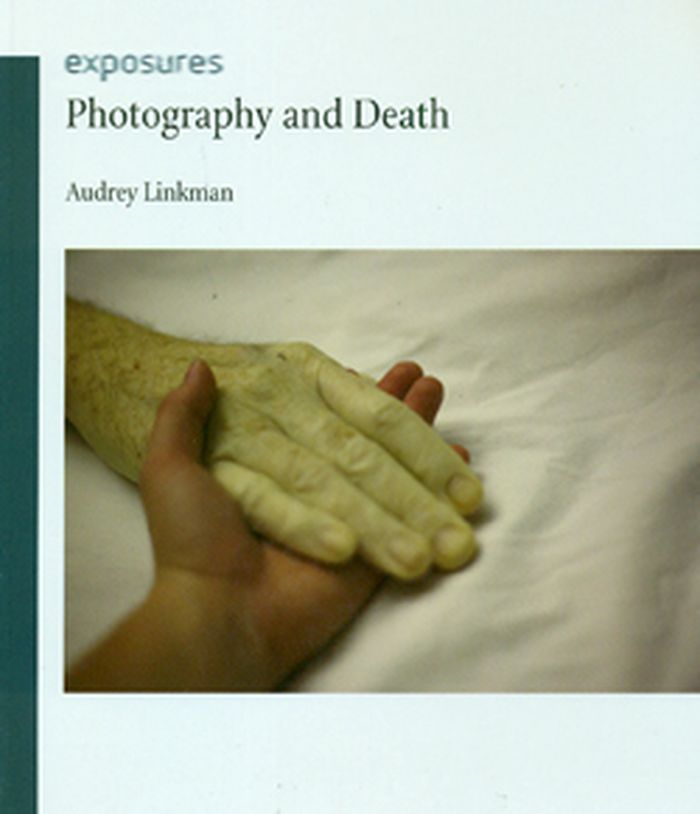
The idea of photographing the dead is as old as photography itself. For the most part, early death photographs were commissioned or taken by relatives of the deceased and preserved in the home as part of the family collection. Once thought inappropriate and macabre, today these photographs are considered to have a beneficial role in bereavement therapy. Photography and Death reveals the significance of such images, formerly dismissed as disturbing or grotesque, and places them within the context of changing cultural attitudes towards death and loss. Excluding images of death through war, violence, or natural disasters, Audrey Linkman concentrates on photographs of natural deaths within the family. She identifies the range of death-related photographs that have been produced in both Europe and North America since the 1840s and charts changes in their treatment through the decades.
Photography and death
Actions:
Prix:
$35.95
(disponible sur commande)
Résumé:
The idea of photographing the dead is as old as photography itself. For the most part, early death photographs were commissioned or taken by relatives of the deceased and preserved in the home as part of the family collection. Once thought inappropriate and macabre, today these photographs are considered to have a beneficial role in bereavement therapy. Photography and Death reveals the significance of such images, formerly dismissed as disturbing or grotesque, and places them within the context of changing cultural attitudes towards death and loss. Excluding images of death through war, violence, or natural disasters, Audrey Linkman concentrates on photographs of natural deaths within the family. She identifies the range of death-related photographs that have been produced in both Europe and North America since the 1840s and charts changes in their treatment through the decades.
Classification:
livres
livres
Publication:
avril 2011
avril 2011
Sujet:
Théorie de la photographie
Théorie de la photographie
Classification:
livres
livres
Prix:
$63.00
(disponible en magasin)
Résumé:
Homosexuality is still a taboo subject in architectural history. When historical architectural personalities have lived outside the heterosexual norm, their private lives are readily shrouded in obscurity. As long as penal laws endured, social existence was constantly threatened, and hiding was a necessity. Defensive strategies were needed to protect themselves. To track(...)
$63.00
(disponible en magasin)
Résumé:
Homosexuality is still a taboo subject in architectural history. When historical architectural personalities have lived outside the heterosexual norm, their private lives are readily shrouded in obscurity. As long as penal laws endured, social existence was constantly threatened, and hiding was a necessity. Defensive strategies were needed to protect themselves. To track(...)
Titre:
Gay architects: Silent biographies from 18th to 20th century
Actions:
Prix:
$63.00
(disponible en magasin)
Résumé:
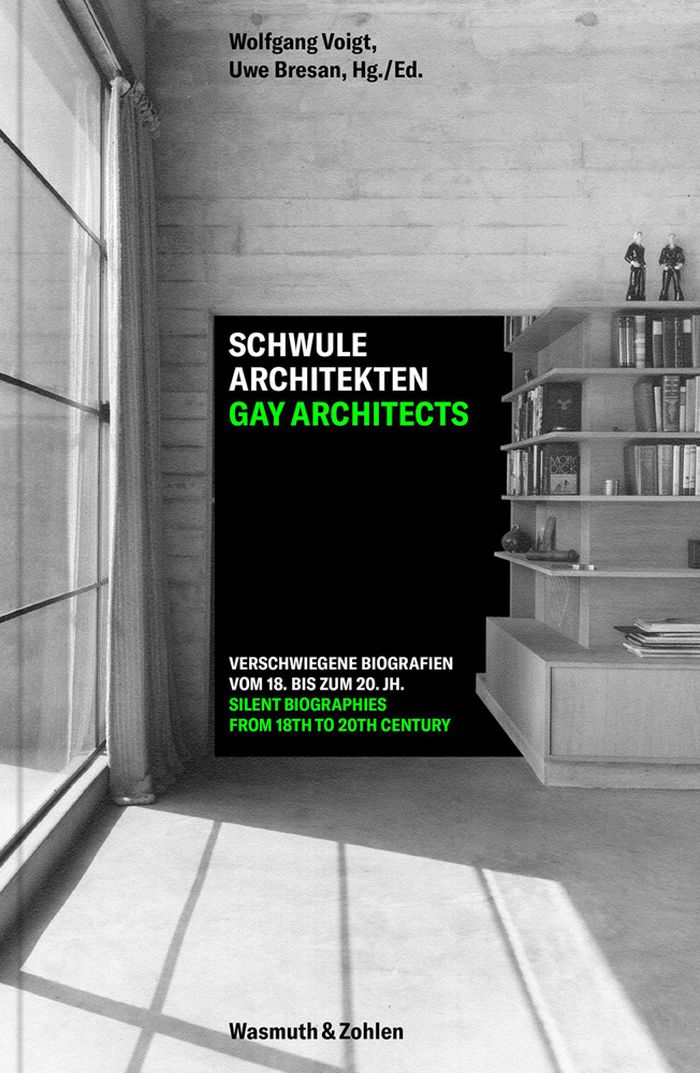
Homosexuality is still a taboo subject in architectural history. When historical architectural personalities have lived outside the heterosexual norm, their private lives are readily shrouded in obscurity. As long as penal laws endured, social existence was constantly threatened, and hiding was a necessity. Defensive strategies were needed to protect themselves. To track down these outsiders of the past, historical sources must be read queerly. This volume brings together 35 portraits of gay architects from the Baroque era to the modern age in North America, Europe and Palestine, presenting surprising biographies, admirable houses and, not infrequently, intelligently designed refuges with which the protagonists protected their private lives. Featured architects include: Stanford White, Ralph Adams Cram, Bertram Grosvenor Goodhue, Bruce Goff, Charles Moor, Lionel Pries, Barry Dierks, William Alexander Levy, Paul Rudolph, Horace Gifford, Luis Barragán, Geoffrey Bawa, Horace Walpole and more.
Gay architects: Silent biographies from 18th to 20th century
Actions:
Prix:
$63.00
(disponible en magasin)
Résumé:
Homosexuality is still a taboo subject in architectural history. When historical architectural personalities have lived outside the heterosexual norm, their private lives are readily shrouded in obscurity. As long as penal laws endured, social existence was constantly threatened, and hiding was a necessity. Defensive strategies were needed to protect themselves. To track down these outsiders of the past, historical sources must be read queerly. This volume brings together 35 portraits of gay architects from the Baroque era to the modern age in North America, Europe and Palestine, presenting surprising biographies, admirable houses and, not infrequently, intelligently designed refuges with which the protagonists protected their private lives. Featured architects include: Stanford White, Ralph Adams Cram, Bertram Grosvenor Goodhue, Bruce Goff, Charles Moor, Lionel Pries, Barry Dierks, William Alexander Levy, Paul Rudolph, Horace Gifford, Luis Barragán, Geoffrey Bawa, Horace Walpole and more.
Classification:
livres
livres
Publication:
mars 2023
mars 2023
Sujet:
Théorie de l’architecture
Théorie de l’architecture
Classification:
périodiques
périodiques
Actions:
Prix:
$19.95
(disponible en magasin)
Résumé:
The Funambulist, issue 20. ''Settler Colonialism in Turtle Island'' is a first ever issue of The Funambulist that was guest-edited. This issue was edited by Turtle Island Indigenous scholars and activists Melanie K. Yazzie and Nick Estes (who had contributed twice to the magazine in the past). The issue proposes several facets of Indigenous struggles in Turtle Island(...)
$19.95
(disponible en magasin)
Résumé:
The Funambulist, issue 20. ''Settler Colonialism in Turtle Island'' is a first ever issue of The Funambulist that was guest-edited. This issue was edited by Turtle Island Indigenous scholars and activists Melanie K. Yazzie and Nick Estes (who had contributed twice to the magazine in the past). The issue proposes several facets of Indigenous struggles in Turtle Island(...)
Titre:
The Funambulist 20, November/December
Actions:
Prix:
$19.95
(disponible en magasin)
Résumé:
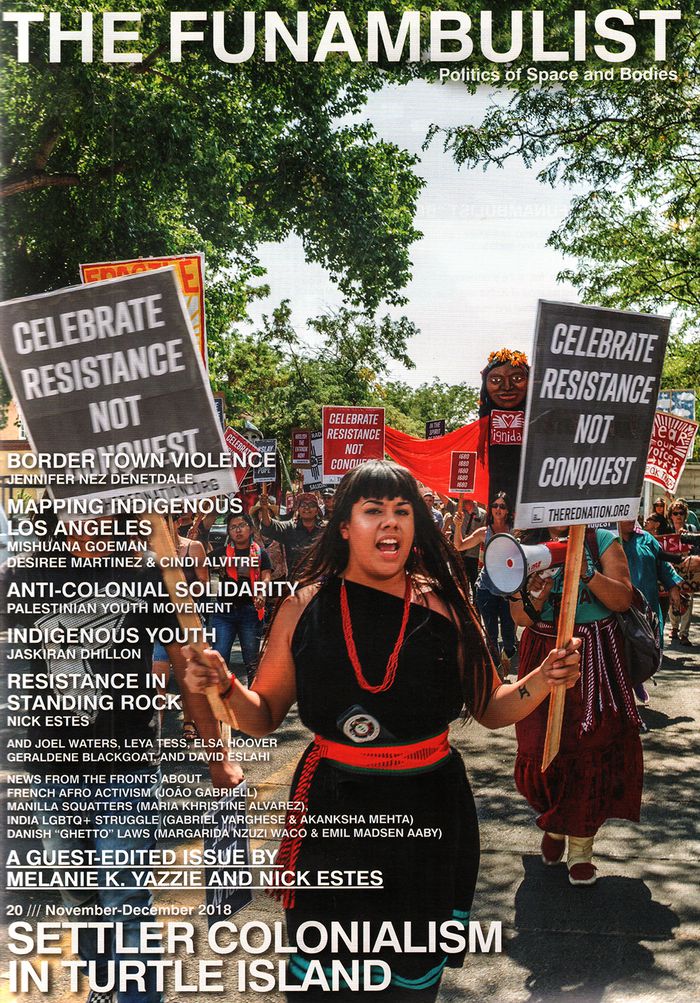
The Funambulist, issue 20. ''Settler Colonialism in Turtle Island'' is a first ever issue of The Funambulist that was guest-edited. This issue was edited by Turtle Island Indigenous scholars and activists Melanie K. Yazzie and Nick Estes (who had contributed twice to the magazine in the past). The issue proposes several facets of Indigenous struggles in Turtle Island (what many people call ''North America''.) Most of them depict Native lives in spaces that are not the reservations where the colonial narrative usually situates them. Whether in large cities such as Los Angeles or Saskatoon, or settler border towns in the periphery of reservations, the urban dimension of the first half of the dossier is omnipresent. The second half is dedicated to various forms of Indigenous resistance through space-making, anti-colonial solidarities, representative transgression, or architecture researches/projects.
The Funambulist 20, November/December
Actions:
Prix:
$19.95
(disponible en magasin)
Résumé:
The Funambulist, issue 20. ''Settler Colonialism in Turtle Island'' is a first ever issue of The Funambulist that was guest-edited. This issue was edited by Turtle Island Indigenous scholars and activists Melanie K. Yazzie and Nick Estes (who had contributed twice to the magazine in the past). The issue proposes several facets of Indigenous struggles in Turtle Island (what many people call ''North America''.) Most of them depict Native lives in spaces that are not the reservations where the colonial narrative usually situates them. Whether in large cities such as Los Angeles or Saskatoon, or settler border towns in the periphery of reservations, the urban dimension of the first half of the dossier is omnipresent. The second half is dedicated to various forms of Indigenous resistance through space-making, anti-colonial solidarities, representative transgression, or architecture researches/projects.
Classification:
périodiques
périodiques
Publication:
novembre 2018
novembre 2018
Sujet:
Revues
Revues
Titre:
Impulse: Archeology
Impulse: Archeology
Actions:
Prix:
$60.00
(disponible en magasin)
Résumé:
Eldon Garnet was the editor and publisher of "Impulse" from 1975 to 1990, when it ceased publication, and with "Impulse Archaeology", he brings the magazine’s spirit back to life. The book is an eclectic collection of original and groundbreaking interviews, articles, and artwork that ranges in scope from pieces on Punk rock to early discussions on postmodernism, and that(...)
$60.00
(disponible en magasin)
Résumé:
Eldon Garnet was the editor and publisher of "Impulse" from 1975 to 1990, when it ceased publication, and with "Impulse Archaeology", he brings the magazine’s spirit back to life. The book is an eclectic collection of original and groundbreaking interviews, articles, and artwork that ranges in scope from pieces on Punk rock to early discussions on postmodernism, and that(...)
Publication:
septembre 2005, Toronto
septembre 2005, Toronto
Titre:
Impulse: Archeology
Actions:
Prix:
$60.00
(disponible en magasin)
Résumé:
Eldon Garnet was the editor and publisher of "Impulse" from 1975 to 1990, when it ceased publication, and with "Impulse Archaeology", he brings the magazine’s spirit back to life. The book is an eclectic collection of original and groundbreaking interviews, articles, and artwork that ranges in scope from pieces on Punk rock to early discussions on postmodernism, and that includes contributions from artists, architects, writers, and philosophers. "Impulse Archaeology" honours this important period in Canadian art and cultural history, recalling the early influence of like-minded publications from New York and the import of French theorists and European artists and writers into North America. "Impulse" brought the world into Canada and Canada to the world. Eldon Garnet is an international photographic artist and novelist based in Toronto and a professor at the Ontario College of Art and Design.
Impulse: Archeology
Actions:
Prix:
$60.00
(disponible en magasin)
Résumé:
Eldon Garnet was the editor and publisher of "Impulse" from 1975 to 1990, when it ceased publication, and with "Impulse Archaeology", he brings the magazine’s spirit back to life. The book is an eclectic collection of original and groundbreaking interviews, articles, and artwork that ranges in scope from pieces on Punk rock to early discussions on postmodernism, and that includes contributions from artists, architects, writers, and philosophers. "Impulse Archaeology" honours this important period in Canadian art and cultural history, recalling the early influence of like-minded publications from New York and the import of French theorists and European artists and writers into North America. "Impulse" brought the world into Canada and Canada to the world. Eldon Garnet is an international photographic artist and novelist based in Toronto and a professor at the Ontario College of Art and Design.
Publication:
septembre 2005, Toronto
septembre 2005, Toronto
Classification:
livres
livres
Prix:
$32.95
(disponible sur commande)
Résumé:
Published to coincide with an exhibition at Chicago’s Newberry Library, Mapping Manifest Destiny: Chicago and the American West charts the historic role maps have played in imagining, understanding, promoting, and exploiting the Western frontier of North America. Featuring more than sixty full-color maps and views from the sixteenth through the twentieth centuries, this(...)
$32.95
(disponible sur commande)
Résumé:
Published to coincide with an exhibition at Chicago’s Newberry Library, Mapping Manifest Destiny: Chicago and the American West charts the historic role maps have played in imagining, understanding, promoting, and exploiting the Western frontier of North America. Featuring more than sixty full-color maps and views from the sixteenth through the twentieth centuries, this(...)
Publication:
août 2008, Chicago
août 2008, Chicago
Titre:
Mapping manifest destiny: Chicago and the American West
Actions:
Prix:
$32.95
(disponible sur commande)
Résumé:
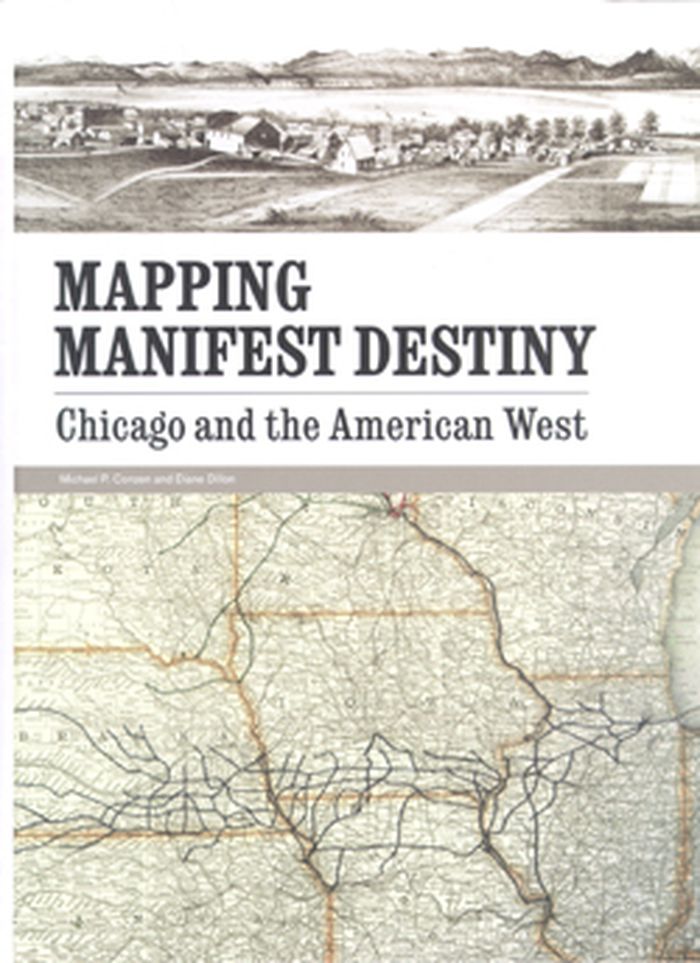
Published to coincide with an exhibition at Chicago’s Newberry Library, Mapping Manifest Destiny: Chicago and the American West charts the historic role maps have played in imagining, understanding, promoting, and exploiting the Western frontier of North America. Featuring more than sixty full-color maps and views from the sixteenth through the twentieth centuries, this fascinating book documents how maps encouraged Euro-Americans to see the West as a land of promise. Maps helped visualize a nation destined to expand across the continent to the Pacific Ocean. Curators Michael P. Conzen and Diane Dillon present an interpretively rich, carefully researched selection of items drawing on the Newberry’s superb collections of historic maps and Western Americana. They have organized the book into four sections: maps for empire, maps for building a new nation, maps for enlightenment, and maps for business.
Mapping manifest destiny: Chicago and the American West
Actions:
Prix:
$32.95
(disponible sur commande)
Résumé:
Published to coincide with an exhibition at Chicago’s Newberry Library, Mapping Manifest Destiny: Chicago and the American West charts the historic role maps have played in imagining, understanding, promoting, and exploiting the Western frontier of North America. Featuring more than sixty full-color maps and views from the sixteenth through the twentieth centuries, this fascinating book documents how maps encouraged Euro-Americans to see the West as a land of promise. Maps helped visualize a nation destined to expand across the continent to the Pacific Ocean. Curators Michael P. Conzen and Diane Dillon present an interpretively rich, carefully researched selection of items drawing on the Newberry’s superb collections of historic maps and Western Americana. They have organized the book into four sections: maps for empire, maps for building a new nation, maps for enlightenment, and maps for business.
Classification:
livres
livres
Publication:
août 2008, Chicago
août 2008, Chicago
Classification:
livres
livres
Titre:
Merleau-Ponty for architects
Merleau-Ponty for architects
Actions:
Prix:
$46.10
(disponible sur commande)
Résumé:
The philosophy of Maurice Merleau-Ponty (1908–1961) has influenced the design work of architects as diverse as Steven Holl and Peter Zumthor, as well as informing renowned schools of architectural theory, notably those around Dalibor Vesely at Cambridge, Kenneth Frampton, David Leatherbarrow and Alberto Pérez-Gómez in North America and Juhani Pallasmaa in Finland.(...)
$46.10
(disponible sur commande)
Résumé:
The philosophy of Maurice Merleau-Ponty (1908–1961) has influenced the design work of architects as diverse as Steven Holl and Peter Zumthor, as well as informing renowned schools of architectural theory, notably those around Dalibor Vesely at Cambridge, Kenneth Frampton, David Leatherbarrow and Alberto Pérez-Gómez in North America and Juhani Pallasmaa in Finland.(...)
Titre:
Merleau-Ponty for architects
Actions:
Prix:
$46.10
(disponible sur commande)
Résumé:
The philosophy of Maurice Merleau-Ponty (1908–1961) has influenced the design work of architects as diverse as Steven Holl and Peter Zumthor, as well as informing renowned schools of architectural theory, notably those around Dalibor Vesely at Cambridge, Kenneth Frampton, David Leatherbarrow and Alberto Pérez-Gómez in North America and Juhani Pallasmaa in Finland. Merleau-Ponty suggested that the value of people’s experience of the world gained through their immediate bodily engagement with it remains greater than the value of understanding gleaned through abstract mathematical, scientific or technological systems. This book summarizes what Merleau-Ponty’s philosophy has to offer specifically for architects. It locates architectural thinking in the context of his work, placing it in relation to themes such as space, movement, materiality and creativity, introduces key texts, helps decode difficult terms and provides quick reference for further reading.
Merleau-Ponty for architects
Actions:
Prix:
$46.10
(disponible sur commande)
Résumé:
The philosophy of Maurice Merleau-Ponty (1908–1961) has influenced the design work of architects as diverse as Steven Holl and Peter Zumthor, as well as informing renowned schools of architectural theory, notably those around Dalibor Vesely at Cambridge, Kenneth Frampton, David Leatherbarrow and Alberto Pérez-Gómez in North America and Juhani Pallasmaa in Finland. Merleau-Ponty suggested that the value of people’s experience of the world gained through their immediate bodily engagement with it remains greater than the value of understanding gleaned through abstract mathematical, scientific or technological systems. This book summarizes what Merleau-Ponty’s philosophy has to offer specifically for architects. It locates architectural thinking in the context of his work, placing it in relation to themes such as space, movement, materiality and creativity, introduces key texts, helps decode difficult terms and provides quick reference for further reading.
Classification:
livres
livres
Publication:
juin 2018
juin 2018
Sujet:
Théorie de l’architecture
Théorie de l’architecture
Classification:
livres
livres
Actions:
Prix:
$32.95
(disponible sur commande)
Résumé:
How does material culture become data? Why does this matter, and for whom? As the cultures of Indigenous peoples in North America were mined for scientific knowledge, years of organizing, classifying, and cataloguing hardened into accepted categories, naming conventions, and tribal affiliations – much of it wrong. 'Cataloguing Culture' examines how colonialism operates(...)
$32.95
(disponible sur commande)
Résumé:
How does material culture become data? Why does this matter, and for whom? As the cultures of Indigenous peoples in North America were mined for scientific knowledge, years of organizing, classifying, and cataloguing hardened into accepted categories, naming conventions, and tribal affiliations – much of it wrong. 'Cataloguing Culture' examines how colonialism operates(...)
Titre:
Cataloguing culture: legacies of colonialism in museum documentation
Actions:
Prix:
$32.95
(disponible sur commande)
Résumé:
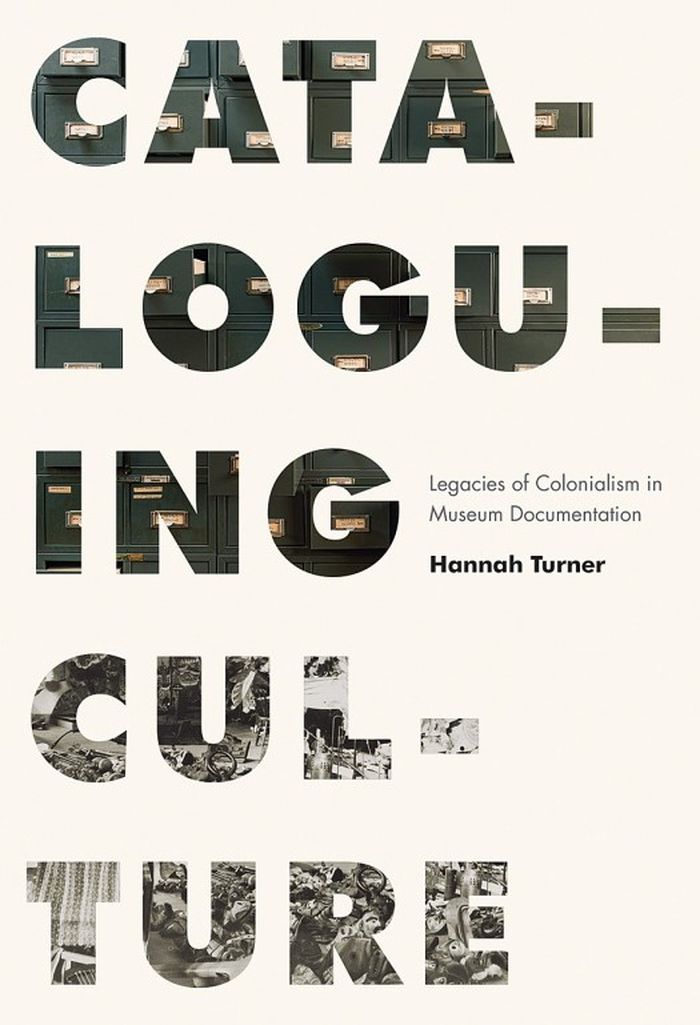
How does material culture become data? Why does this matter, and for whom? As the cultures of Indigenous peoples in North America were mined for scientific knowledge, years of organizing, classifying, and cataloguing hardened into accepted categories, naming conventions, and tribal affiliations – much of it wrong. 'Cataloguing Culture' examines how colonialism operates in museum bureaucracies. Using the Smithsonian’s National Museum of Natural History as her reference, Hannah Turner organizes her study by the technologies framing museum work over two hundred years: field records, the ledger, the card catalogue, the punch card, and eventually the database. She examines how categories were applied to ethnographic material culture and became routine throughout federal collecting institutions. As Indigenous communities encounter the documentary traces of imperialism while attempting to reclaim what is theirs, this publication shines a light on access to and return of cultural heritage.
Cataloguing culture: legacies of colonialism in museum documentation
Actions:
Prix:
$32.95
(disponible sur commande)
Résumé:
How does material culture become data? Why does this matter, and for whom? As the cultures of Indigenous peoples in North America were mined for scientific knowledge, years of organizing, classifying, and cataloguing hardened into accepted categories, naming conventions, and tribal affiliations – much of it wrong. 'Cataloguing Culture' examines how colonialism operates in museum bureaucracies. Using the Smithsonian’s National Museum of Natural History as her reference, Hannah Turner organizes her study by the technologies framing museum work over two hundred years: field records, the ledger, the card catalogue, the punch card, and eventually the database. She examines how categories were applied to ethnographic material culture and became routine throughout federal collecting institutions. As Indigenous communities encounter the documentary traces of imperialism while attempting to reclaim what is theirs, this publication shines a light on access to and return of cultural heritage.
Classification:
livres
livres
Publication:
décembre 2020
décembre 2020
Sujet:
Muséologie
Muséologie
Classification:
livres
livres
Actions:
Prix:
$71.99
(disponible sur commande)
Résumé:
This publication explores the ways in which the development of the built environment has contributed to health and well-being problems and how the physical design of the places we live in may support, or constrain, healthy lifestyle choices. It sets out how understanding these relationships more fully may lead to policy and practice that reduces health inequalities,(...)
$71.99
(disponible sur commande)
Résumé:
This publication explores the ways in which the development of the built environment has contributed to health and well-being problems and how the physical design of the places we live in may support, or constrain, healthy lifestyle choices. It sets out how understanding these relationships more fully may lead to policy and practice that reduces health inequalities,(...)
Titre:
Healthy cities: Design for well-being
Actions:
Prix:
$71.99
(disponible sur commande)
Résumé:
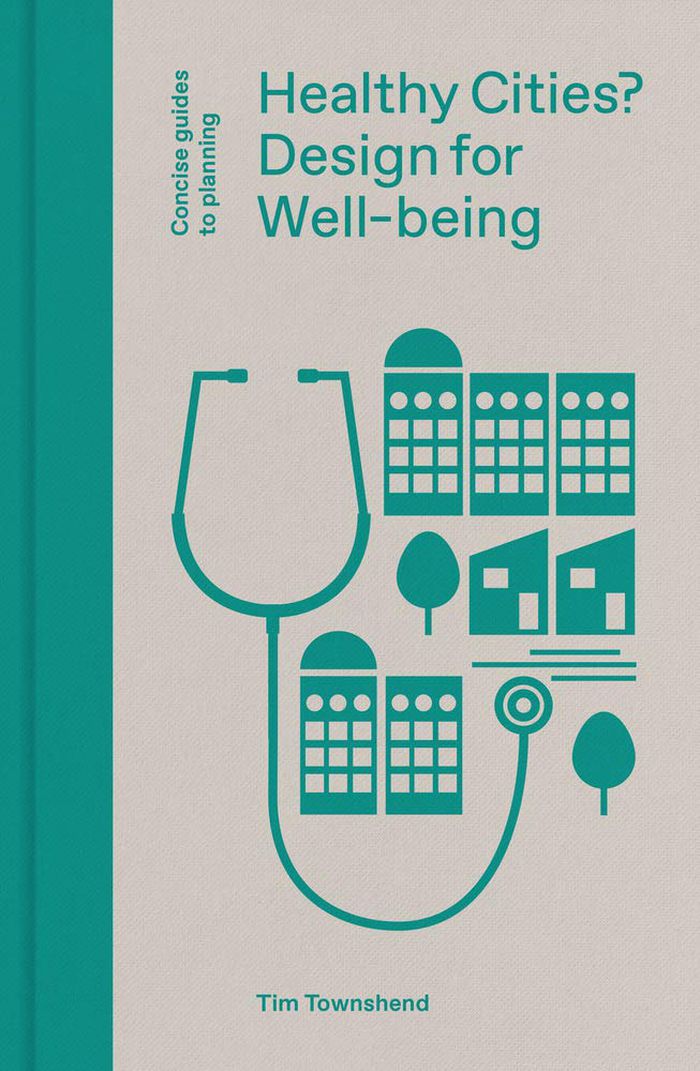
This publication explores the ways in which the development of the built environment has contributed to health and well-being problems and how the physical design of the places we live in may support, or constrain, healthy lifestyle choices. It sets out how understanding these relationships more fully may lead to policy and practice that reduces health inequalities, increases well-being and allows people to live more flourishing, fulfilling lives. It examines the consequences of ‘car orientated’ design, the ‘toxic’ High Street, and poor quality, cramped housing; and the importance of nature in cities, and of initiatives such as community gardening, healthy food programmes and Park Run. It questions whether Heritage is always conducive to well-being and offers lessons from holistic and innovative programmes from the UK, North America and Australia which have successfully improved community and individual health and well-being.
Healthy cities: Design for well-being
Actions:
Prix:
$71.99
(disponible sur commande)
Résumé:
This publication explores the ways in which the development of the built environment has contributed to health and well-being problems and how the physical design of the places we live in may support, or constrain, healthy lifestyle choices. It sets out how understanding these relationships more fully may lead to policy and practice that reduces health inequalities, increases well-being and allows people to live more flourishing, fulfilling lives. It examines the consequences of ‘car orientated’ design, the ‘toxic’ High Street, and poor quality, cramped housing; and the importance of nature in cities, and of initiatives such as community gardening, healthy food programmes and Park Run. It questions whether Heritage is always conducive to well-being and offers lessons from holistic and innovative programmes from the UK, North America and Australia which have successfully improved community and individual health and well-being.
Classification:
livres
livres
Publication:
mai 2022
mai 2022
Sujet:
Théorie de l’urbanisme
Théorie de l’urbanisme


