


2654 Résultats
Classification:
livres
livres
Titre:
Aldo Rossi: The urban fact
Aldo Rossi: The urban fact
Actions:
Prix:
$88.00
(disponible sur commande)
Résumé:
The great Italian architect, designer, theorist and printmaker Aldo Rossi (1931–97) galvanized the postmodernist architectural movement in the middle of the 20th century with his unique synthesis of influences such as Adolf Loos, Giorgio de Chirico and Soviet architecture. From his publication Architecture of the City (1966) to his 1976 exhibition Analogous City, Rossi(...)
$88.00
(disponible sur commande)
Résumé:
The great Italian architect, designer, theorist and printmaker Aldo Rossi (1931–97) galvanized the postmodernist architectural movement in the middle of the 20th century with his unique synthesis of influences such as Adolf Loos, Giorgio de Chirico and Soviet architecture. From his publication Architecture of the City (1966) to his 1976 exhibition Analogous City, Rossi(...)
Sujet:
Architecture, monographies
Architecture, monographies
Publication:
novembre 2021
novembre 2021
Titre:
Aldo Rossi: The urban fact
Actions:
Prix:
$88.00
(disponible sur commande)
Résumé:
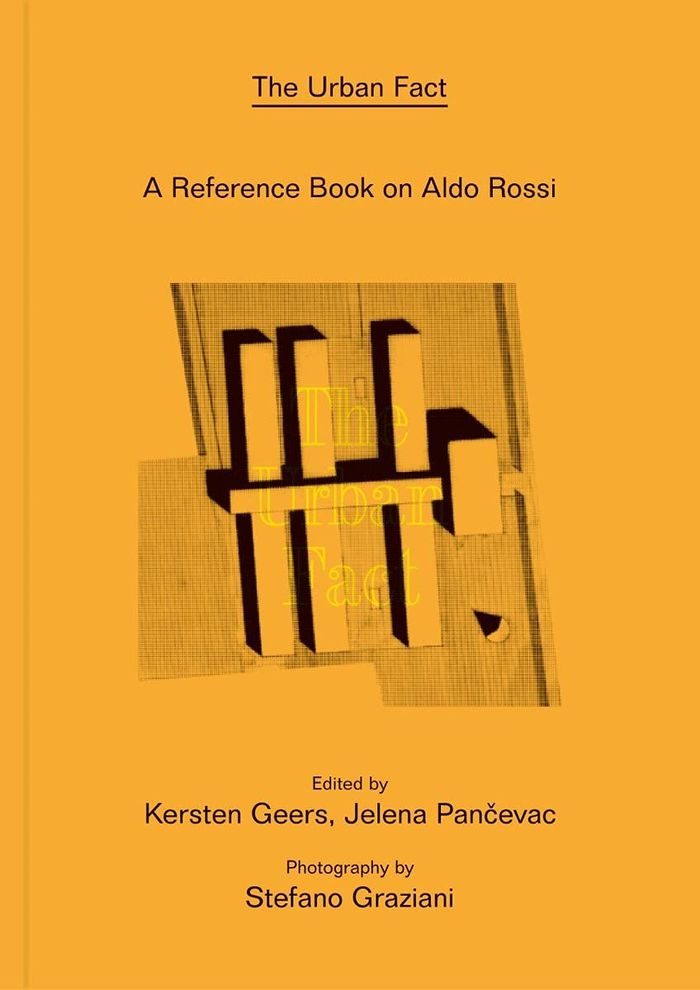
The great Italian architect, designer, theorist and printmaker Aldo Rossi (1931–97) galvanized the postmodernist architectural movement in the middle of the 20th century with his unique synthesis of influences such as Adolf Loos, Giorgio de Chirico and Soviet architecture. From his publication Architecture of the City (1966) to his 1976 exhibition Analogous City, Rossi spent a decade developing a theory of urban design that focused on the “collective memory” of a city as an essential element of its urban planning and gave consideration to how buildings and urban areas age over time. Here, Rossi’s theory is applied to his own works from that period, both built and unbuilt, in a careful selection of 23 projects that express this memory-based paradigm of civic existence and construction. Aldo Rossi: The Urban Fact thus unifies Rossi’s theory and practice, demonstrating the visionary dimension driving his singular brand of postmodernism.
Aldo Rossi: The urban fact
Actions:
Prix:
$88.00
(disponible sur commande)
Résumé:
The great Italian architect, designer, theorist and printmaker Aldo Rossi (1931–97) galvanized the postmodernist architectural movement in the middle of the 20th century with his unique synthesis of influences such as Adolf Loos, Giorgio de Chirico and Soviet architecture. From his publication Architecture of the City (1966) to his 1976 exhibition Analogous City, Rossi spent a decade developing a theory of urban design that focused on the “collective memory” of a city as an essential element of its urban planning and gave consideration to how buildings and urban areas age over time. Here, Rossi’s theory is applied to his own works from that period, both built and unbuilt, in a careful selection of 23 projects that express this memory-based paradigm of civic existence and construction. Aldo Rossi: The Urban Fact thus unifies Rossi’s theory and practice, demonstrating the visionary dimension driving his singular brand of postmodernism.
Classification:
livres
livres
Publication:
novembre 2021
novembre 2021
Sujet:
Architecture, monographies
Architecture, monographies
Classification:
livres
livres
Actions:
Exemplaires:
Description:
1 v. (69 p.) : illustrations, couv. illustrations ; 15 cm.
Description:
1 v. (69 p.) : illustrations, couv. illustrations ; 15 cm.
Auteur:
Sujet:
Publication:
Paris : Editions B2, impr. 2013, ©2013.
Paris : Editions B2, impr. 2013, ©2013.
Titre:
Cernés par les images [Texte imprimé] : l'architecture de l'après-Spoutnik / Beatriz Colomina ; [traductrice Hélène Sirven].
Actions:
Exemplaires:
Description:
1 v. (69 p.) : illustrations, couv. illustrations ; 15 cm.
Cernés par les images [Texte imprimé] : l'architecture de l'après-Spoutnik / Beatriz Colomina ; [traductrice Hélène Sirven].
Actions:
Exemplaires:
Description:
1 v. (69 p.) : illustrations, couv. illustrations ; 15 cm.
Classification:
livres
livres
Publication:
Paris : Editions B2, impr. 2013, ©2013.
Paris : Editions B2, impr. 2013, ©2013.
Auteur:
Sujet:
Classification:
livres
livres
Prix:
$33.95
(disponible sur commande)
Résumé:
Across five centuries of Russian history, Russian leaders have used architecture to project unity, identity, and power. Church architecture has inspired national cohesion and justified political control while representing the claims of religion in brick, wood, and stone. The architectural vocabulary of the Soviet state celebrated industrialization, mechanization, and(...)
$33.95
(disponible sur commande)
Résumé:
Across five centuries of Russian history, Russian leaders have used architecture to project unity, identity, and power. Church architecture has inspired national cohesion and justified political control while representing the claims of religion in brick, wood, and stone. The architectural vocabulary of the Soviet state celebrated industrialization, mechanization, and(...)
Sujet:
Histoire jusqu’à 1900
Histoire jusqu’à 1900
Publication:
mai 2003, Ithaca and London
mai 2003, Ithaca and London
Titre:
Architectures of Russian identity 1500 to the present
Actions:
Prix:
$33.95
(disponible sur commande)
Résumé:
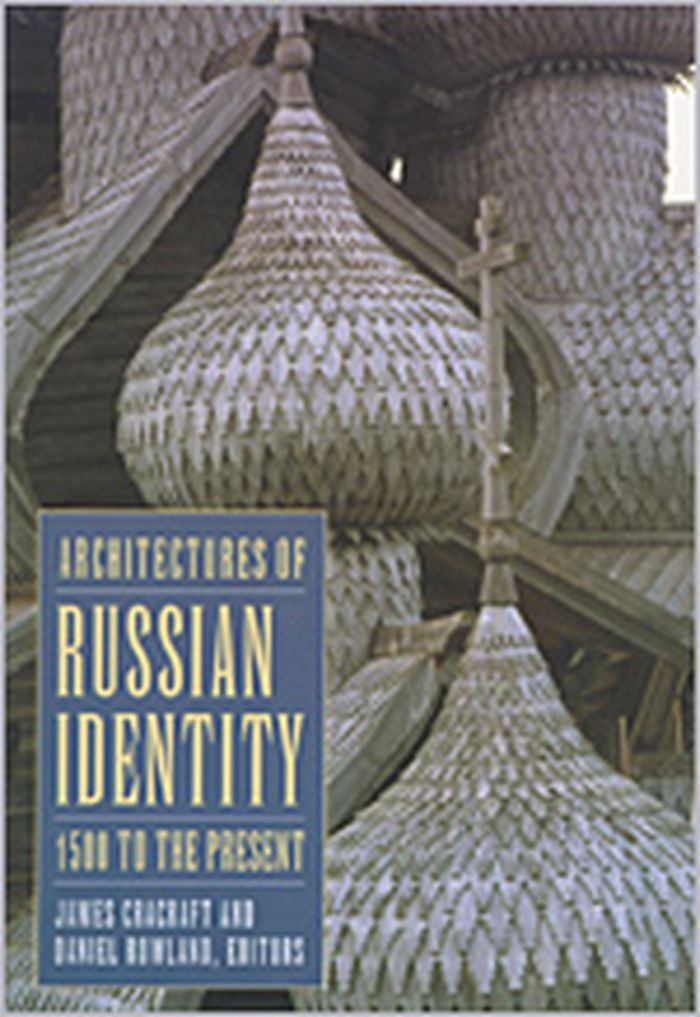
Across five centuries of Russian history, Russian leaders have used architecture to project unity, identity, and power. Church architecture has inspired national cohesion and justified political control while representing the claims of religion in brick, wood, and stone. The architectural vocabulary of the Soviet state celebrated industrialization, mechanization, and communal life. Buildings and landscapes have expressed utopian urges as well as lofty spiritual goals. Country houses and memorials have encoded their own messages. In Architectures of Russian Identity, James Cracraft and Daniel Rowland gather a group of authors from a wide variety of backgrounds—including history and architectural history, linguistics, literary studies, geography, and political science—to survey the political and symbolic meanings of many different kinds of structures. Fourteen heavily illustrated chapters demonstrate the remarkable fertility of the theme of architecture, broadly defined, for a range of fields dealing with Russia and its surrounding territories. The authors engage key terms in contemporary historiography—identity, nationality, visual culture—and assess the applications of each in Russian contexts.
Architectures of Russian identity 1500 to the present
Actions:
Prix:
$33.95
(disponible sur commande)
Résumé:
Across five centuries of Russian history, Russian leaders have used architecture to project unity, identity, and power. Church architecture has inspired national cohesion and justified political control while representing the claims of religion in brick, wood, and stone. The architectural vocabulary of the Soviet state celebrated industrialization, mechanization, and communal life. Buildings and landscapes have expressed utopian urges as well as lofty spiritual goals. Country houses and memorials have encoded their own messages. In Architectures of Russian Identity, James Cracraft and Daniel Rowland gather a group of authors from a wide variety of backgrounds—including history and architectural history, linguistics, literary studies, geography, and political science—to survey the political and symbolic meanings of many different kinds of structures. Fourteen heavily illustrated chapters demonstrate the remarkable fertility of the theme of architecture, broadly defined, for a range of fields dealing with Russia and its surrounding territories. The authors engage key terms in contemporary historiography—identity, nationality, visual culture—and assess the applications of each in Russian contexts.
Classification:
livres
livres
Publication:
mai 2003, Ithaca and London
mai 2003, Ithaca and London
Sujet:
Histoire jusqu’à 1900
Histoire jusqu’à 1900
Classification:
livres
livres
Prix:
$43.00
(disponible en magasin)
Résumé:
The architecture of the Soviet Union in the 1920s and 1930s was integral to shaping 20th-century modernism. Russian architect Konstantin Melnikov (1890–1974) was a key figure of this movement, with many of his realized projects, such as his cylindrical residential house completed in 1929, becoming modernist icons. Because he refused to conform to architectural standards(...)
$43.00
(disponible en magasin)
Résumé:
The architecture of the Soviet Union in the 1920s and 1930s was integral to shaping 20th-century modernism. Russian architect Konstantin Melnikov (1890–1974) was a key figure of this movement, with many of his realized projects, such as his cylindrical residential house completed in 1929, becoming modernist icons. Because he refused to conform to architectural standards(...)
Titre:
Konstantin Melnikov: The master of the architectural form
Actions:
Prix:
$43.00
(disponible en magasin)
Résumé:
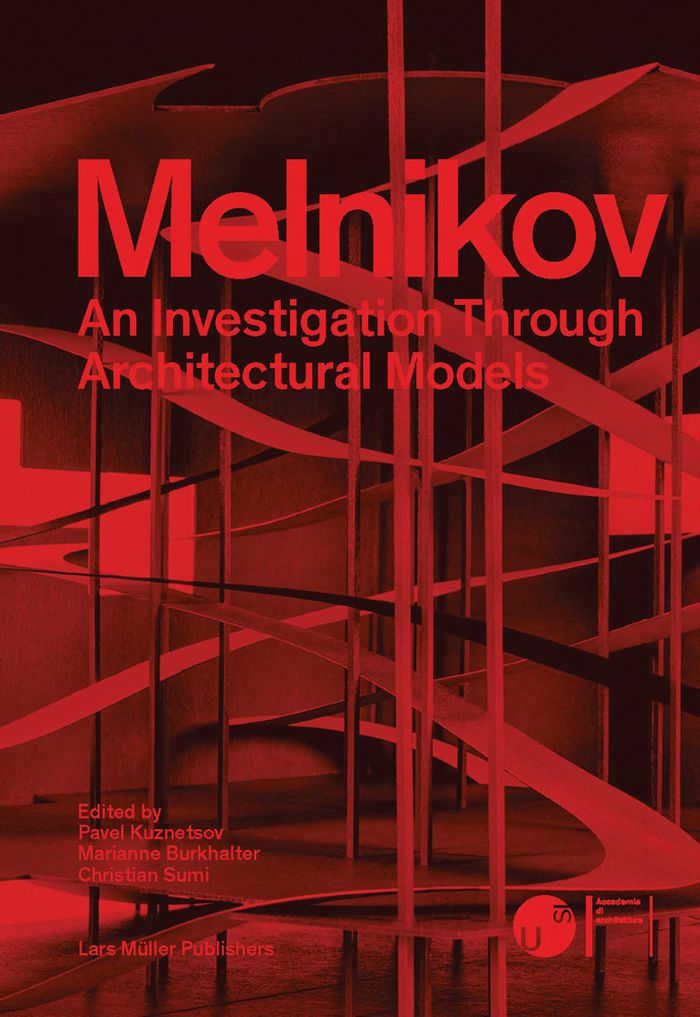
The architecture of the Soviet Union in the 1920s and 1930s was integral to shaping 20th-century modernism. Russian architect Konstantin Melnikov (1890–1974) was a key figure of this movement, with many of his realized projects, such as his cylindrical residential house completed in 1929, becoming modernist icons. Because he refused to conform to architectural standards after Stalin's cultural turn in 1932, his works were largely forgotten for several decades. He was rehabilitated and received public recognition for his imaginative constructions only a few years prior to his death in 1974. This publication presents models of Melnikov's built and unbuilt works, created under the direction of scholar Pavel Kuznetsov by the students of the Accademia di Architettura in Mendrisio. The models are accompanied by photographs, sketches and project descriptions expanding on Melnikov's work. An essay by Kuznetsov situates the architect in his historical context, shedding light on an underappreciated figure of architectural history.
Konstantin Melnikov: The master of the architectural form
Actions:
Prix:
$43.00
(disponible en magasin)
Résumé:
The architecture of the Soviet Union in the 1920s and 1930s was integral to shaping 20th-century modernism. Russian architect Konstantin Melnikov (1890–1974) was a key figure of this movement, with many of his realized projects, such as his cylindrical residential house completed in 1929, becoming modernist icons. Because he refused to conform to architectural standards after Stalin's cultural turn in 1932, his works were largely forgotten for several decades. He was rehabilitated and received public recognition for his imaginative constructions only a few years prior to his death in 1974. This publication presents models of Melnikov's built and unbuilt works, created under the direction of scholar Pavel Kuznetsov by the students of the Accademia di Architettura in Mendrisio. The models are accompanied by photographs, sketches and project descriptions expanding on Melnikov's work. An essay by Kuznetsov situates the architect in his historical context, shedding light on an underappreciated figure of architectural history.
Classification:
livres
livres
Publication:
janvier 2026
janvier 2026
Sujet:
Architecture, monographies
Architecture, monographies
Classification:
livres
livres
Actions:
Prix:
$41.00
(disponible en magasin)
Résumé:
Throughout her prolific career, Ursula Schulz-Dornburg has led the way in documenting man-made environments on the cusp of change and transition. The sites she visited were often remote and difficult to access. In 1996 and 1997 she traveled to Armenia and with a small portable camera made visual notes of remnants of Soviet architecture during her walks through the capital(...)
$41.00
(disponible en magasin)
Résumé:
Throughout her prolific career, Ursula Schulz-Dornburg has led the way in documenting man-made environments on the cusp of change and transition. The sites she visited were often remote and difficult to access. In 1996 and 1997 she traveled to Armenia and with a small portable camera made visual notes of remnants of Soviet architecture during her walks through the capital(...)
Titre:
Ursula Schulz-Dornburg: Yerevan 1996-1997
Actions:
Prix:
$41.00
(disponible en magasin)
Résumé:
Throughout her prolific career, Ursula Schulz-Dornburg has led the way in documenting man-made environments on the cusp of change and transition. The sites she visited were often remote and difficult to access. In 1996 and 1997 she traveled to Armenia and with a small portable camera made visual notes of remnants of Soviet architecture during her walks through the capital city of Yerevan. She developed the films on her return to Germany and in 2001 she edited and compiled the prints into a traditional notebook used in Armenian schools which she had bought back from one of her trips. This hand-made sketchbook was then dedicated to her daughter, Julia, who was studying architecture at the time. This publication is a facsimile of the original sketchbook, an artist's book work embedded with the history of the cultural artefacts long-since disassembled and the actions of the artist in walking through time and space, documenting and compiling the material.
Ursula Schulz-Dornburg: Yerevan 1996-1997
Actions:
Prix:
$41.00
(disponible en magasin)
Résumé:
Throughout her prolific career, Ursula Schulz-Dornburg has led the way in documenting man-made environments on the cusp of change and transition. The sites she visited were often remote and difficult to access. In 1996 and 1997 she traveled to Armenia and with a small portable camera made visual notes of remnants of Soviet architecture during her walks through the capital city of Yerevan. She developed the films on her return to Germany and in 2001 she edited and compiled the prints into a traditional notebook used in Armenian schools which she had bought back from one of her trips. This hand-made sketchbook was then dedicated to her daughter, Julia, who was studying architecture at the time. This publication is a facsimile of the original sketchbook, an artist's book work embedded with the history of the cultural artefacts long-since disassembled and the actions of the artist in walking through time and space, documenting and compiling the material.
Classification:
livres
livres
Publication:
juillet 2019
juillet 2019
Sujet:
Monographies photo
Monographies photo
Classification:
livres
livres
Titre:
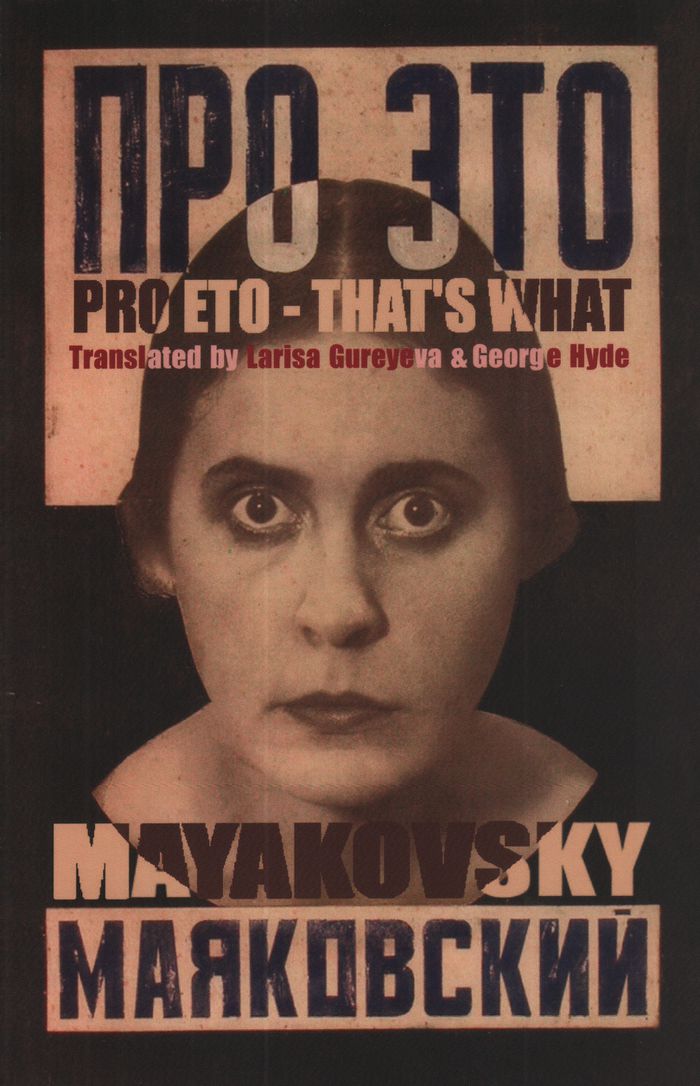
Pro Eto: That's What
Pro Eto: That's What
Actions:
Prix:
$26.95
(disponible en magasin)
Résumé:
Vladimir Mayakovsky was one of the towering literary figures of pre- and post-revolutionary Russia, speaking as much to the working man (he often employed the rough talk of the streets and revolutionary rhetoric in his poetry) as to other poets (his creative fascination with sound and form, linguistic metamorphosis and variation made him a sort of 'poet's poet', the(...)
$26.95
(disponible en magasin)
Résumé:
Vladimir Mayakovsky was one of the towering literary figures of pre- and post-revolutionary Russia, speaking as much to the working man (he often employed the rough talk of the streets and revolutionary rhetoric in his poetry) as to other poets (his creative fascination with sound and form, linguistic metamorphosis and variation made him a sort of 'poet's poet', the(...)
Titre:
Pro Eto: That's What
Actions:
Prix:
$26.95
(disponible en magasin)
Résumé:
Vladimir Mayakovsky was one of the towering literary figures of pre- and post-revolutionary Russia, speaking as much to the working man (he often employed the rough talk of the streets and revolutionary rhetoric in his poetry) as to other poets (his creative fascination with sound and form, linguistic metamorphosis and variation made him a sort of 'poet's poet', the doyen, if not the envy, of his contemporaries, Pasternak among them). His poetry, influenced by Whitman and Verhaeren and strangely akin to modern rock poetry in its erotic thrust, bluesy complaints and cries of pain, not to mention its sardonic humour, is at once aggressive, mocking and tender, and often fantastic or grotesque. "Pro Eto - That's What" is a long love poem detailing the pain and suffering inflicted on the poet by his lover and her final rejection of him. But as well as being an agonising parable of separation and betrayal, it is also a political work, highly critical of Lenin's reforms of Soviet Socialism.
Pro Eto: That's What
Actions:
Prix:
$26.95
(disponible en magasin)
Résumé:
Vladimir Mayakovsky was one of the towering literary figures of pre- and post-revolutionary Russia, speaking as much to the working man (he often employed the rough talk of the streets and revolutionary rhetoric in his poetry) as to other poets (his creative fascination with sound and form, linguistic metamorphosis and variation made him a sort of 'poet's poet', the doyen, if not the envy, of his contemporaries, Pasternak among them). His poetry, influenced by Whitman and Verhaeren and strangely akin to modern rock poetry in its erotic thrust, bluesy complaints and cries of pain, not to mention its sardonic humour, is at once aggressive, mocking and tender, and often fantastic or grotesque. "Pro Eto - That's What" is a long love poem detailing the pain and suffering inflicted on the poet by his lover and her final rejection of him. But as well as being an agonising parable of separation and betrayal, it is also a political work, highly critical of Lenin's reforms of Soviet Socialism.
Classification:
livres
livres
Publication:
mai 2009
mai 2009
Sujet:
Littérature et poésie
Littérature et poésie
Classification:
livres
livres
Titre:
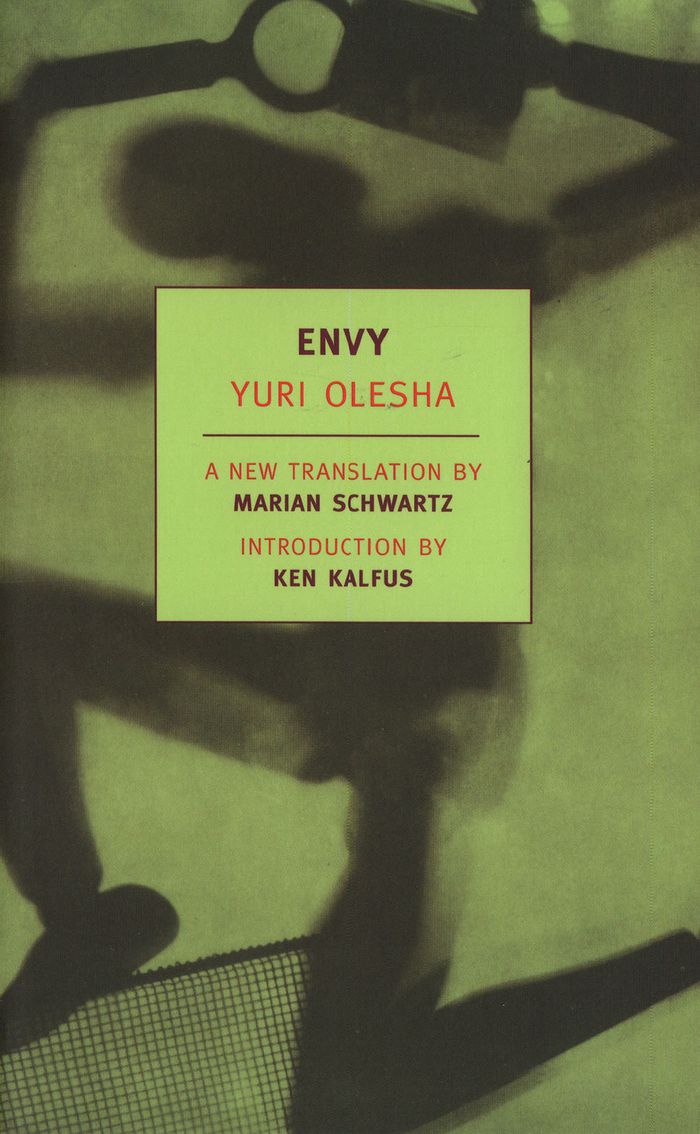
Envy
Envy
Actions:
Prix:
$19.95
(disponible sur commande)
Résumé:
One of the delights of Russian literature, a tour de force that has been compared to the best of Nabokov and Bulgakov, Yuri Olesha's novella ''Envy'' brings together cutting social satire, slapstick humor, and a wild visionary streak. Andrei is a model Soviet citizen, a swaggeringly self-satisfied mogul of the food industry who intends to revolutionize modern life with(...)
$19.95
(disponible sur commande)
Résumé:
One of the delights of Russian literature, a tour de force that has been compared to the best of Nabokov and Bulgakov, Yuri Olesha's novella ''Envy'' brings together cutting social satire, slapstick humor, and a wild visionary streak. Andrei is a model Soviet citizen, a swaggeringly self-satisfied mogul of the food industry who intends to revolutionize modern life with(...)
Titre:
Envy
Actions:
Prix:
$19.95
(disponible sur commande)
Résumé:
One of the delights of Russian literature, a tour de force that has been compared to the best of Nabokov and Bulgakov, Yuri Olesha's novella ''Envy'' brings together cutting social satire, slapstick humor, and a wild visionary streak. Andrei is a model Soviet citizen, a swaggeringly self-satisfied mogul of the food industry who intends to revolutionize modern life with mass-produced sausage. Nikolai is a loser. Finding him drunk in the gutter, Andrei gives him a bed for the night and a job as a gofer. Nikolai takes what he can, but that doesn't mean he's grateful. Griping, sulking, grovelingly abject, he despises everything Andrei believes in, even if he envies him his every breath. Producer and sponger, insider and outcast, master and man fight back and forth in the pages of Olesha's anarchic comedy. It is a contest of wills in which nothing is sure except the incorrigible human heart.
Envy
Actions:
Prix:
$19.95
(disponible sur commande)
Résumé:
One of the delights of Russian literature, a tour de force that has been compared to the best of Nabokov and Bulgakov, Yuri Olesha's novella ''Envy'' brings together cutting social satire, slapstick humor, and a wild visionary streak. Andrei is a model Soviet citizen, a swaggeringly self-satisfied mogul of the food industry who intends to revolutionize modern life with mass-produced sausage. Nikolai is a loser. Finding him drunk in the gutter, Andrei gives him a bed for the night and a job as a gofer. Nikolai takes what he can, but that doesn't mean he's grateful. Griping, sulking, grovelingly abject, he despises everything Andrei believes in, even if he envies him his every breath. Producer and sponger, insider and outcast, master and man fight back and forth in the pages of Olesha's anarchic comedy. It is a contest of wills in which nothing is sure except the incorrigible human heart.
Classification:
livres
livres
Publication:
mai 2004
mai 2004
Sujet:
Expositions en cours
Expositions en cours
Classification:
livres
livres
Titre:
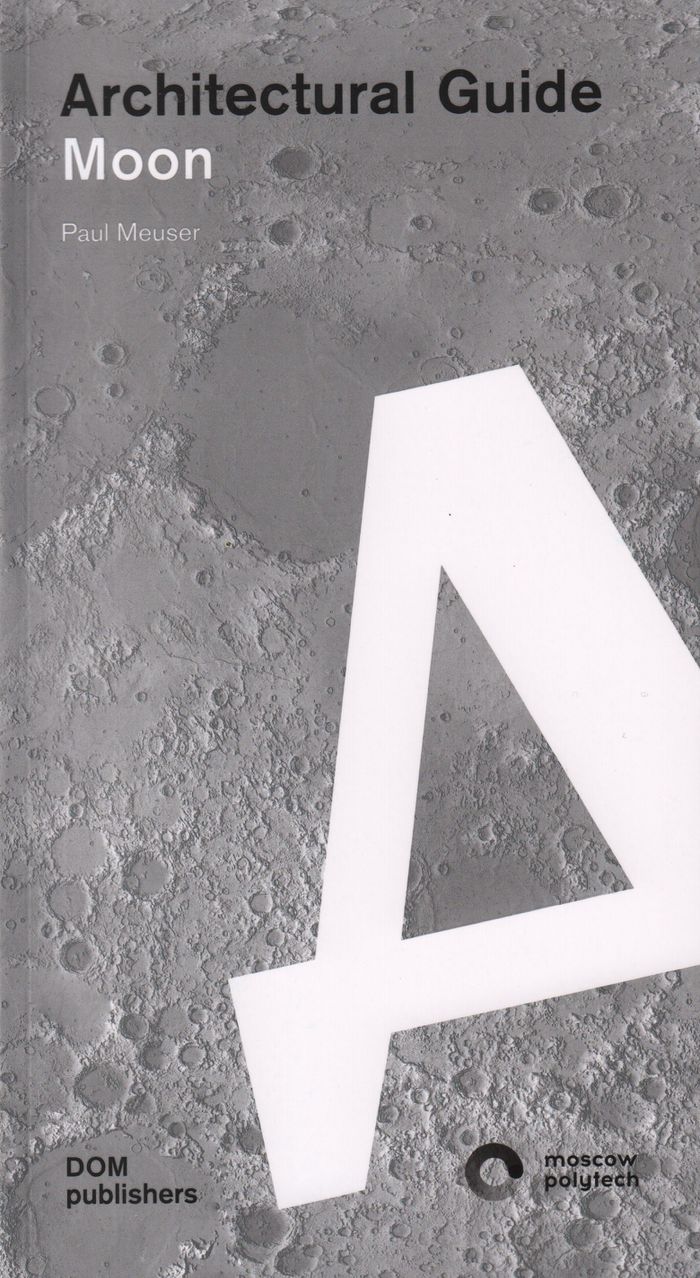
Moon: architectural guide
Moon: architectural guide
Actions:
Prix:
$25.00
(disponible sur commande)
Résumé:
In celebration of the 50th anniversary of the first man on the moon, this book for the first time ever looks at the artifacts left behind on the moon from the perspective of architecture. The book looks at every single mission – manned and unmanned – that has actually landed on the moon. It covers the time of the beginning of the Soviet and American space race with the(...)
$25.00
(disponible sur commande)
Résumé:
In celebration of the 50th anniversary of the first man on the moon, this book for the first time ever looks at the artifacts left behind on the moon from the perspective of architecture. The book looks at every single mission – manned and unmanned – that has actually landed on the moon. It covers the time of the beginning of the Soviet and American space race with the(...)
Titre:
Moon: architectural guide
Actions:
Prix:
$25.00
(disponible sur commande)
Résumé:
In celebration of the 50th anniversary of the first man on the moon, this book for the first time ever looks at the artifacts left behind on the moon from the perspective of architecture. The book looks at every single mission – manned and unmanned – that has actually landed on the moon. It covers the time of the beginning of the Soviet and American space race with the landing of Luna 2 in 1959, to the present with China’s Chang’e 3 moon rover. This architectural guide differentiates itself from other scientific and educational books through its abstract approach to the topic of architecture on the moon. The content does not feature science fiction, but rather the question of what exists and what implications these bizarre structures hold for the future of architecture on other planets – as these topics are quite pertinent in today’s world of the commercialization of spaceflight, with SpaceX and NASA planning to take humans to Mars in the next 15 years.
Moon: architectural guide
Actions:
Prix:
$25.00
(disponible sur commande)
Résumé:
In celebration of the 50th anniversary of the first man on the moon, this book for the first time ever looks at the artifacts left behind on the moon from the perspective of architecture. The book looks at every single mission – manned and unmanned – that has actually landed on the moon. It covers the time of the beginning of the Soviet and American space race with the landing of Luna 2 in 1959, to the present with China’s Chang’e 3 moon rover. This architectural guide differentiates itself from other scientific and educational books through its abstract approach to the topic of architecture on the moon. The content does not feature science fiction, but rather the question of what exists and what implications these bizarre structures hold for the future of architecture on other planets – as these topics are quite pertinent in today’s world of the commercialization of spaceflight, with SpaceX and NASA planning to take humans to Mars in the next 15 years.
Classification:
livres
livres
Publication:
octobre 2019
octobre 2019
Sujet:
Guides des villes
Guides des villes
Classification:
livres
livres
Prix:
$84.95
(disponible sur commande)
Résumé:
Tracing the shifting meanings of photography in the early Soviet Union, Aglaya K. Glebova reconsiders the relationship between art and politics during what is usually considered the end of the critical avant-garde. Aleksandr Rodchenko, a versatile Russian artist and one of Constructivism’s founders, embraced photography as a medium of revolutionary modernity. Yet his(...)
$84.95
(disponible sur commande)
Résumé:
Tracing the shifting meanings of photography in the early Soviet Union, Aglaya K. Glebova reconsiders the relationship between art and politics during what is usually considered the end of the critical avant-garde. Aleksandr Rodchenko, a versatile Russian artist and one of Constructivism’s founders, embraced photography as a medium of revolutionary modernity. Yet his(...)
Titre:
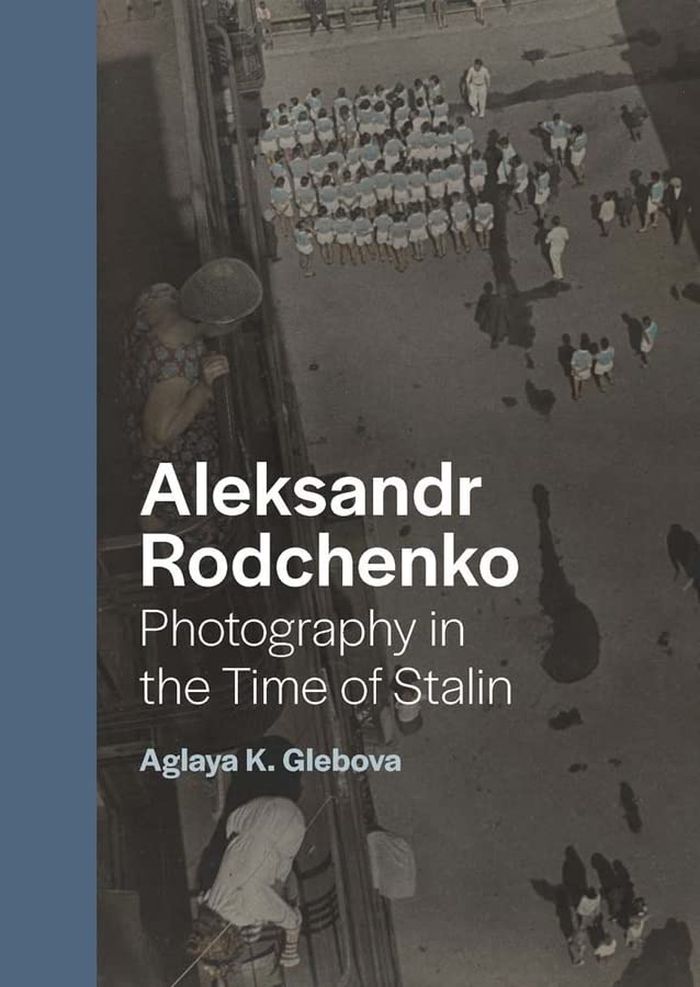
Aleksandr Rodchenko: Photography in the time of Stalin
Actions:
Prix:
$84.95
(disponible sur commande)
Résumé:
Tracing the shifting meanings of photography in the early Soviet Union, Aglaya K. Glebova reconsiders the relationship between art and politics during what is usually considered the end of the critical avant-garde. Aleksandr Rodchenko, a versatile Russian artist and one of Constructivism’s founders, embraced photography as a medium of revolutionary modernity. Yet his photographic work between the late 1920s and the end of the 1930s exhibits an expansive search for a different pictorial language. In the context of the extreme transformations carried out under the first Five-Year Plans, Rodchenko’s photography questioned his own modernist commitments. At the heart of this book is Rodchenko’s infamous 1933 photo-essay on the White Sea–Baltic Canal, site of one of the first gulags. Glebova’s careful reading of Rodchenko’s photography reveals a surprisingly heterodox practice and brings to light experiments in adjacent media, including the collaborative design work he undertook with Varvara Stepanova, Rodchenko’s partner in art and life.
Aleksandr Rodchenko: Photography in the time of Stalin
Actions:
Prix:
$84.95
(disponible sur commande)
Résumé:
Tracing the shifting meanings of photography in the early Soviet Union, Aglaya K. Glebova reconsiders the relationship between art and politics during what is usually considered the end of the critical avant-garde. Aleksandr Rodchenko, a versatile Russian artist and one of Constructivism’s founders, embraced photography as a medium of revolutionary modernity. Yet his photographic work between the late 1920s and the end of the 1930s exhibits an expansive search for a different pictorial language. In the context of the extreme transformations carried out under the first Five-Year Plans, Rodchenko’s photography questioned his own modernist commitments. At the heart of this book is Rodchenko’s infamous 1933 photo-essay on the White Sea–Baltic Canal, site of one of the first gulags. Glebova’s careful reading of Rodchenko’s photography reveals a surprisingly heterodox practice and brings to light experiments in adjacent media, including the collaborative design work he undertook with Varvara Stepanova, Rodchenko’s partner in art and life.
Classification:
livres
livres
Publication:
novembre 2022
novembre 2022
Sujet:
Monographies photo
Monographies photo
Classification:
livres
livres
Prix:
$102.95
(disponible sur commande)
Résumé:
The Classroom shows how furniture designers from the late nineteenth century to the present have strived to enliven the classroom experience for children, telling for the first time the history of this neglected area of furniture design. The book is based on the collection of the VS school museum in Tauberbischofsheim, which houses a unique collection of school furniture(...)
$102.95
(disponible sur commande)
Résumé:
The Classroom shows how furniture designers from the late nineteenth century to the present have strived to enliven the classroom experience for children, telling for the first time the history of this neglected area of furniture design. The book is based on the collection of the VS school museum in Tauberbischofsheim, which houses a unique collection of school furniture(...)
Publication:
mars 2011
mars 2011
Titre:
The classroom: From the late 19th Century until the present day
Actions:
Prix:
$102.95
(disponible sur commande)
Résumé:
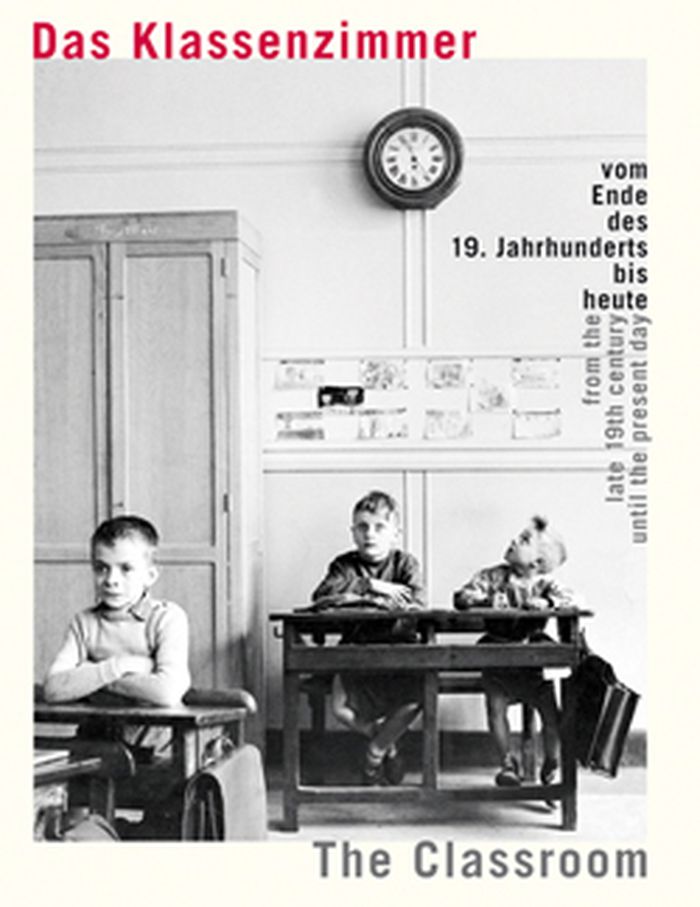
The Classroom shows how furniture designers from the late nineteenth century to the present have strived to enliven the classroom experience for children, telling for the first time the history of this neglected area of furniture design. The book is based on the collection of the VS school museum in Tauberbischofsheim, which houses a unique collection of school furniture from Germany and abroad. Through this collection, it draws out the history of educational theory and school architecture over the past hundred years, tracing the ascent of a child-centered approach to education and attendant developments in design, as well as such topics as the use of propaganda in Soviet- and Nazi-era schools. Chairs, desks, classrooms and entire schools by Alvar Aalto, Arne Jacobsen, Charles Rennie Mackintosh, Jean-Baptiste Mathon, Jean Prouvé, Eero + Eliel Saarinen and Bruno Taut are abundantly illustrated and examined. The Classroom looks back over this history and looks forward to possible future developments.
The classroom: From the late 19th Century until the present day
Actions:
Prix:
$102.95
(disponible sur commande)
Résumé:
The Classroom shows how furniture designers from the late nineteenth century to the present have strived to enliven the classroom experience for children, telling for the first time the history of this neglected area of furniture design. The book is based on the collection of the VS school museum in Tauberbischofsheim, which houses a unique collection of school furniture from Germany and abroad. Through this collection, it draws out the history of educational theory and school architecture over the past hundred years, tracing the ascent of a child-centered approach to education and attendant developments in design, as well as such topics as the use of propaganda in Soviet- and Nazi-era schools. Chairs, desks, classrooms and entire schools by Alvar Aalto, Arne Jacobsen, Charles Rennie Mackintosh, Jean-Baptiste Mathon, Jean Prouvé, Eero + Eliel Saarinen and Bruno Taut are abundantly illustrated and examined. The Classroom looks back over this history and looks forward to possible future developments.
Classification:
livres
livres
Publication:
mars 2011
mars 2011


