


2689 Résultats
Classification:
livres
livres
Actions:
Prix:
$35.00
(disponible sur commande)
Résumé:
Michael Snow is one of Canada?s greatest living artists, widely acknowledged as one of the most significant figures in twentieth-century Canadian art. "Early Snow" focuses on the nascent stages of the artist?s career?- which is comparatively underexamined in art commentary and critical literature- ?and demonstrates how wide-ranging were his achievements in painting,(...)
$35.00
(disponible sur commande)
Résumé:
Michael Snow is one of Canada?s greatest living artists, widely acknowledged as one of the most significant figures in twentieth-century Canadian art. "Early Snow" focuses on the nascent stages of the artist?s career?- which is comparatively underexamined in art commentary and critical literature- ?and demonstrates how wide-ranging were his achievements in painting,(...)
Titre:
Early snow: Michael Snow 1947-1962
Actions:
Prix:
$35.00
(disponible sur commande)
Résumé:
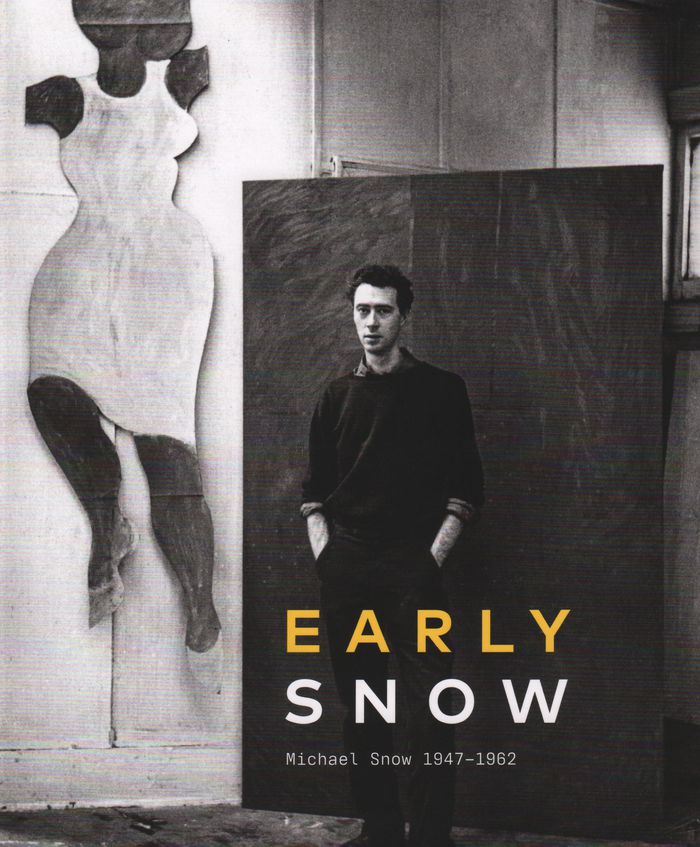
Michael Snow is one of Canada?s greatest living artists, widely acknowledged as one of the most significant figures in twentieth-century Canadian art. "Early Snow" focuses on the nascent stages of the artist?s career?- which is comparatively underexamined in art commentary and critical literature- ?and demonstrates how wide-ranging were his achievements in painting, drawing, sculpture, foldage, cinema, and photography. Snow?s first achievements may serve as a blueprint for his later career, but they also give ample proof of the creative heights he had already reached by the age of thirty-three. This book reveals a young man whose catholic interests in art and literature contributed to his uncanny ability to create profoundly original works of art. Perceptive essays by James King argue that these artworks are best approached in the context of Snow?s knowledge of modern European art (Paul Klee, Ben Nicholson, Alberto Giacometti) and contemporary American art (Willem de Kooning, Conrad Marca-Relli, Donald Judd, Marcel Duchamp), and that, ultimately, the work created during this era is about transformation.
Early snow: Michael Snow 1947-1962
Actions:
Prix:
$35.00
(disponible sur commande)
Résumé:
Michael Snow is one of Canada?s greatest living artists, widely acknowledged as one of the most significant figures in twentieth-century Canadian art. "Early Snow" focuses on the nascent stages of the artist?s career?- which is comparatively underexamined in art commentary and critical literature- ?and demonstrates how wide-ranging were his achievements in painting, drawing, sculpture, foldage, cinema, and photography. Snow?s first achievements may serve as a blueprint for his later career, but they also give ample proof of the creative heights he had already reached by the age of thirty-three. This book reveals a young man whose catholic interests in art and literature contributed to his uncanny ability to create profoundly original works of art. Perceptive essays by James King argue that these artworks are best approached in the context of Snow?s knowledge of modern European art (Paul Klee, Ben Nicholson, Alberto Giacometti) and contemporary American art (Willem de Kooning, Conrad Marca-Relli, Donald Judd, Marcel Duchamp), and that, ultimately, the work created during this era is about transformation.
Classification:
livres
livres
Publication:
janvier 2020
janvier 2020
Sujet:
Art canadien
Art canadien
Classification:
livres
livres
Actions:
Prix:
$27.95
(disponible sur commande)
Résumé:
In this publication, Caleb Kelly explores how the deliberate utilization of the normally undesirable (a crack, a break) has become the site of productive creation. Cracked media, Kelly writes, slides across disciplines, through music, sound, and noise. Cracked media encompasses everything from Cage's silences and indeterminacies, to Paik's often humorous tape works, to(...)
$27.95
(disponible sur commande)
Résumé:
In this publication, Caleb Kelly explores how the deliberate utilization of the normally undesirable (a crack, a break) has become the site of productive creation. Cracked media, Kelly writes, slides across disciplines, through music, sound, and noise. Cracked media encompasses everything from Cage's silences and indeterminacies, to Paik's often humorous tape works, to(...)
Titre:
Cracked media : the sound of malfunction
Actions:
Prix:
$27.95
(disponible sur commande)
Résumé:
In this publication, Caleb Kelly explores how the deliberate utilization of the normally undesirable (a crack, a break) has become the site of productive creation. Cracked media, Kelly writes, slides across disciplines, through music, sound, and noise. Cracked media encompasses everything from Cage's silences and indeterminacies, to Paik's often humorous tape works, to the cold and clean sounds of digital glitch in the work of Tone and Oval. Kelly offers a detailed historical account of these practices, arguing that they can be read as precursors to contemporary new media. Kelly looks at the nature of recording technology and the music industry in relation to the crack and the break, and discusses the various manifestations of noise, concluding that neither theories of recording nor theories of noise offer an adequate framework for understanding cracked media. Connecting the historical avant-garde to modern-day turntablism, and predigital destructive techniques to the digital ticks, pops, and clicks of the glitch, Kelly proposes new media theorizations of cracked media that focus on materiality and the everyday.
Cracked media : the sound of malfunction
Actions:
Prix:
$27.95
(disponible sur commande)
Résumé:
In this publication, Caleb Kelly explores how the deliberate utilization of the normally undesirable (a crack, a break) has become the site of productive creation. Cracked media, Kelly writes, slides across disciplines, through music, sound, and noise. Cracked media encompasses everything from Cage's silences and indeterminacies, to Paik's often humorous tape works, to the cold and clean sounds of digital glitch in the work of Tone and Oval. Kelly offers a detailed historical account of these practices, arguing that they can be read as precursors to contemporary new media. Kelly looks at the nature of recording technology and the music industry in relation to the crack and the break, and discusses the various manifestations of noise, concluding that neither theories of recording nor theories of noise offer an adequate framework for understanding cracked media. Connecting the historical avant-garde to modern-day turntablism, and predigital destructive techniques to the digital ticks, pops, and clicks of the glitch, Kelly proposes new media theorizations of cracked media that focus on materiality and the everyday.
Classification:
livres
livres
Publication:
septembre 2009
septembre 2009
Sujet:
Acoustique
Acoustique
Classification:
livres
livres
Titre:
Naked architecture
Naked architecture
Actions:
Prix:
$51.00
(disponible sur commande)
Résumé:
An account of one of the most interesting phenomena of contemporary architecture: the return to the structure. Over the last ten years architecture would seem to have rediscovered engineering. Now that the post modern period has passed—in which the structure of buildings was camouflaged by coverings of every kind—architecture today seems to have undressed, almost as(...)
$51.00
(disponible sur commande)
Résumé:
An account of one of the most interesting phenomena of contemporary architecture: the return to the structure. Over the last ten years architecture would seem to have rediscovered engineering. Now that the post modern period has passed—in which the structure of buildings was camouflaged by coverings of every kind—architecture today seems to have undressed, almost as(...)
Titre:
Naked architecture
Actions:
Prix:
$51.00
(disponible sur commande)
Résumé:
An account of one of the most interesting phenomena of contemporary architecture: the return to the structure. Over the last ten years architecture would seem to have rediscovered engineering. Now that the post modern period has passed—in which the structure of buildings was camouflaged by coverings of every kind—architecture today seems to have undressed, almost as though wishing to show how it is made. The rediscovery in recent years of plastic form has brought about a closer relationship between architects and engineers. To this we must add the rise of new issues, such as that of environmental engineering, which has changed from being solely a technical and aesthetic practice into a movement in environmentally conscious architecture. If there is a phenomenon today that is able to hold together the various expressions of contemporary architecture, it is this return to the structure and the methods with which it is realized. Through its six thematic categories, this book provides an account of one of the most interesting phenomena of contemporary construction—the laying bare of architecture.
Naked architecture
Actions:
Prix:
$51.00
(disponible sur commande)
Résumé:
An account of one of the most interesting phenomena of contemporary architecture: the return to the structure. Over the last ten years architecture would seem to have rediscovered engineering. Now that the post modern period has passed—in which the structure of buildings was camouflaged by coverings of every kind—architecture today seems to have undressed, almost as though wishing to show how it is made. The rediscovery in recent years of plastic form has brought about a closer relationship between architects and engineers. To this we must add the rise of new issues, such as that of environmental engineering, which has changed from being solely a technical and aesthetic practice into a movement in environmentally conscious architecture. If there is a phenomenon today that is able to hold together the various expressions of contemporary architecture, it is this return to the structure and the methods with which it is realized. Through its six thematic categories, this book provides an account of one of the most interesting phenomena of contemporary construction—the laying bare of architecture.
Classification:
livres
livres
Publication:
novembre 2012
novembre 2012
Sujet:
Structures d’ingénierie
Structures d’ingénierie
Classification:
livres
livres
Titre:
The Shenzhen experiment
The Shenzhen experiment
Actions:
Prix:
$50.00
(disponible sur commande)
Résumé:
Shenzhen is ground zero for the economic transformation China has seen in recent decades. In 1979, driven by China’s widespread poverty, Deng Xiaoping supported a bold proposal to experiment with economic policies in a rural borderland next to Hong Kong. The site was designated as the City of Shenzhen and soon after became China’s first Special Economic Zone (SEZ). Four(...)
$50.00
(disponible sur commande)
Résumé:
Shenzhen is ground zero for the economic transformation China has seen in recent decades. In 1979, driven by China’s widespread poverty, Deng Xiaoping supported a bold proposal to experiment with economic policies in a rural borderland next to Hong Kong. The site was designated as the City of Shenzhen and soon after became China’s first Special Economic Zone (SEZ). Four(...)
Titre:
The Shenzhen experiment
Actions:
Prix:
$50.00
(disponible sur commande)
Résumé:
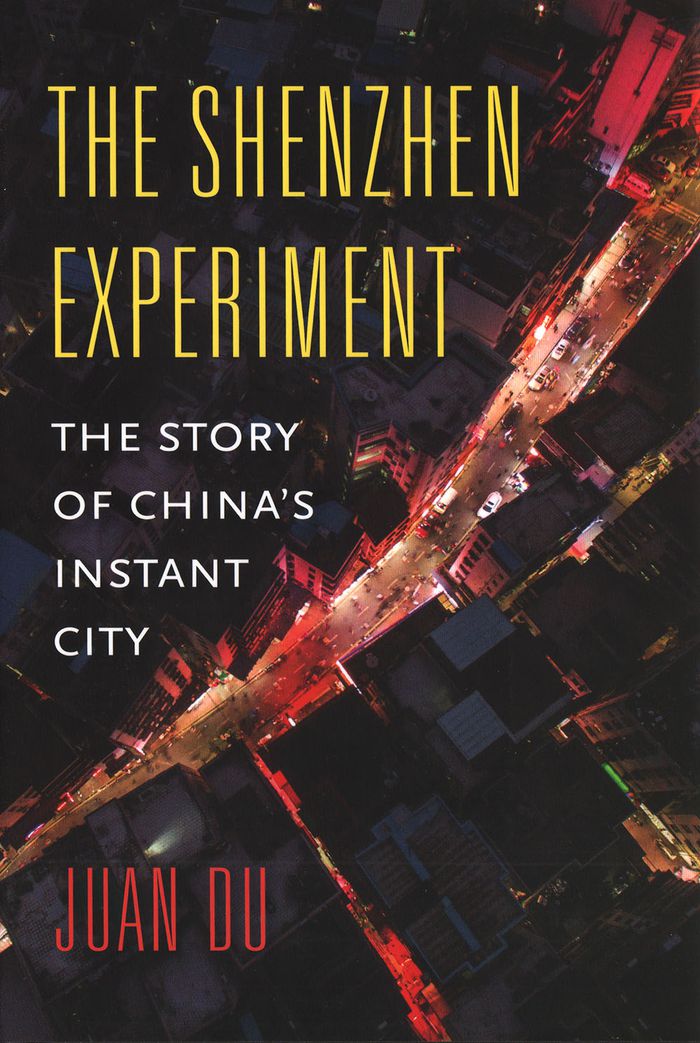
Shenzhen is ground zero for the economic transformation China has seen in recent decades. In 1979, driven by China’s widespread poverty, Deng Xiaoping supported a bold proposal to experiment with economic policies in a rural borderland next to Hong Kong. The site was designated as the City of Shenzhen and soon after became China’s first Special Economic Zone (SEZ). Four decades later, Shenzhen is a megacity of twenty million, an internationally recognized digital technology hub, and the world’s most successful economic zone. Some see it as a modern miracle city that seemingly came from nowhere, attributing its success solely to centralized planning and Shenzhen’s proximity to Hong Kong. The Chinese government has built hundreds of new towns using the Shenzhen model, yet none has come close to replicating the city’s level of economic success. But is it true that Shenzhen has no meaningful history? That the city was planned on a tabula rasa? That the region’s rural past has had no significant impact on the urban present? Juan Du unravels the myth of Shenzhen and shows us how this world-famous “instant city” has a surprising history—filled with oyster fishermen, villages that remain encased within city blocks, a secret informal housing system—and how it has been catapulted to success as much by the ingenuity of its original farmers as by Beijing’s policy makers. “The Shenzhen Experiment” is an important story for all rapidly urbanizing and industrializing nations around the world seeking to replicate China’s economic success in the twenty-first century.
The Shenzhen experiment
Actions:
Prix:
$50.00
(disponible sur commande)
Résumé:
Shenzhen is ground zero for the economic transformation China has seen in recent decades. In 1979, driven by China’s widespread poverty, Deng Xiaoping supported a bold proposal to experiment with economic policies in a rural borderland next to Hong Kong. The site was designated as the City of Shenzhen and soon after became China’s first Special Economic Zone (SEZ). Four decades later, Shenzhen is a megacity of twenty million, an internationally recognized digital technology hub, and the world’s most successful economic zone. Some see it as a modern miracle city that seemingly came from nowhere, attributing its success solely to centralized planning and Shenzhen’s proximity to Hong Kong. The Chinese government has built hundreds of new towns using the Shenzhen model, yet none has come close to replicating the city’s level of economic success. But is it true that Shenzhen has no meaningful history? That the city was planned on a tabula rasa? That the region’s rural past has had no significant impact on the urban present? Juan Du unravels the myth of Shenzhen and shows us how this world-famous “instant city” has a surprising history—filled with oyster fishermen, villages that remain encased within city blocks, a secret informal housing system—and how it has been catapulted to success as much by the ingenuity of its original farmers as by Beijing’s policy makers. “The Shenzhen Experiment” is an important story for all rapidly urbanizing and industrializing nations around the world seeking to replicate China’s economic success in the twenty-first century.
Classification:
livres
livres
Publication:
janvier 2020
janvier 2020
Classification:
livres
livres
Actions:
Prix:
$78.00
(disponible en magasin)
Résumé:
Featuring major museums from around the world, including The Metropolitan Museum of Art, The Museum of Modern Art, the Guggenheim, the de Young Museum in San Francisco, Milwaukee Art Museum, The New Museum in New York, The Royal Ontario Museum, and the Art Gallery of Ontario. This book illustrates the national and architectural differences between each nation and how(...)
$78.00
(disponible en magasin)
Résumé:
Featuring major museums from around the world, including The Metropolitan Museum of Art, The Museum of Modern Art, the Guggenheim, the de Young Museum in San Francisco, Milwaukee Art Museum, The New Museum in New York, The Royal Ontario Museum, and the Art Gallery of Ontario. This book illustrates the national and architectural differences between each nation and how(...)
Titre:
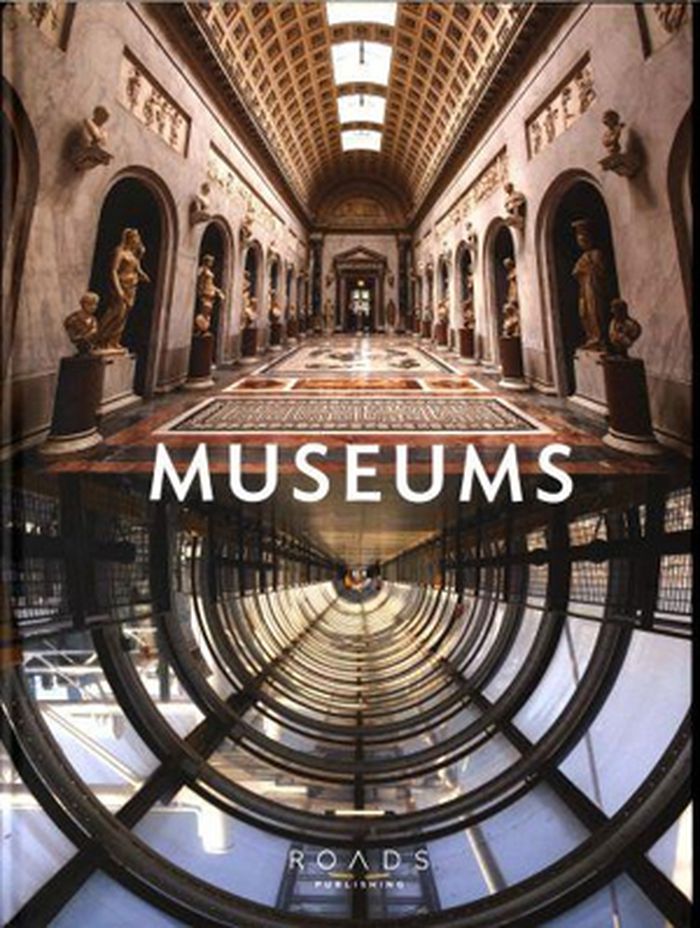
Museums: The Reflections Series
Actions:
Prix:
$78.00
(disponible en magasin)
Résumé:
Featuring major museums from around the world, including The Metropolitan Museum of Art, The Museum of Modern Art, the Guggenheim, the de Young Museum in San Francisco, Milwaukee Art Museum, The New Museum in New York, The Royal Ontario Museum, and the Art Gallery of Ontario. This book illustrates the national and architectural differences between each nation and how they choose to cherish their heritage The Reflections series by ROADS is a visual exploration of the spaces and buildings that mirror the cultures in which they play such a crucial part.
Museums: The Reflections Series
Actions:
Prix:
$78.00
(disponible en magasin)
Résumé:
Featuring major museums from around the world, including The Metropolitan Museum of Art, The Museum of Modern Art, the Guggenheim, the de Young Museum in San Francisco, Milwaukee Art Museum, The New Museum in New York, The Royal Ontario Museum, and the Art Gallery of Ontario. This book illustrates the national and architectural differences between each nation and how they choose to cherish their heritage The Reflections series by ROADS is a visual exploration of the spaces and buildings that mirror the cultures in which they play such a crucial part.
Classification:
livres
livres
Publication:
mars 2016
mars 2016
Classification:
livres
livres

Actions:
Prix:
$40.95
(disponible sur commande)
Résumé:
From the early days of recreational camping in the late nineteenth century through the multitude of modern camping options available today, ''Making camp'' explores the history and evolution of the popular activity through the lens of its most important and familiar components: the campsite, the campfire, the picnic table, the map, the tent, the sleeping bag, as well as(...)
$40.95
(disponible sur commande)
Résumé:
From the early days of recreational camping in the late nineteenth century through the multitude of modern camping options available today, ''Making camp'' explores the history and evolution of the popular activity through the lens of its most important and familiar components: the campsite, the campfire, the picnic table, the map, the tent, the sleeping bag, as well as(...)
Titre:
Making camp: A visual history of camping's most essential items and activities
Actions:
Prix:
$40.95
(disponible sur commande)
Résumé:
From the early days of recreational camping in the late nineteenth century through the multitude of modern camping options available today, ''Making camp'' explores the history and evolution of the popular activity through the lens of its most important and familiar components: the campsite, the campfire, the picnic table, the map, the tent, the sleeping bag, as well as the oft invisible systems for delivering water and managing trash. Find out how early nineteenth century German peasants fashioned rudimentary sleeping bags by burrowing into bags full of leaves for the night. Look back over several millennia to learn about the progression of tents from animal skins, goat's hair, and heavy canvas to featherweight nylon. Learn about the ways in which the skills to build and maintain a campfire have been displaced by the portable gas stove. Pinpoint the details of the essential campground map and its unique place in the camping imagination. Each chapter includes a broad range of visuals to help illustrate the rich history of camping and our collective devotion to it, including drawings, patents, diagrams, sketches, paintings, advertisements, and historical photographs.
Making camp: A visual history of camping's most essential items and activities
Actions:
Prix:
$40.95
(disponible sur commande)
Résumé:
From the early days of recreational camping in the late nineteenth century through the multitude of modern camping options available today, ''Making camp'' explores the history and evolution of the popular activity through the lens of its most important and familiar components: the campsite, the campfire, the picnic table, the map, the tent, the sleeping bag, as well as the oft invisible systems for delivering water and managing trash. Find out how early nineteenth century German peasants fashioned rudimentary sleeping bags by burrowing into bags full of leaves for the night. Look back over several millennia to learn about the progression of tents from animal skins, goat's hair, and heavy canvas to featherweight nylon. Learn about the ways in which the skills to build and maintain a campfire have been displaced by the portable gas stove. Pinpoint the details of the essential campground map and its unique place in the camping imagination. Each chapter includes a broad range of visuals to help illustrate the rich history of camping and our collective devotion to it, including drawings, patents, diagrams, sketches, paintings, advertisements, and historical photographs.
Classification:
livres
livres
Publication:
mai 2023
mai 2023
Sujet:
Théorie du paysage
Théorie du paysage
Classification:
livres
livres
Titre:
Bloomsbury rooms
Bloomsbury rooms
Actions:
Prix:
$63.00
(disponible sur commande)
Résumé:
The first decades of the twentieth century brought enormous change in Britain. Men’s and women’s roles came under scrutiny, class and social structures were transformed. This book casts new light on the notorious Bloomsbury Group and how the issues of their day influenced their interpretation and decoration of the home. Christopher Reed analyzes the rooms designed by(...)
$63.00
(disponible sur commande)
Résumé:
The first decades of the twentieth century brought enormous change in Britain. Men’s and women’s roles came under scrutiny, class and social structures were transformed. This book casts new light on the notorious Bloomsbury Group and how the issues of their day influenced their interpretation and decoration of the home. Christopher Reed analyzes the rooms designed by(...)
Titre:
Bloomsbury rooms
Actions:
Prix:
$63.00
(disponible sur commande)
Résumé:
The first decades of the twentieth century brought enormous change in Britain. Men’s and women’s roles came under scrutiny, class and social structures were transformed. This book casts new light on the notorious Bloomsbury Group and how the issues of their day influenced their interpretation and decoration of the home. Christopher Reed analyzes the rooms designed by Bloomsbury artists as spaces in which to be modern. The book traces the development of Bloomsbury’s domestic aesthetic from the group’s influential promulgation of Post-Impressionism in Britain around 1910 through the 1930's. In detailed studies of rooms created for Virginia Woolf and John Maynard Keynes, among others, by Woolf’s sister Vanessa Bell and her artist colleagues Duncan Grant and Roger Fry, Reed challenges the accepted notion that these artists drifted away from modernism. He presents their work as an alternative form of modernism, later suppressed by sexist and homophobic attitudes that disparaged the decorative arts and domesticity in general, as well as Bloomsbury in particular. The aesthetic and ideological implications of the Bloomsbury interiors were international in scope, Reed argues, and constitute important episodes in this history of modernity.
Bloomsbury rooms
Actions:
Prix:
$63.00
(disponible sur commande)
Résumé:
The first decades of the twentieth century brought enormous change in Britain. Men’s and women’s roles came under scrutiny, class and social structures were transformed. This book casts new light on the notorious Bloomsbury Group and how the issues of their day influenced their interpretation and decoration of the home. Christopher Reed analyzes the rooms designed by Bloomsbury artists as spaces in which to be modern. The book traces the development of Bloomsbury’s domestic aesthetic from the group’s influential promulgation of Post-Impressionism in Britain around 1910 through the 1930's. In detailed studies of rooms created for Virginia Woolf and John Maynard Keynes, among others, by Woolf’s sister Vanessa Bell and her artist colleagues Duncan Grant and Roger Fry, Reed challenges the accepted notion that these artists drifted away from modernism. He presents their work as an alternative form of modernism, later suppressed by sexist and homophobic attitudes that disparaged the decorative arts and domesticity in general, as well as Bloomsbury in particular. The aesthetic and ideological implications of the Bloomsbury interiors were international in scope, Reed argues, and constitute important episodes in this history of modernity.
Classification:
livres
livres
Publication:
mai 2004, New Haven / London
mai 2004, New Haven / London
Sujet:
Design d’intérieur
Design d’intérieur
Classification:
livres
livres
Titre:
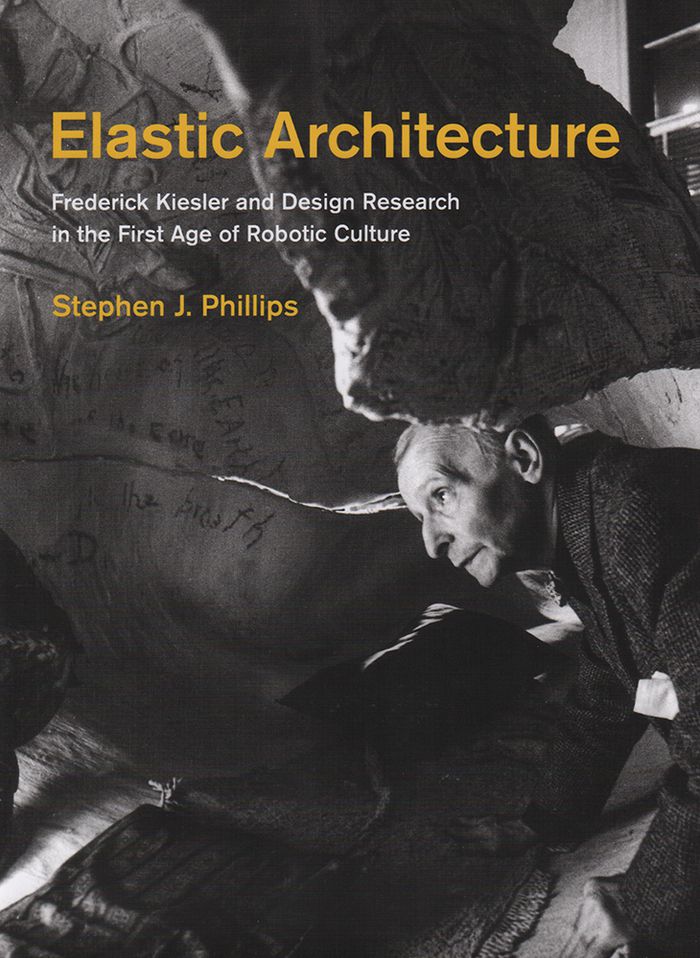
Elastic architecture: Frederick Kiesler and design research in the first age of robotic culture
Elastic architecture: Frederick Kiesler and design research in the first age of robotic culture
Actions:
Prix:
$42.95
(disponible sur commande)
Résumé:
In 1960, architect Philip Johnson championed Frederick Kiesler, calling him “the greatest non-building architect of our time.” Kiesler’s ideas were difficult to construct, but as Johnson believed, “enormous” and “profound.” Kiesler (1890–1965) went against the grain of the accepted modern style, rejecting rectilinear glass and steel in favor of more organic forms and(...)
$42.95
(disponible sur commande)
Résumé:
In 1960, architect Philip Johnson championed Frederick Kiesler, calling him “the greatest non-building architect of our time.” Kiesler’s ideas were difficult to construct, but as Johnson believed, “enormous” and “profound.” Kiesler (1890–1965) went against the grain of the accepted modern style, rejecting rectilinear glass and steel in favor of more organic forms and(...)
Titre:
Elastic architecture: Frederick Kiesler and design research in the first age of robotic culture
Actions:
Prix:
$42.95
(disponible sur commande)
Résumé:
In 1960, architect Philip Johnson championed Frederick Kiesler, calling him “the greatest non-building architect of our time.” Kiesler’s ideas were difficult to construct, but as Johnson believed, “enormous” and “profound.” Kiesler (1890–1965) went against the grain of the accepted modern style, rejecting rectilinear glass and steel in favor of more organic forms and flexible structures that could respond to the ever-changing needs of the body in motion. In Elastic Architecture, Stephen Phillips offers the first in-depth exploration of Kiesler’s innovative and multidisciplinary research and design practice. Exploring Kiesler’s formative relationships with the European avant-garde, Phillips shows how Kiesler found inspiration in the plastic arts, experimental theater, early animation, and automatons to develop and refine his spatial concept of the Endless. Moving from Europe to New York in the 1920s, Kiesler applied these radical Dadaist, constructivist, and surrealist practices to his urban display projects, which included shop windows for Saks Fifth Avenue. After launching his innovative Design Correlation Laboratory at Columbia and Yale, Kiesler went on to invent new houses, theaters, and galleries that were meant to move, shift, and adapt to evolutionary changes occurring within the natural and built environment.
Elastic architecture: Frederick Kiesler and design research in the first age of robotic culture
Actions:
Prix:
$42.95
(disponible sur commande)
Résumé:
In 1960, architect Philip Johnson championed Frederick Kiesler, calling him “the greatest non-building architect of our time.” Kiesler’s ideas were difficult to construct, but as Johnson believed, “enormous” and “profound.” Kiesler (1890–1965) went against the grain of the accepted modern style, rejecting rectilinear glass and steel in favor of more organic forms and flexible structures that could respond to the ever-changing needs of the body in motion. In Elastic Architecture, Stephen Phillips offers the first in-depth exploration of Kiesler’s innovative and multidisciplinary research and design practice. Exploring Kiesler’s formative relationships with the European avant-garde, Phillips shows how Kiesler found inspiration in the plastic arts, experimental theater, early animation, and automatons to develop and refine his spatial concept of the Endless. Moving from Europe to New York in the 1920s, Kiesler applied these radical Dadaist, constructivist, and surrealist practices to his urban display projects, which included shop windows for Saks Fifth Avenue. After launching his innovative Design Correlation Laboratory at Columbia and Yale, Kiesler went on to invent new houses, theaters, and galleries that were meant to move, shift, and adapt to evolutionary changes occurring within the natural and built environment.
Classification:
livres
livres
Publication:
mars 2017
mars 2017
Sujet:
Théorie de l’architecture
Théorie de l’architecture
Classification:
livres
livres
Prix:
$130.00
(disponible sur commande)
Résumé:
Designated by King George V to replace Calcutta as capital of British India, New Delhi was constructed between 1912 and 1929 under the eye of architect Sir Edward Lutyens who sought to bring to this British colony a sense of classicism, order, and institutional beauty. With more than 300 colour and black and white illustrations, plans and photographs, this book presents(...)
$130.00
(disponible sur commande)
Résumé:
Designated by King George V to replace Calcutta as capital of British India, New Delhi was constructed between 1912 and 1929 under the eye of architect Sir Edward Lutyens who sought to bring to this British colony a sense of classicism, order, and institutional beauty. With more than 300 colour and black and white illustrations, plans and photographs, this book presents(...)
Titre:
Imperial Delhi : the British capital of the Indian Empire
Actions:
Prix:
$130.00
(disponible sur commande)
Résumé:
Designated by King George V to replace Calcutta as capital of British India, New Delhi was constructed between 1912 and 1929 under the eye of architect Sir Edward Lutyens who sought to bring to this British colony a sense of classicism, order, and institutional beauty. With more than 300 colour and black and white illustrations, plans and photographs, this book presents the most comprehensive examination to date of how this city was envisioned, planned, and constructed. From the massive war memorial arch and resplendent sandstone and marble government house to the spacious gardens and the gloriously imposing Viceroy's House, the evidence of Lutyen’s architectural genius is everywhere throughout New Delhi. As architectural historian Andreas Volwahsen discusses the importance of Lutyen’s work he provides a fascinating account of the making of a city: the contentious debates and cultural considerations, the inspiration and the painstaking construction, and finally the ways in which New Delhi has evolved into a modern city. With the growing interest in the preservation of historic sights worldwide, this magnificently detailed yet highly accessible history is certain to become a classic in the fields of architecture and urban design.
Imperial Delhi : the British capital of the Indian Empire
Actions:
Prix:
$130.00
(disponible sur commande)
Résumé:
Designated by King George V to replace Calcutta as capital of British India, New Delhi was constructed between 1912 and 1929 under the eye of architect Sir Edward Lutyens who sought to bring to this British colony a sense of classicism, order, and institutional beauty. With more than 300 colour and black and white illustrations, plans and photographs, this book presents the most comprehensive examination to date of how this city was envisioned, planned, and constructed. From the massive war memorial arch and resplendent sandstone and marble government house to the spacious gardens and the gloriously imposing Viceroy's House, the evidence of Lutyen’s architectural genius is everywhere throughout New Delhi. As architectural historian Andreas Volwahsen discusses the importance of Lutyen’s work he provides a fascinating account of the making of a city: the contentious debates and cultural considerations, the inspiration and the painstaking construction, and finally the ways in which New Delhi has evolved into a modern city. With the growing interest in the preservation of historic sights worldwide, this magnificently detailed yet highly accessible history is certain to become a classic in the fields of architecture and urban design.
Classification:
livres
livres
Publication:
octobre 2002, Munich
octobre 2002, Munich
Sujet:
Arch Moyen-Orient
Arch Moyen-Orient
Classification:
livres
livres
Actions:
Prix:
$148.50
(disponible sur commande)
Résumé:
Offices, as a category of building, have probably faced more challenges and undergone more dramatic changes in the last few years than most other kinds of buildings. Increasing economic globalization, new information and communication technologies, and ecological considerations are all making demands on a branch of architecture which for nearly a century had been marked(...)
$148.50
(disponible sur commande)
Résumé:
Offices, as a category of building, have probably faced more challenges and undergone more dramatic changes in the last few years than most other kinds of buildings. Increasing economic globalization, new information and communication technologies, and ecological considerations are all making demands on a branch of architecture which for nearly a century had been marked(...)
Publication:
septembre 2002, Basel
septembre 2002, Basel
Titre:
Office buildings : a design manual
Actions:
Prix:
$148.50
(disponible sur commande)
Résumé:
Offices, as a category of building, have probably faced more challenges and undergone more dramatic changes in the last few years than most other kinds of buildings. Increasing economic globalization, new information and communication technologies, and ecological considerations are all making demands on a branch of architecture which for nearly a century had been marked by the construction norms and standards, and the requirements of office organisation. These old solutions are, however, no longer viable for many modern companies, where flexibility and mobility determine the working day of a new generation of office nomads, and architecture is having to adapt. With some 70 significant international examples taken from the last five years (including examples from Norman Foster, Frank O. Gehry, Thomas Herzog, Morphosis MVRDV, Renzo Piano, SOM), the authors and editors show how the new issues facing architects can be resolved. In addition to introductory texts there are also thematic contributions by experts in various disciplines on related topics including the new models of work organisation, façade technology, climatic regulation, lighting etc. Similar to our enormously successful Floor Plan Atlas, this volume will be a crucial standard work in the design of offices.
Office buildings : a design manual
Actions:
Prix:
$148.50
(disponible sur commande)
Résumé:
Offices, as a category of building, have probably faced more challenges and undergone more dramatic changes in the last few years than most other kinds of buildings. Increasing economic globalization, new information and communication technologies, and ecological considerations are all making demands on a branch of architecture which for nearly a century had been marked by the construction norms and standards, and the requirements of office organisation. These old solutions are, however, no longer viable for many modern companies, where flexibility and mobility determine the working day of a new generation of office nomads, and architecture is having to adapt. With some 70 significant international examples taken from the last five years (including examples from Norman Foster, Frank O. Gehry, Thomas Herzog, Morphosis MVRDV, Renzo Piano, SOM), the authors and editors show how the new issues facing architects can be resolved. In addition to introductory texts there are also thematic contributions by experts in various disciplines on related topics including the new models of work organisation, façade technology, climatic regulation, lighting etc. Similar to our enormously successful Floor Plan Atlas, this volume will be a crucial standard work in the design of offices.
Classification:
livres
livres
Publication:
septembre 2002, Basel
septembre 2002, Basel


