


24838 Résultats
Classification:
dessins
dessins
Numéro de référence:
ARCH276707
Description:
Détails du Nouvel Opéra de Paris, de l'Arc de triomphe, de l'Académie Nationale de Musique et de l'Hôtel de invalides.
ARCH276707
Description:
Détails du Nouvel Opéra de Paris, de l'Arc de triomphe, de l'Académie Nationale de Musique et de l'Hôtel de invalides.
Personnes et institutions:
Date:
1900 - 1980
1900 - 1980
Titre:
Détails des façades, de ferronnerie et de sculptures ornementales
Actions:
ARCH276707
Description:
Détails du Nouvel Opéra de Paris, de l'Arc de triomphe, de l'Académie Nationale de Musique et de l'Hôtel de invalides.
Détails des façades, de ferronnerie et de sculptures ornementales
Actions:
ARCH276707
Description:
Détails du Nouvel Opéra de Paris, de l'Arc de triomphe, de l'Académie Nationale de Musique et de l'Hôtel de invalides.
Classification:
dessins
dessins
Date:
1900 - 1980
1900 - 1980
Personnes et institutions:
Classification:
livres
livres
Numéro de référence:
ARCH177612
Description:
F..J., Éléments d'arithmétique. Tours, Alfred Mame et fils/Paris, Ch. Poussielgue, 1886. 18 x 11, 5 cm
ARCH177612
Description:
F..J., Éléments d'arithmétique. Tours, Alfred Mame et fils/Paris, Ch. Poussielgue, 1886. 18 x 11, 5 cm
Personnes et institutions:
Date:
circa 1900-1905
circa 1900-1905
Titre:
Livre "Éléments d'arithmétique"
Actions:
ARCH177612
Description:
F..J., Éléments d'arithmétique. Tours, Alfred Mame et fils/Paris, Ch. Poussielgue, 1886. 18 x 11, 5 cm
Livre "Éléments d'arithmétique"
Actions:
ARCH177612
Description:
F..J., Éléments d'arithmétique. Tours, Alfred Mame et fils/Paris, Ch. Poussielgue, 1886. 18 x 11, 5 cm
Classification:
livres
livres
Date:
circa 1900-1905
circa 1900-1905
Personnes et institutions:
Niveau de description archivistique:
Sous-série
Sous-série
Titre:
Opera Houses
Opera Houses
Numéro de référence:
CI001.S2.D3
Description:
Charles Rohault de Fleury's sustained involvement with the design of opera houses began with his appointment in 1846 as official architect of the existing Salle Le Pelletier, home to the *Paris Opera, and continued until an open competition was called in 1860 (Charles Garnier won this competition). During this period Rohault de Fleury submitted numerous proposals to replace theprovisional Salle Le Pelletier with a structure more appropriate to the grandeur and importance of France's national opera company. The CCA collection contains four projects related to his work for the Paris opera: two early projects (1846 and 1847) and one later one (1859) for a newopera house, and a portfolio of lithographs and drawings related to alterations and repairs to Salle Le Pelletier (1850-1854). The collection also includes Charles' earliest theatre project, a comprehensive plan for an opera house and surrounding infrastructure for the Theatre Royal Italien opera company (1838-1840), and an album containing drawings and prints of antique and contemporary theatres (1839-1854?). Charles' first project was for the Theatre Royal Italien opera company whose previous home, the Salle Favart, had burned down on the night of January 14 1838. The CCA collection contains an album of presentation drawings for a new theatre located on rue de la Paix with boutiques in the adjacent 'passages' (DR1974:0002:019:001-023). A second album consists of site plans including proposed 'maisons à loyers' (apartment buildings) and documents relating to the cost estimates and rental income for the entire project (DR1974:0002:036:001-016). The architectural style and interior arrangement of the theatre is heavily indebted to Francois Debret's Salle Le Pelletier. Charles' originality lies more in his conception of the social and economic role of the theatre in relation and integration, to its surrounding urban fabric. An explanation of the entire Theatre Royal Italien project, and Charles' role as architect in it, is found in two proposal letters (located in the Avery Library, Columbia University, NY) written by the entrepreneur Eugene Lecomte to the Minister of the Interior, Comte Duchatel, on May 15 and October 31 1839 (1). Charles' album of drawings at the CCA for the theatre and some of the cost and rental estimates are probably presentation copies directly related to the first letter, and most likely submitted to the Minister of the Interior. Charles' project was never executed, and the Italian opera company eventualy found a permanent home in the existing Salle Ventadour (1841). However, the inclusive nature of the Théâtre Royal Italien proposal, with its stress on urban development and contextuality, continued to play a seminal role in his later Paris Opera projects. Upon replacing Francois Debret as architect of Salle Le Pelletier in 1846, Charles proposed nine possible locations (site plans) for a new opera house for the Paris Opera (*Academie Royale de Musique) and, in the following year (1847) prepared a portfolio of drawings for the actual structure with an accompanying seven-page manuscript describing the project. Although executed in successive years, the site plans and 1847 drawings are conceptually related. Both components were undertaken in response to offical interest in a public competition that was never implemented (2)(3). The CCA has two sets of the nine site plans proposed in 1846 (DR1974:0002:036:001-016), one containing transfer lithographed site plans with a written analysis and cost estimate for each of the proposed locations, and the other with only the site plans (similar sets are located in the 'Archives Nationales' in France). They indicate that Charles, (heavily influenced by his Théâtre Royal Italien project) preferred the Rue de la Paix location (siteplan #3) for the new opera house. Although site plan number six, Boulevard des Capucines, was not favoured at this date, it is highly prophetic as it was the location officially chosen in 1860 for the new opera house. Apparently unique to the CCA collection is the 1847 manuscript and portfolio of drawings for the proposed opera house (DR1974:0002:036:001-016). The manuscript is both an indepth review of the requirements for a national opera house and a guide to his portfolio of drawings. Charles' conception and design continued to be strongly influenced by Debret's Salle Lepelletier, as well as his own Théâtre Italien project, and various antique and contemporary opera houses and theatres. Many of the French and Italian sources mentioned in the manuscript are collected in an album (DR1974:0002:010:001-048) as references for his own designs (4). As official architect of Salle Le pelletier, Charles was also responsible for repairs, restorations, and alterations to the existing structure. The drawings and transfer lithographs in the CCA collection (DR1974:0002:036:001-016) are primarily dated 1854, and relate to documented repair and restoration projects undertaken during this period (5)(6). The CCA collection has the presentation drawings and lithographs for the later 1859 project (DR1974:0002:027:001-027) for the Paris opera (*Theatre Imperiale de l'opera) that were sent to Achille Fould, the Minister of State. This project is probably a counterpart to a similiar one that he submitted to the Prefect of the Seine, Baron Haussmann, in the same year (7). Site plans show the opera house on an irregular polygonal site facing Boulevard des Capucines. The placement of the 'maisons à loyers' on the rear of the site reflects Charles' continued emphasis on integrating his opera projects into the surrounding urban context. In 1859, it appeared that Charles was favoured to build the new opera house. But late in the following year, a public competition was called in which Charles Garnier emerged as the victor. Although Charles did not build the final structure, his numerous projects, as exemplified in the CCA collection, were of prime importance in determining the location, configuration, and plan of the Place de l'Opera (8). * The 'Paris Opera' was France's national opera, and thus its name changed numerous times throughout its history according to altering perceptions of its role in French culture and/or changes in political regimes. For reasons of clarity, the national opera will be referred to as the Paris Opera. The names indicated in brackets with a star refer to the proper name of the opera company at the date of the project. (1) Eugene Le Comte, "Projet de Salle rue de la Paix, pour le Théâtre Royal Italien: Lettres à Monsieur le Ministre de l'Intérieur, en date des 15 mai et 31octobre 1839" (Paris: P. Dupont, 1839). (2) Christopher Curtis Mead, "Charles Garnier's Paris Opera and the Renaissance of Classicism in Nineteenth century French Architecture", 3 vols. (PhD thesis; Philadelphia: University of Pennsylvania, 1986), p. 234 and p. 956, fn. 30. (3) Monika Steinhauser, "Die Architektur des Pariser Oper" (Munich: Prestel Verlag, 1969), p. 45, fns. 143 and 144. (4) Barry Bergdoll, "Charles Rohault de Fleury: Part Three: Theatres and the Opera house", 'CCA Research Report', n.d., p. 3. (5) Larousse XIXth Century, s.v. "Rohault de Fleury, Charles". (6) Mead, p. 238. (7) Oeuvres de C. Rohault de Fleury, architecte" (Paris: Librarie centrale d'architecture, 1884).. (8) Macmillan, s.v. "Rohault de Fleury Familly".
CI001.S2.D3
Description:
Charles Rohault de Fleury's sustained involvement with the design of opera houses began with his appointment in 1846 as official architect of the existing Salle Le Pelletier, home to the *Paris Opera, and continued until an open competition was called in 1860 (Charles Garnier won this competition). During this period Rohault de Fleury submitted numerous proposals to replace theprovisional Salle Le Pelletier with a structure more appropriate to the grandeur and importance of France's national opera company. The CCA collection contains four projects related to his work for the Paris opera: two early projects (1846 and 1847) and one later one (1859) for a newopera house, and a portfolio of lithographs and drawings related to alterations and repairs to Salle Le Pelletier (1850-1854). The collection also includes Charles' earliest theatre project, a comprehensive plan for an opera house and surrounding infrastructure for the Theatre Royal Italien opera company (1838-1840), and an album containing drawings and prints of antique and contemporary theatres (1839-1854?). Charles' first project was for the Theatre Royal Italien opera company whose previous home, the Salle Favart, had burned down on the night of January 14 1838. The CCA collection contains an album of presentation drawings for a new theatre located on rue de la Paix with boutiques in the adjacent 'passages' (DR1974:0002:019:001-023). A second album consists of site plans including proposed 'maisons à loyers' (apartment buildings) and documents relating to the cost estimates and rental income for the entire project (DR1974:0002:036:001-016). The architectural style and interior arrangement of the theatre is heavily indebted to Francois Debret's Salle Le Pelletier. Charles' originality lies more in his conception of the social and economic role of the theatre in relation and integration, to its surrounding urban fabric. An explanation of the entire Theatre Royal Italien project, and Charles' role as architect in it, is found in two proposal letters (located in the Avery Library, Columbia University, NY) written by the entrepreneur Eugene Lecomte to the Minister of the Interior, Comte Duchatel, on May 15 and October 31 1839 (1). Charles' album of drawings at the CCA for the theatre and some of the cost and rental estimates are probably presentation copies directly related to the first letter, and most likely submitted to the Minister of the Interior. Charles' project was never executed, and the Italian opera company eventualy found a permanent home in the existing Salle Ventadour (1841). However, the inclusive nature of the Théâtre Royal Italien proposal, with its stress on urban development and contextuality, continued to play a seminal role in his later Paris Opera projects. Upon replacing Francois Debret as architect of Salle Le Pelletier in 1846, Charles proposed nine possible locations (site plans) for a new opera house for the Paris Opera (*Academie Royale de Musique) and, in the following year (1847) prepared a portfolio of drawings for the actual structure with an accompanying seven-page manuscript describing the project. Although executed in successive years, the site plans and 1847 drawings are conceptually related. Both components were undertaken in response to offical interest in a public competition that was never implemented (2)(3). The CCA has two sets of the nine site plans proposed in 1846 (DR1974:0002:036:001-016), one containing transfer lithographed site plans with a written analysis and cost estimate for each of the proposed locations, and the other with only the site plans (similar sets are located in the 'Archives Nationales' in France). They indicate that Charles, (heavily influenced by his Théâtre Royal Italien project) preferred the Rue de la Paix location (siteplan #3) for the new opera house. Although site plan number six, Boulevard des Capucines, was not favoured at this date, it is highly prophetic as it was the location officially chosen in 1860 for the new opera house. Apparently unique to the CCA collection is the 1847 manuscript and portfolio of drawings for the proposed opera house (DR1974:0002:036:001-016). The manuscript is both an indepth review of the requirements for a national opera house and a guide to his portfolio of drawings. Charles' conception and design continued to be strongly influenced by Debret's Salle Lepelletier, as well as his own Théâtre Italien project, and various antique and contemporary opera houses and theatres. Many of the French and Italian sources mentioned in the manuscript are collected in an album (DR1974:0002:010:001-048) as references for his own designs (4). As official architect of Salle Le pelletier, Charles was also responsible for repairs, restorations, and alterations to the existing structure. The drawings and transfer lithographs in the CCA collection (DR1974:0002:036:001-016) are primarily dated 1854, and relate to documented repair and restoration projects undertaken during this period (5)(6). The CCA collection has the presentation drawings and lithographs for the later 1859 project (DR1974:0002:027:001-027) for the Paris opera (*Theatre Imperiale de l'opera) that were sent to Achille Fould, the Minister of State. This project is probably a counterpart to a similiar one that he submitted to the Prefect of the Seine, Baron Haussmann, in the same year (7). Site plans show the opera house on an irregular polygonal site facing Boulevard des Capucines. The placement of the 'maisons à loyers' on the rear of the site reflects Charles' continued emphasis on integrating his opera projects into the surrounding urban context. In 1859, it appeared that Charles was favoured to build the new opera house. But late in the following year, a public competition was called in which Charles Garnier emerged as the victor. Although Charles did not build the final structure, his numerous projects, as exemplified in the CCA collection, were of prime importance in determining the location, configuration, and plan of the Place de l'Opera (8). * The 'Paris Opera' was France's national opera, and thus its name changed numerous times throughout its history according to altering perceptions of its role in French culture and/or changes in political regimes. For reasons of clarity, the national opera will be referred to as the Paris Opera. The names indicated in brackets with a star refer to the proper name of the opera company at the date of the project. (1) Eugene Le Comte, "Projet de Salle rue de la Paix, pour le Théâtre Royal Italien: Lettres à Monsieur le Ministre de l'Intérieur, en date des 15 mai et 31octobre 1839" (Paris: P. Dupont, 1839). (2) Christopher Curtis Mead, "Charles Garnier's Paris Opera and the Renaissance of Classicism in Nineteenth century French Architecture", 3 vols. (PhD thesis; Philadelphia: University of Pennsylvania, 1986), p. 234 and p. 956, fn. 30. (3) Monika Steinhauser, "Die Architektur des Pariser Oper" (Munich: Prestel Verlag, 1969), p. 45, fns. 143 and 144. (4) Barry Bergdoll, "Charles Rohault de Fleury: Part Three: Theatres and the Opera house", 'CCA Research Report', n.d., p. 3. (5) Larousse XIXth Century, s.v. "Rohault de Fleury, Charles". (6) Mead, p. 238. (7) Oeuvres de C. Rohault de Fleury, architecte" (Paris: Librarie centrale d'architecture, 1884).. (8) Macmillan, s.v. "Rohault de Fleury Familly".
Personnes et institutions:
Date:
1717-1868
1717-1868
Titre:
Opera Houses
CI001.S2.D3
Description:
Charles Rohault de Fleury's sustained involvement with the design of opera houses began with his appointment in 1846 as official architect of the existing Salle Le Pelletier, home to the *Paris Opera, and continued until an open competition was called in 1860 (Charles Garnier won this competition). During this period Rohault de Fleury submitted numerous proposals to replace theprovisional Salle Le Pelletier with a structure more appropriate to the grandeur and importance of France's national opera company. The CCA collection contains four projects related to his work for the Paris opera: two early projects (1846 and 1847) and one later one (1859) for a newopera house, and a portfolio of lithographs and drawings related to alterations and repairs to Salle Le Pelletier (1850-1854). The collection also includes Charles' earliest theatre project, a comprehensive plan for an opera house and surrounding infrastructure for the Theatre Royal Italien opera company (1838-1840), and an album containing drawings and prints of antique and contemporary theatres (1839-1854?). Charles' first project was for the Theatre Royal Italien opera company whose previous home, the Salle Favart, had burned down on the night of January 14 1838. The CCA collection contains an album of presentation drawings for a new theatre located on rue de la Paix with boutiques in the adjacent 'passages' (DR1974:0002:019:001-023). A second album consists of site plans including proposed 'maisons à loyers' (apartment buildings) and documents relating to the cost estimates and rental income for the entire project (DR1974:0002:036:001-016). The architectural style and interior arrangement of the theatre is heavily indebted to Francois Debret's Salle Le Pelletier. Charles' originality lies more in his conception of the social and economic role of the theatre in relation and integration, to its surrounding urban fabric. An explanation of the entire Theatre Royal Italien project, and Charles' role as architect in it, is found in two proposal letters (located in the Avery Library, Columbia University, NY) written by the entrepreneur Eugene Lecomte to the Minister of the Interior, Comte Duchatel, on May 15 and October 31 1839 (1). Charles' album of drawings at the CCA for the theatre and some of the cost and rental estimates are probably presentation copies directly related to the first letter, and most likely submitted to the Minister of the Interior. Charles' project was never executed, and the Italian opera company eventualy found a permanent home in the existing Salle Ventadour (1841). However, the inclusive nature of the Théâtre Royal Italien proposal, with its stress on urban development and contextuality, continued to play a seminal role in his later Paris Opera projects. Upon replacing Francois Debret as architect of Salle Le Pelletier in 1846, Charles proposed nine possible locations (site plans) for a new opera house for the Paris Opera (*Academie Royale de Musique) and, in the following year (1847) prepared a portfolio of drawings for the actual structure with an accompanying seven-page manuscript describing the project. Although executed in successive years, the site plans and 1847 drawings are conceptually related. Both components were undertaken in response to offical interest in a public competition that was never implemented (2)(3). The CCA has two sets of the nine site plans proposed in 1846 (DR1974:0002:036:001-016), one containing transfer lithographed site plans with a written analysis and cost estimate for each of the proposed locations, and the other with only the site plans (similar sets are located in the 'Archives Nationales' in France). They indicate that Charles, (heavily influenced by his Théâtre Royal Italien project) preferred the Rue de la Paix location (siteplan #3) for the new opera house. Although site plan number six, Boulevard des Capucines, was not favoured at this date, it is highly prophetic as it was the location officially chosen in 1860 for the new opera house. Apparently unique to the CCA collection is the 1847 manuscript and portfolio of drawings for the proposed opera house (DR1974:0002:036:001-016). The manuscript is both an indepth review of the requirements for a national opera house and a guide to his portfolio of drawings. Charles' conception and design continued to be strongly influenced by Debret's Salle Lepelletier, as well as his own Théâtre Italien project, and various antique and contemporary opera houses and theatres. Many of the French and Italian sources mentioned in the manuscript are collected in an album (DR1974:0002:010:001-048) as references for his own designs (4). As official architect of Salle Le pelletier, Charles was also responsible for repairs, restorations, and alterations to the existing structure. The drawings and transfer lithographs in the CCA collection (DR1974:0002:036:001-016) are primarily dated 1854, and relate to documented repair and restoration projects undertaken during this period (5)(6). The CCA collection has the presentation drawings and lithographs for the later 1859 project (DR1974:0002:027:001-027) for the Paris opera (*Theatre Imperiale de l'opera) that were sent to Achille Fould, the Minister of State. This project is probably a counterpart to a similiar one that he submitted to the Prefect of the Seine, Baron Haussmann, in the same year (7). Site plans show the opera house on an irregular polygonal site facing Boulevard des Capucines. The placement of the 'maisons à loyers' on the rear of the site reflects Charles' continued emphasis on integrating his opera projects into the surrounding urban context. In 1859, it appeared that Charles was favoured to build the new opera house. But late in the following year, a public competition was called in which Charles Garnier emerged as the victor. Although Charles did not build the final structure, his numerous projects, as exemplified in the CCA collection, were of prime importance in determining the location, configuration, and plan of the Place de l'Opera (8). * The 'Paris Opera' was France's national opera, and thus its name changed numerous times throughout its history according to altering perceptions of its role in French culture and/or changes in political regimes. For reasons of clarity, the national opera will be referred to as the Paris Opera. The names indicated in brackets with a star refer to the proper name of the opera company at the date of the project. (1) Eugene Le Comte, "Projet de Salle rue de la Paix, pour le Théâtre Royal Italien: Lettres à Monsieur le Ministre de l'Intérieur, en date des 15 mai et 31octobre 1839" (Paris: P. Dupont, 1839). (2) Christopher Curtis Mead, "Charles Garnier's Paris Opera and the Renaissance of Classicism in Nineteenth century French Architecture", 3 vols. (PhD thesis; Philadelphia: University of Pennsylvania, 1986), p. 234 and p. 956, fn. 30. (3) Monika Steinhauser, "Die Architektur des Pariser Oper" (Munich: Prestel Verlag, 1969), p. 45, fns. 143 and 144. (4) Barry Bergdoll, "Charles Rohault de Fleury: Part Three: Theatres and the Opera house", 'CCA Research Report', n.d., p. 3. (5) Larousse XIXth Century, s.v. "Rohault de Fleury, Charles". (6) Mead, p. 238. (7) Oeuvres de C. Rohault de Fleury, architecte" (Paris: Librarie centrale d'architecture, 1884).. (8) Macmillan, s.v. "Rohault de Fleury Familly".
Opera Houses
CI001.S2.D3
Description:
Charles Rohault de Fleury's sustained involvement with the design of opera houses began with his appointment in 1846 as official architect of the existing Salle Le Pelletier, home to the *Paris Opera, and continued until an open competition was called in 1860 (Charles Garnier won this competition). During this period Rohault de Fleury submitted numerous proposals to replace theprovisional Salle Le Pelletier with a structure more appropriate to the grandeur and importance of France's national opera company. The CCA collection contains four projects related to his work for the Paris opera: two early projects (1846 and 1847) and one later one (1859) for a newopera house, and a portfolio of lithographs and drawings related to alterations and repairs to Salle Le Pelletier (1850-1854). The collection also includes Charles' earliest theatre project, a comprehensive plan for an opera house and surrounding infrastructure for the Theatre Royal Italien opera company (1838-1840), and an album containing drawings and prints of antique and contemporary theatres (1839-1854?). Charles' first project was for the Theatre Royal Italien opera company whose previous home, the Salle Favart, had burned down on the night of January 14 1838. The CCA collection contains an album of presentation drawings for a new theatre located on rue de la Paix with boutiques in the adjacent 'passages' (DR1974:0002:019:001-023). A second album consists of site plans including proposed 'maisons à loyers' (apartment buildings) and documents relating to the cost estimates and rental income for the entire project (DR1974:0002:036:001-016). The architectural style and interior arrangement of the theatre is heavily indebted to Francois Debret's Salle Le Pelletier. Charles' originality lies more in his conception of the social and economic role of the theatre in relation and integration, to its surrounding urban fabric. An explanation of the entire Theatre Royal Italien project, and Charles' role as architect in it, is found in two proposal letters (located in the Avery Library, Columbia University, NY) written by the entrepreneur Eugene Lecomte to the Minister of the Interior, Comte Duchatel, on May 15 and October 31 1839 (1). Charles' album of drawings at the CCA for the theatre and some of the cost and rental estimates are probably presentation copies directly related to the first letter, and most likely submitted to the Minister of the Interior. Charles' project was never executed, and the Italian opera company eventualy found a permanent home in the existing Salle Ventadour (1841). However, the inclusive nature of the Théâtre Royal Italien proposal, with its stress on urban development and contextuality, continued to play a seminal role in his later Paris Opera projects. Upon replacing Francois Debret as architect of Salle Le Pelletier in 1846, Charles proposed nine possible locations (site plans) for a new opera house for the Paris Opera (*Academie Royale de Musique) and, in the following year (1847) prepared a portfolio of drawings for the actual structure with an accompanying seven-page manuscript describing the project. Although executed in successive years, the site plans and 1847 drawings are conceptually related. Both components were undertaken in response to offical interest in a public competition that was never implemented (2)(3). The CCA has two sets of the nine site plans proposed in 1846 (DR1974:0002:036:001-016), one containing transfer lithographed site plans with a written analysis and cost estimate for each of the proposed locations, and the other with only the site plans (similar sets are located in the 'Archives Nationales' in France). They indicate that Charles, (heavily influenced by his Théâtre Royal Italien project) preferred the Rue de la Paix location (siteplan #3) for the new opera house. Although site plan number six, Boulevard des Capucines, was not favoured at this date, it is highly prophetic as it was the location officially chosen in 1860 for the new opera house. Apparently unique to the CCA collection is the 1847 manuscript and portfolio of drawings for the proposed opera house (DR1974:0002:036:001-016). The manuscript is both an indepth review of the requirements for a national opera house and a guide to his portfolio of drawings. Charles' conception and design continued to be strongly influenced by Debret's Salle Lepelletier, as well as his own Théâtre Italien project, and various antique and contemporary opera houses and theatres. Many of the French and Italian sources mentioned in the manuscript are collected in an album (DR1974:0002:010:001-048) as references for his own designs (4). As official architect of Salle Le pelletier, Charles was also responsible for repairs, restorations, and alterations to the existing structure. The drawings and transfer lithographs in the CCA collection (DR1974:0002:036:001-016) are primarily dated 1854, and relate to documented repair and restoration projects undertaken during this period (5)(6). The CCA collection has the presentation drawings and lithographs for the later 1859 project (DR1974:0002:027:001-027) for the Paris opera (*Theatre Imperiale de l'opera) that were sent to Achille Fould, the Minister of State. This project is probably a counterpart to a similiar one that he submitted to the Prefect of the Seine, Baron Haussmann, in the same year (7). Site plans show the opera house on an irregular polygonal site facing Boulevard des Capucines. The placement of the 'maisons à loyers' on the rear of the site reflects Charles' continued emphasis on integrating his opera projects into the surrounding urban context. In 1859, it appeared that Charles was favoured to build the new opera house. But late in the following year, a public competition was called in which Charles Garnier emerged as the victor. Although Charles did not build the final structure, his numerous projects, as exemplified in the CCA collection, were of prime importance in determining the location, configuration, and plan of the Place de l'Opera (8). * The 'Paris Opera' was France's national opera, and thus its name changed numerous times throughout its history according to altering perceptions of its role in French culture and/or changes in political regimes. For reasons of clarity, the national opera will be referred to as the Paris Opera. The names indicated in brackets with a star refer to the proper name of the opera company at the date of the project. (1) Eugene Le Comte, "Projet de Salle rue de la Paix, pour le Théâtre Royal Italien: Lettres à Monsieur le Ministre de l'Intérieur, en date des 15 mai et 31octobre 1839" (Paris: P. Dupont, 1839). (2) Christopher Curtis Mead, "Charles Garnier's Paris Opera and the Renaissance of Classicism in Nineteenth century French Architecture", 3 vols. (PhD thesis; Philadelphia: University of Pennsylvania, 1986), p. 234 and p. 956, fn. 30. (3) Monika Steinhauser, "Die Architektur des Pariser Oper" (Munich: Prestel Verlag, 1969), p. 45, fns. 143 and 144. (4) Barry Bergdoll, "Charles Rohault de Fleury: Part Three: Theatres and the Opera house", 'CCA Research Report', n.d., p. 3. (5) Larousse XIXth Century, s.v. "Rohault de Fleury, Charles". (6) Mead, p. 238. (7) Oeuvres de C. Rohault de Fleury, architecte" (Paris: Librarie centrale d'architecture, 1884).. (8) Macmillan, s.v. "Rohault de Fleury Familly".
Niveau de description archivistique:
File 3
File 3
Date:
1717-1868
1717-1868
Personnes et institutions:
Classification:
photographies
Quantité:
126 photograph(s)
photographies
Quantité:
126 photograph(s)
Numéro de référence:
ARCH274446
Description:
Group consists of photographs of Le Corbusier's travels in Europe and the Orient, including photographs of Italy, Istanbul and Paris.
ARCH274446
Description:
Group consists of photographs of Le Corbusier's travels in Europe and the Orient, including photographs of Italy, Istanbul and Paris.
Personnes et institutions:
Date:
1907-1911
1907-1911
Titre:
Photographs of Le Corbusier's travels in Enrope and the Orient
Actions:
ARCH274446
Description:
Group consists of photographs of Le Corbusier's travels in Europe and the Orient, including photographs of Italy, Istanbul and Paris.
Photographs of Le Corbusier's travels in Enrope and the Orient
Actions:
ARCH274446
Description:
Group consists of photographs of Le Corbusier's travels in Europe and the Orient, including photographs of Italy, Istanbul and Paris.
Classification:
photographies
Quantité:
126 photograph(s)
photographies
Quantité:
126 photograph(s)
Date:
1907-1911
1907-1911
Personnes et institutions:
Classification:
expositions
expositions

Description:
Jacques-Germain Soufflot (1713-1780), l’architecte de l’église Sainte-Geneviève, à Paris, plus tard rebaptisée le Panthéon, passe pour l’un des grands instigateurs du néoclassicisme en architecture. L’exposition présente des dessins et des livres rares qui illustrent les principaux mouvements en art et en architecture apparus en France du vivant du célèbre(...)
Jacques-Germain Soufflot (1713-1780), l’architecte de l’église Sainte-Geneviève, à Paris, plus tard rebaptisée le Panthéon, passe pour l’un des grands instigateurs du néoclassicisme en architecture. L’exposition présente des dessins et des livres rares qui illustrent les principaux mouvements en art et en architecture apparus en France du vivant du célèbre(...)
Localisation:
Vitrines
Vitrines
Date:
11 octobre 1989 au 31 décembre 1989
11 octobre 1989 au 31 décembre 1989
Titre:
L'architecture française a l'époque de Jacques Germain Soufflot
Actions:
Description:
Jacques-Germain Soufflot (1713-1780), l’architecte de l’église Sainte-Geneviève, à Paris, plus tard rebaptisée le Panthéon, passe pour l’un des grands instigateurs du néoclassicisme en architecture. L’exposition présente des dessins et des livres rares qui illustrent les principaux mouvements en art et en architecture apparus en France du vivant du célèbre(...)
L'architecture française a l'époque de Jacques Germain Soufflot
Actions:
Description:
Jacques-Germain Soufflot (1713-1780), l’architecte de l’église Sainte-Geneviève, à Paris, plus tard rebaptisée le Panthéon, passe pour l’un des grands instigateurs du néoclassicisme en architecture. L’exposition présente des dessins et des livres rares qui illustrent les principaux mouvements en art et en architecture apparus en France du vivant du célèbre(...)
Classification:
expositions
expositions
Date:
11 octobre 1989 au
31 décembre 1989
11 octobre 1989 au
31 décembre 1989
Localisation:
Vitrines
Vitrines
Classification:
né numérique, photographies
né numérique, photographies
Numéro de référence:
AP193.S4.003
Description:
Original directory name: "92 wall pick at paris studio". Most common file formats: Exchangeable Image File Format (Compressed)
AP193.S4.003
Description:
Original directory name: "92 wall pick at paris studio". Most common file formats: Exchangeable Image File Format (Compressed)
Personnes et institutions:
Date:
2009
2009
Titre:
Photographs of research images, Une Architecture des Humeur
Actions:
AP193.S4.003
Description:
Original directory name: "92 wall pick at paris studio". Most common file formats: Exchangeable Image File Format (Compressed)
Photographs of research images, Une Architecture des Humeur
Actions:
AP193.S4.003
Description:
Original directory name: "92 wall pick at paris studio". Most common file formats: Exchangeable Image File Format (Compressed)
Classification:
né numérique, photographies
né numérique, photographies
Date:
2009
2009
Personnes et institutions:
Classification:
recherche
recherche
Actions:
Description:
Thème : Le phénomène baroque au-delà de Rome : Mark Dorrian, Département d’architecture, Université d’Édimbourg, Édimbourg, Royaume-Uni Sujet : Baroque Deformation Martina Frank, Département d’histoire, Université d’Udine, Udine, Italie Sujet : Luca Danesi et le baroque vénitien Indra McEwen, École nationale de théâtre du Canada, Montréal, Canada Sujet : The State of(...)
Thème : Le phénomène baroque au-delà de Rome : Mark Dorrian, Département d’architecture, Université d’Édimbourg, Édimbourg, Royaume-Uni Sujet : Baroque Deformation Martina Frank, Département d’histoire, Université d’Udine, Udine, Italie Sujet : Luca Danesi et le baroque vénitien Indra McEwen, École nationale de théâtre du Canada, Montréal, Canada Sujet : The State of(...)
Date:
janvier 2000 au août 2000
janvier 2000 au août 2000
Titre:
Chercheurs en résidence 1999–2000
Actions:
Description:
Thème : Le phénomène baroque au-delà de Rome : Mark Dorrian, Département d’architecture, Université d’Édimbourg, Édimbourg, Royaume-Uni Sujet : Baroque Deformation Martina Frank, Département d’histoire, Université d’Udine, Udine, Italie Sujet : Luca Danesi et le baroque vénitien Indra McEwen, École nationale de théâtre du Canada, Montréal, Canada Sujet : The State of(...)
Chercheurs en résidence 1999–2000
Actions:
Description:
Thème : Le phénomène baroque au-delà de Rome : Mark Dorrian, Département d’architecture, Université d’Édimbourg, Édimbourg, Royaume-Uni Sujet : Baroque Deformation Martina Frank, Département d’histoire, Université d’Udine, Udine, Italie Sujet : Luca Danesi et le baroque vénitien Indra McEwen, École nationale de théâtre du Canada, Montréal, Canada Sujet : The State of(...)
Classification:
recherche
recherche
Date:
janvier 2000 au
août 2000
janvier 2000 au
août 2000
Classification:
photographies
photographies
Actions:
Numéro de référence:
PH1987:1193.03:001-037
Description:
Volume three of twelve; contains primarily views of streetscapes, restaurants, national and thematic pavilions, Paris World Exposition of 1889.
PH1987:1193.03:001-037
Description:
Volume three of twelve; contains primarily views of streetscapes, restaurants, national and thematic pavilions, Paris World Exposition of 1889.
Personnes et institutions:
Date:
1889
1889
Titre:
Exposition universelle de 1889: Pavillon de la guerre, quai d'Orsay
Actions:
PH1987:1193.03:001-037
Description:
Volume three of twelve; contains primarily views of streetscapes, restaurants, national and thematic pavilions, Paris World Exposition of 1889.
Exposition universelle de 1889: Pavillon de la guerre, quai d'Orsay
Actions:
PH1987:1193.03:001-037
Description:
Volume three of twelve; contains primarily views of streetscapes, restaurants, national and thematic pavilions, Paris World Exposition of 1889.
Classification:
photographies
photographies
Date:
1889
1889
Personnes et institutions:
Classification:
expositions
expositions
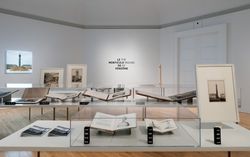
Titre:
Le monticule de Vendôme
Le monticule de Vendôme
Actions:
Description:
Le monticule de Vendôme est un artéfact simple d’aspect, mais provocateur par son propos : un ouvrage de terrassement au cœur d’une tentative radicale de transformation de l’iconographie urbaine pendant les deux mois de pouvoir de la Commune de Paris en 1871. Ce projet de recherche propose le récit de cette structure perdue et appelle à son historicisation ainsi qu’à sa(...)
Le monticule de Vendôme est un artéfact simple d’aspect, mais provocateur par son propos : un ouvrage de terrassement au cœur d’une tentative radicale de transformation de l’iconographie urbaine pendant les deux mois de pouvoir de la Commune de Paris en 1871. Ce projet de recherche propose le récit de cette structure perdue et appelle à son historicisation ainsi qu’à sa(...)
Localisation:
Salle octogonale
Salle octogonale
Date:
19 juin 2014 au 28 septembre 2014
19 juin 2014 au 28 septembre 2014
Titre:
Le monticule de Vendôme
Actions:
Description:
Le monticule de Vendôme est un artéfact simple d’aspect, mais provocateur par son propos : un ouvrage de terrassement au cœur d’une tentative radicale de transformation de l’iconographie urbaine pendant les deux mois de pouvoir de la Commune de Paris en 1871. Ce projet de recherche propose le récit de cette structure perdue et appelle à son historicisation ainsi qu’à sa(...)
Le monticule de Vendôme
Actions:
Description:
Le monticule de Vendôme est un artéfact simple d’aspect, mais provocateur par son propos : un ouvrage de terrassement au cœur d’une tentative radicale de transformation de l’iconographie urbaine pendant les deux mois de pouvoir de la Commune de Paris en 1871. Ce projet de recherche propose le récit de cette structure perdue et appelle à son historicisation ainsi qu’à sa(...)
Classification:
expositions
expositions
Date:
19 juin 2014 au
28 septembre 2014
19 juin 2014 au
28 septembre 2014
Localisation:
Salle octogonale
Salle octogonale
Classification:
livres
livres
Titre:
Exposition Willi Baumeister
Exposition Willi Baumeister
Numéro de référence:
ARCH270243
Description:
Exhibition catalogue for the exhibition "Exposition Willi Baumeister" at the Galerie Jeanne Bucher in Paris in November and December 1946.
ARCH270243
Description:
Exhibition catalogue for the exhibition "Exposition Willi Baumeister" at the Galerie Jeanne Bucher in Paris in November and December 1946.
Personnes et institutions:
Date:
1949
1949
Titre:
Exposition Willi Baumeister
Actions:
ARCH270243
Description:
Exhibition catalogue for the exhibition "Exposition Willi Baumeister" at the Galerie Jeanne Bucher in Paris in November and December 1946.
Exposition Willi Baumeister
Actions:
ARCH270243
Description:
Exhibition catalogue for the exhibition "Exposition Willi Baumeister" at the Galerie Jeanne Bucher in Paris in November and December 1946.
Classification:
livres
livres
Date:
1949
1949
Personnes et institutions:


