


2692 Résultats
Classification:
vidéo
vidéo
Actions:
Prix:
$32.00
(disponible sur commande)
Résumé:
Suburbia, and all it promises, has become the American Dream. With brutal honesty and a touch of irony, "The end of suburbia" explored the American Way of Life and its prospects as the planet enters the age of Peak Oil. Director Greg Greene once again takes us “through the looking glass” on a journey of discovery – a sobering yet vital and ultimately positive(...)
$32.00
(disponible sur commande)
Résumé:
Suburbia, and all it promises, has become the American Dream. With brutal honesty and a touch of irony, "The end of suburbia" explored the American Way of Life and its prospects as the planet enters the age of Peak Oil. Director Greg Greene once again takes us “through the looking glass” on a journey of discovery – a sobering yet vital and ultimately positive(...)
Titre:
Escape from suburbia : beyond the American dream
Actions:
Prix:
$32.00
(disponible sur commande)
Résumé:
Suburbia, and all it promises, has become the American Dream. With brutal honesty and a touch of irony, "The end of suburbia" explored the American Way of Life and its prospects as the planet enters the age of Peak Oil. Director Greg Greene once again takes us “through the looking glass” on a journey of discovery – a sobering yet vital and ultimately positive exploration of what the second half of the Oil Age has in store for us. Through personal stories and interviews we examine how declining world oil production has already begun to affect modern life in North America. Expert scientific opinion is balanced with “on the street” portraits from an emerging global movement of citizen’s groups who are confronting the challenges of Peak Oil in extraordinary ways. The clock is ticking. This movie asks the tough questions : Are we approaching Peak Oil now? What are the controversies surrounding our future energy options? Why are a growing number of specialists and citizens skeptical of these options? What are ordinary people across North America doing in their own communities to prepare for Peak Oil? And what will you do as energy prices skyrocket and the Oil Age draws to a close?
Escape from suburbia : beyond the American dream
Actions:
Prix:
$32.00
(disponible sur commande)
Résumé:
Suburbia, and all it promises, has become the American Dream. With brutal honesty and a touch of irony, "The end of suburbia" explored the American Way of Life and its prospects as the planet enters the age of Peak Oil. Director Greg Greene once again takes us “through the looking glass” on a journey of discovery – a sobering yet vital and ultimately positive exploration of what the second half of the Oil Age has in store for us. Through personal stories and interviews we examine how declining world oil production has already begun to affect modern life in North America. Expert scientific opinion is balanced with “on the street” portraits from an emerging global movement of citizen’s groups who are confronting the challenges of Peak Oil in extraordinary ways. The clock is ticking. This movie asks the tough questions : Are we approaching Peak Oil now? What are the controversies surrounding our future energy options? Why are a growing number of specialists and citizens skeptical of these options? What are ordinary people across North America doing in their own communities to prepare for Peak Oil? And what will you do as energy prices skyrocket and the Oil Age draws to a close?
Classification:
vidéo
vidéo
Publication:
novembre 2007, Toronto
novembre 2007, Toronto
Sujet:
DVD vidéo
DVD vidéo
Classification:
livres
livres
Titre:
Architecture and dystopia
Architecture and dystopia
Actions:
Prix:
$45.00
(disponible sur commande)
Résumé:
As a response to the profound crisis of Western culture the emerged in the 1960s, radical artists from Italy, Austria, England and Japan called into question the foundations of modernist utopias. They transmuted the difficulties of capitalism into a repertory of startling images that revealed the disturbing realities of consumer society, even in those places still(...)
$45.00
(disponible sur commande)
Résumé:
As a response to the profound crisis of Western culture the emerged in the 1960s, radical artists from Italy, Austria, England and Japan called into question the foundations of modernist utopias. They transmuted the difficulties of capitalism into a repertory of startling images that revealed the disturbing realities of consumer society, even in those places still(...)
Titre:
Architecture and dystopia
Actions:
Prix:
$45.00
(disponible sur commande)
Résumé:
As a response to the profound crisis of Western culture the emerged in the 1960s, radical artists from Italy, Austria, England and Japan called into question the foundations of modernist utopias. They transmuted the difficulties of capitalism into a repertory of startling images that revealed the disturbing realities of consumer society, even in those places still resistant to the penetration of modern architecture, such as Superstudio and Archizoom’s Florence. Their model, though exhausted in the space of experimentation, went on to inspire a generation of architects, from the High Tech movement to Rem Koolhaas.. In the light of these examples, how to define a unified 'dystopian' method of design, i.e. a common ground for an architecture that, by its very nature, seems to resist systematization? Are the most recognizable architectural expressions of this theoretical framework — characterized by brazen displays of technology and structures of overwhelming scale — merely isolated cases, albeit of particular iconic power? Or do they belong to a wider landscape of antirational architectural projects? And to what extent are these disturbing expressions premised on the utopian tradition or, better yet, the conceptual model of 'negative thought'? The goal of this book is to respond to such questions, thus initiating an open dialogue about the legitimacy of this critical category.
Architecture and dystopia
Actions:
Prix:
$45.00
(disponible sur commande)
Résumé:
As a response to the profound crisis of Western culture the emerged in the 1960s, radical artists from Italy, Austria, England and Japan called into question the foundations of modernist utopias. They transmuted the difficulties of capitalism into a repertory of startling images that revealed the disturbing realities of consumer society, even in those places still resistant to the penetration of modern architecture, such as Superstudio and Archizoom’s Florence. Their model, though exhausted in the space of experimentation, went on to inspire a generation of architects, from the High Tech movement to Rem Koolhaas.. In the light of these examples, how to define a unified 'dystopian' method of design, i.e. a common ground for an architecture that, by its very nature, seems to resist systematization? Are the most recognizable architectural expressions of this theoretical framework — characterized by brazen displays of technology and structures of overwhelming scale — merely isolated cases, albeit of particular iconic power? Or do they belong to a wider landscape of antirational architectural projects? And to what extent are these disturbing expressions premised on the utopian tradition or, better yet, the conceptual model of 'negative thought'? The goal of this book is to respond to such questions, thus initiating an open dialogue about the legitimacy of this critical category.
Classification:
livres
livres
Publication:
décembre 2019
décembre 2019
Sujet:
Théorie de l’architecture
Théorie de l’architecture
Classification:
livres
livres
Prix:
$24.95
(disponible sur commande)
Résumé:
Modern life is an ever-accelerating barrage of people, buildings,vehicles, creatures, and things. How much can a curious mind take in? And what can it do with all the data? Gregory L. Blackstock, a retired Seattle pot washer, draws order out of all the chaos with a pencil, a black marker, and some crayons. Blackstock is autistic and an artistic savant. He creates(...)
$24.95
(disponible sur commande)
Résumé:
Modern life is an ever-accelerating barrage of people, buildings,vehicles, creatures, and things. How much can a curious mind take in? And what can it do with all the data? Gregory L. Blackstock, a retired Seattle pot washer, draws order out of all the chaos with a pencil, a black marker, and some crayons. Blackstock is autistic and an artistic savant. He creates(...)
Titre:
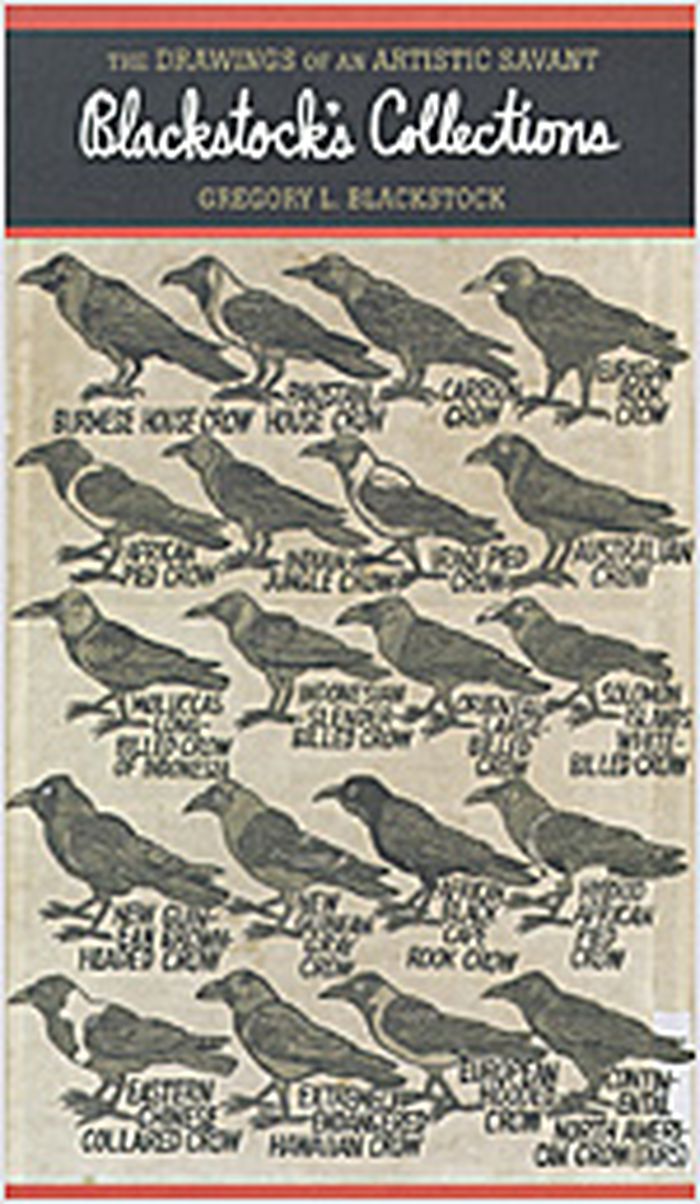
Blackstock's collections : the drawings of a artistic savant
Actions:
Prix:
$24.95
(disponible sur commande)
Résumé:
Modern life is an ever-accelerating barrage of people, buildings,vehicles, creatures, and things. How much can a curious mind take in? And what can it do with all the data? Gregory L. Blackstock, a retired Seattle pot washer, draws order out of all the chaos with a pencil, a black marker, and some crayons. Blackstock is autistic and an artistic savant. He creates visual lists of everything from wasps to hats to emergency vehicles to noisemakers. In the spirit of the Outsider art of Henry Darger and Howard Finster, Blackstock makes art that is stirring in its profusion and detail and inspiring in its simple beauty. He has never received formal artistic training, yet his renderings clearly and beguilingly show subtle differences and similarities—enabling the viewer to see, for example, the distinctive features of a dolly varden, a Pacific Coast steelhead cutthroat, and fourteen other types of trout. Each collection is lovingly captioned in Blackstock's unique hand with texts that reflect facts from his research as well as his passions and preferences. Blackstock's Collections contains over 100 extraordinary examples of his splendidly original taxonomy, offering a unique look inside the mind of a man making sense of life through art.
Blackstock's collections : the drawings of a artistic savant
Actions:
Prix:
$24.95
(disponible sur commande)
Résumé:
Modern life is an ever-accelerating barrage of people, buildings,vehicles, creatures, and things. How much can a curious mind take in? And what can it do with all the data? Gregory L. Blackstock, a retired Seattle pot washer, draws order out of all the chaos with a pencil, a black marker, and some crayons. Blackstock is autistic and an artistic savant. He creates visual lists of everything from wasps to hats to emergency vehicles to noisemakers. In the spirit of the Outsider art of Henry Darger and Howard Finster, Blackstock makes art that is stirring in its profusion and detail and inspiring in its simple beauty. He has never received formal artistic training, yet his renderings clearly and beguilingly show subtle differences and similarities—enabling the viewer to see, for example, the distinctive features of a dolly varden, a Pacific Coast steelhead cutthroat, and fourteen other types of trout. Each collection is lovingly captioned in Blackstock's unique hand with texts that reflect facts from his research as well as his passions and preferences. Blackstock's Collections contains over 100 extraordinary examples of his splendidly original taxonomy, offering a unique look inside the mind of a man making sense of life through art.
Classification:
livres
livres
Publication:
septembre 2006, New York
septembre 2006, New York
Sujet:
Illustration
Illustration
Classification:
livres
livres
Prix:
$52.50
(disponible en magasin)
Résumé:
"Breathing Space" is a compelling and wide-ranging analysis of pneumatic phenomena in modern culture. Architect and historian Tim Altenhof brilliantly explores the physiology of breathing and its reciprocal relationship to bodies and buildings, both of which share a common atmosphere. Because breathing is controlled by the autonomic nervous system and cannot be willfully(...)
$52.50
(disponible en magasin)
Résumé:
"Breathing Space" is a compelling and wide-ranging analysis of pneumatic phenomena in modern culture. Architect and historian Tim Altenhof brilliantly explores the physiology of breathing and its reciprocal relationship to bodies and buildings, both of which share a common atmosphere. Because breathing is controlled by the autonomic nervous system and cannot be willfully(...)
Titre:
Breathing space: The architecture of pneumatic beings
Actions:
Prix:
$52.50
(disponible en magasin)
Résumé:
"Breathing Space" is a compelling and wide-ranging analysis of pneumatic phenomena in modern culture. Architect and historian Tim Altenhof brilliantly explores the physiology of breathing and its reciprocal relationship to bodies and buildings, both of which share a common atmosphere. Because breathing is controlled by the autonomic nervous system and cannot be willfully overridden, it takes place unconsciously and involuntarily—most of the time. However, beginning in the mid-nineteenth century, attitudes toward breathing changed significantly. Breathing became a widely investigated cultural and physiological phenomenon and was the basis for techniques and bodily practices that heightened pulmonary awareness. New understandings of air pollution and disease stimulated a widespread preoccupation with ventilation, impacting architecture in countless ways. Altenhof’s close readings of built structures show how the science of breathing was incorporated into architecture, whether in the design of factories, residences, or medical facilities. The lungs form a major part of the respiratory system and like no other organ tie the living body directly to its surroundings. Yet the role of lungs also poses a topological problem: engaging in atmospheric transfer, they dissolve the division between inside and outside, and despite being an internal organ, they sustain a permanent and living connection to the external world. This ambiguity and permeability constitute the spatial dimension of breathing.
Breathing space: The architecture of pneumatic beings
Actions:
Prix:
$52.50
(disponible en magasin)
Résumé:
"Breathing Space" is a compelling and wide-ranging analysis of pneumatic phenomena in modern culture. Architect and historian Tim Altenhof brilliantly explores the physiology of breathing and its reciprocal relationship to bodies and buildings, both of which share a common atmosphere. Because breathing is controlled by the autonomic nervous system and cannot be willfully overridden, it takes place unconsciously and involuntarily—most of the time. However, beginning in the mid-nineteenth century, attitudes toward breathing changed significantly. Breathing became a widely investigated cultural and physiological phenomenon and was the basis for techniques and bodily practices that heightened pulmonary awareness. New understandings of air pollution and disease stimulated a widespread preoccupation with ventilation, impacting architecture in countless ways. Altenhof’s close readings of built structures show how the science of breathing was incorporated into architecture, whether in the design of factories, residences, or medical facilities. The lungs form a major part of the respiratory system and like no other organ tie the living body directly to its surroundings. Yet the role of lungs also poses a topological problem: engaging in atmospheric transfer, they dissolve the division between inside and outside, and despite being an internal organ, they sustain a permanent and living connection to the external world. This ambiguity and permeability constitute the spatial dimension of breathing.
Classification:
livres
livres
Publication:
mars 2026
mars 2026
Sujet:
Théorie de l’architecture
Théorie de l’architecture
Classification:
livres
livres
Prix:
$26.95
(disponible sur commande)
Résumé:
Most people associate Britain and Ireland with the English language, a vast, sprawling linguistic tree with roots in Latin, French, and German. But the inhabitants of these islands originally spoke another tongue. Look closely enough and English contains traces of the Celtic soil from which it sprung, found in words like bog, loch, cairn, and crag. Today, this heritage(...)
$26.95
(disponible sur commande)
Résumé:
Most people associate Britain and Ireland with the English language, a vast, sprawling linguistic tree with roots in Latin, French, and German. But the inhabitants of these islands originally spoke another tongue. Look closely enough and English contains traces of the Celtic soil from which it sprung, found in words like bog, loch, cairn, and crag. Today, this heritage(...)
Titre:
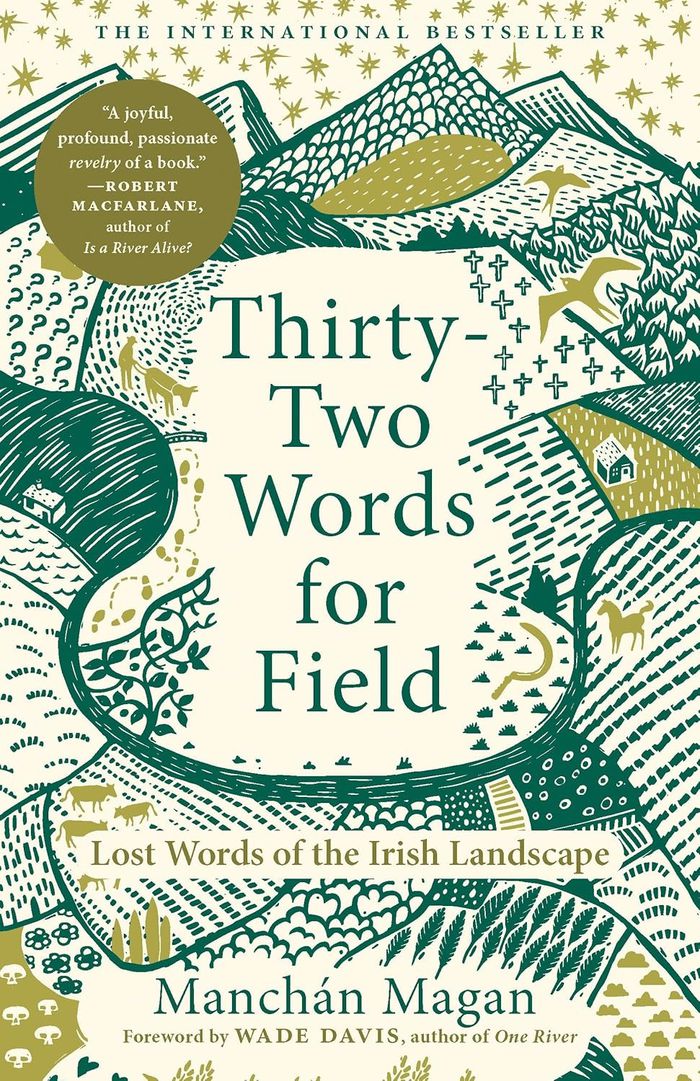
Thirty-two words for field: Lost words of the Irish Landscape
Actions:
Prix:
$26.95
(disponible sur commande)
Résumé:
Most people associate Britain and Ireland with the English language, a vast, sprawling linguistic tree with roots in Latin, French, and German. But the inhabitants of these islands originally spoke another tongue. Look closely enough and English contains traces of the Celtic soil from which it sprung, found in words like bog, loch, cairn, and crag. Today, this heritage can be found nowhere more powerfully than in modern-day Gaelic.? In ''Thirty-Two Words for Field'', Manchán explores how Gaelic, a three-thousand-year-old lexicon, has imbued the natural world with meaning and magic, evoking a time-honored way of life, from its thirty-two separate words for a field to terms like bróis (whiskey for a horseman at a wedding), iarmhaireacht (the loneliness you feel when you are the only person awake at dawn), and bladhmann (steam rising from a fermented haystack or idle boasting).? Manchán urges readers to consider the sublime beauty and profound oddness of this ancient tongue that has been spoken in close connection to the land for thousands of years. Told through stories collected from his own life and travels, ''Thirty-Two Words for Field'' is an enthralling celebration of Irish words and a testament to the indelible relationship between landscape, culture, and language.
Thirty-two words for field: Lost words of the Irish Landscape
Actions:
Prix:
$26.95
(disponible sur commande)
Résumé:
Most people associate Britain and Ireland with the English language, a vast, sprawling linguistic tree with roots in Latin, French, and German. But the inhabitants of these islands originally spoke another tongue. Look closely enough and English contains traces of the Celtic soil from which it sprung, found in words like bog, loch, cairn, and crag. Today, this heritage can be found nowhere more powerfully than in modern-day Gaelic.? In ''Thirty-Two Words for Field'', Manchán explores how Gaelic, a three-thousand-year-old lexicon, has imbued the natural world with meaning and magic, evoking a time-honored way of life, from its thirty-two separate words for a field to terms like bróis (whiskey for a horseman at a wedding), iarmhaireacht (the loneliness you feel when you are the only person awake at dawn), and bladhmann (steam rising from a fermented haystack or idle boasting).? Manchán urges readers to consider the sublime beauty and profound oddness of this ancient tongue that has been spoken in close connection to the land for thousands of years. Told through stories collected from his own life and travels, ''Thirty-Two Words for Field'' is an enthralling celebration of Irish words and a testament to the indelible relationship between landscape, culture, and language.
Classification:
livres
livres
Publication:
mars 2026
mars 2026
Sujet:
Théorie du paysage
Théorie du paysage
Classification:
livres
livres
Actions:
Prix:
$135.00
(disponible sur commande)
Résumé:
"Antiquity and its Interpreters" examines how the physical and textual remains of the ancient Romans were viewed and received by writers, artists, and cultural (...)
$135.00
(disponible sur commande)
Résumé:
"Antiquity and its Interpreters" examines how the physical and textual remains of the ancient Romans were viewed and received by writers, artists, and cultural (...)
Publication:
novembre 1999, Cambridge
novembre 1999, Cambridge
Titre:
Antiquity and its interpreters
Actions:
Prix:
$135.00
(disponible sur commande)
Résumé:
"Antiquity and its Interpreters" examines how the physical and textual remains of the ancient Romans were viewed and received by writers, artists, and cultural makers of early modern Italy. This volume reconsiders the complex relationship between the two cultures, in light of recent scholarship in the field a new appreciation and awareness of the act of history writing itself. The case studies analyze specific texts, the archaeological projects that made ‘antiquity’ available, the revival of art history and theory, and the appropriation of antiquities to serve social ideologies, among other topics. Demonstrating that the antique model was itself an artful contruct, "Antiquity and its Interpretors" shows that the originality of Renaissance culture owed as much to ignorance about antiquity as to an understanding of it. It also provides a synthesis of seminal work that recognizes the reciprocal relationship of the Renaissance to Antiquity. Contributors include James Ackerman, David Galbraith, Patricia Fortini Brown, Philip Sohm, Sheila Bonde, Martine Furno II, Marina Belozerskaya, Kenneth D. S. Lapatin, Leonard Barkan, Julia Branna Perlman, Nicola Courtright, Alina A. Payne, Rebekah Smick, Gehard Wolf, Christof Thoenes, Michael Koortbojian, Tod Marder, Phyllis Pray Bober, Richard Betts, Catherine Wilkinson Zerner, Richard Brilliant, Michael Ann Holly, Carl Goldstein.
Antiquity and its interpreters
Actions:
Prix:
$135.00
(disponible sur commande)
Résumé:
"Antiquity and its Interpreters" examines how the physical and textual remains of the ancient Romans were viewed and received by writers, artists, and cultural makers of early modern Italy. This volume reconsiders the complex relationship between the two cultures, in light of recent scholarship in the field a new appreciation and awareness of the act of history writing itself. The case studies analyze specific texts, the archaeological projects that made ‘antiquity’ available, the revival of art history and theory, and the appropriation of antiquities to serve social ideologies, among other topics. Demonstrating that the antique model was itself an artful contruct, "Antiquity and its Interpretors" shows that the originality of Renaissance culture owed as much to ignorance about antiquity as to an understanding of it. It also provides a synthesis of seminal work that recognizes the reciprocal relationship of the Renaissance to Antiquity. Contributors include James Ackerman, David Galbraith, Patricia Fortini Brown, Philip Sohm, Sheila Bonde, Martine Furno II, Marina Belozerskaya, Kenneth D. S. Lapatin, Leonard Barkan, Julia Branna Perlman, Nicola Courtright, Alina A. Payne, Rebekah Smick, Gehard Wolf, Christof Thoenes, Michael Koortbojian, Tod Marder, Phyllis Pray Bober, Richard Betts, Catherine Wilkinson Zerner, Richard Brilliant, Michael Ann Holly, Carl Goldstein.
Classification:
livres
livres
Publication:
novembre 1999, Cambridge
novembre 1999, Cambridge
Classification:
livres
livres
Actions:
Prix:
$52.50
(disponible sur commande)
Résumé:
In this fascinating and innovative look at nineteenth-century London, this book offers a new account of modernity and metropolitan life. It charts the relationship between London's formation into a modern organized city in the 1860s and the emergence of new(...)
$52.50
(disponible sur commande)
Résumé:
In this fascinating and innovative look at nineteenth-century London, this book offers a new account of modernity and metropolitan life. It charts the relationship between London's formation into a modern organized city in the 1860s and the emergence of new(...)
Titre:
Victorian Babylon : people, streets and images in nineteenth-century London
Actions:
Prix:
$52.50
(disponible sur commande)
Résumé:
In this fascinating and innovative look at nineteenth-century London, this book offers a new account of modernity and metropolitan life. It charts the relationship between London's formation into a modern organized city in the 1860s and the emergence of new types of production and consumption of visual culture. She considers the role visual images played in the creation of a vibrant and diverse urban culture and how new kinds of publics were created for these representations. Shifting the focus of the history of modernity from Paris to London, Nead here argues for a different understanding of gender and public space in a society where women joined the everyday life of city streets and entered the debates concerning morality, spectacle, and adventure. The book draws on texts and images of many kinds -- including acts of Parliament, literature, newspaper reports, private letters, maps, paintings, advertisements, posters, and banned obscene publications. Taking a highly interdisciplinary approach, Nead explores such intriguing topics as the efforts of urban improvers to move water, air, traffic, goods, and people in the Victorian metropolis; the impact of gas lighting and glass on urban leisure; and the obscenity legislation that emerged in response to new forms of visual mass culture that were perceived as dangerous and pervasive.
Victorian Babylon : people, streets and images in nineteenth-century London
Actions:
Prix:
$52.50
(disponible sur commande)
Résumé:
In this fascinating and innovative look at nineteenth-century London, this book offers a new account of modernity and metropolitan life. It charts the relationship between London's formation into a modern organized city in the 1860s and the emergence of new types of production and consumption of visual culture. She considers the role visual images played in the creation of a vibrant and diverse urban culture and how new kinds of publics were created for these representations. Shifting the focus of the history of modernity from Paris to London, Nead here argues for a different understanding of gender and public space in a society where women joined the everyday life of city streets and entered the debates concerning morality, spectacle, and adventure. The book draws on texts and images of many kinds -- including acts of Parliament, literature, newspaper reports, private letters, maps, paintings, advertisements, posters, and banned obscene publications. Taking a highly interdisciplinary approach, Nead explores such intriguing topics as the efforts of urban improvers to move water, air, traffic, goods, and people in the Victorian metropolis; the impact of gas lighting and glass on urban leisure; and the obscenity legislation that emerged in response to new forms of visual mass culture that were perceived as dangerous and pervasive.
Classification:
livres
livres
Publication:
novembre 2000, New Haven
novembre 2000, New Haven
Sujet:
Théorie de l’urbanisme
Théorie de l’urbanisme
Classification:
livres
livres
Titre:
Logic of the collection
Logic of the collection
Actions:
Prix:
$39.00
(disponible sur commande)
Résumé:
In modernity, the museum was the institution that made art accessible to the broader public. An artwork was collected if it was considered beautiful, passionate, engaged, or critical—and primarily if it was deemed historically relevant. But today, with the total availability and saturation of images, the museum has lost its privileged status as the exclusive place for the(...)
$39.00
(disponible sur commande)
Résumé:
In modernity, the museum was the institution that made art accessible to the broader public. An artwork was collected if it was considered beautiful, passionate, engaged, or critical—and primarily if it was deemed historically relevant. But today, with the total availability and saturation of images, the museum has lost its privileged status as the exclusive place for the(...)
Titre:
Logic of the collection
Actions:
Prix:
$39.00
(disponible sur commande)
Résumé:
In modernity, the museum was the institution that made art accessible to the broader public. An artwork was collected if it was considered beautiful, passionate, engaged, or critical—and primarily if it was deemed historically relevant. But today, with the total availability and saturation of images, the museum has lost its privileged status as the exclusive place for the display of art. In our age of digital media, how does a particular artwork get selected for a museum collection? Which symbolic criteria must this artwork satisfy for it to obtain value? And in what ways does the institution of the museum remain relevant? 'Logic of the Collection' is framed by Boris Groys’s original and provocative proposition: an artwork is considered historically relevant if it fits the logic of the museum collection. In these critical essays, the philosopher and theorist of art and media analyzes the relationship between the logic of the collection and various modern ideologies. He reflects on the explosion of art production and distribution through the ascendency of digital media as well as the ways in which the accumulated artworks will be collected and preserved in the future, as the potential limits of public and private collections are reached.
Logic of the collection
Actions:
Prix:
$39.00
(disponible sur commande)
Résumé:
In modernity, the museum was the institution that made art accessible to the broader public. An artwork was collected if it was considered beautiful, passionate, engaged, or critical—and primarily if it was deemed historically relevant. But today, with the total availability and saturation of images, the museum has lost its privileged status as the exclusive place for the display of art. In our age of digital media, how does a particular artwork get selected for a museum collection? Which symbolic criteria must this artwork satisfy for it to obtain value? And in what ways does the institution of the museum remain relevant? 'Logic of the Collection' is framed by Boris Groys’s original and provocative proposition: an artwork is considered historically relevant if it fits the logic of the museum collection. In these critical essays, the philosopher and theorist of art and media analyzes the relationship between the logic of the collection and various modern ideologies. He reflects on the explosion of art production and distribution through the ascendency of digital media as well as the ways in which the accumulated artworks will be collected and preserved in the future, as the potential limits of public and private collections are reached.
Classification:
livres
livres
Publication:
août 2021
août 2021
Sujet:
Muséologie
Muséologie
Classification:
livres
livres
Titre:
Miroslav Sasek
Miroslav Sasek
Actions:
Prix:
$39.95
(disponible sur commande)
Résumé:
Czech artist Miroslav Šašek (1916–1980) is celebrated for his pioneering approach to narrative nonfiction picture books, particularly his bestselling This Is series, which began with ''This is Paris'' in 1959 and eventually totaled eighteen books. With their distinct visual vocabulary, this witty collection of travel guides illustrating life and culture in a variety of(...)
$39.95
(disponible sur commande)
Résumé:
Czech artist Miroslav Šašek (1916–1980) is celebrated for his pioneering approach to narrative nonfiction picture books, particularly his bestselling This Is series, which began with ''This is Paris'' in 1959 and eventually totaled eighteen books. With their distinct visual vocabulary, this witty collection of travel guides illustrating life and culture in a variety of(...)
Titre:
Miroslav Sasek
Actions:
Prix:
$39.95
(disponible sur commande)
Résumé:
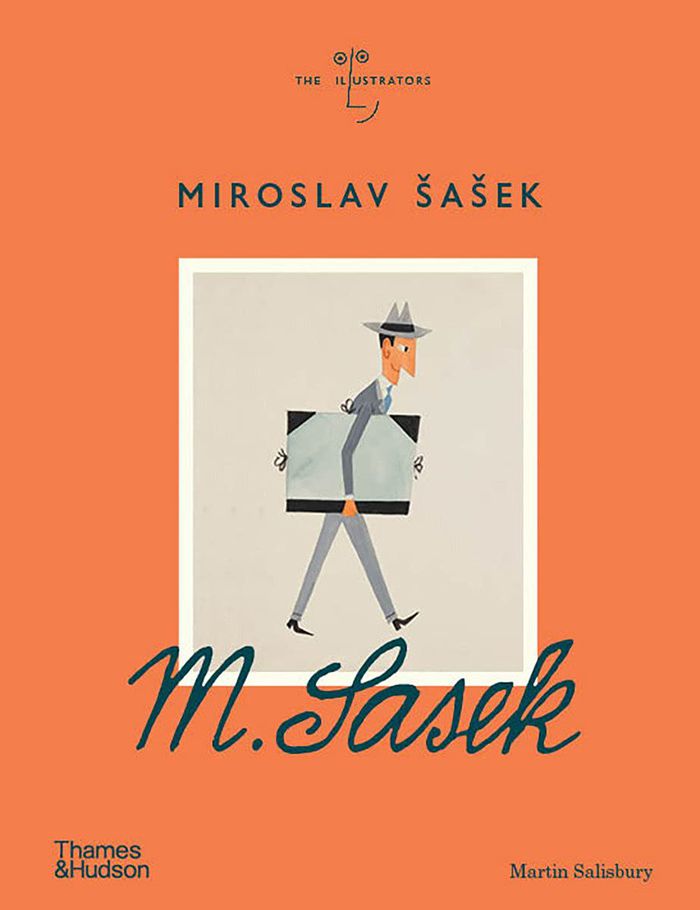
Czech artist Miroslav Šašek (1916–1980) is celebrated for his pioneering approach to narrative nonfiction picture books, particularly his bestselling This Is series, which began with ''This is Paris'' in 1959 and eventually totaled eighteen books. With their distinct visual vocabulary, this witty collection of travel guides illustrating life and culture in a variety of cities and countries around the world from a child’s perspective, became immensely popular and garnered many awards. The artist’s charming travelogues continue to appeal to adults and children alike, even in a digital age exploding with travel imagery. Acclaimed author Martin Salisbury analyzes Šašek’s techniques and how his work not only reflects his architectural training and the ideas of the midcentury European avant-garde, but also the influence of contemporaries such as Saul Steinberg. In this beautifully designed volume, illustrated with sketches and original artwork from the Šašek Foundation in Prague, with examples ranging from Greece to Hong Kong, Rome to San Francisco, Ireland to Israel, Paris to New York, and more, Šašek’s best-known works come alive alongside lesser-known aspects of his practice, such as oil painting. Full of insight into the life and work of a singular talent, ''Miroslav Šašek'' will appeal to illustrators and those interested in the midcentury modern period.
Miroslav Sasek
Actions:
Prix:
$39.95
(disponible sur commande)
Résumé:
Czech artist Miroslav Šašek (1916–1980) is celebrated for his pioneering approach to narrative nonfiction picture books, particularly his bestselling This Is series, which began with ''This is Paris'' in 1959 and eventually totaled eighteen books. With their distinct visual vocabulary, this witty collection of travel guides illustrating life and culture in a variety of cities and countries around the world from a child’s perspective, became immensely popular and garnered many awards. The artist’s charming travelogues continue to appeal to adults and children alike, even in a digital age exploding with travel imagery. Acclaimed author Martin Salisbury analyzes Šašek’s techniques and how his work not only reflects his architectural training and the ideas of the midcentury European avant-garde, but also the influence of contemporaries such as Saul Steinberg. In this beautifully designed volume, illustrated with sketches and original artwork from the Šašek Foundation in Prague, with examples ranging from Greece to Hong Kong, Rome to San Francisco, Ireland to Israel, Paris to New York, and more, Šašek’s best-known works come alive alongside lesser-known aspects of his practice, such as oil painting. Full of insight into the life and work of a singular talent, ''Miroslav Šašek'' will appeal to illustrators and those interested in the midcentury modern period.
Classification:
livres
livres
Publication:
octobre 2021
octobre 2021
Sujet:
Design, monographies
Design, monographies
Classification:
livres
livres
Prix:
$41.95
(disponible sur commande)
Résumé:
The Urban Spectator is a lively and utterly fascinating exploration of the ways in which technologies have influenced our collective conception of the American city, as well as our relationship with urban space and architecture. Eric Gordon argues that the city, developing late and in conjunction with a range of modern media, produced a particular way of seeing--what he(...)
$41.95
(disponible sur commande)
Résumé:
The Urban Spectator is a lively and utterly fascinating exploration of the ways in which technologies have influenced our collective conception of the American city, as well as our relationship with urban space and architecture. Eric Gordon argues that the city, developing late and in conjunction with a range of modern media, produced a particular way of seeing--what he(...)
Titre:
The urban spectator: American concept-cities from Kodak to Google
Actions:
Prix:
$41.95
(disponible sur commande)
Résumé:
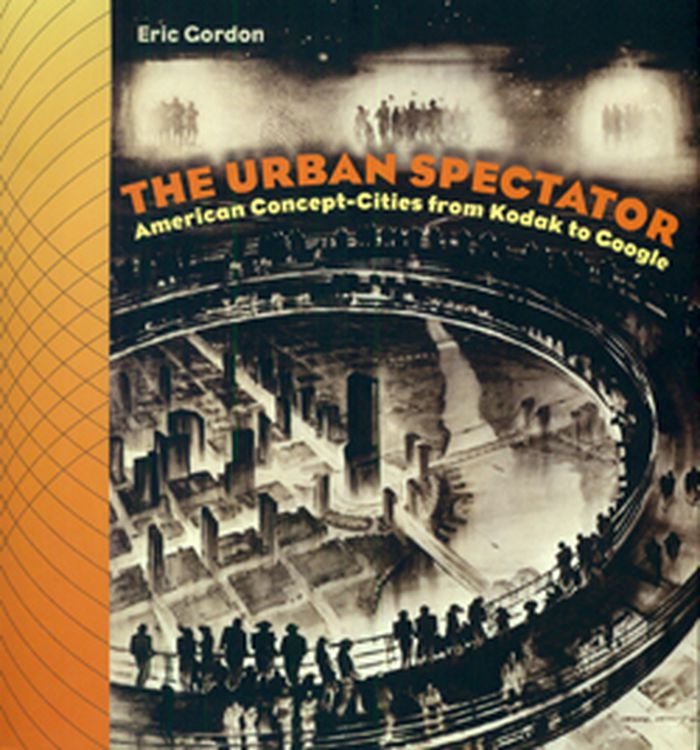
The Urban Spectator is a lively and utterly fascinating exploration of the ways in which technologies have influenced our collective conception of the American city, as well as our relationship with urban space and architecture. Eric Gordon argues that the city, developing late and in conjunction with a range of modern media, produced a particular way of seeing--what he labels "possessive spectatorship." Lacking the historical rootedness of European cities, the American city was open to individual interpretation, definition, and ownership. Beginning with the White City of the Chicago World's Fair of 1893 and the efforts to commodify the concept city through photography, Gordon shows how the American city has always been a product of the collision between the dominant conceptualization, shaped by contemporary media, and the spectator. From the viewfinder of the Kodak camera, to the public display of early cinema, to the speculative desire of network radio, all the way to machine-age utopianism, nostalgia, and America's "rerun" culture, the city is an amalgam of practice and concept. All of this comes to a head in the "database city" where urban spectatorship takes on the characteristics of a Google search. In new urban developments, the spectator searches, retrieves, and combines urban references to construct each experience of the city.
The urban spectator: American concept-cities from Kodak to Google
Actions:
Prix:
$41.95
(disponible sur commande)
Résumé:
The Urban Spectator is a lively and utterly fascinating exploration of the ways in which technologies have influenced our collective conception of the American city, as well as our relationship with urban space and architecture. Eric Gordon argues that the city, developing late and in conjunction with a range of modern media, produced a particular way of seeing--what he labels "possessive spectatorship." Lacking the historical rootedness of European cities, the American city was open to individual interpretation, definition, and ownership. Beginning with the White City of the Chicago World's Fair of 1893 and the efforts to commodify the concept city through photography, Gordon shows how the American city has always been a product of the collision between the dominant conceptualization, shaped by contemporary media, and the spectator. From the viewfinder of the Kodak camera, to the public display of early cinema, to the speculative desire of network radio, all the way to machine-age utopianism, nostalgia, and America's "rerun" culture, the city is an amalgam of practice and concept. All of this comes to a head in the "database city" where urban spectatorship takes on the characteristics of a Google search. In new urban developments, the spectator searches, retrieves, and combines urban references to construct each experience of the city.
Classification:
livres
livres
Publication:
février 2010
février 2010
Sujet:
Théorie de l’urbanisme
Théorie de l’urbanisme


