


2654 Résultats
Classification:
livres
livres
Actions:
Prix:
$105.00
(disponible en magasin)
Résumé:
In April 2013, photographers Nico Krebs and Taiyo Onorato, who have been working together for a dozen years, loaded up their 1987 Toyota Land Cruiser in Switzerland and headed east. They'd already roughly traced their route by running a finger across the map of Eurasia to their ultimate destination, Ulan Bator, the capital of Mongolia. It felt like setting forth on an(...)
$105.00
(disponible en magasin)
Résumé:
In April 2013, photographers Nico Krebs and Taiyo Onorato, who have been working together for a dozen years, loaded up their 1987 Toyota Land Cruiser in Switzerland and headed east. They'd already roughly traced their route by running a finger across the map of Eurasia to their ultimate destination, Ulan Bator, the capital of Mongolia. It felt like setting forth on an(...)
Titre:
Continental drift: Nico Krebs, Taiyo Onorato
Actions:
Prix:
$105.00
(disponible en magasin)
Résumé:
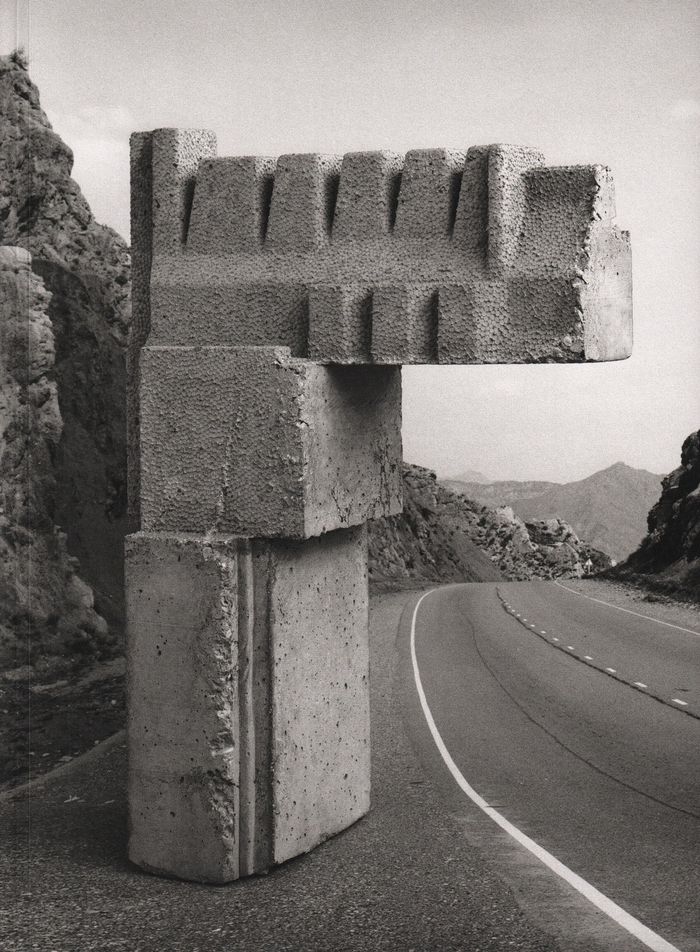
In April 2013, photographers Nico Krebs and Taiyo Onorato, who have been working together for a dozen years, loaded up their 1987 Toyota Land Cruiser in Switzerland and headed east. They'd already roughly traced their route by running a finger across the map of Eurasia to their ultimate destination, Ulan Bator, the capital of Mongolia. It felt like setting forth on an expedition to the mystical realms of the East: Eurasia, Central Asia, the foothills of the Himalayas, the forests of Siberia, the Stan Republics, the gigantic expanse of the former Soviet Union. A vast land mass, very few images of which are lodged in our minds, at least no clear and well-defined images, rather a haze of history and global politics. Nico Krebs and Taiyo Onorato went out in search of these images, to reproduce them, and to create them themselves. "Continental drift" is a travel log straddling the fine line between documentation and fiction about unknown lands, their possible past and conjectured future. It relates encounters with the utterly bizarre and inaccessibly alien, as well as with a remarkable openness and lavish hospitality they'd never known before, in striking contrast to their previous trip across the United States (The Great Unreal, now in its third edition at Edition Patrick Frey). Many of the countries and regions they traversed are in the throes of upheaval, caught between thousand-year-old traditions and post-Communist history and geopolitics, religious, territorial and ethnic turmoil, and the spreading desire to jump on the bandwagon of global turbocapitalism. The search for identity here is palpable—a search, along with the attendant confusion, graphically depicted in "Continental drift".
Continental drift: Nico Krebs, Taiyo Onorato
Actions:
Prix:
$105.00
(disponible en magasin)
Résumé:
In April 2013, photographers Nico Krebs and Taiyo Onorato, who have been working together for a dozen years, loaded up their 1987 Toyota Land Cruiser in Switzerland and headed east. They'd already roughly traced their route by running a finger across the map of Eurasia to their ultimate destination, Ulan Bator, the capital of Mongolia. It felt like setting forth on an expedition to the mystical realms of the East: Eurasia, Central Asia, the foothills of the Himalayas, the forests of Siberia, the Stan Republics, the gigantic expanse of the former Soviet Union. A vast land mass, very few images of which are lodged in our minds, at least no clear and well-defined images, rather a haze of history and global politics. Nico Krebs and Taiyo Onorato went out in search of these images, to reproduce them, and to create them themselves. "Continental drift" is a travel log straddling the fine line between documentation and fiction about unknown lands, their possible past and conjectured future. It relates encounters with the utterly bizarre and inaccessibly alien, as well as with a remarkable openness and lavish hospitality they'd never known before, in striking contrast to their previous trip across the United States (The Great Unreal, now in its third edition at Edition Patrick Frey). Many of the countries and regions they traversed are in the throes of upheaval, caught between thousand-year-old traditions and post-Communist history and geopolitics, religious, territorial and ethnic turmoil, and the spreading desire to jump on the bandwagon of global turbocapitalism. The search for identity here is palpable—a search, along with the attendant confusion, graphically depicted in "Continental drift".
Classification:
livres
livres
Publication:
avril 2017
avril 2017
Sujet:
Monographies photo
Monographies photo
Classification:
livres
livres
Prix:
$59.95
(disponible sur commande)
Résumé:
"The Artist as Producer" reshapes our understanding of the fundamental contribution of the Russian avant-garde to the development of modernism. Focusing on the single most important hotbed of Constructivist activity in the early 1920s - the Institute of Artistic Culture (INKhUK) in Moscow - Maria Gough offers a powerful reinterpretation of the work of the first group of(...)
$59.95
(disponible sur commande)
Résumé:
"The Artist as Producer" reshapes our understanding of the fundamental contribution of the Russian avant-garde to the development of modernism. Focusing on the single most important hotbed of Constructivist activity in the early 1920s - the Institute of Artistic Culture (INKhUK) in Moscow - Maria Gough offers a powerful reinterpretation of the work of the first group of(...)
Titre:
The artist as producer : Russian Constructivism in revolution
Actions:
Prix:
$59.95
(disponible sur commande)
Résumé:
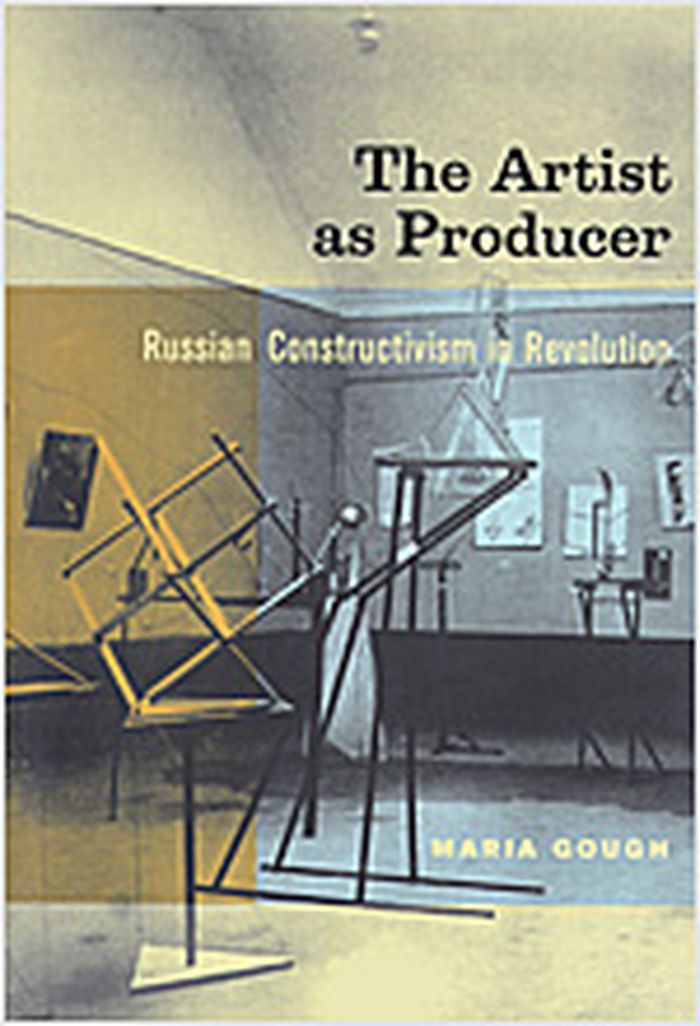
"The Artist as Producer" reshapes our understanding of the fundamental contribution of the Russian avant-garde to the development of modernism. Focusing on the single most important hotbed of Constructivist activity in the early 1920s - the Institute of Artistic Culture (INKhUK) in Moscow - Maria Gough offers a powerful reinterpretation of the work of the first group of artists to call themselves Constructivists. Her lively narrative ranges from famous figures such as Aleksandr Rodchenko to others who are much less well known, such as Karl Ioganson, a key member of the state-funded INKhUK whose work paved the way for an eventual dematerialization of the integral art object. Through the mining of untapped archives and collections in Russia and Latvia and a close reading of key Constructivist works, Gough highlights fundamental differences among the Moscow group in their handling of the experimental new sculptural form - the spatial construction - and of their subsequent shift to industrial production. "The Artist as Producer" upends the standard view that the Moscow group's formalism and abstraction were incompatible with the sociopolitical imperatives of the new Communist state. It challenges the common equation of Constructivism with functionalism and utilitarianism by delineating a contrary tendency toward non-determinism and an alternate orientation to process rather than product. Finally, the book counters the popular perception that Constructivism failed in its ambition to enter production by presenting the first-ever case study of how a Constructivist could, and in fact did, operate within an industrial environment. "The Artist as Producer" offers provocative new perspectives on three critical issues - formalism, functionalism, and failure - that are of central importance to our understanding not only of the Soviet phenomenon but also of the European vanguards more generally.
The artist as producer : Russian Constructivism in revolution
Actions:
Prix:
$59.95
(disponible sur commande)
Résumé:
"The Artist as Producer" reshapes our understanding of the fundamental contribution of the Russian avant-garde to the development of modernism. Focusing on the single most important hotbed of Constructivist activity in the early 1920s - the Institute of Artistic Culture (INKhUK) in Moscow - Maria Gough offers a powerful reinterpretation of the work of the first group of artists to call themselves Constructivists. Her lively narrative ranges from famous figures such as Aleksandr Rodchenko to others who are much less well known, such as Karl Ioganson, a key member of the state-funded INKhUK whose work paved the way for an eventual dematerialization of the integral art object. Through the mining of untapped archives and collections in Russia and Latvia and a close reading of key Constructivist works, Gough highlights fundamental differences among the Moscow group in their handling of the experimental new sculptural form - the spatial construction - and of their subsequent shift to industrial production. "The Artist as Producer" upends the standard view that the Moscow group's formalism and abstraction were incompatible with the sociopolitical imperatives of the new Communist state. It challenges the common equation of Constructivism with functionalism and utilitarianism by delineating a contrary tendency toward non-determinism and an alternate orientation to process rather than product. Finally, the book counters the popular perception that Constructivism failed in its ambition to enter production by presenting the first-ever case study of how a Constructivist could, and in fact did, operate within an industrial environment. "The Artist as Producer" offers provocative new perspectives on three critical issues - formalism, functionalism, and failure - that are of central importance to our understanding not only of the Soviet phenomenon but also of the European vanguards more generally.
Classification:
livres
livres
Publication:
janvier 1900, Berkeley
janvier 1900, Berkeley
Classification:
livres
livres
Titre:
The place we live
The place we live
Actions:
Prix:
$42.00
(disponible sur commande)
Résumé:
The year 2008 has witnessed a major shift in the way people across the world live: for the first time in human history more people live in cities than in rural areas. This triumph of the urban, however, does not entirely represent progress, as the number of people living in urban slums—often in abject conditions—will soon exceed one billion. From 2005 to 2007 Jonas(...)
$42.00
(disponible sur commande)
Résumé:
The year 2008 has witnessed a major shift in the way people across the world live: for the first time in human history more people live in cities than in rural areas. This triumph of the urban, however, does not entirely represent progress, as the number of people living in urban slums—often in abject conditions—will soon exceed one billion. From 2005 to 2007 Jonas(...)
Titre:
The place we live
Actions:
Prix:
$42.00
(disponible sur commande)
Résumé:
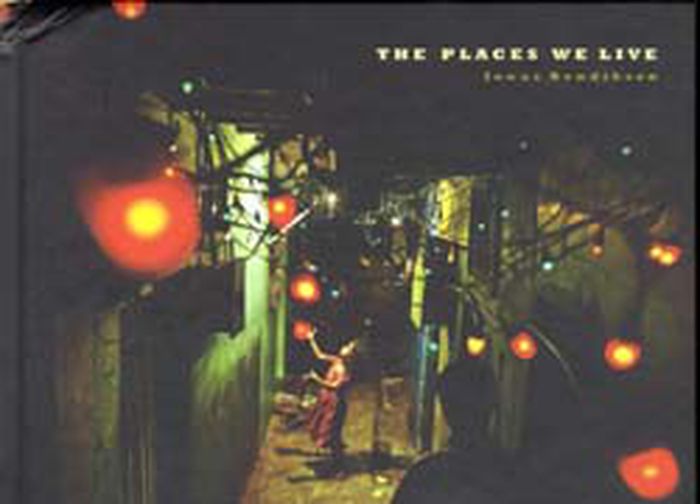
The year 2008 has witnessed a major shift in the way people across the world live: for the first time in human history more people live in cities than in rural areas. This triumph of the urban, however, does not entirely represent progress, as the number of people living in urban slums—often in abject conditions—will soon exceed one billion. From 2005 to 2007 Jonas Bendiksen documented life in the slums of four different cities: Nairobi, Kenya; Mumbai, India; Jakarta, Indonesia; and Caracas, Venezuela. His lyrical images capture the diversity of personal histories and outlooks found in these dense neighborhoods that, despite commonly held assumptions, are not simply places of poverty and misery. Yet, slum residents continuously face enormous challenges, such as the lack of health care, sanitation, and electricity. The Places We Live includes twenty double-gatefold images, each representing an individual home and its denizen’s story. Through its innovative design and experiential approach, The Places We Live brings the modern-day Dickensian reality of these individuals into sharp focus. Artist / Writer Biography A member of Magnum Photos, Jonas Bendiksen (born in Tønsberg, Norway, 1977) has received numerous awards, including the 2003 Infinity Award from the International Center of Photography and first prize in the Pictures of the Year International Awards. His photographs have appeared in National Geographic, Geo , Newsweek, and the Sunday Times Magazine, among other publications. His bestselling first book, Satellites: Photographs from the Fringes of the Former Soviet Union, was published in 2006 by Aperture. In 2007, the Paris Review received a National Magazine Award for Bendiksen’s project The Places We Live. Philip Gourevitch (introduction) is editor of the Paris Review and author of Standard Operating Procedure (a collaboration with Errol Morris) and We Wish to Inform You That Tomorrow We Will Be Killed With Our Families: Stories from Rwanda.
The place we live
Actions:
Prix:
$42.00
(disponible sur commande)
Résumé:
The year 2008 has witnessed a major shift in the way people across the world live: for the first time in human history more people live in cities than in rural areas. This triumph of the urban, however, does not entirely represent progress, as the number of people living in urban slums—often in abject conditions—will soon exceed one billion. From 2005 to 2007 Jonas Bendiksen documented life in the slums of four different cities: Nairobi, Kenya; Mumbai, India; Jakarta, Indonesia; and Caracas, Venezuela. His lyrical images capture the diversity of personal histories and outlooks found in these dense neighborhoods that, despite commonly held assumptions, are not simply places of poverty and misery. Yet, slum residents continuously face enormous challenges, such as the lack of health care, sanitation, and electricity. The Places We Live includes twenty double-gatefold images, each representing an individual home and its denizen’s story. Through its innovative design and experiential approach, The Places We Live brings the modern-day Dickensian reality of these individuals into sharp focus. Artist / Writer Biography A member of Magnum Photos, Jonas Bendiksen (born in Tønsberg, Norway, 1977) has received numerous awards, including the 2003 Infinity Award from the International Center of Photography and first prize in the Pictures of the Year International Awards. His photographs have appeared in National Geographic, Geo , Newsweek, and the Sunday Times Magazine, among other publications. His bestselling first book, Satellites: Photographs from the Fringes of the Former Soviet Union, was published in 2006 by Aperture. In 2007, the Paris Review received a National Magazine Award for Bendiksen’s project The Places We Live. Philip Gourevitch (introduction) is editor of the Paris Review and author of Standard Operating Procedure (a collaboration with Errol Morris) and We Wish to Inform You That Tomorrow We Will Be Killed With Our Families: Stories from Rwanda.
Classification:
livres
livres
Publication:
août 2008, New York
août 2008, New York
Sujet:
Monographies photo
Monographies photo
Classification:
livres
livres
Actions:
Exemplaires:
Description:
36 pages : illustrations ; 24 cm
Description:
36 pages : illustrations ; 24 cm
Auteur:
Sujet:
Publication:
Paris : Société artistique de publications techniques, 1935.
Paris : Société artistique de publications techniques, 1935.
Titre:
L'Urbanisme et l'architecture en U.R.S.S. : conférence donnée sous les auspices de la S.A.D.G. au "Centre d'information de l'architecte", rue du Cherche-Midi / par les délégués de l'Union Soviétique au Congrès international des architectes de Rome (1935).
Actions:
Exemplaires:
Description:
36 pages : illustrations ; 24 cm
L'Urbanisme et l'architecture en U.R.S.S. : conférence donnée sous les auspices de la S.A.D.G. au "Centre d'information de l'architecte", rue du Cherche-Midi / par les délégués de l'Union Soviétique au Congrès international des architectes de Rome (1935).
Actions:
Exemplaires:
Description:
36 pages : illustrations ; 24 cm
Classification:
livres
livres
Publication:
Paris : Société artistique de publications techniques, 1935.
Paris : Société artistique de publications techniques, 1935.
Auteur:
Sujet:


