


2692 Résultats
Classification:
livres
livres
Prix:
$40.00
(disponible sur commande)
Résumé:
In 2030, the world's population will be a staggering eight billion people. Of these, two-thirds will live in cities; most will be poor. With limited resources, this unbalanced growth will be one of the greatest challenges faced by societies across the globe. In the coming years, city authorities, urban planners, designers, economists and others will have to join forces to(...)
$40.00
(disponible sur commande)
Résumé:
In 2030, the world's population will be a staggering eight billion people. Of these, two-thirds will live in cities; most will be poor. With limited resources, this unbalanced growth will be one of the greatest challenges faced by societies across the globe. In the coming years, city authorities, urban planners, designers, economists and others will have to join forces to(...)
Titre:
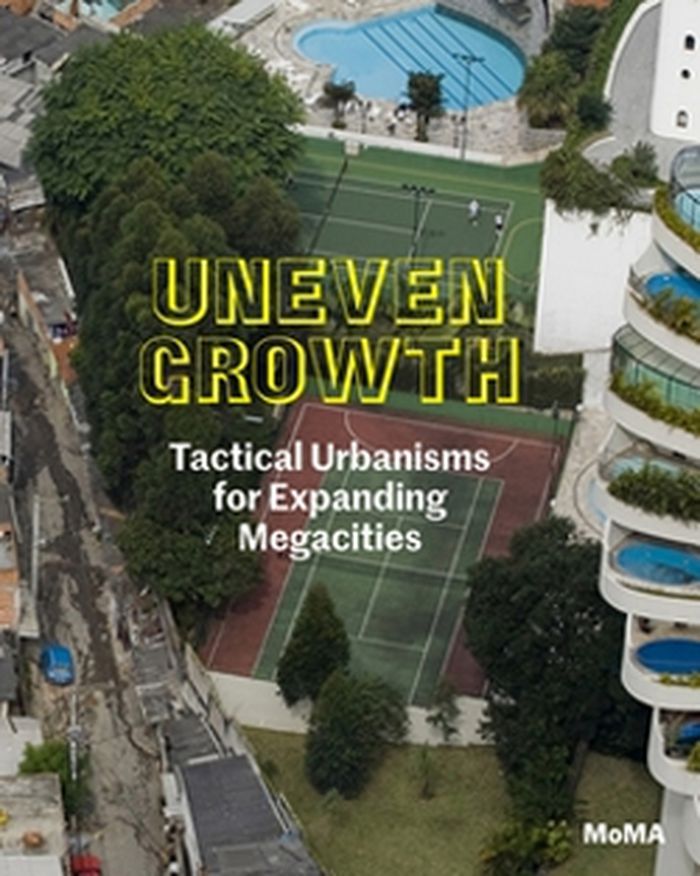
Uneven growth: tactical urbanisms for expanding megacities
Actions:
Prix:
$40.00
(disponible sur commande)
Résumé:
In 2030, the world's population will be a staggering eight billion people. Of these, two-thirds will live in cities; most will be poor. With limited resources, this unbalanced growth will be one of the greatest challenges faced by societies across the globe. In the coming years, city authorities, urban planners, designers, economists and others will have to join forces to avoid a major social and economic catastrophe and to ensure that these expanding megacities will be habitable. Exploring how emergent forms of tactical urbanism could address rapid and uneven urban growth around the globe, The Museum of Modern Art presents Uneven Growth: Tactical Urbanisms for Expanding Megacities, its third iteration of the Issues in Contemporary Architecture series. Uneven Growth is a combination of workshop, exhibition and publication that brings together ideas from an international group of scholars, practitioners and other experts on architecture and urbanism. Featuring proposals for six cities on five continents-New York, Mumbai, Rio de Janeiro, Istanbul, Hong Kong and Lagos, each developed by a pair of teams (one local to the host city and one abroad)-Uneven Growth also documents the brainstorming processes and the workshops. Contributions from each of the teams and essays by leading scholars on the issue make the publication a rich resource for students and professionals alike. Participating teams include Cohabitation Strategies with Situ Studio, POP Lab with URBZ, MAS Urban Design ETH with Rua Arquitetos, Atelier d'Architecture Autogérée with Superpool, Network Architecture Lab with MAP Office and Inteligencias Colectivas with NLÉ Architects.
Uneven growth: tactical urbanisms for expanding megacities
Actions:
Prix:
$40.00
(disponible sur commande)
Résumé:
In 2030, the world's population will be a staggering eight billion people. Of these, two-thirds will live in cities; most will be poor. With limited resources, this unbalanced growth will be one of the greatest challenges faced by societies across the globe. In the coming years, city authorities, urban planners, designers, economists and others will have to join forces to avoid a major social and economic catastrophe and to ensure that these expanding megacities will be habitable. Exploring how emergent forms of tactical urbanism could address rapid and uneven urban growth around the globe, The Museum of Modern Art presents Uneven Growth: Tactical Urbanisms for Expanding Megacities, its third iteration of the Issues in Contemporary Architecture series. Uneven Growth is a combination of workshop, exhibition and publication that brings together ideas from an international group of scholars, practitioners and other experts on architecture and urbanism. Featuring proposals for six cities on five continents-New York, Mumbai, Rio de Janeiro, Istanbul, Hong Kong and Lagos, each developed by a pair of teams (one local to the host city and one abroad)-Uneven Growth also documents the brainstorming processes and the workshops. Contributions from each of the teams and essays by leading scholars on the issue make the publication a rich resource for students and professionals alike. Participating teams include Cohabitation Strategies with Situ Studio, POP Lab with URBZ, MAS Urban Design ETH with Rua Arquitetos, Atelier d'Architecture Autogérée with Superpool, Network Architecture Lab with MAP Office and Inteligencias Colectivas with NLÉ Architects.
Classification:
livres
livres
Publication:
août 2014
août 2014
Sujet:
Théorie de l’urbanisme
Théorie de l’urbanisme
Classification:
livres
livres
Prix:
$90.00
(disponible sur commande)
Résumé:
Le Corbusier's first trip to the United States in 1935 is generally considered a failure because it produced no commissions. The experience nevertheless had a profound effect on him, both personally and professionally. Sponsored by the Museum of Modern Art in New York, Le Corbusier promoted his ideas through a lecture tour, exhibition, and press conferences, as well as in(...)
$90.00
(disponible sur commande)
Résumé:
Le Corbusier's first trip to the United States in 1935 is generally considered a failure because it produced no commissions. The experience nevertheless had a profound effect on him, both personally and professionally. Sponsored by the Museum of Modern Art in New York, Le Corbusier promoted his ideas through a lecture tour, exhibition, and press conferences, as well as in(...)
Sujet:
Architecture, monographies
Architecture, monographies
Publication:
mai 2001, Cambridge, Mass.
mai 2001, Cambridge, Mass.
Titre:
Le Corbusier in America : travels in the land of the timid
Actions:
Prix:
$90.00
(disponible sur commande)
Résumé:
Le Corbusier's first trip to the United States in 1935 is generally considered a failure because it produced no commissions. The experience nevertheless had a profound effect on him, both personally and professionally. Sponsored by the Museum of Modern Art in New York, Le Corbusier promoted his ideas through a lecture tour, exhibition, and press conferences, as well as in meetings with industrialists, housing reformers, New Deal technocrats, and editors. His lectures were watershed events that advanced the cause of European modernism. Yet he returned to France empty-handed and published a bittersweet account, "Quand les cathédrales étaient blanches: voyage au pays des timides" ("When the Cathedrals Were White: Journey to the Country of Timid People"), which faulted America for lacking the courage to adopt his ideas. In this first major study of Le Corbusier's American tour, Mardges Bacon reconstructs his encounter with America in all its fascinating detail. Through extensive archival research and interviews, she presents a critical history of the tour as well as a nuanced and intimate portrait of the architect. Drawing on the methods of microhistory, she also considers how small ordinary events affect larger biographical, architectural, and cultural developments. Bacon notes that Le Corbusier's dialogue with America was drafted within a spirited European discourse on américanisme. She contends that the trip validated his concept of a "second machine age" that would unite standardized industrial methods with a new humanism. Le Corbusier's subsequent work, she suggests, reflected an "Americanization," evidenced by the introduction of tension structures and the textured skyscraper conceived as an integrated system with functions articulated. She also defines Le Corbusier's role in the debate over New York City high-rise public housing. Appearing here in print for the first time are color reproductions of the pastel drawings that illustrated Le Corbusier's American lectures.
Le Corbusier in America : travels in the land of the timid
Actions:
Prix:
$90.00
(disponible sur commande)
Résumé:
Le Corbusier's first trip to the United States in 1935 is generally considered a failure because it produced no commissions. The experience nevertheless had a profound effect on him, both personally and professionally. Sponsored by the Museum of Modern Art in New York, Le Corbusier promoted his ideas through a lecture tour, exhibition, and press conferences, as well as in meetings with industrialists, housing reformers, New Deal technocrats, and editors. His lectures were watershed events that advanced the cause of European modernism. Yet he returned to France empty-handed and published a bittersweet account, "Quand les cathédrales étaient blanches: voyage au pays des timides" ("When the Cathedrals Were White: Journey to the Country of Timid People"), which faulted America for lacking the courage to adopt his ideas. In this first major study of Le Corbusier's American tour, Mardges Bacon reconstructs his encounter with America in all its fascinating detail. Through extensive archival research and interviews, she presents a critical history of the tour as well as a nuanced and intimate portrait of the architect. Drawing on the methods of microhistory, she also considers how small ordinary events affect larger biographical, architectural, and cultural developments. Bacon notes that Le Corbusier's dialogue with America was drafted within a spirited European discourse on américanisme. She contends that the trip validated his concept of a "second machine age" that would unite standardized industrial methods with a new humanism. Le Corbusier's subsequent work, she suggests, reflected an "Americanization," evidenced by the introduction of tension structures and the textured skyscraper conceived as an integrated system with functions articulated. She also defines Le Corbusier's role in the debate over New York City high-rise public housing. Appearing here in print for the first time are color reproductions of the pastel drawings that illustrated Le Corbusier's American lectures.
Classification:
livres
livres
Publication:
mai 2001, Cambridge, Mass.
mai 2001, Cambridge, Mass.
Sujet:
Architecture, monographies
Architecture, monographies


