


2879 Résultats
Classification:
livres
livres
Actions:
Prix:
$44.95
(disponible sur commande)
Résumé:
The heem parks (parks that predominately feature native wild plants) De Braak, the K. Landwehrpark and, especially, the Jac.P. Thijsse Park in Amstelveen in the Netherlands, have been important sources of inspiration for landscape architects, gardeners, and nature lovers throughout the world since they were first laid out over fifty years ago. This new book looks at the(...)
$44.95
(disponible sur commande)
Résumé:
The heem parks (parks that predominately feature native wild plants) De Braak, the K. Landwehrpark and, especially, the Jac.P. Thijsse Park in Amstelveen in the Netherlands, have been important sources of inspiration for landscape architects, gardeners, and nature lovers throughout the world since they were first laid out over fifty years ago. This new book looks at the(...)
Titre:
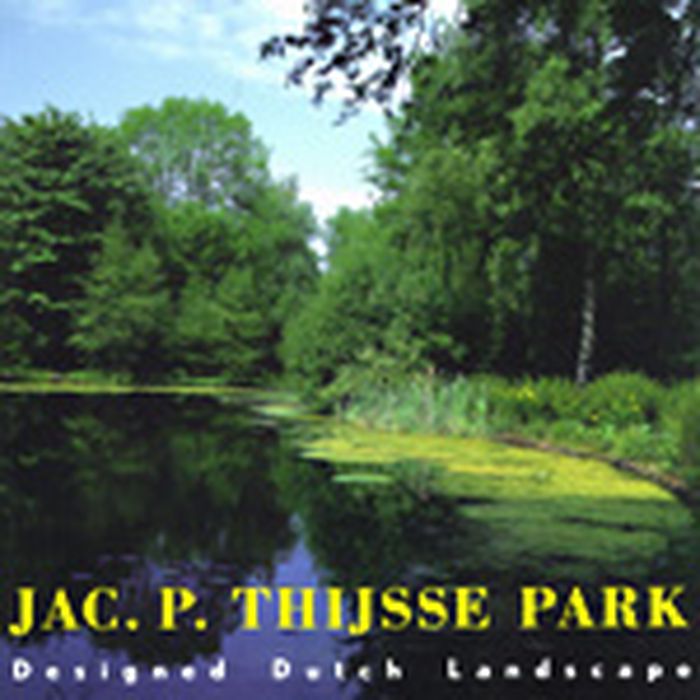
Jac. P. Thijsse Park : designed Dutch landscape
Actions:
Prix:
$44.95
(disponible sur commande)
Résumé:
The heem parks (parks that predominately feature native wild plants) De Braak, the K. Landwehrpark and, especially, the Jac.P. Thijsse Park in Amstelveen in the Netherlands, have been important sources of inspiration for landscape architects, gardeners, and nature lovers throughout the world since they were first laid out over fifty years ago. This new book looks at the extraordinary history of these parks and the work of the landscape architect Christiaan Broerse and his colleague, the botanist Koos Landwehr. It also details Broerse and Landwehr’s creative and highly original use of a great variety of native plants in these parks. Bekkers analyses the parks as integral elements of Amsterdam’s urban expansion plans and demonstrates how successfully Broerse and Landwehr resolved the tension between the conservation movement and city planners. He shows too how interest in the Amstelveen heem parks have grown over time. These parks have played a key role, for instance, in the increasing emphasis on the use of native plants in the layout of green areas. The book is richly illustrated, with specially commissioned full-colour photographs by Jan Derwig and aerial photographs by Jan Schot. Also included are historical illustrations and sketches.
Jac. P. Thijsse Park : designed Dutch landscape
Actions:
Prix:
$44.95
(disponible sur commande)
Résumé:
The heem parks (parks that predominately feature native wild plants) De Braak, the K. Landwehrpark and, especially, the Jac.P. Thijsse Park in Amstelveen in the Netherlands, have been important sources of inspiration for landscape architects, gardeners, and nature lovers throughout the world since they were first laid out over fifty years ago. This new book looks at the extraordinary history of these parks and the work of the landscape architect Christiaan Broerse and his colleague, the botanist Koos Landwehr. It also details Broerse and Landwehr’s creative and highly original use of a great variety of native plants in these parks. Bekkers analyses the parks as integral elements of Amsterdam’s urban expansion plans and demonstrates how successfully Broerse and Landwehr resolved the tension between the conservation movement and city planners. He shows too how interest in the Amstelveen heem parks have grown over time. These parks have played a key role, for instance, in the increasing emphasis on the use of native plants in the layout of green areas. The book is richly illustrated, with specially commissioned full-colour photographs by Jan Derwig and aerial photographs by Jan Schot. Also included are historical illustrations and sketches.
Classification:
livres
livres
Publication:
janvier 1900, Amsterdam
janvier 1900, Amsterdam
Classification:
livres
livres
Titre:
Barrier-free design
Barrier-free design
Actions:
Prix:
$59.99
(disponible sur commande)
Résumé:
Building for everyone -- that is the best definition of what lies behind the unwieldy concept of ""barrier-free design"": the complete and total usability of buildings, including for those with disabilities, for the integration of all of society's members can only succeed when their environment is made accessible to them. Demographic changes demand new qualities of(...)
$59.99
(disponible sur commande)
Résumé:
Building for everyone -- that is the best definition of what lies behind the unwieldy concept of ""barrier-free design"": the complete and total usability of buildings, including for those with disabilities, for the integration of all of society's members can only succeed when their environment is made accessible to them. Demographic changes demand new qualities of(...)
Publication:
novembre 2010
novembre 2010
Titre:
Barrier-free design
Actions:
Prix:
$59.99
(disponible sur commande)
Résumé:
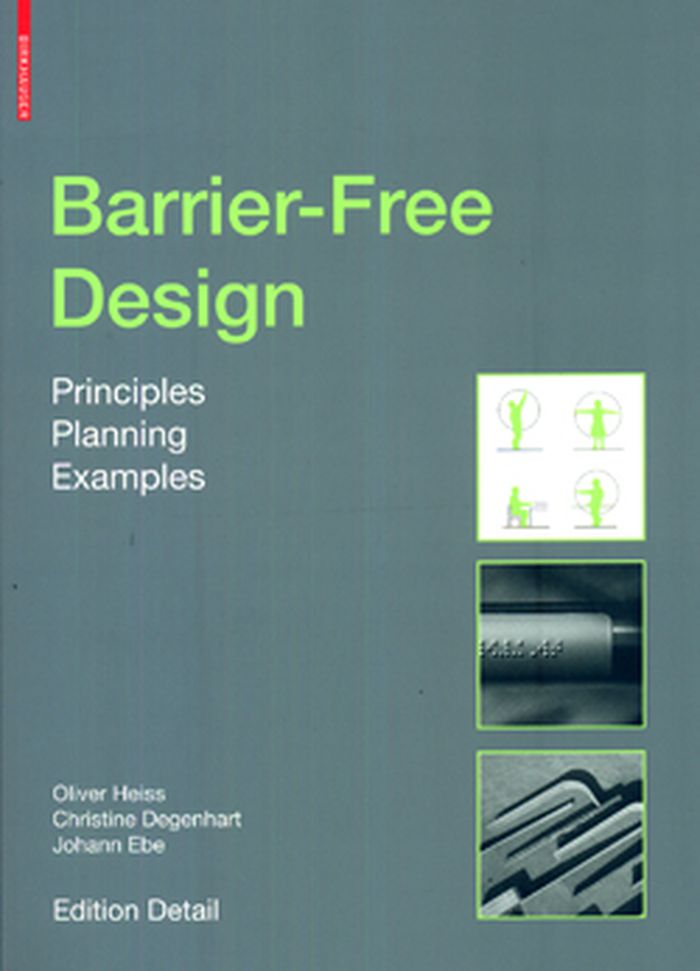
Building for everyone -- that is the best definition of what lies behind the unwieldy concept of ""barrier-free design"": the complete and total usability of buildings, including for those with disabilities, for the integration of all of society's members can only succeed when their environment is made accessible to them. Demographic changes demand new qualities of private and public space, qualities that are also required by new legislation. The Detail Practice volume Barrier-Free Design provides all planners and architects, but also interested building sponsors, with basic practical information and a range of possible planning implementations in the domain of barrier freedom. It shows how corresponding requirements can be turned into aesthetically distinguished architecture. And it demonstrates that taking barrier freedom into account in the early planning stages of a project need not lead to additional costs compared to ""classical"" construction and design. In addition to an overview of planning fundamentals, the book also includes the associated body of rules and regulations as well as examples of how they are embodied in actual projects and perspectives on their development in the larger European context.
Barrier-free design
Actions:
Prix:
$59.99
(disponible sur commande)
Résumé:
Building for everyone -- that is the best definition of what lies behind the unwieldy concept of ""barrier-free design"": the complete and total usability of buildings, including for those with disabilities, for the integration of all of society's members can only succeed when their environment is made accessible to them. Demographic changes demand new qualities of private and public space, qualities that are also required by new legislation. The Detail Practice volume Barrier-Free Design provides all planners and architects, but also interested building sponsors, with basic practical information and a range of possible planning implementations in the domain of barrier freedom. It shows how corresponding requirements can be turned into aesthetically distinguished architecture. And it demonstrates that taking barrier freedom into account in the early planning stages of a project need not lead to additional costs compared to ""classical"" construction and design. In addition to an overview of planning fundamentals, the book also includes the associated body of rules and regulations as well as examples of how they are embodied in actual projects and perspectives on their development in the larger European context.
Classification:
livres
livres
Publication:
novembre 2010
novembre 2010
Classification:
livres
livres
Prix:
$59.99
(disponible sur commande)
Résumé:
Featuring 40 essays by U.S. and European historians, designers, cultural critics, geographers and social scientists, illustrated with over 250 color images in extensive visual "gazetteers" — including specially-commissioned portfolios by artists and designers — "Else/where mapping" investigates : how new technologies of navigation and location are emerging to chart(...)
$59.99
(disponible sur commande)
Résumé:
Featuring 40 essays by U.S. and European historians, designers, cultural critics, geographers and social scientists, illustrated with over 250 color images in extensive visual "gazetteers" — including specially-commissioned portfolios by artists and designers — "Else/where mapping" investigates : how new technologies of navigation and location are emerging to chart(...)
Publication:
octobre 2005, Minneapolis
octobre 2005, Minneapolis
Titre:
Else/where : mapping new cartographies of networks and territories
Actions:
Prix:
$59.99
(disponible sur commande)
Résumé:
Featuring 40 essays by U.S. and European historians, designers, cultural critics, geographers and social scientists, illustrated with over 250 color images in extensive visual "gazetteers" — including specially-commissioned portfolios by artists and designers — "Else/where mapping" investigates : how new technologies of navigation and location are emerging to chart "virtual" terrain such as social networks and online conversations; how these new mapping strategies borrow and reinvent metaphors adapted from the cartography of physical terrain, considered at various scales — urban, regional, continental, global ; how new modes of representation of spatial data are evolving to explore the potential for collective "bottom-up" (rather than "top-down") mapping ; how cities, communities and social networks are being re-envisioned, as artists and designers use technologies such as GPS, GIS and digital interface design to devise alternative mappings of social and spatial relationships. Authors : Janet Abrams, Ole Bouman, Andrea Codrington, Denis Cosgrove, Steve Dietz, Paul Elliman, Yuri Engelhardt, Peter Hall, Brian Holmes, J.J. King, Cathy Lang Ho, Andrea Moed, David Pescovitz, Rebecca Ross, Ben Schouten, Alex Terzich, Alice Twemlow, Dirk van Weelden, Tom Vanderbilt, Peter Walsh and Stephen Zacks. Featured artists and designers included : Antenna Design New York, Julian Bleecker, Bureau d'Etudes, Sulki Choi, Layla Curtis, Judith Donath, Entropy8Zuper!, Michael Frumin, Ben Fry, De Geuzen, govcom.org, Marti Guixe, Mark Hansen, Robert Horn, Natalie Jeremijenko, Lisa Jevbratt, Nina Katchadourian, Valdis Krebs, Laura Kurgan, Mark Lombardi, The London Particular, Lumeta.org, Barrett Lyon, Brian McGrath, Julie Mehretu, Paul Mijksenaar, Sigi Moeslinger, MUST Architects, MVRDV, Josh On, W. Bradford Paley, Scott Paterson, Esther Polak, Richard Rogers, Ben Rubin, Warren Sack, Mike Silver, Marco Susani, Terraswarm, UN Studio, Urban Tapestries, Waag Society for Old and New Media, Ronald Wall, Kimberlee Whaley, Jeremy Wood and Marina Zurkow. Book design : Deborah Littlejohn.
Else/where : mapping new cartographies of networks and territories
Actions:
Prix:
$59.99
(disponible sur commande)
Résumé:
Featuring 40 essays by U.S. and European historians, designers, cultural critics, geographers and social scientists, illustrated with over 250 color images in extensive visual "gazetteers" — including specially-commissioned portfolios by artists and designers — "Else/where mapping" investigates : how new technologies of navigation and location are emerging to chart "virtual" terrain such as social networks and online conversations; how these new mapping strategies borrow and reinvent metaphors adapted from the cartography of physical terrain, considered at various scales — urban, regional, continental, global ; how new modes of representation of spatial data are evolving to explore the potential for collective "bottom-up" (rather than "top-down") mapping ; how cities, communities and social networks are being re-envisioned, as artists and designers use technologies such as GPS, GIS and digital interface design to devise alternative mappings of social and spatial relationships. Authors : Janet Abrams, Ole Bouman, Andrea Codrington, Denis Cosgrove, Steve Dietz, Paul Elliman, Yuri Engelhardt, Peter Hall, Brian Holmes, J.J. King, Cathy Lang Ho, Andrea Moed, David Pescovitz, Rebecca Ross, Ben Schouten, Alex Terzich, Alice Twemlow, Dirk van Weelden, Tom Vanderbilt, Peter Walsh and Stephen Zacks. Featured artists and designers included : Antenna Design New York, Julian Bleecker, Bureau d'Etudes, Sulki Choi, Layla Curtis, Judith Donath, Entropy8Zuper!, Michael Frumin, Ben Fry, De Geuzen, govcom.org, Marti Guixe, Mark Hansen, Robert Horn, Natalie Jeremijenko, Lisa Jevbratt, Nina Katchadourian, Valdis Krebs, Laura Kurgan, Mark Lombardi, The London Particular, Lumeta.org, Barrett Lyon, Brian McGrath, Julie Mehretu, Paul Mijksenaar, Sigi Moeslinger, MUST Architects, MVRDV, Josh On, W. Bradford Paley, Scott Paterson, Esther Polak, Richard Rogers, Ben Rubin, Warren Sack, Mike Silver, Marco Susani, Terraswarm, UN Studio, Urban Tapestries, Waag Society for Old and New Media, Ronald Wall, Kimberlee Whaley, Jeremy Wood and Marina Zurkow. Book design : Deborah Littlejohn.
Classification:
livres
livres
Publication:
octobre 2005, Minneapolis
octobre 2005, Minneapolis
Classification:
livres
livres
Titre:
New architecture London
New architecture London
Actions:
Prix:
$58.50
(disponible en magasin)
Résumé:
London has always been known for its iconic buildings, but the city has recently witnessed an explosion of new architecture from the world’s most acclaimed architects. This breathtaking volume offers a fascinating look at the city’s rapidly changing skyline and celebrates the enormous array of styles, materials, and cutting-edge technology that have been employed by(...)
$58.50
(disponible en magasin)
Résumé:
London has always been known for its iconic buildings, but the city has recently witnessed an explosion of new architecture from the world’s most acclaimed architects. This breathtaking volume offers a fascinating look at the city’s rapidly changing skyline and celebrates the enormous array of styles, materials, and cutting-edge technology that have been employed by(...)
Publication:
avril 2017
avril 2017
Titre:
New architecture London
Actions:
Prix:
$58.50
(disponible en magasin)
Résumé:
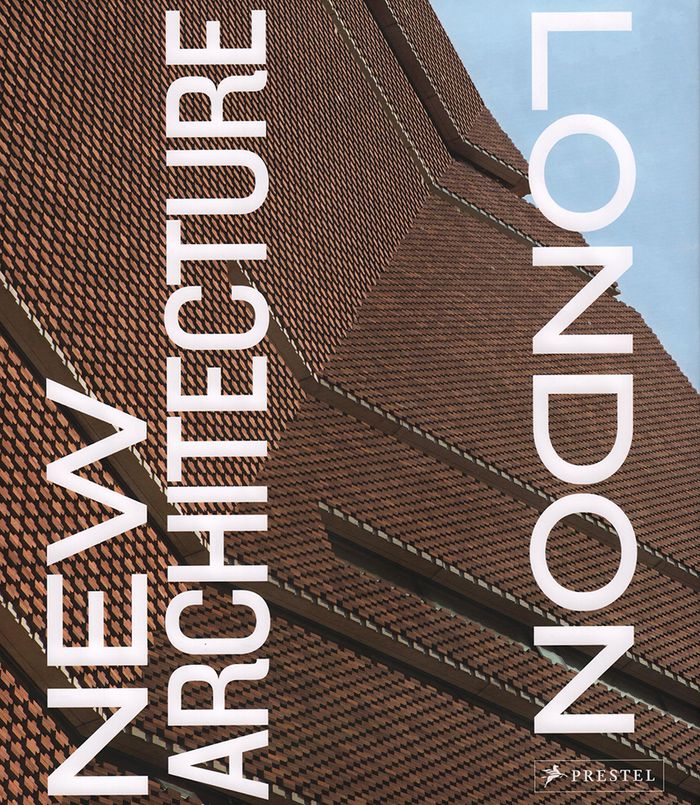
London has always been known for its iconic buildings, but the city has recently witnessed an explosion of new architecture from the world’s most acclaimed architects. This breathtaking volume offers a fascinating look at the city’s rapidly changing skyline and celebrates the enormous array of styles, materials, and cutting-edge technology that have been employed by today’s leading architects. The projects profiled here—brought to life by photographer Richard Schulman—range from dance and aquatic centers to world-class museums and global office headquarters. The book includes Rafael Viñoly’s “Walkie-Talkie” and “The Gherkin” by Foster + Partners, as well as Renzo Piano’s mixed-use skyscraper, “The Shard,” across the Thames. Tucked into a medieval alley, OMA’s New Court Rothschild Bank nimbly juxtaposes contemporary features with more traditional ones. Meanwhile, alongside St. Paul’s Cathedral, Jean Nouvel’s One New Change cleverly plays off its storied environs with an ingeniously constructed glass block that allows for multiple views of the iconic church. From the Tate Modern extension to the Emirates Airline tram, and from the Peckham Library to the US Embassy building, no new stone is left unturned or unremarked upon. This book demonstrates how one of the world’s oldest cities manages to feel eternally new and exciting.
New architecture London
Actions:
Prix:
$58.50
(disponible en magasin)
Résumé:
London has always been known for its iconic buildings, but the city has recently witnessed an explosion of new architecture from the world’s most acclaimed architects. This breathtaking volume offers a fascinating look at the city’s rapidly changing skyline and celebrates the enormous array of styles, materials, and cutting-edge technology that have been employed by today’s leading architects. The projects profiled here—brought to life by photographer Richard Schulman—range from dance and aquatic centers to world-class museums and global office headquarters. The book includes Rafael Viñoly’s “Walkie-Talkie” and “The Gherkin” by Foster + Partners, as well as Renzo Piano’s mixed-use skyscraper, “The Shard,” across the Thames. Tucked into a medieval alley, OMA’s New Court Rothschild Bank nimbly juxtaposes contemporary features with more traditional ones. Meanwhile, alongside St. Paul’s Cathedral, Jean Nouvel’s One New Change cleverly plays off its storied environs with an ingeniously constructed glass block that allows for multiple views of the iconic church. From the Tate Modern extension to the Emirates Airline tram, and from the Peckham Library to the US Embassy building, no new stone is left unturned or unremarked upon. This book demonstrates how one of the world’s oldest cities manages to feel eternally new and exciting.
Classification:
livres
livres
Publication:
avril 2017
avril 2017
Classification:
livres
livres
Prix:
$41.50
(disponible sur commande)
Résumé:
At the heart of this publication is Atelier Kempe Thill's quest to find prototypes for a global society. How can buildings be made neutral and flexible as well as specific? It features realized work such as the Light Building (a travelling museum pavilion) and row houses in Roosendaal (NL) alongside recent plans including those for a youth hostel in the former Nazi resort(...)
$41.50
(disponible sur commande)
Résumé:
At the heart of this publication is Atelier Kempe Thill's quest to find prototypes for a global society. How can buildings be made neutral and flexible as well as specific? It features realized work such as the Light Building (a travelling museum pavilion) and row houses in Roosendaal (NL) alongside recent plans including those for a youth hostel in the former Nazi resort(...)
Sujet:
Architecture, monographies
Architecture, monographies
Publication:
octobre 2005, Rotterdam
octobre 2005, Rotterdam
Titre:
Atelier Kempe Thill : new prototypes for a global society
Actions:
Prix:
$41.50
(disponible sur commande)
Résumé:
At the heart of this publication is Atelier Kempe Thill's quest to find prototypes for a global society. How can buildings be made neutral and flexible as well as specific? It features realized work such as the Light Building (a travelling museum pavilion) and row houses in Roosendaal (NL) alongside recent plans including those for a youth hostel in the former Nazi resort at Prora in Germany, and the Franz Liszt Concert Hall in Raiding, Austria. It further includes a number of fascinating but unrealized schemes amongst which the winning design 'Living Inbetween' for Europan 5 Rotterdam and the competition entry for the Nam June Paik Museum in Korea. This book is published in conjunction with the award of the Rotterdam-Maaskant Prize for Young Architects 2005 to Oliver Thill. Design by Sophie Bleifuss.
Atelier Kempe Thill : new prototypes for a global society
Actions:
Prix:
$41.50
(disponible sur commande)
Résumé:
At the heart of this publication is Atelier Kempe Thill's quest to find prototypes for a global society. How can buildings be made neutral and flexible as well as specific? It features realized work such as the Light Building (a travelling museum pavilion) and row houses in Roosendaal (NL) alongside recent plans including those for a youth hostel in the former Nazi resort at Prora in Germany, and the Franz Liszt Concert Hall in Raiding, Austria. It further includes a number of fascinating but unrealized schemes amongst which the winning design 'Living Inbetween' for Europan 5 Rotterdam and the competition entry for the Nam June Paik Museum in Korea. This book is published in conjunction with the award of the Rotterdam-Maaskant Prize for Young Architects 2005 to Oliver Thill. Design by Sophie Bleifuss.
Classification:
livres
livres
Publication:
octobre 2005, Rotterdam
octobre 2005, Rotterdam
Sujet:
Architecture, monographies
Architecture, monographies
Classification:
livres
livres
Prix:
$45.99
(disponible en magasin)
Résumé:
Against the backdrop of a global energy crisis, a widespread movement embracing the use of raw earth materials for building construction emerged in the 1970s. "Solar Adobe" examines this new wave of architectural experimentation taking place in the United States, detailing how an ancient tradition became a point of convergence for issues of environmentalism, architecture,(...)
$45.99
(disponible en magasin)
Résumé:
Against the backdrop of a global energy crisis, a widespread movement embracing the use of raw earth materials for building construction emerged in the 1970s. "Solar Adobe" examines this new wave of architectural experimentation taking place in the United States, detailing how an ancient tradition became a point of convergence for issues of environmentalism, architecture,(...)
Titre:
Solar adobe: Energy, ecology and earthen architecture
Actions:
Prix:
$45.99
(disponible en magasin)
Résumé:
Against the backdrop of a global energy crisis, a widespread movement embracing the use of raw earth materials for building construction emerged in the 1970s. "Solar Adobe" examines this new wave of architectural experimentation taking place in the United States, detailing how an ancient tradition became a point of convergence for issues of environmentalism, architecture, technology, and Indigenous resistance. Utilized for centuries by the Pueblo people of the American Southwest and by Spanish colonialists, adobe construction found renewed interest as various groups contended with the troubled legacies of modern architecture and an increasingly urgent need for sustainable design practices. In this period of critical experimentation, design networks that included architects, historians, counterculture communities, government weapons labs, and Indigenous activists all looked to adobe as a means to address pressing environmental and political issues.
Solar adobe: Energy, ecology and earthen architecture
Actions:
Prix:
$45.99
(disponible en magasin)
Résumé:
Against the backdrop of a global energy crisis, a widespread movement embracing the use of raw earth materials for building construction emerged in the 1970s. "Solar Adobe" examines this new wave of architectural experimentation taking place in the United States, detailing how an ancient tradition became a point of convergence for issues of environmentalism, architecture, technology, and Indigenous resistance. Utilized for centuries by the Pueblo people of the American Southwest and by Spanish colonialists, adobe construction found renewed interest as various groups contended with the troubled legacies of modern architecture and an increasingly urgent need for sustainable design practices. In this period of critical experimentation, design networks that included architects, historians, counterculture communities, government weapons labs, and Indigenous activists all looked to adobe as a means to address pressing environmental and political issues.
Classification:
livres
livres
Publication:
mars 2024
mars 2024
Sujet:
Architecture écologique
Architecture écologique
Classification:
livres
livres
Titre:
Animation : form follows fun
Animation : form follows fun
Actions:
Prix:
$69.95
(disponible sur commande)
Résumé:
In amusement parks and theme parks the role of architecture in generating an emotional experience has long outgrown its mere functional and structural aspects. This trend is now pervading shopping malls, airports, museums, and even banks. It is a trend that progressive architects will have to confront as it becomes an increasingly important feature for investors and users(...)
$69.95
(disponible sur commande)
Résumé:
In amusement parks and theme parks the role of architecture in generating an emotional experience has long outgrown its mere functional and structural aspects. This trend is now pervading shopping malls, airports, museums, and even banks. It is a trend that progressive architects will have to confront as it becomes an increasingly important feature for investors and users(...)
Sujet:
Théorie de l’architecture
Théorie de l’architecture
Publication:
juin 2002, Basel
juin 2002, Basel
Titre:
Animation : form follows fun
Actions:
Prix:
$69.95
(disponible sur commande)
Résumé:
In amusement parks and theme parks the role of architecture in generating an emotional experience has long outgrown its mere functional and structural aspects. This trend is now pervading shopping malls, airports, museums, and even banks. It is a trend that progressive architects will have to confront as it becomes an increasingly important feature for investors and users in our pleasure-seeking society. With a wealth of international examples ranging from the prototype Disneyland (where Walt Disney's concepts of animation were congenially transformed into reality) to historical amusement parks and modern day theme parks, "Animation" investigates this global trend in contemporary architecture for the first time. Visual images and analytical texts reveal how animation architecture functions, the effects it can achieve, and the uses it can be put to.
Animation : form follows fun
Actions:
Prix:
$69.95
(disponible sur commande)
Résumé:
In amusement parks and theme parks the role of architecture in generating an emotional experience has long outgrown its mere functional and structural aspects. This trend is now pervading shopping malls, airports, museums, and even banks. It is a trend that progressive architects will have to confront as it becomes an increasingly important feature for investors and users in our pleasure-seeking society. With a wealth of international examples ranging from the prototype Disneyland (where Walt Disney's concepts of animation were congenially transformed into reality) to historical amusement parks and modern day theme parks, "Animation" investigates this global trend in contemporary architecture for the first time. Visual images and analytical texts reveal how animation architecture functions, the effects it can achieve, and the uses it can be put to.
Classification:
livres
livres
Publication:
juin 2002, Basel
juin 2002, Basel
Sujet:
Théorie de l’architecture
Théorie de l’architecture
Classification:
livres
livres
Titre:
Mind in architecture
Mind in architecture
Actions:
Prix:
$49.00
(disponible sur commande)
Résumé:
Although we spend more than ninety percent of our lives inside buildings, we understand very little about how the built environment affects our behavior, thoughts, emotions, and well-being. We are biological beings whose senses and neural systems have developed over millions of years; it stands to reason that research in the life sciences, particularly neuroscience, can(...)
$49.00
(disponible sur commande)
Résumé:
Although we spend more than ninety percent of our lives inside buildings, we understand very little about how the built environment affects our behavior, thoughts, emotions, and well-being. We are biological beings whose senses and neural systems have developed over millions of years; it stands to reason that research in the life sciences, particularly neuroscience, can(...)
Titre:
Mind in architecture
Actions:
Prix:
$49.00
(disponible sur commande)
Résumé:
Although we spend more than ninety percent of our lives inside buildings, we understand very little about how the built environment affects our behavior, thoughts, emotions, and well-being. We are biological beings whose senses and neural systems have developed over millions of years; it stands to reason that research in the life sciences, particularly neuroscience, can offer compelling insights into the ways our buildings shape our interactions with the world. This expanded understanding can help architects design buildings that support both mind and body. In Mind in Architecture, leading thinkers from architecture and other disciplines, including neuroscience, cognitive science, psychiatry, and philosophy, explore what architecture and neuroscience can learn from each other. They offer historical context, examine the implications for current architectural practice and education, and imagine a neuroscientifically informed architecture of the future.
Mind in architecture
Actions:
Prix:
$49.00
(disponible sur commande)
Résumé:
Although we spend more than ninety percent of our lives inside buildings, we understand very little about how the built environment affects our behavior, thoughts, emotions, and well-being. We are biological beings whose senses and neural systems have developed over millions of years; it stands to reason that research in the life sciences, particularly neuroscience, can offer compelling insights into the ways our buildings shape our interactions with the world. This expanded understanding can help architects design buildings that support both mind and body. In Mind in Architecture, leading thinkers from architecture and other disciplines, including neuroscience, cognitive science, psychiatry, and philosophy, explore what architecture and neuroscience can learn from each other. They offer historical context, examine the implications for current architectural practice and education, and imagine a neuroscientifically informed architecture of the future.
Classification:
livres
livres
Publication:
mars 2017
mars 2017
Sujet:
Théorie de l’architecture
Théorie de l’architecture
Classification:
livres
livres
Actions:
Prix:
$24.99
(disponible sur commande)
Résumé:
We are living in one of the most dramatic periods in modern architectural history: a time when cityscapes are being redrawn on a yearly basis, architects are testing the very idea of what a building is, and whole cities are invented overnight. In this bold and wide-ranging new work, Rowan Moore — former director of the Architecture Foundation, now a leading architecture(...)
$24.99
(disponible sur commande)
Résumé:
We are living in one of the most dramatic periods in modern architectural history: a time when cityscapes are being redrawn on a yearly basis, architects are testing the very idea of what a building is, and whole cities are invented overnight. In this bold and wide-ranging new work, Rowan Moore — former director of the Architecture Foundation, now a leading architecture(...)
Titre:
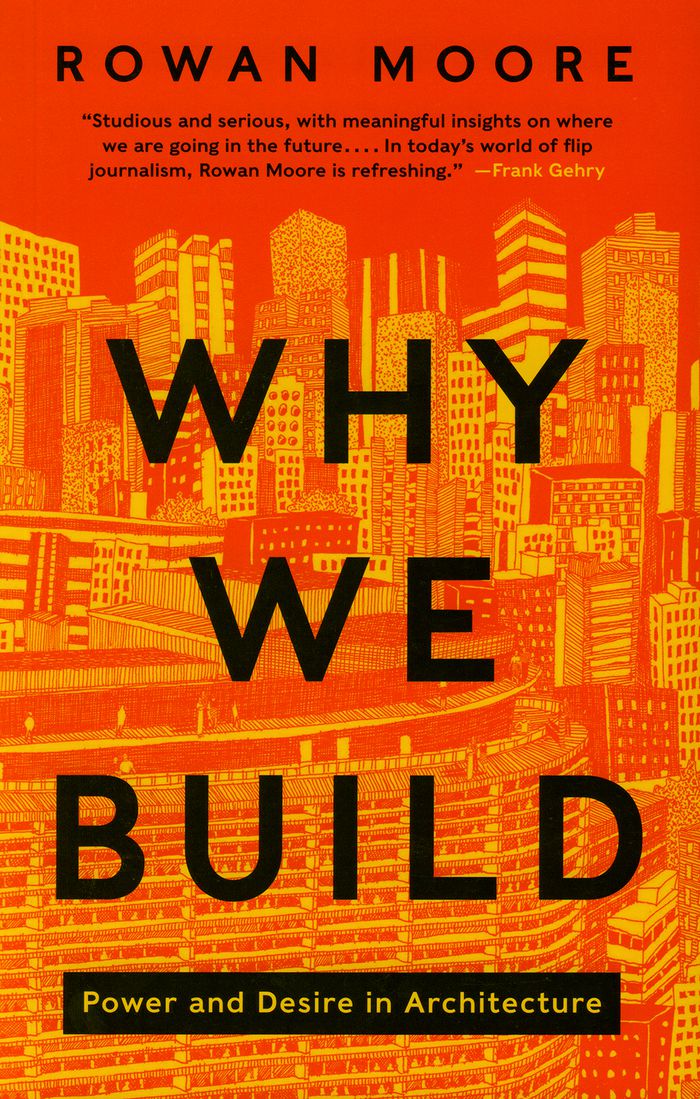
Why we build: power and desire in architecture
Actions:
Prix:
$24.99
(disponible sur commande)
Résumé:
We are living in one of the most dramatic periods in modern architectural history: a time when cityscapes are being redrawn on a yearly basis, architects are testing the very idea of what a building is, and whole cities are invented overnight. In this bold and wide-ranging new work, Rowan Moore — former director of the Architecture Foundation, now a leading architecture critic — explores the reasons behind these changes in our built environment, and how they change the way we live in the world. Provocative and personal, iconoclastic and transforming, Why We Build is that rarest of things: a book about architecture that is also, on every page, a book about people — those chosen few who design buildings, and the rest of us, who use them every day.
Why we build: power and desire in architecture
Actions:
Prix:
$24.99
(disponible sur commande)
Résumé:
We are living in one of the most dramatic periods in modern architectural history: a time when cityscapes are being redrawn on a yearly basis, architects are testing the very idea of what a building is, and whole cities are invented overnight. In this bold and wide-ranging new work, Rowan Moore — former director of the Architecture Foundation, now a leading architecture critic — explores the reasons behind these changes in our built environment, and how they change the way we live in the world. Provocative and personal, iconoclastic and transforming, Why We Build is that rarest of things: a book about architecture that is also, on every page, a book about people — those chosen few who design buildings, and the rest of us, who use them every day.
Classification:
livres
livres
Publication:
février 2014
février 2014
Sujet:
Théorie de l’architecture
Théorie de l’architecture
Classification:
livres
livres
Titre:
Piranesi and the modern age
Piranesi and the modern age
Actions:
Prix:
$65.95
(disponible sur commande)
Résumé:
The etchings of the Italian printmaker, architect, and antiquarian Giovanni Battista Piranesi (1720–78) have long mesmerized viewers. But, as Victor Plahte Tschudi shows, artists and writers of the modern era found in these works—Piranesi's visions of contradictory space, endless vistas, and self-perpetuating architecture—a formulation of the modern. In this volume,(...)
$65.95
(disponible sur commande)
Résumé:
The etchings of the Italian printmaker, architect, and antiquarian Giovanni Battista Piranesi (1720–78) have long mesmerized viewers. But, as Victor Plahte Tschudi shows, artists and writers of the modern era found in these works—Piranesi's visions of contradictory space, endless vistas, and self-perpetuating architecture—a formulation of the modern. In this volume,(...)
Titre:
Piranesi and the modern age
Actions:
Prix:
$65.95
(disponible sur commande)
Résumé:
The etchings of the Italian printmaker, architect, and antiquarian Giovanni Battista Piranesi (1720–78) have long mesmerized viewers. But, as Victor Plahte Tschudi shows, artists and writers of the modern era found in these works—Piranesi's visions of contradictory space, endless vistas, and self-perpetuating architecture—a formulation of the modern. In this volume, Tschudi explores the complex appropriation and continual rediscoveries of Piranesi by modern literature, photography, art, film, and architecture. Tracing the ways that the modern age constructed itself and its origin through Piranesi across genres, he shows, for example, how Piranesi's work formulates the ideas of “contrast” in photography, “abstraction” in painting and “montage” in cinema. Tschudi's exploration of Piranesi's influence on modern architectural discourse includes interviews with such distinguished architects as Peter Eisenman, Bernard Tschumi, Steven Holl, and Rem Koolhaas.
Piranesi and the modern age
Actions:
Prix:
$65.95
(disponible sur commande)
Résumé:
The etchings of the Italian printmaker, architect, and antiquarian Giovanni Battista Piranesi (1720–78) have long mesmerized viewers. But, as Victor Plahte Tschudi shows, artists and writers of the modern era found in these works—Piranesi's visions of contradictory space, endless vistas, and self-perpetuating architecture—a formulation of the modern. In this volume, Tschudi explores the complex appropriation and continual rediscoveries of Piranesi by modern literature, photography, art, film, and architecture. Tracing the ways that the modern age constructed itself and its origin through Piranesi across genres, he shows, for example, how Piranesi's work formulates the ideas of “contrast” in photography, “abstraction” in painting and “montage” in cinema. Tschudi's exploration of Piranesi's influence on modern architectural discourse includes interviews with such distinguished architects as Peter Eisenman, Bernard Tschumi, Steven Holl, and Rem Koolhaas.
Classification:
livres
livres
Publication:
novembre 2022
novembre 2022
Sujet:
Théorie de l’architecture
Théorie de l’architecture


