


5213 Résultats
Niveau de description archivistique:
Projet
Projet
Numéro de référence:
AP178.S1.1961.PR01
Description:
The project series documents the design for the Habitação Dr. Júlio Gesta in Matosinhos, Portugal. While the records were held in the office’s archives this project was assigned the number 8/60; in the past the office identified the project as number 103. The office assigned the date 1961 for this project. The project files document a housing cooperative commissioned by Dr. Júlio Gesta, located on Dr. Afonso Corderio street. Drawings suggest a two-storey building. The project was not realized. Documenting this project are sketches, plans and elevations, as well as correspondence, project documentation and a negative of the model.
AP178.S1.1961.PR01
Description:
The project series documents the design for the Habitação Dr. Júlio Gesta in Matosinhos, Portugal. While the records were held in the office’s archives this project was assigned the number 8/60; in the past the office identified the project as number 103. The office assigned the date 1961 for this project. The project files document a housing cooperative commissioned by Dr. Júlio Gesta, located on Dr. Afonso Corderio street. Drawings suggest a two-storey building. The project was not realized. Documenting this project are sketches, plans and elevations, as well as correspondence, project documentation and a negative of the model.
Personnes et institutions:
Date:
1961, 2012
1961, 2012
Titre:
Habitação Dr. Júlio Gesta, Cooperativa [Dr. Júlio Gesta's co-operative housing], Matosinhos, Portugal (1961)
Actions:
AP178.S1.1961.PR01
Description:
The project series documents the design for the Habitação Dr. Júlio Gesta in Matosinhos, Portugal. While the records were held in the office’s archives this project was assigned the number 8/60; in the past the office identified the project as number 103. The office assigned the date 1961 for this project. The project files document a housing cooperative commissioned by Dr. Júlio Gesta, located on Dr. Afonso Corderio street. Drawings suggest a two-storey building. The project was not realized. Documenting this project are sketches, plans and elevations, as well as correspondence, project documentation and a negative of the model.
Habitação Dr. Júlio Gesta, Cooperativa [Dr. Júlio Gesta's co-operative housing], Matosinhos, Portugal (1961)
Actions:
AP178.S1.1961.PR01
Description:
The project series documents the design for the Habitação Dr. Júlio Gesta in Matosinhos, Portugal. While the records were held in the office’s archives this project was assigned the number 8/60; in the past the office identified the project as number 103. The office assigned the date 1961 for this project. The project files document a housing cooperative commissioned by Dr. Júlio Gesta, located on Dr. Afonso Corderio street. Drawings suggest a two-storey building. The project was not realized. Documenting this project are sketches, plans and elevations, as well as correspondence, project documentation and a negative of the model.
Niveau de description archivistique:
Project
Project
Date:
1961, 2012
1961, 2012
Personnes et institutions:
Niveau de description archivistique:
Projet
Projet
Numéro de référence:
AP178.S1.1971.PR02
Description:
This project series documents the Habitações Colectivas da Mobil Oil Portuguesa in Matosinhos, Portugal. While the records were held in the office’s archives this project was assigned the number 6/70. In the past the office identified the project as number 131. The office assigned the date 1971 for this project. The project was for a nine-storey housing complex commissioned by Mobil Oil Portuguesa. The building included dwellings, offices and commercial space. Documenting this project are studies and preliminary drawings. Textual materials include project documentation and correspondence. Photographs and negatives document the project site and model.
AP178.S1.1971.PR02
Description:
This project series documents the Habitações Colectivas da Mobil Oil Portuguesa in Matosinhos, Portugal. While the records were held in the office’s archives this project was assigned the number 6/70. In the past the office identified the project as number 131. The office assigned the date 1971 for this project. The project was for a nine-storey housing complex commissioned by Mobil Oil Portuguesa. The building included dwellings, offices and commercial space. Documenting this project are studies and preliminary drawings. Textual materials include project documentation and correspondence. Photographs and negatives document the project site and model.
Personnes et institutions:
Date:
1971-1973
1971-1973
Titre:
Habitações Colectivas da Mobil Oil Portuguesa [Mobil Oil housing complex], Matosinhos, Portugal (1971-1972)
Actions:
AP178.S1.1971.PR02
Description:
This project series documents the Habitações Colectivas da Mobil Oil Portuguesa in Matosinhos, Portugal. While the records were held in the office’s archives this project was assigned the number 6/70. In the past the office identified the project as number 131. The office assigned the date 1971 for this project. The project was for a nine-storey housing complex commissioned by Mobil Oil Portuguesa. The building included dwellings, offices and commercial space. Documenting this project are studies and preliminary drawings. Textual materials include project documentation and correspondence. Photographs and negatives document the project site and model.
Habitações Colectivas da Mobil Oil Portuguesa [Mobil Oil housing complex], Matosinhos, Portugal (1971-1972)
Actions:
AP178.S1.1971.PR02
Description:
This project series documents the Habitações Colectivas da Mobil Oil Portuguesa in Matosinhos, Portugal. While the records were held in the office’s archives this project was assigned the number 6/70. In the past the office identified the project as number 131. The office assigned the date 1971 for this project. The project was for a nine-storey housing complex commissioned by Mobil Oil Portuguesa. The building included dwellings, offices and commercial space. Documenting this project are studies and preliminary drawings. Textual materials include project documentation and correspondence. Photographs and negatives document the project site and model.
Niveau de description archivistique:
Project
Project
Date:
1971-1973
1971-1973
Personnes et institutions:
Niveau de description archivistique:
Projet
Projet
Numéro de référence:
AP180.S1.1987.PR01
Description:
This project series documents the unrealized design proposal for the Sperone del Guasco, in Ancona. Riva worked on this project in 1987. The project was commissioned in the context of the exhibition "Nine project projects for nine Cities" organized by the Milan Triennale. It consisted of a walled pathway climbing the Guasco hill to the San Ciriaco cathedral. Riva's proposal was later presented in the exhibition "Umberto Riva, sistemazioni urbane" in 1993, at the Pinacoteca civica Francesco Podesti in Ancona. The project series contains studies and design development drawings, including elevations, sections, and plans. It also includes a project description.
AP180.S1.1987.PR01
Description:
This project series documents the unrealized design proposal for the Sperone del Guasco, in Ancona. Riva worked on this project in 1987. The project was commissioned in the context of the exhibition "Nine project projects for nine Cities" organized by the Milan Triennale. It consisted of a walled pathway climbing the Guasco hill to the San Ciriaco cathedral. Riva's proposal was later presented in the exhibition "Umberto Riva, sistemazioni urbane" in 1993, at the Pinacoteca civica Francesco Podesti in Ancona. The project series contains studies and design development drawings, including elevations, sections, and plans. It also includes a project description.
Personnes et institutions:
Date:
ca. 1987
ca. 1987
Titre:
Progetto di sistemazione, Sperone del Guasco [Urban development project, Sperone del Guasco], Ancona, Italy (1987)
Actions:
AP180.S1.1987.PR01
Description:
This project series documents the unrealized design proposal for the Sperone del Guasco, in Ancona. Riva worked on this project in 1987. The project was commissioned in the context of the exhibition "Nine project projects for nine Cities" organized by the Milan Triennale. It consisted of a walled pathway climbing the Guasco hill to the San Ciriaco cathedral. Riva's proposal was later presented in the exhibition "Umberto Riva, sistemazioni urbane" in 1993, at the Pinacoteca civica Francesco Podesti in Ancona. The project series contains studies and design development drawings, including elevations, sections, and plans. It also includes a project description.
Progetto di sistemazione, Sperone del Guasco [Urban development project, Sperone del Guasco], Ancona, Italy (1987)
Actions:
AP180.S1.1987.PR01
Description:
This project series documents the unrealized design proposal for the Sperone del Guasco, in Ancona. Riva worked on this project in 1987. The project was commissioned in the context of the exhibition "Nine project projects for nine Cities" organized by the Milan Triennale. It consisted of a walled pathway climbing the Guasco hill to the San Ciriaco cathedral. Riva's proposal was later presented in the exhibition "Umberto Riva, sistemazioni urbane" in 1993, at the Pinacoteca civica Francesco Podesti in Ancona. The project series contains studies and design development drawings, including elevations, sections, and plans. It also includes a project description.
Niveau de description archivistique:
Project
Project
Date:
ca. 1987
ca. 1987
Personnes et institutions:
Classification:
documents textuels
documents textuels
Numéro de référence:
ARCH258745
Description:
Correspondance et procès-verbaux da la Société d'Administration, 1928-1943; de la Commission Consultative, 1928-1929; comité de la livraison et examen des plans, 1928-1929. Comprend aussi des calculs et dessins du « École des aspirants-aviateurs ».
ARCH258745
Description:
Correspondance et procès-verbaux da la Société d'Administration, 1928-1943; de la Commission Consultative, 1928-1929; comité de la livraison et examen des plans, 1928-1929. Comprend aussi des calculs et dessins du « École des aspirants-aviateurs ».
Personnes et institutions:
Date:
1926-1944
1926-1944
Titre:
Procès-verbaux et correspondance avec clients
Actions:
ARCH258745
Description:
Correspondance et procès-verbaux da la Société d'Administration, 1928-1943; de la Commission Consultative, 1928-1929; comité de la livraison et examen des plans, 1928-1929. Comprend aussi des calculs et dessins du « École des aspirants-aviateurs ».
Procès-verbaux et correspondance avec clients
Actions:
ARCH258745
Description:
Correspondance et procès-verbaux da la Société d'Administration, 1928-1943; de la Commission Consultative, 1928-1929; comité de la livraison et examen des plans, 1928-1929. Comprend aussi des calculs et dessins du « École des aspirants-aviateurs ».
Classification:
documents textuels
documents textuels
Date:
1926-1944
1926-1944
Personnes et institutions:
Classification:
photographies
photographies
Actions:
Numéro de référence:
PH1984:0977:431
Description:
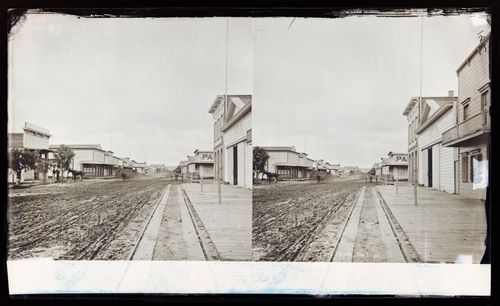
View of an unpaved street with businesses on either side, including on the right the Commission house of W. W. Stewart & Co., dealers in wool, grain, and silver ores, located on the corner of Fifth and K streets.
PH1984:0977:431
Description:
View of an unpaved street with businesses on either side, including on the right the Commission house of W. W. Stewart & Co., dealers in wool, grain, and silver ores, located on the corner of Fifth and K streets.
Personnes et institutions:
Date:
ca. 1860-1880
ca. 1860-1880
Titre:
Stereograph of Fifth Street, San Diego, California, United States of America
Actions:
PH1984:0977:431
Description:
View of an unpaved street with businesses on either side, including on the right the Commission house of W. W. Stewart & Co., dealers in wool, grain, and silver ores, located on the corner of Fifth and K streets.
Stereograph of Fifth Street, San Diego, California, United States of America
Actions:
PH1984:0977:431
Description:
View of an unpaved street with businesses on either side, including on the right the Commission house of W. W. Stewart & Co., dealers in wool, grain, and silver ores, located on the corner of Fifth and K streets.
Classification:
photographies
photographies
Date:
ca. 1860-1880
ca. 1860-1880
Personnes et institutions:
Niveau de description archivistique:
Projet
Projet
Numéro de référence:
AP164.S1.1999.D6
Description:
The project series documents the commission, design, and construction of the Gordillo studio, neighbouring the client’s house (AP164.S1.1993.D2) on Castilla de Ponferrada Street, in Villanueva de la Cañada, Community of Madrid, Spain. The firm identified this project as number 119. “The Gordillo Studio is a prismatic, serrated volume that occupies the plot’s only available strip of land and minimizes its presence through the use of two materials, translucent polycarbonate and xerophilous plantings, which seek the best adaptation to the site, the program and the client. Using this system, a semi-buried interior is constructed in which the light has been modeled as a solid, expansive material, the aim being to satisfy not only the specific demands of the work space but also the creation of an agreeable atmosphere, as austere as it is sensual.” (ARCH270975) Abalos & Herreros worked with Ángel Jaramillo Sanchez, María Auxiliadora Gálvez, Renata Sentkiewicz, Juan Gómez, Fernando Valero and José Torras. In 2002, the project won the COAM 2000 prize. Documenting this project are conceptual, design development and working drawings, photographic and reference materials, correspondence, notes, budgets, reports, studies, forms, project descriptions, invoices, certifications and trade catalogues.
AP164.S1.1999.D6
Description:
The project series documents the commission, design, and construction of the Gordillo studio, neighbouring the client’s house (AP164.S1.1993.D2) on Castilla de Ponferrada Street, in Villanueva de la Cañada, Community of Madrid, Spain. The firm identified this project as number 119. “The Gordillo Studio is a prismatic, serrated volume that occupies the plot’s only available strip of land and minimizes its presence through the use of two materials, translucent polycarbonate and xerophilous plantings, which seek the best adaptation to the site, the program and the client. Using this system, a semi-buried interior is constructed in which the light has been modeled as a solid, expansive material, the aim being to satisfy not only the specific demands of the work space but also the creation of an agreeable atmosphere, as austere as it is sensual.” (ARCH270975) Abalos & Herreros worked with Ángel Jaramillo Sanchez, María Auxiliadora Gálvez, Renata Sentkiewicz, Juan Gómez, Fernando Valero and José Torras. In 2002, the project won the COAM 2000 prize. Documenting this project are conceptual, design development and working drawings, photographic and reference materials, correspondence, notes, budgets, reports, studies, forms, project descriptions, invoices, certifications and trade catalogues.
Personnes et institutions:
Date:
1978, 1992-2002, predominant 1999-2000
1978, 1992-2002, predominant 1999-2000
Titre:
Estudio Gordillo, Villanueva de la Cañada, Spain (1999)
Actions:
AP164.S1.1999.D6
Description:
The project series documents the commission, design, and construction of the Gordillo studio, neighbouring the client’s house (AP164.S1.1993.D2) on Castilla de Ponferrada Street, in Villanueva de la Cañada, Community of Madrid, Spain. The firm identified this project as number 119. “The Gordillo Studio is a prismatic, serrated volume that occupies the plot’s only available strip of land and minimizes its presence through the use of two materials, translucent polycarbonate and xerophilous plantings, which seek the best adaptation to the site, the program and the client. Using this system, a semi-buried interior is constructed in which the light has been modeled as a solid, expansive material, the aim being to satisfy not only the specific demands of the work space but also the creation of an agreeable atmosphere, as austere as it is sensual.” (ARCH270975) Abalos & Herreros worked with Ángel Jaramillo Sanchez, María Auxiliadora Gálvez, Renata Sentkiewicz, Juan Gómez, Fernando Valero and José Torras. In 2002, the project won the COAM 2000 prize. Documenting this project are conceptual, design development and working drawings, photographic and reference materials, correspondence, notes, budgets, reports, studies, forms, project descriptions, invoices, certifications and trade catalogues.
Estudio Gordillo, Villanueva de la Cañada, Spain (1999)
Actions:
AP164.S1.1999.D6
Description:
The project series documents the commission, design, and construction of the Gordillo studio, neighbouring the client’s house (AP164.S1.1993.D2) on Castilla de Ponferrada Street, in Villanueva de la Cañada, Community of Madrid, Spain. The firm identified this project as number 119. “The Gordillo Studio is a prismatic, serrated volume that occupies the plot’s only available strip of land and minimizes its presence through the use of two materials, translucent polycarbonate and xerophilous plantings, which seek the best adaptation to the site, the program and the client. Using this system, a semi-buried interior is constructed in which the light has been modeled as a solid, expansive material, the aim being to satisfy not only the specific demands of the work space but also the creation of an agreeable atmosphere, as austere as it is sensual.” (ARCH270975) Abalos & Herreros worked with Ángel Jaramillo Sanchez, María Auxiliadora Gálvez, Renata Sentkiewicz, Juan Gómez, Fernando Valero and José Torras. In 2002, the project won the COAM 2000 prize. Documenting this project are conceptual, design development and working drawings, photographic and reference materials, correspondence, notes, budgets, reports, studies, forms, project descriptions, invoices, certifications and trade catalogues.
Niveau de description archivistique:
Project
Project
Date:
1978, 1992-2002, predominant 1999-2000
1978, 1992-2002, predominant 1999-2000
Personnes et institutions:
Niveau de description archivistique:
Projet
Projet
Actions:
Numéro de référence:
CI005.S1.1957.PR1
Description:
The Stichting Nationaal Park De Hoge Veluwe commissioned Oud to design its gatekeeper lodge and ticket booth in 1957. Oud designed a two-storey building that featured several balconies and an annexed ticket booth, with colour choices of white walls with strategic uses of primary colours. Construction was waylaid because of the delay in obtaining building permits from the Ministries of Culture and Finance. Once approval was obtained, the cost of building was too high and, as a result, the plan was cancelled in 1960 (Taverne et al. 2001, 482). Project series includes plans as well as a photograph of a perspective drawing.
CI005.S1.1957.PR1
Description:
The Stichting Nationaal Park De Hoge Veluwe commissioned Oud to design its gatekeeper lodge and ticket booth in 1957. Oud designed a two-storey building that featured several balconies and an annexed ticket booth, with colour choices of white walls with strategic uses of primary colours. Construction was waylaid because of the delay in obtaining building permits from the Ministries of Culture and Finance. Once approval was obtained, the cost of building was too high and, as a result, the plan was cancelled in 1960 (Taverne et al. 2001, 482). Project series includes plans as well as a photograph of a perspective drawing.
Personnes et institutions:
Date:
1957
1957
Titre:
Design for Gatekeeper's Lodge, Hoge Veluwe National Park, Otterloo, Netherlands (1957)
Actions:
CI005.S1.1957.PR1
Description:
The Stichting Nationaal Park De Hoge Veluwe commissioned Oud to design its gatekeeper lodge and ticket booth in 1957. Oud designed a two-storey building that featured several balconies and an annexed ticket booth, with colour choices of white walls with strategic uses of primary colours. Construction was waylaid because of the delay in obtaining building permits from the Ministries of Culture and Finance. Once approval was obtained, the cost of building was too high and, as a result, the plan was cancelled in 1960 (Taverne et al. 2001, 482). Project series includes plans as well as a photograph of a perspective drawing.
Design for Gatekeeper's Lodge, Hoge Veluwe National Park, Otterloo, Netherlands (1957)
Actions:
CI005.S1.1957.PR1
Description:
The Stichting Nationaal Park De Hoge Veluwe commissioned Oud to design its gatekeeper lodge and ticket booth in 1957. Oud designed a two-storey building that featured several balconies and an annexed ticket booth, with colour choices of white walls with strategic uses of primary colours. Construction was waylaid because of the delay in obtaining building permits from the Ministries of Culture and Finance. Once approval was obtained, the cost of building was too high and, as a result, the plan was cancelled in 1960 (Taverne et al. 2001, 482). Project series includes plans as well as a photograph of a perspective drawing.
Niveau de description archivistique:
project
project
Date:
1957
1957
Personnes et institutions:
Niveau de description archivistique:
Projet
Projet
Actions:
Numéro de référence:
CI005.S1.1962.PR1
Description:
Almelo town council commissioned Oud for the design of its new town hall in 1962. Oud designed three sections: one for administrative departments, another for the council chamber, and one for a civic reception room and wedding rooms. After Oud's death in 1963, town council assigned Hans Oud and Harm Dethmers the subsequent development of Oud's original design. With the change of the site location in later years, the design was altered quite drastically by the time of its completion in 1973 (Taverne et al. 2001,503). Project series includes a sketch plan and photographs of a model and of a perspective drawing.
CI005.S1.1962.PR1
Description:
Almelo town council commissioned Oud for the design of its new town hall in 1962. Oud designed three sections: one for administrative departments, another for the council chamber, and one for a civic reception room and wedding rooms. After Oud's death in 1963, town council assigned Hans Oud and Harm Dethmers the subsequent development of Oud's original design. With the change of the site location in later years, the design was altered quite drastically by the time of its completion in 1973 (Taverne et al. 2001,503). Project series includes a sketch plan and photographs of a model and of a perspective drawing.
Personnes et institutions:
Date:
1962-1973
1962-1973
Titre:
Almelo Town Hall, Almelo, Netherlands (1962-1973)
Actions:
CI005.S1.1962.PR1
Description:
Almelo town council commissioned Oud for the design of its new town hall in 1962. Oud designed three sections: one for administrative departments, another for the council chamber, and one for a civic reception room and wedding rooms. After Oud's death in 1963, town council assigned Hans Oud and Harm Dethmers the subsequent development of Oud's original design. With the change of the site location in later years, the design was altered quite drastically by the time of its completion in 1973 (Taverne et al. 2001,503). Project series includes a sketch plan and photographs of a model and of a perspective drawing.
Almelo Town Hall, Almelo, Netherlands (1962-1973)
Actions:
CI005.S1.1962.PR1
Description:
Almelo town council commissioned Oud for the design of its new town hall in 1962. Oud designed three sections: one for administrative departments, another for the council chamber, and one for a civic reception room and wedding rooms. After Oud's death in 1963, town council assigned Hans Oud and Harm Dethmers the subsequent development of Oud's original design. With the change of the site location in later years, the design was altered quite drastically by the time of its completion in 1973 (Taverne et al. 2001,503). Project series includes a sketch plan and photographs of a model and of a perspective drawing.
Niveau de description archivistique:
project
project
Date:
1962-1973
1962-1973
Personnes et institutions:
Niveau de description archivistique:
Projet
Projet
Numéro de référence:
CI005.S1.1919.PR1
Description:
Oud was commissioned to design a distillery factory and warehouse just outside of Purmerend. Oud's original drawings consist of a rectangular hall and a distillery placed in a symmetrical layout. Oud later expanded his design in 1919 and modified it according to the client's wishes. Although the plans were never realized for the distillery factory in Purmerend, Oud's factory design and photographs of a model were exhibited as an example of the De Stijl aesthetic in the Paris Rosenberg gallery (Taverne et al. 2001,150-156). The project series includes design drawings as well as photographs of plans for the factory and warehouse. The series also includes a photograph of a model.
CI005.S1.1919.PR1
Description:
Oud was commissioned to design a distillery factory and warehouse just outside of Purmerend. Oud's original drawings consist of a rectangular hall and a distillery placed in a symmetrical layout. Oud later expanded his design in 1919 and modified it according to the client's wishes. Although the plans were never realized for the distillery factory in Purmerend, Oud's factory design and photographs of a model were exhibited as an example of the De Stijl aesthetic in the Paris Rosenberg gallery (Taverne et al. 2001,150-156). The project series includes design drawings as well as photographs of plans for the factory and warehouse. The series also includes a photograph of a model.
Personnes et institutions:
Date:
1919
1919
Titre:
Factory and Warehouse, Purmerend, Netherlands (1919-1920)
Actions:
CI005.S1.1919.PR1
Description:
Oud was commissioned to design a distillery factory and warehouse just outside of Purmerend. Oud's original drawings consist of a rectangular hall and a distillery placed in a symmetrical layout. Oud later expanded his design in 1919 and modified it according to the client's wishes. Although the plans were never realized for the distillery factory in Purmerend, Oud's factory design and photographs of a model were exhibited as an example of the De Stijl aesthetic in the Paris Rosenberg gallery (Taverne et al. 2001,150-156). The project series includes design drawings as well as photographs of plans for the factory and warehouse. The series also includes a photograph of a model.
Factory and Warehouse, Purmerend, Netherlands (1919-1920)
Actions:
CI005.S1.1919.PR1
Description:
Oud was commissioned to design a distillery factory and warehouse just outside of Purmerend. Oud's original drawings consist of a rectangular hall and a distillery placed in a symmetrical layout. Oud later expanded his design in 1919 and modified it according to the client's wishes. Although the plans were never realized for the distillery factory in Purmerend, Oud's factory design and photographs of a model were exhibited as an example of the De Stijl aesthetic in the Paris Rosenberg gallery (Taverne et al. 2001,150-156). The project series includes design drawings as well as photographs of plans for the factory and warehouse. The series also includes a photograph of a model.
Niveau de description archivistique:
project
project
Date:
1919
1919
Personnes et institutions:
Niveau de description archivistique:
Projet
Projet
Numéro de référence:
AP178.S1.1965.PR04
Description:
This project series documents the design for the SACOR housing complex in Matosinhos, Portugal. While the records were held in the office’s archives this project was assigned the number 20/60. In the past the office identified the project as number 111. The office assigned the date 1965 for this project. The project consisted of a ten-storey building commissioned by SACOR (Sociedade Anónima de Combustíveis e Óleos Refinados). Documentation suggests it included a garage, gas station, offices, waiting room, bar, atrium, restaurant and dwellings. Documenting this project are sketches, as well as photographs of the site and model. Project documentation and correspondence with SACOR are also included.
AP178.S1.1965.PR04
Description:
This project series documents the design for the SACOR housing complex in Matosinhos, Portugal. While the records were held in the office’s archives this project was assigned the number 20/60. In the past the office identified the project as number 111. The office assigned the date 1965 for this project. The project consisted of a ten-storey building commissioned by SACOR (Sociedade Anónima de Combustíveis e Óleos Refinados). Documentation suggests it included a garage, gas station, offices, waiting room, bar, atrium, restaurant and dwellings. Documenting this project are sketches, as well as photographs of the site and model. Project documentation and correspondence with SACOR are also included.
Personnes et institutions:
Date:
1965-1966
1965-1966
Titre:
Habitações Colectivas da SACOR [SACOR housing complex], Matosinhos, Portugal (1965-1966)
Actions:
AP178.S1.1965.PR04
Description:
This project series documents the design for the SACOR housing complex in Matosinhos, Portugal. While the records were held in the office’s archives this project was assigned the number 20/60. In the past the office identified the project as number 111. The office assigned the date 1965 for this project. The project consisted of a ten-storey building commissioned by SACOR (Sociedade Anónima de Combustíveis e Óleos Refinados). Documentation suggests it included a garage, gas station, offices, waiting room, bar, atrium, restaurant and dwellings. Documenting this project are sketches, as well as photographs of the site and model. Project documentation and correspondence with SACOR are also included.
Habitações Colectivas da SACOR [SACOR housing complex], Matosinhos, Portugal (1965-1966)
Actions:
AP178.S1.1965.PR04
Description:
This project series documents the design for the SACOR housing complex in Matosinhos, Portugal. While the records were held in the office’s archives this project was assigned the number 20/60. In the past the office identified the project as number 111. The office assigned the date 1965 for this project. The project consisted of a ten-storey building commissioned by SACOR (Sociedade Anónima de Combustíveis e Óleos Refinados). Documentation suggests it included a garage, gas station, offices, waiting room, bar, atrium, restaurant and dwellings. Documenting this project are sketches, as well as photographs of the site and model. Project documentation and correspondence with SACOR are also included.
Niveau de description archivistique:
Project
Project
Date:
1965-1966
1965-1966
Personnes et institutions:


