


5635 Résultats
Classification:
périodiques
périodiques
Actions:
Prix:
$46.00
(disponible sur commande)
Résumé:
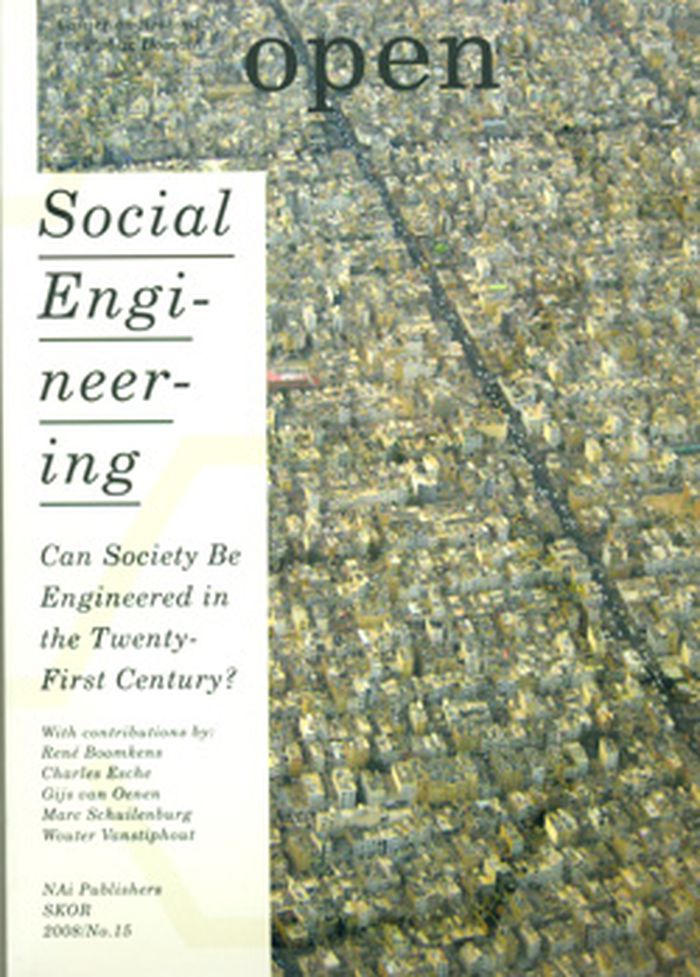
Can society be engineered in the twenty-first century?
$46.00
(disponible sur commande)
Résumé:
Can society be engineered in the twenty-first century?
Titre:
Open 15 social engineering 2008 no. 15
Actions:
Prix:
$46.00
(disponible sur commande)
Résumé:
Can society be engineered in the twenty-first century?
Open 15 social engineering 2008 no. 15
Actions:
Prix:
$46.00
(disponible sur commande)
Résumé:
Can society be engineered in the twenty-first century?
Classification:
périodiques
périodiques
Publication:
avril 2009, Rotterdam
avril 2009, Rotterdam
Sujet:
Revues
Revues
Classification:
périodiques
périodiques
Titre:
DETAIL 03/09 Concept
DETAIL 03/09 Concept
Actions:
Prix:
$25.00
(disponible sur commande)
Résumé:
Music and Theatre
$25.00
(disponible sur commande)
Résumé:
Music and Theatre
Sujet:
Revues
Revues
Publication:
mars 2009
mars 2009
Titre:
DETAIL 03/09 Concept
Actions:
Prix:
$25.00
(disponible sur commande)
Résumé:
Music and Theatre
DETAIL 03/09 Concept
Actions:
Prix:
$25.00
(disponible sur commande)
Résumé:
Music and Theatre
Classification:
périodiques
périodiques
Publication:
mars 2009
mars 2009
Sujet:
Revues
Revues
Classification:
périodiques
périodiques
Actions:
Prix:
$20.00
(disponible sur commande)
Résumé:
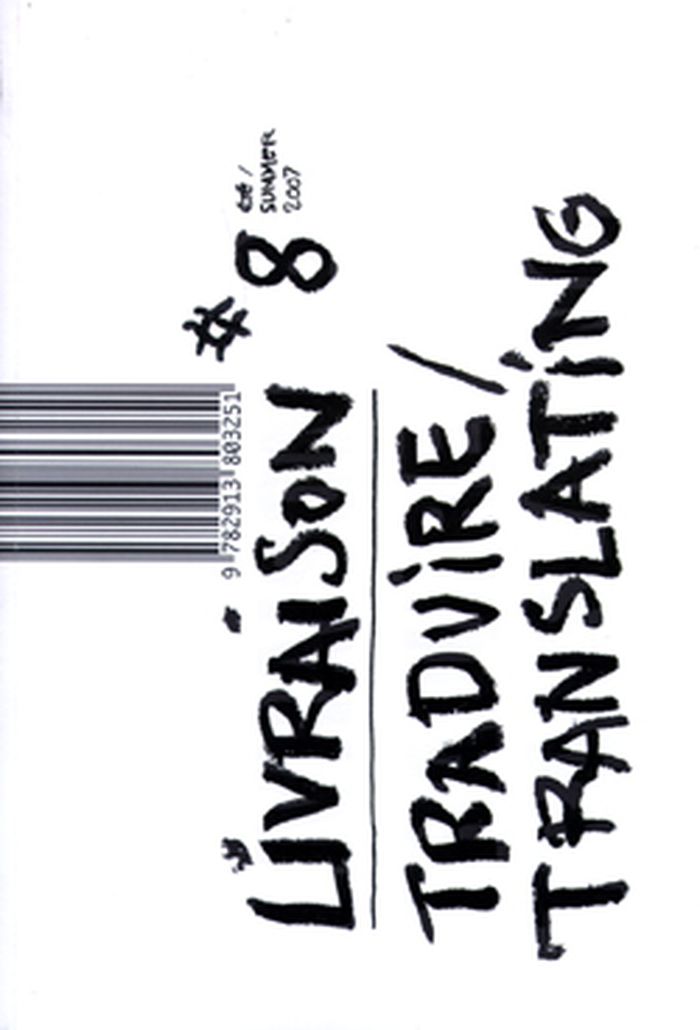
Stephen Gill: Billboard Series / Rada Ivecovic: Résister à la traduction absolue comme le Rhinocéros / Jonathan Monk: Translation Piece /Hashem el Madani: Studio Practices (Text by Stephen Wright) / Klaus Scherübel: Mallarmé, le livre (Texte par Stephen Wright) et al.
$20.00
(disponible sur commande)
Résumé:
Stephen Gill: Billboard Series / Rada Ivecovic: Résister à la traduction absolue comme le Rhinocéros / Jonathan Monk: Translation Piece /Hashem el Madani: Studio Practices (Text by Stephen Wright) / Klaus Scherübel: Mallarmé, le livre (Texte par Stephen Wright) et al.
Sujet:
Revues
Revues
Publication:
juillet 2007, Montréal / Strasbourg
juillet 2007, Montréal / Strasbourg
Titre:
Livraison no. 8: traduire / translating
Actions:
Prix:
$20.00
(disponible sur commande)
Résumé:
Stephen Gill: Billboard Series / Rada Ivecovic: Résister à la traduction absolue comme le Rhinocéros / Jonathan Monk: Translation Piece /Hashem el Madani: Studio Practices (Text by Stephen Wright) / Klaus Scherübel: Mallarmé, le livre (Texte par Stephen Wright) et al.
Livraison no. 8: traduire / translating
Actions:
Prix:
$20.00
(disponible sur commande)
Résumé:
Stephen Gill: Billboard Series / Rada Ivecovic: Résister à la traduction absolue comme le Rhinocéros / Jonathan Monk: Translation Piece /Hashem el Madani: Studio Practices (Text by Stephen Wright) / Klaus Scherübel: Mallarmé, le livre (Texte par Stephen Wright) et al.
Classification:
périodiques
périodiques
Publication:
juillet 2007, Montréal / Strasbourg
juillet 2007, Montréal / Strasbourg
Sujet:
Revues
Revues
Classification:
périodiques
périodiques
Titre:
CV 81: made in China
CV 81: made in China
Actions:
Prix:
$8.50
(disponible sur commande)
Résumé:
Greg Girard / Benoît Aquin / Yang Yi / Oscar Munoz / Hugh Le Caine / Antoni Muntadas
$8.50
(disponible sur commande)
Résumé:
Greg Girard / Benoît Aquin / Yang Yi / Oscar Munoz / Hugh Le Caine / Antoni Muntadas
Sujet:
Revues
Revues
Publication:
mars 2009, Montréal
mars 2009, Montréal
Titre:
CV 81: made in China
Actions:
Prix:
$8.50
(disponible sur commande)
Résumé:
Greg Girard / Benoît Aquin / Yang Yi / Oscar Munoz / Hugh Le Caine / Antoni Muntadas
CV 81: made in China
Actions:
Prix:
$8.50
(disponible sur commande)
Résumé:
Greg Girard / Benoît Aquin / Yang Yi / Oscar Munoz / Hugh Le Caine / Antoni Muntadas
Classification:
périodiques
périodiques
Publication:
mars 2009, Montréal
mars 2009, Montréal
Sujet:
Revues
Revues
Classification:
périodiques
périodiques
Actions:
Prix:
$12.50
(disponible sur commande)
Résumé:
Francesco Bonami on the everyday / Rochelle Steiner & Alison Gingeras on Glenn Brown / Jeremy Wood and Adam Nicholson on van Dyck / Philip Ursprung on Otto Muehl's Manopsychotic Ballet / Christina Kiaer on female artists in Stalin's Russia et al.
$12.50
(disponible sur commande)
Résumé:
Francesco Bonami on the everyday / Rochelle Steiner & Alison Gingeras on Glenn Brown / Jeremy Wood and Adam Nicholson on van Dyck / Philip Ursprung on Otto Muehl's Manopsychotic Ballet / Christina Kiaer on female artists in Stalin's Russia et al.
Sujet:
Revues
Revues
Publication:
mars 2009, Londres
mars 2009, Londres
Titre:
Tate etc issue 15: spring 2009
Actions:
Prix:
$12.50
(disponible sur commande)
Résumé:
Francesco Bonami on the everyday / Rochelle Steiner & Alison Gingeras on Glenn Brown / Jeremy Wood and Adam Nicholson on van Dyck / Philip Ursprung on Otto Muehl's Manopsychotic Ballet / Christina Kiaer on female artists in Stalin's Russia et al.
Tate etc issue 15: spring 2009
Actions:
Prix:
$12.50
(disponible sur commande)
Résumé:
Francesco Bonami on the everyday / Rochelle Steiner & Alison Gingeras on Glenn Brown / Jeremy Wood and Adam Nicholson on van Dyck / Philip Ursprung on Otto Muehl's Manopsychotic Ballet / Christina Kiaer on female artists in Stalin's Russia et al.
Classification:
périodiques
périodiques
Publication:
mars 2009, Londres
mars 2009, Londres
Sujet:
Revues
Revues
Classification:
périodiques
périodiques
Titre:
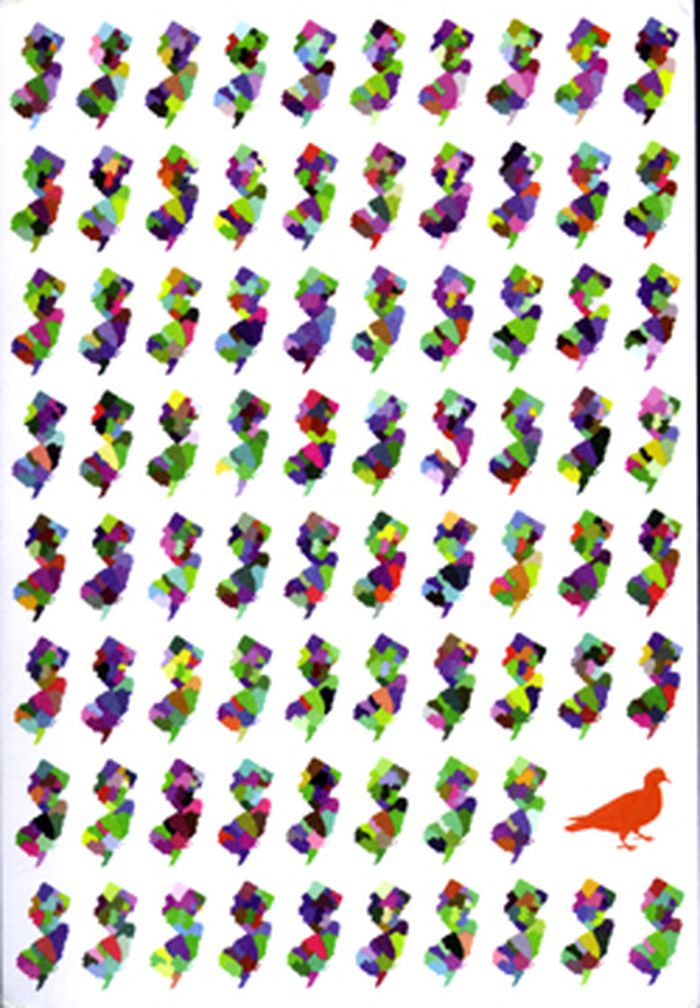
Pidgin 6
Pidgin 6
Actions:
Prix:
$12.00
(disponible sur commande)
Résumé:
There is a vast amount of good work at the Princeton School of Architecture [SOA] that is unaccessible to our fellow students and the outside world. Student initiated and produced, Pidgin aims to capture and broadcast this work. A humble vessel for the transportation of urgent cargo. Pidgin is a way for ideas to escape the often hermetic confines of our computers,(...)
$12.00
(disponible sur commande)
Résumé:
There is a vast amount of good work at the Princeton School of Architecture [SOA] that is unaccessible to our fellow students and the outside world. Student initiated and produced, Pidgin aims to capture and broadcast this work. A humble vessel for the transportation of urgent cargo. Pidgin is a way for ideas to escape the often hermetic confines of our computers,(...)
Sujet:
Revues
Revues
Publication:
janvier 2009, Princeton, New Jersey
janvier 2009, Princeton, New Jersey
Titre:
Pidgin 6
Actions:
Prix:
$12.00
(disponible sur commande)
Résumé:
There is a vast amount of good work at the Princeton School of Architecture [SOA] that is unaccessible to our fellow students and the outside world. Student initiated and produced, Pidgin aims to capture and broadcast this work. A humble vessel for the transportation of urgent cargo. Pidgin is a way for ideas to escape the often hermetic confines of our computers, desks, and buildings and find their way into the larger world. Pidgin features the work of students, faculty, staff, & friends of the SOA. Pidgin is not a brochure, it is a dispatch. We hope it finds you well.
Pidgin 6
Actions:
Prix:
$12.00
(disponible sur commande)
Résumé:
There is a vast amount of good work at the Princeton School of Architecture [SOA] that is unaccessible to our fellow students and the outside world. Student initiated and produced, Pidgin aims to capture and broadcast this work. A humble vessel for the transportation of urgent cargo. Pidgin is a way for ideas to escape the often hermetic confines of our computers, desks, and buildings and find their way into the larger world. Pidgin features the work of students, faculty, staff, & friends of the SOA. Pidgin is not a brochure, it is a dispatch. We hope it finds you well.
Classification:
périodiques
périodiques
Publication:
janvier 2009, Princeton, New Jersey
janvier 2009, Princeton, New Jersey
Sujet:
Revues
Revues
Classification:
périodiques
périodiques
Prix:
$29.50
(disponible sur commande)
Résumé:
Featuring, amongst others, in this issue: the ING Headoffices in Budapest by EEA, the Utrecht University Library by Wiel Arets, the Berlin Fire and Police Station by Sauerbruch Hutton Architects, an interview with Jan Kaplicky from Future Systems and a material survey of the Galléria Department Store in Seoul by UN Studio.
$29.50
(disponible sur commande)
Résumé:
Featuring, amongst others, in this issue: the ING Headoffices in Budapest by EEA, the Utrecht University Library by Wiel Arets, the Berlin Fire and Police Station by Sauerbruch Hutton Architects, an interview with Jan Kaplicky from Future Systems and a material survey of the Galléria Department Store in Seoul by UN Studio.
Titre:
The plan 008 : architecture and technologies in detail
Actions:
Prix:
$29.50
(disponible sur commande)
Résumé:
Featuring, amongst others, in this issue: the ING Headoffices in Budapest by EEA, the Utrecht University Library by Wiel Arets, the Berlin Fire and Police Station by Sauerbruch Hutton Architects, an interview with Jan Kaplicky from Future Systems and a material survey of the Galléria Department Store in Seoul by UN Studio.
The plan 008 : architecture and technologies in detail
Actions:
Prix:
$29.50
(disponible sur commande)
Résumé:
Featuring, amongst others, in this issue: the ING Headoffices in Budapest by EEA, the Utrecht University Library by Wiel Arets, the Berlin Fire and Police Station by Sauerbruch Hutton Architects, an interview with Jan Kaplicky from Future Systems and a material survey of the Galléria Department Store in Seoul by UN Studio.
Classification:
périodiques
périodiques
Publication:
février 2005, Bologna
février 2005, Bologna
Sujet:
Revues
Revues
Classification:
périodiques
périodiques
Titre:
Matières 7
Matières 7
Actions:
Prix:
$57.00
(disponible sur commande)
Résumé:
Qu'est-ce qui préside à la définition de la forme d'un bâtiment, selon quelles modalités est-elle conçue, quels principes engage-t-elle, quelles régles convoque ou produit-elles? Ces questions sont posées par toute investigation théorique concernant l'architecture. Et, une nouvelle fois, elles sont celles auxquelles les contributions de cette septième livraison de(...)
$57.00
(disponible sur commande)
Résumé:
Qu'est-ce qui préside à la définition de la forme d'un bâtiment, selon quelles modalités est-elle conçue, quels principes engage-t-elle, quelles régles convoque ou produit-elles? Ces questions sont posées par toute investigation théorique concernant l'architecture. Et, une nouvelle fois, elles sont celles auxquelles les contributions de cette septième livraison de(...)
Sujet:
Revues
Revues
Publication:
mars 2005, Lausanne
mars 2005, Lausanne
Titre:
Matières 7
Actions:
Prix:
$57.00
(disponible sur commande)
Résumé:
Qu'est-ce qui préside à la définition de la forme d'un bâtiment, selon quelles modalités est-elle conçue, quels principes engage-t-elle, quelles régles convoque ou produit-elles? Ces questions sont posées par toute investigation théorique concernant l'architecture. Et, une nouvelle fois, elles sont celles auxquelles les contributions de cette septième livraison de "Matières" tentent de répondre, ou plutôt tentent d'apporter plusieurs réponses car les problématiques des auteurs sont différentes les unes des autres, tout comme sont divers les bâtiments, les projets ou les thèmes auxquels ils s'intéressent. Les réponses se rejoignent cependant sur de nombreux points, à partir desquels il est possible de dessiner la trame de réflexions communes.
Matières 7
Actions:
Prix:
$57.00
(disponible sur commande)
Résumé:
Qu'est-ce qui préside à la définition de la forme d'un bâtiment, selon quelles modalités est-elle conçue, quels principes engage-t-elle, quelles régles convoque ou produit-elles? Ces questions sont posées par toute investigation théorique concernant l'architecture. Et, une nouvelle fois, elles sont celles auxquelles les contributions de cette septième livraison de "Matières" tentent de répondre, ou plutôt tentent d'apporter plusieurs réponses car les problématiques des auteurs sont différentes les unes des autres, tout comme sont divers les bâtiments, les projets ou les thèmes auxquels ils s'intéressent. Les réponses se rejoignent cependant sur de nombreux points, à partir desquels il est possible de dessiner la trame de réflexions communes.
Classification:
périodiques
périodiques
Publication:
mars 2005, Lausanne
mars 2005, Lausanne
Sujet:
Revues
Revues
Classification:
périodiques
périodiques
Titre:
Future anterior
Future anterior
Actions:
Prix:
$14.95
(disponible sur commande)
Résumé:
Historic preservation is at an important moment of rethinking. The field has grown exponentially in America since its first academic program was founded at Columbia University in 1965. Although initially concerned only with buildings, preservation has recently expanded to include the protection and creative interpretation of entire urban environments, landscapes,(...)
$14.95
(disponible sur commande)
Résumé:
Historic preservation is at an important moment of rethinking. The field has grown exponentially in America since its first academic program was founded at Columbia University in 1965. Although initially concerned only with buildings, preservation has recently expanded to include the protection and creative interpretation of entire urban environments, landscapes,(...)
Titre:
Future anterior
Actions:
Prix:
$14.95
(disponible sur commande)
Résumé:
Historic preservation is at an important moment of rethinking. The field has grown exponentially in America since its first academic program was founded at Columbia University in 1965. Although initially concerned only with buildings, preservation has recently expanded to include the protection and creative interpretation of entire urban environments, landscapes, highways, cultural traditions, artistic practices, and even specific “experiences” such as historic view sheds. Most importantly, historic preservation is beginning a significant re-clarification of its purposes, sharpening and deepening its focus on the contributions old architecture and artifacts make to our understanding of the human condition and how we should address and live in it. Future Anterior is the first and only journal in American academia to be devoted to the study and advancement of preservation, which brings together the interests of scholars and professionals in multiple disciplines such as architecture, art, history, philosophy, law, planning, materials science, cultural anthropology, conservation, and others. Future Anterior establishes an important and much needed forum for the critical examination of this expanding discipline, to spur challenges of its motives, goals, forms of practice and results. The appearance of Future Anterior signals the maturation of the field of preservation and a shift away from nostalgic antiquarianism towards an active involvement in the understanding and creative transformation of human environments. This turn in preservation is reflected in an increased interest in historic architecture and artifacts as expressive resources of great public importance. The destruction of patrimony, from the colossal Buddhas in Afghanistan to New York’s World Trade Center, is seen not just as barbarism but as sources of understanding about where we are going wrong and what we need to do next. In response, architects, planners, urban designers, and artists have been producing works which engage the public in new ways of reflecting and taking on the past not as constraint but as provocation.
Future anterior
Actions:
Prix:
$14.95
(disponible sur commande)
Résumé:
Historic preservation is at an important moment of rethinking. The field has grown exponentially in America since its first academic program was founded at Columbia University in 1965. Although initially concerned only with buildings, preservation has recently expanded to include the protection and creative interpretation of entire urban environments, landscapes, highways, cultural traditions, artistic practices, and even specific “experiences” such as historic view sheds. Most importantly, historic preservation is beginning a significant re-clarification of its purposes, sharpening and deepening its focus on the contributions old architecture and artifacts make to our understanding of the human condition and how we should address and live in it. Future Anterior is the first and only journal in American academia to be devoted to the study and advancement of preservation, which brings together the interests of scholars and professionals in multiple disciplines such as architecture, art, history, philosophy, law, planning, materials science, cultural anthropology, conservation, and others. Future Anterior establishes an important and much needed forum for the critical examination of this expanding discipline, to spur challenges of its motives, goals, forms of practice and results. The appearance of Future Anterior signals the maturation of the field of preservation and a shift away from nostalgic antiquarianism towards an active involvement in the understanding and creative transformation of human environments. This turn in preservation is reflected in an increased interest in historic architecture and artifacts as expressive resources of great public importance. The destruction of patrimony, from the colossal Buddhas in Afghanistan to New York’s World Trade Center, is seen not just as barbarism but as sources of understanding about where we are going wrong and what we need to do next. In response, architects, planners, urban designers, and artists have been producing works which engage the public in new ways of reflecting and taking on the past not as constraint but as provocation.
Classification:
périodiques
périodiques
Publication:
octobre 2004, New York
octobre 2004, New York
Sujet:
Revues
Revues
Classification:
périodiques
périodiques
Actions:
Prix:
$36.00
(disponible sur commande)
Résumé:
In our culture, in which the media play a predominant role, there is an increasing emphasis on achieving visibility and transparency. Openness and communication are subservient to that visibility, and even seem to coincide with it more and more emphatically. At the same time, both notions form the foundations for social order and political power. In our over-visualized(...)
$36.00
(disponible sur commande)
Résumé:
In our culture, in which the media play a predominant role, there is an increasing emphasis on achieving visibility and transparency. Openness and communication are subservient to that visibility, and even seem to coincide with it more and more emphatically. At the same time, both notions form the foundations for social order and political power. In our over-visualized(...)
Titre:
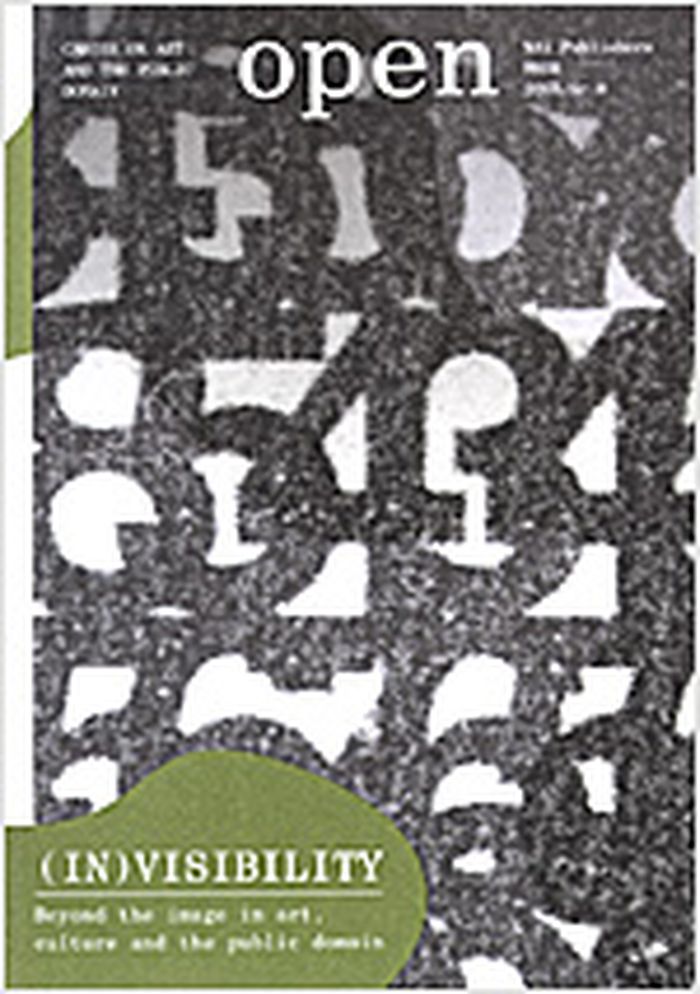
Open 8 : (in)visibility : beyond the image in art, culture and the public domain
Actions:
Prix:
$36.00
(disponible sur commande)
Résumé:
In our culture, in which the media play a predominant role, there is an increasing emphasis on achieving visibility and transparency. Openness and communication are subservient to that visibility, and even seem to coincide with it more and more emphatically. At the same time, both notions form the foundations for social order and political power. In our over-visualized culture, however, it seems as if every message or social agenda is being squeezed out in favour of styling, commerce and fashion. What position does art occupy in this, or what position should it occupy? In "Open" 8, guest editors Willem van Weelden and Jan van Grunsven write a general introduction, Brian Holmes explores (in)visibility as a tactic in art, and Jouke Kleerebezem asks who actually decides about (in)visibility in the public space; Camiel van Winkel writes over the visual deficit of contemporary culture; Dieter Lesage critically examines the proposals by OMA/AMO for a new iconography of Europe; Henk Oosterling investigates the FBI's prosecution of the Critical Art Ensemble; Jorinde Seijdel considers how media images are used as evidence for social and political events. "Open" 8 includes interviews with Arno van der Mark of DRFTWD, an Amsterdam-based multidisciplinary design bureau, and with the French research organization Bureau d'études, as well as an account of a roundtable discussion about a possible new legitimation for academic training in 'art and the public space'. The cahier also presents a column by the Belgian architect/author Wouter Davidts, photographic essays and book reviews.
Open 8 : (in)visibility : beyond the image in art, culture and the public domain
Actions:
Prix:
$36.00
(disponible sur commande)
Résumé:
In our culture, in which the media play a predominant role, there is an increasing emphasis on achieving visibility and transparency. Openness and communication are subservient to that visibility, and even seem to coincide with it more and more emphatically. At the same time, both notions form the foundations for social order and political power. In our over-visualized culture, however, it seems as if every message or social agenda is being squeezed out in favour of styling, commerce and fashion. What position does art occupy in this, or what position should it occupy? In "Open" 8, guest editors Willem van Weelden and Jan van Grunsven write a general introduction, Brian Holmes explores (in)visibility as a tactic in art, and Jouke Kleerebezem asks who actually decides about (in)visibility in the public space; Camiel van Winkel writes over the visual deficit of contemporary culture; Dieter Lesage critically examines the proposals by OMA/AMO for a new iconography of Europe; Henk Oosterling investigates the FBI's prosecution of the Critical Art Ensemble; Jorinde Seijdel considers how media images are used as evidence for social and political events. "Open" 8 includes interviews with Arno van der Mark of DRFTWD, an Amsterdam-based multidisciplinary design bureau, and with the French research organization Bureau d'études, as well as an account of a roundtable discussion about a possible new legitimation for academic training in 'art and the public space'. The cahier also presents a column by the Belgian architect/author Wouter Davidts, photographic essays and book reviews.
Classification:
périodiques
périodiques
Publication:
janvier 1900, Rotterdam
janvier 1900, Rotterdam
Sujet:
Revues
Revues


