


3085 Résultats
Classification:
livres
livres
Prix:
$37.50
(disponible sur commande)
Résumé:
Drivers in the nation's capital face a host of hazards: high-speed traffic circles, presidential motorcades, jaywalking tourists, and bewildering signs that send unsuspecting motorists from the Lincoln Memorial into suburban Virginia in less than two minutes. And parking? Don't bet on it unless you're in the fast lane of the Capital Beltway during rush hour. Little(...)
$37.50
(disponible sur commande)
Résumé:
Drivers in the nation's capital face a host of hazards: high-speed traffic circles, presidential motorcades, jaywalking tourists, and bewildering signs that send unsuspecting motorists from the Lincoln Memorial into suburban Virginia in less than two minutes. And parking? Don't bet on it unless you're in the fast lane of the Capital Beltway during rush hour. Little(...)
Titre:
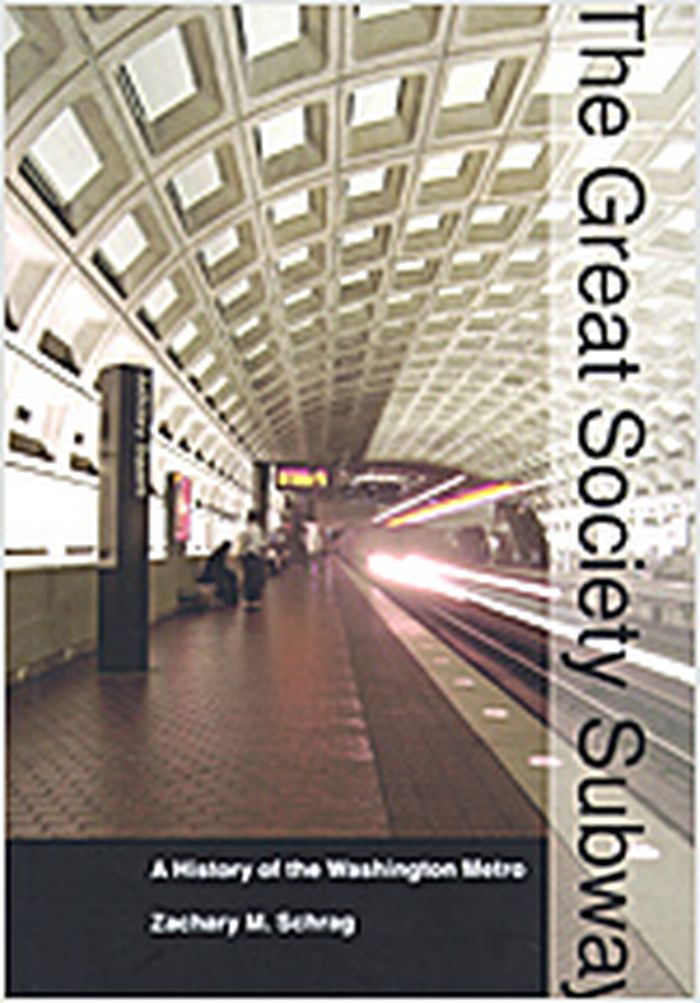
The Great Society subway : a history of the Washington Metro
Actions:
Prix:
$37.50
(disponible sur commande)
Résumé:
Drivers in the nation's capital face a host of hazards: high-speed traffic circles, presidential motorcades, jaywalking tourists, and bewildering signs that send unsuspecting motorists from the Lincoln Memorial into suburban Virginia in less than two minutes. And parking? Don't bet on it unless you're in the fast lane of the Capital Beltway during rush hour. Little wonder, then, that so many residents and visitors rely on the Washington Metro, the 106-mile rapid transit system that serves the District of Columbia and its inner suburbs. In the first comprehensive history of the Metro, Zachary M. Schrag tells the story of the Great Society subway from its earliest rumblings to the present day, from Arlington to College Park, Eisenhower to Marion Barry. Unlike the pre–World War II rail systems of New York, Chicago, and Philadelphia, the Metro was built at a time when most American families already owned cars, and when most American cities had dedicated themselves to freeways, not subways. Why did the nation's capital take a different path? What were the consequences of that decision? Using extensive archival research as well as oral history, Schrag argues that the Metro can be understood only in the political context from which it was born: the Great Society liberalism of the Kennedy, Johnson, and Nixon administrations. The Metro emerged from a period when Americans believed in public investments suited to the grandeur and dignity of the world's richest nation. The Metro was built not merely to move commuters, but in the words of Lyndon Johnson, to create "a place where the city of man serves not only the needs of the body and the demands of commerce but the desire for beauty and the hunger for community." Schrag scrutinizes the project from its earliest days, including general planning, routes, station architecture, funding decisions, land-use impacts, and the behavior of Metro riders. The story of the Great society subway sheds light on the development of metropolitan Washington, postwar urban policy, and the promises and limits of rail transit in American cities.
The Great Society subway : a history of the Washington Metro
Actions:
Prix:
$37.50
(disponible sur commande)
Résumé:
Drivers in the nation's capital face a host of hazards: high-speed traffic circles, presidential motorcades, jaywalking tourists, and bewildering signs that send unsuspecting motorists from the Lincoln Memorial into suburban Virginia in less than two minutes. And parking? Don't bet on it unless you're in the fast lane of the Capital Beltway during rush hour. Little wonder, then, that so many residents and visitors rely on the Washington Metro, the 106-mile rapid transit system that serves the District of Columbia and its inner suburbs. In the first comprehensive history of the Metro, Zachary M. Schrag tells the story of the Great Society subway from its earliest rumblings to the present day, from Arlington to College Park, Eisenhower to Marion Barry. Unlike the pre–World War II rail systems of New York, Chicago, and Philadelphia, the Metro was built at a time when most American families already owned cars, and when most American cities had dedicated themselves to freeways, not subways. Why did the nation's capital take a different path? What were the consequences of that decision? Using extensive archival research as well as oral history, Schrag argues that the Metro can be understood only in the political context from which it was born: the Great Society liberalism of the Kennedy, Johnson, and Nixon administrations. The Metro emerged from a period when Americans believed in public investments suited to the grandeur and dignity of the world's richest nation. The Metro was built not merely to move commuters, but in the words of Lyndon Johnson, to create "a place where the city of man serves not only the needs of the body and the demands of commerce but the desire for beauty and the hunger for community." Schrag scrutinizes the project from its earliest days, including general planning, routes, station architecture, funding decisions, land-use impacts, and the behavior of Metro riders. The story of the Great society subway sheds light on the development of metropolitan Washington, postwar urban policy, and the promises and limits of rail transit in American cities.
Classification:
livres
livres
Publication:
février 2006, Baltimore
février 2006, Baltimore
Sujet:
Structures d’ingénierie
Structures d’ingénierie
Classification:
livres
livres
Actions:
Prix:
$109.95
(disponible sur commande)
Résumé:
2010 marked the 50th anniversary of Brazil's capital Brasilia. Architects Lucio Costa and Oscar Niemeyer designed what has become one of the most studied urban planning project. Niemeyer's Cathedral, his building for the National Congress and the city's 707-ft television tower are icons of modern architecture. The entire city, marked by its cross-shaped layout and vast(...)
$109.95
(disponible sur commande)
Résumé:
2010 marked the 50th anniversary of Brazil's capital Brasilia. Architects Lucio Costa and Oscar Niemeyer designed what has become one of the most studied urban planning project. Niemeyer's Cathedral, his building for the National Congress and the city's 707-ft television tower are icons of modern architecture. The entire city, marked by its cross-shaped layout and vast(...)
Titre:
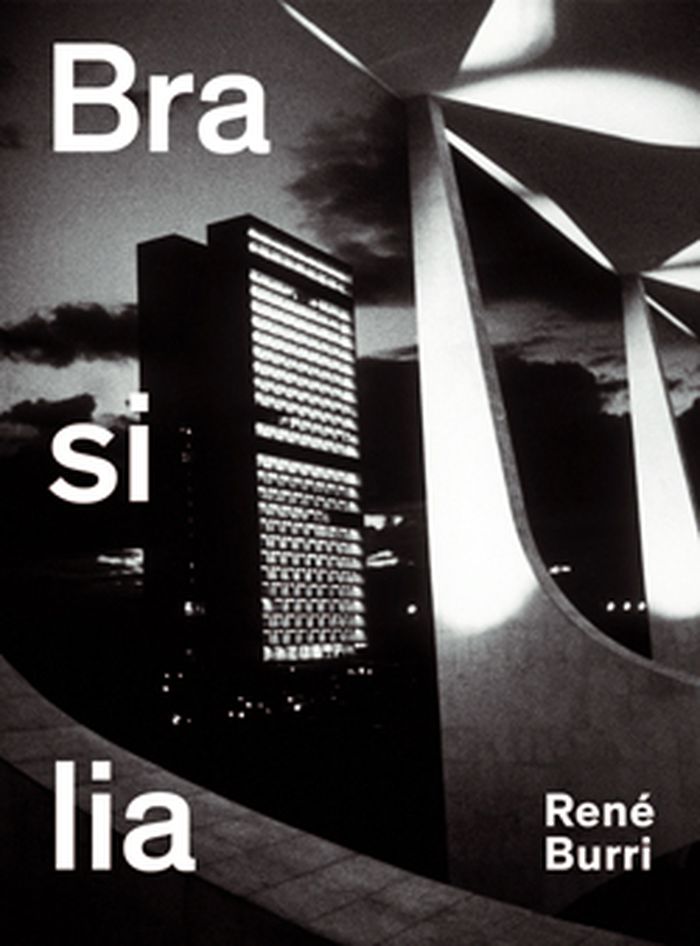
René Burri, Brasilia: photographs 1960-1993
Actions:
Prix:
$109.95
(disponible sur commande)
Résumé:
2010 marked the 50th anniversary of Brazil's capital Brasilia. Architects Lucio Costa and Oscar Niemeyer designed what has become one of the most studied urban planning project. Niemeyer's Cathedral, his building for the National Congress and the city's 707-ft television tower are icons of modern architecture. The entire city, marked by its cross-shaped layout and vast open spaces, was named a UNESCO World Heritage site in 1987. The author of this publication visited Brasilia's vast building sites for the first time in 1958. He returned many times over the years, documenting with his camera growth and further development of this built Utopia. Besides documenting the buildings in various stages of completion, Burri took portraits of Niemeyer and his workers and photographed Brasilia's street scenes and people and aerial views of the city's first slums. His images capture the strong sense of a new era and a vibrant atmosphere of hard work and strain; they reflect the huge dimensions of the landscape and the great scale of this project and its ambition to design and build a new capital. This book presents a large selection from hundreds of colour and black-and-white photographs, the majority of them published in this book for the first time.
René Burri, Brasilia: photographs 1960-1993
Actions:
Prix:
$109.95
(disponible sur commande)
Résumé:
2010 marked the 50th anniversary of Brazil's capital Brasilia. Architects Lucio Costa and Oscar Niemeyer designed what has become one of the most studied urban planning project. Niemeyer's Cathedral, his building for the National Congress and the city's 707-ft television tower are icons of modern architecture. The entire city, marked by its cross-shaped layout and vast open spaces, was named a UNESCO World Heritage site in 1987. The author of this publication visited Brasilia's vast building sites for the first time in 1958. He returned many times over the years, documenting with his camera growth and further development of this built Utopia. Besides documenting the buildings in various stages of completion, Burri took portraits of Niemeyer and his workers and photographed Brasilia's street scenes and people and aerial views of the city's first slums. His images capture the strong sense of a new era and a vibrant atmosphere of hard work and strain; they reflect the huge dimensions of the landscape and the great scale of this project and its ambition to design and build a new capital. This book presents a large selection from hundreds of colour and black-and-white photographs, the majority of them published in this book for the first time.
Classification:
livres
livres
Publication:
juin 2011
juin 2011
Sujet:
Monographies photo
Monographies photo
Classification:
livres
livres
Titre:
The agony of power
The agony of power
Actions:
Prix:
$15.95
(disponible sur commande)
Résumé:
In these previously unpublished manuscripts written just before his death in 2007, Jean Baudrillard takes a last crack at the bewildering situation currently facing us as we exit the system of "domination" (based on alienation, revolt, revolution) and enter a world of generalized "hegemony" in which everyone becomes both hostage and accomplice of the global market. But in(...)
$15.95
(disponible sur commande)
Résumé:
In these previously unpublished manuscripts written just before his death in 2007, Jean Baudrillard takes a last crack at the bewildering situation currently facing us as we exit the system of "domination" (based on alienation, revolt, revolution) and enter a world of generalized "hegemony" in which everyone becomes both hostage and accomplice of the global market. But in(...)
Titre:
The agony of power
Actions:
Prix:
$15.95
(disponible sur commande)
Résumé:
In these previously unpublished manuscripts written just before his death in 2007, Jean Baudrillard takes a last crack at the bewildering situation currently facing us as we exit the system of "domination" (based on alienation, revolt, revolution) and enter a world of generalized "hegemony" in which everyone becomes both hostage and accomplice of the global market. But in the free-form market of political and sexual liberation, as the possibility of revolution (and our understanding of it) dissipates, Baudrillard sees the hegemonic process as only beginning. Once expelled, negativity returns from within ourselves as an antagonistic force — most vividly in the phenomenon of terrorism, but also as irony, mockery, and the symbolic liquidation of all human values. This is the dimension of hegemony marked by an unbridled circulation — of capital, goods, information, or manufactured history — that is bringing the very concept of exchange to an end and pushing capital beyond its limits : to the point at which it destroys the conditions of its own existence. In the system of hegemony, the alienated, the oppressed, and the colonized find themselves on the side of the system that holds them hostage. In this paradoxical moment in which history has turned to farce, domination itself may appear to have been a lesser evil.
The agony of power
Actions:
Prix:
$15.95
(disponible sur commande)
Résumé:
In these previously unpublished manuscripts written just before his death in 2007, Jean Baudrillard takes a last crack at the bewildering situation currently facing us as we exit the system of "domination" (based on alienation, revolt, revolution) and enter a world of generalized "hegemony" in which everyone becomes both hostage and accomplice of the global market. But in the free-form market of political and sexual liberation, as the possibility of revolution (and our understanding of it) dissipates, Baudrillard sees the hegemonic process as only beginning. Once expelled, negativity returns from within ourselves as an antagonistic force — most vividly in the phenomenon of terrorism, but also as irony, mockery, and the symbolic liquidation of all human values. This is the dimension of hegemony marked by an unbridled circulation — of capital, goods, information, or manufactured history — that is bringing the very concept of exchange to an end and pushing capital beyond its limits : to the point at which it destroys the conditions of its own existence. In the system of hegemony, the alienated, the oppressed, and the colonized find themselves on the side of the system that holds them hostage. In this paradoxical moment in which history has turned to farce, domination itself may appear to have been a lesser evil.
Classification:
livres
livres
Publication:
novembre 2012
novembre 2012
Sujet:
Théorie/ philosophie
Théorie/ philosophie
Classification:
livres
livres
Actions:
Exemplaires:
Description:
574 p. : ill. ; 25 cm.
Description:
574 p. : ill. ; 25 cm.
Auteur:
Sujet:
Publication:
Granada : Universidad de Granada, 1997.
Granada : Universidad de Granada, 1997.
Titre:
Los Capiteles del Palacio de los Leones en la Alhambra : ejemplo para el estudio del capitel hispanomusulmán y su trascendencia arquitectónica. Estudio I / Purificación Marinetto Sánchez ; introducción de Antonio Fernández Puertas.
Actions:
Exemplaires:
Description:
574 p. : ill. ; 25 cm.
Los Capiteles del Palacio de los Leones en la Alhambra : ejemplo para el estudio del capitel hispanomusulmán y su trascendencia arquitectónica. Estudio I / Purificación Marinetto Sánchez ; introducción de Antonio Fernández Puertas.
Actions:
Exemplaires:
Description:
574 p. : ill. ; 25 cm.
Classification:
livres
livres
Publication:
Granada : Universidad de Granada, 1997.
Granada : Universidad de Granada, 1997.
Auteur:
Sujet:
Classification:
livres
livres
Actions:
Prix:
$95.00
(disponible en magasin)
Résumé:
This facsimile edition of the notebook kept by Le Corbusier (1887–1965) from his two-week stay in the area that would become Chandigarh, the new capital city of the Indian state of Punjab, presents his written or sketched memos and personal reflections as well as notes and schematic solutions elaborated during meetings. ''Album Punjab'' constitutes a primary source for(...)
$95.00
(disponible en magasin)
Résumé:
This facsimile edition of the notebook kept by Le Corbusier (1887–1965) from his two-week stay in the area that would become Chandigarh, the new capital city of the Indian state of Punjab, presents his written or sketched memos and personal reflections as well as notes and schematic solutions elaborated during meetings. ''Album Punjab'' constitutes a primary source for(...)
Titre:
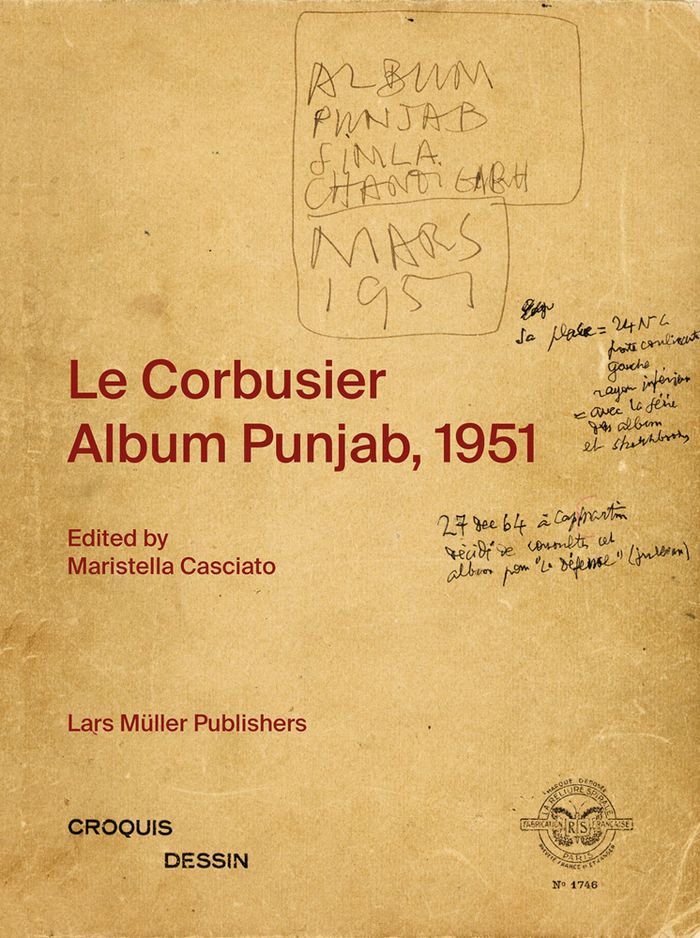
Le Corbusier: Album Punjab, 1951
Actions:
Prix:
$95.00
(disponible en magasin)
Résumé:
This facsimile edition of the notebook kept by Le Corbusier (1887–1965) from his two-week stay in the area that would become Chandigarh, the new capital city of the Indian state of Punjab, presents his written or sketched memos and personal reflections as well as notes and schematic solutions elaborated during meetings. ''Album Punjab'' constitutes a primary source for reconstructing the topics addressed by the small group of planners and governmental officials who in only a few days developed the outlines of the Chandigarh plan.
Le Corbusier: Album Punjab, 1951
Actions:
Prix:
$95.00
(disponible en magasin)
Résumé:
This facsimile edition of the notebook kept by Le Corbusier (1887–1965) from his two-week stay in the area that would become Chandigarh, the new capital city of the Indian state of Punjab, presents his written or sketched memos and personal reflections as well as notes and schematic solutions elaborated during meetings. ''Album Punjab'' constitutes a primary source for reconstructing the topics addressed by the small group of planners and governmental officials who in only a few days developed the outlines of the Chandigarh plan.
Classification:
livres
livres
Publication:
avril 2024
avril 2024
Sujet:
Architecture, monographies
Architecture, monographies
Classification:
artéfacts
artéfacts
Titre:
Amsterdam memory game
Amsterdam memory game
Actions:
Prix:
$24.50
(disponible sur commande)
Résumé:
Amsterdam is the world’s most cosmopolitan village. As a brand known all over the world and actually even more familiar than the Netherlands of which it is of course the capital. Amsterdam is full of iconic objects, sites, buildings, people and brands. This memory game is devoted to images of Amsterdam. The challenge is to find matching pairs of typical Amsterdam(...)
$24.50
(disponible sur commande)
Résumé:
Amsterdam is the world’s most cosmopolitan village. As a brand known all over the world and actually even more familiar than the Netherlands of which it is of course the capital. Amsterdam is full of iconic objects, sites, buildings, people and brands. This memory game is devoted to images of Amsterdam. The challenge is to find matching pairs of typical Amsterdam(...)
Titre:
Amsterdam memory game
Actions:
Prix:
$24.50
(disponible sur commande)
Résumé:
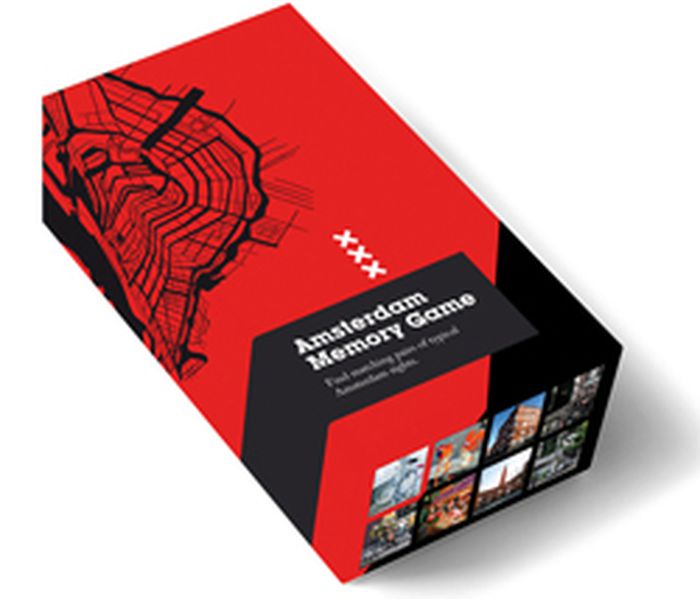
Amsterdam is the world’s most cosmopolitan village. As a brand known all over the world and actually even more familiar than the Netherlands of which it is of course the capital. Amsterdam is full of iconic objects, sites, buildings, people and brands. This memory game is devoted to images of Amsterdam. The challenge is to find matching pairs of typical Amsterdam bridges, houses, bikes, architectural details, shop windows, ladies behind red light windows, kitsch Amsterdam souvenirs, famous Amsterdammers, street brands, Amsterdam boats et cetera.
Amsterdam memory game
Actions:
Prix:
$24.50
(disponible sur commande)
Résumé:
Amsterdam is the world’s most cosmopolitan village. As a brand known all over the world and actually even more familiar than the Netherlands of which it is of course the capital. Amsterdam is full of iconic objects, sites, buildings, people and brands. This memory game is devoted to images of Amsterdam. The challenge is to find matching pairs of typical Amsterdam bridges, houses, bikes, architectural details, shop windows, ladies behind red light windows, kitsch Amsterdam souvenirs, famous Amsterdammers, street brands, Amsterdam boats et cetera.
Classification:
artéfacts
artéfacts
Publication:
avril 2010
avril 2010
Sujet:
Jouets
Jouets
Classification:
livres
livres
Prix:
$49.95
(disponible en magasin)
Résumé:
Christian Lutz continues his photographic study of power structures with Tropical Gift. He took portraits in Nigeria of people who live by and with the economic force that dominates everything there, the oil and gas industry. The photographs observe the protagonists' everyday lives and professional world from very close up, the rich profiteers in the capital and the(...)
$49.95
(disponible en magasin)
Résumé:
Christian Lutz continues his photographic study of power structures with Tropical Gift. He took portraits in Nigeria of people who live by and with the economic force that dominates everything there, the oil and gas industry. The photographs observe the protagonists' everyday lives and professional world from very close up, the rich profiteers in the capital and the(...)
Titre:
Tropical gift: The business of oil and gas in Nigeria
Actions:
Prix:
$49.95
(disponible en magasin)
Résumé:
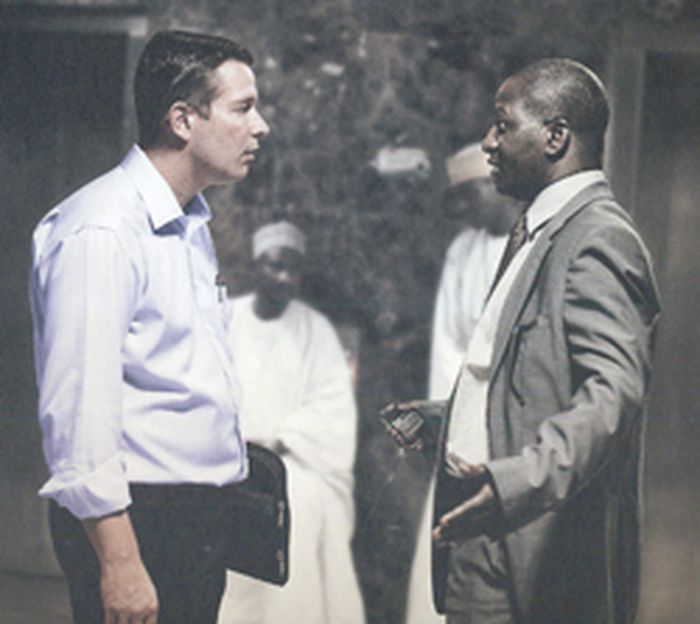
Christian Lutz continues his photographic study of power structures with Tropical Gift. He took portraits in Nigeria of people who live by and with the economic force that dominates everything there, the oil and gas industry. The photographs observe the protagonists' everyday lives and professional world from very close up, the rich profiteers in the capital and the indigenous population in the oil region, the Niger delta. The pictures tell their own story of business with these coveted raw materials subtly, but highly expressively.
Tropical gift: The business of oil and gas in Nigeria
Actions:
Prix:
$49.95
(disponible en magasin)
Résumé:
Christian Lutz continues his photographic study of power structures with Tropical Gift. He took portraits in Nigeria of people who live by and with the economic force that dominates everything there, the oil and gas industry. The photographs observe the protagonists' everyday lives and professional world from very close up, the rich profiteers in the capital and the indigenous population in the oil region, the Niger delta. The pictures tell their own story of business with these coveted raw materials subtly, but highly expressively.
Classification:
livres
livres
Publication:
septembre 2010
septembre 2010
Sujet:
Monographies photo
Monographies photo
Classification:
livres
livres
Prix:
$13.99
(disponible sur commande)
Résumé:
To live in this world is to be conditioned by capital. Once paired with Western democracy, unfettered capitalism has led to a shrinking economic system that squeezes out billions of people—creating a planet of surplus populations. 'Wageless Life' is a manifesto for building a future beyond the toxic failures of late-stage capitalism. Daring to imagine new social(...)
$13.99
(disponible sur commande)
Résumé:
To live in this world is to be conditioned by capital. Once paired with Western democracy, unfettered capitalism has led to a shrinking economic system that squeezes out billions of people—creating a planet of surplus populations. 'Wageless Life' is a manifesto for building a future beyond the toxic failures of late-stage capitalism. Daring to imagine new social(...)
Titre:
Wageless life: a manifesto for a future beyond capitalism
Actions:
Prix:
$13.99
(disponible sur commande)
Résumé:
To live in this world is to be conditioned by capital. Once paired with Western democracy, unfettered capitalism has led to a shrinking economic system that squeezes out billions of people—creating a planet of surplus populations. 'Wageless Life' is a manifesto for building a future beyond the toxic failures of late-stage capitalism. Daring to imagine new social relations, new modes of economic existence, and new collective worlds, the authors provide skills and tools for perceiving—and living in—a post-capitalist future.
Wageless life: a manifesto for a future beyond capitalism
Actions:
Prix:
$13.99
(disponible sur commande)
Résumé:
To live in this world is to be conditioned by capital. Once paired with Western democracy, unfettered capitalism has led to a shrinking economic system that squeezes out billions of people—creating a planet of surplus populations. 'Wageless Life' is a manifesto for building a future beyond the toxic failures of late-stage capitalism. Daring to imagine new social relations, new modes of economic existence, and new collective worlds, the authors provide skills and tools for perceiving—and living in—a post-capitalist future.
Classification:
livres
livres
Publication:
février 2020
février 2020
Sujet:
Social
Social
Classification:
livres
livres
Actions:
Prix:
$45.00
(disponible sur commande)
Résumé:
This publication offers a renewed and radical theorization of the relations between capital and architecture. It explicates the theoretical gymnastics through which architecture legitimates its services to neoliberalism, examines the discipline’s production of platforms for happily compliant consumers, and challenges its entrepreneurial self-image. 'Critique of(...)
$45.00
(disponible sur commande)
Résumé:
This publication offers a renewed and radical theorization of the relations between capital and architecture. It explicates the theoretical gymnastics through which architecture legitimates its services to neoliberalism, examines the discipline’s production of platforms for happily compliant consumers, and challenges its entrepreneurial self-image. 'Critique of(...)
Titre:
Critique of architecture: essays on theory, autonomy, and political economy
Actions:
Prix:
$45.00
(disponible sur commande)
Résumé:
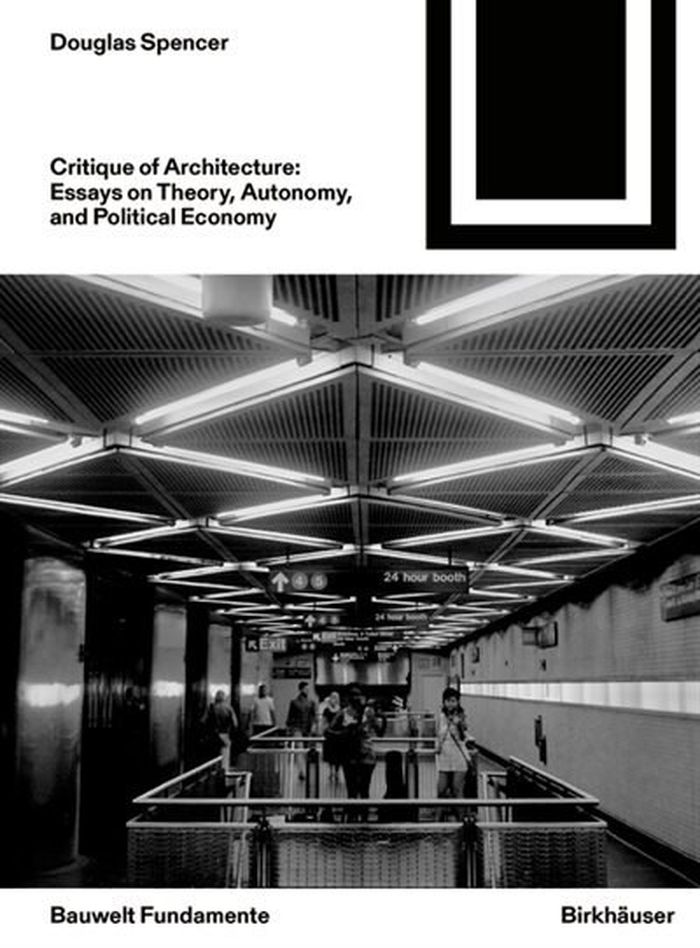
This publication offers a renewed and radical theorization of the relations between capital and architecture. It explicates the theoretical gymnastics through which architecture legitimates its services to neoliberalism, examines the discipline’s production of platforms for happily compliant consumers, and challenges its entrepreneurial self-image. 'Critique of Architecture' also addresses the discourse of autonomy, questioning its capacity to engage effectively with the terms and conditions of capitalism today, analyses the post-political turns of contemporary architecture theory, and reckons with the legacies and limitations of critical theory.
Critique of architecture: essays on theory, autonomy, and political economy
Actions:
Prix:
$45.00
(disponible sur commande)
Résumé:
This publication offers a renewed and radical theorization of the relations between capital and architecture. It explicates the theoretical gymnastics through which architecture legitimates its services to neoliberalism, examines the discipline’s production of platforms for happily compliant consumers, and challenges its entrepreneurial self-image. 'Critique of Architecture' also addresses the discourse of autonomy, questioning its capacity to engage effectively with the terms and conditions of capitalism today, analyses the post-political turns of contemporary architecture theory, and reckons with the legacies and limitations of critical theory.
Classification:
livres
livres
Publication:
janvier 2021
janvier 2021
Sujet:
Théorie de l’architecture
Théorie de l’architecture
Classification:
livres
livres
Prix:
$43.95
(disponible sur commande)
Résumé:
In the wake of its early twentieth-century civil wars, Mexico strove to present itself to the world as unified and prosperous. The preparation in Mexico City for the 1968 Summer Olympics was arguably the most ambitious of a sequence of design projects that aimed to signal Mexico’s arrival in the developed world. In Spectacular Mexico, Luis M. Castañeda demonstrates how(...)
$43.95
(disponible sur commande)
Résumé:
In the wake of its early twentieth-century civil wars, Mexico strove to present itself to the world as unified and prosperous. The preparation in Mexico City for the 1968 Summer Olympics was arguably the most ambitious of a sequence of design projects that aimed to signal Mexico’s arrival in the developed world. In Spectacular Mexico, Luis M. Castañeda demonstrates how(...)
Titre:
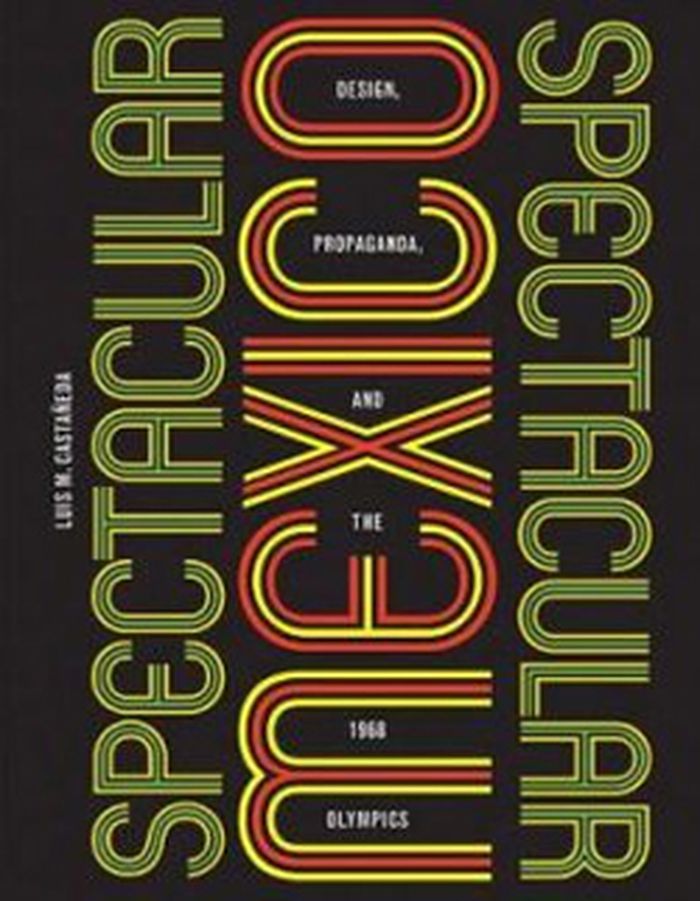
Spectacular Mexico: design, propaganda, and the 1968 Olympics
Actions:
Prix:
$43.95
(disponible sur commande)
Résumé:
In the wake of its early twentieth-century civil wars, Mexico strove to present itself to the world as unified and prosperous. The preparation in Mexico City for the 1968 Summer Olympics was arguably the most ambitious of a sequence of design projects that aimed to signal Mexico’s arrival in the developed world. In Spectacular Mexico, Luis M. Castañeda demonstrates how these projects were used to create a spectacle of social harmony and ultimately to guide the nation’s capital into becoming the powerful megacity we know today.
Spectacular Mexico: design, propaganda, and the 1968 Olympics
Actions:
Prix:
$43.95
(disponible sur commande)
Résumé:
In the wake of its early twentieth-century civil wars, Mexico strove to present itself to the world as unified and prosperous. The preparation in Mexico City for the 1968 Summer Olympics was arguably the most ambitious of a sequence of design projects that aimed to signal Mexico’s arrival in the developed world. In Spectacular Mexico, Luis M. Castañeda demonstrates how these projects were used to create a spectacle of social harmony and ultimately to guide the nation’s capital into becoming the powerful megacity we know today.
Classification:
livres
livres
Publication:
novembre 2014
novembre 2014
Sujet:
Théorie de l’architecture
Théorie de l’architecture


