


10573 Résultats
Classification:
livres
livres

Prix:
$25.95
(disponible sur commande)
Résumé:
One hundred years ago, French troops fired tear gas grenades into German trenches. Designed to force people out from behind barricades and trenches, tear gas causes burning of the eyes and skin, tearing, and gagging. Chemical weapons are now banned from war zones. But today, tear gas has become the most commonly used form of “less-lethal” police force. In 2011, the year(...)
$25.95
(disponible sur commande)
Résumé:
One hundred years ago, French troops fired tear gas grenades into German trenches. Designed to force people out from behind barricades and trenches, tear gas causes burning of the eyes and skin, tearing, and gagging. Chemical weapons are now banned from war zones. But today, tear gas has become the most commonly used form of “less-lethal” police force. In 2011, the year(...)
Titre:
Tear gas: from the battlefields of WWI to the streets of today
Actions:
Prix:
$25.95
(disponible sur commande)
Résumé:
One hundred years ago, French troops fired tear gas grenades into German trenches. Designed to force people out from behind barricades and trenches, tear gas causes burning of the eyes and skin, tearing, and gagging. Chemical weapons are now banned from war zones. But today, tear gas has become the most commonly used form of “less-lethal” police force. In 2011, the year that protests exploded from the Arab Spring to Occupy Wall Street, tear gas sales tripled. Most tear gas is produced in the United States, and many images of protestors in Tahrir Square showed tear gas canisters with “Made in USA” printed on them, while Britain continues to sell tear gas to countries on its own human rights blacklist.
Tear gas: from the battlefields of WWI to the streets of today
Actions:
Prix:
$25.95
(disponible sur commande)
Résumé:
One hundred years ago, French troops fired tear gas grenades into German trenches. Designed to force people out from behind barricades and trenches, tear gas causes burning of the eyes and skin, tearing, and gagging. Chemical weapons are now banned from war zones. But today, tear gas has become the most commonly used form of “less-lethal” police force. In 2011, the year that protests exploded from the Arab Spring to Occupy Wall Street, tear gas sales tripled. Most tear gas is produced in the United States, and many images of protestors in Tahrir Square showed tear gas canisters with “Made in USA” printed on them, while Britain continues to sell tear gas to countries on its own human rights blacklist.
Classification:
livres
livres
Publication:
novembre 2017
novembre 2017
Sujet:
Théorie/ philosophie
Théorie/ philosophie
Classification:
livres
livres

Actions:
Prix:
$35.95
(disponible sur commande)
Résumé:
This book offers a vision of the London Underground written in the form of a ficto-historical narrative, which combines history and fiction in the creation of a set of theoretical propositions for London's subterranean transportation network. Its amateur-scholar protagonist takes the reader on a labyrinthine journey into the world of research, with sources personified and(...)
$35.95
(disponible sur commande)
Résumé:
This book offers a vision of the London Underground written in the form of a ficto-historical narrative, which combines history and fiction in the creation of a set of theoretical propositions for London's subterranean transportation network. Its amateur-scholar protagonist takes the reader on a labyrinthine journey into the world of research, with sources personified and(...)
Titre:
A ficto-historical theory of the London Underground
Actions:
Prix:
$35.95
(disponible sur commande)
Résumé:
This book offers a vision of the London Underground written in the form of a ficto-historical narrative, which combines history and fiction in the creation of a set of theoretical propositions for London's subterranean transportation network. Its amateur-scholar protagonist takes the reader on a labyrinthine journey into the world of research, with sources personified and their works appropriated and subverted. The book offers a model for practising writing and research in the context of architectural history and theory.
A ficto-historical theory of the London Underground
Actions:
Prix:
$35.95
(disponible sur commande)
Résumé:
This book offers a vision of the London Underground written in the form of a ficto-historical narrative, which combines history and fiction in the creation of a set of theoretical propositions for London's subterranean transportation network. Its amateur-scholar protagonist takes the reader on a labyrinthine journey into the world of research, with sources personified and their works appropriated and subverted. The book offers a model for practising writing and research in the context of architectural history and theory.
Classification:
livres
livres
Publication:
janvier 2018
janvier 2018
Sujet:
Théorie/ philosophie
Théorie/ philosophie
Classification:
livres
livres
Titre:
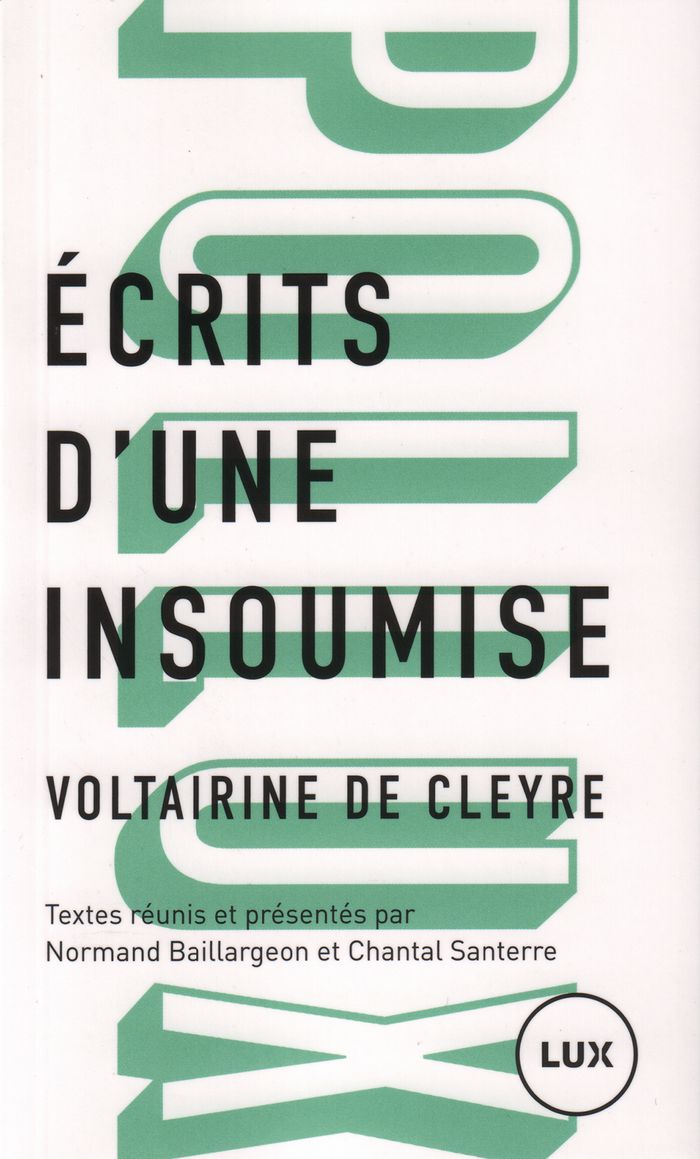
Écrits d'une insoumise
Écrits d'une insoumise
Actions:
Prix:
$16.95
(disponible sur commande)
Résumé:
Pionnière du féminisme américain, poétesse, musicienne, celle qui se définissait comme une « anarchiste sans qualificatif » propose une réflexion originale qui touche à un très large éventail de sujets – notamment l’économie, la libre pensée, la philosophie, la religion, la criminologie, la littérature et l’action directe non violente.
$16.95
(disponible sur commande)
Résumé:
Pionnière du féminisme américain, poétesse, musicienne, celle qui se définissait comme une « anarchiste sans qualificatif » propose une réflexion originale qui touche à un très large éventail de sujets – notamment l’économie, la libre pensée, la philosophie, la religion, la criminologie, la littérature et l’action directe non violente.
Titre:
Écrits d'une insoumise
Actions:
Prix:
$16.95
(disponible sur commande)
Résumé:
Pionnière du féminisme américain, poétesse, musicienne, celle qui se définissait comme une « anarchiste sans qualificatif » propose une réflexion originale qui touche à un très large éventail de sujets – notamment l’économie, la libre pensée, la philosophie, la religion, la criminologie, la littérature et l’action directe non violente.
Écrits d'une insoumise
Actions:
Prix:
$16.95
(disponible sur commande)
Résumé:
Pionnière du féminisme américain, poétesse, musicienne, celle qui se définissait comme une « anarchiste sans qualificatif » propose une réflexion originale qui touche à un très large éventail de sujets – notamment l’économie, la libre pensée, la philosophie, la religion, la criminologie, la littérature et l’action directe non violente.
Classification:
livres
livres
Publication:
janvier 2018
janvier 2018
Sujet:
Théorie/ philosophie
Théorie/ philosophie
Classification:
livres
livres
Titre:
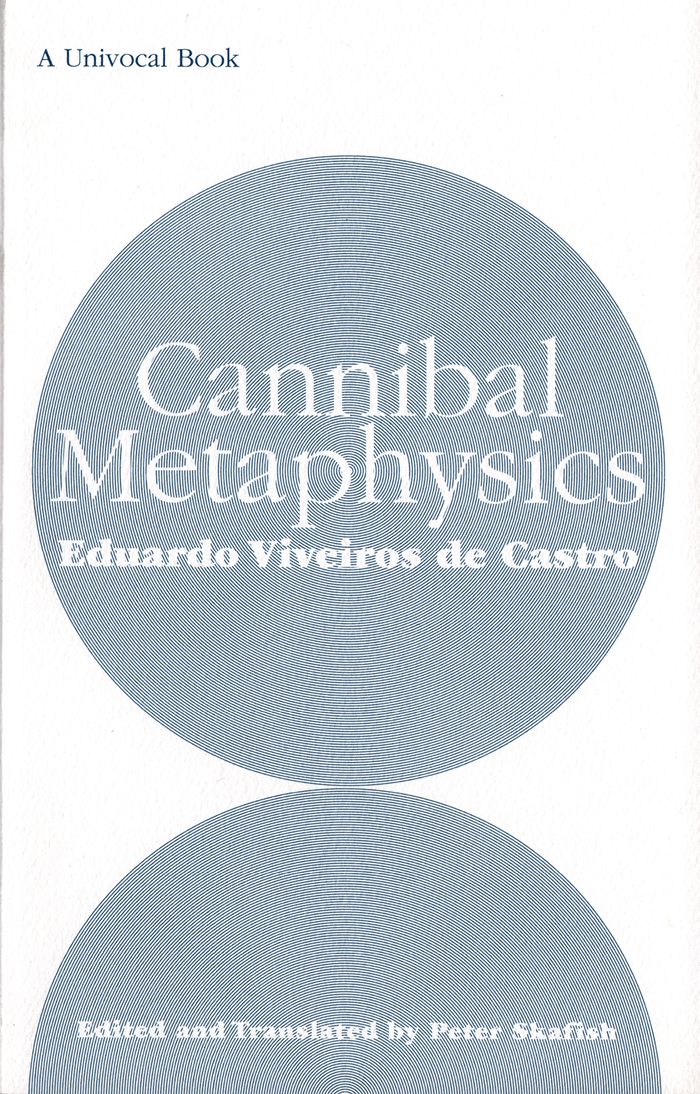
Cannibal metaphysics
Cannibal metaphysics
Actions:
Prix:
$40.00
(disponible sur commande)
Résumé:
The iconoclastic Brazilian anthropologist and theoretician Eduardo Viveiros de Castro, well known in his discipline for helping initiate its “ontological turn,” offers a vision of anthropology as “the practice of the permanent decolonization of thought.” After showing that Amazonian and other Amerindian groups inhabit a radically different conceptual universe than ours—in(...)
$40.00
(disponible sur commande)
Résumé:
The iconoclastic Brazilian anthropologist and theoretician Eduardo Viveiros de Castro, well known in his discipline for helping initiate its “ontological turn,” offers a vision of anthropology as “the practice of the permanent decolonization of thought.” After showing that Amazonian and other Amerindian groups inhabit a radically different conceptual universe than ours—in(...)
Titre:
Cannibal metaphysics
Actions:
Prix:
$40.00
(disponible sur commande)
Résumé:
The iconoclastic Brazilian anthropologist and theoretician Eduardo Viveiros de Castro, well known in his discipline for helping initiate its “ontological turn,” offers a vision of anthropology as “the practice of the permanent decolonization of thought.” After showing that Amazonian and other Amerindian groups inhabit a radically different conceptual universe than ours—in which nature and culture, human and nonhuman, subject and object are conceived in terms that reverse our own—he presents the case for anthropology as the study of such “other” metaphysical schemes, and as the corresponding critique of the concepts imposed on them by the human sciences.
Cannibal metaphysics
Actions:
Prix:
$40.00
(disponible sur commande)
Résumé:
The iconoclastic Brazilian anthropologist and theoretician Eduardo Viveiros de Castro, well known in his discipline for helping initiate its “ontological turn,” offers a vision of anthropology as “the practice of the permanent decolonization of thought.” After showing that Amazonian and other Amerindian groups inhabit a radically different conceptual universe than ours—in which nature and culture, human and nonhuman, subject and object are conceived in terms that reverse our own—he presents the case for anthropology as the study of such “other” metaphysical schemes, and as the corresponding critique of the concepts imposed on them by the human sciences.
Classification:
livres
livres
Publication:
octobre 2017
octobre 2017
Sujet:
Théorie/ philosophie
Théorie/ philosophie
Classification:
livres
livres
Prix:
$44.95
(disponible sur commande)
Résumé:
In "Atmospheric Things" Derek P. McCormack explores how atmospheres are imagined, understood, and experienced through experiments with a deceptively simple object: the balloon. Since the invention of balloon flight in the late eighteenth century, balloons have drawn crowds at fairs and expositions, inspired the visions of artists and writers, and driven technological(...)
$44.95
(disponible sur commande)
Résumé:
In "Atmospheric Things" Derek P. McCormack explores how atmospheres are imagined, understood, and experienced through experiments with a deceptively simple object: the balloon. Since the invention of balloon flight in the late eighteenth century, balloons have drawn crowds at fairs and expositions, inspired the visions of artists and writers, and driven technological(...)
Titre:
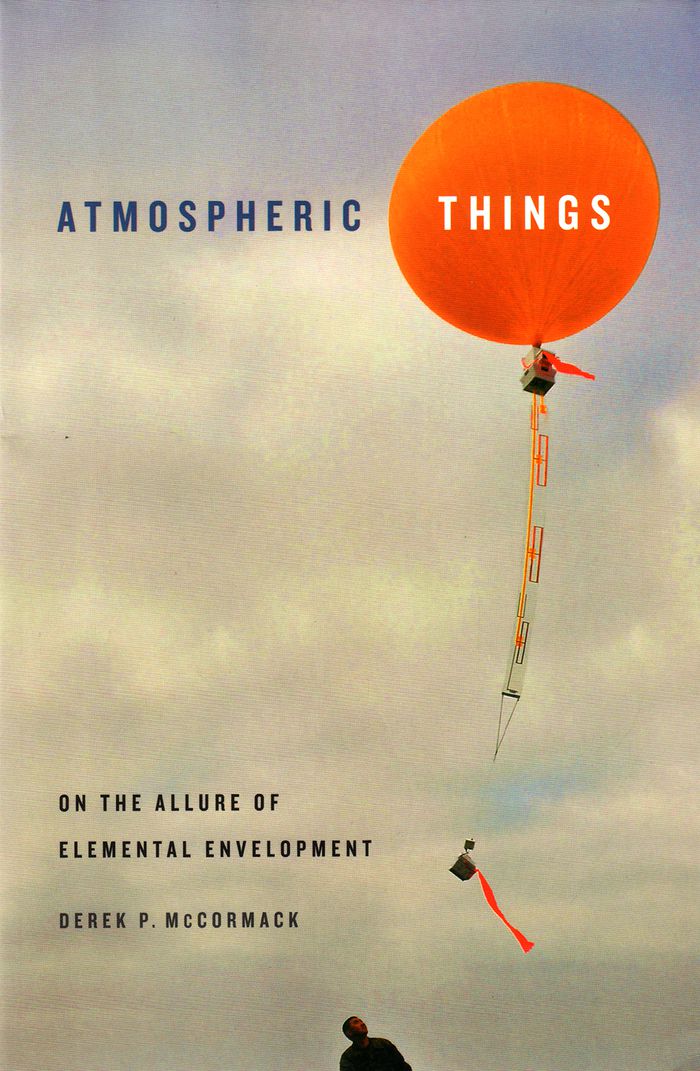
Atmospheric things: on the allure of elemental envelopment
Actions:
Prix:
$44.95
(disponible sur commande)
Résumé:
In "Atmospheric Things" Derek P. McCormack explores how atmospheres are imagined, understood, and experienced through experiments with a deceptively simple object: the balloon. Since the invention of balloon flight in the late eighteenth century, balloons have drawn crowds at fairs and expositions, inspired the visions of artists and writers, and driven technological development from meteorology to military surveillance. By foregrounding the distinctive properties of the balloon, McCormack reveals its remarkable capacity to disclose the affective and meteorological dimensions of atmospheres. Drawing together different senses of the object, the elements, and experience, McCormack uses the balloon to show how practices and technologies of envelopment allow atmospheres to be generated, made meaningful, and modified.
Atmospheric things: on the allure of elemental envelopment
Actions:
Prix:
$44.95
(disponible sur commande)
Résumé:
In "Atmospheric Things" Derek P. McCormack explores how atmospheres are imagined, understood, and experienced through experiments with a deceptively simple object: the balloon. Since the invention of balloon flight in the late eighteenth century, balloons have drawn crowds at fairs and expositions, inspired the visions of artists and writers, and driven technological development from meteorology to military surveillance. By foregrounding the distinctive properties of the balloon, McCormack reveals its remarkable capacity to disclose the affective and meteorological dimensions of atmospheres. Drawing together different senses of the object, the elements, and experience, McCormack uses the balloon to show how practices and technologies of envelopment allow atmospheres to be generated, made meaningful, and modified.
Classification:
livres
livres
Publication:
juillet 2018
juillet 2018
Sujet:
Théorie/ philosophie
Théorie/ philosophie
Classification:
livres
livres

Titre:
La personne et le sacré
La personne et le sacré
Actions:
Prix:
$5.95
(disponible sur commande)
Résumé:
Rédigé quelques mois avant son décès, cet essai de Simone Weil est le condensé des réflexions d’une vie, l’aboutissement d’une pensée extraordinairement lucide. Se penchant sur la part de sacré qui réside en tout un chacun, Simone Weil remet en question le concept même de personne. Nul n’est sacré. Le sacré est à chercher en l’homme, dans l’impersonnel. À l’heure où la(...)
$5.95
(disponible sur commande)
Résumé:
Rédigé quelques mois avant son décès, cet essai de Simone Weil est le condensé des réflexions d’une vie, l’aboutissement d’une pensée extraordinairement lucide. Se penchant sur la part de sacré qui réside en tout un chacun, Simone Weil remet en question le concept même de personne. Nul n’est sacré. Le sacré est à chercher en l’homme, dans l’impersonnel. À l’heure où la(...)
Titre:
La personne et le sacré
Actions:
Prix:
$5.95
(disponible sur commande)
Résumé:
Rédigé quelques mois avant son décès, cet essai de Simone Weil est le condensé des réflexions d’une vie, l’aboutissement d’une pensée extraordinairement lucide. Se penchant sur la part de sacré qui réside en tout un chacun, Simone Weil remet en question le concept même de personne. Nul n’est sacré. Le sacré est à chercher en l’homme, dans l’impersonnel. À l’heure où la notion de personne est au centre des discours politiques, des campagnes de marketing et des questions morales, cet essai opère un renversement de perspective salvateur. Il en découle la recherche de principes, au-delà des libertés démocratiques et des institutions, capables de limiter et d’orienter ces dernières. Il est urgent, selon elle, d’inventer des institutions qui ne se limiteraient pas à protéger nos droits mais qui seraient capables d’abolir ce qui écrase les hommes et entraîne l’injustice.
La personne et le sacré
Actions:
Prix:
$5.95
(disponible sur commande)
Résumé:
Rédigé quelques mois avant son décès, cet essai de Simone Weil est le condensé des réflexions d’une vie, l’aboutissement d’une pensée extraordinairement lucide. Se penchant sur la part de sacré qui réside en tout un chacun, Simone Weil remet en question le concept même de personne. Nul n’est sacré. Le sacré est à chercher en l’homme, dans l’impersonnel. À l’heure où la notion de personne est au centre des discours politiques, des campagnes de marketing et des questions morales, cet essai opère un renversement de perspective salvateur. Il en découle la recherche de principes, au-delà des libertés démocratiques et des institutions, capables de limiter et d’orienter ces dernières. Il est urgent, selon elle, d’inventer des institutions qui ne se limiteraient pas à protéger nos droits mais qui seraient capables d’abolir ce qui écrase les hommes et entraîne l’injustice.
Classification:
livres
livres
Publication:
janvier 2018
janvier 2018
Sujet:
Théorie/ philosophie
Théorie/ philosophie
Classification:
livres
livres
Titre:
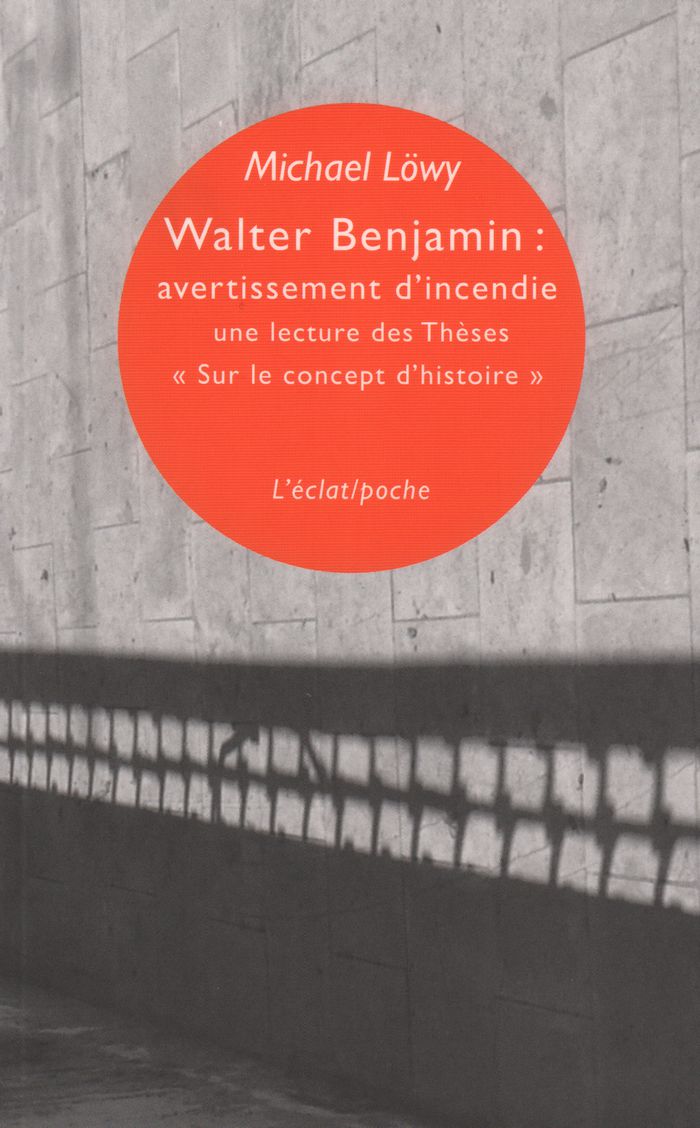
Walter Benjamin : avertissement d'incendie, une lecture des thèses « Sur le concept d'histoire »
Walter Benjamin : avertissement d'incendie, une lecture des thèses « Sur le concept d'histoire »
Actions:
Prix:
$15.95
(disponible sur commande)
Résumé:
Les Thèses « Sur le concept d'histoire » de 1940 sont le dernier écrit de Walter Benjamin et constituent peut-être le document le plus significatif dans la pensée critique du XXe siècle. Texte allusif, sybillin, dont l'hermétisme est constellé d'images et d'allégories, semé de paradoxes, traversé d'intuitions. Ce livre en propose une étude au mot à mot. Là où d'autres ne(...)
$15.95
(disponible sur commande)
Résumé:
Les Thèses « Sur le concept d'histoire » de 1940 sont le dernier écrit de Walter Benjamin et constituent peut-être le document le plus significatif dans la pensée critique du XXe siècle. Texte allusif, sybillin, dont l'hermétisme est constellé d'images et d'allégories, semé de paradoxes, traversé d'intuitions. Ce livre en propose une étude au mot à mot. Là où d'autres ne(...)
Titre:
Walter Benjamin : avertissement d'incendie, une lecture des thèses « Sur le concept d'histoire »
Actions:
Prix:
$15.95
(disponible sur commande)
Résumé:
Les Thèses « Sur le concept d'histoire » de 1940 sont le dernier écrit de Walter Benjamin et constituent peut-être le document le plus significatif dans la pensée critique du XXe siècle. Texte allusif, sybillin, dont l'hermétisme est constellé d'images et d'allégories, semé de paradoxes, traversé d'intuitions. Ce livre en propose une étude au mot à mot. Là où d'autres ne voient que contradiction ou ambiguïté, il met en évidence une cohérence fondamentale, dont la clé est constituée par la fusion de trois discours hétérogènes: le romantisme allemand, le messianisme juif, le marxisme révolutionnaire.
Walter Benjamin : avertissement d'incendie, une lecture des thèses « Sur le concept d'histoire »
Actions:
Prix:
$15.95
(disponible sur commande)
Résumé:
Les Thèses « Sur le concept d'histoire » de 1940 sont le dernier écrit de Walter Benjamin et constituent peut-être le document le plus significatif dans la pensée critique du XXe siècle. Texte allusif, sybillin, dont l'hermétisme est constellé d'images et d'allégories, semé de paradoxes, traversé d'intuitions. Ce livre en propose une étude au mot à mot. Là où d'autres ne voient que contradiction ou ambiguïté, il met en évidence une cohérence fondamentale, dont la clé est constituée par la fusion de trois discours hétérogènes: le romantisme allemand, le messianisme juif, le marxisme révolutionnaire.
Classification:
livres
livres
Publication:
mars 2018
mars 2018
Sujet:
Théorie/ philosophie
Théorie/ philosophie
Classification:
livres
livres
Titre:
The poetics of space
The poetics of space
Actions:
Prix:
$25.99
(disponible en magasin)
Résumé:
Since its initial publication in 1958, The Poetics of Space has been a muse to philosophers, architects, writers, psychologists, critics, and readers alike. The rare work of irresistibly inviting philosophy, Bachelard’s seminal work brims with quiet revelations and stirring, mysterious imagery. This lyrical journey takes as its premise the emergence of the poetic image(...)
$25.99
(disponible en magasin)
Résumé:
Since its initial publication in 1958, The Poetics of Space has been a muse to philosophers, architects, writers, psychologists, critics, and readers alike. The rare work of irresistibly inviting philosophy, Bachelard’s seminal work brims with quiet revelations and stirring, mysterious imagery. This lyrical journey takes as its premise the emergence of the poetic image(...)
Titre:
The poetics of space
Actions:
Prix:
$25.99
(disponible en magasin)
Résumé:
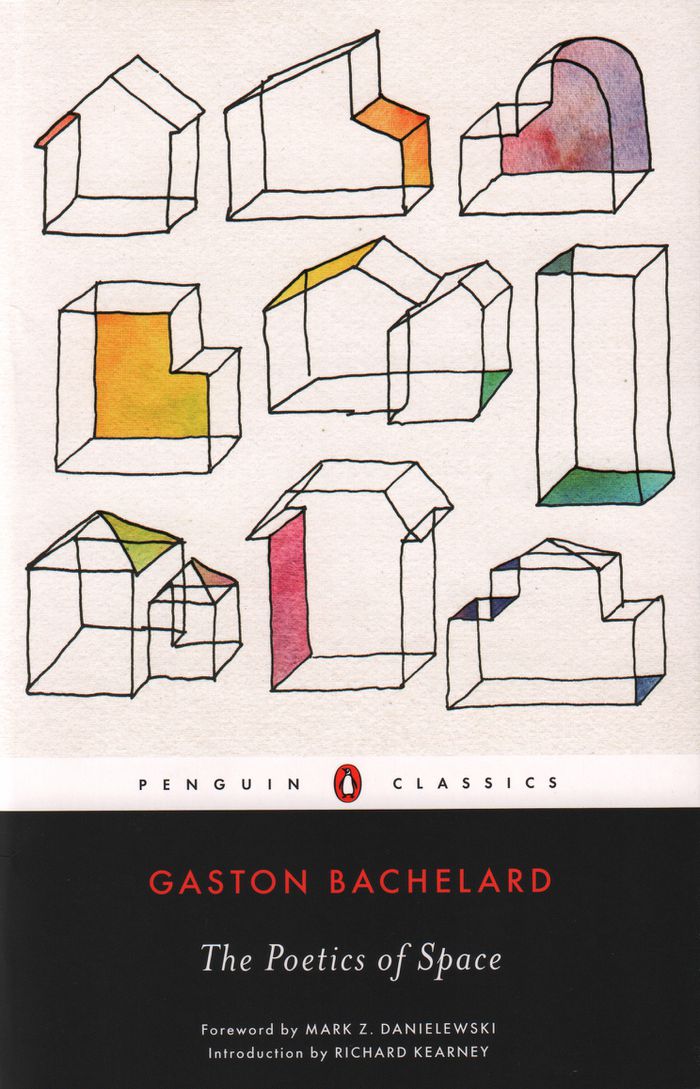
Since its initial publication in 1958, The Poetics of Space has been a muse to philosophers, architects, writers, psychologists, critics, and readers alike. The rare work of irresistibly inviting philosophy, Bachelard’s seminal work brims with quiet revelations and stirring, mysterious imagery. This lyrical journey takes as its premise the emergence of the poetic image and finds an ideal metaphor in the intimate spaces of our homes. Guiding us through a stream of meditations on poetry, art, and the blooming of consciousness itself, Bachelard examines the domestic places that shape and hold our dreams and memories. Houses and rooms; cellars and attics; drawers, chests, and wardrobes; nests and shells; nooks and corners: No space is too vast or too small to be filled by our thoughts and our reveries. In Bachelard’s enchanting spaces, “We are never real historians, but always near poets, and our emotion is perhaps nothing but an expression of a poetry that was lost.”
The poetics of space
Actions:
Prix:
$25.99
(disponible en magasin)
Résumé:
Since its initial publication in 1958, The Poetics of Space has been a muse to philosophers, architects, writers, psychologists, critics, and readers alike. The rare work of irresistibly inviting philosophy, Bachelard’s seminal work brims with quiet revelations and stirring, mysterious imagery. This lyrical journey takes as its premise the emergence of the poetic image and finds an ideal metaphor in the intimate spaces of our homes. Guiding us through a stream of meditations on poetry, art, and the blooming of consciousness itself, Bachelard examines the domestic places that shape and hold our dreams and memories. Houses and rooms; cellars and attics; drawers, chests, and wardrobes; nests and shells; nooks and corners: No space is too vast or too small to be filled by our thoughts and our reveries. In Bachelard’s enchanting spaces, “We are never real historians, but always near poets, and our emotion is perhaps nothing but an expression of a poetry that was lost.”
Classification:
livres
livres
Publication:
décembre 2014
décembre 2014
Sujet:
Théorie/ philosophie
Théorie/ philosophie
Classification:
livres
livres
Actions:
Prix:
$26.00
(disponible sur commande)
Résumé:
A fresh interpretation of Jeremy Bentham, finding that his “radical foolery” embodied a social ethics that was revolutionary for its time. Jeremy Bentham (1748–1832) is best remembered today as the founder of utilitarianism (a philosophy infamously abused by the Victorians) and the conceiver of the Panopticon, the circular prison house in which all prisoners could be(...)
$26.00
(disponible sur commande)
Résumé:
A fresh interpretation of Jeremy Bentham, finding that his “radical foolery” embodied a social ethics that was revolutionary for its time. Jeremy Bentham (1748–1832) is best remembered today as the founder of utilitarianism (a philosophy infamously abused by the Victorians) and the conceiver of the Panopticon, the circular prison house in which all prisoners could be(...)
Titre:
The radical fool of capitalism: on Jeremy Bentham, the Panopticon, and the auto-icon
Actions:
Prix:
$26.00
(disponible sur commande)
Résumé:
A fresh interpretation of Jeremy Bentham, finding that his “radical foolery” embodied a social ethics that was revolutionary for its time. Jeremy Bentham (1748–1832) is best remembered today as the founder of utilitarianism (a philosophy infamously abused by the Victorians) and the conceiver of the Panopticon, the circular prison house in which all prisoners could be seen by an unseen observer—later seized upon by Michel Foucault as the apotheosis of the neoliberal control society. In this volume in the Untimely Meditation series, Christian Welzbacher offers a new interpretation of Bentham, arguing that his “radical foolery” (paraphrasing Goethe's characterization of Bentham) actually embodied a social ethics that was new for its time and demands proper historical contextualization rather than retroactive analysis from the vantage point of late capitalism. Welzbacher provides just such an analysis, offering an account of the two great utilitarian projects that occupied Bentham all his life: the Panopticon and the Auto-Icon.
The radical fool of capitalism: on Jeremy Bentham, the Panopticon, and the auto-icon
Actions:
Prix:
$26.00
(disponible sur commande)
Résumé:
A fresh interpretation of Jeremy Bentham, finding that his “radical foolery” embodied a social ethics that was revolutionary for its time. Jeremy Bentham (1748–1832) is best remembered today as the founder of utilitarianism (a philosophy infamously abused by the Victorians) and the conceiver of the Panopticon, the circular prison house in which all prisoners could be seen by an unseen observer—later seized upon by Michel Foucault as the apotheosis of the neoliberal control society. In this volume in the Untimely Meditation series, Christian Welzbacher offers a new interpretation of Bentham, arguing that his “radical foolery” (paraphrasing Goethe's characterization of Bentham) actually embodied a social ethics that was new for its time and demands proper historical contextualization rather than retroactive analysis from the vantage point of late capitalism. Welzbacher provides just such an analysis, offering an account of the two great utilitarian projects that occupied Bentham all his life: the Panopticon and the Auto-Icon.
Classification:
livres
livres
Publication:
avril 2018
avril 2018
Sujet:
Théorie/ philosophie
Théorie/ philosophie
Classification:
livres
livres
Prix:
$31.50
(disponible sur commande)
Résumé:
In this new book, Bruno Latour offers answers to questions raised in "We Have Never Been Modern", a work that interrogated the connections between nature and culture. If not modern, he asked, what have we been, and what values should we inherit? Over the last twenty-five years, Latour has developed a research protocol different from the actor-network theory with which his(...)
$31.50
(disponible sur commande)
Résumé:
In this new book, Bruno Latour offers answers to questions raised in "We Have Never Been Modern", a work that interrogated the connections between nature and culture. If not modern, he asked, what have we been, and what values should we inherit? Over the last twenty-five years, Latour has developed a research protocol different from the actor-network theory with which his(...)
Titre:
An inquiry into modes of existence: an anthropology of the moderns
Actions:
Prix:
$31.50
(disponible sur commande)
Résumé:
In this new book, Bruno Latour offers answers to questions raised in "We Have Never Been Modern", a work that interrogated the connections between nature and culture. If not modern, he asked, what have we been, and what values should we inherit? Over the last twenty-five years, Latour has developed a research protocol different from the actor-network theory with which his name is now associated—a research protocol that follows the different types of connectors that provide specific truth conditions. These are the connectors that prompt a climate scientist challenged by a captain of industry to appeal to the "institution" of science, with its army of researchers and mountains of data, rather than to “capital-S Science” as a higher authority. Such modes of extension—or modes of existence, Latour argues here—account for the many differences between law, science, politics, and other domains of knowledge.
An inquiry into modes of existence: an anthropology of the moderns
Actions:
Prix:
$31.50
(disponible sur commande)
Résumé:
In this new book, Bruno Latour offers answers to questions raised in "We Have Never Been Modern", a work that interrogated the connections between nature and culture. If not modern, he asked, what have we been, and what values should we inherit? Over the last twenty-five years, Latour has developed a research protocol different from the actor-network theory with which his name is now associated—a research protocol that follows the different types of connectors that provide specific truth conditions. These are the connectors that prompt a climate scientist challenged by a captain of industry to appeal to the "institution" of science, with its army of researchers and mountains of data, rather than to “capital-S Science” as a higher authority. Such modes of extension—or modes of existence, Latour argues here—account for the many differences between law, science, politics, and other domains of knowledge.
Classification:
livres
livres
Publication:
juin 2018
juin 2018
Sujet:
Théorie/ philosophie
Théorie/ philosophie


