


3626 Résultats
Classification:
livres
livres
Actions:
Prix:
$18.95
(disponible en magasin)
Résumé:
À l’intersection des humanités numériques et de l’archéologie des médias, cet essai propose un projet critique des éditions de CDrom d’auteur des années 1990. En s’appuyant sur une contextualisation socio-technique érudite de ces supports de stockages numériques prometteurs et sur de fines descriptions des interfaces et des parcours au sein de ces univers clos, Gilles(...)
$18.95
(disponible en magasin)
Résumé:
À l’intersection des humanités numériques et de l’archéologie des médias, cet essai propose un projet critique des éditions de CDrom d’auteur des années 1990. En s’appuyant sur une contextualisation socio-technique érudite de ces supports de stockages numériques prometteurs et sur de fines descriptions des interfaces et des parcours au sein de ces univers clos, Gilles(...)
Publication:
octobre 2018
octobre 2018
Titre:
Éditions off-line : projet critique de publications numériques (1989-2001)
Actions:
Prix:
$18.95
(disponible en magasin)
Résumé:
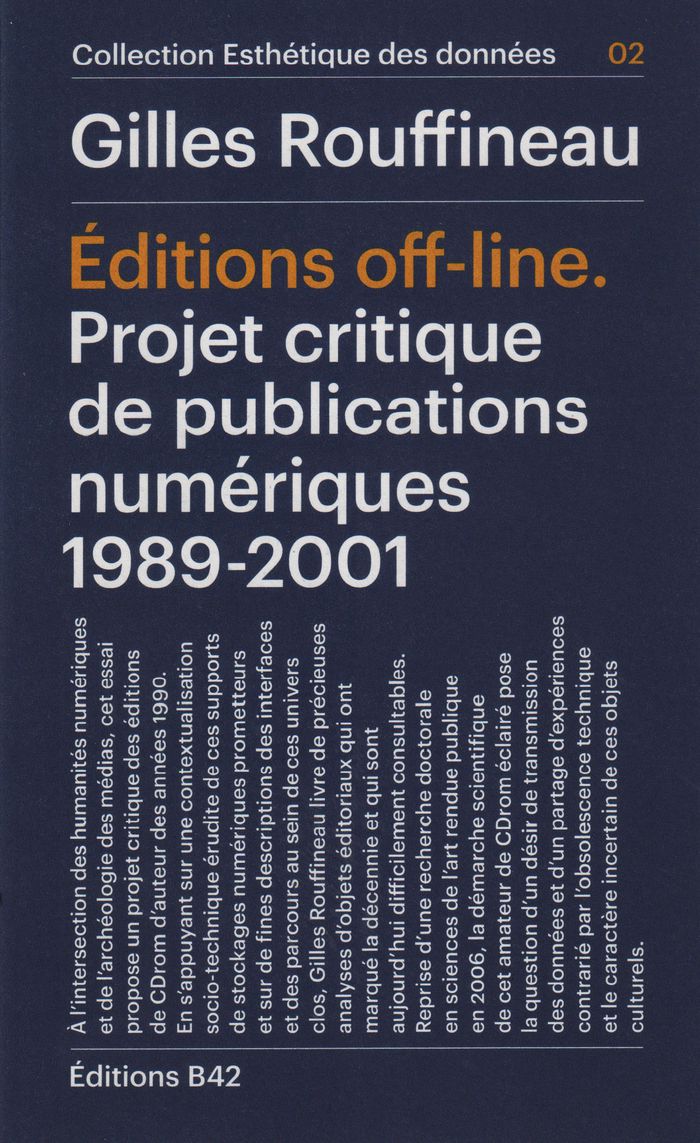
À l’intersection des humanités numériques et de l’archéologie des médias, cet essai propose un projet critique des éditions de CDrom d’auteur des années 1990. En s’appuyant sur une contextualisation socio-technique érudite de ces supports de stockages numériques prometteurs et sur de fines descriptions des interfaces et des parcours au sein de ces univers clos, Gilles Rouffineau livre de précieuses analyses d’objets éditoriaux qui ont marqué la décennie et qui sont aujourd’hui difficilement consultables. Reprise d’une recherche doctorale en sciences de l’art rendue publique en 2006, la démarche scientifique de cet amateur de CDrom éclairé pose la question d’un désir de transmission des données et d’un partage d’expériences contrarié par l’obsolescence technique et le caractère incertain de ces objets culturels.
Éditions off-line : projet critique de publications numériques (1989-2001)
Actions:
Prix:
$18.95
(disponible en magasin)
Résumé:
À l’intersection des humanités numériques et de l’archéologie des médias, cet essai propose un projet critique des éditions de CDrom d’auteur des années 1990. En s’appuyant sur une contextualisation socio-technique érudite de ces supports de stockages numériques prometteurs et sur de fines descriptions des interfaces et des parcours au sein de ces univers clos, Gilles Rouffineau livre de précieuses analyses d’objets éditoriaux qui ont marqué la décennie et qui sont aujourd’hui difficilement consultables. Reprise d’une recherche doctorale en sciences de l’art rendue publique en 2006, la démarche scientifique de cet amateur de CDrom éclairé pose la question d’un désir de transmission des données et d’un partage d’expériences contrarié par l’obsolescence technique et le caractère incertain de ces objets culturels.
Classification:
livres
livres
Publication:
octobre 2018
octobre 2018
Classification:
livres
livres
Actions:
Prix:
$56.00
(disponible sur commande)
Résumé:
À l'ère numérique, le code est au coeur de notre quotidien, il modifie notre rapport au monde et aux autres. « Coder le monde » présente un état de la création digitale contemporaine dans différentes disciplines. Revenant sur l'histoire du code numérique et la manière dont les artistes s'en sont emparés depuis l'avènement de l'ordinateur dans les années 1960, ce livre(...)
$56.00
(disponible sur commande)
Résumé:
À l'ère numérique, le code est au coeur de notre quotidien, il modifie notre rapport au monde et aux autres. « Coder le monde » présente un état de la création digitale contemporaine dans différentes disciplines. Revenant sur l'histoire du code numérique et la manière dont les artistes s'en sont emparés depuis l'avènement de l'ordinateur dans les années 1960, ce livre(...)
Titre:
Coder le monde : mutations créations
Actions:
Prix:
$56.00
(disponible sur commande)
Résumé:
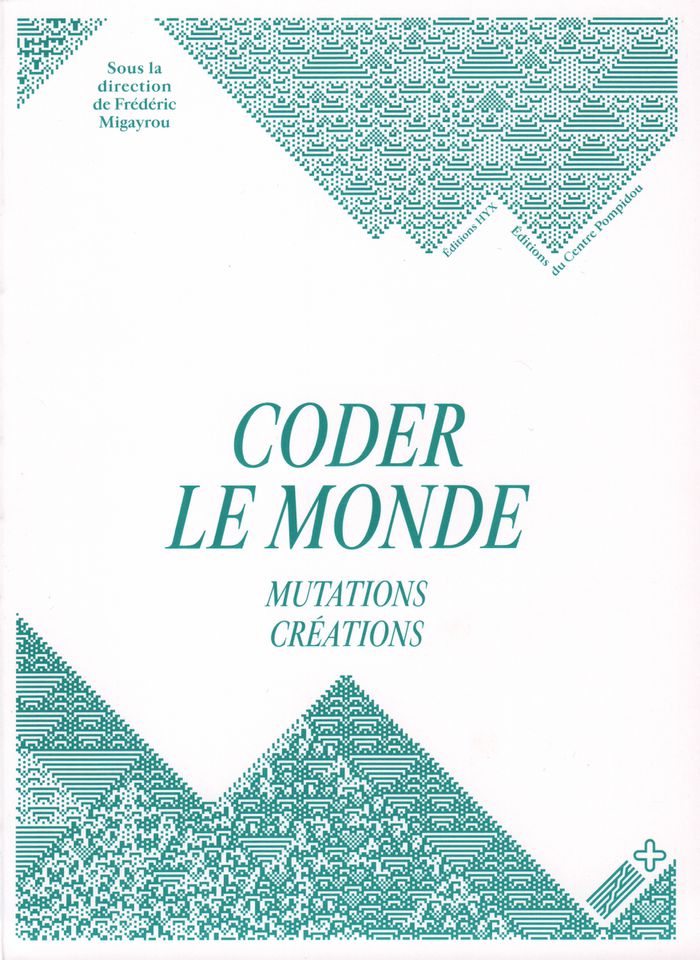
À l'ère numérique, le code est au coeur de notre quotidien, il modifie notre rapport au monde et aux autres. « Coder le monde » présente un état de la création digitale contemporaine dans différentes disciplines. Revenant sur l'histoire du code numérique et la manière dont les artistes s'en sont emparés depuis l'avènement de l'ordinateur dans les années 1960, ce livre fait apparaître un univers esthétique et critique commun qui questionne notre quotidien entièrement irrigué par les logiques numériques. Les artistes, les musiciens, les écrivains, les architectes, les créateurs de toutes disciplines ont en effet été les prescripteurs et les inventeurs d'une approche alternative du code.
Coder le monde : mutations créations
Actions:
Prix:
$56.00
(disponible sur commande)
Résumé:
À l'ère numérique, le code est au coeur de notre quotidien, il modifie notre rapport au monde et aux autres. « Coder le monde » présente un état de la création digitale contemporaine dans différentes disciplines. Revenant sur l'histoire du code numérique et la manière dont les artistes s'en sont emparés depuis l'avènement de l'ordinateur dans les années 1960, ce livre fait apparaître un univers esthétique et critique commun qui questionne notre quotidien entièrement irrigué par les logiques numériques. Les artistes, les musiciens, les écrivains, les architectes, les créateurs de toutes disciplines ont en effet été les prescripteurs et les inventeurs d'une approche alternative du code.
Classification:
livres
livres
Publication:
décembre 2018
décembre 2018
Classification:
livres
livres
Titre:
Future histories: What Ada Lovelace, Tom Paine, and the Paris Commune can teach us about digital
Future histories: What Ada Lovelace, Tom Paine, and the Paris Commune can teach us about digital
Actions:
Prix:
$36.95
(disponible sur commande)
Résumé:
When we talk about technology we always talk about tomorrow and the future - which makes it hard to figure out how to even get there. In "Future Histories", public interest lawyer and digital specialist Lizzie O'Shea argues that we need to stop looking forward and start looking backwards. Weaving together histories of computing and progressive social movements with modern(...)
$36.95
(disponible sur commande)
Résumé:
When we talk about technology we always talk about tomorrow and the future - which makes it hard to figure out how to even get there. In "Future Histories", public interest lawyer and digital specialist Lizzie O'Shea argues that we need to stop looking forward and start looking backwards. Weaving together histories of computing and progressive social movements with modern(...)
Titre:
Future histories: What Ada Lovelace, Tom Paine, and the Paris Commune can teach us about digital
Actions:
Prix:
$36.95
(disponible sur commande)
Résumé:
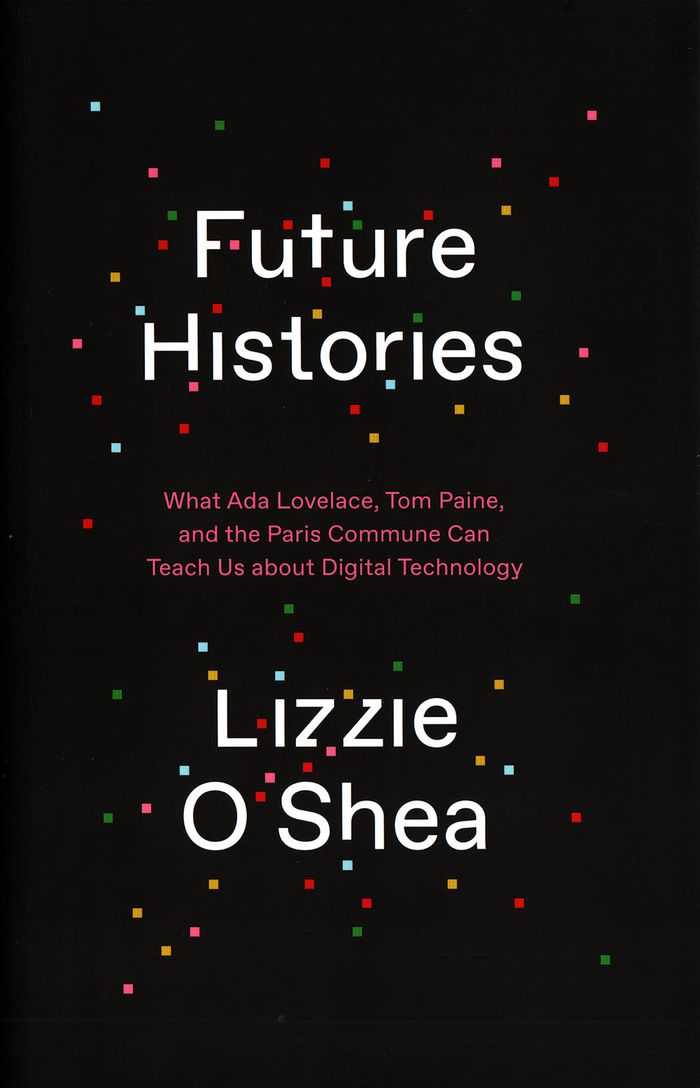
When we talk about technology we always talk about tomorrow and the future - which makes it hard to figure out how to even get there. In "Future Histories", public interest lawyer and digital specialist Lizzie O'Shea argues that we need to stop looking forward and start looking backwards. Weaving together histories of computing and progressive social movements with modern theories of the mind, society, and self, O'Shea constructs a "usable past" that can help us determine our digital future.
Future histories: What Ada Lovelace, Tom Paine, and the Paris Commune can teach us about digital
Actions:
Prix:
$36.95
(disponible sur commande)
Résumé:
When we talk about technology we always talk about tomorrow and the future - which makes it hard to figure out how to even get there. In "Future Histories", public interest lawyer and digital specialist Lizzie O'Shea argues that we need to stop looking forward and start looking backwards. Weaving together histories of computing and progressive social movements with modern theories of the mind, society, and self, O'Shea constructs a "usable past" that can help us determine our digital future.
Classification:
livres
livres
Publication:
mai 2019
mai 2019
Classification:
livres
livres
Actions:
Prix:
$38.50
(disponible sur commande)
Résumé:
Over the past fifty years, preservation policy has evolved very little, despite escalating accusations that landmarking and historic districting can inhibit affordable housing, economic development, and socioeconomic diversity. The potential to understand these dynamics and effect positive change is hindered by a lack of data and evidence-based research to better(...)
$38.50
(disponible sur commande)
Résumé:
Over the past fifty years, preservation policy has evolved very little, despite escalating accusations that landmarking and historic districting can inhibit affordable housing, economic development, and socioeconomic diversity. The potential to understand these dynamics and effect positive change is hindered by a lack of data and evidence-based research to better(...)
Titre:
Preservation and the new data landscape
Actions:
Prix:
$38.50
(disponible sur commande)
Résumé:
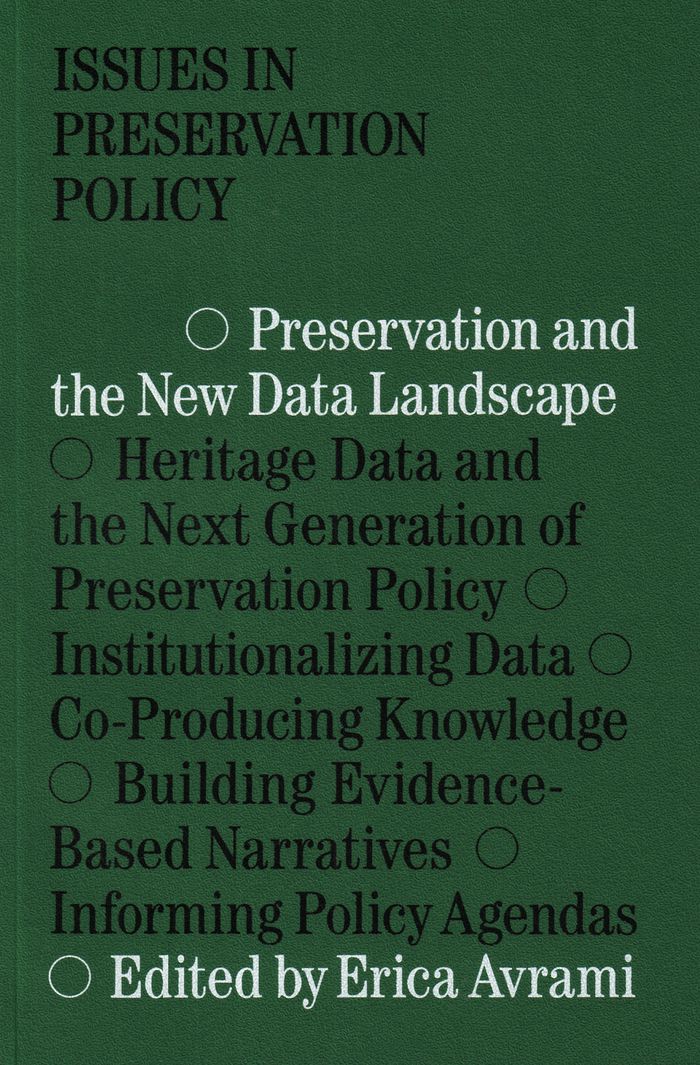
Over the past fifty years, preservation policy has evolved very little, despite escalating accusations that landmarking and historic districting can inhibit affordable housing, economic development, and socioeconomic diversity. The potential to understand these dynamics and effect positive change is hindered by a lack of data and evidence-based research to better understand these impacts. One of the biggest barriers to preservation research has been the lack of data sets that can be used for geospatial, evidence-based, and longitudinal analyses. This first book in the series ''Issues in Preservation Policy'' explores the ways that enhancing the collection, accuracy, and management of data can serve a critical role in identifying vulnerable neighborhoods, understanding the role of older buildings in economic vitality and community resilience, planning sustainable growth, and more.
Preservation and the new data landscape
Actions:
Prix:
$38.50
(disponible sur commande)
Résumé:
Over the past fifty years, preservation policy has evolved very little, despite escalating accusations that landmarking and historic districting can inhibit affordable housing, economic development, and socioeconomic diversity. The potential to understand these dynamics and effect positive change is hindered by a lack of data and evidence-based research to better understand these impacts. One of the biggest barriers to preservation research has been the lack of data sets that can be used for geospatial, evidence-based, and longitudinal analyses. This first book in the series ''Issues in Preservation Policy'' explores the ways that enhancing the collection, accuracy, and management of data can serve a critical role in identifying vulnerable neighborhoods, understanding the role of older buildings in economic vitality and community resilience, planning sustainable growth, and more.
Classification:
livres
livres
Publication:
mars 2019
mars 2019
Classification:
livres
livres
Actions:
Prix:
$34.95
(disponible sur commande)
Résumé:
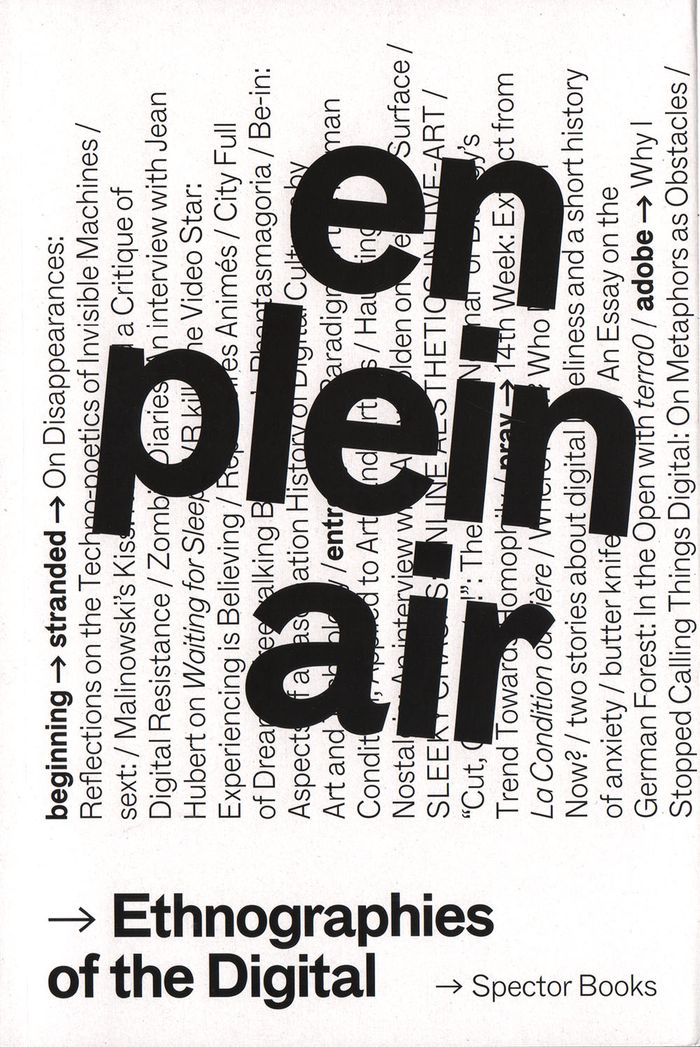
En plein air — painting outdoors — traditionally describes the impressionist revolt against the studio. This book compiles texts by media scholars, scientists, artists, anthropologists and theorists exploring the concept of en plein air in terms of the digital, a realm with ever-evolving boundaries.
$34.95
(disponible sur commande)
Résumé:
En plein air — painting outdoors — traditionally describes the impressionist revolt against the studio. This book compiles texts by media scholars, scientists, artists, anthropologists and theorists exploring the concept of en plein air in terms of the digital, a realm with ever-evolving boundaries.
Titre:
En plein air: ethnographies of the digital
Actions:
Prix:
$34.95
(disponible sur commande)
Résumé:
En plein air — painting outdoors — traditionally describes the impressionist revolt against the studio. This book compiles texts by media scholars, scientists, artists, anthropologists and theorists exploring the concept of en plein air in terms of the digital, a realm with ever-evolving boundaries.
En plein air: ethnographies of the digital
Actions:
Prix:
$34.95
(disponible sur commande)
Résumé:
En plein air — painting outdoors — traditionally describes the impressionist revolt against the studio. This book compiles texts by media scholars, scientists, artists, anthropologists and theorists exploring the concept of en plein air in terms of the digital, a realm with ever-evolving boundaries.
Classification:
livres
livres
Publication:
avril 2019
avril 2019
Classification:
livres
livres
Actions:
Prix:
$31.95
(disponible sur commande)
Résumé:
L'architecture, son évolution comme sa connaissance, dépend en grande partie de la circulation et de la transmission dans l'espace et le temps d'une accumulation d'expériences, de règles ou de modèles. Voilà pourquoi ce livre examine les moyens de communication utilisés par les architectes occidentaux, de Vitruve à l'époque moderne, en montrant comment chaque média influe(...)
$31.95
(disponible sur commande)
Résumé:
L'architecture, son évolution comme sa connaissance, dépend en grande partie de la circulation et de la transmission dans l'espace et le temps d'une accumulation d'expériences, de règles ou de modèles. Voilà pourquoi ce livre examine les moyens de communication utilisés par les architectes occidentaux, de Vitruve à l'époque moderne, en montrant comment chaque média influe(...)
Titre:
L'architecture à l'âge de l'imprimerie
Actions:
Prix:
$31.95
(disponible sur commande)
Résumé:
L'architecture, son évolution comme sa connaissance, dépend en grande partie de la circulation et de la transmission dans l'espace et le temps d'une accumulation d'expériences, de règles ou de modèles. Voilà pourquoi ce livre examine les moyens de communication utilisés par les architectes occidentaux, de Vitruve à l'époque moderne, en montrant comment chaque média influe sur les formes spécifiques de la pensée architecturale et sur les modalités de la diffusion des savoirs.
L'architecture à l'âge de l'imprimerie
Actions:
Prix:
$31.95
(disponible sur commande)
Résumé:
L'architecture, son évolution comme sa connaissance, dépend en grande partie de la circulation et de la transmission dans l'espace et le temps d'une accumulation d'expériences, de règles ou de modèles. Voilà pourquoi ce livre examine les moyens de communication utilisés par les architectes occidentaux, de Vitruve à l'époque moderne, en montrant comment chaque média influe sur les formes spécifiques de la pensée architecturale et sur les modalités de la diffusion des savoirs.
Classification:
livres
livres
Publication:
avril 2009, Paris
avril 2009, Paris
Classification:
livres
livres
Actions:
Prix:
$56.95
(disponible sur commande)
Résumé:
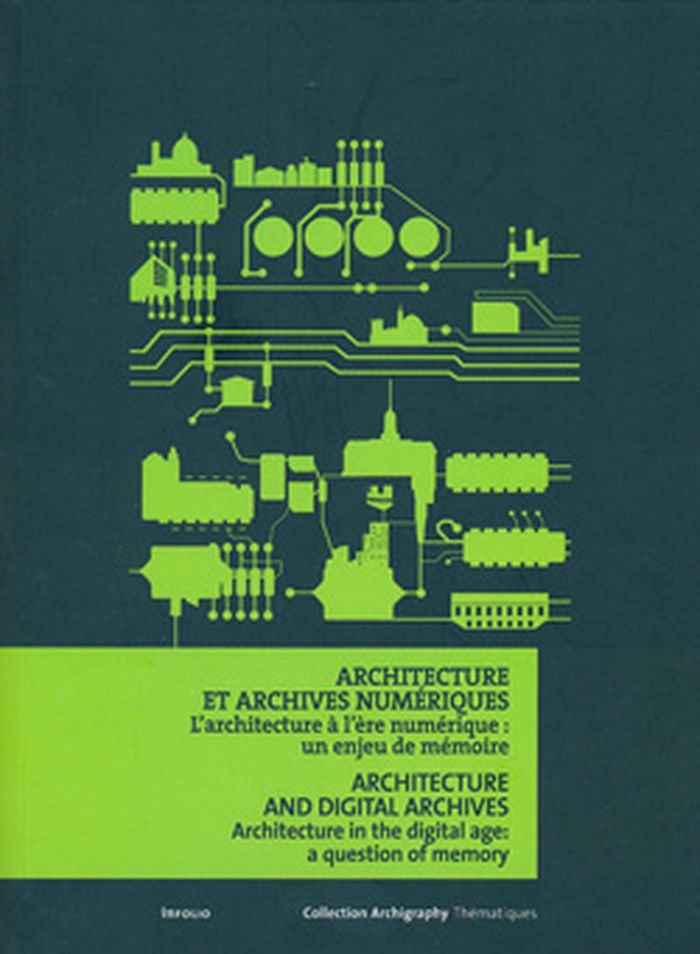
Comment assurer une conservation pérenne et efficace des archives des architectes? Quelles sont les normes et les tendances actuelles? Les réflexions présentées dans cet ouvrage émanent d'architectes, d'archivistes et conservateurs, historiens d'architecture, de chercheurs et d'enseignants. Issus d'une dizaine de pays d'Europe, des États-Unis et du Canada.
$56.95
(disponible sur commande)
Résumé:
Comment assurer une conservation pérenne et efficace des archives des architectes? Quelles sont les normes et les tendances actuelles? Les réflexions présentées dans cet ouvrage émanent d'architectes, d'archivistes et conservateurs, historiens d'architecture, de chercheurs et d'enseignants. Issus d'une dizaine de pays d'Europe, des États-Unis et du Canada.
Publication:
février 2009
février 2009
Titre:
Architectures et archives numériques: l'architecture à l'ère numérique: un enjeu de mémoire
Actions:
Prix:
$56.95
(disponible sur commande)
Résumé:
Comment assurer une conservation pérenne et efficace des archives des architectes? Quelles sont les normes et les tendances actuelles? Les réflexions présentées dans cet ouvrage émanent d'architectes, d'archivistes et conservateurs, historiens d'architecture, de chercheurs et d'enseignants. Issus d'une dizaine de pays d'Europe, des États-Unis et du Canada.
Architectures et archives numériques: l'architecture à l'ère numérique: un enjeu de mémoire
Actions:
Prix:
$56.95
(disponible sur commande)
Résumé:
Comment assurer une conservation pérenne et efficace des archives des architectes? Quelles sont les normes et les tendances actuelles? Les réflexions présentées dans cet ouvrage émanent d'architectes, d'archivistes et conservateurs, historiens d'architecture, de chercheurs et d'enseignants. Issus d'une dizaine de pays d'Europe, des États-Unis et du Canada.
Classification:
livres
livres
Publication:
février 2009
février 2009
Classification:
livres
livres
Actions:
Prix:
$90.00
(disponible en magasin)
Résumé:
Print on demand has revolutionized publishing. Digital printing and online platforms such as Blurb, Lulu and Kindle Direct Publishing allow anyone to publish work immediately and without financial risk, opening up spaces beyond the trade book world and ostensibly democratizing production. Today an entire subculture is exploring print on demand in search of new economies(...)
$90.00
(disponible en magasin)
Résumé:
Print on demand has revolutionized publishing. Digital printing and online platforms such as Blurb, Lulu and Kindle Direct Publishing allow anyone to publish work immediately and without financial risk, opening up spaces beyond the trade book world and ostensibly democratizing production. Today an entire subculture is exploring print on demand in search of new economies(...)
Publication:
septembre 2025
septembre 2025
Titre:
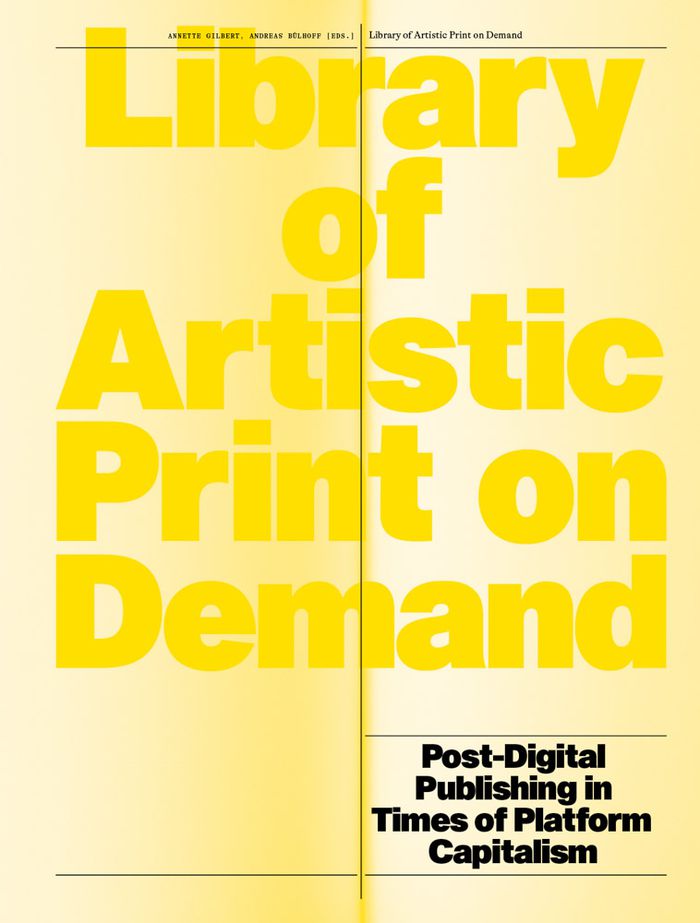
Library of artistic print on demand: Post-digital publishing in times of platform capitalism
Actions:
Prix:
$90.00
(disponible en magasin)
Résumé:
Print on demand has revolutionized publishing. Digital printing and online platforms such as Blurb, Lulu and Kindle Direct Publishing allow anyone to publish work immediately and without financial risk, opening up spaces beyond the trade book world and ostensibly democratizing production. Today an entire subculture is exploring print on demand in search of new economies and publics, while also critically negotiating our digital present. "The Library of Artistic Print on Demand" maps this experimental field for the first time, exploring its global spread, history, contradictions and political relevance through writings from international publishers and authors.
Library of artistic print on demand: Post-digital publishing in times of platform capitalism
Actions:
Prix:
$90.00
(disponible en magasin)
Résumé:
Print on demand has revolutionized publishing. Digital printing and online platforms such as Blurb, Lulu and Kindle Direct Publishing allow anyone to publish work immediately and without financial risk, opening up spaces beyond the trade book world and ostensibly democratizing production. Today an entire subculture is exploring print on demand in search of new economies and publics, while also critically negotiating our digital present. "The Library of Artistic Print on Demand" maps this experimental field for the first time, exploring its global spread, history, contradictions and political relevance through writings from international publishers and authors.
Classification:
livres
livres
Publication:
septembre 2025
septembre 2025
Classification:
livres
livres

Prix:
$33.95
(disponible sur commande)
Résumé:
A social history of AI that finally reveals its roots in the spatial computation of industrial factories and the surveillance of collective behaviour. What is AI? A dominant view describes it as the quest ''to solve intelligence,'' a solution supposedly to be found in the secret logic of the mind or in the deep physiology of the brain, such as in its complex neural(...)
$33.95
(disponible sur commande)
Résumé:
A social history of AI that finally reveals its roots in the spatial computation of industrial factories and the surveillance of collective behaviour. What is AI? A dominant view describes it as the quest ''to solve intelligence,'' a solution supposedly to be found in the secret logic of the mind or in the deep physiology of the brain, such as in its complex neural(...)
Titre:
The eye of the master: A social history of artificial intelligence
Actions:
Prix:
$33.95
(disponible sur commande)
Résumé:
A social history of AI that finally reveals its roots in the spatial computation of industrial factories and the surveillance of collective behaviour. What is AI? A dominant view describes it as the quest ''to solve intelligence,'' a solution supposedly to be found in the secret logic of the mind or in the deep physiology of the brain, such as in its complex neural networks. ''The eye of the master'' argues, to the contrary, that the inner code of AI is shaped not by the imitation of biological intelligence, but the intelligence of labour and social relations, as it is found in Babbage's ''calculating engines'' of the industrial age as well as in the recent algorithms for image recognition and surveillance. The idea that AI may one day become autonomous (or ''sentient'', as someone thought of Google's LaMDA) is pure fantasy. Computer algorithms have always imitated the form of social relations and the organisation of labour in their own inner structure and their purpose remains blind automation. ''The eye of the master'' urges a new literacy on AI for scientists, journalists and new generations of activists, who should recognise that the ''mystery'' of AI is just the automation of labour at the highest degree, not intelligence per se.
The eye of the master: A social history of artificial intelligence
Actions:
Prix:
$33.95
(disponible sur commande)
Résumé:
A social history of AI that finally reveals its roots in the spatial computation of industrial factories and the surveillance of collective behaviour. What is AI? A dominant view describes it as the quest ''to solve intelligence,'' a solution supposedly to be found in the secret logic of the mind or in the deep physiology of the brain, such as in its complex neural networks. ''The eye of the master'' argues, to the contrary, that the inner code of AI is shaped not by the imitation of biological intelligence, but the intelligence of labour and social relations, as it is found in Babbage's ''calculating engines'' of the industrial age as well as in the recent algorithms for image recognition and surveillance. The idea that AI may one day become autonomous (or ''sentient'', as someone thought of Google's LaMDA) is pure fantasy. Computer algorithms have always imitated the form of social relations and the organisation of labour in their own inner structure and their purpose remains blind automation. ''The eye of the master'' urges a new literacy on AI for scientists, journalists and new generations of activists, who should recognise that the ''mystery'' of AI is just the automation of labour at the highest degree, not intelligence per se.
Classification:
livres
livres
Publication:
octobre 2023
octobre 2023
Classification:
livres
livres

Titre:
The specter of the archive: Political practice and the information state in early modern Britain
The specter of the archive: Political practice and the information state in early modern Britain
Actions:
Prix:
$53.95
(disponible sur commande)
Résumé:
In ''The Specter of the Archive'', Nicholas Popper shows that earlier eras had to grapple with the same problem—how to deal with too much information at their fingertips. He reveals that early modern Britain was a society newly drowning in paper, a light and durable technology whose spread allowed statesmen to record drafts, memoranda, and other ephemera that might(...)
$53.95
(disponible sur commande)
Résumé:
In ''The Specter of the Archive'', Nicholas Popper shows that earlier eras had to grapple with the same problem—how to deal with too much information at their fingertips. He reveals that early modern Britain was a society newly drowning in paper, a light and durable technology whose spread allowed statesmen to record drafts, memoranda, and other ephemera that might(...)
Titre:
The specter of the archive: Political practice and the information state in early modern Britain
Actions:
Prix:
$53.95
(disponible sur commande)
Résumé:
In ''The Specter of the Archive'', Nicholas Popper shows that earlier eras had to grapple with the same problem—how to deal with too much information at their fingertips. He reveals that early modern Britain was a society newly drowning in paper, a light and durable technology whose spread allowed statesmen to record drafts, memoranda, and other ephemera that might otherwise have been lost, and also made it possible for ordinary people to collect political texts. As original paperwork and copies alike flooded the government, information management became the core of politics. Focusing on two of the primary political archives of early modern England, the Tower of London Record Office and the State Paper Office, Popper traces the circulation of their materials through the government and the broader public sphere.
The specter of the archive: Political practice and the information state in early modern Britain
Actions:
Prix:
$53.95
(disponible sur commande)
Résumé:
In ''The Specter of the Archive'', Nicholas Popper shows that earlier eras had to grapple with the same problem—how to deal with too much information at their fingertips. He reveals that early modern Britain was a society newly drowning in paper, a light and durable technology whose spread allowed statesmen to record drafts, memoranda, and other ephemera that might otherwise have been lost, and also made it possible for ordinary people to collect political texts. As original paperwork and copies alike flooded the government, information management became the core of politics. Focusing on two of the primary political archives of early modern England, the Tower of London Record Office and the State Paper Office, Popper traces the circulation of their materials through the government and the broader public sphere.
Classification:
livres
livres
Publication:
janvier 2024
janvier 2024


