


3628 Résultats
Classification:
livres
livres

Prix:
$23.95
(disponible sur commande)
Résumé:
This book makes available for the first time in English an important interview on the topic of photography that Jacques Derrida granted in 1992 to the German theorist of photography Hubertus von Amelunxen and the German literary and media theorist Michael Wetzel. Their conversation addresses questions of presence and its manufacture, the technicity of presentation, the(...)
$23.95
(disponible sur commande)
Résumé:
This book makes available for the first time in English an important interview on the topic of photography that Jacques Derrida granted in 1992 to the German theorist of photography Hubertus von Amelunxen and the German literary and media theorist Michael Wetzel. Their conversation addresses questions of presence and its manufacture, the technicity of presentation, the(...)
Publication:
août 2010
août 2010
Titre:
Copy, archive, signature: A conversation on photography
Actions:
Prix:
$23.95
(disponible sur commande)
Résumé:
This book makes available for the first time in English an important interview on the topic of photography that Jacques Derrida granted in 1992 to the German theorist of photography Hubertus von Amelunxen and the German literary and media theorist Michael Wetzel. Their conversation addresses questions of presence and its manufacture, the technicity of presentation, the volatility of the authorial subject, and the concept of memory. Derrida offers a penetrating intervention with regard to the distinctive nature of photography vis-à-vis related technologies such as cinema, television, and video. Questioning the divides between so-called old and new media, original and reproduction, analog and digital modes of recording and presenting, he provides stimulating insights into the ways in which we think and speak about the photographic image today.
Copy, archive, signature: A conversation on photography
Actions:
Prix:
$23.95
(disponible sur commande)
Résumé:
This book makes available for the first time in English an important interview on the topic of photography that Jacques Derrida granted in 1992 to the German theorist of photography Hubertus von Amelunxen and the German literary and media theorist Michael Wetzel. Their conversation addresses questions of presence and its manufacture, the technicity of presentation, the volatility of the authorial subject, and the concept of memory. Derrida offers a penetrating intervention with regard to the distinctive nature of photography vis-à-vis related technologies such as cinema, television, and video. Questioning the divides between so-called old and new media, original and reproduction, analog and digital modes of recording and presenting, he provides stimulating insights into the ways in which we think and speak about the photographic image today.
Classification:
livres
livres
Publication:
août 2010
août 2010
Classification:
livres
livres
Titre:
Digital cultures
Digital cultures
Actions:
Prix:
$26.00
(disponible sur commande)
Résumé:
Writing accessibly about the underlying technology, Doueihi explores the multidimensional question of what it means to participate in online culture—from literacy and citizenship to texts, archiving, and storage. By bringing together topics explored separately elsewhere—such as copyright, digital subjectivity, and social networks—Digital Cultures offers a comprehensive(...)
$26.00
(disponible sur commande)
Résumé:
Writing accessibly about the underlying technology, Doueihi explores the multidimensional question of what it means to participate in online culture—from literacy and citizenship to texts, archiving, and storage. By bringing together topics explored separately elsewhere—such as copyright, digital subjectivity, and social networks—Digital Cultures offers a comprehensive(...)
Titre:
Digital cultures
Actions:
Prix:
$26.00
(disponible sur commande)
Résumé:
Writing accessibly about the underlying technology, Doueihi explores the multidimensional question of what it means to participate in online culture—from literacy and citizenship to texts, archiving, and storage. By bringing together topics explored separately elsewhere—such as copyright, digital subjectivity, and social networks—Digital Cultures offers a comprehensive view of the emerging digital space.
Digital cultures
Actions:
Prix:
$26.00
(disponible sur commande)
Résumé:
Writing accessibly about the underlying technology, Doueihi explores the multidimensional question of what it means to participate in online culture—from literacy and citizenship to texts, archiving, and storage. By bringing together topics explored separately elsewhere—such as copyright, digital subjectivity, and social networks—Digital Cultures offers a comprehensive view of the emerging digital space.
Classification:
livres
livres
Publication:
mars 2011
mars 2011
Classification:
livres
livres
Actions:
Prix:
$31.00
(disponible sur commande)
Résumé:
Today on almost every desk in every office sits a computer. Eighty years ago, desktops were equipped with a nonelectronic data processing machine: a card file. In this publication, Markus Krajewski traces the evolution of this proto-computer of rearrangeable parts (file cards) that became ubiquitous in offices between the world wars. The story begins with Konrad(...)
$31.00
(disponible sur commande)
Résumé:
Today on almost every desk in every office sits a computer. Eighty years ago, desktops were equipped with a nonelectronic data processing machine: a card file. In this publication, Markus Krajewski traces the evolution of this proto-computer of rearrangeable parts (file cards) that became ubiquitous in offices between the world wars. The story begins with Konrad(...)
Titre:
Paper machines : about cards & catalogs, 1548-1929
Actions:
Prix:
$31.00
(disponible sur commande)
Résumé:
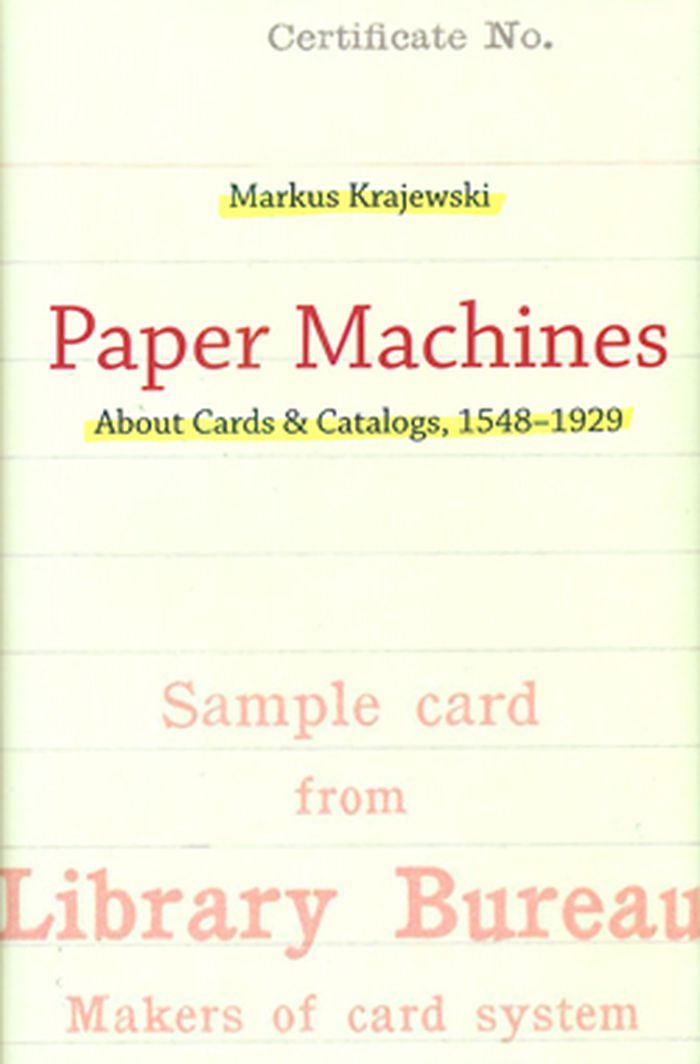
Today on almost every desk in every office sits a computer. Eighty years ago, desktops were equipped with a nonelectronic data processing machine: a card file. In this publication, Markus Krajewski traces the evolution of this proto-computer of rearrangeable parts (file cards) that became ubiquitous in offices between the world wars. The story begins with Konrad Gessner, a sixteenth-century Swiss polymath who described a new method of processing data: to cut up a sheet of handwritten notes into slips of paper, with one fact or topic per slip, and arrange as desired. In the late eighteenth century, the card catalog became the librarian's answer to the threat of information overload. Then, at the turn of the twentieth century, business adopted the technology of the card catalog as a bookkeeping tool. Krajewski explores this conceptual development and casts the card file as a "universal paper machine" that accomplishes the basic operations of Turing's universal discrete machine: storing, processing, and transferring data. In telling his story, Krajewski takes the reader on a number of illuminating detours, telling us, for example, that the card catalog and the numbered street address emerged at the same time in the same city (Vienna), and that Harvard University's home-grown cataloging system grew out of a librarian's laziness; and that Melvil Dewey (originator of the Dewey Decimal System) helped bring about the technology transfer of card files to business.
Paper machines : about cards & catalogs, 1548-1929
Actions:
Prix:
$31.00
(disponible sur commande)
Résumé:
Today on almost every desk in every office sits a computer. Eighty years ago, desktops were equipped with a nonelectronic data processing machine: a card file. In this publication, Markus Krajewski traces the evolution of this proto-computer of rearrangeable parts (file cards) that became ubiquitous in offices between the world wars. The story begins with Konrad Gessner, a sixteenth-century Swiss polymath who described a new method of processing data: to cut up a sheet of handwritten notes into slips of paper, with one fact or topic per slip, and arrange as desired. In the late eighteenth century, the card catalog became the librarian's answer to the threat of information overload. Then, at the turn of the twentieth century, business adopted the technology of the card catalog as a bookkeeping tool. Krajewski explores this conceptual development and casts the card file as a "universal paper machine" that accomplishes the basic operations of Turing's universal discrete machine: storing, processing, and transferring data. In telling his story, Krajewski takes the reader on a number of illuminating detours, telling us, for example, that the card catalog and the numbered street address emerged at the same time in the same city (Vienna), and that Harvard University's home-grown cataloging system grew out of a librarian's laziness; and that Melvil Dewey (originator of the Dewey Decimal System) helped bring about the technology transfer of card files to business.
Classification:
livres
livres
Publication:
octobre 2011
octobre 2011
Classification:
livres
livres
Actions:
Prix:
$39.95
(disponible sur commande)
Résumé:
Since the early twentieth century, contemporary art and art theory have creatively challenged the status of representation. During that time, the court of law has come to rely on a variety of new representational modes and technologies. The law is increasingly staged on a screen and the photographs, video documents, audio recordings used as evidence are not entirely(...)
$39.95
(disponible sur commande)
Résumé:
Since the early twentieth century, contemporary art and art theory have creatively challenged the status of representation. During that time, the court of law has come to rely on a variety of new representational modes and technologies. The law is increasingly staged on a screen and the photographs, video documents, audio recordings used as evidence are not entirely(...)
Publication:
janvier 2012
janvier 2012
Titre:
A thousand eyes: media technology, law and esthetics
Actions:
Prix:
$39.95
(disponible sur commande)
Résumé:
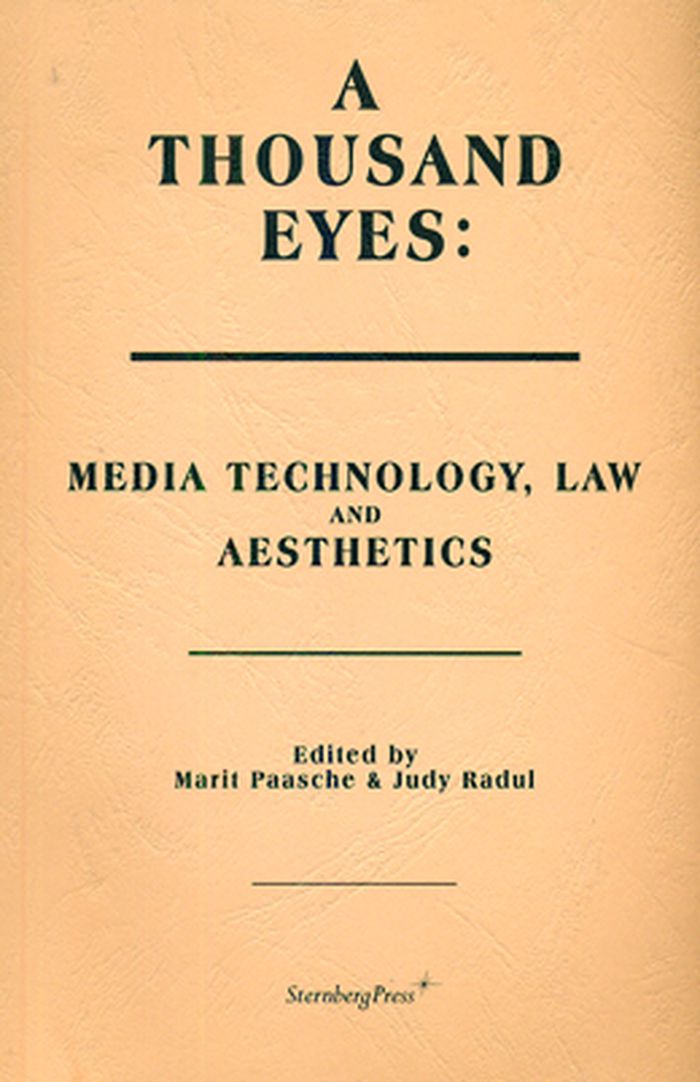
Since the early twentieth century, contemporary art and art theory have creatively challenged the status of representation. During that time, the court of law has come to rely on a variety of new representational modes and technologies. The law is increasingly staged on a screen and the photographs, video documents, audio recordings used as evidence are not entirely distinct from their correlates in contemporary art, cinema and mass media. What questions of representation, judgment and justice cross borders between art and the law? Through the contribution of internationally renowned artists and scholars, this anthology explores how the aesthetics of new media technology and its spatial implementations affect the judicial system in relation to fundamental concepts such as truth and representation. Artistic contributions by John Baldessari, Dan Graham, Harun Farocki, Stan Douglas, Aernout Mik, Agency, Judy Radul, Renzo Martens, Ana Torfs, The Atlas Group, René Magritte, Model Court, Rana Hamadeh, Thomas Demand, Les Levine Essays by Julie A. Cassiday, Costas Douzinas, Piyel Haldar, Martin Jay, Peter Goodrich, Richard Mohr, Judy Radul, Avital Ronell, Eyal Sivan, Cornelia Vismann
A thousand eyes: media technology, law and esthetics
Actions:
Prix:
$39.95
(disponible sur commande)
Résumé:
Since the early twentieth century, contemporary art and art theory have creatively challenged the status of representation. During that time, the court of law has come to rely on a variety of new representational modes and technologies. The law is increasingly staged on a screen and the photographs, video documents, audio recordings used as evidence are not entirely distinct from their correlates in contemporary art, cinema and mass media. What questions of representation, judgment and justice cross borders between art and the law? Through the contribution of internationally renowned artists and scholars, this anthology explores how the aesthetics of new media technology and its spatial implementations affect the judicial system in relation to fundamental concepts such as truth and representation. Artistic contributions by John Baldessari, Dan Graham, Harun Farocki, Stan Douglas, Aernout Mik, Agency, Judy Radul, Renzo Martens, Ana Torfs, The Atlas Group, René Magritte, Model Court, Rana Hamadeh, Thomas Demand, Les Levine Essays by Julie A. Cassiday, Costas Douzinas, Piyel Haldar, Martin Jay, Peter Goodrich, Richard Mohr, Judy Radul, Avital Ronell, Eyal Sivan, Cornelia Vismann
Classification:
livres
livres
Publication:
janvier 2012
janvier 2012
Classification:
livres
livres
Actions:
Prix:
$38.99
(disponible en magasin)
Résumé:
Digital Memory and the Archive, the first English-language collection of the German media theorist’s work, brings together essays that present Wolfgang Ernst’s controversial materialist approach to media theory and history. His insights are central to the emerging field of media archaeology, which uncovers the role of specific technologies and mechanisms, rather than(...)
$38.99
(disponible en magasin)
Résumé:
Digital Memory and the Archive, the first English-language collection of the German media theorist’s work, brings together essays that present Wolfgang Ernst’s controversial materialist approach to media theory and history. His insights are central to the emerging field of media archaeology, which uncovers the role of specific technologies and mechanisms, rather than(...)
Titre:
Digital memory and the archive
Actions:
Prix:
$38.99
(disponible en magasin)
Résumé:
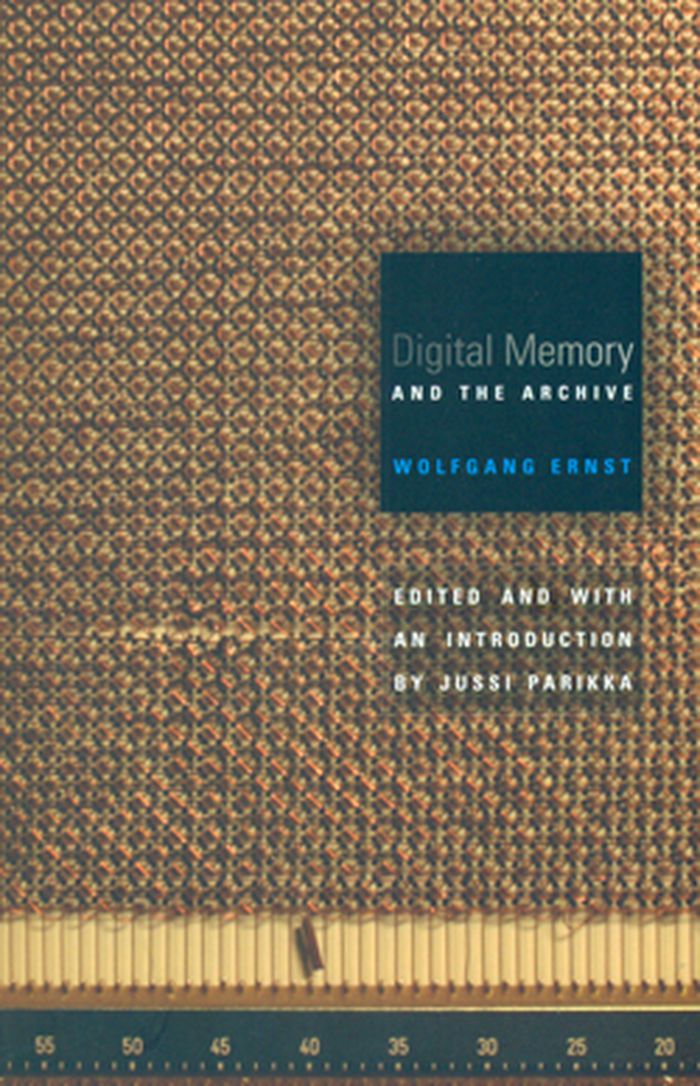
Digital Memory and the Archive, the first English-language collection of the German media theorist’s work, brings together essays that present Wolfgang Ernst’s controversial materialist approach to media theory and history. His insights are central to the emerging field of media archaeology, which uncovers the role of specific technologies and mechanisms, rather than content, in shaping contemporary culture and society.
Digital memory and the archive
Actions:
Prix:
$38.99
(disponible en magasin)
Résumé:
Digital Memory and the Archive, the first English-language collection of the German media theorist’s work, brings together essays that present Wolfgang Ernst’s controversial materialist approach to media theory and history. His insights are central to the emerging field of media archaeology, which uncovers the role of specific technologies and mechanisms, rather than content, in shaping contemporary culture and society.
Classification:
livres
livres
Publication:
décembre 2012
décembre 2012
Classification:
livres
livres
Actions:
Prix:
$16.95
(disponible sur commande)
Résumé:
Ce livre propose des éclairages précis sur la façon dont une technologie, essentiellement collective, modifie radicalement la vie de chacun, le lien social même, mobilisant nos repères les plus tangibles : écriture et lecture, identité, présence, propriété, archive et mémoire. Ni utopie ni fausse prophétie, le numérique est la vulgate moderne. Avec ses faiblesses, ses(...)
$16.95
(disponible sur commande)
Résumé:
Ce livre propose des éclairages précis sur la façon dont une technologie, essentiellement collective, modifie radicalement la vie de chacun, le lien social même, mobilisant nos repères les plus tangibles : écriture et lecture, identité, présence, propriété, archive et mémoire. Ni utopie ni fausse prophétie, le numérique est la vulgate moderne. Avec ses faiblesses, ses(...)
Titre:
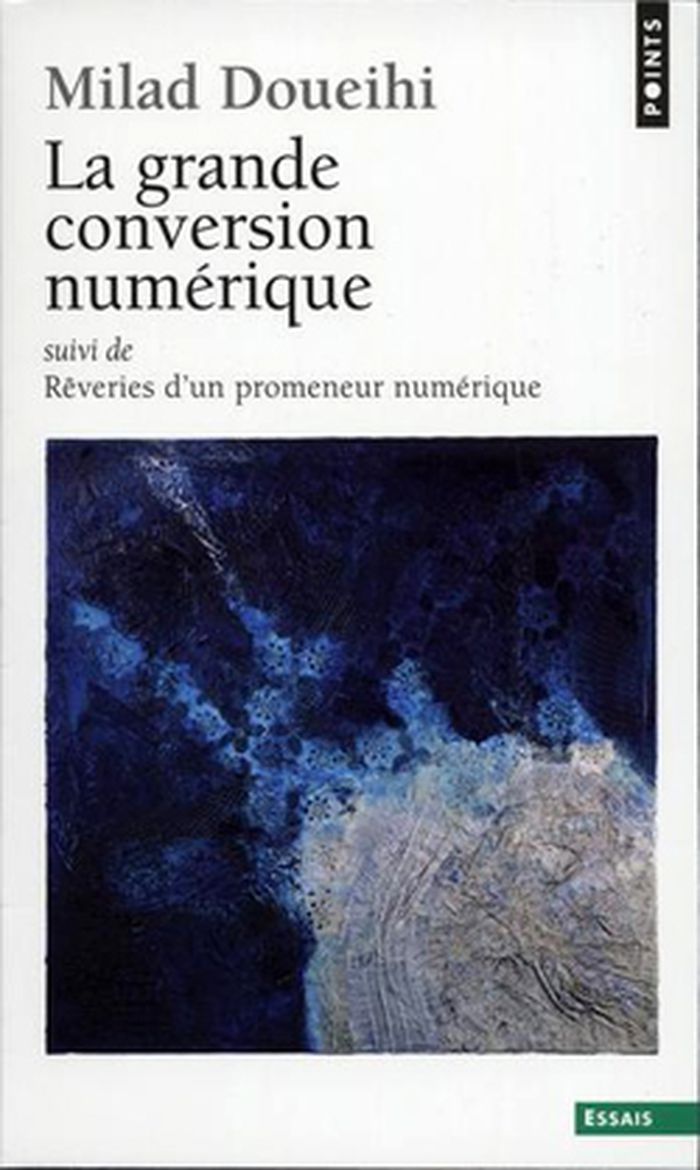
La grande conversion numérique
Actions:
Prix:
$16.95
(disponible sur commande)
Résumé:
Ce livre propose des éclairages précis sur la façon dont une technologie, essentiellement collective, modifie radicalement la vie de chacun, le lien social même, mobilisant nos repères les plus tangibles : écriture et lecture, identité, présence, propriété, archive et mémoire. Ni utopie ni fausse prophétie, le numérique est la vulgate moderne. Avec ses faiblesses, ses aveuglements, ses richesses et ses promesses, le numérique est une culture pour tous.
La grande conversion numérique
Actions:
Prix:
$16.95
(disponible sur commande)
Résumé:
Ce livre propose des éclairages précis sur la façon dont une technologie, essentiellement collective, modifie radicalement la vie de chacun, le lien social même, mobilisant nos repères les plus tangibles : écriture et lecture, identité, présence, propriété, archive et mémoire. Ni utopie ni fausse prophétie, le numérique est la vulgate moderne. Avec ses faiblesses, ses aveuglements, ses richesses et ses promesses, le numérique est une culture pour tous.
Classification:
livres
livres
Publication:
novembre 2011
novembre 2011
Classification:
livres
livres
Prix:
$34.95
(disponible sur commande)
Résumé:
This book introduces an archaeological approach to the study of media - one that sifts through the evidence to learn how media were written about, used, designed, preserved, and sometimes discarded. Edited by Erkki Huhtamo and Jussi Parikka, with contributions from internationally prominent scholars from Europe, North America, and Japan, the essays help us understand how(...)
$34.95
(disponible sur commande)
Résumé:
This book introduces an archaeological approach to the study of media - one that sifts through the evidence to learn how media were written about, used, designed, preserved, and sometimes discarded. Edited by Erkki Huhtamo and Jussi Parikka, with contributions from internationally prominent scholars from Europe, North America, and Japan, the essays help us understand how(...)
Titre:
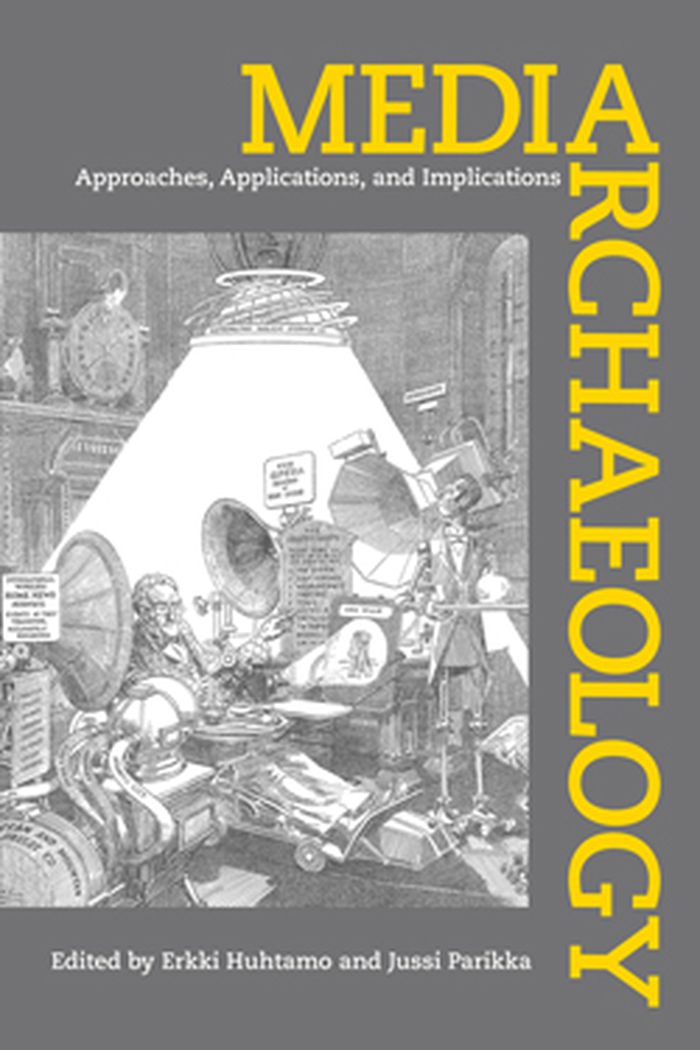
Media archaeology: approaches, applications, and implications
Actions:
Prix:
$34.95
(disponible sur commande)
Résumé:
This book introduces an archaeological approach to the study of media - one that sifts through the evidence to learn how media were written about, used, designed, preserved, and sometimes discarded. Edited by Erkki Huhtamo and Jussi Parikka, with contributions from internationally prominent scholars from Europe, North America, and Japan, the essays help us understand how the media that predate today's interactive, digital forms were in their time contested, adopted and embedded in the everyday.
Media archaeology: approaches, applications, and implications
Actions:
Prix:
$34.95
(disponible sur commande)
Résumé:
This book introduces an archaeological approach to the study of media - one that sifts through the evidence to learn how media were written about, used, designed, preserved, and sometimes discarded. Edited by Erkki Huhtamo and Jussi Parikka, with contributions from internationally prominent scholars from Europe, North America, and Japan, the essays help us understand how the media that predate today's interactive, digital forms were in their time contested, adopted and embedded in the everyday.
Classification:
livres
livres
Publication:
avril 2011
avril 2011
Classification:
livres
livres
Titre:
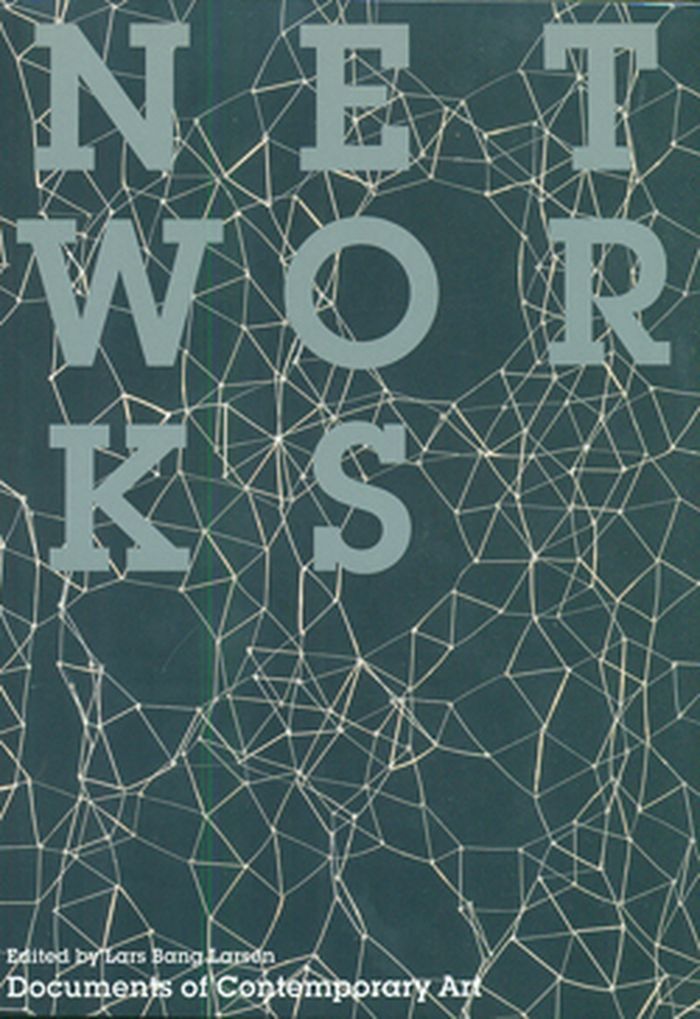
Networks
Networks
Actions:
Prix:
$29.95
(disponible sur commande)
Résumé:
The dawn of the electronic media age in the 1960s began a cultural shift from the modernist grid and its determination of projection and representation to the fluid structures and circuits of the network, presenting art with new challenges and possibilities. This anthology considers art at the center of network theory, from the 1960s to the present
$29.95
(disponible sur commande)
Résumé:
The dawn of the electronic media age in the 1960s began a cultural shift from the modernist grid and its determination of projection and representation to the fluid structures and circuits of the network, presenting art with new challenges and possibilities. This anthology considers art at the center of network theory, from the 1960s to the present
Titre:
Networks
Actions:
Prix:
$29.95
(disponible sur commande)
Résumé:
The dawn of the electronic media age in the 1960s began a cultural shift from the modernist grid and its determination of projection and representation to the fluid structures and circuits of the network, presenting art with new challenges and possibilities. This anthology considers art at the center of network theory, from the 1960s to the present
Networks
Actions:
Prix:
$29.95
(disponible sur commande)
Résumé:
The dawn of the electronic media age in the 1960s began a cultural shift from the modernist grid and its determination of projection and representation to the fluid structures and circuits of the network, presenting art with new challenges and possibilities. This anthology considers art at the center of network theory, from the 1960s to the present
Classification:
livres
livres
Publication:
mars 2014
mars 2014
Classification:
livres
livres
Actions:
Prix:
$30.95
(disponible sur commande)
Résumé:
Paper Knowledge is a remarkable book about the mundane: the library card, the promissory note, the movie ticket, the PDF (Portable Document Format). It is a media history of the document. Drawing examples from the 1870s, the 1930s, the 1960s, and today, Lisa Gitelman thinks across the media that the document form has come to inhabit over the last 150 years, including(...)
$30.95
(disponible sur commande)
Résumé:
Paper Knowledge is a remarkable book about the mundane: the library card, the promissory note, the movie ticket, the PDF (Portable Document Format). It is a media history of the document. Drawing examples from the 1870s, the 1930s, the 1960s, and today, Lisa Gitelman thinks across the media that the document form has come to inhabit over the last 150 years, including(...)
Titre:
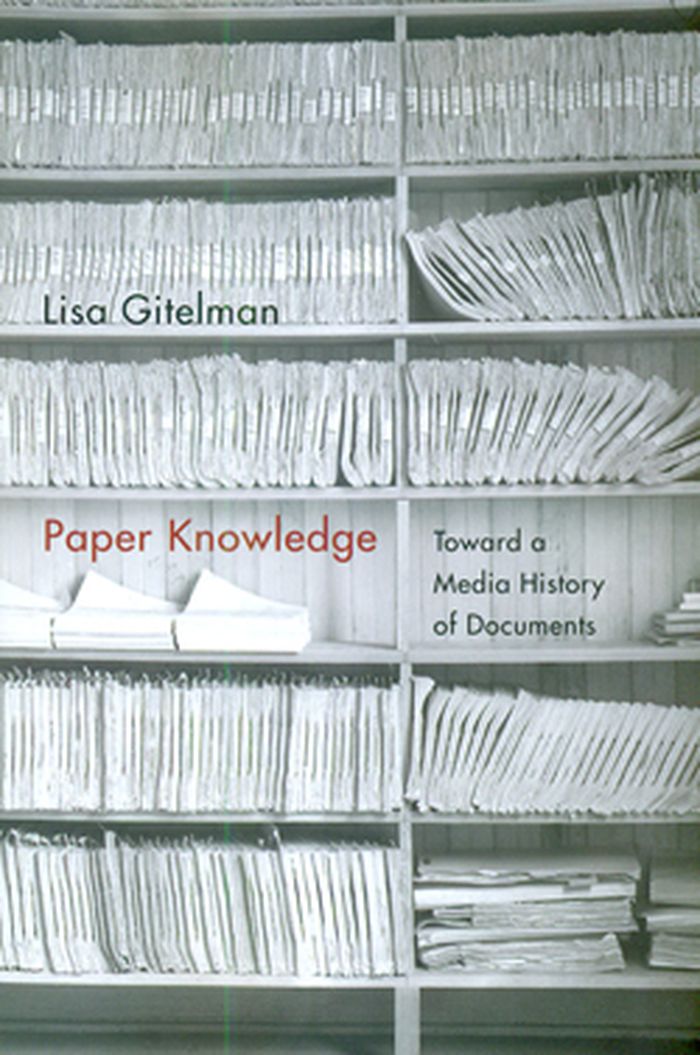
Paper knowledge: toward a media history of documents
Actions:
Prix:
$30.95
(disponible sur commande)
Résumé:
Paper Knowledge is a remarkable book about the mundane: the library card, the promissory note, the movie ticket, the PDF (Portable Document Format). It is a media history of the document. Drawing examples from the 1870s, the 1930s, the 1960s, and today, Lisa Gitelman thinks across the media that the document form has come to inhabit over the last 150 years, including letterpress printing, typing and carbon paper, mimeograph, microfilm, offset printing, photocopying, and scanning.
Paper knowledge: toward a media history of documents
Actions:
Prix:
$30.95
(disponible sur commande)
Résumé:
Paper Knowledge is a remarkable book about the mundane: the library card, the promissory note, the movie ticket, the PDF (Portable Document Format). It is a media history of the document. Drawing examples from the 1870s, the 1930s, the 1960s, and today, Lisa Gitelman thinks across the media that the document form has come to inhabit over the last 150 years, including letterpress printing, typing and carbon paper, mimeograph, microfilm, offset printing, photocopying, and scanning.
Classification:
livres
livres
Publication:
mars 2014
mars 2014
Classification:
livres
livres

Actions:
Prix:
$27.50
(disponible sur commande)
Résumé:
Todd Presner, David Shepard, and Yoh Kawano put digital humanities theory into practice to chart the proliferating cultural records of places around the world. A digital platform transmogrified into a book, it explains the ambitious online project of the same name that maps the historical layers of city spaces in an interactive, hypermedia environment. The authors examine(...)
$27.50
(disponible sur commande)
Résumé:
Todd Presner, David Shepard, and Yoh Kawano put digital humanities theory into practice to chart the proliferating cultural records of places around the world. A digital platform transmogrified into a book, it explains the ambitious online project of the same name that maps the historical layers of city spaces in an interactive, hypermedia environment. The authors examine(...)
Publication:
juin 2014
juin 2014
Titre:
Hypercities: thick mapping in the digital humanities
Actions:
Prix:
$27.50
(disponible sur commande)
Résumé:
Todd Presner, David Shepard, and Yoh Kawano put digital humanities theory into practice to chart the proliferating cultural records of places around the world. A digital platform transmogrified into a book, it explains the ambitious online project of the same name that maps the historical layers of city spaces in an interactive, hypermedia environment. The authors examine the media archaeology of Google Earth and the cultural–historical meaning of map projections, and explore recent events—the “Arab Spring” and the Fukushima nuclear power plant disaster—through social media mapping that incorporates data visualizations, photographic documents, and Twitter streams.
Hypercities: thick mapping in the digital humanities
Actions:
Prix:
$27.50
(disponible sur commande)
Résumé:
Todd Presner, David Shepard, and Yoh Kawano put digital humanities theory into practice to chart the proliferating cultural records of places around the world. A digital platform transmogrified into a book, it explains the ambitious online project of the same name that maps the historical layers of city spaces in an interactive, hypermedia environment. The authors examine the media archaeology of Google Earth and the cultural–historical meaning of map projections, and explore recent events—the “Arab Spring” and the Fukushima nuclear power plant disaster—through social media mapping that incorporates data visualizations, photographic documents, and Twitter streams.
Classification:
livres
livres
Publication:
juin 2014
juin 2014


