


3250 Résultats
Classification:
graphique
graphique
Actions:
Exemplaires:
Description:
12 boxes (approximately 5,000 items) : illustrations (chiefly color)
Description:
12 boxes (approximately 5,000 items) : illustrations (chiefly color)
Auteur:
Sujet:
Titre:
Ernest Cormier postcard collection, 1900-1930.
Actions:
Exemplaires:
Description:
12 boxes (approximately 5,000 items) : illustrations (chiefly color)
Ernest Cormier postcard collection, 1900-1930.
Actions:
Exemplaires:
Description:
12 boxes (approximately 5,000 items) : illustrations (chiefly color)
Classification:
graphique
graphique
Auteur:
Sujet:
Classification:
livres
livres
Actions:
Exemplaires:
Description:
xiv, 263 pages : illustrations ; 23 cm
Description:
xiv, 263 pages : illustrations ; 23 cm
Auteur:
Sujet:
Publication:
Durham [North Carolina] : Duke University Press, 2022., ©2022
Durham [North Carolina] : Duke University Press, 2022., ©2022
Titre:
Re-understanding media : feminist extensions of Marshall McLuhan / edited by Sarah Sharma and Rianka Singh.
Actions:
Exemplaires:
Description:
xiv, 263 pages : illustrations ; 23 cm
Re-understanding media : feminist extensions of Marshall McLuhan / edited by Sarah Sharma and Rianka Singh.
Actions:
Exemplaires:
Description:
xiv, 263 pages : illustrations ; 23 cm
Classification:
livres
livres
Publication:
Durham [North Carolina] : Duke University Press, 2022., ©2022
Durham [North Carolina] : Duke University Press, 2022., ©2022
Auteur:
Sujet:
Classification:
archives
archives
Exemplaires:
Description:
2 boxes (.5 linear ft.)
Description:
2 boxes (.5 linear ft.)
Auteur:
Sujet:
Titre:
Expo 67 and Terre des hommes : printed ephemera, 1963-1992.
Actions:
Exemplaires:
Description:
2 boxes (.5 linear ft.)
Expo 67 and Terre des hommes : printed ephemera, 1963-1992.
Actions:
Exemplaires:
Description:
2 boxes (.5 linear ft.)
Classification:
archives
archives
Auteur:
Sujet:
Classification:
livres
livres
Titre:
Herzog & de Meuron 1978-2002
Herzog & de Meuron 1978-2002
Actions:
Prix:
$76.95
(disponible sur commande)
Résumé:
This "Special Edition" from a+u includes essays by Jacques Herzog and Pierre de Meuron as well as Toyo Ito. Projects illustrated include: Prada, Tokyo; Walker Art Center, Expansion of the Museum and Cultural Center; new de Young Museum; Schaulager for the Emanuel Hoffmann Foundation; Cottbus University Library; Centro Cultural - Museum and Cultural Centre;(...)
$76.95
(disponible sur commande)
Résumé:
This "Special Edition" from a+u includes essays by Jacques Herzog and Pierre de Meuron as well as Toyo Ito. Projects illustrated include: Prada, Tokyo; Walker Art Center, Expansion of the Museum and Cultural Center; new de Young Museum; Schaulager for the Emanuel Hoffmann Foundation; Cottbus University Library; Centro Cultural - Museum and Cultural Centre;(...)
Sujet:
Architecture, monographies
Architecture, monographies
Publication:
janvier 1900, Tokyo
janvier 1900, Tokyo
Titre:
Herzog & de Meuron 1978-2002
Actions:
Prix:
$76.95
(disponible sur commande)
Résumé:
This "Special Edition" from a+u includes essays by Jacques Herzog and Pierre de Meuron as well as Toyo Ito. Projects illustrated include: Prada, Tokyo; Walker Art Center, Expansion of the Museum and Cultural Center; new de Young Museum; Schaulager for the Emanuel Hoffmann Foundation; Cottbus University Library; Centro Cultural - Museum and Cultural Centre; The New Link Quai in Santa Cruz de Tenerife/Plaza de Espana; Kramlich Residence and Media Collection; The Virtual House; St. Jakob Park Basel; Football Stadium, Commercial Centre and Residence for Elderly People; Wood House; Greek Orthodox Church. Completed works include the following: Blue House; Stone House; Apartment and Commercial Building, Schutzenmattstrasse; Apartment Building along a Party Wall, Hebelstrasse; E,D,E,N, Pavilion; Ricola Storage Building; Railway Engine Depot, Auf dem Wolf; Signal Box, Auf dem Wolf; Gallery for a Private Collection of Modern Art, Goetz Collection; Ricola-Europe SA. Production and Storage Building; Roche Pharma-Research Building; Library of the Eberswalde Technical School; Central Signal Tower; Tate Modern; House in Leymen; Caricature and Cartoon Museum - conversion and new building; Institute for Hospital Pharmaceuticals, Rossetti Grounds; Studio Rémy Zaugg; Dominus Winery; Apartment Buildings, Rue des Suisses; Küppersmühle Museum - Grothe Collection; Ricola Marketing Building.
Herzog & de Meuron 1978-2002
Actions:
Prix:
$76.95
(disponible sur commande)
Résumé:
This "Special Edition" from a+u includes essays by Jacques Herzog and Pierre de Meuron as well as Toyo Ito. Projects illustrated include: Prada, Tokyo; Walker Art Center, Expansion of the Museum and Cultural Center; new de Young Museum; Schaulager for the Emanuel Hoffmann Foundation; Cottbus University Library; Centro Cultural - Museum and Cultural Centre; The New Link Quai in Santa Cruz de Tenerife/Plaza de Espana; Kramlich Residence and Media Collection; The Virtual House; St. Jakob Park Basel; Football Stadium, Commercial Centre and Residence for Elderly People; Wood House; Greek Orthodox Church. Completed works include the following: Blue House; Stone House; Apartment and Commercial Building, Schutzenmattstrasse; Apartment Building along a Party Wall, Hebelstrasse; E,D,E,N, Pavilion; Ricola Storage Building; Railway Engine Depot, Auf dem Wolf; Signal Box, Auf dem Wolf; Gallery for a Private Collection of Modern Art, Goetz Collection; Ricola-Europe SA. Production and Storage Building; Roche Pharma-Research Building; Library of the Eberswalde Technical School; Central Signal Tower; Tate Modern; House in Leymen; Caricature and Cartoon Museum - conversion and new building; Institute for Hospital Pharmaceuticals, Rossetti Grounds; Studio Rémy Zaugg; Dominus Winery; Apartment Buildings, Rue des Suisses; Küppersmühle Museum - Grothe Collection; Ricola Marketing Building.
Classification:
livres
livres
Publication:
janvier 1900, Tokyo
janvier 1900, Tokyo
Sujet:
Architecture, monographies
Architecture, monographies
Classification:
livres
livres
Actions:
Prix:
$39.95
(disponible sur commande)
Résumé:
Architecture has a powerful role in nation building and identity formation. Buildings and monuments not only constitute the built fabric of society, they reflect the intersection of culture, politics, economics, and aesthetics as these forces are played out in distinct social settings and distinct times. This extraordinary anthology traces the interaction between(...)
$39.95
(disponible sur commande)
Résumé:
Architecture has a powerful role in nation building and identity formation. Buildings and monuments not only constitute the built fabric of society, they reflect the intersection of culture, politics, economics, and aesthetics as these forces are played out in distinct social settings and distinct times. This extraordinary anthology traces the interaction between(...)
Titre:
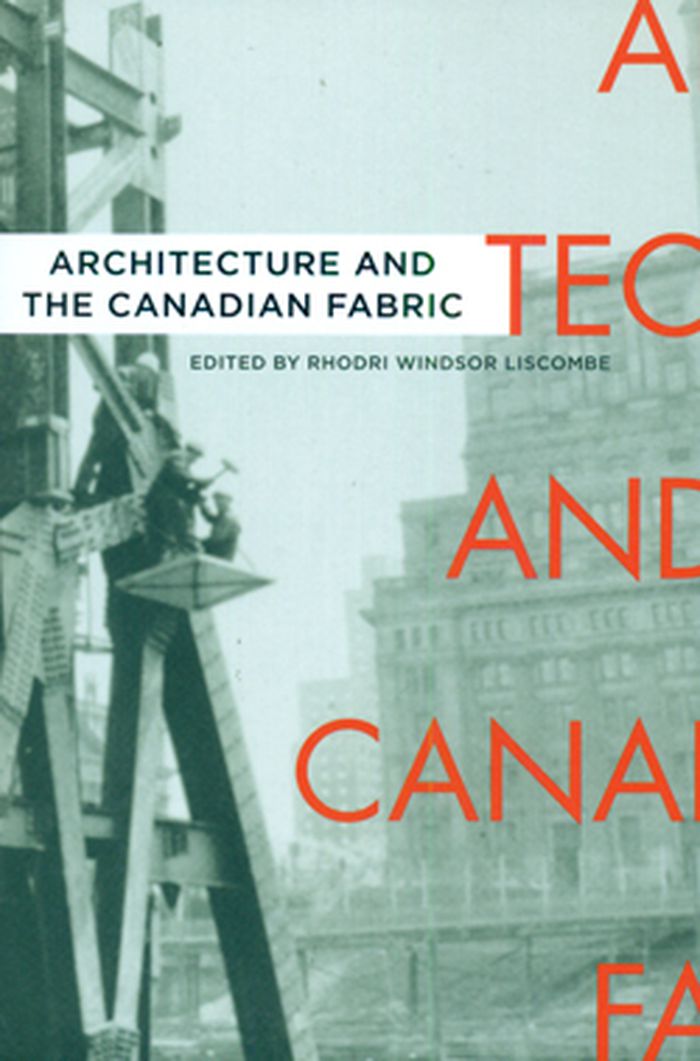
Architecture and the Canadian fabric
Actions:
Prix:
$39.95
(disponible sur commande)
Résumé:
Architecture has a powerful role in nation building and identity formation. Buildings and monuments not only constitute the built fabric of society, they reflect the intersection of culture, politics, economics, and aesthetics as these forces are played out in distinct social settings and distinct times. This extraordinary anthology traces the interaction between culture and politics as reflected in Canadian architecture and the infrastructure of ordinary life, from the first contacts between indigenous peoples and European missionaries to the construction of big-box shopping centres in postmodern cities. Whether focusing on Jesuit perceptions of New France, the construction of Toronto’s St. James Cathedral or Canada’s first Parliament, Brutalism in Canadian architecture, or the ideas of Marshall McLuhan and Arthur Erickson, these essays showcase ways of thinking about the built environment that extend beyond considerations of authorship and style to address the influence of cultural politics and insights from race and gender studies and from postcolonial and spatial theory. By coupling a national focus with a wide historical scope, Architecture and the Canadian Fabric transforms how we see the role of architecture and in doing so radically questions how we continue to live in, interact with, and interpret the fabricated world.
Architecture and the Canadian fabric
Actions:
Prix:
$39.95
(disponible sur commande)
Résumé:
Architecture has a powerful role in nation building and identity formation. Buildings and monuments not only constitute the built fabric of society, they reflect the intersection of culture, politics, economics, and aesthetics as these forces are played out in distinct social settings and distinct times. This extraordinary anthology traces the interaction between culture and politics as reflected in Canadian architecture and the infrastructure of ordinary life, from the first contacts between indigenous peoples and European missionaries to the construction of big-box shopping centres in postmodern cities. Whether focusing on Jesuit perceptions of New France, the construction of Toronto’s St. James Cathedral or Canada’s first Parliament, Brutalism in Canadian architecture, or the ideas of Marshall McLuhan and Arthur Erickson, these essays showcase ways of thinking about the built environment that extend beyond considerations of authorship and style to address the influence of cultural politics and insights from race and gender studies and from postcolonial and spatial theory. By coupling a national focus with a wide historical scope, Architecture and the Canadian Fabric transforms how we see the role of architecture and in doing so radically questions how we continue to live in, interact with, and interpret the fabricated world.
Classification:
livres
livres
Publication:
novembre 2012
novembre 2012
Sujet:
Architecture du Canada
Architecture du Canada
Classification:
livres
livres
Titre:
A. Quincy Jones
A. Quincy Jones
Actions:
Prix:
$89.95
(disponible sur commande)
Résumé:
Archibald Quincy Jones (1913–79) was a Los Angeles-based architect and educator who shared the Case Study goal of reinventing the house as a way of redefining the way people lived in post-war America. A pioneer in ‘greenbelt’ planning and ‘green’ design, Jones raised the level of the tract house in California from the simple stucco box to a structure of beauty and logic(...)
$89.95
(disponible sur commande)
Résumé:
Archibald Quincy Jones (1913–79) was a Los Angeles-based architect and educator who shared the Case Study goal of reinventing the house as a way of redefining the way people lived in post-war America. A pioneer in ‘greenbelt’ planning and ‘green’ design, Jones raised the level of the tract house in California from the simple stucco box to a structure of beauty and logic(...)
Titre:
A. Quincy Jones
Actions:
Prix:
$89.95
(disponible sur commande)
Résumé:
Archibald Quincy Jones (1913–79) was a Los Angeles-based architect and educator who shared the Case Study goal of reinventing the house as a way of redefining the way people lived in post-war America. A pioneer in ‘greenbelt’ planning and ‘green’ design, Jones raised the level of the tract house in California from the simple stucco box to a structure of beauty and logic surrounded by gardens and integrated into the landscape. He introduced new materials and also a new way of living within the built environment, and his work bridged the gap between custom-built and developer-built homes. The exquisite detailing and siting of Jones’s houses, churches, civic and university buildings make them quintessential embodiments of mid-century American architecture. This is the first book published on Jones. It documents his full career, from his post-war planning projects to his long association with Palo Alto building magnate Joseph Eichler. The book is comprised of two parts: a substantial introductory essay tracing Jones’s life and career, with a summary of key projects and his contributions to planning; and a catalogue of sixty of Jones’s projects illustrated with high-quality black-and-white period photographs, and plans and renderings by Jones.
A. Quincy Jones
Actions:
Prix:
$89.95
(disponible sur commande)
Résumé:
Archibald Quincy Jones (1913–79) was a Los Angeles-based architect and educator who shared the Case Study goal of reinventing the house as a way of redefining the way people lived in post-war America. A pioneer in ‘greenbelt’ planning and ‘green’ design, Jones raised the level of the tract house in California from the simple stucco box to a structure of beauty and logic surrounded by gardens and integrated into the landscape. He introduced new materials and also a new way of living within the built environment, and his work bridged the gap between custom-built and developer-built homes. The exquisite detailing and siting of Jones’s houses, churches, civic and university buildings make them quintessential embodiments of mid-century American architecture. This is the first book published on Jones. It documents his full career, from his post-war planning projects to his long association with Palo Alto building magnate Joseph Eichler. The book is comprised of two parts: a substantial introductory essay tracing Jones’s life and career, with a summary of key projects and his contributions to planning; and a catalogue of sixty of Jones’s projects illustrated with high-quality black-and-white period photographs, and plans and renderings by Jones.
Classification:
livres
livres
Publication:
mai 2002, London
mai 2002, London
Sujet:
Architecture, monographies
Architecture, monographies
Classification:
livres
livres
Actions:
Prix:
$55.95
(disponible sur commande)
Résumé:
"You press the button, we do the rest." Kodak used this slogan in ads for the first box cameras, introduced by George Eastman in 1888. From then on, virtually anyone could take pictures--the snapshot was born!~Without exception, the amateur photos presented in "Snapshots: the eye of the century" capture what are essentially ordinary moments--yet every trace of banality(...)
$55.95
(disponible sur commande)
Résumé:
"You press the button, we do the rest." Kodak used this slogan in ads for the first box cameras, introduced by George Eastman in 1888. From then on, virtually anyone could take pictures--the snapshot was born!~Without exception, the amateur photos presented in "Snapshots: the eye of the century" capture what are essentially ordinary moments--yet every trace of banality(...)
Titre:
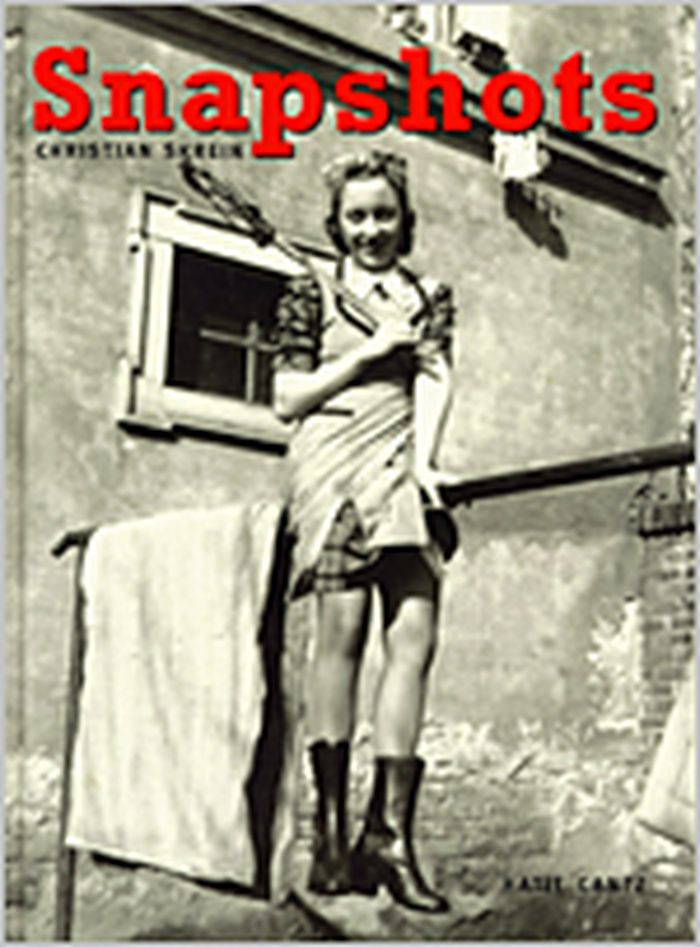
Snapshots : the eye of the century
Actions:
Prix:
$55.95
(disponible sur commande)
Résumé:
"You press the button, we do the rest." Kodak used this slogan in ads for the first box cameras, introduced by George Eastman in 1888. From then on, virtually anyone could take pictures--the snapshot was born!~Without exception, the amateur photos presented in "Snapshots: the eye of the century" capture what are essentially ordinary moments--yet every trace of banality disappears once they are removed from the context of personal biography. Sometimes the moment is right, and art just "happens," in the form of double or multiple exposures, slipped horizons, or curious details that enter the picture frame because the camera moved just as the shutter was released. Christian R. Skrein-Bumballa, an artist and a former professional photographer, has tracked down and collected thousands of these treasures, which can be viewed as part of our visual heritage. His impressive selection of photographs is here arranged thematically, and at its heart we find the essentials of the human condition: joy and pain, visualized in the decisive moment in which history stands still for a fraction of a second. Snapshots features the most aesthetically notable and otherwise curious photographs from the S.A.S. Snapshots Archiv Skrein, a collection of nearly one million snapshots from all over the world.
Snapshots : the eye of the century
Actions:
Prix:
$55.95
(disponible sur commande)
Résumé:
"You press the button, we do the rest." Kodak used this slogan in ads for the first box cameras, introduced by George Eastman in 1888. From then on, virtually anyone could take pictures--the snapshot was born!~Without exception, the amateur photos presented in "Snapshots: the eye of the century" capture what are essentially ordinary moments--yet every trace of banality disappears once they are removed from the context of personal biography. Sometimes the moment is right, and art just "happens," in the form of double or multiple exposures, slipped horizons, or curious details that enter the picture frame because the camera moved just as the shutter was released. Christian R. Skrein-Bumballa, an artist and a former professional photographer, has tracked down and collected thousands of these treasures, which can be viewed as part of our visual heritage. His impressive selection of photographs is here arranged thematically, and at its heart we find the essentials of the human condition: joy and pain, visualized in the decisive moment in which history stands still for a fraction of a second. Snapshots features the most aesthetically notable and otherwise curious photographs from the S.A.S. Snapshots Archiv Skrein, a collection of nearly one million snapshots from all over the world.
Classification:
livres
livres
Publication:
juin 2004, Ostfildern
juin 2004, Ostfildern
Classification:
livres
livres
Actions:
Prix:
$19.95
(disponible sur commande)
Résumé:
Welcome to Blubberland--a world of quadruple-garaged mansions, vast malls, gated communities, stretch limos, and posh resorts. Blubberland is a place, but it is also a state of mind: we expect to be happy (trophy house, SUV in the driveway, home entertainment system, pension fund, cosmetic surgery), but in fact we've grown increasingly bloated, bored, and miserable. In(...)
$19.95
(disponible sur commande)
Résumé:
Welcome to Blubberland--a world of quadruple-garaged mansions, vast malls, gated communities, stretch limos, and posh resorts. Blubberland is a place, but it is also a state of mind: we expect to be happy (trophy house, SUV in the driveway, home entertainment system, pension fund, cosmetic surgery), but in fact we've grown increasingly bloated, bored, and miserable. In(...)
Titre:
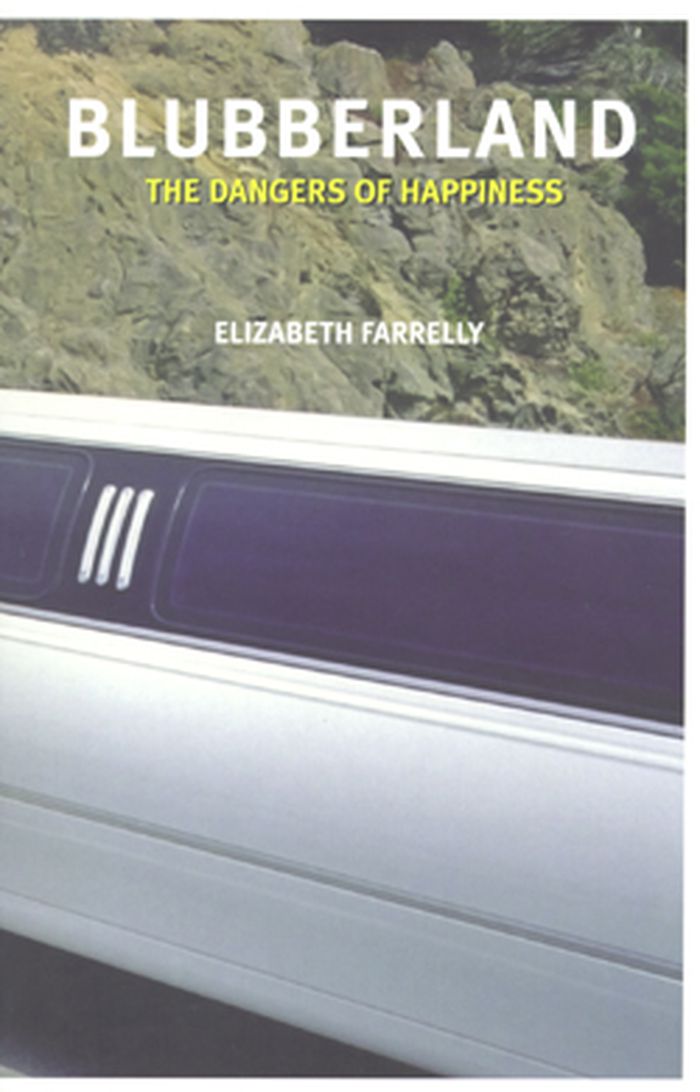
Blubberland: the dangers of happiness
Actions:
Prix:
$19.95
(disponible sur commande)
Résumé:
Welcome to Blubberland--a world of quadruple-garaged mansions, vast malls, gated communities, stretch limos, and posh resorts. Blubberland is a place, but it is also a state of mind: we expect to be happy (trophy house, SUV in the driveway, home entertainment system, pension fund, cosmetic surgery), but in fact we've grown increasingly bloated, bored, and miserable. In Blubberland, award-winning critic Elizabeth Farrelly looks at our "superfluous superfluity," our huge eco-footprint, and asks why we find it so hard to abandon habits we know to be destructive. Why can't we build human-scale cities, design meaningful public spaces, eat reasonable meals, and stop assaulting nature? Farrelly, trained as an architect, begins this story with architecture, urban sprawl, and housing, but she does not end there. She also looks at "affluenza," childhood asthma, diabetes, addiction, beauty, ugliness, narcissism, climate change, mega-churches, big box retailers, sustainability, depression, anorexia, and the links that collect all of these issues under the same roof--the roof, as it were, of the McMansion. As "big" becomes more and more pervasive, and success is seen in increasingly measurable and material terms, the goal of happiness jeopardizes our survival. Blubberland is a smart, thoughtful, and stylish argument for turning things around.
Blubberland: the dangers of happiness
Actions:
Prix:
$19.95
(disponible sur commande)
Résumé:
Welcome to Blubberland--a world of quadruple-garaged mansions, vast malls, gated communities, stretch limos, and posh resorts. Blubberland is a place, but it is also a state of mind: we expect to be happy (trophy house, SUV in the driveway, home entertainment system, pension fund, cosmetic surgery), but in fact we've grown increasingly bloated, bored, and miserable. In Blubberland, award-winning critic Elizabeth Farrelly looks at our "superfluous superfluity," our huge eco-footprint, and asks why we find it so hard to abandon habits we know to be destructive. Why can't we build human-scale cities, design meaningful public spaces, eat reasonable meals, and stop assaulting nature? Farrelly, trained as an architect, begins this story with architecture, urban sprawl, and housing, but she does not end there. She also looks at "affluenza," childhood asthma, diabetes, addiction, beauty, ugliness, narcissism, climate change, mega-churches, big box retailers, sustainability, depression, anorexia, and the links that collect all of these issues under the same roof--the roof, as it were, of the McMansion. As "big" becomes more and more pervasive, and success is seen in increasingly measurable and material terms, the goal of happiness jeopardizes our survival. Blubberland is a smart, thoughtful, and stylish argument for turning things around.
Classification:
livres
livres
Publication:
mars 2008, Cambridge, London
mars 2008, Cambridge, London
Sujet:
Théorie de l’urbanisme
Théorie de l’urbanisme
Classification:
livres
livres
Titre:
Perverse cities
Perverse cities
Actions:
Prix:
$39.95
(disponible sur commande)
Résumé:
Urban sprawl -- low-density subdivisions and business parks, big box stores and mega-malls -- has increasingly come to define city growth despite decades of planning and policy. Urban planning has focused on curbing sprawl by treating its symptoms -- aiming to regulate more compact, livable urban forms into being. Most urbanists view sprawl as an expensive and(...)
$39.95
(disponible sur commande)
Résumé:
Urban sprawl -- low-density subdivisions and business parks, big box stores and mega-malls -- has increasingly come to define city growth despite decades of planning and policy. Urban planning has focused on curbing sprawl by treating its symptoms -- aiming to regulate more compact, livable urban forms into being. Most urbanists view sprawl as an expensive and(...)
Titre:
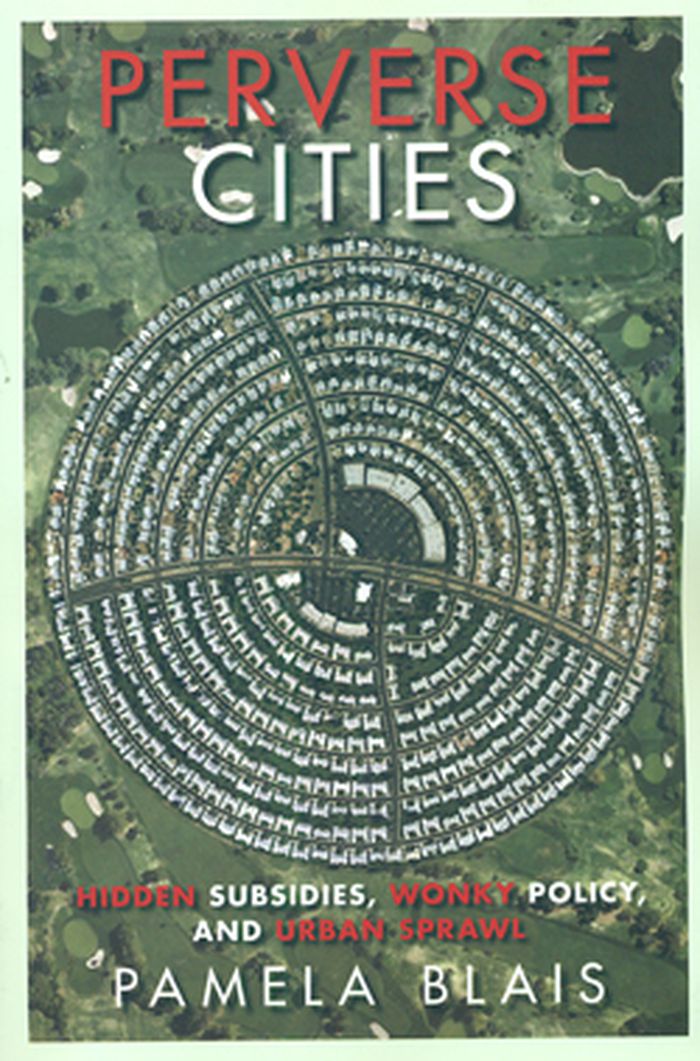
Perverse cities
Actions:
Prix:
$39.95
(disponible sur commande)
Résumé:
Urban sprawl -- low-density subdivisions and business parks, big box stores and mega-malls -- has increasingly come to define city growth despite decades of planning and policy. Urban planning has focused on curbing sprawl by treating its symptoms -- aiming to regulate more compact, livable urban forms into being. Most urbanists view sprawl as an expensive and unsustainable pattern of development. Yet a few defend it as the natural expression of the market neutrally responding to consumer demand and as a reflection of consumers’ lifestyle preferences. In Perverse Cities, Pamela Blais argues that both views fail to recognize market distortions and flawed policy that drive sprawl. She shows that, as a result of crude public policies, a wide range of urban goods and services are subject to inaccurate price signals, including housing, non-residential properties, transportation and utilities. Mis-pricing creates hidden, "perverse" subsidies and incentives that promote sprawl while discouraging more efficient and sustainable urban forms -- clearly not what most planners and environmentalists have in mind. Perverse Cities makes the case that accurate pricing and better policy are fundamental to curbing sprawl and shows how this can be achieved in practice through a range of market-oriented tools that promote efficient, sustainable cities.
Perverse cities
Actions:
Prix:
$39.95
(disponible sur commande)
Résumé:
Urban sprawl -- low-density subdivisions and business parks, big box stores and mega-malls -- has increasingly come to define city growth despite decades of planning and policy. Urban planning has focused on curbing sprawl by treating its symptoms -- aiming to regulate more compact, livable urban forms into being. Most urbanists view sprawl as an expensive and unsustainable pattern of development. Yet a few defend it as the natural expression of the market neutrally responding to consumer demand and as a reflection of consumers’ lifestyle preferences. In Perverse Cities, Pamela Blais argues that both views fail to recognize market distortions and flawed policy that drive sprawl. She shows that, as a result of crude public policies, a wide range of urban goods and services are subject to inaccurate price signals, including housing, non-residential properties, transportation and utilities. Mis-pricing creates hidden, "perverse" subsidies and incentives that promote sprawl while discouraging more efficient and sustainable urban forms -- clearly not what most planners and environmentalists have in mind. Perverse Cities makes the case that accurate pricing and better policy are fundamental to curbing sprawl and shows how this can be achieved in practice through a range of market-oriented tools that promote efficient, sustainable cities.
Classification:
livres
livres
Publication:
avril 2011
avril 2011
Sujet:
Théorie de l’urbanisme
Théorie de l’urbanisme
Classification:
livres
livres
Titre:
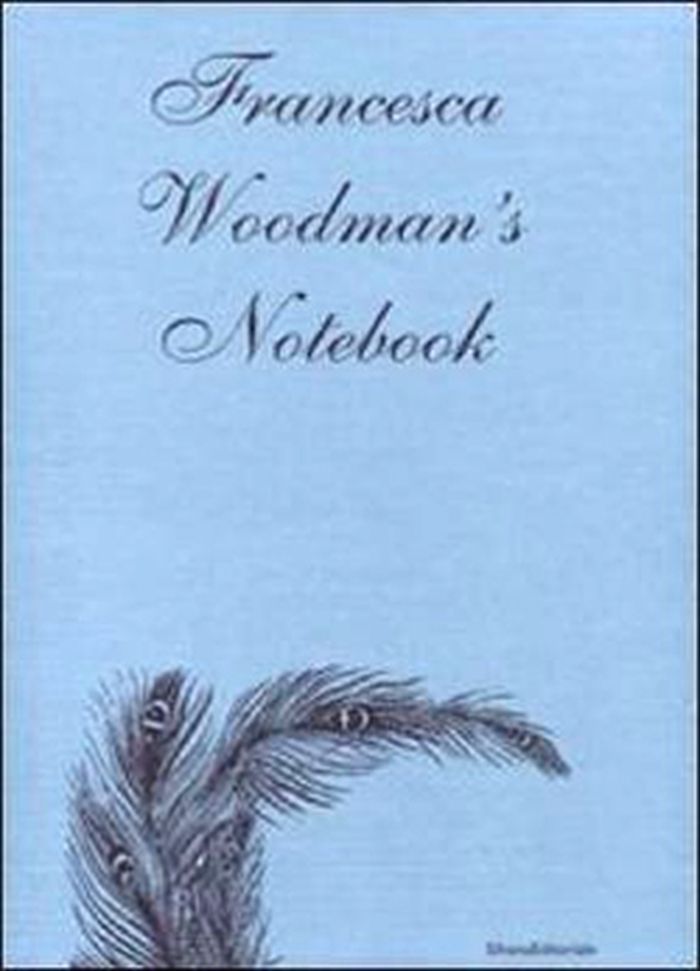
Francesca Woodman's notebook
Francesca Woodman's notebook
Actions:
Prix:
$49.95
(disponible sur commande)
Résumé:
The American photographer Francesca Woodman (1958-1981) spent a brief portion of her childhood in the countryside around Florence, living with her parents in an old farm whose dilapidated interiors were later to influence the backdrops of her mesmerizing self-portraits. In 1977 she returned to Italy, studying in Rome on a year-long RISD honors program. During this tenure,(...)
$49.95
(disponible sur commande)
Résumé:
The American photographer Francesca Woodman (1958-1981) spent a brief portion of her childhood in the countryside around Florence, living with her parents in an old farm whose dilapidated interiors were later to influence the backdrops of her mesmerizing self-portraits. In 1977 she returned to Italy, studying in Rome on a year-long RISD honors program. During this tenure,(...)
Titre:
Francesca Woodman's notebook
Actions:
Prix:
$49.95
(disponible sur commande)
Résumé:
The American photographer Francesca Woodman (1958-1981) spent a brief portion of her childhood in the countryside around Florence, living with her parents in an old farm whose dilapidated interiors were later to influence the backdrops of her mesmerizing self-portraits. In 1977 she returned to Italy, studying in Rome on a year-long RISD honors program. During this tenure, Woodman found five tattered school exercise books, printed in 1906, side-stapled and inscribed in fine cursive penmanship with notes from physics lectures or poems in English and Italian. To these evocative objects, Woodman--already fully formed as the photographer we recognize and admire today--added her characteristic black-and-white photographs, either as small paper prints or as prints made on transparent film that allows the writing beneath to show through, further embellishing them with her own captions or remarks. This facsimile edition of one of these notebooks was selected for publication by Woodman's mother and father as an artist's book of particular beauty and revelatory content that provides unprecedented insight into the emphatically narrative logic of Woodman's photography. Housed in a lightweight printed box, it includes an afterword by George Woodman, Francesca's father, that contextualizes the work within the photographer's artist's book production.
Francesca Woodman's notebook
Actions:
Prix:
$49.95
(disponible sur commande)
Résumé:
The American photographer Francesca Woodman (1958-1981) spent a brief portion of her childhood in the countryside around Florence, living with her parents in an old farm whose dilapidated interiors were later to influence the backdrops of her mesmerizing self-portraits. In 1977 she returned to Italy, studying in Rome on a year-long RISD honors program. During this tenure, Woodman found five tattered school exercise books, printed in 1906, side-stapled and inscribed in fine cursive penmanship with notes from physics lectures or poems in English and Italian. To these evocative objects, Woodman--already fully formed as the photographer we recognize and admire today--added her characteristic black-and-white photographs, either as small paper prints or as prints made on transparent film that allows the writing beneath to show through, further embellishing them with her own captions or remarks. This facsimile edition of one of these notebooks was selected for publication by Woodman's mother and father as an artist's book of particular beauty and revelatory content that provides unprecedented insight into the emphatically narrative logic of Woodman's photography. Housed in a lightweight printed box, it includes an afterword by George Woodman, Francesca's father, that contextualizes the work within the photographer's artist's book production.
Classification:
livres
livres
Publication:
mars 2012
mars 2012


