


10573 Résultats
Classification:
livres
livres
Titre:
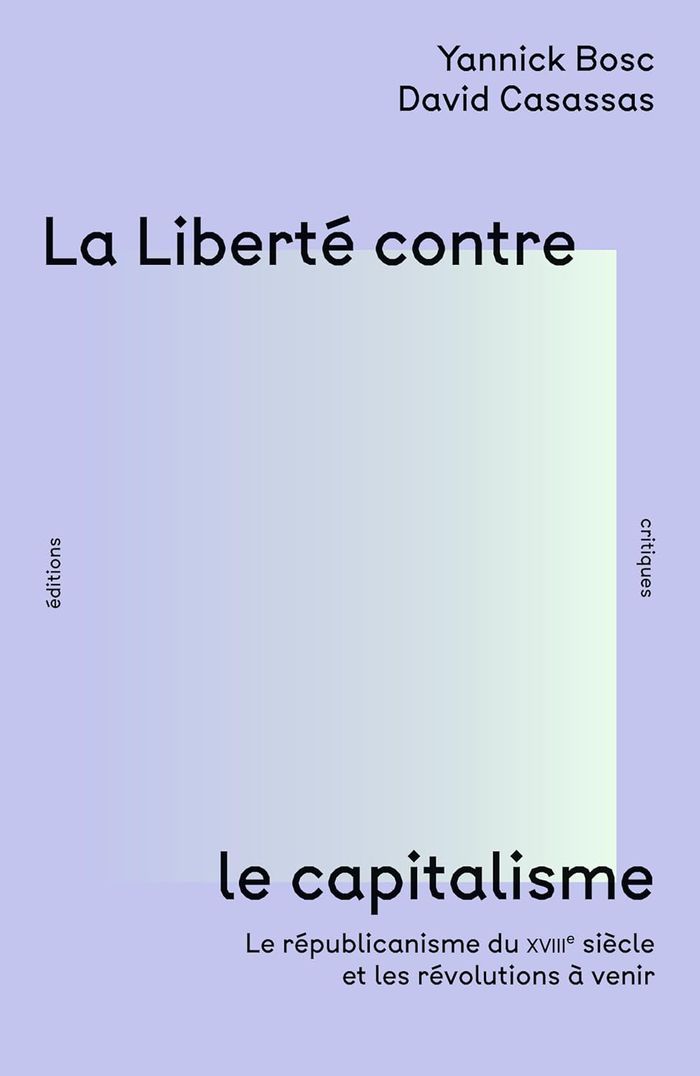
La Liberté contre le capitalisme : Le républicanisme du XVIIIe siècle et les révolutions à venir
La Liberté contre le capitalisme : Le républicanisme du XVIIIe siècle et les révolutions à venir
Actions:
Prix:
$37.95
(disponible en magasin)
Résumé:
S’appuyant sur trois figures du siècle des lumières, Smith, Robespierre et Paine, les auteurs remontent aux origines de concepts comme la république, la liberté ou la propriété, qui ont été travestis par la modernité capitaliste afin de les rendre conformes à un objectif d’accaparement des richesses. Cet essai politique entend nourrir les possibles révolutions à venir.
$37.95
(disponible en magasin)
Résumé:
S’appuyant sur trois figures du siècle des lumières, Smith, Robespierre et Paine, les auteurs remontent aux origines de concepts comme la république, la liberté ou la propriété, qui ont été travestis par la modernité capitaliste afin de les rendre conformes à un objectif d’accaparement des richesses. Cet essai politique entend nourrir les possibles révolutions à venir.
Titre:
La Liberté contre le capitalisme : Le républicanisme du XVIIIe siècle et les révolutions à venir
Actions:
Prix:
$37.95
(disponible en magasin)
Résumé:
S’appuyant sur trois figures du siècle des lumières, Smith, Robespierre et Paine, les auteurs remontent aux origines de concepts comme la république, la liberté ou la propriété, qui ont été travestis par la modernité capitaliste afin de les rendre conformes à un objectif d’accaparement des richesses. Cet essai politique entend nourrir les possibles révolutions à venir.
La Liberté contre le capitalisme : Le républicanisme du XVIIIe siècle et les révolutions à venir
Actions:
Prix:
$37.95
(disponible en magasin)
Résumé:
S’appuyant sur trois figures du siècle des lumières, Smith, Robespierre et Paine, les auteurs remontent aux origines de concepts comme la république, la liberté ou la propriété, qui ont été travestis par la modernité capitaliste afin de les rendre conformes à un objectif d’accaparement des richesses. Cet essai politique entend nourrir les possibles révolutions à venir.
Classification:
livres
livres
Publication:
mars 2026
mars 2026
Sujet:
Théorie/ philosophie
Théorie/ philosophie
Classification:
livres
livres
Prix:
$24.95
(disponible en magasin)
Résumé:
“Of course, we all want to be happy.” So wrote the Roman statesman, orator, and philosopher Marcus Tullius Cicero. He and his fellow Greek and Roman philosophers agreed that the secret to happiness—or what they called the “good life”—is pursuing the “greatest good.” The only problem is that they couldn’t agree on what the greatest good is. Cicero addressed this dilemma by(...)
$24.95
(disponible en magasin)
Résumé:
“Of course, we all want to be happy.” So wrote the Roman statesman, orator, and philosopher Marcus Tullius Cicero. He and his fellow Greek and Roman philosophers agreed that the secret to happiness—or what they called the “good life”—is pursuing the “greatest good.” The only problem is that they couldn’t agree on what the greatest good is. Cicero addressed this dilemma by(...)
Titre:
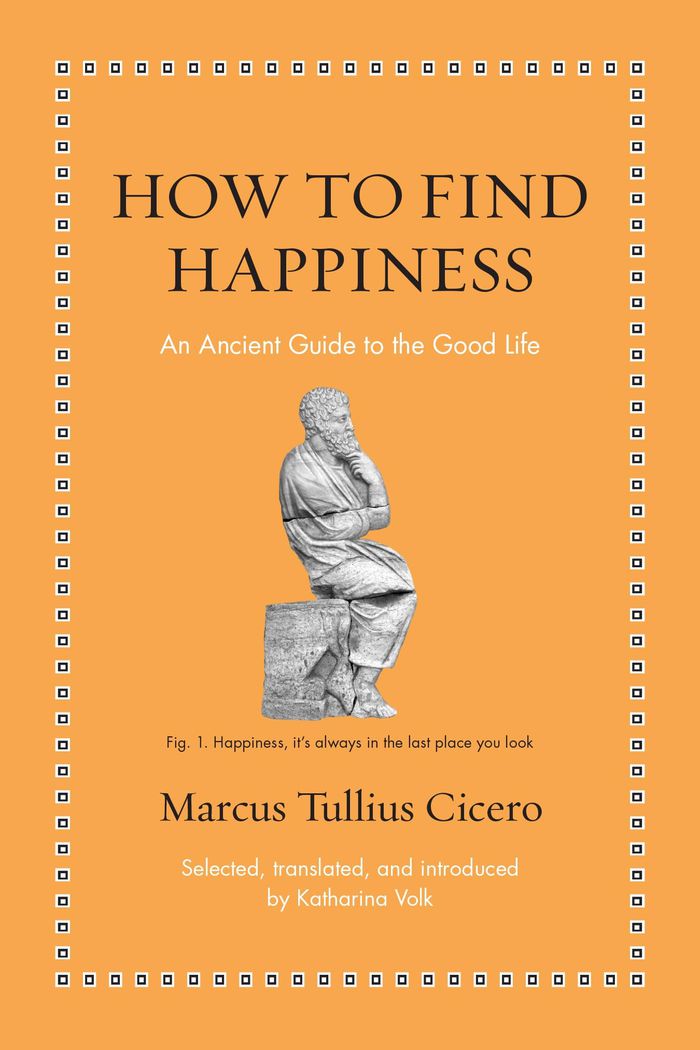
How to find happiness: An ancient guide to the good life
Actions:
Prix:
$24.95
(disponible en magasin)
Résumé:
“Of course, we all want to be happy.” So wrote the Roman statesman, orator, and philosopher Marcus Tullius Cicero. He and his fellow Greek and Roman philosophers agreed that the secret to happiness—or what they called the “good life”—is pursuing the “greatest good.” The only problem is that they couldn’t agree on what the greatest good is. Cicero addressed this dilemma by composing a set of dialogues, ''On the Greatest Good and Evil'' (''De finibus bonorum et malorum''), in which he pitted advocates of different philosophical approaches to happiness against one another. Notably, these include the Epicureans (who believe that the greatest good is pleasure) and the Stoics (according to whom it is moral virtue). Rather than choosing sides, Cicero considers the pros and cons of the different philosophies, ultimately leaving it to his readers to make up their own minds. In ''How to Find Happiness'', Katharina Volk offers a vivid new translation of selections from Cicero’s work, complete with an introduction and the original Latin text on facing pages. The result is a lively and engaging debate that invites each of us to discover our own path to happiness.
How to find happiness: An ancient guide to the good life
Actions:
Prix:
$24.95
(disponible en magasin)
Résumé:
“Of course, we all want to be happy.” So wrote the Roman statesman, orator, and philosopher Marcus Tullius Cicero. He and his fellow Greek and Roman philosophers agreed that the secret to happiness—or what they called the “good life”—is pursuing the “greatest good.” The only problem is that they couldn’t agree on what the greatest good is. Cicero addressed this dilemma by composing a set of dialogues, ''On the Greatest Good and Evil'' (''De finibus bonorum et malorum''), in which he pitted advocates of different philosophical approaches to happiness against one another. Notably, these include the Epicureans (who believe that the greatest good is pleasure) and the Stoics (according to whom it is moral virtue). Rather than choosing sides, Cicero considers the pros and cons of the different philosophies, ultimately leaving it to his readers to make up their own minds. In ''How to Find Happiness'', Katharina Volk offers a vivid new translation of selections from Cicero’s work, complete with an introduction and the original Latin text on facing pages. The result is a lively and engaging debate that invites each of us to discover our own path to happiness.
Classification:
livres
livres
Publication:
mars 2026
mars 2026
Sujet:
Théorie/ philosophie
Théorie/ philosophie
Classification:
livres
livres
Prix:
$24.95
(disponible en magasin)
Résumé:
Listening is a skill—even an art—and it’s essential to learning and to life. Indeed, as Plutarch writes in ''How to Listen'' : “listening well is the foundation for living well.” In this volume, Jeffrey Beneker presents a vivid and accessible new translation of Plutarch’s classic essay about how to become a skilled listener, complete with an inviting introduction and the(...)
$24.95
(disponible en magasin)
Résumé:
Listening is a skill—even an art—and it’s essential to learning and to life. Indeed, as Plutarch writes in ''How to Listen'' : “listening well is the foundation for living well.” In this volume, Jeffrey Beneker presents a vivid and accessible new translation of Plutarch’s classic essay about how to become a skilled listener, complete with an inviting introduction and the(...)
Titre:
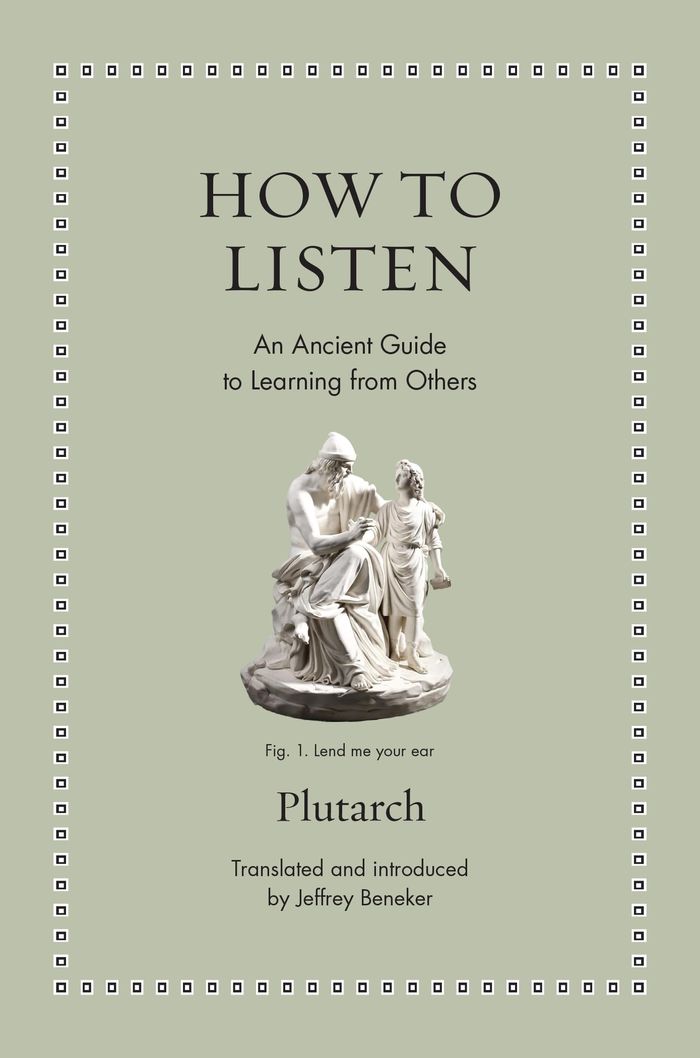
How to listen: An ancient guide to learning from others
Actions:
Prix:
$24.95
(disponible en magasin)
Résumé:
Listening is a skill—even an art—and it’s essential to learning and to life. Indeed, as Plutarch writes in ''How to Listen'' : “listening well is the foundation for living well.” In this volume, Jeffrey Beneker presents a vivid and accessible new translation of Plutarch’s classic essay about how to become a skilled listener, complete with an inviting introduction and the original Greek on facing pages. Plutarch is most famous as the author of ''Parallel Lives'', a series of biographies of Greek and Roman statesmen. But he was also an expert on teaching and learning and How to Listen is arguably one of his best pedagogical works. A proponent of active listening well before its time, Plutarch explains the skills we need—and the obstacles and distractions we must overcome—to become effective listeners. Good listening requires, above all, an acknowledgement of our own ignorance in certain subjects and a commitment to gaining knowledge. We must set aside pride and envy so we can respect the expertise of others. We must also train ourselves to see through style and focus on substance, to discriminate between weak and strong arguments, and to criticize ideas fairly and accurately.
How to listen: An ancient guide to learning from others
Actions:
Prix:
$24.95
(disponible en magasin)
Résumé:
Listening is a skill—even an art—and it’s essential to learning and to life. Indeed, as Plutarch writes in ''How to Listen'' : “listening well is the foundation for living well.” In this volume, Jeffrey Beneker presents a vivid and accessible new translation of Plutarch’s classic essay about how to become a skilled listener, complete with an inviting introduction and the original Greek on facing pages. Plutarch is most famous as the author of ''Parallel Lives'', a series of biographies of Greek and Roman statesmen. But he was also an expert on teaching and learning and How to Listen is arguably one of his best pedagogical works. A proponent of active listening well before its time, Plutarch explains the skills we need—and the obstacles and distractions we must overcome—to become effective listeners. Good listening requires, above all, an acknowledgement of our own ignorance in certain subjects and a commitment to gaining knowledge. We must set aside pride and envy so we can respect the expertise of others. We must also train ourselves to see through style and focus on substance, to discriminate between weak and strong arguments, and to criticize ideas fairly and accurately.
Classification:
livres
livres
Publication:
mars 2026
mars 2026
Sujet:
Théorie/ philosophie
Théorie/ philosophie
Classification:
livres
livres

Titre:
Feminism. Art. Capitalism
Feminism. Art. Capitalism
Actions:
Prix:
$47.00
(disponible en magasin)
Résumé:
"Feminism. Art. Capitalism." calls for a revolutionary rethinking of the feminist struggle and its relation to art. Championing Marxist feminism and focusing on the layers of capitalist hegemony, the book considers the exploitation of enthusiasm in art’s promise of a self-determined subject, the ideological capture of feminism, modernity’s attachment to technology (and(...)
$47.00
(disponible en magasin)
Résumé:
"Feminism. Art. Capitalism." calls for a revolutionary rethinking of the feminist struggle and its relation to art. Championing Marxist feminism and focusing on the layers of capitalist hegemony, the book considers the exploitation of enthusiasm in art’s promise of a self-determined subject, the ideological capture of feminism, modernity’s attachment to technology (and(...)
Titre:
Feminism. Art. Capitalism
Actions:
Prix:
$47.00
(disponible en magasin)
Résumé:
"Feminism. Art. Capitalism." calls for a revolutionary rethinking of the feminist struggle and its relation to art. Championing Marxist feminism and focusing on the layers of capitalist hegemony, the book considers the exploitation of enthusiasm in art’s promise of a self-determined subject, the ideological capture of feminism, modernity’s attachment to technology (and its magic), the historical context and impact of postmodernism, and the question of class and social reproduction. Provocative and uncompromising, Feminism. Art. Capitalism. offers an indispensable guide for art history, theory, and practice – inviting readers to confront what claiming art and feminism as sites of resistance actually entails.
Feminism. Art. Capitalism
Actions:
Prix:
$47.00
(disponible en magasin)
Résumé:
"Feminism. Art. Capitalism." calls for a revolutionary rethinking of the feminist struggle and its relation to art. Championing Marxist feminism and focusing on the layers of capitalist hegemony, the book considers the exploitation of enthusiasm in art’s promise of a self-determined subject, the ideological capture of feminism, modernity’s attachment to technology (and its magic), the historical context and impact of postmodernism, and the question of class and social reproduction. Provocative and uncompromising, Feminism. Art. Capitalism. offers an indispensable guide for art history, theory, and practice – inviting readers to confront what claiming art and feminism as sites of resistance actually entails.
Classification:
livres
livres
Publication:
novembre 2025
novembre 2025
Sujet:
Théorie/ philosophie
Théorie/ philosophie
Classification:
livres
livres
Prix:
$34.95
(disponible en magasin)
Résumé:
How can we unlock society’s potential to shift the course of the climate crisis? So many of us feel helpless in the face of corporate-fuelled environmental destruction. However, Practicing Social Ecology shows that there is an amazing well of untapped power in our communities—we just need to know how to use it. Drawing from her experience of working in democratic ecology(...)
$34.95
(disponible en magasin)
Résumé:
How can we unlock society’s potential to shift the course of the climate crisis? So many of us feel helpless in the face of corporate-fuelled environmental destruction. However, Practicing Social Ecology shows that there is an amazing well of untapped power in our communities—we just need to know how to use it. Drawing from her experience of working in democratic ecology(...)
Titre:
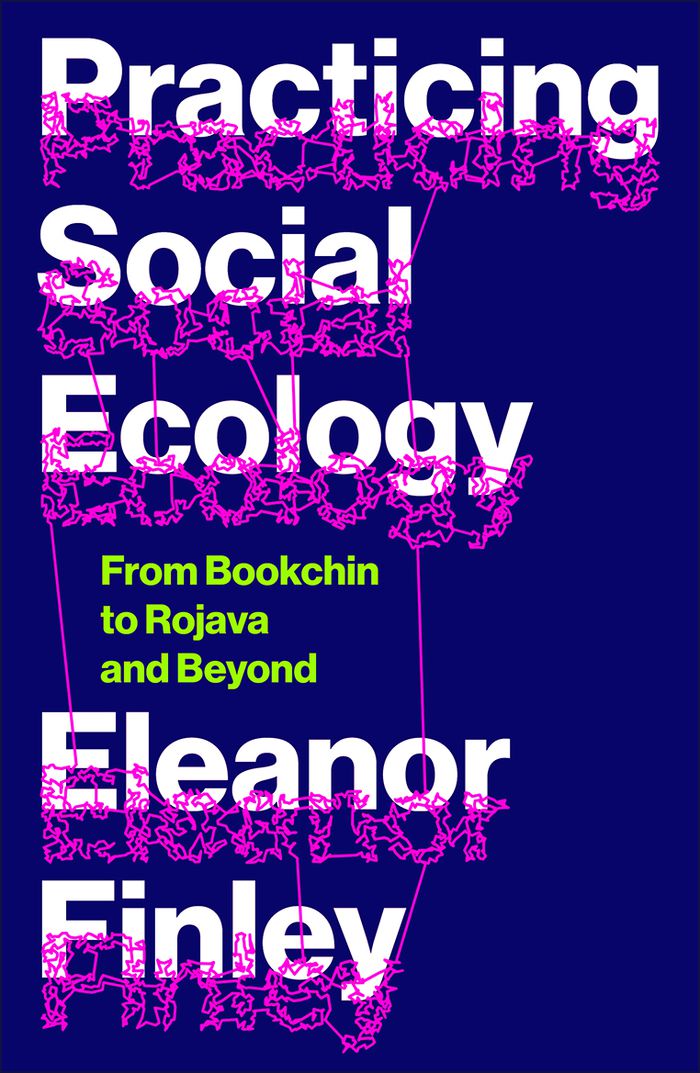
Practicing social ecology: from Bookchin to Rojava and beyond
Actions:
Prix:
$34.95
(disponible en magasin)
Résumé:
How can we unlock society’s potential to shift the course of the climate crisis? So many of us feel helpless in the face of corporate-fuelled environmental destruction. However, Practicing Social Ecology shows that there is an amazing well of untapped power in our communities—we just need to know how to use it. Drawing from her experience of working in democratic ecology movements from the revolution in Rojava to Barcelona’s municipalist movement, Finley shows how to develop assemblies, confederations, study groups, and permaculture projects. Looking to history, she maps out how social ecologists, such as Murray Bookchin, have led inspirational struggles around climate and energy, agriculture and biotechnology, globalization, and economic inequality.
Practicing social ecology: from Bookchin to Rojava and beyond
Actions:
Prix:
$34.95
(disponible en magasin)
Résumé:
How can we unlock society’s potential to shift the course of the climate crisis? So many of us feel helpless in the face of corporate-fuelled environmental destruction. However, Practicing Social Ecology shows that there is an amazing well of untapped power in our communities—we just need to know how to use it. Drawing from her experience of working in democratic ecology movements from the revolution in Rojava to Barcelona’s municipalist movement, Finley shows how to develop assemblies, confederations, study groups, and permaculture projects. Looking to history, she maps out how social ecologists, such as Murray Bookchin, have led inspirational struggles around climate and energy, agriculture and biotechnology, globalization, and economic inequality.
Classification:
livres
livres
Publication:
février 2025
février 2025
Sujet:
Théorie/ philosophie
Théorie/ philosophie
Classification:
livres
livres

Titre:
What is fear?
What is fear?
Actions:
Prix:
$9.00
(disponible en magasin)
Résumé:
Ranging from ancient philosophy to pandemic politics, Agamben’s profound and disquieting essay dismantles the logic that turns emergencies into permanent rule, reason into impotence, and safety into domination. Against the will to fear, he posits an act of memory. Not of facts, but of worldhood itself.
$9.00
(disponible en magasin)
Résumé:
Ranging from ancient philosophy to pandemic politics, Agamben’s profound and disquieting essay dismantles the logic that turns emergencies into permanent rule, reason into impotence, and safety into domination. Against the will to fear, he posits an act of memory. Not of facts, but of worldhood itself.
Titre:
What is fear?
Actions:
Prix:
$9.00
(disponible en magasin)
Résumé:
Ranging from ancient philosophy to pandemic politics, Agamben’s profound and disquieting essay dismantles the logic that turns emergencies into permanent rule, reason into impotence, and safety into domination. Against the will to fear, he posits an act of memory. Not of facts, but of worldhood itself.
What is fear?
Actions:
Prix:
$9.00
(disponible en magasin)
Résumé:
Ranging from ancient philosophy to pandemic politics, Agamben’s profound and disquieting essay dismantles the logic that turns emergencies into permanent rule, reason into impotence, and safety into domination. Against the will to fear, he posits an act of memory. Not of facts, but of worldhood itself.
Classification:
livres
livres
Publication:
décembre 2025
décembre 2025
Sujet:
Théorie/ philosophie
Théorie/ philosophie
Classification:
livres
livres
Actions:
Prix:
$66.00
(disponible sur commande)
Résumé:
"Toy theory" addresses the relationships between toys and technology in two distinct but overlapping ways: first, as underexamined cultural artifacts and behaviors with significant technical attributes and, second, as playful and toylike dimensions of technology at large. Seth Giddings sets out a “toy theory” of technology that emphasizes the speculative, experimental,(...)
$66.00
(disponible sur commande)
Résumé:
"Toy theory" addresses the relationships between toys and technology in two distinct but overlapping ways: first, as underexamined cultural artifacts and behaviors with significant technical attributes and, second, as playful and toylike dimensions of technology at large. Seth Giddings sets out a “toy theory” of technology that emphasizes the speculative, experimental,(...)
Titre:
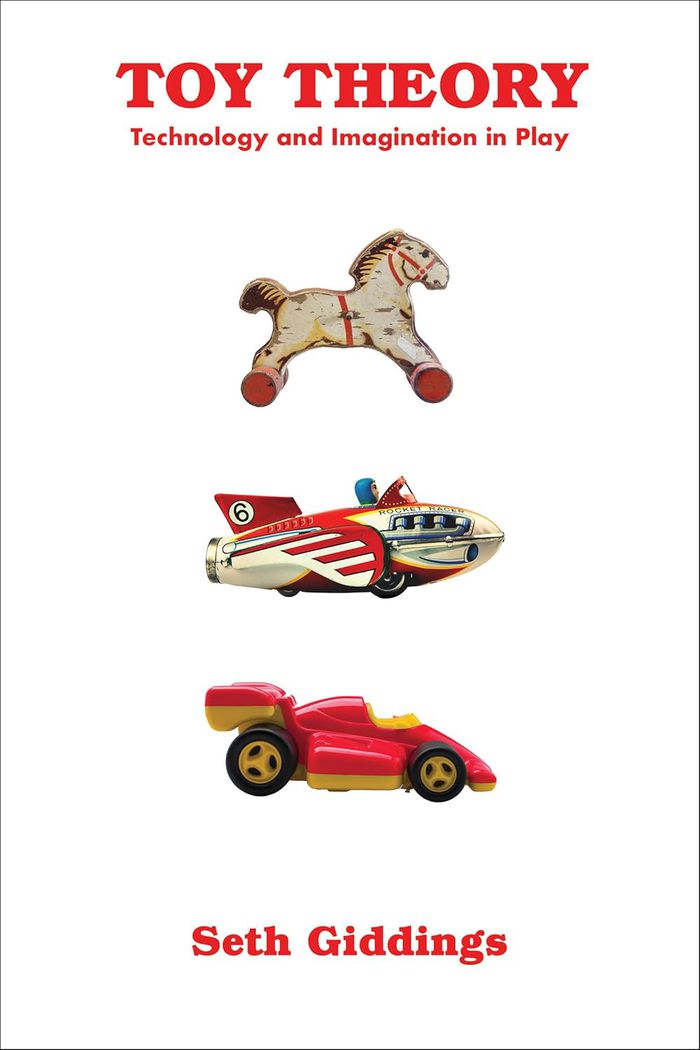
Toy theory: Technology and imagination in play
Actions:
Prix:
$66.00
(disponible sur commande)
Résumé:
"Toy theory" addresses the relationships between toys and technology in two distinct but overlapping ways: first, as underexamined cultural artifacts and behaviors with significant technical attributes and, second, as playful and toylike dimensions of technology at large. Seth Giddings sets out a “toy theory” of technology that emphasizes the speculative, experimental, and noninstrumental in technological paradigms and argues that children’s playthings, rather than being the most ephemeral and inconsequential of technical devices, instead offer analytical and anthropological resources for understanding the materiality and imaginaries of technology over time.
Toy theory: Technology and imagination in play
Actions:
Prix:
$66.00
(disponible sur commande)
Résumé:
"Toy theory" addresses the relationships between toys and technology in two distinct but overlapping ways: first, as underexamined cultural artifacts and behaviors with significant technical attributes and, second, as playful and toylike dimensions of technology at large. Seth Giddings sets out a “toy theory” of technology that emphasizes the speculative, experimental, and noninstrumental in technological paradigms and argues that children’s playthings, rather than being the most ephemeral and inconsequential of technical devices, instead offer analytical and anthropological resources for understanding the materiality and imaginaries of technology over time.
Classification:
livres
livres
Publication:
novembre 2024
novembre 2024
Sujet:
Théorie/ philosophie
Théorie/ philosophie
Classification:
livres
livres
Titre:
Dictionary of terms relating to the edges, divisions, boundaries, and borders of things, etc.
Dictionary of terms relating to the edges, divisions, boundaries, and borders of things, etc.
Actions:
Prix:
$25.00
(disponible en magasin)
Résumé:
The first publication in the Hildegard Press series is a dictionary that establishes the definitions and etymologies of terms related to edges, divisions, boundaries, and borders. The ''DICTIONARY'' seeks to outline the language used to define where one thing ends and another thing begins. A web of “See also:” referents link the terms to each other in order to produce a(...)
$25.00
(disponible en magasin)
Résumé:
The first publication in the Hildegard Press series is a dictionary that establishes the definitions and etymologies of terms related to edges, divisions, boundaries, and borders. The ''DICTIONARY'' seeks to outline the language used to define where one thing ends and another thing begins. A web of “See also:” referents link the terms to each other in order to produce a(...)
Sujet:
Théorie/ philosophie
Théorie/ philosophie
Publication:
mai 2026
mai 2026
Titre:
Dictionary of terms relating to the edges, divisions, boundaries, and borders of things, etc.
Actions:
Prix:
$25.00
(disponible en magasin)
Résumé:
The first publication in the Hildegard Press series is a dictionary that establishes the definitions and etymologies of terms related to edges, divisions, boundaries, and borders. The ''DICTIONARY'' seeks to outline the language used to define where one thing ends and another thing begins. A web of “See also:” referents link the terms to each other in order to produce a network of language that is commonly used to divide objects, worlds, political entities, metaphysical subjects, and bodies.
Dictionary of terms relating to the edges, divisions, boundaries, and borders of things, etc.
Actions:
Prix:
$25.00
(disponible en magasin)
Résumé:
The first publication in the Hildegard Press series is a dictionary that establishes the definitions and etymologies of terms related to edges, divisions, boundaries, and borders. The ''DICTIONARY'' seeks to outline the language used to define where one thing ends and another thing begins. A web of “See also:” referents link the terms to each other in order to produce a network of language that is commonly used to divide objects, worlds, political entities, metaphysical subjects, and bodies.
Classification:
livres
livres
Publication:
mai 2026
mai 2026
Sujet:
Théorie/ philosophie
Théorie/ philosophie
Classification:
livres
livres

Actions:
Prix:
$35.00
(disponible sur commande)
Résumé:
Hélène Cixous’s powerful new book, masterfully translated by Peggy Kamuf, is a vivid journey through fire. From the ashes of wars, wildfires, and upheaval, Cixous traces a dramatic path across time—from the Second World War and the Nazi occupation of Oran to the European wildfires of 2022—weaving a rich, intimate narrative that merges history, autobiography, and myth.(...)
$35.00
(disponible sur commande)
Résumé:
Hélène Cixous’s powerful new book, masterfully translated by Peggy Kamuf, is a vivid journey through fire. From the ashes of wars, wildfires, and upheaval, Cixous traces a dramatic path across time—from the Second World War and the Nazi occupation of Oran to the European wildfires of 2022—weaving a rich, intimate narrative that merges history, autobiography, and myth.(...)
Titre:
Incinarration: What do we carry?
Actions:
Prix:
$35.00
(disponible sur commande)
Résumé:
Hélène Cixous’s powerful new book, masterfully translated by Peggy Kamuf, is a vivid journey through fire. From the ashes of wars, wildfires, and upheaval, Cixous traces a dramatic path across time—from the Second World War and the Nazi occupation of Oran to the European wildfires of 2022—weaving a rich, intimate narrative that merges history, autobiography, and myth. With her piercing, lyrical voice, Cixous confronts the human cost of destruction and upheaval, and asks a universal question: What do we carry with us when everything we know is falling to ashes? In ''Incinarration'' Cixous finds hope in the power of words, memory, and imagination to illuminate our darkest moments and redeem the future. As forests burn and regimes collapse, Cixous shows us how stories become a form of resistance—a way to remember, to bear testimony, and to find renewal in the face of oblivion.
Incinarration: What do we carry?
Actions:
Prix:
$35.00
(disponible sur commande)
Résumé:
Hélène Cixous’s powerful new book, masterfully translated by Peggy Kamuf, is a vivid journey through fire. From the ashes of wars, wildfires, and upheaval, Cixous traces a dramatic path across time—from the Second World War and the Nazi occupation of Oran to the European wildfires of 2022—weaving a rich, intimate narrative that merges history, autobiography, and myth. With her piercing, lyrical voice, Cixous confronts the human cost of destruction and upheaval, and asks a universal question: What do we carry with us when everything we know is falling to ashes? In ''Incinarration'' Cixous finds hope in the power of words, memory, and imagination to illuminate our darkest moments and redeem the future. As forests burn and regimes collapse, Cixous shows us how stories become a form of resistance—a way to remember, to bear testimony, and to find renewal in the face of oblivion.
Classification:
livres
livres
Publication:
juin 2026
juin 2026
Sujet:
Théorie/ philosophie
Théorie/ philosophie
Classification:
livres
livres

Titre:
Esthétique relationnelle
Esthétique relationnelle
Actions:
Prix:
$19.95
(disponible en magasin)
Résumé:
D'où vient cette obsession de l'interactif qui traverse notre époque ? Après la société de consommation, après l'ère de la communication, l'art contribue-t-il aujourd'hui à l'émergence d'une société relationnelle ? Nicolas Bourriaud tente de renouveler notre approche de l'art contemporain en se tenant au plus près du travail des artistes et en exposant les principes(...)
$19.95
(disponible en magasin)
Résumé:
D'où vient cette obsession de l'interactif qui traverse notre époque ? Après la société de consommation, après l'ère de la communication, l'art contribue-t-il aujourd'hui à l'émergence d'une société relationnelle ? Nicolas Bourriaud tente de renouveler notre approche de l'art contemporain en se tenant au plus près du travail des artistes et en exposant les principes(...)
Titre:
Esthétique relationnelle
Actions:
Prix:
$19.95
(disponible en magasin)
Résumé:
D'où vient cette obsession de l'interactif qui traverse notre époque ? Après la société de consommation, après l'ère de la communication, l'art contribue-t-il aujourd'hui à l'émergence d'une société relationnelle ? Nicolas Bourriaud tente de renouveler notre approche de l'art contemporain en se tenant au plus près du travail des artistes et en exposant les principes qui structurent leur pensée : une esthétique de l'interhumain, de la rencontre, de la proximité, de la résistance au formatage social. Son essai se donne pour but de produire des outils nous permettant de comprendre l'évolution de l'art actuel : on y croisera Felix Gonzalez-Torres, Louis Althusser, Rirkrit Tiravanija ou Félix Guattari, et la plupart des artistes novateurs en activité.
Esthétique relationnelle
Actions:
Prix:
$19.95
(disponible en magasin)
Résumé:
D'où vient cette obsession de l'interactif qui traverse notre époque ? Après la société de consommation, après l'ère de la communication, l'art contribue-t-il aujourd'hui à l'émergence d'une société relationnelle ? Nicolas Bourriaud tente de renouveler notre approche de l'art contemporain en se tenant au plus près du travail des artistes et en exposant les principes qui structurent leur pensée : une esthétique de l'interhumain, de la rencontre, de la proximité, de la résistance au formatage social. Son essai se donne pour but de produire des outils nous permettant de comprendre l'évolution de l'art actuel : on y croisera Felix Gonzalez-Torres, Louis Althusser, Rirkrit Tiravanija ou Félix Guattari, et la plupart des artistes novateurs en activité.
Classification:
livres
livres
Publication:
juin 2026
juin 2026
Sujet:
Théorie/ philosophie
Théorie/ philosophie


