


2879 Résultats
Classification:
livres
livres
Actions:
Prix:
$65.95
(disponible sur commande)
Résumé:
Studies in Tectonic Culture is nothing less than a rethinking of the entire modern architectural tradition. The notion of tectonics as employed by Frampton -- the focus on architecture as a constructional craft -- constitutes a direct challenge to current mainstream thinking on the artistic limits of postmodernism, and suggests a convincing alternative. Indeed, Frampton(...)
$65.95
(disponible sur commande)
Résumé:
Studies in Tectonic Culture is nothing less than a rethinking of the entire modern architectural tradition. The notion of tectonics as employed by Frampton -- the focus on architecture as a constructional craft -- constitutes a direct challenge to current mainstream thinking on the artistic limits of postmodernism, and suggests a convincing alternative. Indeed, Frampton(...)
Sujet:
Théorie de l’architecture
Théorie de l’architecture
Publication:
octobre 2001, Cambridge, Mass.
octobre 2001, Cambridge, Mass.
Titre:
Studies in tectonic culture: the poetics of construction in nineteenth and twentieth century architecture
Actions:
Prix:
$65.95
(disponible sur commande)
Résumé:
Studies in Tectonic Culture is nothing less than a rethinking of the entire modern architectural tradition. The notion of tectonics as employed by Frampton -- the focus on architecture as a constructional craft -- constitutes a direct challenge to current mainstream thinking on the artistic limits of postmodernism, and suggests a convincing alternative. Indeed, Frampton argues, modern architecture is invariably as much about structure and construction as it is about space and abstract form. Composed of ten essays and an epilogue that trace the history of contemporary form as an evolving poetic of structure and construction, the book's analytical framework rests on Frampton's close readings of key French and German, and English sources from the eighteenth century to the present. He clarifies the various turns that structural engineering and tectonic imagination have taken in the work of such architects as Perret, Wright, Kahn, Scarpa, and Mies, and shows how both constructional form and material character were integral to an evolving architectural expression of their work. Frampton also demonstrates that the way in which these elements are articulated from one work to the next provides a basis upon which to evaluate the works as a whole. This is especially evident in his consideration of the work of Perret, Mies, and Kahn and the continuities in their thought and attitudes that linked them to the past. Frampton considers the conscious cultivation of the tectonic tradition in architecture as an essential element in the future development of architectural form, casting a critical new light on the entire issue of modernity and on the place of much work that has passed as "avant-garde."
Studies in tectonic culture: the poetics of construction in nineteenth and twentieth century architecture
Actions:
Prix:
$65.95
(disponible sur commande)
Résumé:
Studies in Tectonic Culture is nothing less than a rethinking of the entire modern architectural tradition. The notion of tectonics as employed by Frampton -- the focus on architecture as a constructional craft -- constitutes a direct challenge to current mainstream thinking on the artistic limits of postmodernism, and suggests a convincing alternative. Indeed, Frampton argues, modern architecture is invariably as much about structure and construction as it is about space and abstract form. Composed of ten essays and an epilogue that trace the history of contemporary form as an evolving poetic of structure and construction, the book's analytical framework rests on Frampton's close readings of key French and German, and English sources from the eighteenth century to the present. He clarifies the various turns that structural engineering and tectonic imagination have taken in the work of such architects as Perret, Wright, Kahn, Scarpa, and Mies, and shows how both constructional form and material character were integral to an evolving architectural expression of their work. Frampton also demonstrates that the way in which these elements are articulated from one work to the next provides a basis upon which to evaluate the works as a whole. This is especially evident in his consideration of the work of Perret, Mies, and Kahn and the continuities in their thought and attitudes that linked them to the past. Frampton considers the conscious cultivation of the tectonic tradition in architecture as an essential element in the future development of architectural form, casting a critical new light on the entire issue of modernity and on the place of much work that has passed as "avant-garde."
Classification:
livres
livres
Publication:
octobre 2001, Cambridge, Mass.
octobre 2001, Cambridge, Mass.
Sujet:
Théorie de l’architecture
Théorie de l’architecture
Classification:
livres
livres
Prix:
$58.95
(disponible sur commande)
Résumé:
The Pan Am Building and the reaction to it signalled the end of an era. Begun when the modernist aesthetic and the architectural star system ruled architectural theory and practice, the completed building became a symbol of modernism's fall from grace. In “The Pan Am Building and the Shattering of the Modernist Dream”, Meredith Clausen tells the story as both history and(...)
$58.95
(disponible sur commande)
Résumé:
The Pan Am Building and the reaction to it signalled the end of an era. Begun when the modernist aesthetic and the architectural star system ruled architectural theory and practice, the completed building became a symbol of modernism's fall from grace. In “The Pan Am Building and the Shattering of the Modernist Dream”, Meredith Clausen tells the story as both history and(...)
Publication:
décembre 2004, Cambridge, Mass.
décembre 2004, Cambridge, Mass.
Titre:
The Pan Am building and the shattering of the modernist dream
Actions:
Prix:
$58.95
(disponible sur commande)
Résumé:
The Pan Am Building and the reaction to it signalled the end of an era. Begun when the modernist aesthetic and the architectural star system ruled architectural theory and practice, the completed building became a symbol of modernism's fall from grace. In “The Pan Am Building and the Shattering of the Modernist Dream”, Meredith Clausen tells the story as both history and cautionary tale -- a case study of how not to plan and execute a large-scale urban project that seems especially relevant in light of the World Trade Center and the ongoing discussions over what should be built in its place. The Pan Am Building was despised by many as soon as the plans were announced in 1958. The star power of the celebrity architects -- those deans of modernism, Walter Gropius and Pietro Belluschi -- overrode critics' objections. When construction was completed in 1963, it became more than an architectural question; this "mute, massive, over-scaled octagonal slab," as Clausen describes it, built over Grand Central Terminal, blocked the view down Park Avenue, created deep shadows where there had been sunlight, and poured 25,000 office workers on the sidewalks each morning and evening. As Clausen tells it, the story of the building -- which was undistinguished architecturally but important because of its location and its moment in history -- encompasses the end of modernism's social idealism, the decline of Gropius's and Belluschi's reputations, the victory of private interests over public good, the revival of architectural criticism in the press (both Ada Louise Huxtable and Jane Jacobs emerged as prominent and influential critics), the birth of the historic preservation movement, and the changing culture and politics of New York City.
The Pan Am building and the shattering of the modernist dream
Actions:
Prix:
$58.95
(disponible sur commande)
Résumé:
The Pan Am Building and the reaction to it signalled the end of an era. Begun when the modernist aesthetic and the architectural star system ruled architectural theory and practice, the completed building became a symbol of modernism's fall from grace. In “The Pan Am Building and the Shattering of the Modernist Dream”, Meredith Clausen tells the story as both history and cautionary tale -- a case study of how not to plan and execute a large-scale urban project that seems especially relevant in light of the World Trade Center and the ongoing discussions over what should be built in its place. The Pan Am Building was despised by many as soon as the plans were announced in 1958. The star power of the celebrity architects -- those deans of modernism, Walter Gropius and Pietro Belluschi -- overrode critics' objections. When construction was completed in 1963, it became more than an architectural question; this "mute, massive, over-scaled octagonal slab," as Clausen describes it, built over Grand Central Terminal, blocked the view down Park Avenue, created deep shadows where there had been sunlight, and poured 25,000 office workers on the sidewalks each morning and evening. As Clausen tells it, the story of the building -- which was undistinguished architecturally but important because of its location and its moment in history -- encompasses the end of modernism's social idealism, the decline of Gropius's and Belluschi's reputations, the victory of private interests over public good, the revival of architectural criticism in the press (both Ada Louise Huxtable and Jane Jacobs emerged as prominent and influential critics), the birth of the historic preservation movement, and the changing culture and politics of New York City.
Classification:
livres
livres
Publication:
décembre 2004, Cambridge, Mass.
décembre 2004, Cambridge, Mass.
Classification:
livres
livres
Titre:
AIA guide to New York City
AIA guide to New York City
Actions:
Prix:
$43.95
(disponible sur commande)
Résumé:
The AIA Guide to New York City, Fourth Edition New York Chapter, American Institute of Architects Norval White and Elliot Willensky Architecture | Times Books | Trade Paperback | June 2000 | $35.00 | 0-8129-3107-6 (...)
$43.95
(disponible sur commande)
Résumé:
The AIA Guide to New York City, Fourth Edition New York Chapter, American Institute of Architects Norval White and Elliot Willensky Architecture | Times Books | Trade Paperback | June 2000 | $35.00 | 0-8129-3107-6 (...)
Titre:
AIA guide to New York City
Actions:
Prix:
$43.95
(disponible sur commande)
Résumé:
The AIA Guide to New York City, Fourth Edition New York Chapter, American Institute of Architects Norval White and Elliot Willensky Architecture | Times Books | Trade Paperback | June 2000 | $35.00 | 0-8129-3107-6 Since the "AIA Guide to New York City" was first published in 1967, it has been recognized as the ultimate guide to the metropolis's buildings, in all five boroughs -- Manhattan, Brooklyn, Queens, the Bronx, and Staten Island -- from nineteenth-century brownstones and tenements to modern high-rise apartments and museums. The latest edition of this urban classic takes a fresh look at the architectural treasures that define New York -- from its most characteristic landmarks to its less famous local favorites. To prepare this edition -- the first revision since 1987 -- Norval White has visited and revisited more than 5,000 buildings, making this by far the most complete guide of its kind. This generously illustrated handbook presents the structures of the New York City--from the magnificent to the obscure -- in over 3,000 new photographs, more than 130 new maps, and hundreds of revised and new entries. Beyond the skyscrapers and historical buildings, the guide also leads the way to the city's bridges, parks, and public monuments. From the tip of the Empire State Building to the brownstones in Brooklyn, the AIA Guide to New York City reveals how the city's spirit, fortitude, and character are captured and expressed in its architecture. Thoughtful and humorous descriptions include bits of local information that bring the city's history to life, telling the stories behind the bricks and mortar. Together, the maps, photographs, and critiques invite you to tour of the city at your own pace.
AIA guide to New York City
Actions:
Prix:
$43.95
(disponible sur commande)
Résumé:
The AIA Guide to New York City, Fourth Edition New York Chapter, American Institute of Architects Norval White and Elliot Willensky Architecture | Times Books | Trade Paperback | June 2000 | $35.00 | 0-8129-3107-6 Since the "AIA Guide to New York City" was first published in 1967, it has been recognized as the ultimate guide to the metropolis's buildings, in all five boroughs -- Manhattan, Brooklyn, Queens, the Bronx, and Staten Island -- from nineteenth-century brownstones and tenements to modern high-rise apartments and museums. The latest edition of this urban classic takes a fresh look at the architectural treasures that define New York -- from its most characteristic landmarks to its less famous local favorites. To prepare this edition -- the first revision since 1987 -- Norval White has visited and revisited more than 5,000 buildings, making this by far the most complete guide of its kind. This generously illustrated handbook presents the structures of the New York City--from the magnificent to the obscure -- in over 3,000 new photographs, more than 130 new maps, and hundreds of revised and new entries. Beyond the skyscrapers and historical buildings, the guide also leads the way to the city's bridges, parks, and public monuments. From the tip of the Empire State Building to the brownstones in Brooklyn, the AIA Guide to New York City reveals how the city's spirit, fortitude, and character are captured and expressed in its architecture. Thoughtful and humorous descriptions include bits of local information that bring the city's history to life, telling the stories behind the bricks and mortar. Together, the maps, photographs, and critiques invite you to tour of the city at your own pace.
Classification:
livres
livres
Publication:
avril 2000, New York
avril 2000, New York
Sujet:
Guides des villes
Guides des villes
Classification:
livres
livres
Prix:
$71.95
(disponible sur commande)
Résumé:
Victorian cities evoke images of crowded tenements where social unrest and epidemic disease were rampant. Conditions in nineteenth-century London, in particular, sparked efforts to find alternative plans for urban development. The most influential alternative to the Victorian city was Ebenezer Howard's Garden City, an idea he sketched in his modest book «To-morrow : a(...)
$71.95
(disponible sur commande)
Résumé:
Victorian cities evoke images of crowded tenements where social unrest and epidemic disease were rampant. Conditions in nineteenth-century London, in particular, sparked efforts to find alternative plans for urban development. The most influential alternative to the Victorian city was Ebenezer Howard's Garden City, an idea he sketched in his modest book «To-morrow : a(...)
Sujet:
Théorie de l’urbanisme
Théorie de l’urbanisme
Publication:
novembre 2002, Baltimore / London
novembre 2002, Baltimore / London
Titre:
The legacy of Ebenezer Howard from garden city to green city
Actions:
Prix:
$71.95
(disponible sur commande)
Résumé:
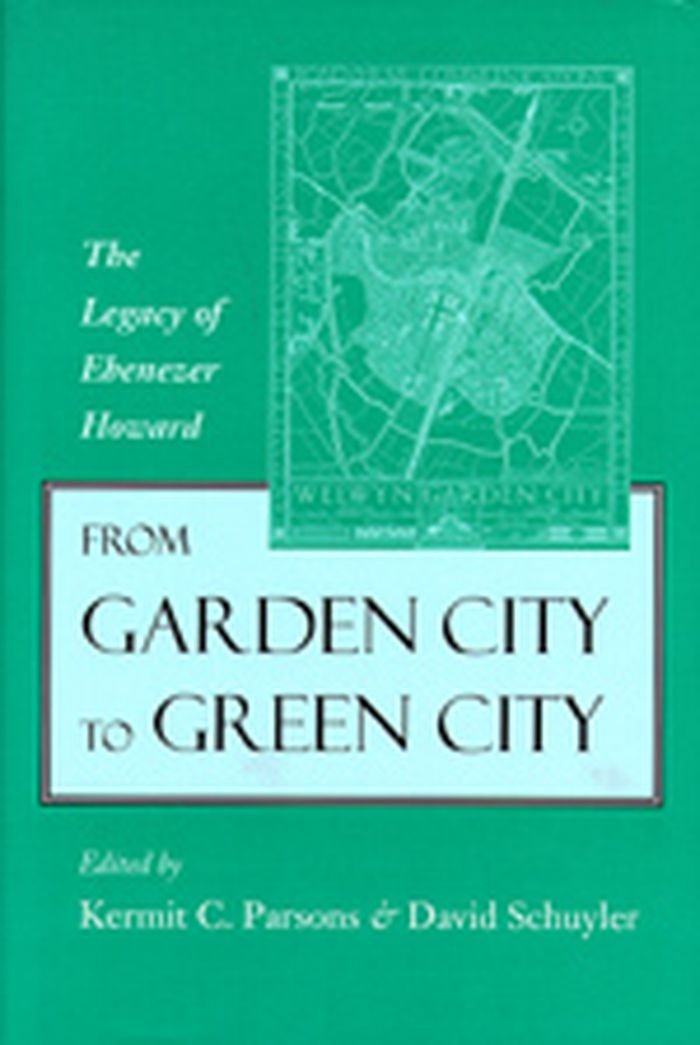
Victorian cities evoke images of crowded tenements where social unrest and epidemic disease were rampant. Conditions in nineteenth-century London, in particular, sparked efforts to find alternative plans for urban development. The most influential alternative to the Victorian city was Ebenezer Howard's Garden City, an idea he sketched in his modest book «To-morrow : a peaceful path to real reform». First published in 1898, To-Morrow attempted to improve the material condition of working-class families through a vision of new communities which would provide a better quality of life. Howard's legacy grew throughout the twentieth century in garden cities, suburbs, and green towns; a century later, architects and planners are still motivated by his ideas. Published on the one hundredth anniversary of Garden Cities of To-Morrow (1902), the more familiar version of Howard's pathbreaking book, the ten essays in this new volume place Howard's legacy in its historic context and show its continuing relevance for urban, regional, and environmental planners. Following a biographical essay, three articles trace the influence of Howard's ideas on the development of the modern metropolis, while another four address his concepts regarding the arrangement of housing and community life and show how they have influenced subsequent development. Two closing essays assess critical aspects of Howard's legacy for the twenty-first century. The contributors focus on the timeless significance of Howard's ideas about limits to growth, the effectiveness of agricultural greenbelts in growth management, and the use of physical space to promote human interaction, as well as the relevance of Howard's work to the new urbanism and sustainability movements.
The legacy of Ebenezer Howard from garden city to green city
Actions:
Prix:
$71.95
(disponible sur commande)
Résumé:
Victorian cities evoke images of crowded tenements where social unrest and epidemic disease were rampant. Conditions in nineteenth-century London, in particular, sparked efforts to find alternative plans for urban development. The most influential alternative to the Victorian city was Ebenezer Howard's Garden City, an idea he sketched in his modest book «To-morrow : a peaceful path to real reform». First published in 1898, To-Morrow attempted to improve the material condition of working-class families through a vision of new communities which would provide a better quality of life. Howard's legacy grew throughout the twentieth century in garden cities, suburbs, and green towns; a century later, architects and planners are still motivated by his ideas. Published on the one hundredth anniversary of Garden Cities of To-Morrow (1902), the more familiar version of Howard's pathbreaking book, the ten essays in this new volume place Howard's legacy in its historic context and show its continuing relevance for urban, regional, and environmental planners. Following a biographical essay, three articles trace the influence of Howard's ideas on the development of the modern metropolis, while another four address his concepts regarding the arrangement of housing and community life and show how they have influenced subsequent development. Two closing essays assess critical aspects of Howard's legacy for the twenty-first century. The contributors focus on the timeless significance of Howard's ideas about limits to growth, the effectiveness of agricultural greenbelts in growth management, and the use of physical space to promote human interaction, as well as the relevance of Howard's work to the new urbanism and sustainability movements.
Classification:
livres
livres
Publication:
novembre 2002, Baltimore / London
novembre 2002, Baltimore / London
Sujet:
Théorie de l’urbanisme
Théorie de l’urbanisme
Classification:
livres
livres
Titre:
The gray cloth
The gray cloth
Actions:
Prix:
$44.95
(disponible sur commande)
Résumé:
The German expressionist, architectural visionary, author, inventor, and artist Paul Scheerbart (1863-1915) wrote several fictional utopian narratives related to glass architecture. In "The Gray Cloth", the first of his novels to be translated into English, Scheerbart uses subtle irony and the structural simplicity of a fairy tale to present the theories of coloured glass(...)
$44.95
(disponible sur commande)
Résumé:
The German expressionist, architectural visionary, author, inventor, and artist Paul Scheerbart (1863-1915) wrote several fictional utopian narratives related to glass architecture. In "The Gray Cloth", the first of his novels to be translated into English, Scheerbart uses subtle irony and the structural simplicity of a fairy tale to present the theories of coloured glass(...)
Sujet:
Théorie de l’architecture
Théorie de l’architecture
Publication:
octobre 2001, Cambridge, Mass.
octobre 2001, Cambridge, Mass.
Titre:
The gray cloth
Actions:
Prix:
$44.95
(disponible sur commande)
Résumé:
The German expressionist, architectural visionary, author, inventor, and artist Paul Scheerbart (1863-1915) wrote several fictional utopian narratives related to glass architecture. In "The Gray Cloth", the first of his novels to be translated into English, Scheerbart uses subtle irony and the structural simplicity of a fairy tale to present the theories of coloured glass outlined in his well-known treatise "Glass Architecture". The novel is set forward in time to the mid-twentieth century. The protagonist, a Swiss architect named Edgar Krug, circumnavigates the globe by airship with his wife, constructing wildly varied, colored-glass buildings. His projects include a high-rise and exhibition/concert hall in Chicago, a retirement complex for air pilots on the Fiji Islands, the structure for an elevated train across a zoological park in northern India, and a suspended residential villa on the Kuria Muria Islands off the coast of Oman in the Arabian Sea. Fearing that his architecture is challenged by the colourfulness of women’s clothing, Krug insists that his wife wear all gray clothing with the addition of ten percent white. This odd demand brings him notoriety and sensationalizes his international building campaign. For the reader, it underlines the confluence of architecture with fashion, gender, and global media. In his introduction John Stuart surveys Scheerbart’s career and role in German avant-garde circles, as well as his architectural and social ideas. He shows how Scheerbart strove to integrate his spiritual and romantic leanings with the modern world, often relying on glass architecture to do so. In addition to discussing the novel’s reception and its rediscovery by contemporary architects and critics, Stuart shows fiction to be a resource for the study of architecture and places "The Gray Cloth" in the context of German Expressionism.
The gray cloth
Actions:
Prix:
$44.95
(disponible sur commande)
Résumé:
The German expressionist, architectural visionary, author, inventor, and artist Paul Scheerbart (1863-1915) wrote several fictional utopian narratives related to glass architecture. In "The Gray Cloth", the first of his novels to be translated into English, Scheerbart uses subtle irony and the structural simplicity of a fairy tale to present the theories of coloured glass outlined in his well-known treatise "Glass Architecture". The novel is set forward in time to the mid-twentieth century. The protagonist, a Swiss architect named Edgar Krug, circumnavigates the globe by airship with his wife, constructing wildly varied, colored-glass buildings. His projects include a high-rise and exhibition/concert hall in Chicago, a retirement complex for air pilots on the Fiji Islands, the structure for an elevated train across a zoological park in northern India, and a suspended residential villa on the Kuria Muria Islands off the coast of Oman in the Arabian Sea. Fearing that his architecture is challenged by the colourfulness of women’s clothing, Krug insists that his wife wear all gray clothing with the addition of ten percent white. This odd demand brings him notoriety and sensationalizes his international building campaign. For the reader, it underlines the confluence of architecture with fashion, gender, and global media. In his introduction John Stuart surveys Scheerbart’s career and role in German avant-garde circles, as well as his architectural and social ideas. He shows how Scheerbart strove to integrate his spiritual and romantic leanings with the modern world, often relying on glass architecture to do so. In addition to discussing the novel’s reception and its rediscovery by contemporary architects and critics, Stuart shows fiction to be a resource for the study of architecture and places "The Gray Cloth" in the context of German Expressionism.
Classification:
livres
livres
Publication:
octobre 2001, Cambridge, Mass.
octobre 2001, Cambridge, Mass.
Sujet:
Théorie de l’architecture
Théorie de l’architecture
Classification:
périodiques
périodiques
Titre:
Future anterior
Future anterior
Actions:
Prix:
$14.95
(disponible sur commande)
Résumé:
Historic preservation is at an important moment of rethinking. The field has grown exponentially in America since its first academic program was founded at Columbia University in 1965. Although initially concerned only with buildings, preservation has recently expanded to include the protection and creative interpretation of entire urban environments, landscapes,(...)
$14.95
(disponible sur commande)
Résumé:
Historic preservation is at an important moment of rethinking. The field has grown exponentially in America since its first academic program was founded at Columbia University in 1965. Although initially concerned only with buildings, preservation has recently expanded to include the protection and creative interpretation of entire urban environments, landscapes,(...)
Titre:
Future anterior
Actions:
Prix:
$14.95
(disponible sur commande)
Résumé:
Historic preservation is at an important moment of rethinking. The field has grown exponentially in America since its first academic program was founded at Columbia University in 1965. Although initially concerned only with buildings, preservation has recently expanded to include the protection and creative interpretation of entire urban environments, landscapes, highways, cultural traditions, artistic practices, and even specific “experiences” such as historic view sheds. Most importantly, historic preservation is beginning a significant re-clarification of its purposes, sharpening and deepening its focus on the contributions old architecture and artifacts make to our understanding of the human condition and how we should address and live in it. Future Anterior is the first and only journal in American academia to be devoted to the study and advancement of preservation, which brings together the interests of scholars and professionals in multiple disciplines such as architecture, art, history, philosophy, law, planning, materials science, cultural anthropology, conservation, and others. Future Anterior establishes an important and much needed forum for the critical examination of this expanding discipline, to spur challenges of its motives, goals, forms of practice and results. The appearance of Future Anterior signals the maturation of the field of preservation and a shift away from nostalgic antiquarianism towards an active involvement in the understanding and creative transformation of human environments. This turn in preservation is reflected in an increased interest in historic architecture and artifacts as expressive resources of great public importance. The destruction of patrimony, from the colossal Buddhas in Afghanistan to New York’s World Trade Center, is seen not just as barbarism but as sources of understanding about where we are going wrong and what we need to do next. In response, architects, planners, urban designers, and artists have been producing works which engage the public in new ways of reflecting and taking on the past not as constraint but as provocation.
Future anterior
Actions:
Prix:
$14.95
(disponible sur commande)
Résumé:
Historic preservation is at an important moment of rethinking. The field has grown exponentially in America since its first academic program was founded at Columbia University in 1965. Although initially concerned only with buildings, preservation has recently expanded to include the protection and creative interpretation of entire urban environments, landscapes, highways, cultural traditions, artistic practices, and even specific “experiences” such as historic view sheds. Most importantly, historic preservation is beginning a significant re-clarification of its purposes, sharpening and deepening its focus on the contributions old architecture and artifacts make to our understanding of the human condition and how we should address and live in it. Future Anterior is the first and only journal in American academia to be devoted to the study and advancement of preservation, which brings together the interests of scholars and professionals in multiple disciplines such as architecture, art, history, philosophy, law, planning, materials science, cultural anthropology, conservation, and others. Future Anterior establishes an important and much needed forum for the critical examination of this expanding discipline, to spur challenges of its motives, goals, forms of practice and results. The appearance of Future Anterior signals the maturation of the field of preservation and a shift away from nostalgic antiquarianism towards an active involvement in the understanding and creative transformation of human environments. This turn in preservation is reflected in an increased interest in historic architecture and artifacts as expressive resources of great public importance. The destruction of patrimony, from the colossal Buddhas in Afghanistan to New York’s World Trade Center, is seen not just as barbarism but as sources of understanding about where we are going wrong and what we need to do next. In response, architects, planners, urban designers, and artists have been producing works which engage the public in new ways of reflecting and taking on the past not as constraint but as provocation.
Classification:
périodiques
périodiques
Publication:
octobre 2004, New York
octobre 2004, New York
Sujet:
Revues
Revues
Classification:
livres
livres
Actions:
Prix:
$44.95
(disponible sur commande)
Résumé:
Essays, plans and projects by various artists,including Max Bill, Heinrich Dunst, Helmut Federle, Per Kirkeby, Katarina Fritsch, Erwin Heerich, Gerhard Merz, Gottfried Honegger, Walther Pichler, Ulrich Rückriem, Bernar Venet, Daniel Buren, Christoph Haerle, Peter Wigglesworth, Donald Judd, Markus Lüpertz, Arnulf Rainer, Richard Serra among others showing their ideas for(...)
$44.95
(disponible sur commande)
Résumé:
Essays, plans and projects by various artists,including Max Bill, Heinrich Dunst, Helmut Federle, Per Kirkeby, Katarina Fritsch, Erwin Heerich, Gerhard Merz, Gottfried Honegger, Walther Pichler, Ulrich Rückriem, Bernar Venet, Daniel Buren, Christoph Haerle, Peter Wigglesworth, Donald Judd, Markus Lüpertz, Arnulf Rainer, Richard Serra among others showing their ideas for(...)
Titre:
Museum architecture : texts and projects by artists
Actions:
Prix:
$44.95
(disponible sur commande)
Résumé:
Essays, plans and projects by various artists,including Max Bill, Heinrich Dunst, Helmut Federle, Per Kirkeby, Katarina Fritsch, Erwin Heerich, Gerhard Merz, Gottfried Honegger, Walther Pichler, Ulrich Rückriem, Bernar Venet, Daniel Buren, Christoph Haerle, Peter Wigglesworth, Donald Judd, Markus Lüpertz, Arnulf Rainer, Richard Serra among others showing their ideas for how museums should be constructed. When discussing the increasing number of museums and exhibition spaces for modern art which have come into being in recent years, the deep-seated differences of opinion between architects and artists keep coming to the fore. The discussion seems to be almost exclusively dominated by the point of view of the architect and defined by his/her interests. The needs of the art itself are being widely neglected and the voice of the artist is simply not being heard. Donald Judd, the American sculptor and minimalist artist, once noted that museums are so rarely built on functional lines these days, the trend being more towards the creation of a showpiece for the architect. Why are painters and sculptors not asked for their input? The very obvious question was addressed by the Espace de l’art concret when in 1997, it asked a number of well-known artists to come up with ideas and projects for a museum for concrete art. They were invited to submit their ideal utopian suggestions as well as very concrete and architectural proposals and written statements. These are documented in this publication, supplemented with the material for the collection owned by the Kunsthaus in Bregenz and expanded with an extensive anthology of texts by artists on this subject. The résumé of the contributions presents a searing criticism of contemporary museum architecture by its most important users. Their voice will at last find an ear in the current architectural discussion about the new cathedrals of the post-industrial society.
Museum architecture : texts and projects by artists
Actions:
Prix:
$44.95
(disponible sur commande)
Résumé:
Essays, plans and projects by various artists,including Max Bill, Heinrich Dunst, Helmut Federle, Per Kirkeby, Katarina Fritsch, Erwin Heerich, Gerhard Merz, Gottfried Honegger, Walther Pichler, Ulrich Rückriem, Bernar Venet, Daniel Buren, Christoph Haerle, Peter Wigglesworth, Donald Judd, Markus Lüpertz, Arnulf Rainer, Richard Serra among others showing their ideas for how museums should be constructed. When discussing the increasing number of museums and exhibition spaces for modern art which have come into being in recent years, the deep-seated differences of opinion between architects and artists keep coming to the fore. The discussion seems to be almost exclusively dominated by the point of view of the architect and defined by his/her interests. The needs of the art itself are being widely neglected and the voice of the artist is simply not being heard. Donald Judd, the American sculptor and minimalist artist, once noted that museums are so rarely built on functional lines these days, the trend being more towards the creation of a showpiece for the architect. Why are painters and sculptors not asked for their input? The very obvious question was addressed by the Espace de l’art concret when in 1997, it asked a number of well-known artists to come up with ideas and projects for a museum for concrete art. They were invited to submit their ideal utopian suggestions as well as very concrete and architectural proposals and written statements. These are documented in this publication, supplemented with the material for the collection owned by the Kunsthaus in Bregenz and expanded with an extensive anthology of texts by artists on this subject. The résumé of the contributions presents a searing criticism of contemporary museum architecture by its most important users. Their voice will at last find an ear in the current architectural discussion about the new cathedrals of the post-industrial society.
Classification:
livres
livres
Publication:
janvier 1900, Cologne
janvier 1900, Cologne
Sujet:
Muséologie
Muséologie
Classification:
livres
livres
Titre:
The gray cloth
The gray cloth
Actions:
Prix:
$24.95
(disponible sur commande)
Résumé:
The German expressionist, architectural visionary, author, inventor, and artist Paul Scheerbart (1863-1915) wrote several fictional utopian narratives related to glass architecture. In "The Gray Cloth", the first of his novels to be translated into English, Scheerbart uses subtle irony and the structural simplicity of a fairy tale to present the theories of coloured glass(...)
$24.95
(disponible sur commande)
Résumé:
The German expressionist, architectural visionary, author, inventor, and artist Paul Scheerbart (1863-1915) wrote several fictional utopian narratives related to glass architecture. In "The Gray Cloth", the first of his novels to be translated into English, Scheerbart uses subtle irony and the structural simplicity of a fairy tale to present the theories of coloured glass(...)
Sujet:
Théorie de l’architecture
Théorie de l’architecture
Publication:
octobre 2003, Cambridge / London
octobre 2003, Cambridge / London
Titre:
The gray cloth
Actions:
Prix:
$24.95
(disponible sur commande)
Résumé:
The German expressionist, architectural visionary, author, inventor, and artist Paul Scheerbart (1863-1915) wrote several fictional utopian narratives related to glass architecture. In "The Gray Cloth", the first of his novels to be translated into English, Scheerbart uses subtle irony and the structural simplicity of a fairy tale to present the theories of coloured glass outlined in his well-known treatise "Glass Architecture". The novel is set forward in time to the mid-twentieth century. The protagonist, a Swiss architect named Edgar Krug, circumnavigates the globe by airship with his wife, constructing wildly varied, colored-glass buildings. His projects include a high-rise and exhibition/concert hall in Chicago, a retirement complex for air pilots on the Fiji Islands, the structure for an elevated train across a zoological park in northern India, and a suspended residential villa on the Kuria Muria Islands off the coast of Oman in the Arabian Sea. Fearing that his architecture is challenged by the colourfulness of women’s clothing, Krug insists that his wife wear all gray clothing with the addition of ten percent white. This odd demand brings him notoriety and sensationalizes his international building campaign. For the reader, it underlines the confluence of architecture with fashion, gender, and global media. In his introduction John Stuart surveys Scheerbart’s career and role in German avant-garde circles, as well as his architectural and social ideas. He shows how Scheerbart strove to integrate his spiritual and romantic leanings with the modern world, often relying on glass architecture to do so. In addition to discussing the novel’s reception and its rediscovery by contemporary architects and critics, Stuart shows fiction to be a resource for the study of architecture and places "The Gray Cloth" in the context of German Expressionism.
The gray cloth
Actions:
Prix:
$24.95
(disponible sur commande)
Résumé:
The German expressionist, architectural visionary, author, inventor, and artist Paul Scheerbart (1863-1915) wrote several fictional utopian narratives related to glass architecture. In "The Gray Cloth", the first of his novels to be translated into English, Scheerbart uses subtle irony and the structural simplicity of a fairy tale to present the theories of coloured glass outlined in his well-known treatise "Glass Architecture". The novel is set forward in time to the mid-twentieth century. The protagonist, a Swiss architect named Edgar Krug, circumnavigates the globe by airship with his wife, constructing wildly varied, colored-glass buildings. His projects include a high-rise and exhibition/concert hall in Chicago, a retirement complex for air pilots on the Fiji Islands, the structure for an elevated train across a zoological park in northern India, and a suspended residential villa on the Kuria Muria Islands off the coast of Oman in the Arabian Sea. Fearing that his architecture is challenged by the colourfulness of women’s clothing, Krug insists that his wife wear all gray clothing with the addition of ten percent white. This odd demand brings him notoriety and sensationalizes his international building campaign. For the reader, it underlines the confluence of architecture with fashion, gender, and global media. In his introduction John Stuart surveys Scheerbart’s career and role in German avant-garde circles, as well as his architectural and social ideas. He shows how Scheerbart strove to integrate his spiritual and romantic leanings with the modern world, often relying on glass architecture to do so. In addition to discussing the novel’s reception and its rediscovery by contemporary architects and critics, Stuart shows fiction to be a resource for the study of architecture and places "The Gray Cloth" in the context of German Expressionism.
Classification:
livres
livres
Publication:
octobre 2003, Cambridge / London
octobre 2003, Cambridge / London
Sujet:
Théorie de l’architecture
Théorie de l’architecture
Classification:
livres
livres
Actions:
Prix:
$24.95
(disponible sur commande)
Résumé:
Since the election of Mayor David Miller in November 2003, Toronto has experienced a wave of civic pride and enthusiasm not felt in decades. At long last, Torontonians see their city as a place of possibility and potential. Visions of a truly workable, liveable and world-class city are once again dancing in citizens’ heads. In the past two years, this spirit has, directly(...)
$24.95
(disponible sur commande)
Résumé:
Since the election of Mayor David Miller in November 2003, Toronto has experienced a wave of civic pride and enthusiasm not felt in decades. At long last, Torontonians see their city as a place of possibility and potential. Visions of a truly workable, liveable and world-class city are once again dancing in citizens’ heads. In the past two years, this spirit has, directly(...)
Titre:
Utopia : towards a new Toronto
Actions:
Prix:
$24.95
(disponible sur commande)
Résumé:
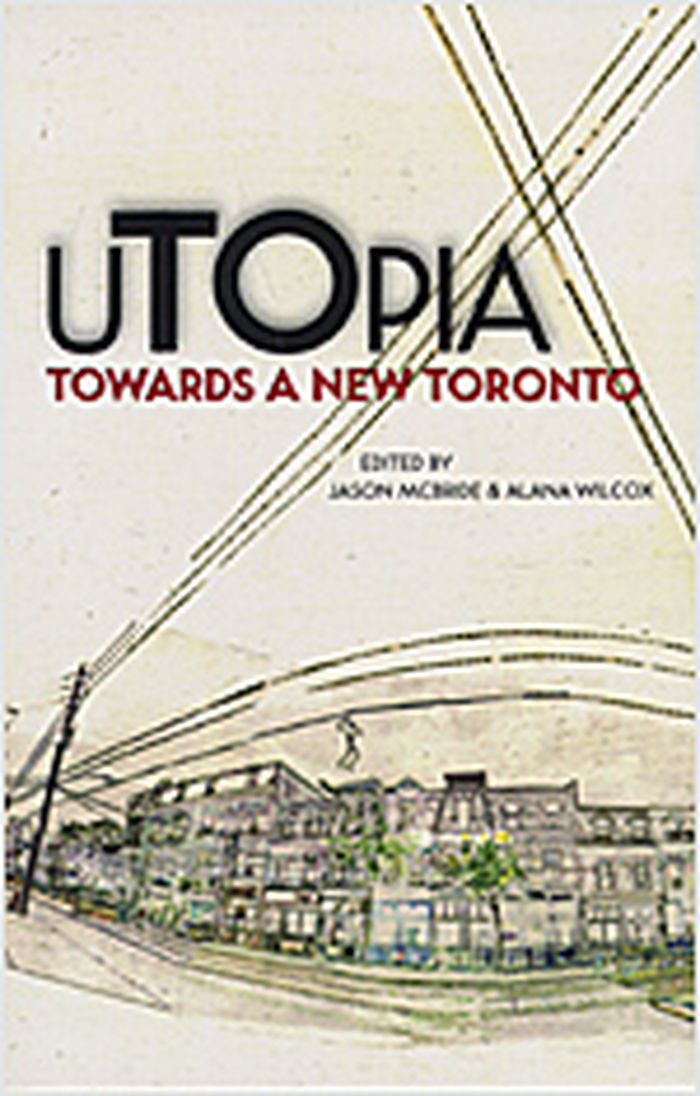
Since the election of Mayor David Miller in November 2003, Toronto has experienced a wave of civic pride and enthusiasm not felt in decades. At long last, Torontonians see their city as a place of possibility and potential. Visions of a truly workable, liveable and world-class city are once again dancing in citizens’ heads. In the past two years, this spirit has, directly or indirectly, manifested itself in multifarious forms: in writer Sheila Heti’s sui generis lecture series, Trampoline Hall; in the transformation of derelict hotels such as the Drake and the Gladstone into cultural hotspots; in renewed interest in waterfront revitalization and public transportation; in exciting, controversial architectural developments such as the OCAD building, the expansion of the ROM and the AGO; in the [murmur] project, which catalogues stories about Toronto neighbourhoods and broadcasts them to people’s cell phones; in the explosion of the local independent music scene. "uTOpia" aims to capture and chronicle that spirit, collecting writing by many of the people inspired by and involved in these projects. Featuring passionate, visionary essays by thirty-four different journalists, artists, thinkers, architects and activists, "uTOpia" is a compendium of ideas, opinions and strategies. The anthology explores plans to redevelop the Island airport into a Ward’s Island-style community; how the Zeidler family is energizing artist-run centres; what a car-free Kensington Market might mean; the necessity and beauty of laneway housing; the way past efforts to combat devastating developments like the Spadina Expressway have shaped current activism; what a utopian Toronto might look like mapped out; and much, much more. "uTOpia" writes Toronto as it is shared and created by the people who live here. Though it is by no means a complete picture of what is happening in the city right now, it will hopefully show that what was once just a T-shirt slogan – I Heart T.O. – is now genuine, heartfelt sentiment.
Utopia : towards a new Toronto
Actions:
Prix:
$24.95
(disponible sur commande)
Résumé:
Since the election of Mayor David Miller in November 2003, Toronto has experienced a wave of civic pride and enthusiasm not felt in decades. At long last, Torontonians see their city as a place of possibility and potential. Visions of a truly workable, liveable and world-class city are once again dancing in citizens’ heads. In the past two years, this spirit has, directly or indirectly, manifested itself in multifarious forms: in writer Sheila Heti’s sui generis lecture series, Trampoline Hall; in the transformation of derelict hotels such as the Drake and the Gladstone into cultural hotspots; in renewed interest in waterfront revitalization and public transportation; in exciting, controversial architectural developments such as the OCAD building, the expansion of the ROM and the AGO; in the [murmur] project, which catalogues stories about Toronto neighbourhoods and broadcasts them to people’s cell phones; in the explosion of the local independent music scene. "uTOpia" aims to capture and chronicle that spirit, collecting writing by many of the people inspired by and involved in these projects. Featuring passionate, visionary essays by thirty-four different journalists, artists, thinkers, architects and activists, "uTOpia" is a compendium of ideas, opinions and strategies. The anthology explores plans to redevelop the Island airport into a Ward’s Island-style community; how the Zeidler family is energizing artist-run centres; what a car-free Kensington Market might mean; the necessity and beauty of laneway housing; the way past efforts to combat devastating developments like the Spadina Expressway have shaped current activism; what a utopian Toronto might look like mapped out; and much, much more. "uTOpia" writes Toronto as it is shared and created by the people who live here. Though it is by no means a complete picture of what is happening in the city right now, it will hopefully show that what was once just a T-shirt slogan – I Heart T.O. – is now genuine, heartfelt sentiment.
Classification:
livres
livres
Publication:
octobre 2005, Toronto
octobre 2005, Toronto
Sujet:
Architecture du Canada
Architecture du Canada


