


3085 Résultats
Classification:
livres
livres
Prix:
$54.00
(disponible sur commande)
Résumé:
This comprehensive guide to modern Brazilian architecture takes us on a tour of over 125 buildings and projects designed between 1928, the year of Gregori Warchavchik's historic Paulista House, and 1960, the year the capital of Brasilia was inaugurated. Works by thirty-three architects, including renowned figures such as Oscar Niemeyer and Paulo Mendes da Rocha and(...)
$54.00
(disponible sur commande)
Résumé:
This comprehensive guide to modern Brazilian architecture takes us on a tour of over 125 buildings and projects designed between 1928, the year of Gregori Warchavchik's historic Paulista House, and 1960, the year the capital of Brasilia was inaugurated. Works by thirty-three architects, including renowned figures such as Oscar Niemeyer and Paulo Mendes da Rocha and(...)
Titre:
When Brazil was modern : guide to architecture 1928-1960
Actions:
Prix:
$54.00
(disponible sur commande)
Résumé:
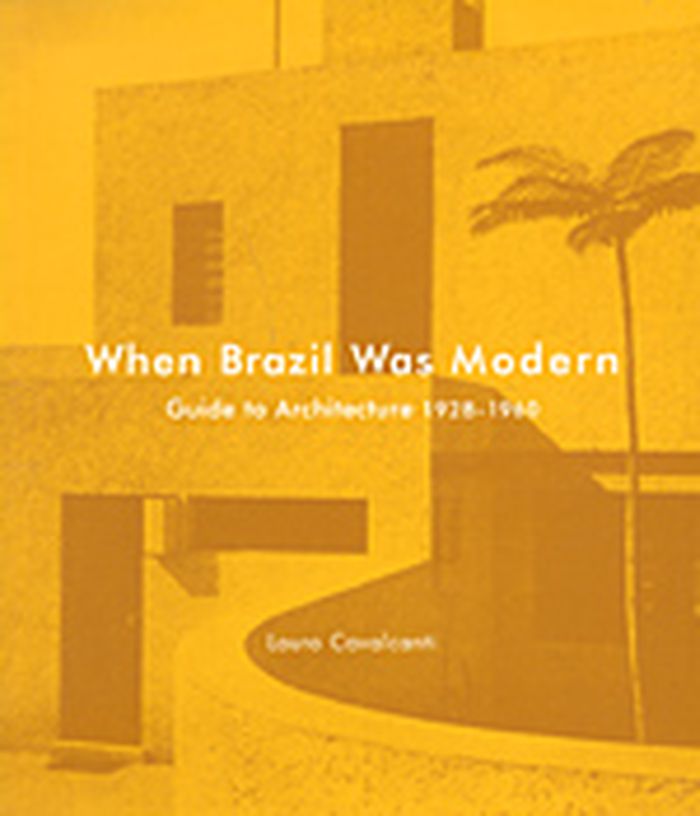
This comprehensive guide to modern Brazilian architecture takes us on a tour of over 125 buildings and projects designed between 1928, the year of Gregori Warchavchik's historic Paulista House, and 1960, the year the capital of Brasilia was inaugurated. Works by thirty-three architects, including renowned figures such as Oscar Niemeyer and Paulo Mendes da Rocha and lesser-known architects like Flavio de Carvalho and Lina Bo Bardi, are presented in this guide. Each entry provides photographs, drawings, a brief description, and information on visitor access. When Brazil was Modern is a complete survey of the country's modern architectural legacy, and not only fills a forty year-old bibliographic gap on the subject, but also sheds new light on the aesthetics and social underpinnings of Brazil's modern architecture. By including the unconventional and experimental, author Cavalcanti challenges the very definition of what was modern, in Brazil, the Americas, and elsewhere.
When Brazil was modern : guide to architecture 1928-1960
Actions:
Prix:
$54.00
(disponible sur commande)
Résumé:
This comprehensive guide to modern Brazilian architecture takes us on a tour of over 125 buildings and projects designed between 1928, the year of Gregori Warchavchik's historic Paulista House, and 1960, the year the capital of Brasilia was inaugurated. Works by thirty-three architects, including renowned figures such as Oscar Niemeyer and Paulo Mendes da Rocha and lesser-known architects like Flavio de Carvalho and Lina Bo Bardi, are presented in this guide. Each entry provides photographs, drawings, a brief description, and information on visitor access. When Brazil was Modern is a complete survey of the country's modern architectural legacy, and not only fills a forty year-old bibliographic gap on the subject, but also sheds new light on the aesthetics and social underpinnings of Brazil's modern architecture. By including the unconventional and experimental, author Cavalcanti challenges the very definition of what was modern, in Brazil, the Americas, and elsewhere.
Classification:
livres
livres
Publication:
janvier 2003, New York
janvier 2003, New York
Sujet:
Arch Moyen-Orient
Arch Moyen-Orient
Classification:
livres
livres
Actions:
Prix:
$91.95
(disponible sur commande)
Résumé:
Asmara, the capital of the small east African country of Eritrea, bordering the Red Sea, is one of the most important and exciting architectural ‘discoveries’ of recent years. Built almost entirely in the 1930s by the Italians, Asmara has one of the highest concentrations of modernist architecture anywhere in the world, and has evocatively been described as “the Miami of(...)
$91.95
(disponible sur commande)
Résumé:
Asmara, the capital of the small east African country of Eritrea, bordering the Red Sea, is one of the most important and exciting architectural ‘discoveries’ of recent years. Built almost entirely in the 1930s by the Italians, Asmara has one of the highest concentrations of modernist architecture anywhere in the world, and has evocatively been described as “the Miami of(...)
Publication:
septembre 2003, London
septembre 2003, London
Titre:
Asmara : Africa's secret modernist city
Actions:
Prix:
$91.95
(disponible sur commande)
Résumé:
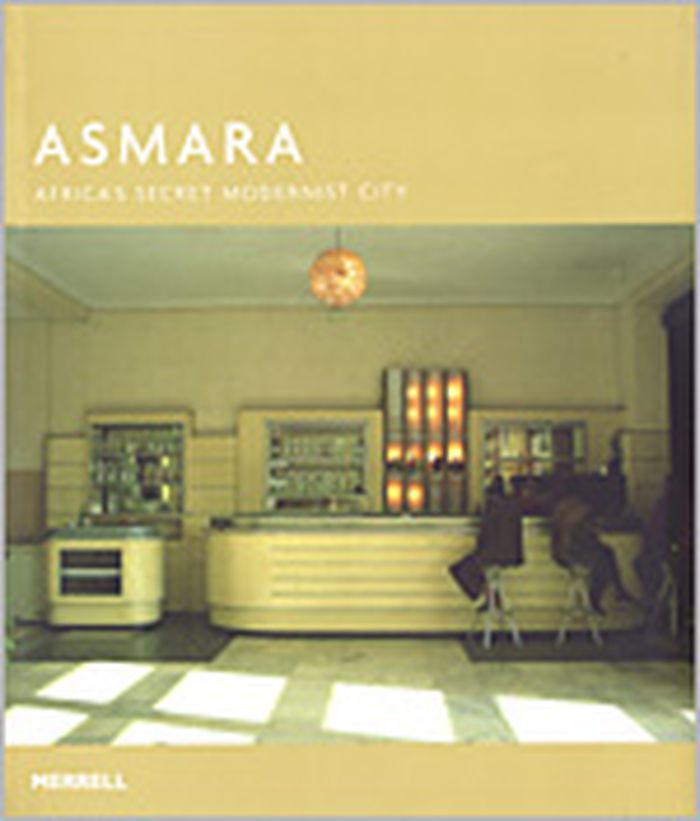
Asmara, the capital of the small east African country of Eritrea, bordering the Red Sea, is one of the most important and exciting architectural ‘discoveries’ of recent years. Built almost entirely in the 1930s by the Italians, Asmara has one of the highest concentrations of modernist architecture anywhere in the world, and has evocatively been described as “the Miami of Africa”. Desperate to build quickly, the colonial government of the time allowed radical architectural experimentation that would not have found favour in the more conservative European environment. Asmara therefore became one of the world’s prime locations for architectural innovation during the Modern Movement. That this occurred at all is remarkable enough, but that these buildings should have survived in such numbers today makes it one of the finest modernist cities in the world. This is a building-by-building survey, illustrated with rare archival material and specially commissioned photographs
Asmara : Africa's secret modernist city
Actions:
Prix:
$91.95
(disponible sur commande)
Résumé:
Asmara, the capital of the small east African country of Eritrea, bordering the Red Sea, is one of the most important and exciting architectural ‘discoveries’ of recent years. Built almost entirely in the 1930s by the Italians, Asmara has one of the highest concentrations of modernist architecture anywhere in the world, and has evocatively been described as “the Miami of Africa”. Desperate to build quickly, the colonial government of the time allowed radical architectural experimentation that would not have found favour in the more conservative European environment. Asmara therefore became one of the world’s prime locations for architectural innovation during the Modern Movement. That this occurred at all is remarkable enough, but that these buildings should have survived in such numbers today makes it one of the finest modernist cities in the world. This is a building-by-building survey, illustrated with rare archival material and specially commissioned photographs
Classification:
livres
livres
Publication:
septembre 2003, London
septembre 2003, London
Classification:
livres
livres

Actions:
Prix:
$61.00
(disponible en magasin)
Résumé:
The concept "Formula New Ljubljana" is used as a means to explore the city's development as a constant and dynamic process. Rather than being in a state of frozen identity, Slovenia's capital inspires new visions. Formulas state concepts applied to architectural products. They are used as the communication tool in the office while developing a particular product, in(...)
$61.00
(disponible en magasin)
Résumé:
The concept "Formula New Ljubljana" is used as a means to explore the city's development as a constant and dynamic process. Rather than being in a state of frozen identity, Slovenia's capital inspires new visions. Formulas state concepts applied to architectural products. They are used as the communication tool in the office while developing a particular product, in(...)
Publication:
octobre 2006, Barcelona
octobre 2006, Barcelona
Titre:
Sadar Vuga Arhitekti : Formula new ljubljana
Actions:
Prix:
$61.00
(disponible en magasin)
Résumé:
The concept "Formula New Ljubljana" is used as a means to explore the city's development as a constant and dynamic process. Rather than being in a state of frozen identity, Slovenia's capital inspires new visions. Formulas state concepts applied to architectural products. They are used as the communication tool in the office while developing a particular product, in discussions with the client and presentations to the public. More than one product can be defined by one formula. Formulas exist regardless of typologies, program, location, budget, time of execution symbolic power, or any other parameter that outline the "uniqueness" of an architectural product. Formulas aim to become generic phrases and to provide a user friendly tool for communicating architectural products. Formulas communicate architectural products away from their technical or typological categories. A formula captures the character of an architectural product and its effect on the observer and the user.
Sadar Vuga Arhitekti : Formula new ljubljana
Actions:
Prix:
$61.00
(disponible en magasin)
Résumé:
The concept "Formula New Ljubljana" is used as a means to explore the city's development as a constant and dynamic process. Rather than being in a state of frozen identity, Slovenia's capital inspires new visions. Formulas state concepts applied to architectural products. They are used as the communication tool in the office while developing a particular product, in discussions with the client and presentations to the public. More than one product can be defined by one formula. Formulas exist regardless of typologies, program, location, budget, time of execution symbolic power, or any other parameter that outline the "uniqueness" of an architectural product. Formulas aim to become generic phrases and to provide a user friendly tool for communicating architectural products. Formulas communicate architectural products away from their technical or typological categories. A formula captures the character of an architectural product and its effect on the observer and the user.
Classification:
livres
livres
Publication:
octobre 2006, Barcelona
octobre 2006, Barcelona
Classification:
livres
livres
Prix:
$31.50
(disponible sur commande)
Résumé:
In this new book, Bruno Latour offers answers to questions raised in "We Have Never Been Modern", a work that interrogated the connections between nature and culture. If not modern, he asked, what have we been, and what values should we inherit? Over the last twenty-five years, Latour has developed a research protocol different from the actor-network theory with which his(...)
$31.50
(disponible sur commande)
Résumé:
In this new book, Bruno Latour offers answers to questions raised in "We Have Never Been Modern", a work that interrogated the connections between nature and culture. If not modern, he asked, what have we been, and what values should we inherit? Over the last twenty-five years, Latour has developed a research protocol different from the actor-network theory with which his(...)
Titre:
An inquiry into modes of existence: an anthropology of the moderns
Actions:
Prix:
$31.50
(disponible sur commande)
Résumé:
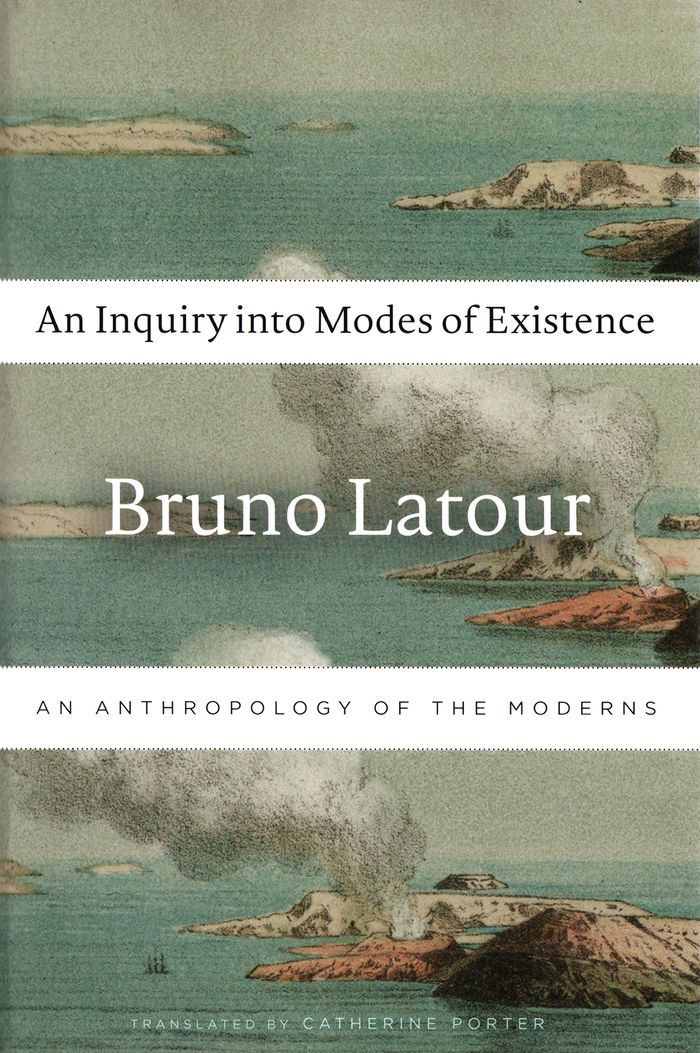
In this new book, Bruno Latour offers answers to questions raised in "We Have Never Been Modern", a work that interrogated the connections between nature and culture. If not modern, he asked, what have we been, and what values should we inherit? Over the last twenty-five years, Latour has developed a research protocol different from the actor-network theory with which his name is now associated—a research protocol that follows the different types of connectors that provide specific truth conditions. These are the connectors that prompt a climate scientist challenged by a captain of industry to appeal to the "institution" of science, with its army of researchers and mountains of data, rather than to “capital-S Science” as a higher authority. Such modes of extension—or modes of existence, Latour argues here—account for the many differences between law, science, politics, and other domains of knowledge.
An inquiry into modes of existence: an anthropology of the moderns
Actions:
Prix:
$31.50
(disponible sur commande)
Résumé:
In this new book, Bruno Latour offers answers to questions raised in "We Have Never Been Modern", a work that interrogated the connections between nature and culture. If not modern, he asked, what have we been, and what values should we inherit? Over the last twenty-five years, Latour has developed a research protocol different from the actor-network theory with which his name is now associated—a research protocol that follows the different types of connectors that provide specific truth conditions. These are the connectors that prompt a climate scientist challenged by a captain of industry to appeal to the "institution" of science, with its army of researchers and mountains of data, rather than to “capital-S Science” as a higher authority. Such modes of extension—or modes of existence, Latour argues here—account for the many differences between law, science, politics, and other domains of knowledge.
Classification:
livres
livres
Publication:
juin 2018
juin 2018
Sujet:
Théorie/ philosophie
Théorie/ philosophie
Classification:
livres
livres
Prix:
$43.00
(disponible en magasin)
Résumé:
Catalogue. Basle 2008/09. Introduction by Kai Vöckler. This is the first of a series of investigations of urban development in post-conflict areas, initiated by Archis Interventions. After NATO-led KFOR troops ended civil war in Kosovo (1999), an instant building boom changed the capital Prishtina dramatically. Within a few years its population doubled, partly as a(...)
$43.00
(disponible en magasin)
Résumé:
Catalogue. Basle 2008/09. Introduction by Kai Vöckler. This is the first of a series of investigations of urban development in post-conflict areas, initiated by Archis Interventions. After NATO-led KFOR troops ended civil war in Kosovo (1999), an instant building boom changed the capital Prishtina dramatically. Within a few years its population doubled, partly as a(...)
Titre:
Prishtina is everywhere, Turbo Urbanism: the aftermath of a crisis
Actions:
Prix:
$43.00
(disponible en magasin)
Résumé:
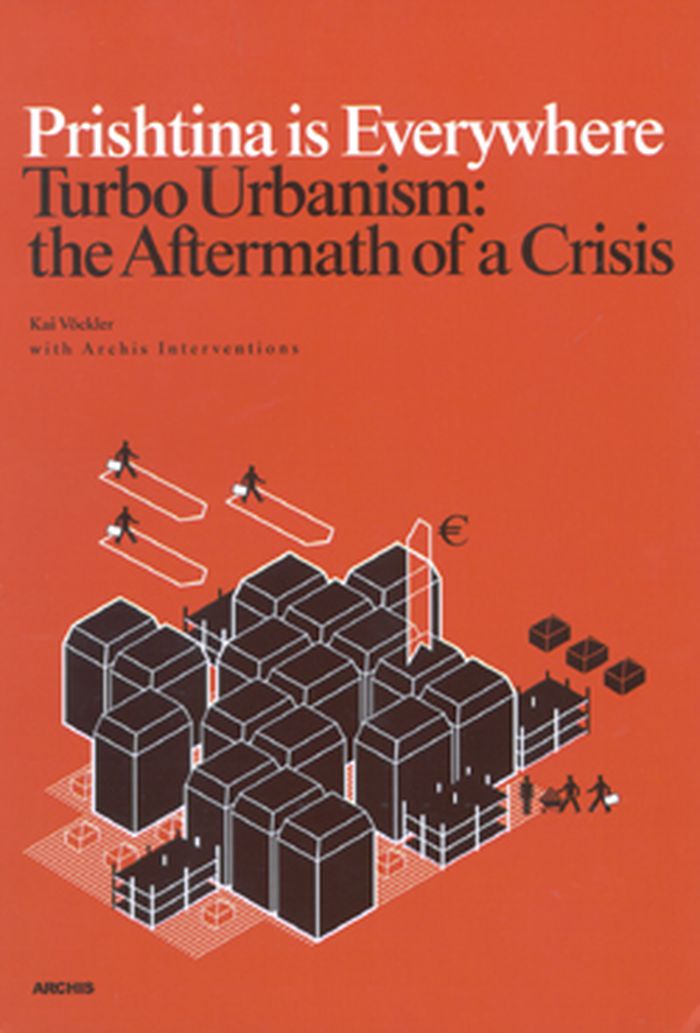
Catalogue. Basle 2008/09. Introduction by Kai Vöckler. This is the first of a series of investigations of urban development in post-conflict areas, initiated by Archis Interventions. After NATO-led KFOR troops ended civil war in Kosovo (1999), an instant building boom changed the capital Prishtina dramatically. Within a few years its population doubled, partly as a consequence of an influx of returning refugees. This book describes, maps and analyzes the situation in Prishtina after 1999, documents problem-solving strategies, and discusses the significance of this kind of urban development for the way urban life evolves in crisis zones. The title hints at two phenomena: firstly, urban development of this type is typical for many post-conflict situations, and secondly, most of the construction in Prishtina has been financed by remittances from family members working abroad (one-fifth of Kosovo’s entire population lives abroad, specifically in Germany, Switzerland, and Austria).
Prishtina is everywhere, Turbo Urbanism: the aftermath of a crisis
Actions:
Prix:
$43.00
(disponible en magasin)
Résumé:
Catalogue. Basle 2008/09. Introduction by Kai Vöckler. This is the first of a series of investigations of urban development in post-conflict areas, initiated by Archis Interventions. After NATO-led KFOR troops ended civil war in Kosovo (1999), an instant building boom changed the capital Prishtina dramatically. Within a few years its population doubled, partly as a consequence of an influx of returning refugees. This book describes, maps and analyzes the situation in Prishtina after 1999, documents problem-solving strategies, and discusses the significance of this kind of urban development for the way urban life evolves in crisis zones. The title hints at two phenomena: firstly, urban development of this type is typical for many post-conflict situations, and secondly, most of the construction in Prishtina has been financed by remittances from family members working abroad (one-fifth of Kosovo’s entire population lives abroad, specifically in Germany, Switzerland, and Austria).
Classification:
livres
livres
Publication:
octobre 2008, Berlin
octobre 2008, Berlin
Sujet:
Théorie de l’urbanisme
Théorie de l’urbanisme
Classification:
livres
livres
Titre:
The city in mind
The city in mind
Actions:
Prix:
$18.50
(disponible sur commande)
Résumé:
In the highly acclaimed "The Geography of Nowhere," James Howard Kunstler declared suburbia "a tragic landscape" and fueled a fierce debate over how we will live in twenty-first-century America. Here, Kunstler turns his discerning eye to urban life in America and beyond in dazzling excursions to classical Rome, the Aztec capital of Tenochtitlan, Louis-Napoleon's Paris,(...)
$18.50
(disponible sur commande)
Résumé:
In the highly acclaimed "The Geography of Nowhere," James Howard Kunstler declared suburbia "a tragic landscape" and fueled a fierce debate over how we will live in twenty-first-century America. Here, Kunstler turns his discerning eye to urban life in America and beyond in dazzling excursions to classical Rome, the Aztec capital of Tenochtitlan, Louis-Napoleon's Paris,(...)
Titre:
The city in mind
Actions:
Prix:
$18.50
(disponible sur commande)
Résumé:
In the highly acclaimed "The Geography of Nowhere," James Howard Kunstler declared suburbia "a tragic landscape" and fueled a fierce debate over how we will live in twenty-first-century America. Here, Kunstler turns his discerning eye to urban life in America and beyond in dazzling excursions to classical Rome, the Aztec capital of Tenochtitlan, Louis-Napoleon's Paris, the "gigantic hairball" that is contemporary Atlanta, the ludicrous spectacle of Las Vegas, and more. Seeking to discover what is constant and enduring in cities at their greatest, Kunstler explores how America got lost in suburban wilderness and locates pathways that might lead to civic revival. His authoritative tour is both a concise history of cities and a stunning critique of how they can aid or hinder social and civil progress. By turns dramatic and comic, "The City in Mind" is an exceptional glimpse into the urban condition.
The city in mind
Actions:
Prix:
$18.50
(disponible sur commande)
Résumé:
In the highly acclaimed "The Geography of Nowhere," James Howard Kunstler declared suburbia "a tragic landscape" and fueled a fierce debate over how we will live in twenty-first-century America. Here, Kunstler turns his discerning eye to urban life in America and beyond in dazzling excursions to classical Rome, the Aztec capital of Tenochtitlan, Louis-Napoleon's Paris, the "gigantic hairball" that is contemporary Atlanta, the ludicrous spectacle of Las Vegas, and more. Seeking to discover what is constant and enduring in cities at their greatest, Kunstler explores how America got lost in suburban wilderness and locates pathways that might lead to civic revival. His authoritative tour is both a concise history of cities and a stunning critique of how they can aid or hinder social and civil progress. By turns dramatic and comic, "The City in Mind" is an exceptional glimpse into the urban condition.
Classification:
livres
livres
Publication:
janvier 2003, New York
janvier 2003, New York
Sujet:
Théorie de l’urbanisme
Théorie de l’urbanisme
Classification:
livres
livres
Actions:
Prix:
$66.95
(disponible sur commande)
Résumé:
Charleroi, the denigrated capital of the Belgian hinterland, is the unlikely new paradigm for a contemporary city. What seems an incoherent jumble of manmade exuberance—a byproduct of modernity, really—transcends the infamous architectural dichotomy between the centre and the periphery. This is the Large City; dispersed and decentralised, it embraces its post-industrial(...)
$66.95
(disponible sur commande)
Résumé:
Charleroi, the denigrated capital of the Belgian hinterland, is the unlikely new paradigm for a contemporary city. What seems an incoherent jumble of manmade exuberance—a byproduct of modernity, really—transcends the infamous architectural dichotomy between the centre and the periphery. This is the Large City; dispersed and decentralised, it embraces its post-industrial(...)
Titre:
Everything Without Content 251. The large city
Actions:
Prix:
$66.95
(disponible sur commande)
Résumé:
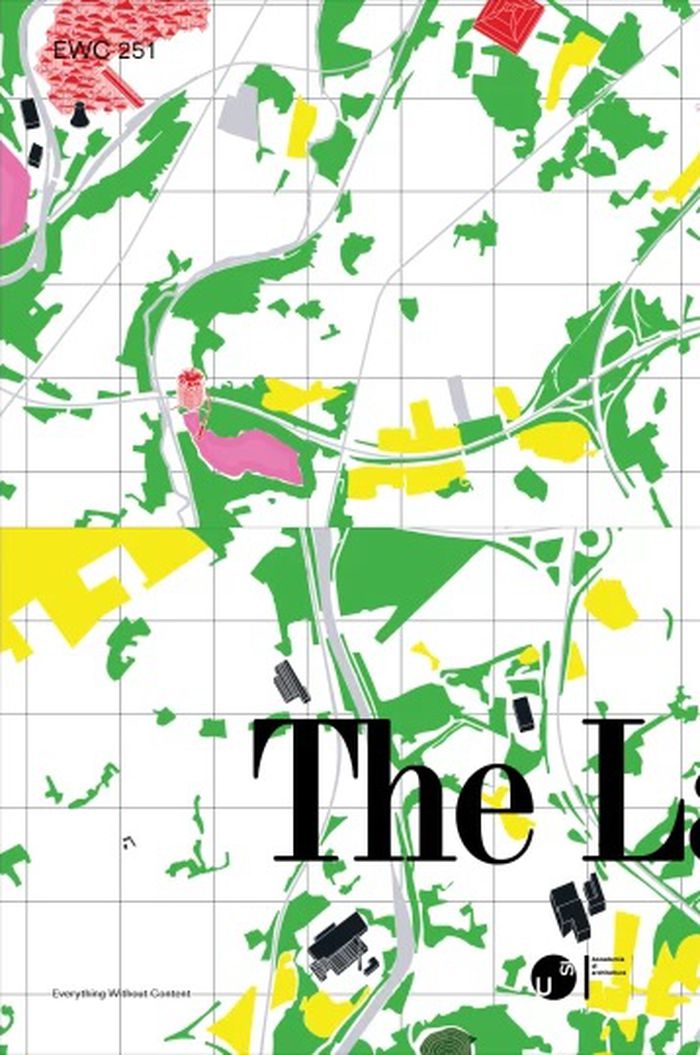
Charleroi, the denigrated capital of the Belgian hinterland, is the unlikely new paradigm for a contemporary city. What seems an incoherent jumble of manmade exuberance—a byproduct of modernity, really—transcends the infamous architectural dichotomy between the centre and the periphery. This is the Large City; dispersed and decentralised, it embraces its post-industrial condition. An artificial nature where zero-kilometre food production, electric bikes and trail running enable everyone to live large. Without nostalgia for its industrial ruins, nor contempt for modernity, the city was the subject of a year-long studio led by Kersten Geers at the Academy of Architecture USI in Mendrisio. As a form of “applied theory”, the book presents students’ projects—an imaginary city—coupled with some real projects: Megafactory by OFFICE and Palais des Expositions by Architecten Jan de Vylder Inge Vinck & AgwA. The book features photographs of Charleroi by Stefano Graziani.
Everything Without Content 251. The large city
Actions:
Prix:
$66.95
(disponible sur commande)
Résumé:
Charleroi, the denigrated capital of the Belgian hinterland, is the unlikely new paradigm for a contemporary city. What seems an incoherent jumble of manmade exuberance—a byproduct of modernity, really—transcends the infamous architectural dichotomy between the centre and the periphery. This is the Large City; dispersed and decentralised, it embraces its post-industrial condition. An artificial nature where zero-kilometre food production, electric bikes and trail running enable everyone to live large. Without nostalgia for its industrial ruins, nor contempt for modernity, the city was the subject of a year-long studio led by Kersten Geers at the Academy of Architecture USI in Mendrisio. As a form of “applied theory”, the book presents students’ projects—an imaginary city—coupled with some real projects: Megafactory by OFFICE and Palais des Expositions by Architecten Jan de Vylder Inge Vinck & AgwA. The book features photographs of Charleroi by Stefano Graziani.
Classification:
livres
livres
Publication:
juin 2025
juin 2025
Sujet:
Théorie de l’architecture
Théorie de l’architecture
Classification:
livres
livres
Titre:
Asmara, the frozen city
Asmara, the frozen city
Actions:
Prix:
$24.99
(disponible sur commande)
Résumé:
Asmara, capital of the state of Eritrea, located in North Eastern Africa, is considered to be an impressive example of European urban construction of the 20th century. To this day, the influence of the former colonial power of Italy on the architecture of the city from the early 20th century to the 1940’s remains visible. Many of the buildings, erected in the futuristic,(...)
$24.99
(disponible sur commande)
Résumé:
Asmara, capital of the state of Eritrea, located in North Eastern Africa, is considered to be an impressive example of European urban construction of the 20th century. To this day, the influence of the former colonial power of Italy on the architecture of the city from the early 20th century to the 1940’s remains visible. Many of the buildings, erected in the futuristic,(...)
Titre:
Asmara, the frozen city
Actions:
Prix:
$24.99
(disponible sur commande)
Résumé:
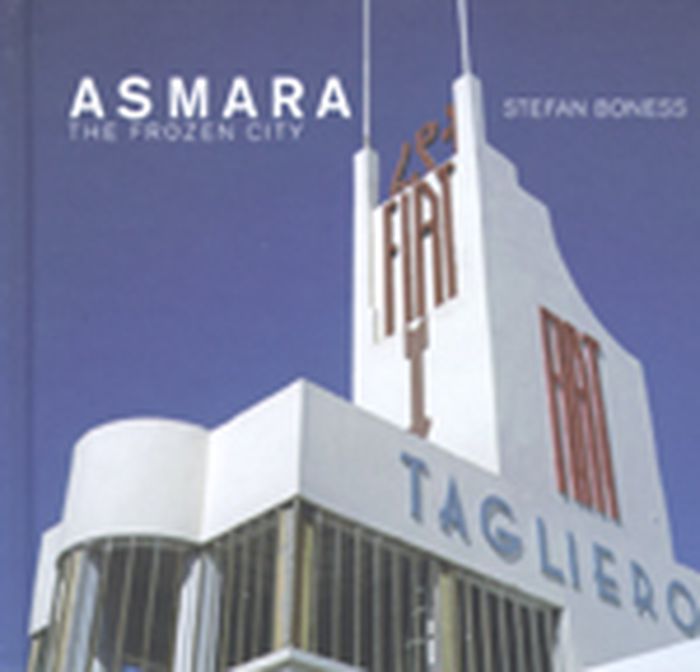
Asmara, capital of the state of Eritrea, located in North Eastern Africa, is considered to be an impressive example of European urban construction of the 20th century. To this day, the influence of the former colonial power of Italy on the architecture of the city from the early 20th century to the 1940’s remains visible. Many of the buildings, erected in the futuristic, monumentalist or rationalistic style have been preserved and dominate the cityscape of Asmara. In particular, architectural projects dating back to the late 1930’s and early 1940’s are the focal point of the work of photographer Stefan Boness. These include private, public and industrial buildings, which he photographed over the course of several months and which he staged incorporating their urban surroundings. Through his photographs, Stefan Boness has succeeded in expressing the unique atmosphere of Asmara, where time seemingly is standing still.
Asmara, the frozen city
Actions:
Prix:
$24.99
(disponible sur commande)
Résumé:
Asmara, capital of the state of Eritrea, located in North Eastern Africa, is considered to be an impressive example of European urban construction of the 20th century. To this day, the influence of the former colonial power of Italy on the architecture of the city from the early 20th century to the 1940’s remains visible. Many of the buildings, erected in the futuristic, monumentalist or rationalistic style have been preserved and dominate the cityscape of Asmara. In particular, architectural projects dating back to the late 1930’s and early 1940’s are the focal point of the work of photographer Stefan Boness. These include private, public and industrial buildings, which he photographed over the course of several months and which he staged incorporating their urban surroundings. Through his photographs, Stefan Boness has succeeded in expressing the unique atmosphere of Asmara, where time seemingly is standing still.
Classification:
livres
livres
Publication:
juillet 2007, Berlin
juillet 2007, Berlin
Classification:
livres
livres
Titre:
All we need
All we need
Actions:
Prix:
$39.95
(disponible sur commande)
Résumé:
On the occasion of Luxemburg European Capital of Culture 2007, the exhibition All We Need is being mounted on the subject of needs, resources, and fairness. The exhibition’s point of departure is the ten needs of every person as formulated by the economist Manfred Max-Neef: subsistence, protection, affection, participation, recreation, creativity, understanding, identity,(...)
$39.95
(disponible sur commande)
Résumé:
On the occasion of Luxemburg European Capital of Culture 2007, the exhibition All We Need is being mounted on the subject of needs, resources, and fairness. The exhibition’s point of departure is the ten needs of every person as formulated by the economist Manfred Max-Neef: subsistence, protection, affection, participation, recreation, creativity, understanding, identity,(...)
Titre:
All we need
Actions:
Prix:
$39.95
(disponible sur commande)
Résumé:
On the occasion of Luxemburg European Capital of Culture 2007, the exhibition All We Need is being mounted on the subject of needs, resources, and fairness. The exhibition’s point of departure is the ten needs of every person as formulated by the economist Manfred Max-Neef: subsistence, protection, affection, participation, recreation, creativity, understanding, identity, freedom, and transcendence. Each of these needs has a single area of the exhibition devoted to it: Survive, Protect, Love, Stand Up, Relax, Create, Understand, Choose, Dream. The book mirrors the exhibition with photographs and texts and provides additional windows on the complex subject with introductory texts on the exhibition, resources, and fairness. An extensive collage of texts and images illustrates the needs, supplemented by journalistic and art-historical images and philosophical quotations that do not appear in the exhibition itself. The catalogue is designed by the well-known graphic designer Emanuel Tschumi.
All we need
Actions:
Prix:
$39.95
(disponible sur commande)
Résumé:
On the occasion of Luxemburg European Capital of Culture 2007, the exhibition All We Need is being mounted on the subject of needs, resources, and fairness. The exhibition’s point of departure is the ten needs of every person as formulated by the economist Manfred Max-Neef: subsistence, protection, affection, participation, recreation, creativity, understanding, identity, freedom, and transcendence. Each of these needs has a single area of the exhibition devoted to it: Survive, Protect, Love, Stand Up, Relax, Create, Understand, Choose, Dream. The book mirrors the exhibition with photographs and texts and provides additional windows on the complex subject with introductory texts on the exhibition, resources, and fairness. An extensive collage of texts and images illustrates the needs, supplemented by journalistic and art-historical images and philosophical quotations that do not appear in the exhibition itself. The catalogue is designed by the well-known graphic designer Emanuel Tschumi.
Classification:
livres
livres
Publication:
juin 2007, Luxembourg
juin 2007, Luxembourg
Sujet:
Théorie de l’architecture
Théorie de l’architecture
Classification:
livres
livres
Titre:
The golden calf
The golden calf
Actions:
Prix:
$23.95
(disponible sur commande)
Résumé:
Ostap Bender, the "grand strategist," is a con man on the make in the Soviet Union during the New Economic Policy (NEP) period. He's obsessed with getting one last big score—a few hundred thousand will do—and heading for Rio de Janeiro, where there are "a million and a half people, all of them wearing white pants, without exception." When Bender hears the story of(...)
$23.95
(disponible sur commande)
Résumé:
Ostap Bender, the "grand strategist," is a con man on the make in the Soviet Union during the New Economic Policy (NEP) period. He's obsessed with getting one last big score—a few hundred thousand will do—and heading for Rio de Janeiro, where there are "a million and a half people, all of them wearing white pants, without exception." When Bender hears the story of(...)
Titre:
The golden calf
Actions:
Prix:
$23.95
(disponible sur commande)
Résumé:
Ostap Bender, the "grand strategist," is a con man on the make in the Soviet Union during the New Economic Policy (NEP) period. He's obsessed with getting one last big score—a few hundred thousand will do—and heading for Rio de Janeiro, where there are "a million and a half people, all of them wearing white pants, without exception." When Bender hears the story of Alexandr Koreiko, an "undercover millionaire"—no Soviet citizen was allowed to openly hoard so much capital—the chase is on. Koreiko has made his millions by taking advantage of the wide-spread corruption and utter chaos of the NEP, all while serving quietly as an accountant at a government office and living on 46 rubles a month. He's just waiting for the Soviet regime to collapse so he can make use of his stash, which he keeps hidden away in a suitcase.
The golden calf
Actions:
Prix:
$23.95
(disponible sur commande)
Résumé:
Ostap Bender, the "grand strategist," is a con man on the make in the Soviet Union during the New Economic Policy (NEP) period. He's obsessed with getting one last big score—a few hundred thousand will do—and heading for Rio de Janeiro, where there are "a million and a half people, all of them wearing white pants, without exception." When Bender hears the story of Alexandr Koreiko, an "undercover millionaire"—no Soviet citizen was allowed to openly hoard so much capital—the chase is on. Koreiko has made his millions by taking advantage of the wide-spread corruption and utter chaos of the NEP, all while serving quietly as an accountant at a government office and living on 46 rubles a month. He's just waiting for the Soviet regime to collapse so he can make use of his stash, which he keeps hidden away in a suitcase.
Classification:
livres
livres
Publication:
décembre 2009
décembre 2009
Sujet:
Expositions en cours
Expositions en cours


